There is a route across the Puna Region of Northern Argentina that is legendary amoung bikepackers around the world, even mention of its name brings the fluttery feeling of fear and excitement to your stomach – The Ruta de Los Seis Miles Sur. This is our Ruta de Los Seis Miles story, so grab a brew (and a cheeky biscuit) as it’s a long one – Hope you enjoy and I don’t just bore you to tears!
The ‘Ruta de Los Seis Miles Sur’ roughly translated means the ‘Route of the Six-Thousanders South’, so called because the route winds its way through the Southern section of a stretch of the Andes which is made up of multiple mountains of over 6000m in height, across the Puna Region. The Puna area is a specific eco-region which extends between Northern Argentina, Northern Chile, Bolivia and Peru and is ultimately a high desert plateau (the second highest in the world after Tibet if Google is to be believed!).
The route is legendary for good reason. It’s
526km long and climbs a total of 7141m. Most of the time on the route is spent at an altitude of over 4000m, plus there’s the small challenge of riding up to that height from the valley floor below. You also have to contend with whatever nature throws at you, and in these parts, at this time of year, it’s usually 40° heat in the valley bottom, compared to temperatures in the minus figures over night on the plateau, it’s fierce winds in any and all directions which frequently slow progress to walking pace or less, it’s lack of water across expansive desert environments meaning you have to carry at least 24 hours worth of water at a time and it’s the usual concerns about storms rolling in bringing with them hail and snow. But the challenges the route brings are surpassed by the spectacular scenery like no-where else on Earth and days of remote, backcountry, wilderness riding. It is all this combined that has given the route almost mythical status. But having said all that, it is a well documented route, with many notes available on where to potentially find water or a camp spot, so it’s not as dramatic as I make out!
I had read many other cyclists accounts of this route before we left, and despite all it’s magical draws I never in a million years thought we would give it a go. The self-doubting part of my brain just said it was too physically demanding and that I wasn’t strong enough to carry that much food or water. But during our months here in South America we’ve met a small handful of other cyclists who’ve done it and with each conversation full of amazing exploits, each epic tale of surviving adverse weather and each story of overcoming hunger, thirst and broken equipment, the confidence in me grew as we have previously encountered similar situations during our years of adventuring on bikes, and so, my desire to experience the route for ourselves also grew.
After many ‘Do you want to do it?’, ‘I don’t know’ type conversations, we decided we wanted to do this thing – or at least give it a go.
With Ted and I being such different personalities, it’s inevitable that our motivations for deciding that we wanted to give this route a go are also different. But one thing’s for sure, we both agree that you don’t do this route to get from A to B – there’s a perfectly good road that does that and it would only take two days to cycle. Its a good reminder that the point of this trip is not to get from A to B – if it was, then there would have been no point in us leaving, as our end destination is back where we started at home!
For me, I like to challenge myself, to set myself goals to see if I can do something that I initially don’t think I’m capable of. I’ve done it with several things throughout my life in a whole host of different ways, big and small. I don’t ever need to shout about these things as they rarely mean anything to anyone else, but for me each one acts as a building block for my own confidence, a reminder that I can do hard things if I put my mind to it. This route, with it’s physical demands, it’s exposure to the natural elements, it’s remoteness and it’s need for mental resilience fell outside my comfort zone, but that quiet voice inside wouldn’t let it go and I knew I had to try.
For Ted, it was mainly curiosity about just how much he would suffer and moan about the altitude (obviously his experience would be much worse than my own!) and in his own words ‘it would be cool to see it’.
The route is usually tackled from North to South, but for us, naturally, we would be going against the flow – as we have been doing since day one in South America – we would be doing it the opposite way. We had two rest days in our starting village of Guandacol. Just enough time to rest, let a couple of weather storms pass, carry out a little bike maintenance, eat a few ice creams from the local heladeria, make sure our clothes were clean, buy 12 days worth of food, then worry we’ve bought too much food, then eat some of it and worry we don’t have enough food, then check the weather forecast, then make sure our blog is up to date and then decide we’re getting too nervous hanging about so decide to set off the following day regardless.
Neither of us slept too well the night before we set off – you never do when you really, really need to. The nervous excitement of what was to come was palpable, we both knew this was as close to a mountain expedition as we would get on our bikes (probably!). Plus, the fear of not having enough biscuits was real.
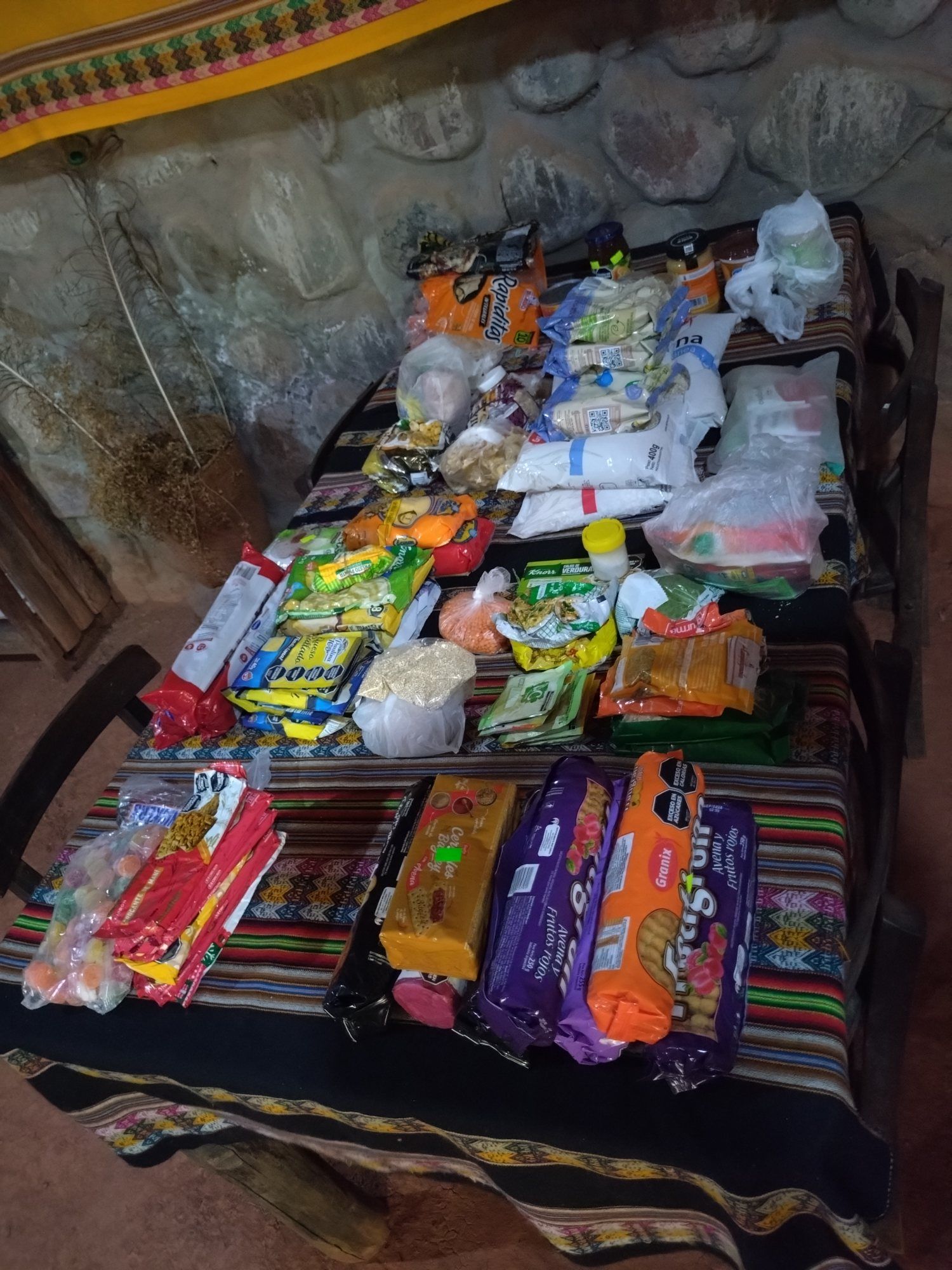
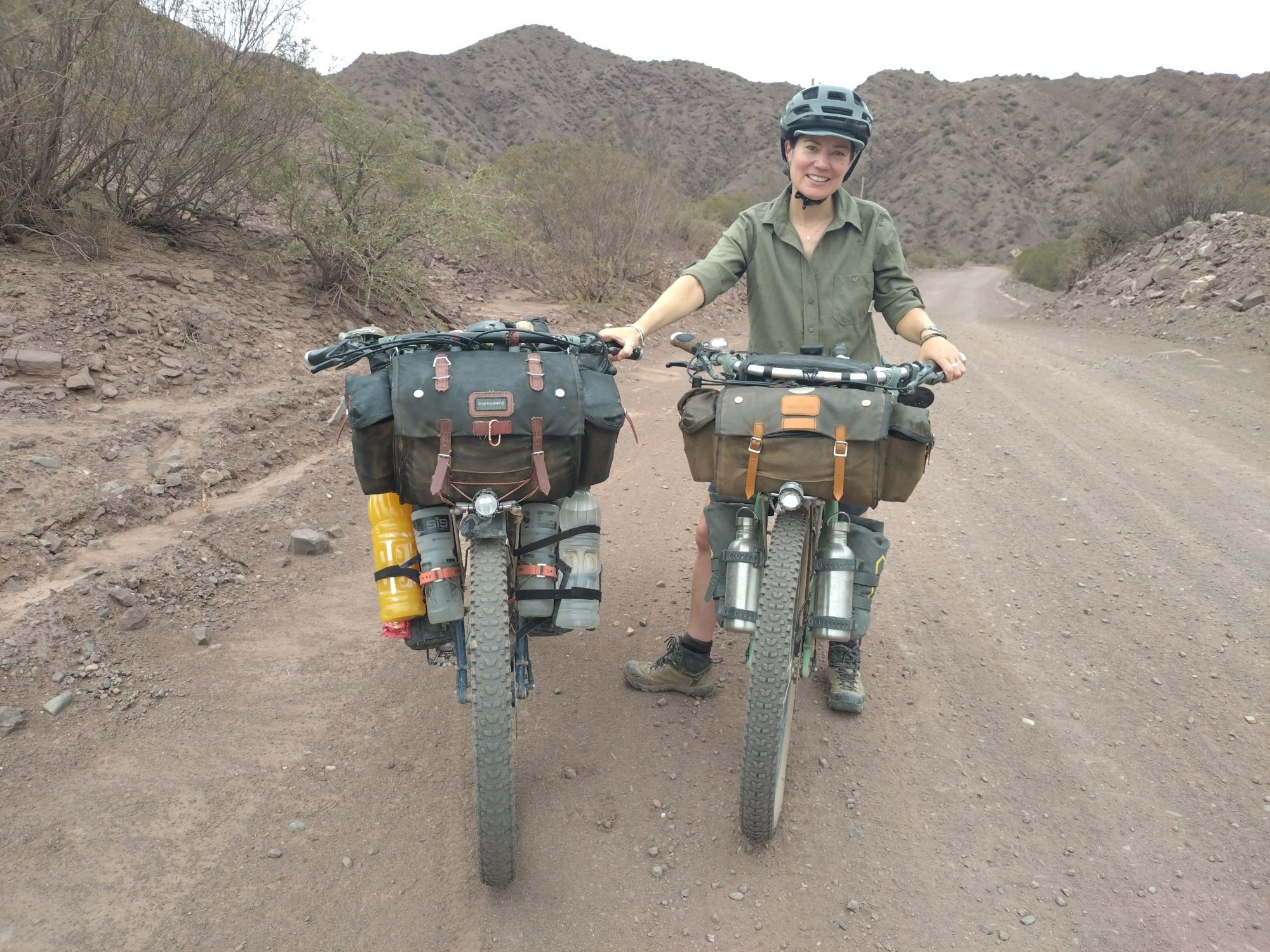
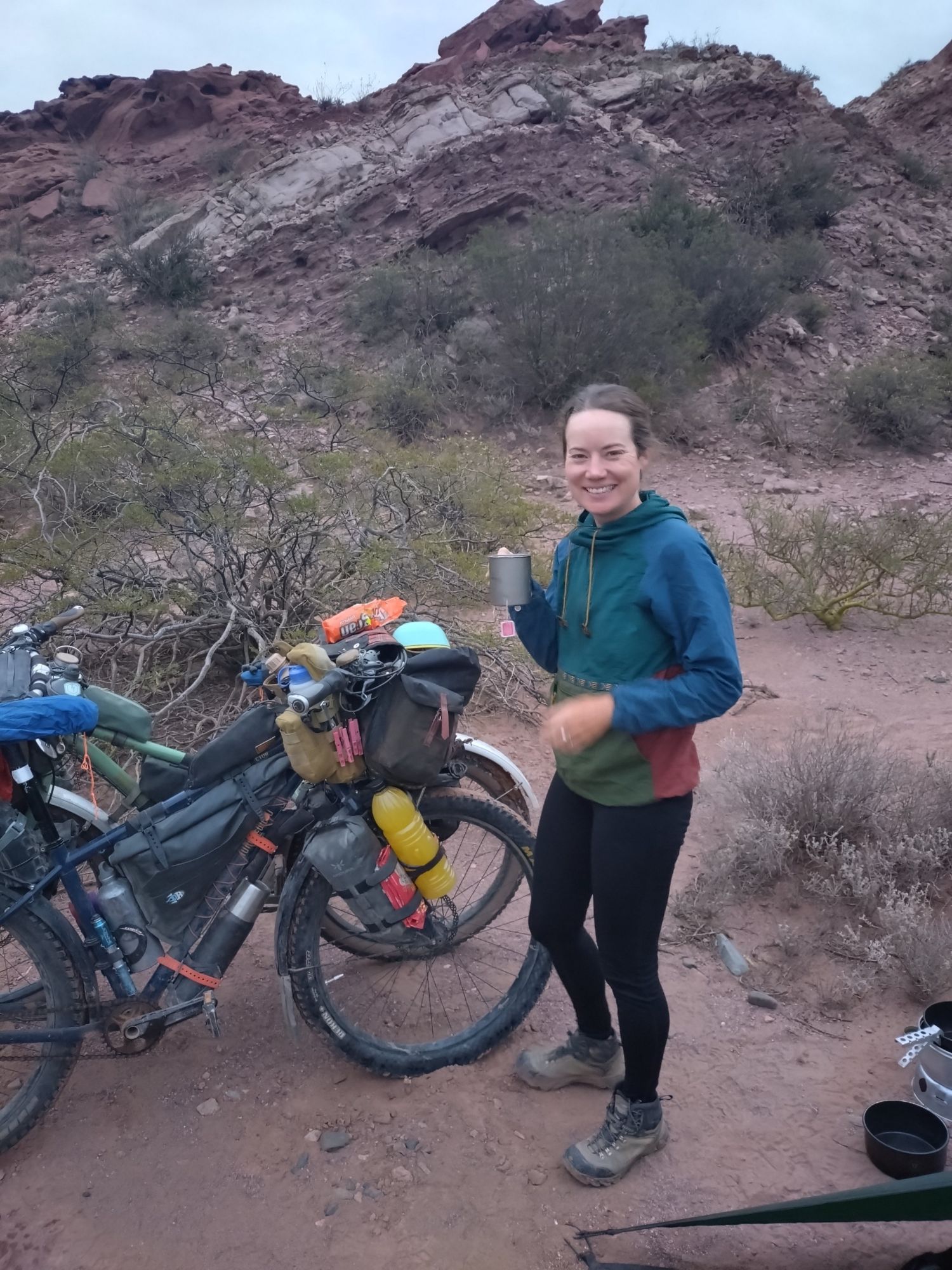
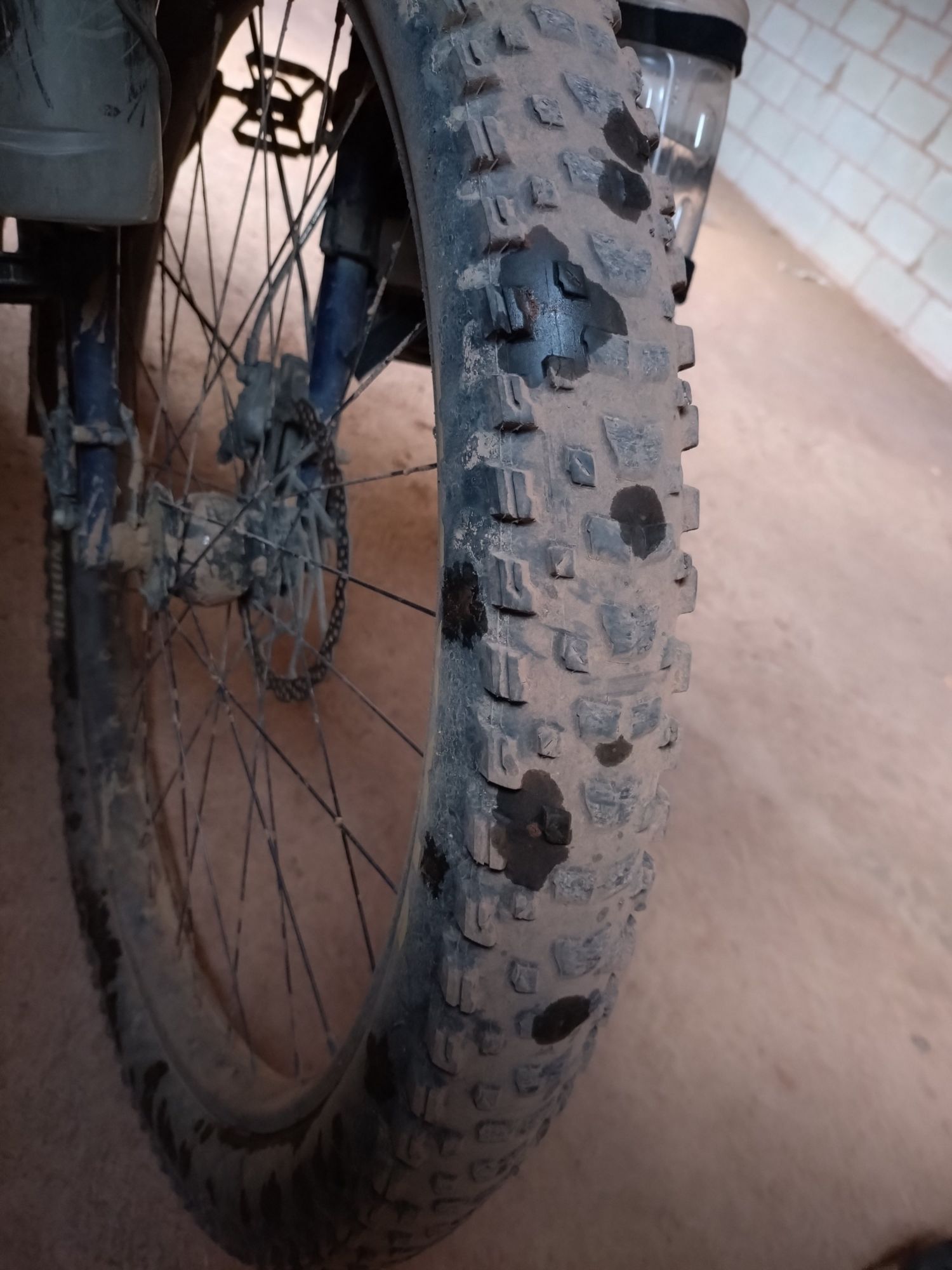
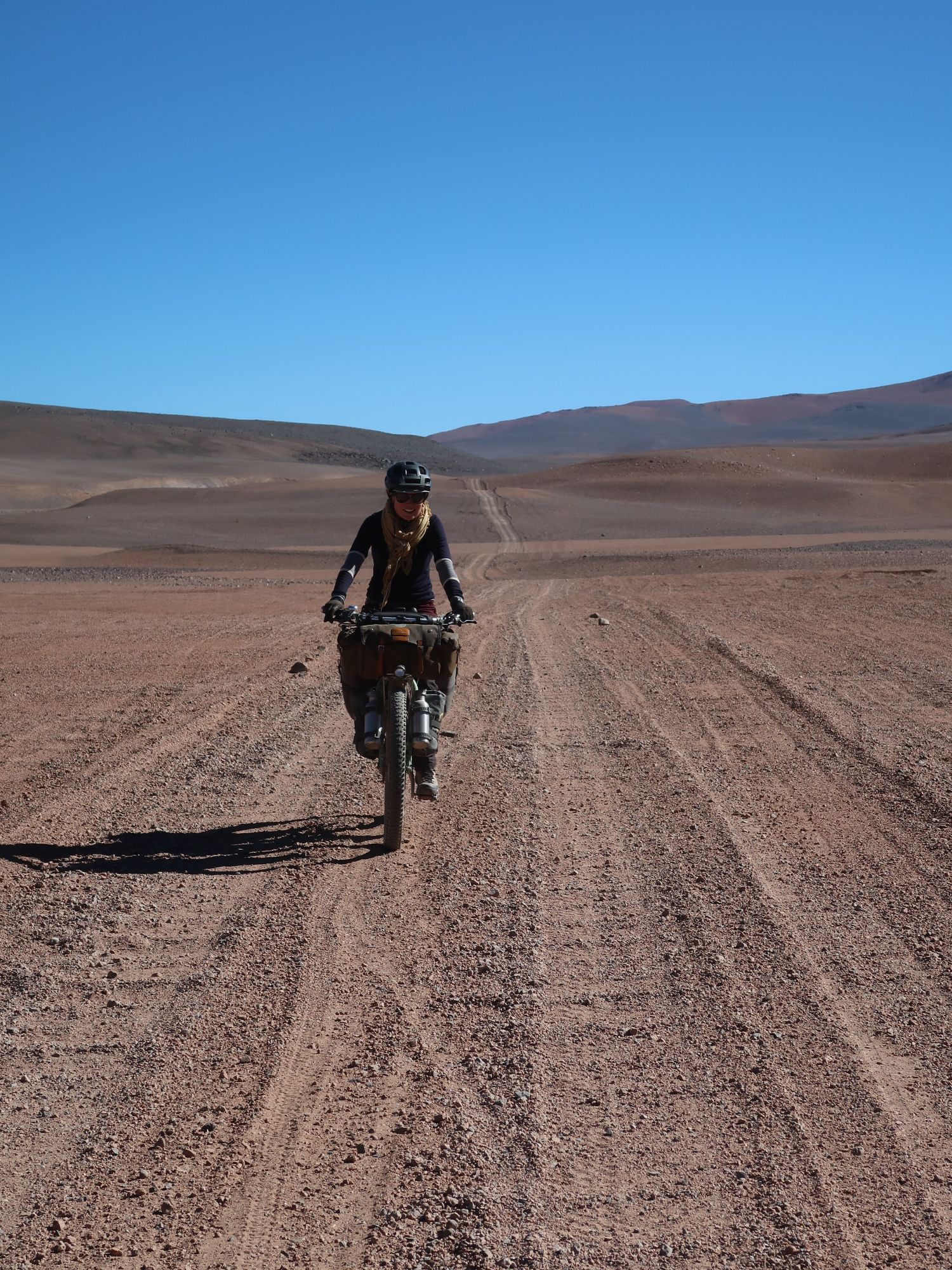
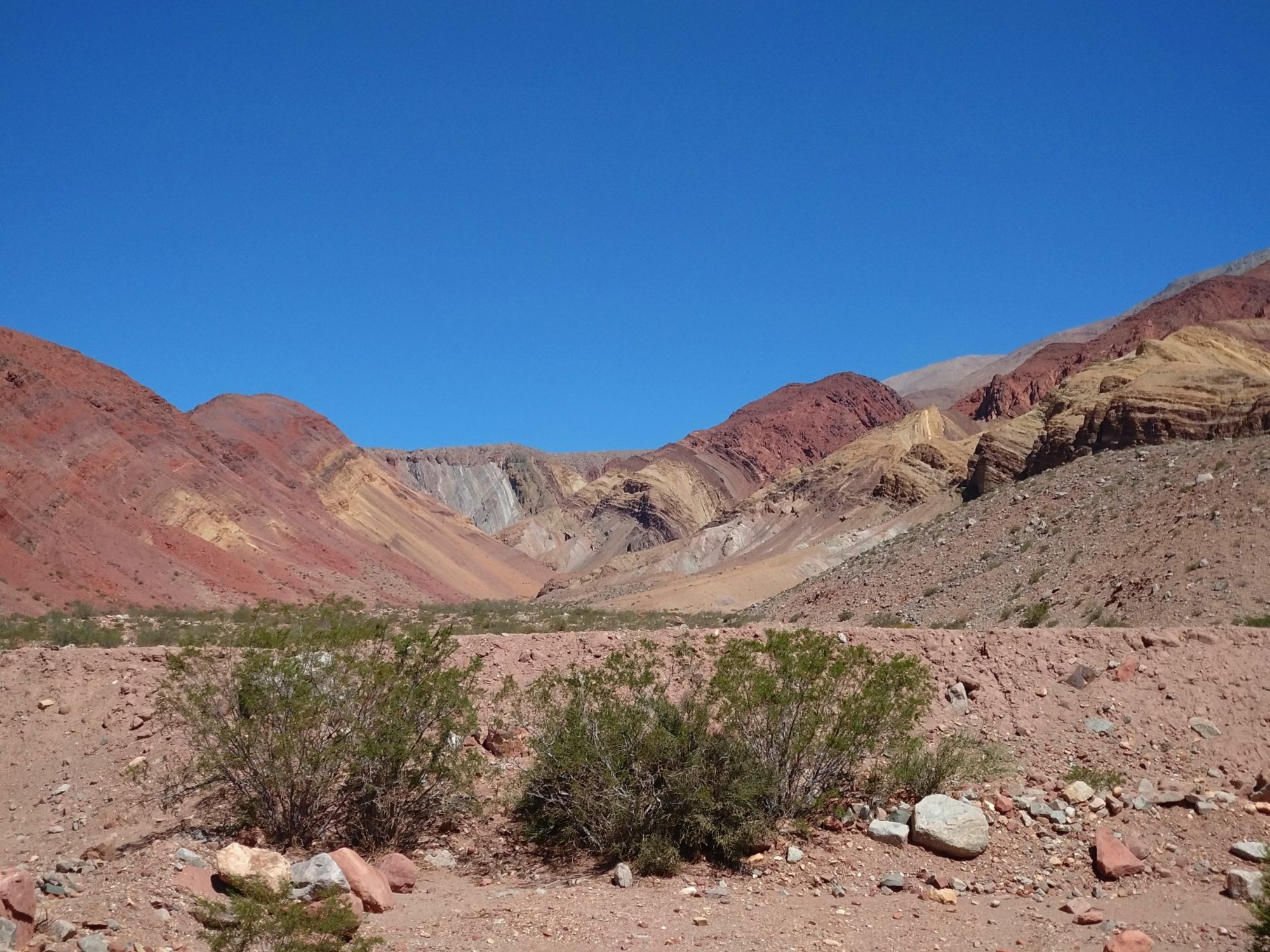
The new day brought with it overcast skies, and thankfully much cooler temperatures – Just what we needed for the 3000m+ climb we were about to start. Maneuvering the bikes out of the hostel loaded with 12 days of food and 12L of water between us, plus all our usual ‘cycling around the world’ paraphernalia was hard enough work, I didn’t want to think about what lay ahead. But once we’d got going, our legs spinning away, leaving the town behind us, riding along like we always do (albeit more slowly than usual), it felt no different to a normal day on the road. Soon enough, the amazing Argentinan landscapes were back to impressing us once again with the crazy coloured geology and rocks that looked like liquid, frozen in time. That night we camped out in the desert, on the only patch of ground not covered in tyre-killing spikey desert bushes, which turned out to be the home of many, many ants. Over the months we’ve been away we’ve perfected (or more accurately – been working on!) leaning the two bikes against one another so they stand up, therefore saving all our food from the critters on the floor. That night it proved to be an invaluable skill as we were determined not to wake up to the ants having invaded all 12 days worth of our food before we’d even really got started. We slept in total silence under a sky full of incredible stars – cheesy but true!
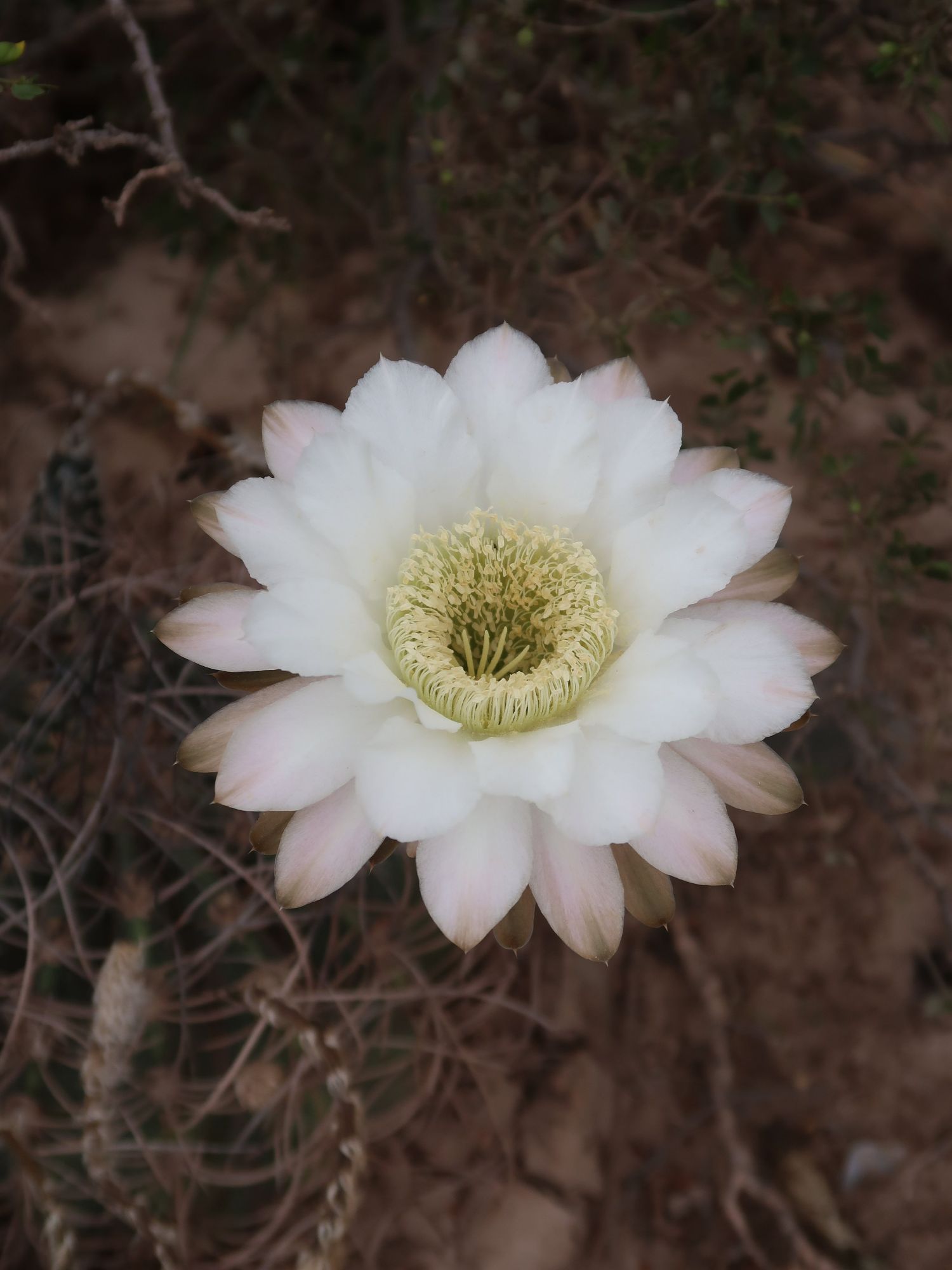
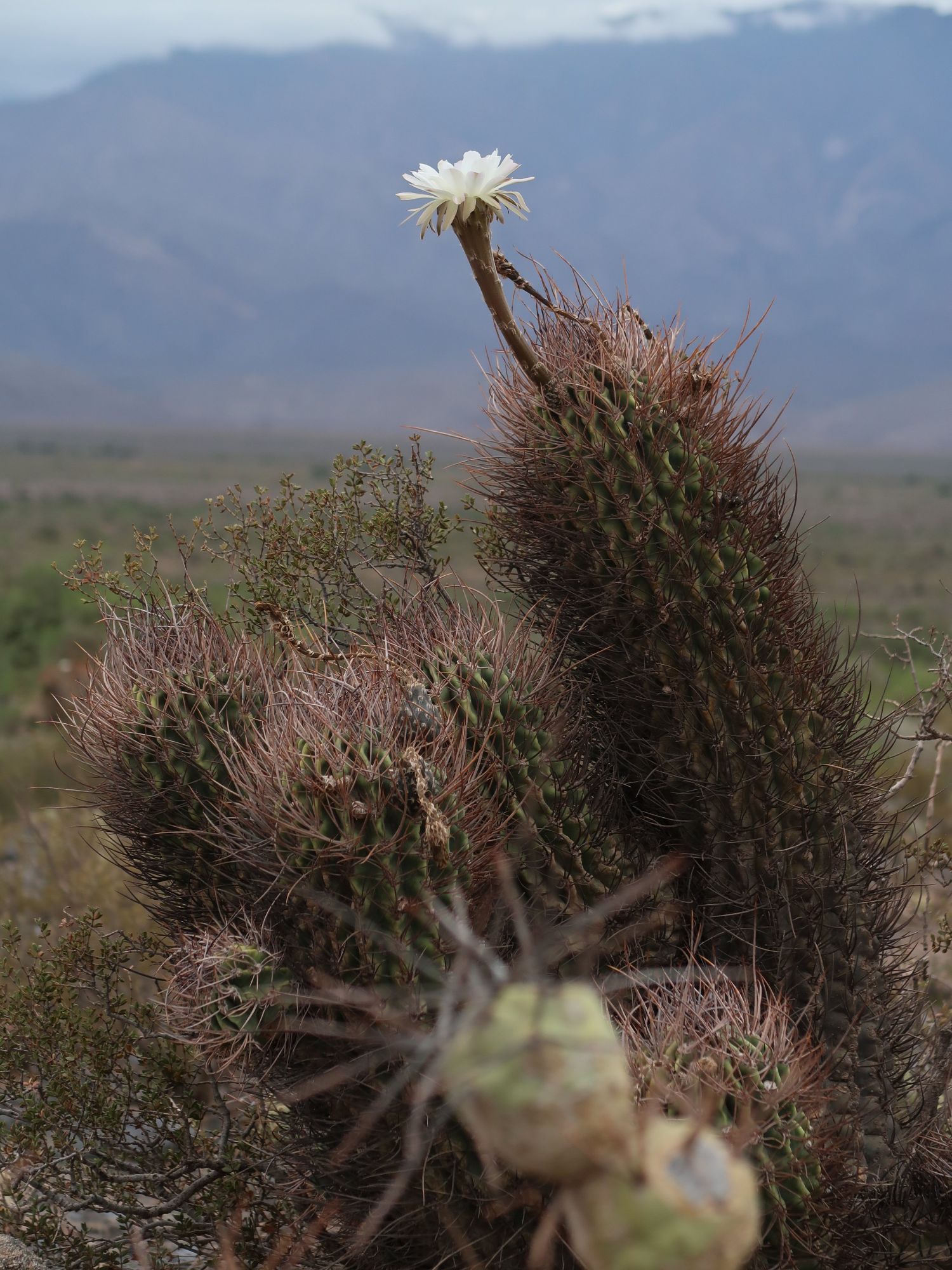
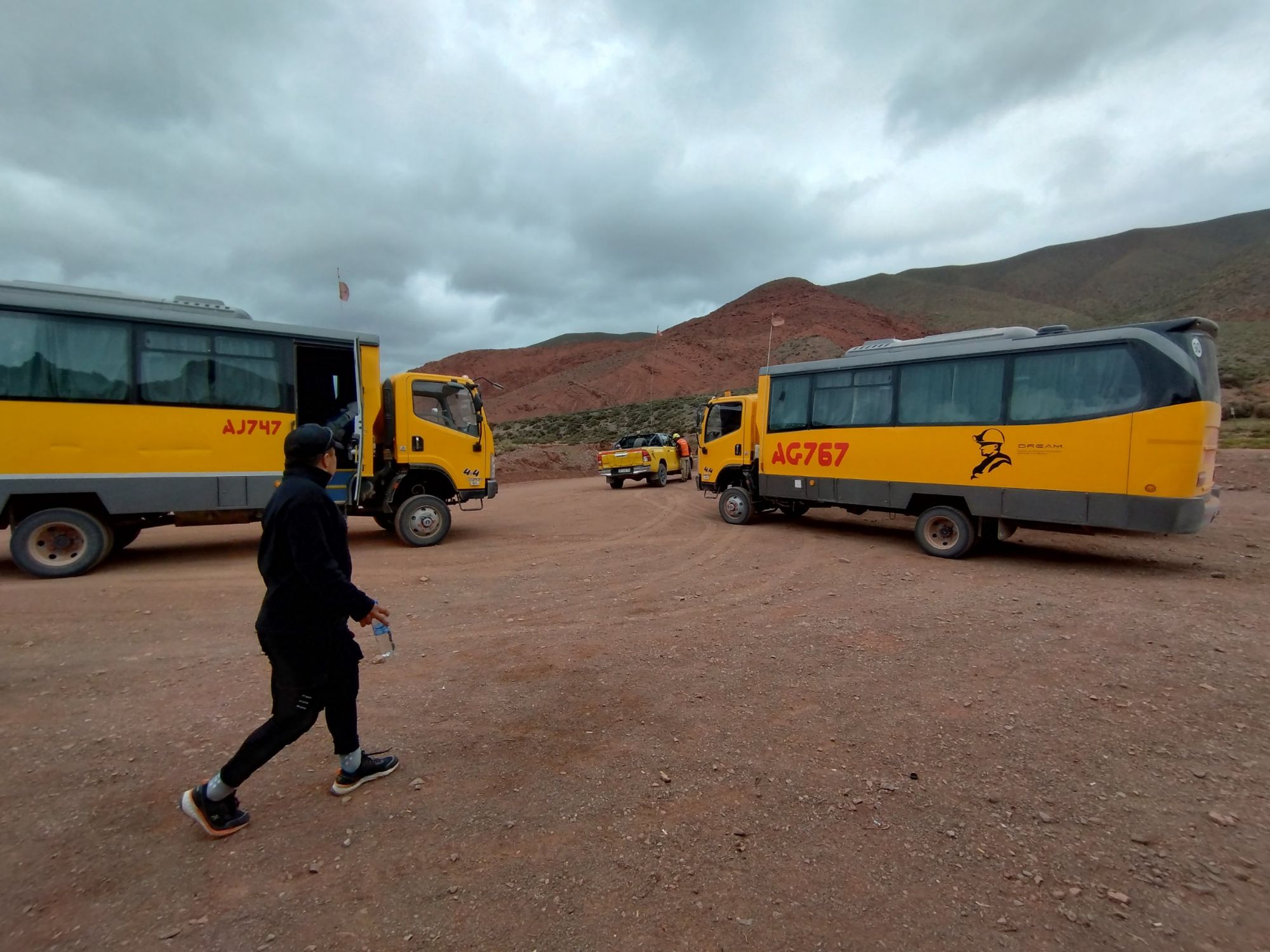
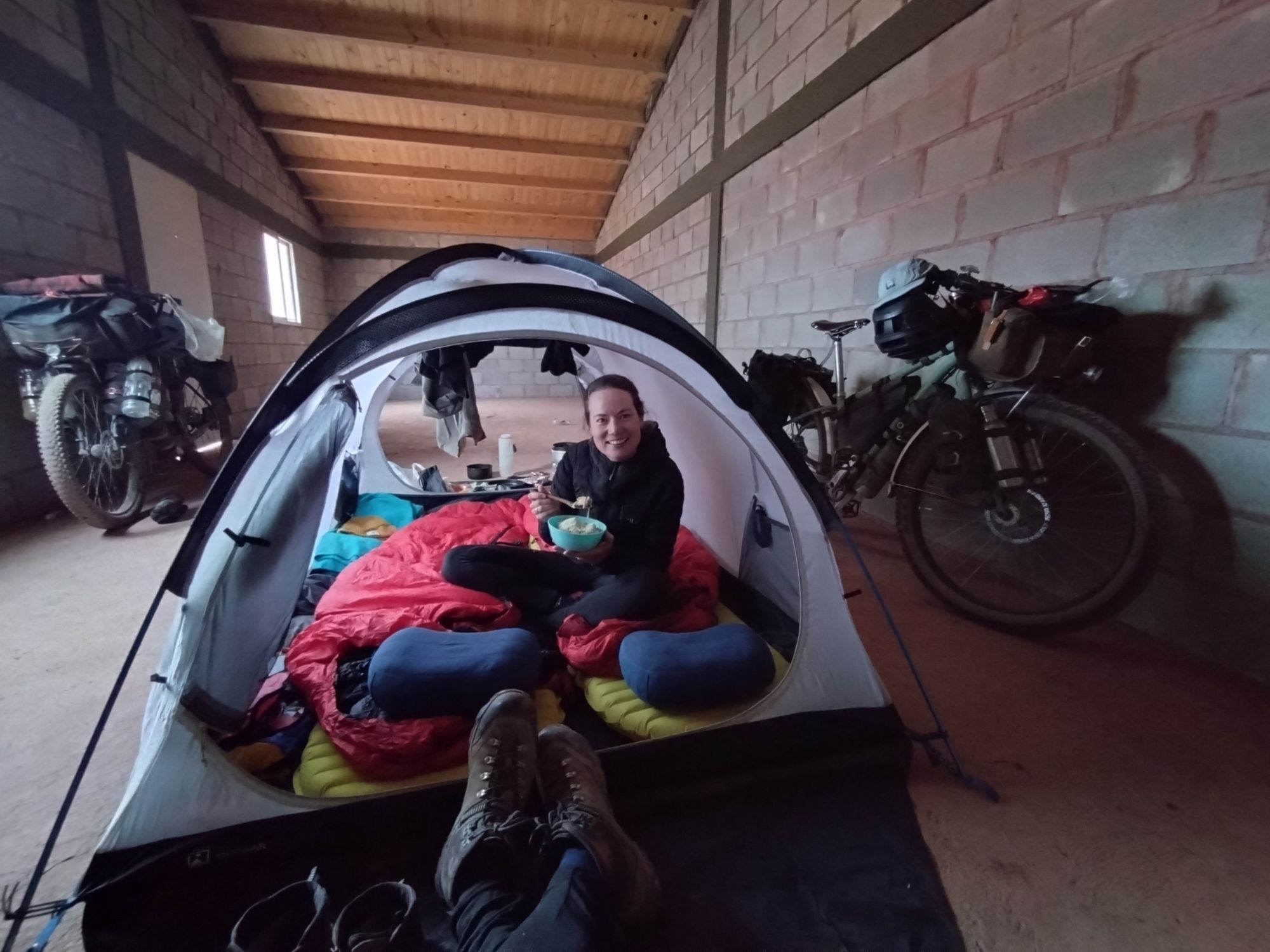
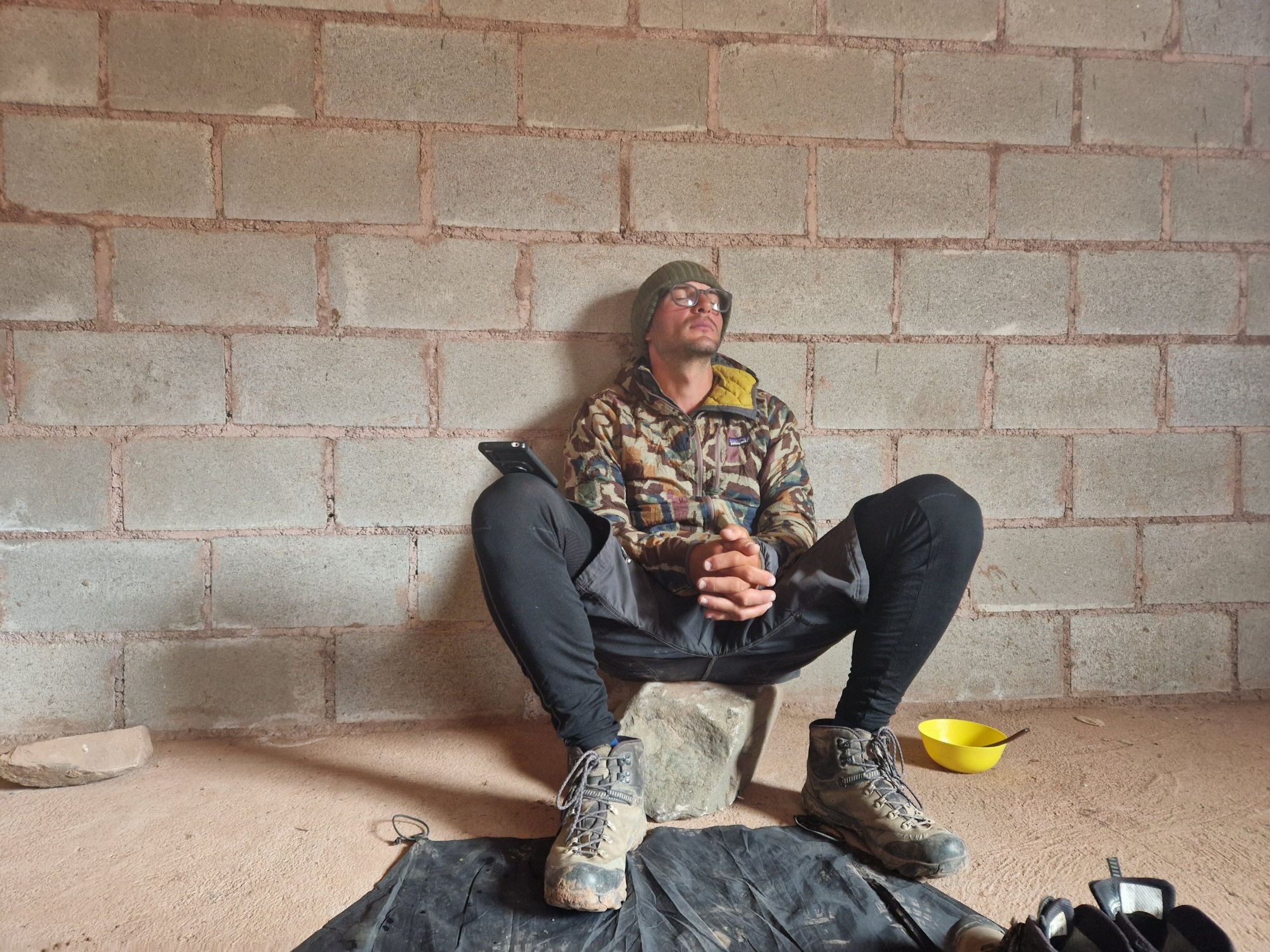
The following day, the climb continued as we made our way up from our camp spot at 2100m to 3400m. Gradually we began to notice the altitude. At first, you realised that if you coughed or gulped it took a moment to re-catch your breath. Then, chatting away became more of an effort, each response requiring a breath between every few words. Then the talking pretty much stopped as our breathing became more laboured. Then the headaches started, just enough of a pain to make our eyes squint. By late afternoon we’d reached the Leoncito Refugio (essentially a shed put in by a mining company) and although it still felt a little early in the day to stop, we knew our bodies needed the chance to acclimatise, plus the rain had started by then so it seemed like a sensible decision. Just as we put our bikes down and unclipped our helmets, three huge 4×4 buses of mine workers pulled up for a break in their journey. It felt a bit surreal to be standing in the doorway of the refugio, looking out at all the mine workers in their smart-ish normal clothes as they all piled off the bus for a smoke or a stretch of the legs. For them, the journey to get here had taken a couple of hours and they needed no specialist equipment or clothing, they weren’t worried about where they would next get water from, or whether they had enough food with them. For them, it was just a commute to work. It was such a contrast to all our preparation and planning, plus the two days of riding it had taken us to get there, it left us feeling as though we had been a bit excessive with everything. But after a short break they all filed back onto the buses and left us standing there alone. As the rumble of the engines faded and the renewed silence settled around us, so too did the certainty that we were right to pack those six packets of biscuits!
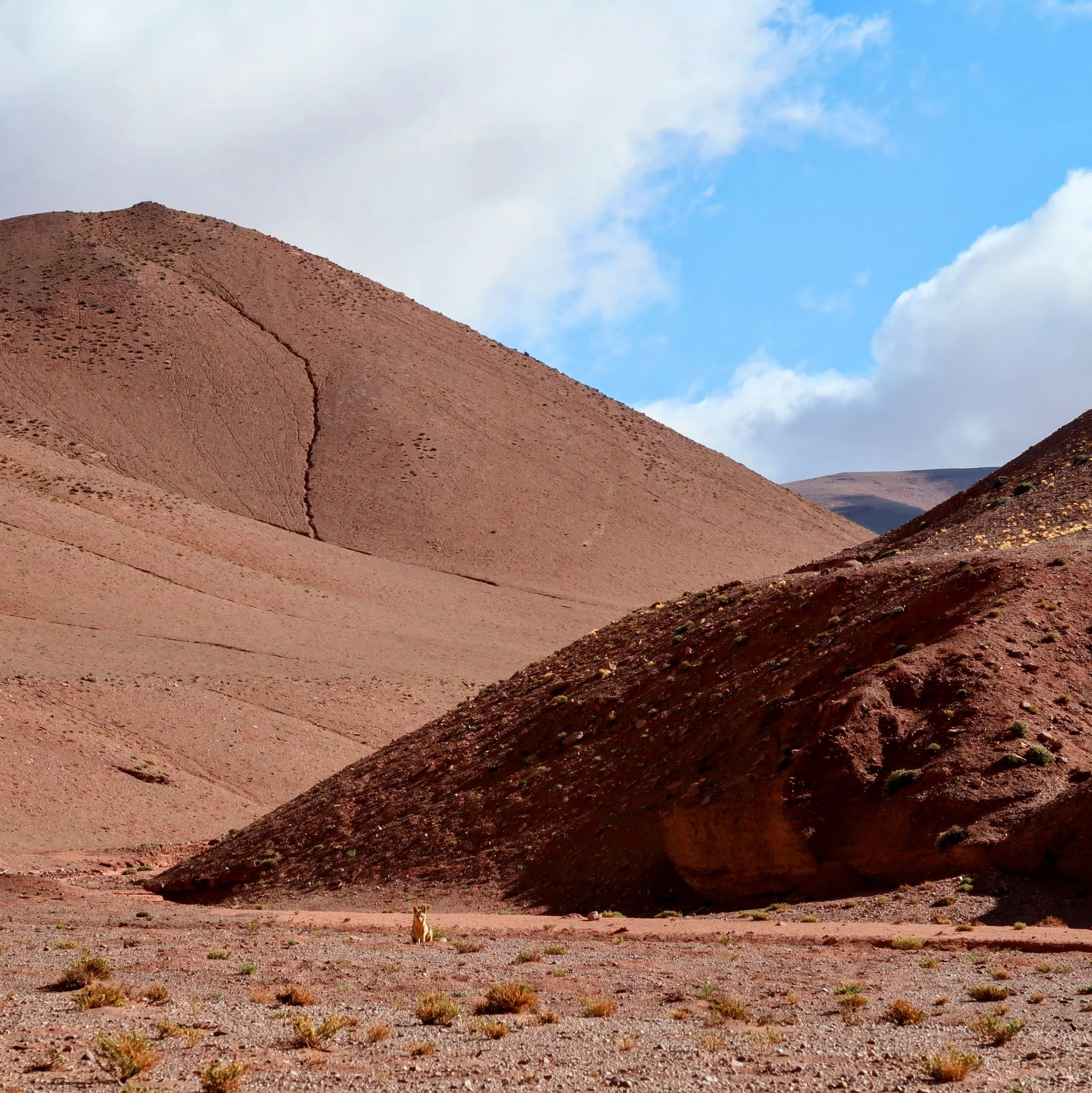
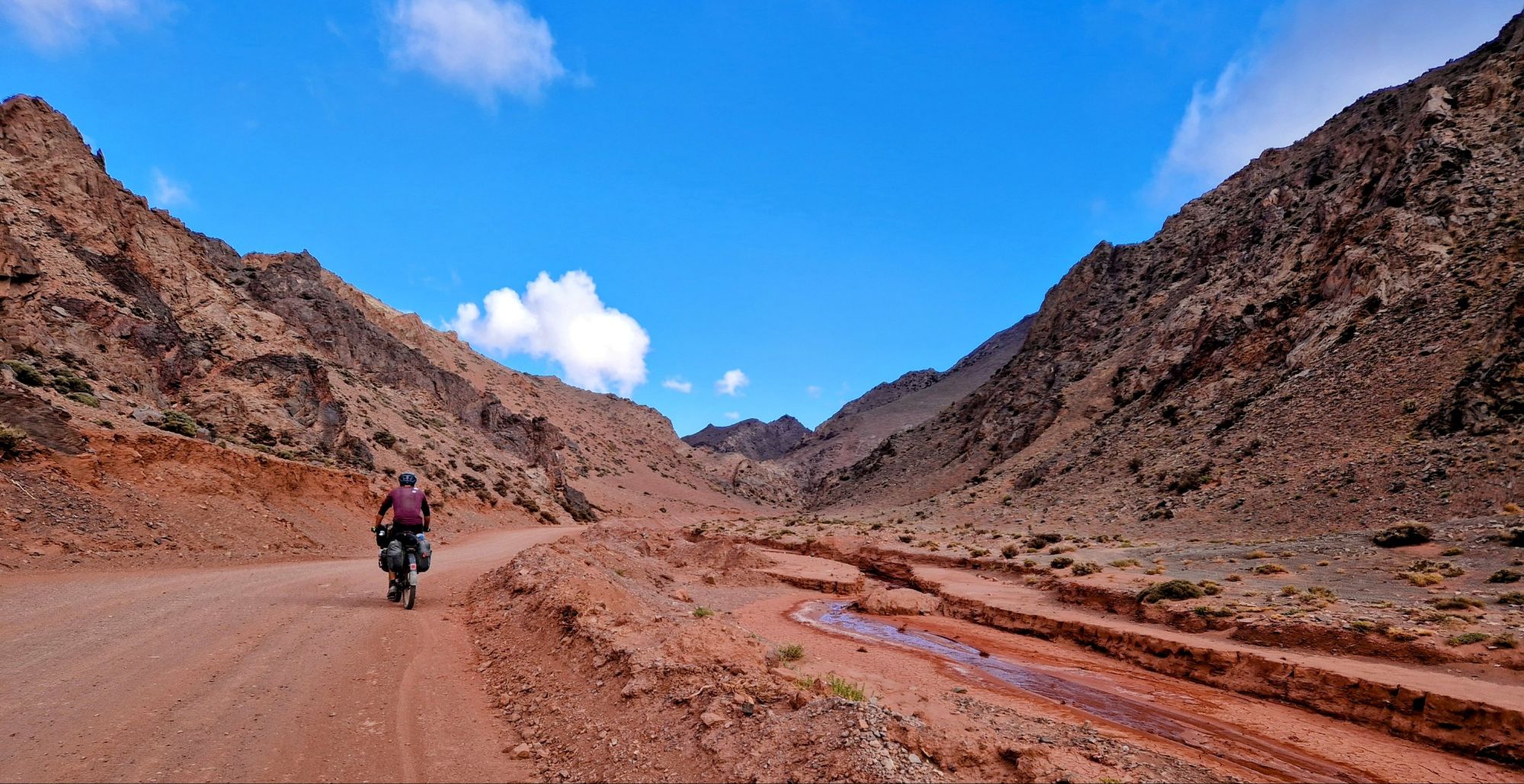
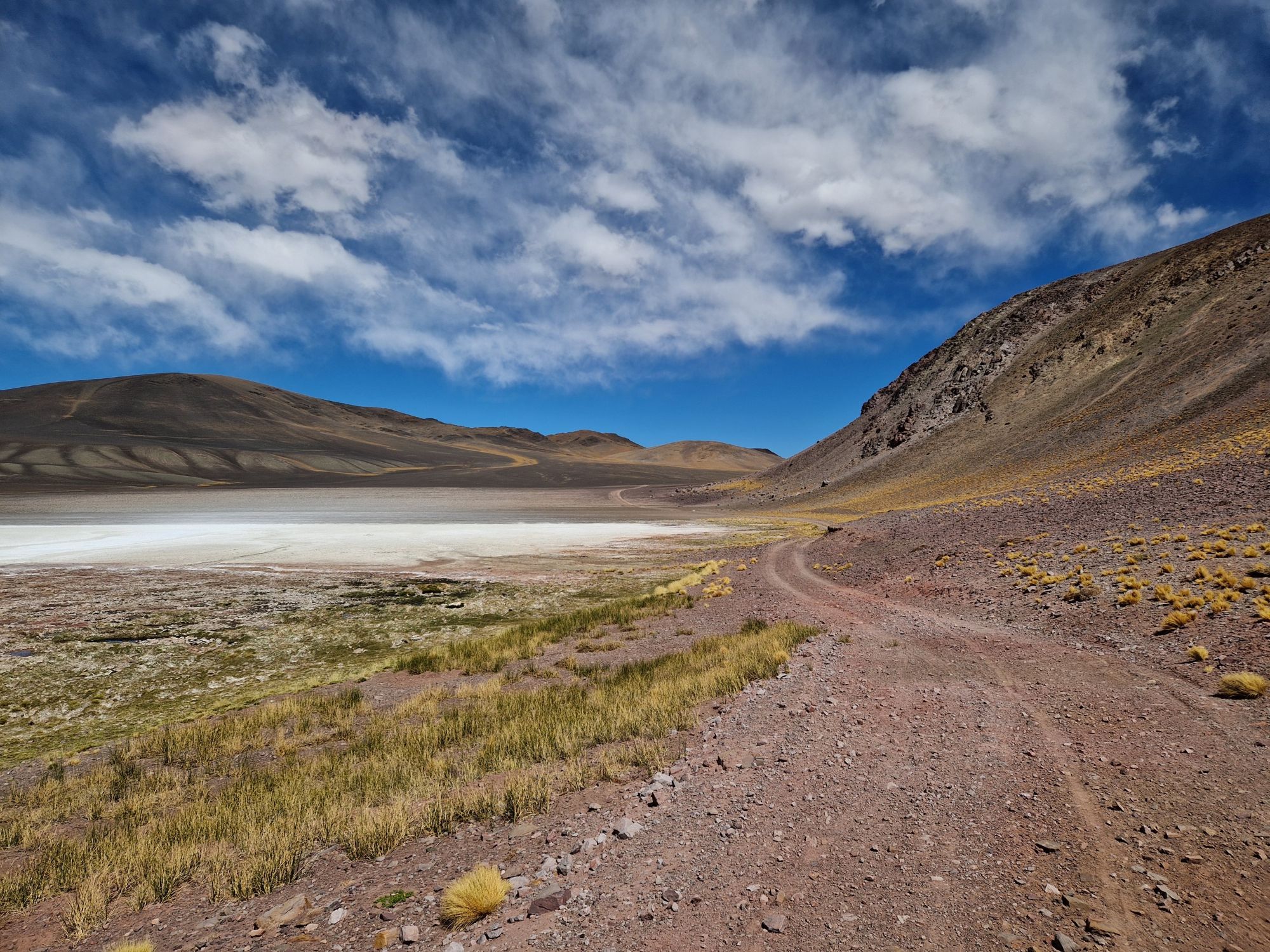
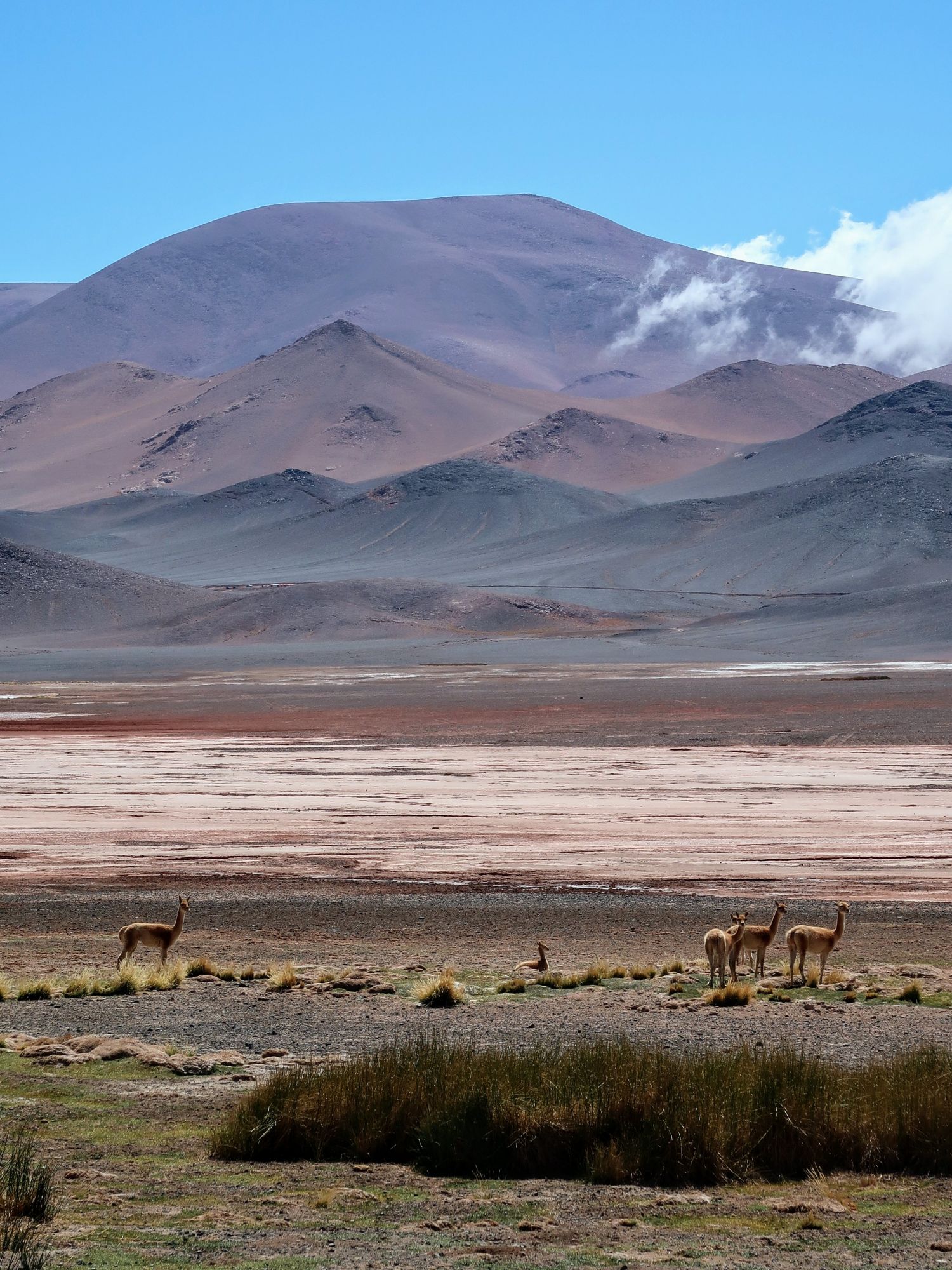
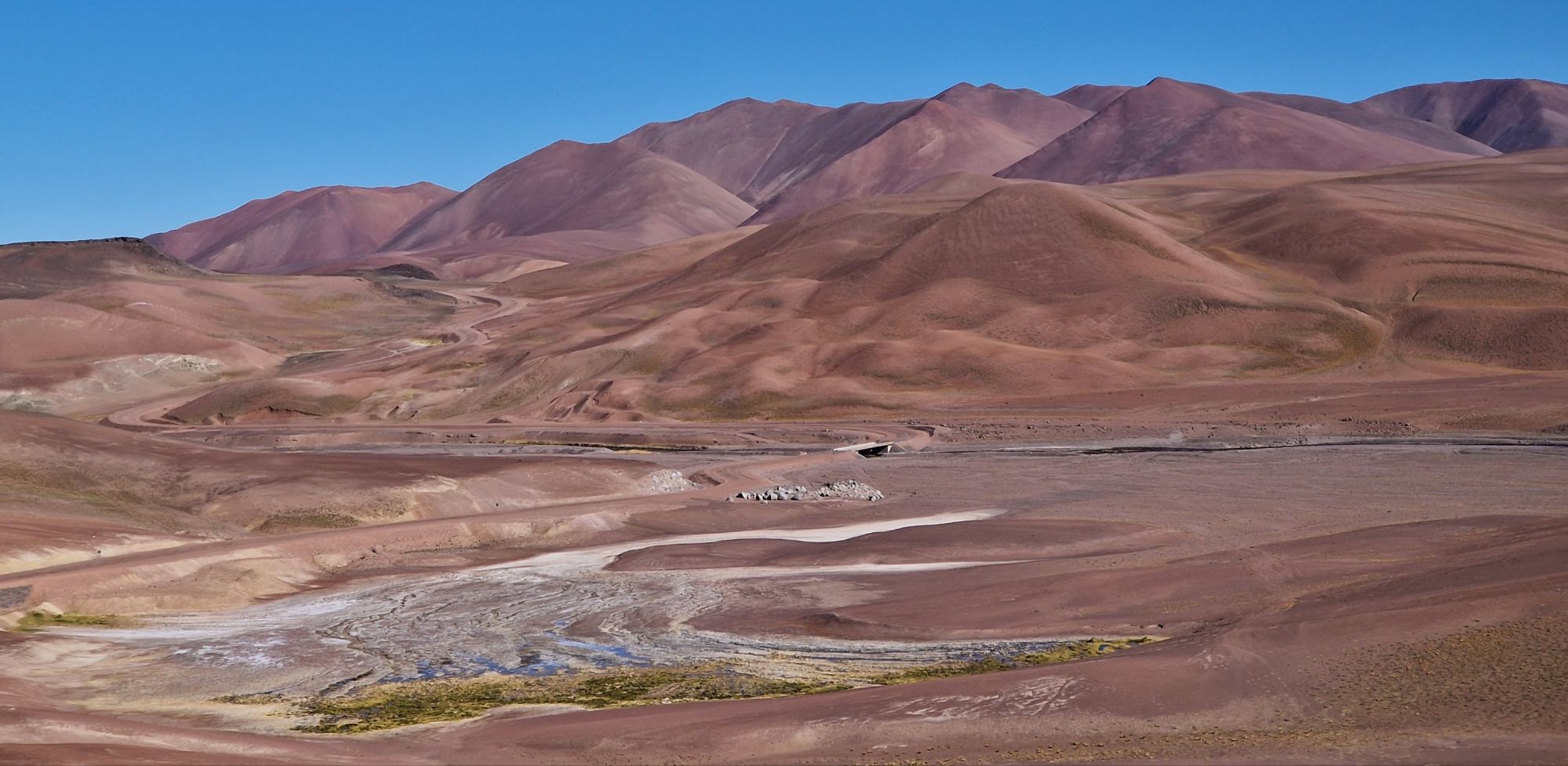
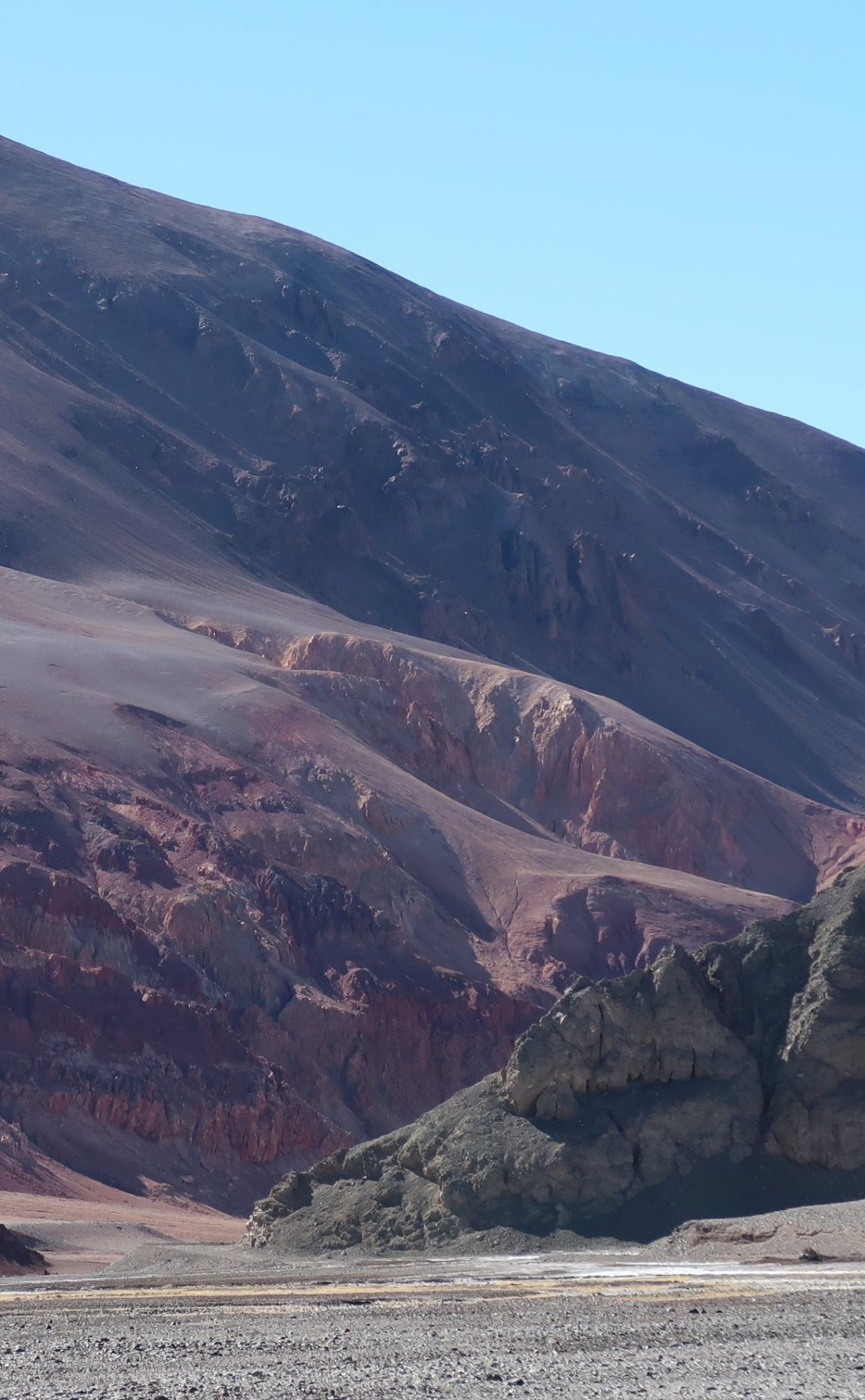
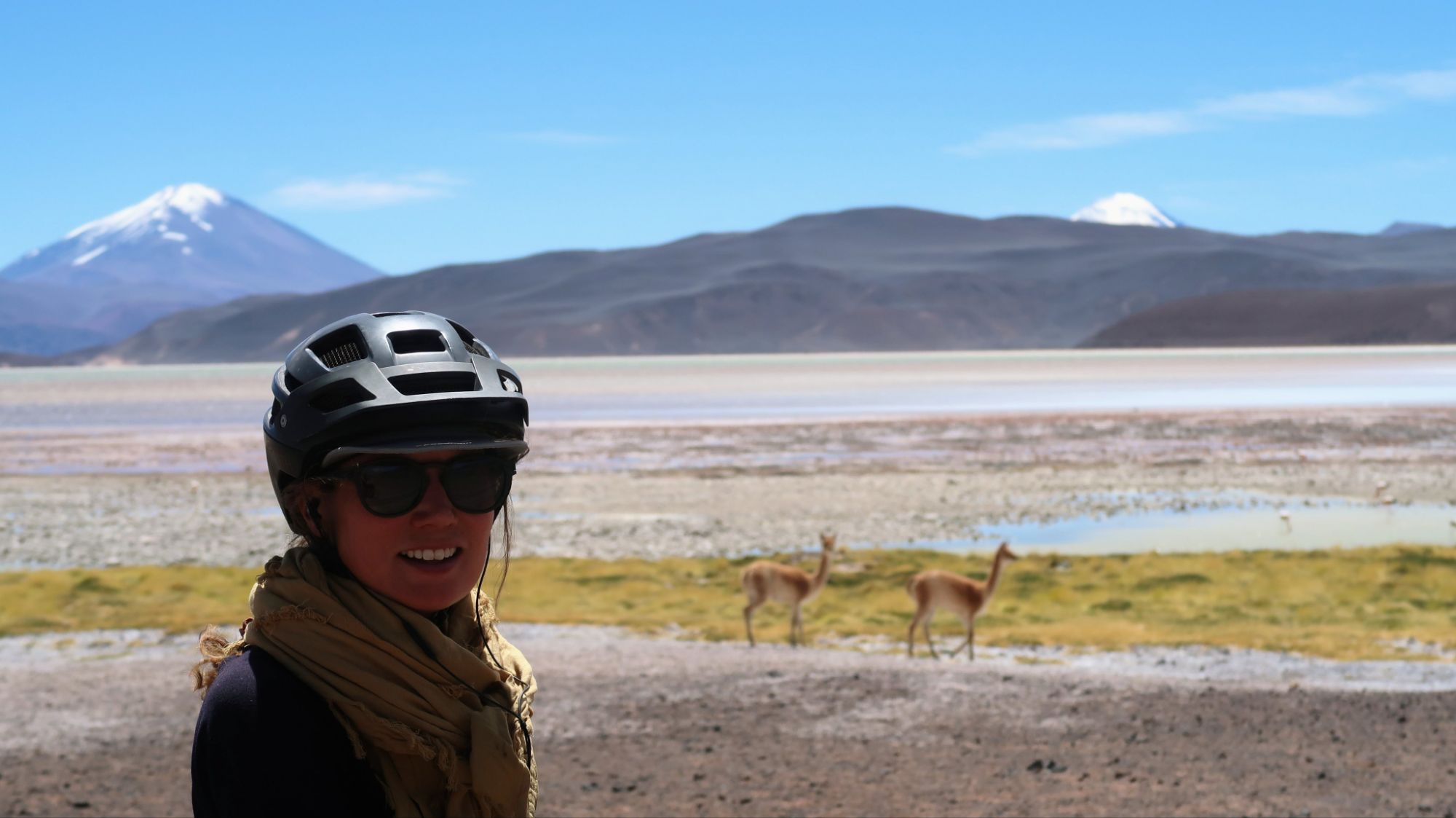
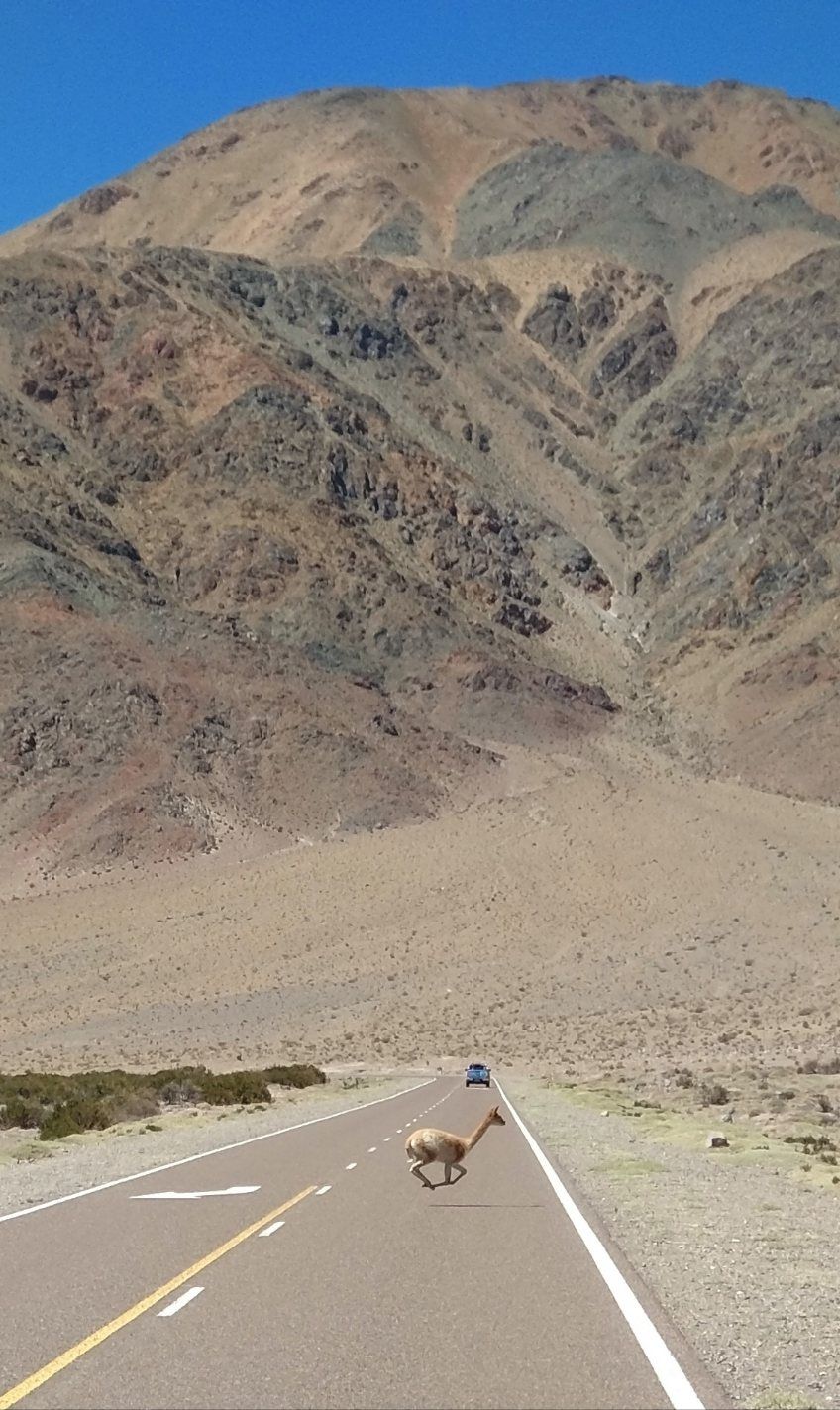
The next section of the route would see us climb up and over our first pass of 4030m. As we rode on higher, our pace definitely slowed due to the altitude. It felt like an achy heaviness in our legs, as though we’d already done a day of many miles even though we’d just started. But the scenery around us was becoming less and less vegetated, the colours of the minerals in the rock becoming more obvious. It was our first sight of the Puna and we excitedly drank it in. Cresting the top of the first pass (of many!) we couldn’t quite believe our peggy-leggies had propelled us this high in two and a half days, so we paused to congratulate them! Throughout the afternoon we enjoyed more incredible scenery, the mineral colours of the rocks contrasting with the white of the salt lakes, as well as riding alongside herds of running Guanaco – It was pretty special.
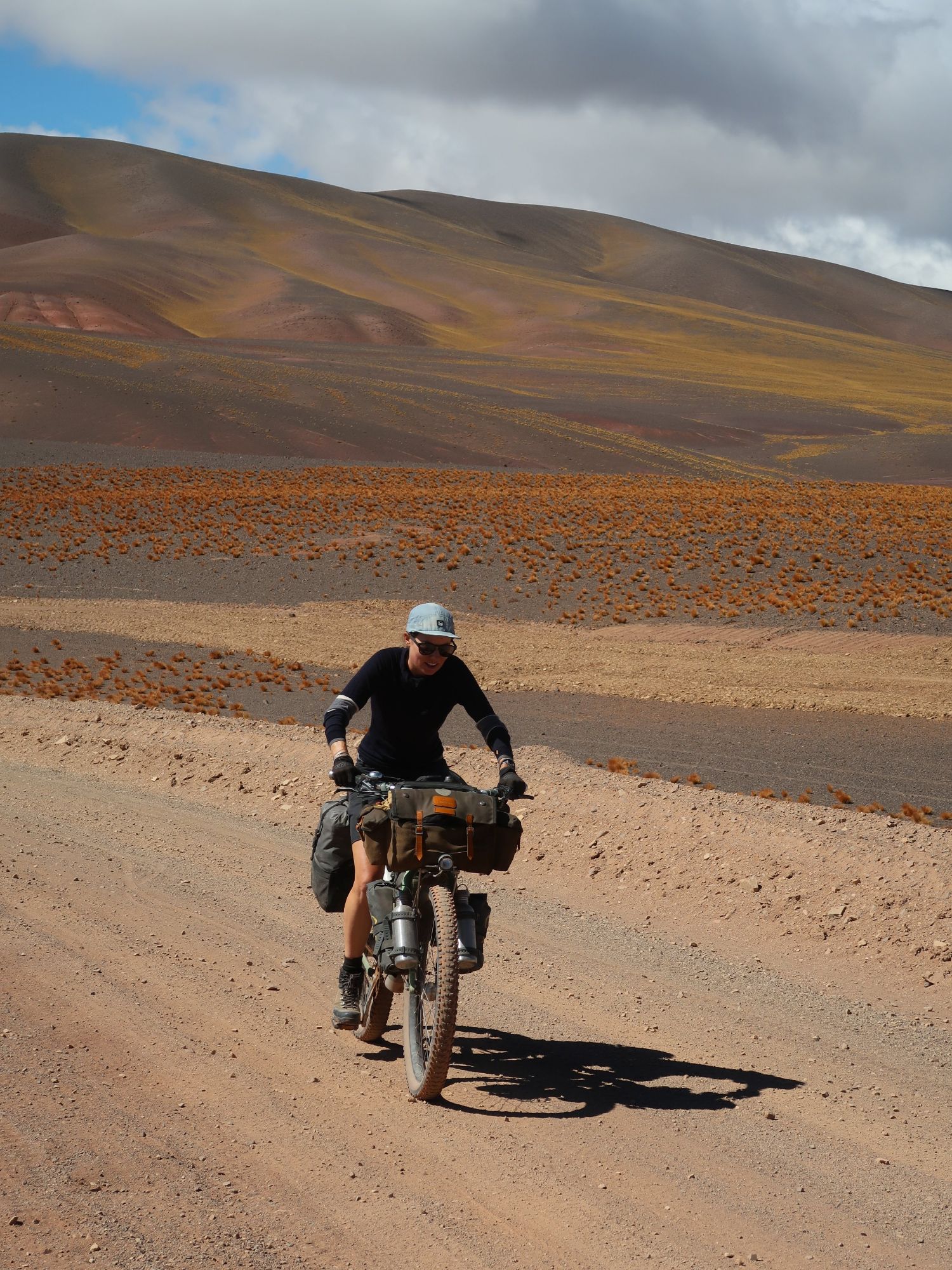
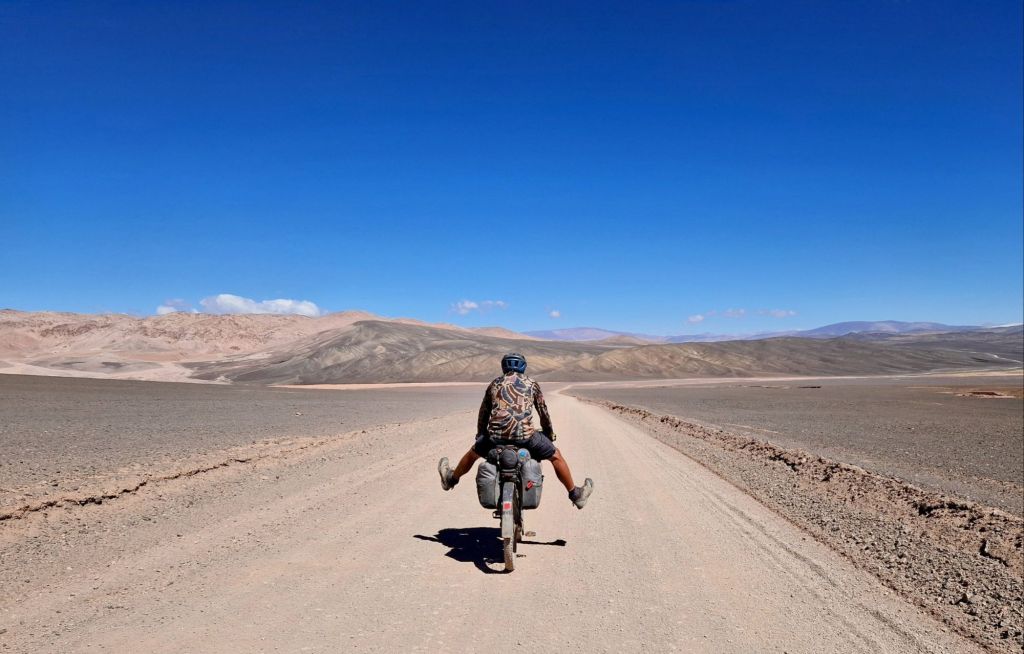
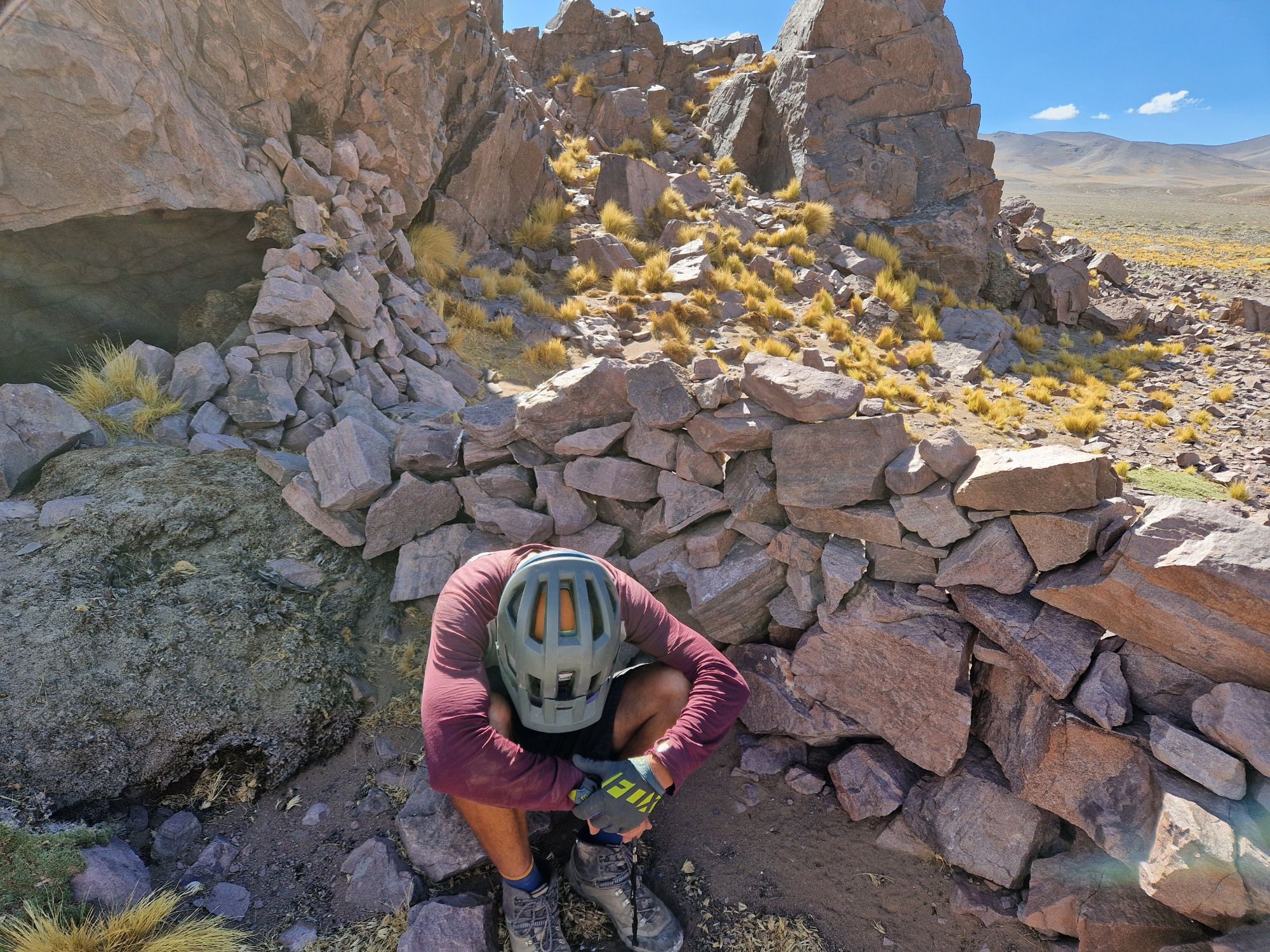
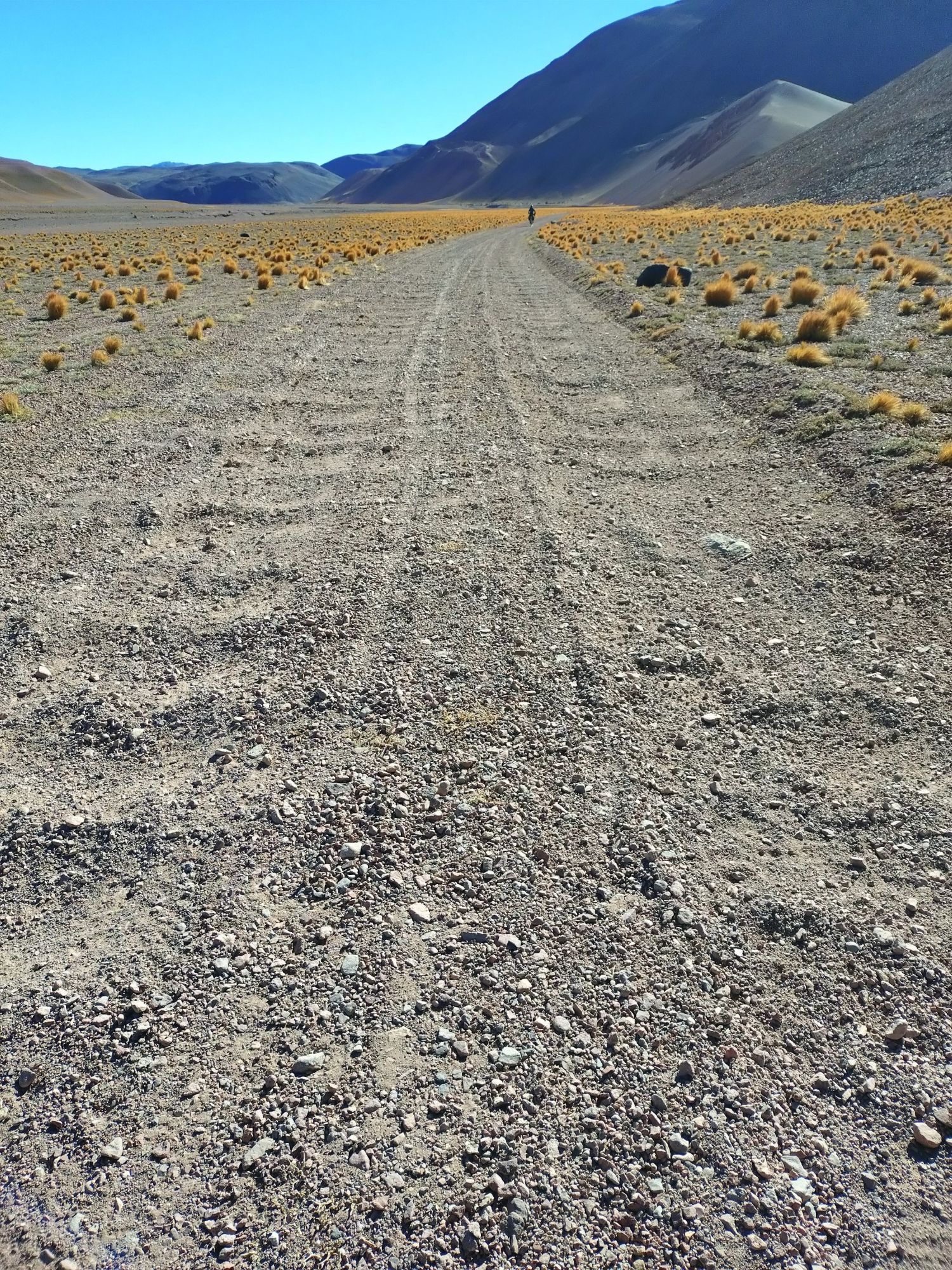
But, as is always the case, the good times didn’t last forever, the road quality deteriorated and the wind started to pick up as the day progressed. It lead to many deep sand induced, slow, sideways falls for me, which was pretty frustrating and exhausting in equal measure. It slowed my progress to a crawl. The aim of reaching out intended camp spot at the next possible water point before nightfall was slowing slipping away from us. We realised we needed to make some decisions – Do we fill with water now as we pass the small, merky, sludgey water pools used by the Guanaco and then carry that additional weight for the next couple of hours so we can camp anywhere? or do we ride on without refilling out bottles, to the supposedly better quality water in the creek (which may or may not be dried up at this time of year) in which case we would have no choice but to make it there and not stop earlier!?! After a bit of a tired and snappy discussion, we decided to refill our water bottles earlier as we could see there was some water in the pools and there was no guarantee of water at the creek later on. By the time we’d finished faffing with decisions and refilling water bottles, cycling into the headwind had become a battle and we were both feeling exhausted – the altitude taking its toll. We stopped at a large boulder known as the Refugio de Piedra. The name is somewhat misleading, as it’s definitely not a Refugio – it’s just a large rock with a small wall made from more rocks. Sadly, this was the best wind shelter we knew of for the next 50km so we decided to stop for the night. We spent some time putting Ted’s Yorkshire drystone walking skills to good use by building the wall higher and set the tent up behind it. Crawling inside the tent felt like entering a calm cocoon where the noise of the wind and the battering of your face finally stopped. It was lovely. As we lay in our sleeping bags, the wall we had dutifully rebuilt seemed to do very little against the harsh winds as they rattled and shook our little tent. It felt like we were on a boat in a storm. I tried to sleep and just kept thinking ‘surely it will die down by morning’ but with every stronger gust, and every shake of the flysheet, sleep still eluded me.
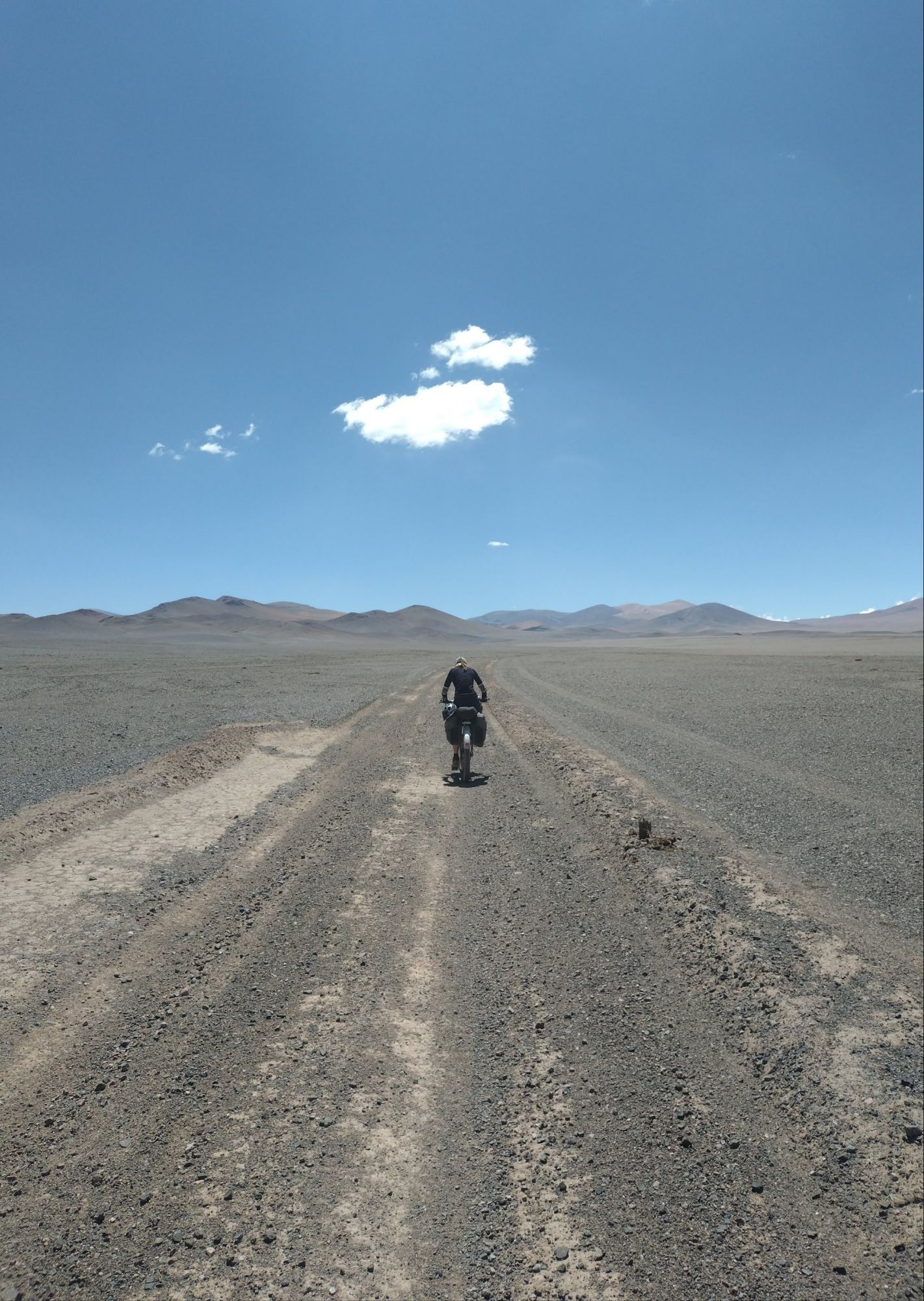
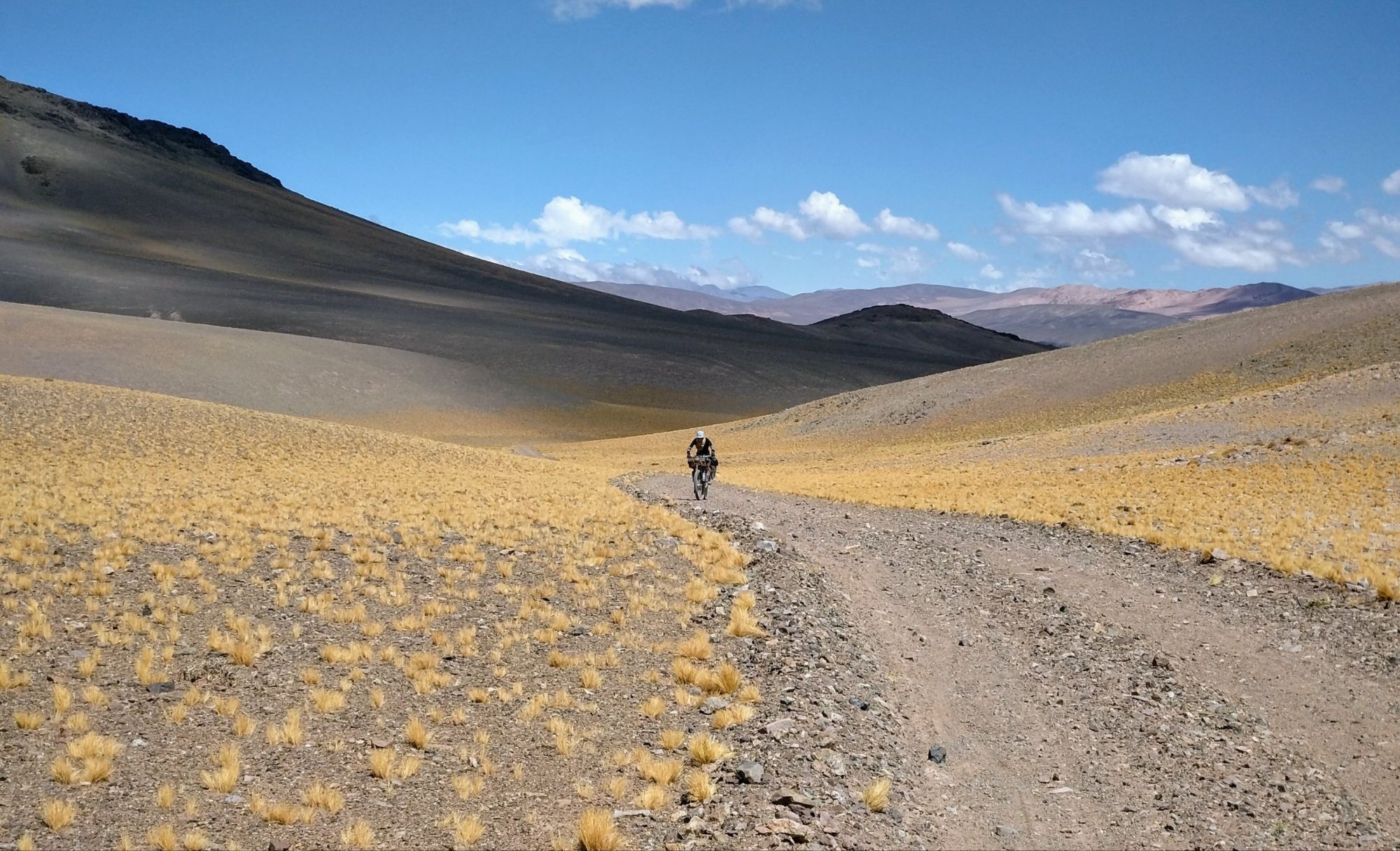
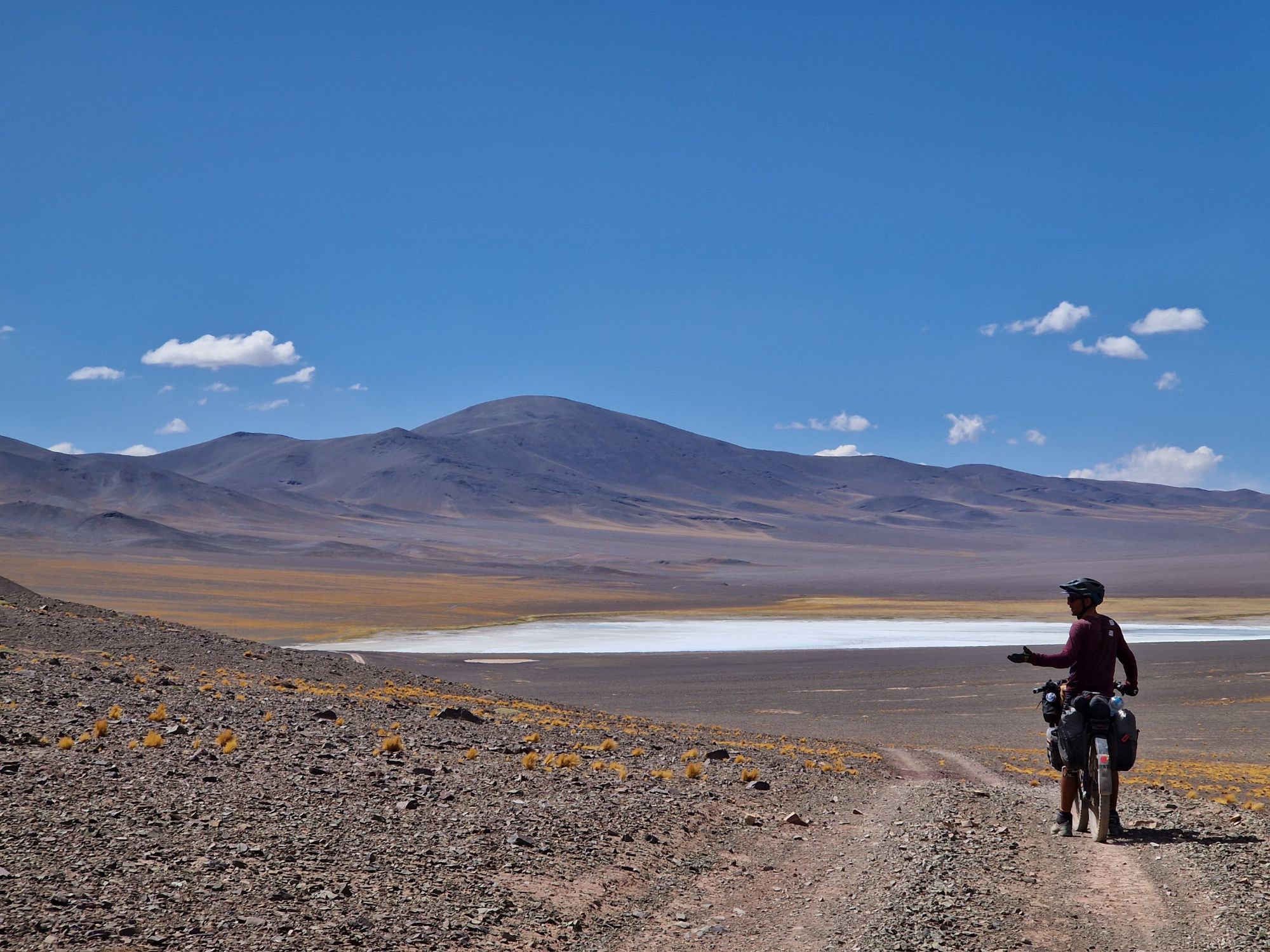
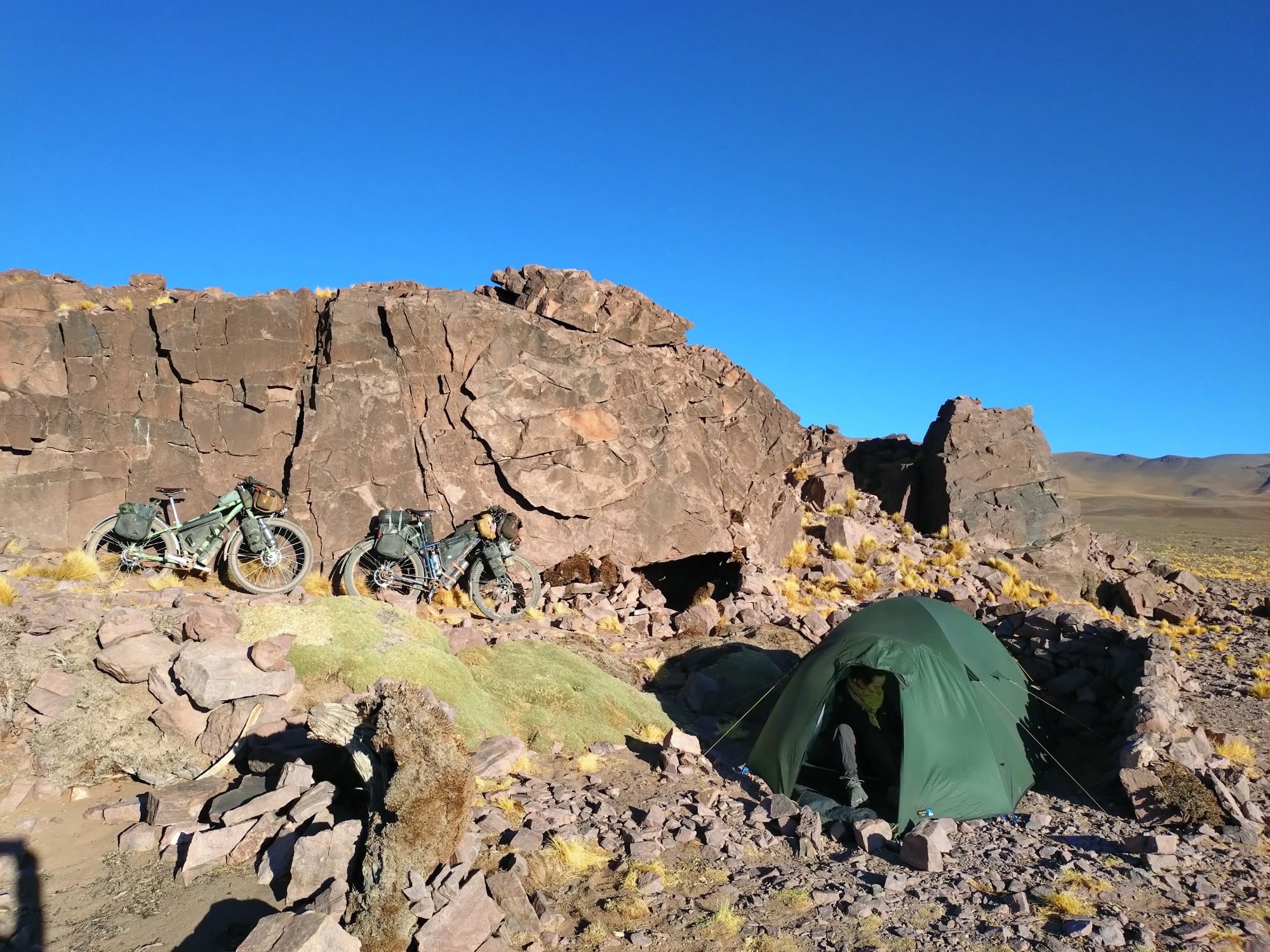
As my alarm sounded at 6am the answer was clear – the wind had not calmed down and yes I’d been awake most of the night. If anything, the wind had got worse overnight. We questioned whether moving on at all was sensible, but figured that even slow progress is still progress, and we could be waiting a week for the wind to calm. So we packed up and headed out. It was definitely slow progress. Riding was pretty much impossible. We pushed, heaved and pulled our bikes all the way up to the creek we thought about reaching the night before. The 11km had taken us all morning. It was exhausting. Plus to add to everything, the creek was totally dry. We dug a couple of deeper holes in the river bed and as we waited they slowly filled with dirty, sandy water, but it was water at least. We felt pretty deflated. It had been such a struggle to move forward in the crazy headwind and it didn’t show any signs of abating. Thankfully, an early lunch of a few wraps and some tea and biscuits perked us up enough to get us over the next pass – There’s nothing that can’t be fixed with tea and biscuits!
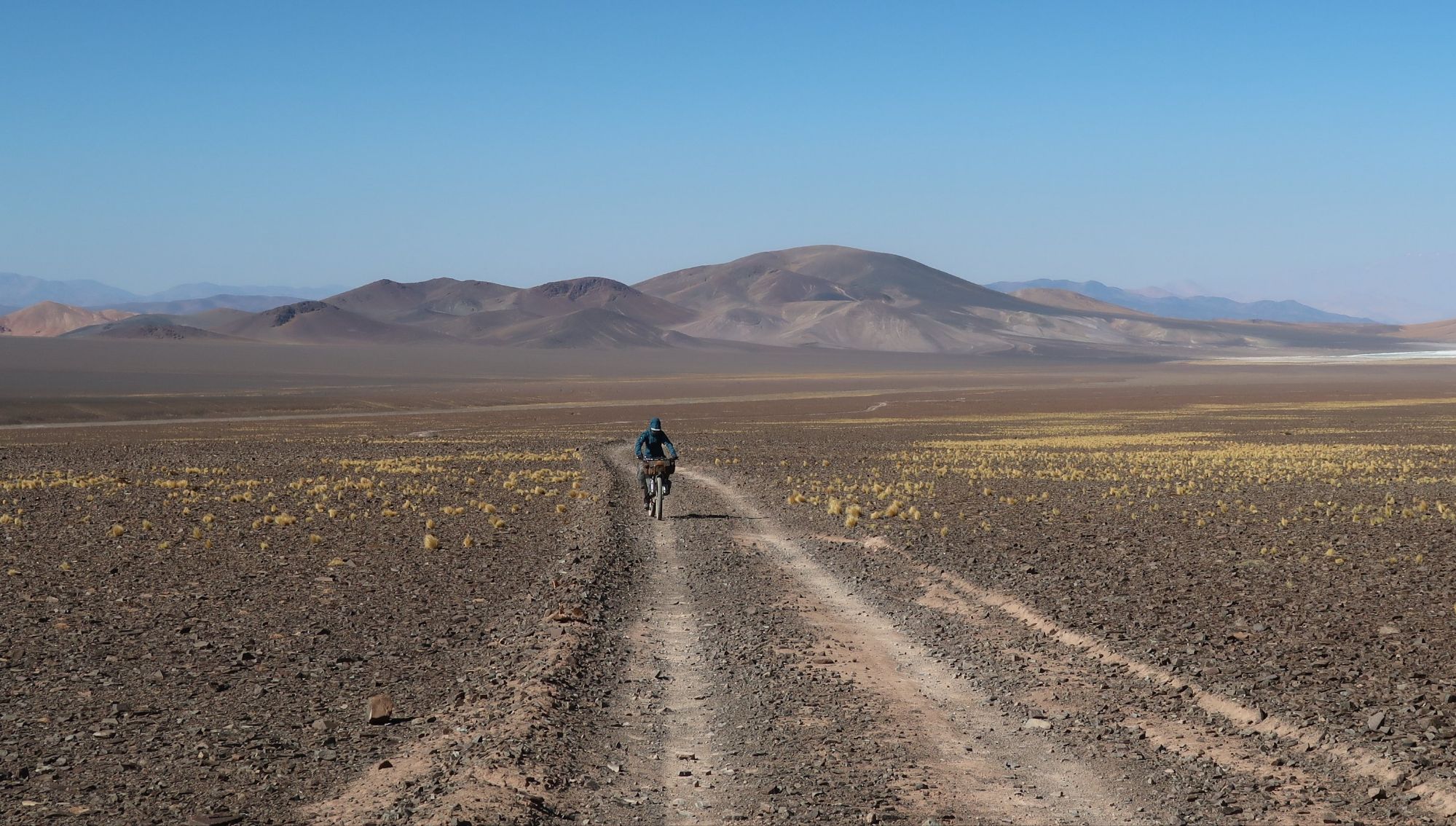
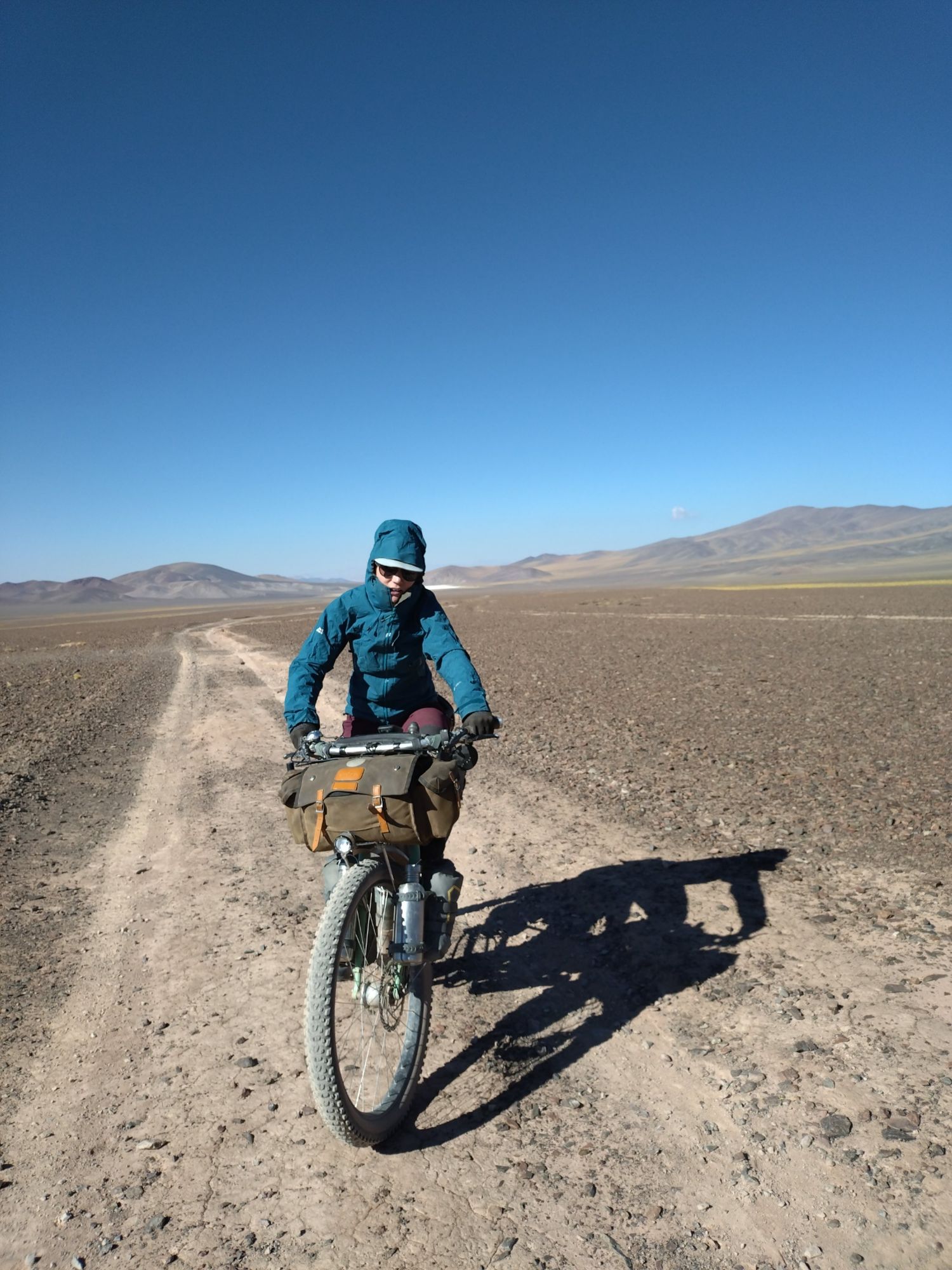
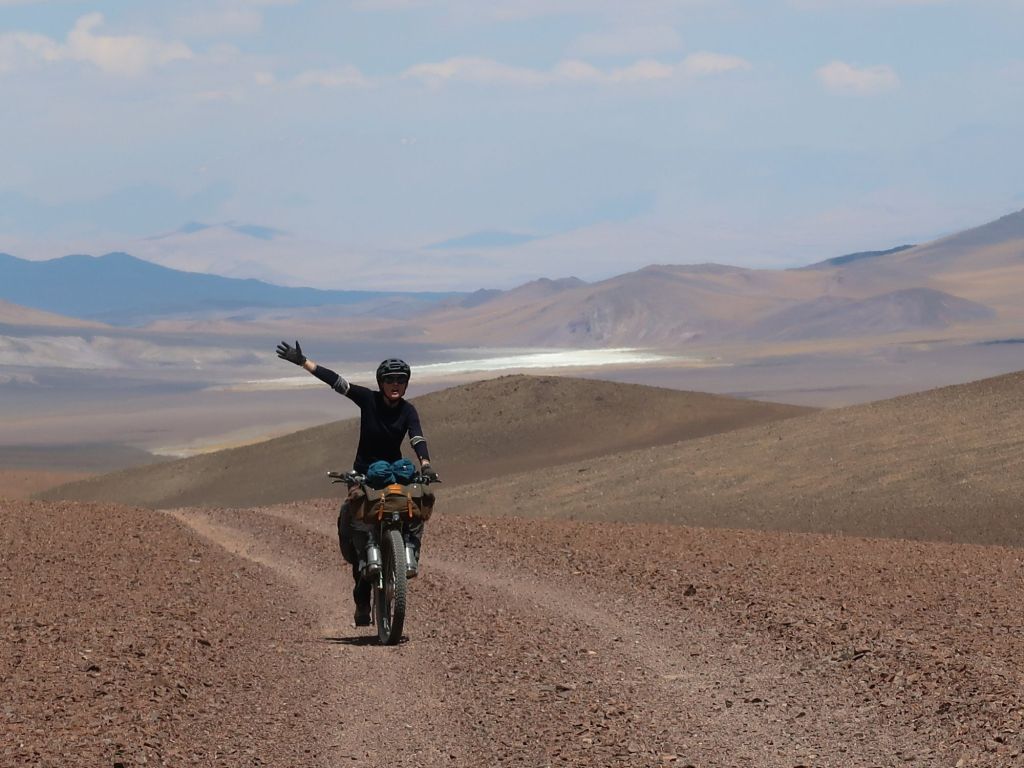
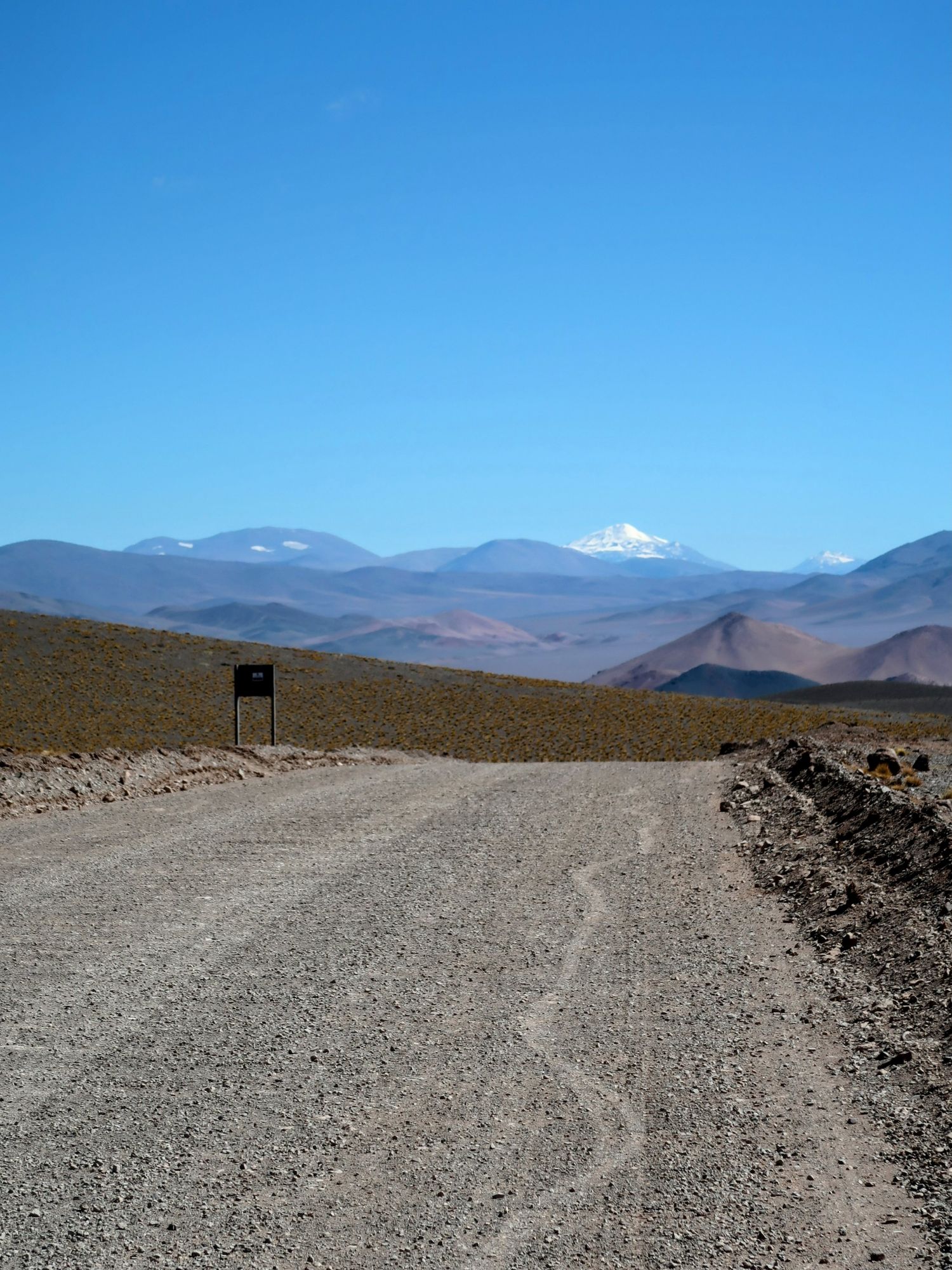
As we crested the top of the climb, the snow capped peaks of some of the 6000-ers this route is famous for, came into view, emerging from the mirage on the horizon. Incredible. And below them was the salt lake of Laguna Brava – A huge white salt lake – surrounded by hills of colourful minerals. It was truly stunning. As we descended towards it, the fickle wind flipped directions and became a side/ tailwind for us. Thankfully giving us some speed along a very sandy soft and super corrugated section of the track.
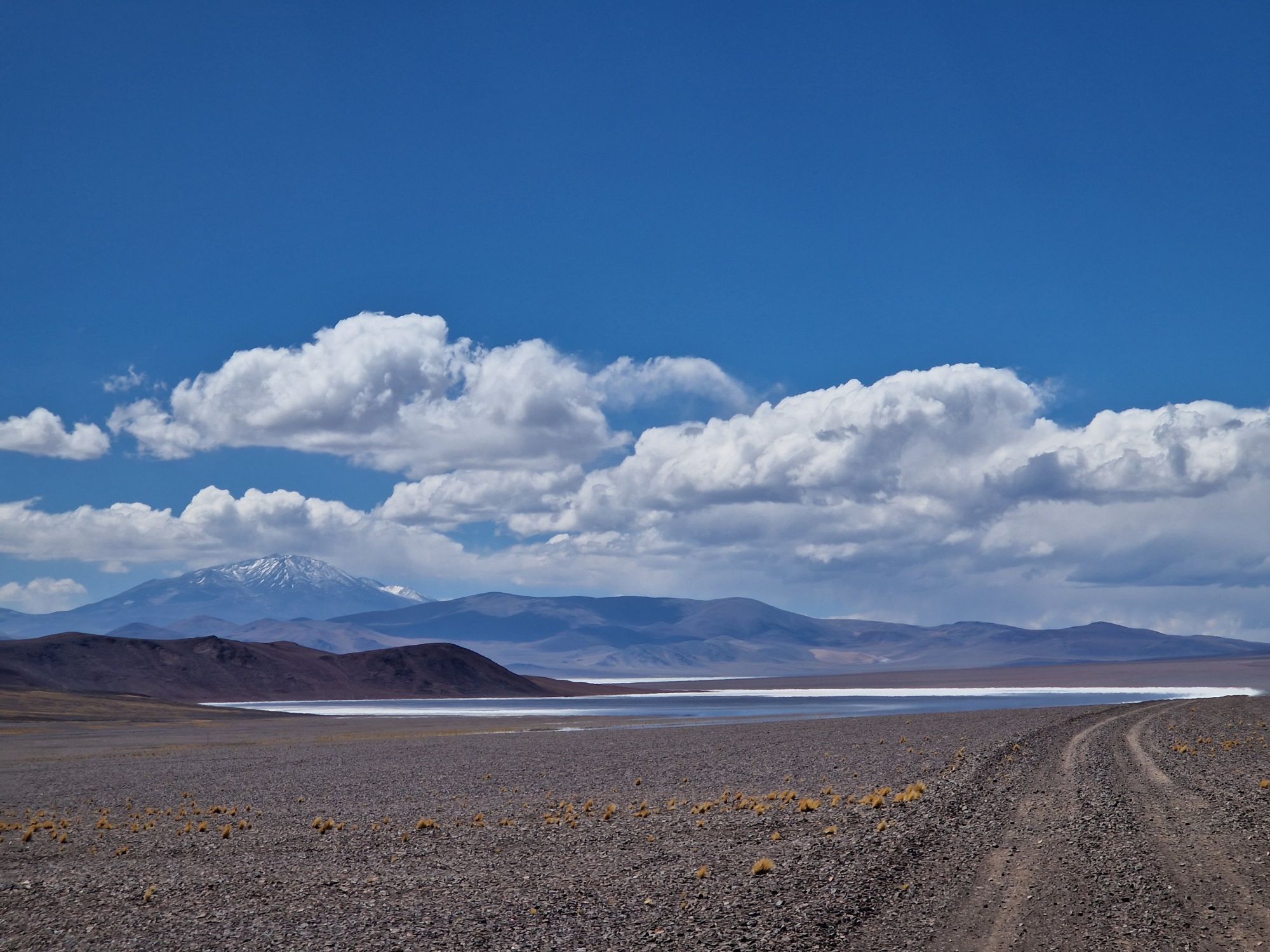
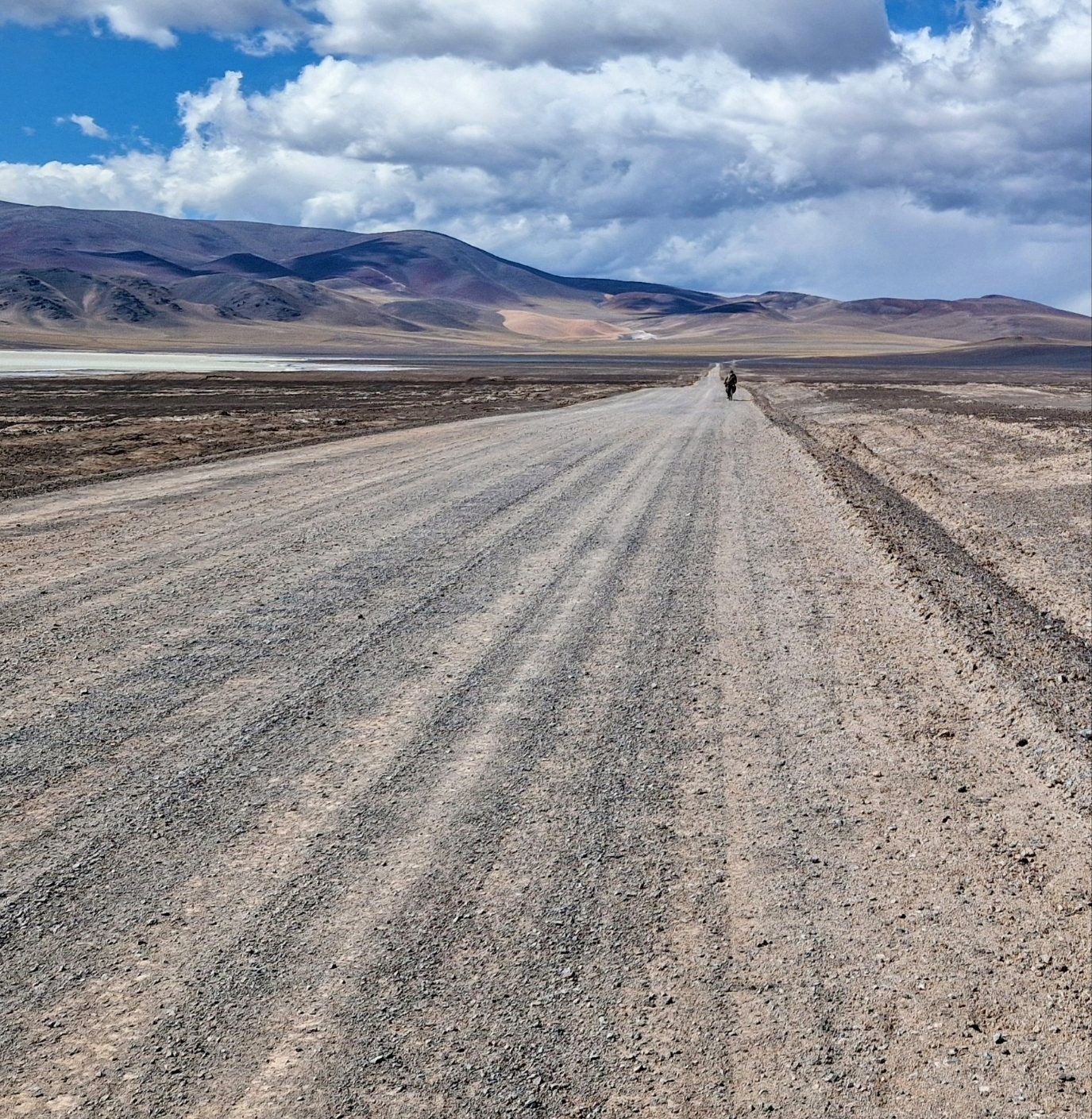
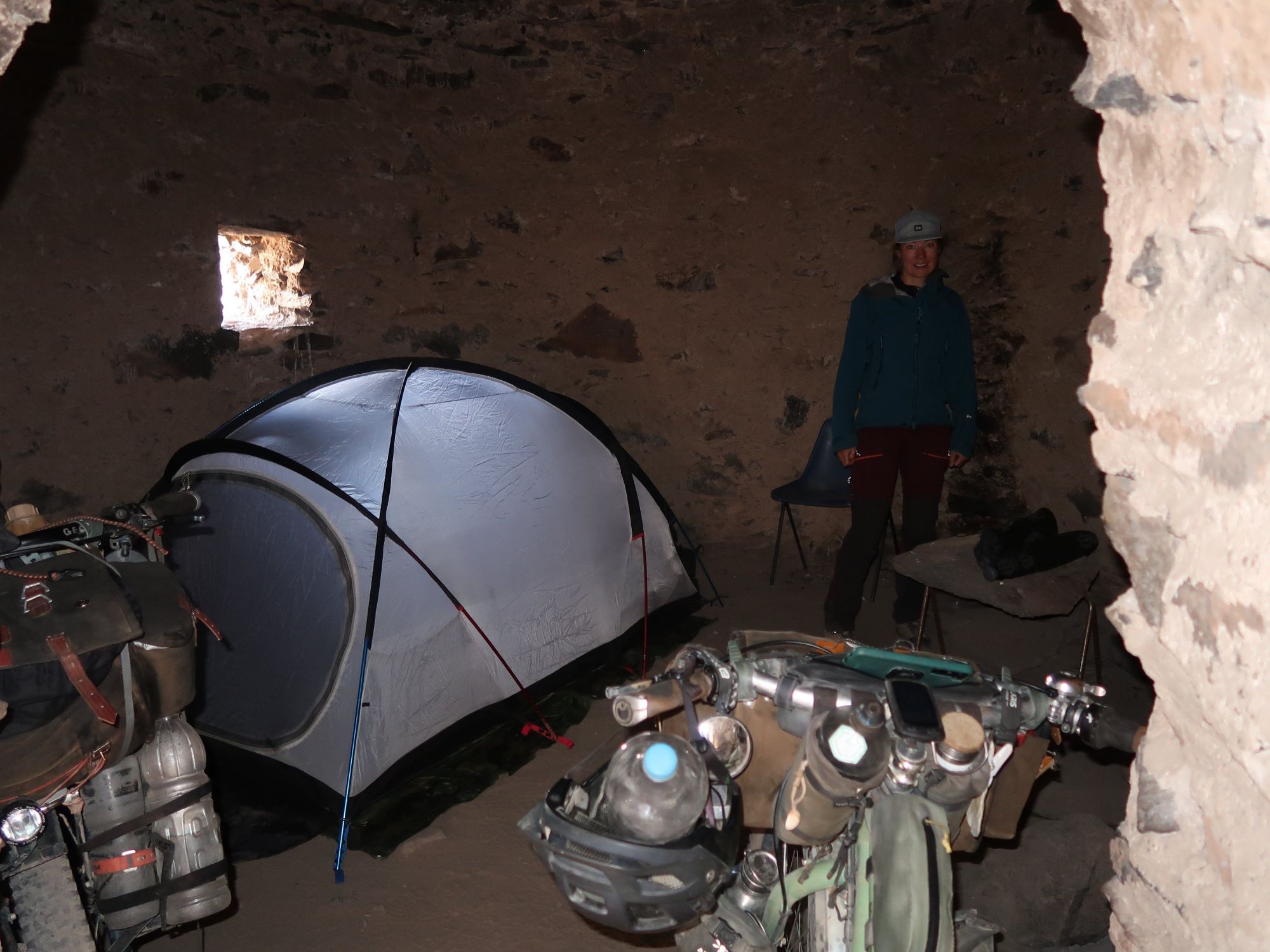
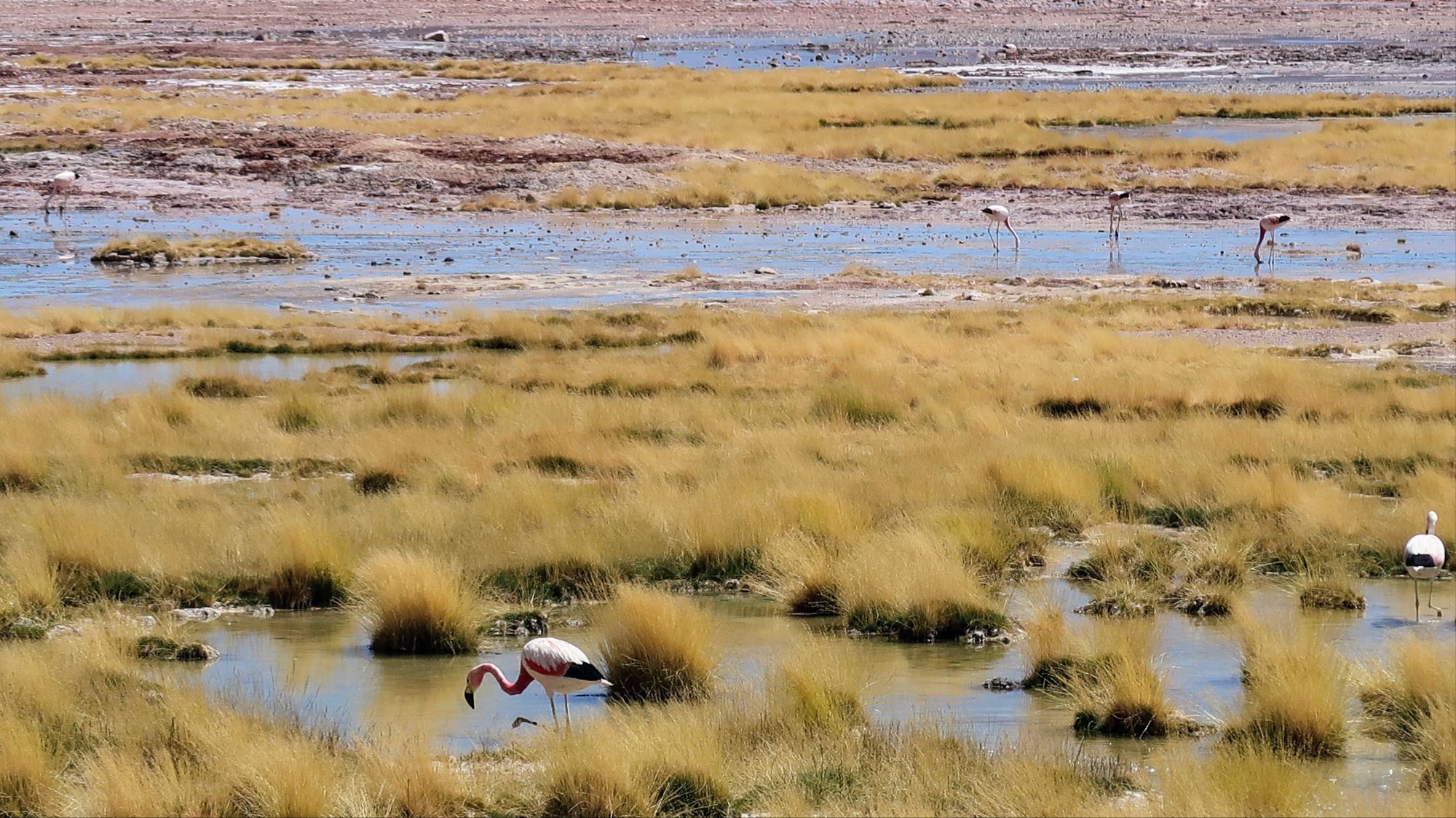
After a couple of hours we could see the historic stone Laguna Brava Refugio in the distance (about 6km away) and knew that’s where we were aiming for, but reaching it took us another 3 hours! The headwind returned, and a small detour off the road to collect some water (from pools complete with a dead flamingo!) slowed our progress to a glacial pace. Ted was really suffering with the altitude, so much so that he was behind me (pretty much unheard of!) and drawing comparisons to feeling as exhausted as when he’d previously finished Strathpuffer (the legendary 24hr bike race in Scotland). The small climb up the soft sandy corrugated track to the refugio felt like an endurance event in itself, pushing the bike and trying to breathe in the thin air. I just kept telling myself to push the bike fifty steps up the hill then I could treat myself to a pause to try and gulp in some extra oxygen – by which point managing another fifty steps seemed doable. Slowly, slowly, we made it. Both exhausted, but enjoying the golden glow of the setting sun over the amazing view and thankful for the shelter of the refugio. We then set about the time consuming process of filtering and boiling all our water to make sure it was dead flamingo free.
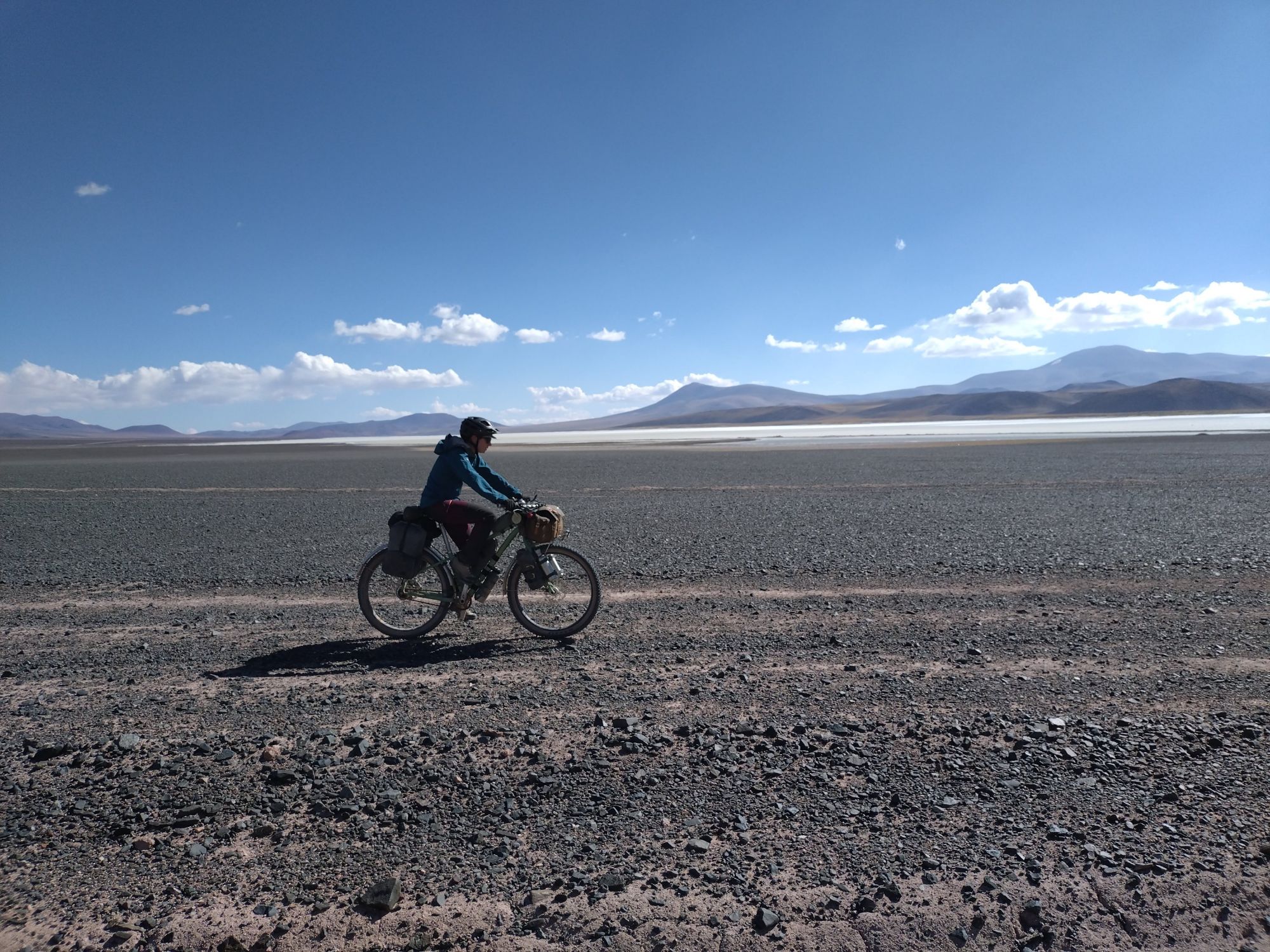
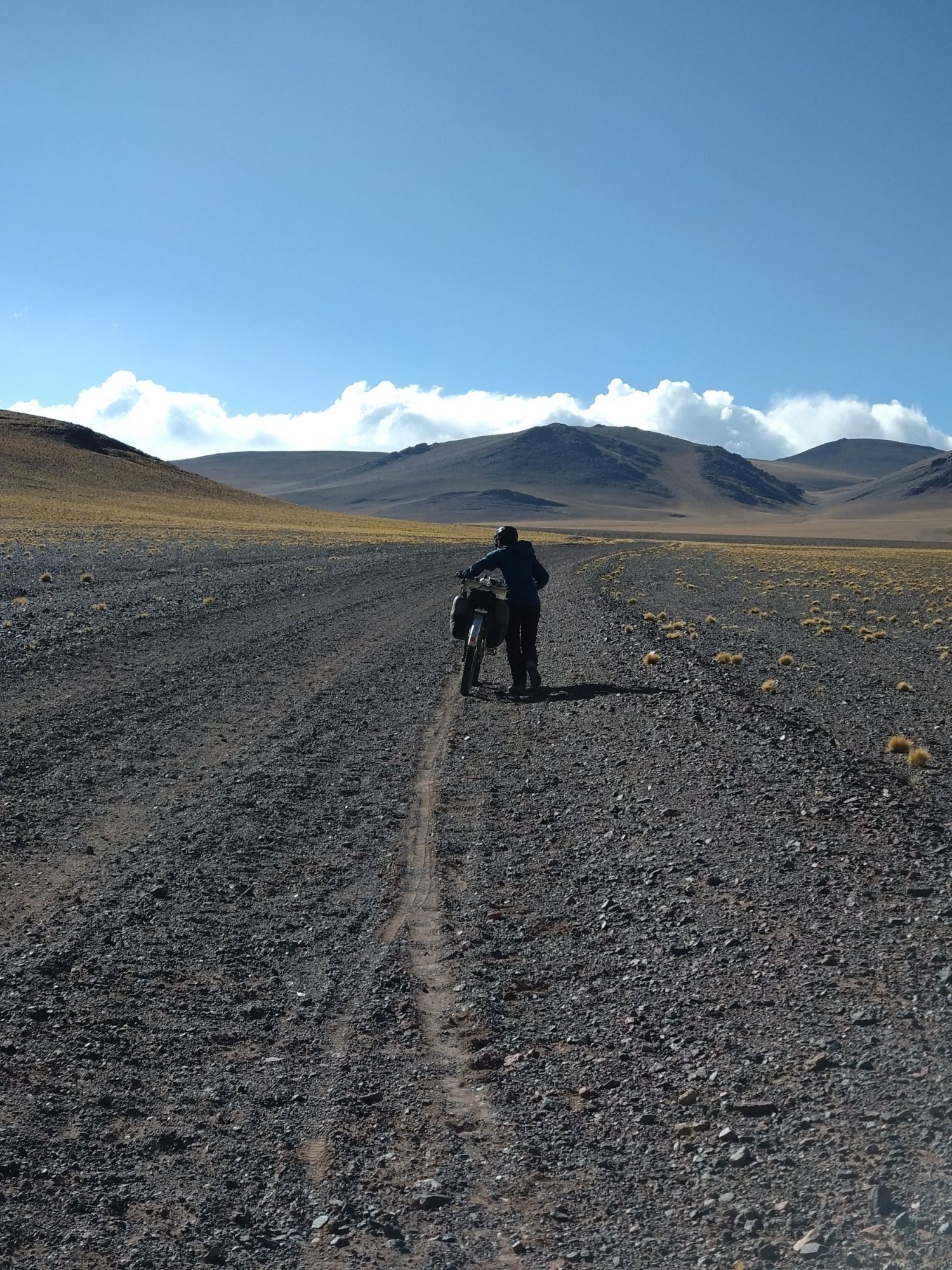
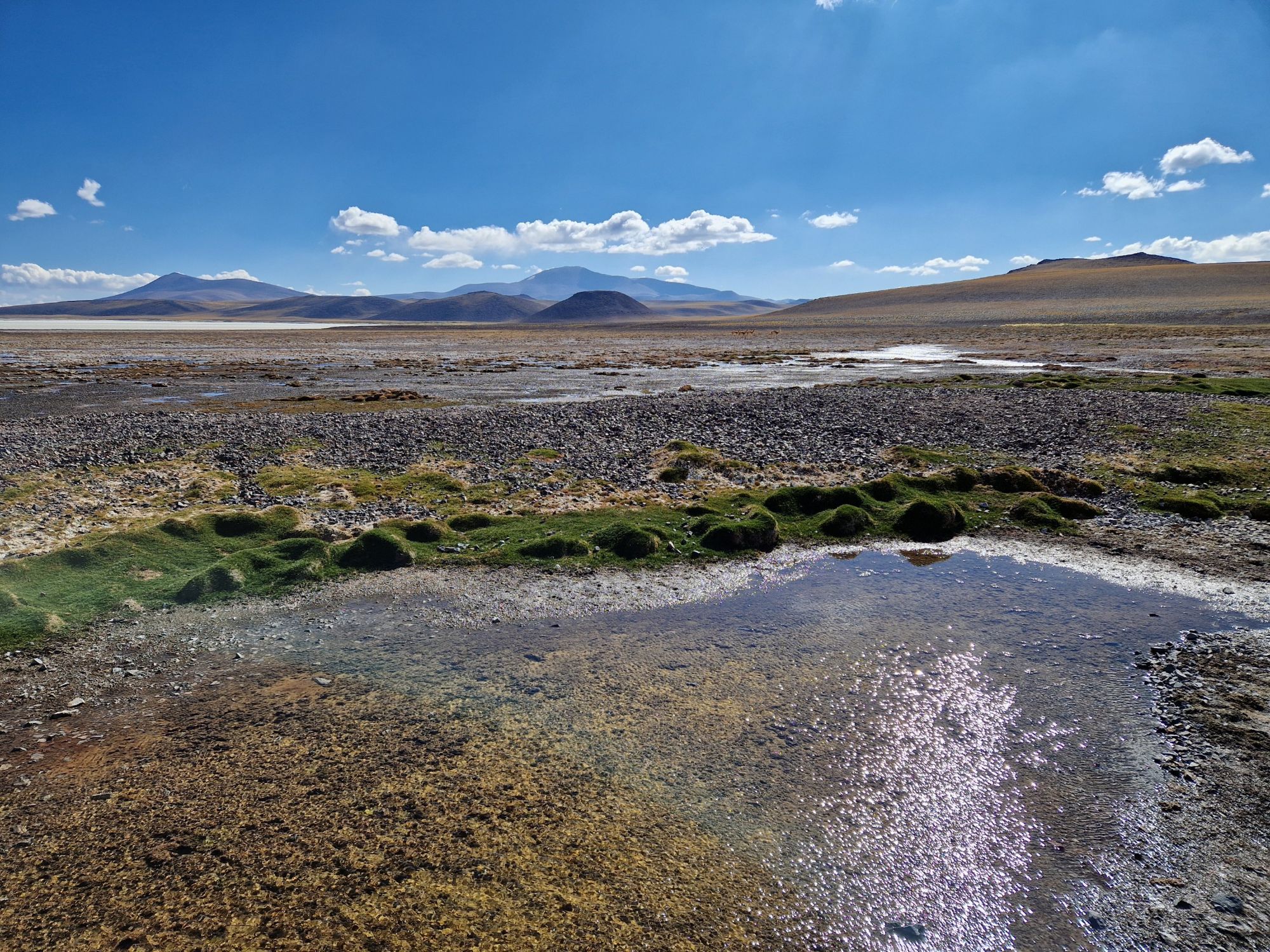
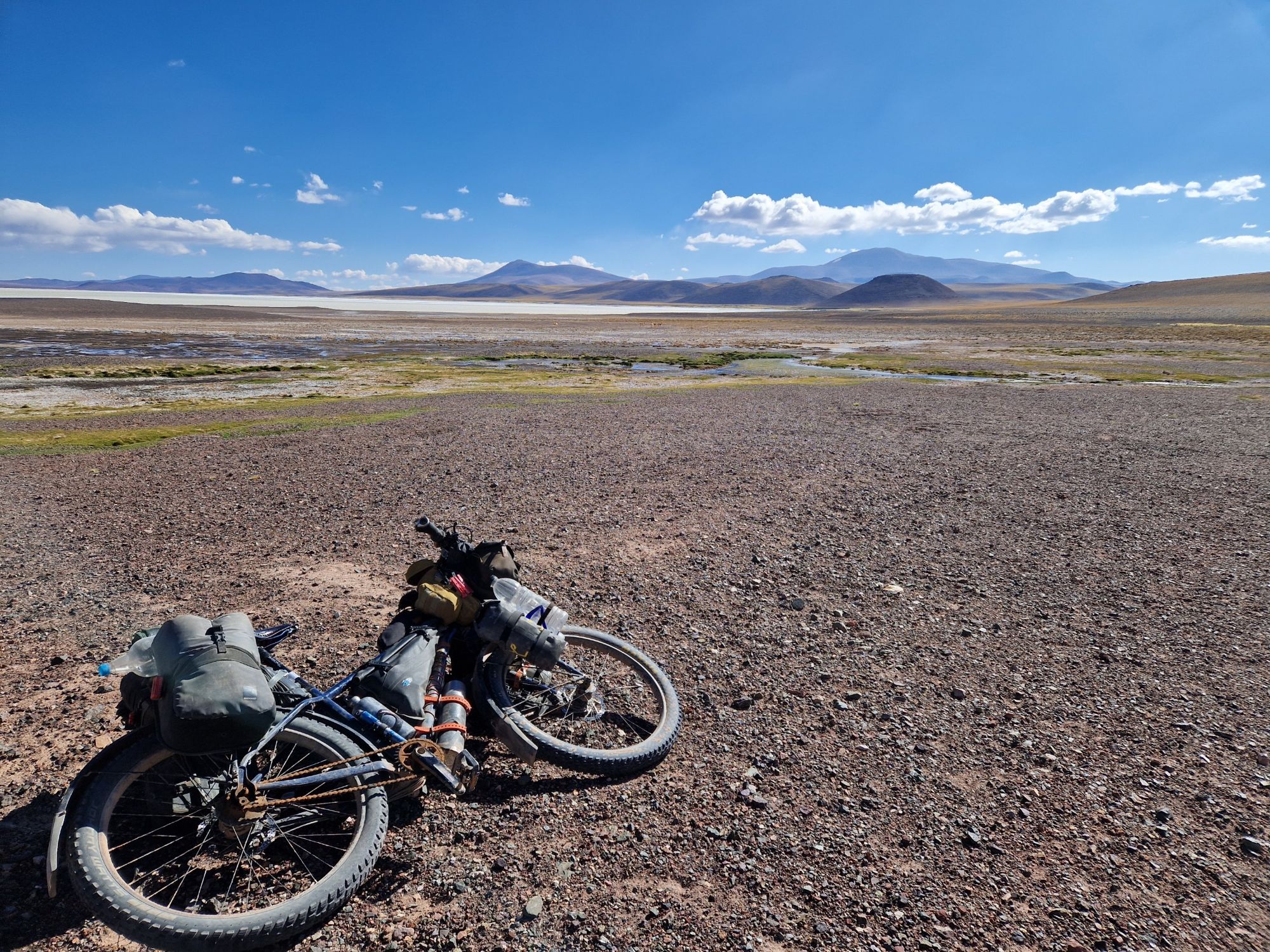
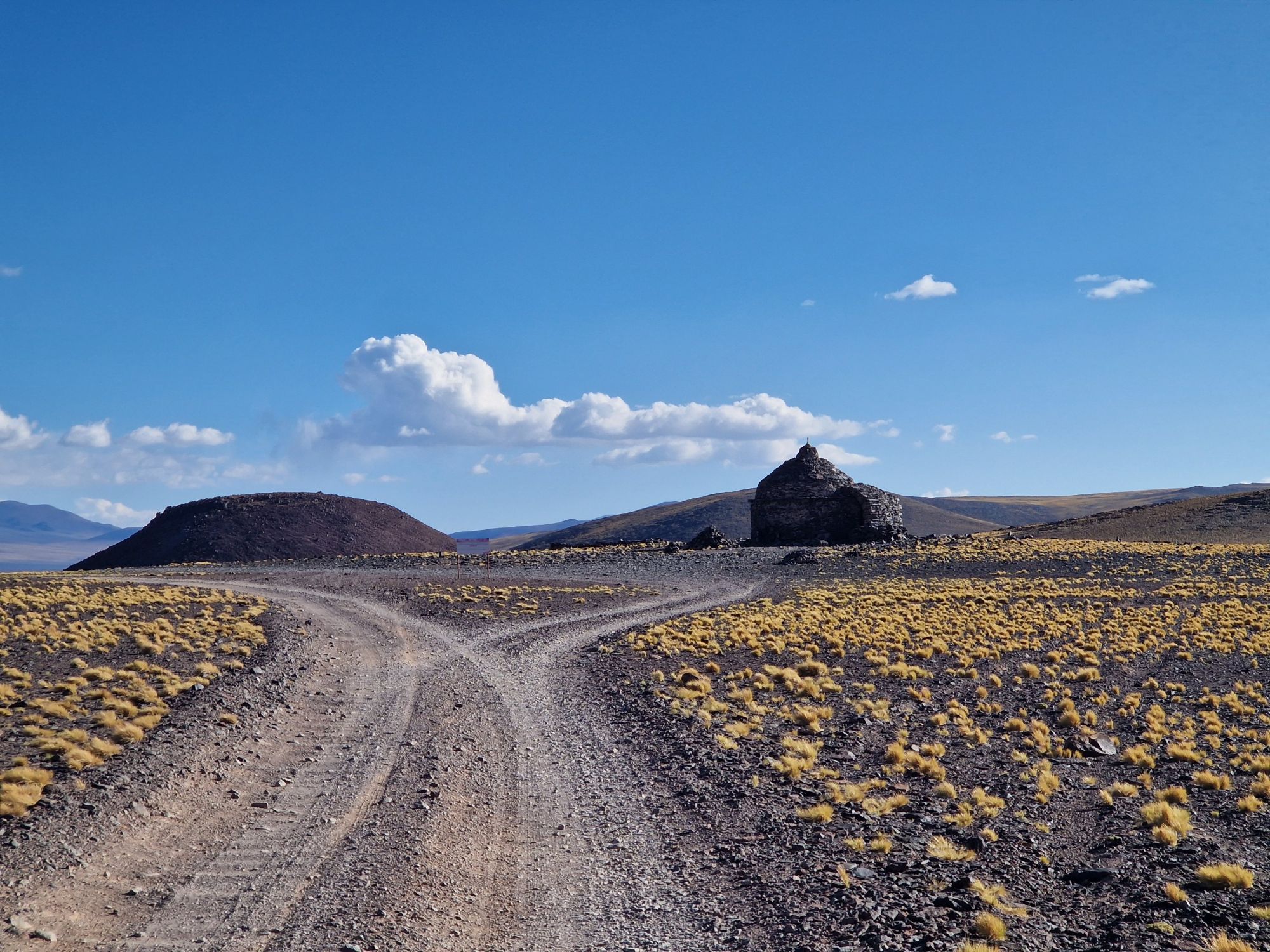
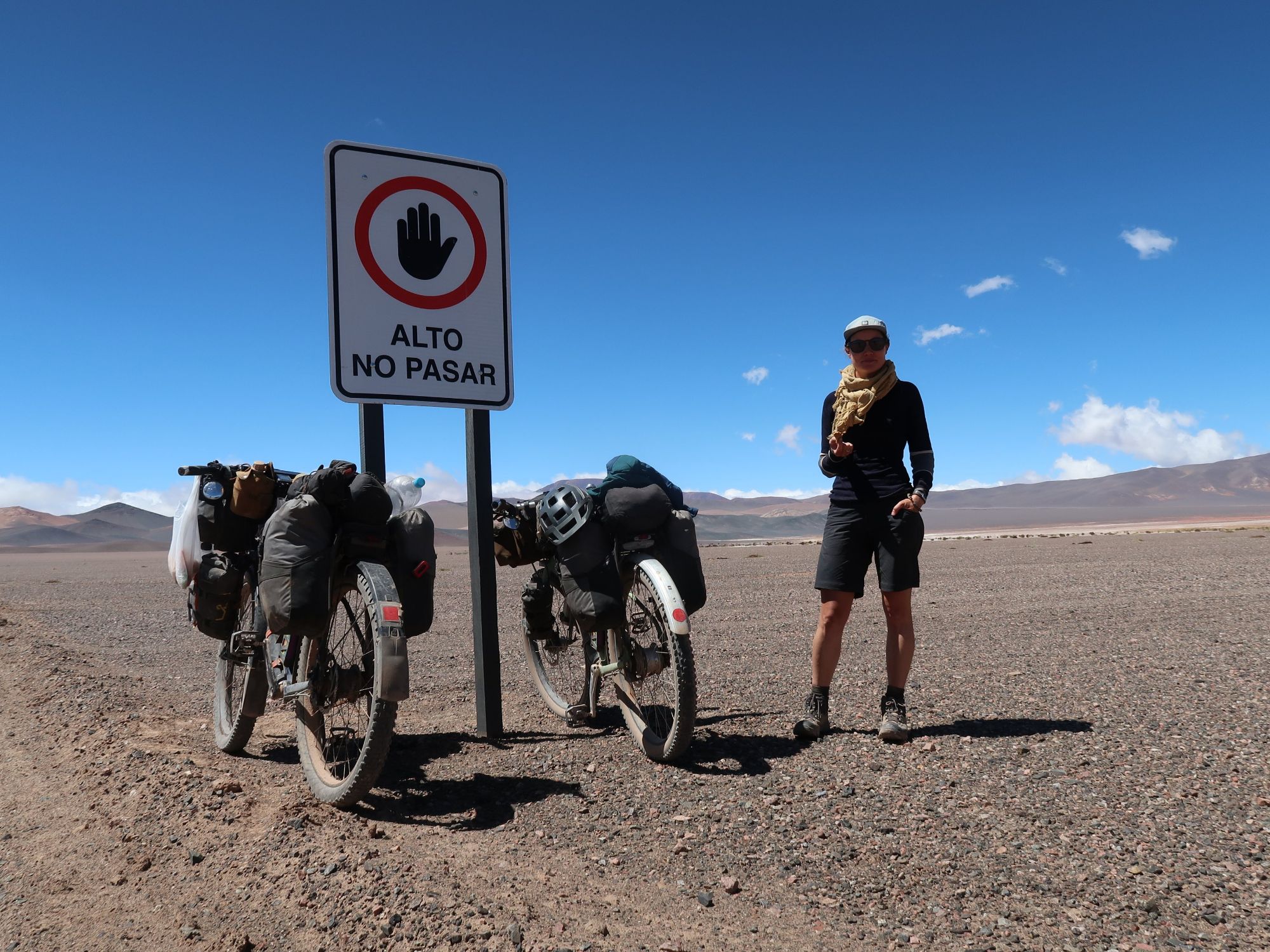
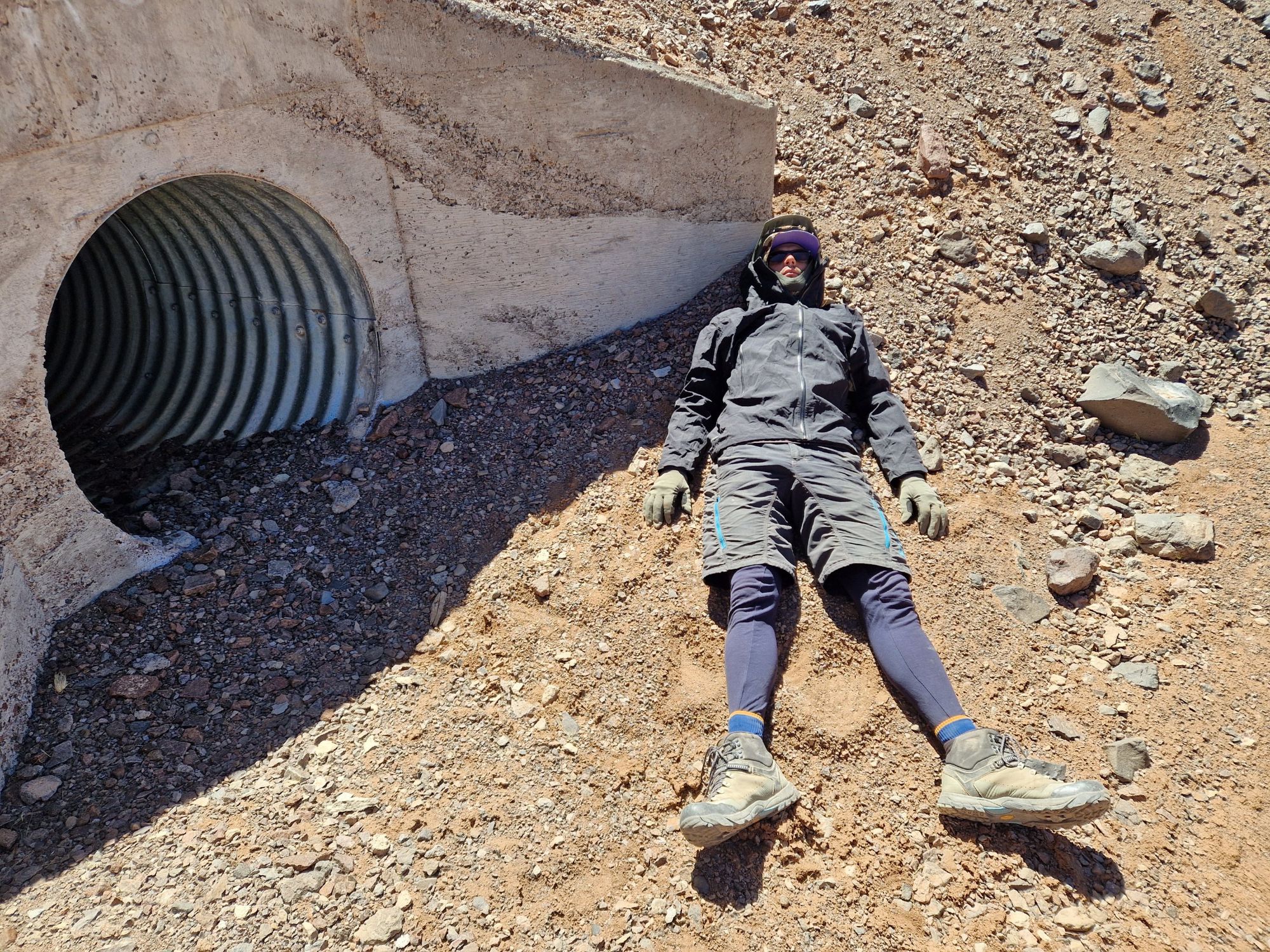
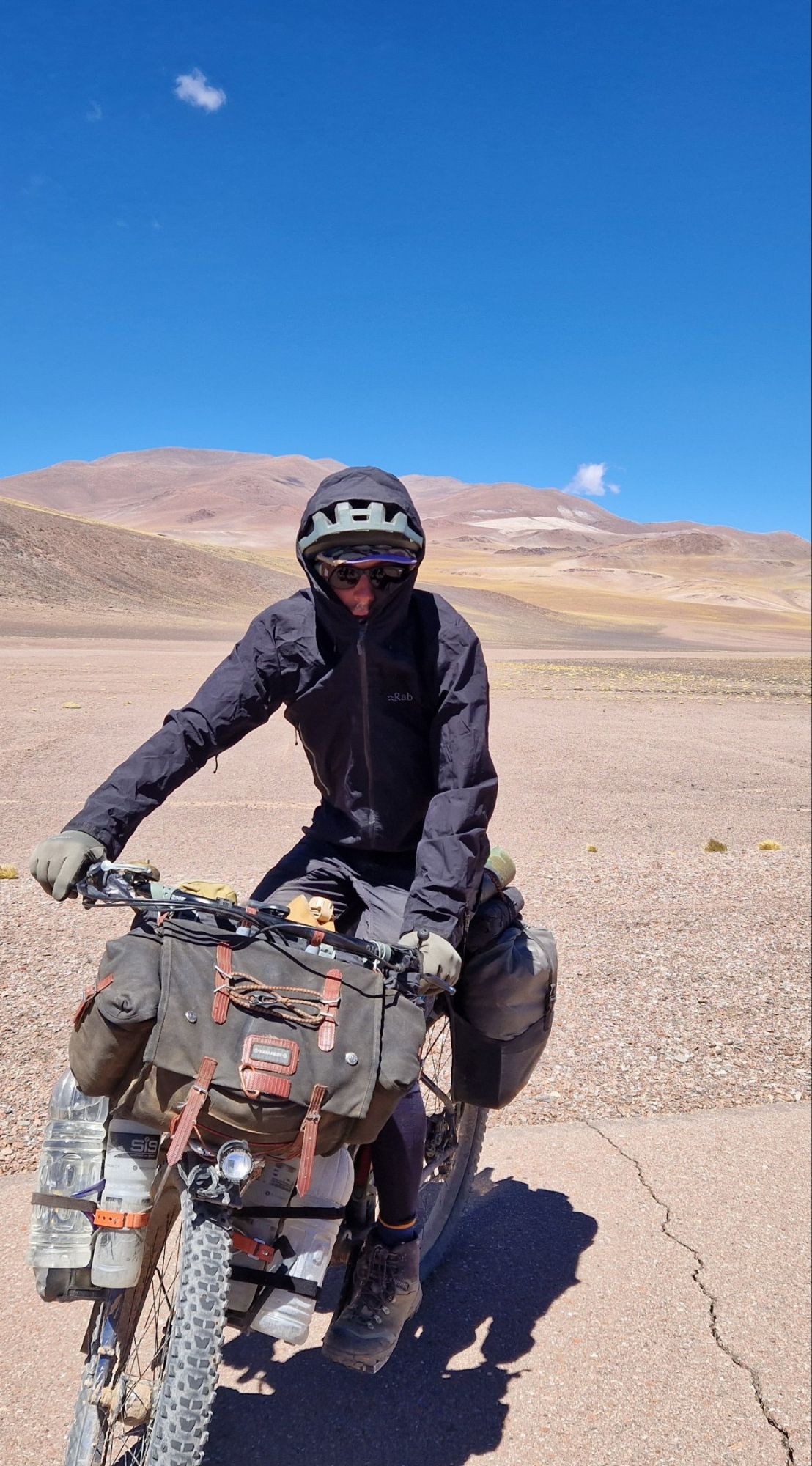
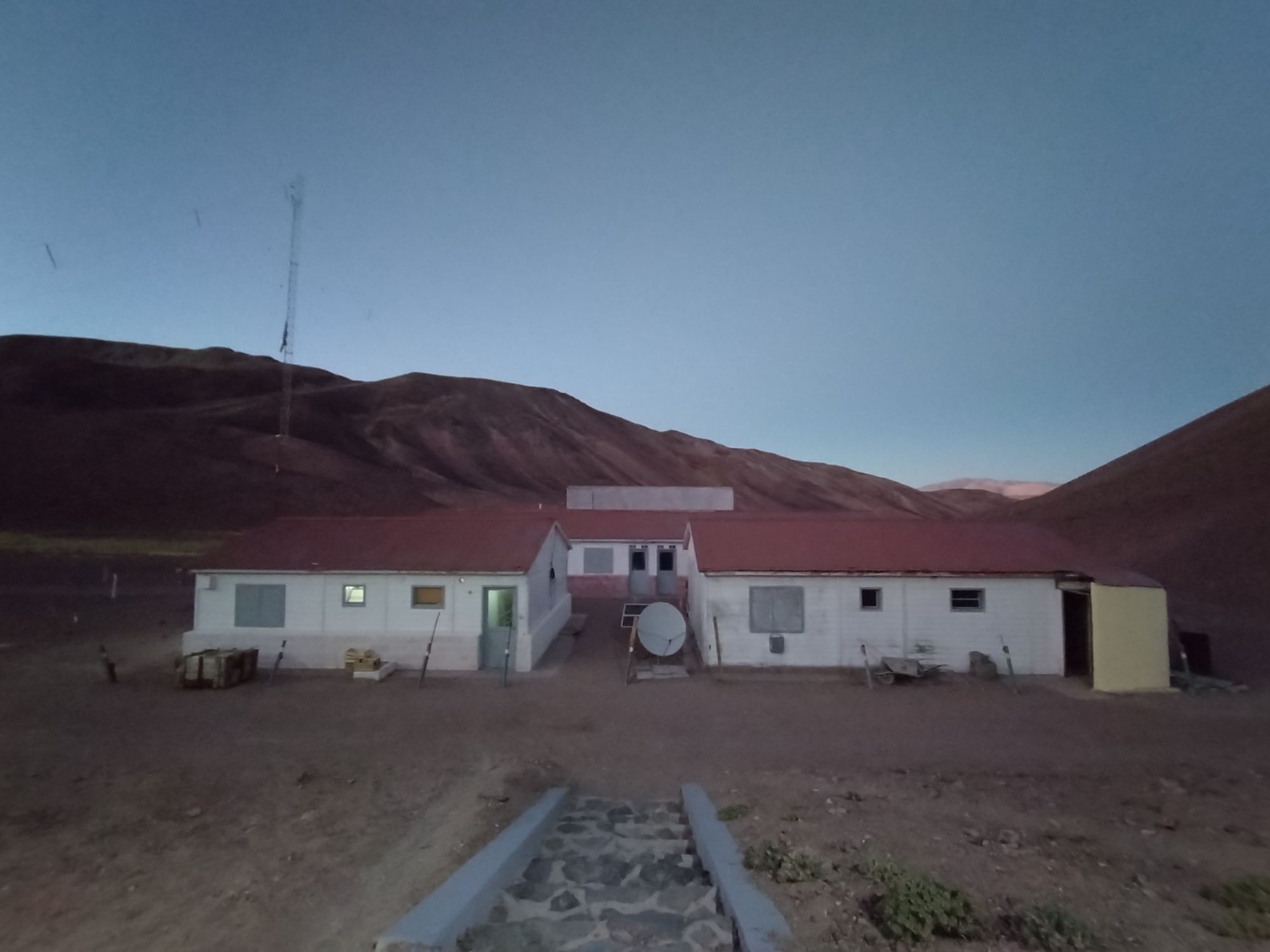
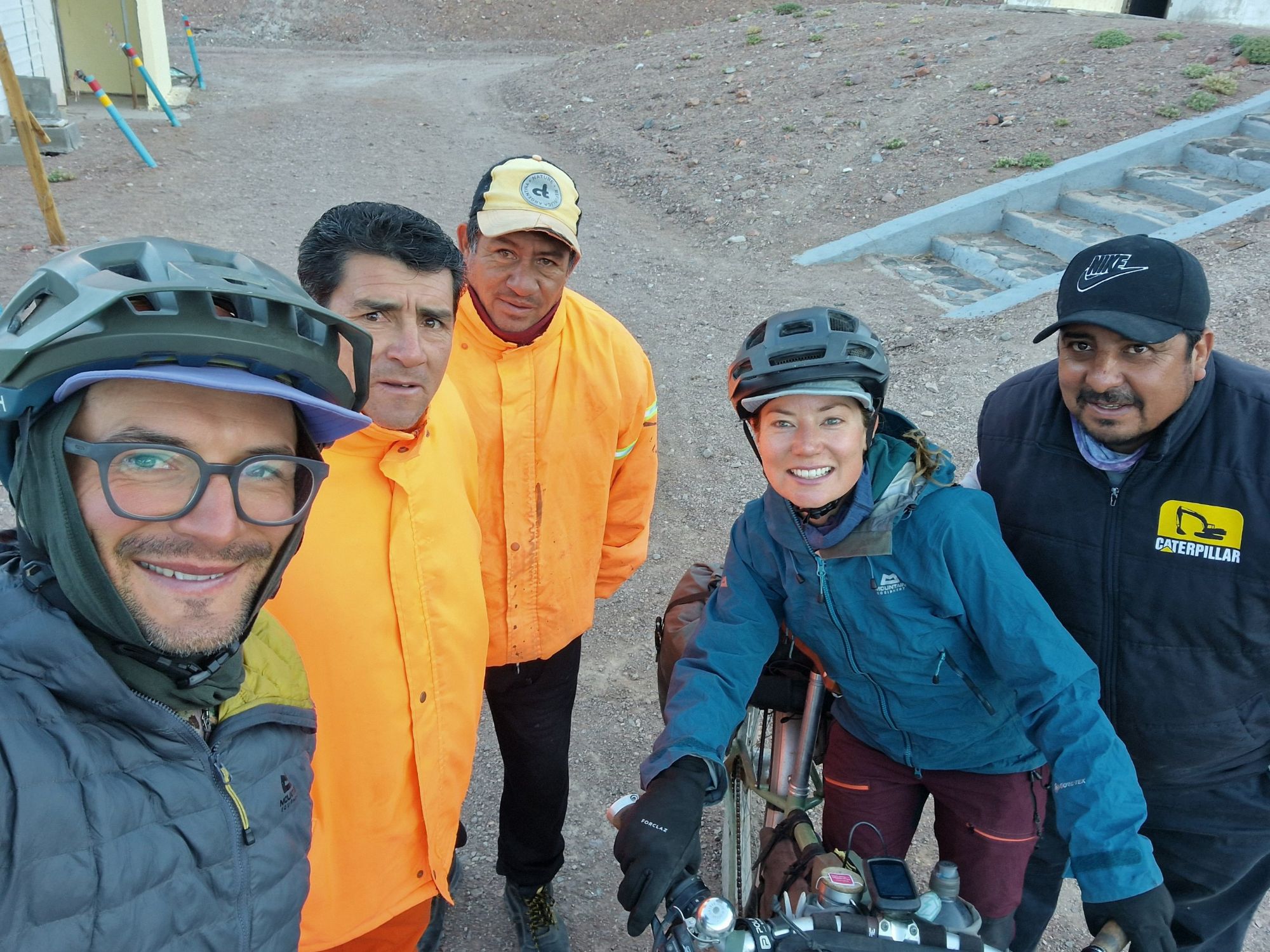
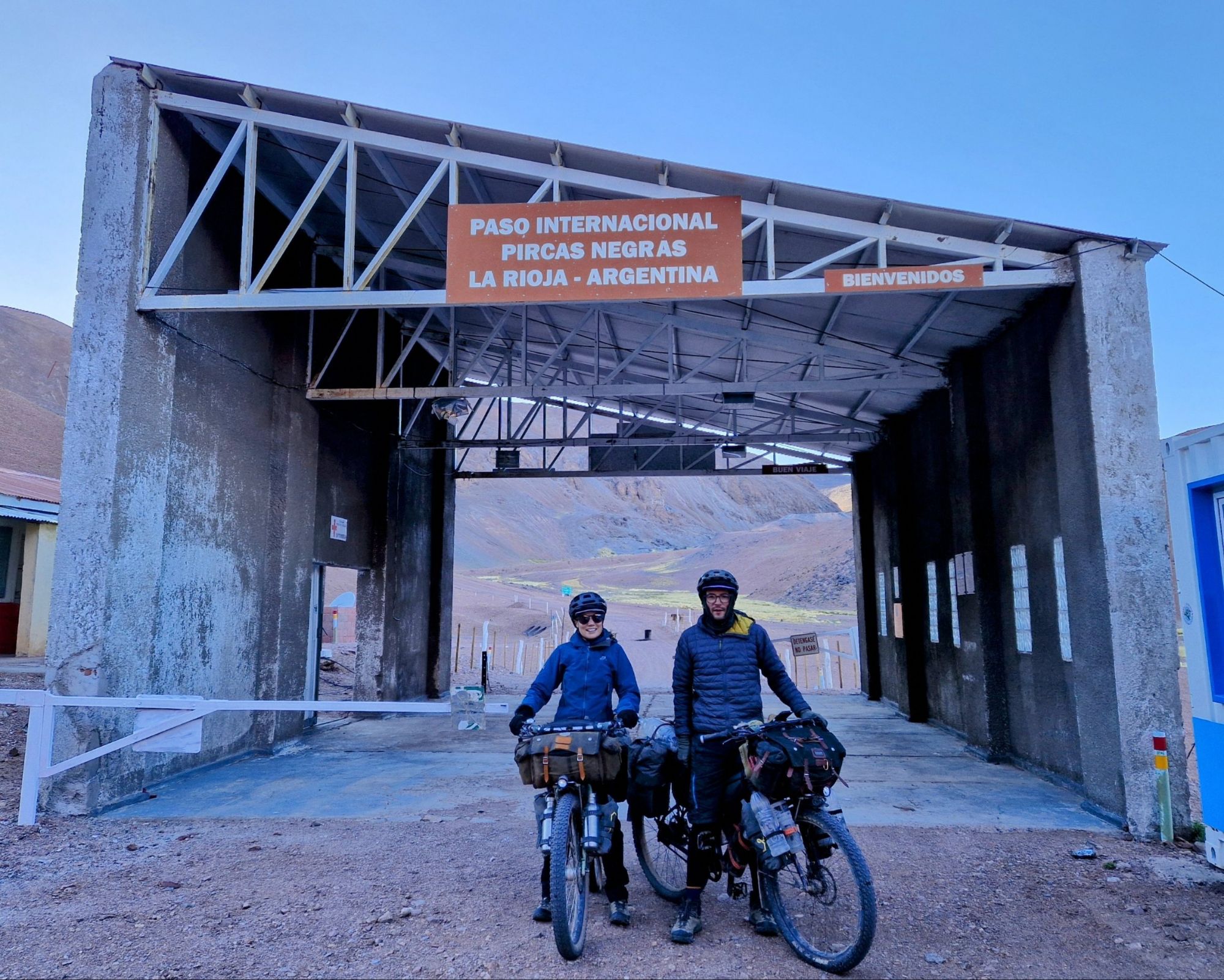
On paper the next day should have been an easy one – 40km on pavement, a little up, a lot down, plus some off road track to finish the day. I’d slept badly, struggling to breathe at the altitude of over 4000m, my lungs rattling with an awful cough and lots of yucky sounding fluid, so I was ready for an easier day. But as we’d learnt by now, nothing about this route was easy. After the first 30mins of road climbing, our friend the headwind returned with a vengeance. Even the downhill sections of the day required peddling like mad in our easiest gears, getting no-where. Ted was stil struggling with altitude pretty badly on this section, and many storm drains were gratefully used for a quick lie down out of the wind, as he really does hate the wind! We finally rolled up to the border post between Chile and Argentina in late afternoon. The border is closed (which was no issue to us, as our route stayed on the Argentinan side) but we saw a couple of AGVP workers so headed in to ask if we could refill our water. As we’ve come to learn about AGVP workers, they are the friendliest bunch, and when we asked for water they replied with – Do you want to stay the night here? We gladly took them up on their offer and enjoyed a warm shower, some freshly cooked tortas, great company with huge smiles and a bed for the night.
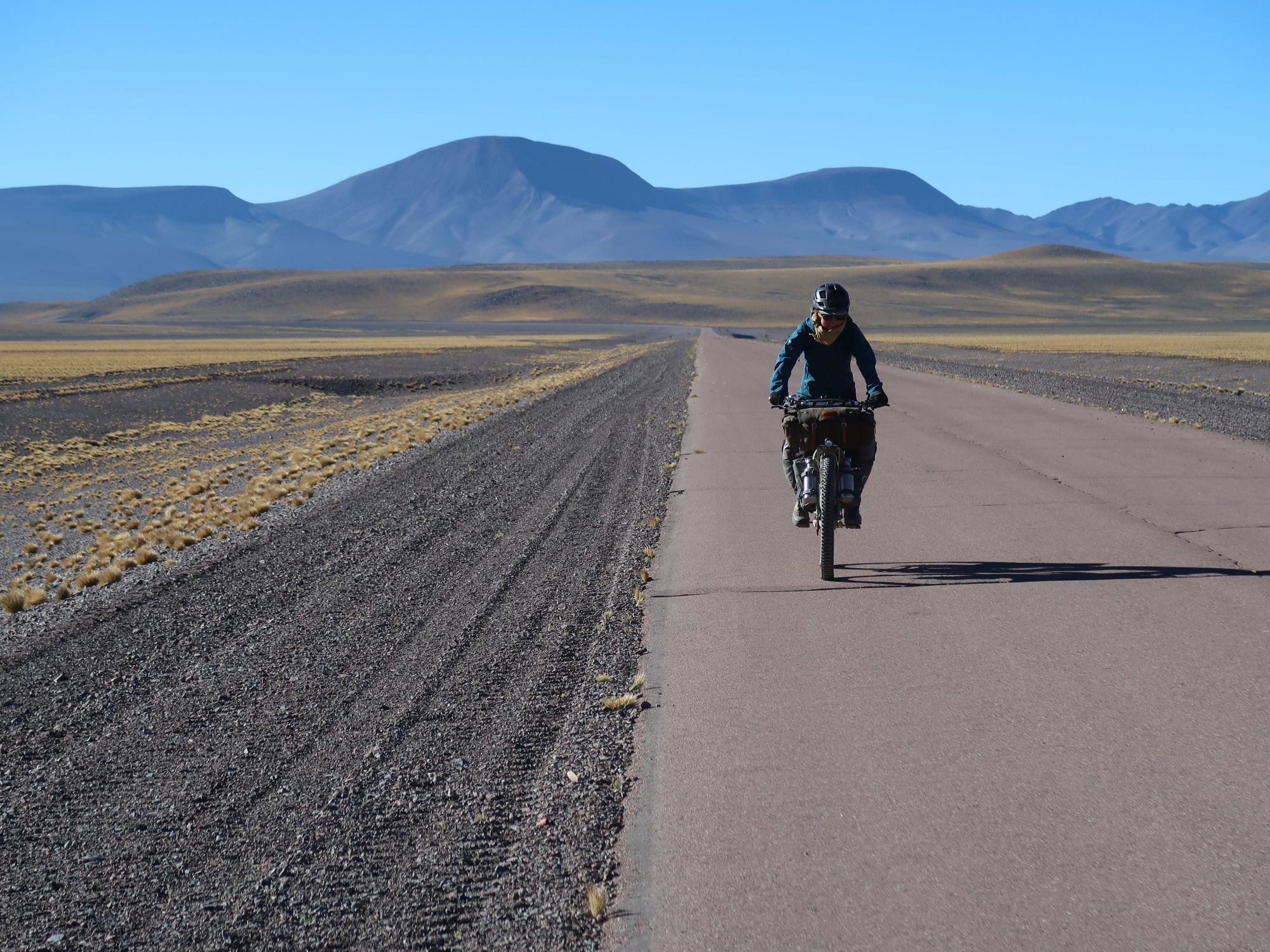
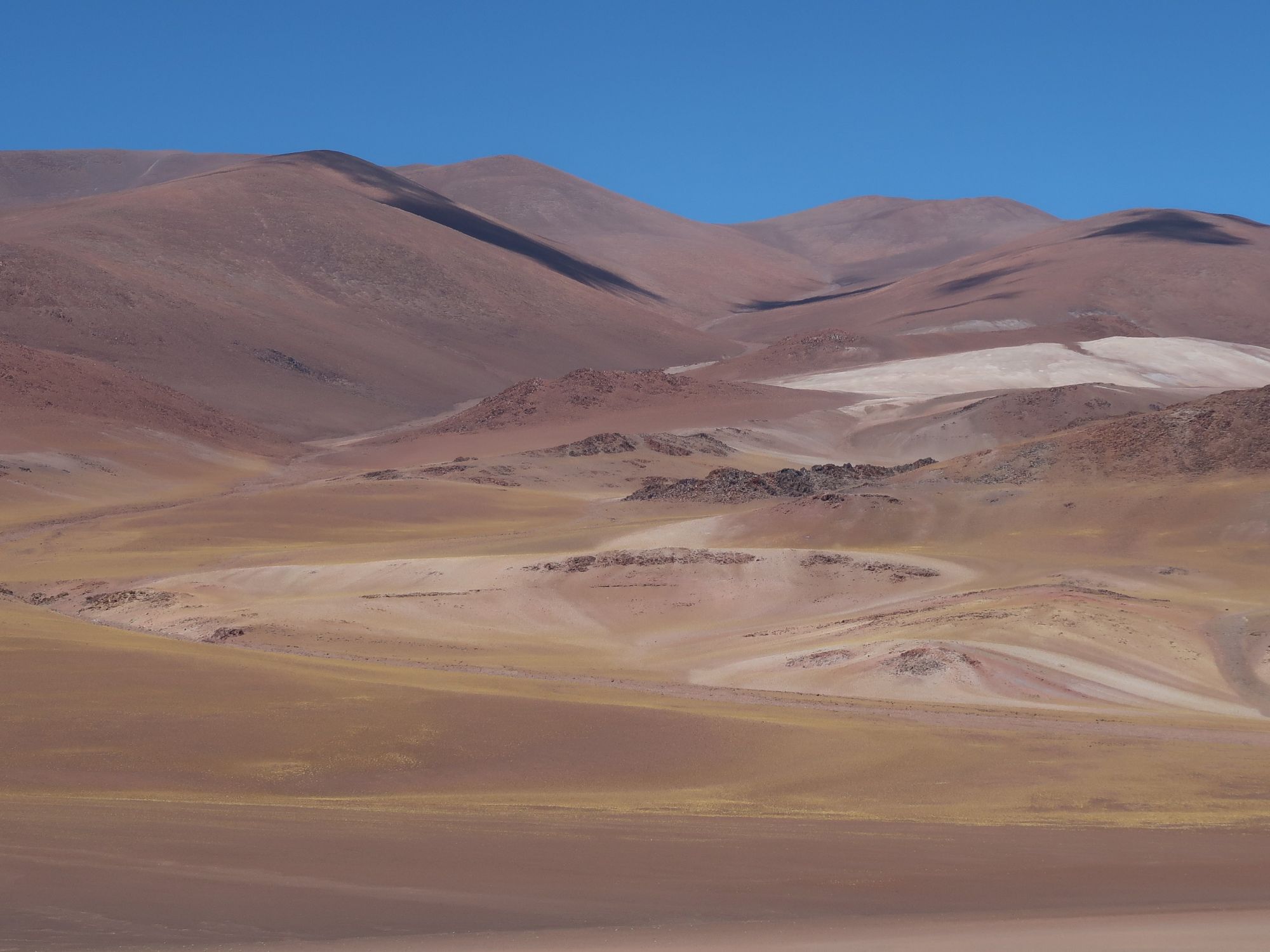
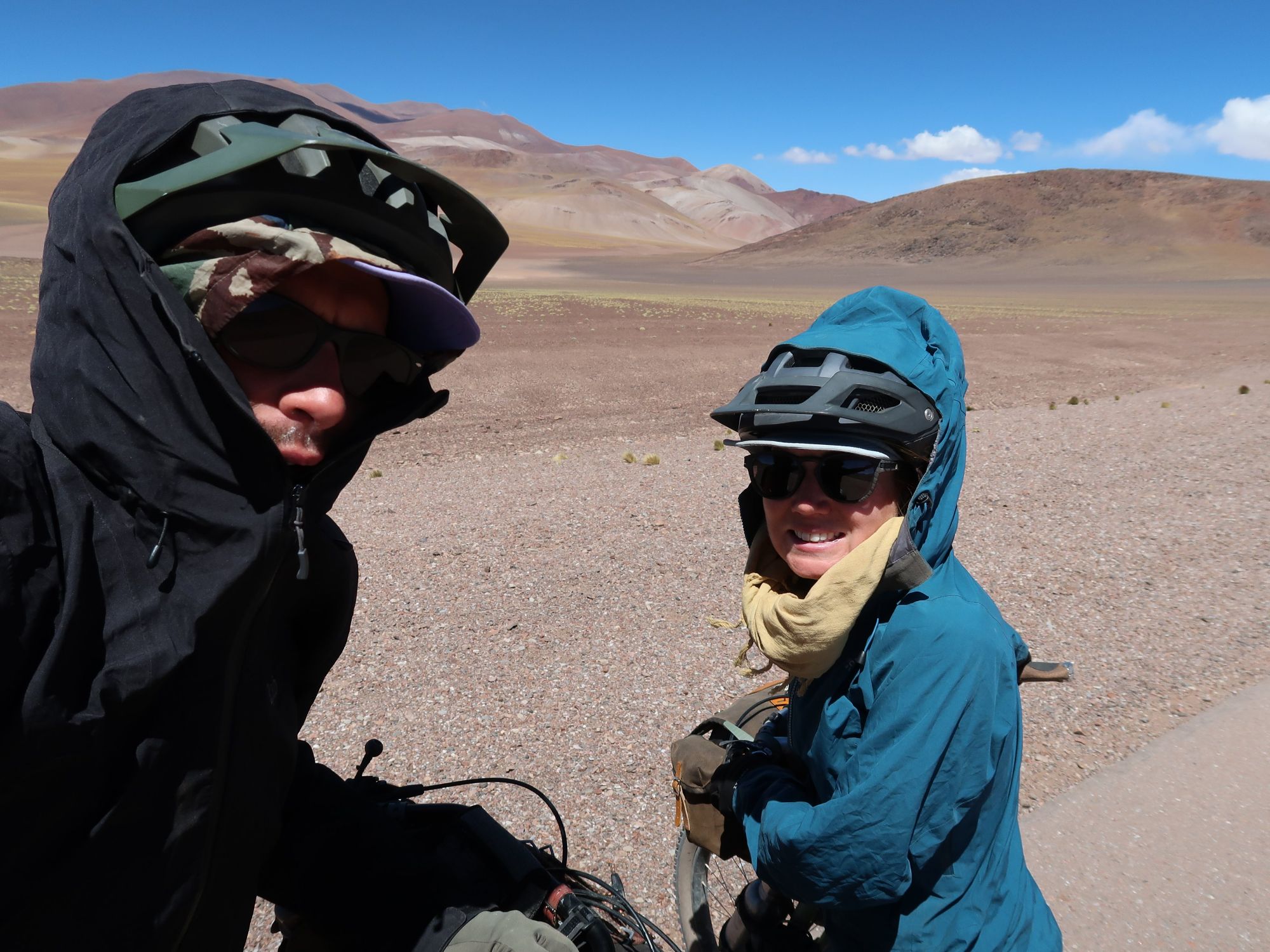
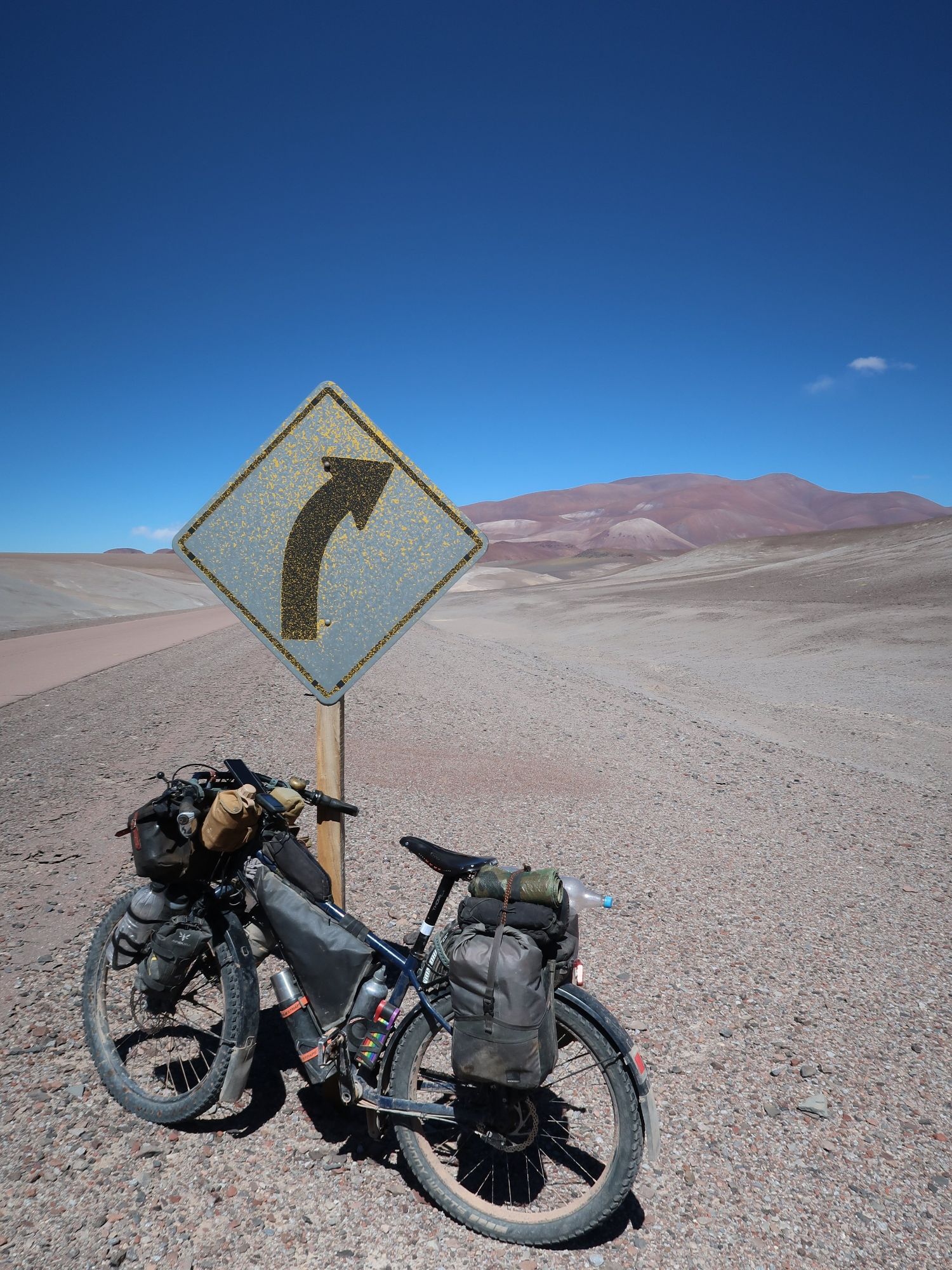
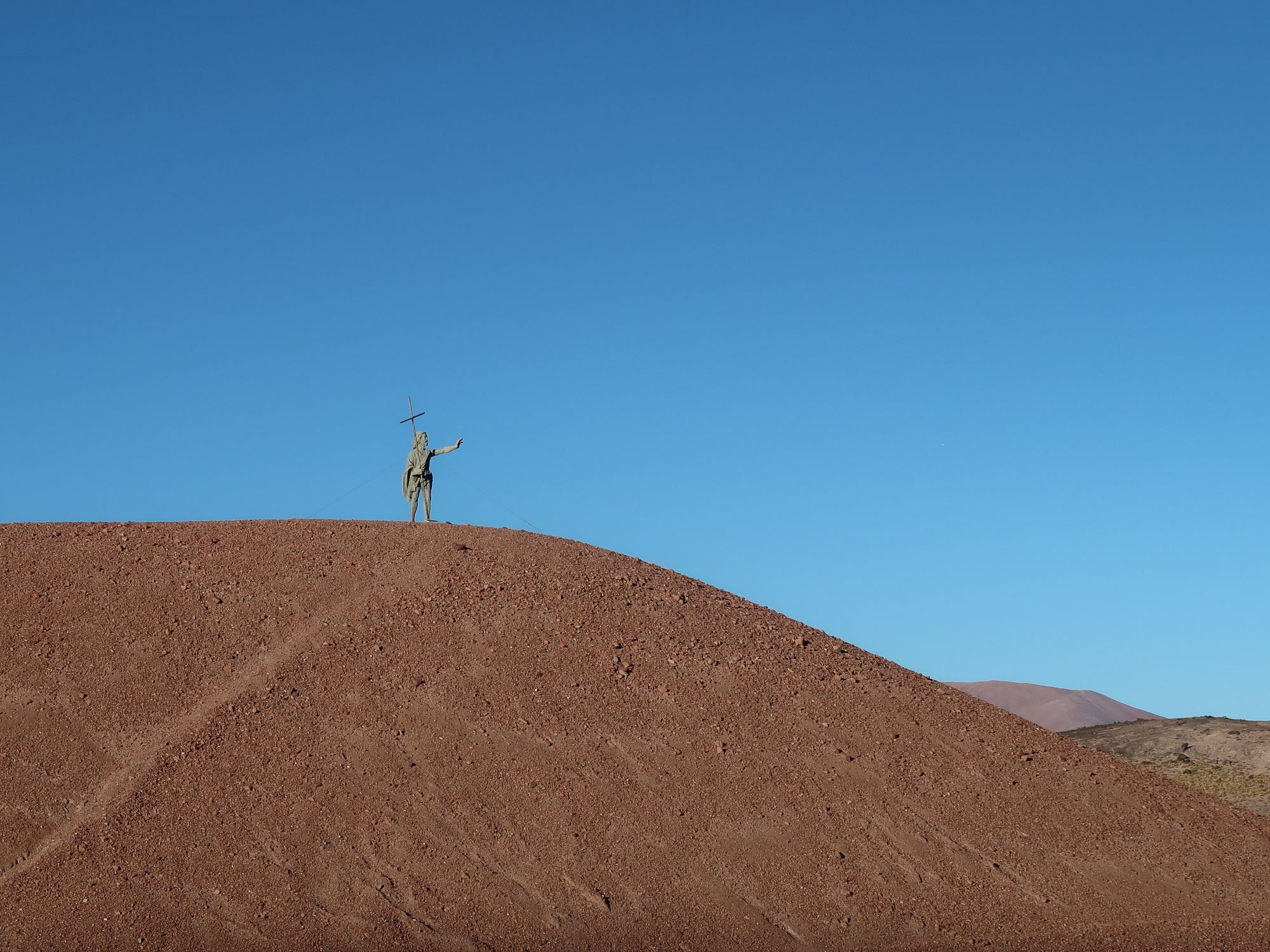
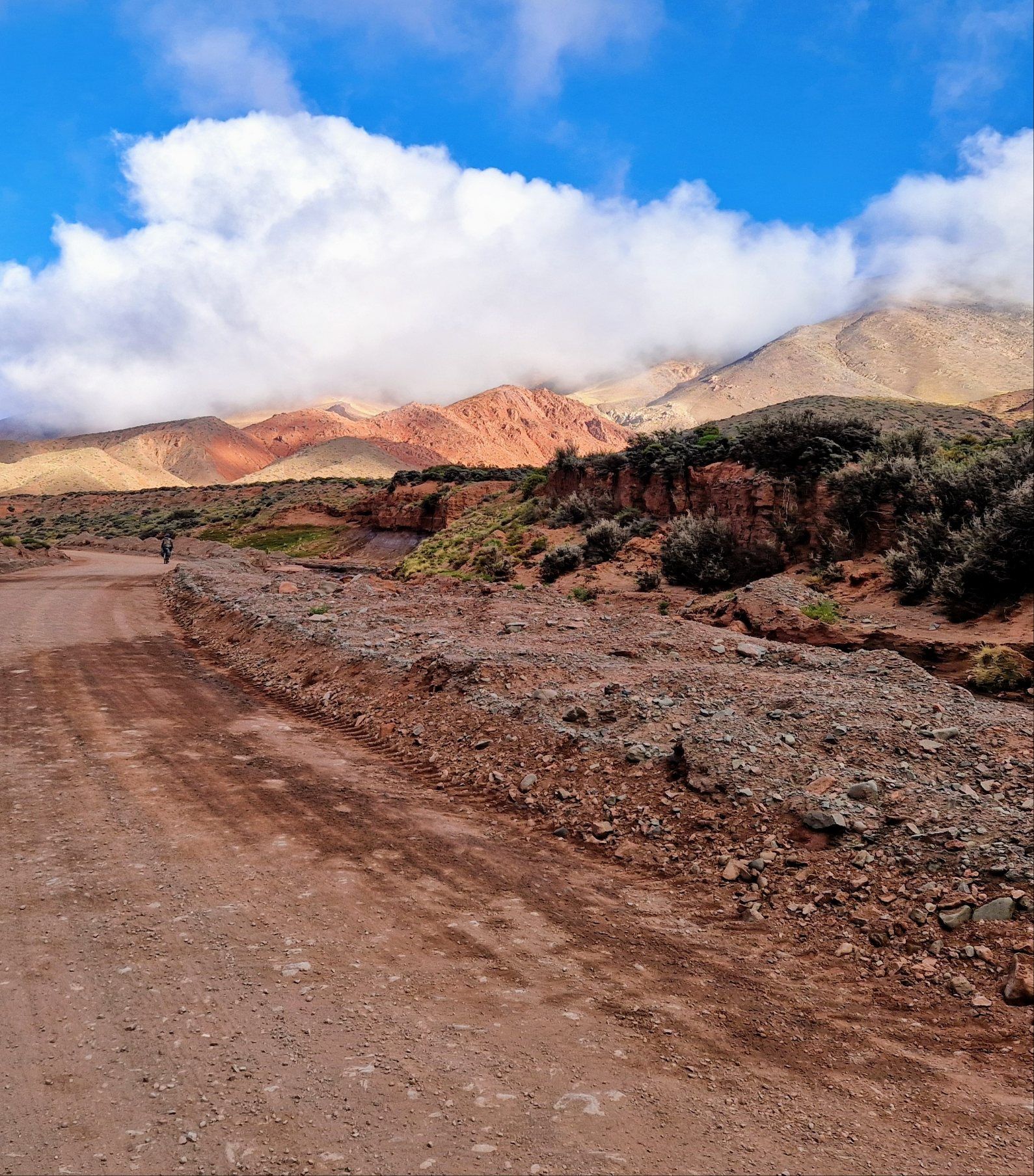
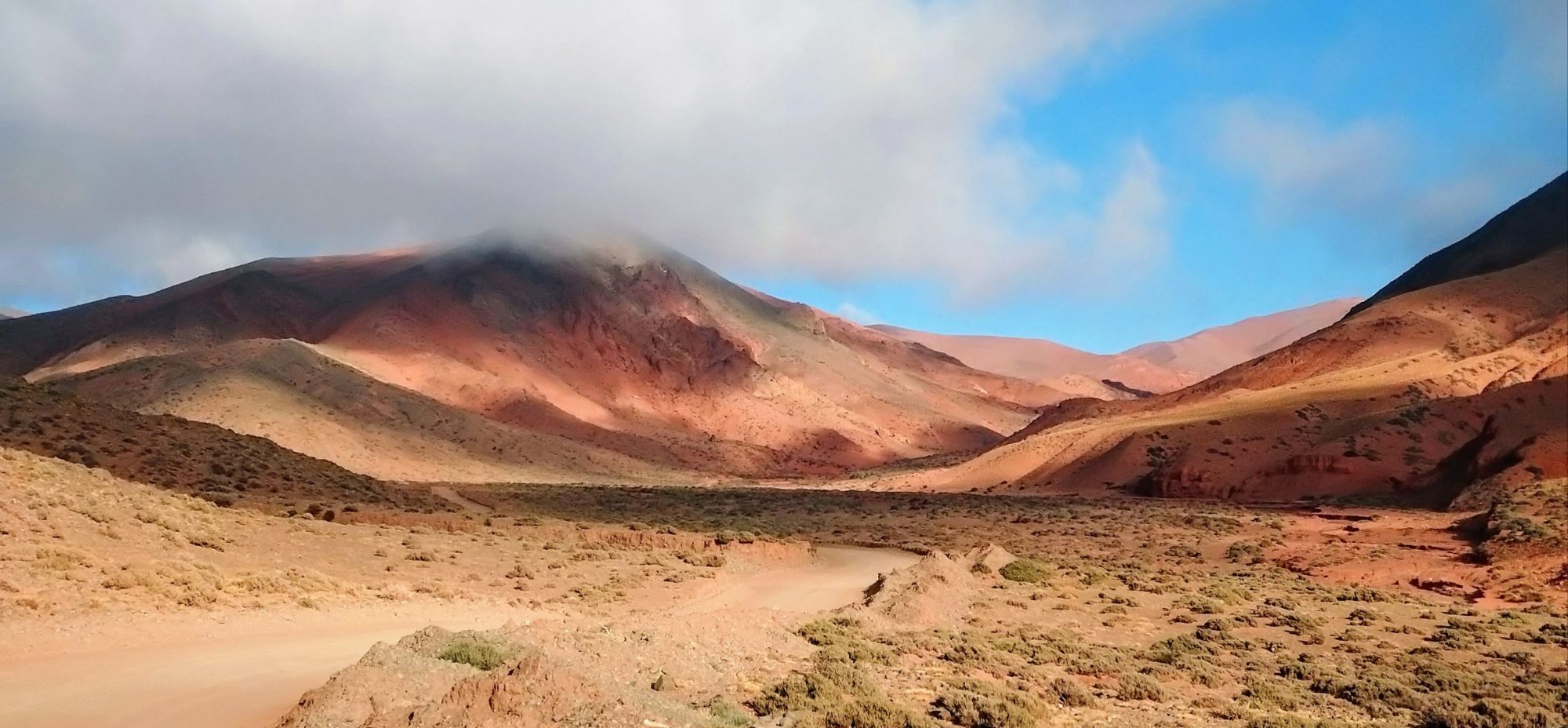
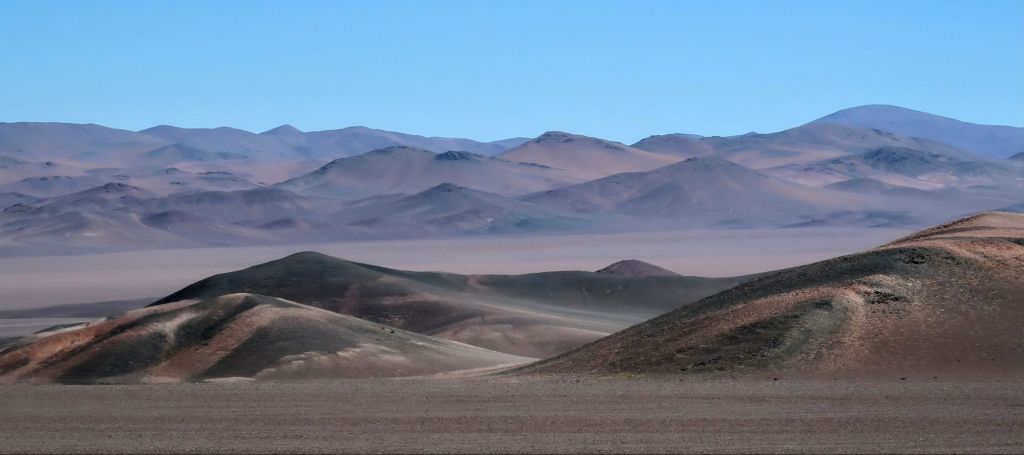
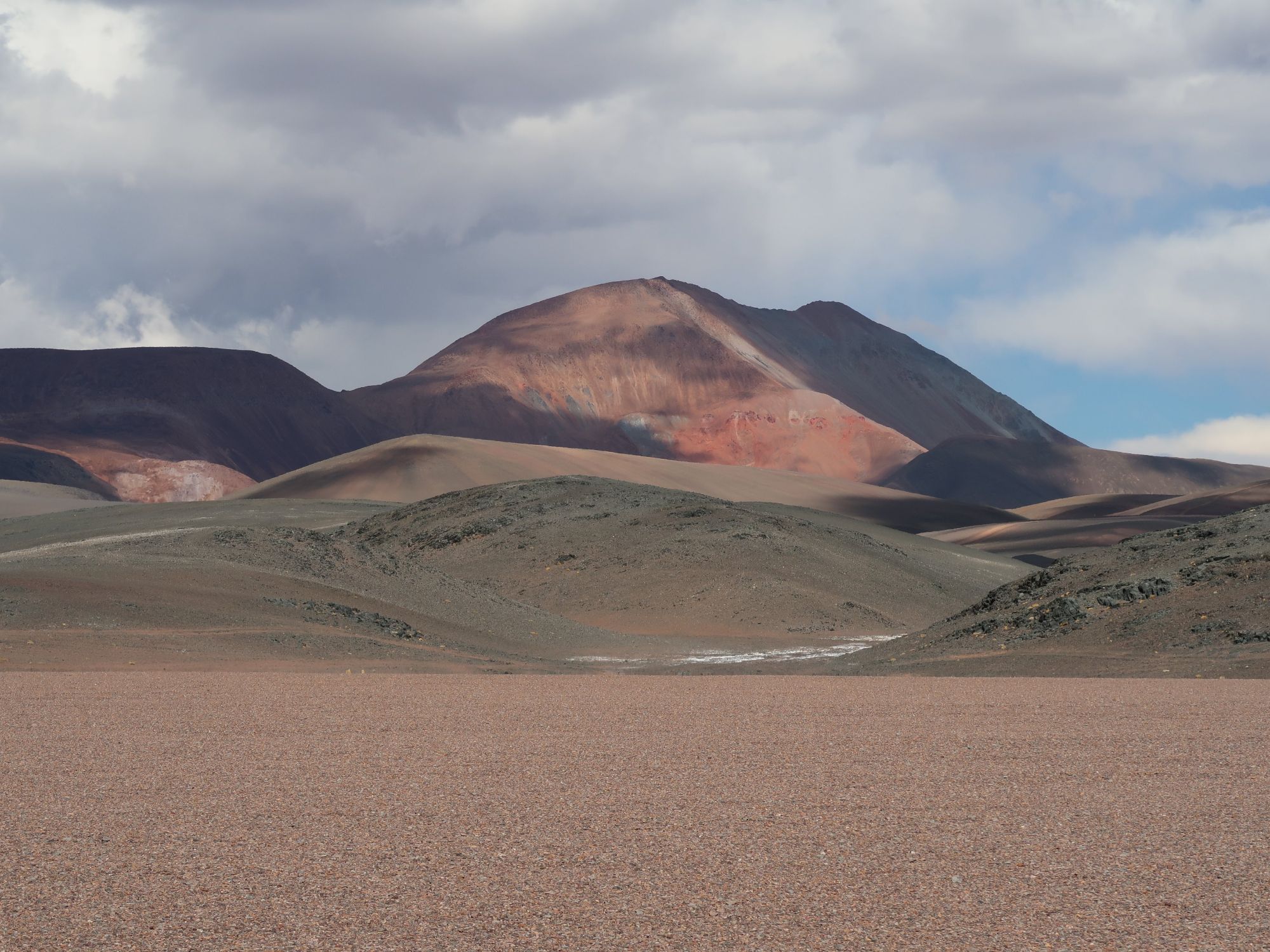
The sixth day was one we had been slightly apprehensive about, as we had heard the condition of the track was bad (as it was essentially riding up a sandy riverbed), meaning it was mainly a hike-a-bike. To our suprise, this was not the case and it was all rideable, plus the wind had finally died down and Ted’s altitude sickness was now a lot better – happy days. The scenery continued to be out of this world crazy. Colours of rocks and minerals blending and blurring together on the mountainsides as though someone had painted them in swirly colours. We also had the pleasure of bumping into a pickup truck full of Brazilian climbers tackling a few of the 6000-ers, and they happily handed us some extra water, a bag of sweets and a packet of biscuits – Amazing! We camped that night at over 4500m with the most stunning view of the plateau, but as the sun set, turning the mountain tops around us to a glowing red, the temperature plummeted and we knew we were going to be in for a cold night.
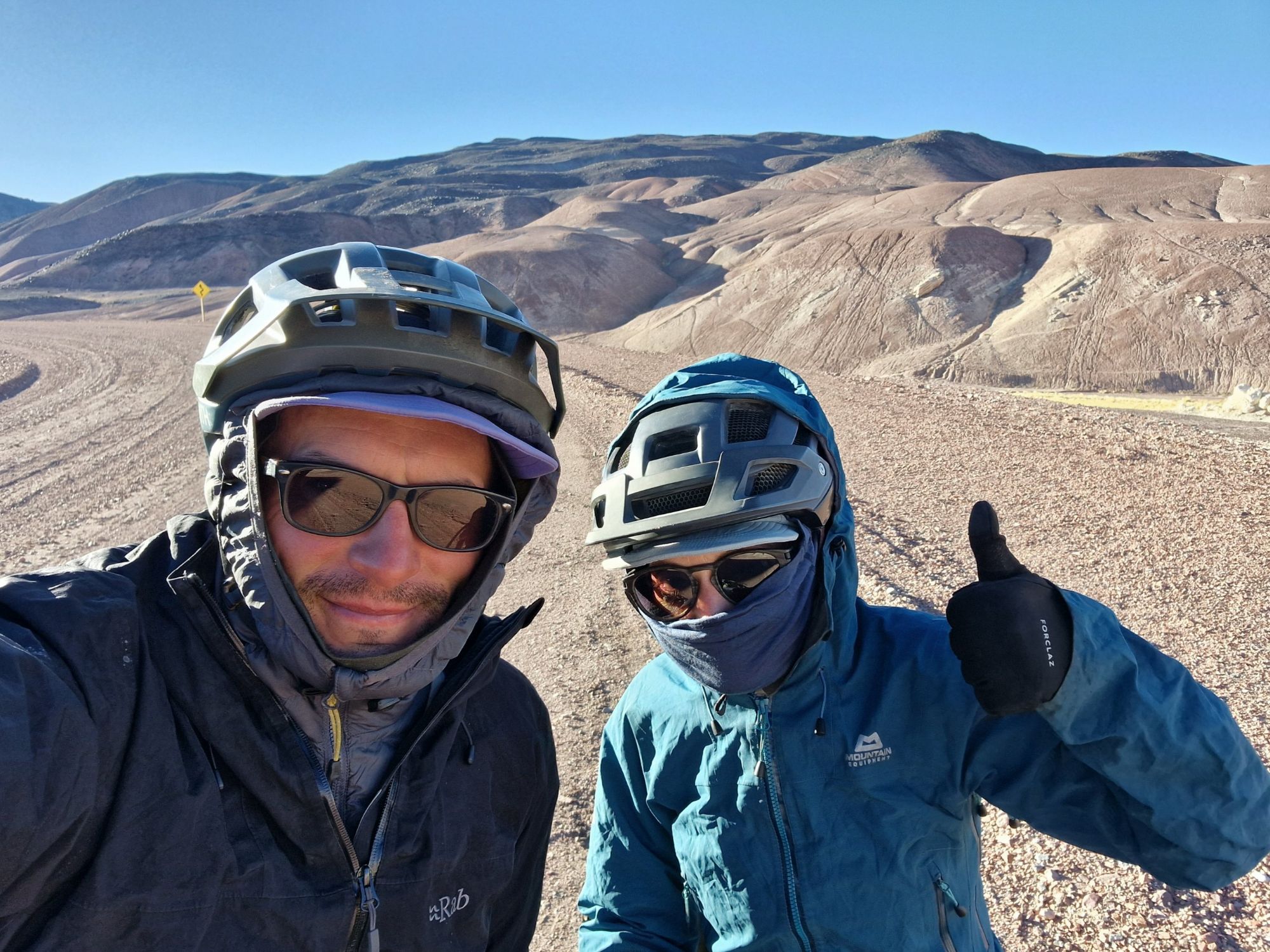
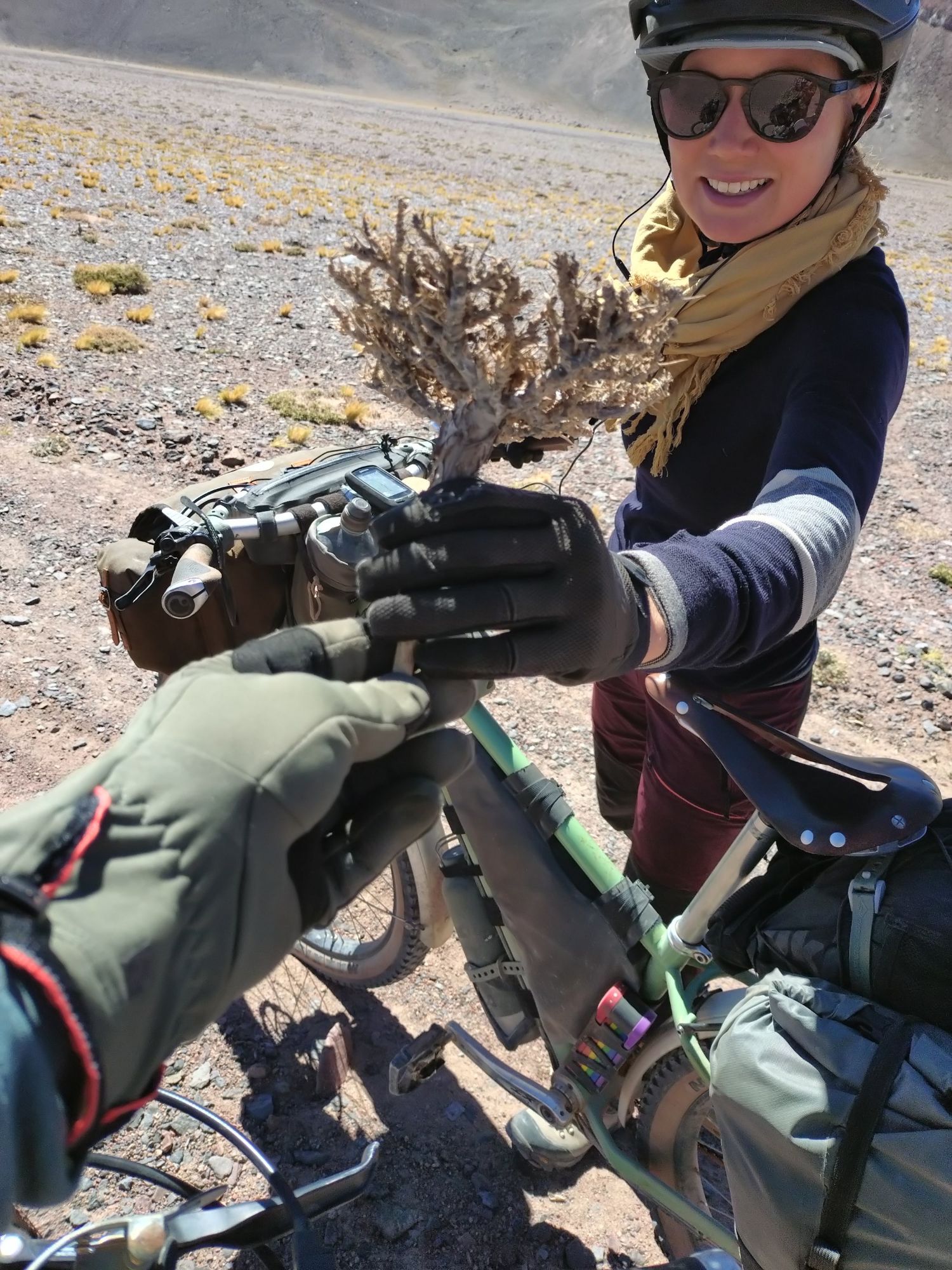
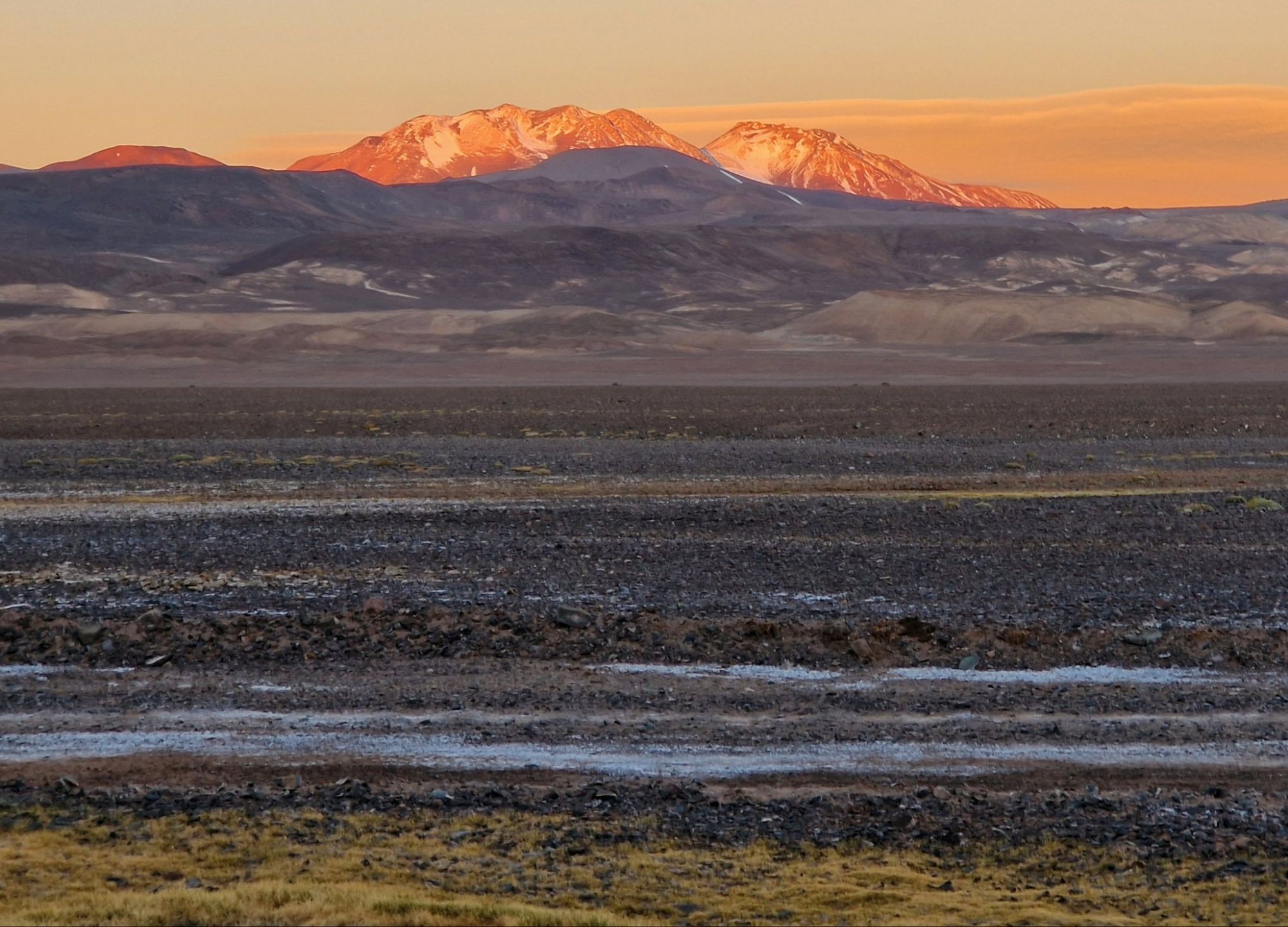
I’d struggled to sleep again thanks to my altitude induced cough and rattly lungs, which were now taking their toll. As the sun came up I was, however, amazed that I’d not been cold despite the freezing temperatures. I made sure to make use of an old boy-scout trick my Dad taught me years ago when we used to go camping when I was a kid – to get dressed inside your sleeping bag. Most kids would out grow the ability to be able to do this, but as I’m still waiting for my growth spurt it means I can still wriggle about enough to get all my clothes on without the need to get out of my toasty warm down cocoon. I’d highly recommend anyone tries it as it’s truly joyous, but I’m not responsible if you tie yourself in knots and get stuck! The next trick was to get the Trangia stove going, which again required some pre-warming, this time the heating was thanks to Ted’s nuclear reactor hands inside his sleeping bag. We had already realised that our water was likely to freeze overnight – which it had, despite it being inside the tent with us – so we had pre-boiled some water the night before and put it in Ted’s tea flask, meaning that we didn’t have to melt ice water, and our morning coffee was ready in a jiffy.
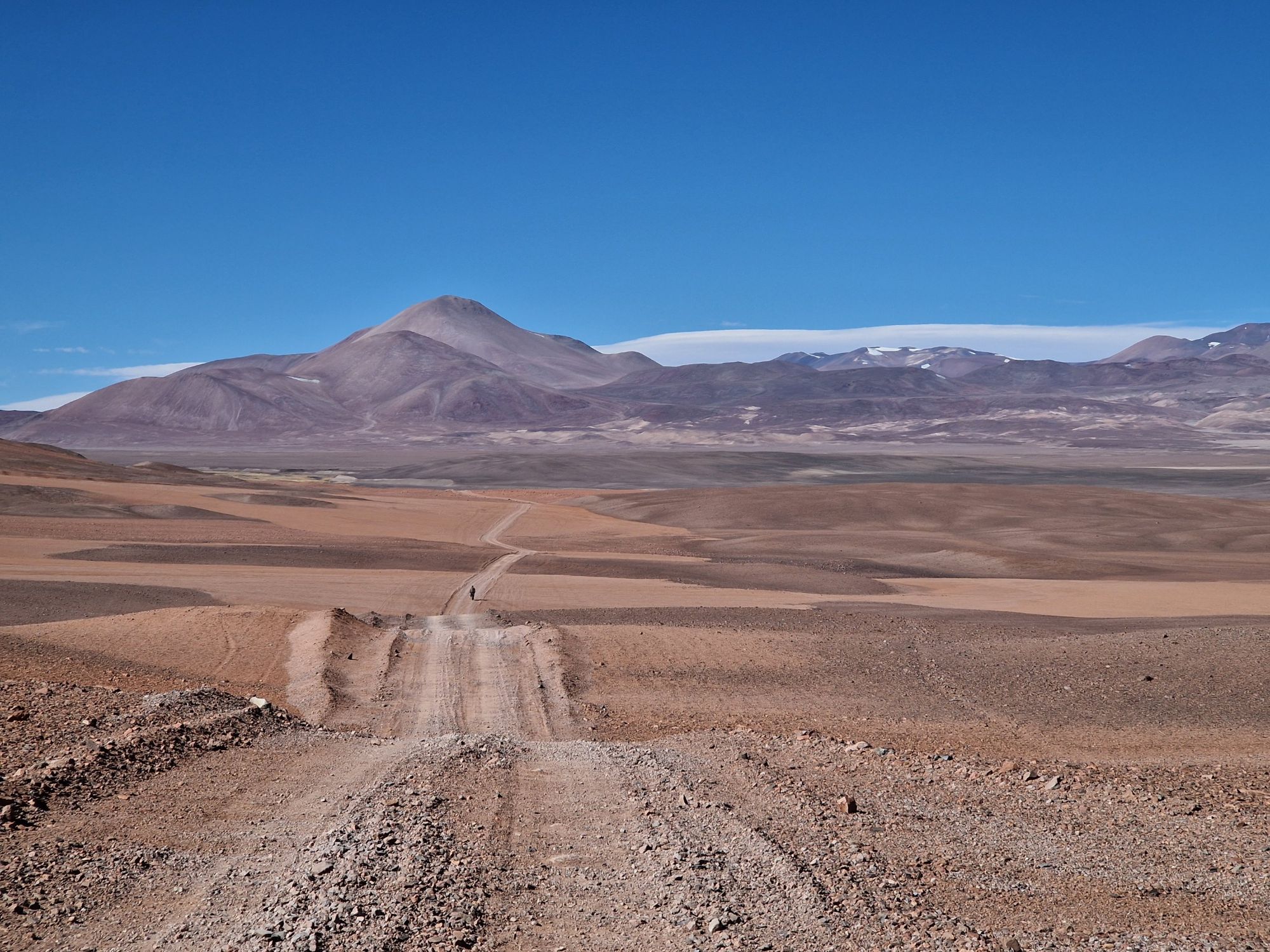
We knew this day was going to be a biggie. We had three passes to get over before we could even think about stopping, and the first two were the highest of the whole route at just under 5000m. The first climb was slow going. My lungs were really struggling. Breathing was hard work. I realised I just had to go slow. My cocktail mix of multi-coloured inhalers, took the edge off my asthma wheezing and helped a little, but I still just couldn’t get enough air to push myself aerobically. Instead, I just focused on what I could do. I started counting my steps again. Telling myself I could do fifty steps, and at the end of it I could reward myself with a pause and some big breaths. Little by little, fifty steps followed by another fifty steps, I made it. Ted was waiting for me at the top, welcoming me with a hug and a rare smile on his face. We’d done the first pass of the day. The scenery was out of this world – More contrasting mineral colours and snow capped mountains, against the bluest blue sky. I couldn’t quite believe we were doing this – we were actually doing this. And as we whizzed down the descent, Coldplay forming the anthemic soundtrack to the stunning scenery, I began to feel a little overwhelmed and I had to fight back the tears.
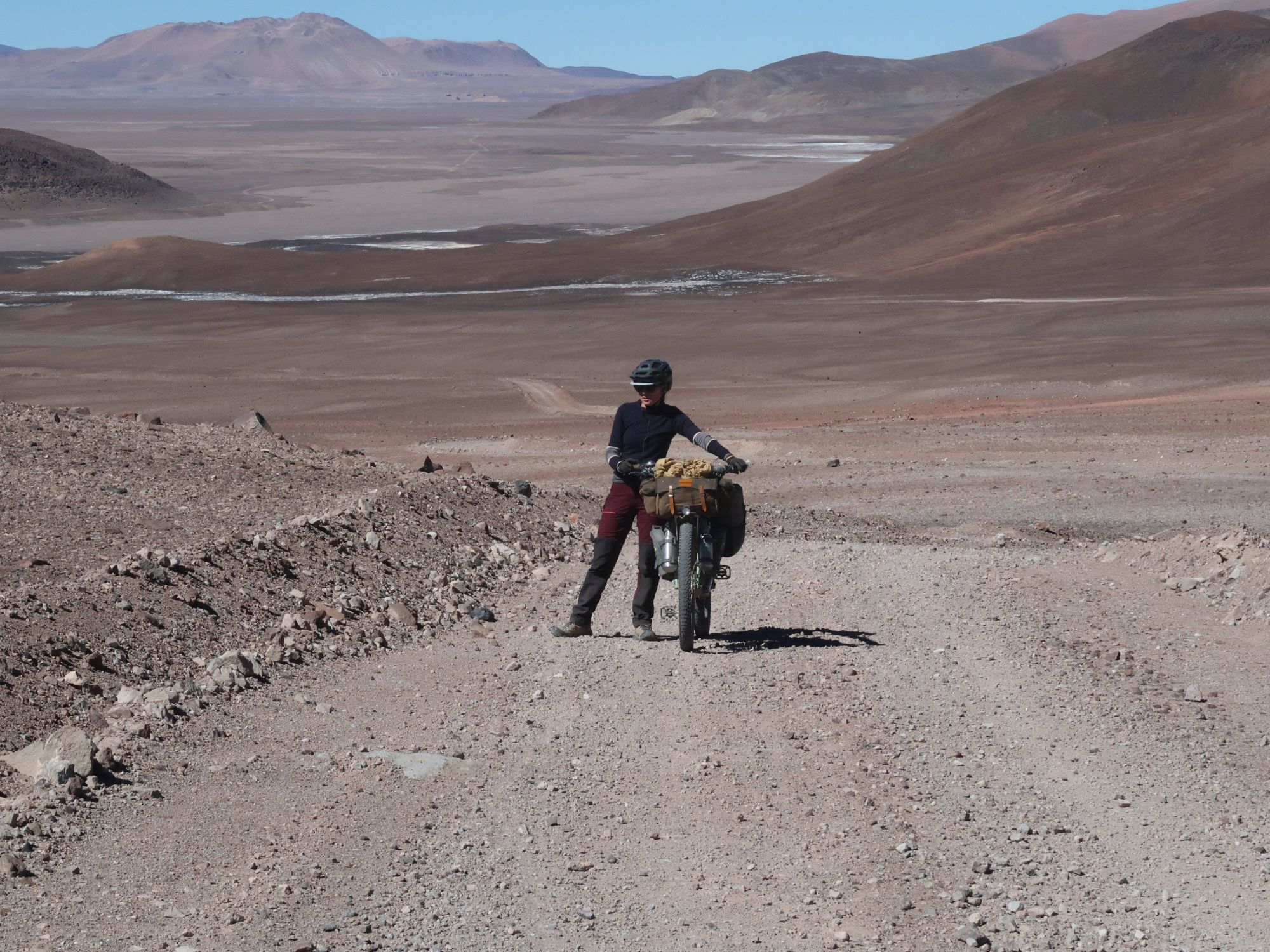
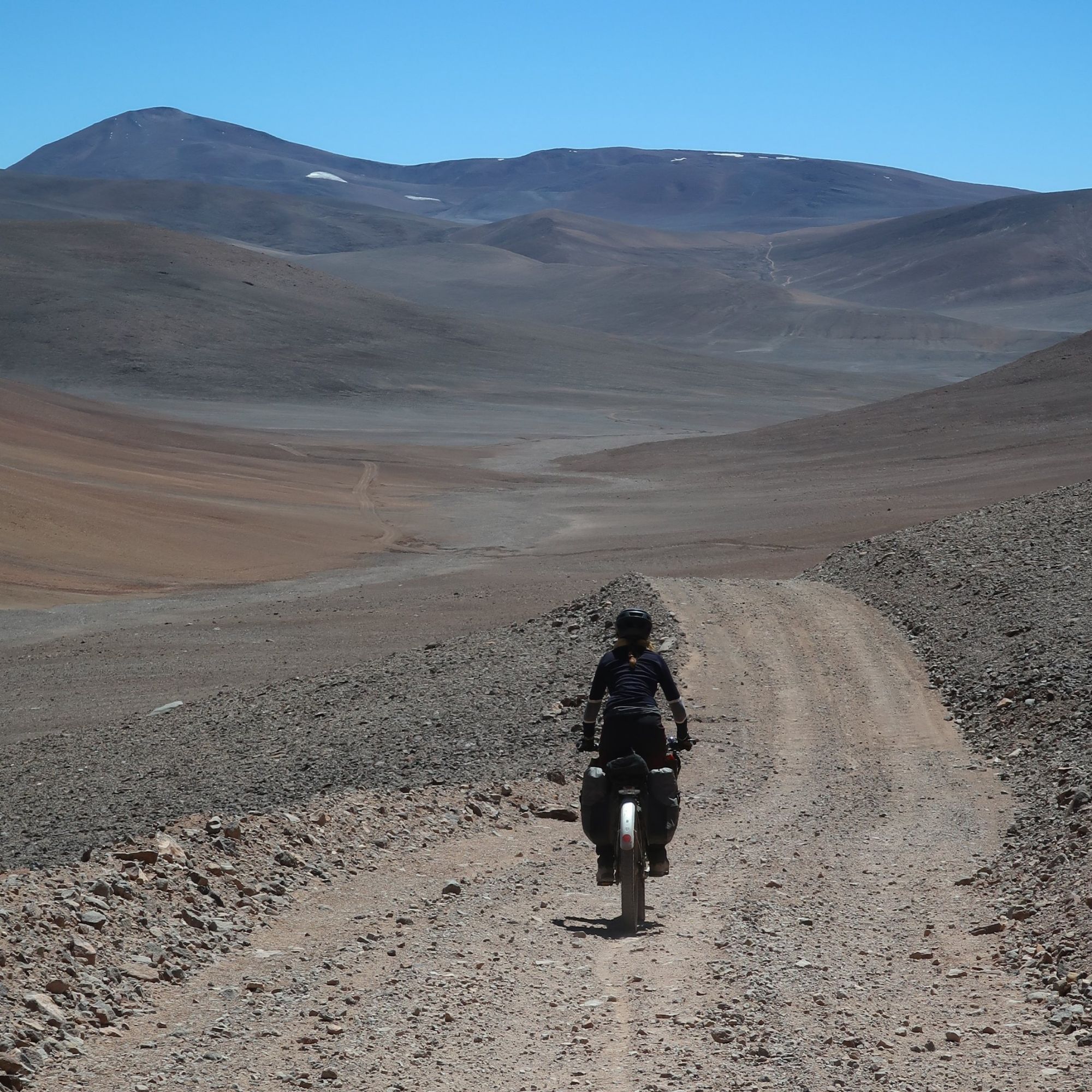
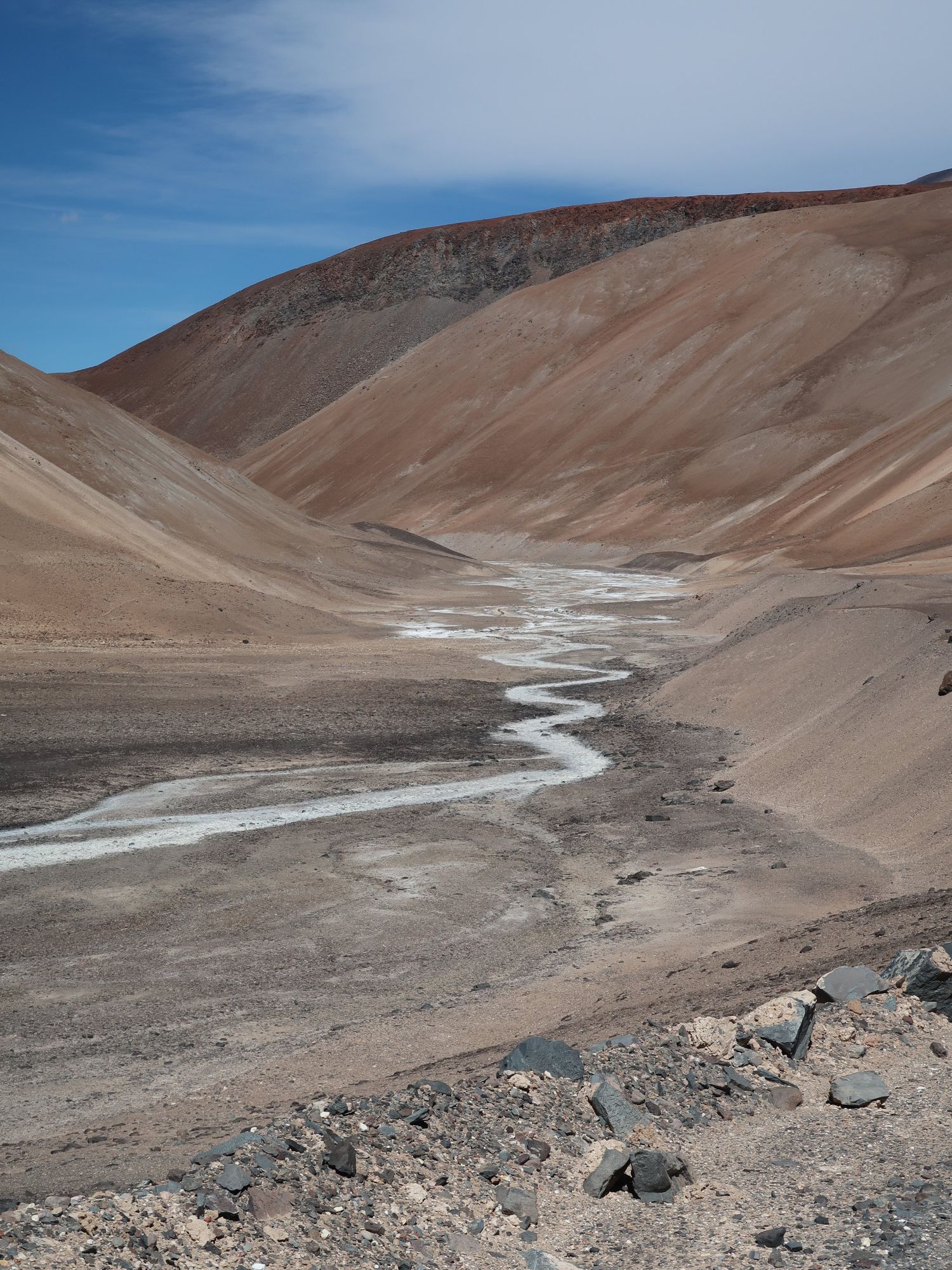
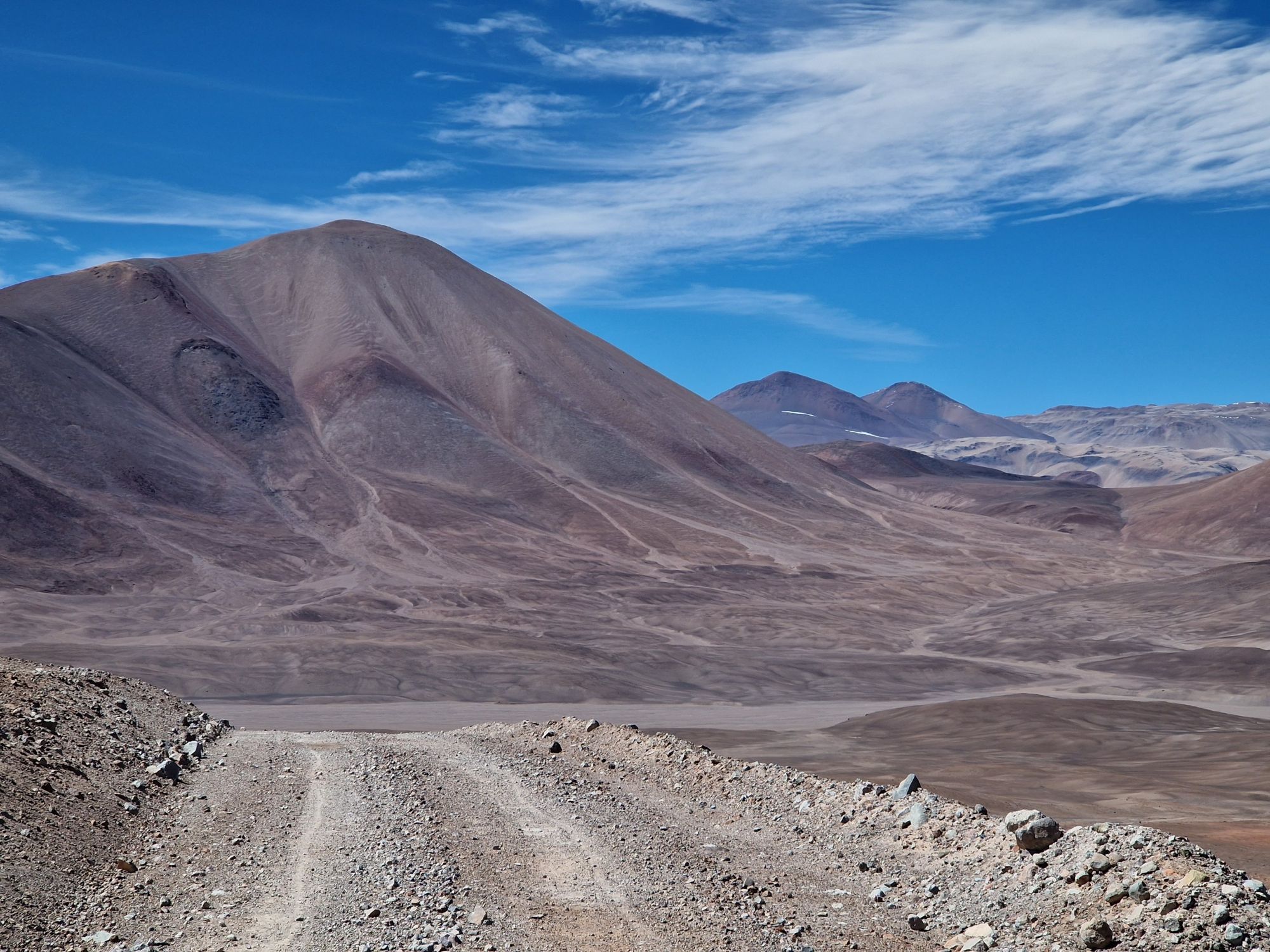
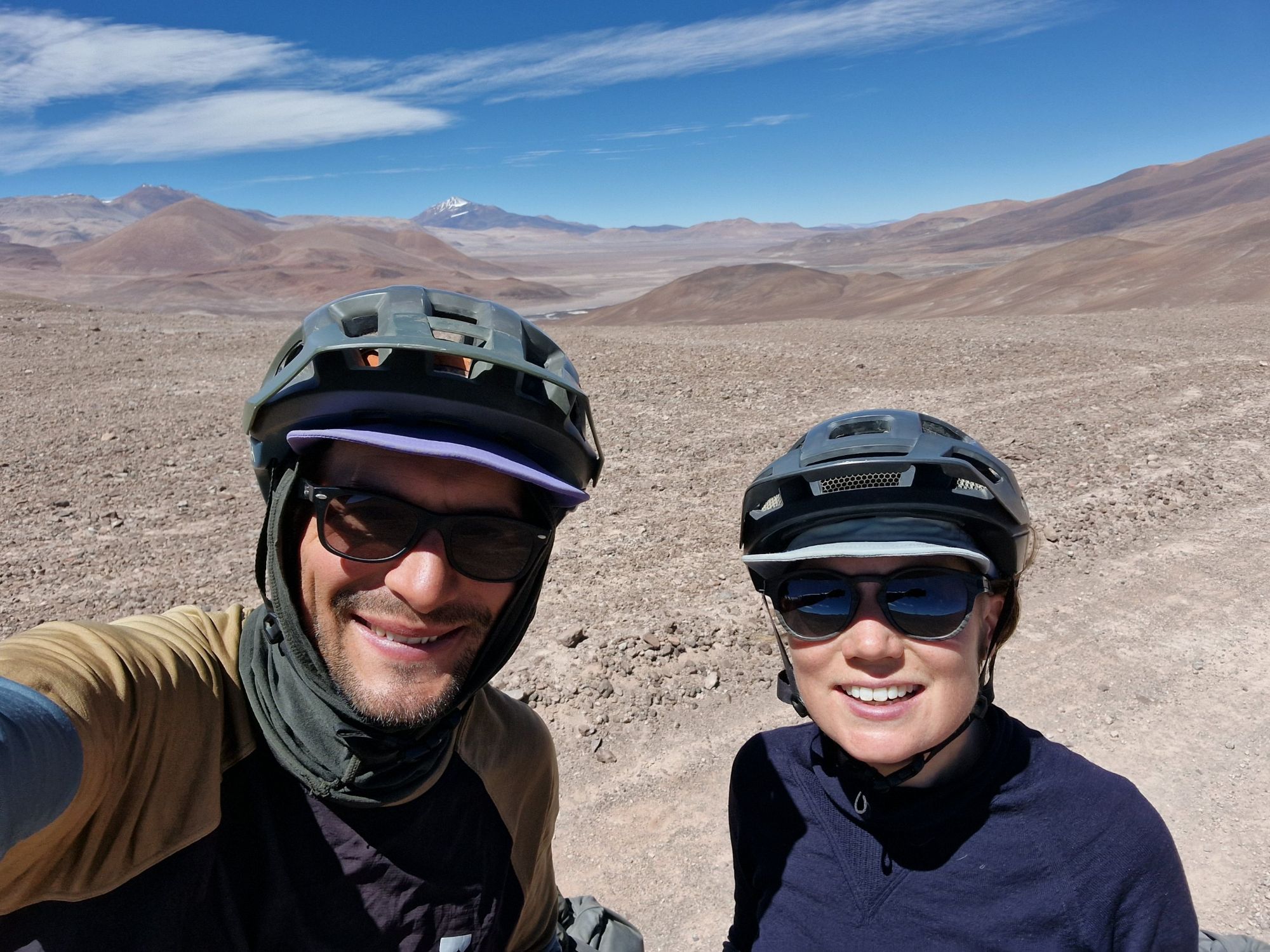
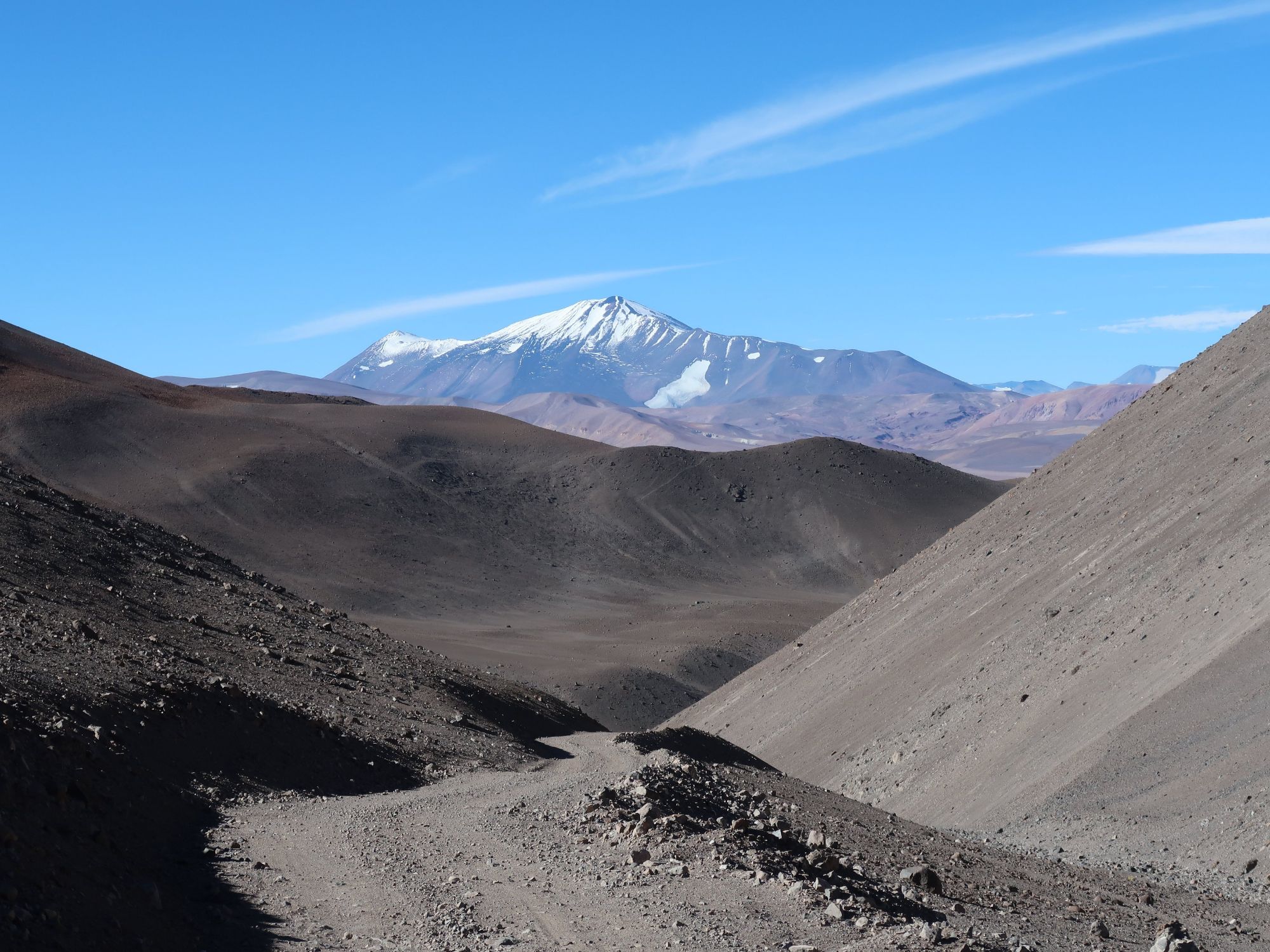
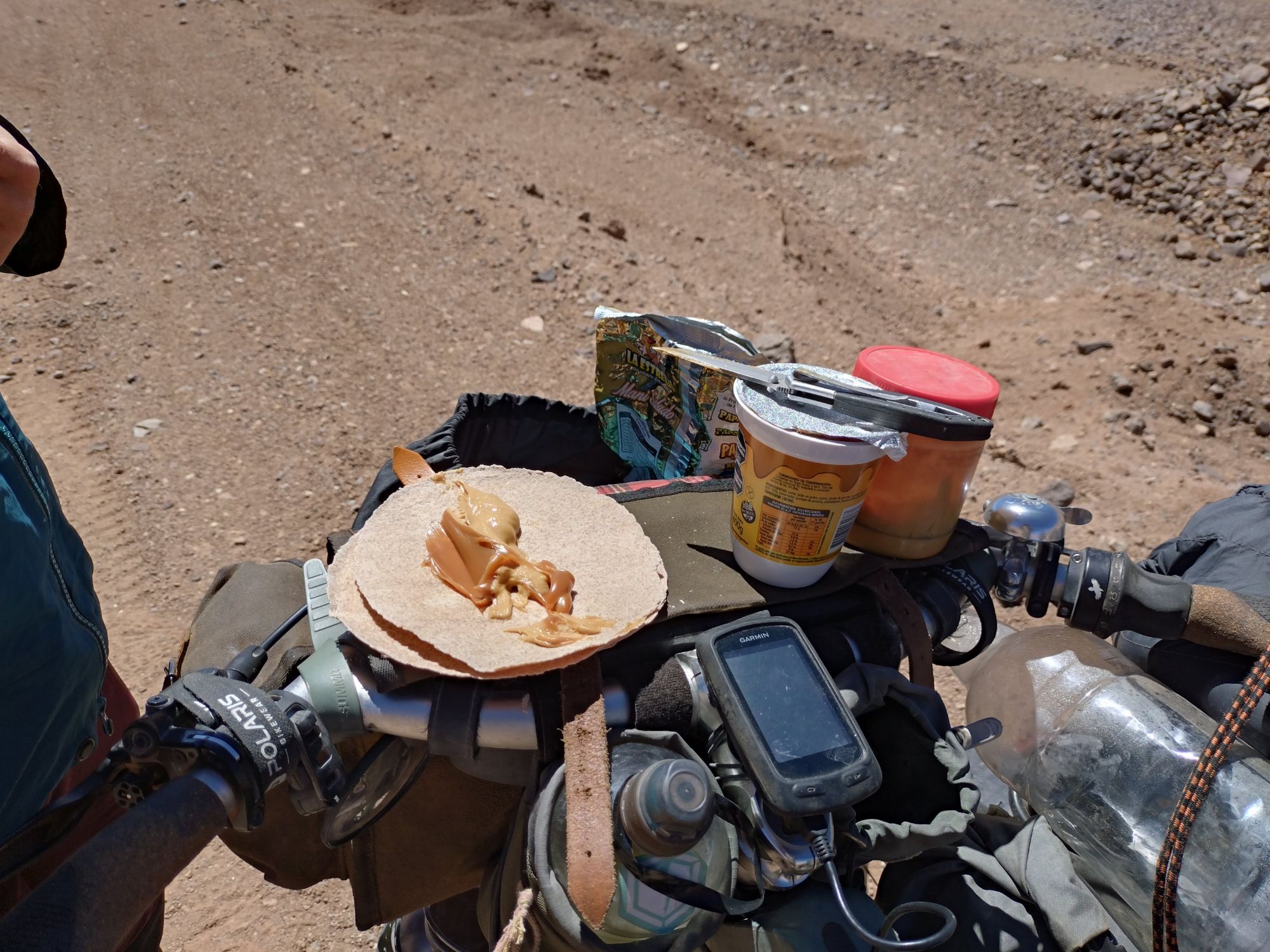
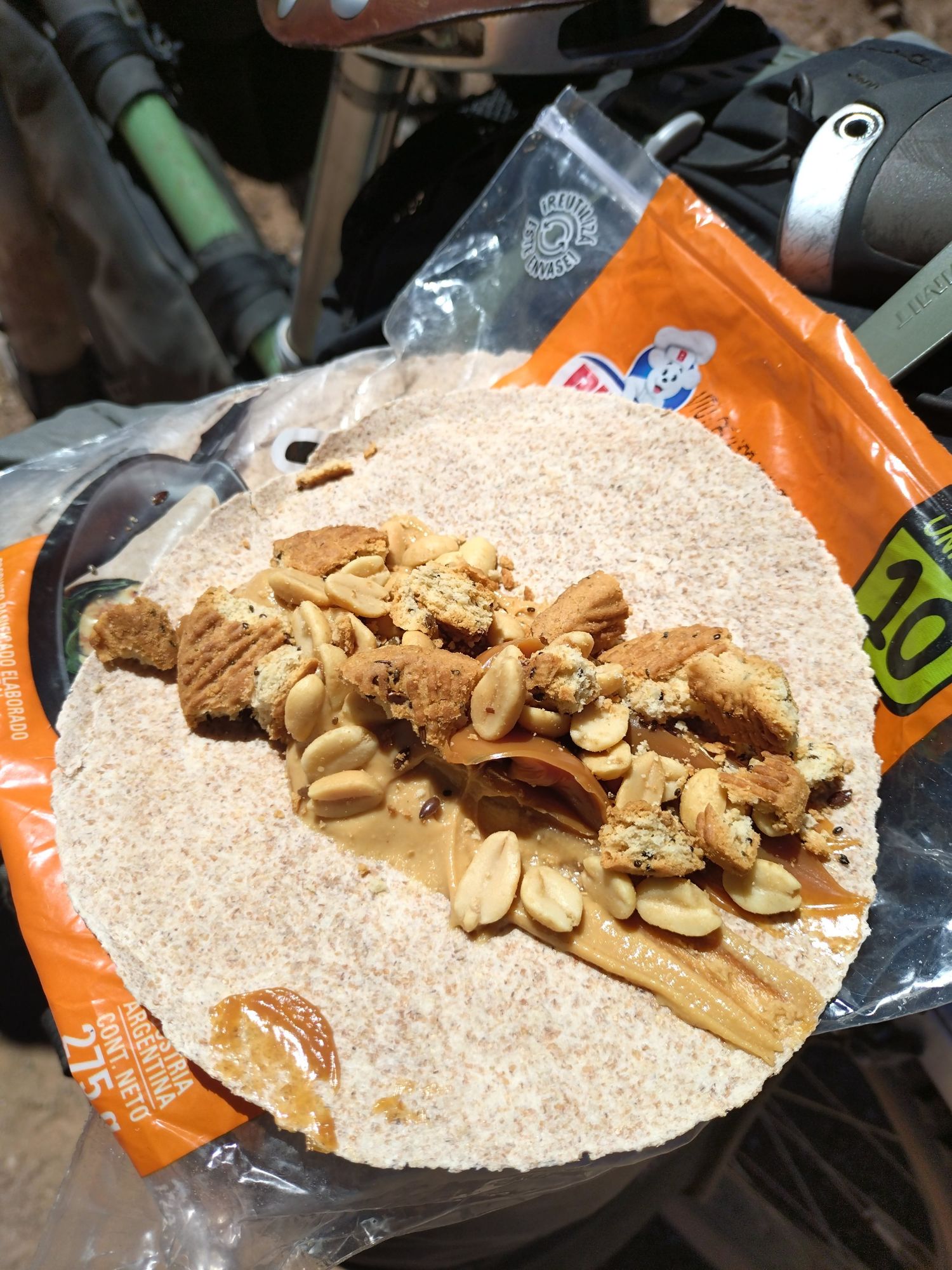
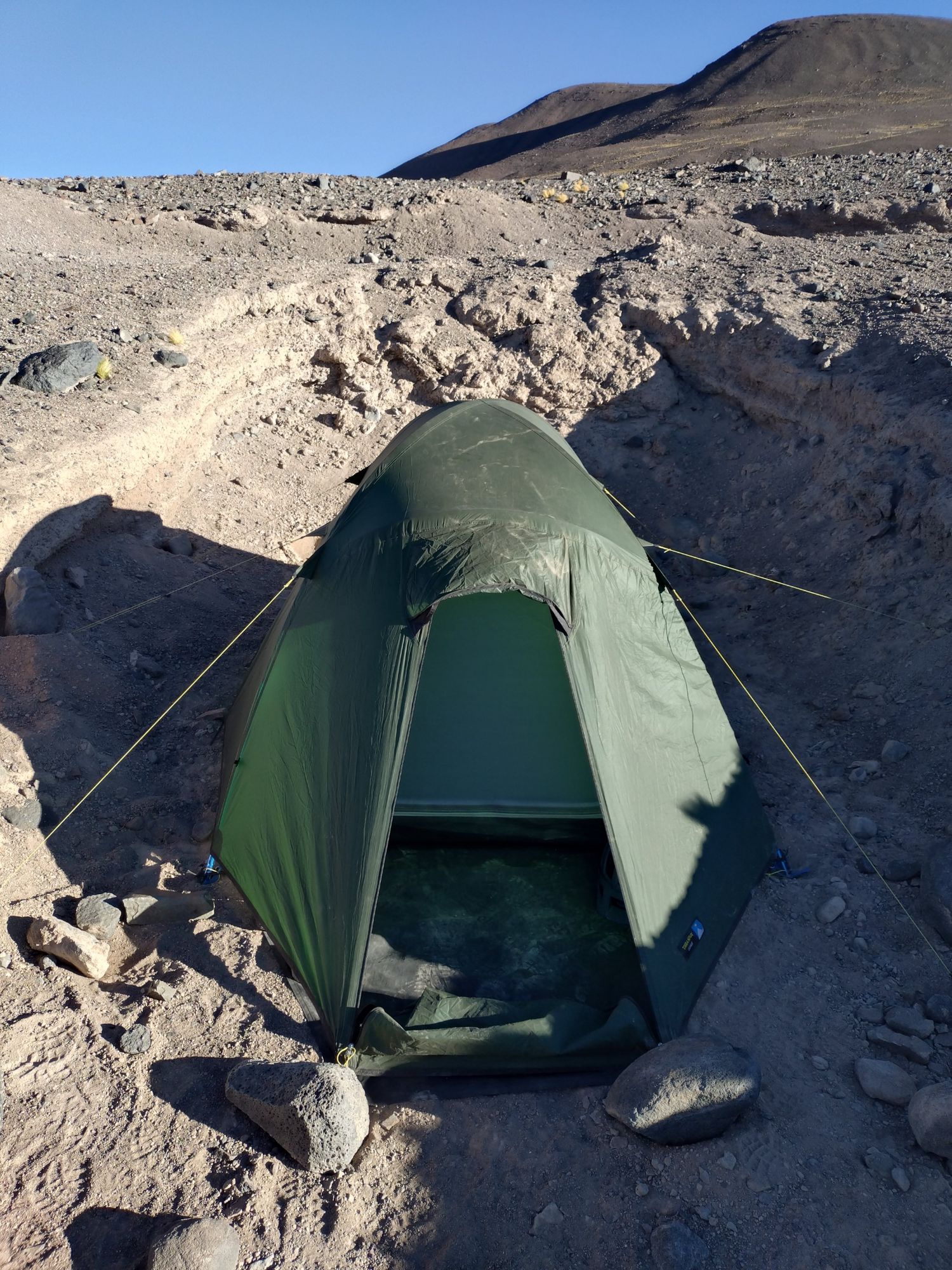
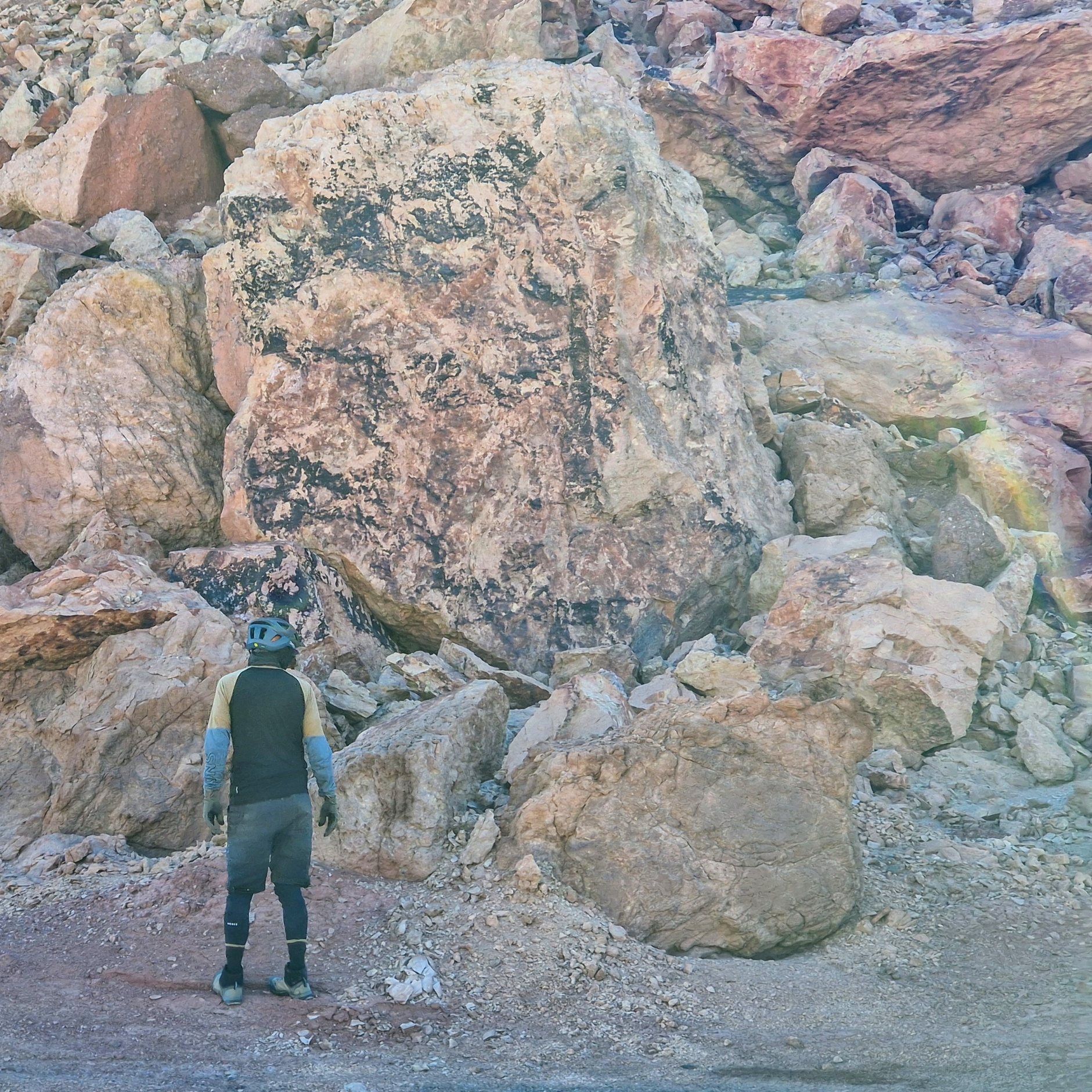
The second and third passes were climbed in much the same vain – slowly, with lots of huffing and puffing. And even though we thought the views couldn’t get any better, they did. We dropped into a canyon with more of those incredible rock colours and structures, some of the formations looking like melted monsters faces. Truly mind-blowing. We even now had a river flowing alongside us, and although parts of the river are salty (because of all the minerals), it meant we had less concerns about water. We tucked the tent into a gravel pit that night for a little wind shelter and as I lay on my sleeping mat (sleep still evading me thanks to my dodgy altitude breathing) I couldn’t quite believe we had passed the highest points of this route. It definitely didn’t mean it was all downhill from here (there was still plenty of climbing to do) but psychologically it was a big boost.
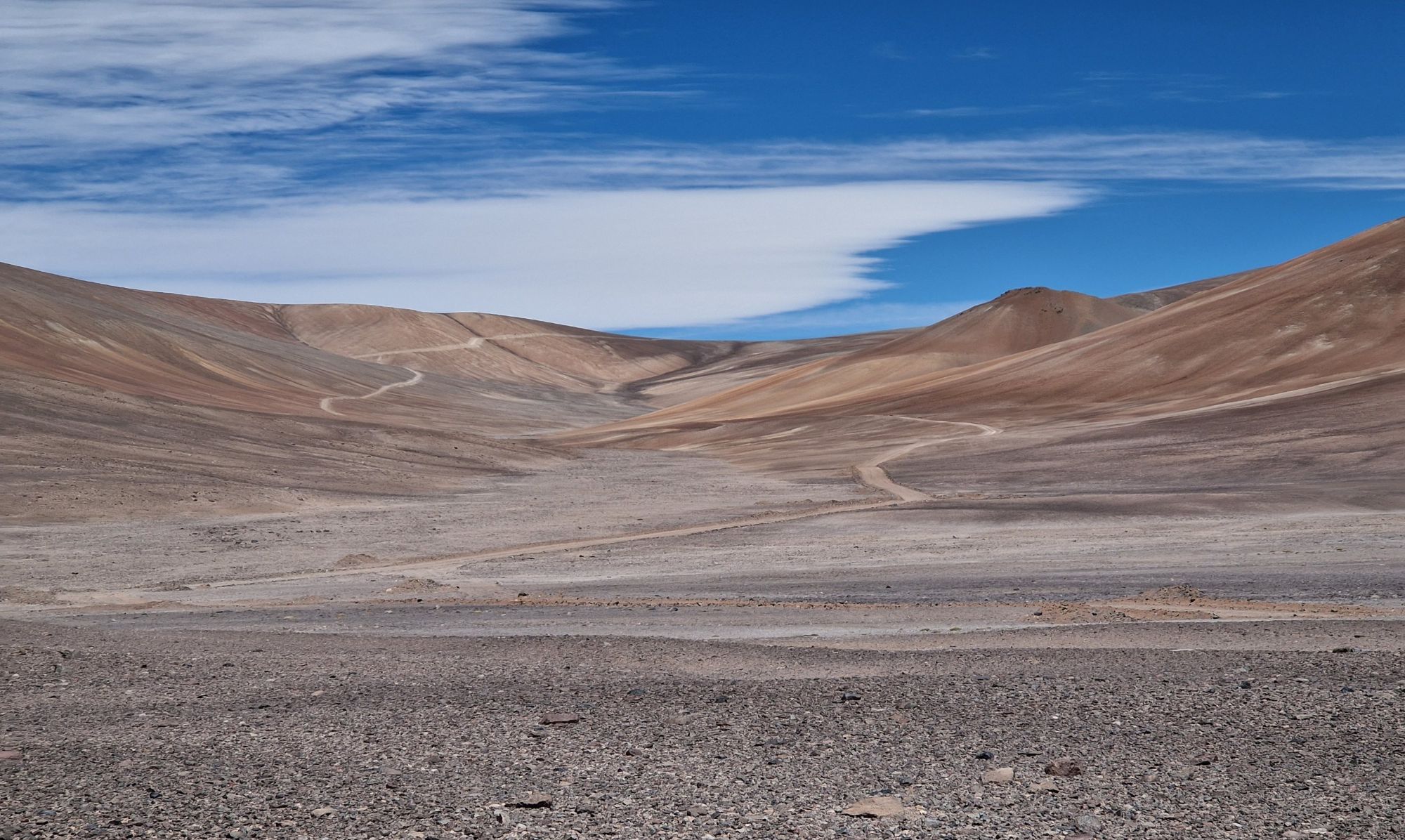
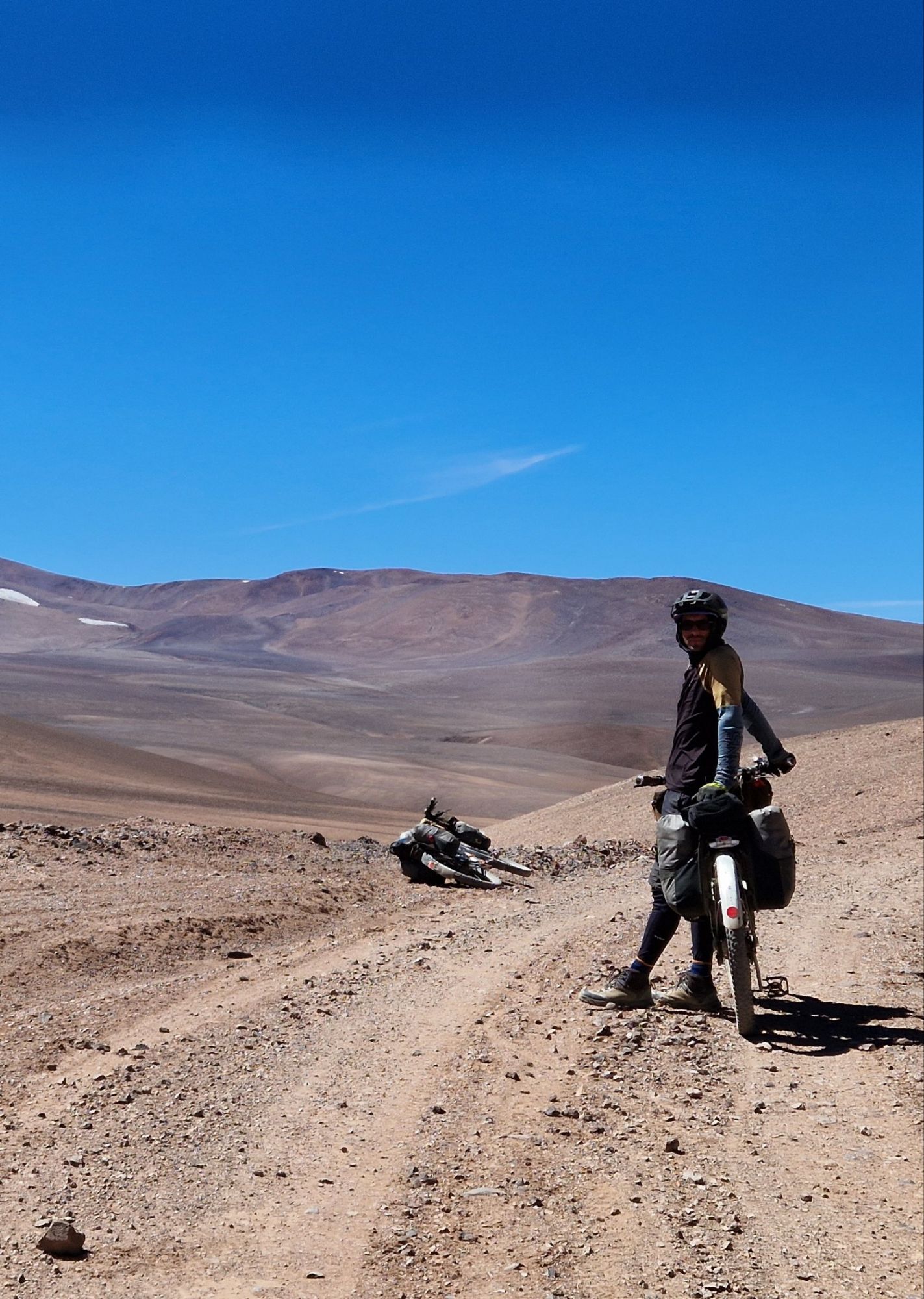
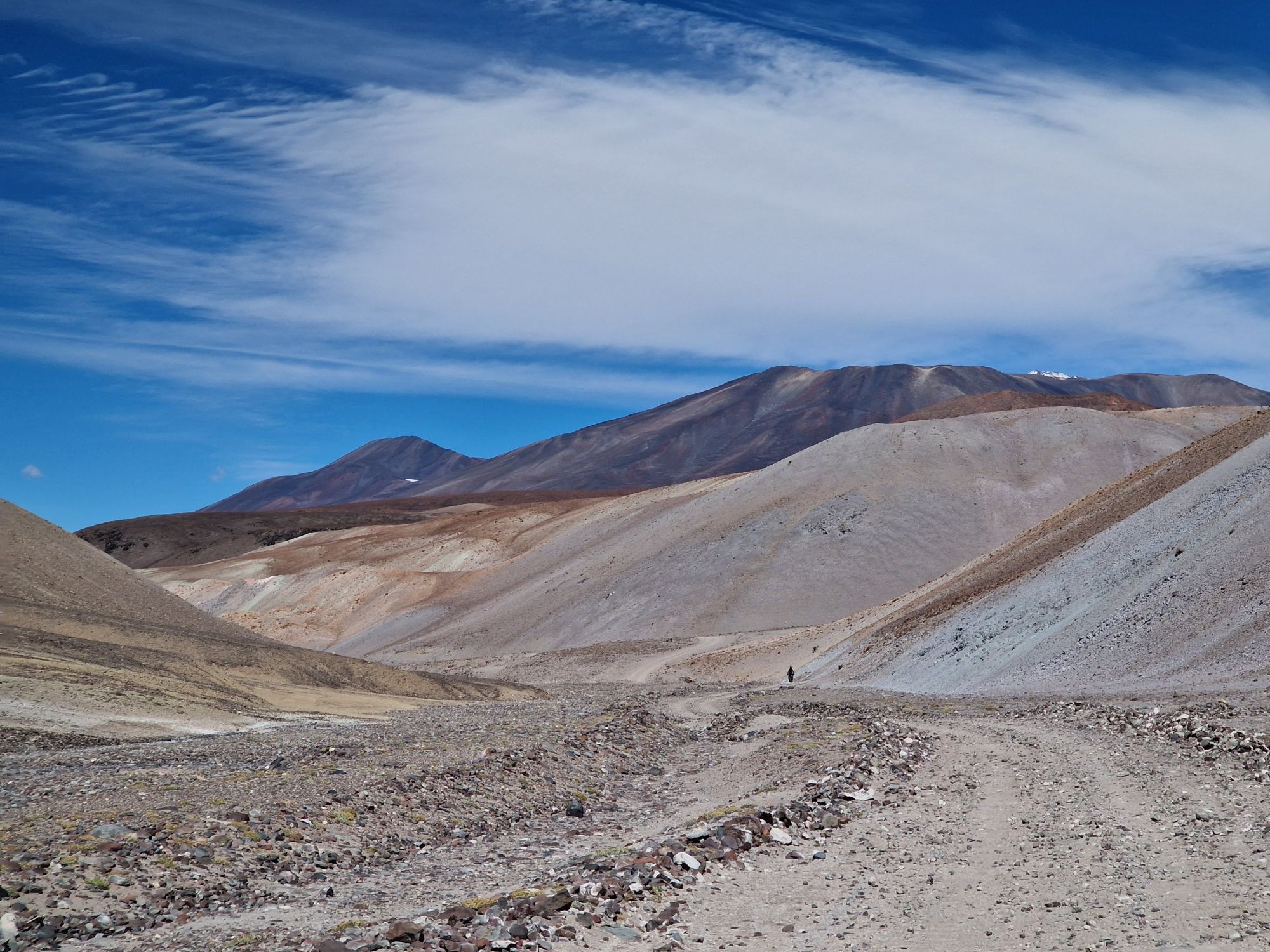
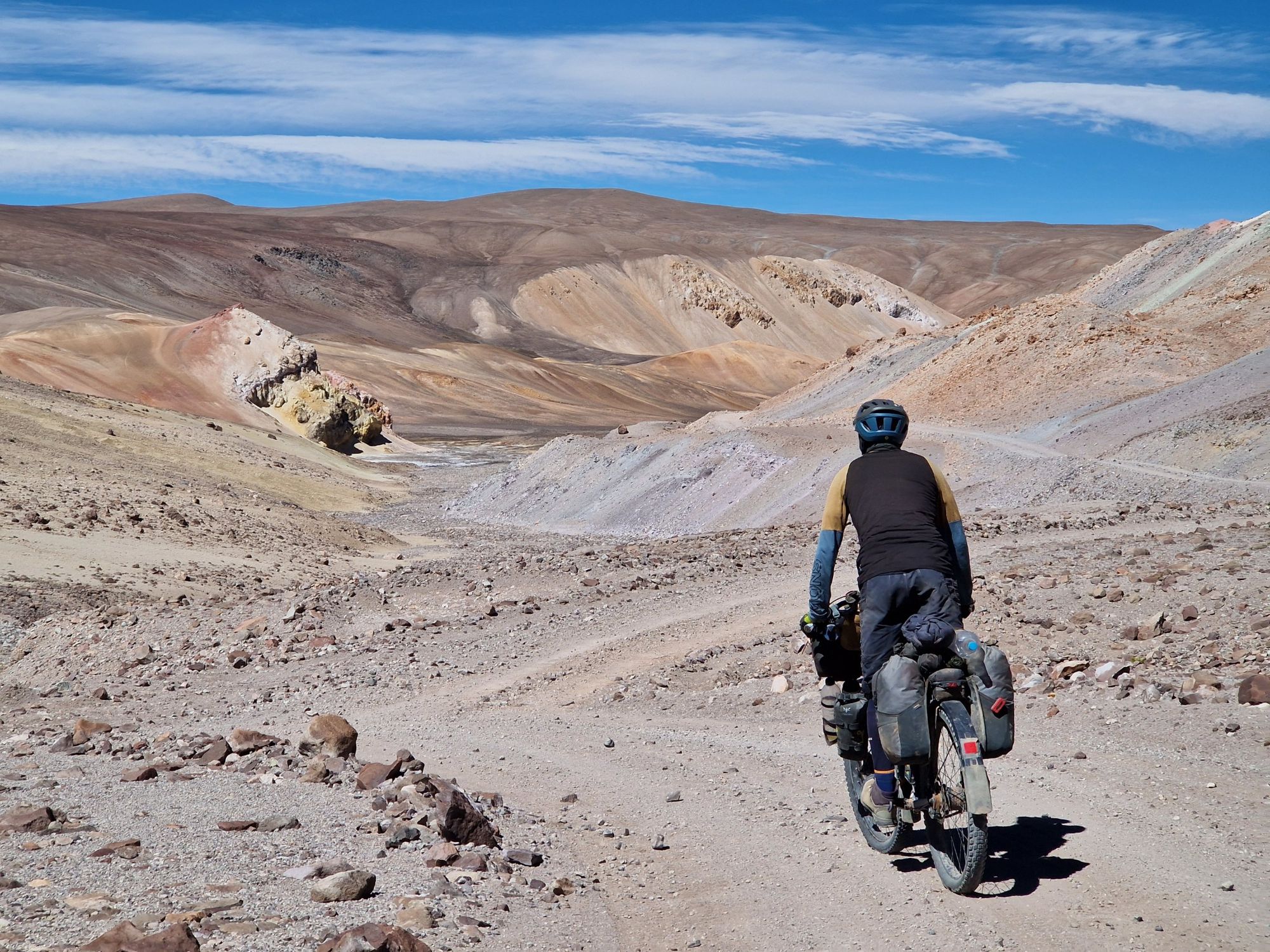
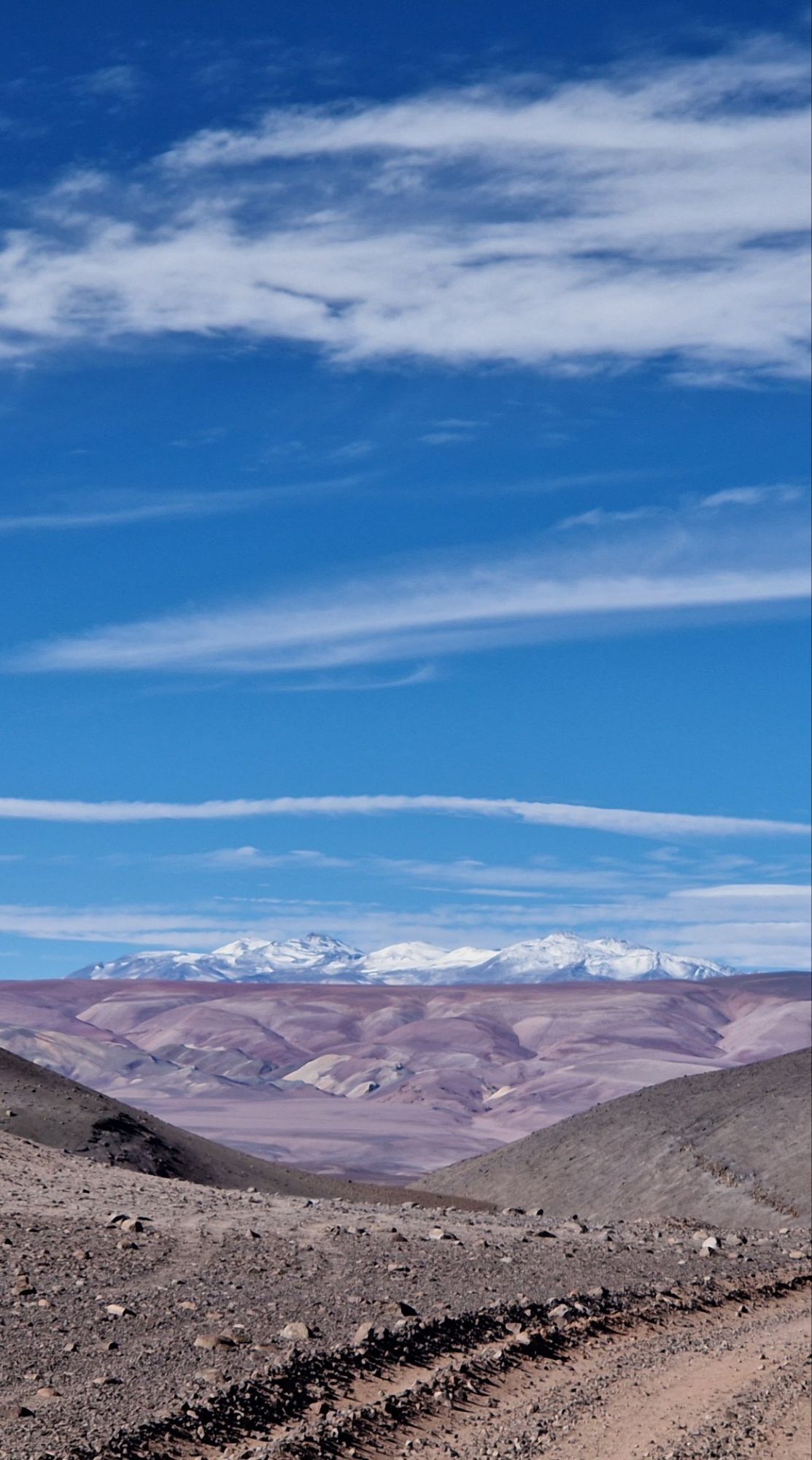
The quiet calm morning of day eight arrived. Another morning of everything frozen, both inside and outside the tent. Packing our bags in one pair of gloves still wasn’t enough. Touching anything metal (like the bike) meant you instantly got than numb, burning cold sensation in your fingers, but packing with two pairs of gloves on felt like some kind of special dexterity challenge – like a bad Crystal Maze-esk game. When we finally got going, the track wound its way down another incredible valley, the rocky walls providing more mind-blowing colours and textures. Staring up at the huge rock faces, thinking about how long they took to form, and how old they are, made us feel pretty microscopic in the scheme of everything. Despite it being a descent, the corrugated surface and loose rocks meant it wasn’t whizzy fast, but the amazing scenery and the Guanaco who call this place home, more than made up for it. After a couple of hours we had descended enough that we even started to warm up, our extra layers coming off for the first time in a few days.
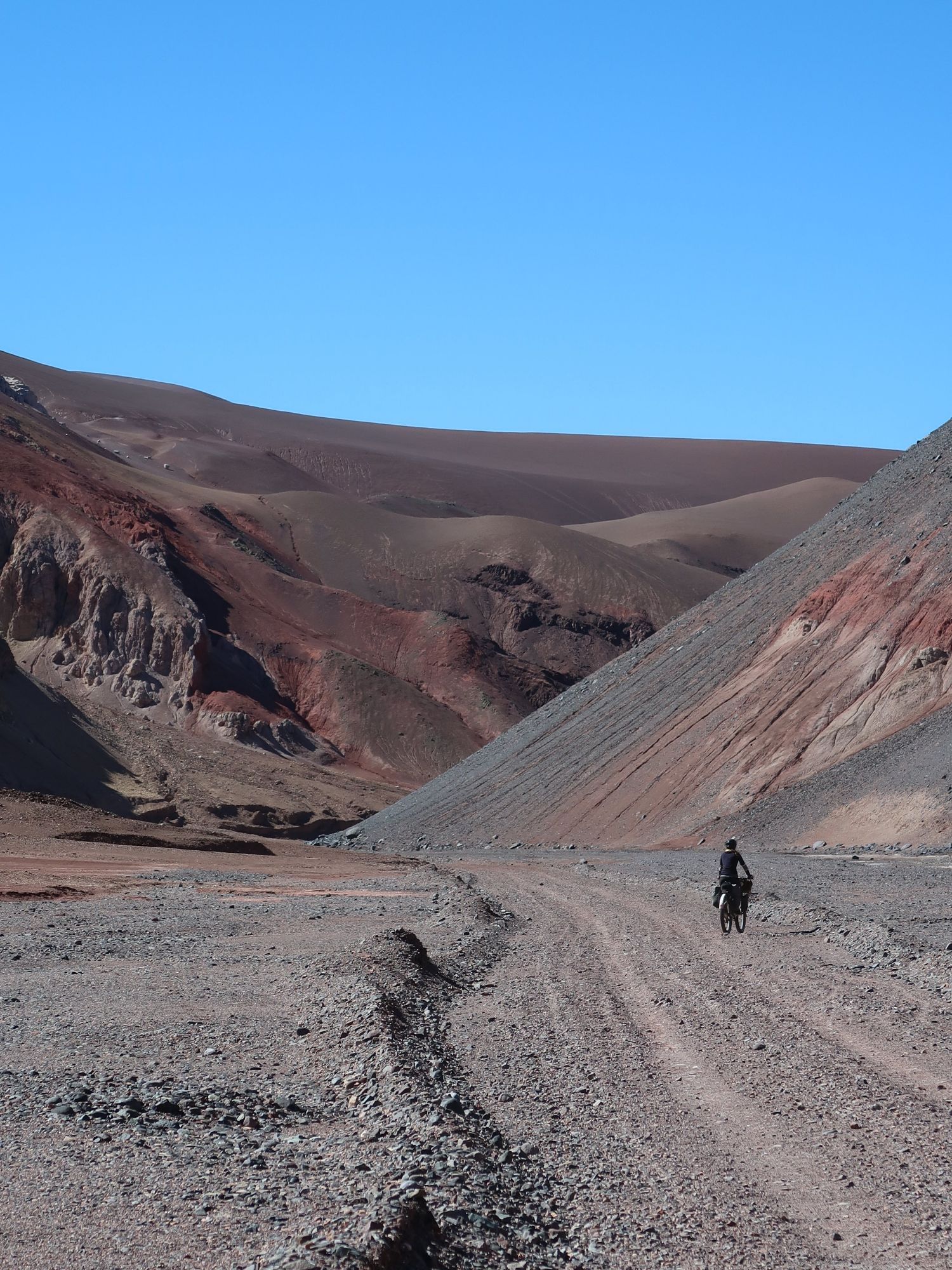
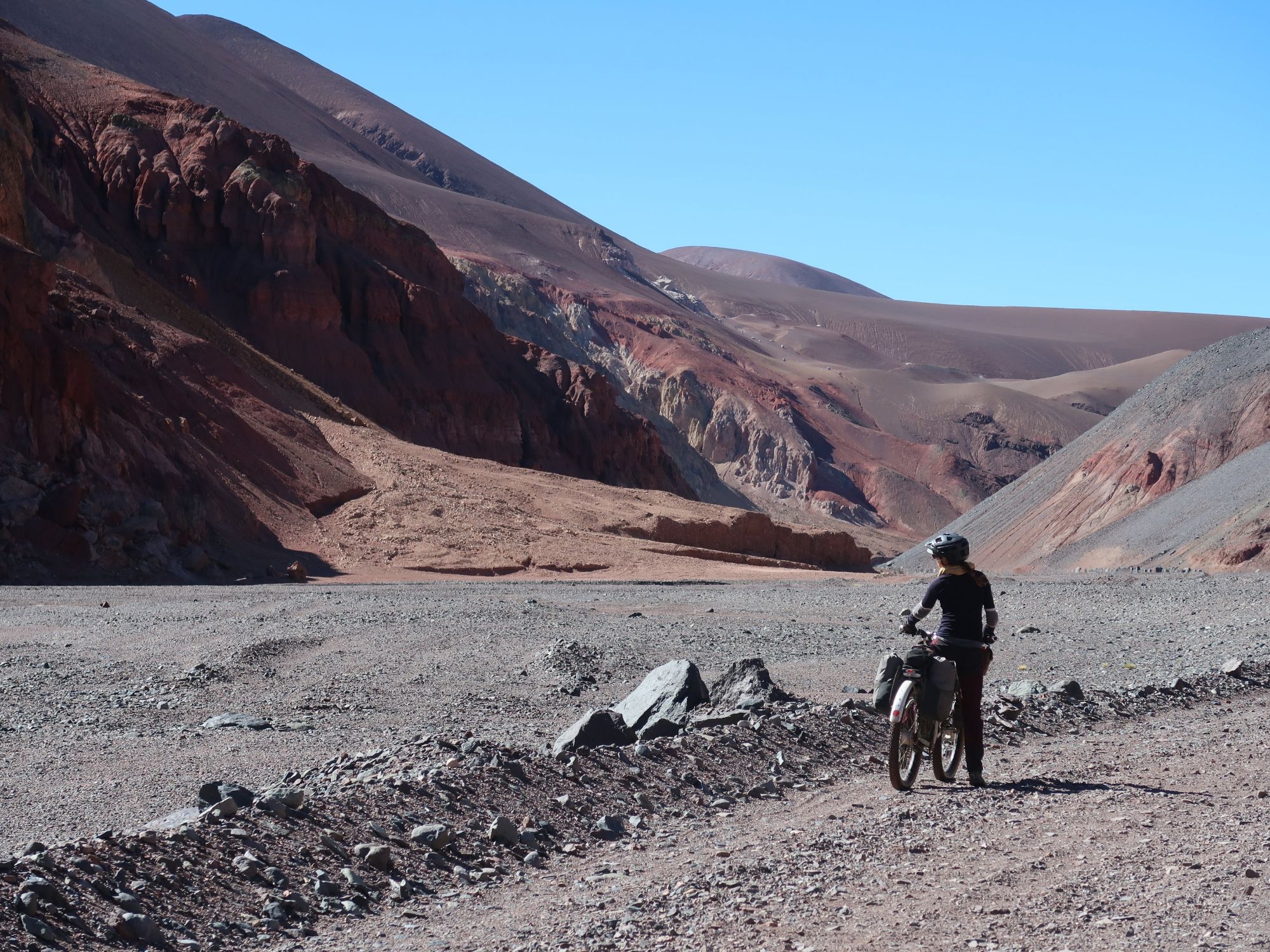
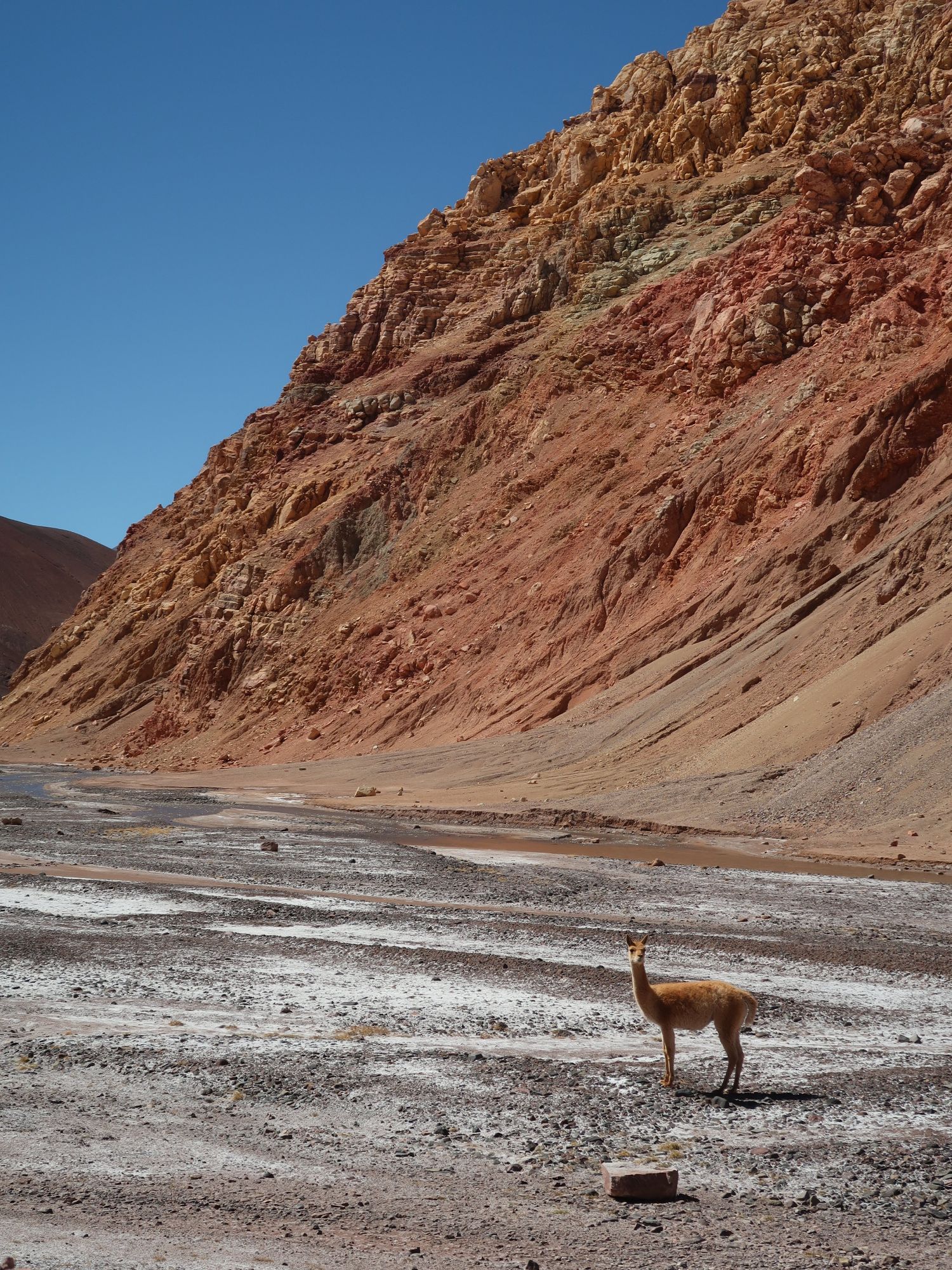
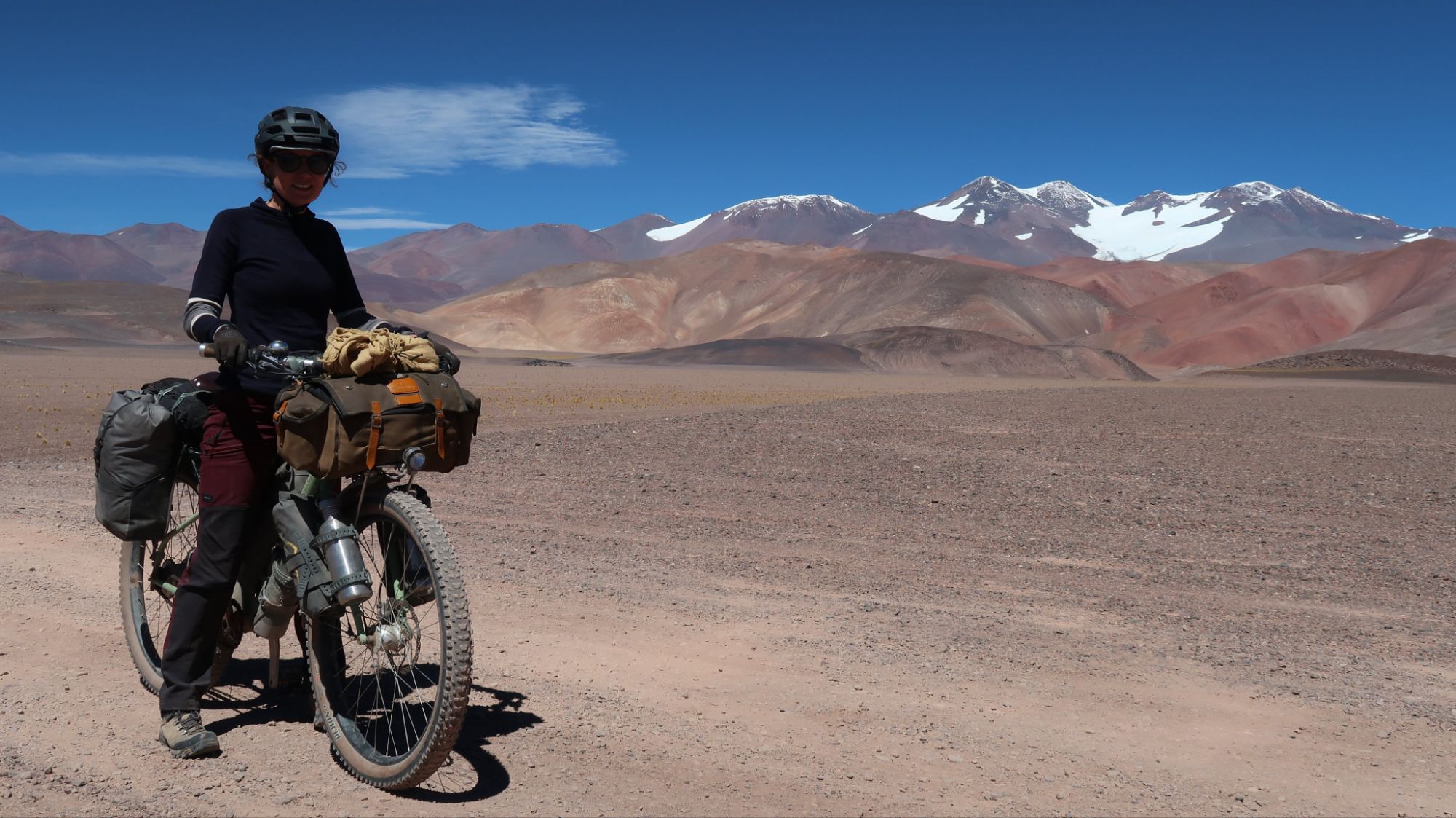
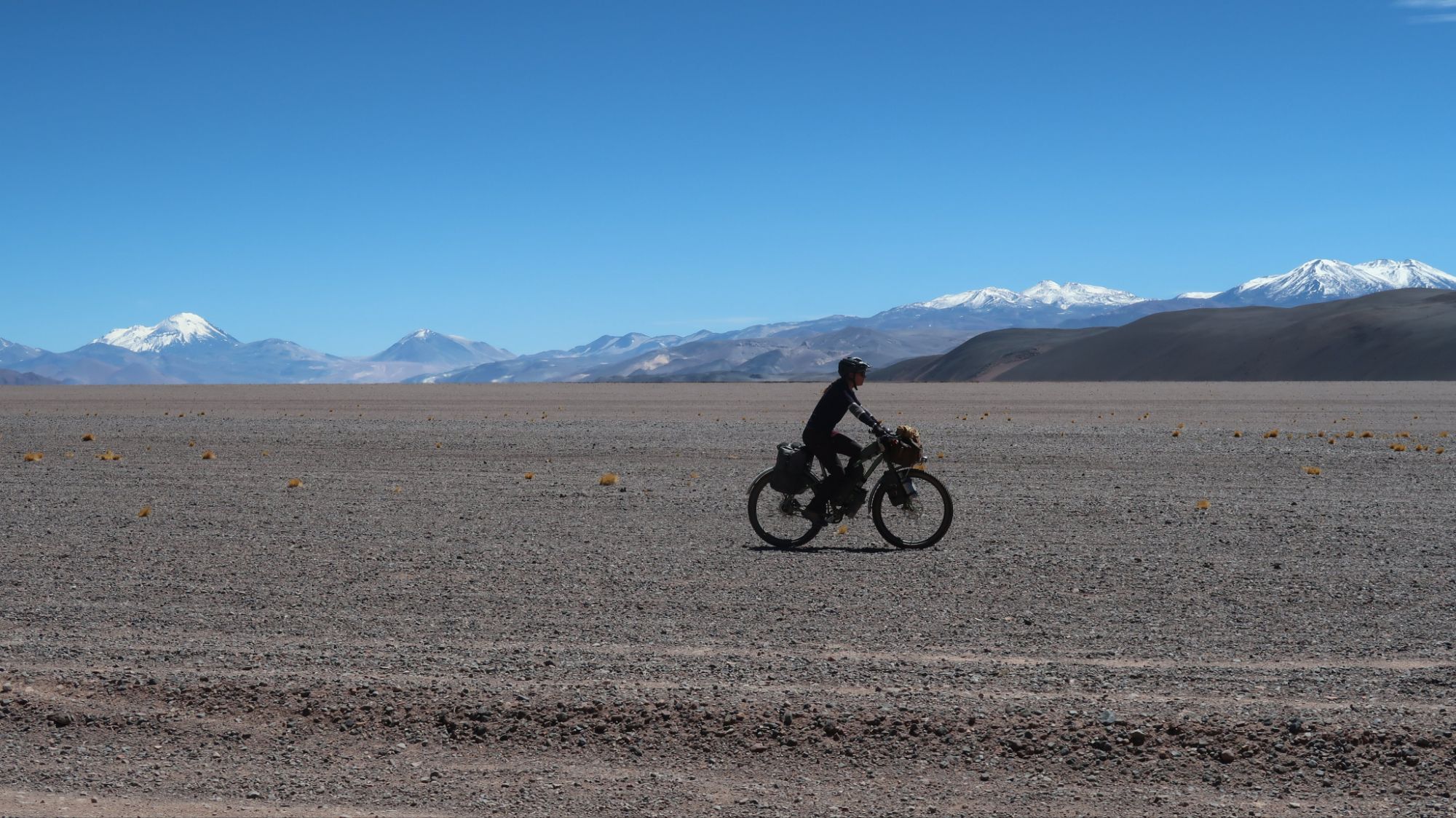
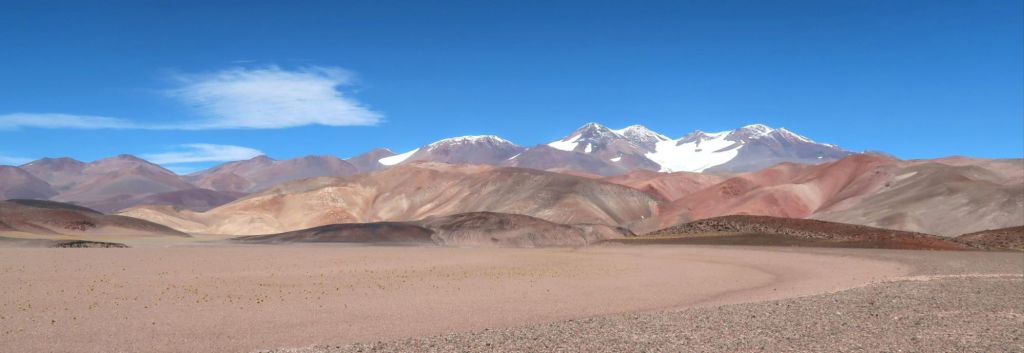

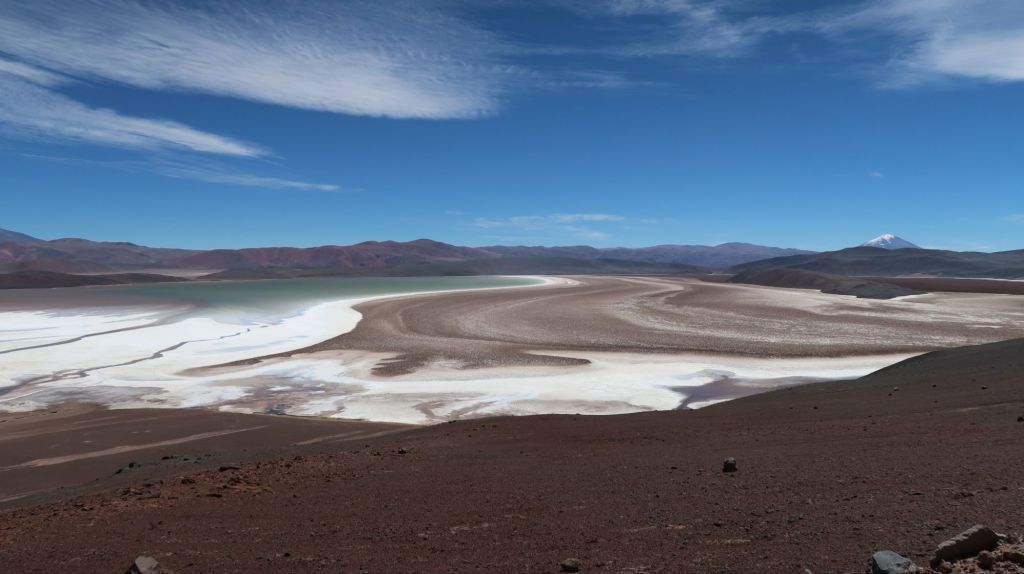
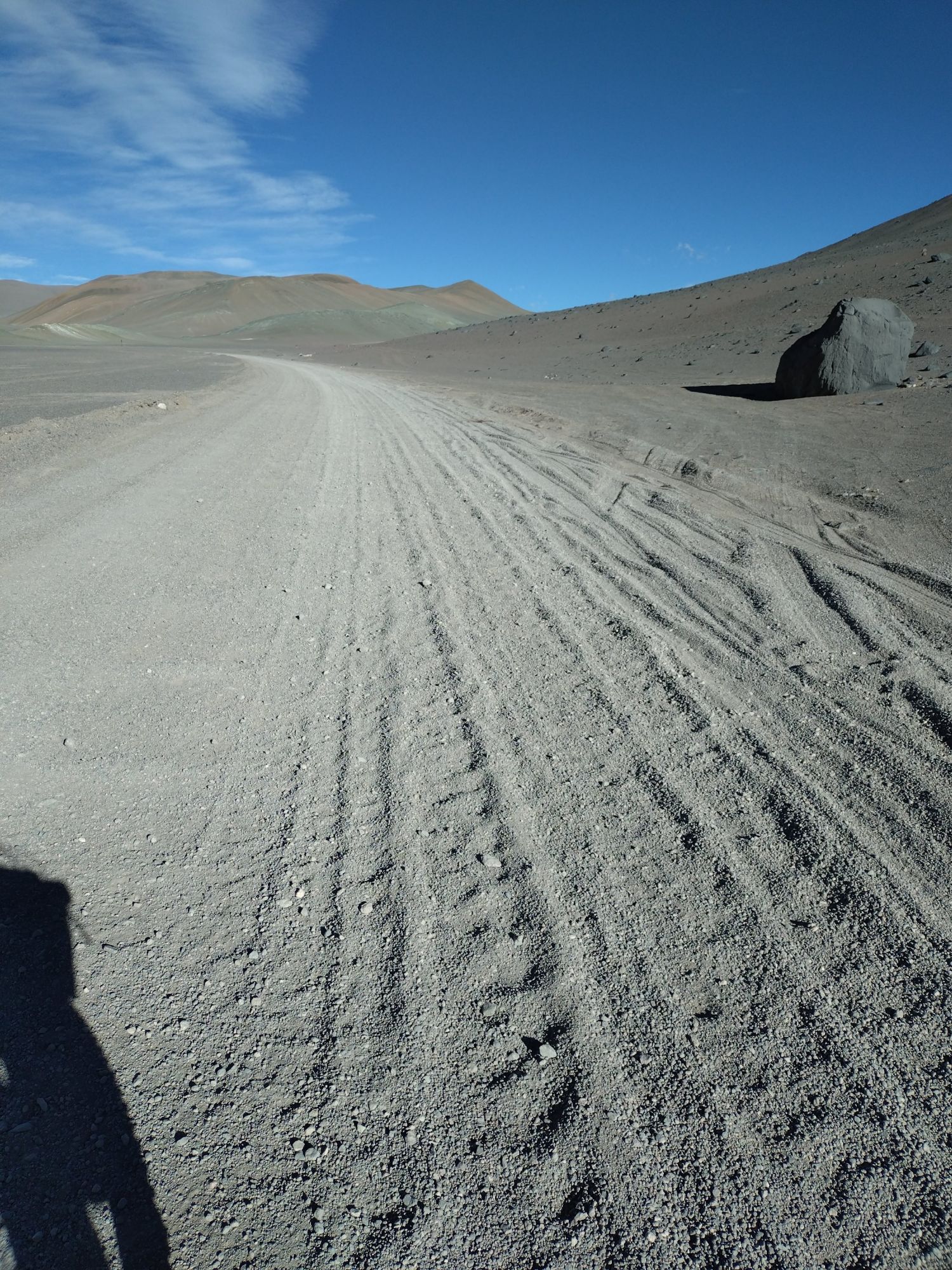
By late morning we had reached Laguna Verde, a place we had heard lots about – mainly because it’s where other cyclists has been given water, fruit and biscuits from passing tourists – but for us it became infamous for the worst road conditions we’ve ever had the displeasure of riding (so far!). There are three lakes nestled together under Monte Pissis, an extinct volcano/mountain that at 6787m in height forms an impressive backdrop to the surrounding area. It’s therefore pretty common to see tourist day trippers in 4×4 trucks heading out this way to take a picture or two, then obviously get back in their truck! The 4x4s fly along the soft sand road, which has created the worst corrugation we’ve come across. The sand is too soft to even try and ride at any speed in an attempt to replicate flying across the top of the bumps, like the 4x4s do, so instead we were forced to slowly navigate our way through the bumps. There was no good line. We moved further and further outwards trying to avoid the bumps, but as it seems that many of the 4×4 trucks don’t like the bumps either, they have also driven wider and wider, creating more corrugation across huge wide expanses of the valley floor. It was both painful on all our achy limbs, our necks, our backs, our bums and painfully slow. It understandably made Ted very grumpy. It just felt like they had ruined this pristine landscape without any thought of the damage caused by driving faster and faster, moving further and further outwards from the road.
After another four hours or so of painfully enduring the tortious corrugation we thankfully had a huge pass to get over, which meant getting off and pushing – You know the corrugation is bad when pushing a fully loaded bike up a 4550m pass feels like a joy!! Slowly, slowly, I plodded my way upwards. Heaving myself and the bike onwards, gulping the air into my reduced capacity, gurgle-y lungs. Looking back over our shoulders we could see a line of tourist pickup trucks fast approaching up the hill. The first one stopped and offered us some water, which we gladly accepted. Then all the others stopped behind, passengers getting out laden with water to hand to us. We refilled our water bottles to the brim, grateful for the kindness. We were also given a couple of oranges. In the heat and dryness of the desert, the oranges were the greatest sweet treat – we ate one there and then, but saved the other for when we needed a pick-me-up. After a quick chat with the 4x4ers, off they went, leaving us alone again in the expansive wilderness just watching as they zig-zagged up the steep, almost vertical looking, pass ahead of us. Pushing the, now even heavier, bike was no easier after our short rest, but sure enough after another hour-ish, we made it. And what a view. The lakes below us with Monte Pissis in the background, the glacier at it’s top now in full view, with the track we’d just ridden wiggling it’s way along and around it all – spectacular!
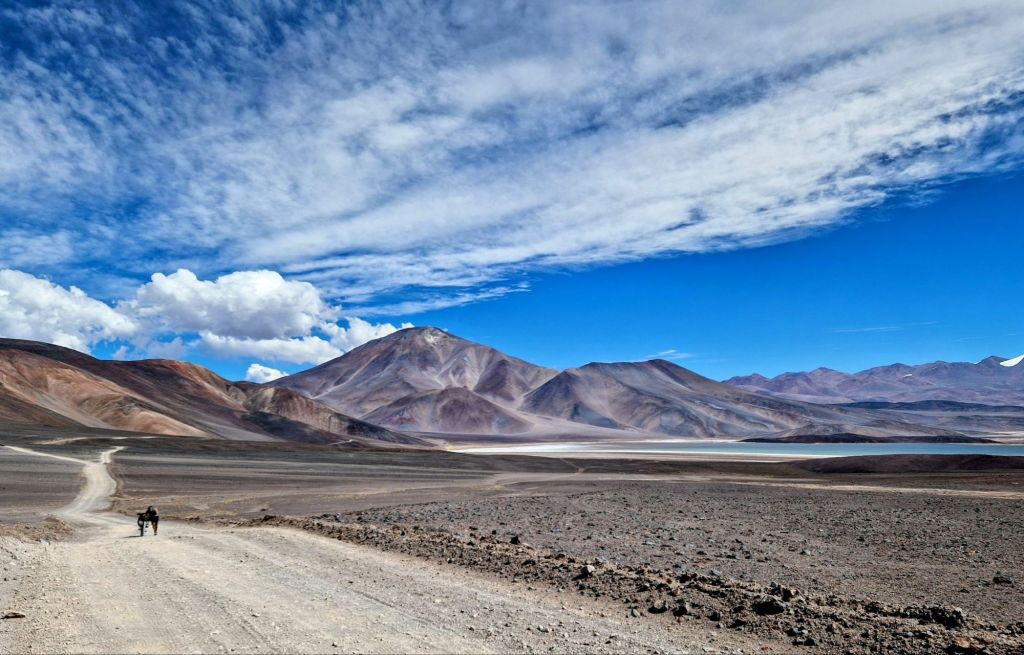
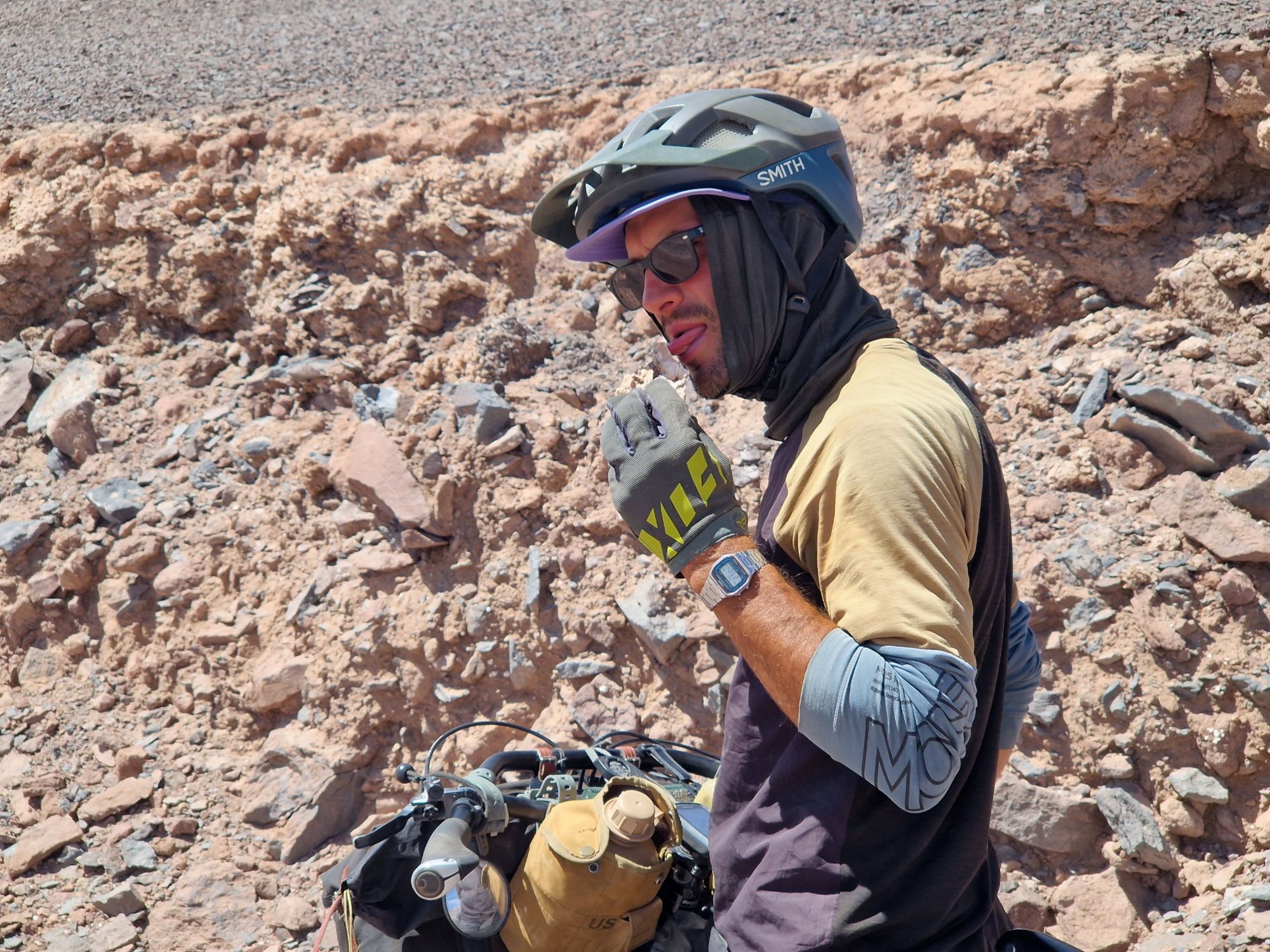
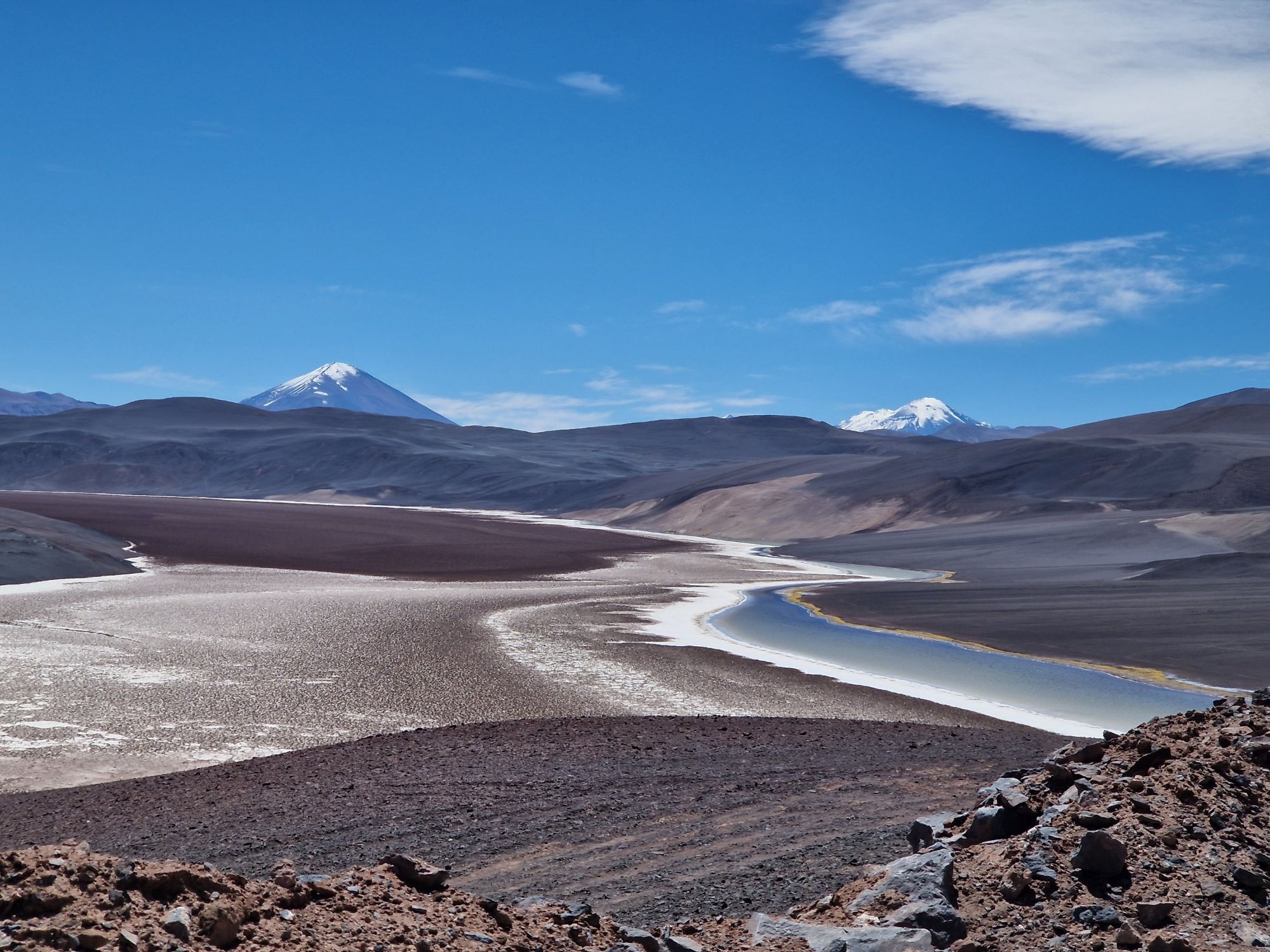
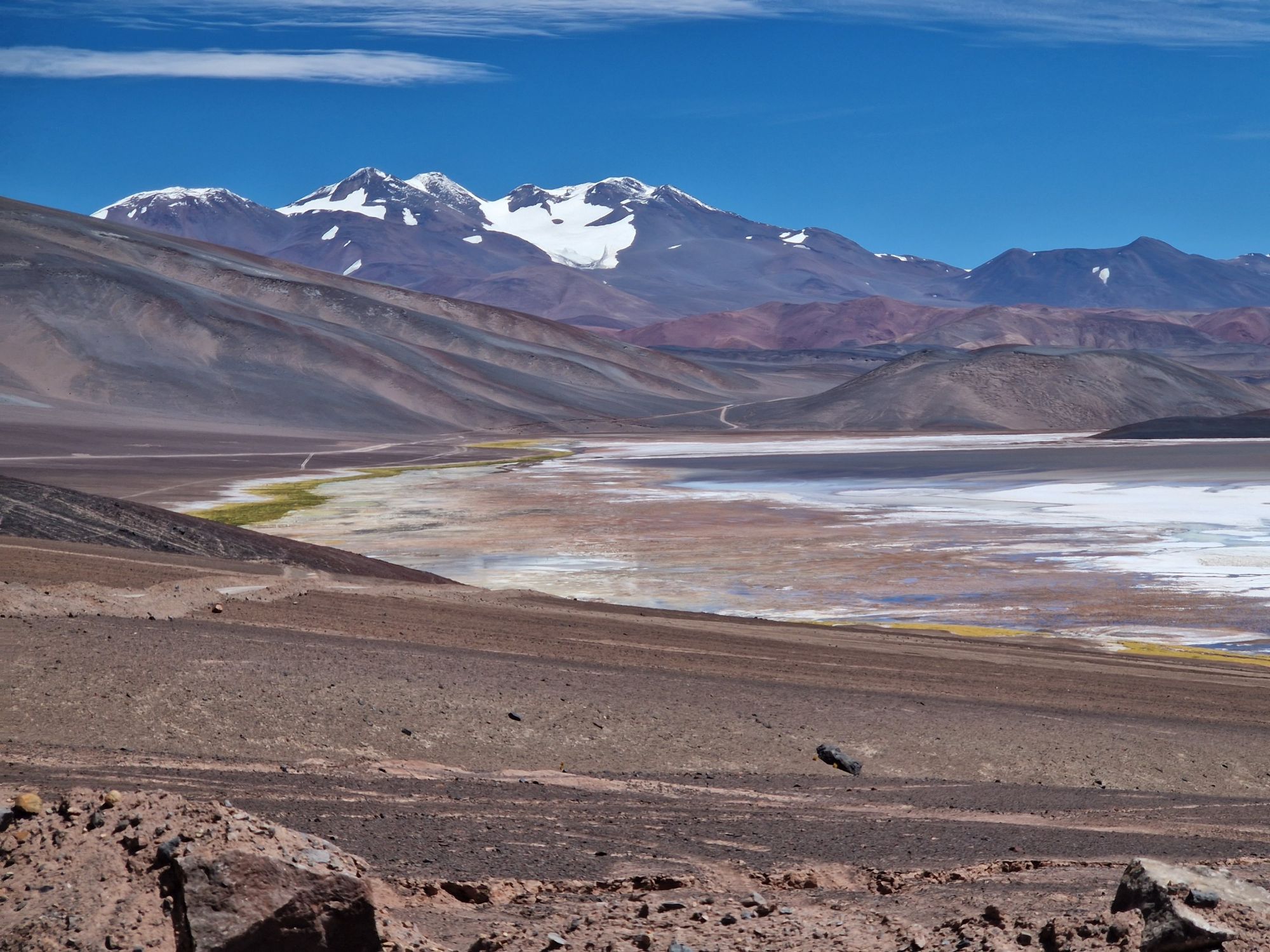
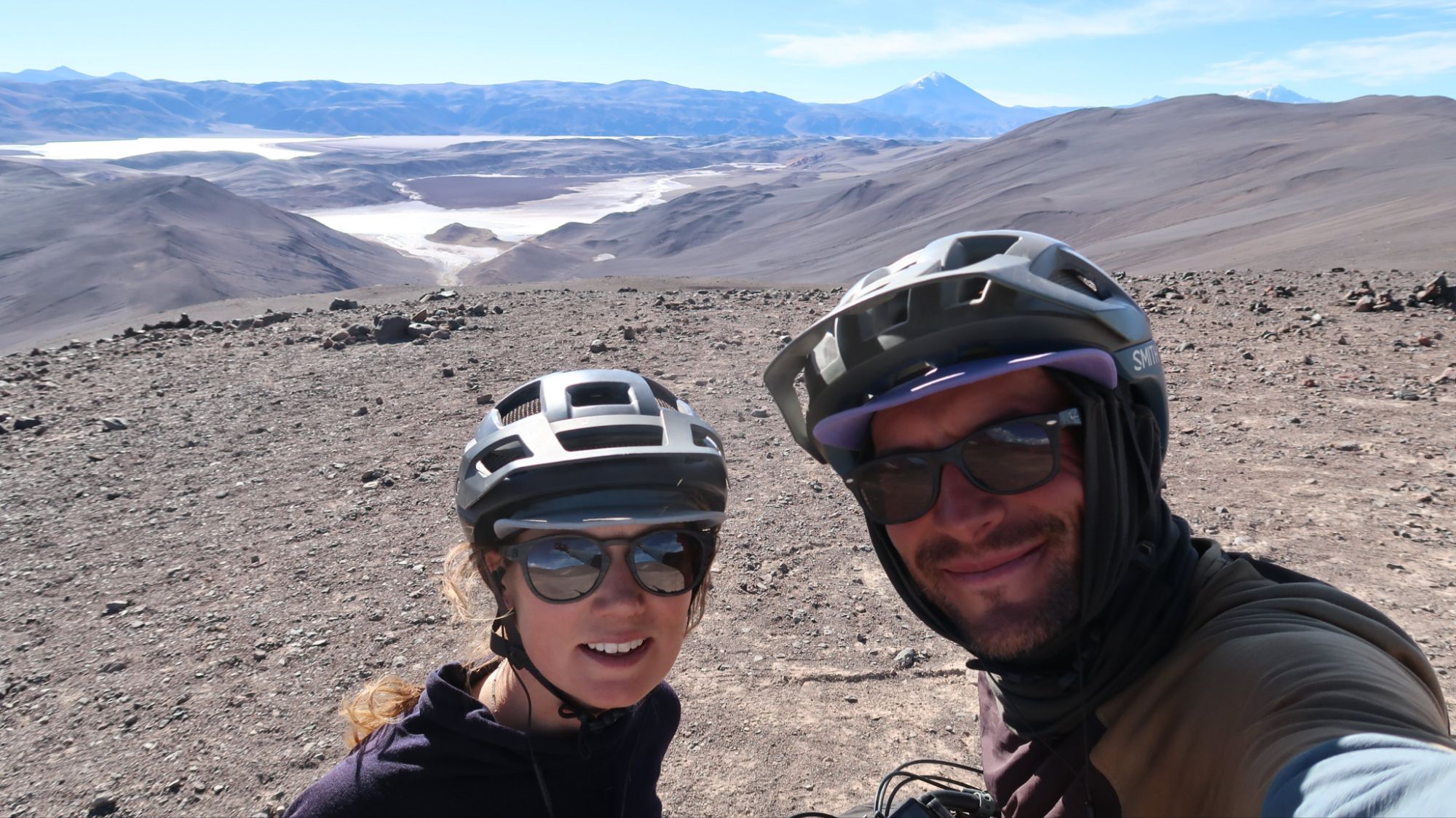
A little descent and lots more bumpy corrugation riding later, the gpx file of our route showed us turning off the track onto what looked like a washed out river bed. We checked the map a few times, questioning how this could be right, but this was definitely where the route went. The river bed quickly became a soft deep sand hike-a-bike but after about a kilometer of pushing we could see that there was a newer road, which had obviously been re-routed, so we cut a slow path up and across to meet it, and thankfully when we finally made it there was no corrugation to be seen.
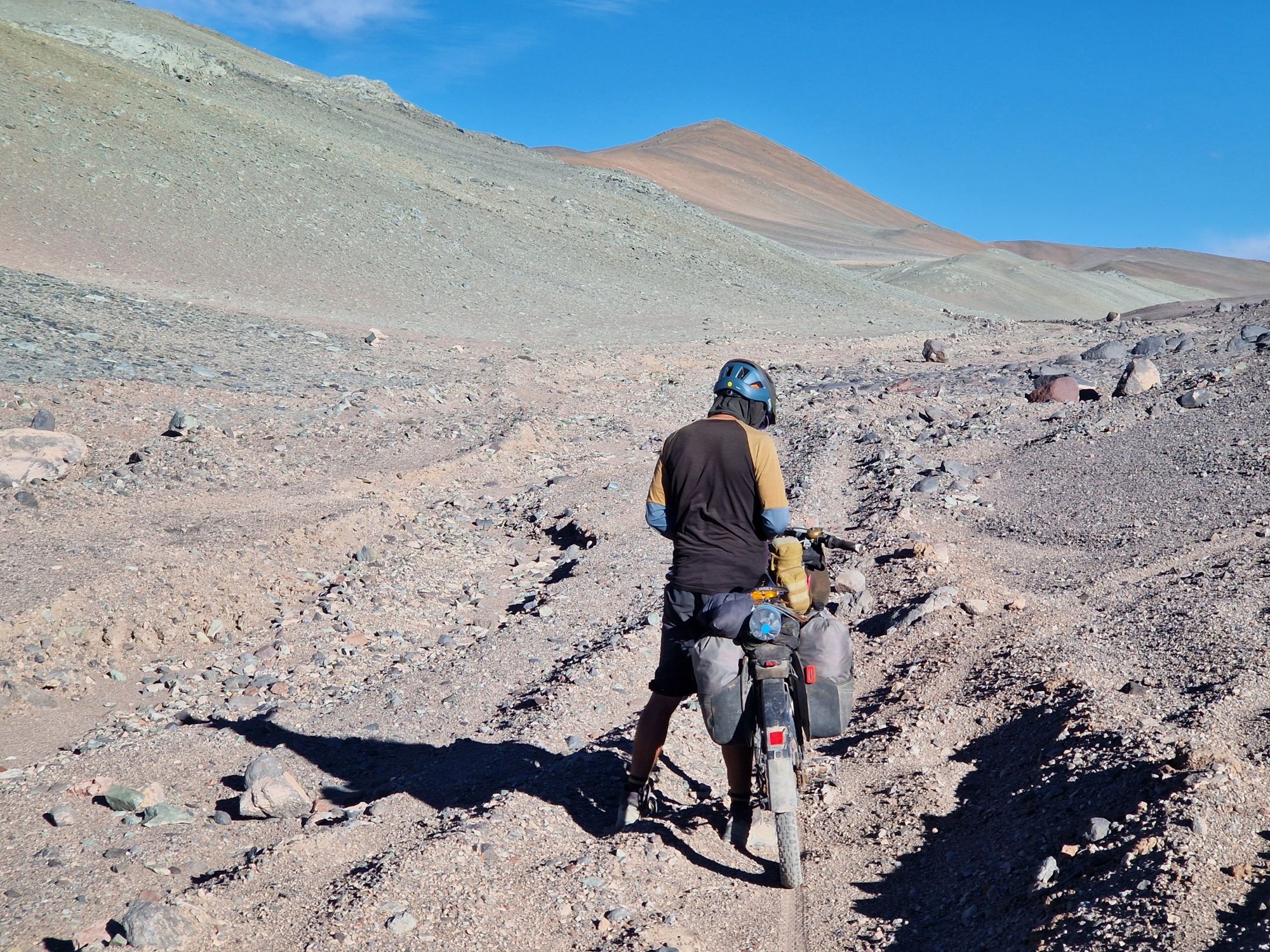
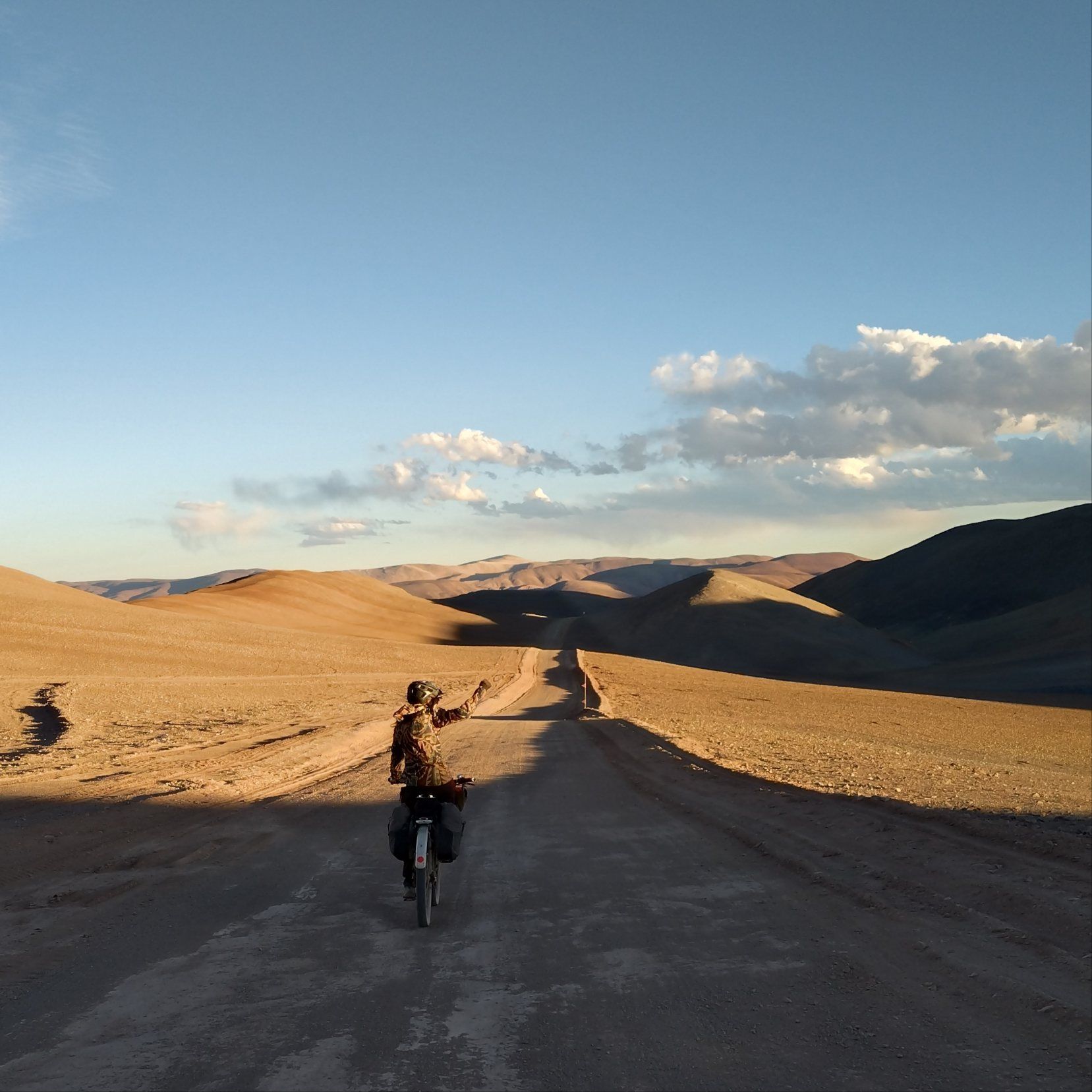
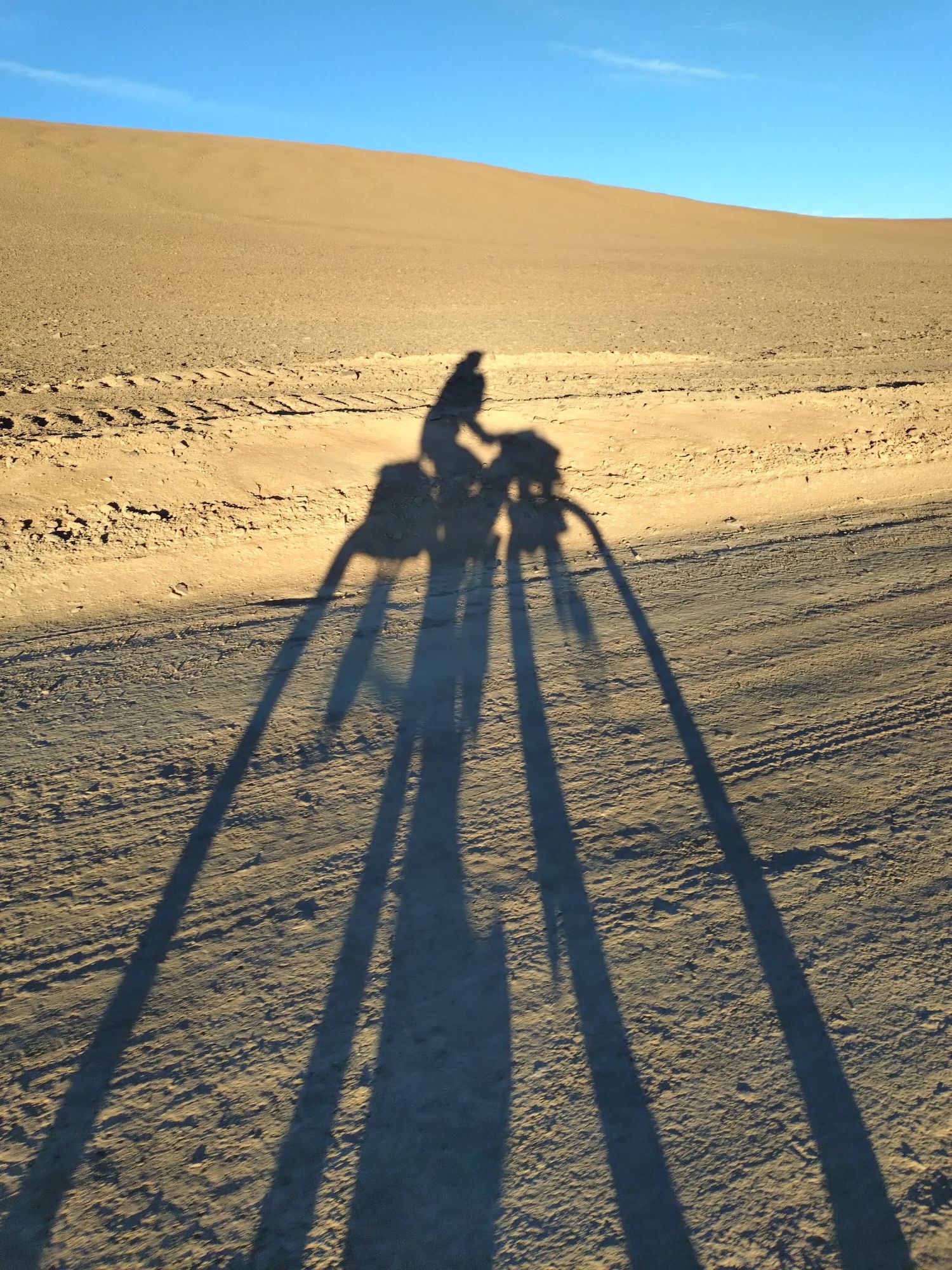
We knew we had one more pass of 4720m to get over before we could stop for the night, but we were now racing against time. With the sun starting to sink lower towards the horizon, we knew we had about an hour of daylight left. We pushed on, appreciating that beautiful golden glow that the setting sun bathes everything in, but my goodness it was hard work to get to the top. My lungs were really struggling and my legs felt like dead weights. The temperature was falling quickly, so there was no time to waste at the top, as we continued riding down the other side, aiming for a flat spot near a stream to camp at. But when we arrived at the spot on the map, the road had been re-routed again, there was no stream anymore and the flat spot was in the full force of the wind with no protection – not good. In the distance, higher up the other side of the valley we could see a shipping container with a flat spot outside it, so we decide to head there instead. It meant yet more uphill riding on already exhausted legs, but would give our tent some much needed shelter from the wind, so on we went. Ted arrived there first. A minute or so after he had disappeared from view around the edge of the shipping container he came running back around the corner, waving his arms over his head. I didn’t quite understand what he was doing, but as I got closer I could see this was clearly his victory dance – the shipping container turned out to be a refugio. Such relief. Its amazing how the universe throws you this kind of magic every now and then, usually when you least expect it but are most in need of it.
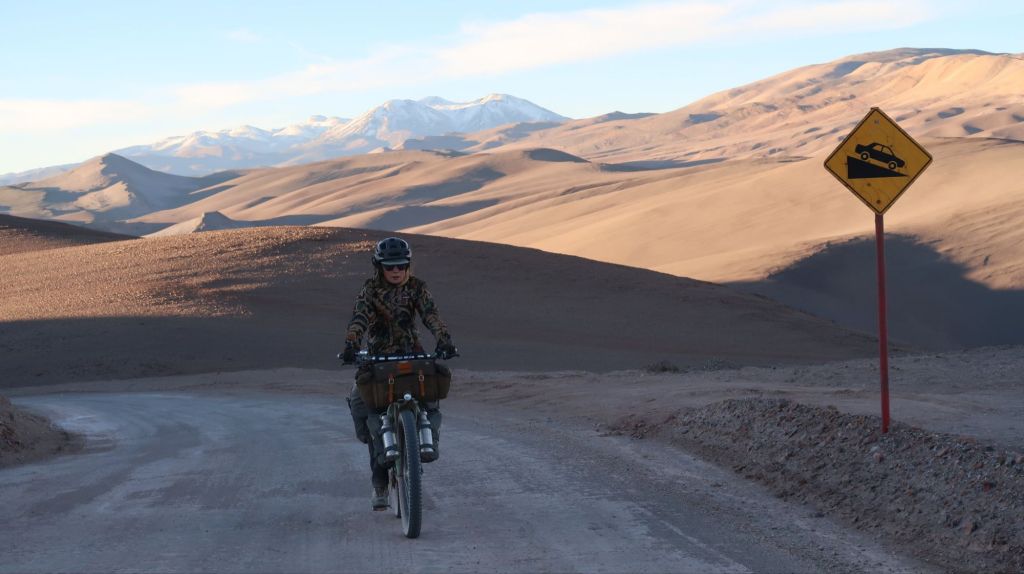
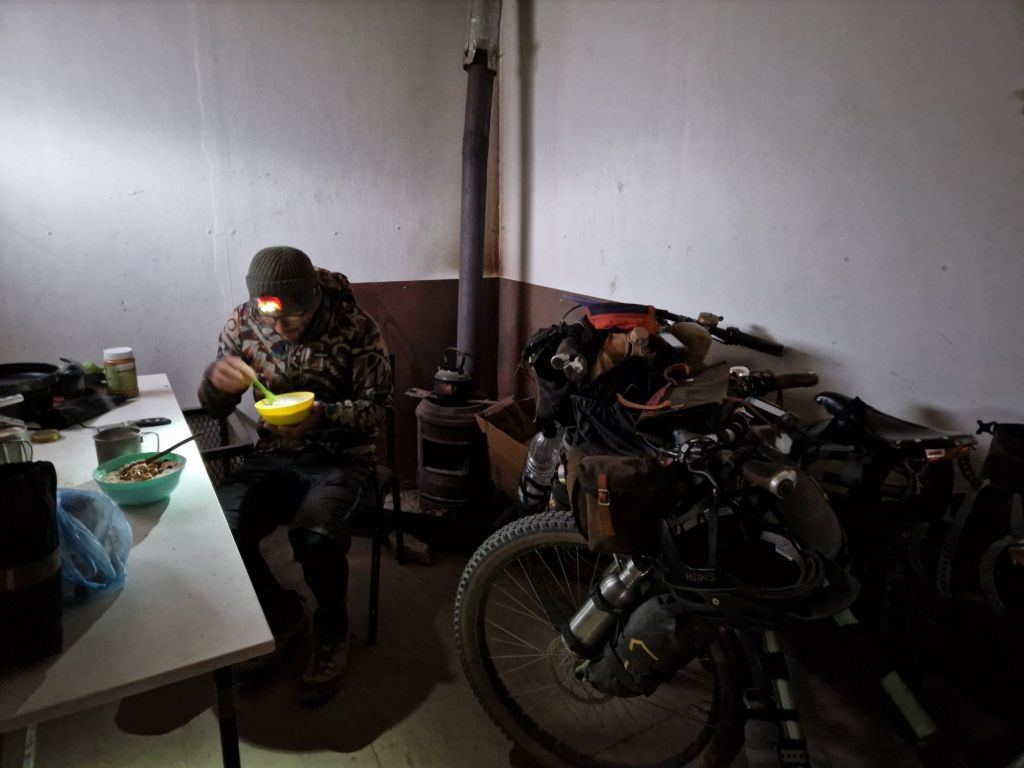
It was a cold night sleeping on the floor of the refugio, and we left the following morning before the sun had hit the valley so it was a freezing start, especially as the first part of the day was a downhill. The moment we reached the sun’s rays we paused to defrost our fingers and faces, feeling the warm glow slowly creeping into our bones. To be out on the plateau with only the guanaco for company in the morning sun was a special moment. One final pass of the route to climb, before it was a huge 3000+m descent back to the valley floor. The climbing was still slow going for me, but knowing this was the final push before we could descend and return to the land of oxygen was a great motivation to just keep spinning those legs.
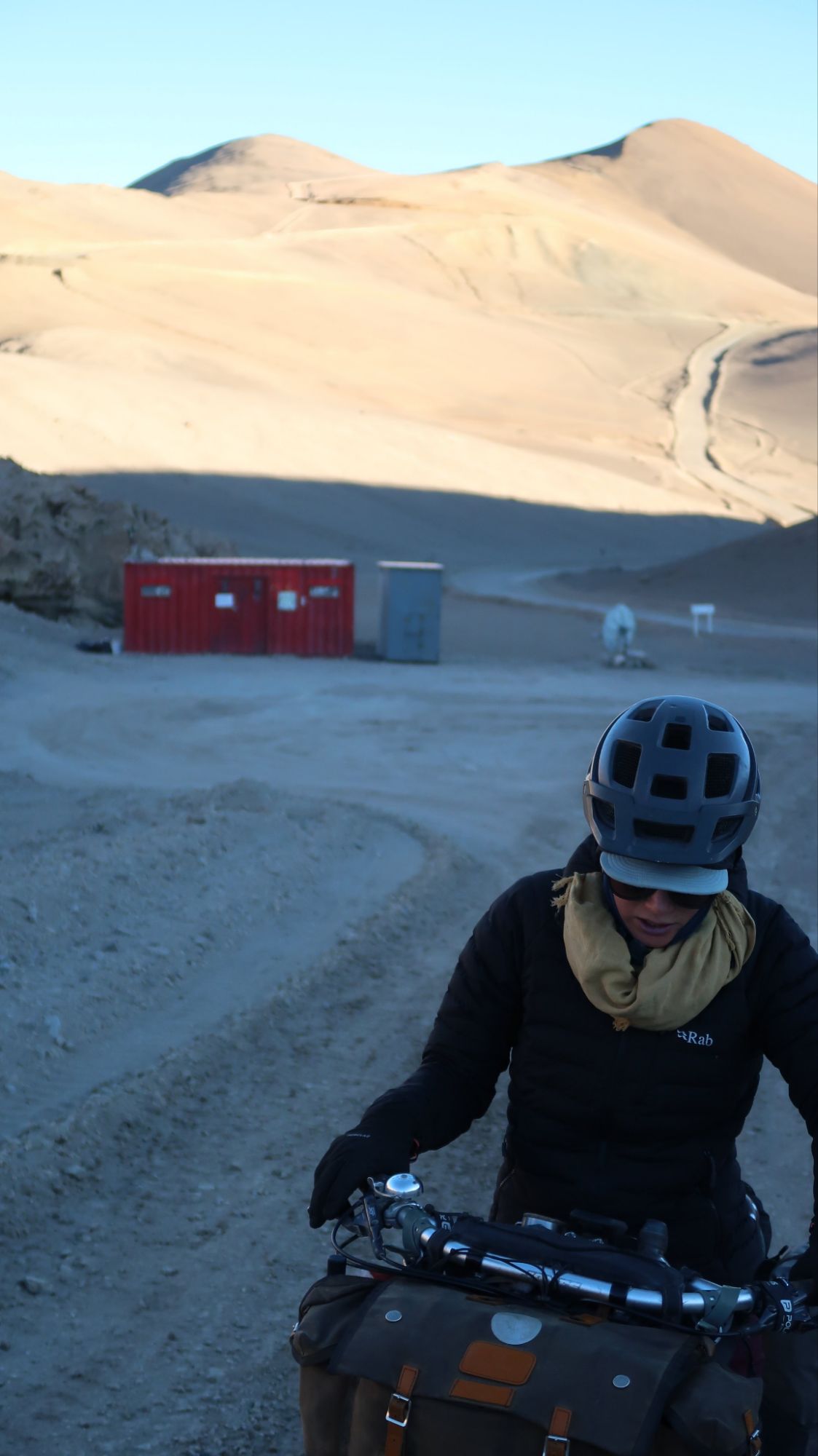
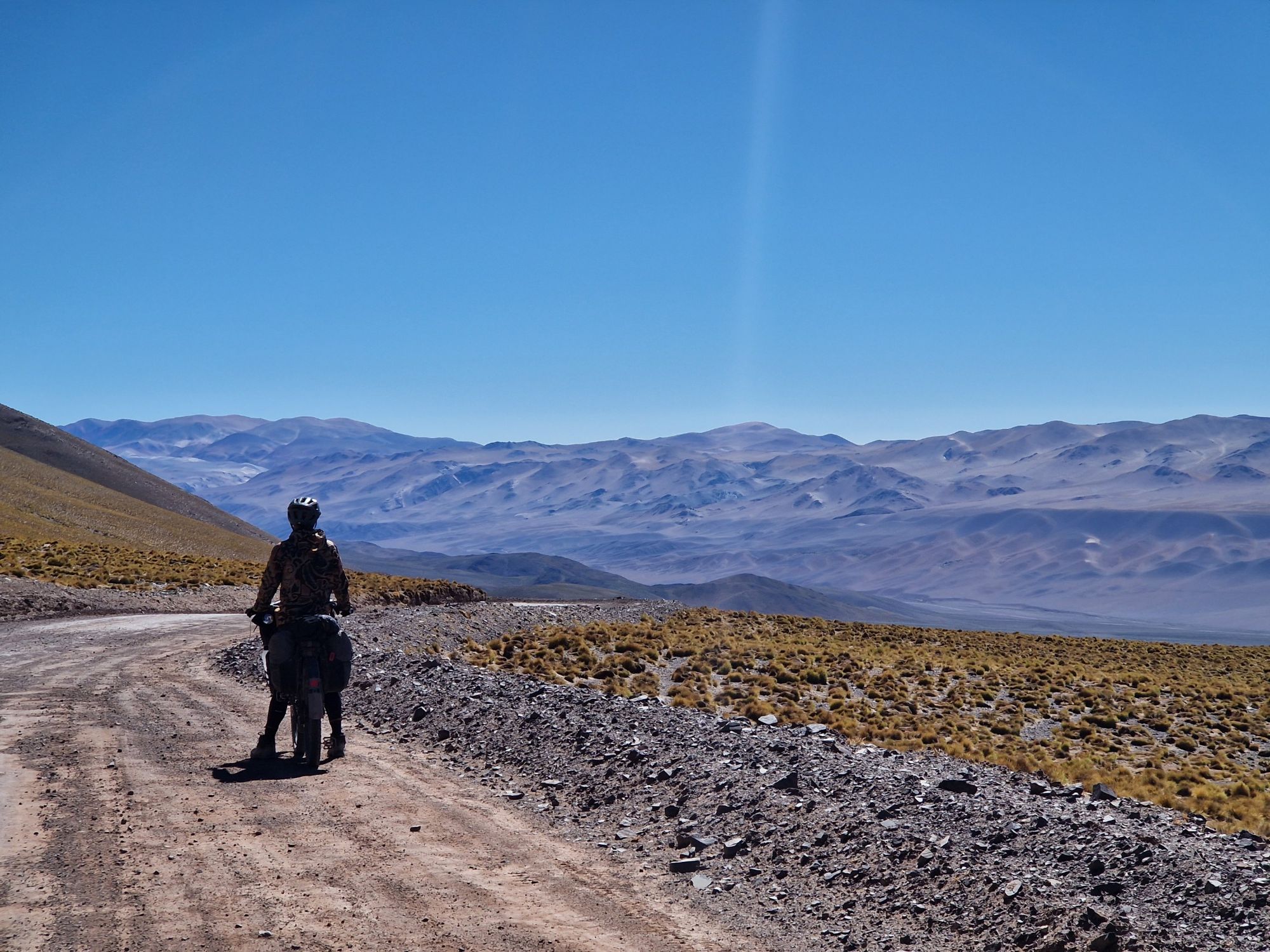
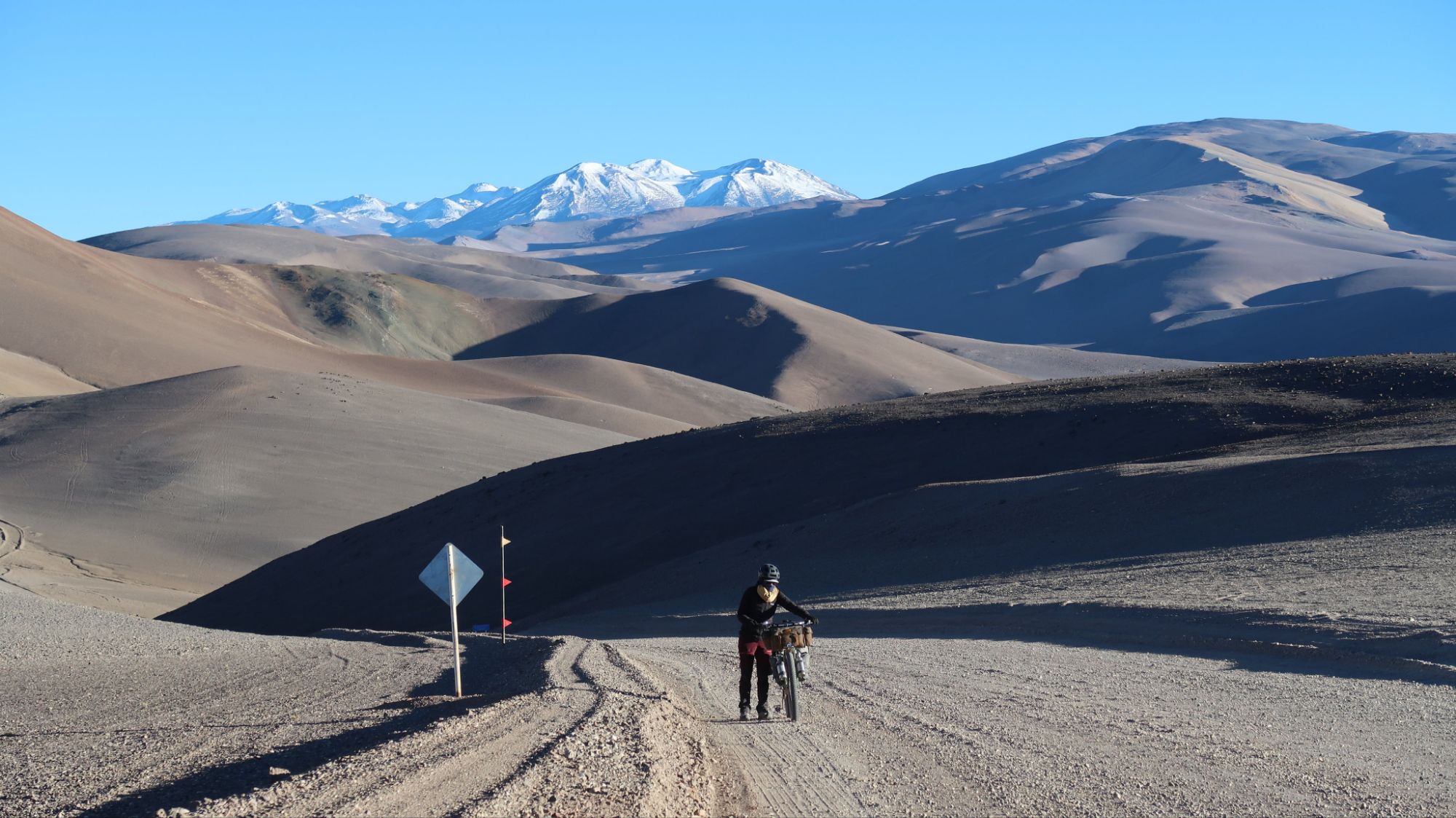
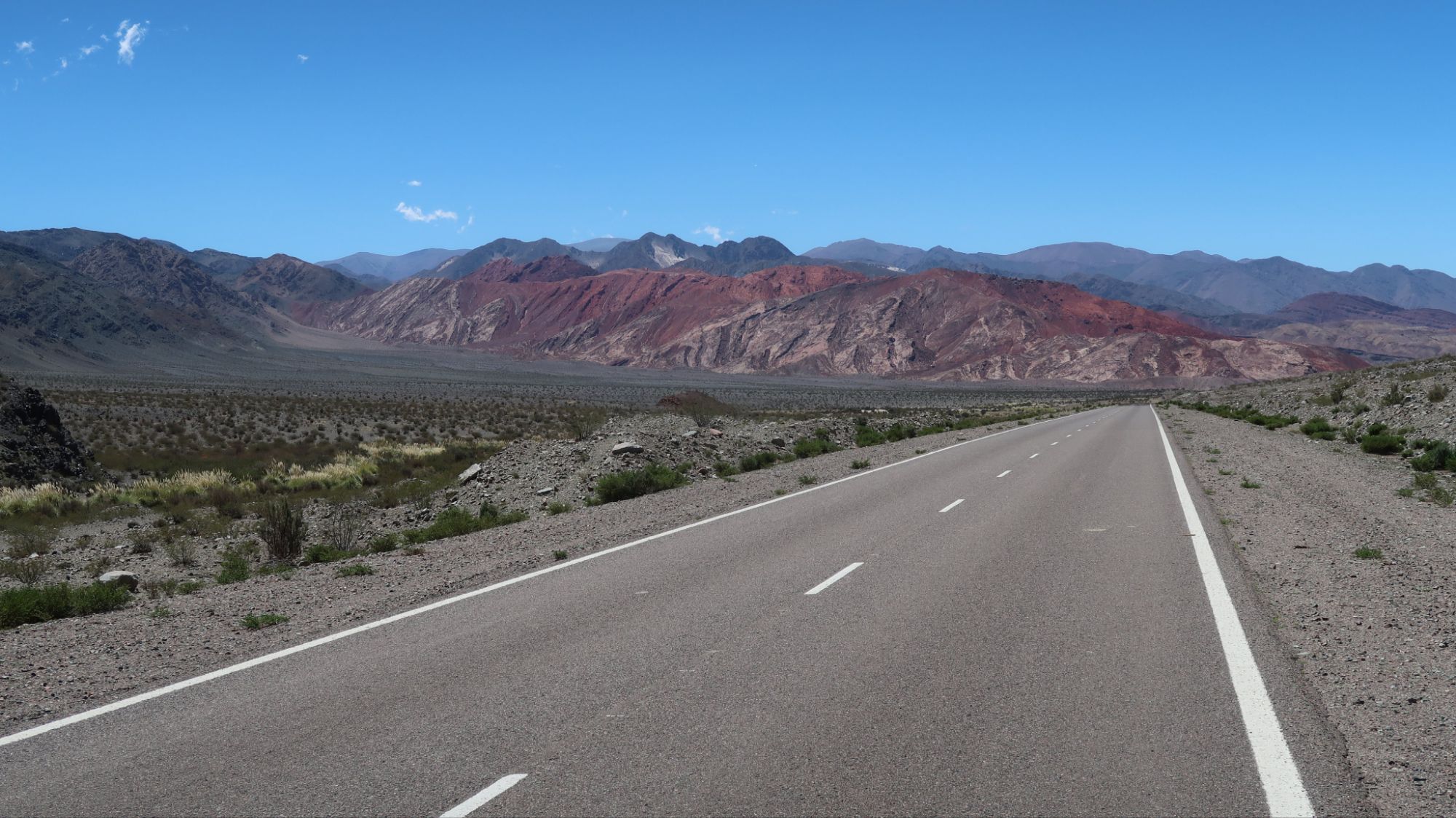
The final pass was busy with mining traffic and tourist trucks so we didn’t really spend any time at the top, but we did have time for a quick biscuit (thank heavens there always seems to be time for biscuits!) The view of the steep, twisty turny descent below us, through the vibrant green shrubs alongside a clear flowing mountain stream was such a contrast to the dry desert Puna landscape we’d spent the last week submersed in. As we pushed off to free wheel downwards, it began to sink in that we had done it (almost!). The scenery was amazing and I had to keep reminding myself to concentrate on the loose gravel rather than staring around with my head lost in the views. As we fell lower and lower, the temperature climbed and I could feel the oxygen returning to my lungs. Once we’d rejoined the main road, we then enjoyed the 100km descent towards the village of Fiambala. It was the kind of descent that didn’t really look like it was downhill, but we just found outselves flying really fast without much effort, as it brought a huge smile to our faces. The road wiggled through the most incredible gorge with steep sides of rock jutting out vertically, deep red rock contrasting next to orange or grey. It seems this route keeps delivering the magic all the way to the end – well almost! The final stretch to the village meant crossing the wide flat valley floor, and this meant 10km of straight flat headwind fighting. It felt like Fiambala just kept getting further and further away, the more we tried to pedal towards it. It felt endless after such a long day. This route is truly relentless to the end. We could also see a sandstorm approaching from further down the valley, the cloud of red dust acting as a further incentive, if we ever needed one, to just keep pushing on.
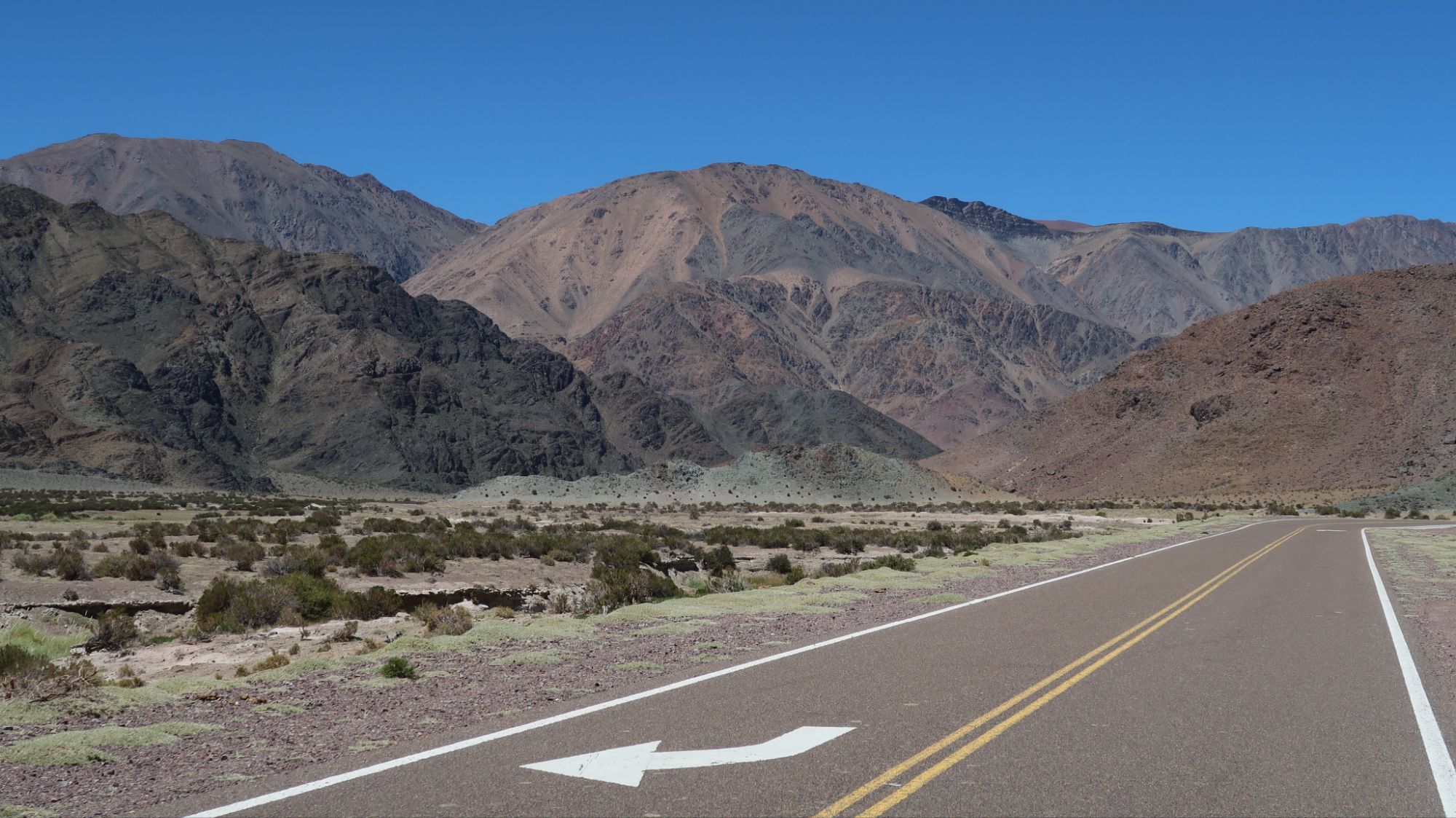
We swung a left over a bridge, around the roundabout, directly across the village plaza and straight into the heladeria for two ice creams as large as our heads. We had done it.
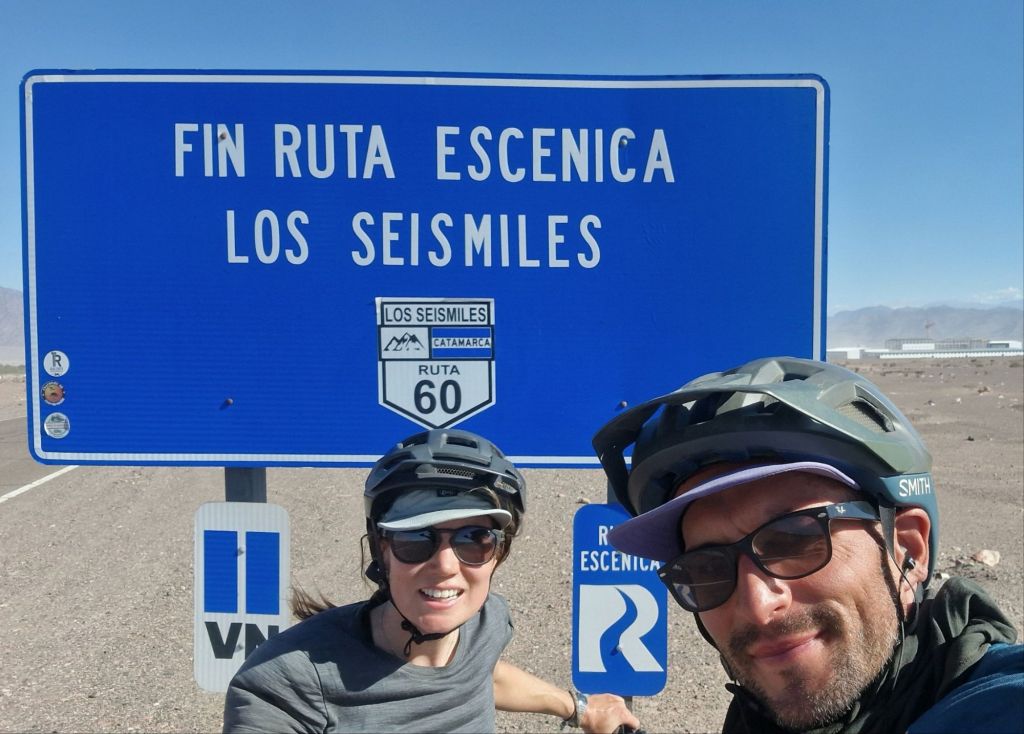
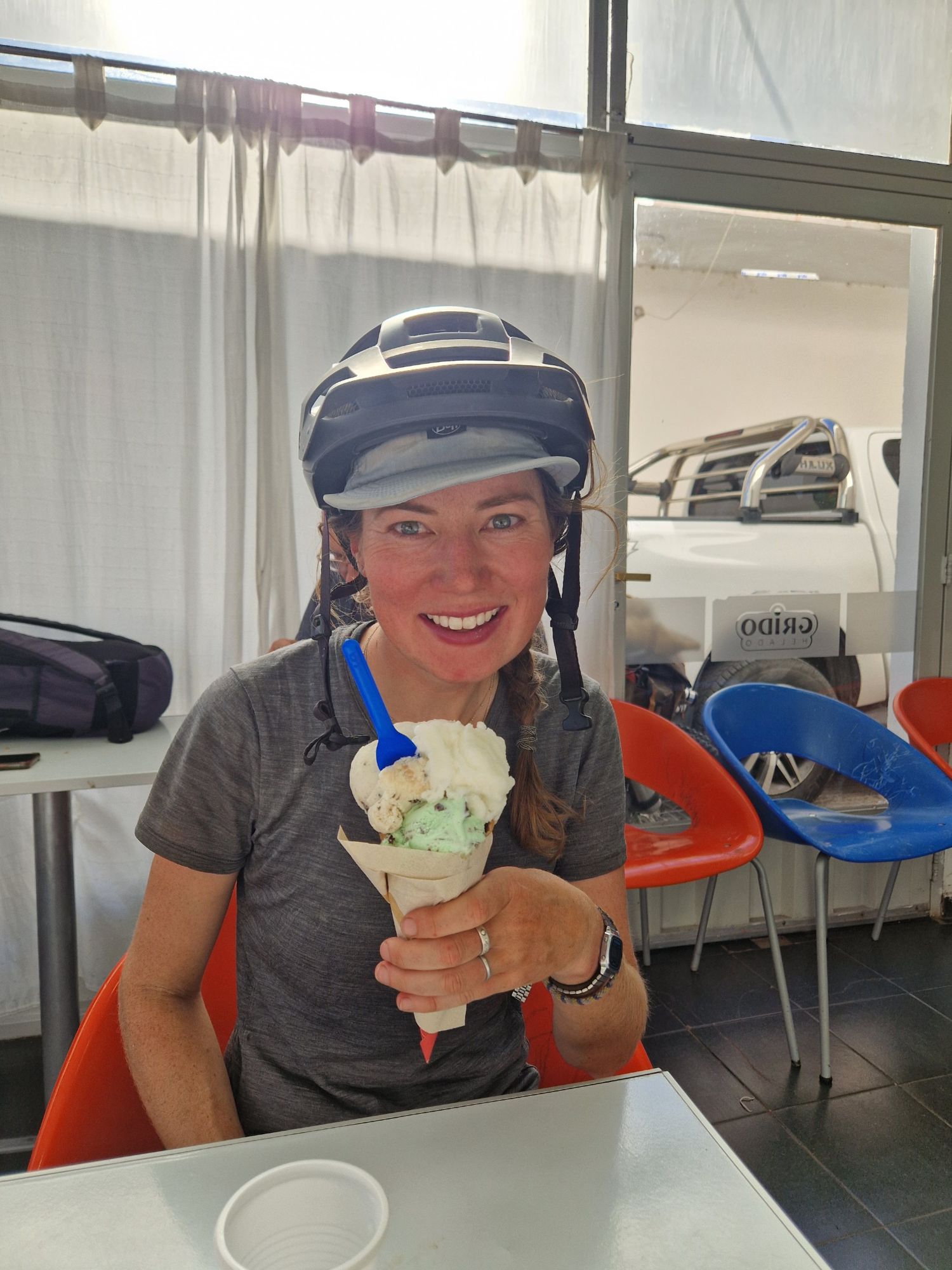
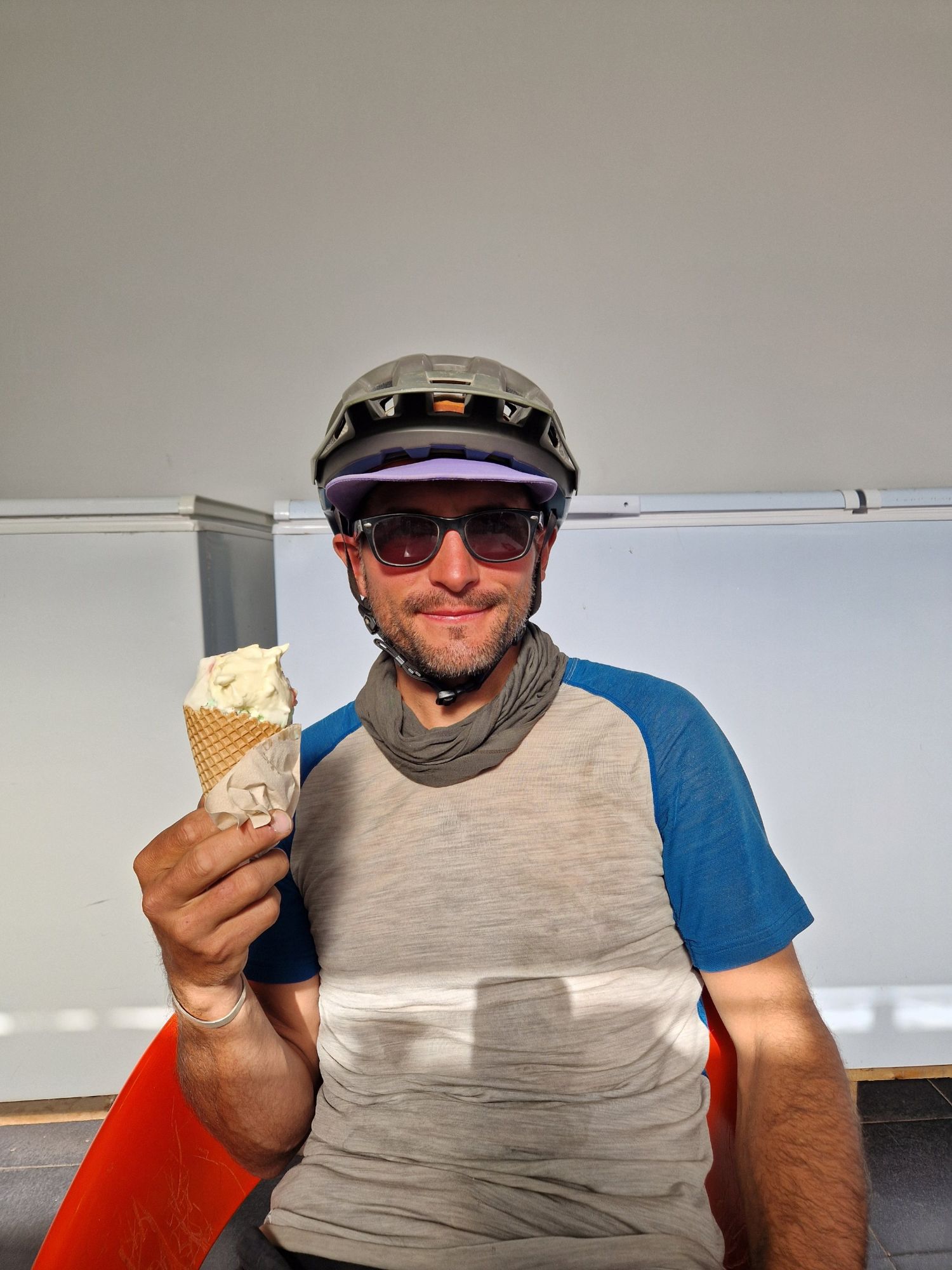
As we sat enjoying the ice cream bar air con, munching our way through our three scoops each (don’t judge!), surrounded by local kids and families, it felt strange to be back in civilization. Our sweat, sand and dirt soaked skin and clothes the only indication to those around us that only a few hours earlier we’d been up in the Puna. We sat in silence, not quite able to yet put into words how we were feeling about it all. Our eyes glazed over, with a combination of tiredness and the ice cream sugar high, but our minds still trying to process and take in all that we had seen and experienced in the nine days since we’d left Guandacol.
It was only during the course of our two rest days, as the deep fatigue caused by the altitude started to receed and my lungs returned to normal, that we were able to reflect upon our experience a little. For me, I just kept saying ‘we did it’ to Ted, in slight disbelief and also to take a moment to appreciate the experience. I’m proud of us for doing it, for being brave and having a go. I’m grateful for the incredible kindness shown by those few people we crossed paths with. I’m still in awe of just how much nature continues to suprise me and deliver endless stunning scenery as well as making me feel so small and insignificant against its force, size and scale. I’m pretty sure it’s as close to a visit to the Moon or Mars as I’ll ever get and if that’s the case, I’m more than okay with that. For Ted, he mainly just kept saying “it wasn’t that hard” and “we’ve done harder” which I didn’t agree with initially, but I suppose there was no real technical riding, so in this respect I agree with him. He loves being able to tell others that we’ve done it, and I can see he’s proud of us too, especially that we managed the whole route in nine days. Both of us will always look back on it as an incredible experience and a real privilege to have been able to share it together.



 Tumbling Diaries
Leave a reply to irenebaines1 Cancel reply