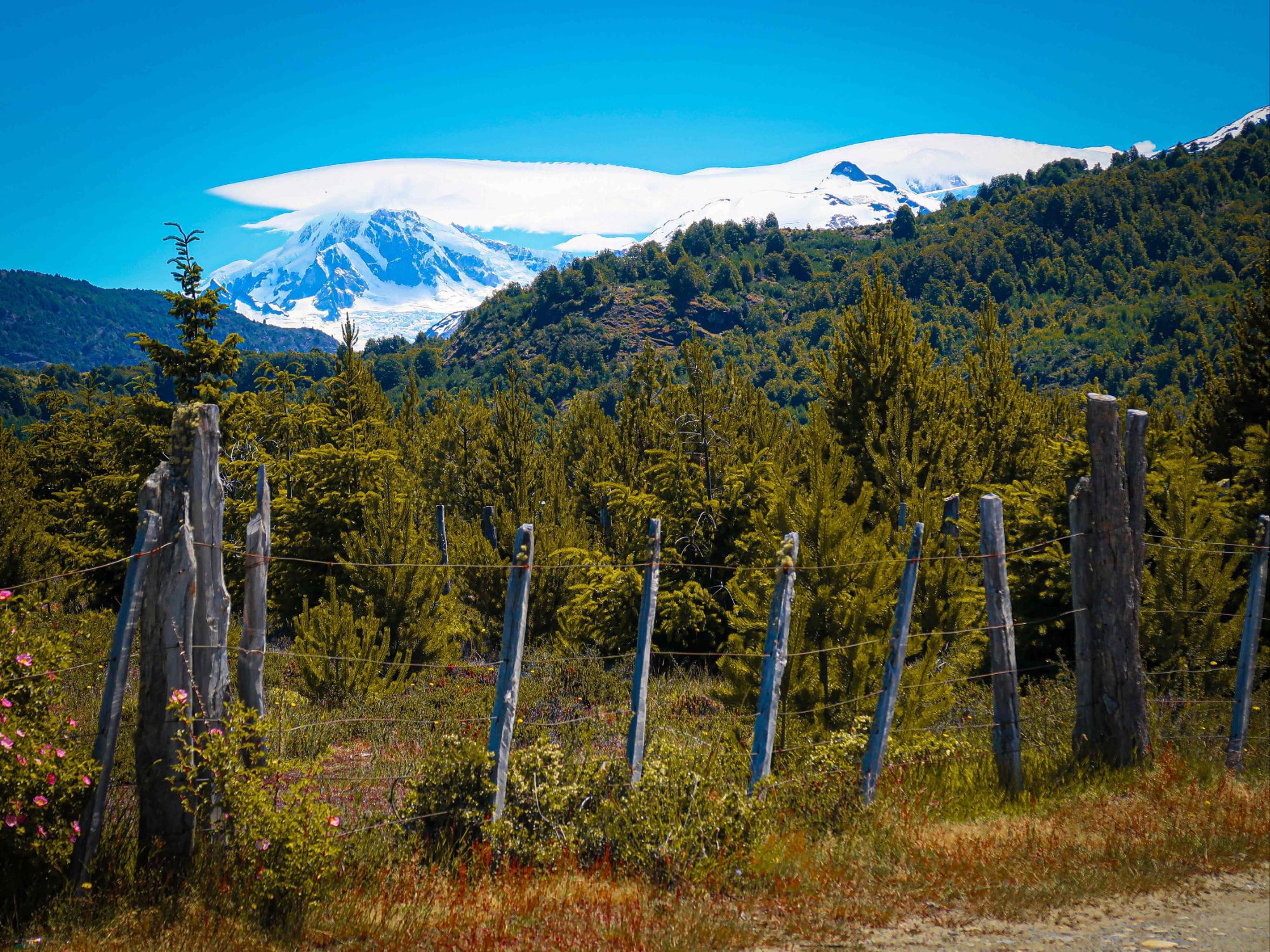
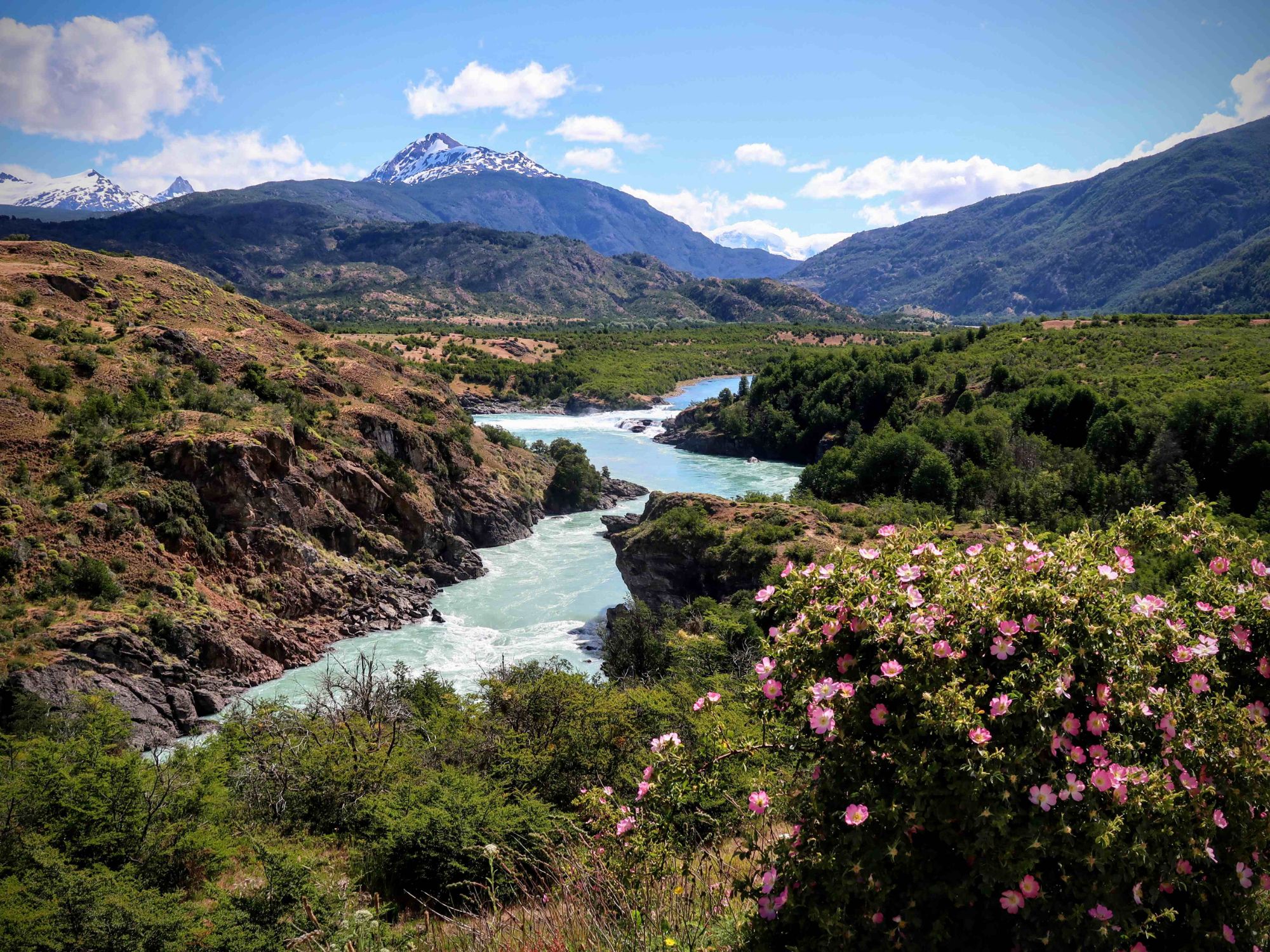
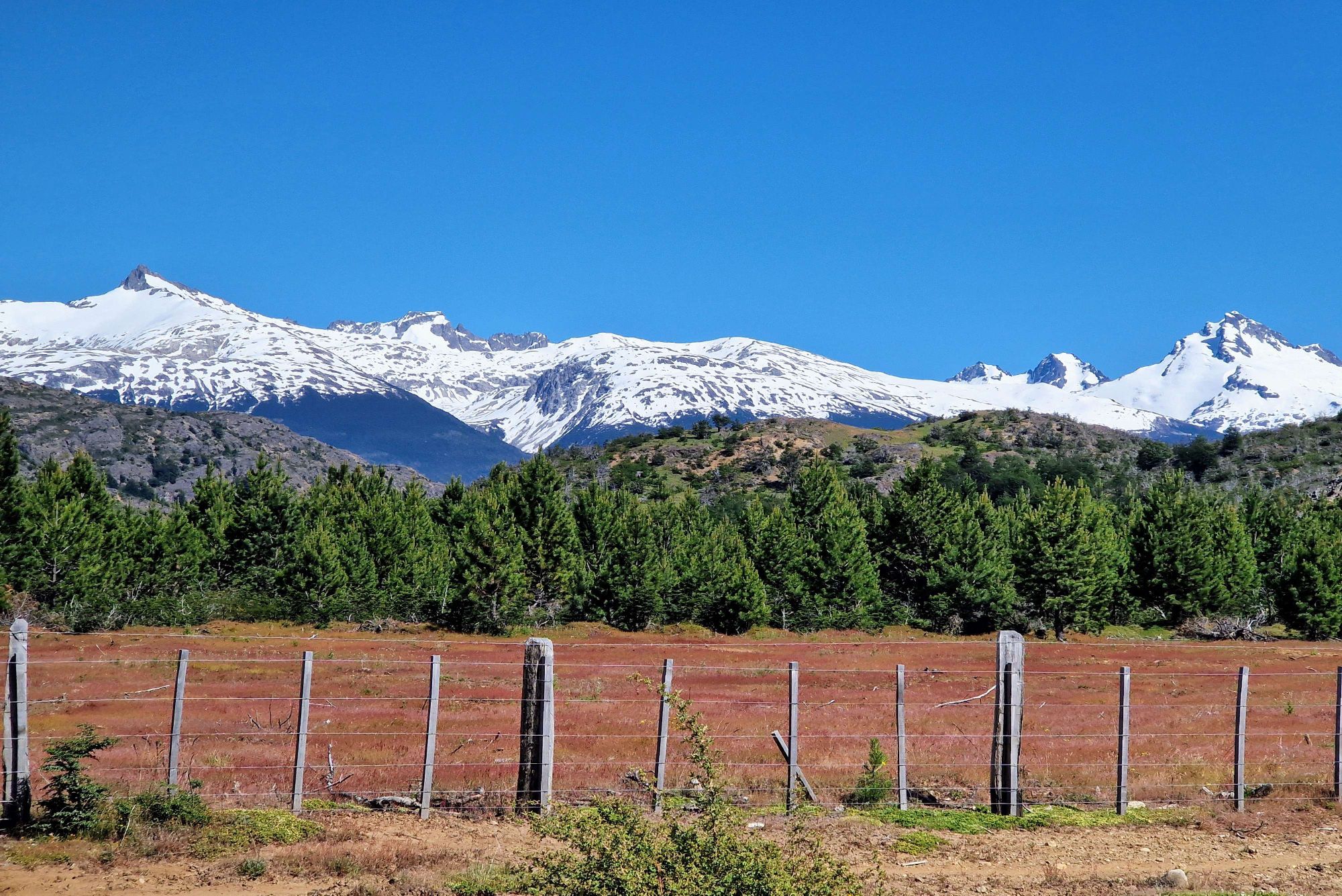
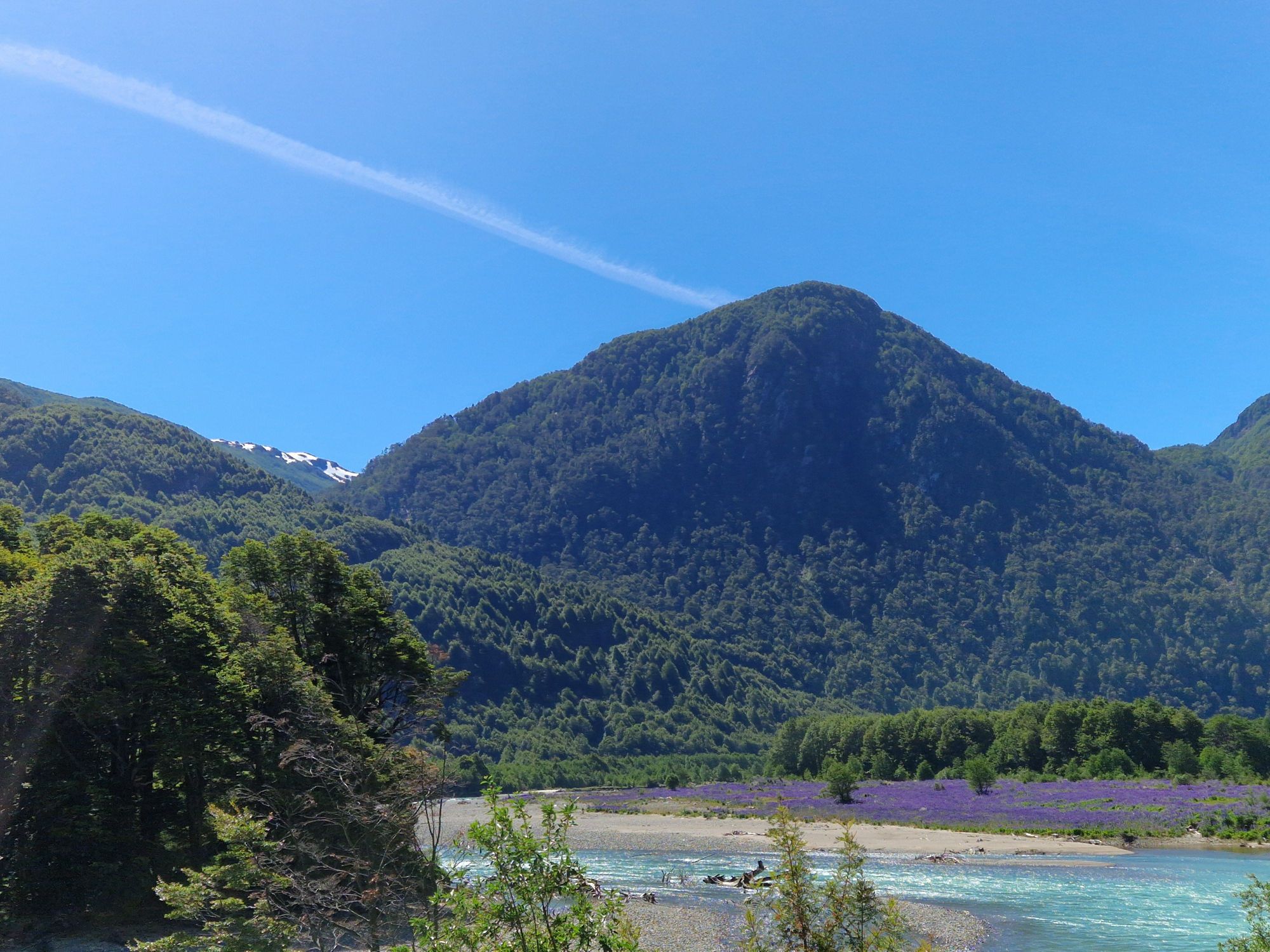
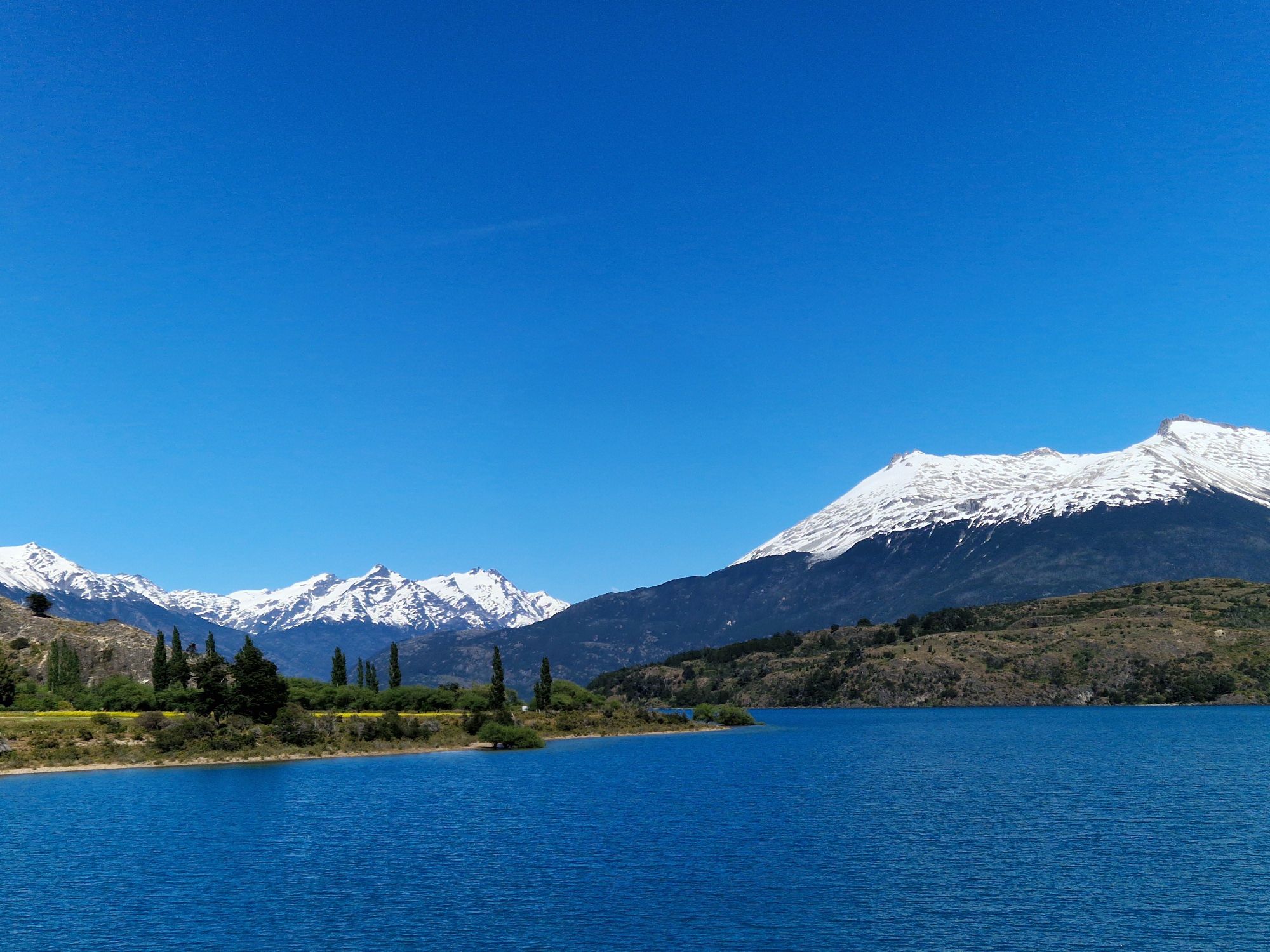
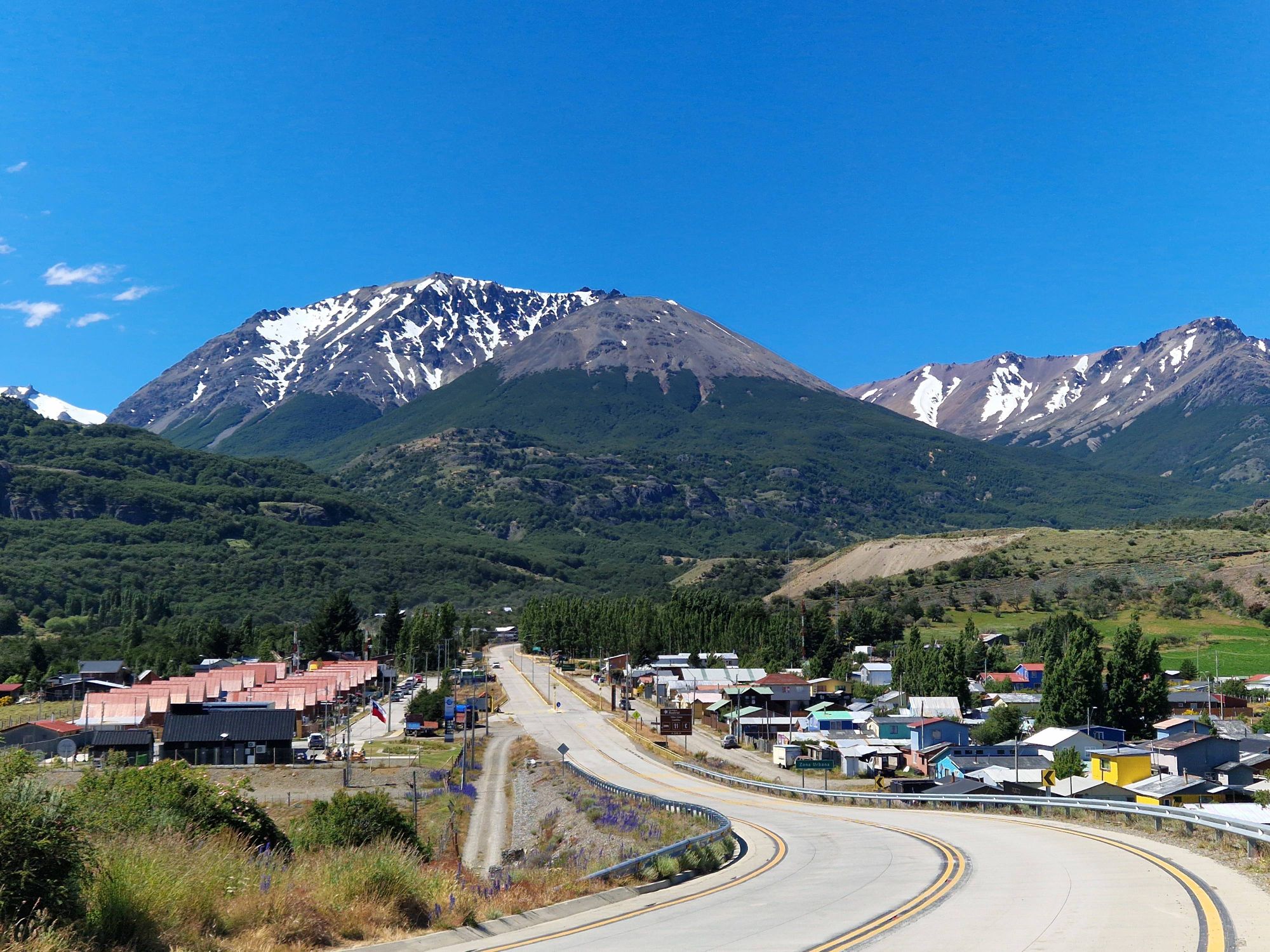
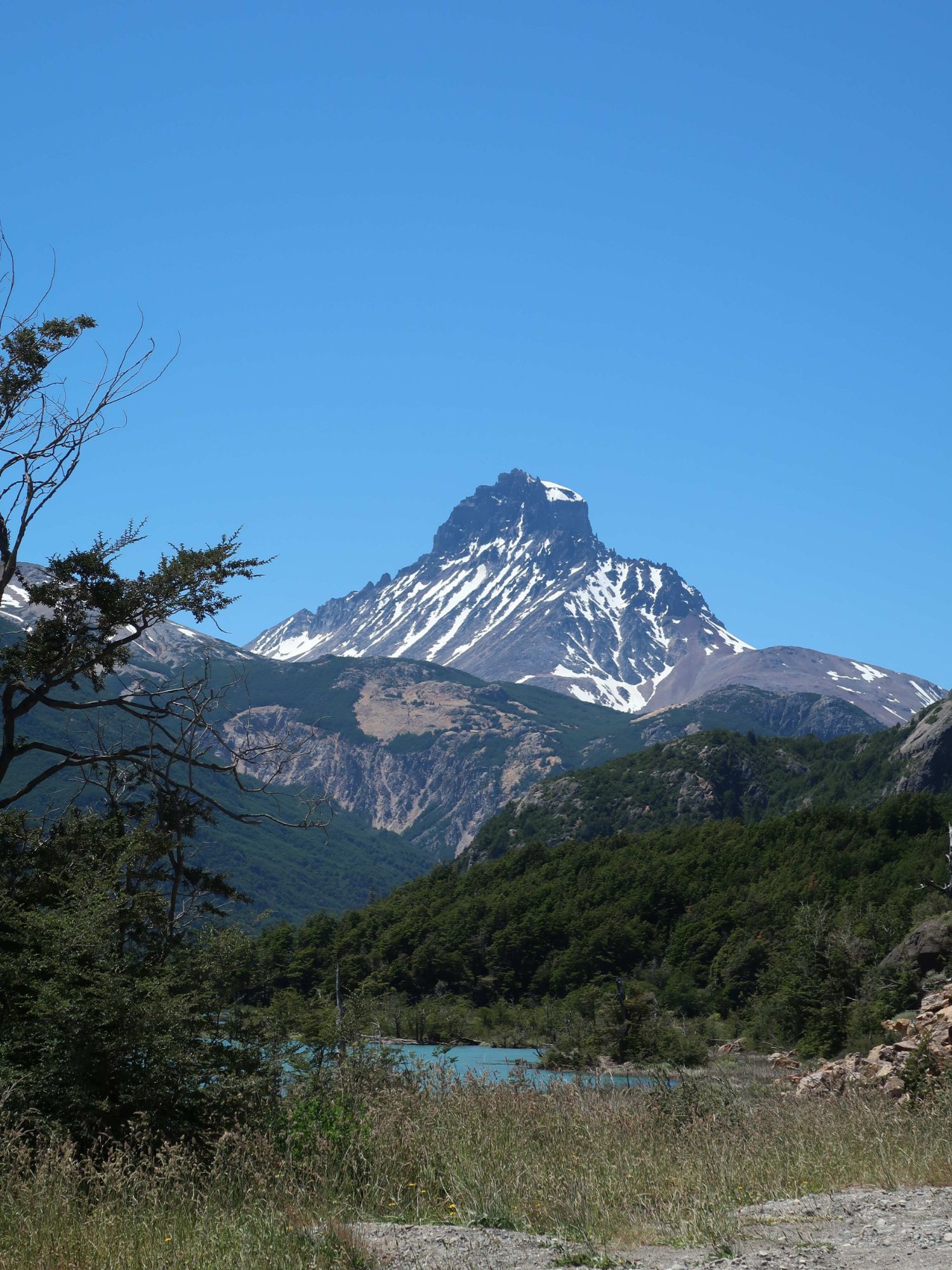
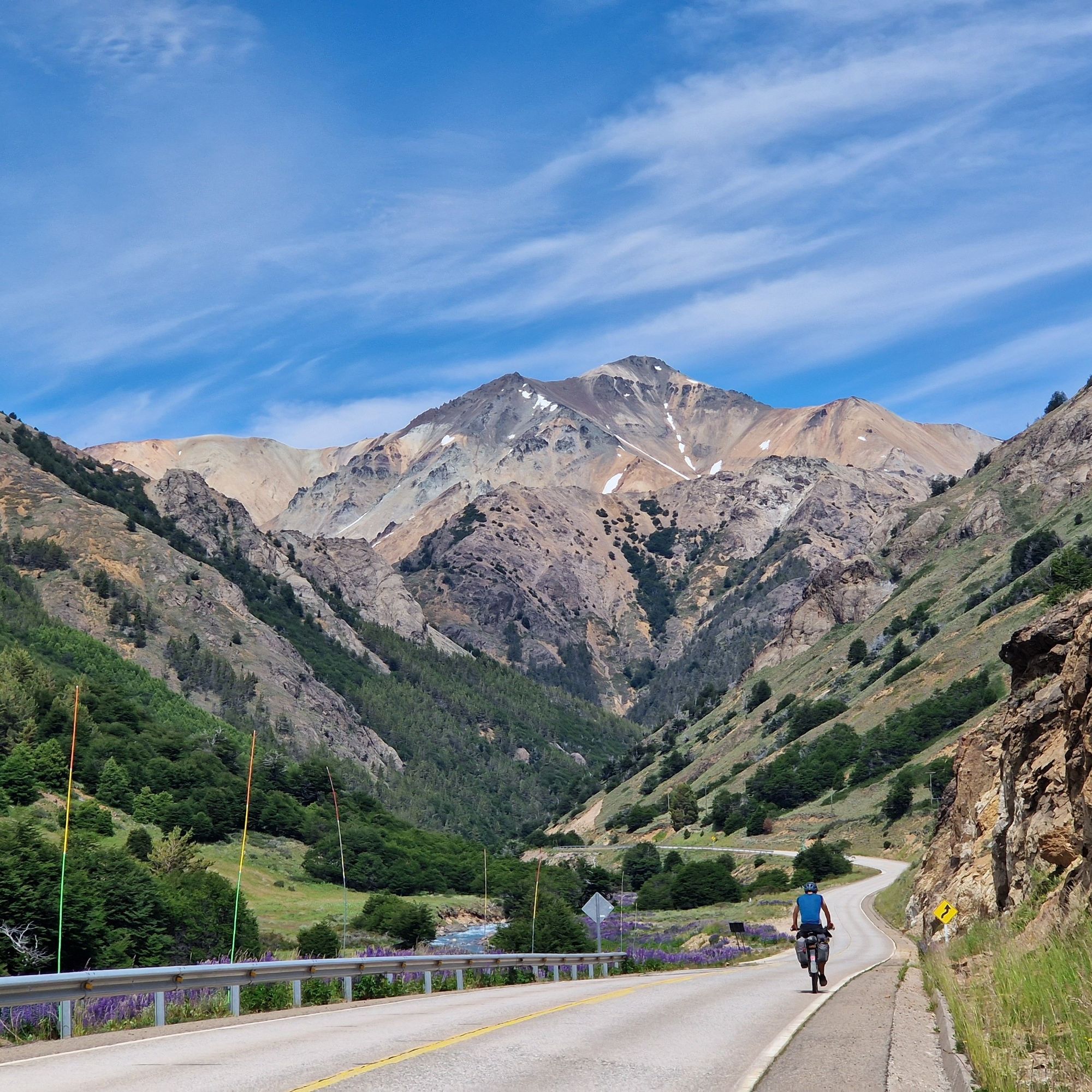
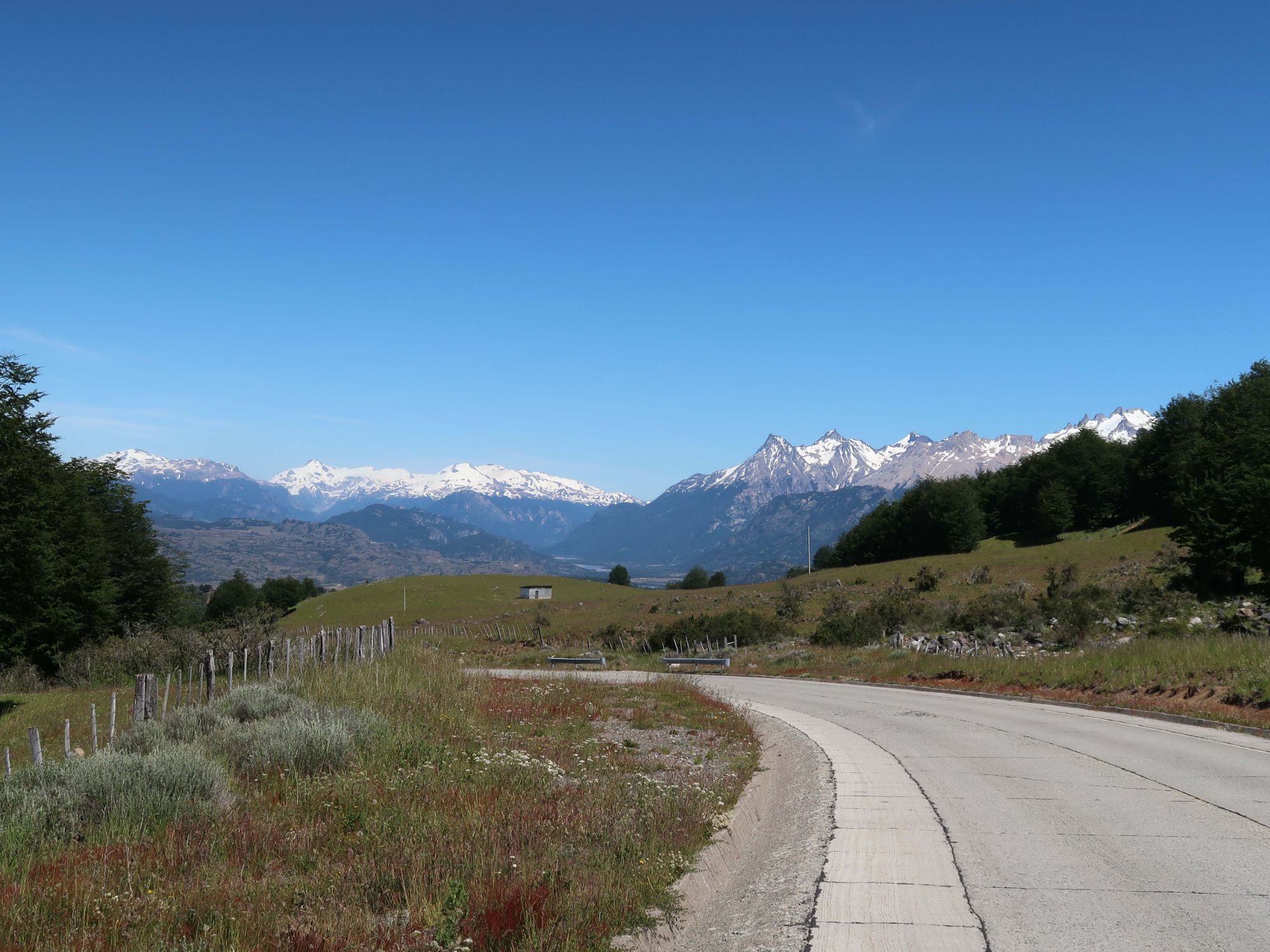
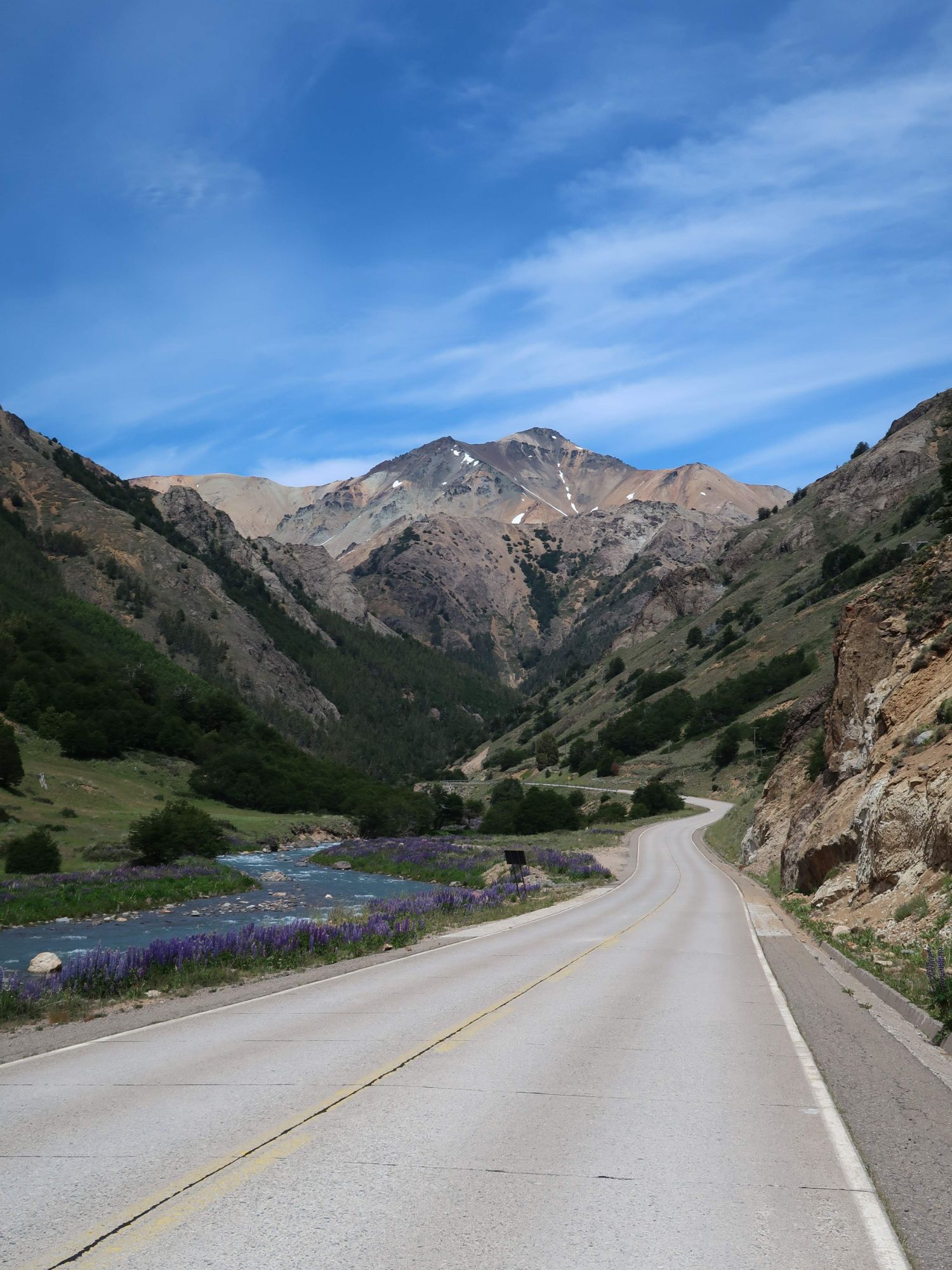
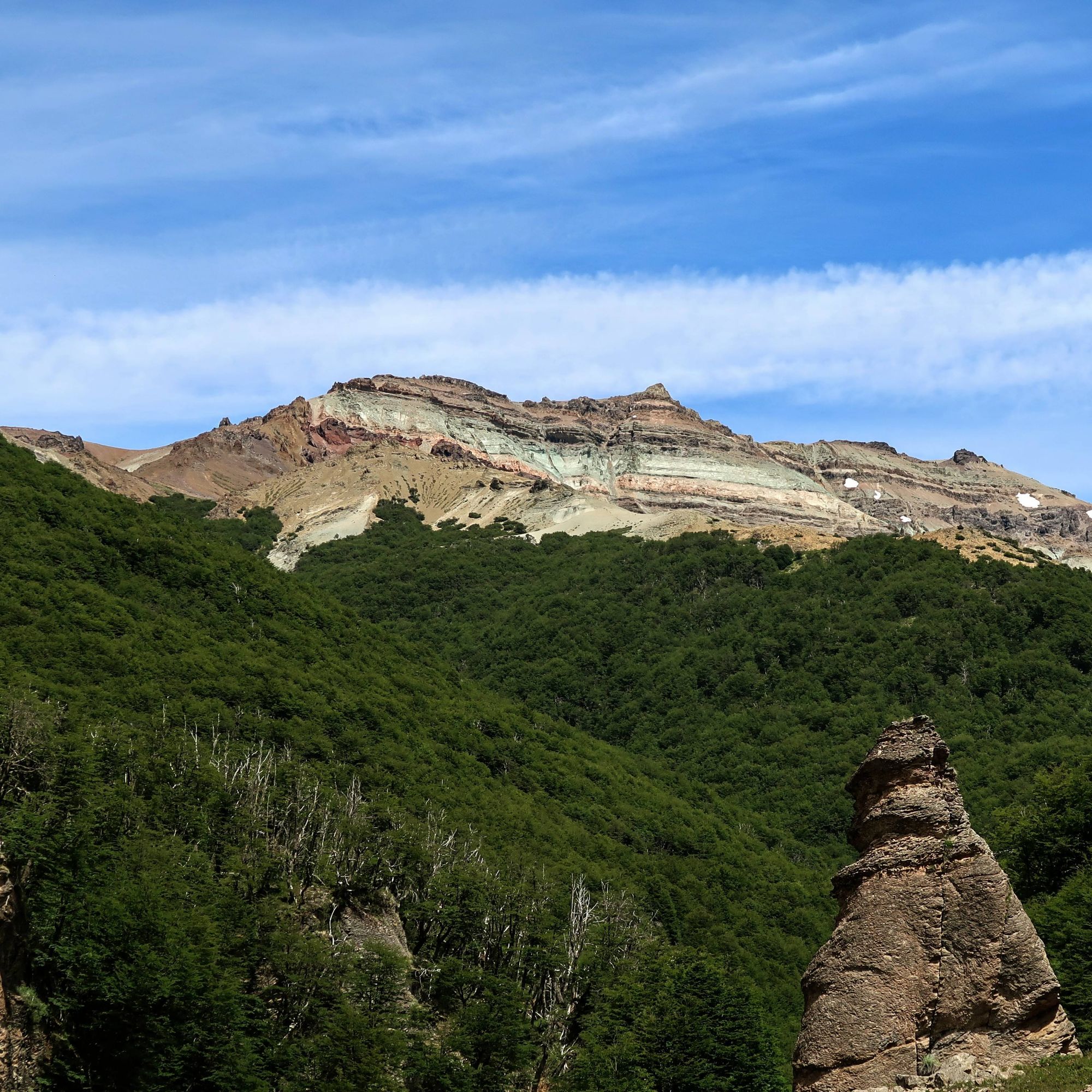
Our journey has continued northwards. Well actually in reality it’s been more like North, then West, then North, then East, then North, then East, then North, then West, then North, then East, then North – you get the gist. Our route remained on the Carretera Austral (Chile’s Ruta 7) for a couple of weeks. The scenery continued to be amazing and every day brought unseasonably warm weather and no rain for two weeks (unheard of here in Patagonia). I don’t think you can ever get bored of looking at landscapes as incredible and changing as these in Patagonia. Somedays it’s all about the bright blue rivers, other days it’s about the geology and rock formations, the next day it’ll be the lakes, or the wildflowers – it truly is amazing.



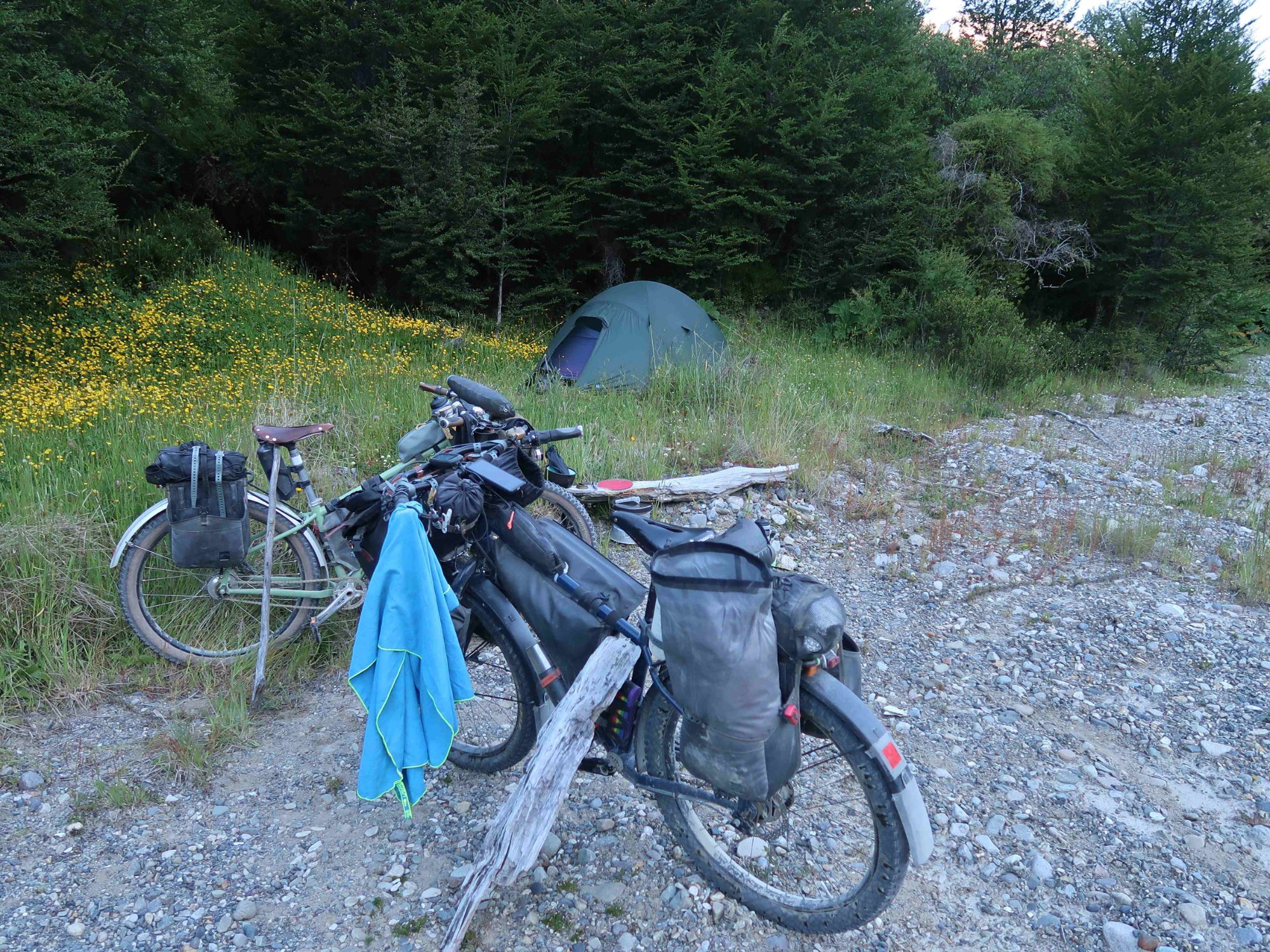
As I wrote in my last post, being on the Carretera Austral brings with it a whole community of amazing cycle tourists, and that has continued. We managed to catch up with many friendly faces we’d met before and exchange stories of our Christmas experiences. We also celebrated and welcomed in the new year in true Sarah & Tom style, by being in bed by 9pm in a peaceful woodland wild camping spot (it would have been perfect had it not been for the relentless horseflies which drove Ted mad and were a mild irritation for me!).
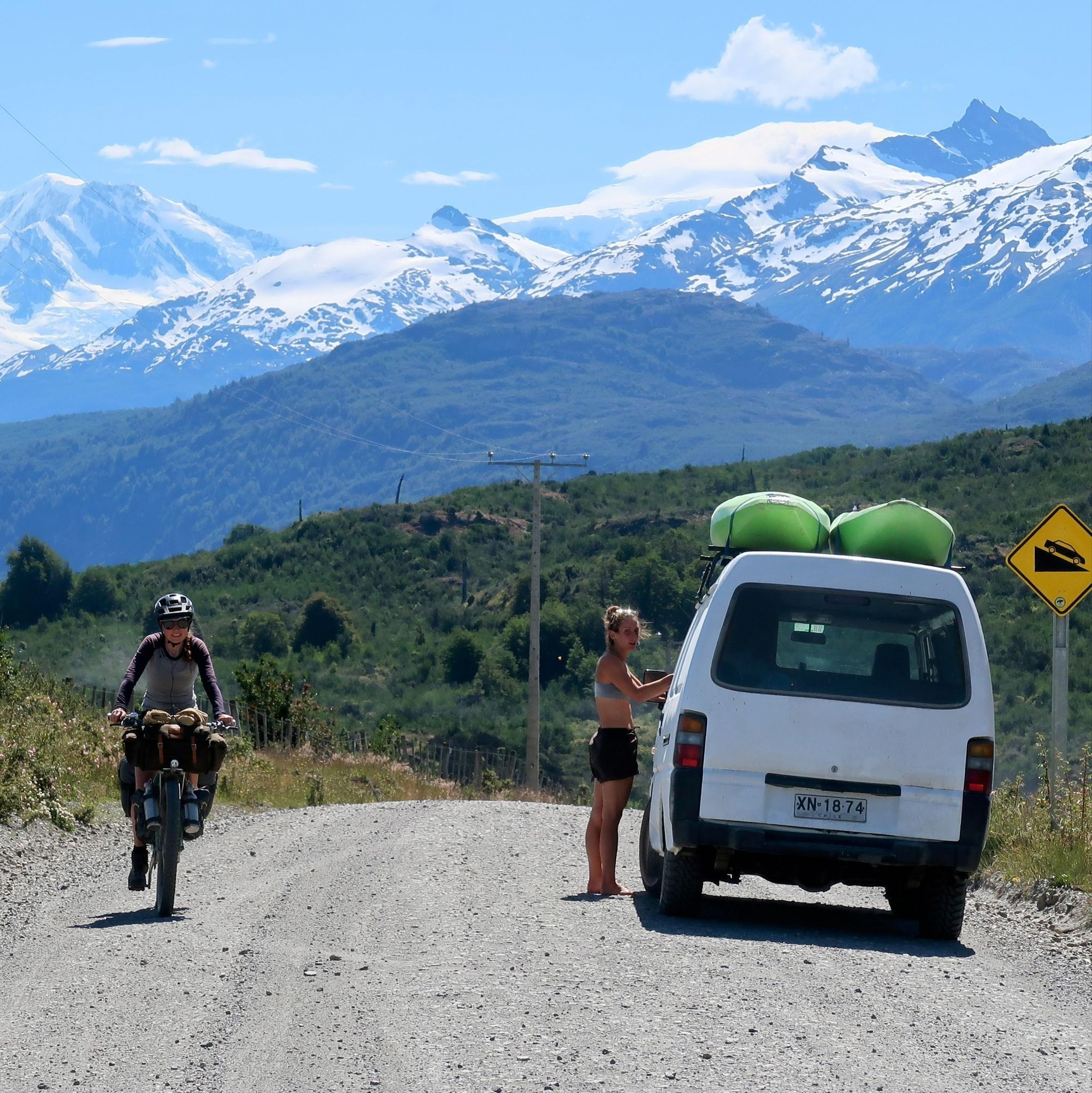



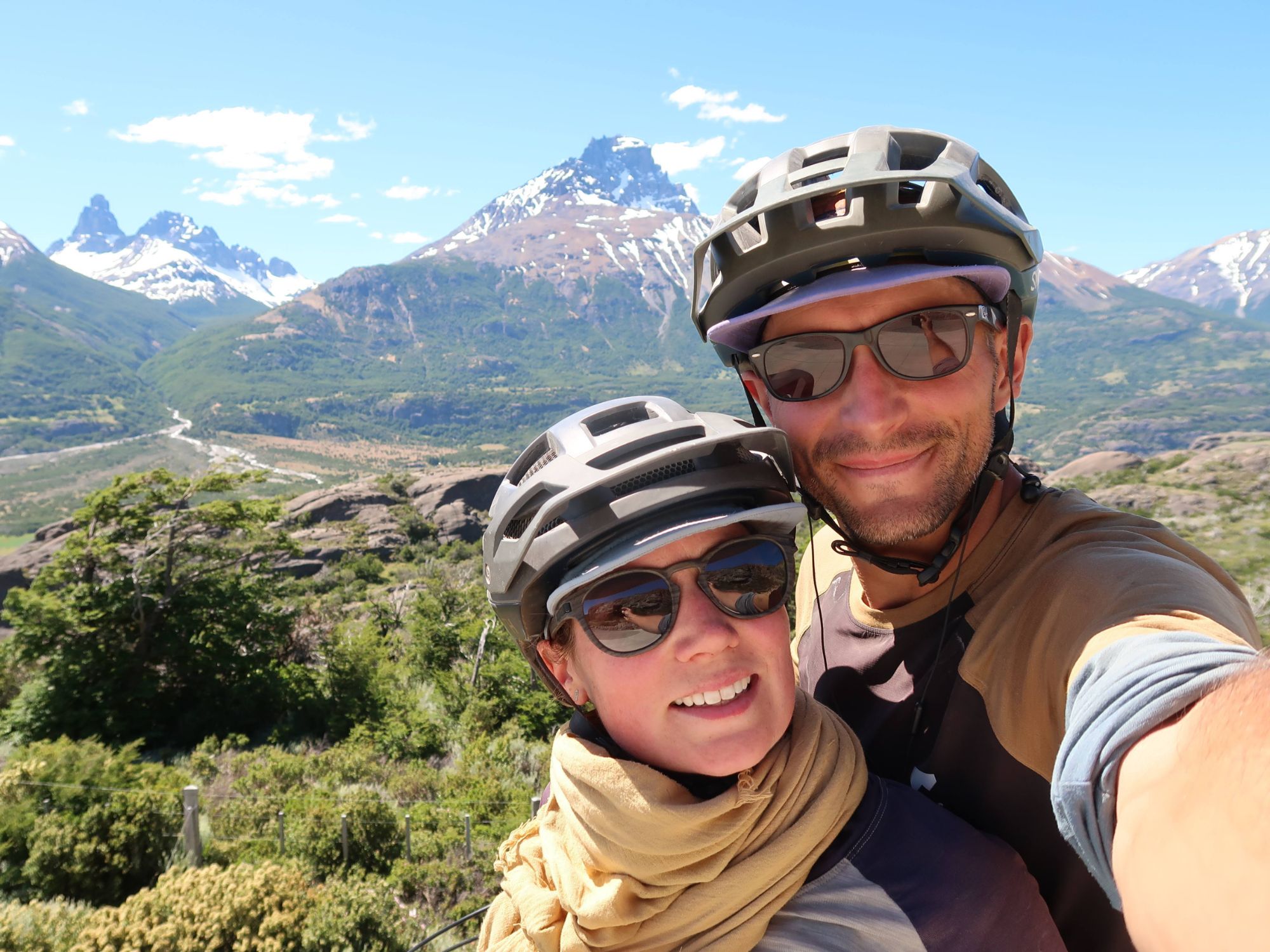
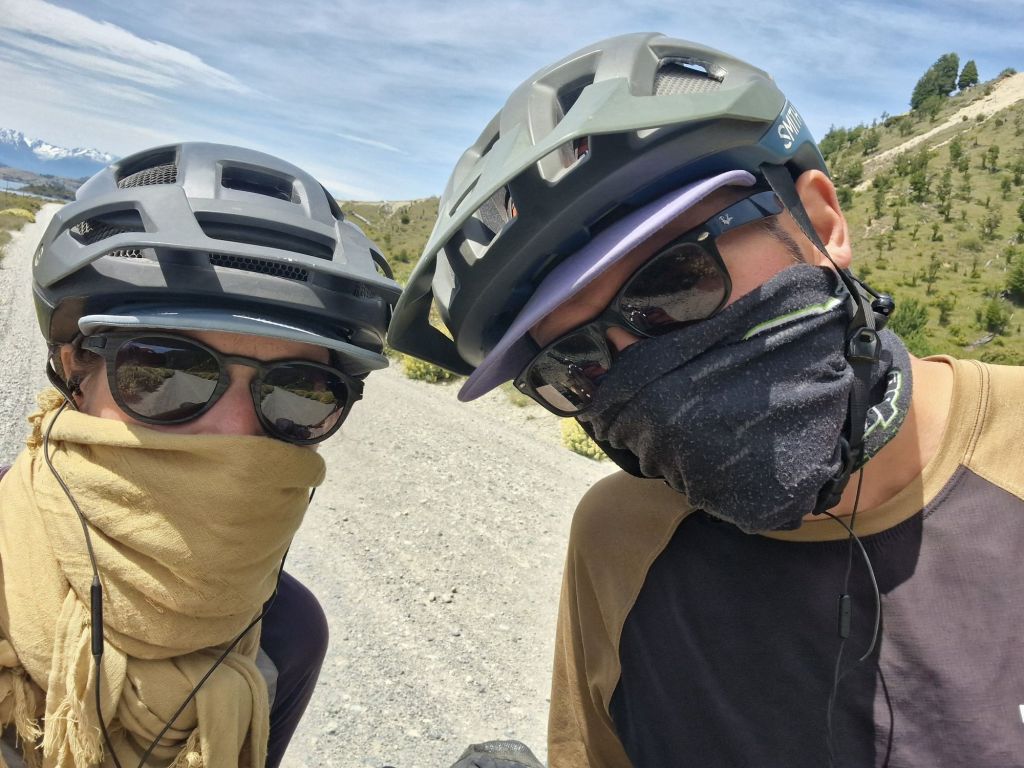
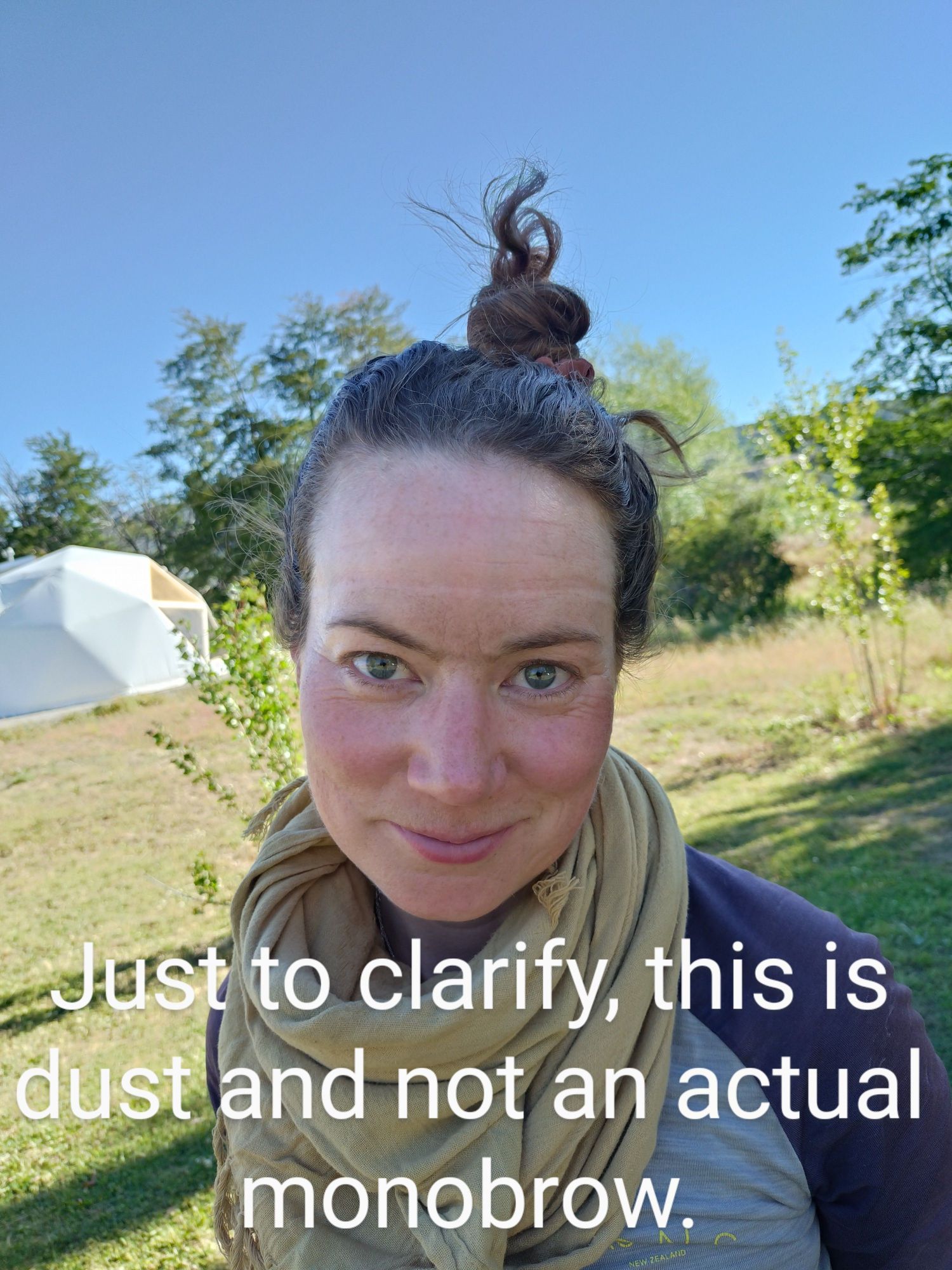
The gravel, sun and dust combo of the Carretera Austral was really hard going at times. Traffic whizzed by and often refused to slow down as they passed (especially the red pickup trucks – don’t know what it was about the drivers of red pickup trucks!) which created huge plumes of dust, making it hard to see and hard to breathe. It meant we resorted to snoods/ scarfs pulled up over our nose and mouth, combined with sunglasses which made us look like real life bandits – Now I know why all those wild west baddies had neckerchiefs over their faces, nothing to do with hiding their identity, everything to do with looking after their lungs, sinuses and airways – not such a bad boy look after all!
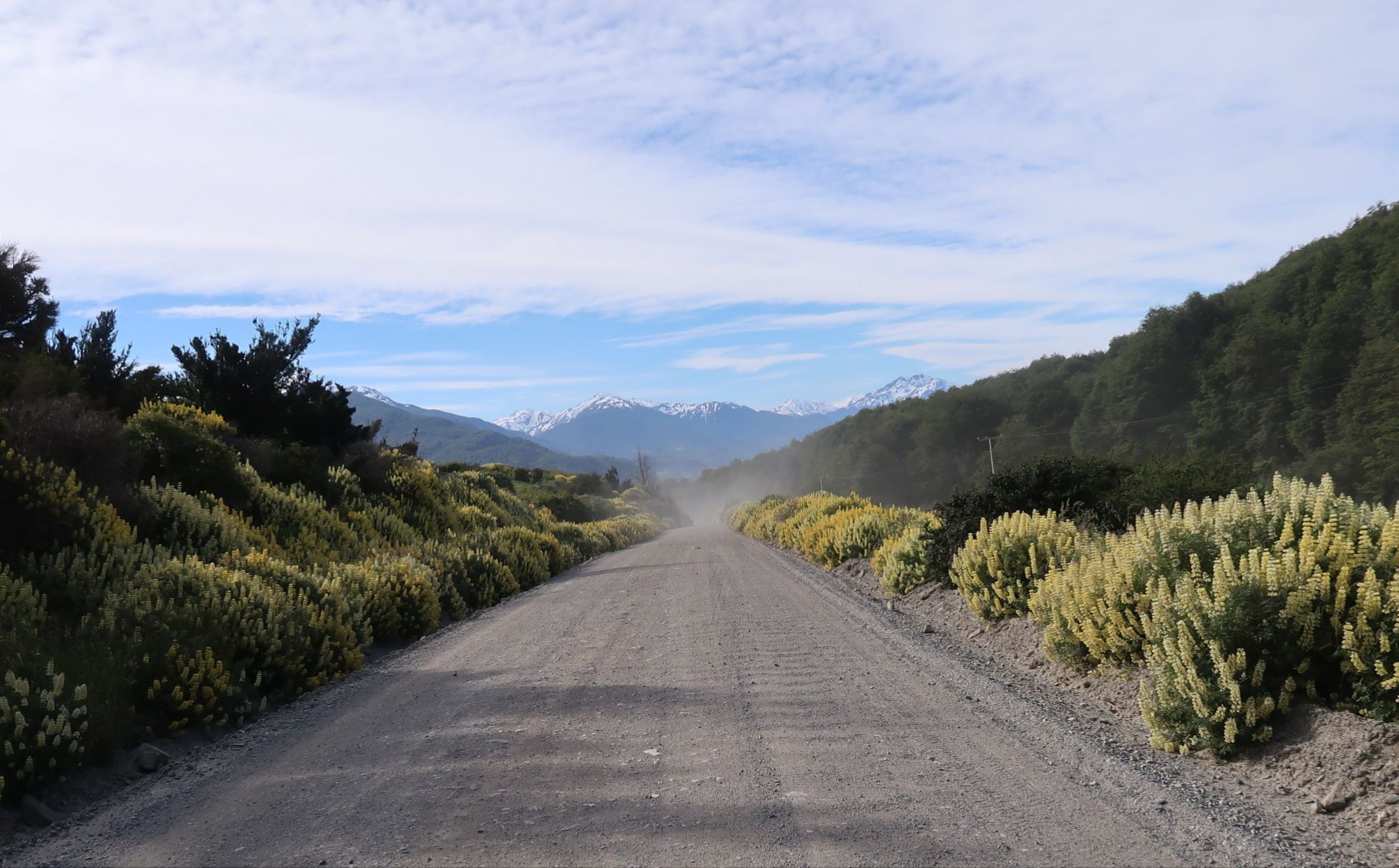

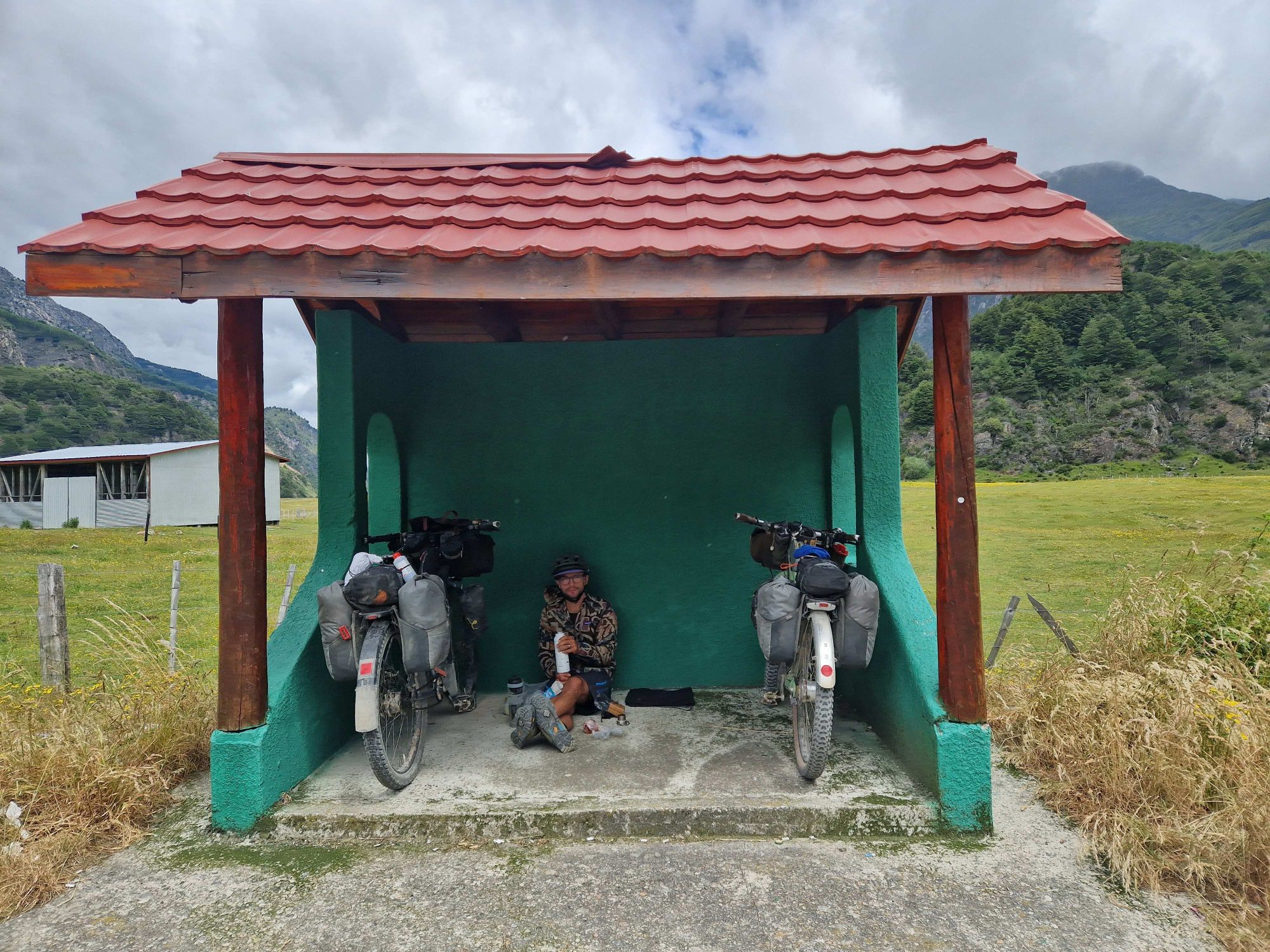

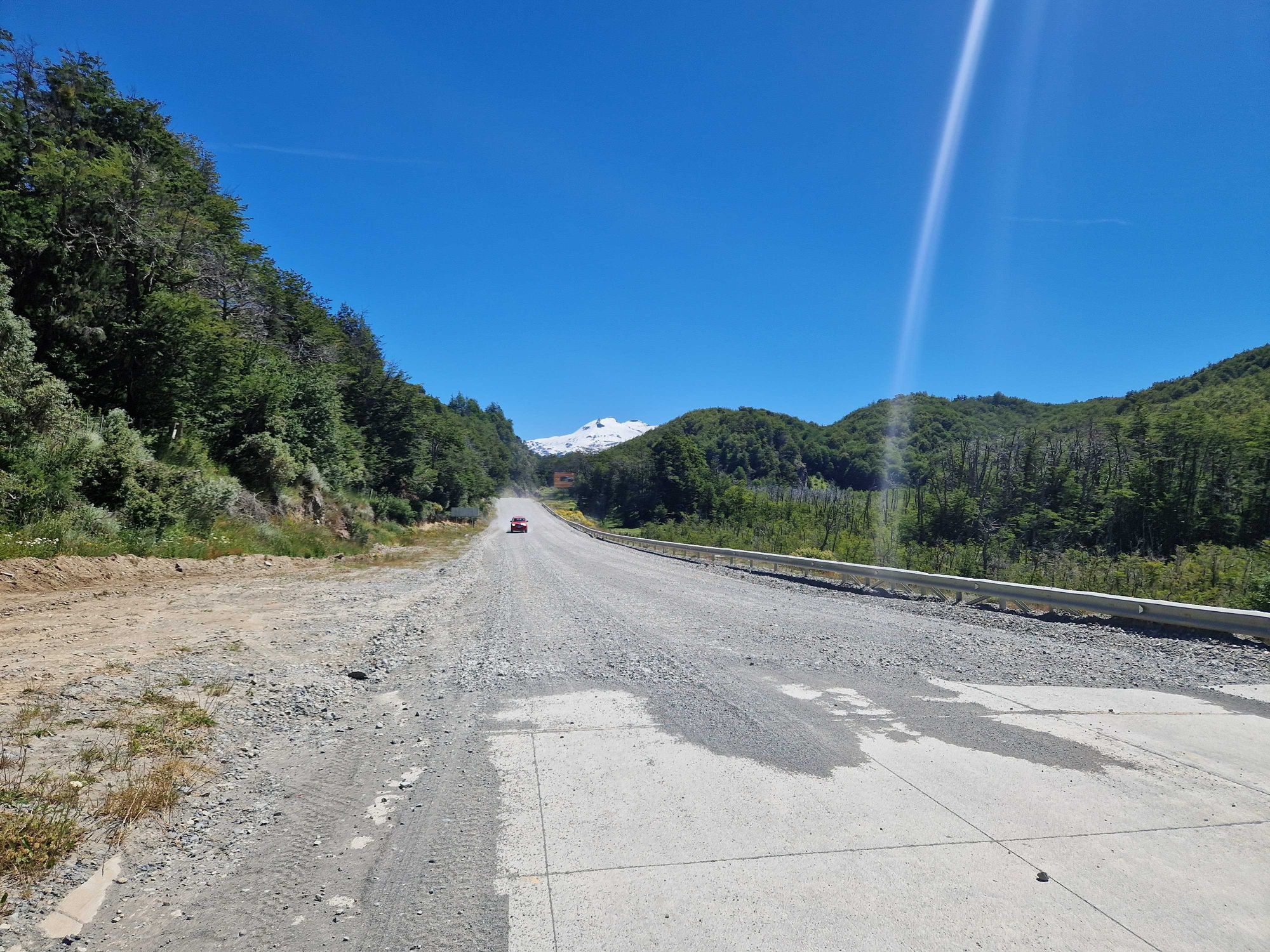
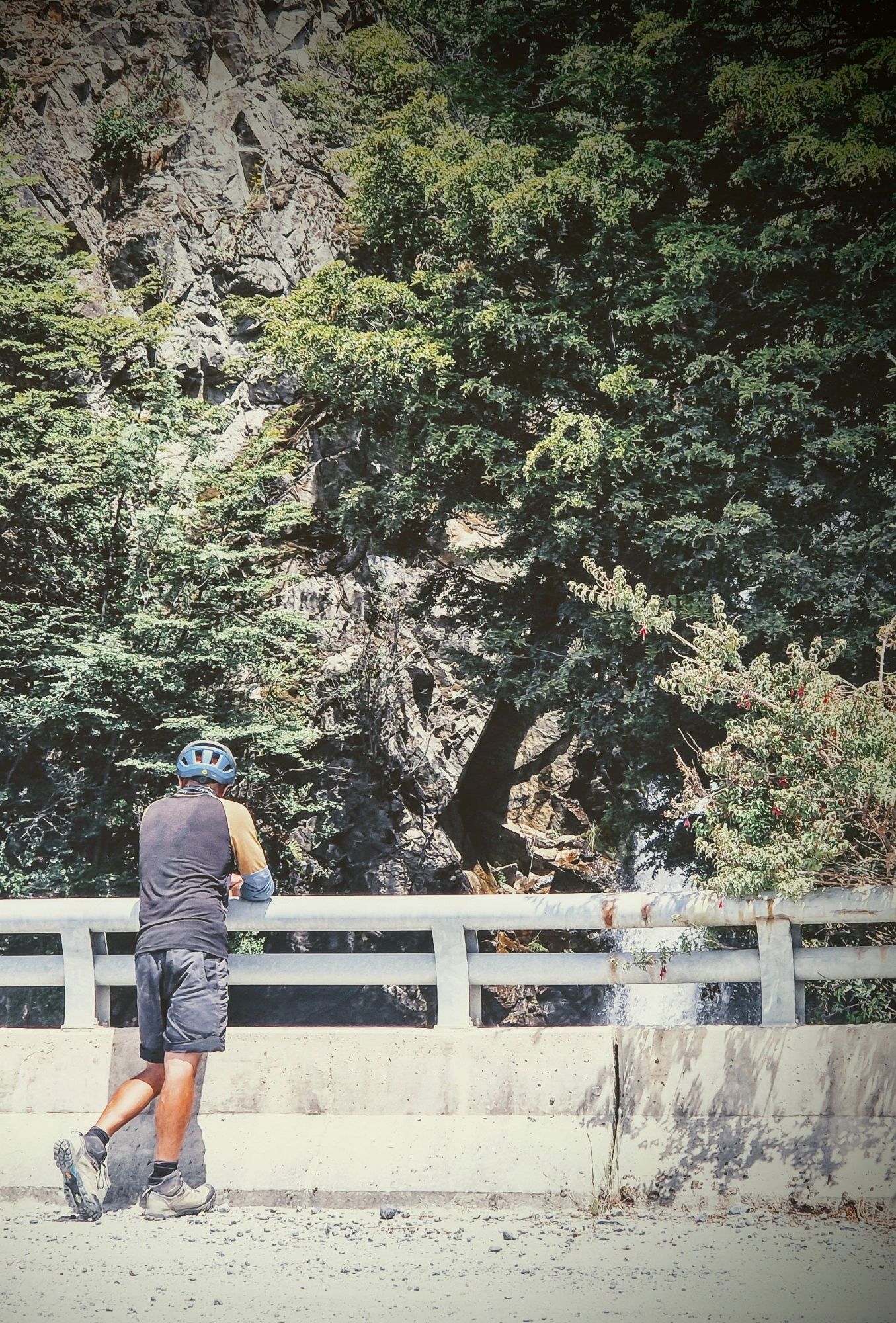
When the gravel became paved road, we knew it was time for our journey on the Carretera Austral to come to an end. The thing about riding on a road is that you never really truly feel part of the magnificent nature you’re cycling through. It still always feels a bit like you’re here on the road, and beyond the galvanized shimmer of the motorway road barrier, there is nature. We wanted to be part of it.

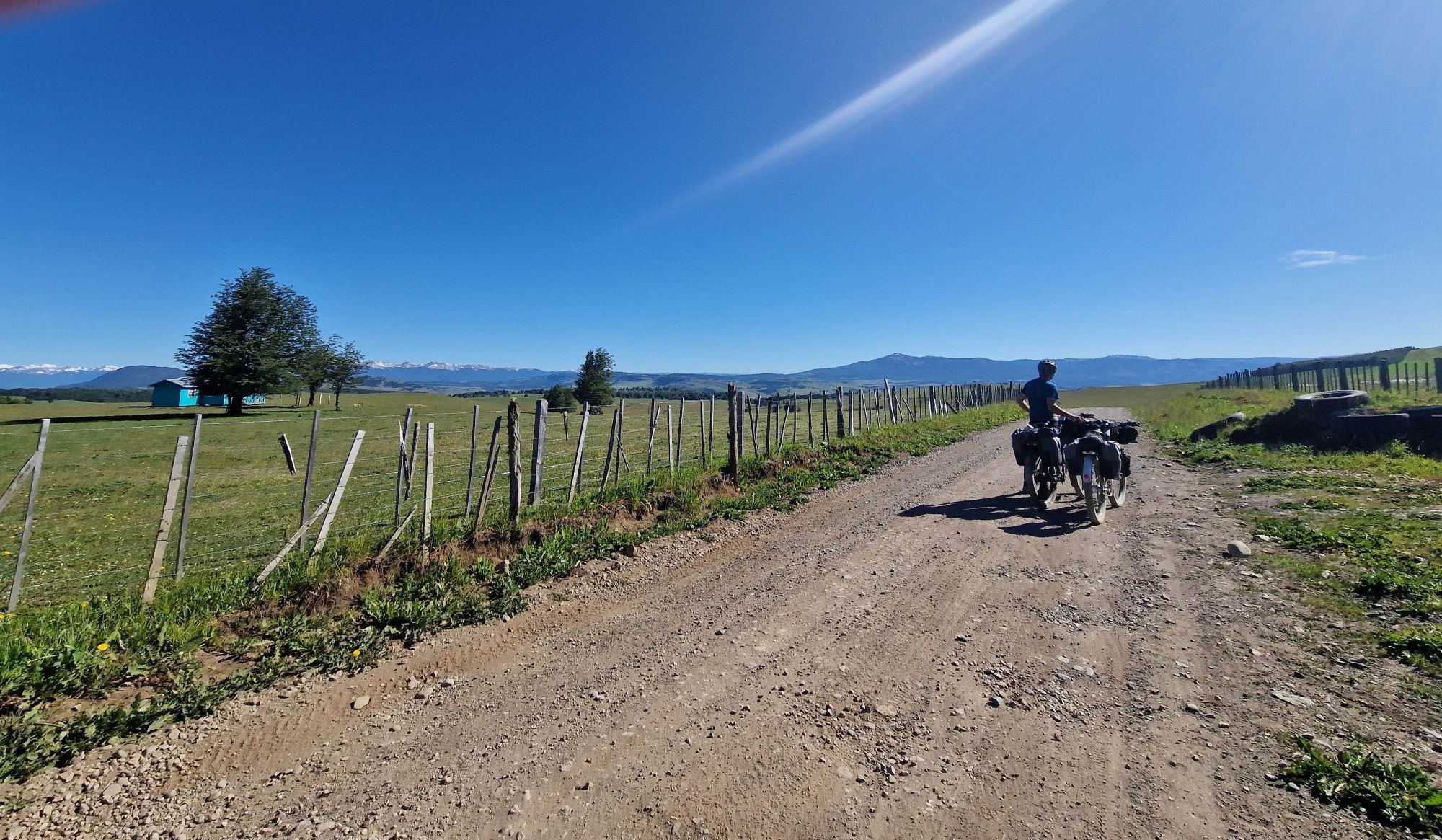




After having read other cyclists blogs (thanks highlux photo!) we knew there was an off road track that linked the Chilean villages of La Tapera and Lago Verde, and that from there we could head through the remote Paso Las Pampas, crossing the border into Argentina. We knew it was going to be an adventure from our adventure, we knew it would bury us deep in old growth forest and we knew it would be our first test of proper off-road riding across the Andes from West to East. It was exciting, and nerve-wracking and we couldn’t wait to be immersed in all that greenery we’d been staring at from the roadside for the last few weeks. But it was the rivers, not the forest, that were to become the defining feature of this route for us and we definitely learnt a lesson or two or seven:
Lesson One – Never underestimate a river crossing

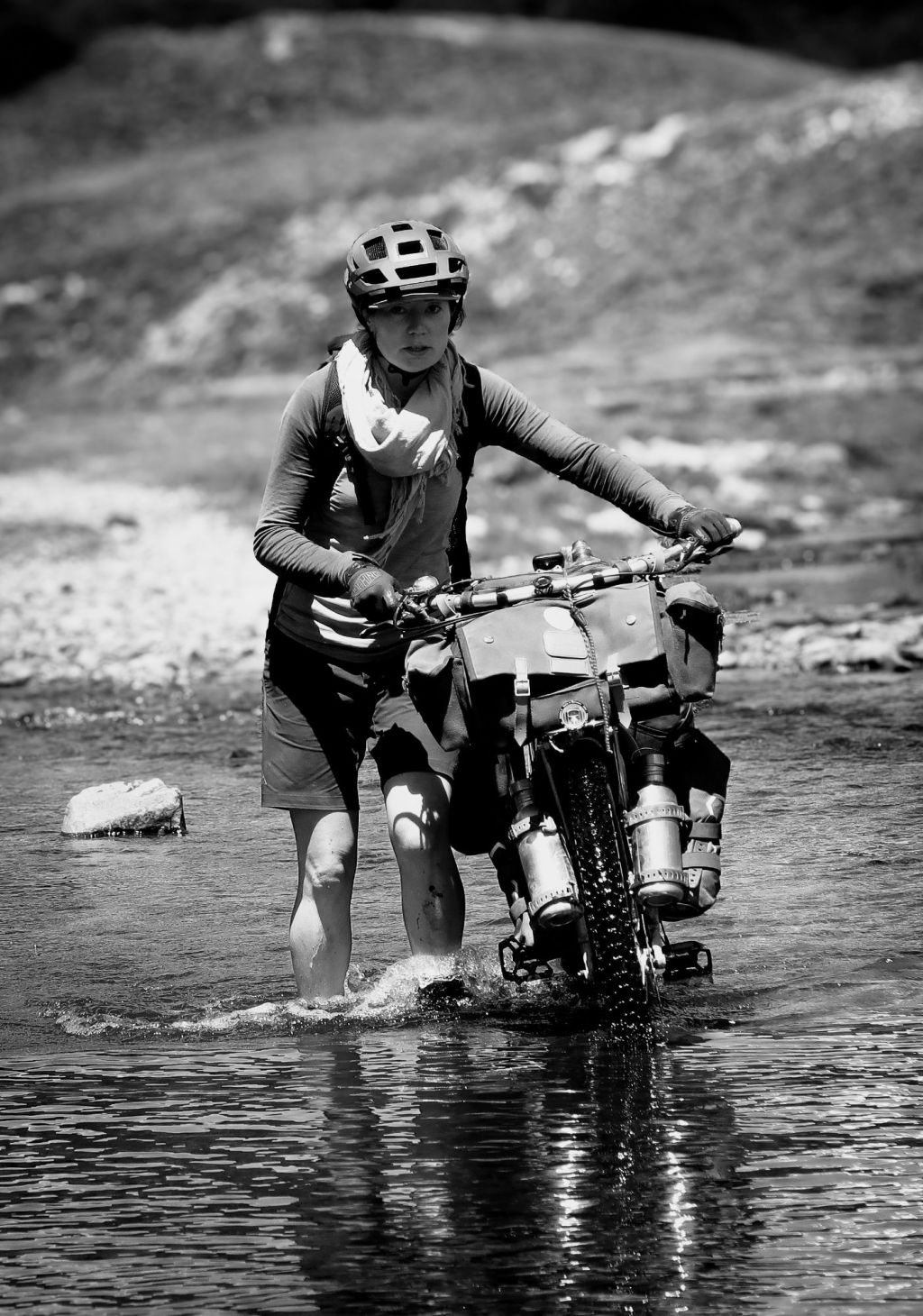
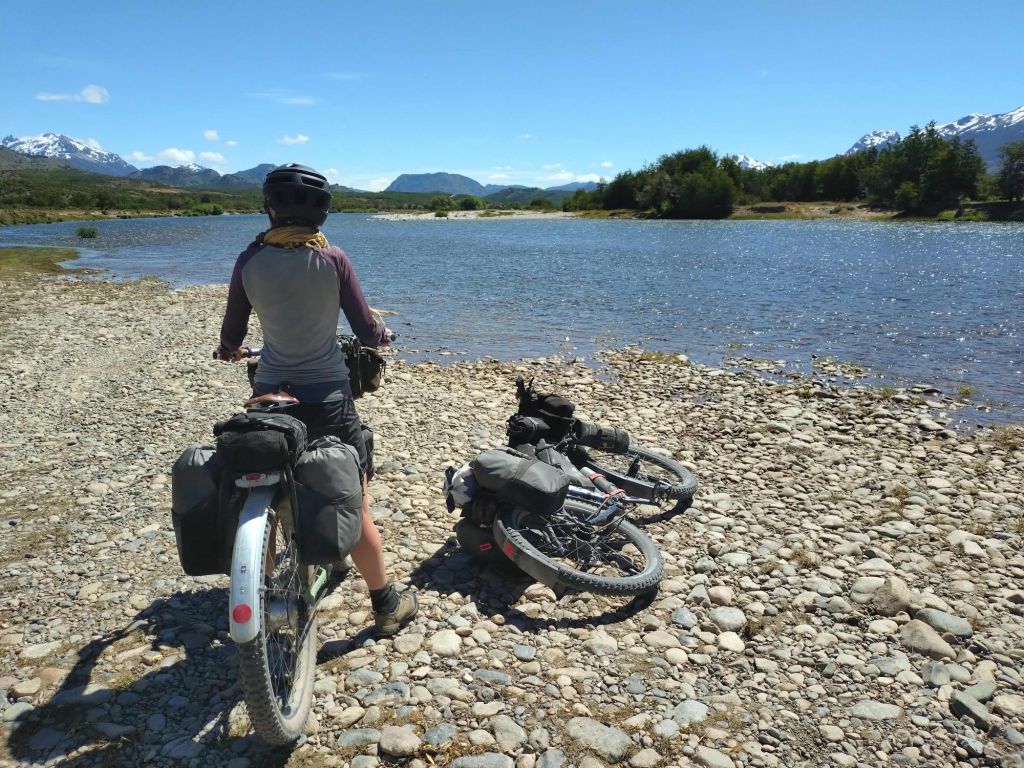
Starting out from the remote, end-of-the-road, village of La Tapera – where there were more horses and dogs on the village streets than people – we approached the first river crossing of the route. We knew there were ‘a few’ to cross but our maps only showed three or four major ones (with it being spring we knew there would inevitably be others), and this was the first biggie. It was literally within shouting distance of the village. It was wide, really wide, but looked shallow and we could clearly see the track we were aiming for coming out of the opposite river bank and wiggling through the scrubland. Ted went first, switching his boots for sandals, rolling up his shorts (just the one roll – it wasn’t deep enough to warrant short shorts!!) and boldly stepped out pushing his fully laden bike. I held back, faffing and getting the obligatory action shot. Looking up ahead the water was still only ankle deep on Ted and he was moving well, so I followed him pushing my bike. But just as Ted reached about 20m across the river, within a couple of steps, the water went from ankle deep, to over his knees and suddenly became much faster flowing. Shouting back to me, Ted told me to turn back. Quickly followed by a ‘I need your help’, which then became a more panicked ‘Help!’. Splashing back to shore I ditched my bike on the pebbles and waded back in. What was over the knees on Ted was mid-thigh on me. Ted was struggling to hold the weight of the bike, against the flow of the water. He couldn’t move forward as the river just got deeper and faster up ahead. He couldn’t go backwards or turn around against the flow. His feet were slipping in his sandals, the sandals loosing traction on the loose pebbley riverbed and the look on his face when I reached him was pure panic. Somehow we managed to work together to lift and turn the bike back towards the shore, Ted taking the handlebars and me the seat/back rack. Within a few steps we were back into the ankle deep water and heading to the shore, shorts soaked, Ted’s pockets still full of phone and wallet, all his bike fork bags pouring water out of them and his panniers truly testing their waterproof limit. Ted lay on the warm pebbles of the shore, calming himself. It had taken everything he had to keep himself and the bike upright in the water and as the adrenaline subsided he was pretty shaken up. So the lesson here kids is never underestimate a river crossing, even one that looks shallow!
Whilst Ted tried to walk the river without the bike to see if it was at all possible (spoiler – it wasn’t!) I went off to find a local to ask for alternative river crossing options. During a quick conversation in broken Spanglish, a helpful local explained that if we cycled out of town 2km in the wrong direction, we would cross a bridge, then if we continued, we would find a new road that would come back on itself on the otherside of the river and link up to the off road track we’d been aiming for. Unhelpfully, this new road was so new that it wasn’t on any map or satellite imagery but I figured that we would be able to tell which road it was as we’d see a road on the ground that wasn’t on the map – simples (or so I thought!).
Lesson Two – Take the time to stand and stare
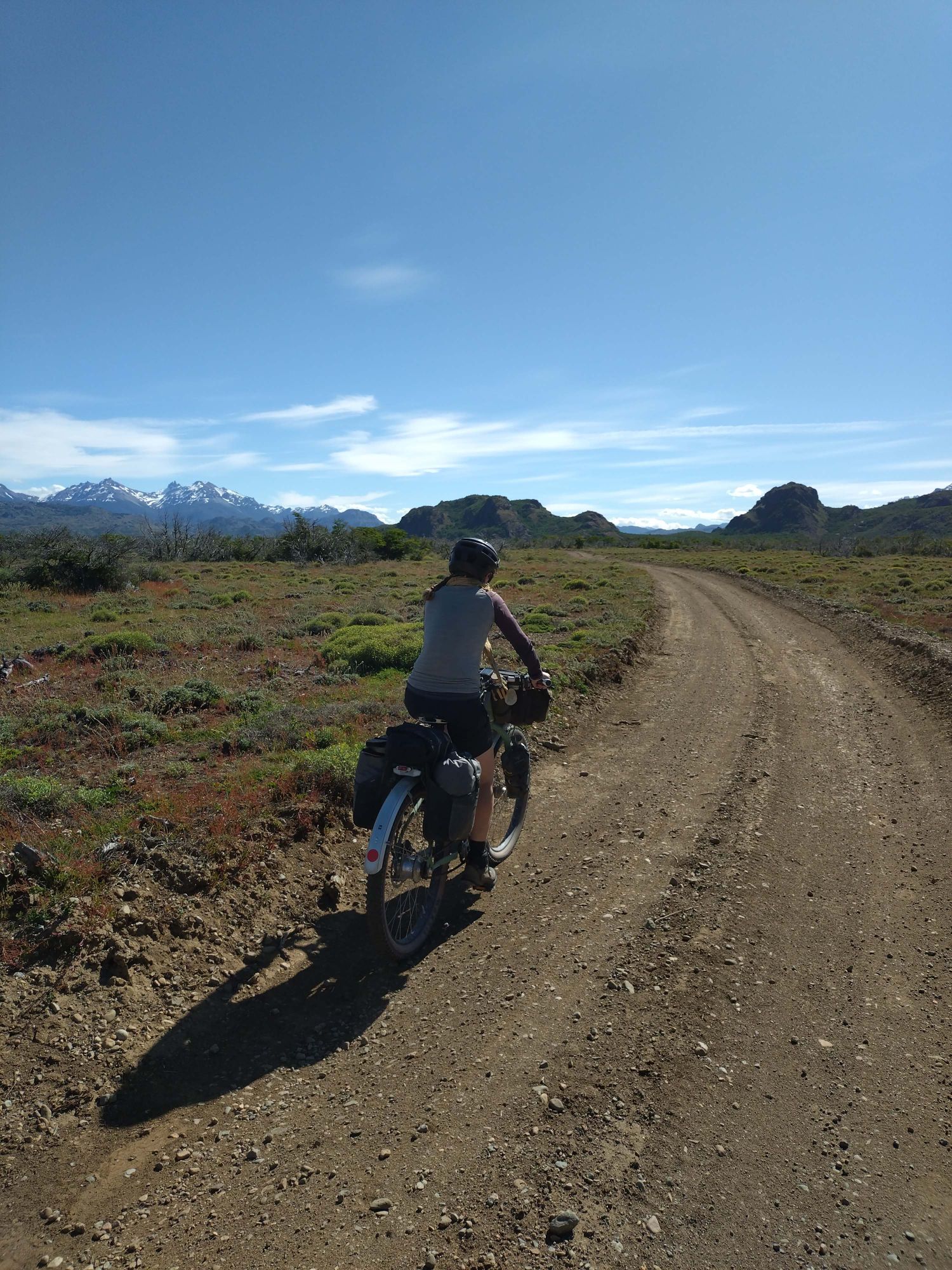
So off we went in search of the mythical new road. Out of town 2km, across a bridge – all just as the local has explained – but then we couldn’t find any roads turning left as we had expected. In fact, there was nothing at all – just the one road we were on and lots of scrubland bushes. We cycled on and on. Still heading in the wrong direction. Still no road. Then we saw a dirt track heading off to the left, it was definitely not a paved road, but in these parts that’s not unusual. It had recent truck tyre prints and to top it off also had bike tyre track – This must be it, we thought, so off we went. It was a great fun 4×4 track to ride and it was heading in the right direction so we finally felt like we were making progress, until we rounded a corner and dropped down to the edge of the river again – the same river, just further upstream! The river was even wider here, visibly even deeper and faster flowing – Great! We weren’t even going to attempt a crossing this time. But we did climb up the bank to have a better look.
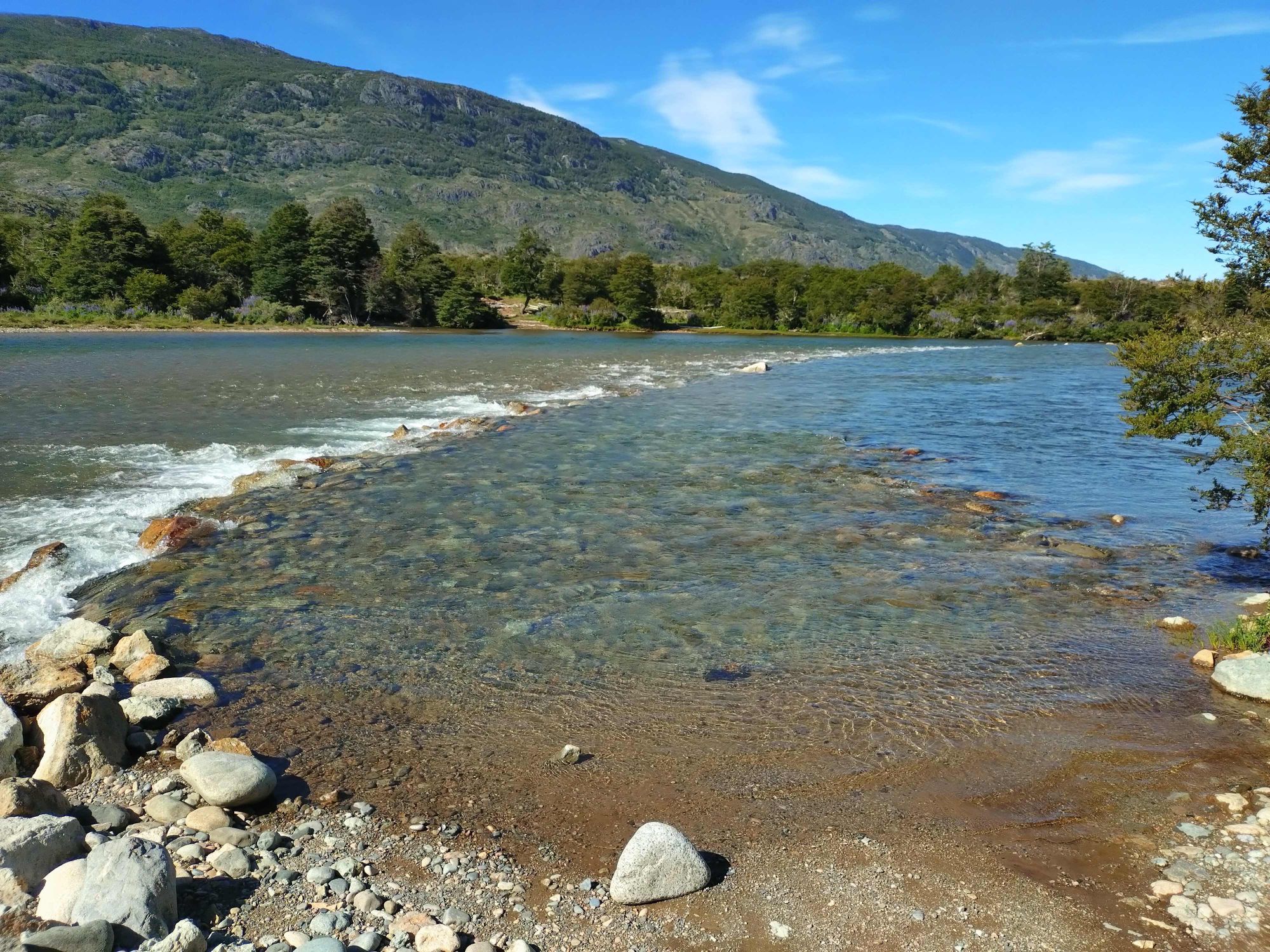
Whilst standing and staring we suddenly saw movement on the opposite river bank, through the trees, on first glance we thought it was a dog or some cows, then maybe a farm truck, but no it was an oil tanker – a flippin’ oil tanker – moving at some speed through the woodland on the opposite side of the river. So there obviously was a road, and we were most definitely not on it! We tried to watch where it went but just as quickly as it had appeared, it disappeared and we were left asking each other if we had really seen anything at all. So back to the main road we went, undeterred in our hunt for the mythical new road, that thanks to our standing and staring we at least now knew existed.
We finally did find the new road, but it was a road in construction. We flagged down one of those red pickup trucks we’ve perpetually cursed, were told the construction ended in 2km and that after that it was just woodland. Apparently completely impossible to ride on a bike and that the track we were hoping to use to cross the mountains was only passable by horse, definitely not on a bike. This is not what we wanted to hear, but we figured we’d give it a go anyway!
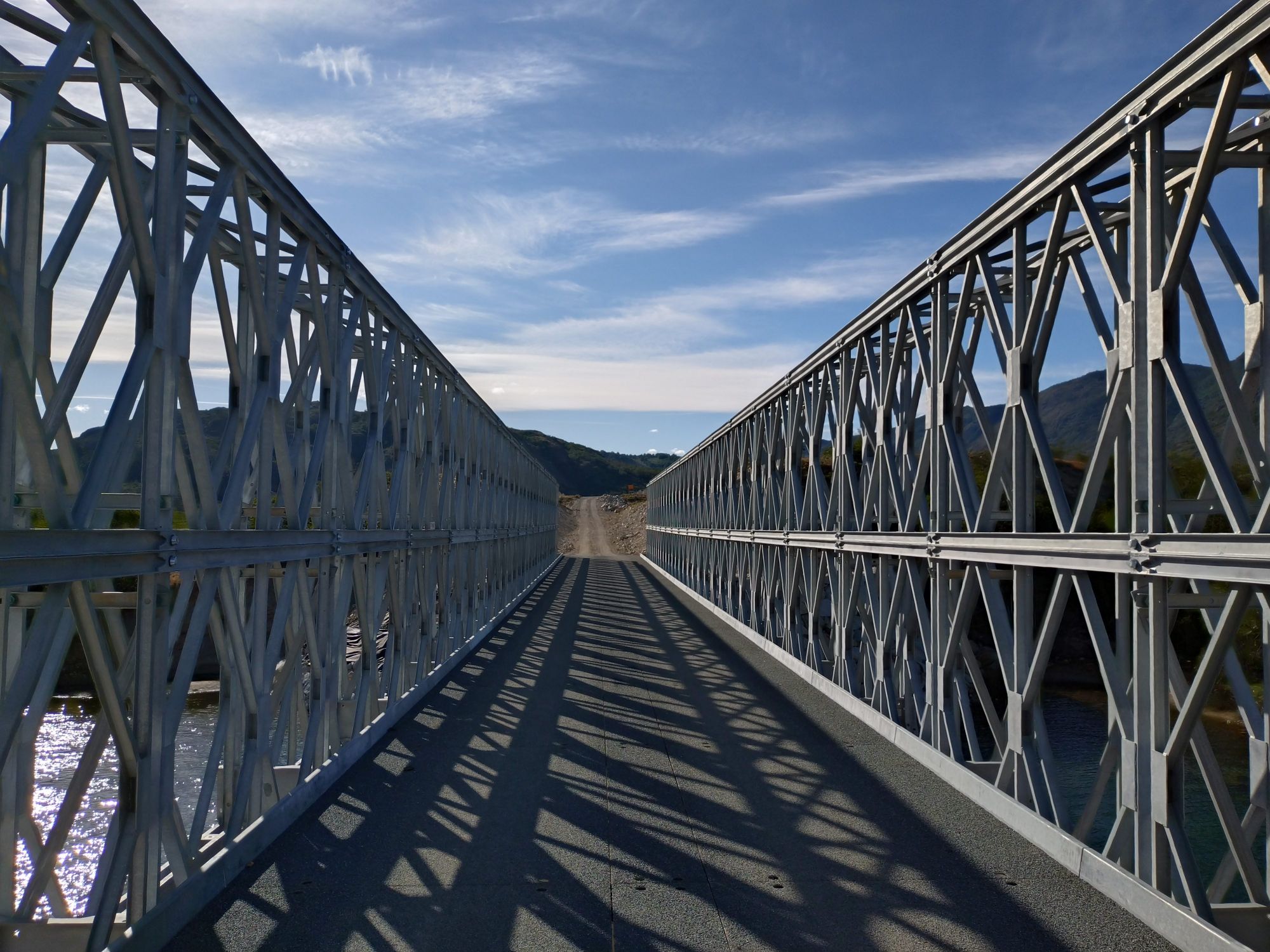
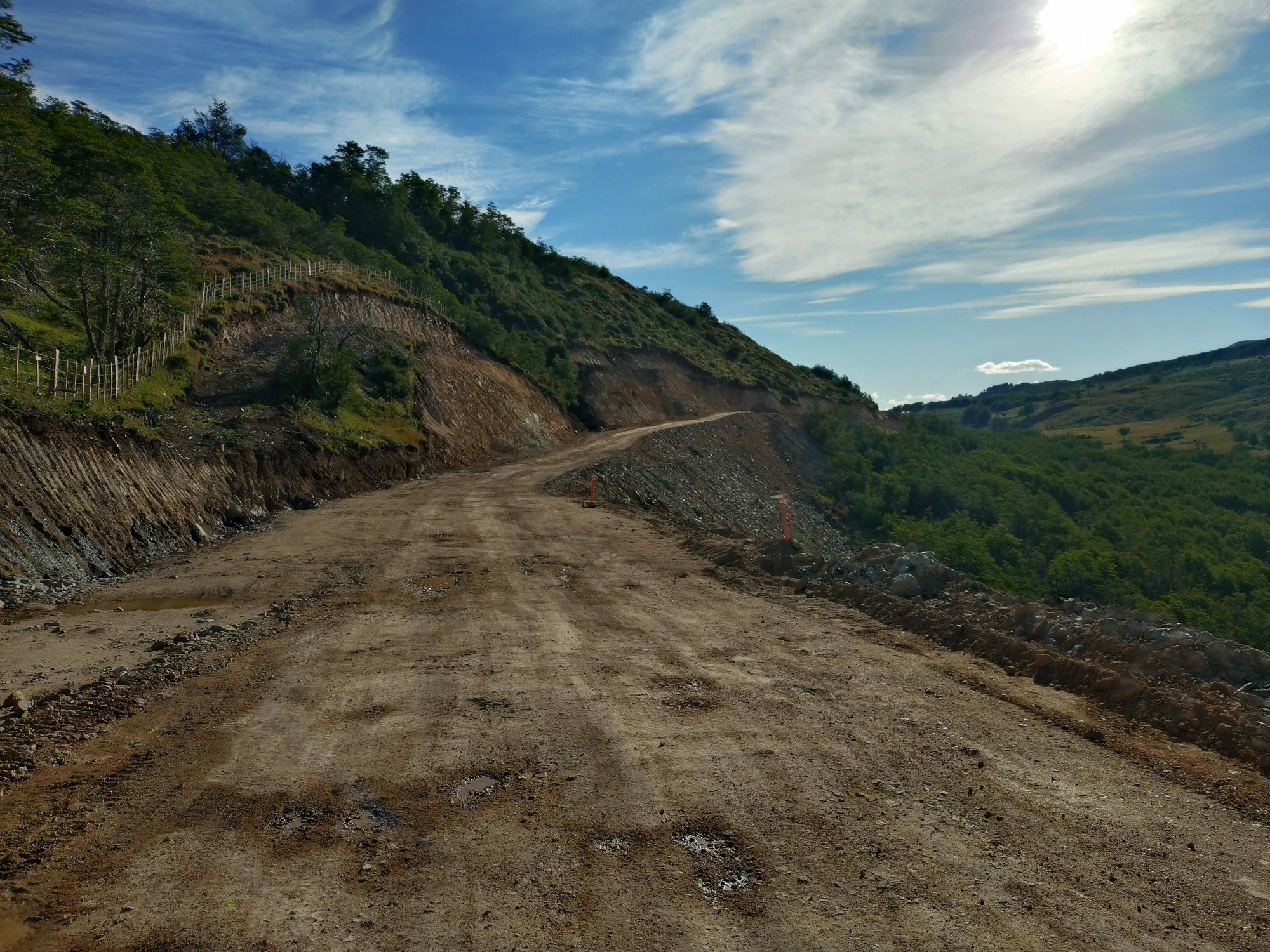
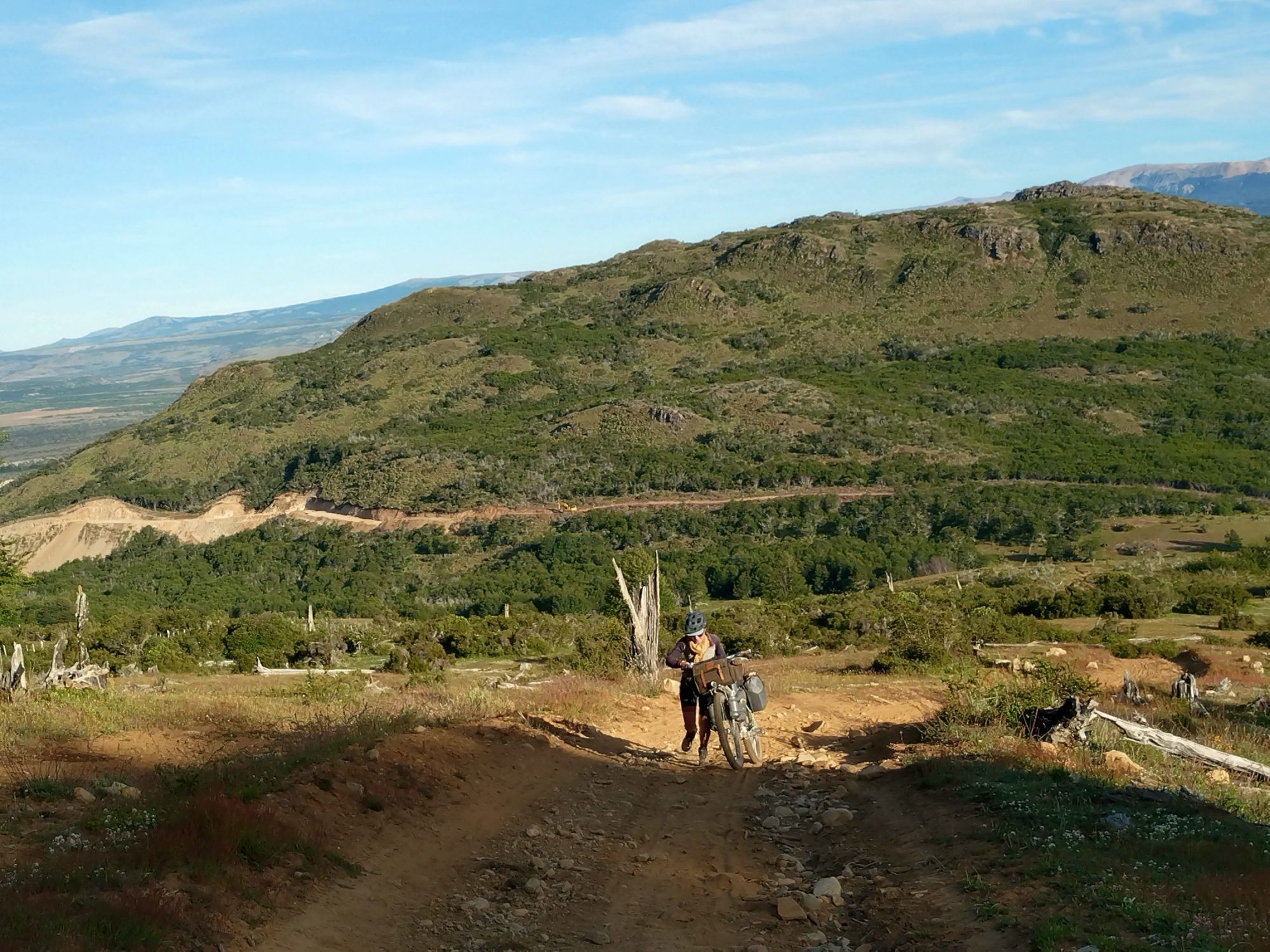
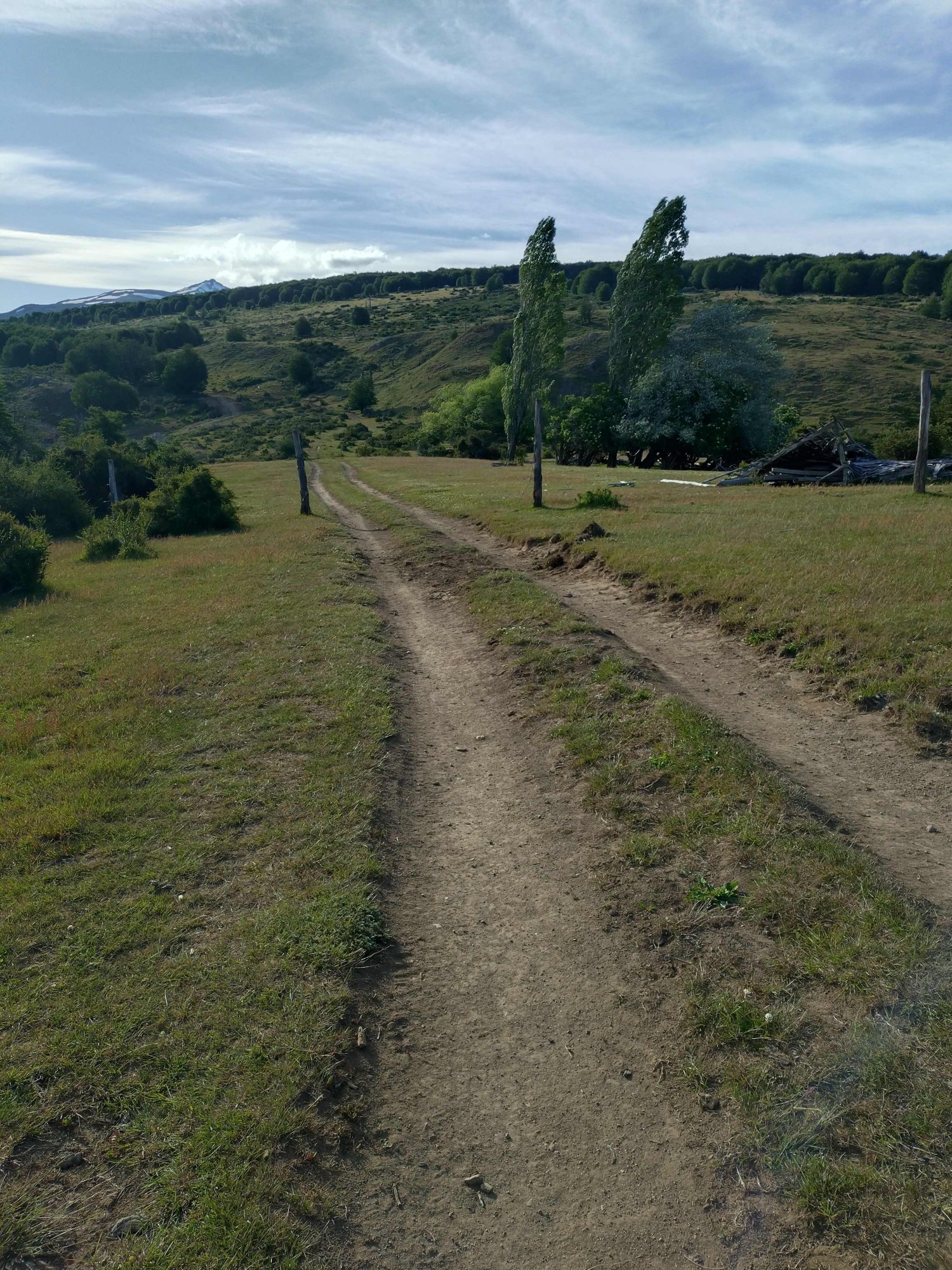

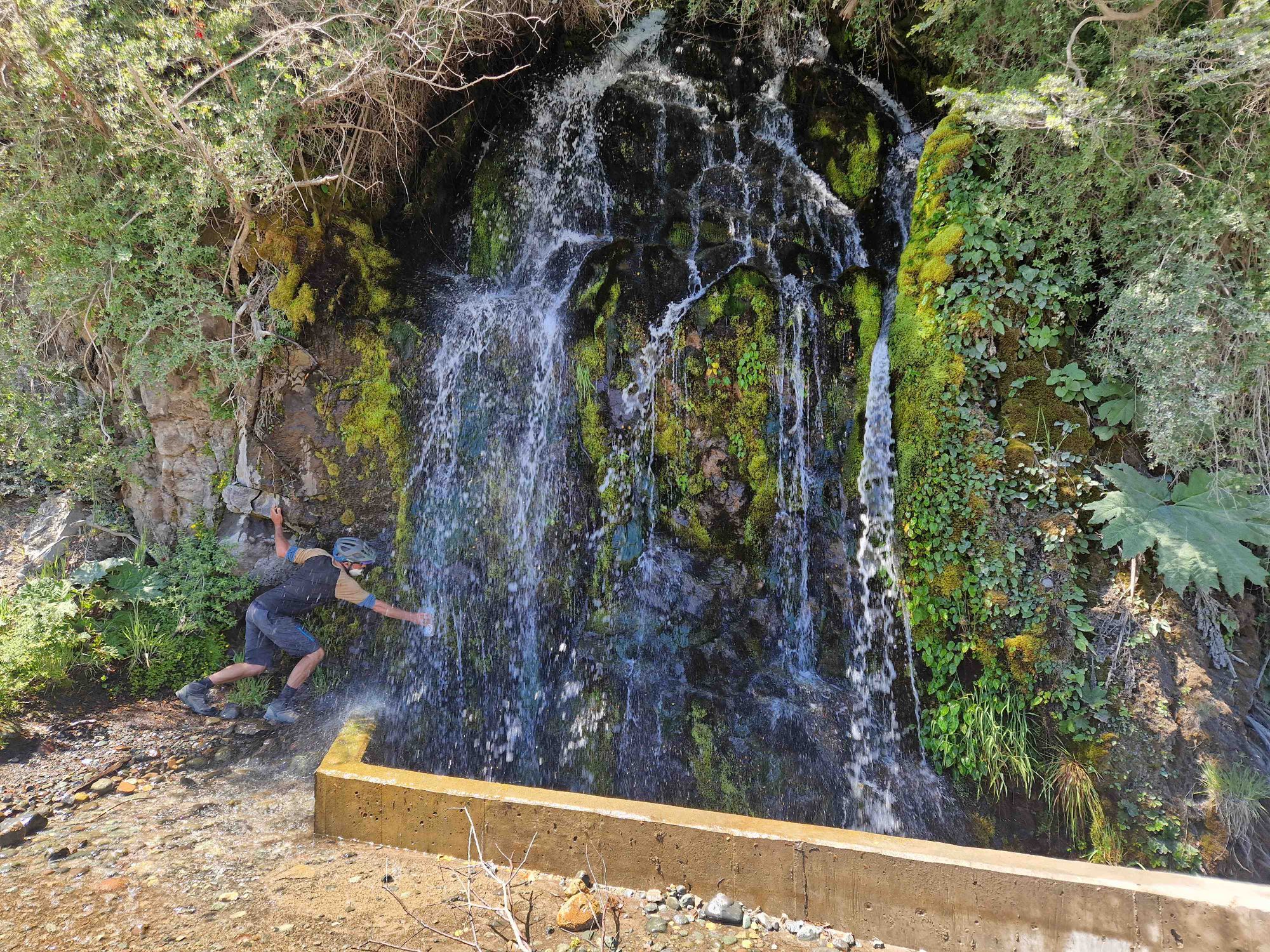
We anxiously followed the partially constructed road that gradually deteriorated the further along we went – never knowing if it would actually take us where we wanted to be. The wide gravel turning to loose gravel, to mud track, to narrow hairline through the woods and eventually passing the digger that marked the end of it. Miraculously, it met the 4×4 track we’d been searching for all day. We whooped with joy as we whizzed down the track, across grassy fields in the golden light of the evening sun and climbed up the valley on the other side. It was glorious. That was until we realised that in all our time trying to avoid the river water all day, we were now in desperate need of it, our bottles almost running dry. By now we were at about 500m above the river and there was no water to be seen. We felt pretty stupid, got annoyed with ourselves for a little while, ate some emergency toffees, then set about solving the issue. We had about 1.5 litres between us – Not enough for cooking and definitely not enough for tea. The map showed a river in 10km, but that was up and over a 1000m climb which we were unlikely to be able to cover before nightfall. Another closer read of the contours of the map showed a re-entrant about 4km away which looked like it was likely to have water running down it. Even though nothing was marked on the map, geography, experience and gut instinct said there surely had to be water there, so we decided to plough on until then.
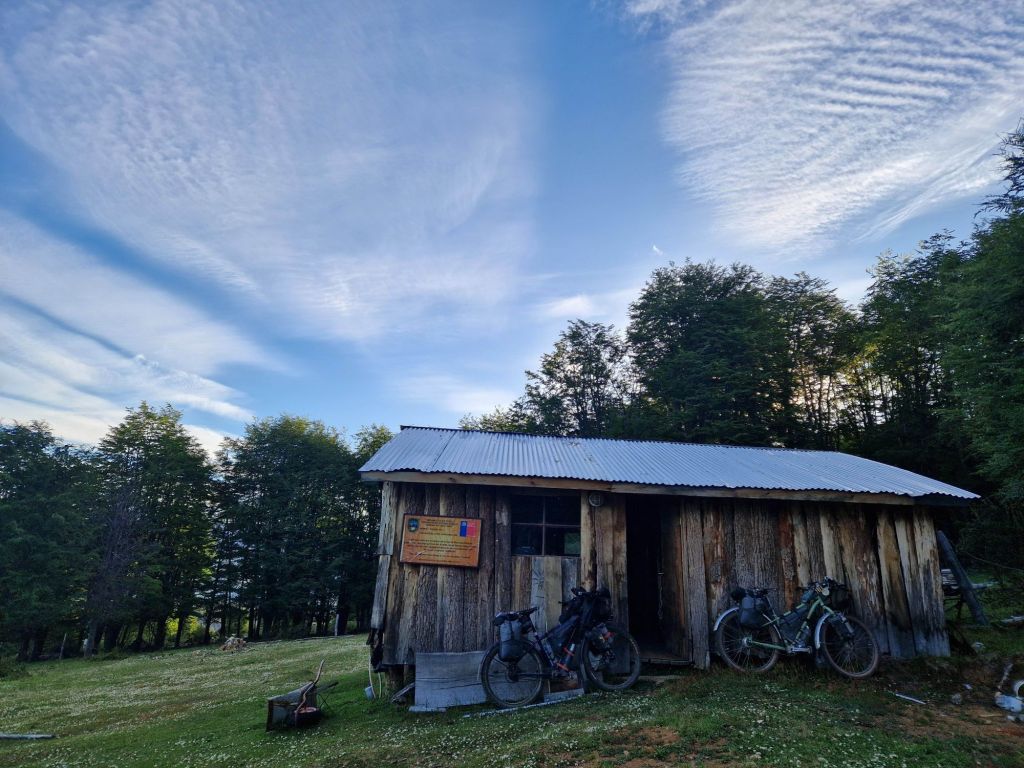
Thankfully we didn’t have to go that far – A hunters cabin in the woods had a pond outside, and although it was a bit sludgey and clearly the watering hole for the cattle, it was water and at the end of such a long day it was all we needed. We filtered it, then quite literally boiled the sh*t out of it, before eating and crashing into bed shattered. We couldn’t quite believe we had spent the whole day trying to find the trail – and now this is where the real hard work started.
Lesson Three – Team work makes the dreamwork!
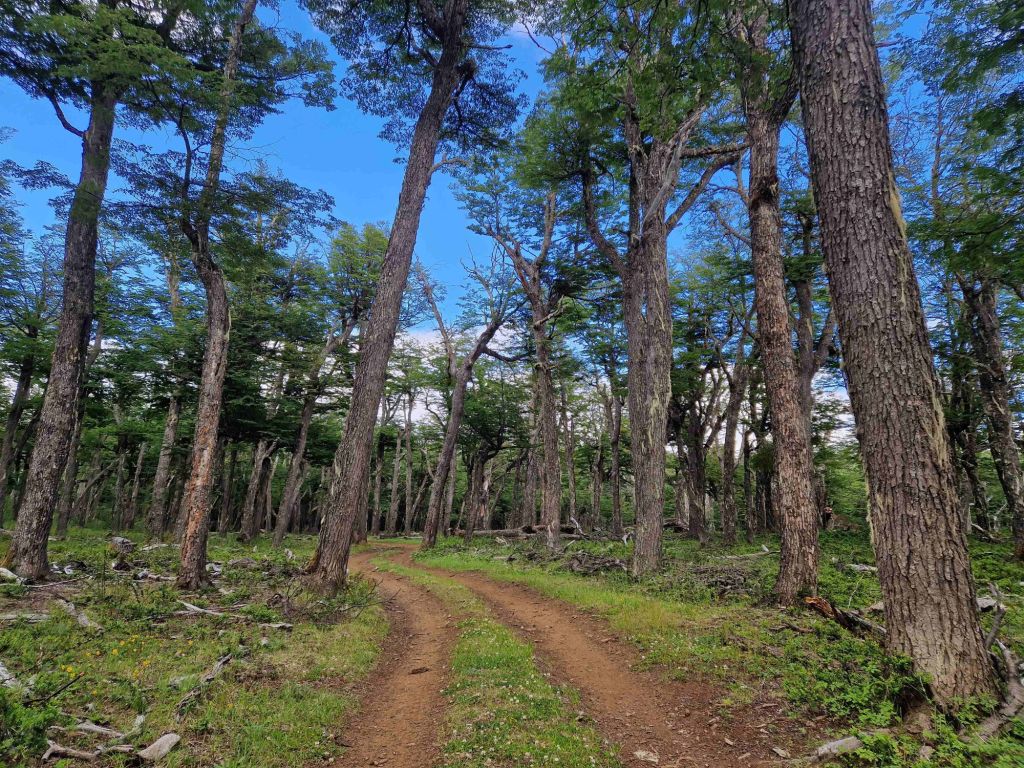
The following morning, we head out enjoying the trail that wound its way through beautiful, silent old woodland and although we climbed a lot, it was mainly rideable. We passed the re-entrant we had seen on the map when looking for water the night before and splashed through the stream that ran over the trail there (smug face!). The trail felt ancient, like we were following the footsteps (or more accurately hoof prints!) of generations of gouchos for whom this track was a lifeline. We immediately felt immersed in nature, just as we had been dreaming about for all those hours on the Carretera Austral. It was magical. But all the while we were a little apprehensive. We knew we had another big river crossing coming up, and we just had to keep our fingers crossed that this one was passable.


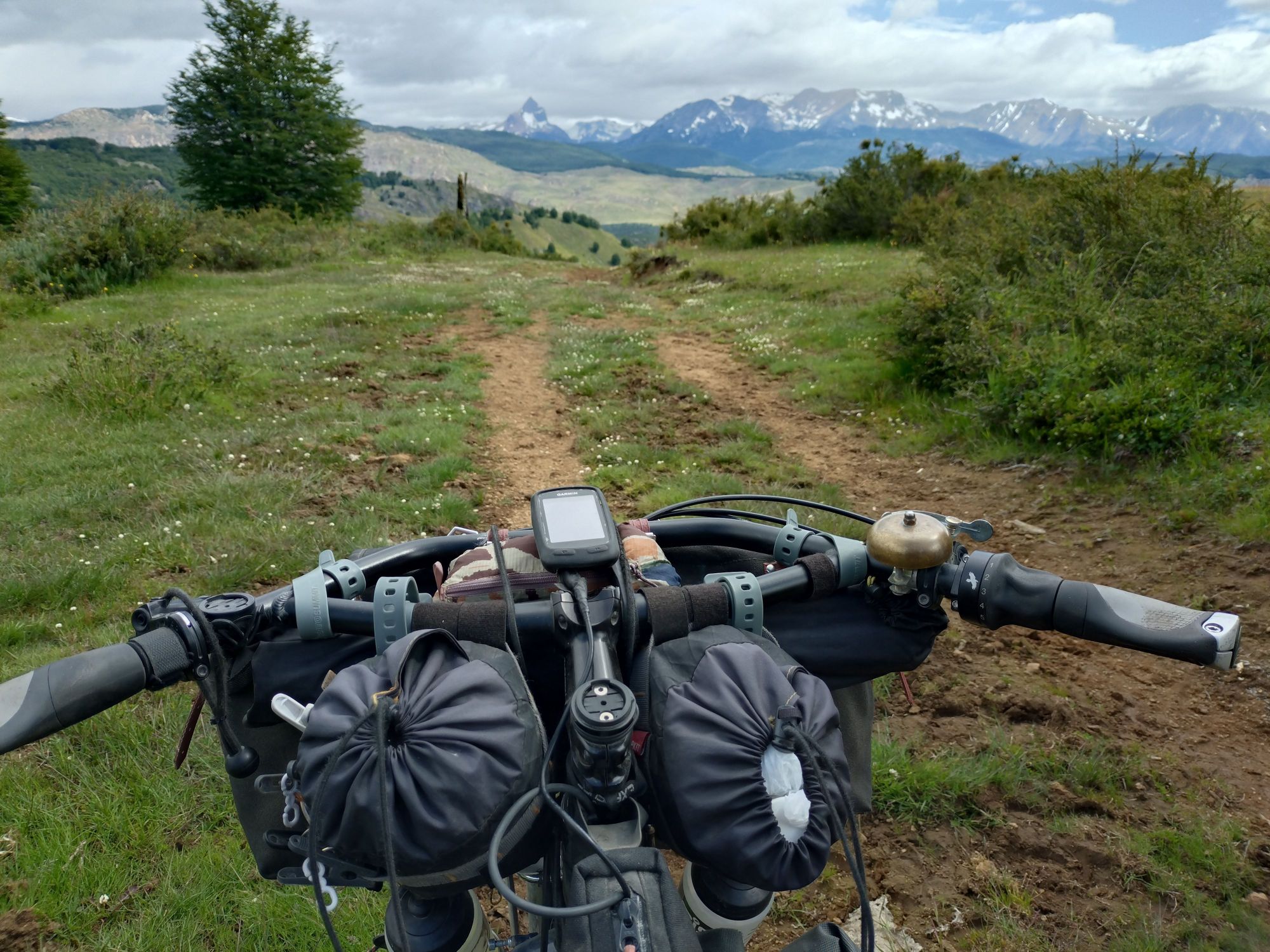
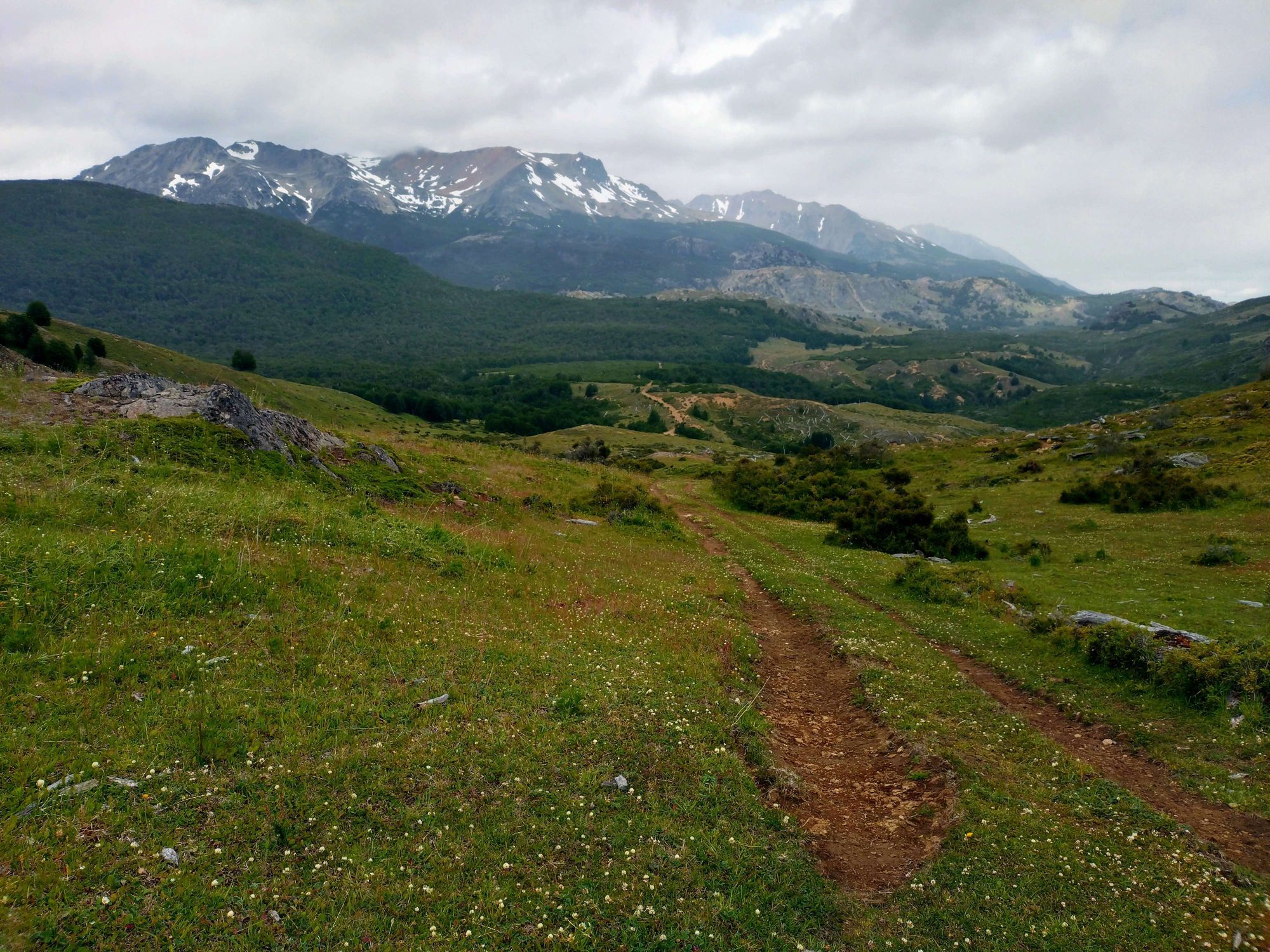

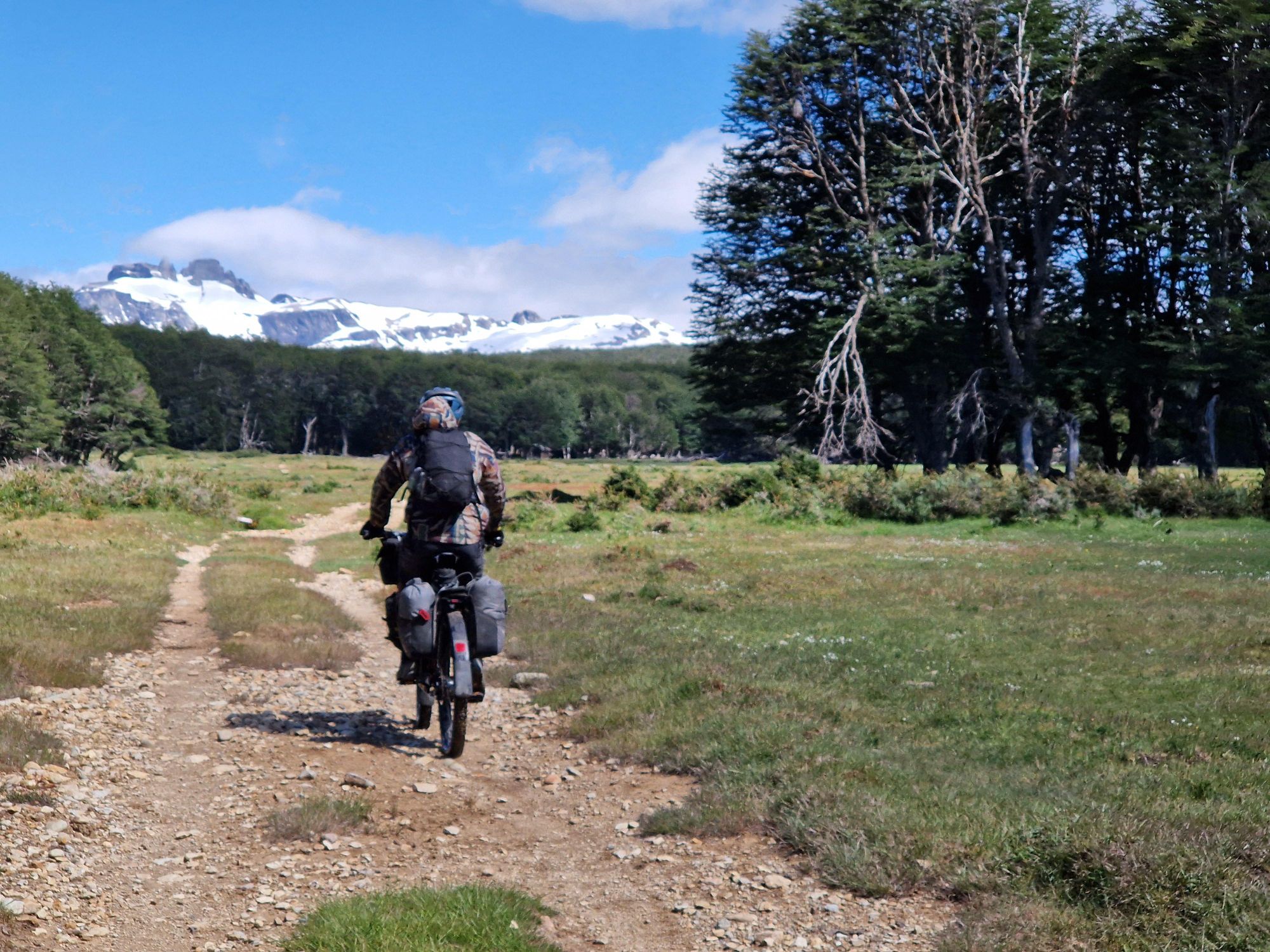
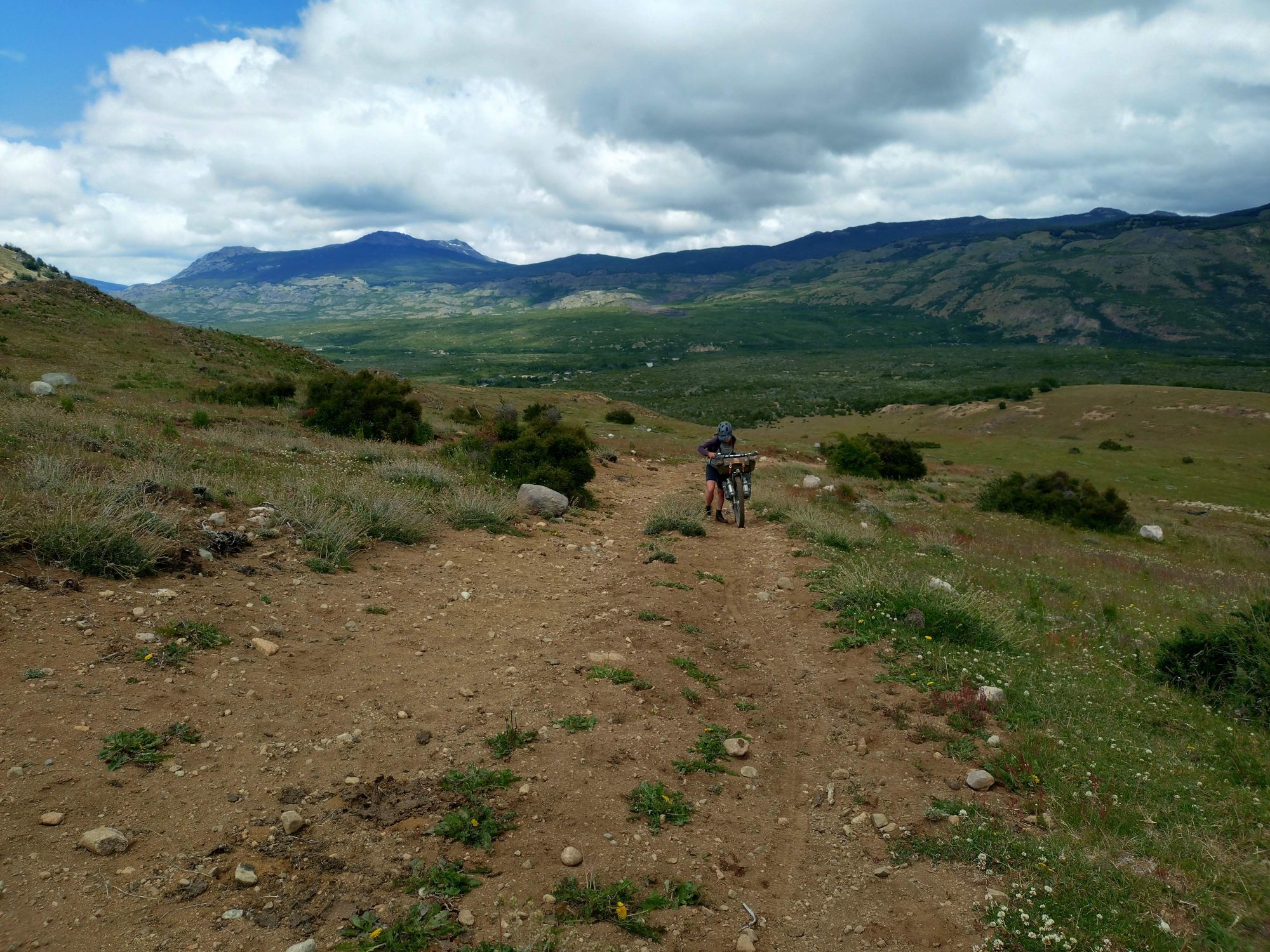
The trail descended down fun, steep, loose, rocky surfaces with Peak District potato-alley-esk boulders for half an hour before dropping us out alongside the big river we now needed to cross. After that descent, I was more adamant than ever that we would, somehow, find a way to cross the river – I would try anything before having to push back up that descent! Approaching the river, filled with trepidation we seemed to ride faster and faster as we got closer, eager to see what awaited us.
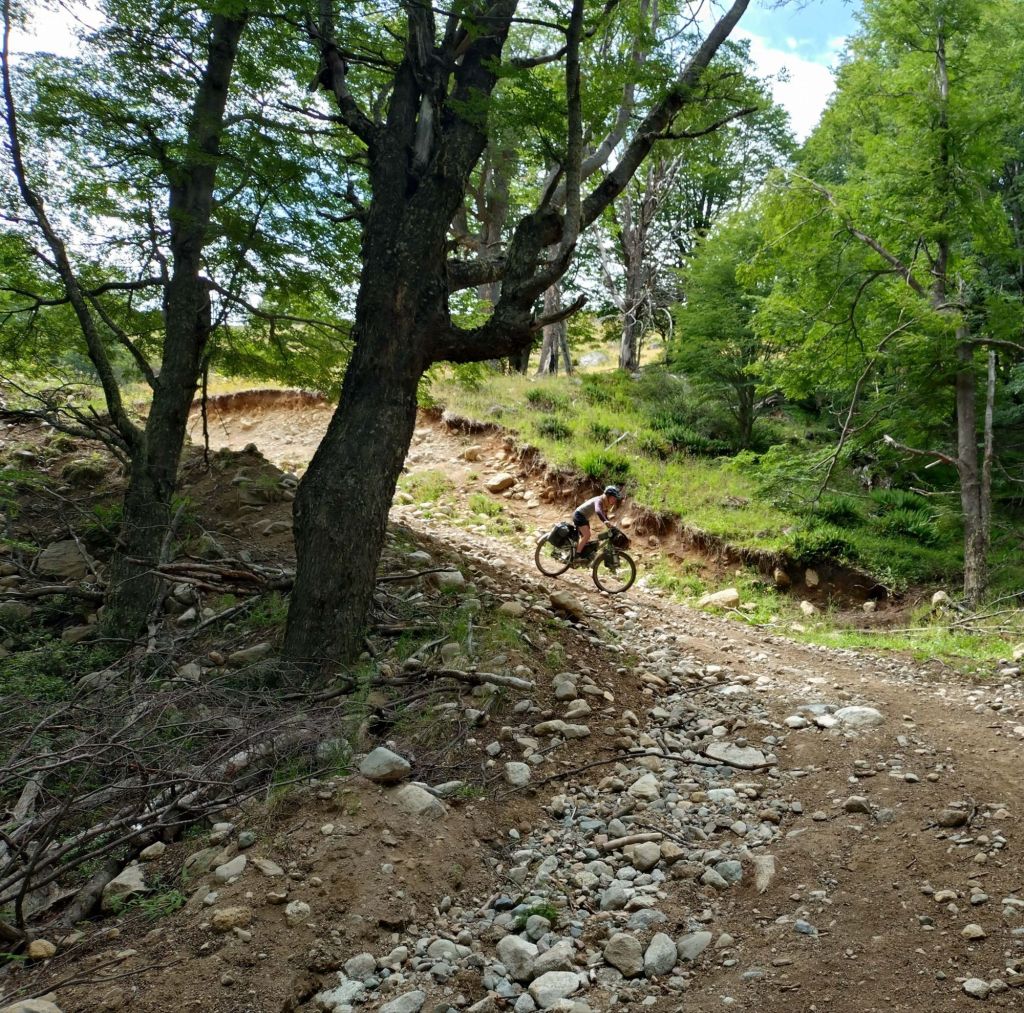
The second big river crossing was also super super wide and looked shallow-ish. Having learnt from the previous day, we took all the luggage off the bikes, rolled up our shorts (to inappropriate hotpant length!) and pre-walked the crossing. We took the approach of two to a bike, then shuttled back and forth with each bike and then our luggage. It took way, way longer than we thought, time seemed to disappear in the concentration on our footsteps through the water. But it was doable – thank heavens – And a key lesson in team work making the dream work! But I think I’m still mainly just pleased we didn’t have to push back up that descent.
Lesson Four – Listen to the Trail Tips
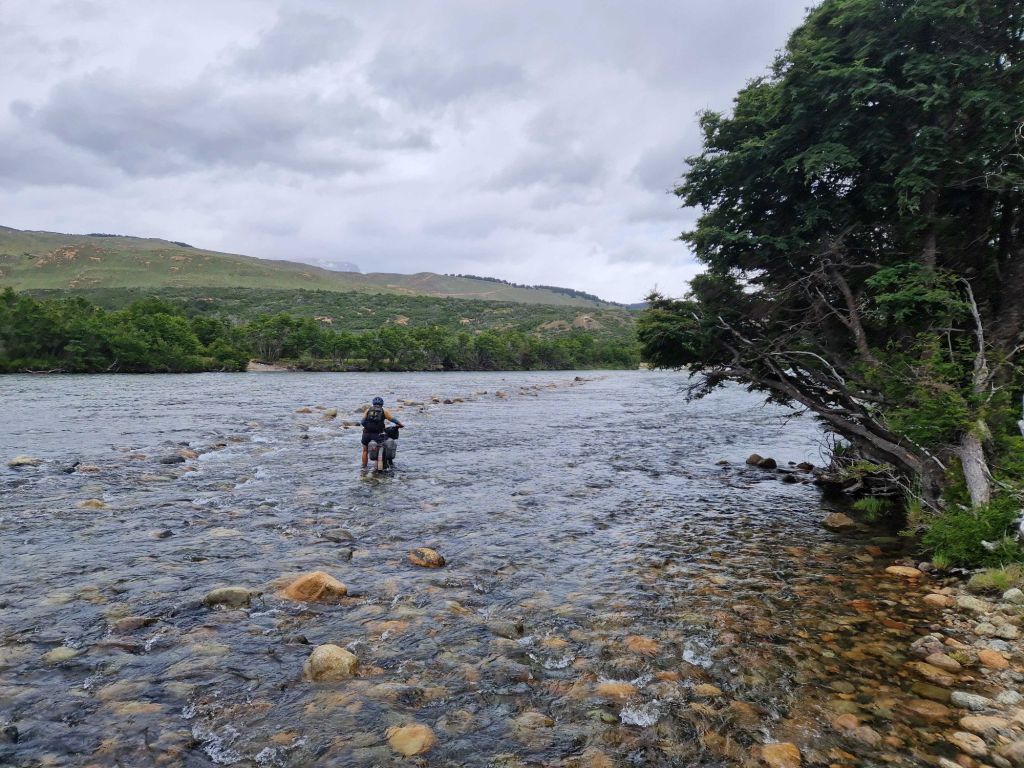
A little later on, mid-way up our first (of many) hike-a-bike sections, we looked up to see another cyclist pushing his bike down the hill. We couldn’t quite believe our eyes – Ted’s first words to him were ‘Are you real!?’. I think it was the shock of seeing another human in such a remote place, and not only that, but one of our tribe. Andrey was cycling the same route as us, but in the opposite direction. Bumping into each other at this point in the trail was pretty uplifting for all of us – it meant that the trail and rivers were passable in each direction. We took the time to share stories and advice about the trail – the tips about the frequency of the river crossings we were yet to endure, and which fork in the trail to take to avoid lots of tree fall we’re priceless advice from Andrey. But most of all we loved seeing his tyre prints in the dust. They were a reassuring presence that we were on the right track and that no matter how hard, the route was possible. Our positivity and enthusiasm recharged by our chance encounter, we pushed on enjoying the high mountain plateaus and incredible views, now with the added bonus of the most up to date knowledge of the trail to come.
Lesson Five – Just get the boots wet.
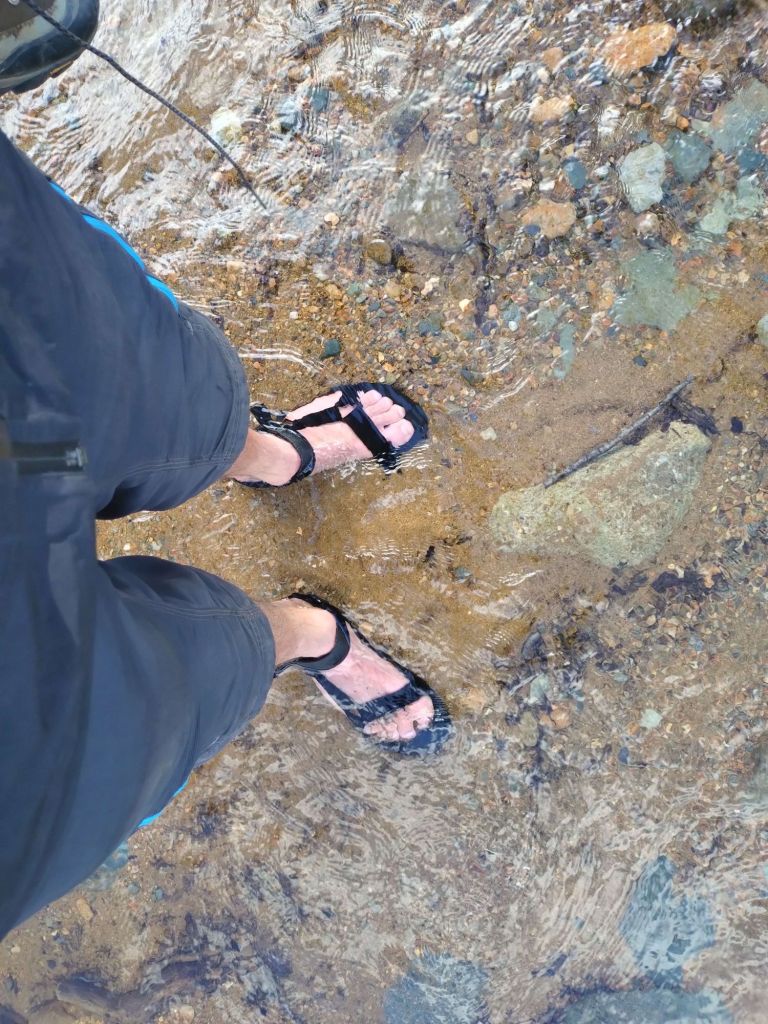
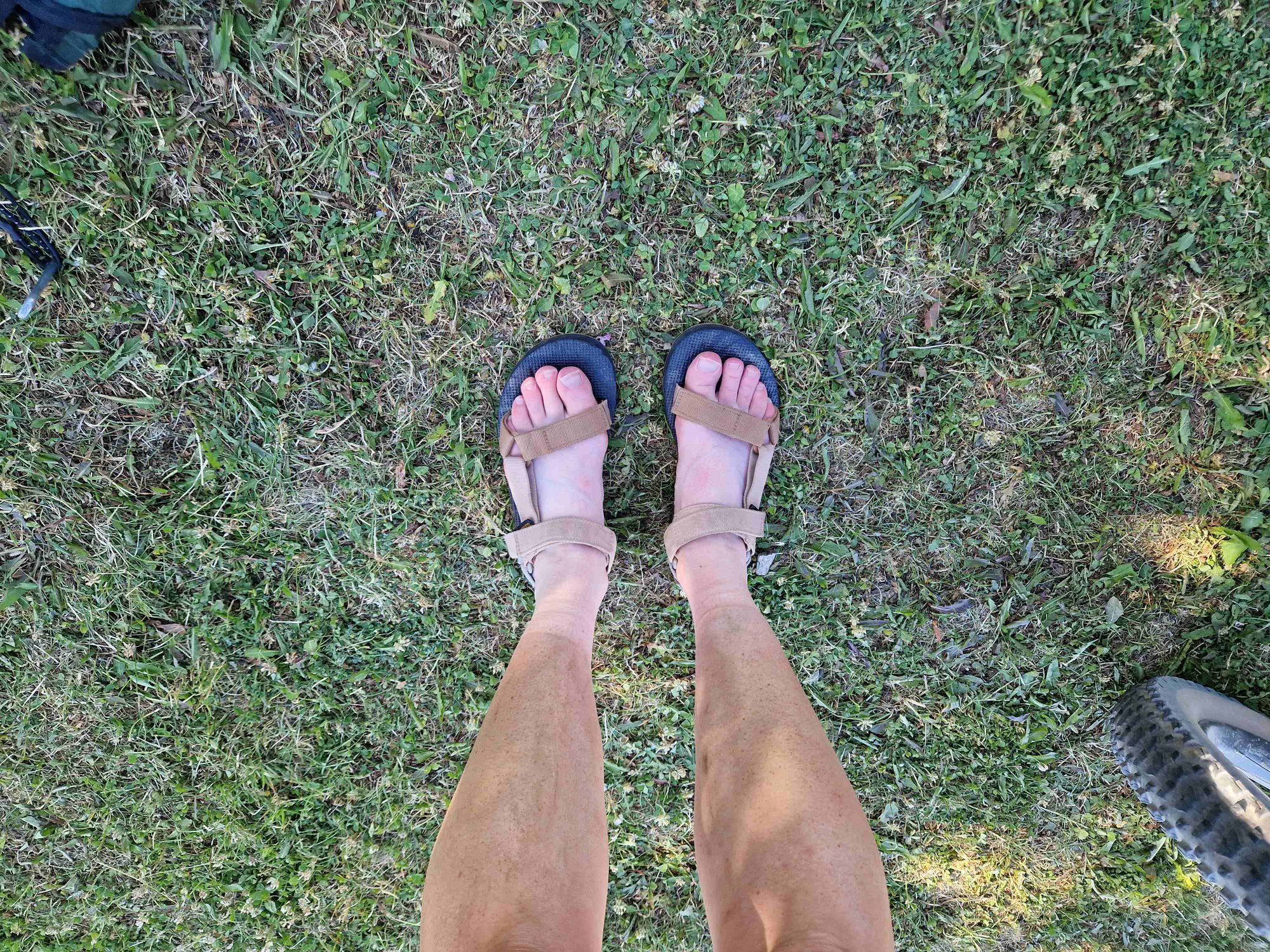
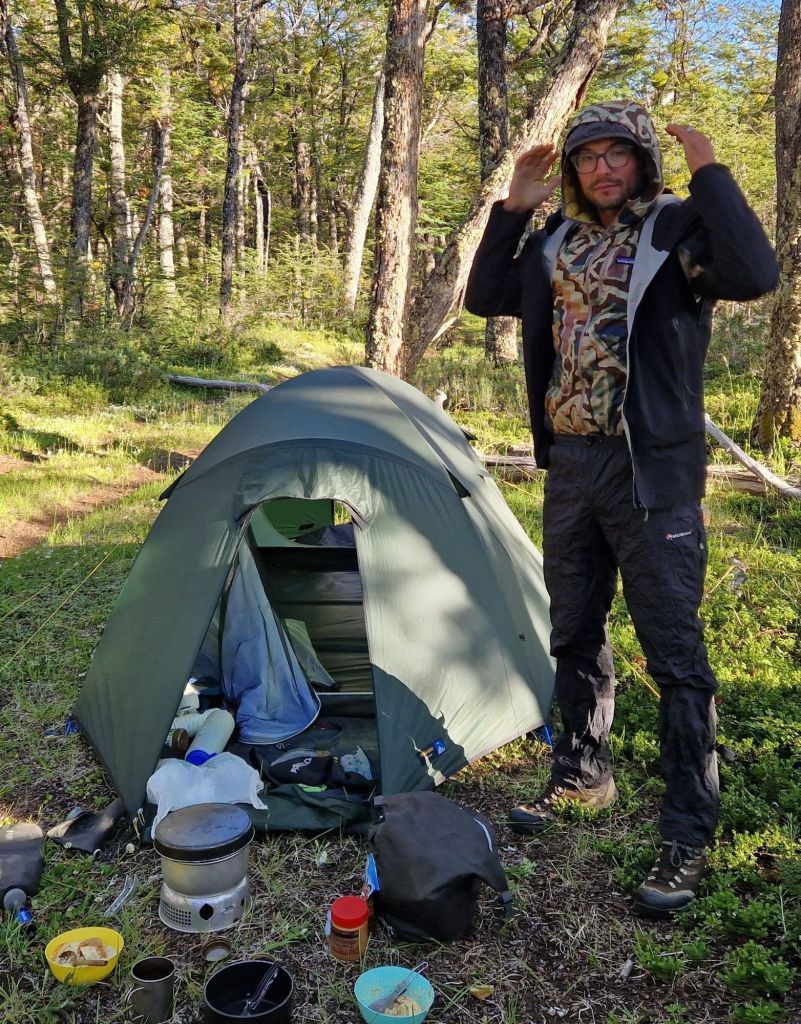
As we progressed, the trail deteriorated. It involved negotiating many fallen trees, about twenty more river crossings and generally felt like a obstacle course for your bike. It was exhausting. Even the decision of whether to keep our boots on, or change back into our sandals soon felt like a monumental decision, as our mental energy became more and more depleted. Having soaked our boots at the big river crossing, we had subsequently, at our lunch stop, taken them off, wrung out our socks and dried them out a little. By mid-afternoon they were by no means dry, but the squelch had subsided and they were now a damp wetsuit-esk warm, instead of ice water-river cold. At each river crossing we would still ask each other the same question – boots on, or boots off!? It felt a bit stupid to even worry about it, as our boots were already wet, but anyone who knows me knows about my cold, blue feet. For whatever reason – call it genetics, insisting my shoes were tied stupidly tightly as a child, slow circulation, or small feet – my feet really suffer from the cold. I mean they visibly have a blue-ish tinge and feel like ice to touch a lot of the time, so I have to try to look after them as much as I can. This includes not putting them back into freezing cold meltwater rivers. We also however, recognised the danger of trying to wade through boulder filled, fast flowing mountain rivers in sandals – got to love our Teva’s but it’s really not what they were designed for. So instead we’d decide to just wade through the water in our boots, at least knowing that our toes would be protected from rolling stones. It meant we then had to endure perpetually swinging weighted feet, our boots heavy, full of water and it made for an interesting squeltchy soundtrack to our riding, but it was definitely the best solution. If only we had decided at the start of the day that we would keep our boots on, we could have saved ourselves a lot of time and energy in discussing it over and over. But shoes will dry, toes will warm, but broken bones are a lot less easy to deal with on mountain passes, so just keep the boots on!

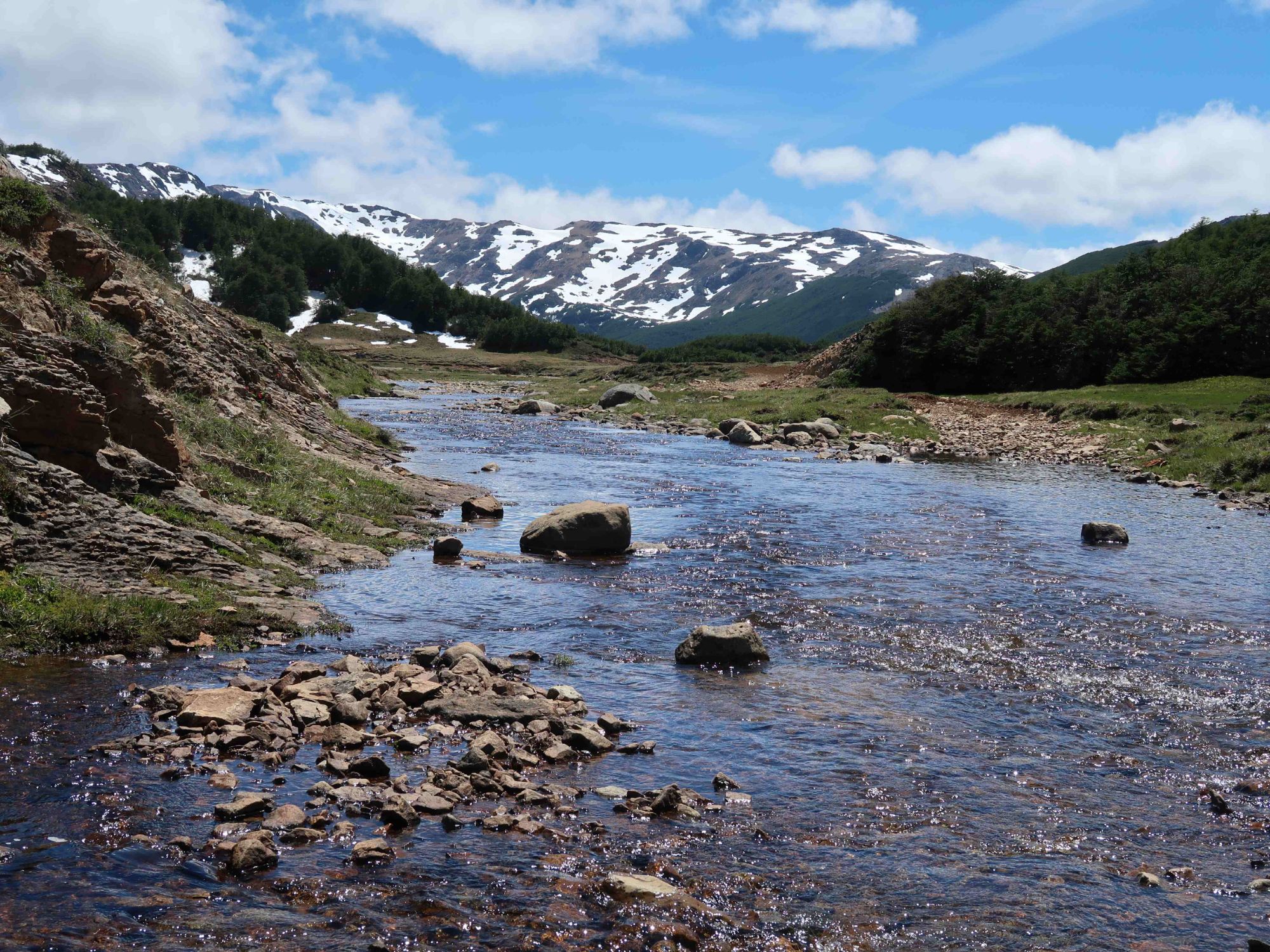
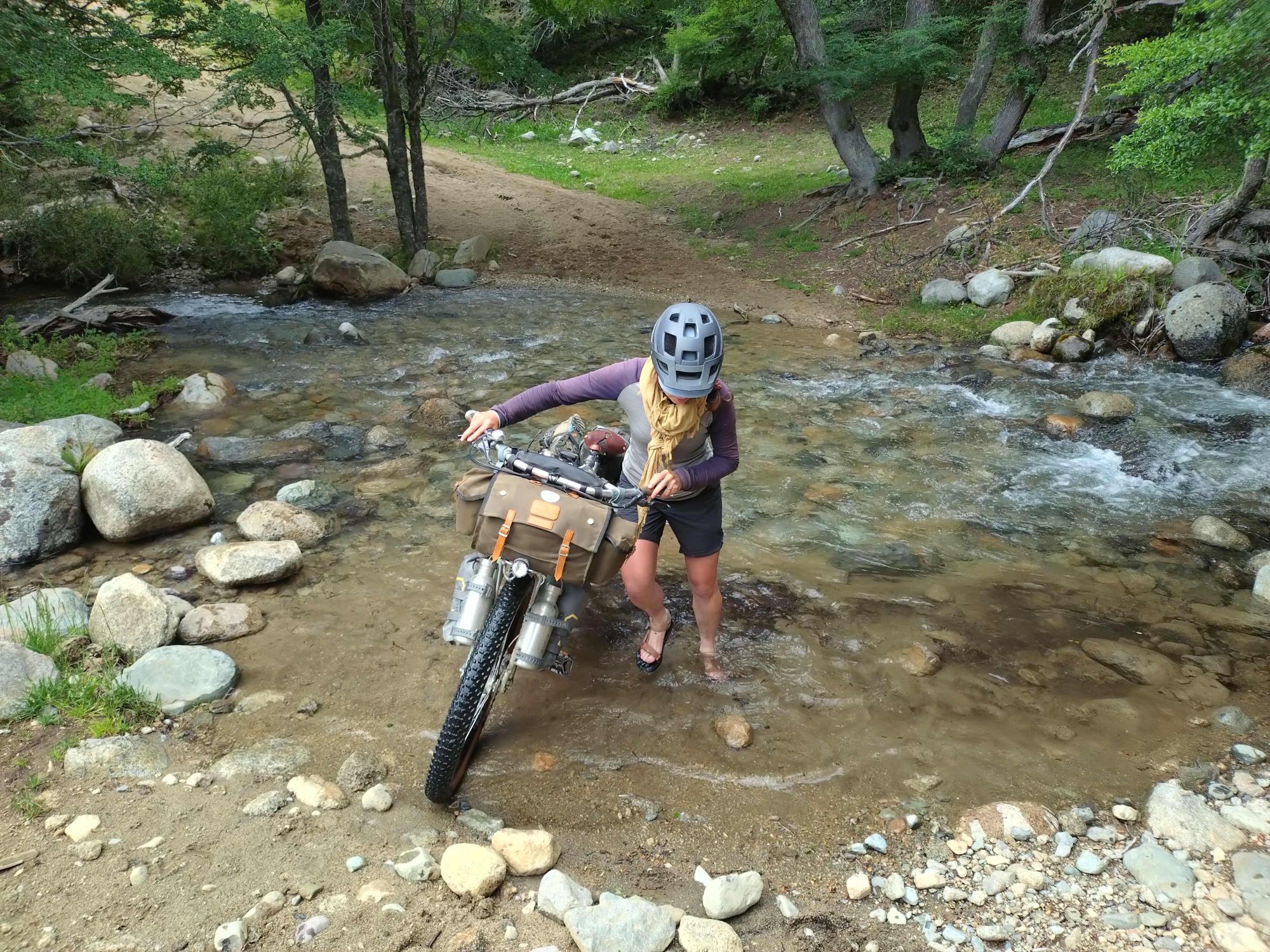

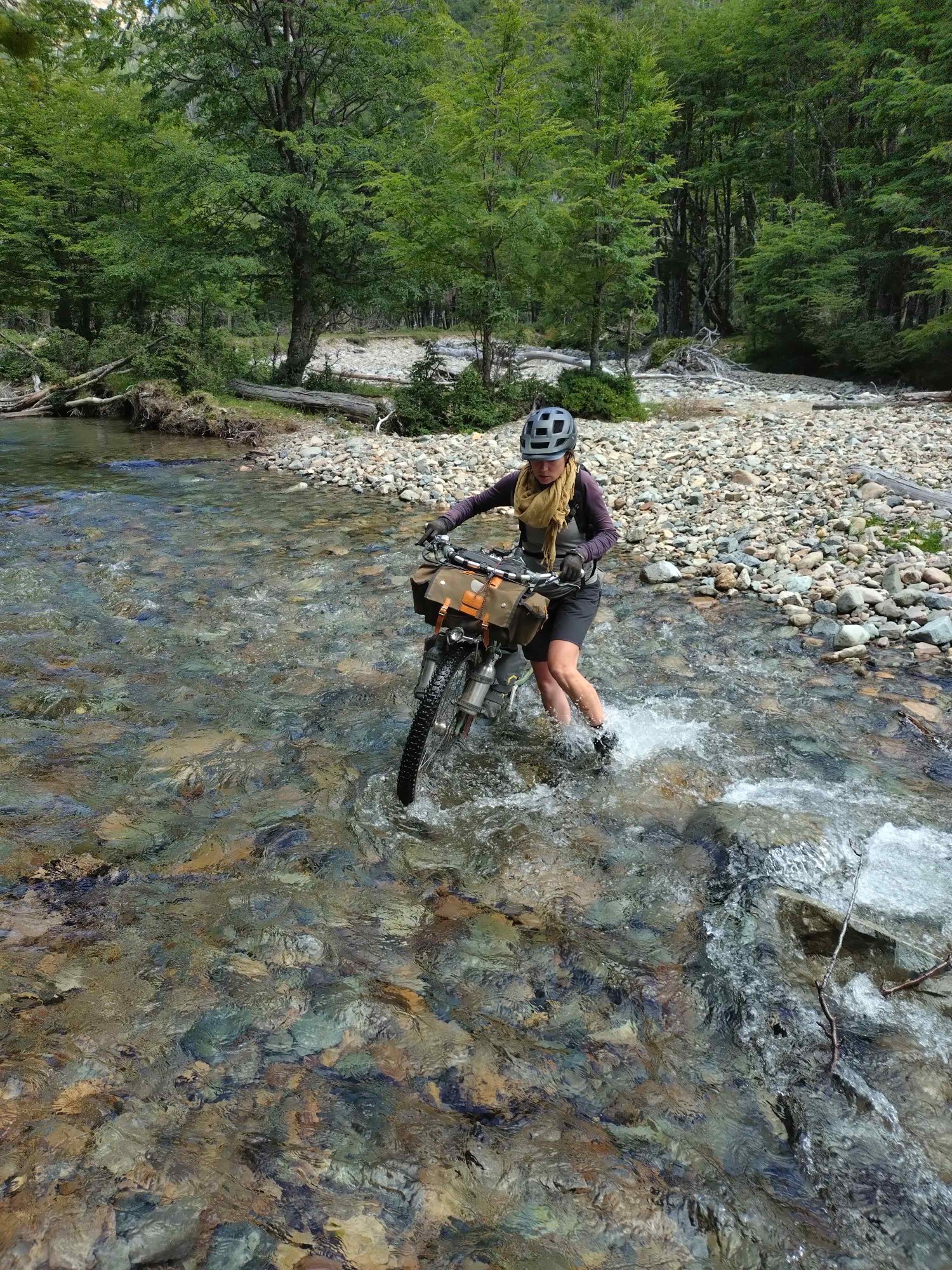
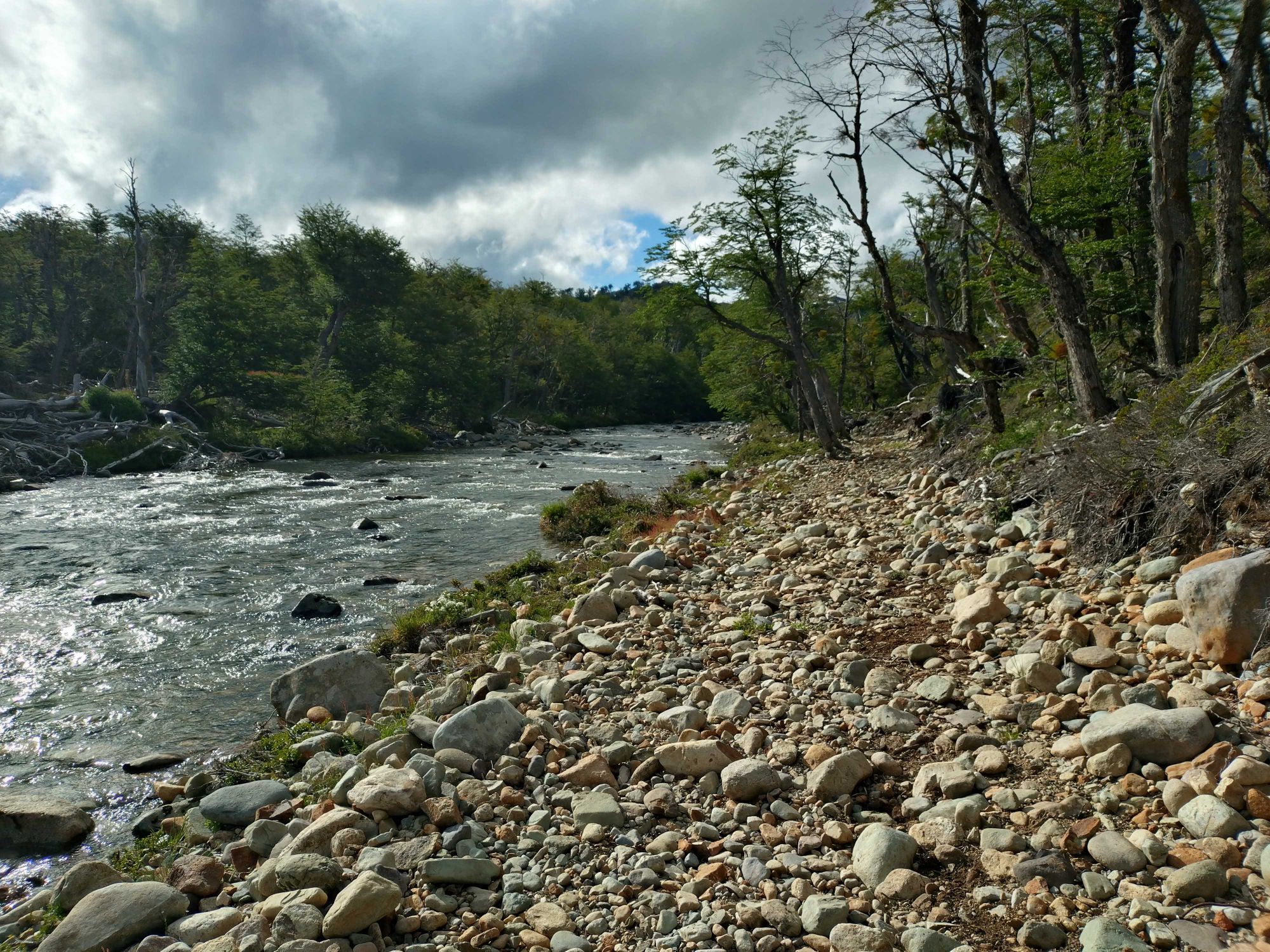
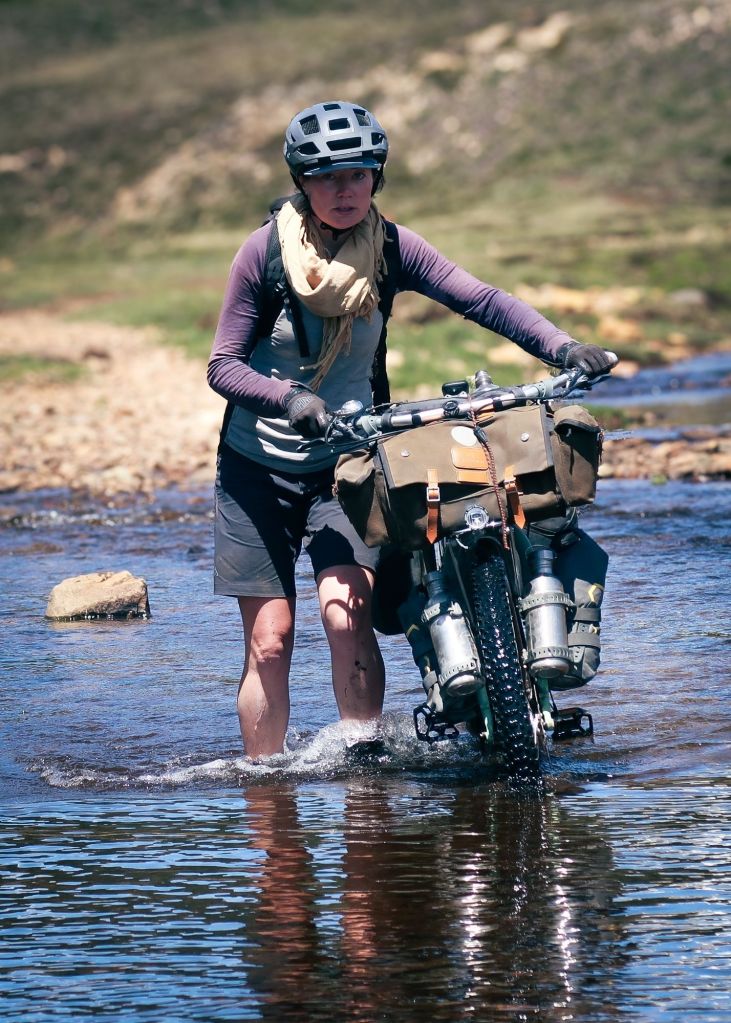
The last river crossing of the day was probably the most difficult. It was thigh deep, fast flowing and involved carrying the bikes over large boulders under the water. It meant spending longer than we wanted with legs submerged in the ice cold water in order to get each bike across. By the time both of us, both bikes and all luggage were safely across, I was shivering – teeth clattering together. Not what you want when the temperature starts to plummet as the sun falls behind the mountain top. We set up camp as soon as we found a flat spot in the woods beyond the river. Totally exhausted, cold and aware that we had no time to loose in getting into our tent and cosy in our sleeping bags to stop the shivering. I’m just forever thankful that Ted seems to have a nuclear reactor inside his feet – they are always hot – and if I’m really lucky he’ll reluctantly, begrudgingly, whilst moaning about it, even let me zip the sleeping bags together so my ice cold feet can be warmed up on his (true love!)
Lesson Six – There’s always one more river crossing
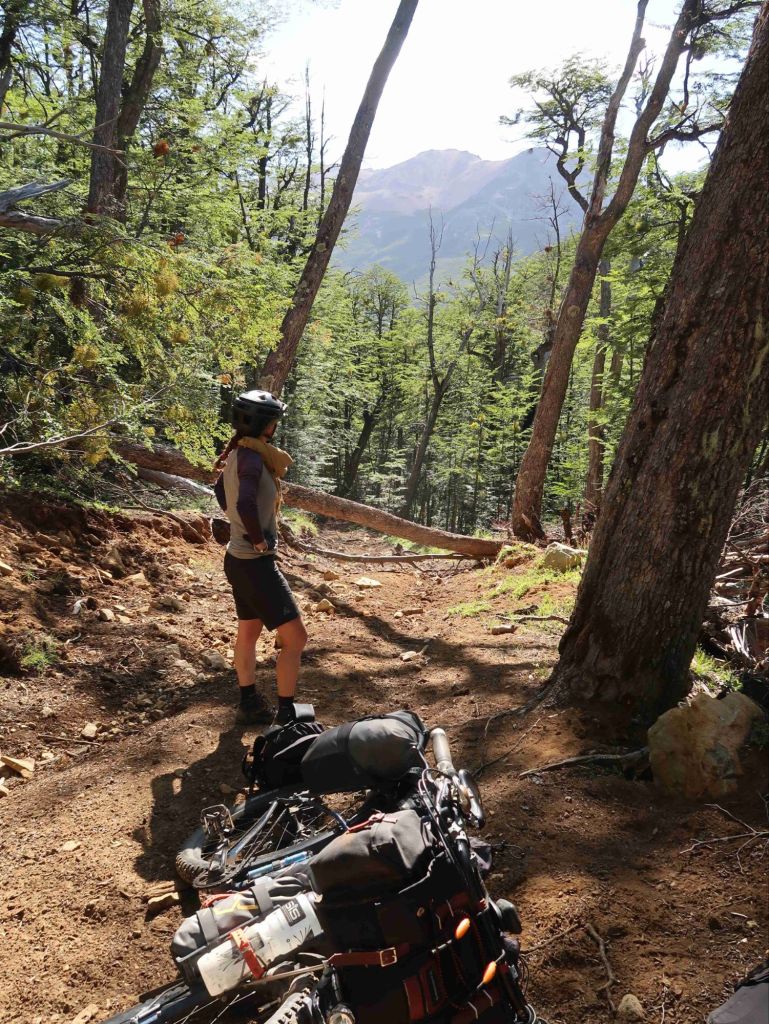
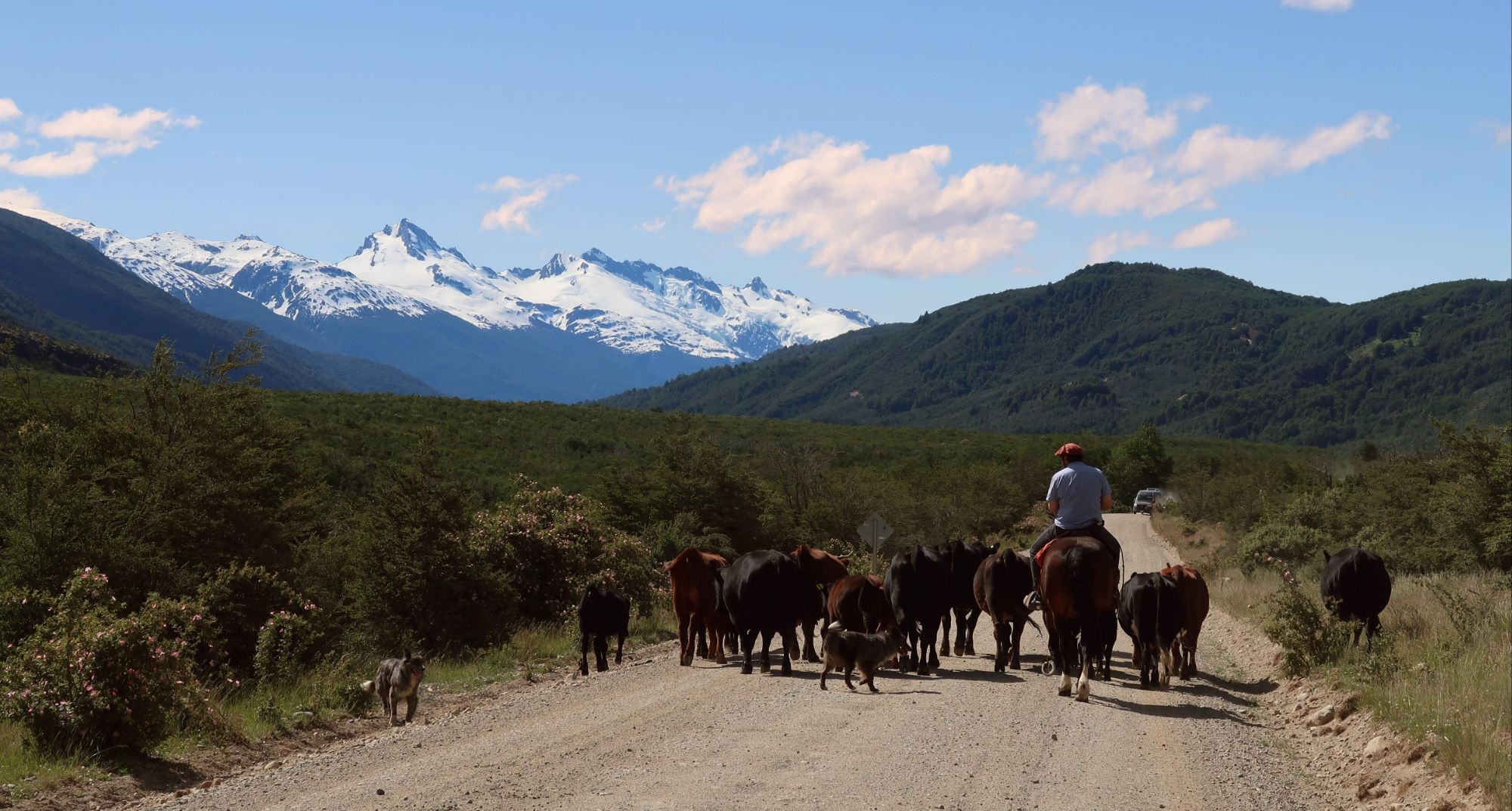
It goes without saying that our progress on the trail was slow. Everytime we thought we could get back on the bikes and ride, another obstacle would appear – a fallen tree, another river, a gate, a huge boggy wheel eating puddle, an unrideable boulder field. We even encountered four separate herds of cows being driven up the road by gouchos on horseback, presumably heading to their high alpine summer pasture between the two mountains we were riding over. Gouchos always seem to have this incredible knack of silently appearing from out of the forest. You just get that sixth sense feeling that someone is behind you, despite not hearing anything, turn around and see them no more than a few metres away and this encounter was no different. We saw the cows and heard the dogs long before we caught sight of the gouchos. Dressed in typical sombreros and ponchos, atop sheepskin trousers and chaps, with huge whips in hand they skillfully managed the herds of cows, calves and bulls through the forest, using only a few whistle calls to their dogs and quick manoeuvres on their horses. It was incredible to watch. If they were surprised by our presence they didn’t let on, a quick hello was all we got, as they were so focused on their work. After all the cows, we could then also include the addition of ‘mud churned up lots of cows’ to our list of bike obstacles to negotiate our way over.

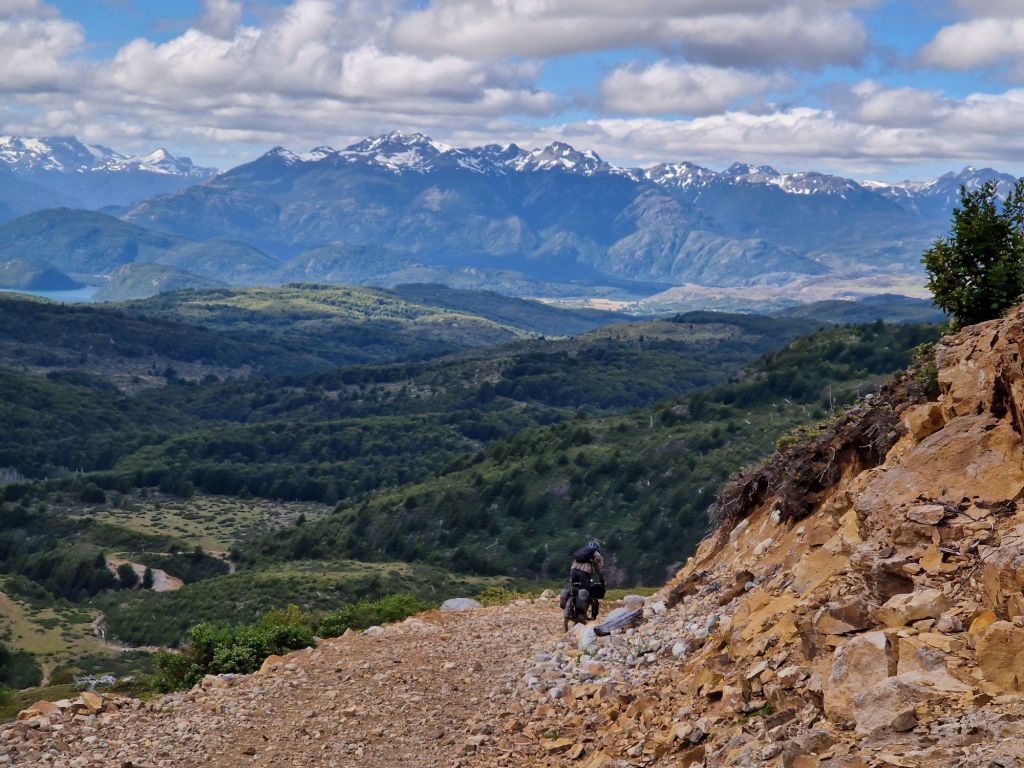
But there’s no denying that the most exhausting obstacle on day two were the hike-a-bikes. The route essentially encompassed passing over / between three mountains, so involved three main climbs along the whole route and the second two were incredibly steep, loose and rocky. We’ve done a lot of hike a bikes in our years of riding (even lots on this trip) but at 33% these were the steepest we’ve ever encountered.
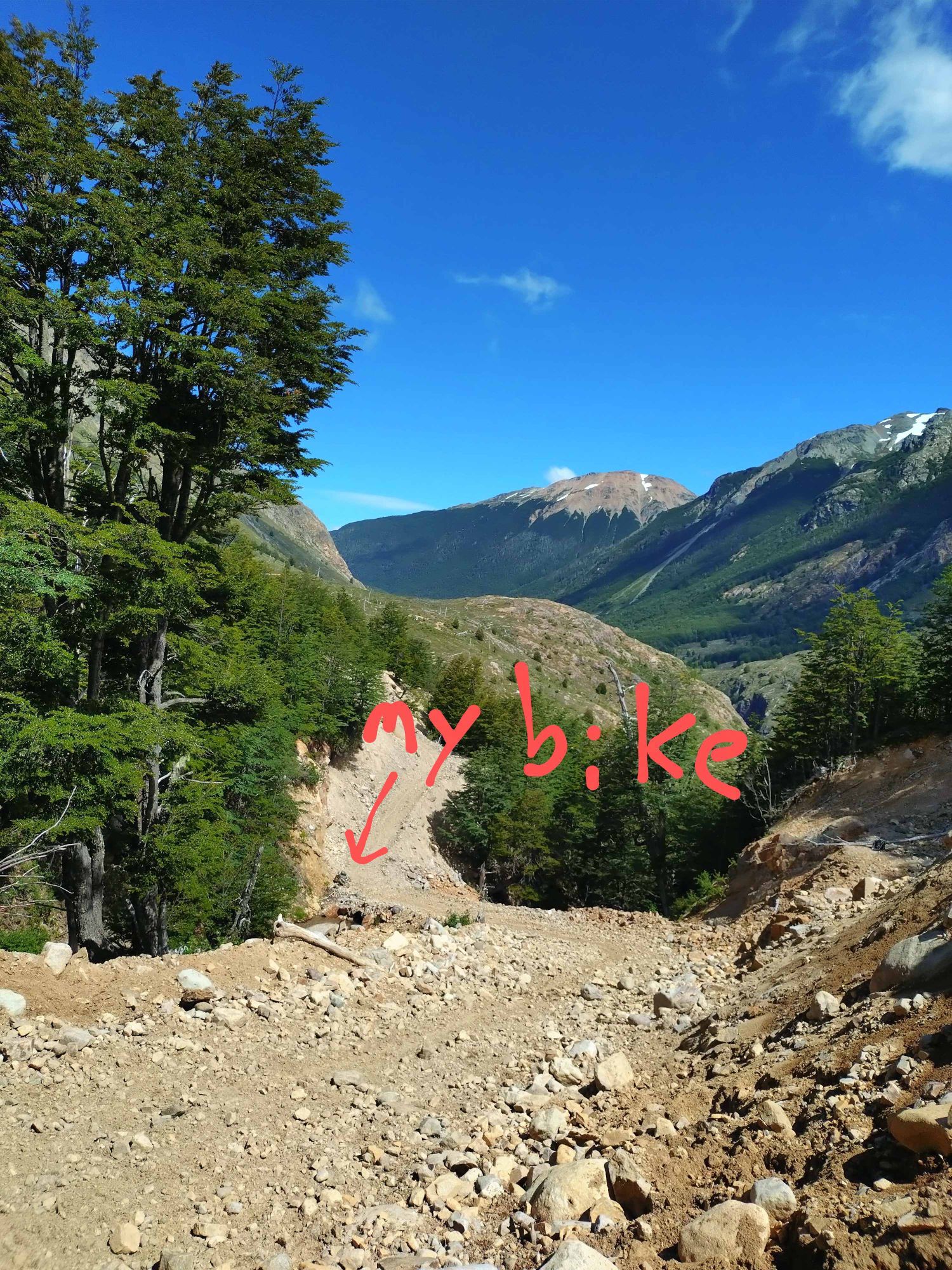
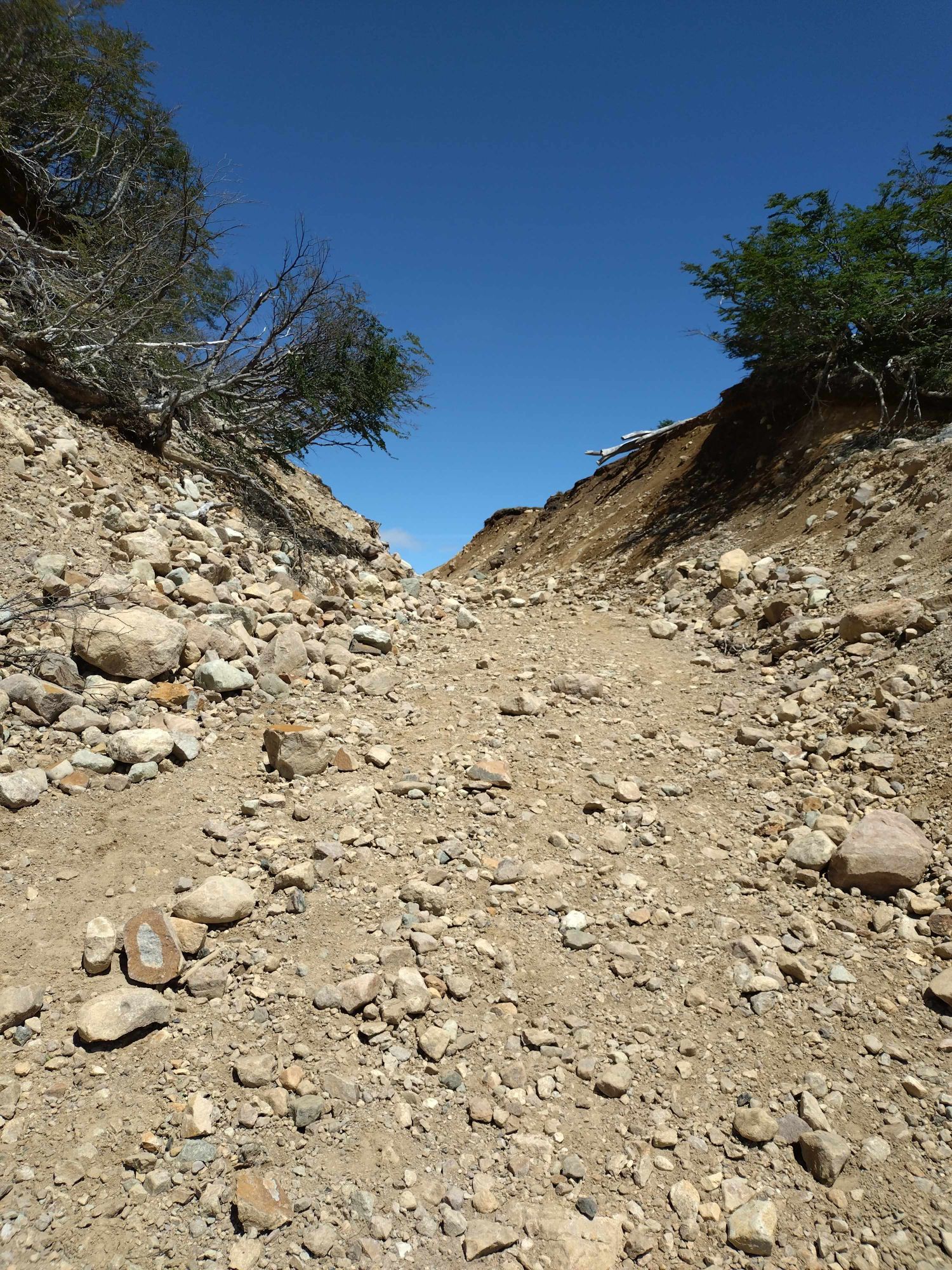
We worked together to push one bike at a time and with a lot of huffing and puffing we did it, but Ted’s back was not happy about. He suffered a few back spasms of increasing intensity, each one requiring the obligatory moaning and shouting, plus a few minutes to walk it off, or lay on the floor, or the healing magic of eating a Snickers. Being on this remote pass with Ted’s back seizing up, as it has done in the past, would have been a bit of a disaster, so we just took things steady, little-by- little.
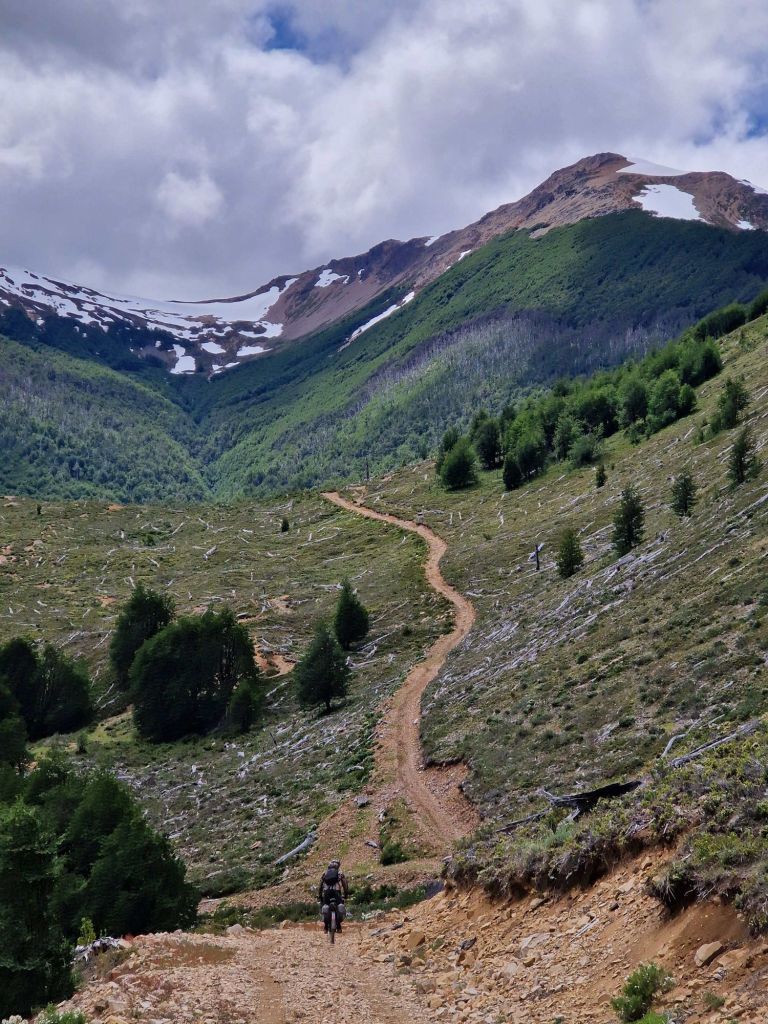
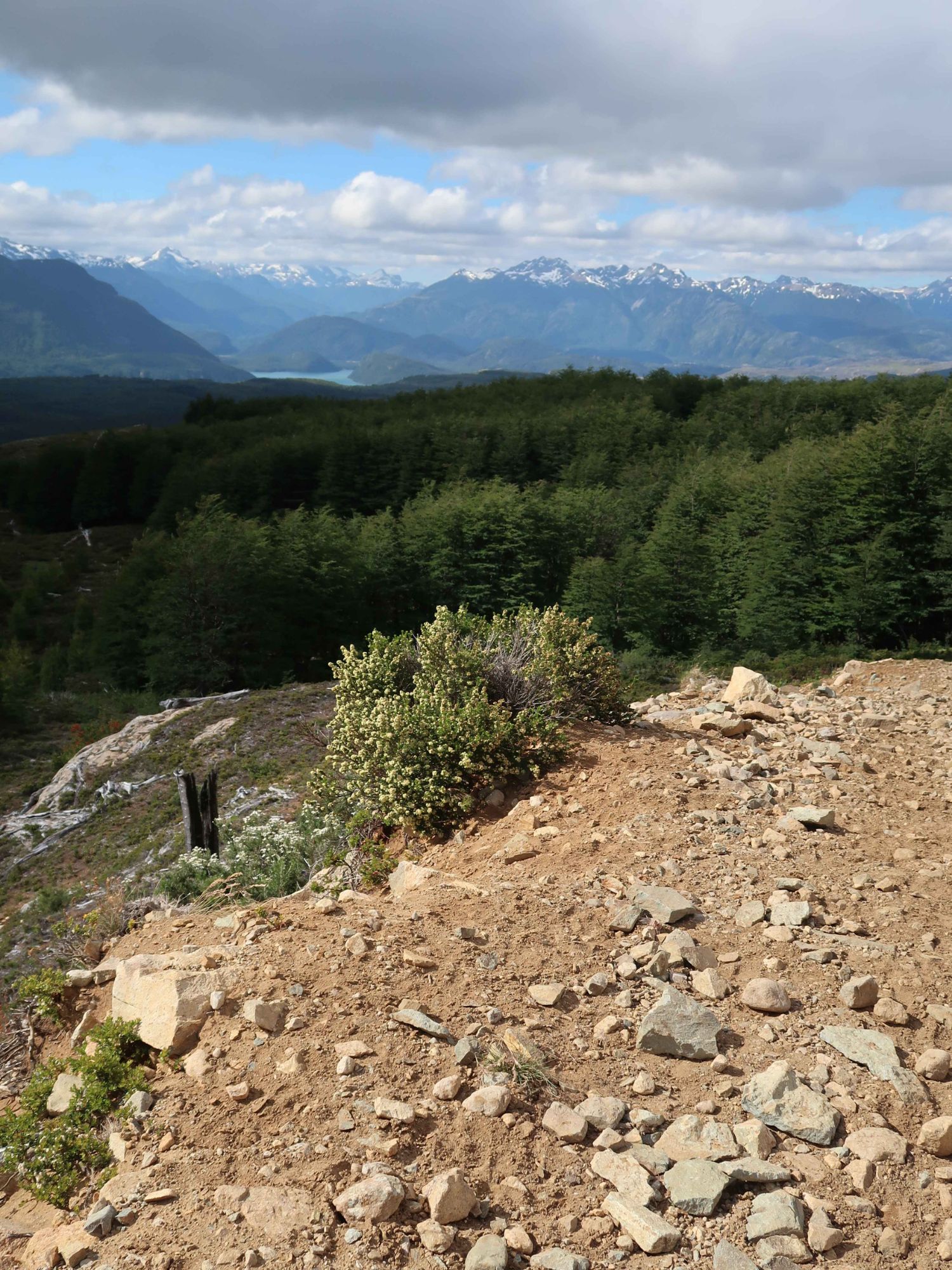
Finally, by 5pm on the second day, we crested the top of the final climb, the views of mountains and forests and lakes and snow capped peaks opening out in front of us. Breathtaking. We paused for a moment to take it in, then tentatively started our way down. It was about as steep going down as it had been pushing up, so we took it easy, conscious that a washout fall or slashed tyre would be far from ideal out here. We whizzed down the hairpin bends, smiles on our faces and enjoyed watching the golden dust plume from our tyres in the evening light – it reminded us both of summer evenings on MamTor back home, making our smiles that bit bigger.
Just as we thought we were done with all the rivers, a sharp drop into a gorge appeared which required yet another river crossing before climbing back out of it. Somehow we mustered the last of our energy, sucked up the necessity of wet feet before bed (for a second night in a row!) and got it done. A reminder to be mentally prepared for yet another river crossing, as there’s always one more!
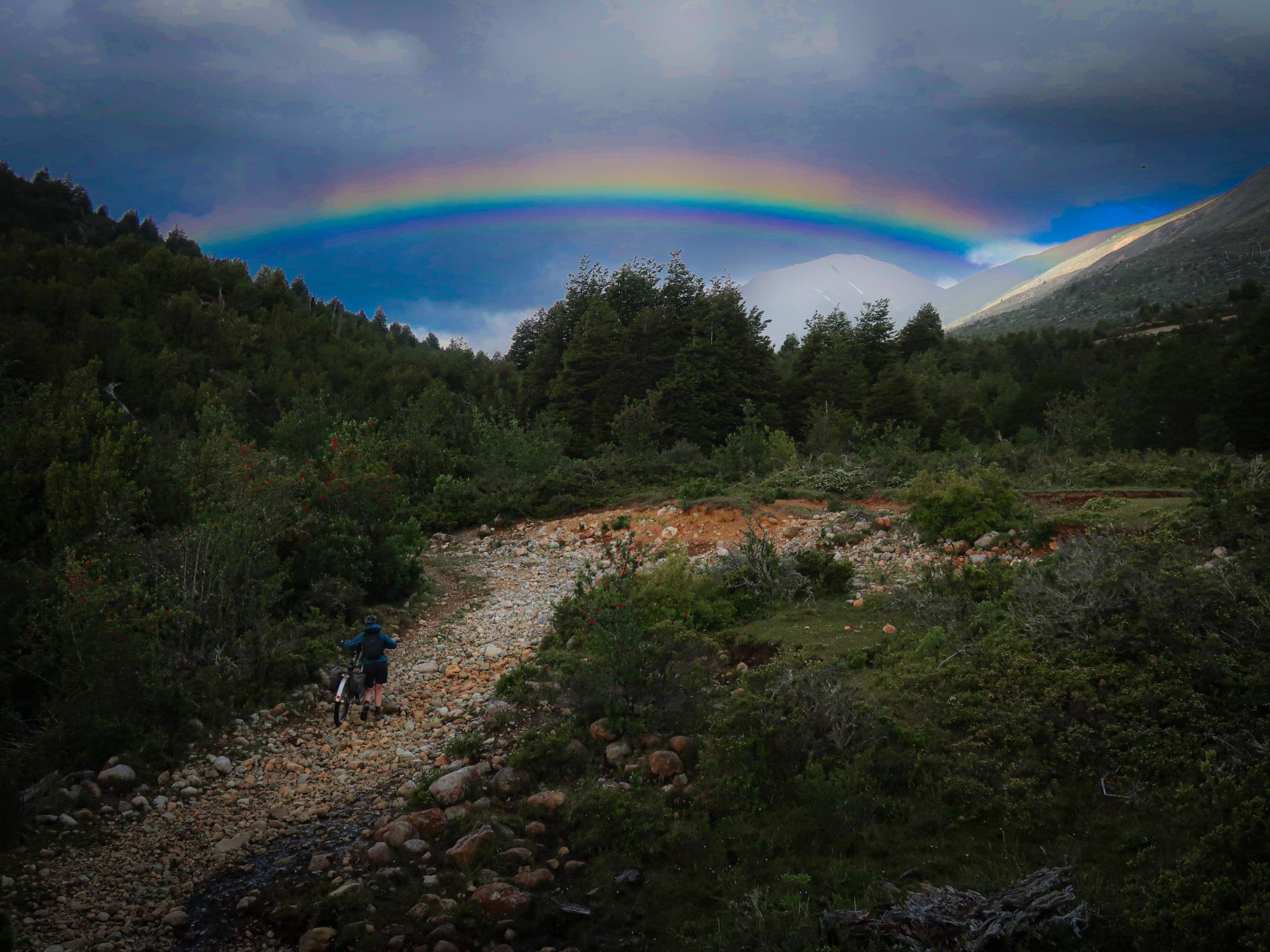
Lesson Seven – Practice makes Perfect-ish!
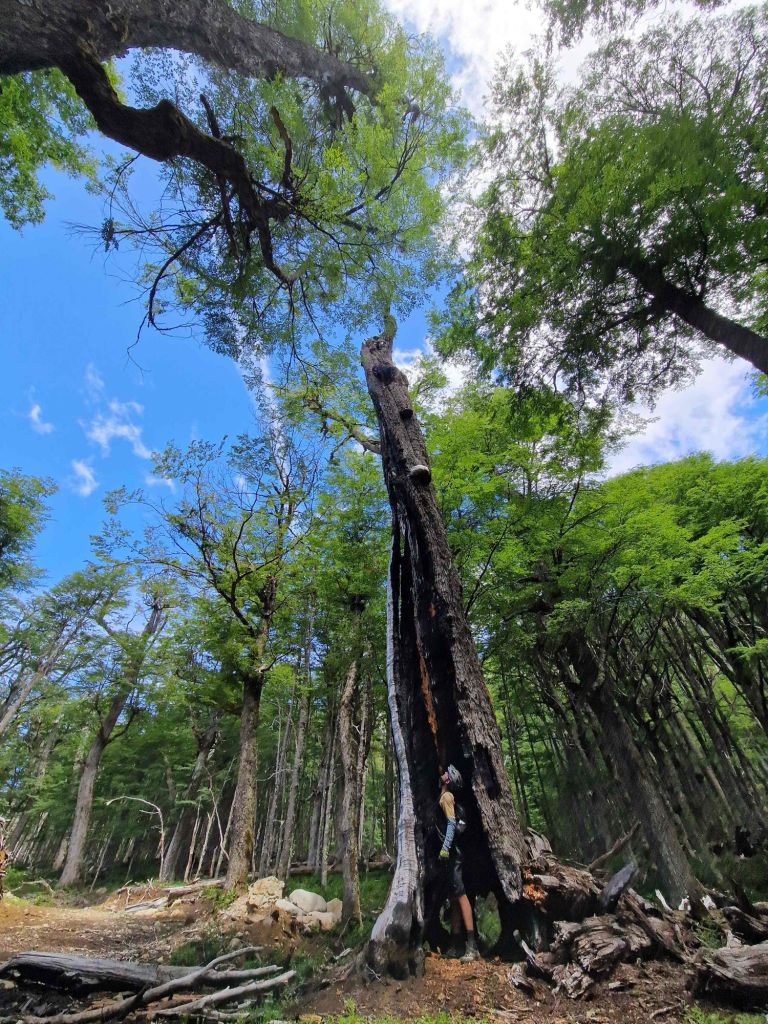
Our final morning on the trail was glorious – it was a whizzy, dusty track through old growth woodlands filled with huge Southern Beech trees. It was a forestry wonderland. It was just what we needed as Ted’s back had not been playing ball. He had suffered a particularly “unbearable” spasm the night before, so he was now being overly cautious. We took our time and enjoyed the final descent into the village of Lago Verde, lapping up the warmth of the morning sun. We rolled straight to the well stocked supermarket to replenish our supplies and fill our tummies.
The final part of this trail then took us out of Lago Verde, over Paso Las Pampas, across another remote border post. We would be leaving Chile (again!) and entering back into Argentina (again!). The trail itself was lovely to ride, winding, dusty, flowy doubletrack which we both really enjoyed. Sadly a lot of the forest here had been destroyed by wild fire, the skeletal remnants of the trees chared and blackened.
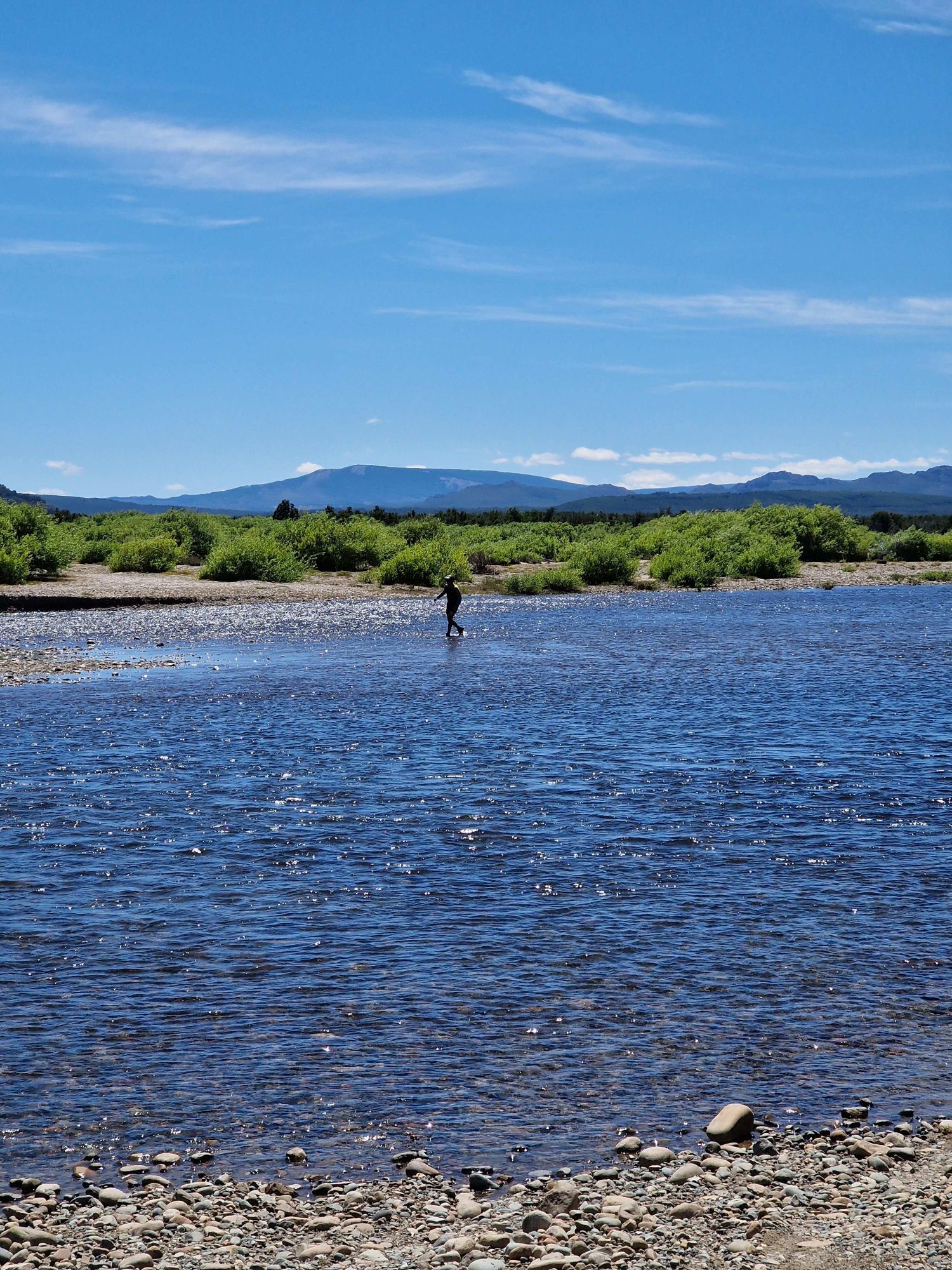
We knew there were two more big rivers to cross and it seemed the final river crossing (just outside the Argentinan border guard post) had a real reputation. We had already heard a lot about it from everyone we mentioned it to. We’d been told by locals, the border guards, and Andrey as well as having read in other cyclists blogs that the final river crossing could be chest deep (or more!). Everyone had said that crossing the river early in the morning was our best bet – so obviously we arrived at late lunchtime, not ideal! But as we approached, it really didn’t look too bad, so much so that I wasn’t convinced this was Rio Pico (the river everyone had been talking about). It was only knee deep at worst and really not that fast flowing. Having learnt our lessons over the last few days we pre-walked the route (with boots on, obvs!), took all luggage off the bikes, and even though we could have managed one bike each, we took the sensible approach of both of us to one bike at once. It meant we crossed the river a total of 8 times to get everything across. But we’d done it – It felt like we’d just passed our final exams in river crossing, Ted with an A+ and me with an A (could have faffed a little less!) As we rolled into the Argentinan border post we couldn’t quite believe our luck at the river water levels being so low, even the friendly border guard was surprised – so thank you Pachamama (Mother Earth here in South America).

We arrived into the village of Las Pampas (also known as Doctor Atilio Oscar Viglione – catchy!!) and after a couple of loops around the village being stared at by the locals, we asked some teenage youths in the park (the universal source of reliable advice!) for directions to some accommodation. They kindly walked us to a small unmarked Cabana (a self-contained cabin) which was ours for the night at the pricey sum of £7 (!!) per person. It was the loveliest and cheapest accommodation we’ve had yet and our first bed in over a month. Amazing.
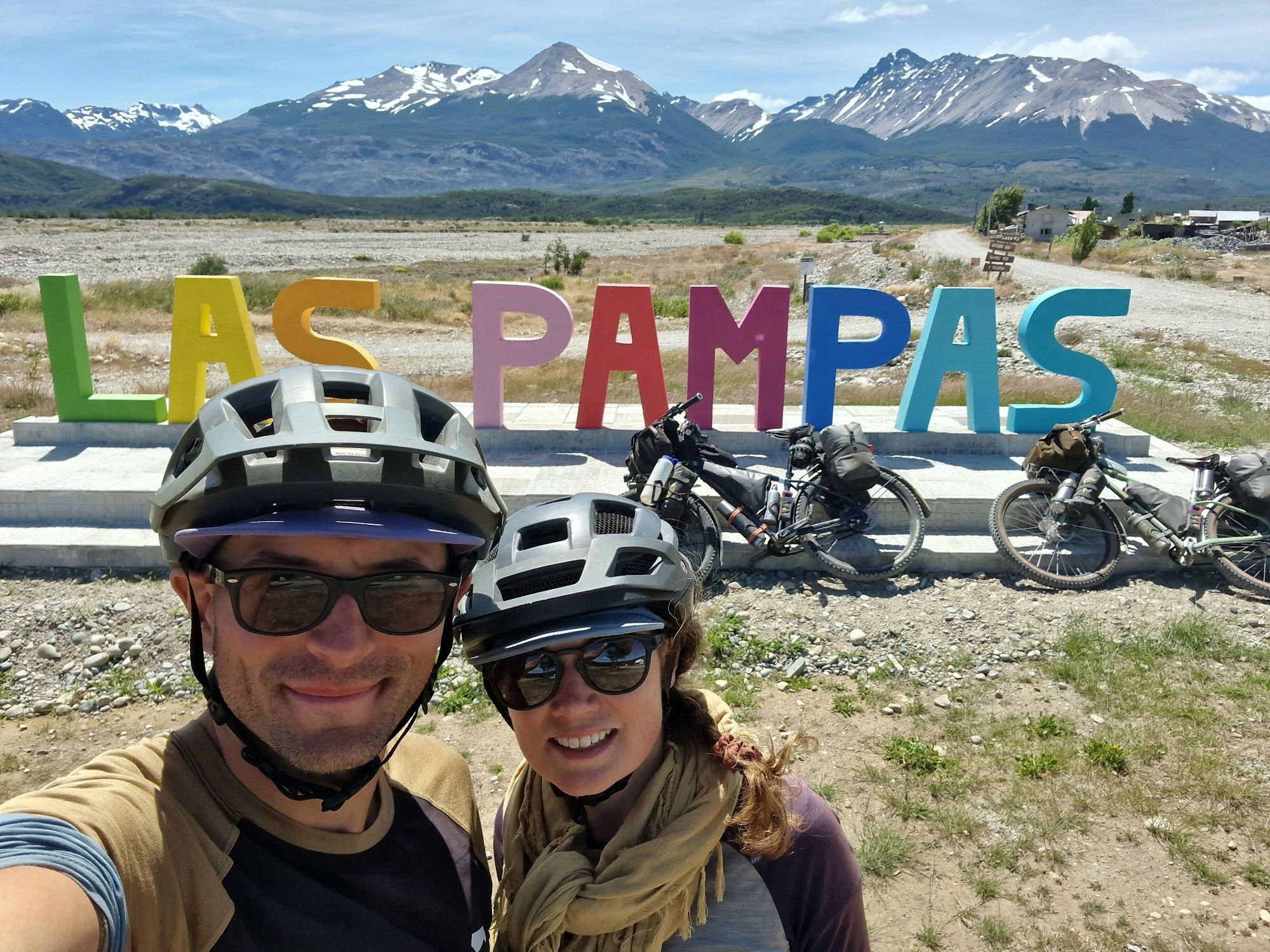
And here, in the remote and sleepy village of Las Pampas is where the lessons in river crossings endeth!
Despite the challenge of this route, and the gnawing feeling that we could have covered more miles and made more progress on the road, leaving the Caraterra Austral to spend time away from the trucks and traffic was absolutely the right choice for us. It reminds us that it’s important to remain true to ourselves on this trip and to do what we enjoy. To spend time slowly moving through nature, to cherish time observing the trees, to appreciate the rough and ready realities of moving through untamed land, to feel each river crossing, each climb and descent because you are made to feel each twist and turn of the landscape, it’s the kind of totally exhausting joy that only true wilderness brings.



 Tumbling Diaries
Leave a reply to romanelouarn Cancel reply