
We had been in Turkiye for only a few days, but we had already had a taste of the kindness of the Turkish people – big smiles and waves, shouts of ‘hello’ and many cups of çay (pronounced like ‘chai’, meaning tea). After a morning of downhill descending and dodging traffic jams of sheep, we made it to the small town of Savsat.

A welcome chance to restock our peanut butter stores, get some vitamins in from fresh fruit and veg, and mentally prepare for the next section of our route (a back-road mountain pass to Artvin). As is now customary on this trip, I stood outside the supermarket watching the bikes and Ted went inside, returning with armfuls of the nutritional food our bodies needed and the obligatory few things our bodies simply wanted. Balancing the goodies on top of the bikes whilst we tried to find space to jam it into our bags, a taxi pulled up behind us, ‘where are you from?’ the driver shouted out of his window, ‘England’ came our reply in unison, then came the inevitable question, ‘çay?’. We kindly accepted, and followed the taxi driver to the taxi rank, at the edge of the central town square.
Savsat was a smart, small market town, with lots of people (mainly well-dressed retired men) milling about, running errands, drinking tea or watching the world go by from a park bench. Our new friend ordered us some tea and it was brought over to the taxi rank from the tea shop opposite, balanced on a silver tray and served to us with flare. The taxi driver was a similar age to us and was very interested in our trip. Through the magic of Google Translate, we shared stories and he told us about life in this small town, which is filled with locals in the winter, but come the summer months, the tourists arrive and the locals all retreat to live in their ‘village’ homes higher up the mountainsides in cooler temperatures. He was excited to tell us how only three weeks earlier, his mountain village home had still been under a metre of snow, but now he had dug it out, and was starting to plant his veggie garden for the season.
Other locals came and went, dipping in and out of our conversation, curious about our two bikes lent against the fence and interested to know where we had come from and how we ended up in their quiet mountain town. Every few minutes our taxi driver friend would ask if we were hungry, and if we wanted to eat. Everytime he mentioned it, we would kindly decline, he had, after all, already very generously bought us tea. The conversation flowed on and again he kept asking if we wanted to eat, insistent that we must be hungry with all the cycling we do. We talked about how we are vegetarian, it blew his mind that we were able to ride our bikes so far without meat to fuel us. Then he really was insistent that we ate, pointing out that one of Turkiye’s national dishes is Kuru fasulye (a dish of rice and beans). Getting up from his seat and telling us to wait a minute he ran off to a restaurant just over the road. A few minutes later he was back, and shortly after, plates of food were delivered to us from the opposite corner of the square, no need for us to move. We were blown away, not only had he bought us tea, but now a delicious lunch too. He didn’t want any contribution from us for either, and there was nothing he wanted from us in return.
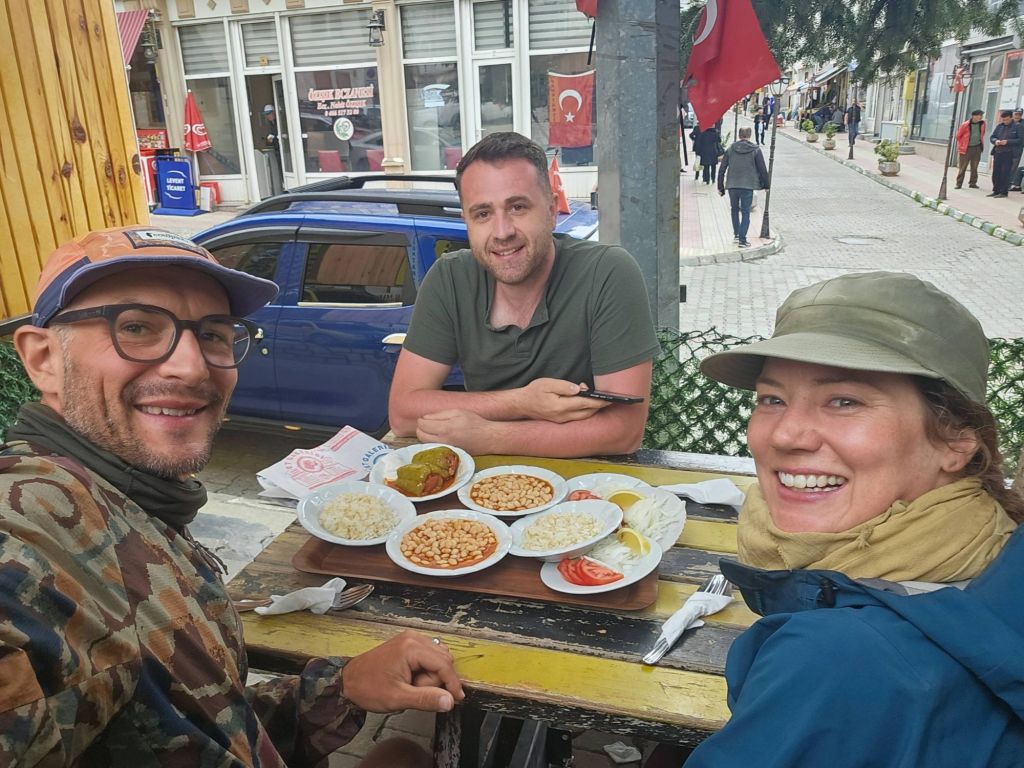
He had to work in his taxi later in the afternoon and as he left and said his goodbyes, he just kept thanking us for the company. He was thanking us. He had generously bought us tea and lunch, and he was thanking us, we couldn’t quite believe it. Imagine cycling into a town you don’t know in the UK and being bought tea and lunch by a complete stranger, and them being overjoyed by the opportunity to just sit and chat to you, it’s unheard of!!
Whilst waiting for the rain to pass we continued sitting in the shelter by the town square, watching all the old men watch the world go by – a totally acceptable way to pass the day here. I bought a loaf of bread from the bakery, and after I had paid the lady gave me a smile and threw a couple of extra bread rolls into the bag, again, more generosity. Finally the rain had eased and we set off on the next section of our journey, amazed by the incredible people of this one small mountain town.
Just out of town and we turned up a steep, bumpy road. It instantly became the rural lane the maps had suggested it would be. I enjoyed the small wave of relief that washed over me; no matter how hard you scower the maps, you never really quite know what you’ll find until you get there in real life.
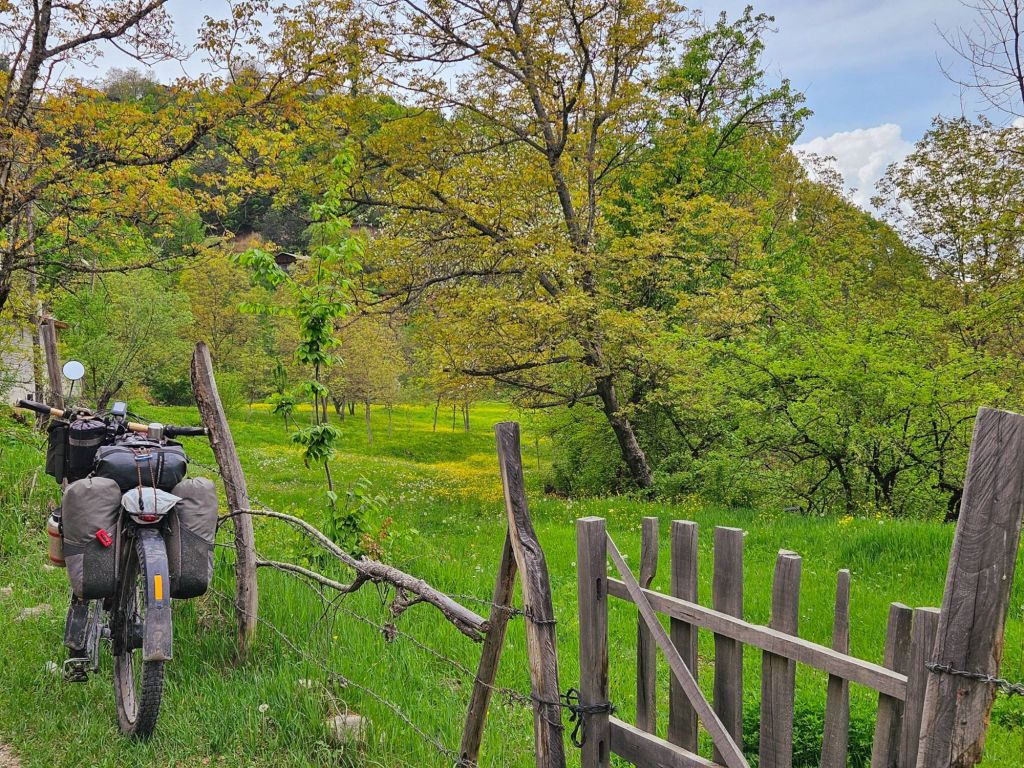
The houses soon petered out. The landscape felt more mountainous the more we climbed. The river fell away into a deep ravine to our left. The dense, lush green trees to our right kept us contained to the road. But the higher we climbed the less and less it felt like a road. Our predictable companion of afternoon storms arrived like clockwork around 4pm. We took shelter under the eaves of a small mosque that had appeared around the corner at just the right moment in time. We stood in silence. Hoods pulled down low, backs against the cool stone wall, we watched the water drip from the corrugated metal roof, noticing the patterns created in the stairrods of rain, it looked like an artists reimagining of it, it was peaceful, hypnotic. In that moment, I recalled how lucky we are to have the time to just stand and stare, to appreciate joy of observation.
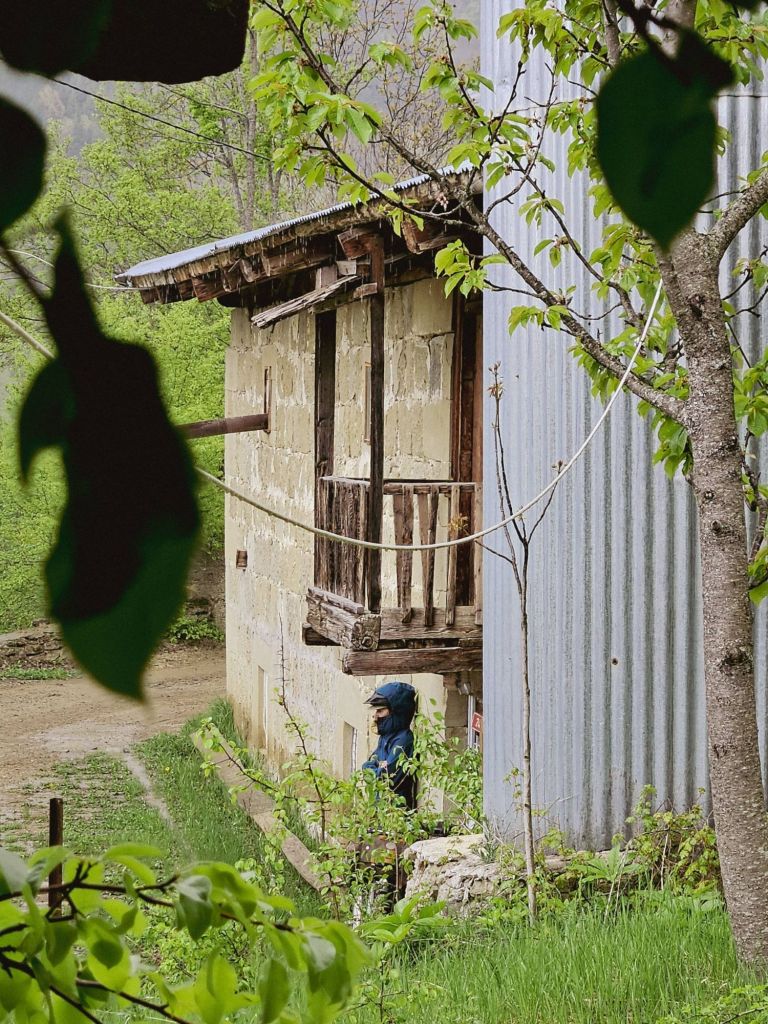
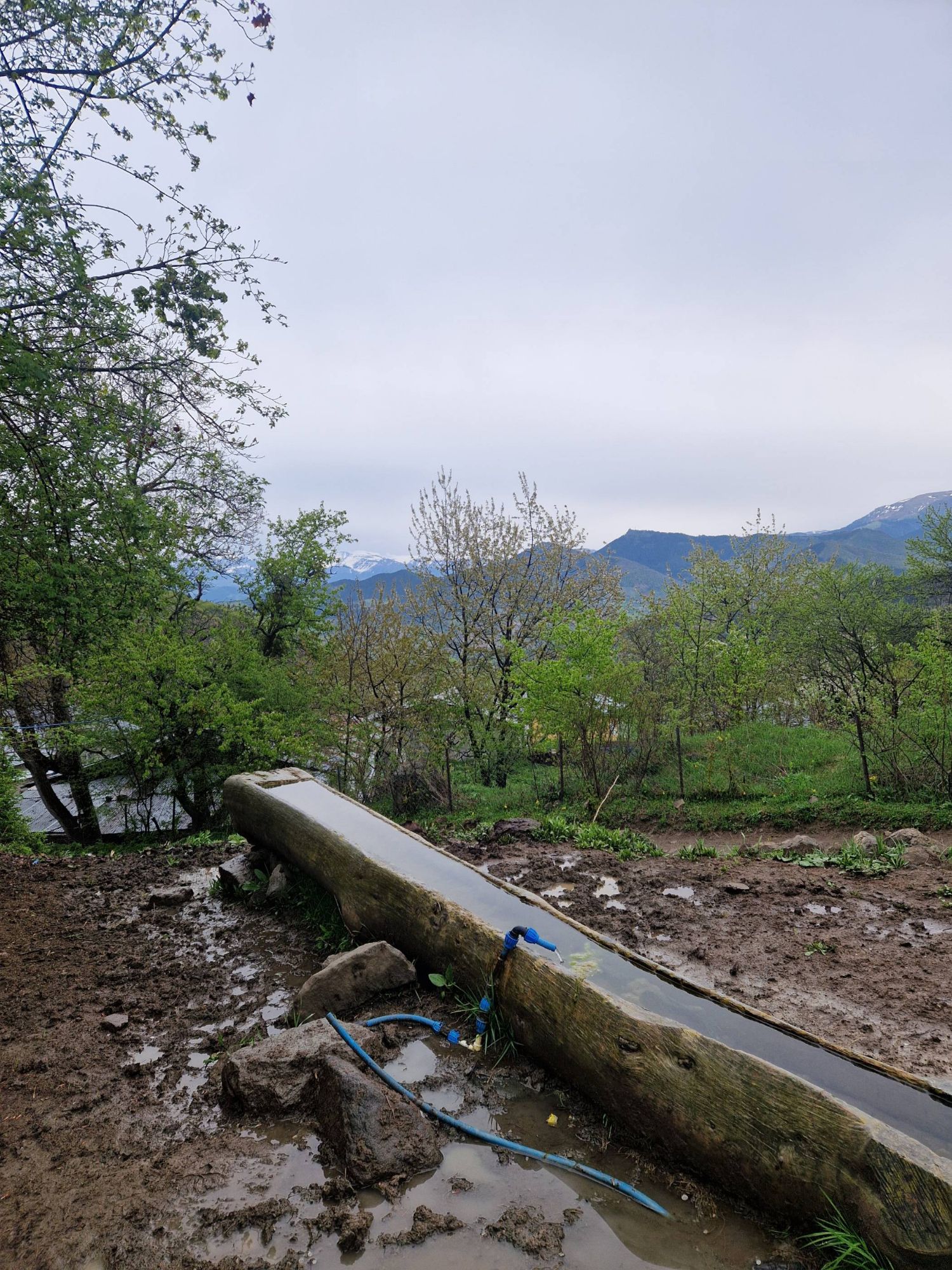
After an hour or so, the worst of the storm had passed, the rain became a gentle patter. We rode on. The stone road ended just beyond the mosque, the surface becoming gravelly mud, the gradient quickly ramping up. It was sticky, but just about rideable in the easiest granny gear. I engaged my arms, but kept my elbows loose, ready to angle my front wheel to cut through the thickening mud. I pushed my weight into my seat tensing what is left of my core muscles and sent pressure through my toes, trying to counter-balance the weight and stop the back wheel spinning. It’s a technique I’ve learnt over the years of mountain biking and now comes as second nature after all these months on the heavy bike, but it never gets easier, especially as the gradient ramps up again. I suprise myself and make it to the water trough marked on the map. It’s a dug out tree trunk with a hosepipe in the middle and a wooden stopper acting as a plug in one end. The thick, water logged mud and puddles surrounding the whole thing are a clear giveaway that this trough is mainly used by animals, but the globules of green floating algae are the main giveaway and make the whole thing very unappealing. At least it doesn’t have a dead flamingo in it, we survived that in South America, so this’ll be fine – I tell myself. We disconnect the water pipe and refill our water bottles.
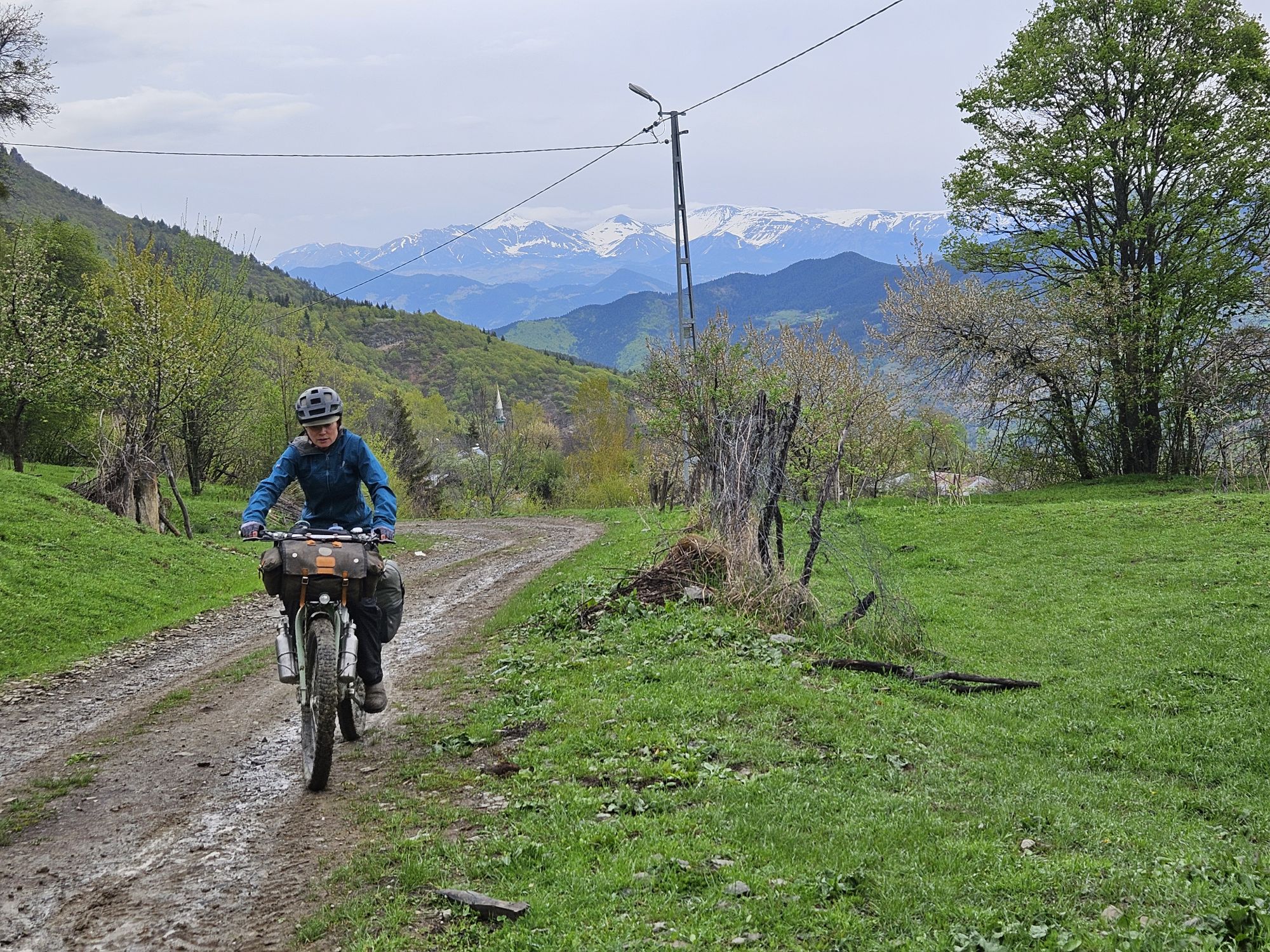
My wheels started skipping the moment we left the water trough. I told myself it was just the waterlogged ground around it, churned up by the animals. But it wasn’t. We rounded another bend and the gradient kicked up again, just as thick with mud as the last one was. Every few pedal rotations my back wheel slipped, the tyre unable to gain traction, my momentum stumbling and what little speed I had stalled, threatening to topple the heavy bike – and me – headfirst into the mud. Progress became slow, the best I could manage was a crawling speed, and even that was so much effort. Ted was sliding across the lane in front of me, somehow managing to stylishly ride it out and stay upright. The mud was now turning sticky, covering everything it touched. The skidding of the back wheel became more frequent, every other pedal stroke soon became a skid.
One more hairpin bend in the road and we were met by a fierce Kangal sheepdog. These dogs are bred for protecting their flocks, their ears are cropped short and they wear huge spiked collars to prevent injury in fights with wolves, bears and other dogs. They are intimidating even to look at in a photo, and even before entering Turkiye we were fully aware they were likely to be the biggest threat to two, weary, mud-splattered cyclists. So to meet one here, face-to-face, in their territory, in amongst their animals, on a bicycle without the ability to ride away fast was pretty terrifying. Their bark was pure aggression, it made my spine tingle and the hairs on the back of my neck stand on end. The snarling teeth tapped into a fear that felt deeply primal, ingrained within us as humans over the centuries. We stopped in our tracks; unable to move.
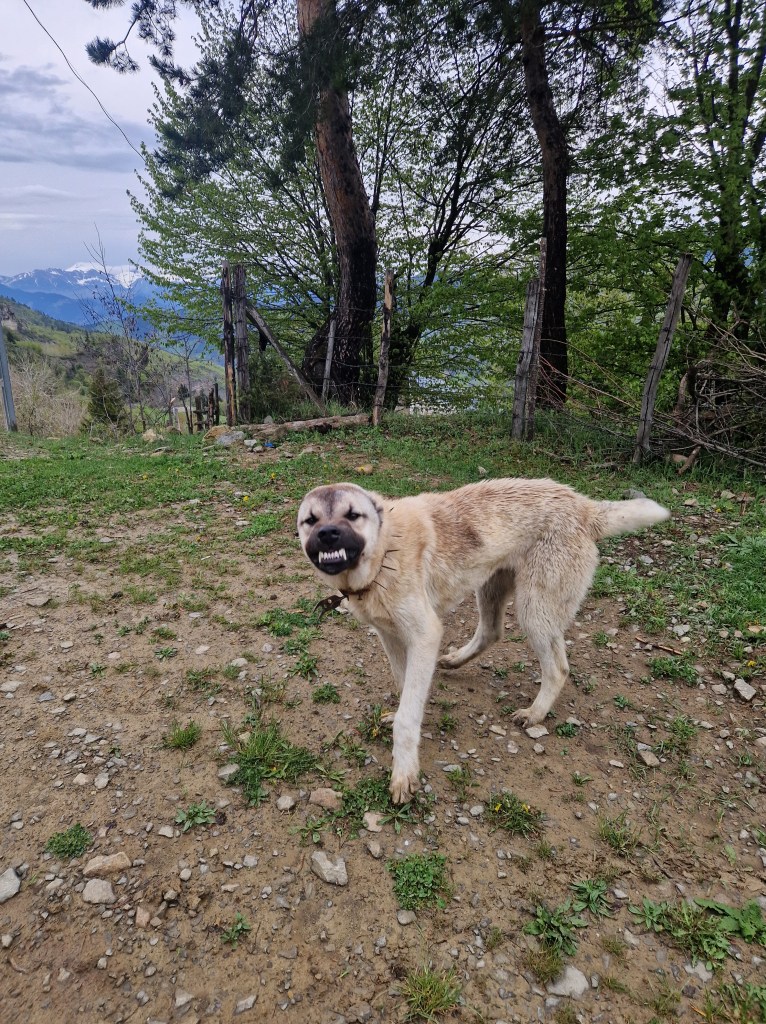
Just as soon as I had taken my foot off the pedal to face my fate with the Kangal, the call and whistle of a shepherd rang out. The beast was instantly domesticated, backing away to his master’s side without so much as a moments thought. I dared to turn my eyes away from the dog and raise them in the direction of the whistle. A shepherdess came into view behind the cows. I was as surprised to see her, as she was to see me. I hadn’t seen any other women working as shepherds in Turkiye, and I’m pretty sure she hadn’t seen a female travelling cyclist before, especially not on this remote mountain mud road to nowhere. She was much younger than her weathered skin suggested, with sparkling eyes and a gentle nature. There was a split second of shock that crossed her face before her smile melted it away. Perplexed and almost laughing at me she asked where we were going and what we were doing. Her emotion changed to concern the moment we mentioned we were heading up over the mountains, on the back road route to Artvin. She warned of worsening muddy conditions and was adamant that we should turn around, that we could not make it beyond the next bend. On seeing our insistence that we wanted to try, she humoured us and took out her mobile to call ahead to some shepherds camped on the plateau at the top, asking them to welcome us if we did make it that far. On noticing her cows had wandered off down the mountain side she made a swift move to chase them, her last words being ‘if you get into trouble come via the house’. Such a small interaction, but one so full of thought and care towards us as strange outsiders from another land.

Her words lingering in my ears, we pushed on. It soon became a physical push as well as a metaphorical one, as the mud became unrideable. With each meter of movement forward the mud became slicker and stickier. The mud was no longer flicking off the wheels with each rotation, but instead was adding layer upon layer of mud to our tyres. Soon enough, our boots too were a couple of inches thick with the brown gloop, the heavily lugged soles doing nothing to combat the slick clay. Everything was covered in it, our bags our bikes, our clothes but we could just about see the top it was less than 100m of climbing away. We heaved and pushed, one breath at a time. It started to feel futile, each footstep was leading to us backsliding to where we came, or side-sliding into the rut we had been trying to steer clear of. Then the wheels started to fail, they were so clogged up that the sole purpose of rotation became beyond them. The firstfuls of mud became jammed in the mudguards and no matter how many times we used a stick to dig the mudguards free, it would be full again on the next turn. Then the brakes started to fail, the calipers unable to move thanks to the mud stuck to the disks and pads.
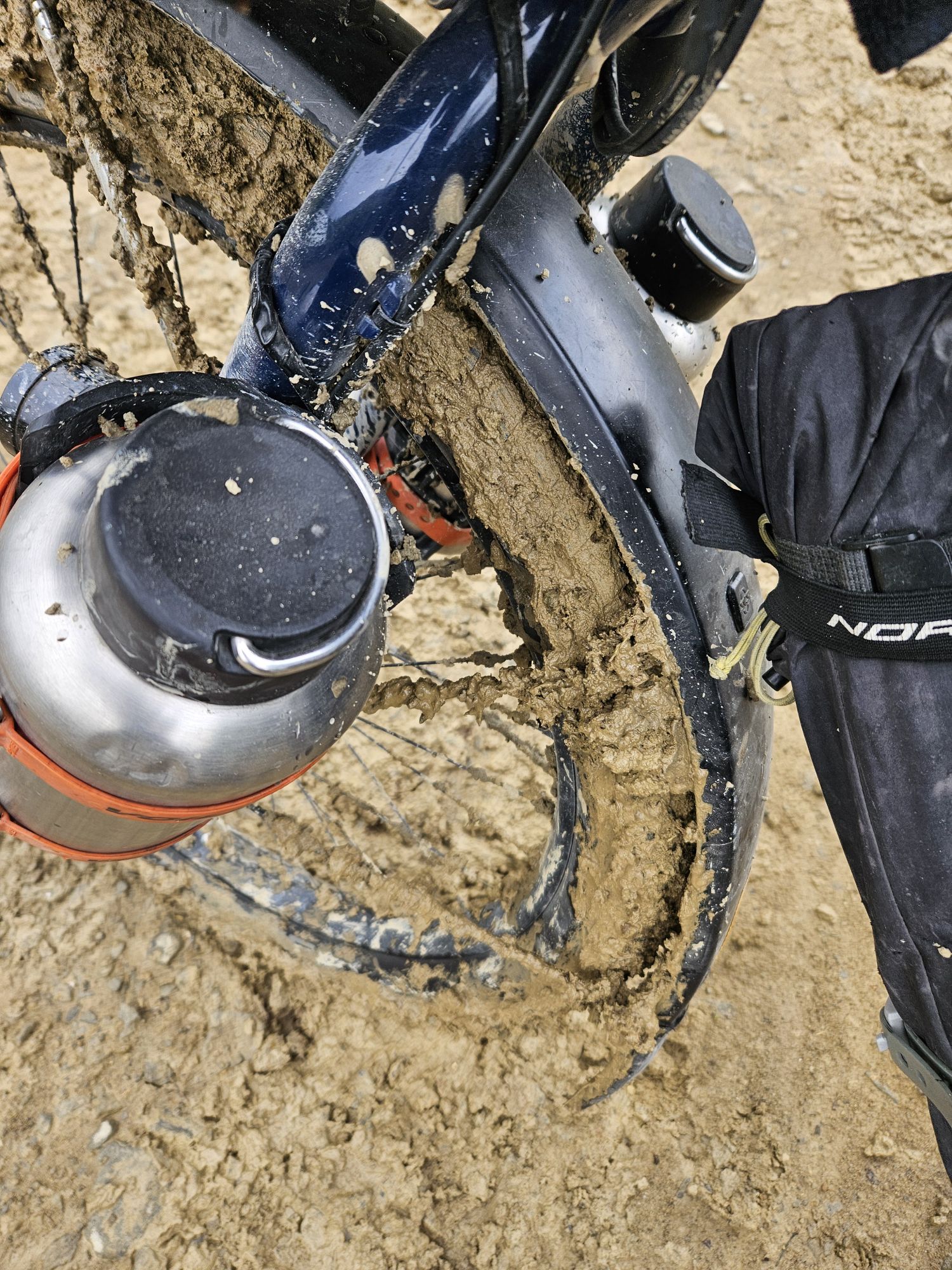

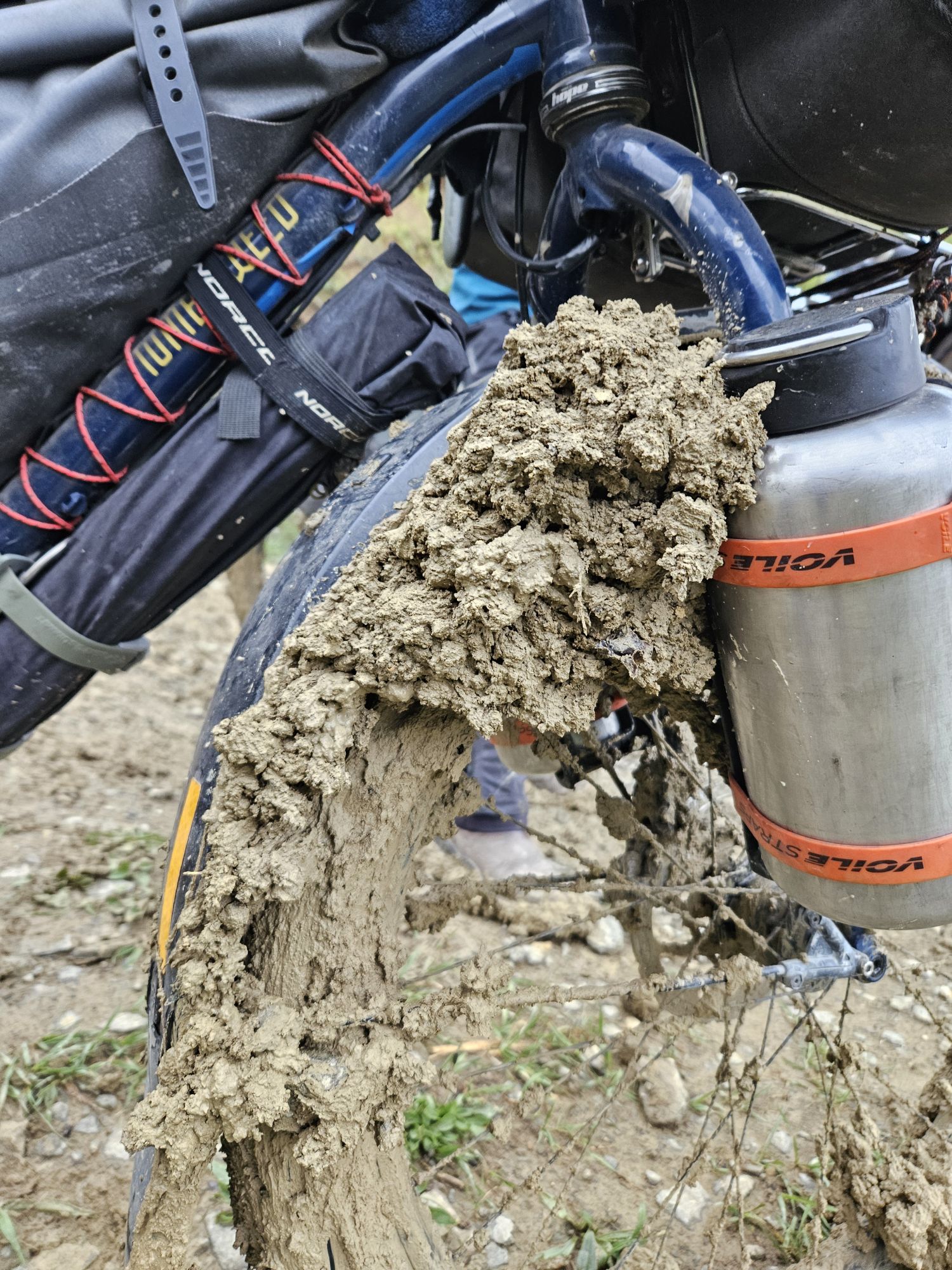
Moving the heavy bikes when we have working wheels is hard enough, and it became totally impossible the moment the wheels and brakes failed, especially with a ton weight of mud stuck to our shoes. It felt like a much less glamorous and ungraceful version of ice-skating. But we didn’t want to give up – we could see the top – we were so close. Ted became so frustrated, every step and heave of the bike was accompanied by a roar and a shout, tearing through the peaceful countryside. One more step and his bike started sliding, pulling him sideways too. He called for help, but I also couldn’t move, my bike was too heavy to push or pull, the brakes were wedged on and the wheels were no longer turning. I couldn’t even put the bike down without risking me sliding aswell or damaging the bike. We were stuck. We stood in silence. Unable to move. Letting the situation sink in. The silence felt so loud. I unwillingly voiced what both of us knew – the only possibility was to turn around. We had to admit it, we had been defeated by the adventure cyclists nemesis – peanut butter mud.
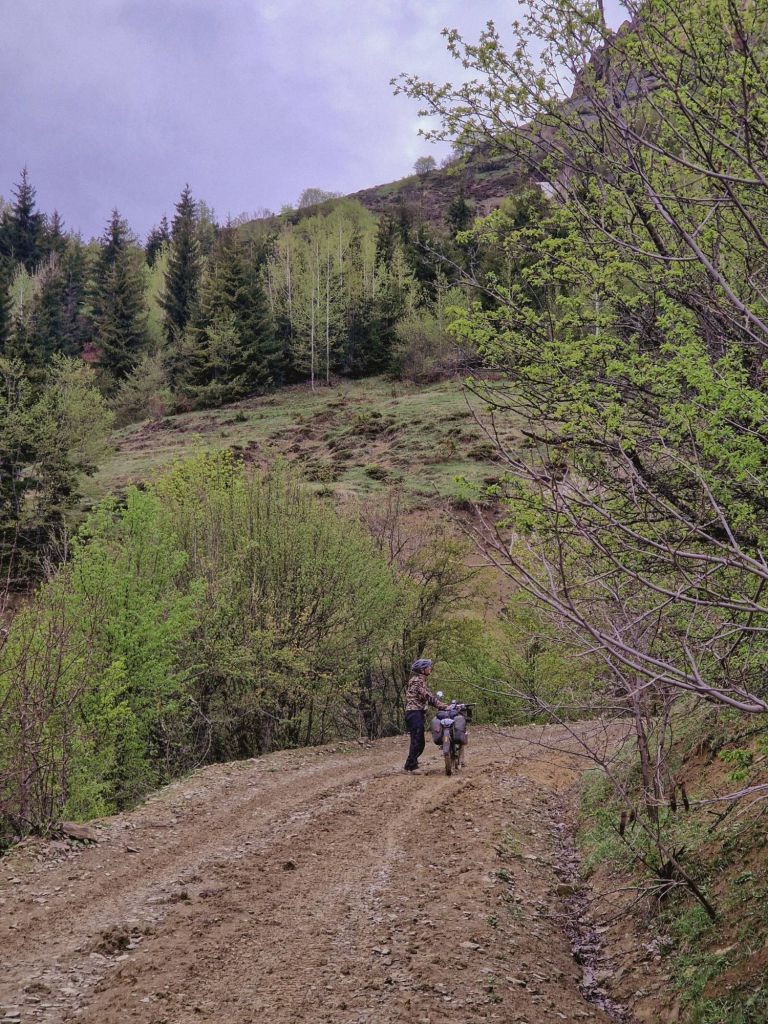
What I had envisaged as a whizz back down, with mud flying off the wheels and falling from the frame didn’t really turn out that way. The mud was now even stickier, thanks to it slightly drying out, so we collected more mud than the downhill momentum flung off. We had to stop every few minutes to try and use a stick to dig the wheels free. The chains now locked up too, so the pedals were no longer spinning. As the last of the light of day started to dwindle, and our eyes struggled with depth perception, the way they always do in the twilight, we also realised we needed to get this mud off our bikes before it dried and set like concrete. Having dried clay wedged into all the moving parts of our bikes would have been pretty disastrous, maybe even fatal, for our two wheeled friends.
Descend, stop, dig out the mud, descend, stop, dig out the mud. An hour later, it was dark, but in the light of our head torches we managed to find a small waterfall flowing off the hillside and under the road. With a bit of maneuvering we managed to wedge and lift one bike at a time under the water. The force of the water alone wasn’t enough to remove the mud, so we had to get stuck in – quite literally! So there we were, in the dark, crouched in a freezing cold stream, basically in a ditch by the side of the road, balancing a bike at chest height in the small waterfall, digging and picking the sticky clay off everything, hands freezing, fingernails full of mud, clothes and boots soaked, faces splattered with mud – who says this trip isn’t traveling in style!?! If I’d had any extra energy, I would have laughed, but I didn’t. Everything I had was already spent, and even after repeating the whole process for the second bike, we still had to find somewhere to sleep, set up camp and make dinner before we could even consider sleep. But if this trip has taught us anything, it’s that in situations like this, you just have to keep going and do what needs to be done. So we did.
The following morning, we mustered every ounce of our exhausted strength to stand washing the last of the mud from our fingernails at a village water fountain, a small head popped over the wall behind us, watching with curiosity before asking if we wanted tea. We kindly declined, being terribly British and not wanting to make a fuss. The lady disappeared back behind the wall, and we continued cleaning our mud-stained hands, and dirt splattered clothes. But a few moments later, we heard again ‘çay çay’, again we thanked the lady for her offer but, maintained our stand-off-ish Britishness and said no – the lingering exhaustion from the night before, meant that neither of us were in the mood to socialise. She disappeared again. But sure enough a few moments later she was back, this time opening the gate and gesturing for us to pull the bikes into the courtyard. I walked towards her to speak and as I did she gently clasped my hand, not baulking at the dirt dried into the cracks of my skin, leading me to a washroom around the back of the building (which she explained was a mosque for women). This simple act of tenderness and her kindness to strangers made tears prickle in my eyes as I rinsed my face. With no common language between us, she had seen exactly what I needed in that moment. And not only that, when I returned from the washroom, she was presenting a tray of breads, cheese, olives, honey and jam to Ted, plus a mound of wafer biscuits balanced precariously high and insisted I sit as she served us glass-after-glass of tea. Sitting on the bench with our backs against the sun-warmed thick walls of the mosque, sipping our tea and munching our way through the tray of food, we couldn’t find the words to thank her enough or to explain what this really meant to us. Unlike many other wonderful people we’ve met on this trip, she didn’t want to be entertained by our stories of adventure (or misadventure!), she didn’t have endless questions about life in the UK, and she wasn’t telling us all about her family – she didn’t want anything in return for her generosity, there was no expectation of reciprocity, we just sat in companionable silence, listening to the calls of the cuckoo and watching the clouds pass overhead above this peaceful mountain village.
A little while later, when the plates had all been cleared, the tea glasses emptied, it was time to move on. She could clearly sense my reluctance to leave this cocoon of comfort but simply said ‘come now, it’s time for goodbye’ and with that she waved us off and we were gone.
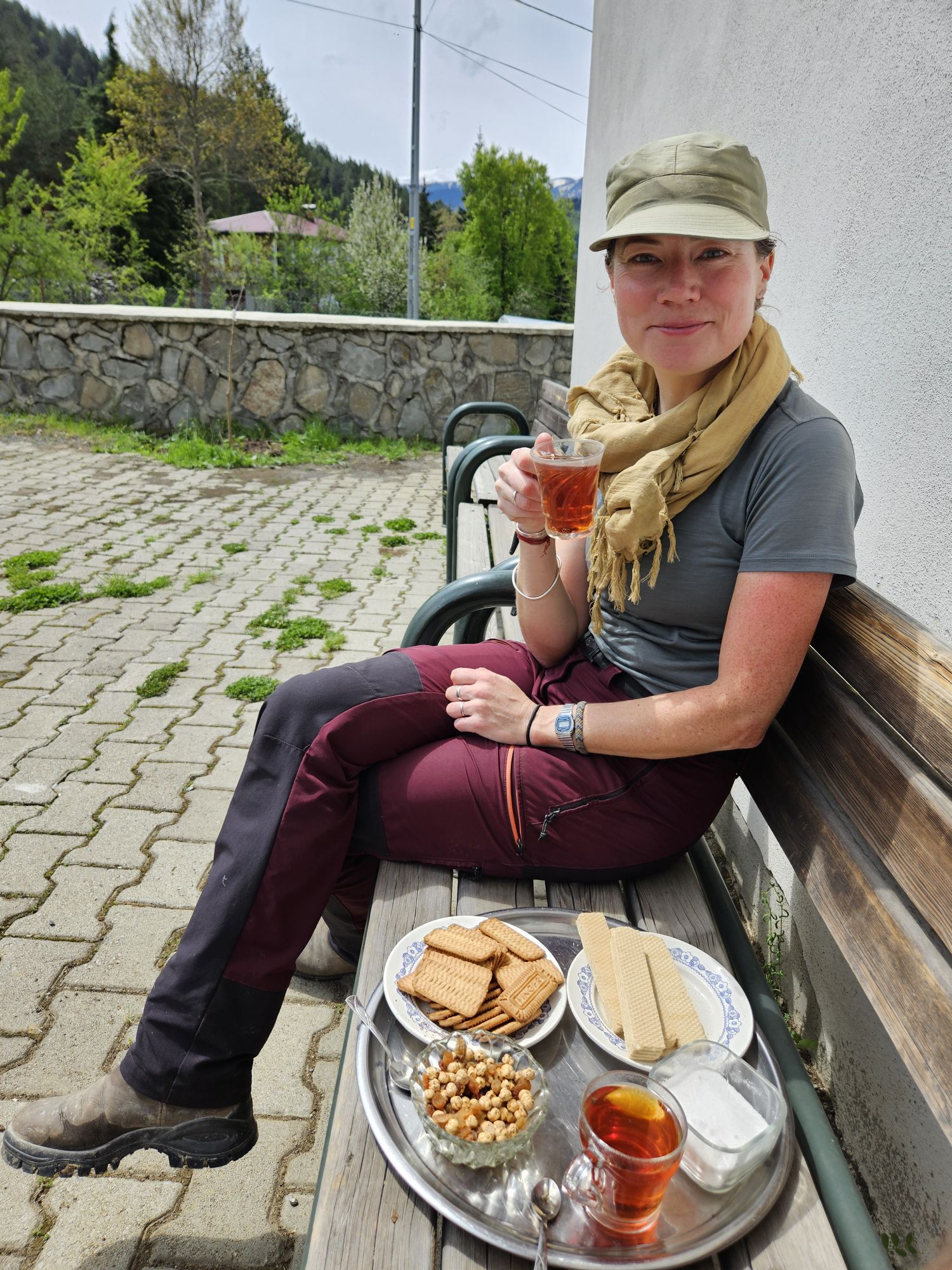

Through the lens of my exhausted eyes and through the fuzzy edges of my tiredness-induced fragility, the whole experience felt like a dream. Even reflecting back on it now, it still feels like a dream – this lady really was an angel, a trail angel, and I didn’t even know her name.
It was only 24 hours since we had first rolled into Savsat, and we were back at the same road junction. The road to the right would take us back into the town, back to our taxi driver friend who had kindly bought us tea and lunch, and the lady at the bakery who gave us the free bread, the road behind us would take us back to the track of the mud fiasco, to the kind shepherdess who had warned us of the conditions, and to our trail angel lady with the tea and biscuits. One road junction, on the outskirts of one small town, in one small corner of Turkiye, filled with so much kindness. So as we took the left hand turn at the junction, we rationalised that surely this generosity must just be the culture in this specific area of Turkiye, but no, the stories go on…..
I could tell you about meeting Ted’s Turkish family for the first time, where everyone is a cousin, and we were welcomed like long lost relatives despite never having met them before, and not being able to speak the language….
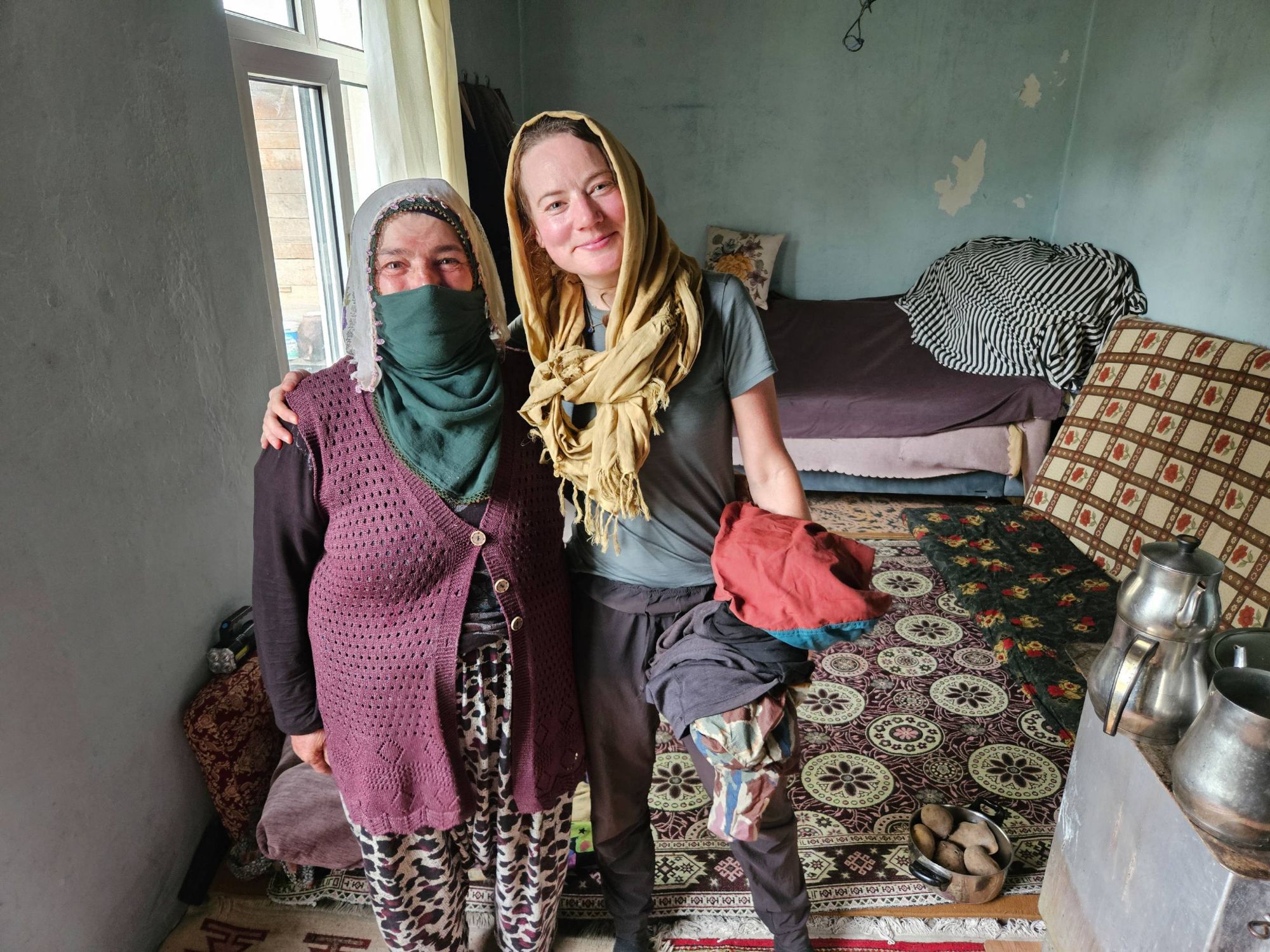
I could tell you about the old farming couple in the mountains who invited us in to shelter from the rain, and who stoked the wood fire, baking both me (as I sat behind the stove) and some fresh bread to have with our tea…
I could tell you about the guys at a tyre garage who shouted, ran after us and waved from the other side of the dual carriageway in the industrial outskirts of a town, to invite us to share some tea with them….
I could tell you about the group of young women who, when I asked if they knew of any accommodation in town, took it upon themselves to call around all the different options for us, negotiating prices and pulling all the strings they could to find us a place to stay for the night….
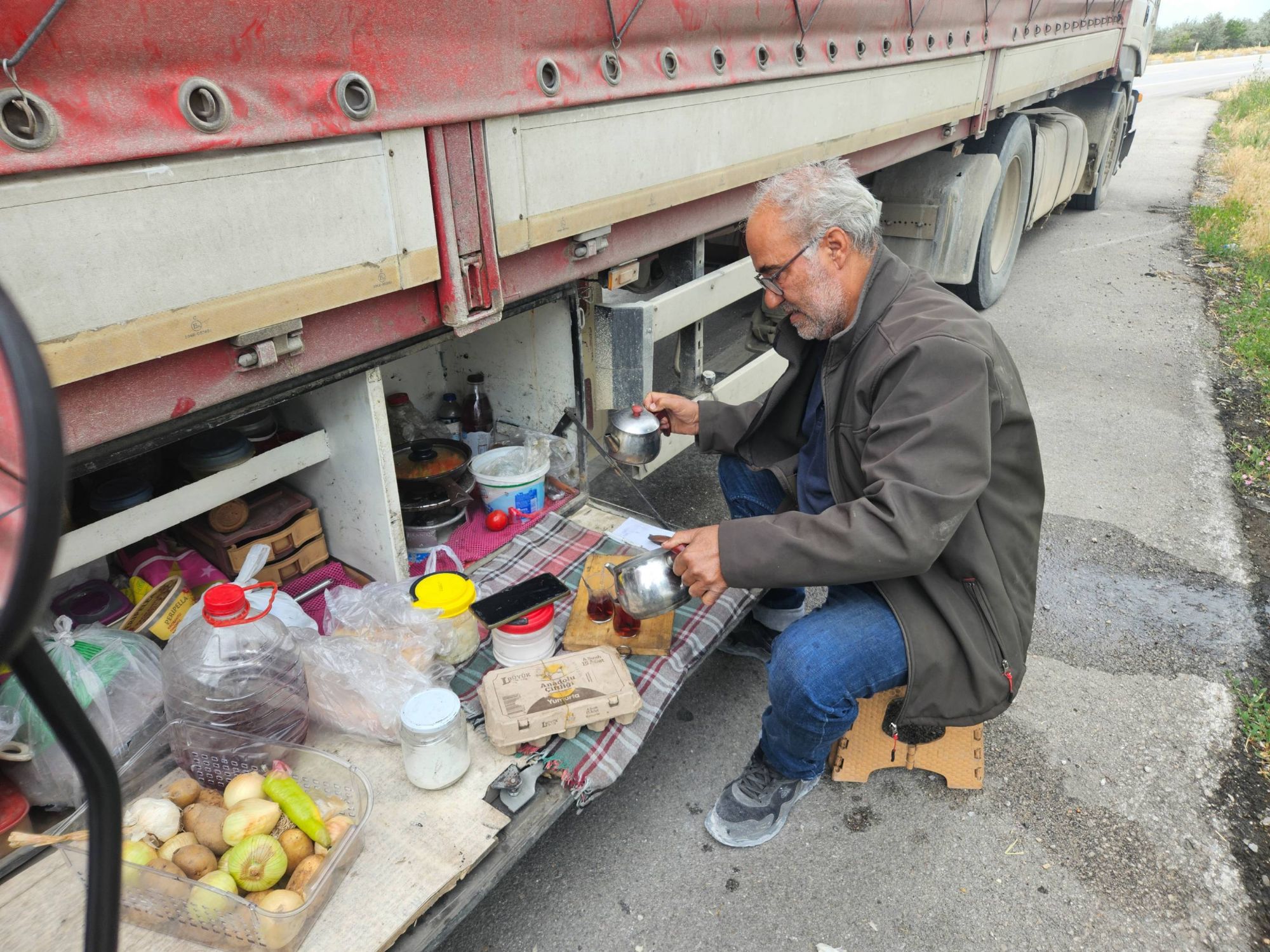
I could tell you about the lorry driver who had just finished cooking his breakfast when we paused alongside him to take a break, so he passed us the pan of eggs and veggies, insistent that we eat it all, saying ‘don’t worry, I will cook some more for myself’…..
I could tell you about the retired Turkish/ French couple who invited us to stay with them one evening when we were filling up our water bottles at the local mosque tap….
I could tell you about the young guys who worked in a village butchers and waited outside a supermarket for us in order to invite us for tea and food at the butchers shop, but on realising we didn’t eat meat went out and bought us some lentil soup from the restaurant down the road…..
I could tell you about the guy who stopped in town to ask if we needed any help and when we asked him if there was a hardware store, he insisted on walking us around the whole town to show us each store….
I could tell you about the guys working at a petrol station who let us sleep in their back store-room, ordered us food and made us endless cups of tea, when we took shelter from yet another storm….
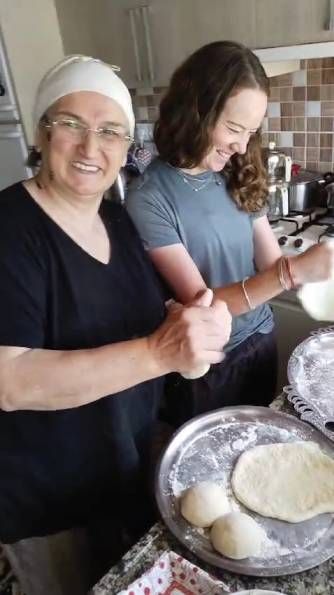
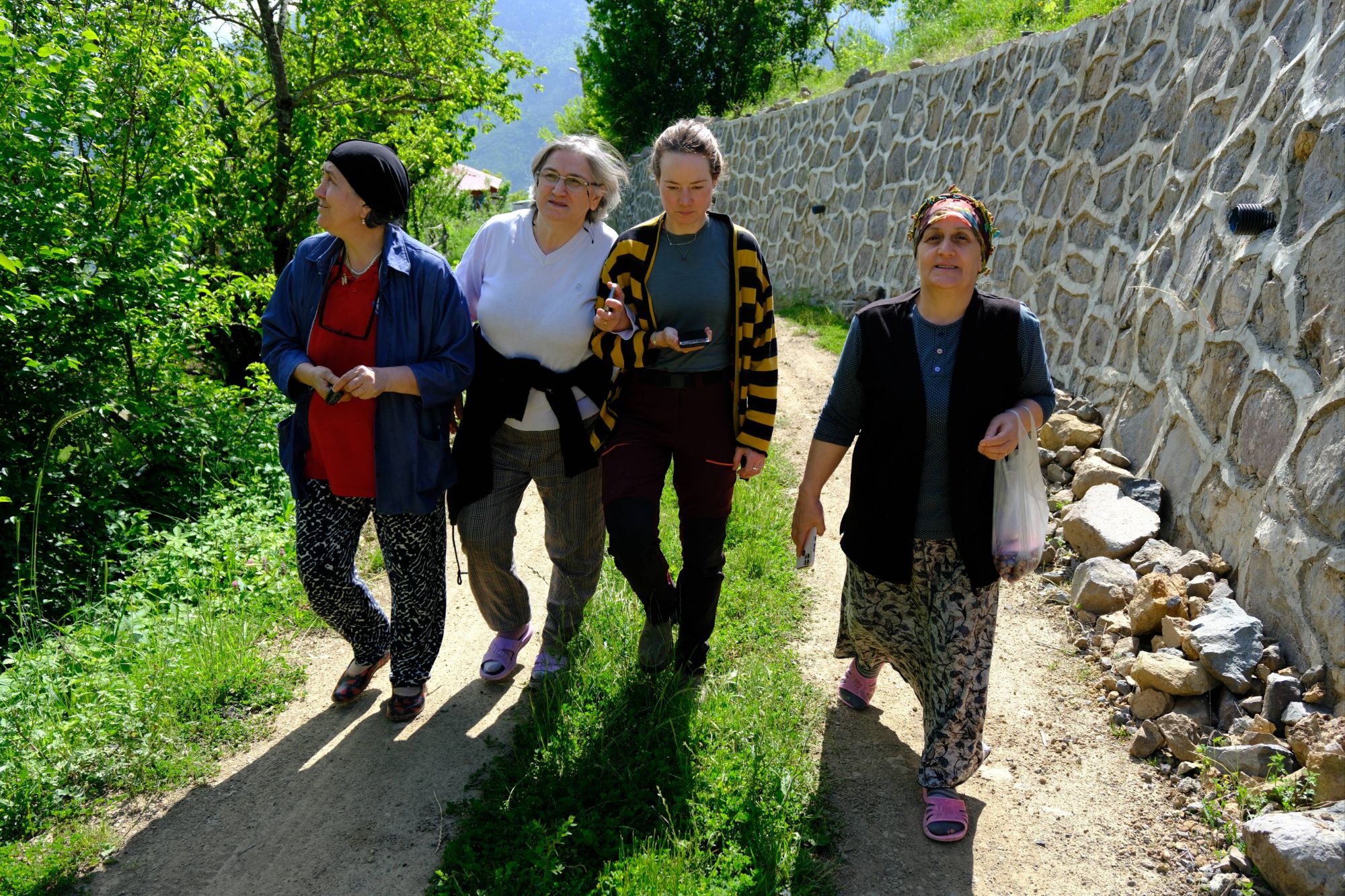


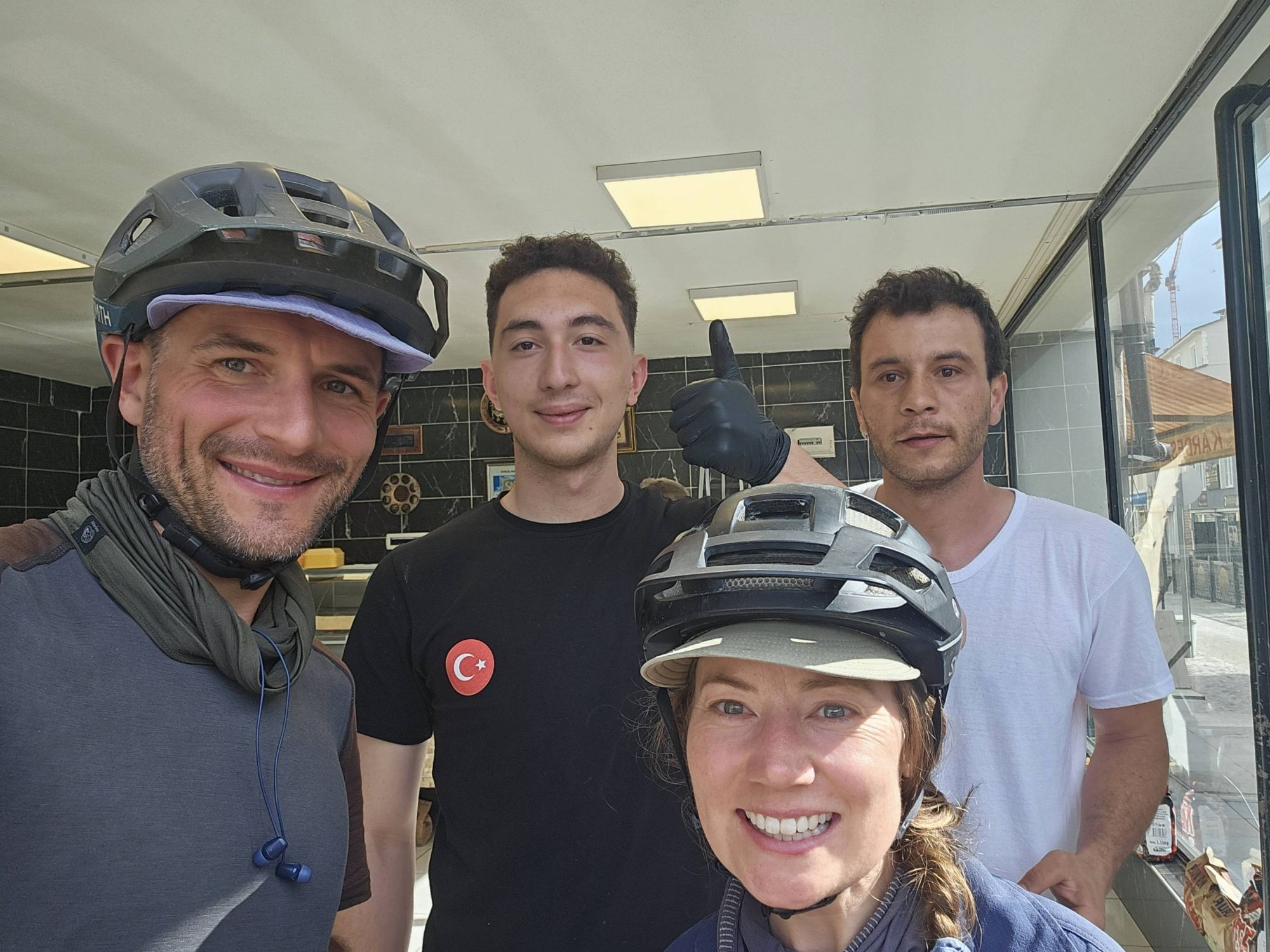
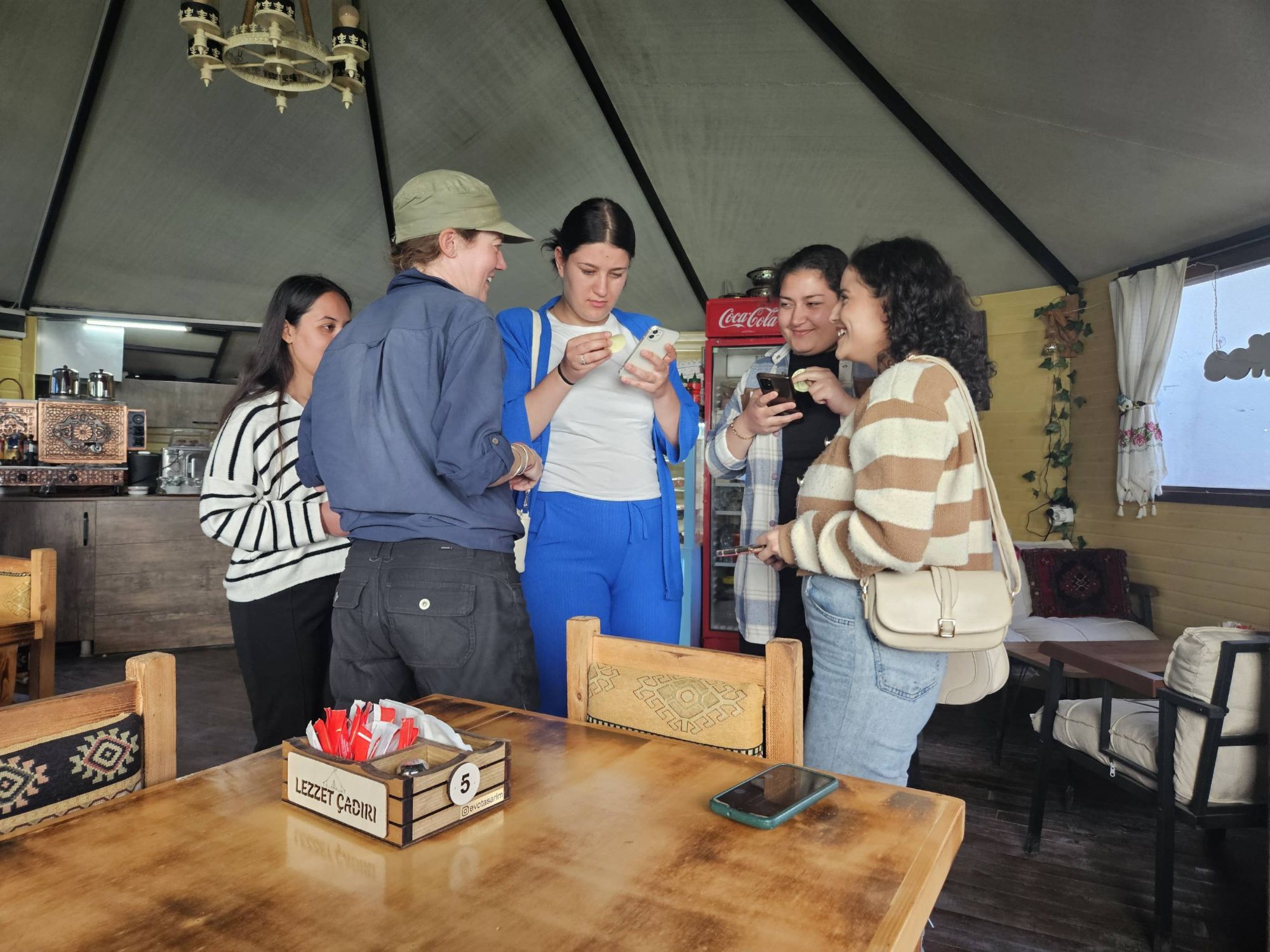


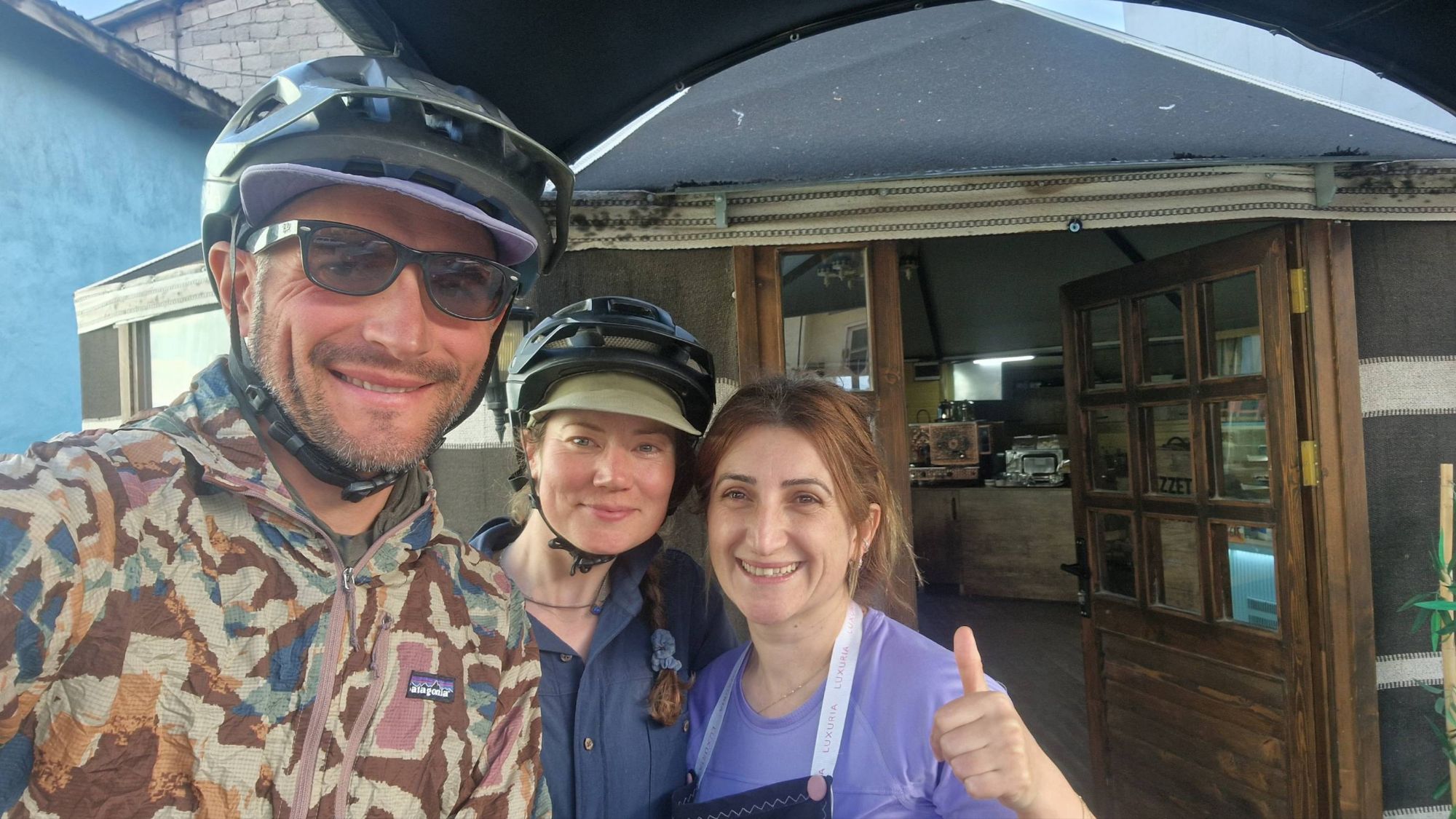
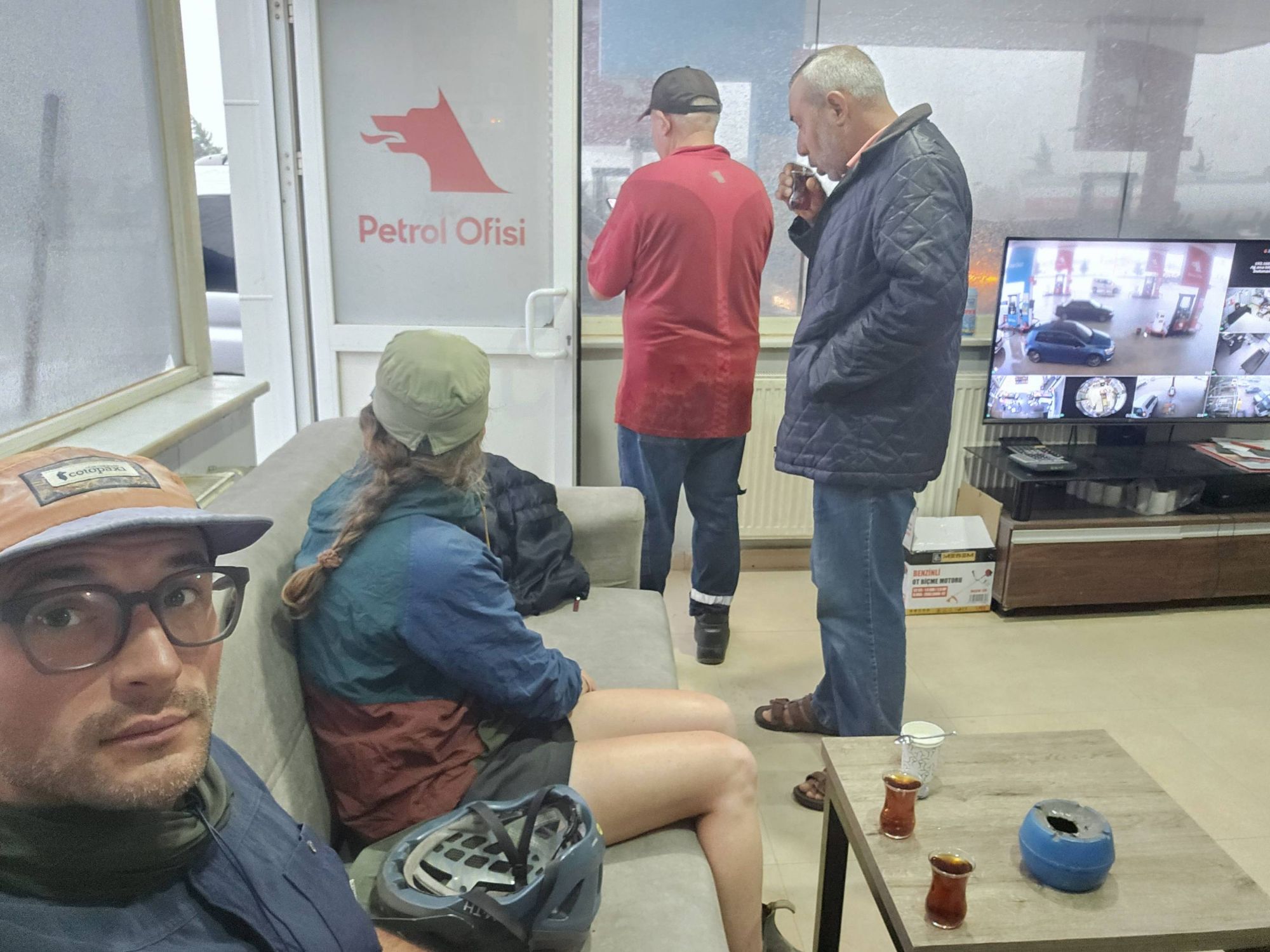
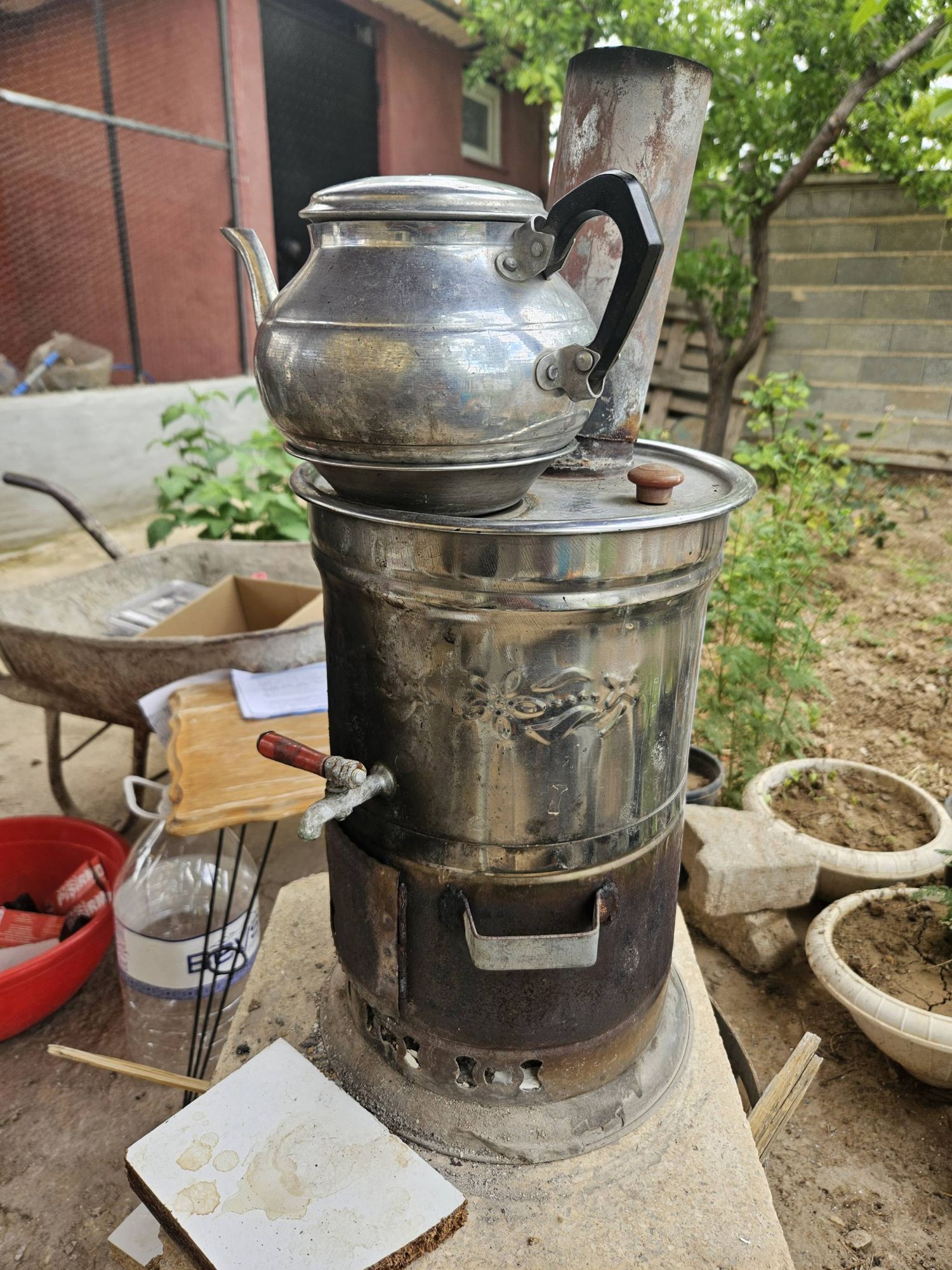
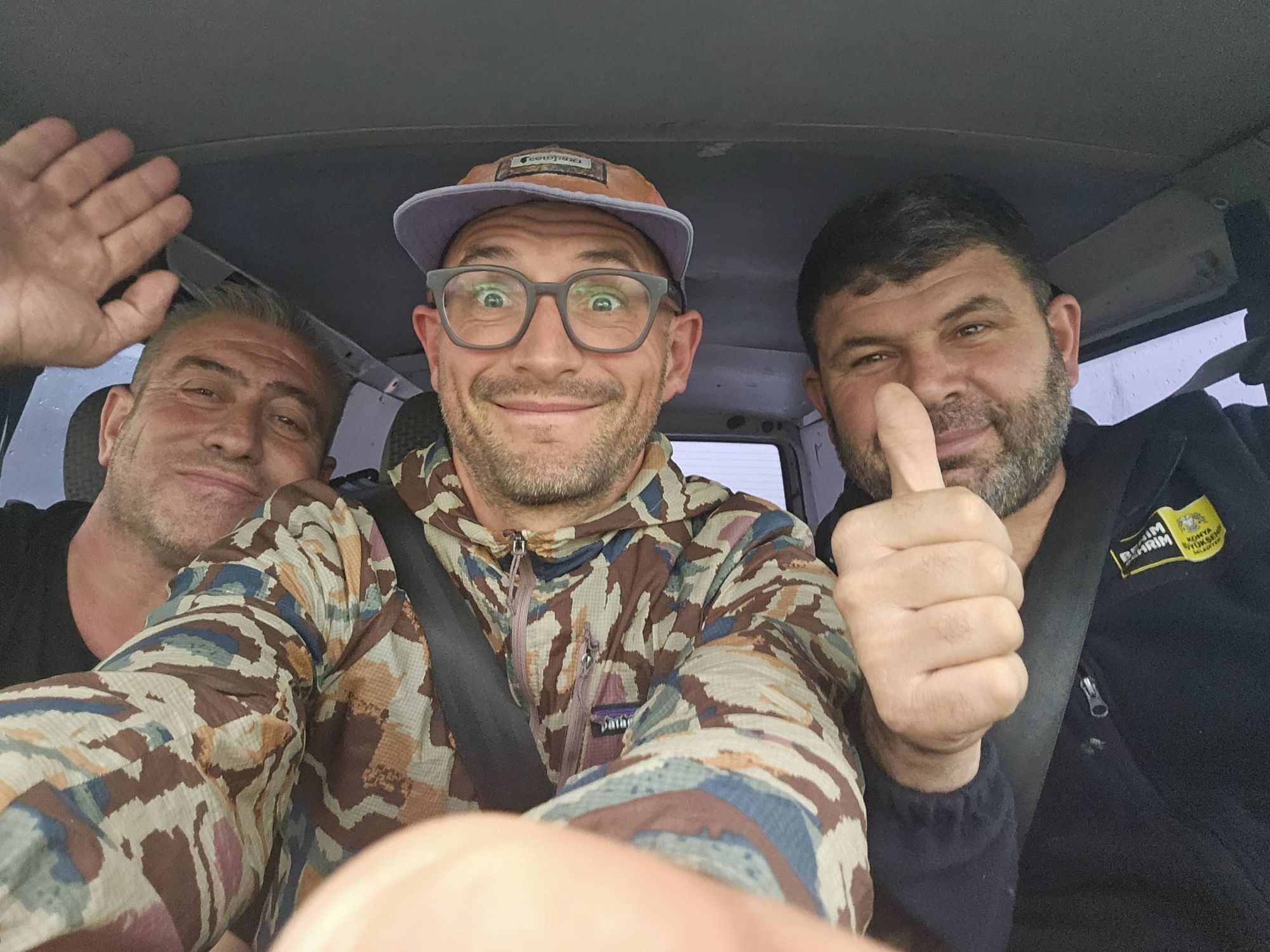
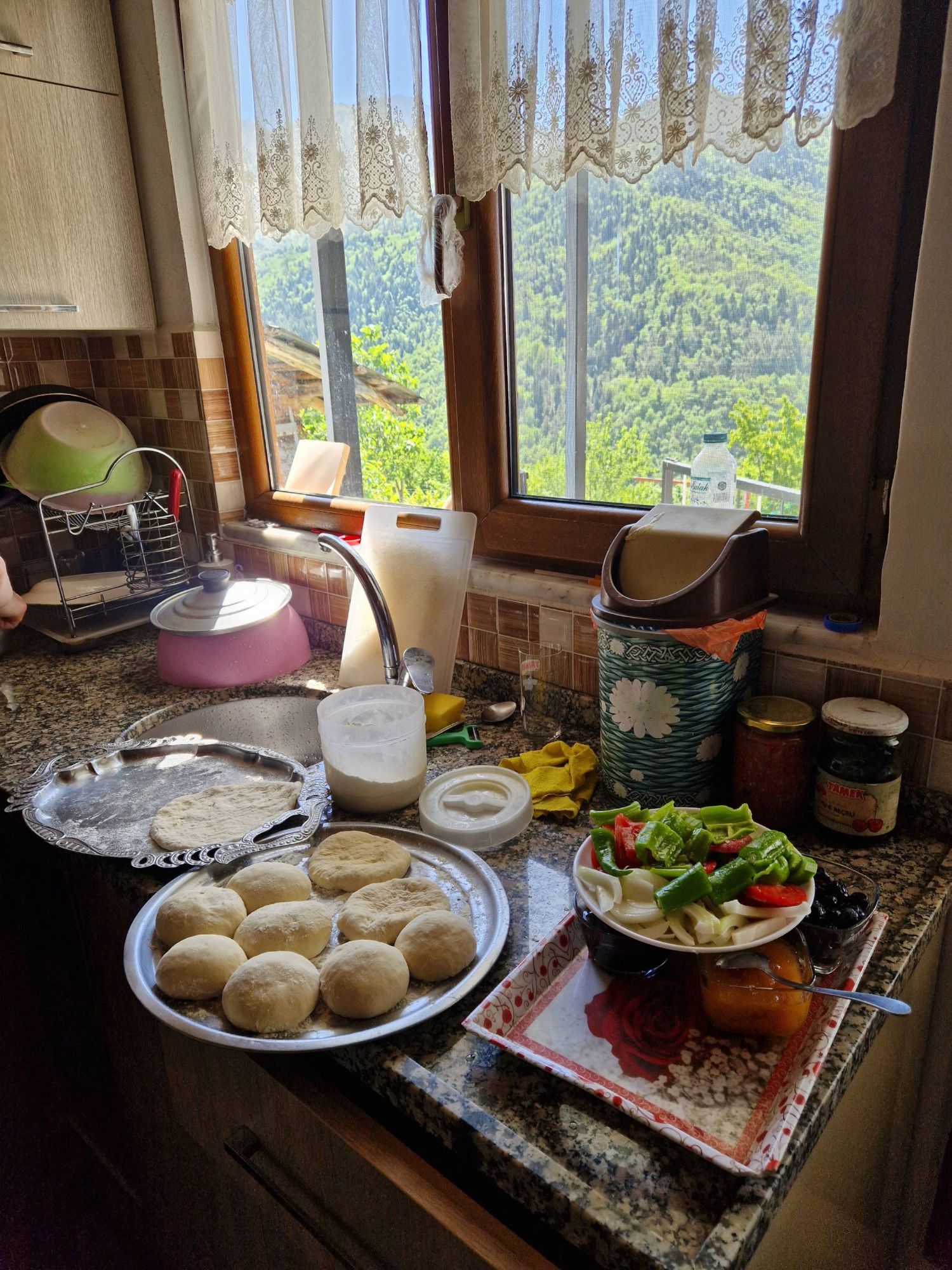
I could tell you about it all, but it’s just too much to fit onto a page, or two or even three. Day-after-day, we were blown away by the warmth, kindness and generosity of the Turkish people that we met. Arms, hearts and homes were thrown open to us time and again, and it’s something that we never once took for granted, and will be forever grateful for. For us, Turkiye has always held a special place in our hearts thanks to Ted’s Dede (Grandad), but having now taken the time to truly experience it for ourselves, we know it is more than just the family connection, it really is an incredible place.

 Tumbling Diaries
Leave a comment