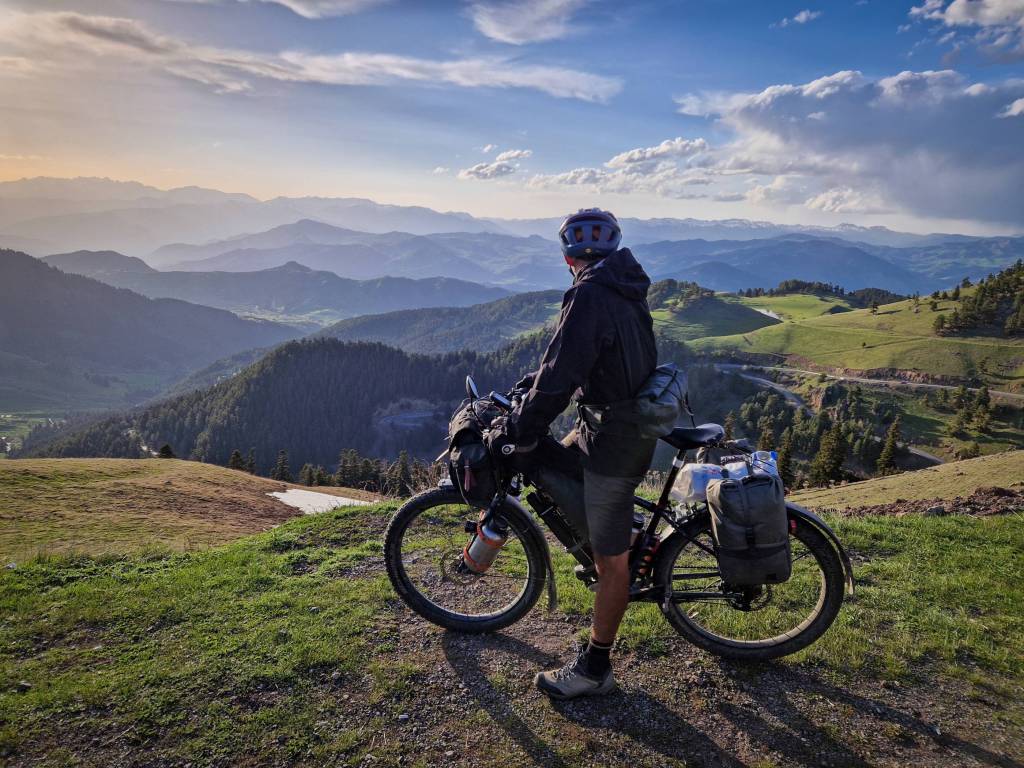
Turkiye felt like a big step for us. It was the last section of Asia we would dip into on this trip. On the other side of Turkiye, culturally everything would shift. On the other side would lie Greece, the Balkans, Europe and then, dare we say it, home. On the other side would lie the familiar, a gradual reintroduction to a life we once knew, and a reality we didn’t want to think about, just yet. And thankfully for us, Turkiye is big enough that ‘the other side’ really is a long way away.
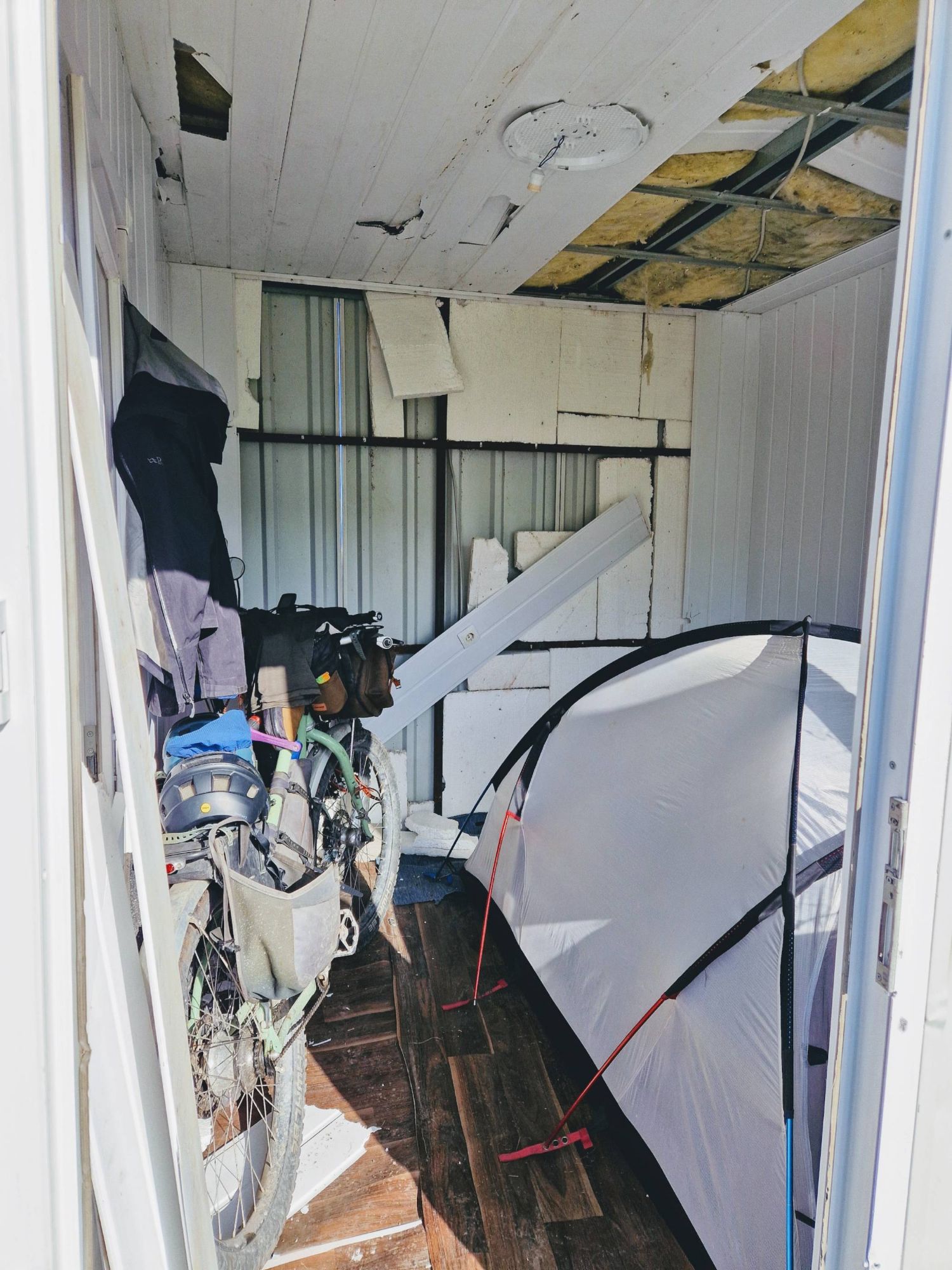
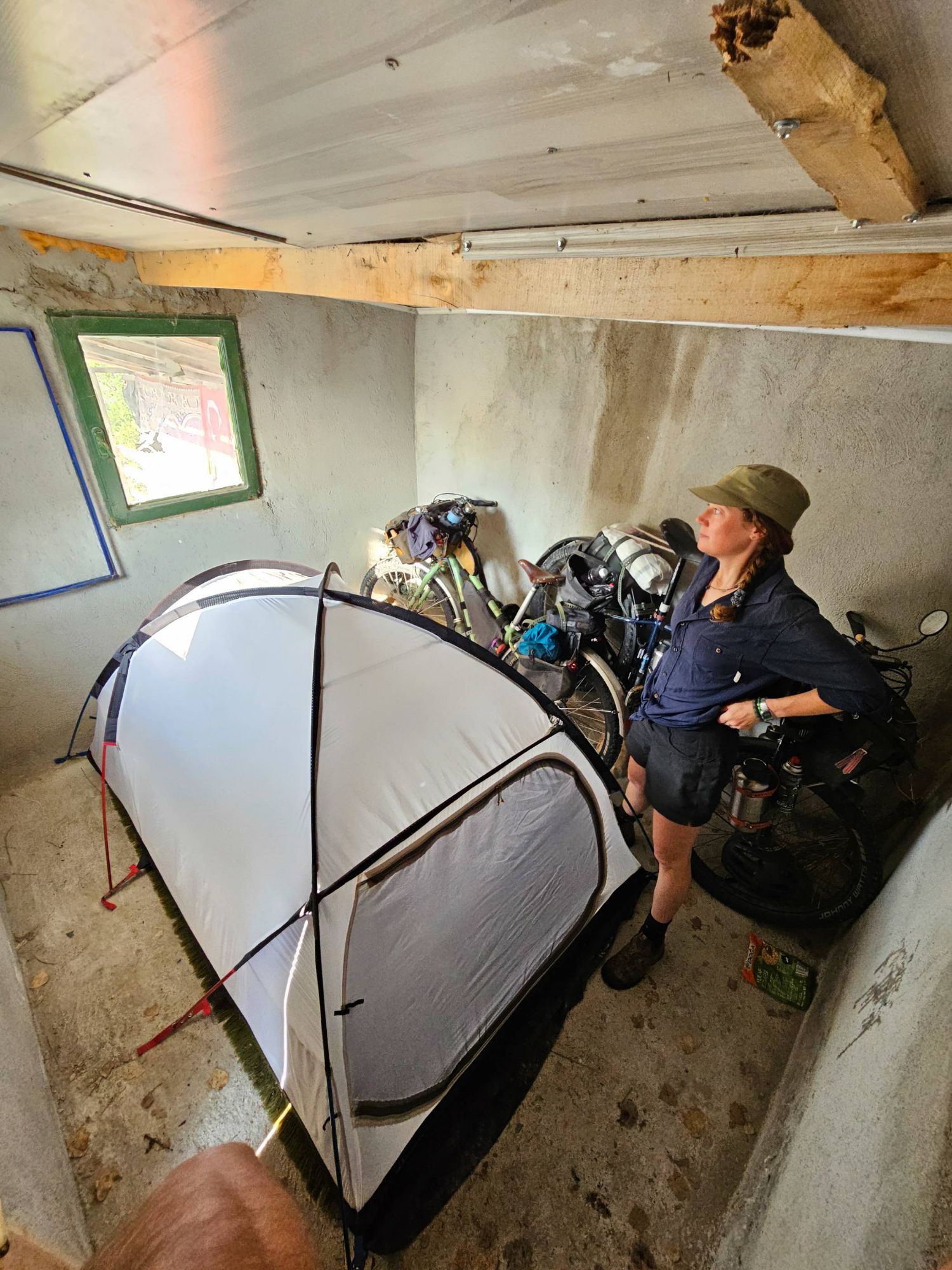
We entered Turkiye from Georgia via a quiet, mountainous border-post under stormy skies. After enduring a sweaty and rain filled afternoon, climbing about 1000m, the thunder and lightning also caught up with us. We took refuge in a dilapidated and disused prayer room / shipping container that had definitely seen better days. But for us, it offered a chance to dry off and avoid the worst of the incoming storms (although, perhaps sleeping in a metal box, in an open meadow, on an exposed mountainside, in the thunderstorm, wasn’t our wisest move!). After squishing our tent and the bikes inside, Ted stood in the rectangular space where a door had once been and watched the weather. ‘That definitely wasn’t a cow’ was all I heard him say before I remembered that there were bears in these parts. The fast moving, shaggy haired, lolloping bounce of a bears behind disappeared away into the trees on the other side of the meadow before I caught a proper glimpse, but Ted was right, it definitely wasn’t a cow. We ‘ummed’ and ‘aahed’ about what to do. We wondered whether we should hang our food outside (as we had always done in bear country before) but that would mean heading into the trees where the bear had just taken cover. It didn’t feel sensible. Instead, Ted gathered up some of the flimsy, broken plastic sheets from around the shipping container and casually propped them over the doorway, making a barricade of sorts. Standing back to look over his handiwork, he sarcastically announced ‘a bear is not going to come through that’. I laughed but took solace in the fact that a bear is unlikely to ever seek out lentils, rice, oats, chai seeds and tea, which was mainly what we were carrying. But, in the name of keeping us bear safe, we endured the hardship of eating all the chocolate we had with us before going to sleep.


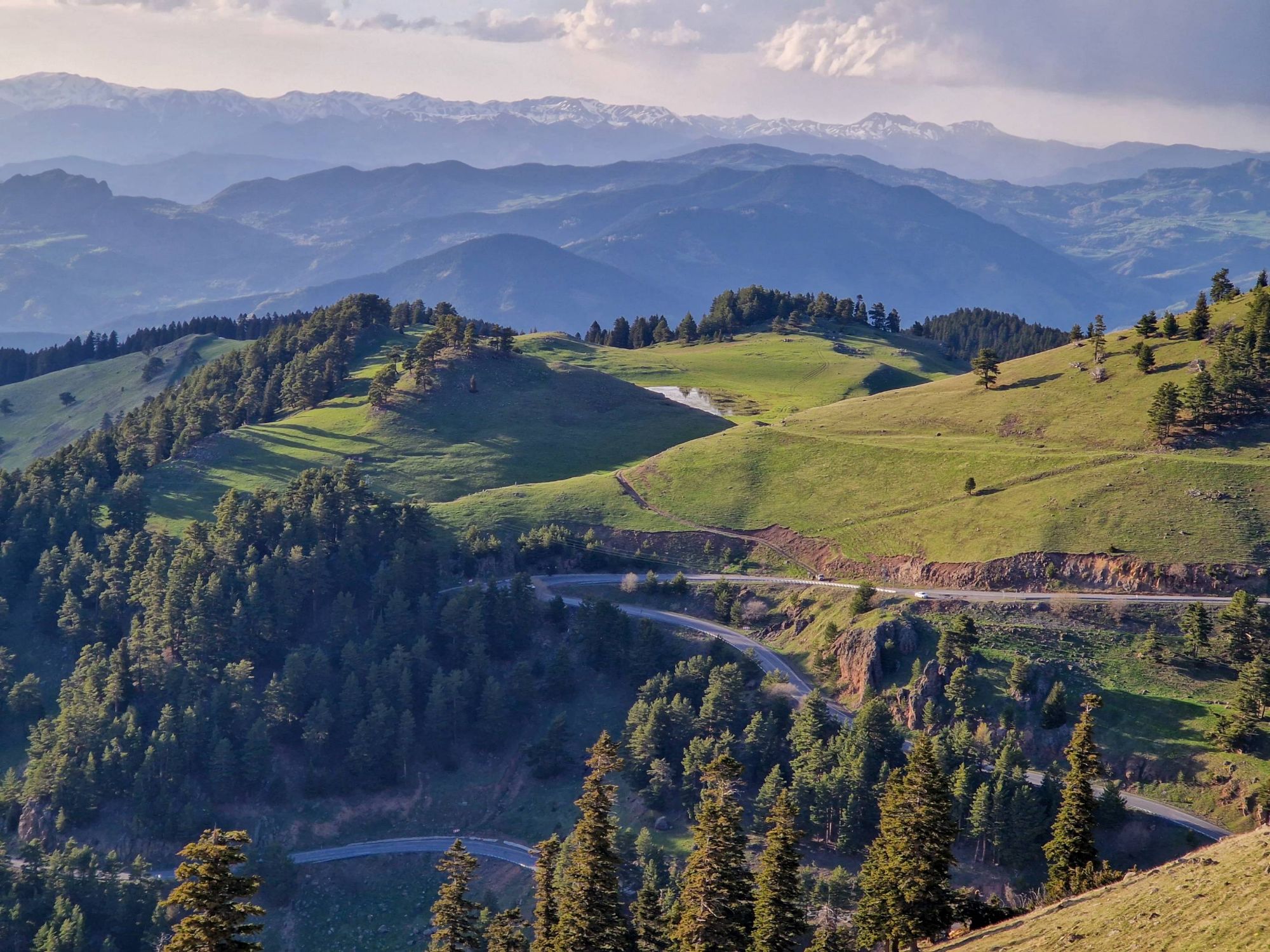
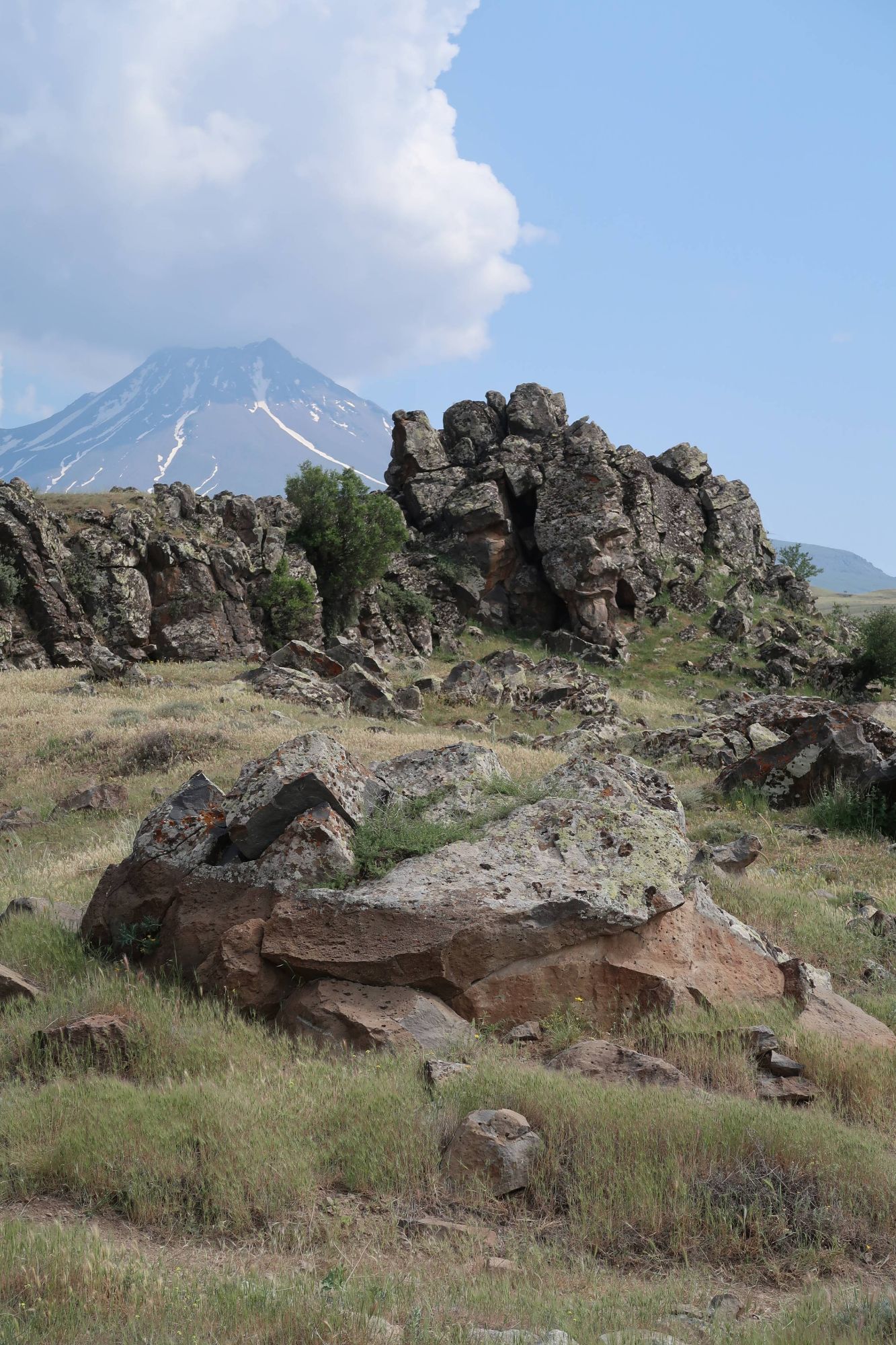
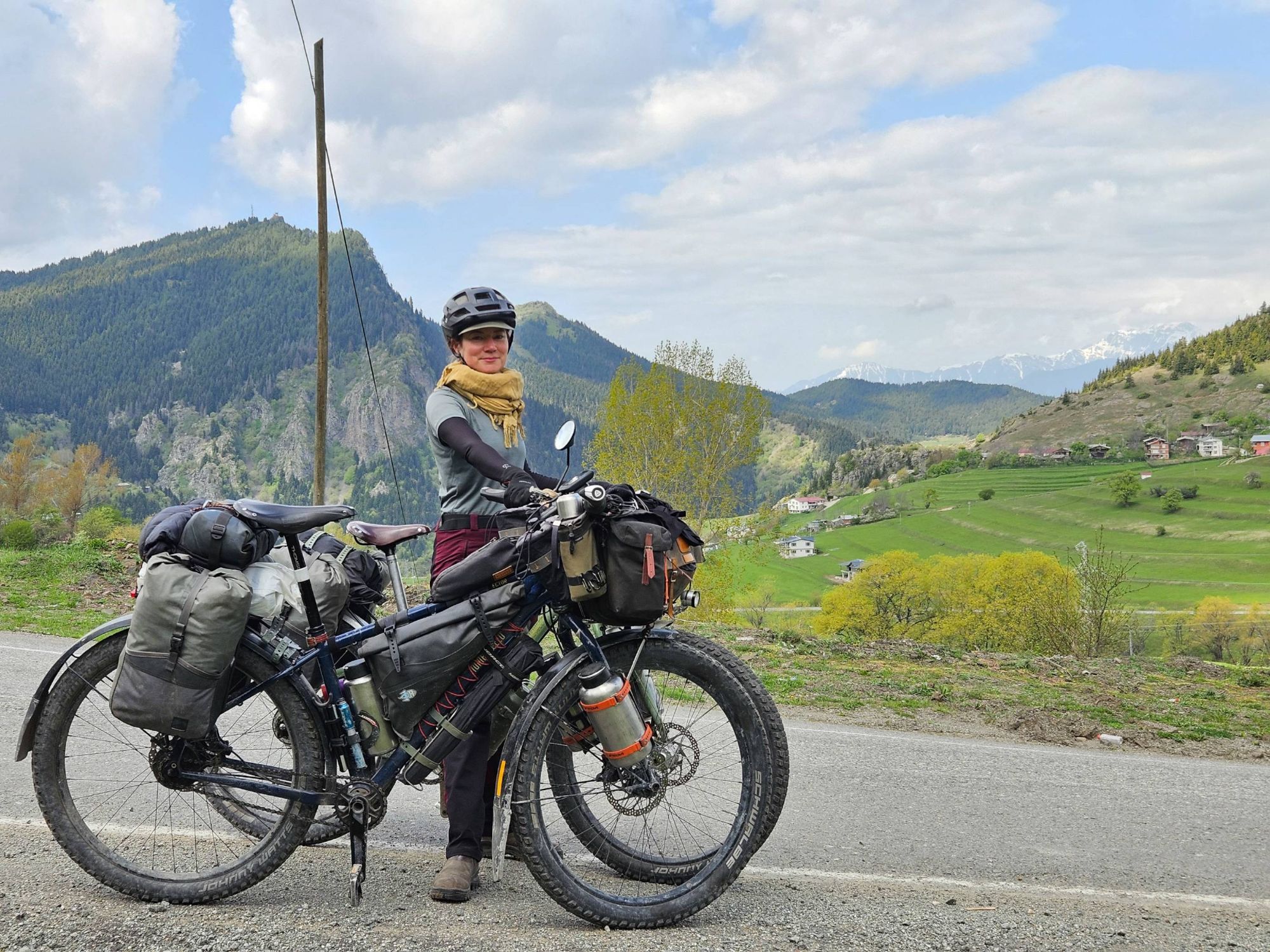
Safe to say, we survived the night, and awoke the following morning to incredible views. The meadows and mountain tops all around us, which had been obscured by all of the weather the day before, were pretty special. We couldn’t quite believe our eyes. Were we really in Turkiye? Our preconceived notions of Turkiye involved package holidays, sleazy men and dry desert-y scrubland with the occasional tortoise. But this. This was a lush, green, mountainous wonderland, with ridgelines extending in all directions and the last of the winter snow highlighting dramatic rock formations. Our initial vague thoughts with our time in Turkiye had been to maybe catch a boat across the Black Sea, but with our, quite frankly, ridiculous preconceptions being so clearly wrong even on day one, we came up with another plan.
We decided that we would ride towards the town of Ardahan, making the most of the mountains, then swing North through the Artvin region – where Ted’s Grandad was from – before plotting a route South West across the country, via the famous Cappadocia region, towards Izmir on the coast. Even looking at the line on the map it looked a long way, let alone considering the numbers – almost 2000kms of riding with 26,000m of climbing! These kinds of numbers often look intimidating to me, but not in the way you might expect. I am now used to the kilometres, I know that, rather than being overwhelmed by the huge distance numbers, if I only think about what I have to do in a day it’s manageable and the days fly by, ticking off the kilometres. Even with the climbing, by now, I know that I can slowly creep my way up most hills and mountains, music or podcasts motivating me or keeping my mind distracted from the pain in my lungs and legs. And, by now, I know that if we are off-road and things get too loose or too steep, I can push – it’s not a failure. So, at this stage in the trip, it’s not the distance or kilometres that felt scary, it’s the mental challenge of being in one country for such a huge amount of time. When we cross a border into a new country we feel like we are making progress, we are reinvigorated by the ‘newness’ of it all. So to be in one country for week after week after week felt like an ominous, daunting prospect. But as with most things, Turkiye surprised us in the best way possible.
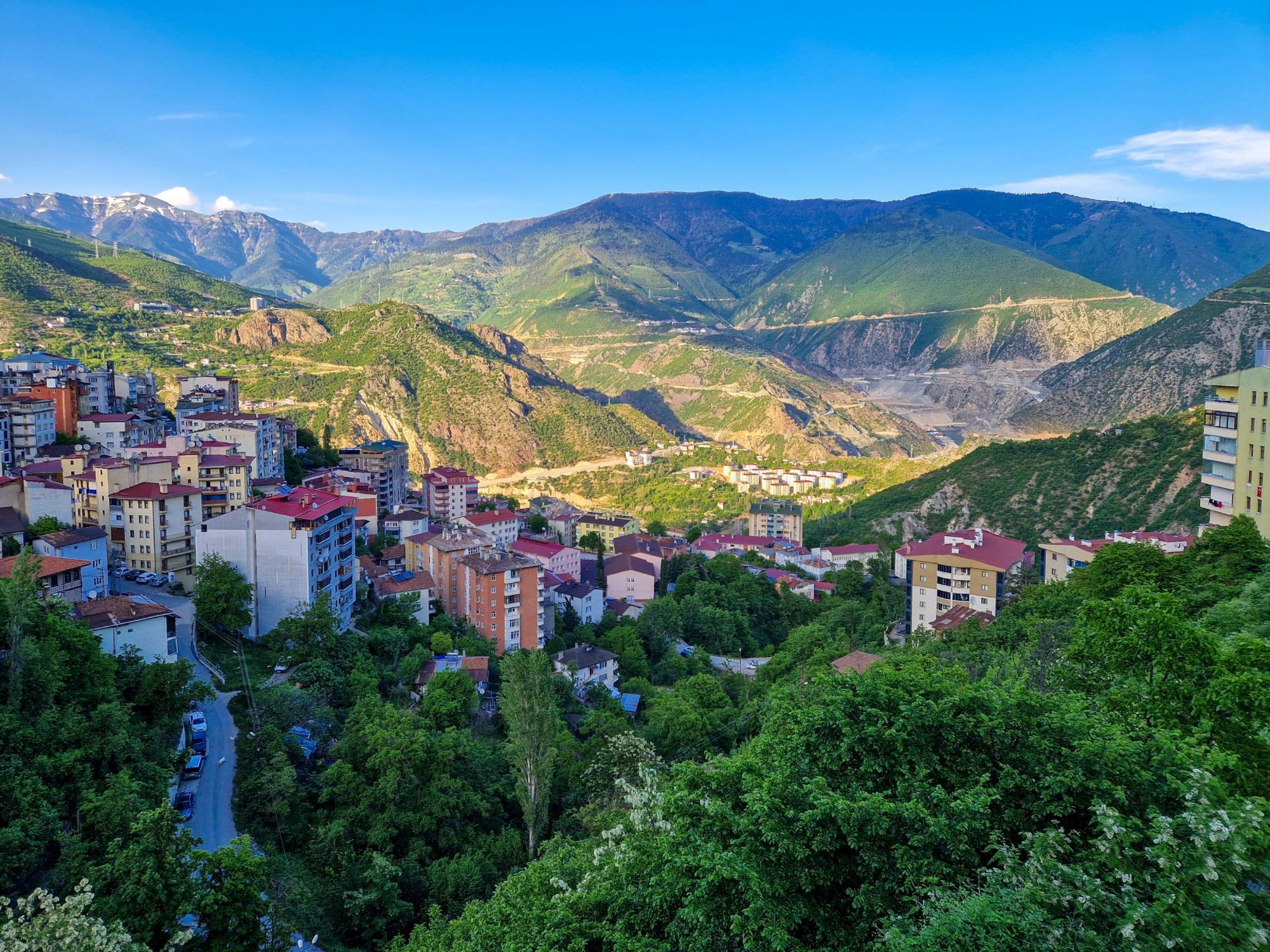
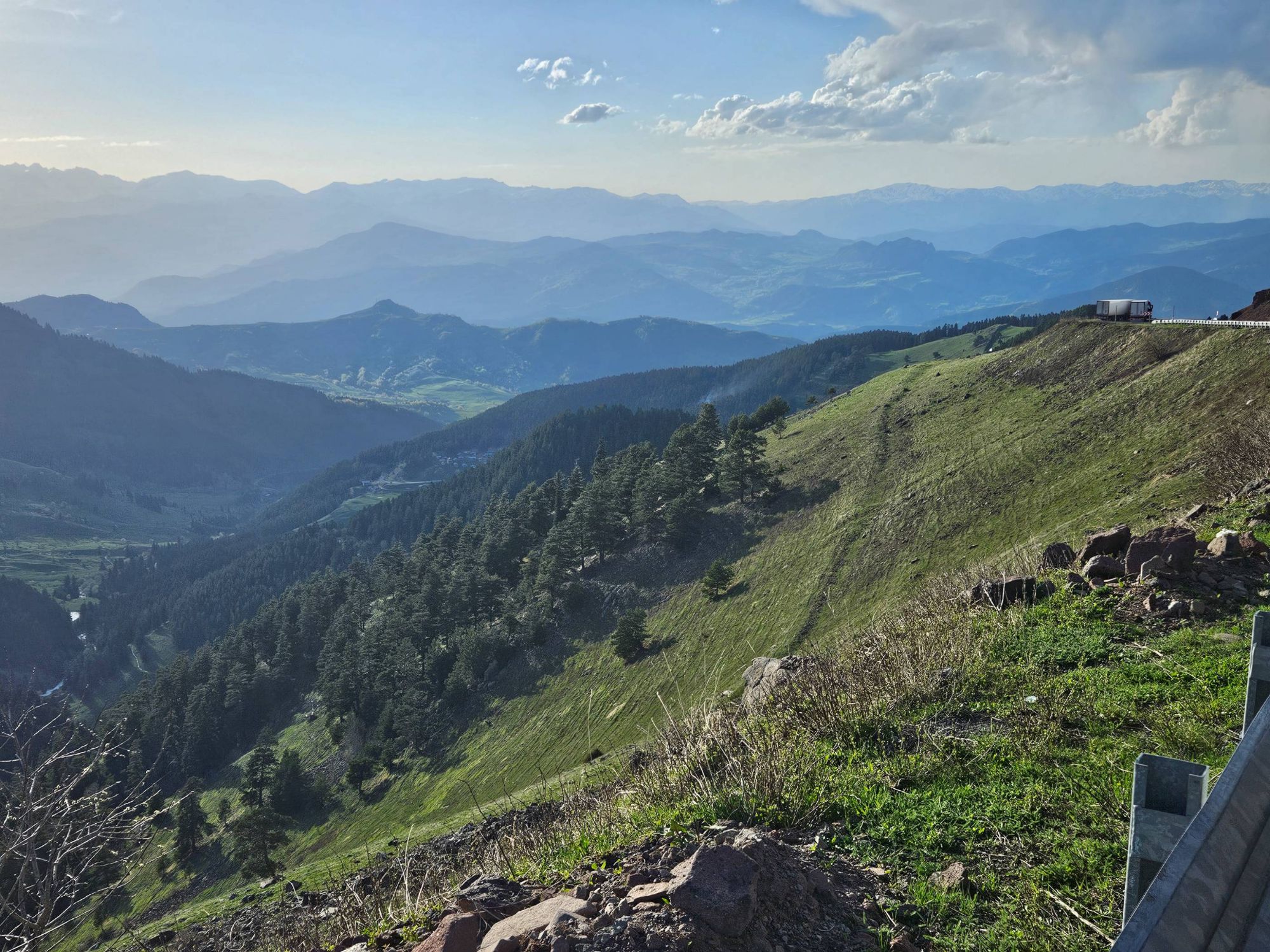
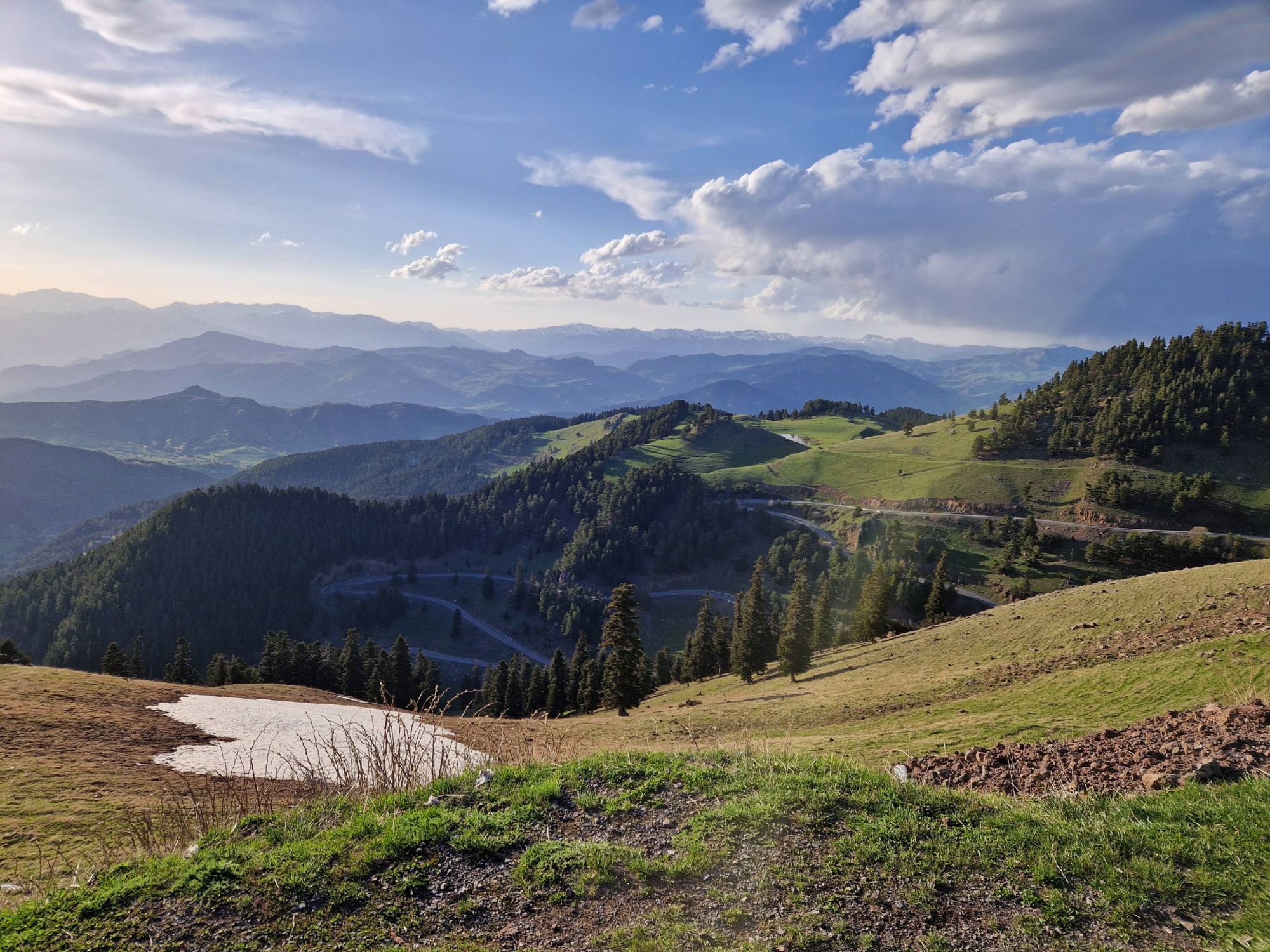



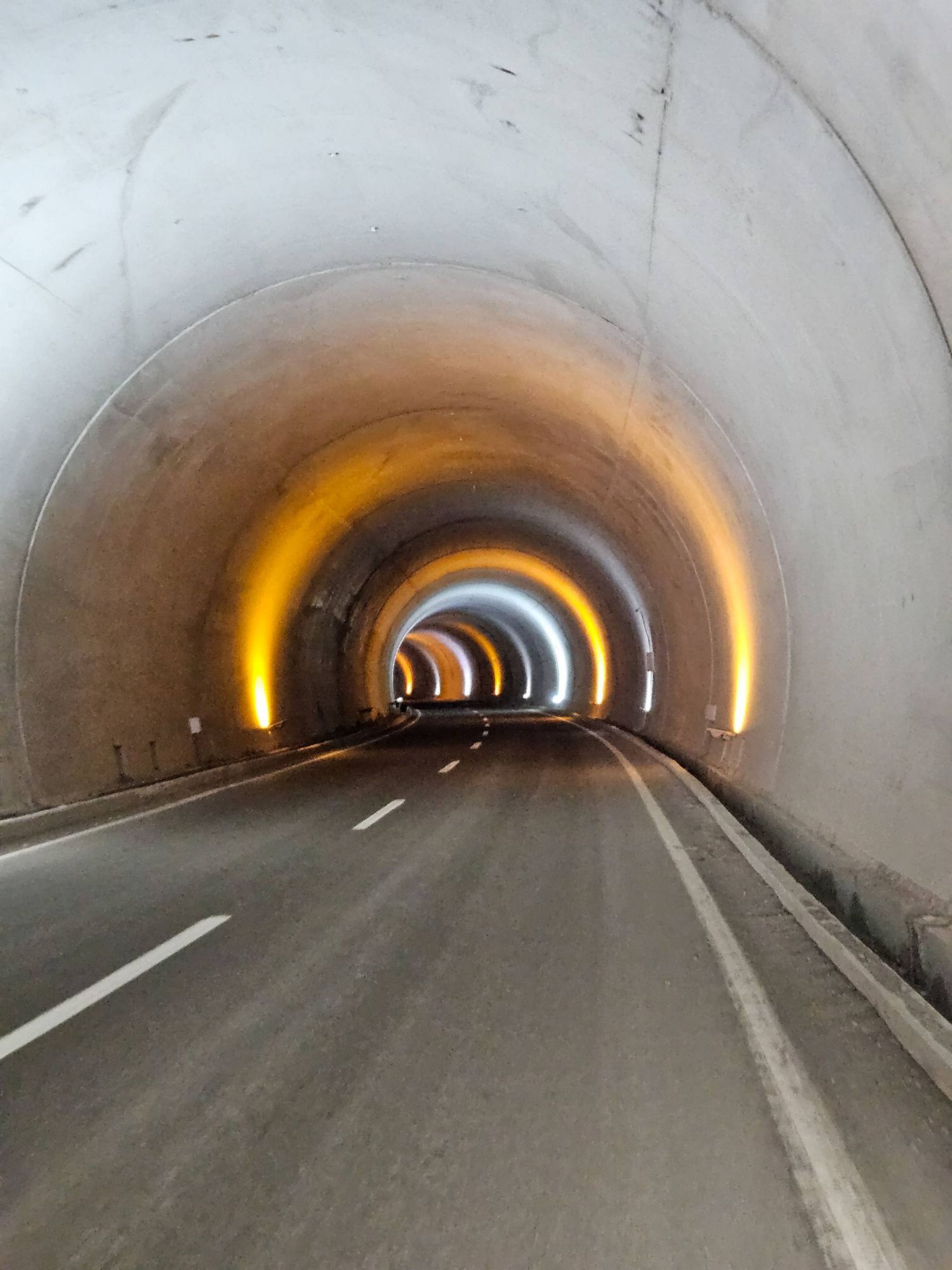
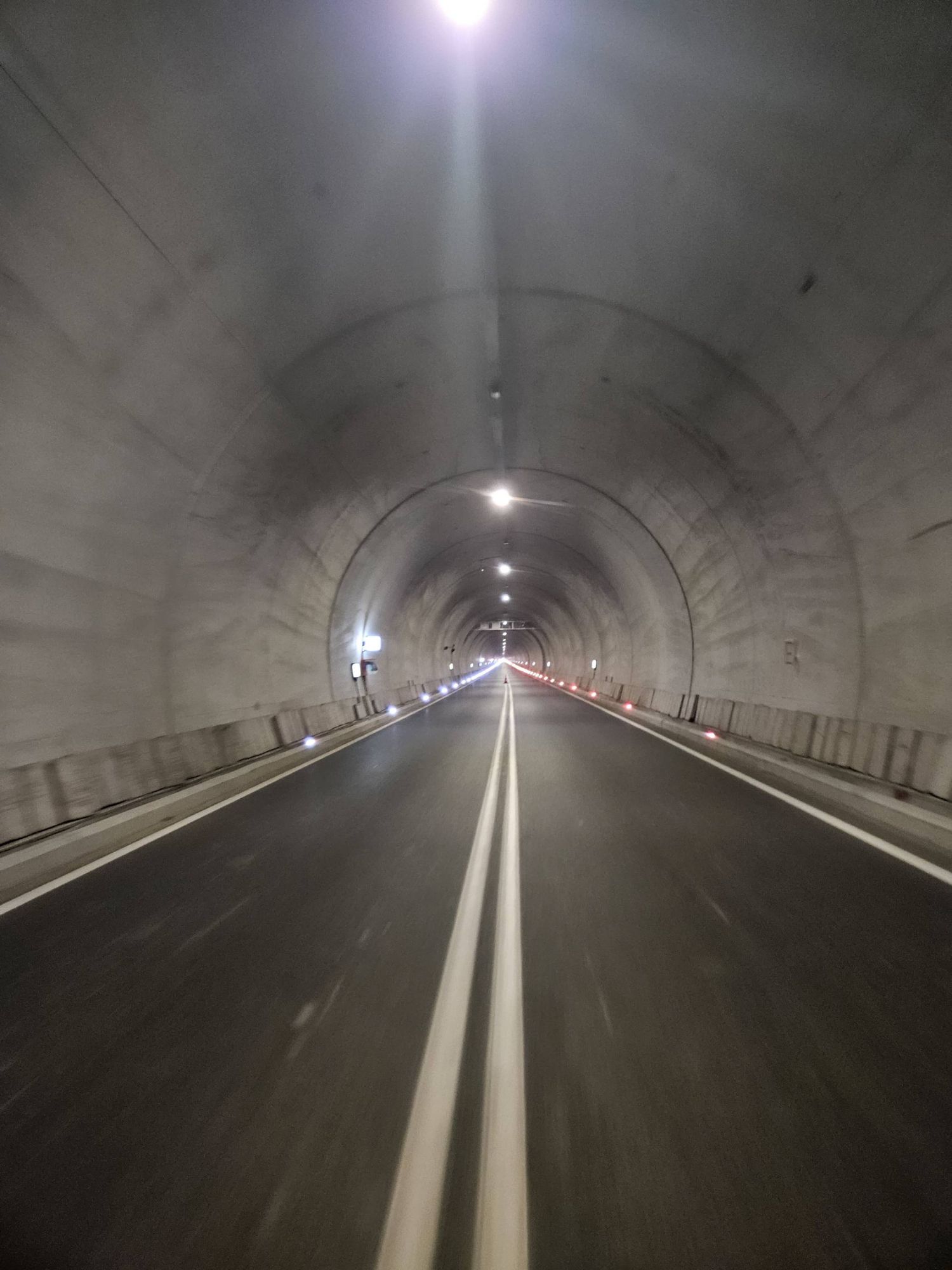
The far East of the country continued, for about a week, to be the mountainous wonderland we had woken up to on day one. Heading out of the Artvin region, the mountains continued, but they gradually became rockier. The roads in this region all tunnelled through mountain after mountain. We don’t normally enjoy riding in tunnels, but these ones were quiet, wide and well lit, plus on the day when we passed through more than 20 in one day, they provided us welcome respite from the persistent rain. The tunnels are a monumental feat of engineering, some spanning 4km long or having road junctions inside them. We never knew what greeted us beyond the blinding light at the end of the tunnel and each time we emerged, eyes blinking and blurry, we were blown away by one incredible scene after another. Between the mountains, most of the land had been flooded to create huge reservoirs, it gave the impression that the mountain tops were islands floating above it all, the different rock minerals (and mining activities) providing different colours schemes for each view, with the tunnelled roads acting as bridges between it all.
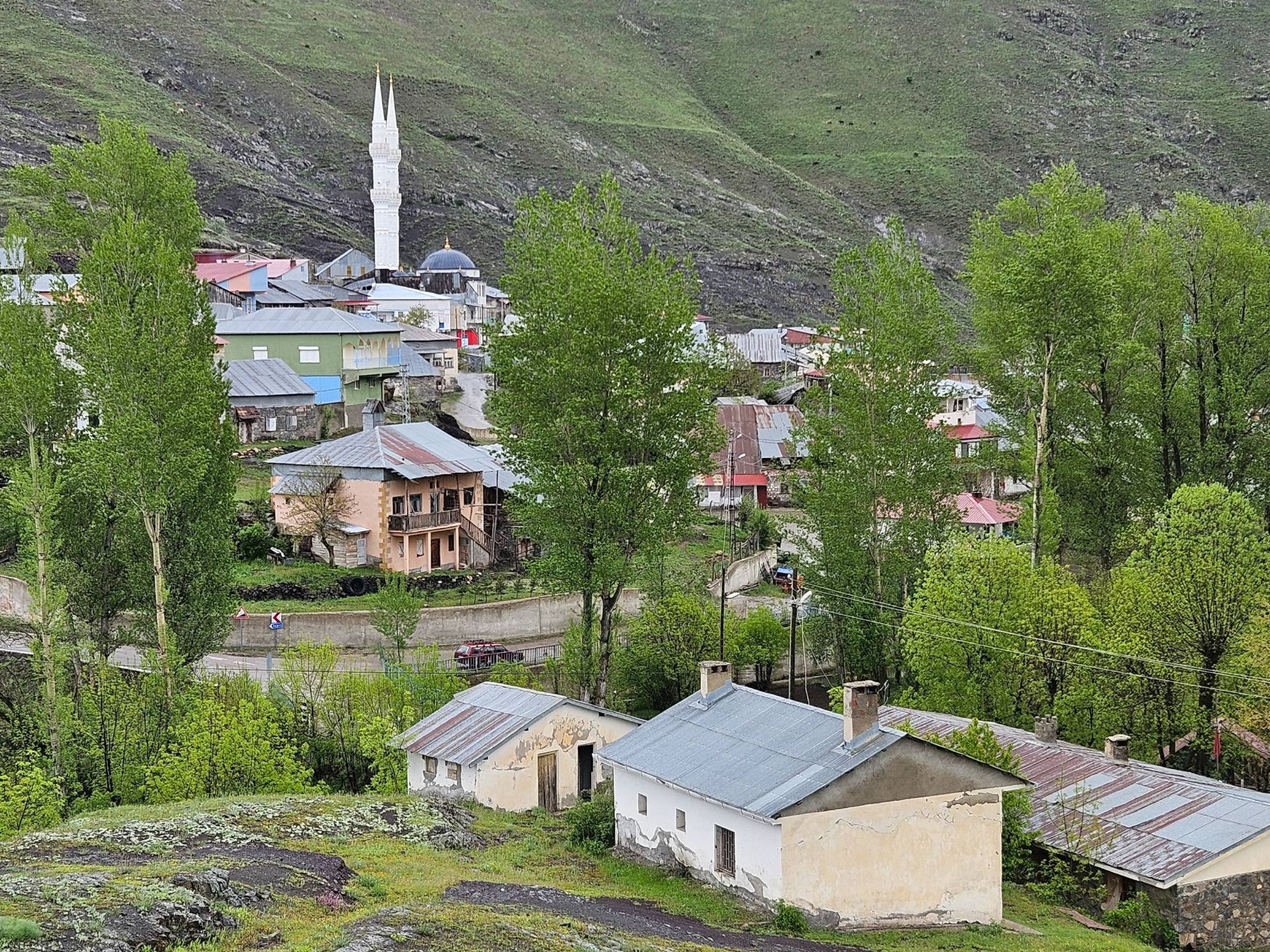
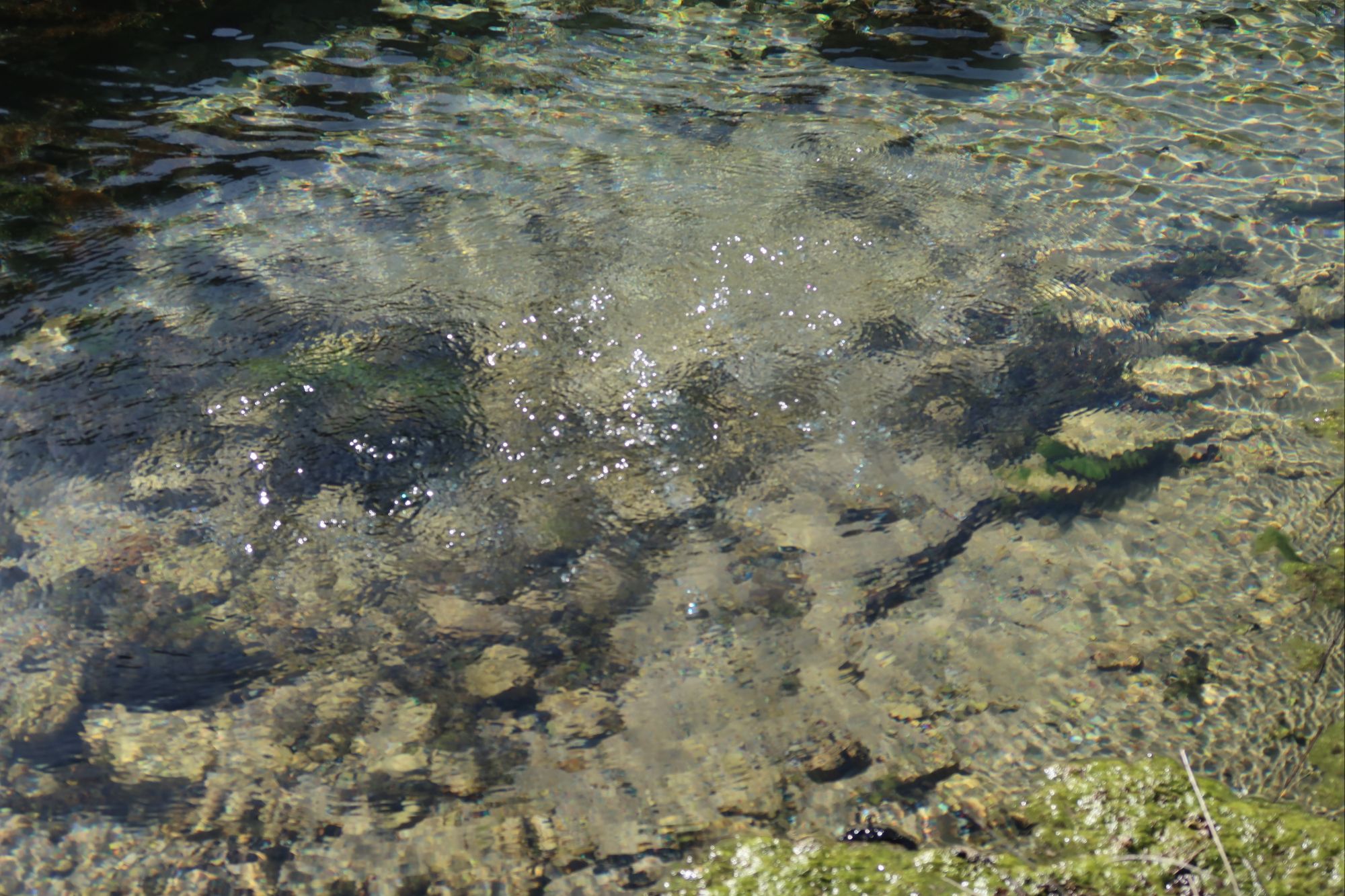
After the region of tunnels, came the land of rolling green, interdispursed with rural villages and long, hilly, winding roads, where abandoned roadside prayer rooms continued to provide us with sanctuary when the moody skies finally broke. We had a few days passing through ancient villages, where the small simple houses were made of the white limestone rock that lies underneath all the fields of green. One hot and sticky evening, we cycled up to the source of a river in the hope of some cool, clear drinking water, and we were rewarded with the most incredible natural swimming pool. The clearest water bubbled up from the rocks in several places creating a deep pool, perfectly surrounded by grass and protected by a small crag of rocks. It felt ancient. It was no coincidence that a small village lay a few hundred meters downstream. We could feel it in our bones, this place had been inhabited by humans for a long, long time, and so we followed in their footsteps and set up camp, enjoying a swim to cool off. We really had to tear ourselves away the following morning, kicking ourselves that we didn’t have enough food to allow us to camp another day.

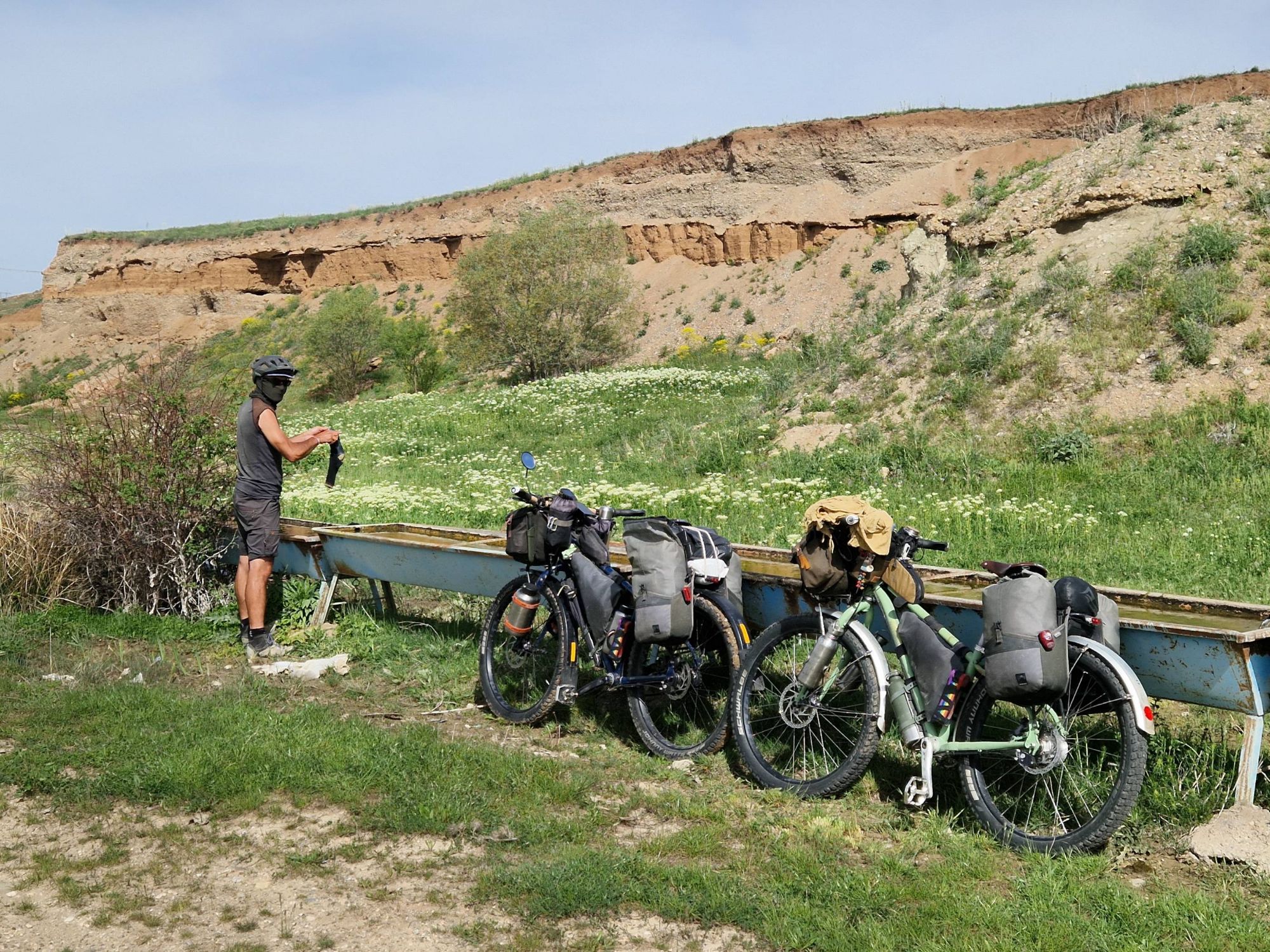
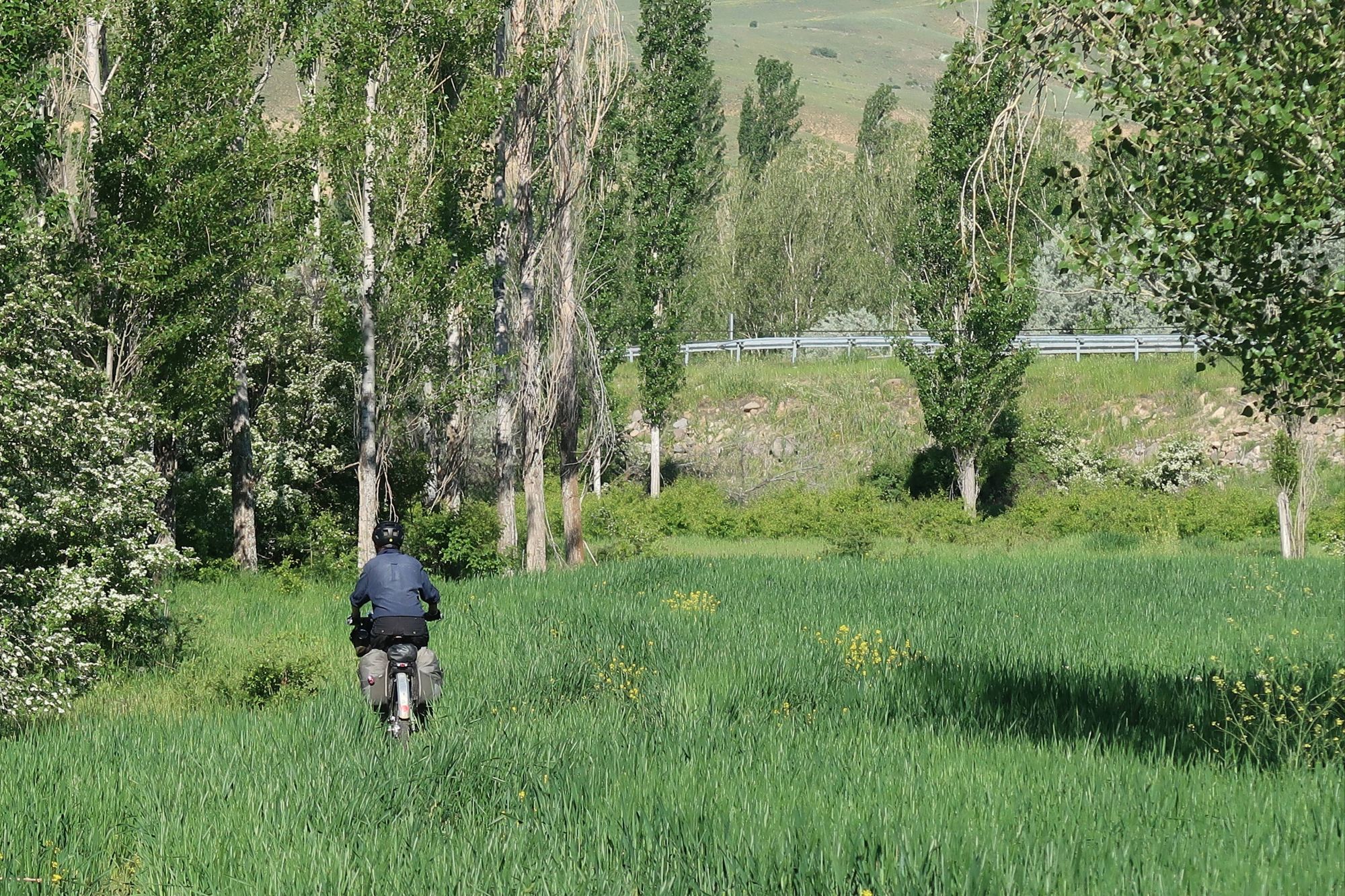
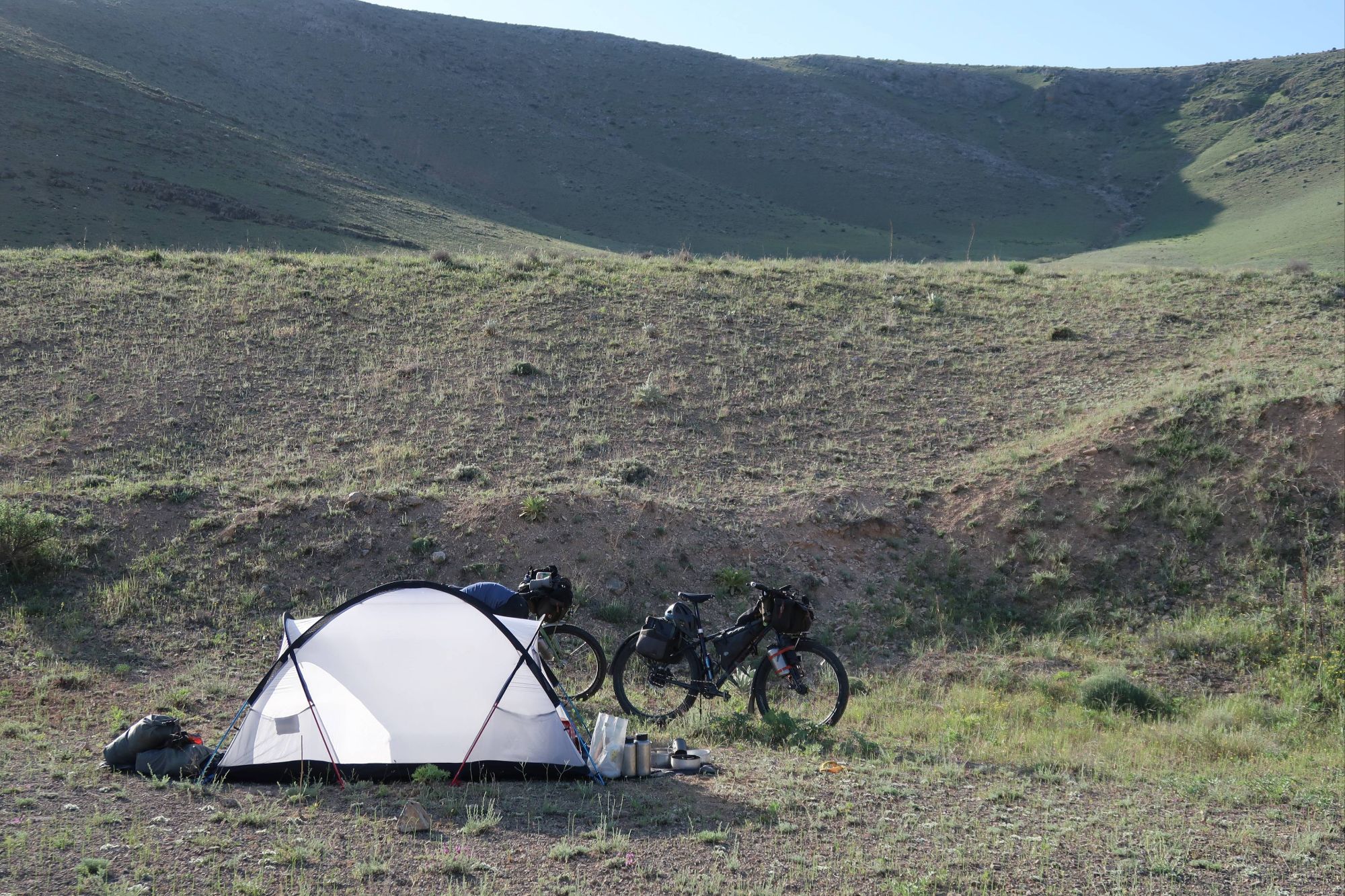
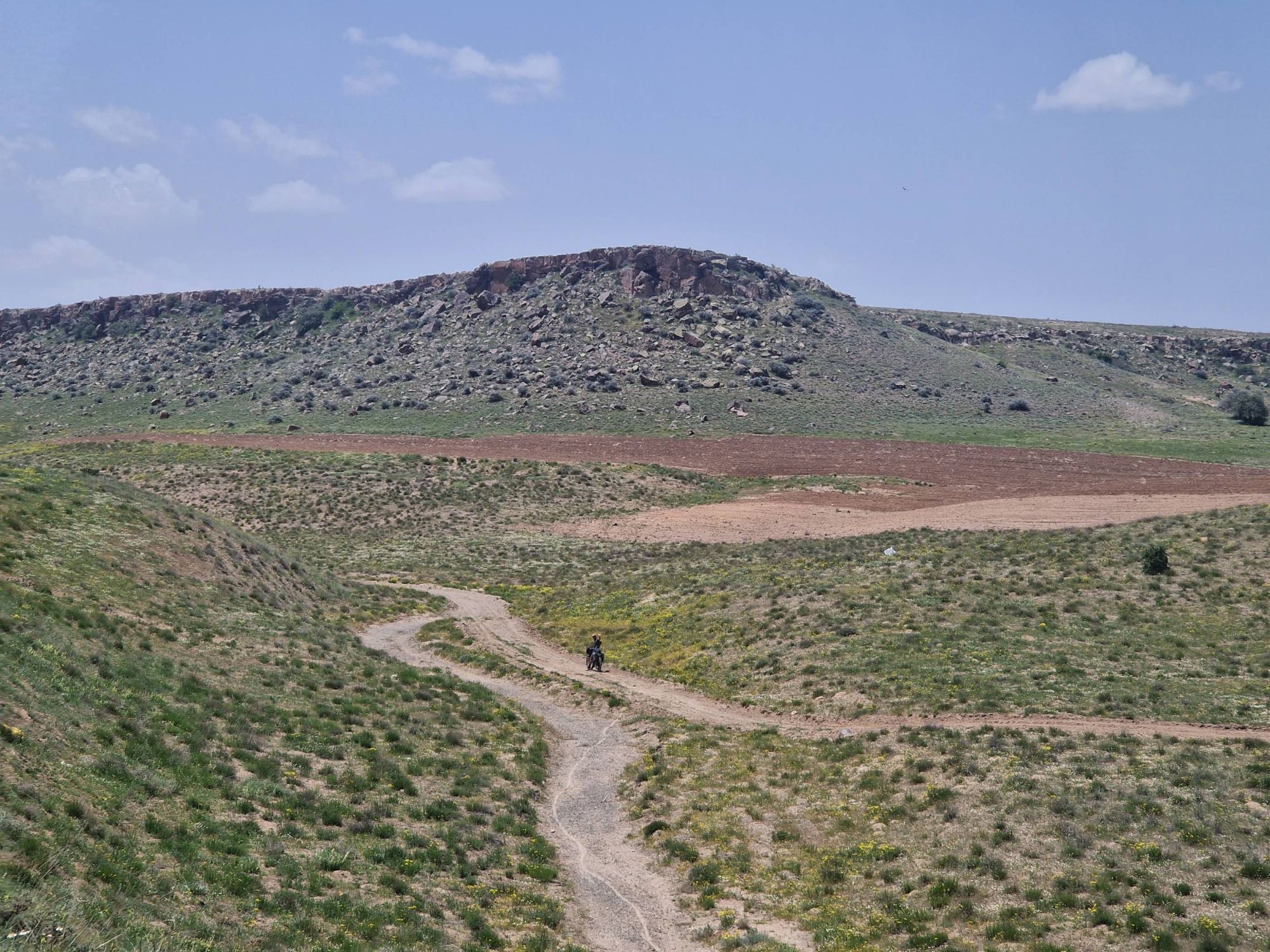

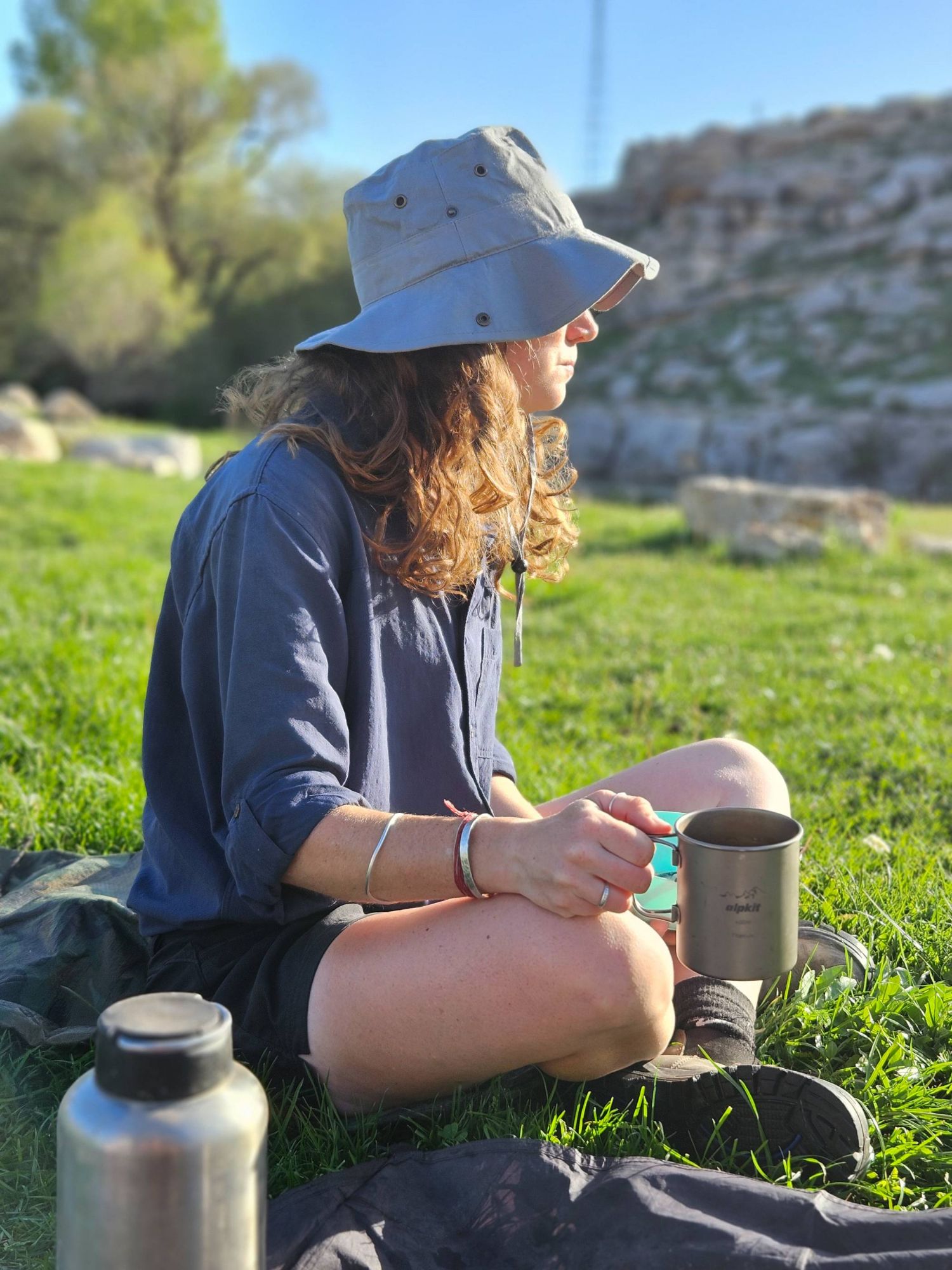


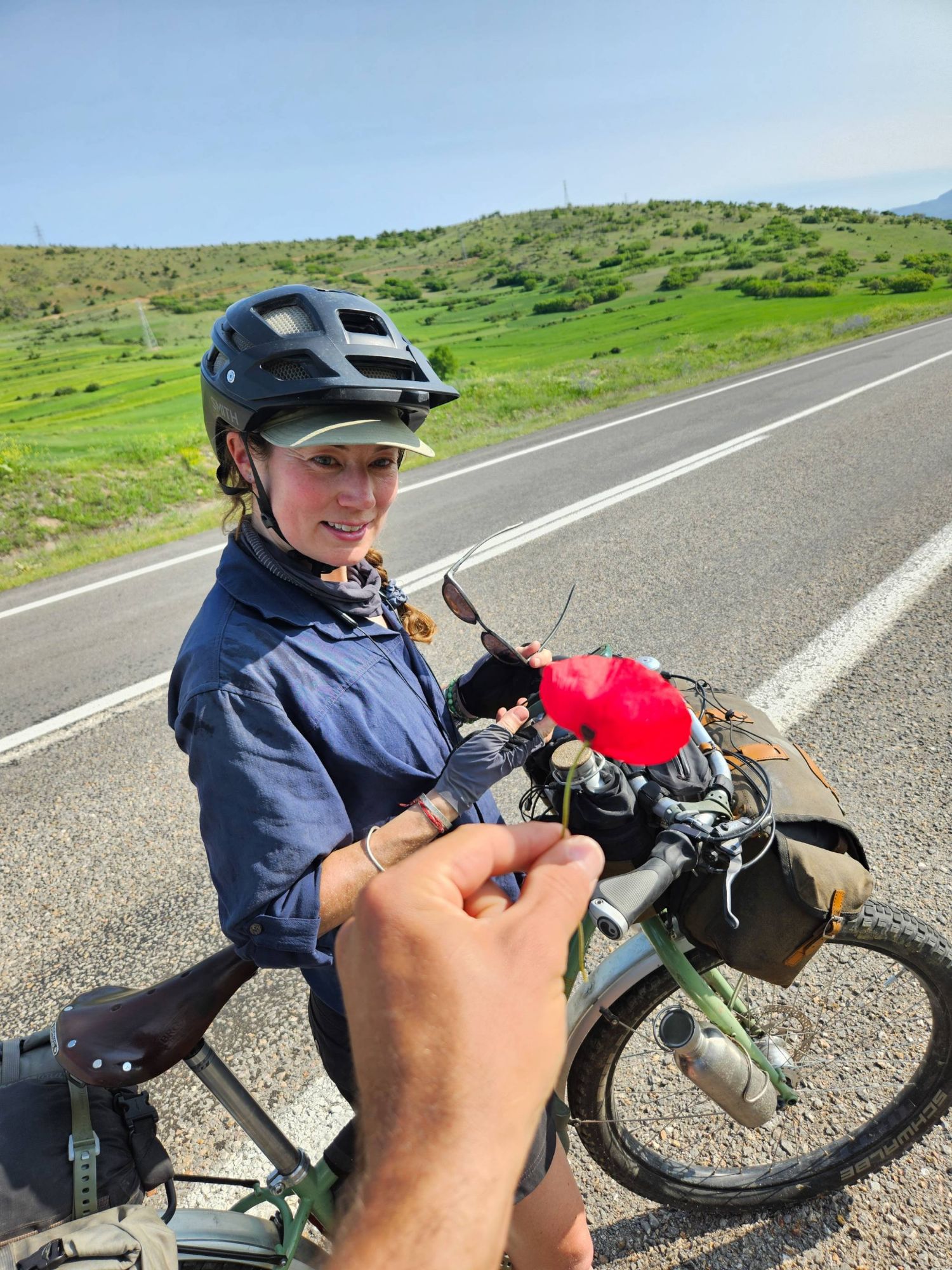
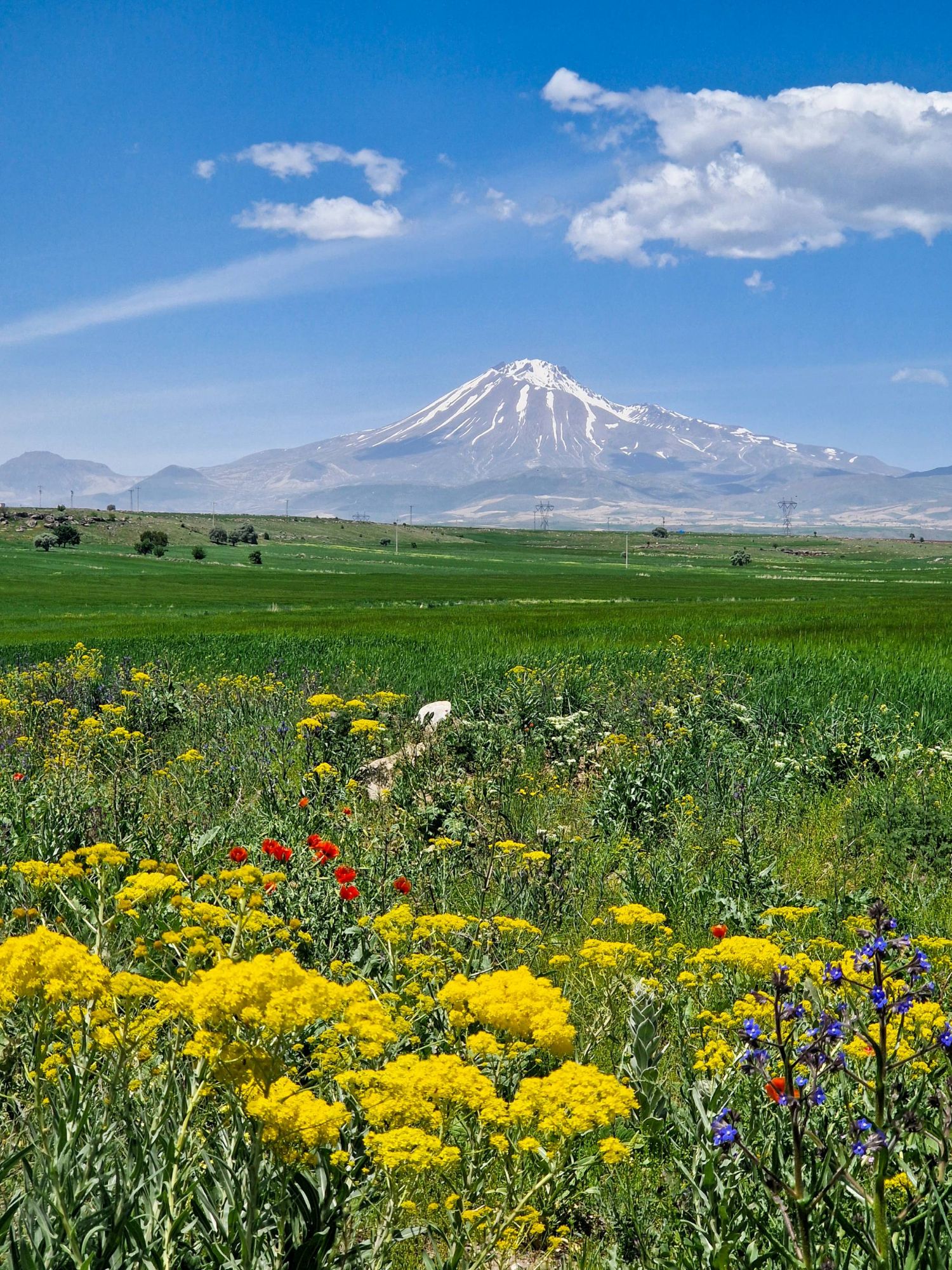
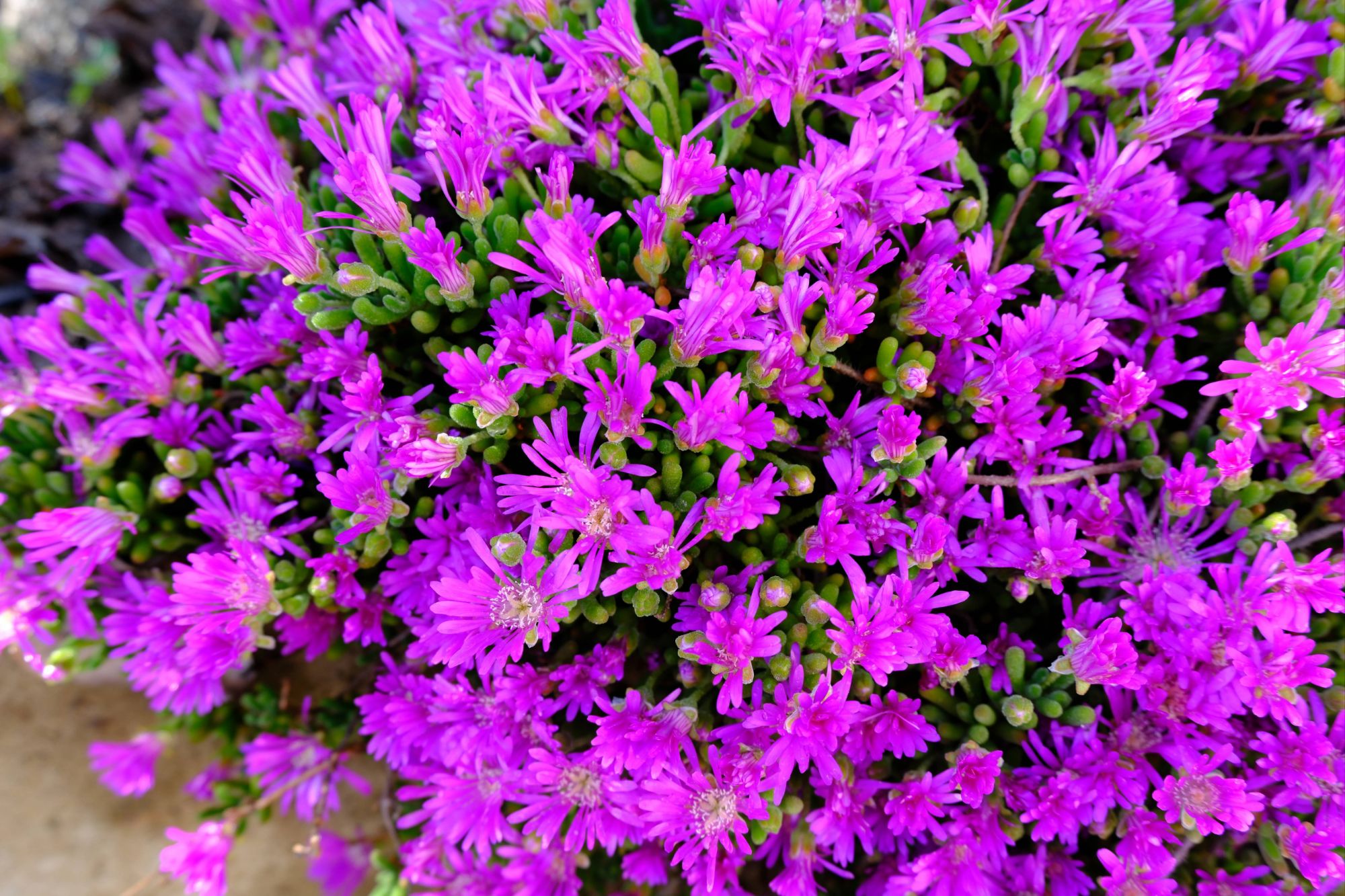
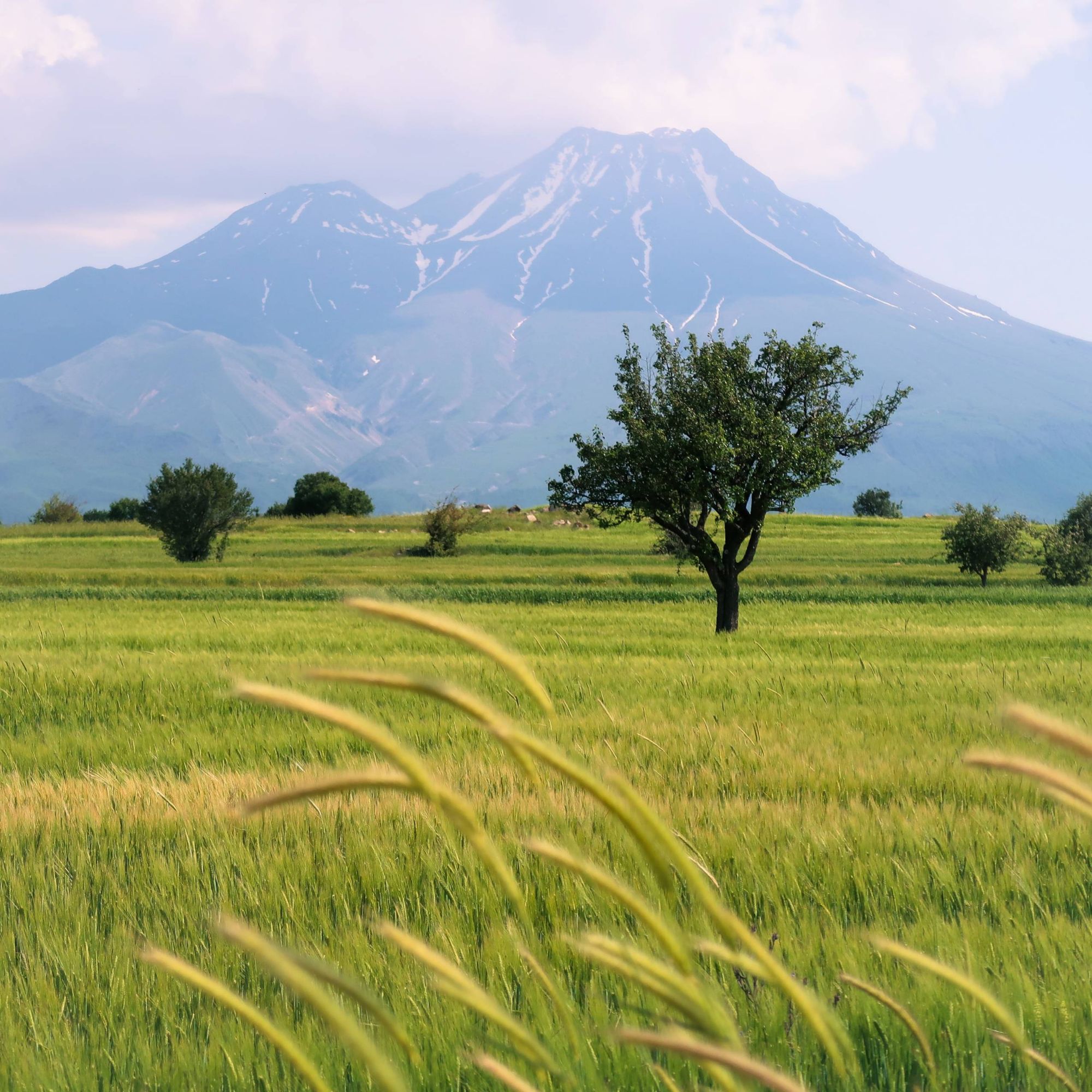
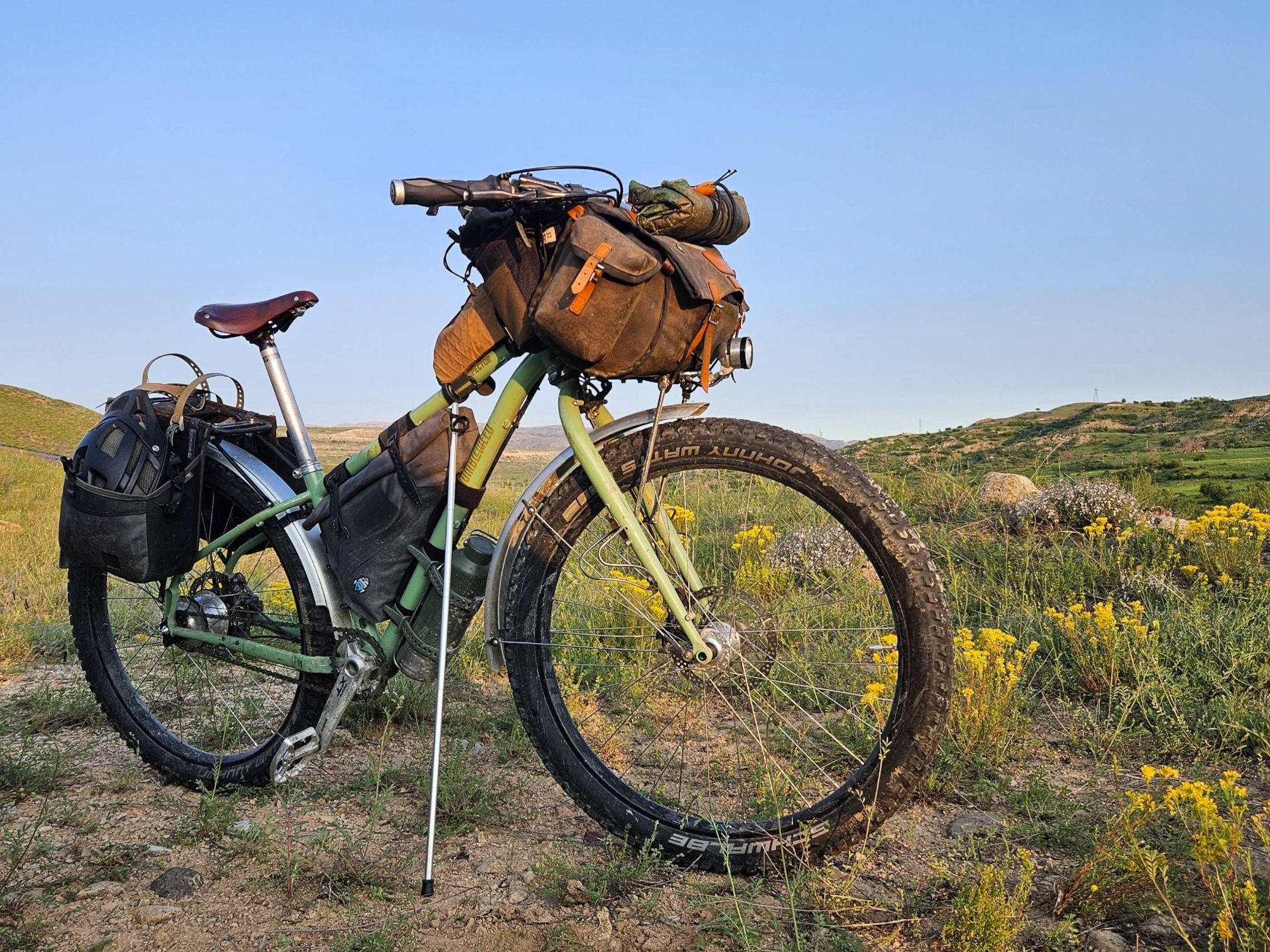
Further West still and we reached the land of the wildflowers. Vast meadows of wildflowers, grasses and crops of all different colours and textures, shapes and sizes, with their petals and seed-heads dancing on the breeze we created as we rode by. They accompanied us along every stretch of roadside. We are perpetually in awe of mother nature, but seeing these wildflowers really brought it home that we just need to leave her to do her thing. She’ll make magic if we let her. She doesn’t need taming or pulling into line, she doesn’t need to be controlled. She needs to be let go, left to run free, to cross each line we like to try and keep her within. She’s strong enough to recover, so we need to give her a chance. Turkiye is proof enough that if we stop using the weedkillers, stop blanket-spraying roadsides, stop chopping back the long grasses in the name of everything being ‘smart’, mother nature will run wild, she’ll create us a masterpiece of fluttering petals, a rainbow of colours and a scene that will cheer up even the most dreary of days.

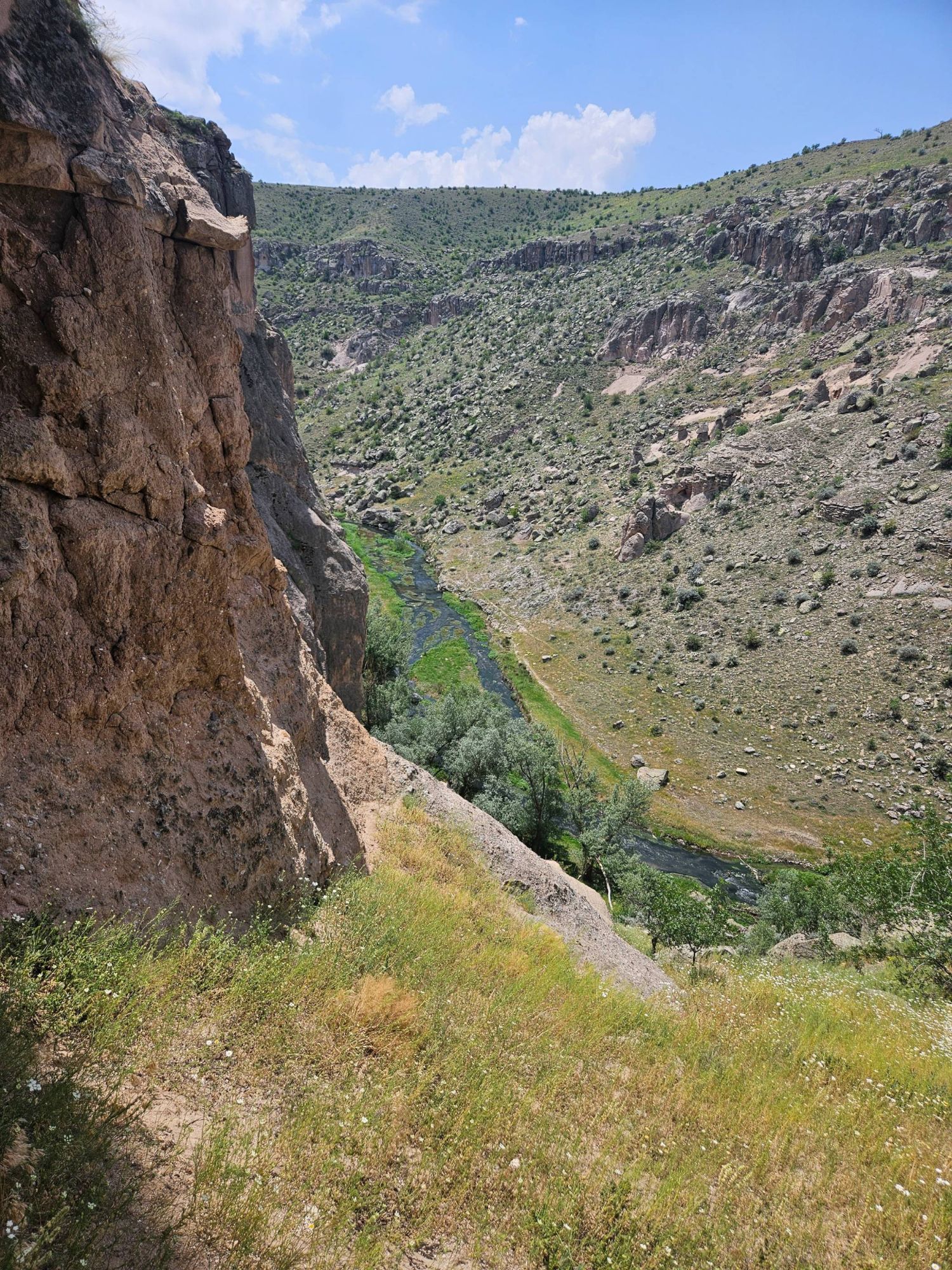
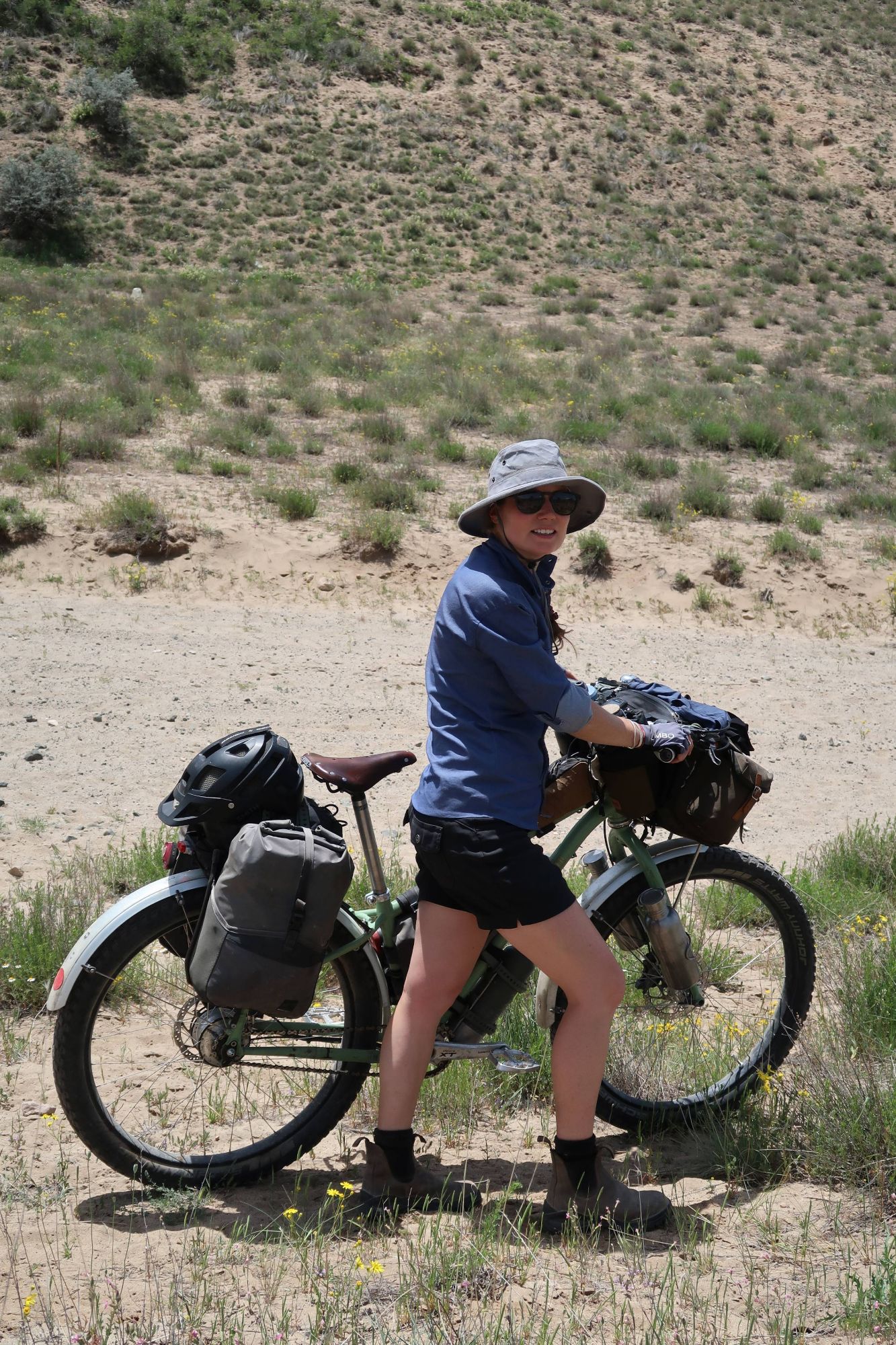
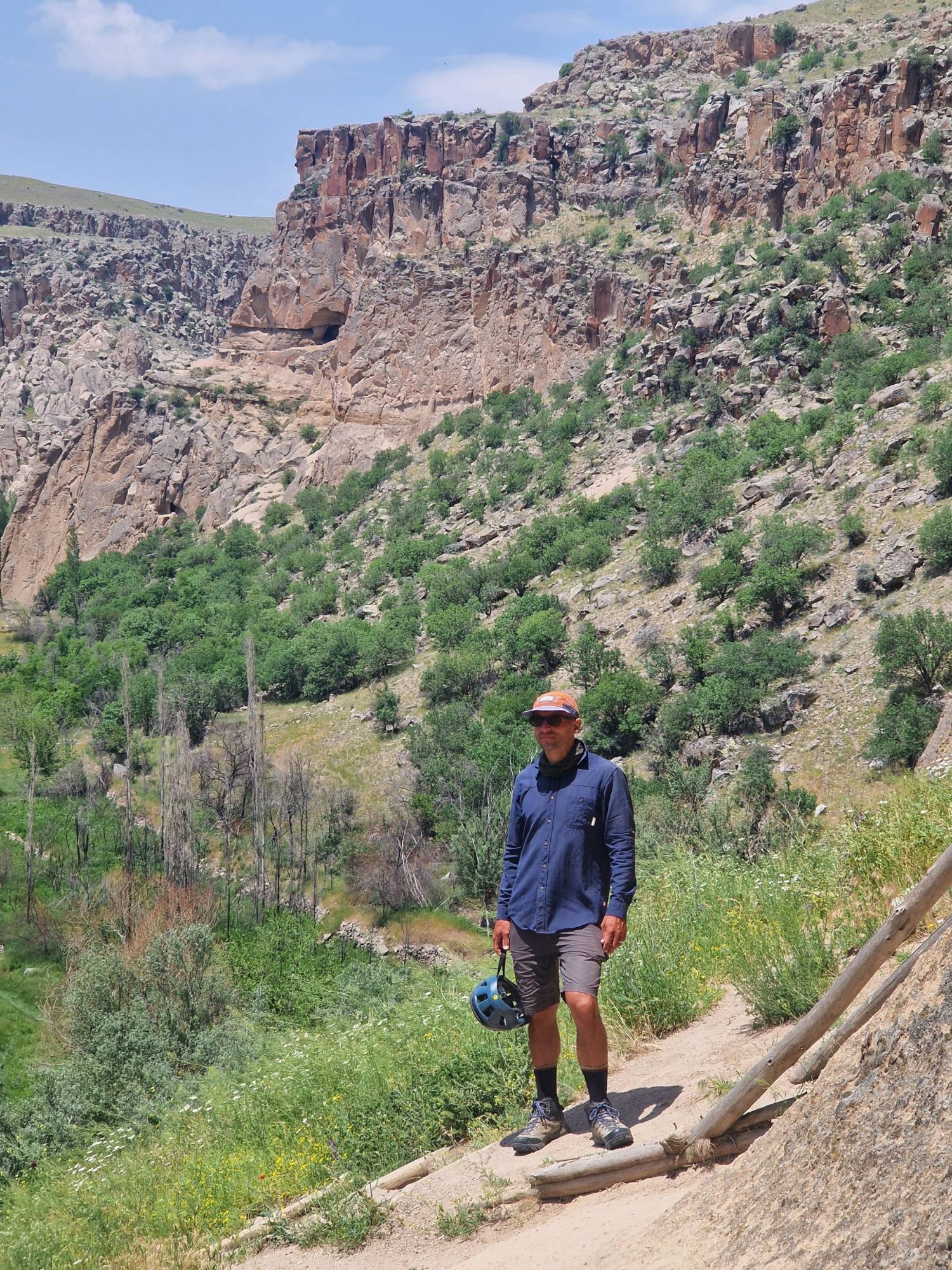
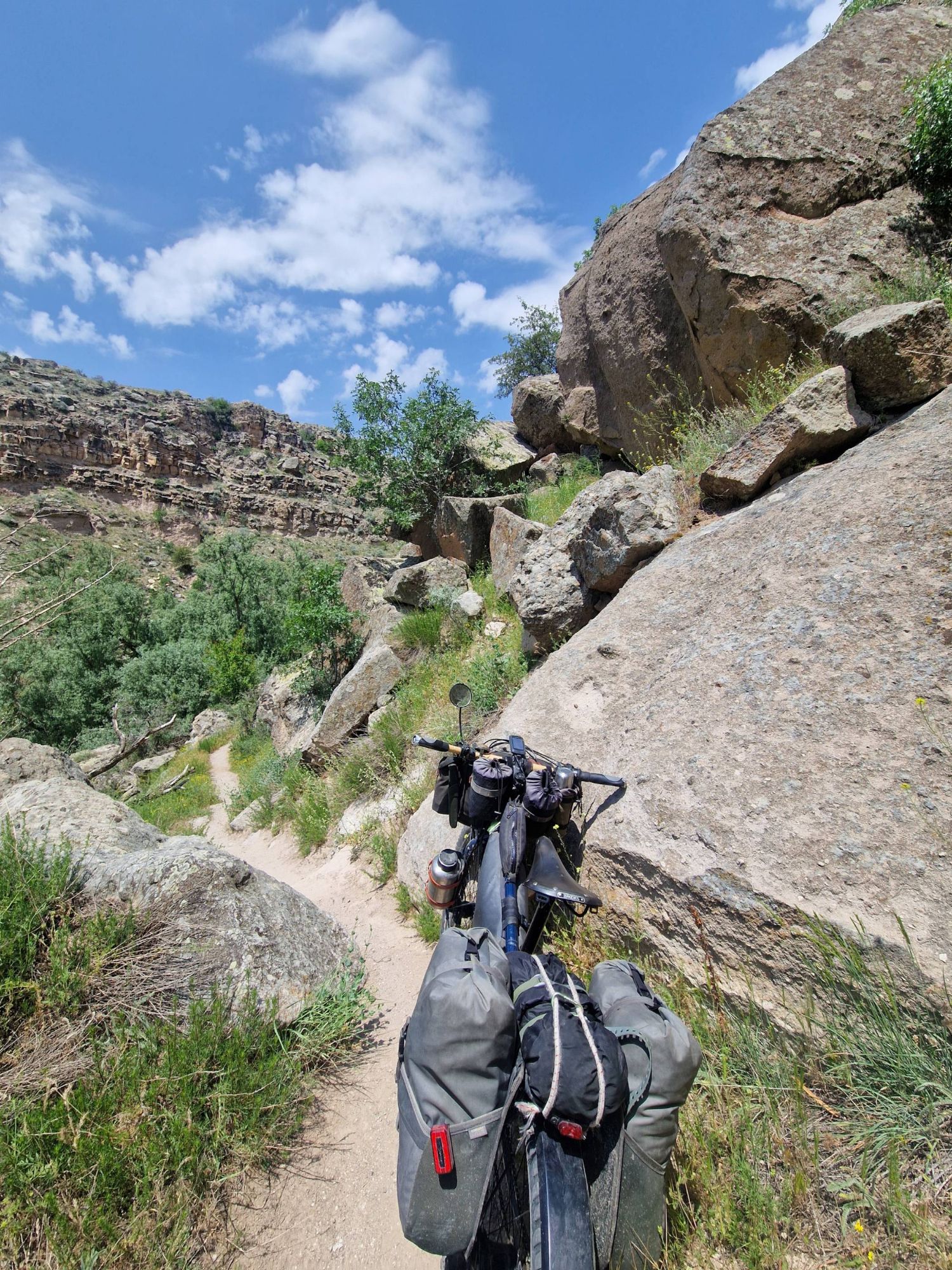
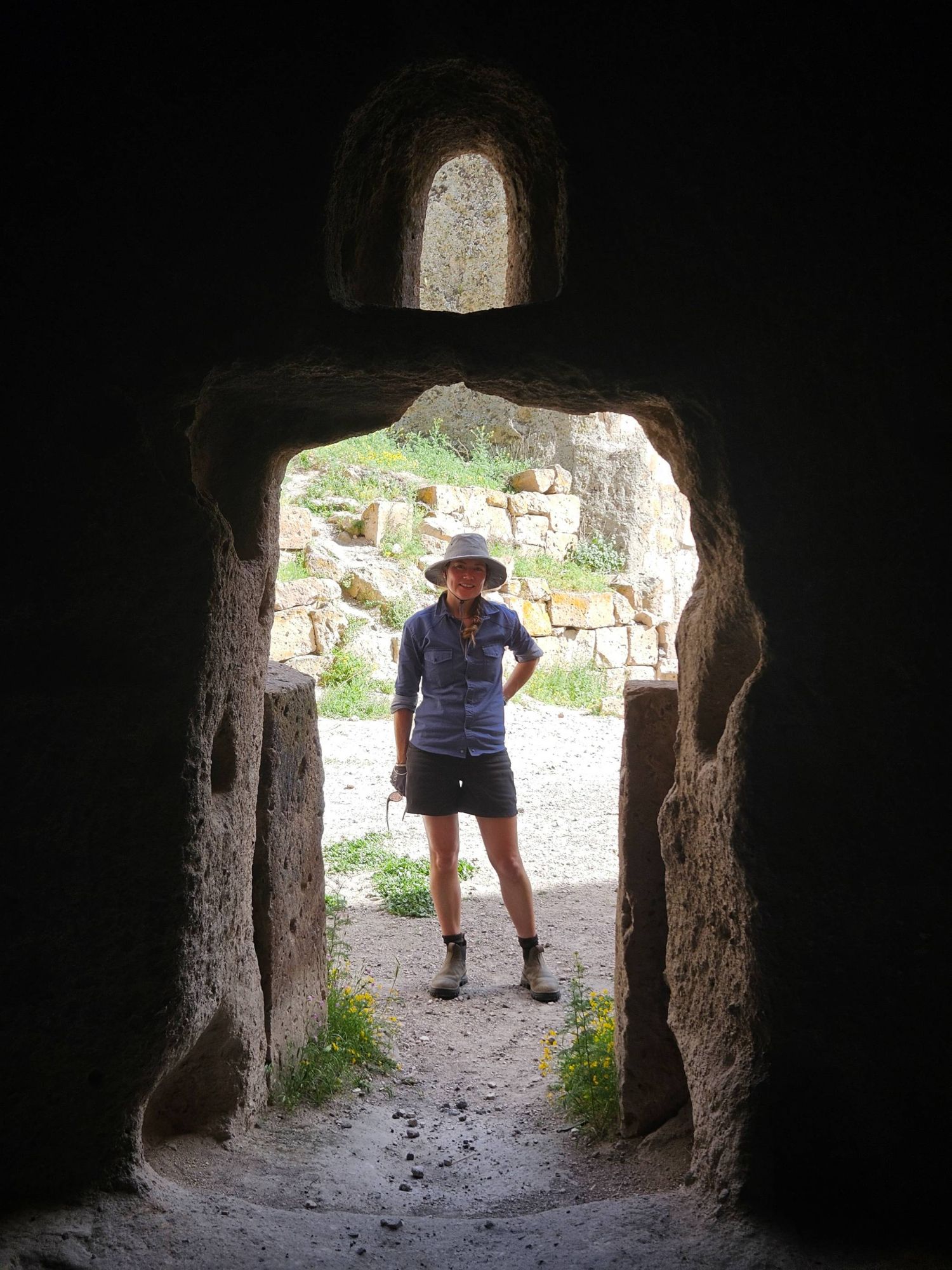
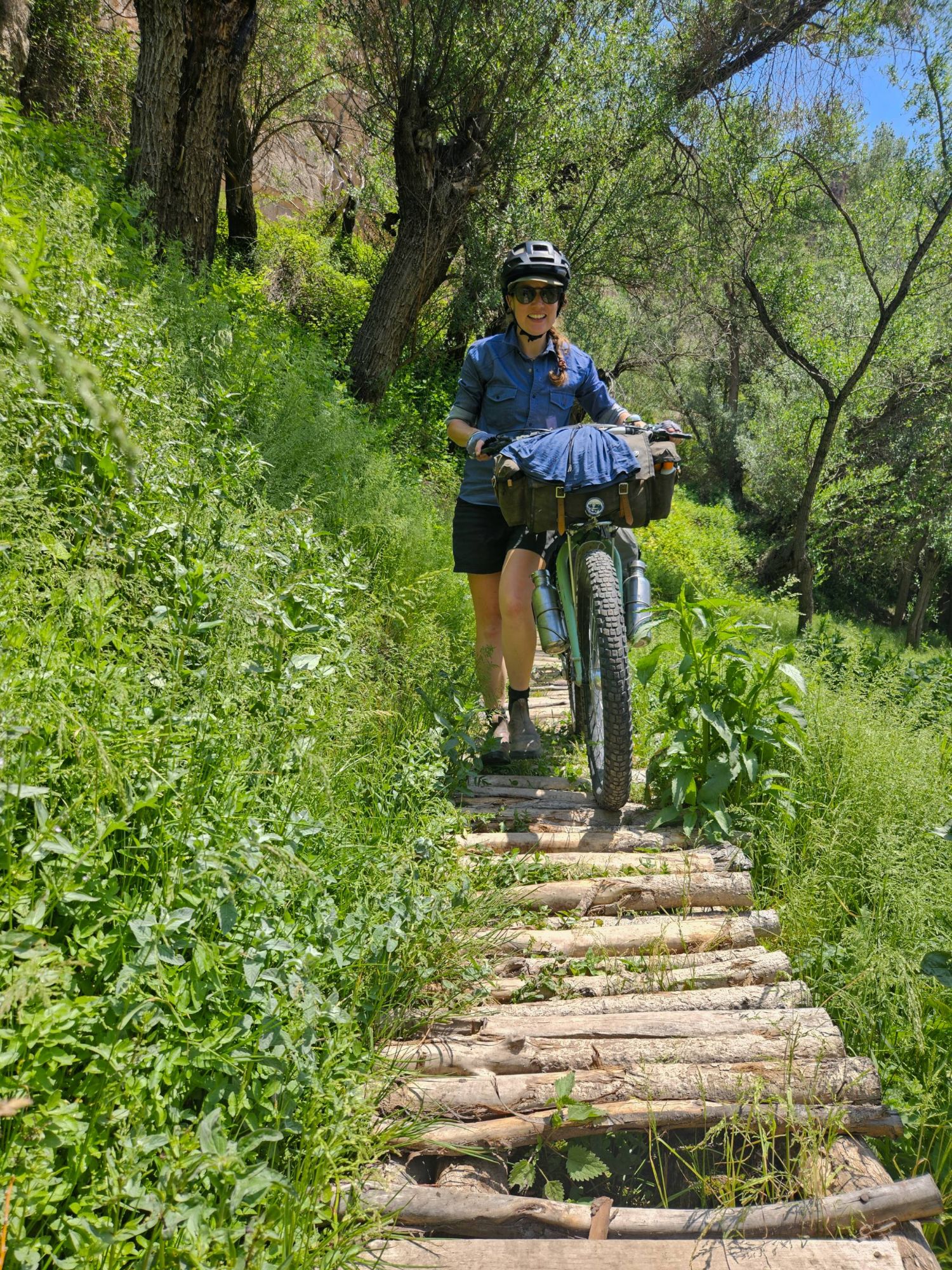
The wildflowers remained with us as we approached the Cappadocia region. A region famous for it’s cave systems, underground cities, ‘fairy chimneys’ of rock and, now thanks to tourists, hot air balloons. We approached the region from the South East, and joined a popular bikepacking route to take us on some off-road trails to see the best of the region. There are so, so many off-road routes in this area so we were pretty surprised when the route took us down a dried up river bed that quickly turned into deep, energy-sapping, unrideable sand. We cursed ourselves for not spending the time to work out a route for ourselves and then cracked-on, pushing and heaving the bikes, using old hike-a-bike muscles that haven’t had a strength session in a while and sweating profusely under the midday heat. But as soon as we crested the edge of the canyon near Soganli, and plummeted down the off-road track towards the river, all was forgiven. As we caught our first glimpse of the famous caves and fairy chimneys, we stopped in our tracks and tried to take in what we were seeing. A whole canyon, carved deep and wide by the river, the bottom full of green trees and grasses, surrounded by fairy chimneys, hundreds of them, all with little windows and doors carved into them. Higher still, and all the cliff faces of the canyon were scattered with cave entrances, windows and the remnants of stairways and walkways linking them all. It was incredible. The photos really don’t do it justice. And once we had the opportunity to walk around inside them – wow. They were so much more homely than I ever imagined – separate rooms for sleeping, storage or socialising. Communal kitchens centred around the one chimney, the ceiling, blackened by the years of smoke. Washhouses with troughs and pipeways linking them together – all carved out of stone. But the thing that was most mind-boggling was the sheer number of them, everywhere you looked. And even as we pedalled through one canyon after another, heading further North towards the more touristy towns, you could look up and see even more caves or fairy stacks tucked into the trees. It’s hard to imagine that many people living here. And now they are all empty, where have all the people gone!?
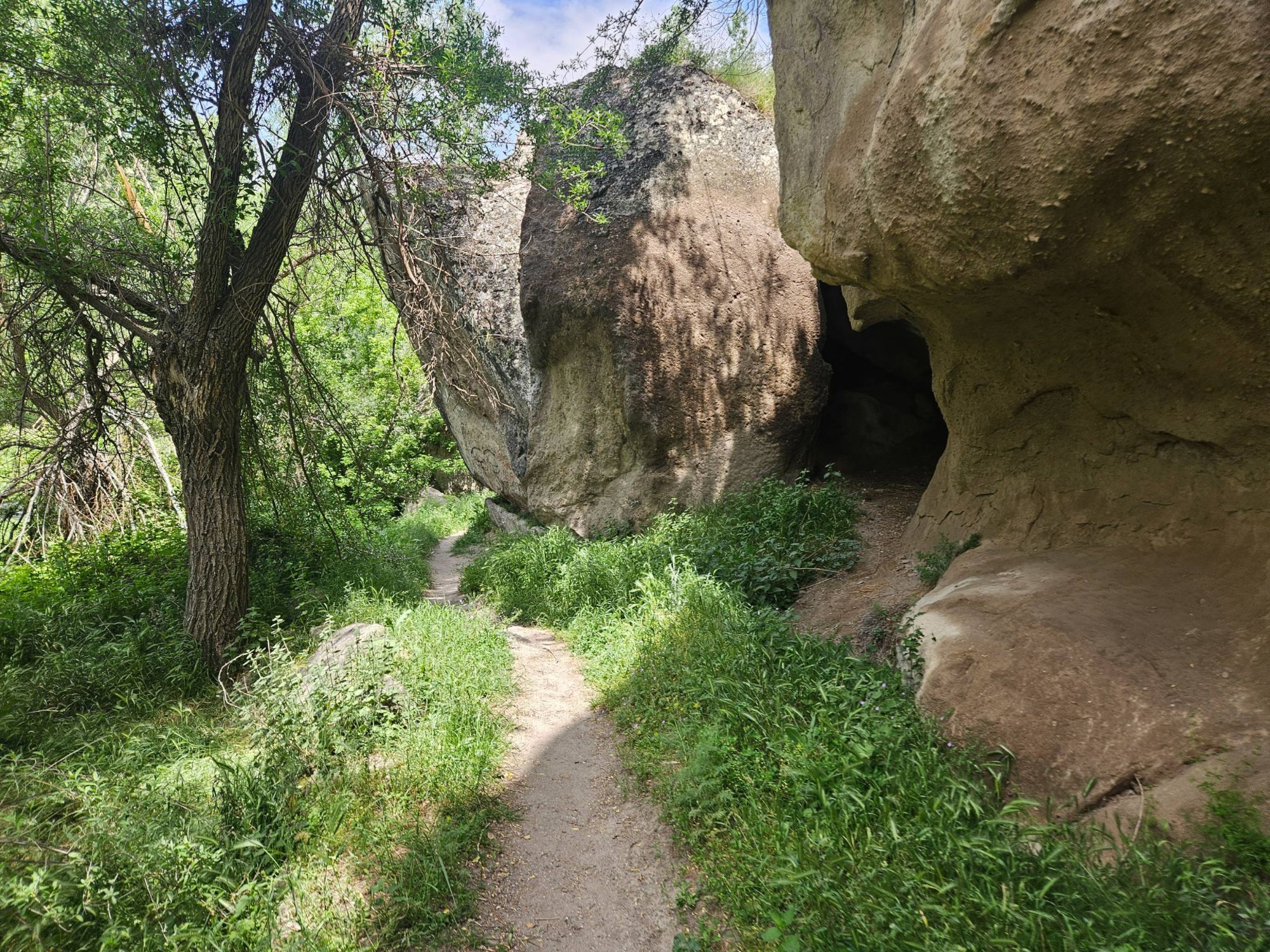

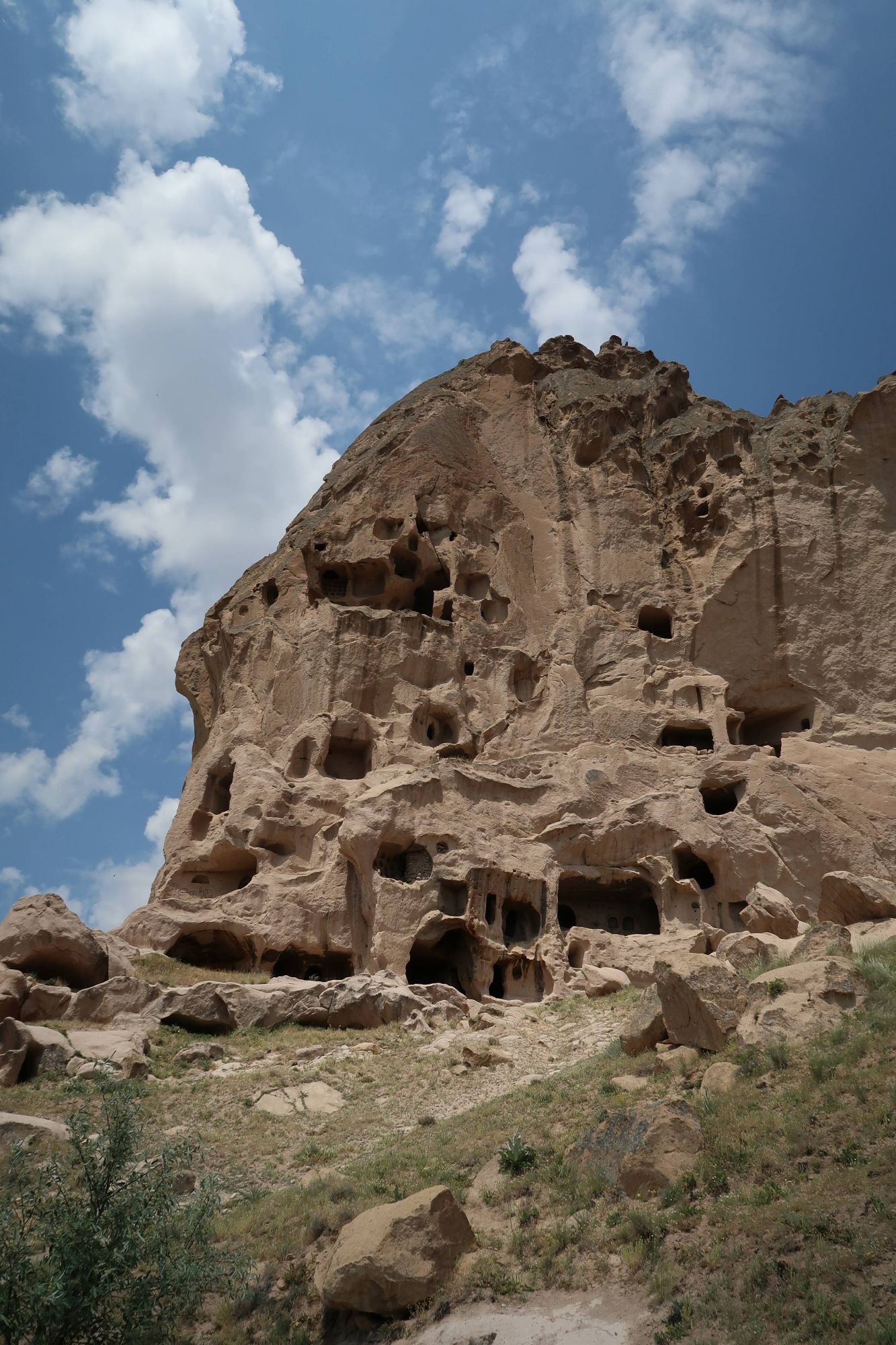
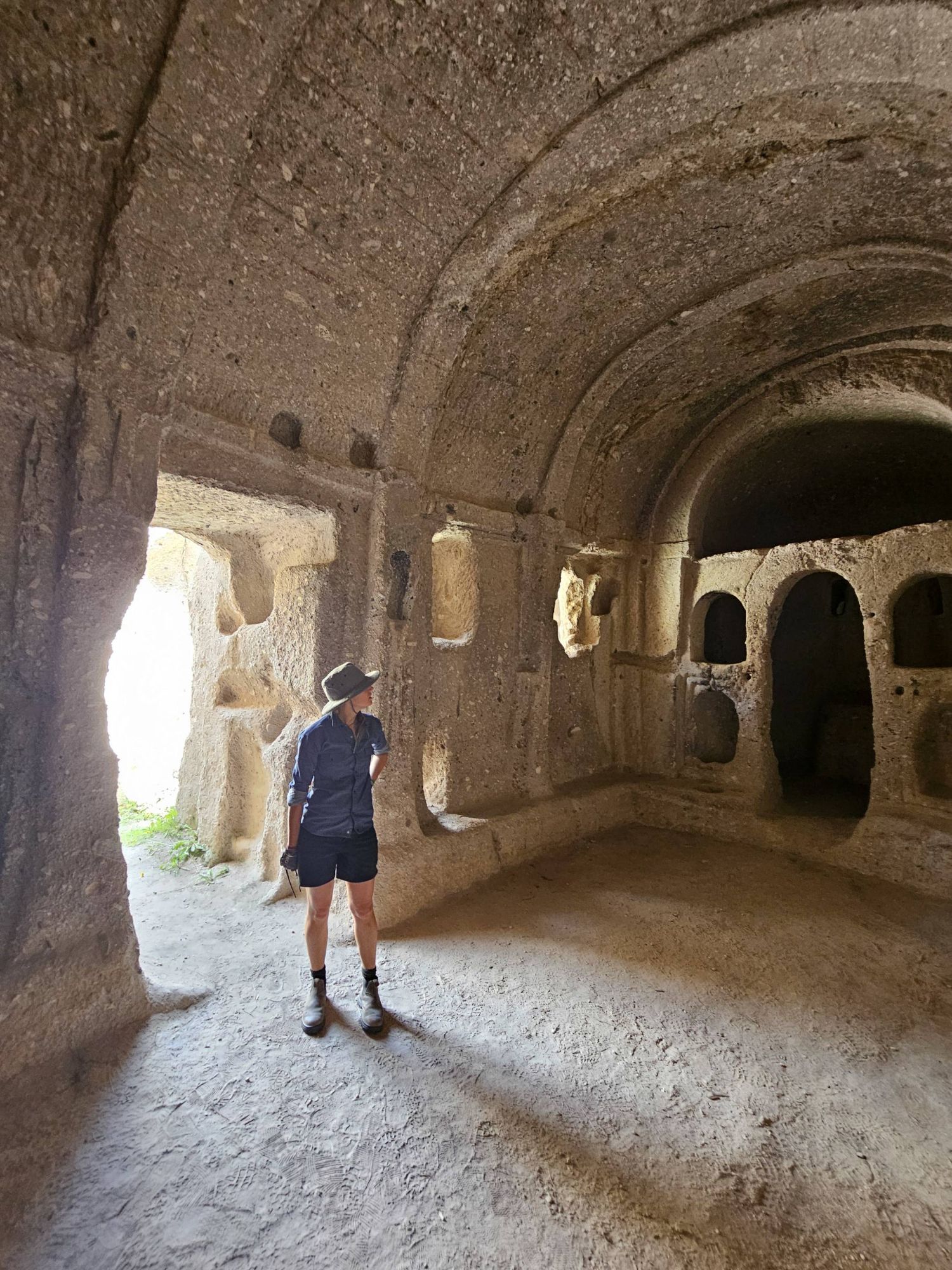

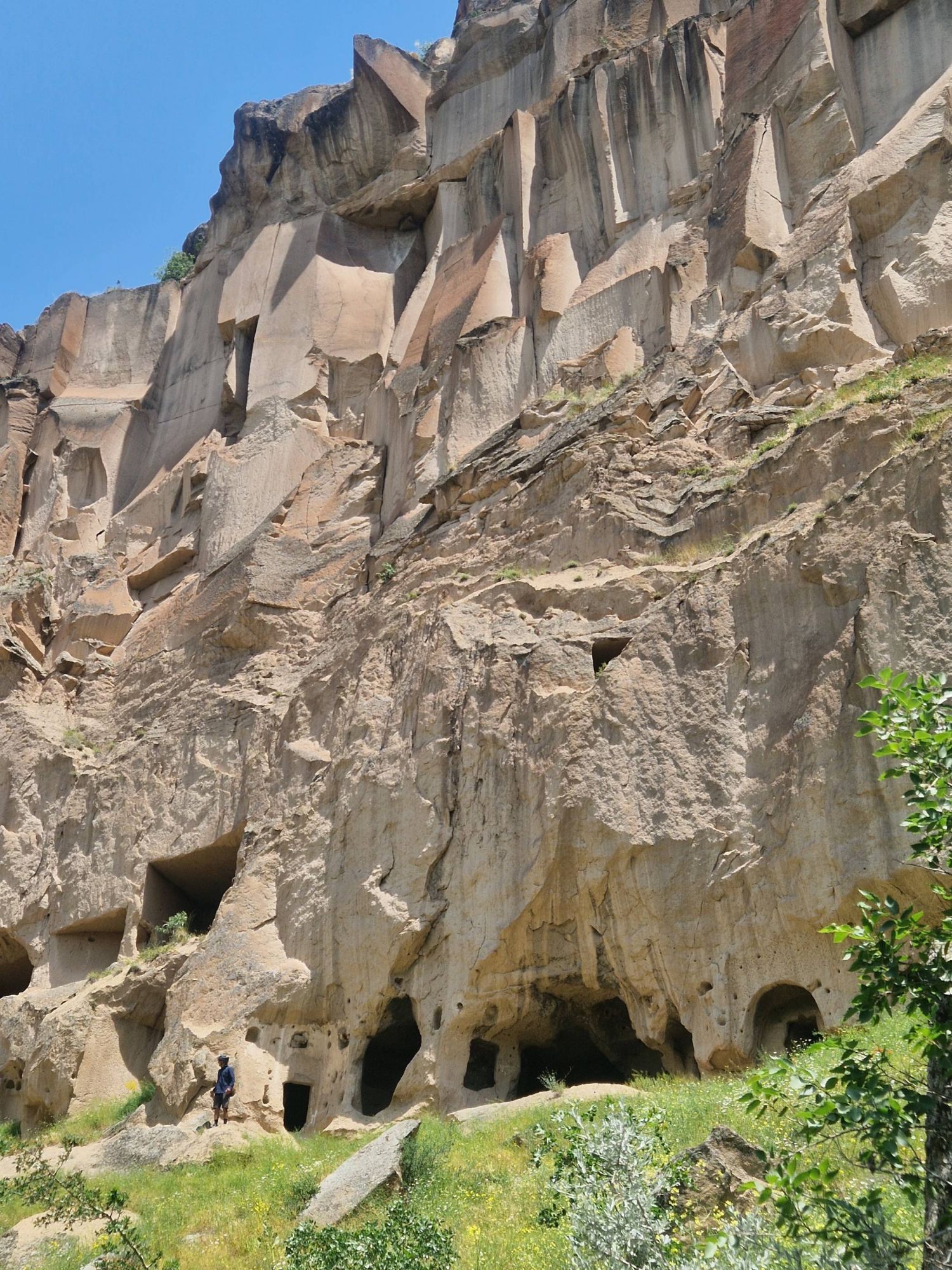

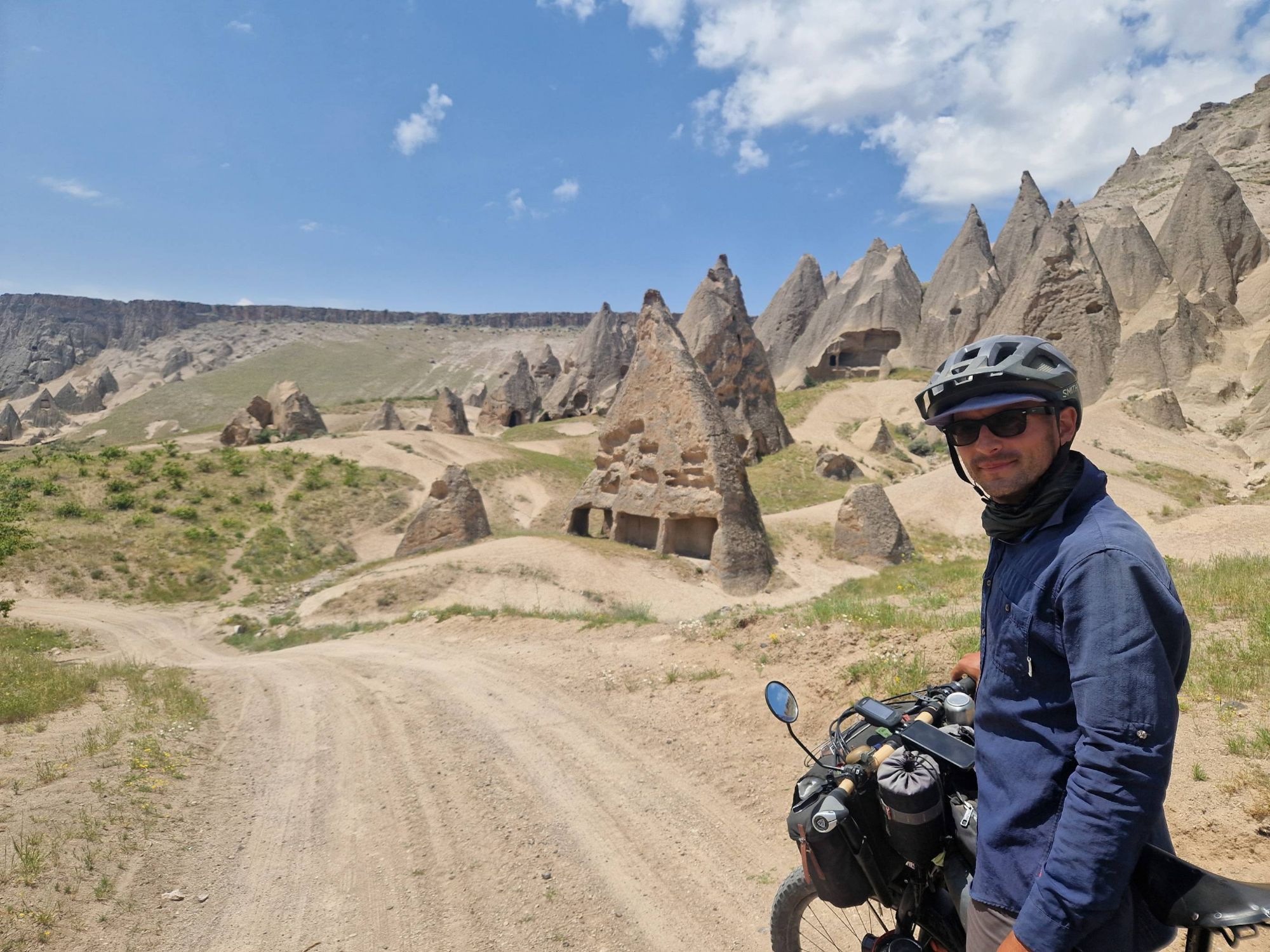
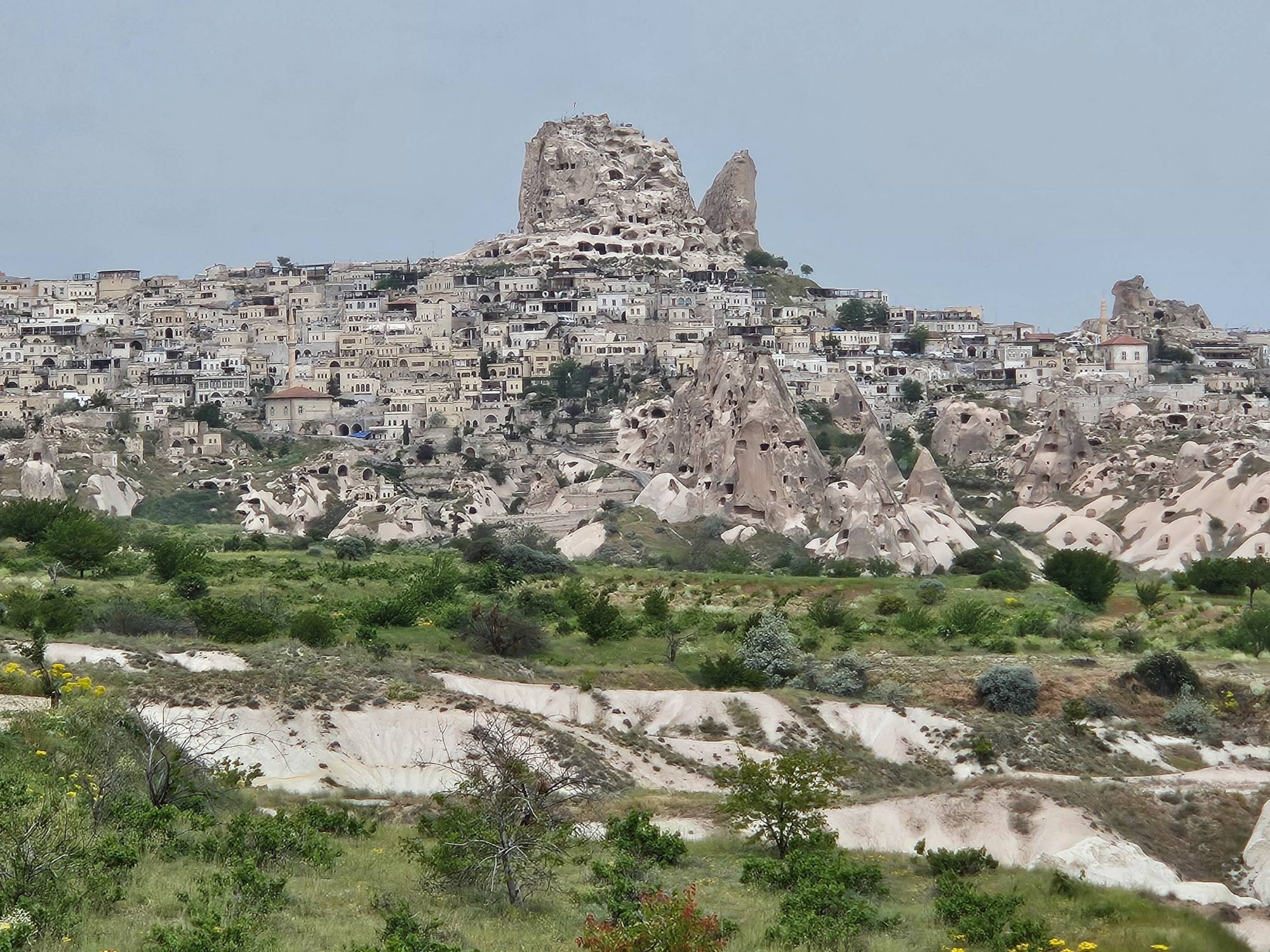
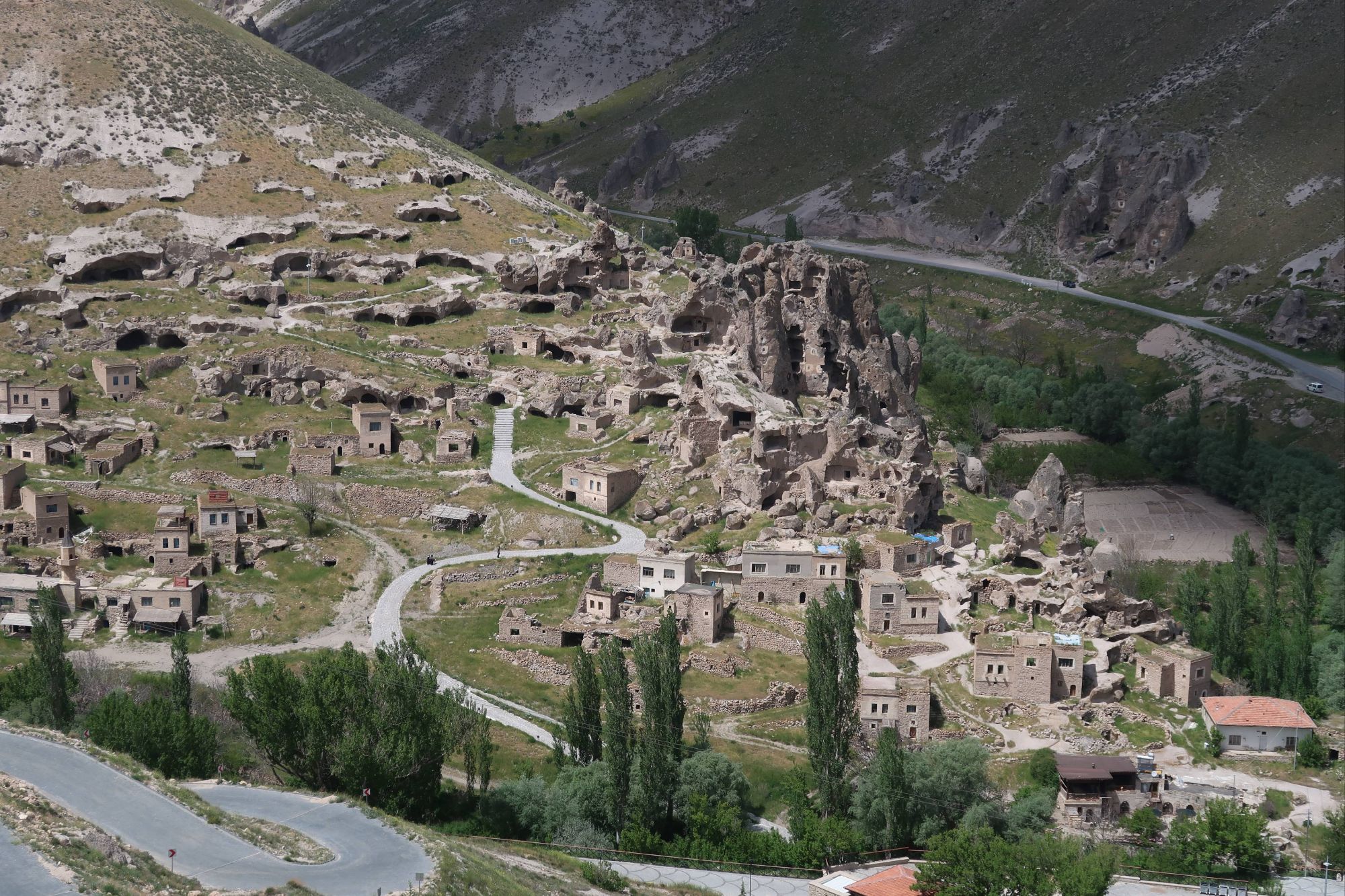
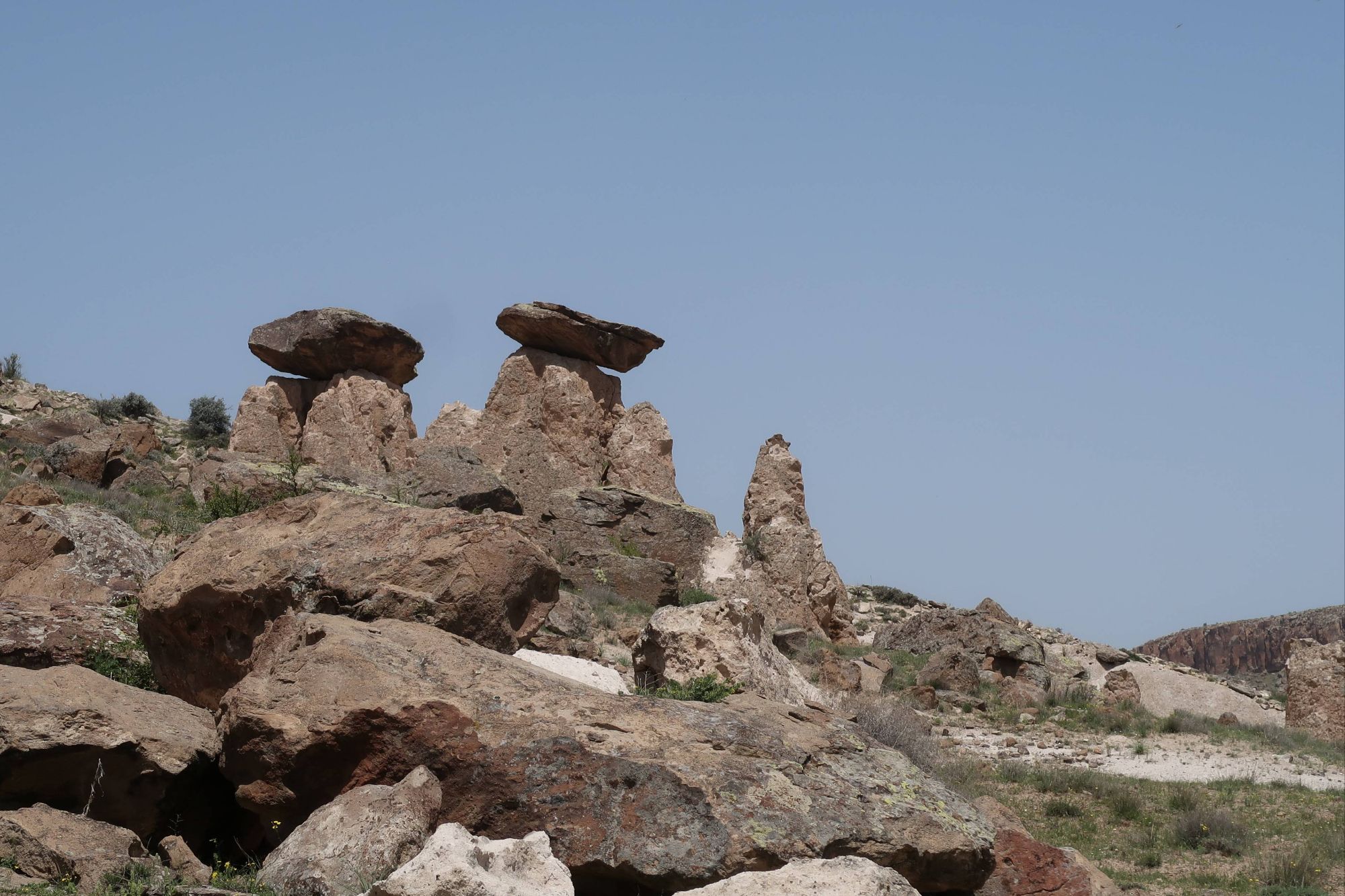
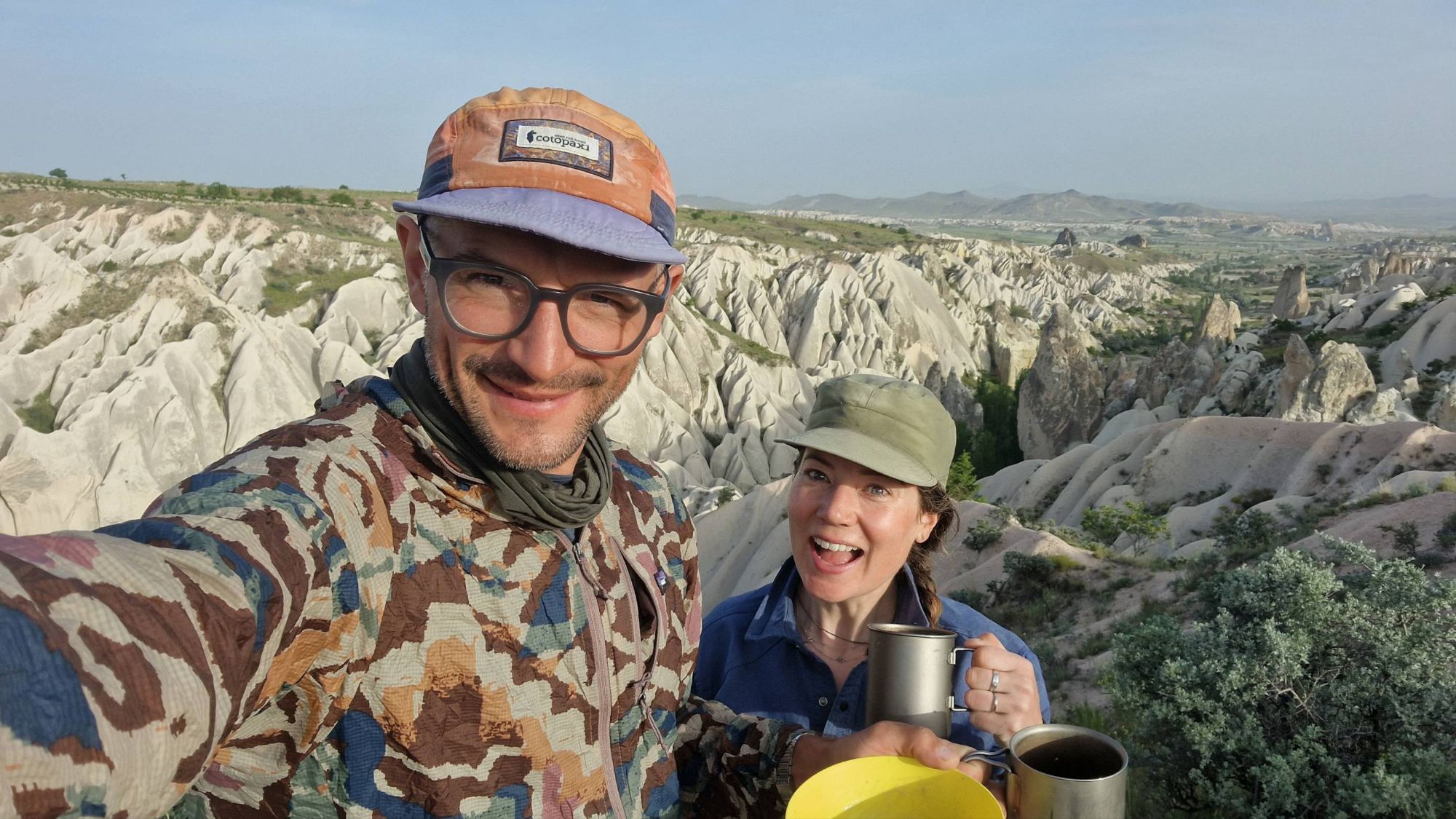
Popular opinion is that a lot of the caves aren’t quite as old as you may think, but contrasting theories suggest the caves are genuinely caveman old, maybe even pre-caveman, who knows!?! I’m no historian but it was fun to play guessing games with Ted about just how old they were and who lived there. You also can’t help but get the feeling of goosebumps whilst you are walking around, as though someone is looking at you over your shoulder, as though the shadows have ancestral eyes. It’s a kind of in-built, DNA-deep resonance and connection to a place that feels like it goes back to the start of humankind.
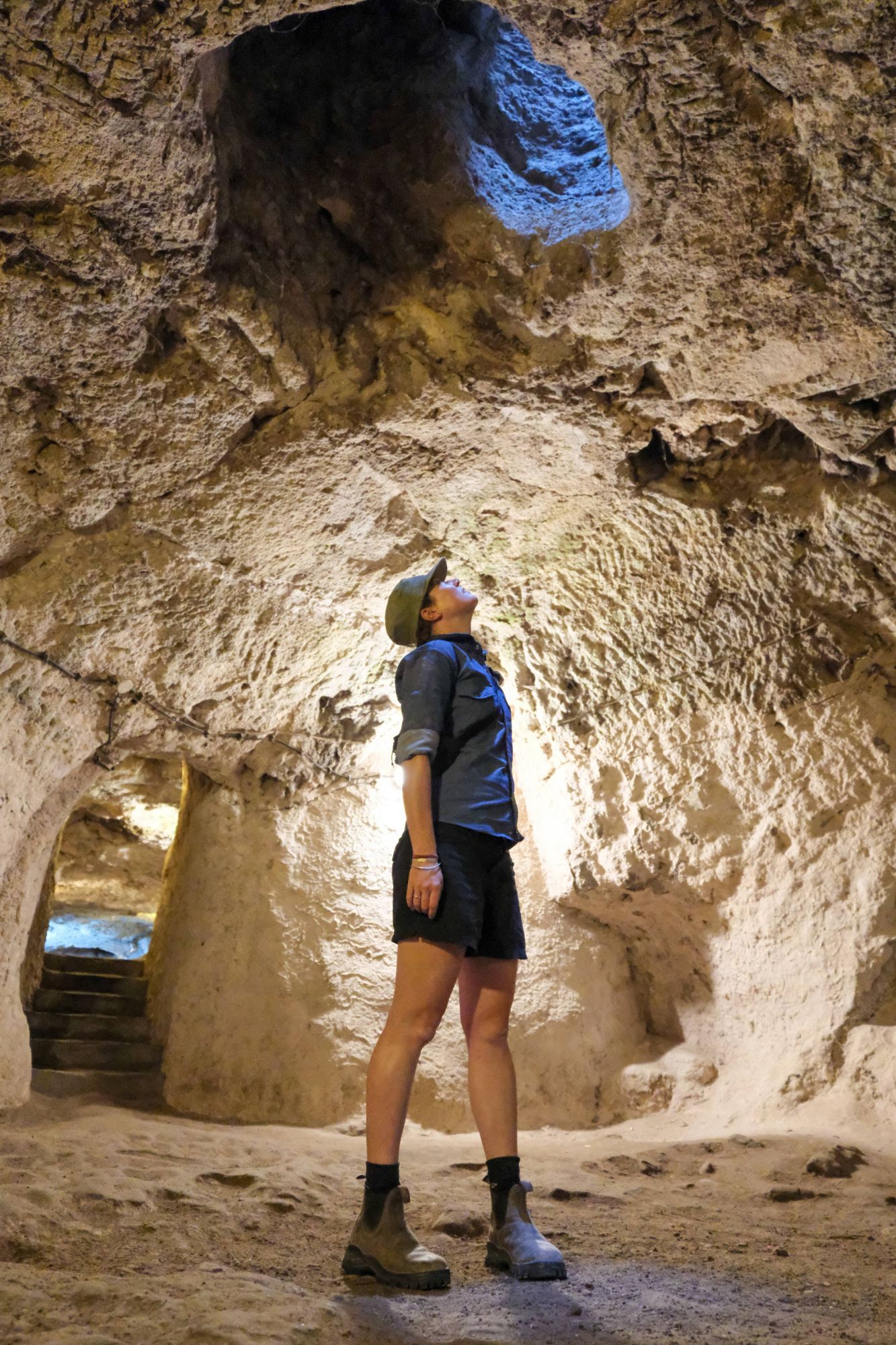
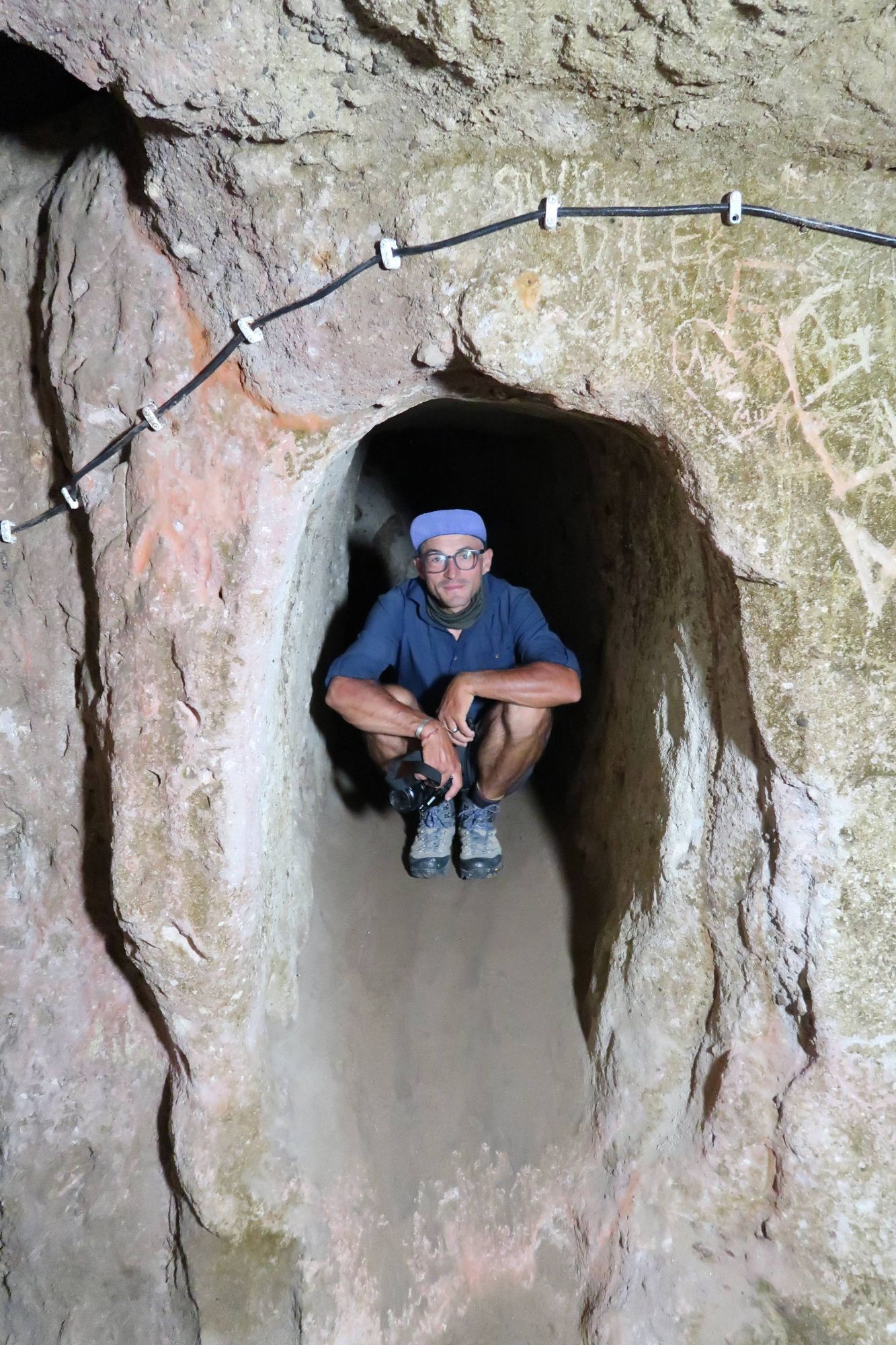
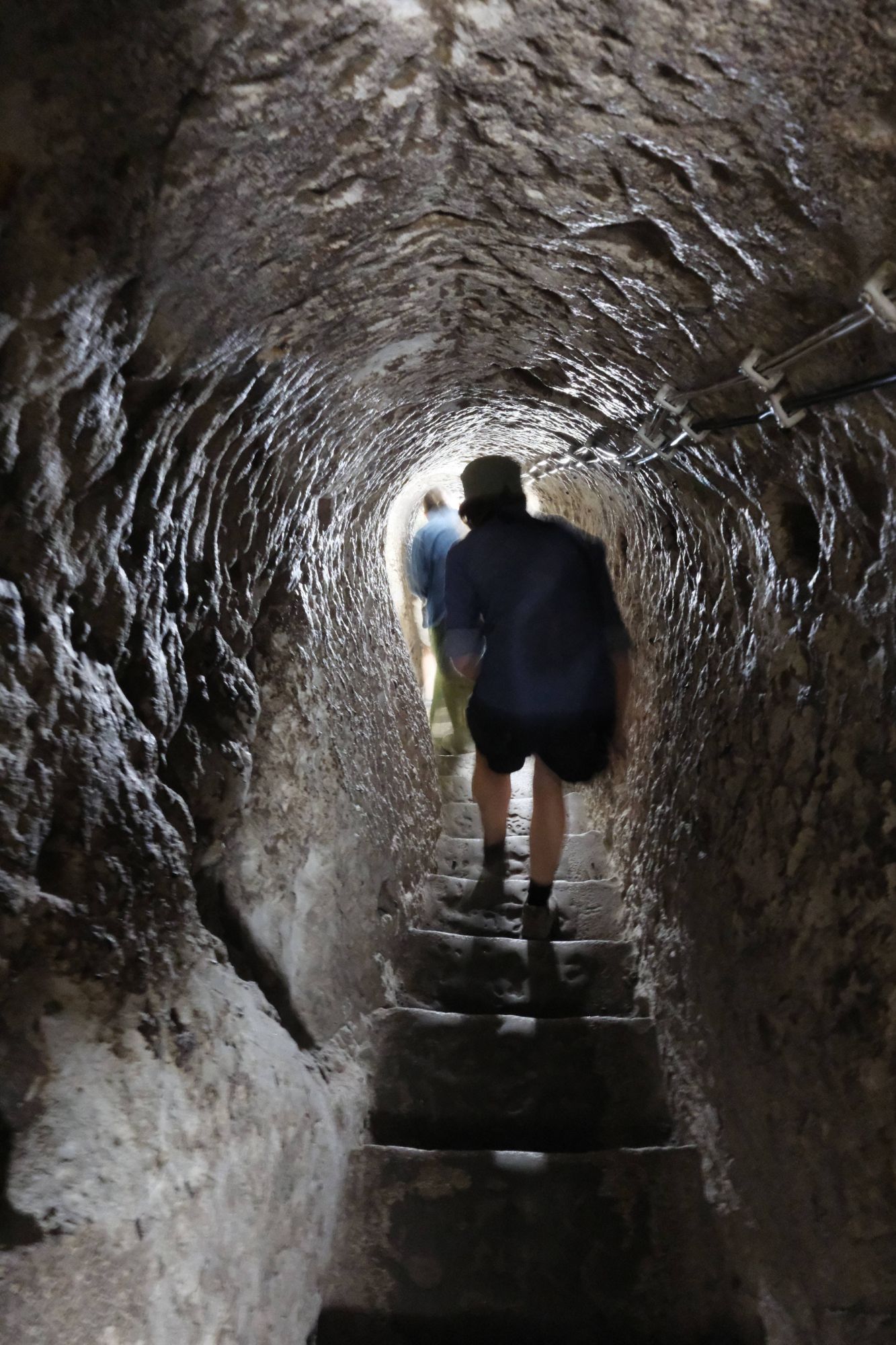
After our few days in the Cappadocia region, it was then on to the land of the underground cities. We took a small detour to visit Derinkuyu which is the largest underground city they have discovered so far (they are frequently finding new ones!). The small and unassuming entranceway at surface level gives no indication of the 8 stories of caves hidden away beneath it. The caves were split into different rooms again, but this time also had the complexity of airways and light shafts and water inlets. Pretty impressive. It kind of blew my mind that humans lived here, and yet also seemed totally normal and natural. Certain sections had huge stone round doors (that looked a bit like millstones) that could be slid into place to stop intruders. It was like a real life Indiana Jones film set, and coming from a family of Indi-fans I naturally felt the need to recreate the famous hat-under-the-rolling-stone scene, I mean it would have been rude not to.


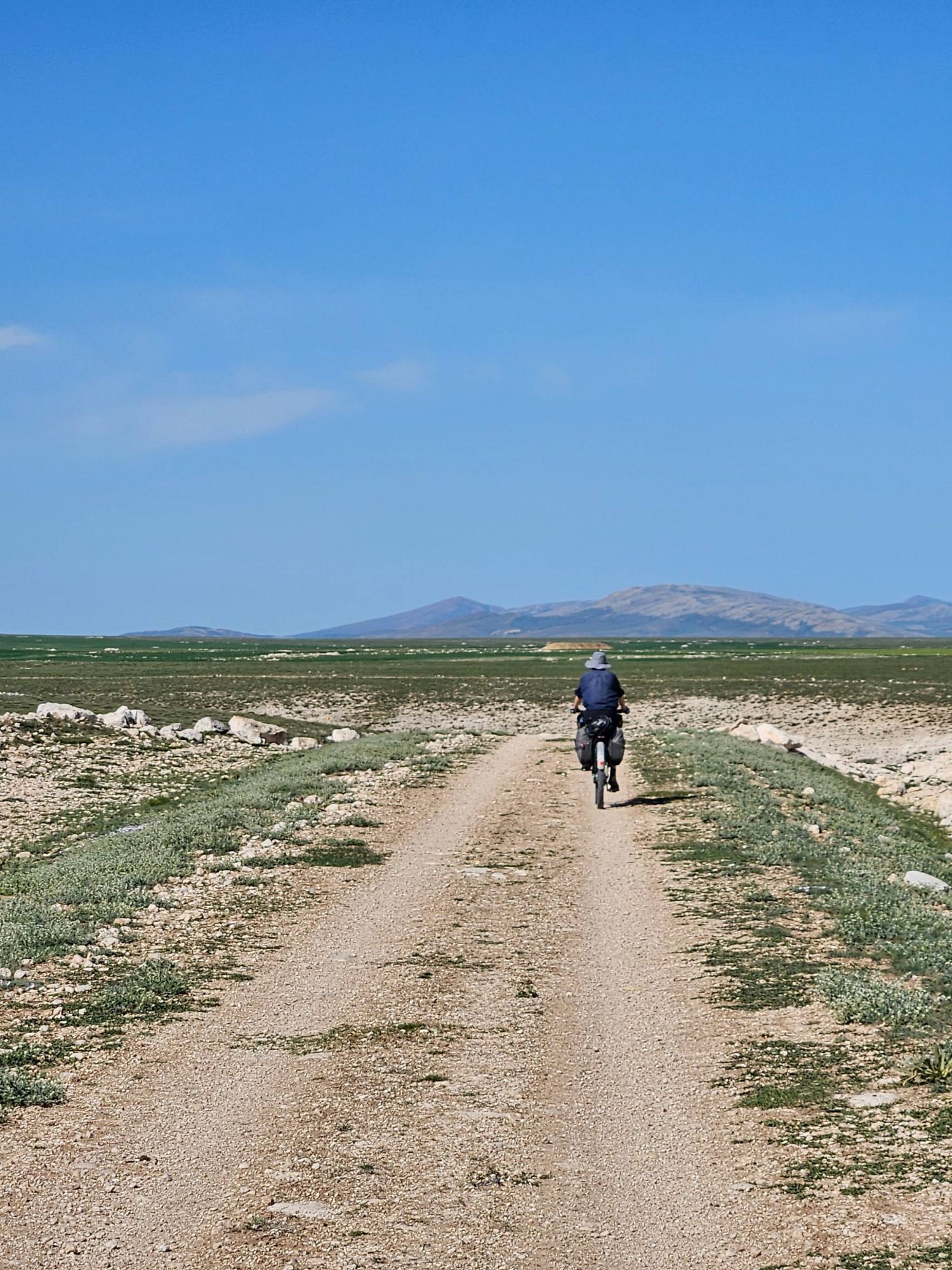
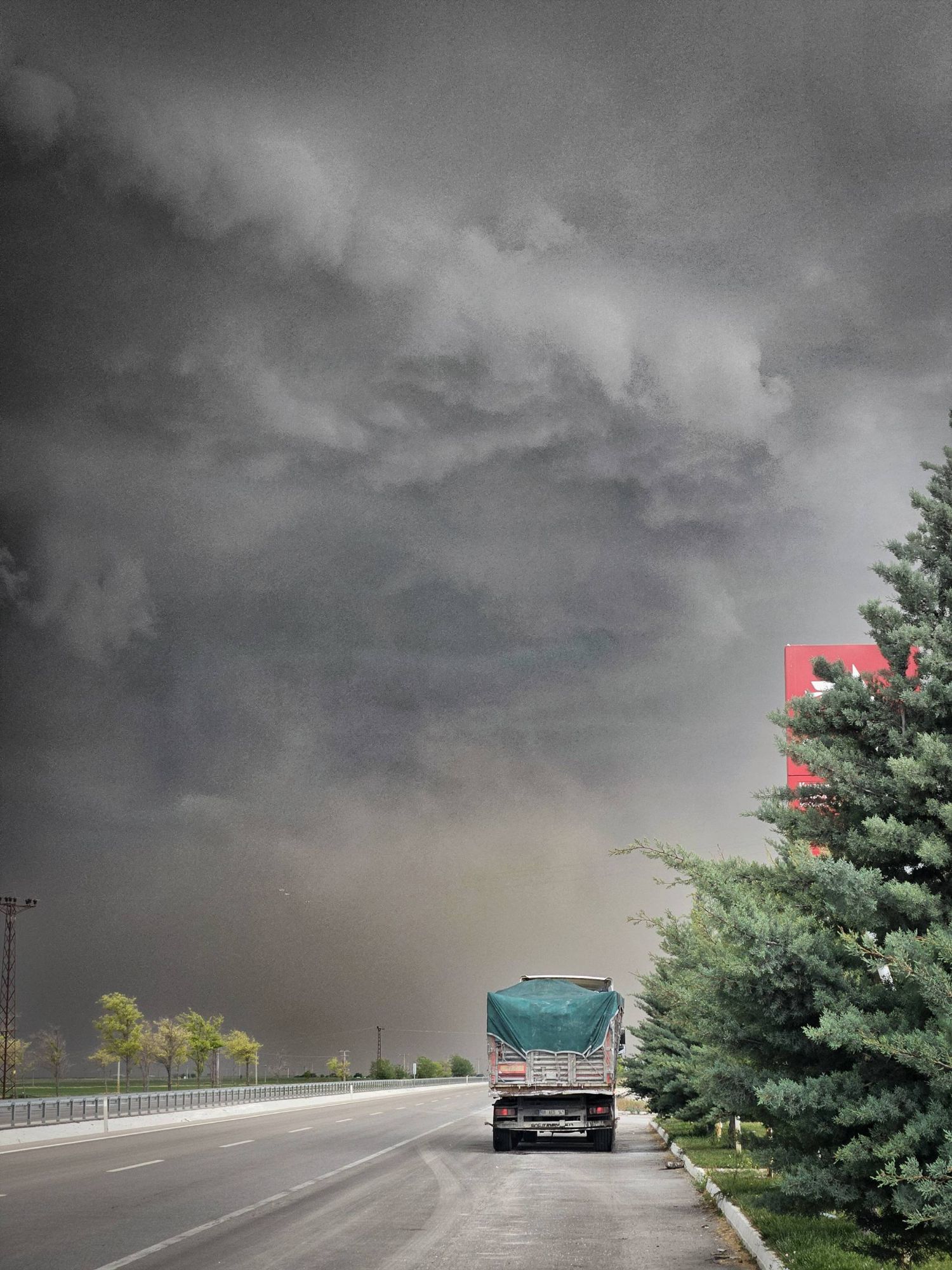
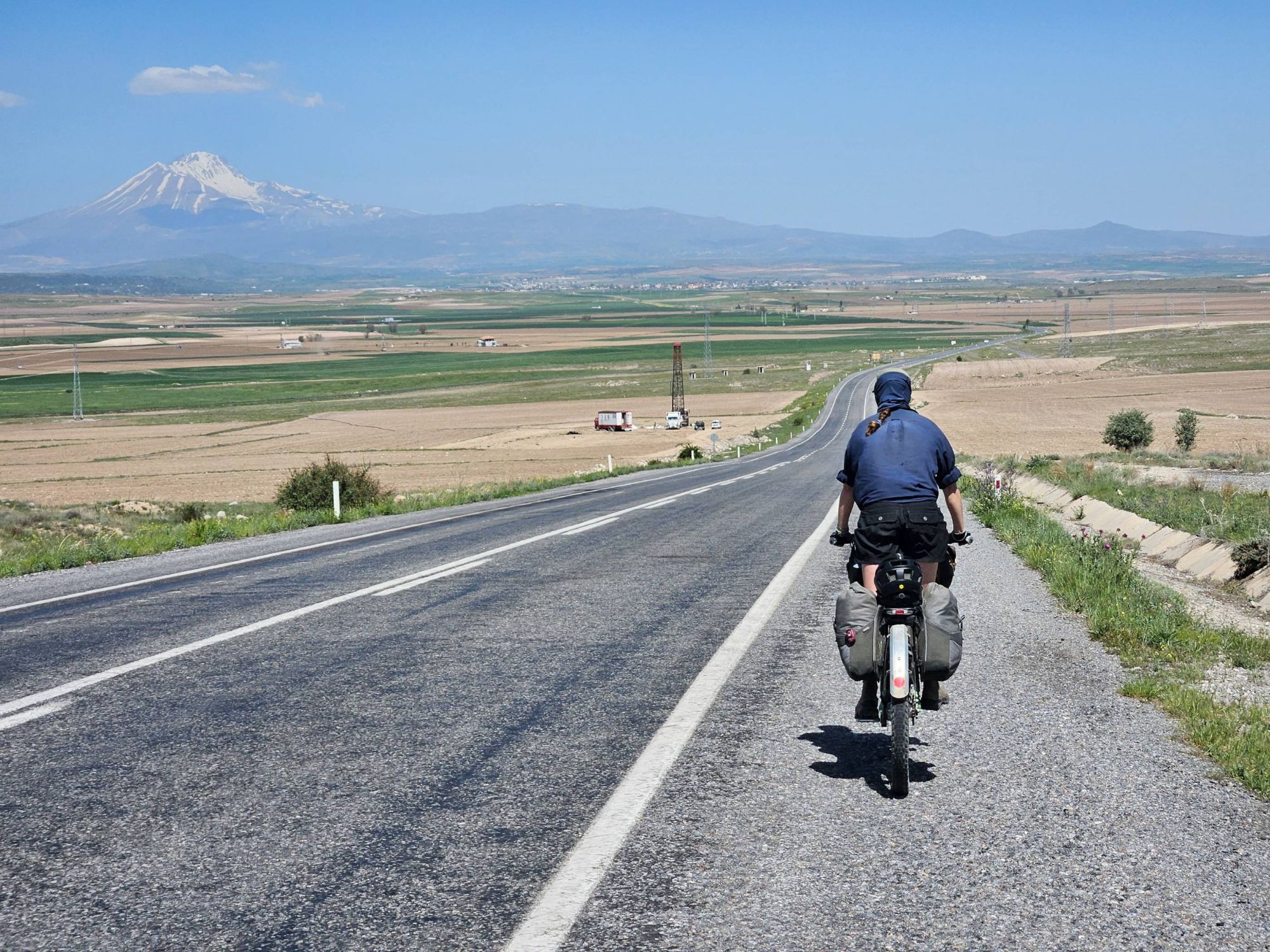
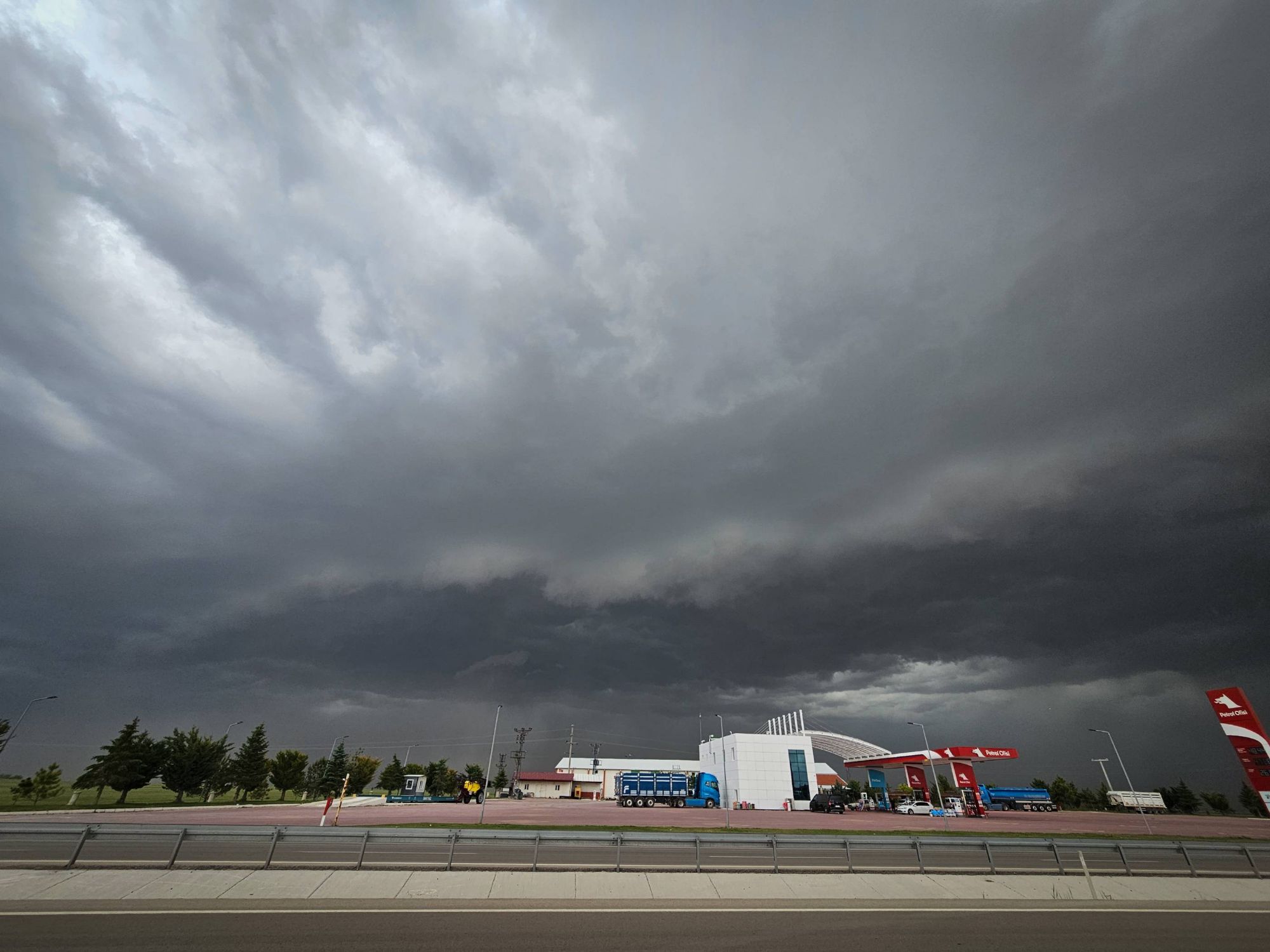
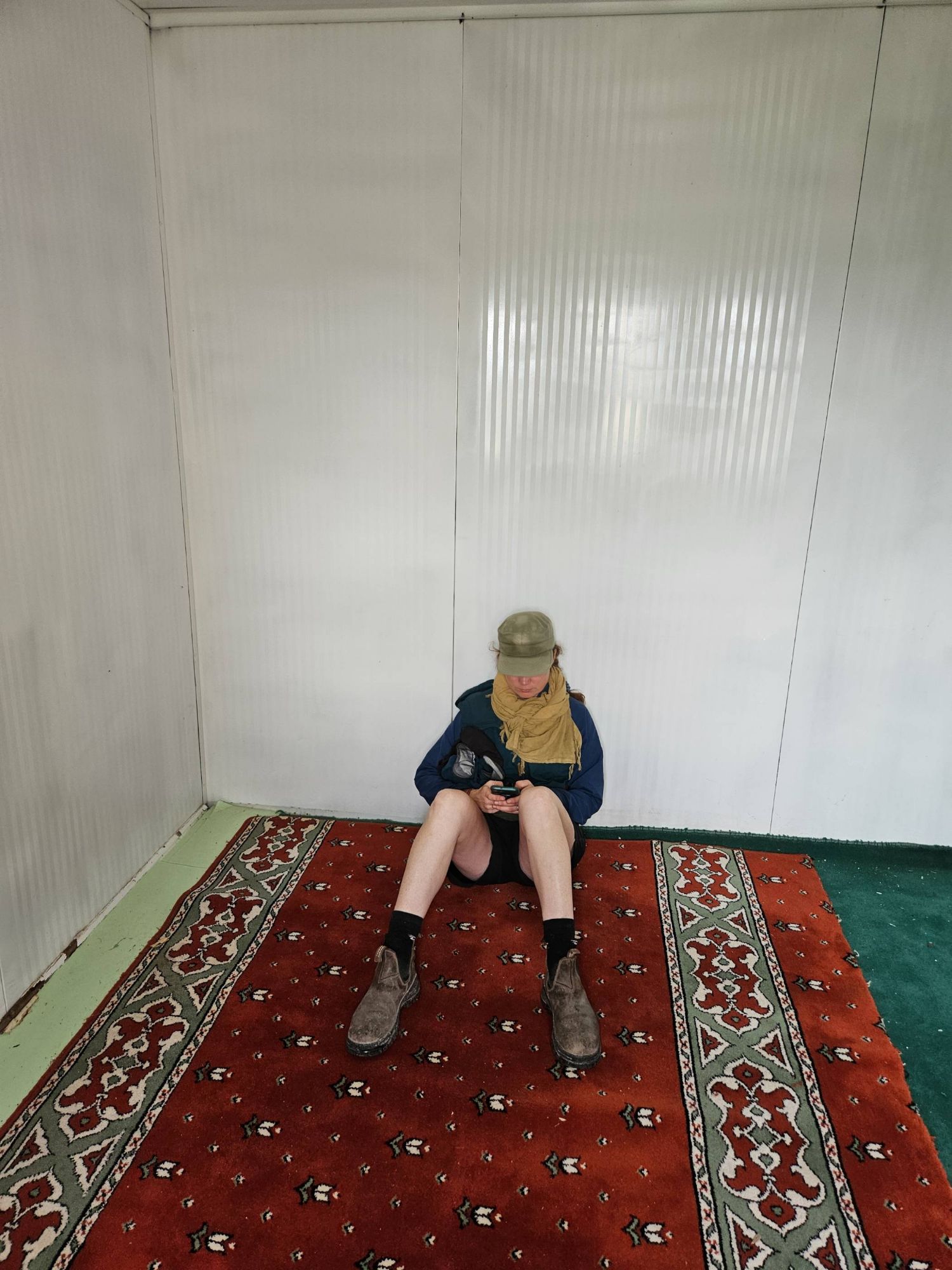
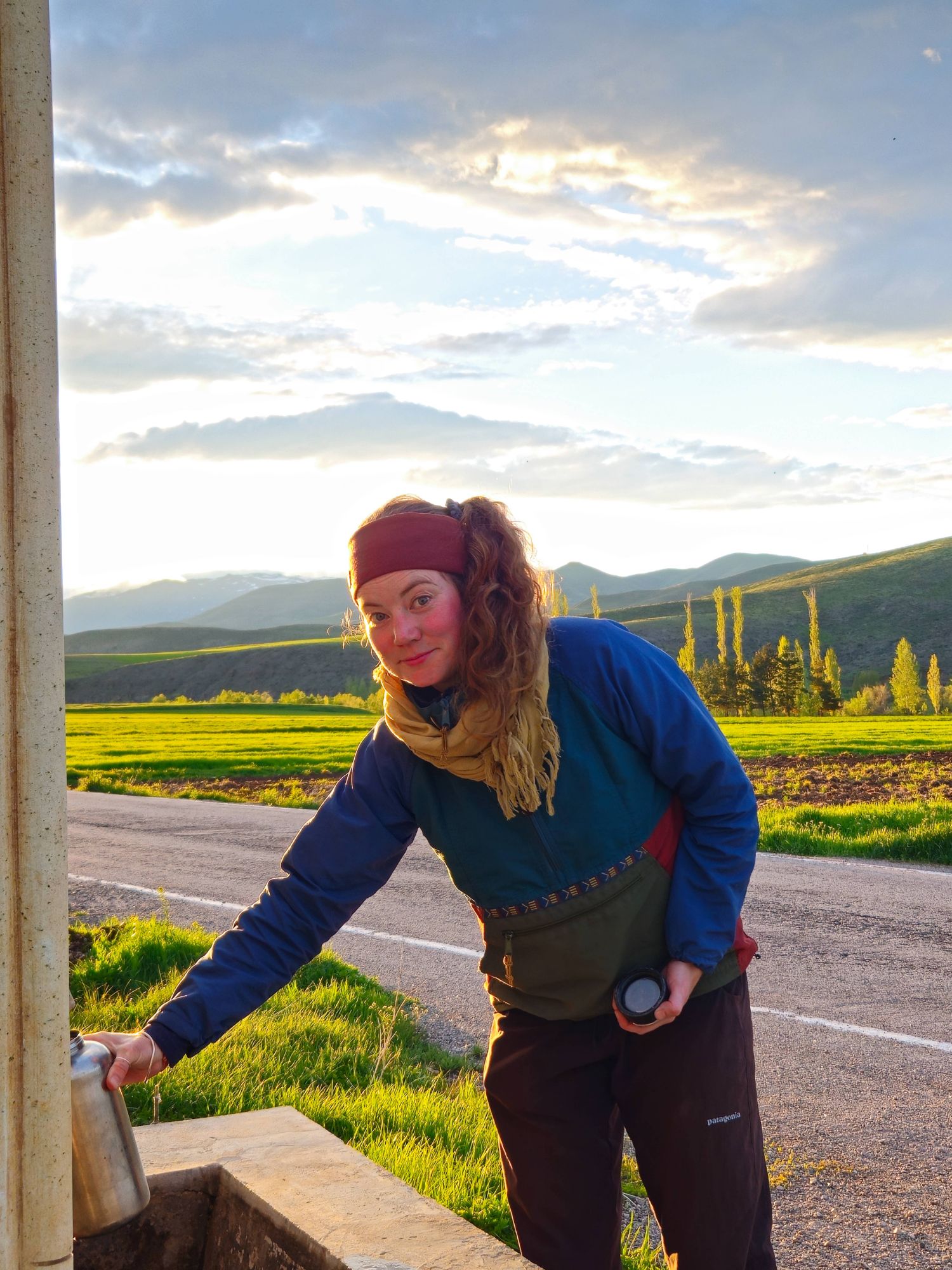
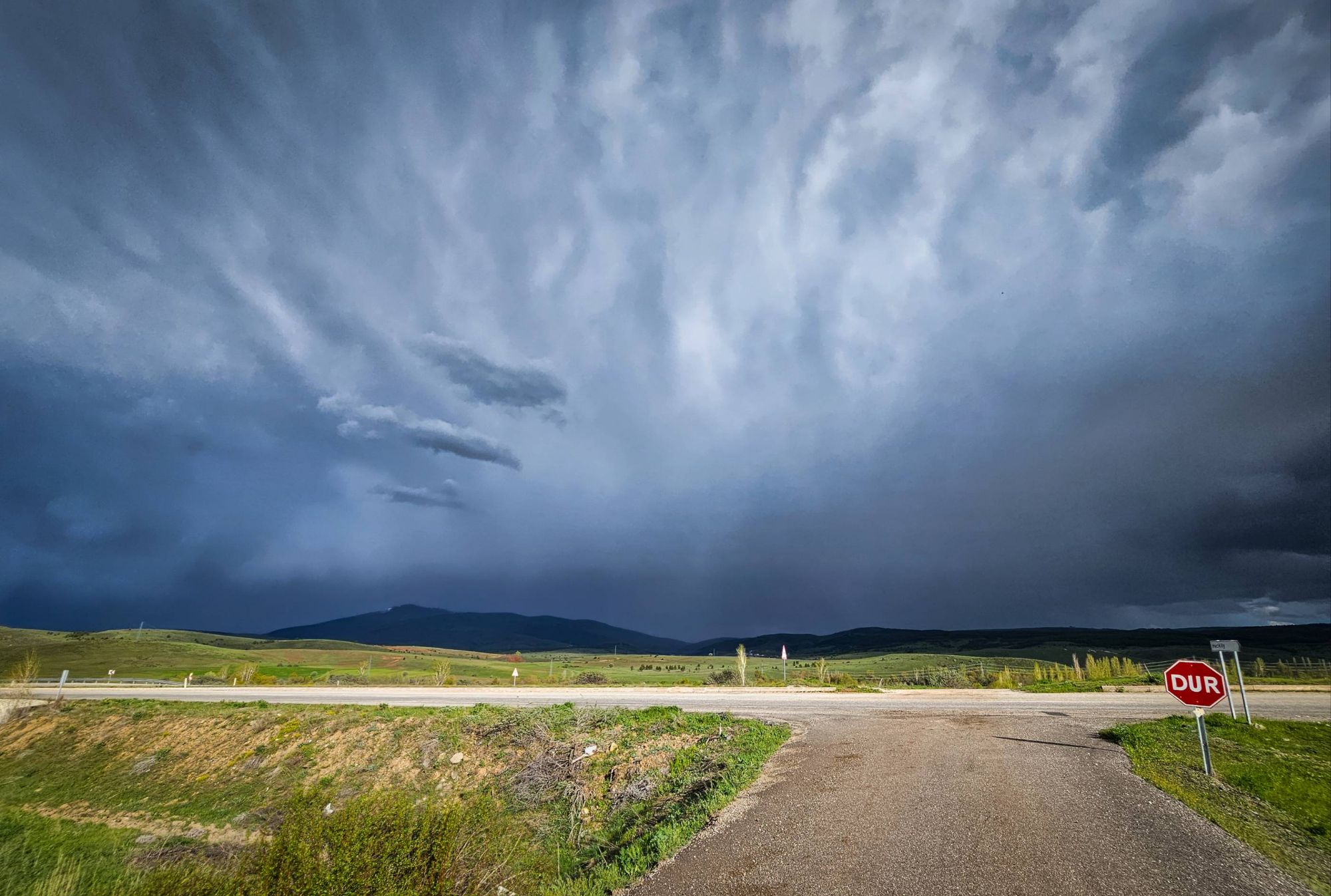
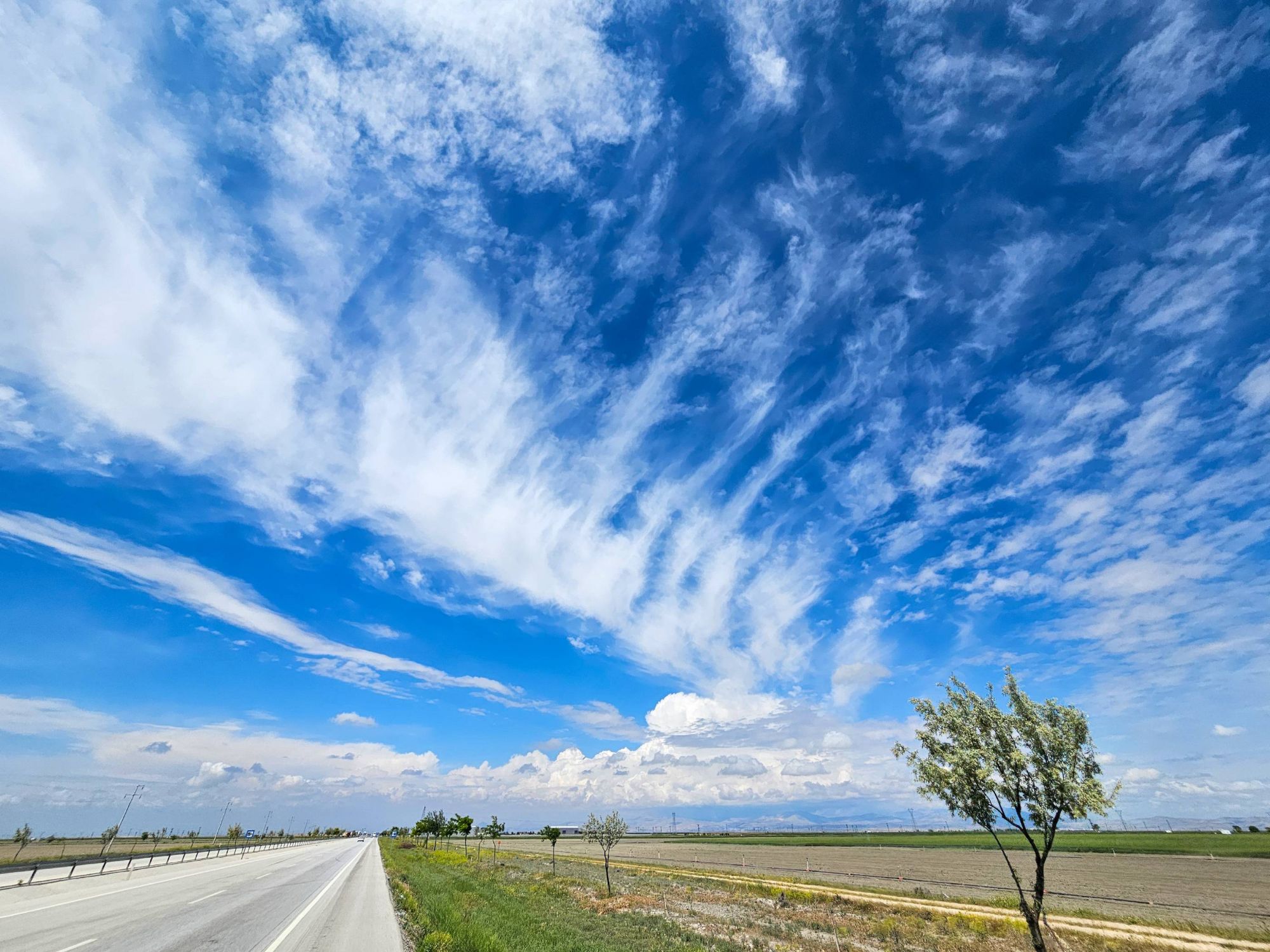
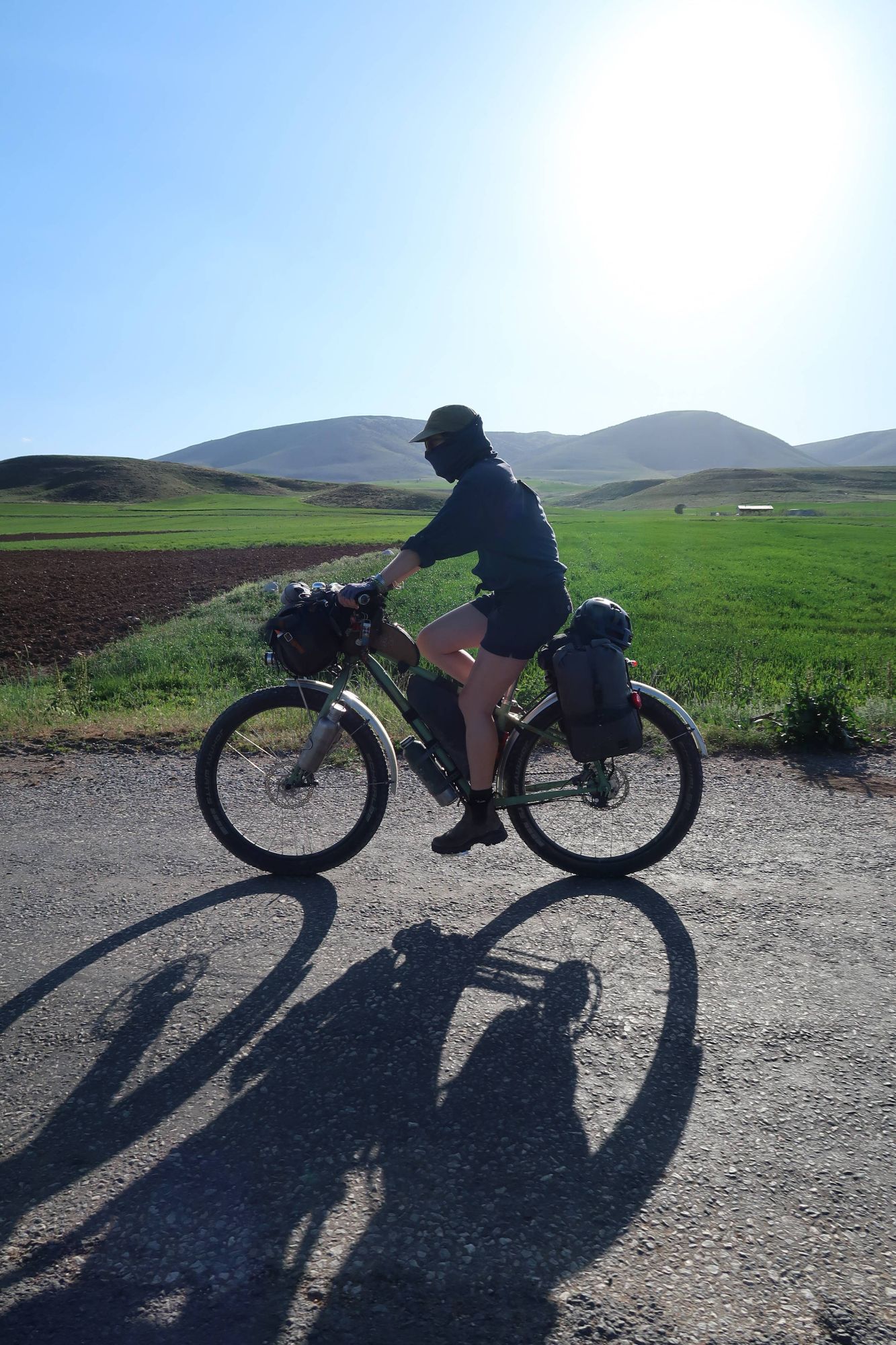
Continuing our journey Westward and the land started to flatten out. We were just over half way across this huge, huge country and only now did we get some respite from the perpetual hills. The land was still rolling but it gradually became more farmland and fields. It was no more populated, but there was less wild green, more agriculture. With huge skies and roads that seemed to go on forever, disappearing over the horizon and merging with the clouds. We had hoped to be able to cover some big distances here, and in all honesty we did, but progress was hampered every day around 4pm when a huge storm would break. Some quickly passed over us, blowing out on the fierce wind that brought it in, as we took shelter in a bus stop, a cafe or a petrol station, but others were much bigger, almost hurricane-esk. We never knew what we were getting, but those big skies definitely let us know that something ominous was on its way. I set the morning alarm earlier and earlier (much to Ted’s delight!), in the hope of covering more distance before we got caught in yet another storm, but it didn’t seem to help. Even before the afternoon storms, the headwinds were relentless. After a week of chugging our way through the daily storms we were pretty exhausted and fed-up. Then, whilst taking a break one afternoon at yet another petrol station, a bus pulled in to refuel. It was heading to Izmir. Ted joked with the drivers about jumping on board and surprisingly they agreed, no question. It was as though the bus was a gift from the universe, and who were we to argue with that!? So we quickly bundled everything onboard and found ourselves chugging along watching the storms from the windows.



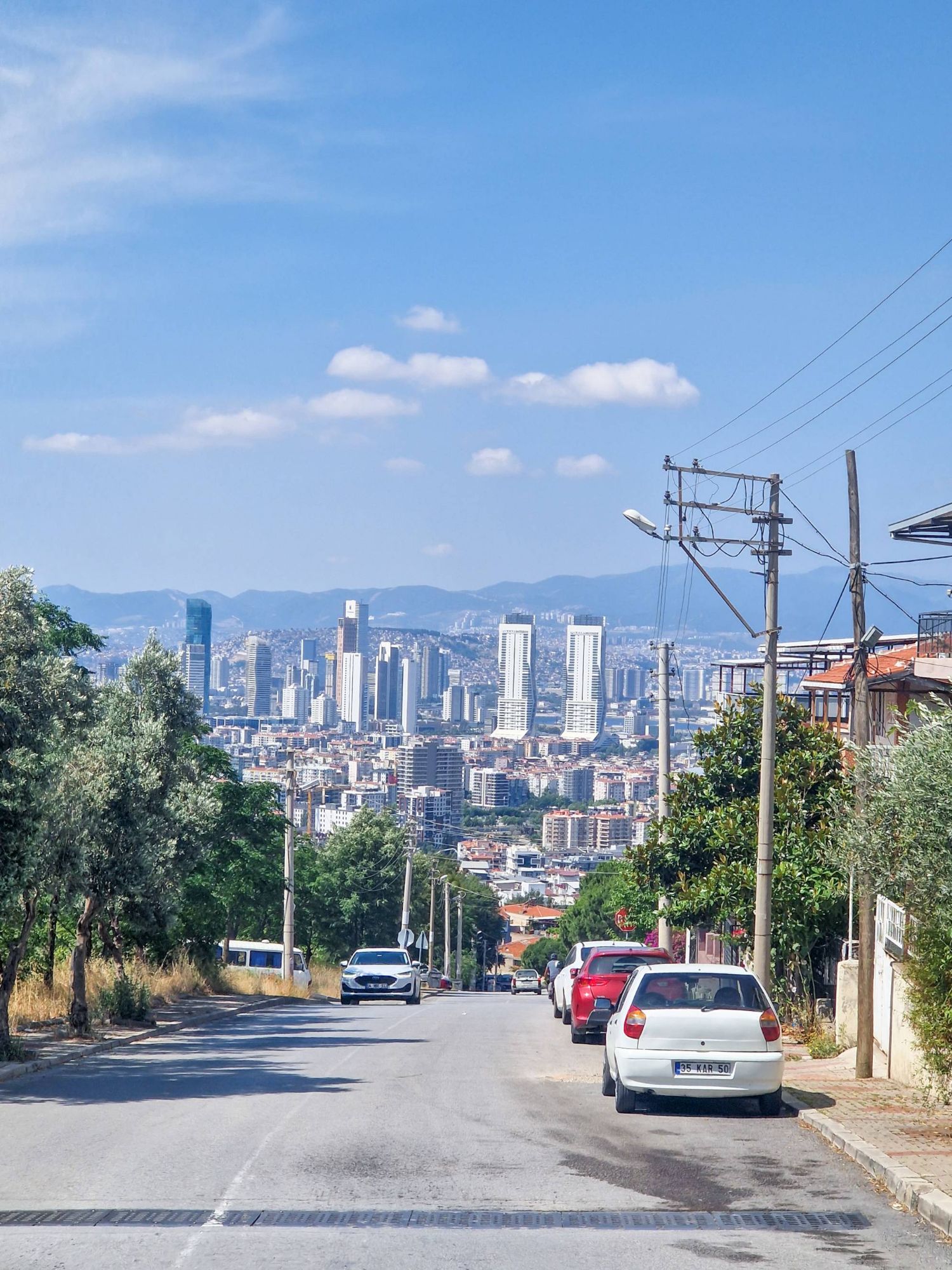
Getting off the bus a few hours later felt like we had arrived in another country. The temperature was considerably higher (now that we had dropped down to sea level), the city was busy and bustling, the people all looked like they were coming or going from a package holiday, with more skin on show than was really necessary. It dawned on me, this costal region was where our preconceived notions of Turkiye had come from, it made sense now!

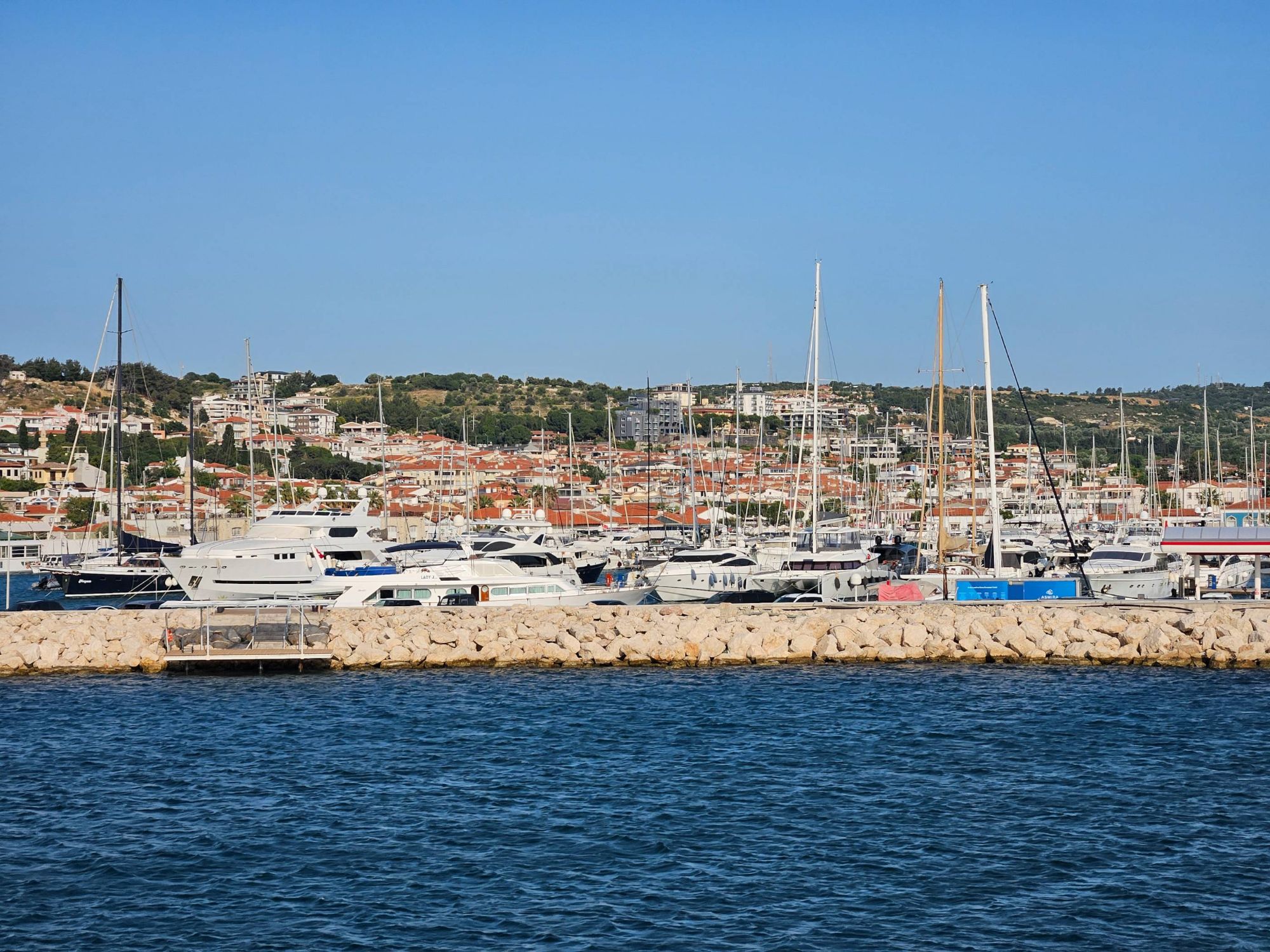
From Izmir, we whizzed along busy coastal paths, dodging fishermen’s rods and wiggling between families out walking. This was nothing like the Turkiye we had come to experience over the last month or so. The Adriatic Sea was the bluest blue and we could feel the homely familiarity of salty stickiness in the air and clinging to our skin, as white horses were whipped up by the strong winds blowing inland. Bit-by-bit everything was beginning to look and feel more like a Greek island – cobbled streets winding through small coastal villages, blue shutters on white washed houses, large men perched outside bakeries on rickety old chairs, lazy sleeping cats occupying every patch of speckled shade created by thick, twisting vines.
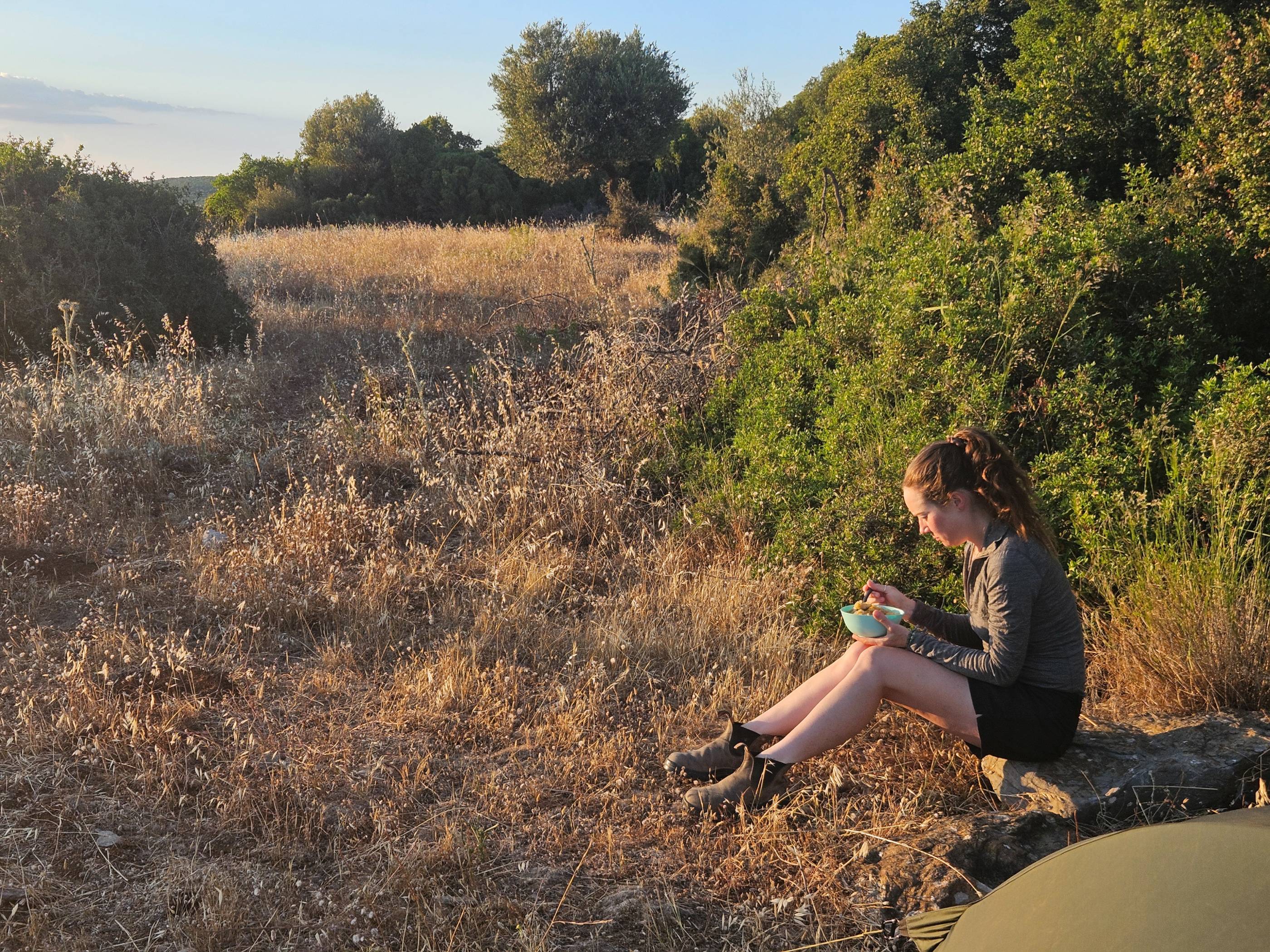
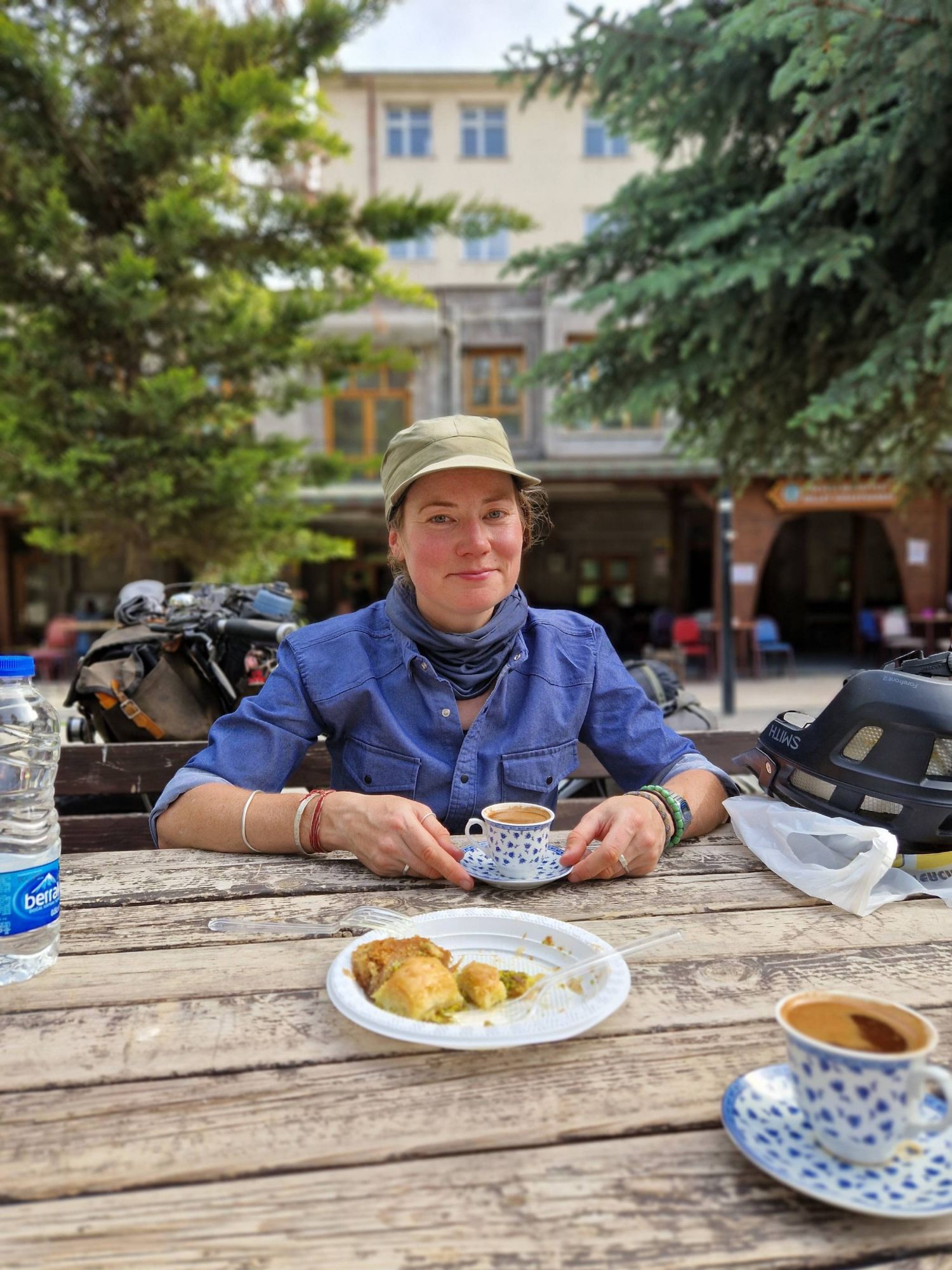
Before we knew it, our final night in Turkiye arrived and nature blessed us with an incredible sunset over the sea. We had finally reached ‘the other side’, that point on the map that had been so many miles away only a few weeks earlier. But, you see, despite everything I’ve written so far, it is only half the story. The real tale, and the real beauty of this country, comes from it’s people – It’s welcoming, generous, kind, wear-your-heart-on-your-sleeve, life-loving, loud, laughter-filled and emotional people. And it would be remiss of me not to include them in any of my writing about Turkiye, but I’ve been putting it off. I know anything I do write will struggle to really do the people justice. And in all honesty, the other half of the story is well deserving of another brew (I’ll permit you an iced tea, rather than a ‘proper brew’ on this occasion, given the current heatwave temperatures!) so please be patient with me for the next post, as I try to put down into words a few of the memories that are etched into my heart about the wonderful Turkish people.

 Tumbling Diaries
Leave a comment