
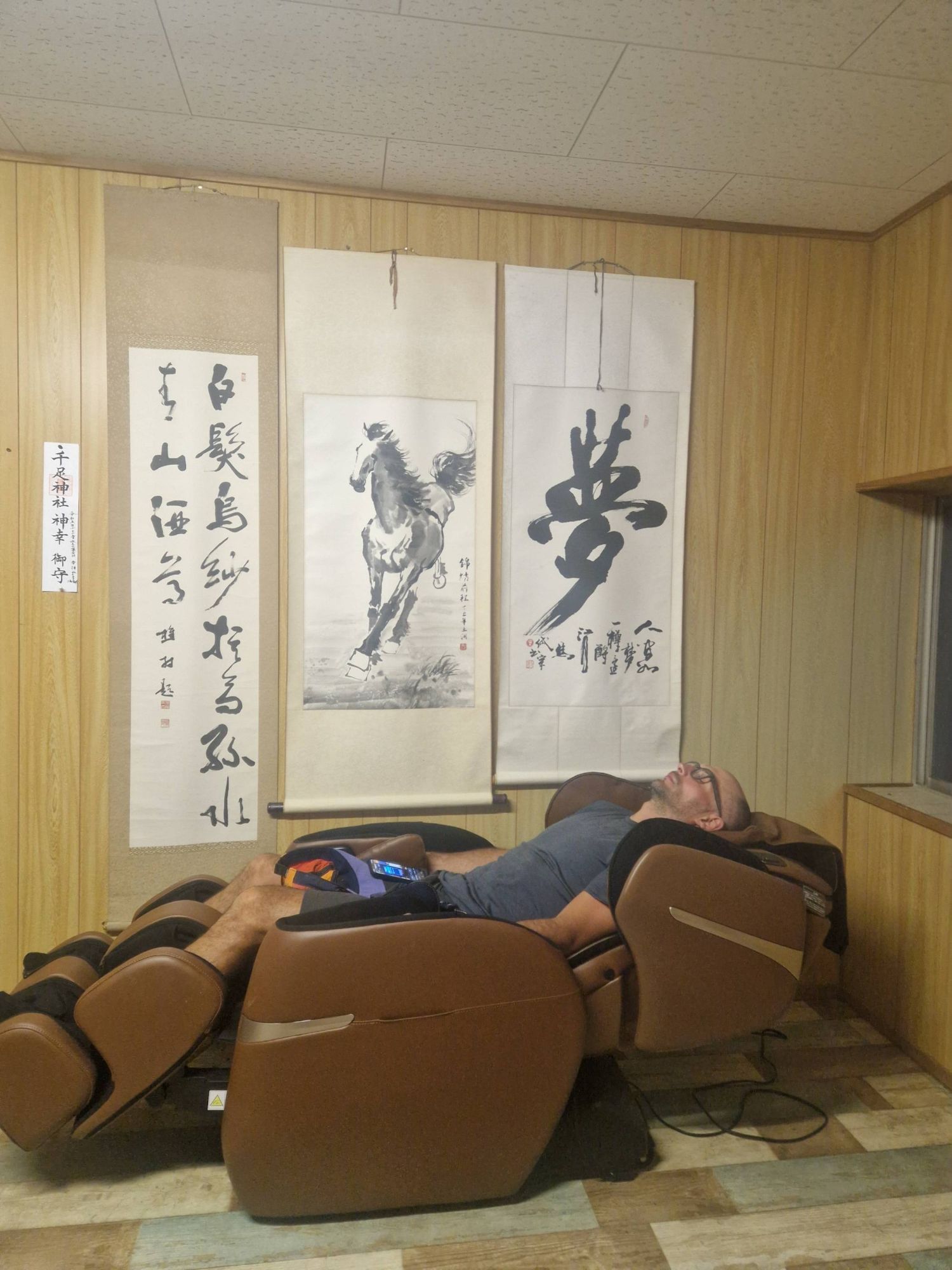
Now lets set the record straight before you start thinking we learnt Japanese in our one month there, we absolutely did not. It is so hard to even comprehend where you would start learning Japanese. We managed to pick up all of two words whilst we were there – ‘hello’ and ‘thank you’ – and we probably still got these wrong! There are three different ‘alphabets’ in the Japanese language (strictly speaking they are not alphabets in the sense we understand in the English language, but instead are characters representing syllables or meanings) and unlike a lot of European languages, where the phonetics of the words are familiar, most of the time we couldn’t even comprehend how to make our mouths echo the sounds of the Japanese language. Its impressive. Its beautiful. Each word is pure artwork (especially for a lover of words like me!) Imagine writing simple words or sentences and them looking as beautiful as this…..
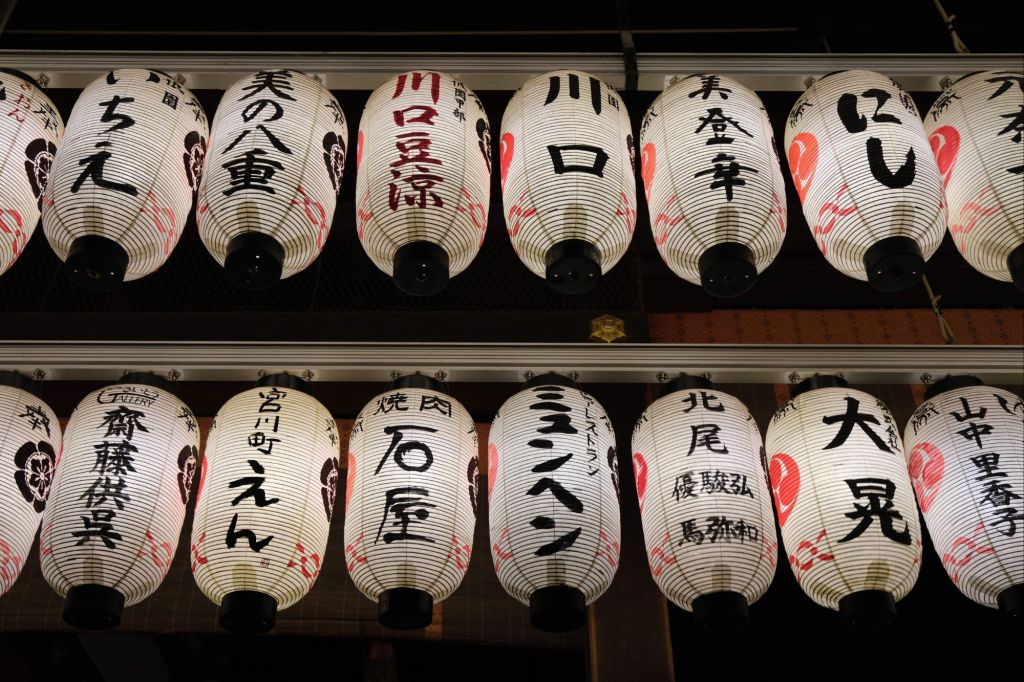
But its not just how the words look, there are so many words in Japanese that capture a feeling or a moment so perfectly, when in English we would have to use a whole sentence to capture the same spirit. Reflecting back on the second half of our month in Japan, we were lucky enough to live the reality of some of these magical words.
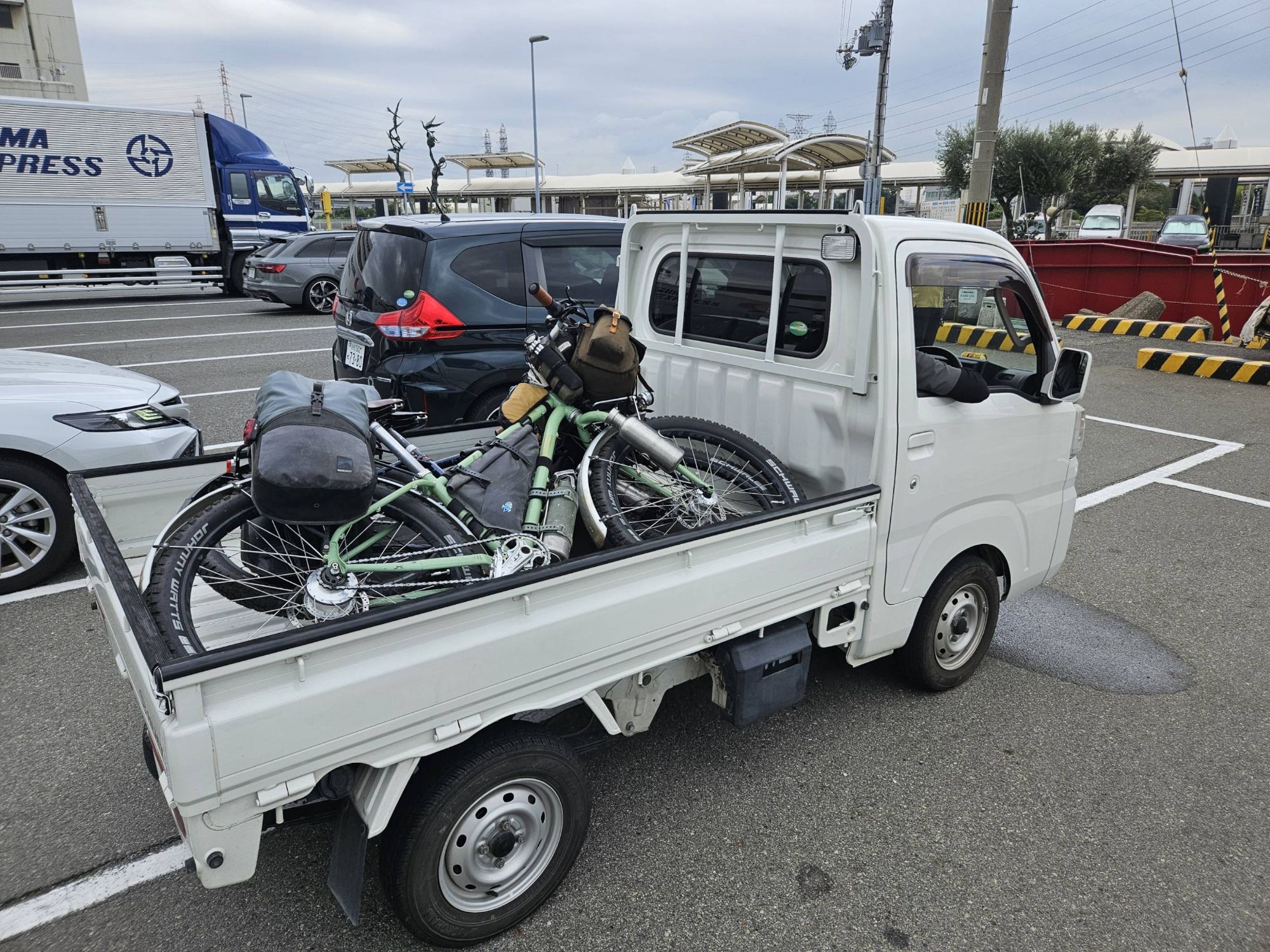
We reached the coast near Osaka and were aiming for the tiny island of Shodo. We rolled into the ferry terminal without having booked any tickets (as was now customary for our time in Japan) but on reaching the ticket booth, the lady told us it was too windy to take the bikes on the boat. We looked at each other puzzled. Then checked with the lady again. The ferry was still running? – yes – and passengers could still take the ferry? – yes – and cars and lorries could still take the ferry? – yes – and motorbikes could still take the ferry? – yes – but bikes could not? – no. Eh!?! What was it about the wind that meant it would only specifically affect bikes on the boat!?! The lady quickly got bored of dealing with us and continued serving the line of passengers behind us, asking us to wait until someone else came to explain. A young, smiley guy came to meet us. He again explained that it was too windy to put the bikes on the ferry. We were so confused. There seemed to be no logic to this when all other forms of transport were permitted that day. In the end the guy could see we would not be taking no for an answer. He disappeared for a moment and then returned, very excitedly having found another passenger with quite possibly the worlds smallest pickup truck. They kindly let us load our bikes into the back of it so we could travel as foot passengers. It all seemed a bit bonkers but we were happy to go along with it. As we sat on the ferry (which, in the end, wasn’t even a windy or choppy crossing) we were so thankful for the guys help. It also dawned on us, that he had been the first person (and would turn out to also be the last person) we had met in Japan who seemingly thought for himself and came up with a problem solving solution – In every other instance it seemed that if the computer said no, or the rules said you can’t or we were two minutes too late, then that was the end of the conversation, no further help provided and no solution offered. It made us feel even more grateful to our ferry saviour.
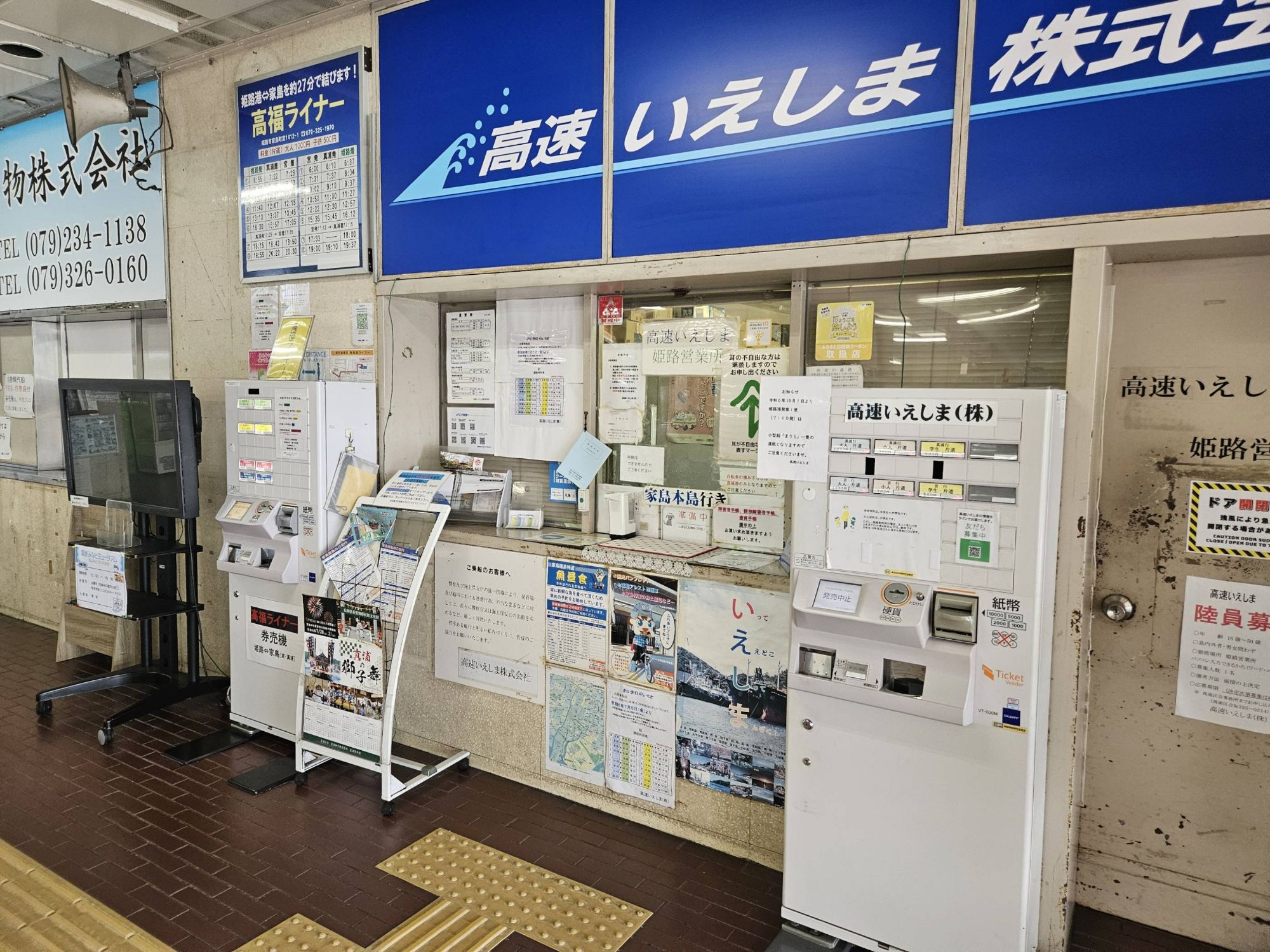
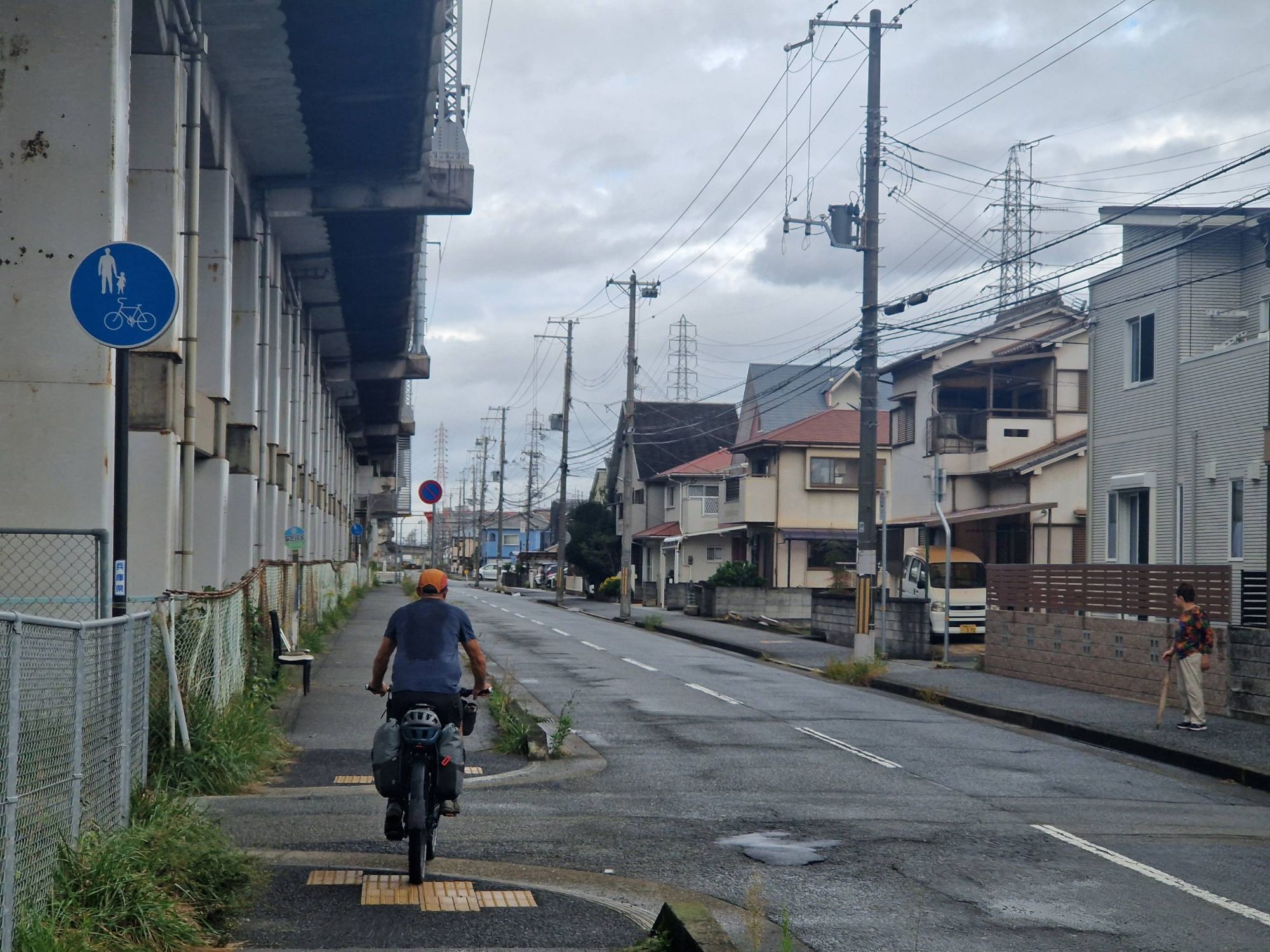
我慢 – Gaman – To endure patiently
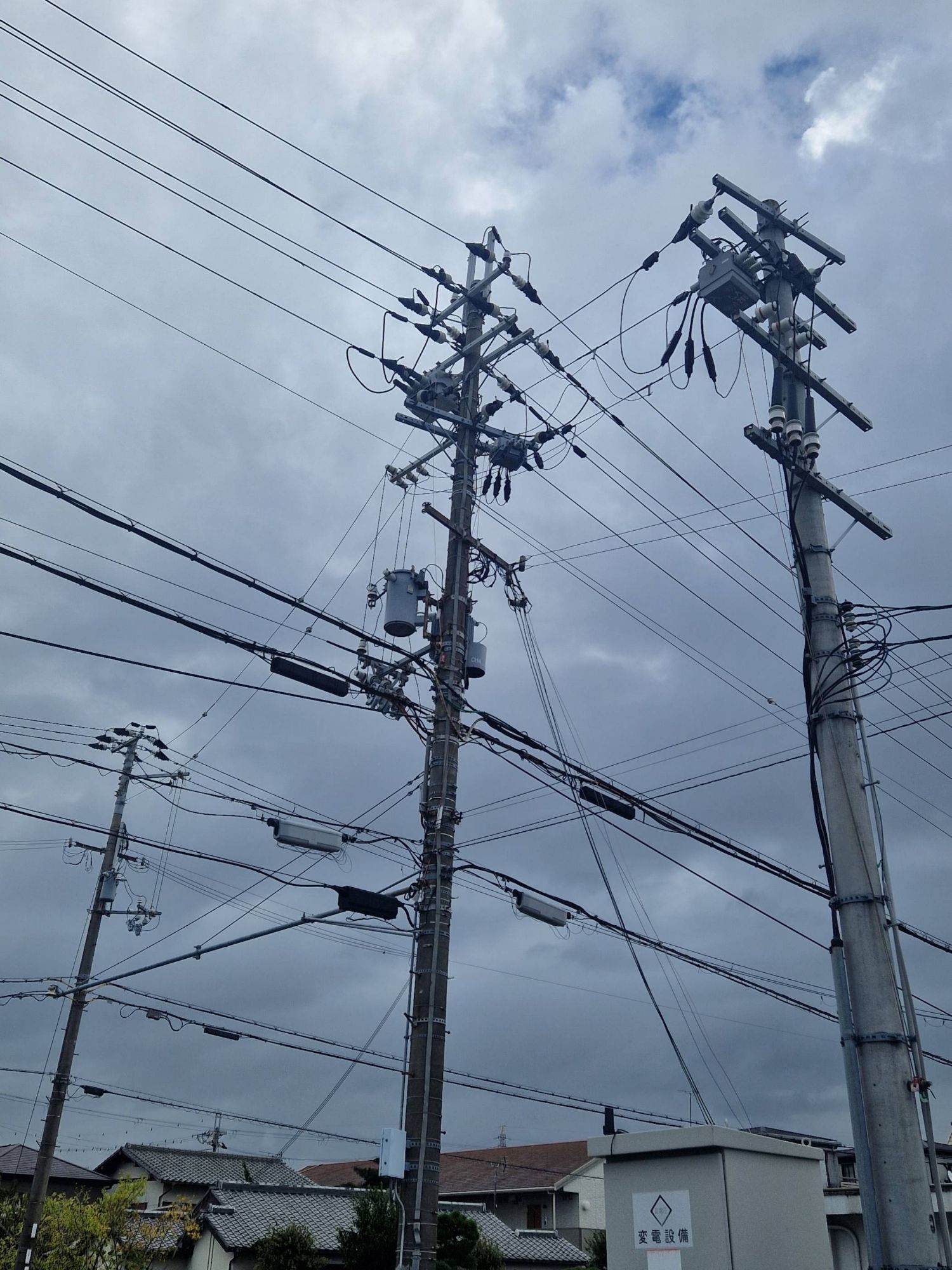
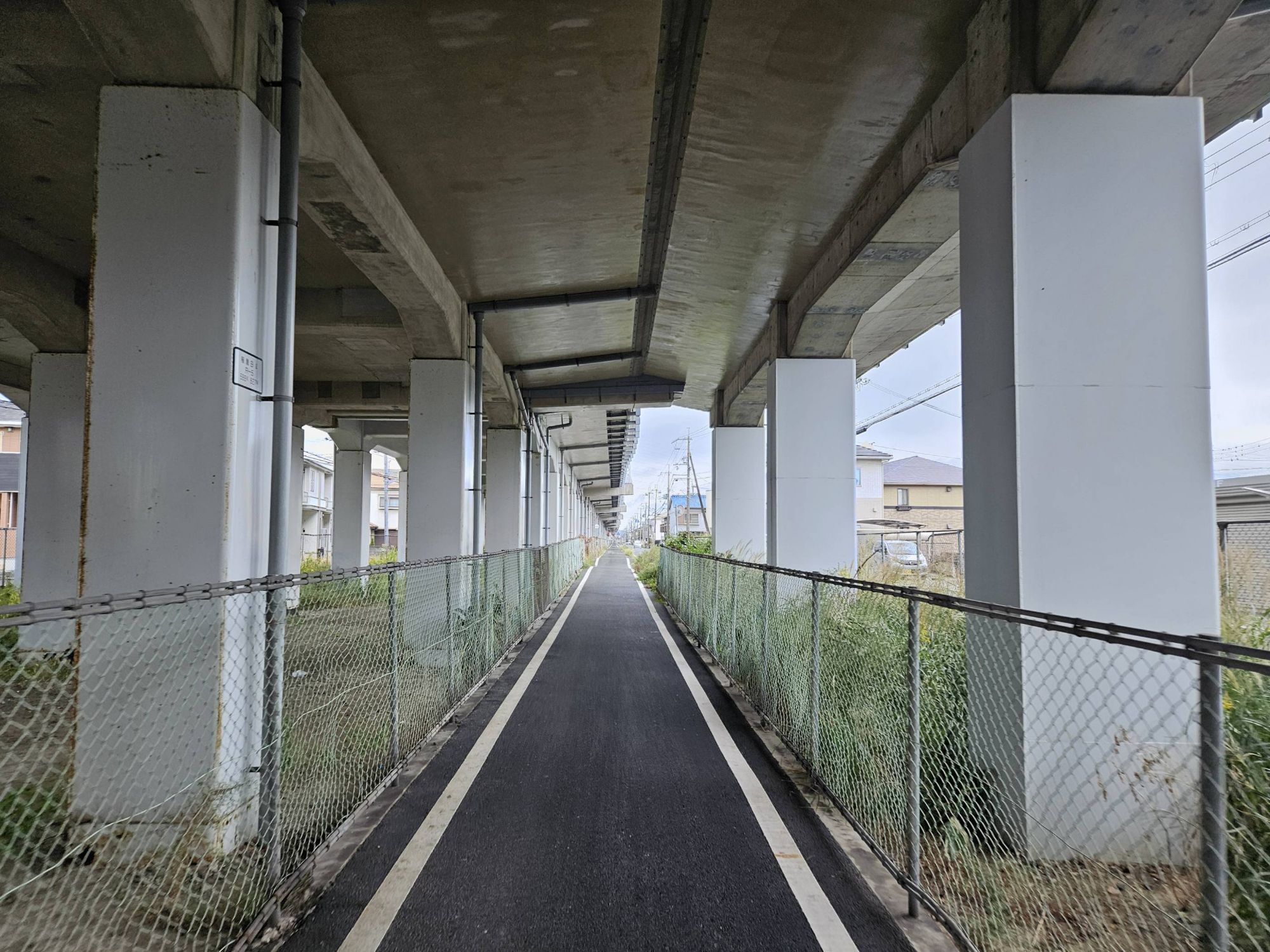
A couple of days and another ferry ride later, we were on Shikoku (the third of the four main islands of Japan). By now we were settling into Japan a bit more, slowly feeling more comfortable with things, at the very least we now knew what to eat, but the riding itself was pretty uninspiring. The reality of a lot of Japan is that in order to avoid the highways, we ended up riding on secondary roads that often ran alongside or underneath the highways or bullet trains. We rode through endless industrial areas of grey, with tangles of electricity wires knotted overhead and lots of concrete everywhere. It lead to having to patiently endure day-after-day of grey skies, grey roads and feeling grey. To somehow find the motivation to just keep plodding on, on days like this, is sometimes harder than the days of sheer physical exhaustion or exposure to the elements, where the survival of it all makes you feel alive. Here we just had to keep spinning those legs and trust that patiently enduring the greyness, not fighting it, would soon see us out the other side. We tapped into our patient endurance for much of our time on Shikoku, until we found a lovely pilgrimage route (or Henro in Japanese). The route takes lots of lovely quiet back-roads instead of the grey-on-grey-on-grey of the industrial roads, so soon enough our patience paid off.
脱俗 – Datsuzoku – A break from habit or daily routine
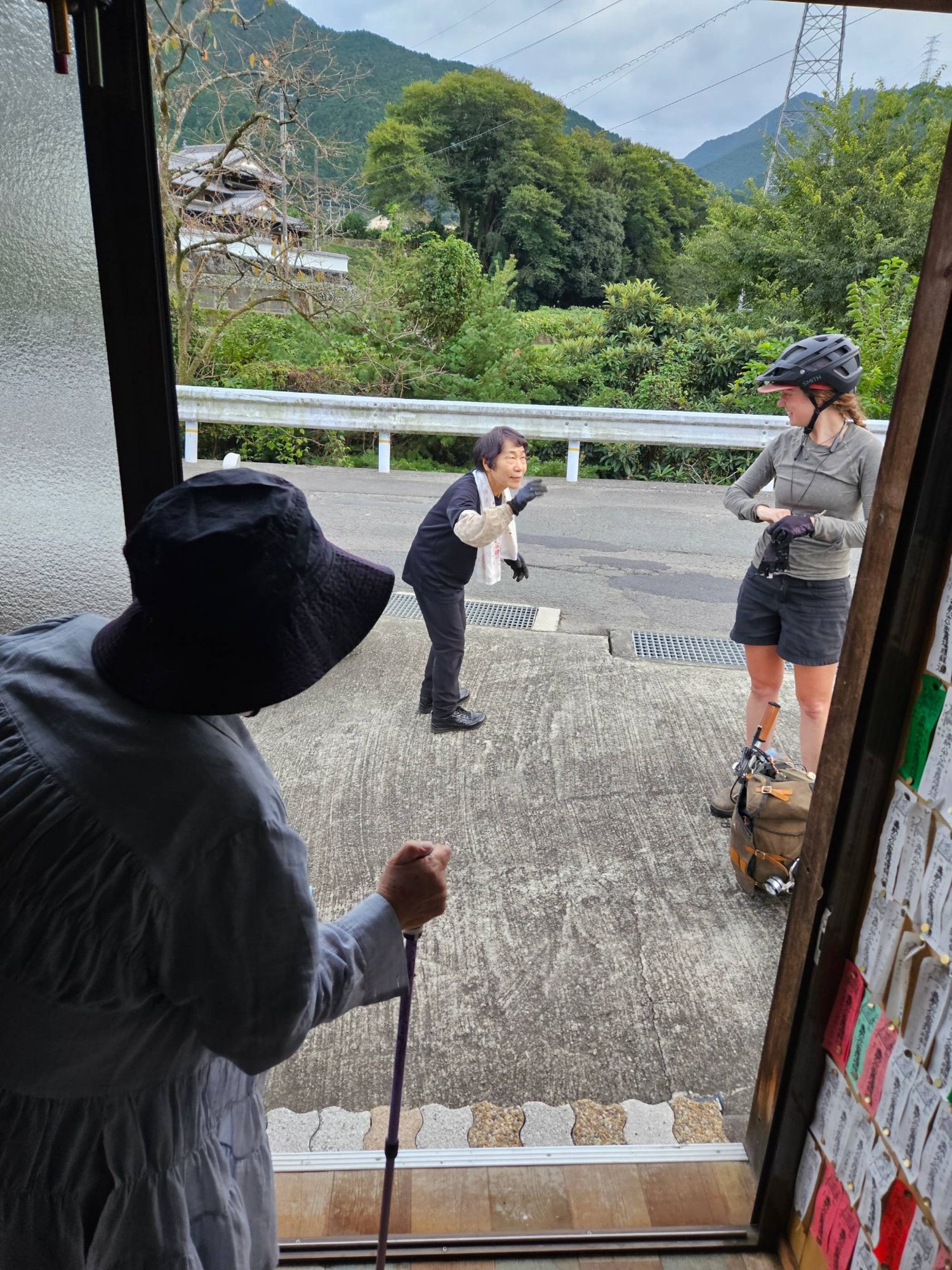
We were also lucky enough to pause for a drink right outside a Henro refuge hut, and the elderly ladies of the local community were quick to invite us in and allow us to stay the night. The wall of the hut was adorned with Osamefuda – these are essentially name slips on which pilgrims write their name and their wish – they are left at temples and sites along the pilgrimage, as well as being given as thank you gifts by pilgrims who receive kindness along the way. The different colours of Osamefuda show how many times the pilgrimage route has been completed, and we were staggered by the number of rounds that have been completed by individuals. The gold slips are used by those who have completed the pilgrimage up to 99 times, and the brocaded slips are for those who’ve completed it over 100 times – quite the achievement. It struck me that although pilgrimages are frequently considered a historic pursuit, the numbers of coloured Osamefuda suggest they are just as popular in our modern world. I mean who wouldn’t enjoy a break from daily habit and routine, to benefit from some time for reflection and to welcome the peace that comes from disconnection. This cycling-around-the-world trip is, I guess, our own pilgrimage of sorts and for us the time for reflection and headspace away from the habits and daily routines of home is something we are so grateful for.

But I suppose the main reason we had been keen to visit the island of Shikoku in the first place, was to get off the island of Shikoku. Sounds silly, but bear with me. There is a famous road of bridges known as the Shimanami Kaido, which links Shikoku island with Honshu island over the Seto Inland Sea via multiple smaller islands in between. Whenever we tried to research cycling in Japan, cycling Shimanami Kaido is what you are immediately directed to, in fact you have to get onto the second page of Google search results to find anything different – I know, I was also surprised that the second page of Google still existed. Cycling Shimanami Kaido also appears in the many lists of top tourist things to do when in Japan, so we figured we couldn’t miss a tourist attraction that involved being on a bike, rather than being a tourist attraction on our bikes, which often involves much staring and open mouthed gawping.
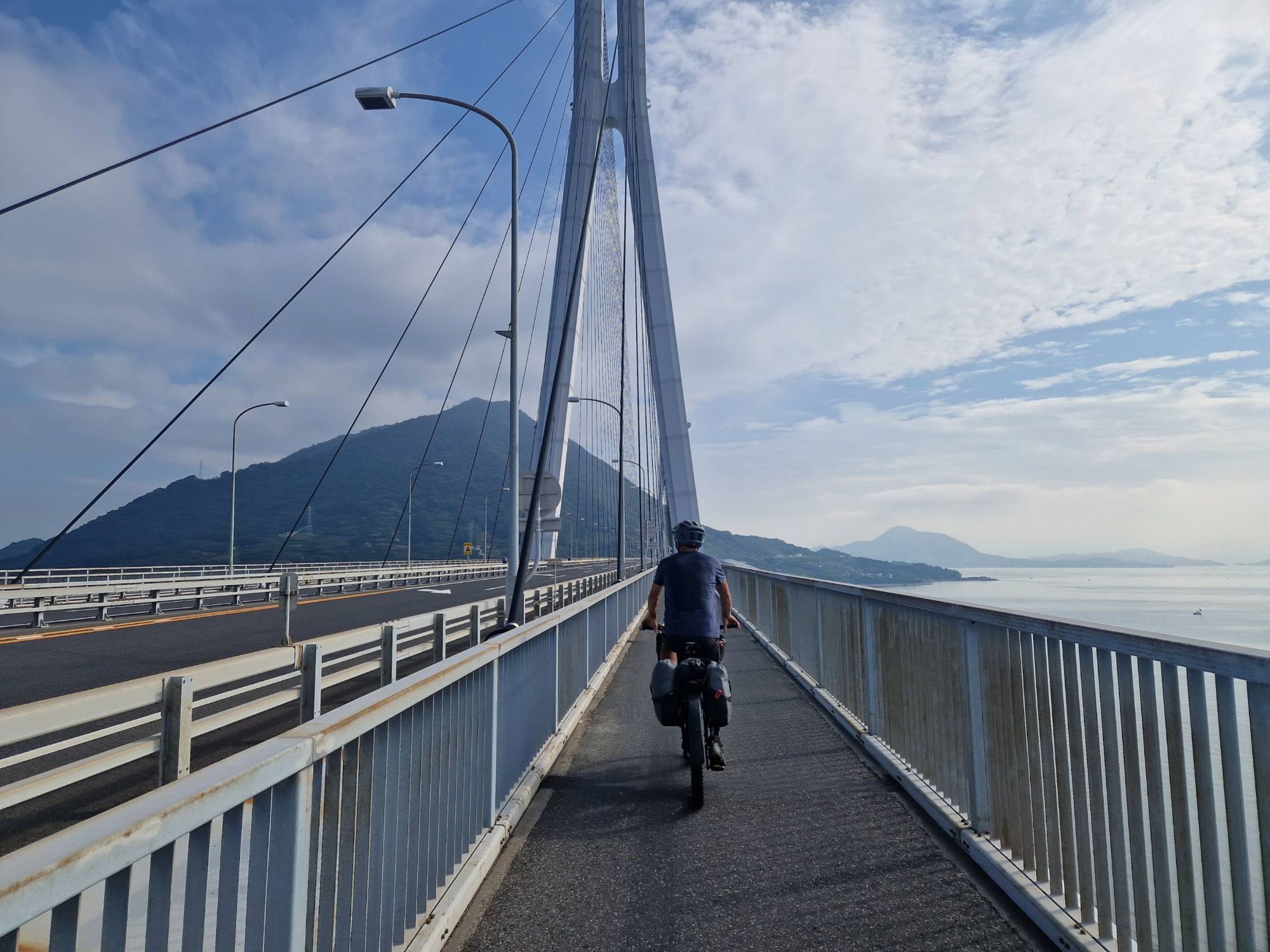
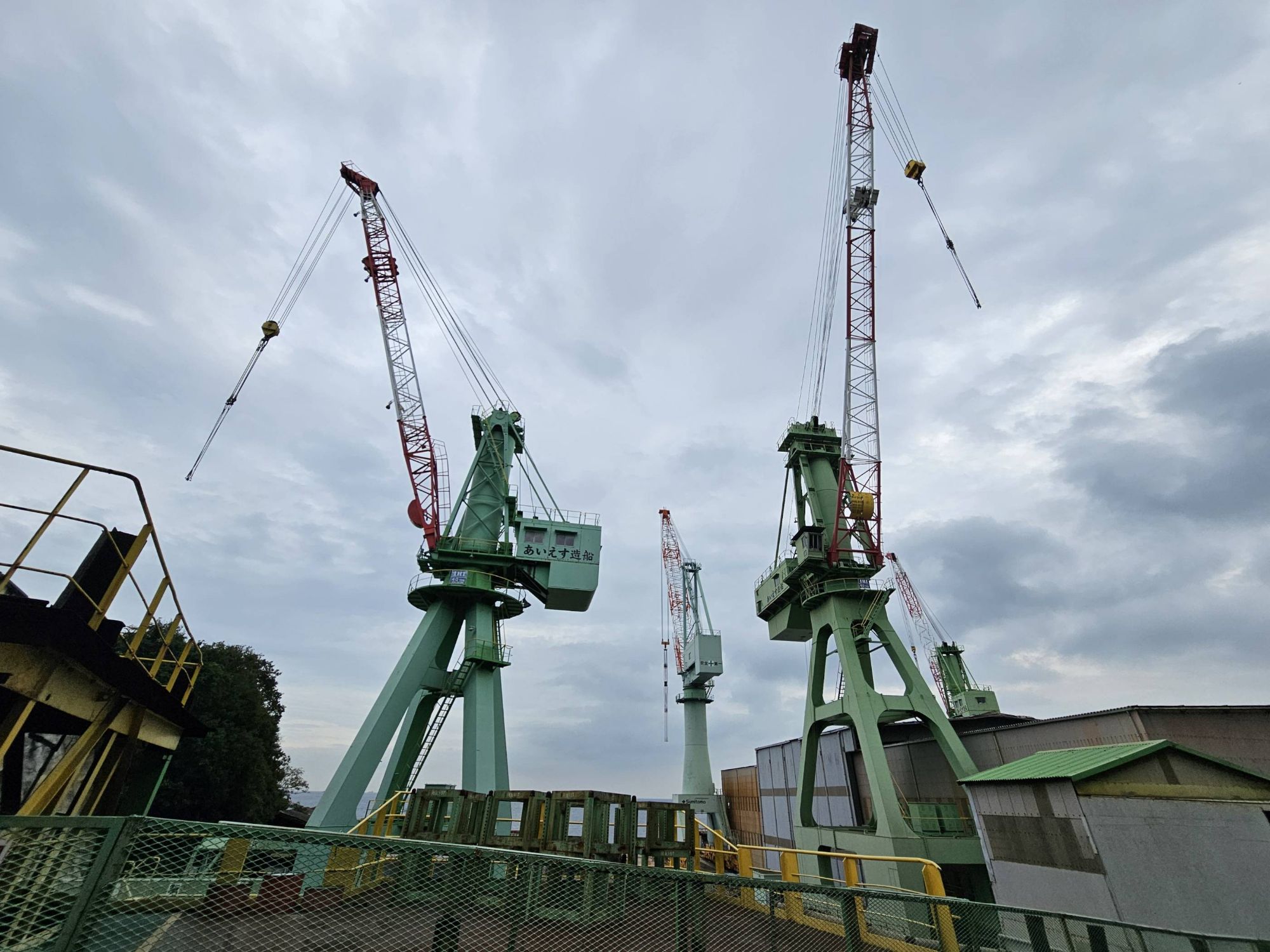
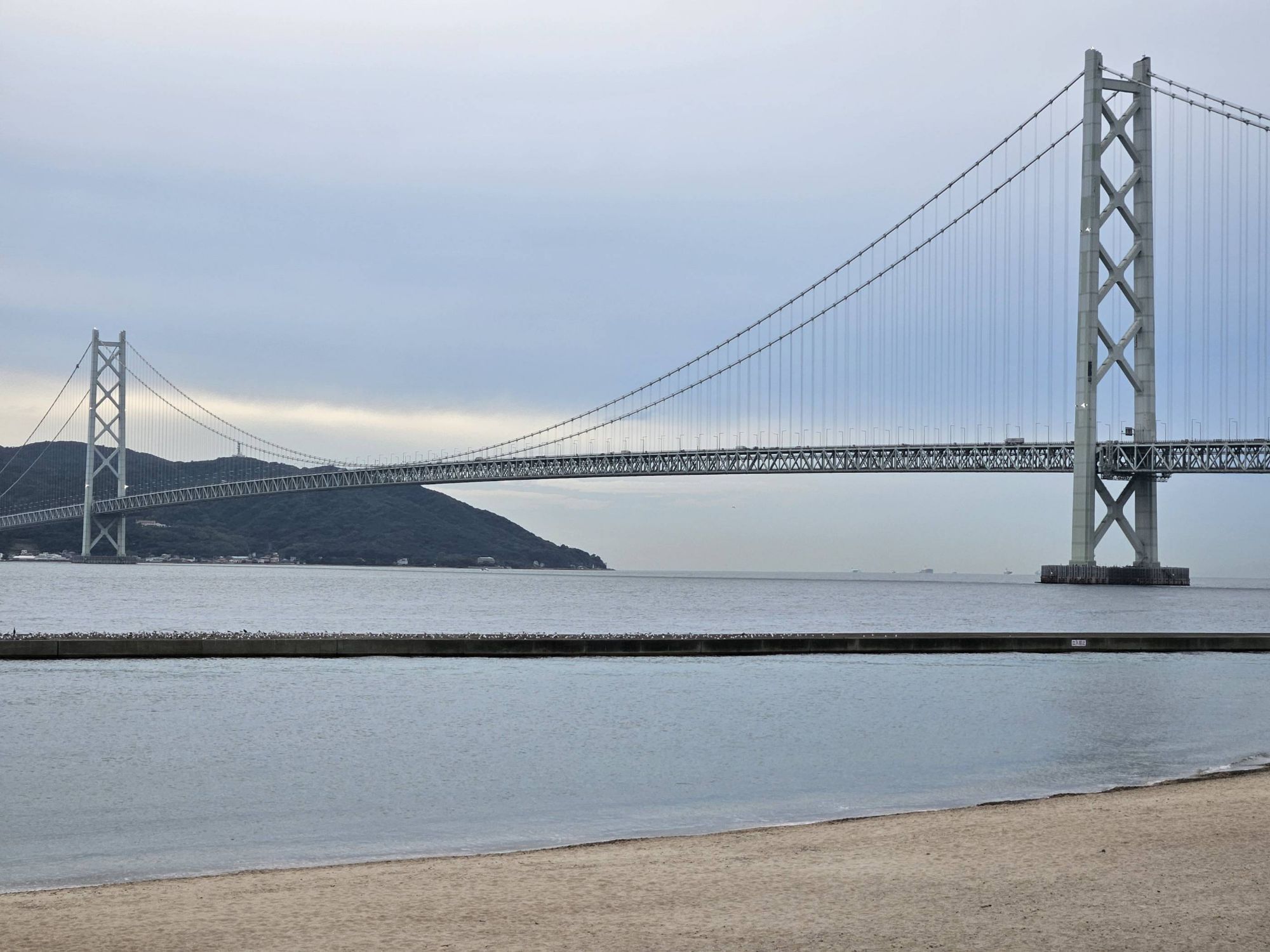
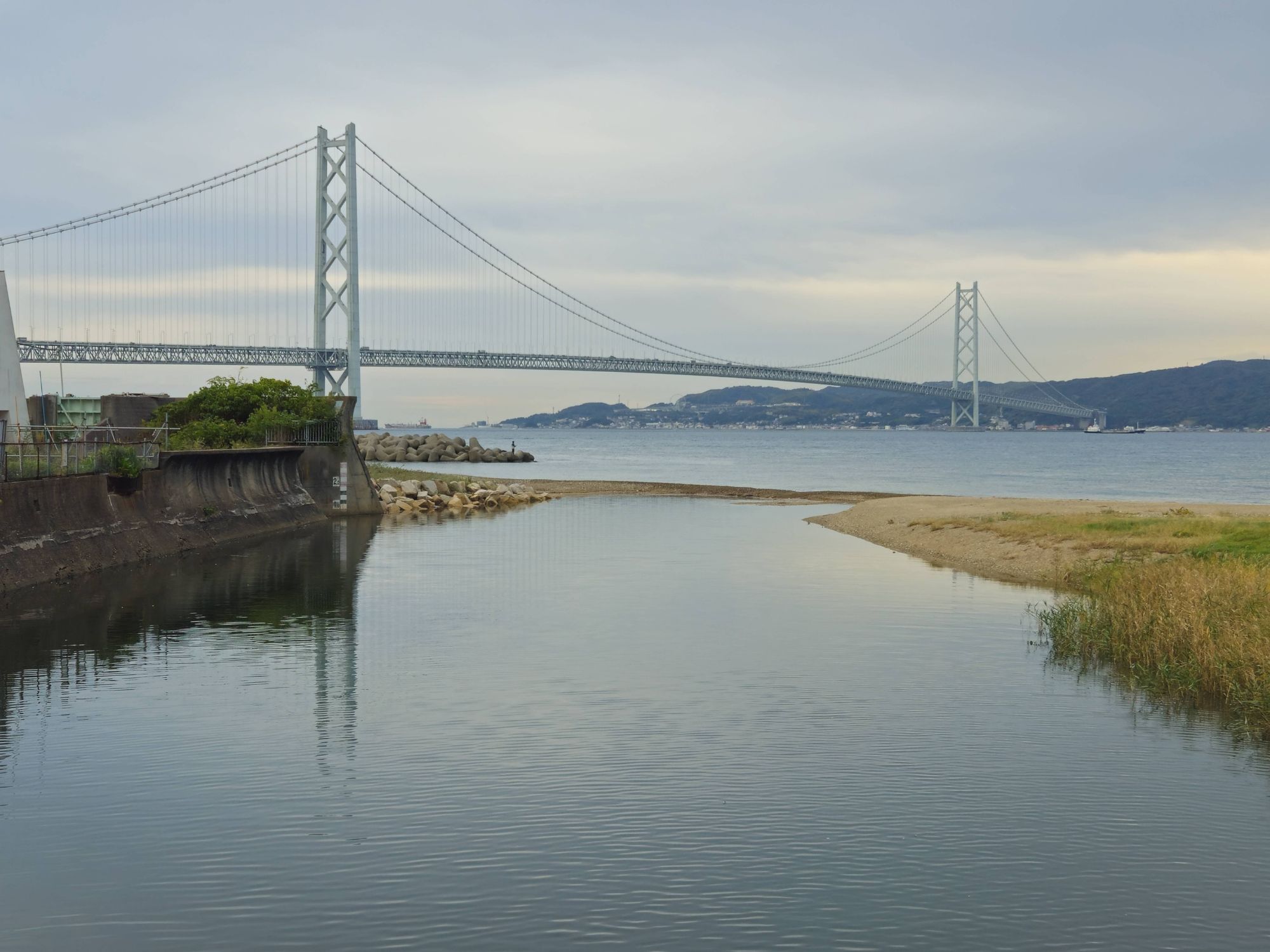
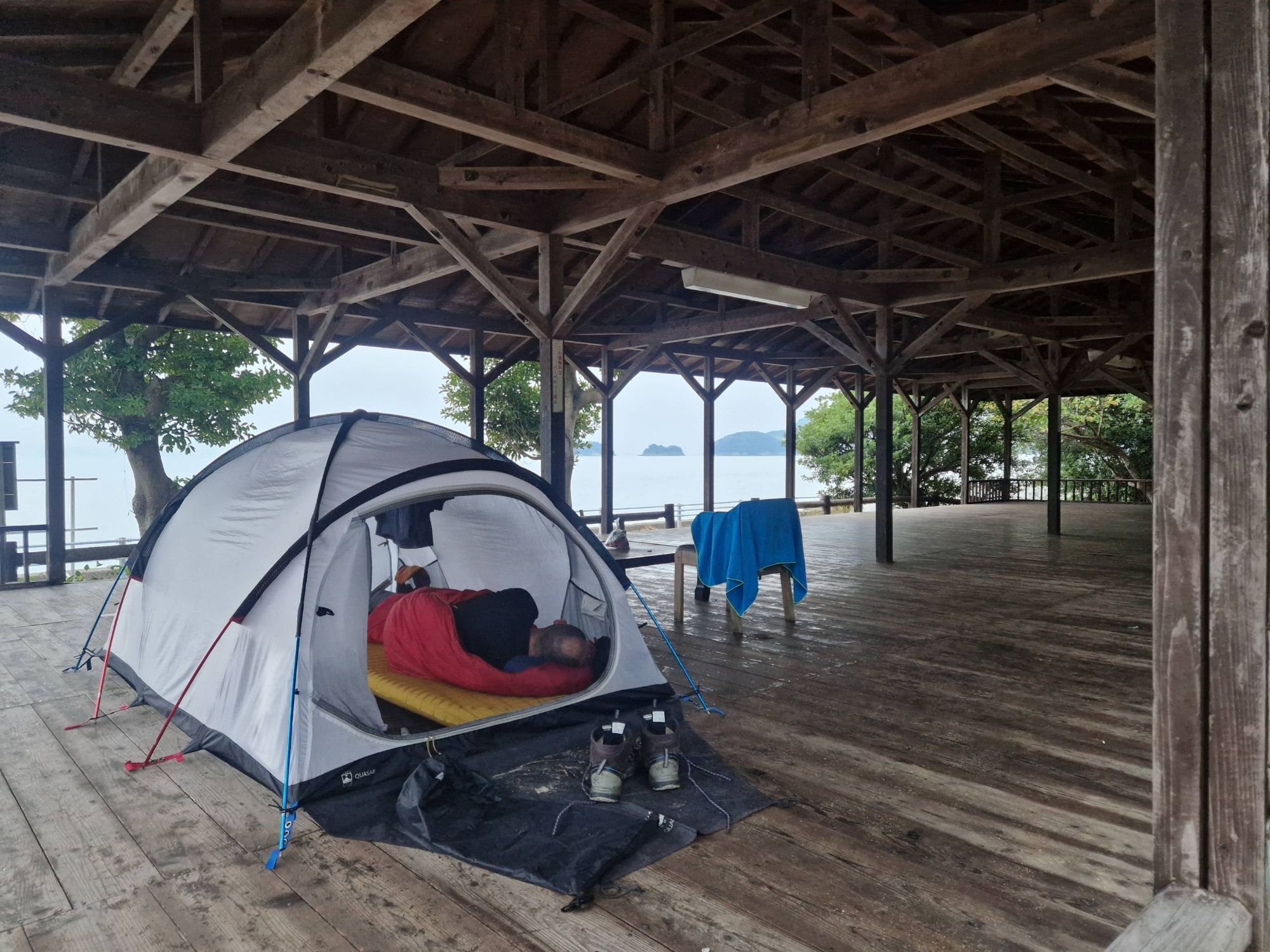
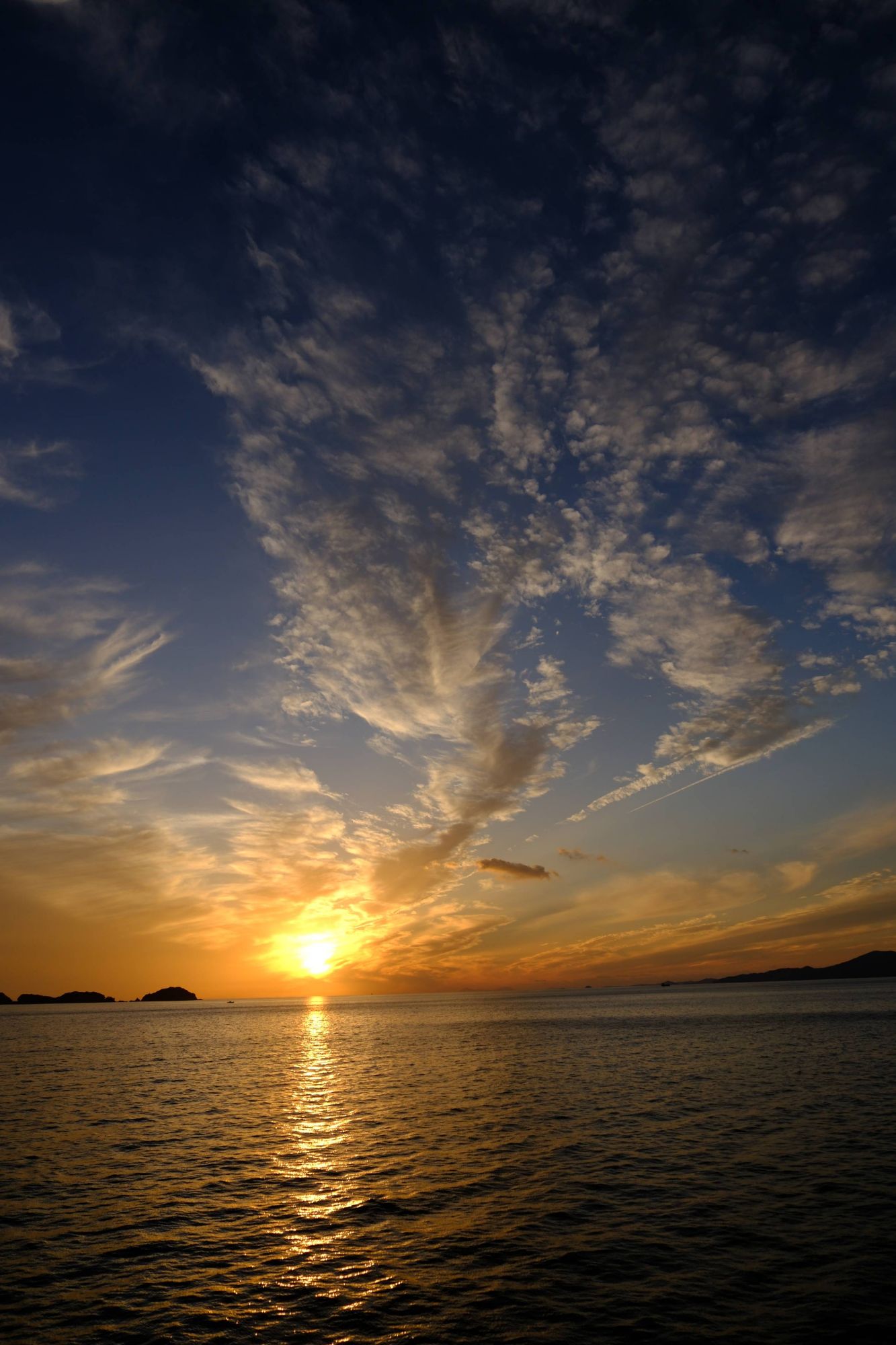
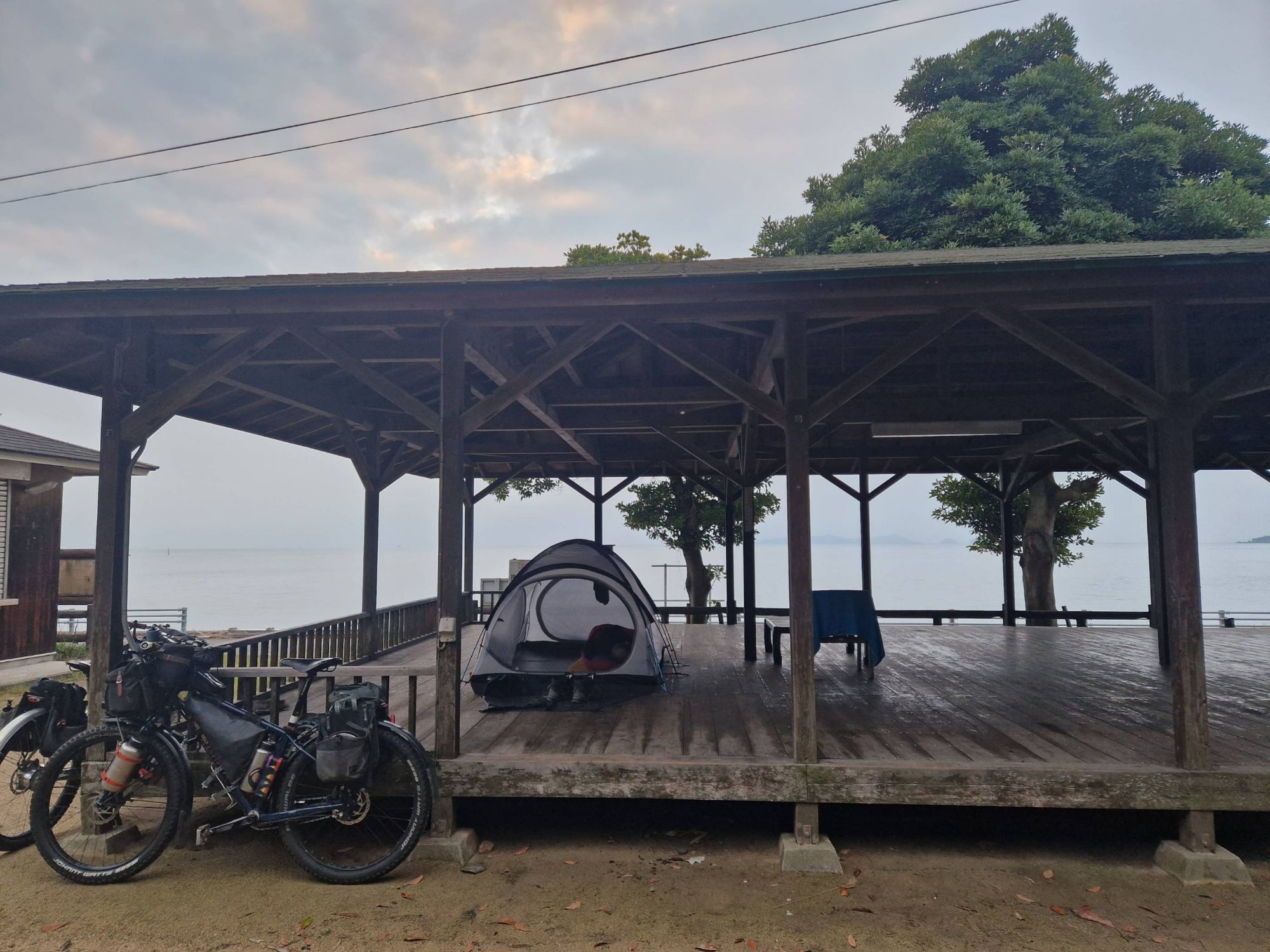
The bridges are quite the feet of engineering – impressive to look at and they allow you to enjoy the amazing views from high above the water. But I have to admit that getting on and off the bridges was actually more fun from a riding perspective. They were like cycling up, or down, giant bike helta-skeltas. They were made all the more fun by needing to dodge the other cyclists – from smart nibble roadies whizzing by in all the gear, to wide eyed tourists (maybe not so used to riding bikes) wobbling about – everyone making their way either up or down the spiral ramps, that were pretty steep in places. The internet told me that most people hire bikes and ride the entire length in a day, which at 70km is far from an easy pootle for most people, so hats off to them. We stopped mid-way on the island of Hakata and found a wonderful beach side campsite, it all looked very idyllic, but we had to share it with the mosquitoes so most of the evening was spent inside the tent admiring the view of the sea through the mesh bug-net doors. It was still pretty special though.
一期一会 – Ichi go ichi e – One time, one meeting
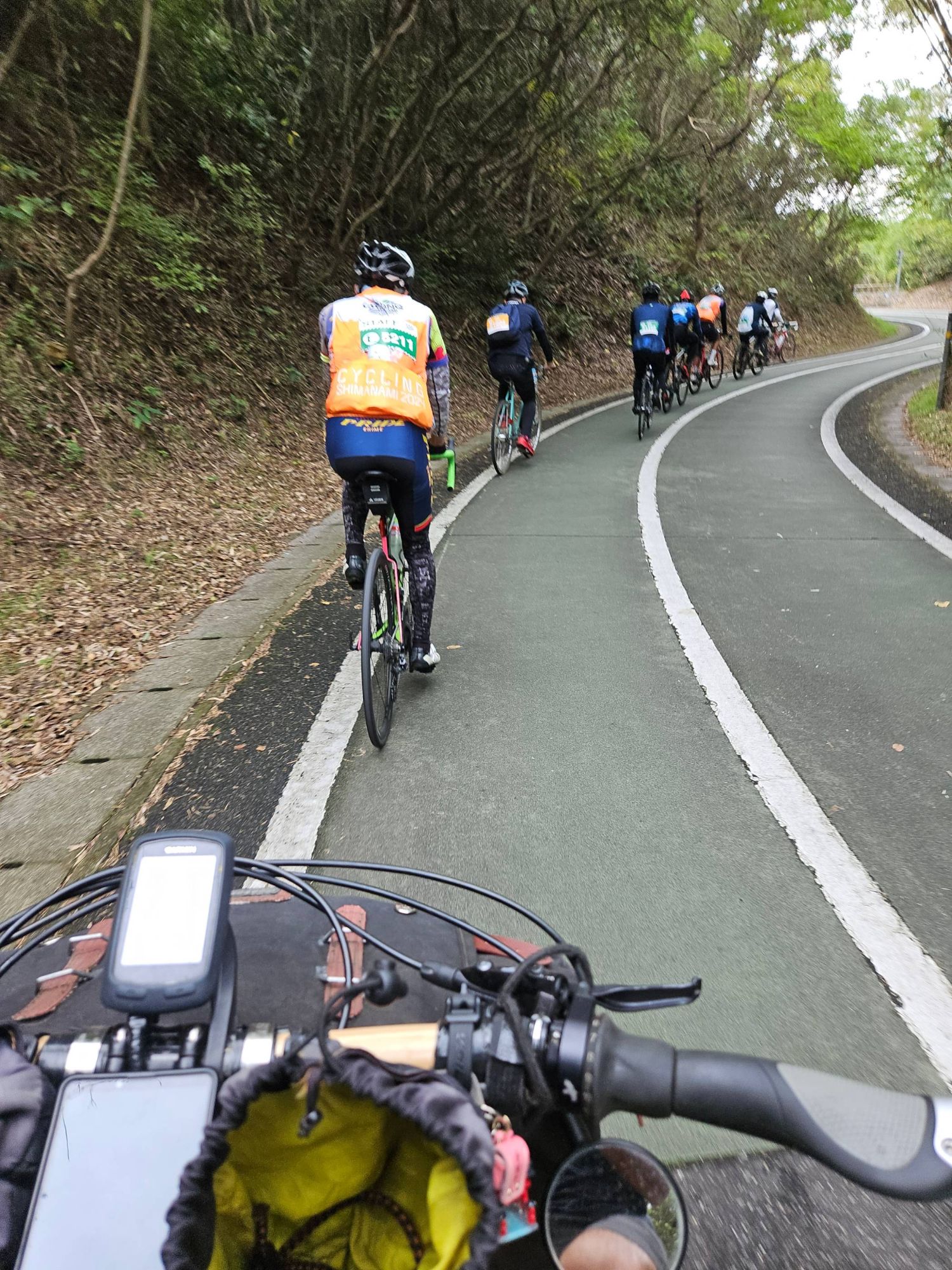
On rejoining the route the following morning, it quickly became apparent that there was a cycling event going on. There were lots of marshals about, all joyfully waving us through the road junctions with their red, flashy, wafty light sticks that they love here in Japan, and fully embracing the high-vis orange uniform jacket, despite there being no traffic on the roads. Soon enough, we saw a small group of cyclists heading towards us, but the speed they were going didn’t suggest it was a race; it seemed too leisurely to be a race. Then more cyclists appeared, from behind us this time, and again the speed was cruisey, definitely no race pace here. But any sniff of a race and I knew Ted would be off, chasing people down. I can never stop him. Sure enough, the moment another cyclist passed him, the race was on – They didn’t know they were in a race, but Ted was. He was always sure to enjoy the chase and give them a smile when he passed them moments later on his fully loaded bike.
Gradually, more and more cyclists appeared, one wave after another. A huge mish-mash of different cyclists, from the serious-faced lycra clad gang, to the Sunday cruisers, from the old ladies in wide brimmed hats, to those on folding bikes, from those with luggage to those on electric bikes – it was amazing to see. As we cycled on, we found ourselves in the middle of it all. Ted perpetually racing everyone and making sure to get to the front, only to realise he’d lost me amongst the crowds and had wait for me. It inevitably meant all the cyclists he’d just raced overtook him as he stood trying to find my face in the crowd. He loved it though and it just meant he got the opportunity to race everyone again when we were reunited. Everyone was cheering each other on, it created such a fun and lively atmosphere. We didn’t know it at the time, but it turns out that every couple of years the Cycling Shimanami sportive is held and all the roads are closed so that cyclists can enjoy riding the route over the bridges on traffic free roads. It’s not a race. Despite the race Ted was convinced he was in. There were over 6000 riders in the event in total and they set off in waves, with strict instructions not to overtake the pacer at the front of their particular wave. I mean, everyone riding must have found us really annoying as we were not subject to the rules so overtook pacers, raced who we liked and meandered about when we felt like it. It was great fun, we felt so alive, we were on such a high. But little did we know that the most surprising part of the day was yet to come.
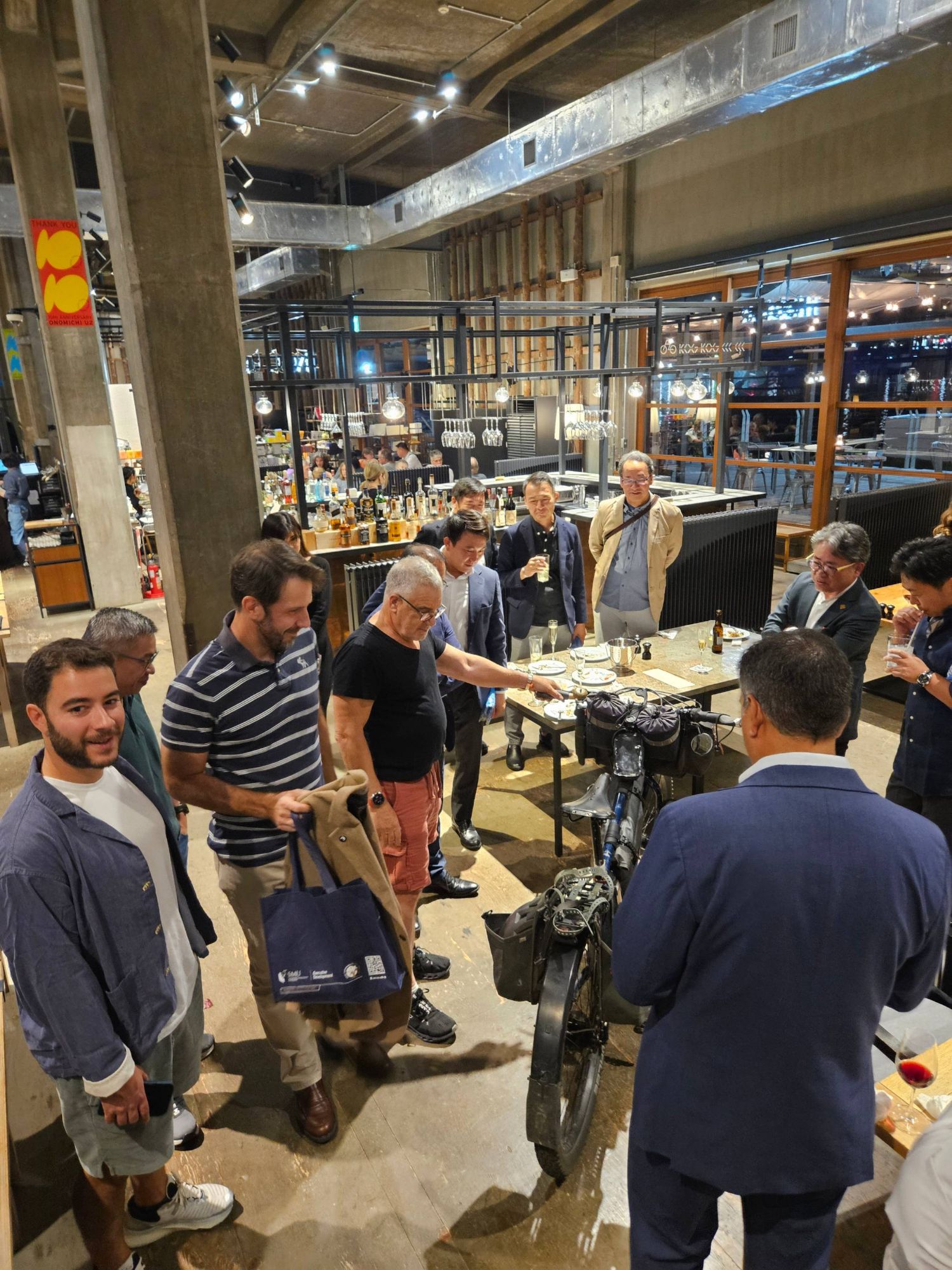
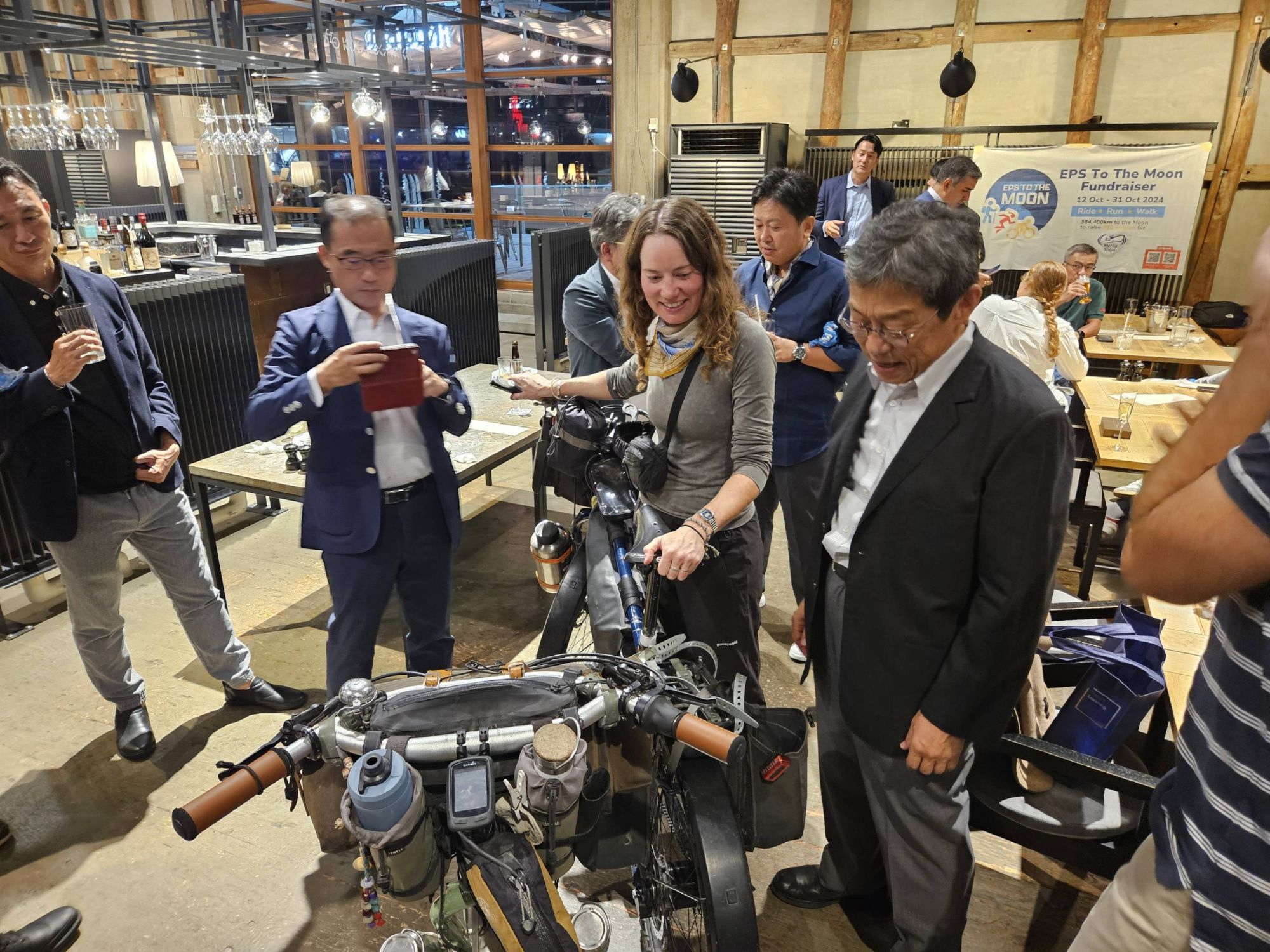
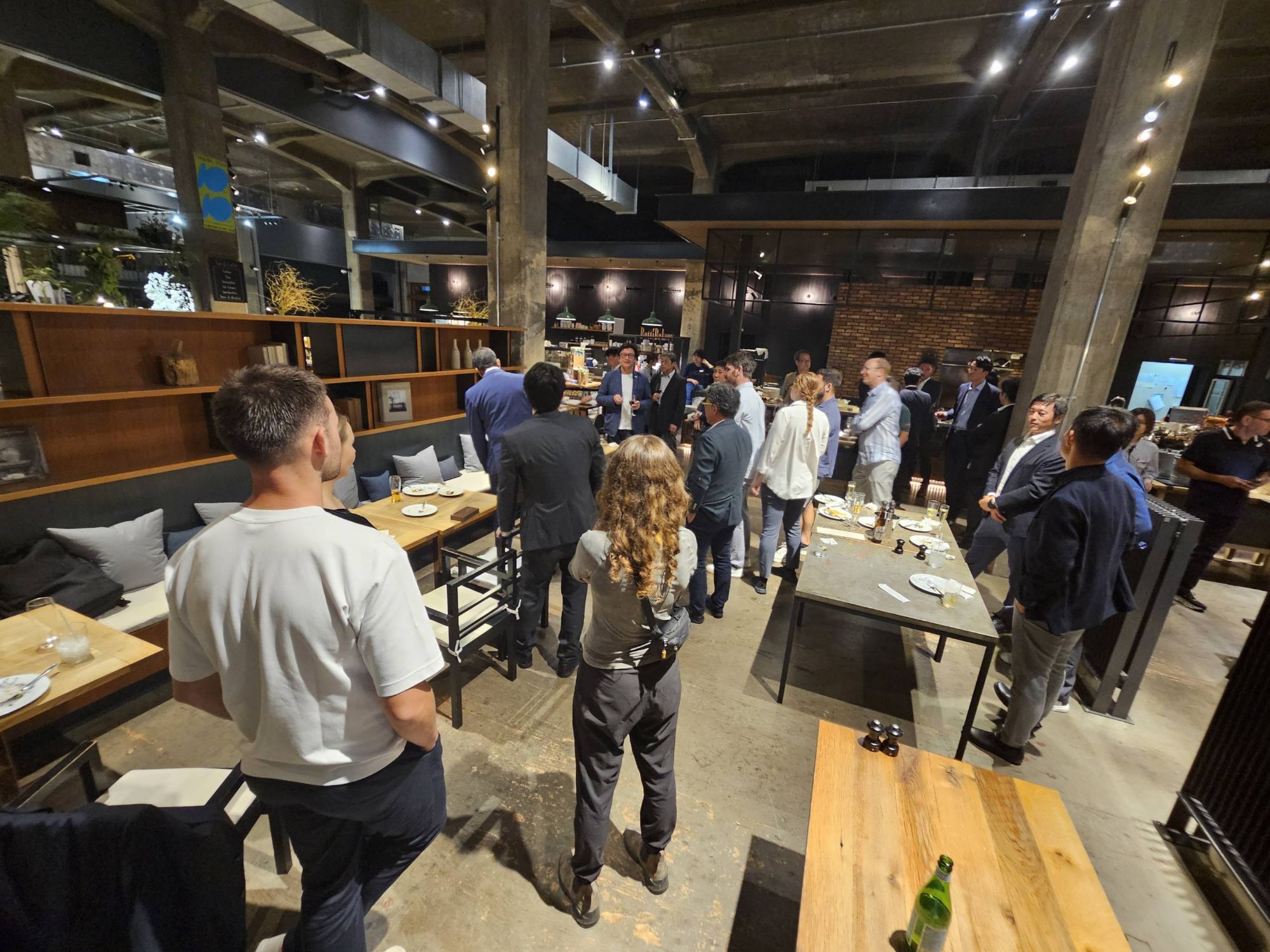
As the Cycling Shimanami riders peeled off to cross their finish line that wasn’t a finish line and enjoy their final pit stop, we continued on – still reeling from the cycling collective joy. I paused at a traffic light, and another cyclist in smart team colours pulled alongside me. He looked at my heavily laden bike and asked if I was going far. I explained our story. He was pretty astonished at how far we’d come and he quickly relayed our tale to his team mates, who were both ahead and behind us. He explained that they were all on a work trip from Singapore (what a trip!) and worked for the company, Eastern Pacific Shipping, the owner of the company, Idan, was also with them. They kindly invited us to join them for their post race-that-wasn’t-a-race lunch, back where they were staying, at Hotel Cycle (Yes that’s right, a whole hotel dedicated to cyclists and their needs, including dedicated bike racks indoors, bike hangers in the rooms and a place to store bike boxes!). We gratefully enjoyed a delicious lunch with the team, who, despite their long morning ride, still had lots of energy and were all good fun. As lunch ended, and the team headed off one by one to shower and relax, we were also kindly invited to join them for dinner that evening as well. Ted joked that we would need to go and find a park bench to sleep on, but if we could work something out we would love to join them. A few minutes later, we were presented with a key for a room, and told that Idan had arranged for us to stay at the hotel. We couldn’t quite believe it. The hotel was fully booked. It was the day of the Cycling Shimanami sportive, the whole town was fully booked. And yet, here we were with a room key in our hands being told to stay and enjoy the luxury of the hotel. Wow. We were so bowled over by the generosity and kindness of Idan and the rest of the team. We couldn’t quite believe it – of all the days to be cycling the Shimanami Kaido, we happened to be doing it on the day of the sportive, and happened to stop at the traffic light and get chatting to the Eastern Pacific team, which had lead to lunch and now a hotel room, not to mention dinner that evening with them and their Japanese business associates – A one time meeting that lead to so much more and a gentle reminder for us to treasure each individual moment as it can never truly be replicated again.
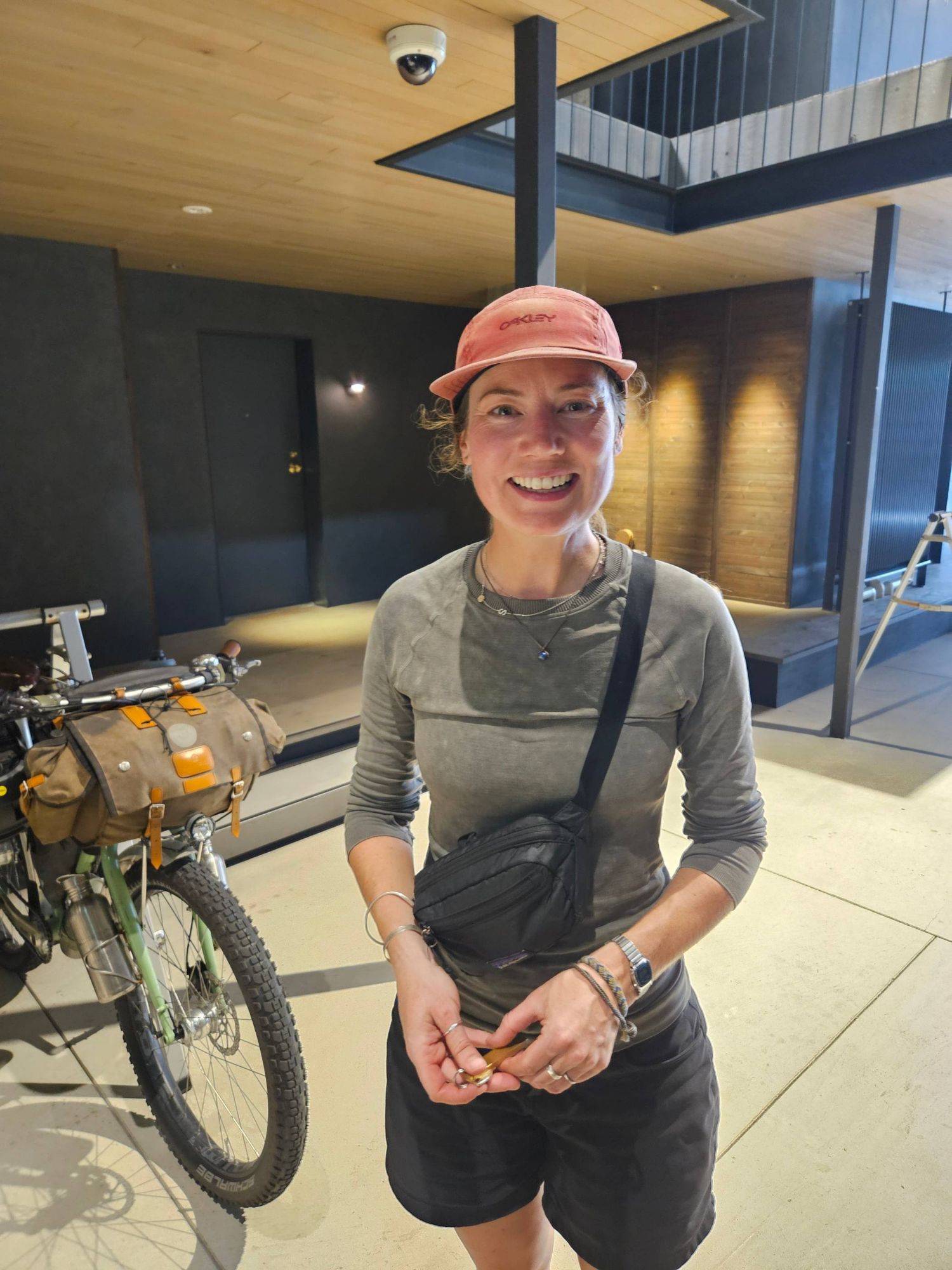
物の哀れ – Mono no aware – Awareness of the impermanence of things
The following day as our journey continued Southwards along the coast of Honshu towards Hiroshima, under darkening grey skies, the luxuries of the night in the hotel seemed to fade into a dream in my memory. We were reminded of the perpetual transcience we experience everyday. Ironically, the impermanence of things is one of the only permanent features of this trip. I feel like impermanence has somehow found its way into a lot of the conversations between Ted and I recently, and maybe it is just that we are living it. Day-by-day we experience the reality that nothing good or bad lasts forever. So just as it instils in us a deep sense of gratitude for the incredible day we had on the Shimanami Kaido and at the hotel, it also makes us realise that the rain, cold and struggle to find a camp spot the following night also isn’t permanent, and there is beauty in that too – although I admit its hard to see at the time!
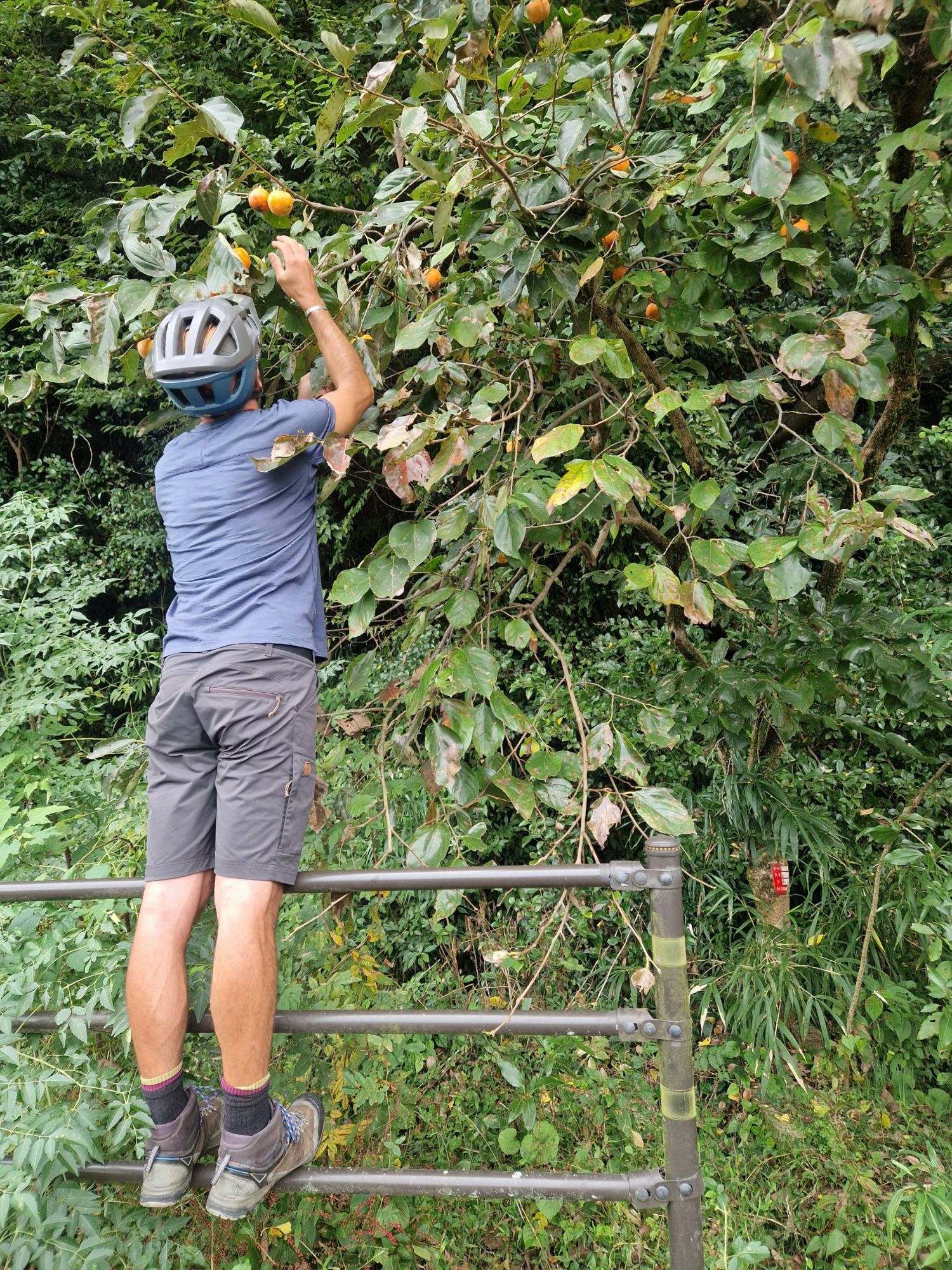
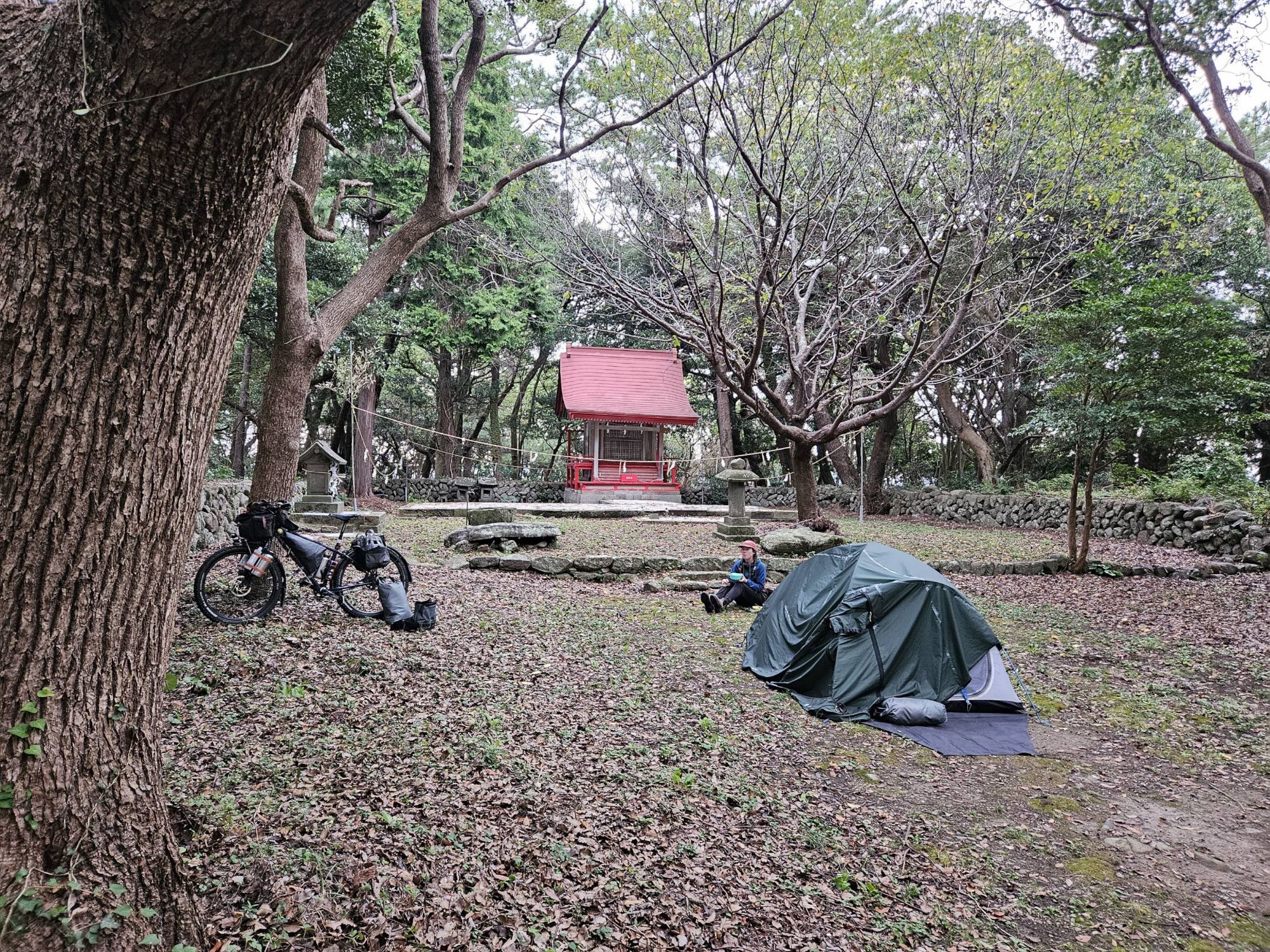
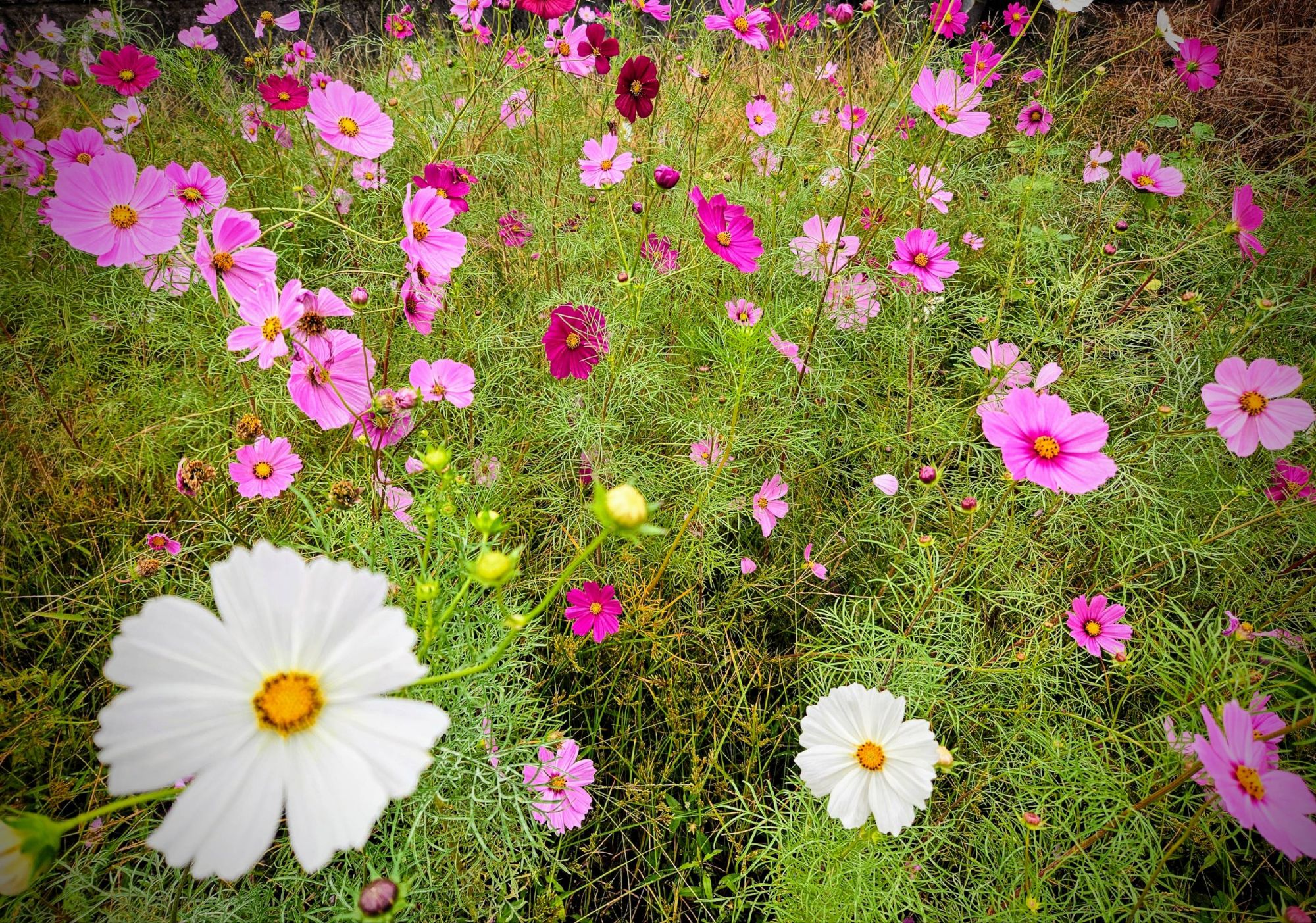
懐かしい – Natsukashii – Gratitude and happiness for fond memories in the past
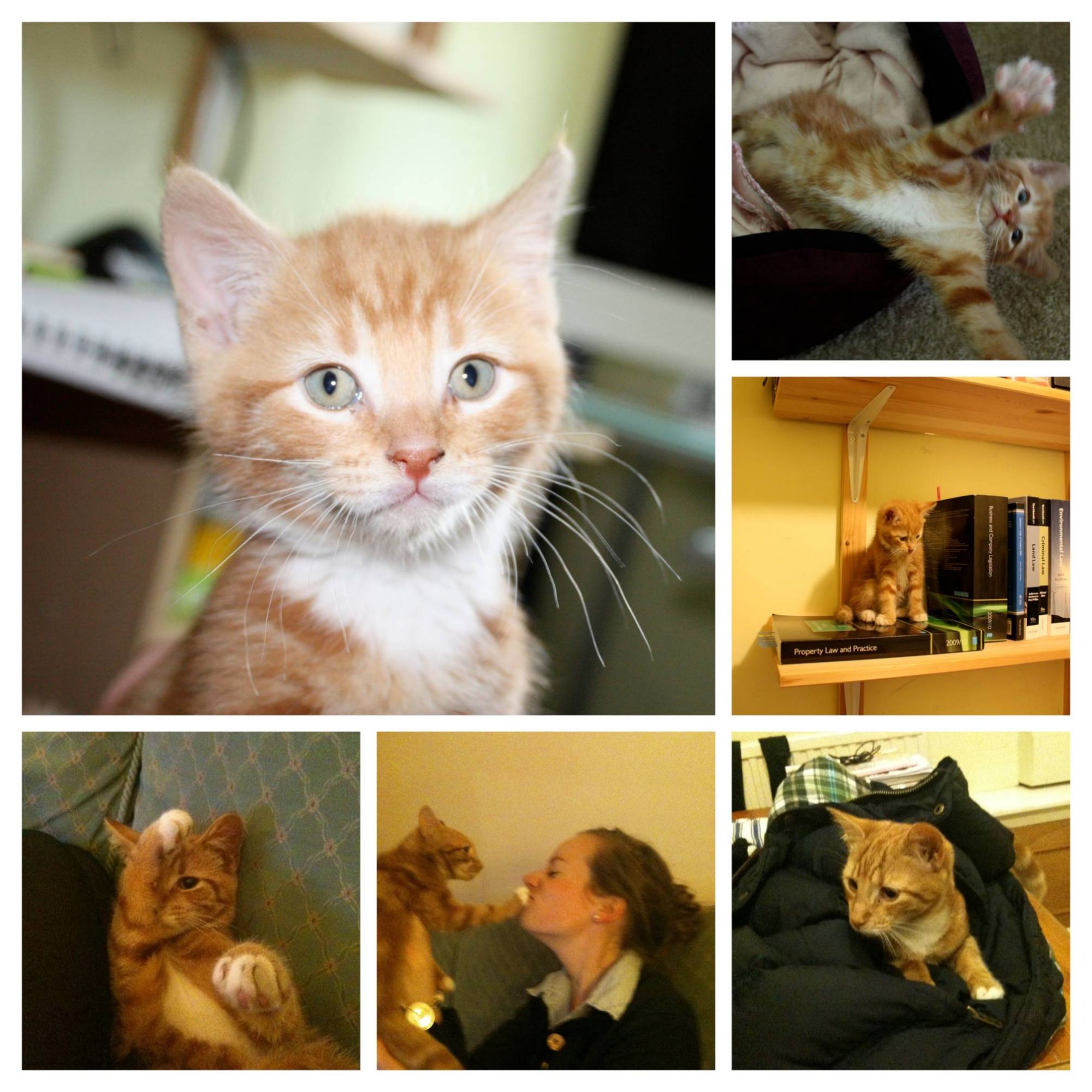
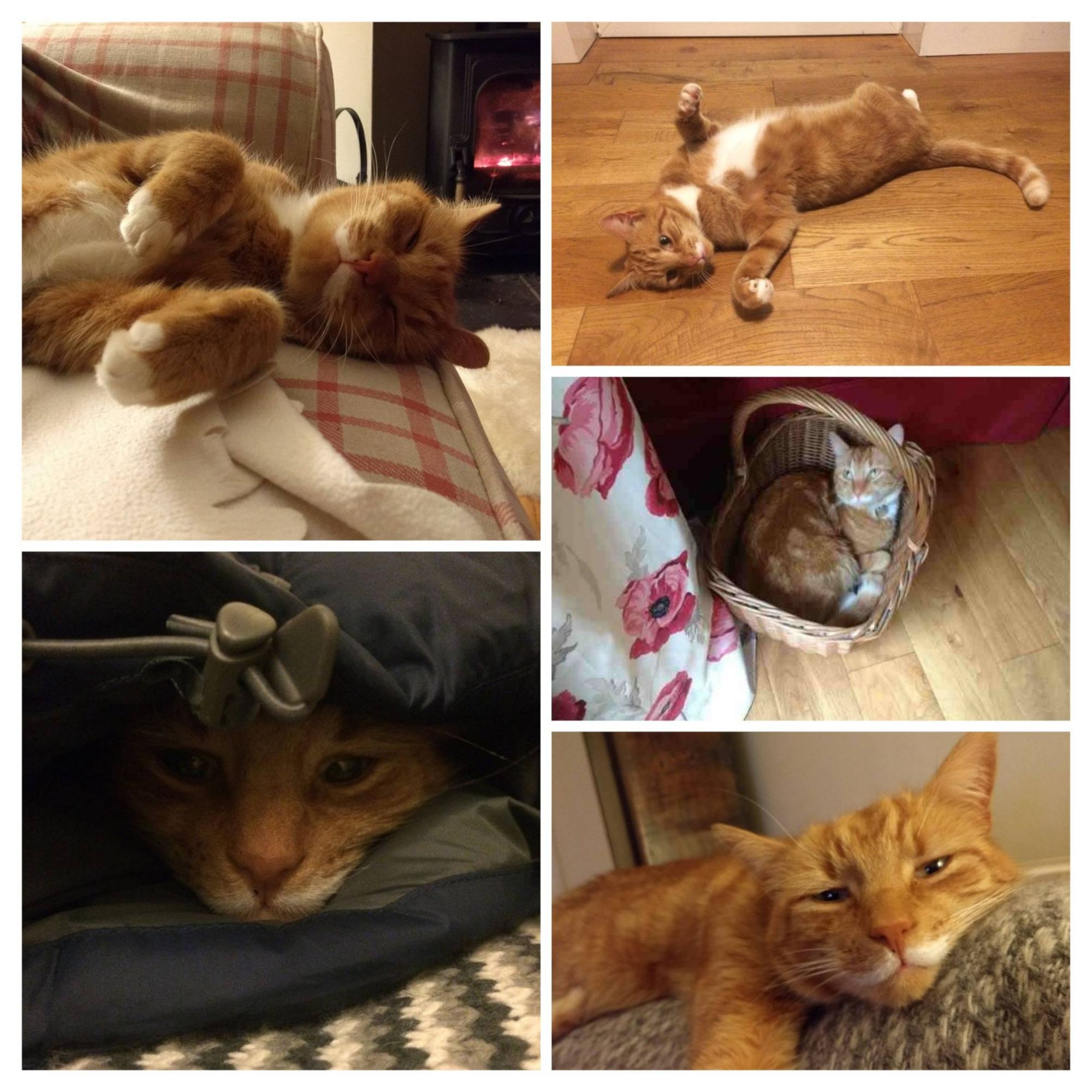
Around this time we also received the sad news from home that the infamous Crumpet The Cat had passed away. He had been living the life of luxury with a new loving family in Derbyshire, but at 14 and 3/4, age had got the better of him. We shared some tears and some hugs at the sad news, he was a real character, and even though he was no longer ours we loved still receiving photos of him with his new family, and had always imagined getting back and visiting him (just so he could take one look at us, be grumpy with us and ignore us, obvs!). The sadness soon melted into such fond memories of him and his silly ways, we were laughing before we knew it and a skim through old photos of him made us laugh even more. We were so grateful to have him in our lives, and for Nick and Carole for loving him as much as we did.
おもてなし– Omotenashi – Thoughtful hospitality
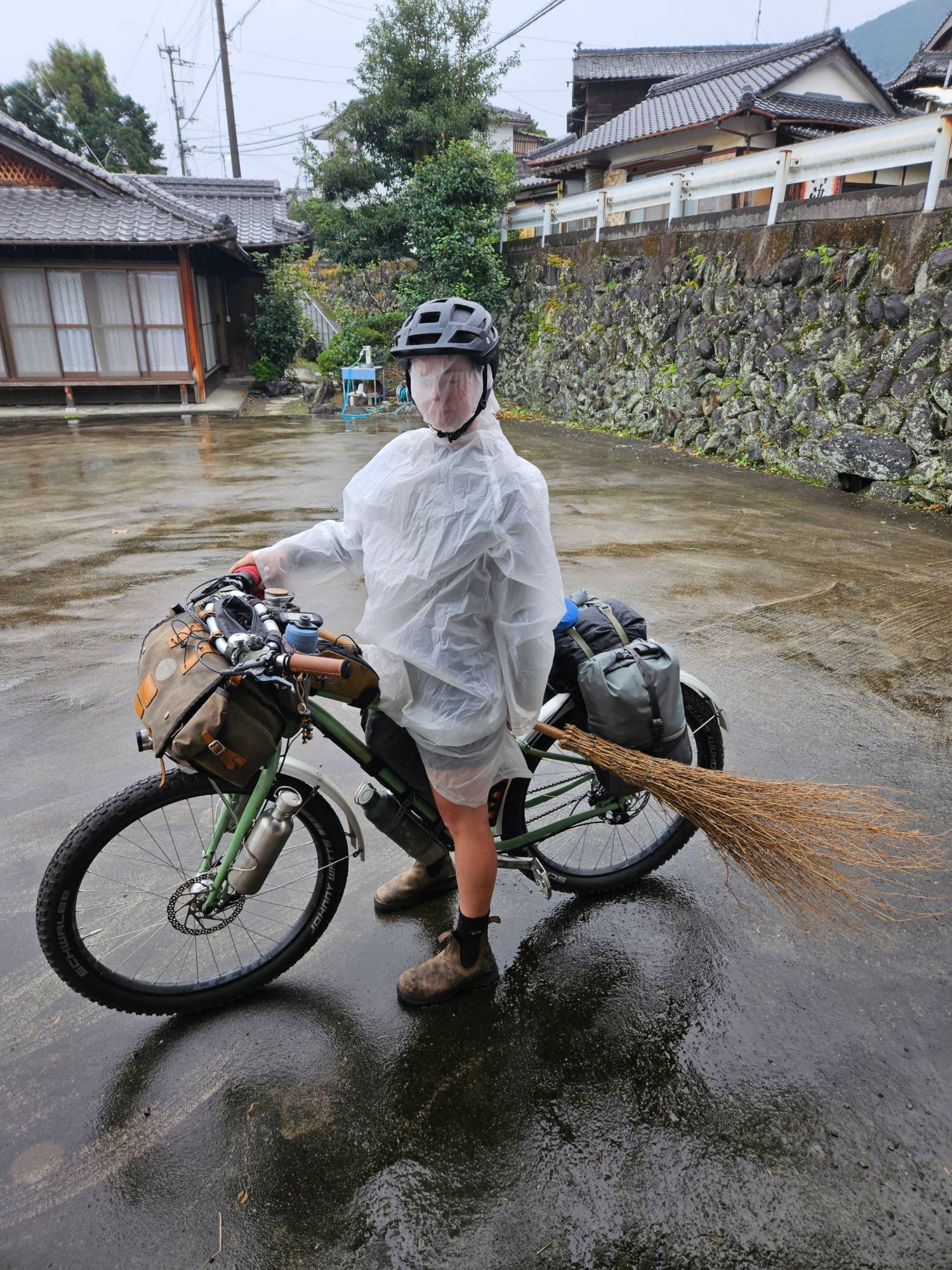
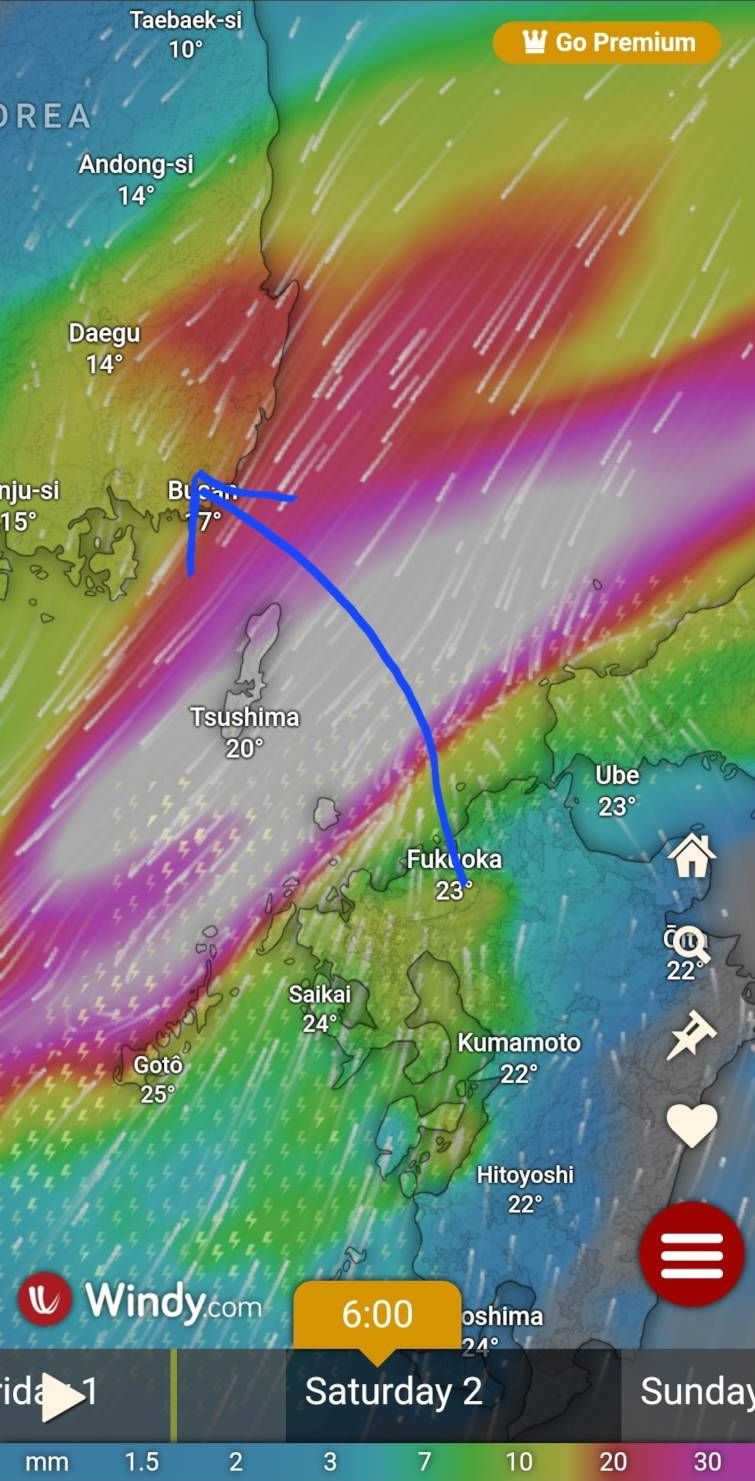
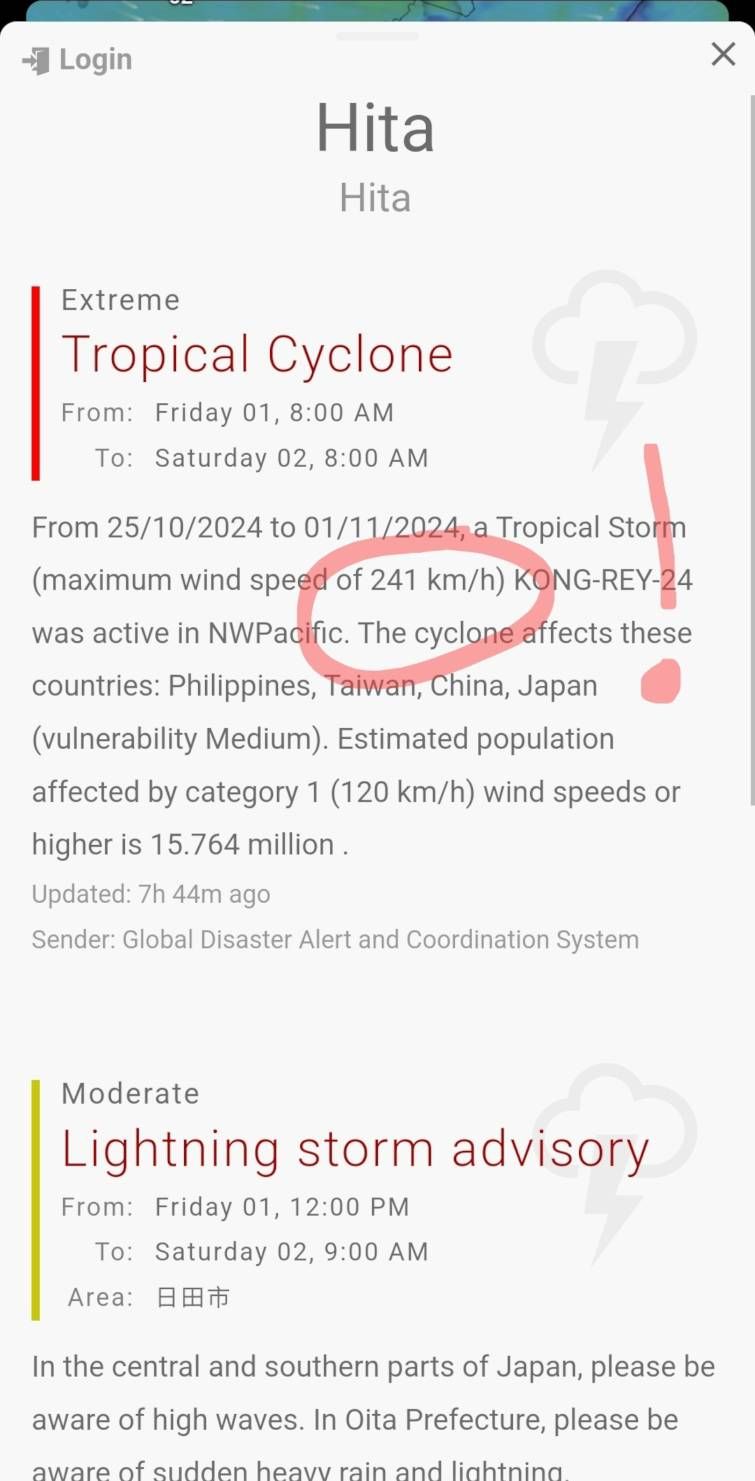
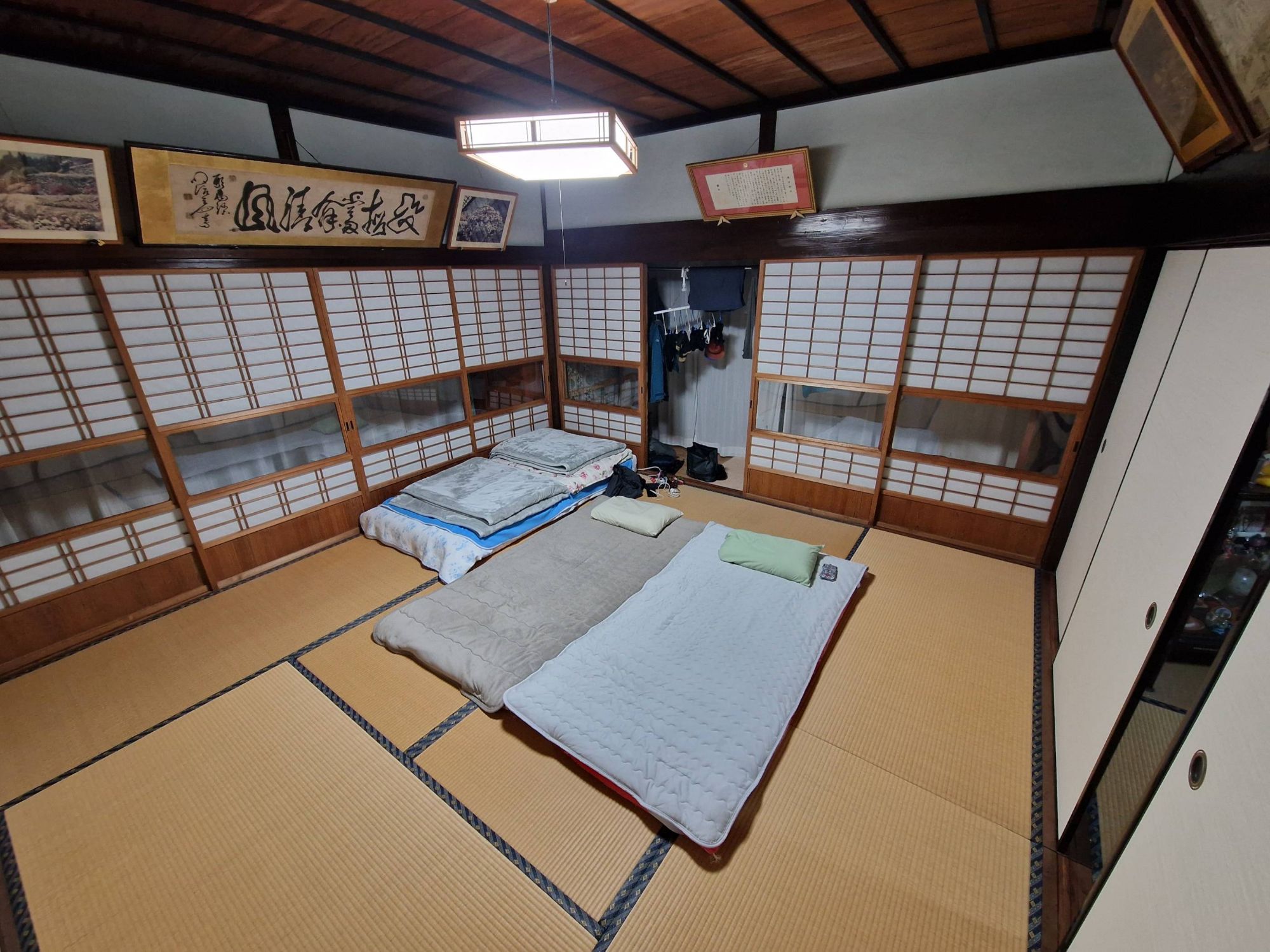
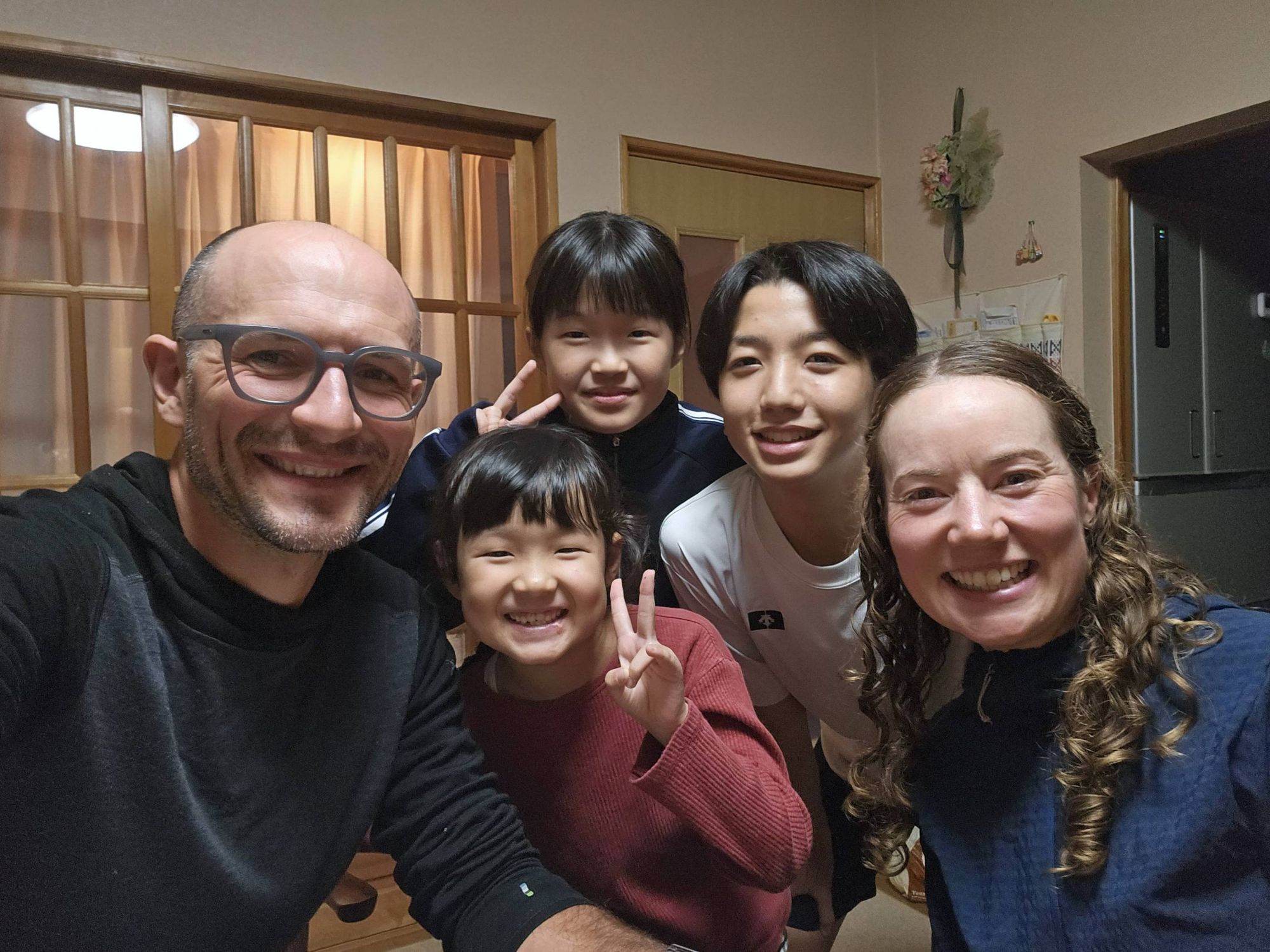
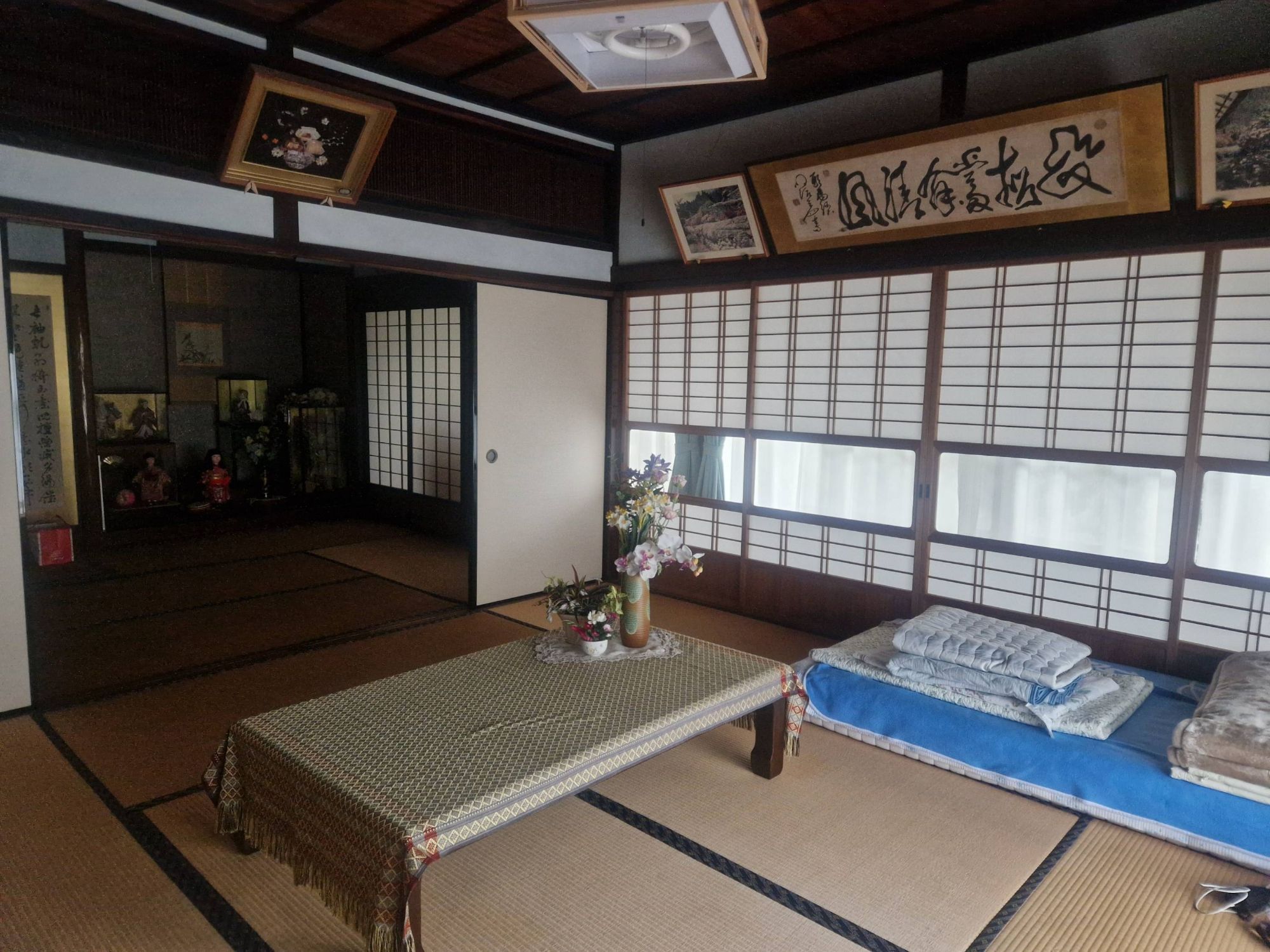
The fourth (and final, for us) of the largest islands of Japan is Kyushu and it had a much more rural and traditional feel to it, similar to Hokkaido. We had planned to cross the island in two days, and then jump on the ferry to South Korea, but as we settled into the tent on the first night, and took a quick look at the weather forecast we realised it was going to be a very wet couple of days – I mean torrential wet. We set off riding the following morning anyway. We were instantly soaked. Within an hour we found ourselves huddled in a remote bus stop shelter genuinely questioning whether we should call it a day already and just sleep there – After all, a bus stop shelter was a great luxury to us in South America. Sadly we didn’t have enough food with us, so we had to, at the very least, push on until we reached the nearest shop. 20km later on the outskirts of a small town, through all the layers of waterproof, I could smell the delicious, irresistible smell of fresh bread – I swear it is a trait of all long distance cyclists to be able to detect such treats from miles away. I instantly stopped. We went inside the tiny bakery, buying up half the shop and creating pools of water by our feet. We got talking to the owners of the bakery, Katsu and Shoko, who both spoke English, and before long we were commenting on the weather. It was then that they mentioned that there was a tropical cyclone heading this way, and this rain was just the start of it. It turns out we should also have checked the wind and storm tabs of the weather app, not just the rain one when we looked at the weather forecast, oops! They were concerned about where we were going to stay and after a little more talking they invited us to stay with them. We couldn’t believe their kindness. They even asked for us to stay two nights, until the storm had passed. We were so grateful for their thoughtful hospitality. They welcomed us into their beautiful traditional Japanese home, and we enjoyed multi-generational, family meals together as well as playing cards with their girls. Katsu and Shoko work so hard in their bakery, up at 2am to hand make all the bread and pastries in time for opening, but they still made time for us. Katsu’s croissants are the best we have tasted since our days in France and it was amazing to hear about the years they spent living on Okinawa, where Katsu learnt his craft. Our time with Katsu and Shoko and their family was really special.
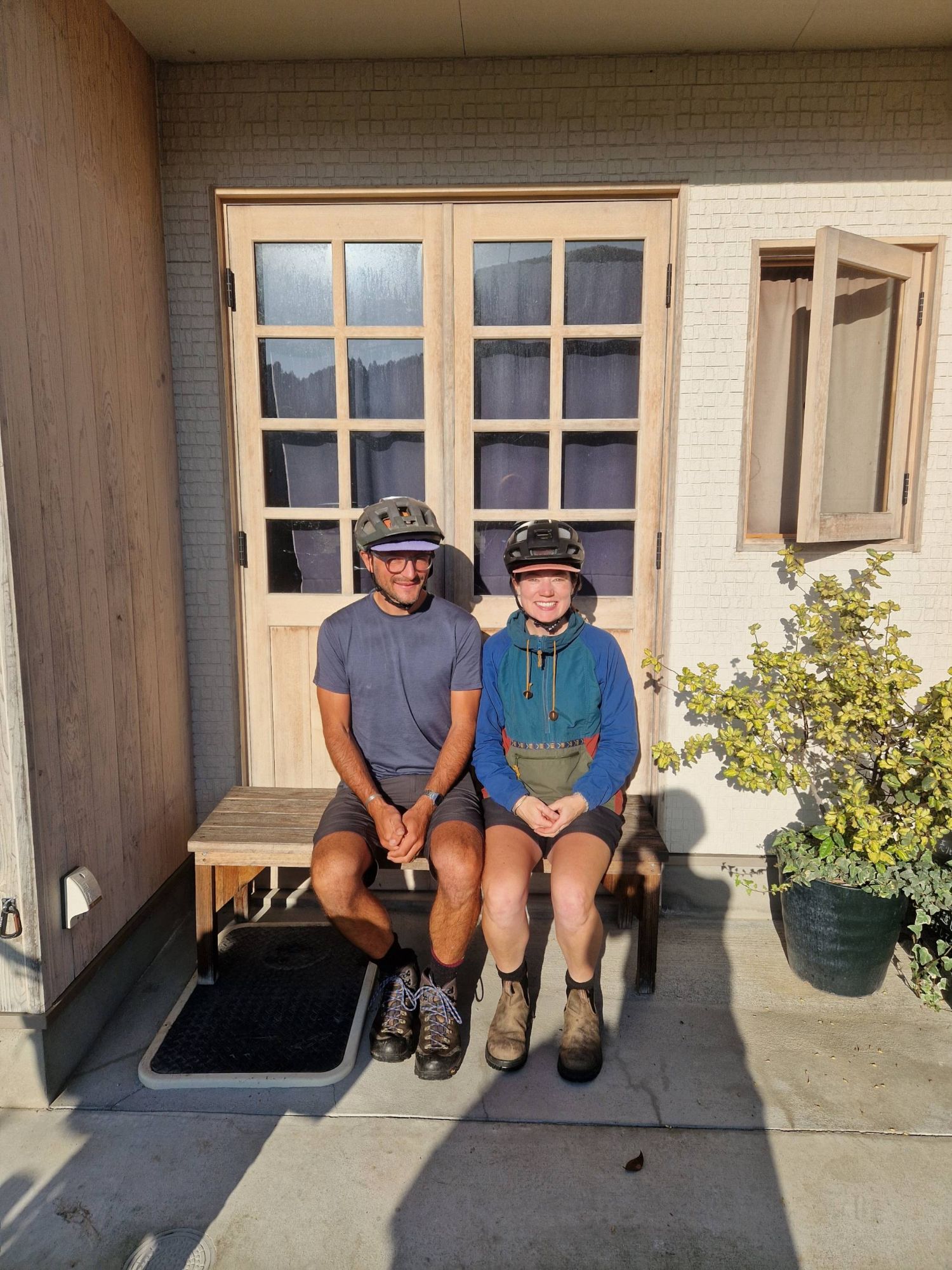
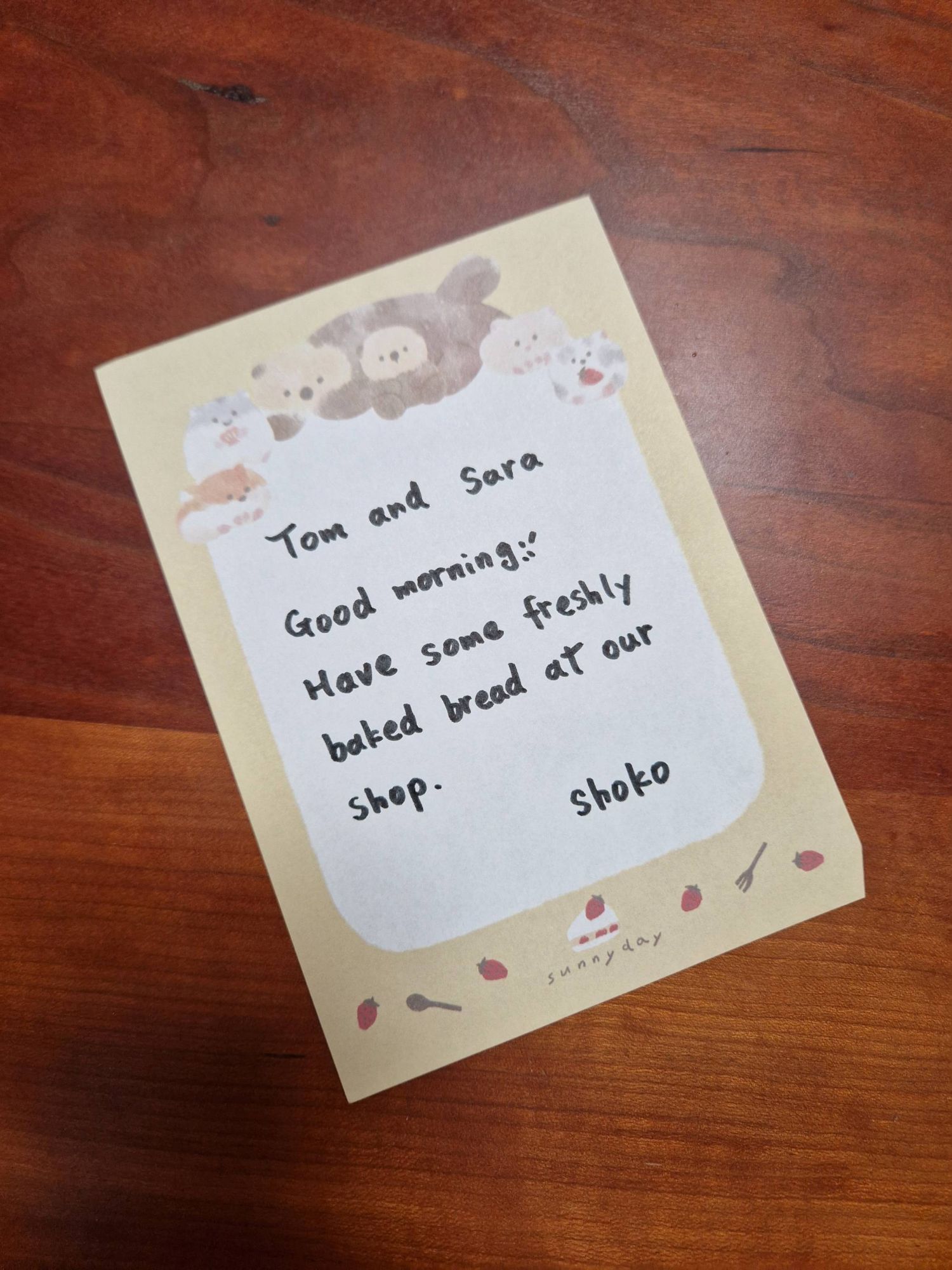
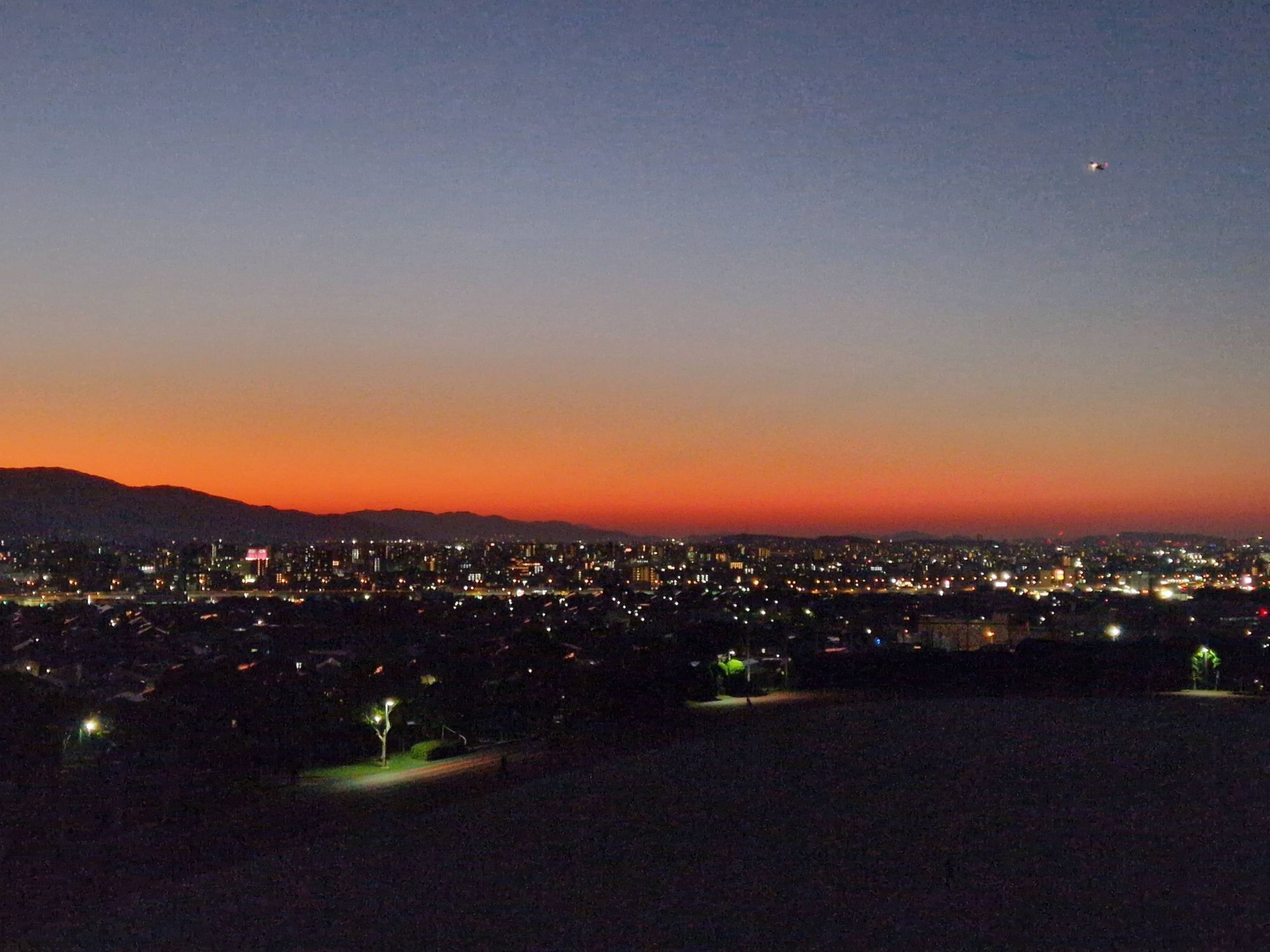
The sun was shining as we left Katsu and Shoko’s, and they sent us off with bags full of delicious bakery treats – It was the perfect end to our time in Japan.

 Tumbling Diaries
Leave a comment