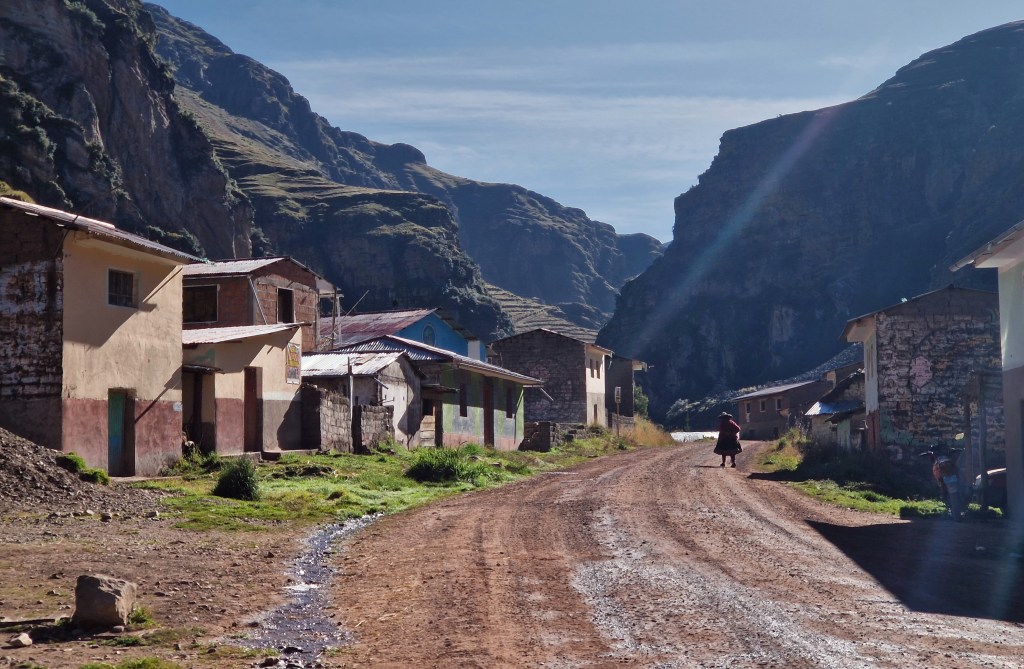
One of my favourite things about travelling by bike is all the places in-between that it takes you. You set out aiming for a particular town or village, and more often than not, the places you trundle through in order to get there end up being more interesting than the place you’re aiming for. The cliche saying about life being ‘all about the journey not the destination’ was, in my mind, surely written about bicycle travel.
The places in-between are never the kind of places you’d visit as a regular tourist. You’d never go out of your way to see them. There’s nothing really ‘to see’ or ‘to do’ there. There’s never any world famous tourist attraction or swanky hotels or fancy food. They are normal everyday places, where real people go about their everyday lives. And this is why we love the places in-between so much. You get to experience the reality of a country – warts and all!
For us, our time between leaving the Ausangate valley, and starting the Peru Divide Route from Abancay was a great experience of the places in-between.
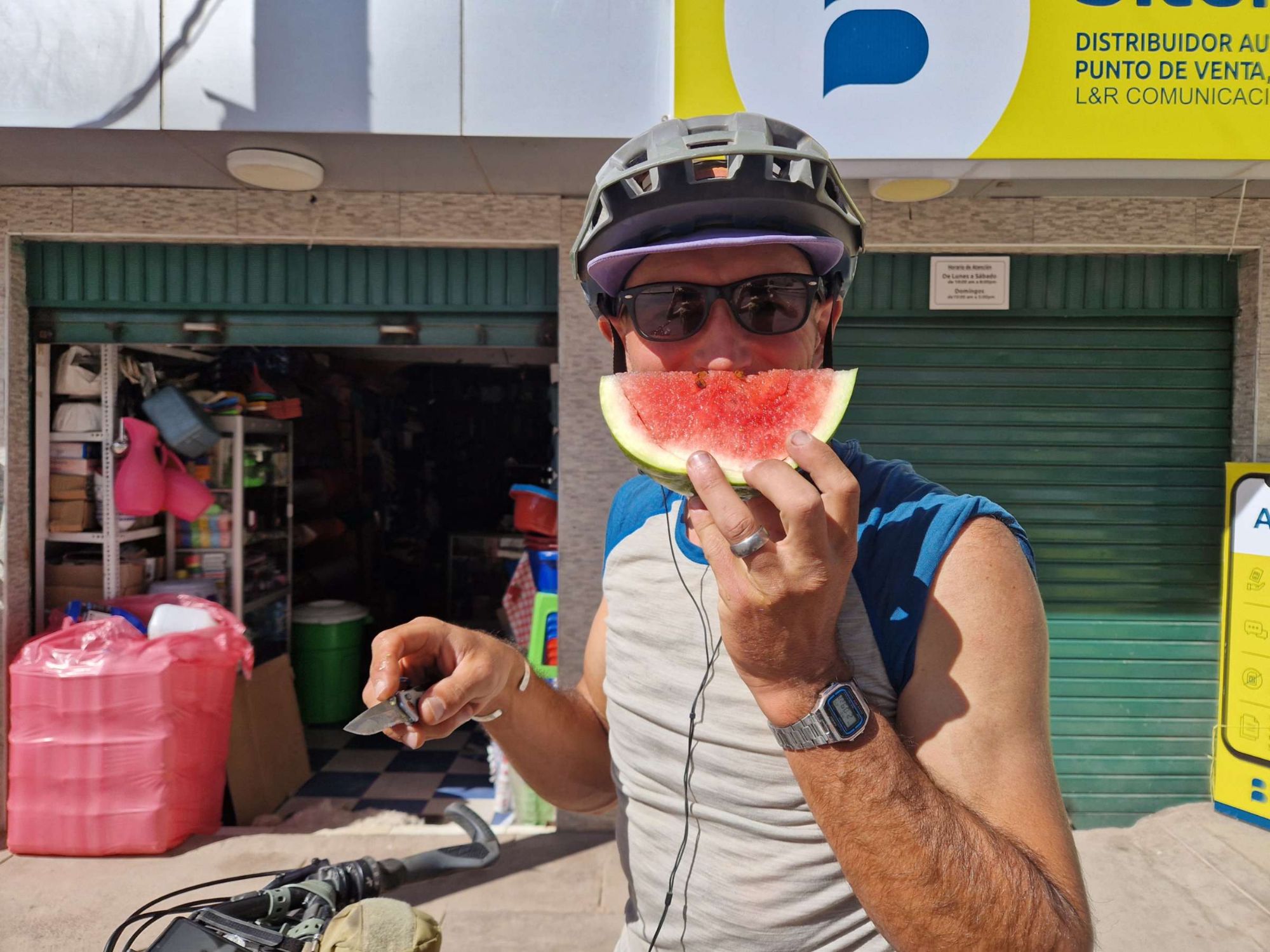
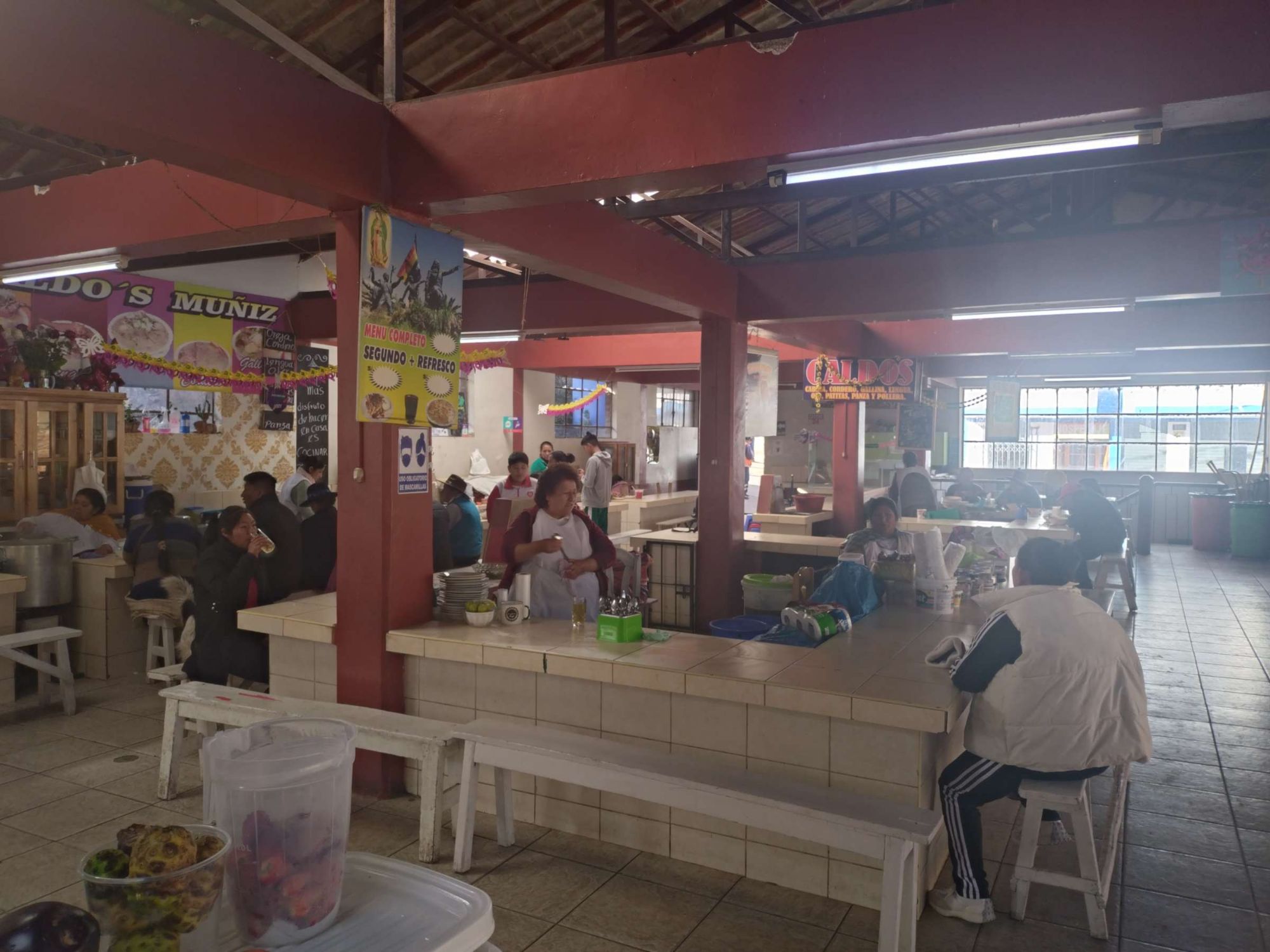
We rolled into Pitumarca, a bustling rural town spanning the river, surrounded by lush greenery and small fields of crops, late one Sunday morning. After restocking some supplies at a few shops, we ended up in the plaza sitting on a bench and watching the world go by. Old ladies with their stalls lined the plaza (as they often do in these towns) selling anything and everything from avocados to fly swatters. Two competing ladies bookended the plaza entrance ways, with old fashioned two wheeled popcorn carts, painted in pastel coloured stripes and complete with a large manually turned wheel to spin the delicious smelling popcorn. Another three or four stalls sold questionable looking concoctions of chilled foamy drinks mixed with beer, frequented by old men sitting on stools far too small for them, under the patchy shade of a dilapidated sun parasol. Another stall was stacked high with thick fluffy blankets, seemingly unnecessary in the sweltering heat of the midday sun, but bustling with custom nonetheless.
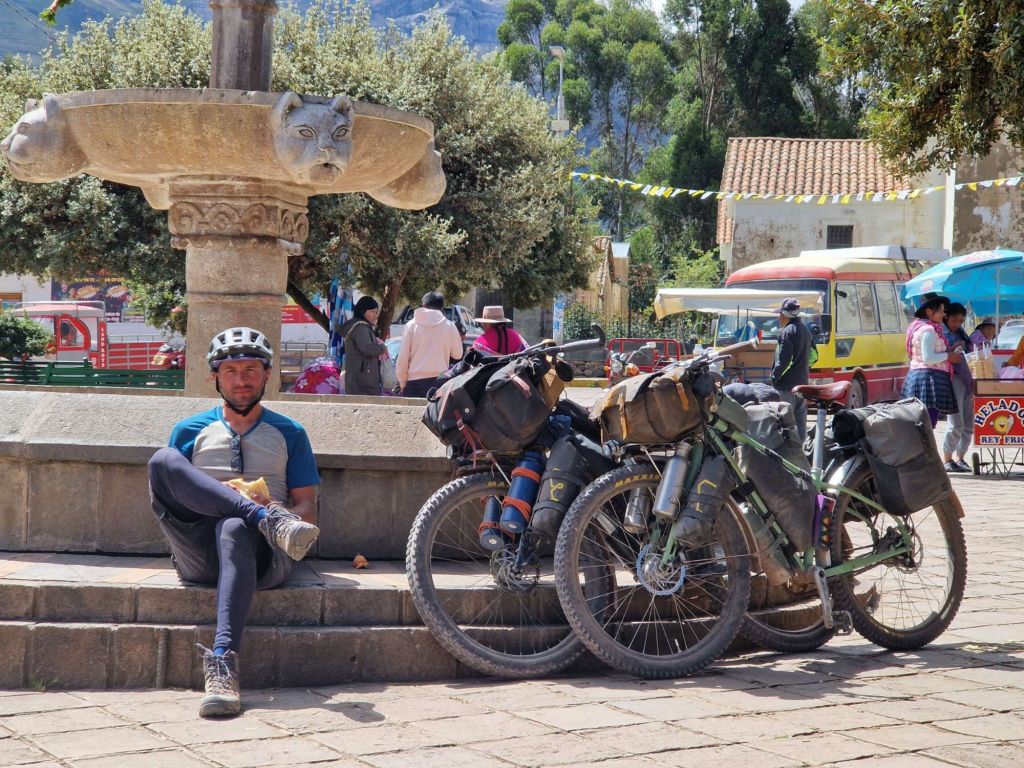
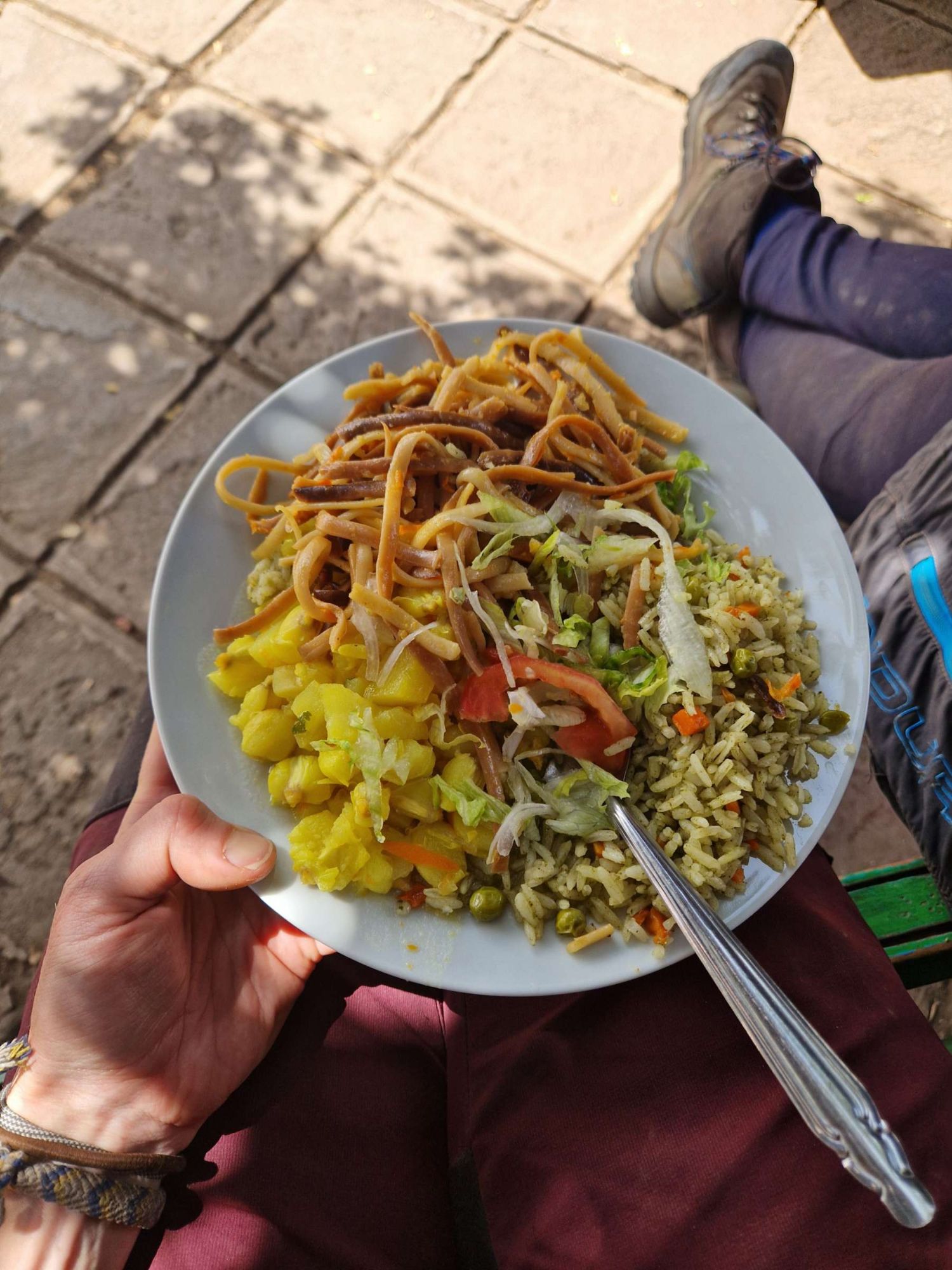
But as two perpetually hungry cyclists, our attention was mainly drawn to the lady selling huge plates of food out of a collection of the largest pans you’ve ever seen, stacked high on a charming, rickety old butchers bike. From the distance of our shady bench we couldn’t quite tell what the food was, but we knew it must be good given the number of people queuing up. We’ve quickly come to learn that following the locals lead when it comes to food is usually a good bet, so we took our place in the queue. Peering over the shoulders of those already eating, to try and grab a glimpse of what was in the mystery pans, it was clear that there were lots of veggies so we knew we were on to a winner. The large lady running the stall was a real character, with a hearty laugh and the ability to make all her customers chuckle. So when it was our turn to order our two plates, and we tried to explain we didn’t want meat, we were easy targets to be the butt of her jokes. It was all in good humour though and despite her astonishment that we didn’t want the chicken, we ended up with two plates of food piled high with an array of different traditional dishes full of veggies – perfect. We squashed onto the benches around her cart along with the other locals (who all continued to laugh at her stream of running jokes), and devoured our delicious plates of food, whilst continuing to watch everyday life on the plaza unfold.
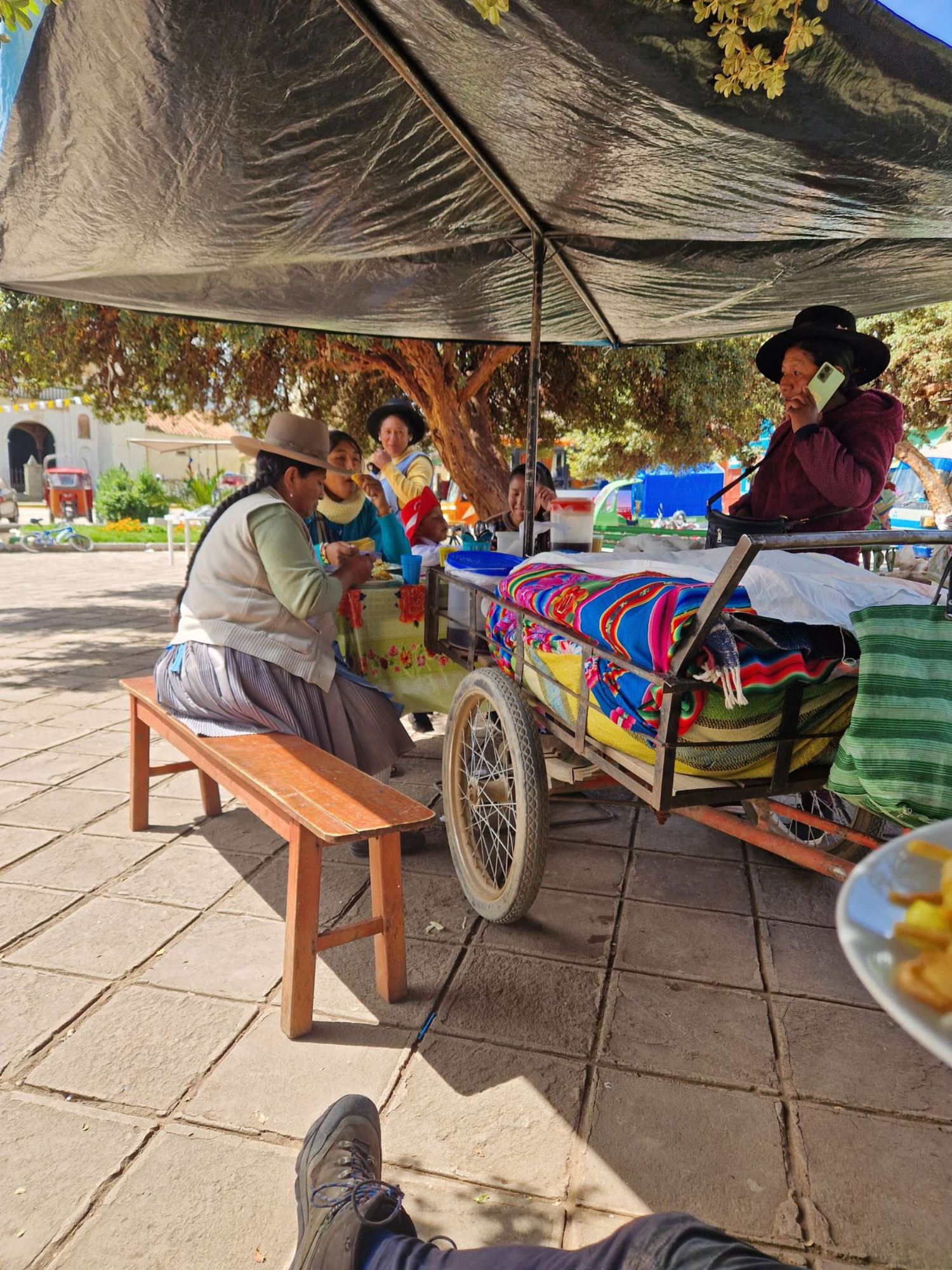
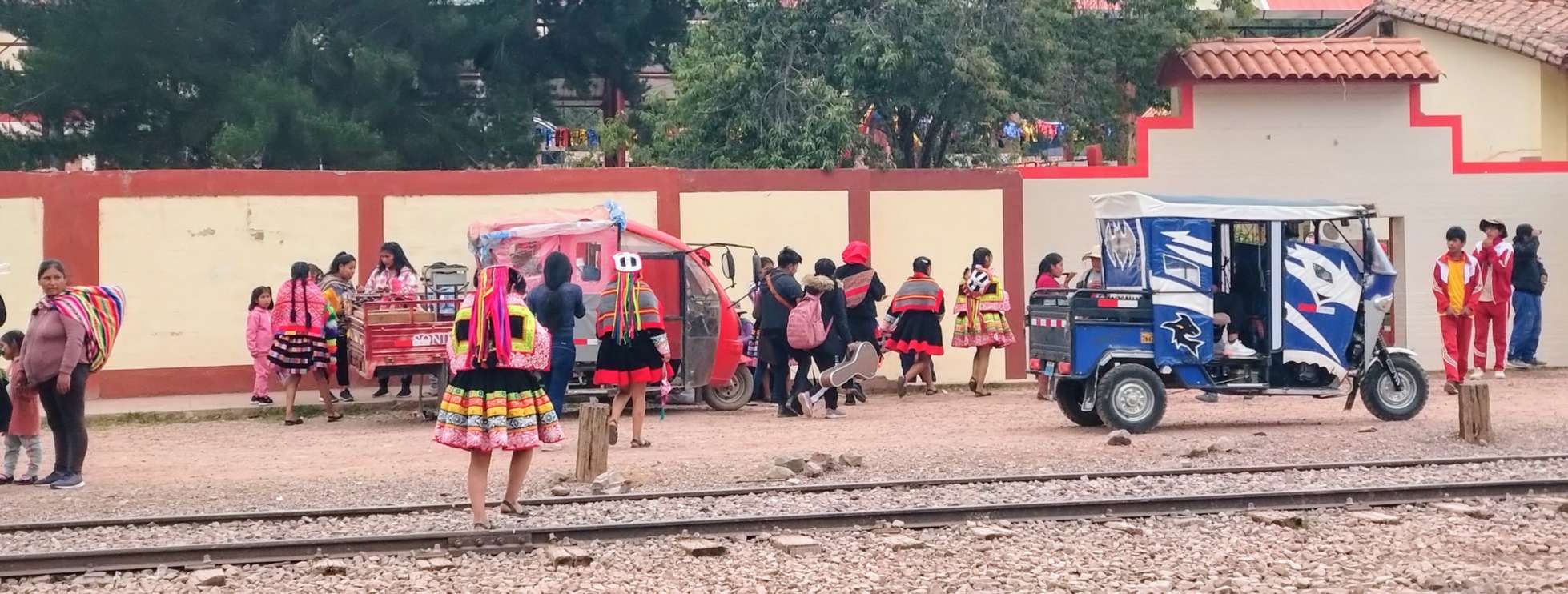
We admired the traditional dress proudly still warn by most women here – Not for show, not for the tourist pictures, but because they truly enjoy wearing it. The bright colours, the detailed embroidery, the hats, the llama wool leg warmers, the mantra (shawl/blanket) and the many many layers of fabric are impressive to see up close. The pride they take in dressing smartly in such beautiful clothes is clear to see. One old lady we saw had even dressed head-to-toe in purple, with matching Crocs, taking the famous line from Jenny Joseph’s poem ‘When I am an old woman I shall wear purple’ to a new level.
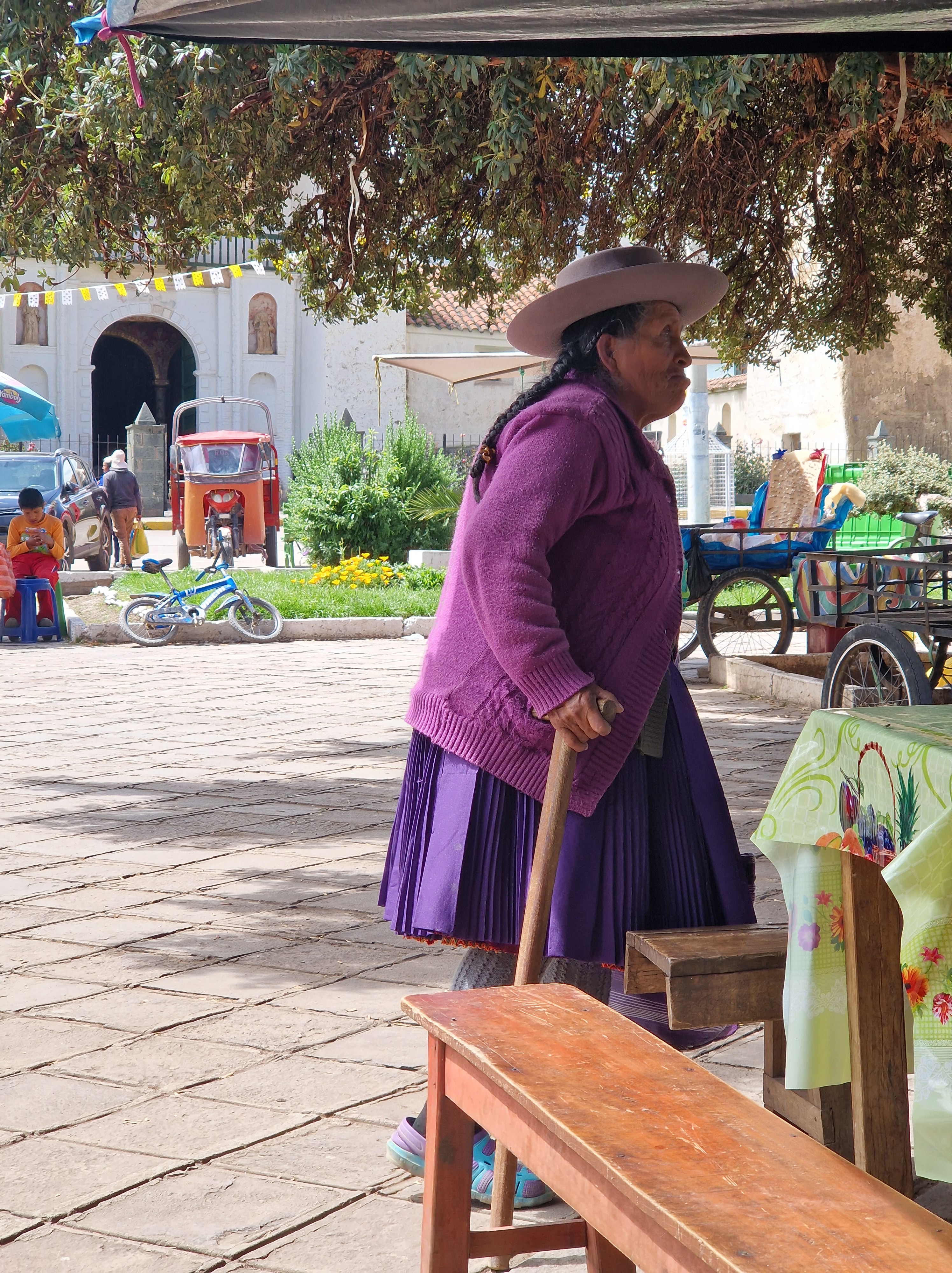
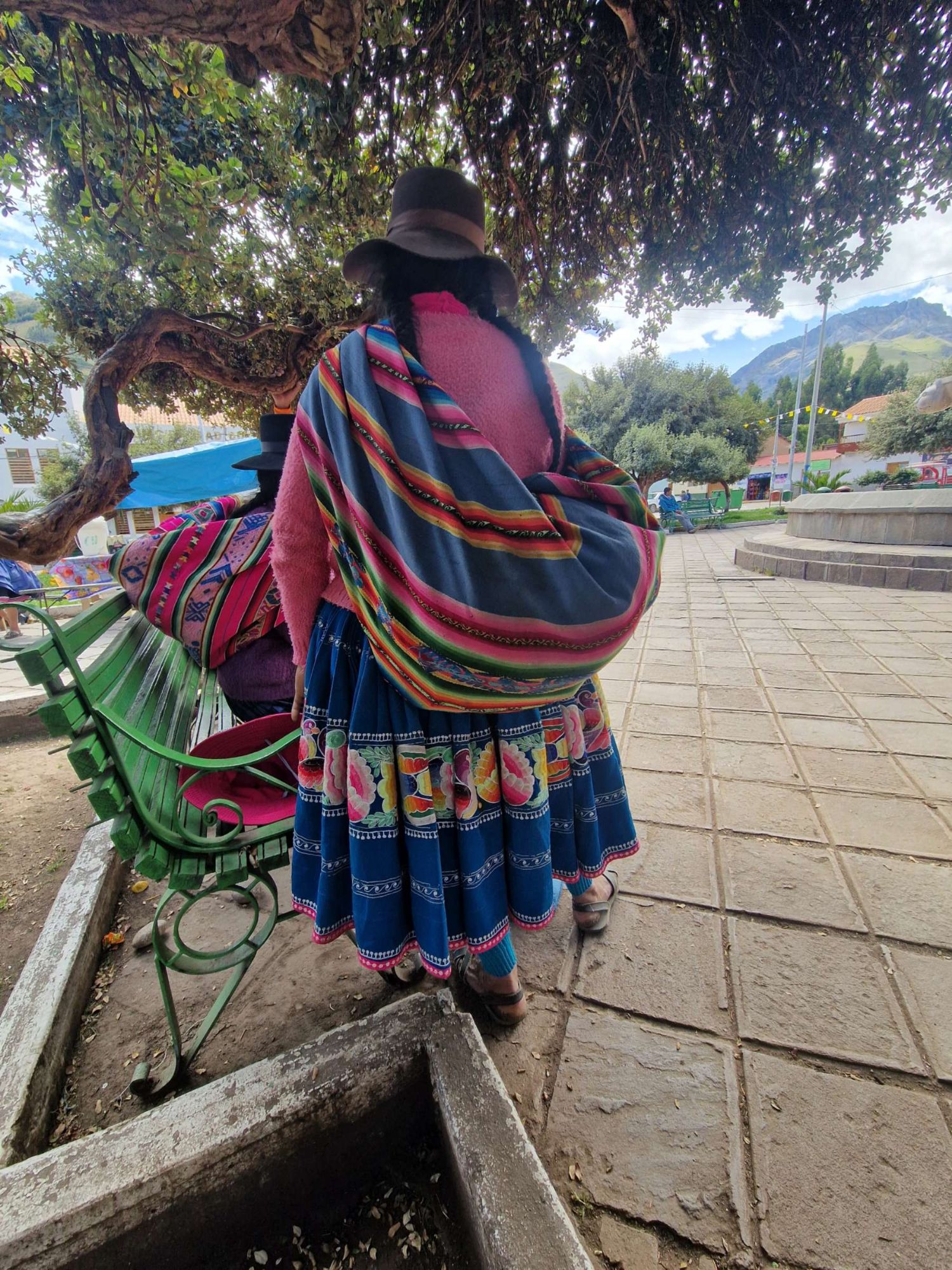
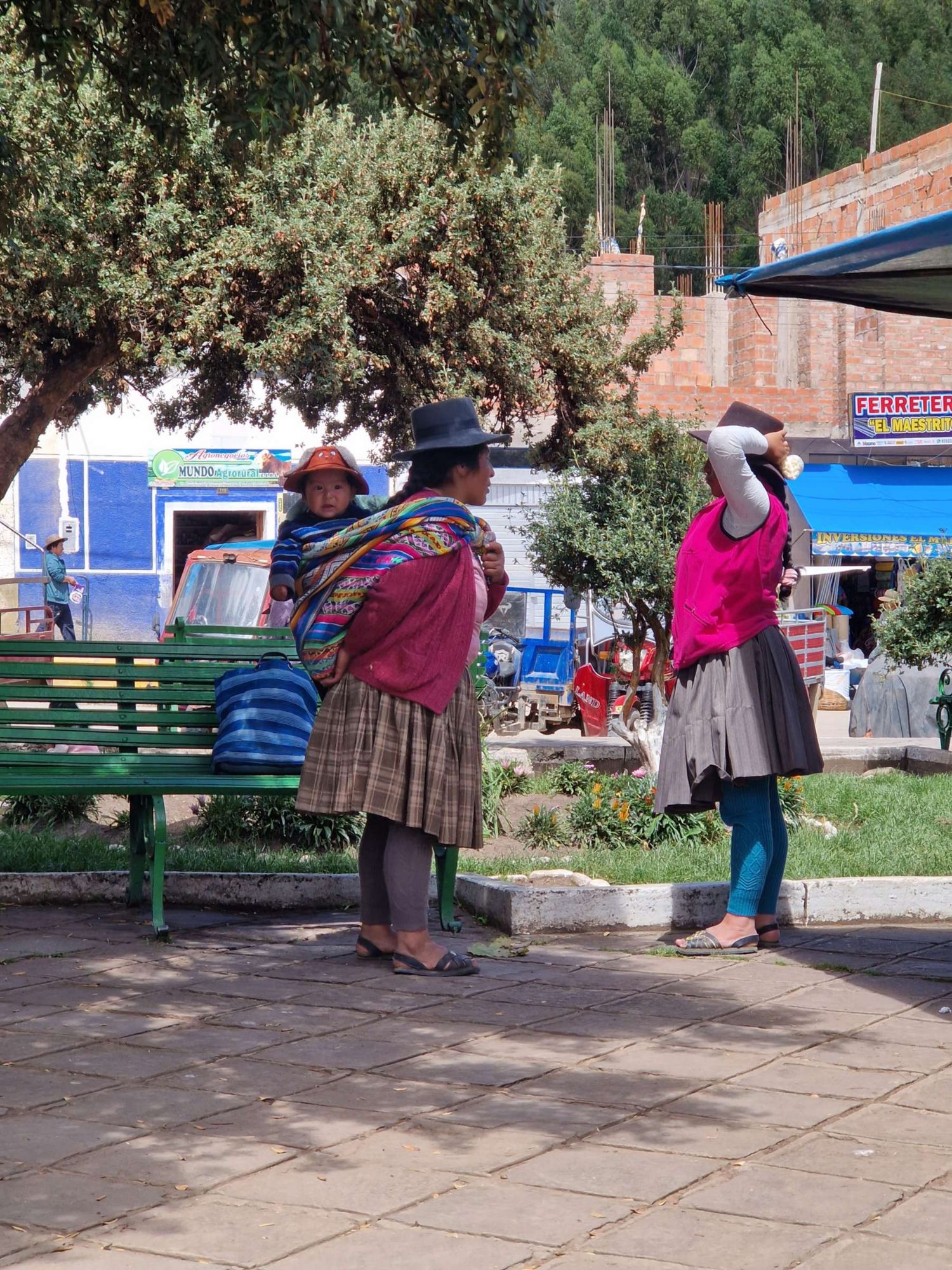
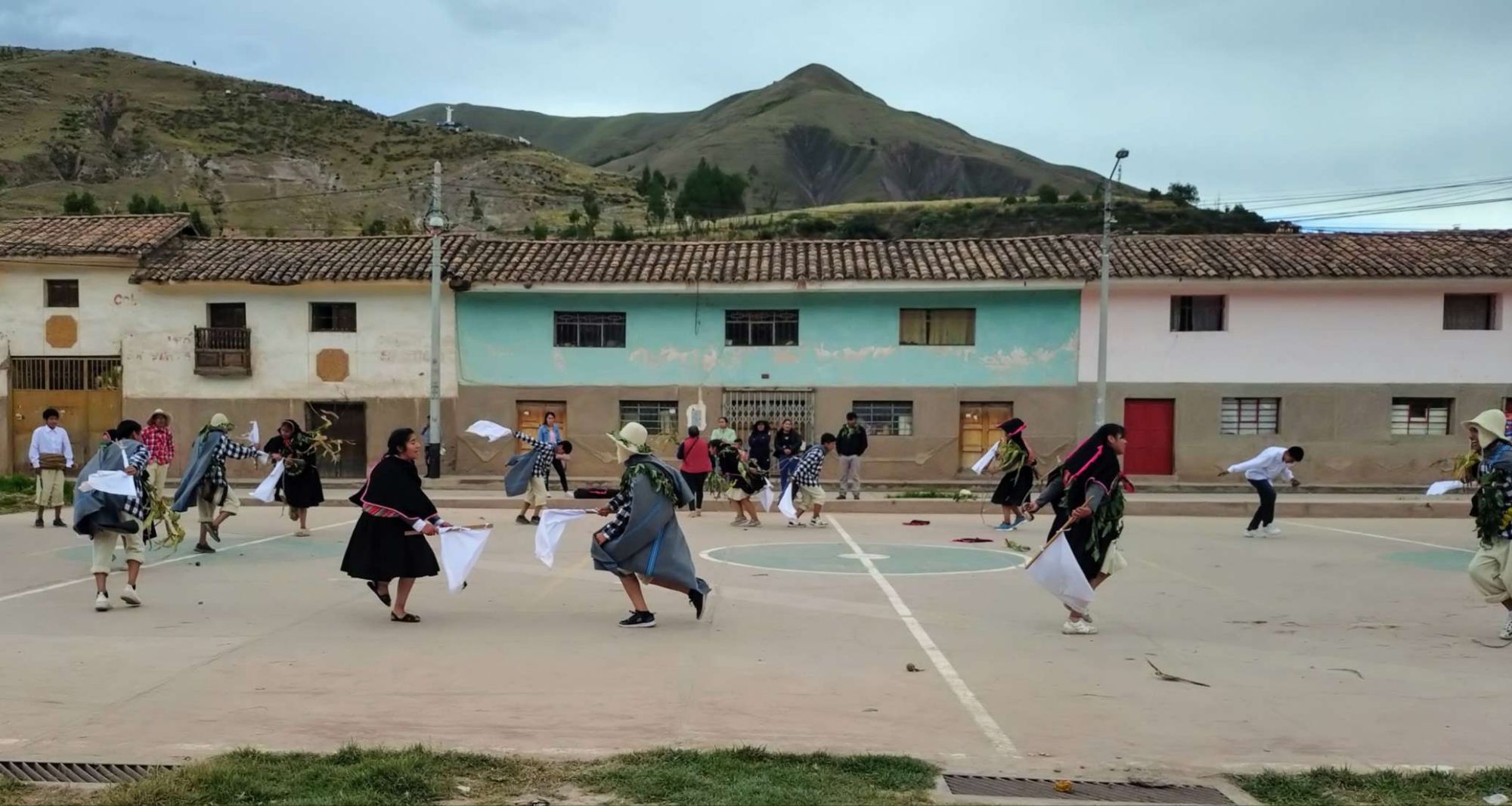
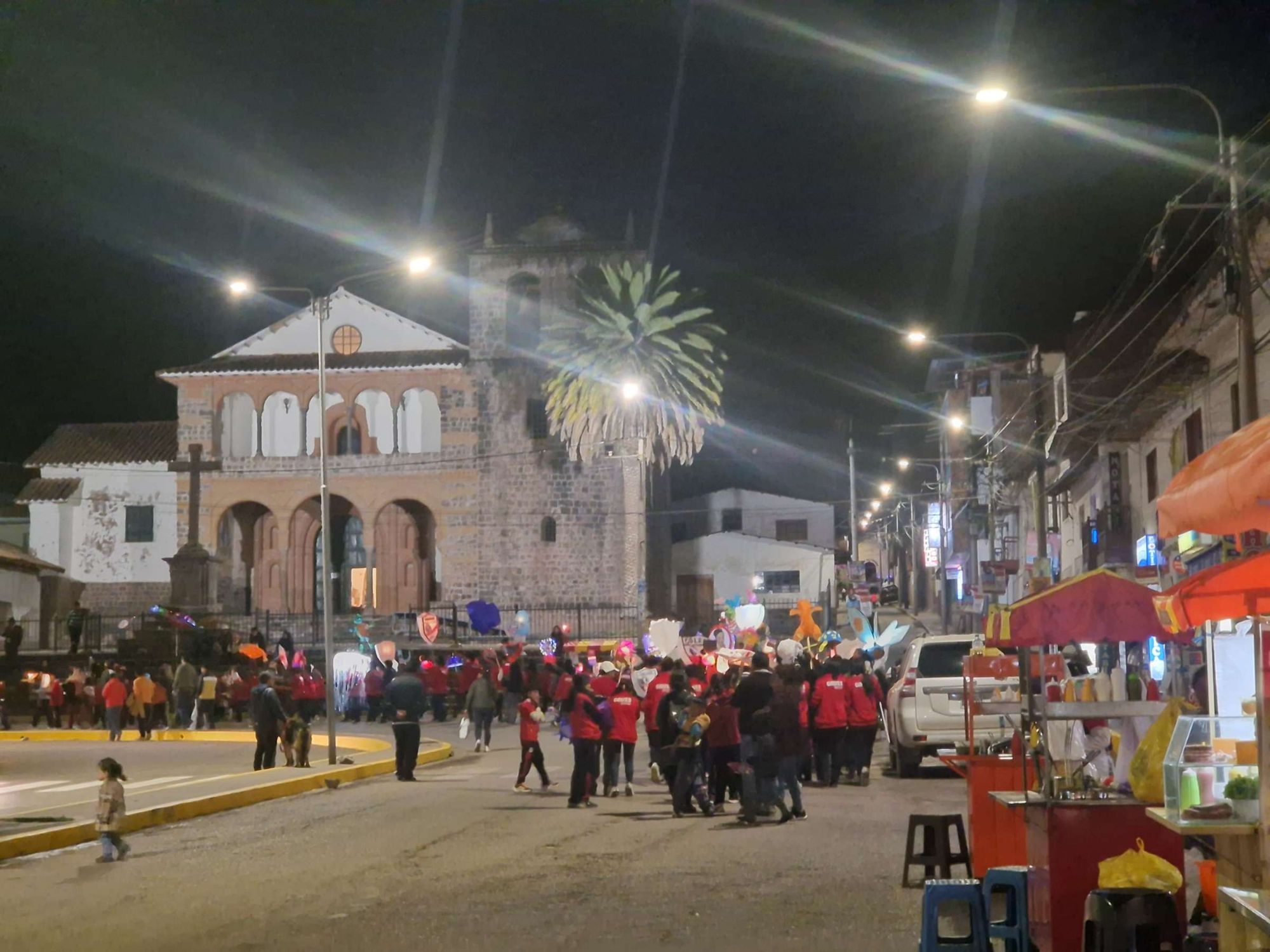
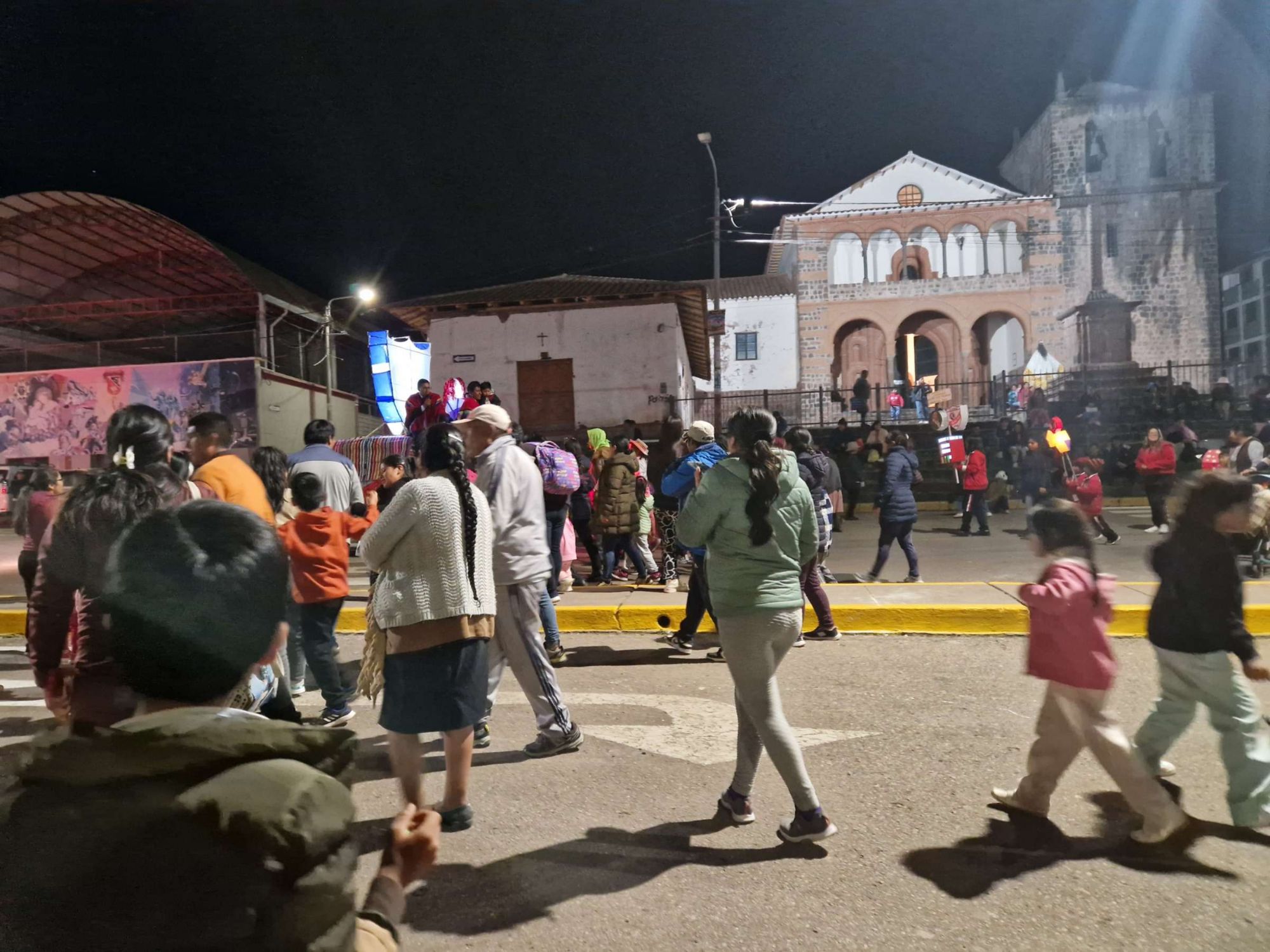
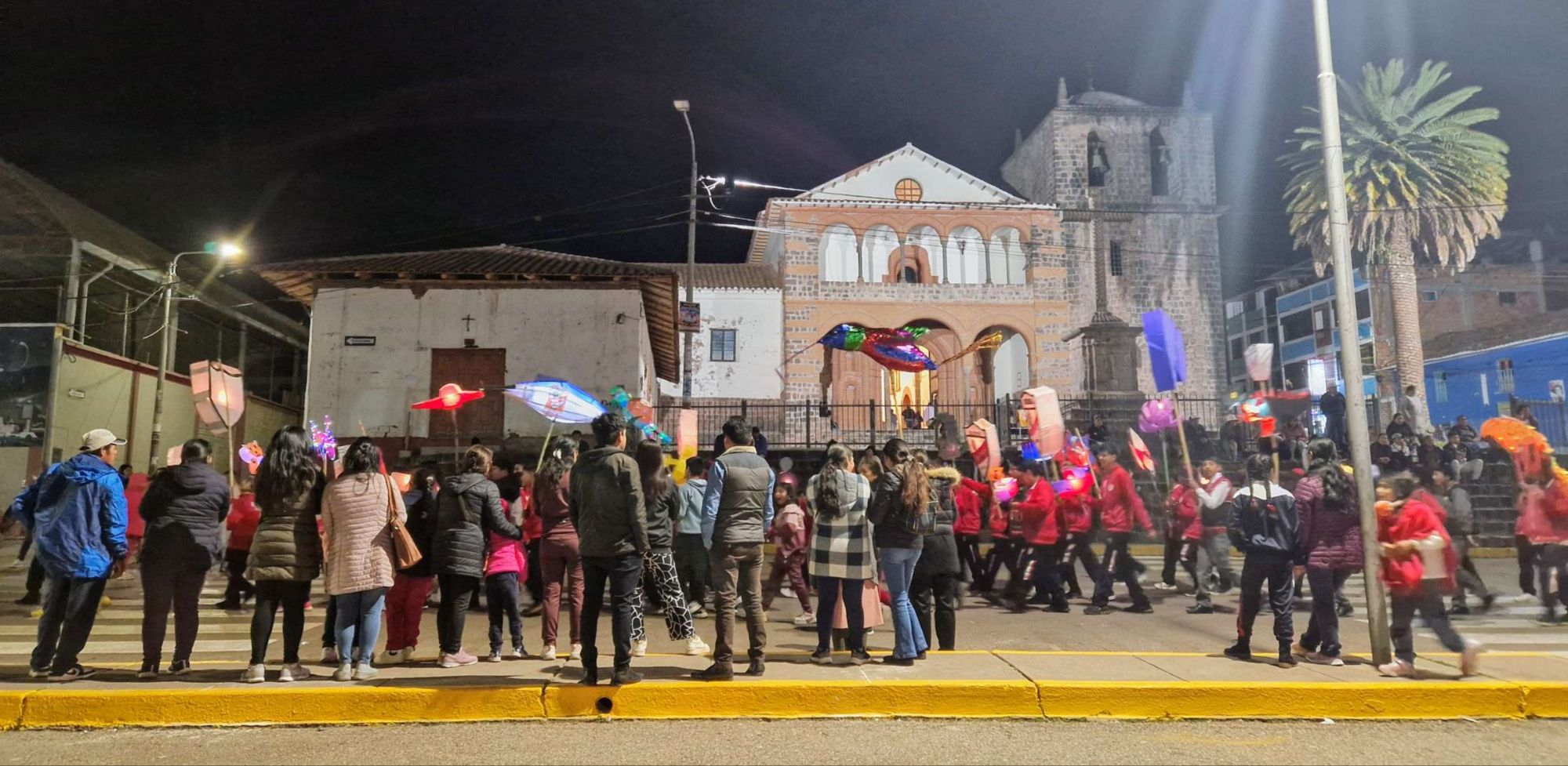
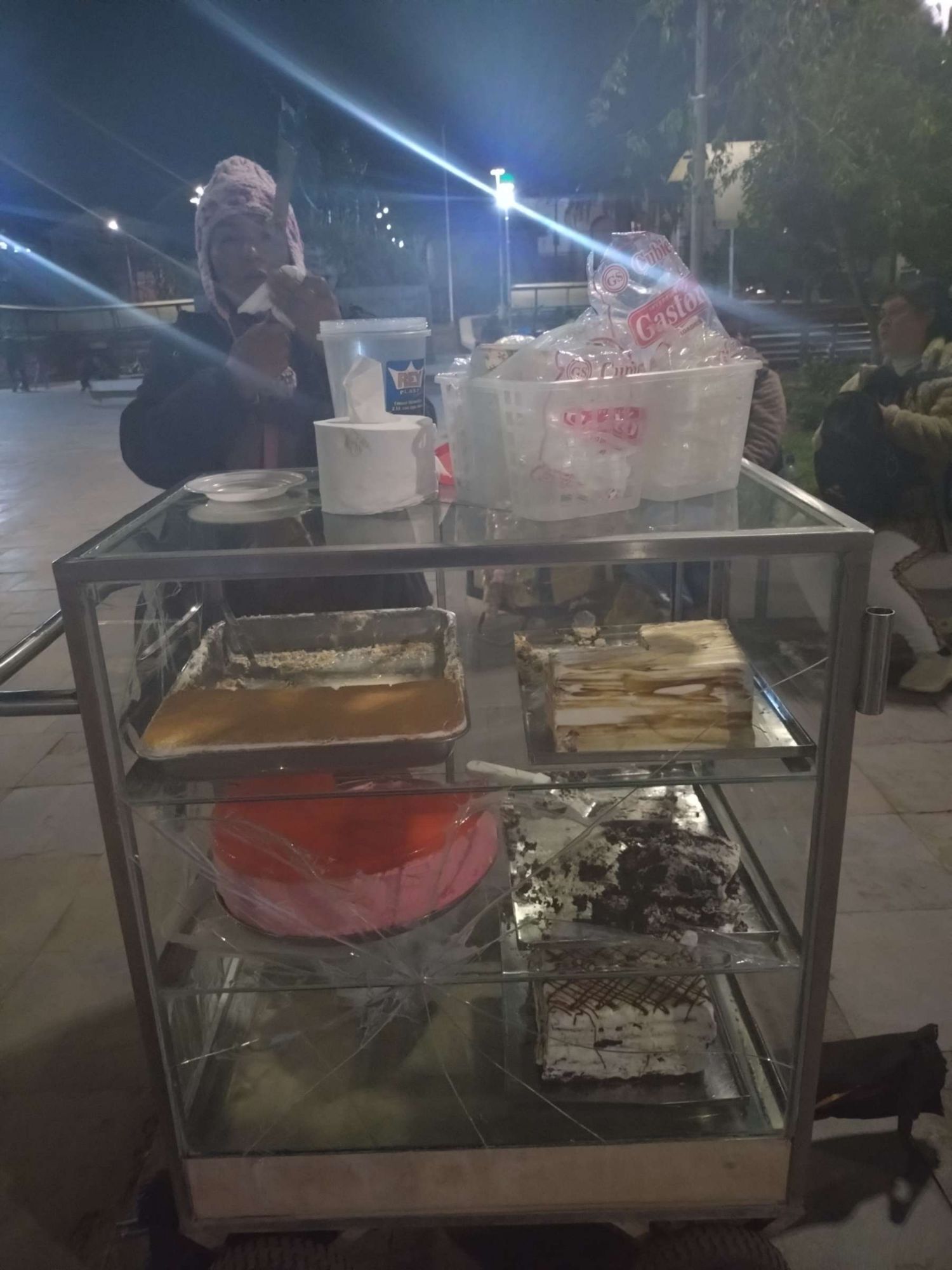
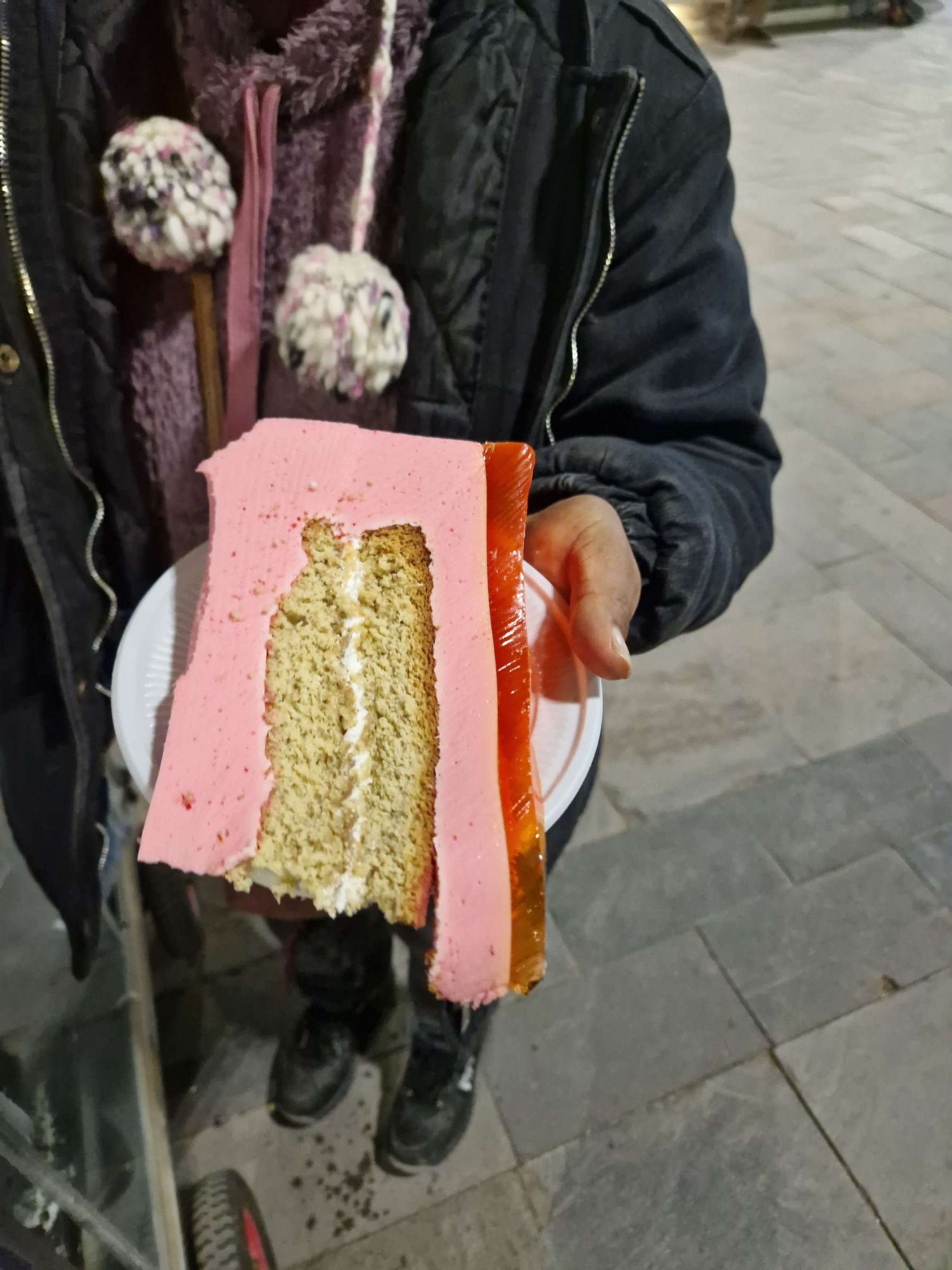
But it’s not just the older generations who enjoy embracing traditional dress here. In Urcos, another ‘in-between’ place tumbling down a steep hillside, we stumbled upon a collection of different schools, each class in a different style of traditional or historic dress, with a dance to go along with it. We stood and watched as a few classes practiced their dances on the basketball courts outside a school before they all paraded inside, presumably to put on their best performances for the crowds of parents awaiting inside. The diversity of colour, texture, hats and accessories was amazing to see. Later that evening, was also enjoyed watching a festival procession. Lots of children carrying an array of multi-shaped lanterns as they marched around the plaza square catching sweets being thrown from a truck blaring music – I’m not sure what the festival was all about, but I can see that the sweets, the blaring music and the lanterns combo is enough to get any child excited. We were about as giddy as all the kids when we realised that part of this festival involved the locals selling cakes on the plaza square, we were more than happy to get involved in that festival tradition – I think Ted munched his way through four puddings that night! The town had a lovely lively atmosphere. Families all out enjoying the festivities, but we still managed to get back to our hostel and be in bed before 9pm – A perfect night out for us!!
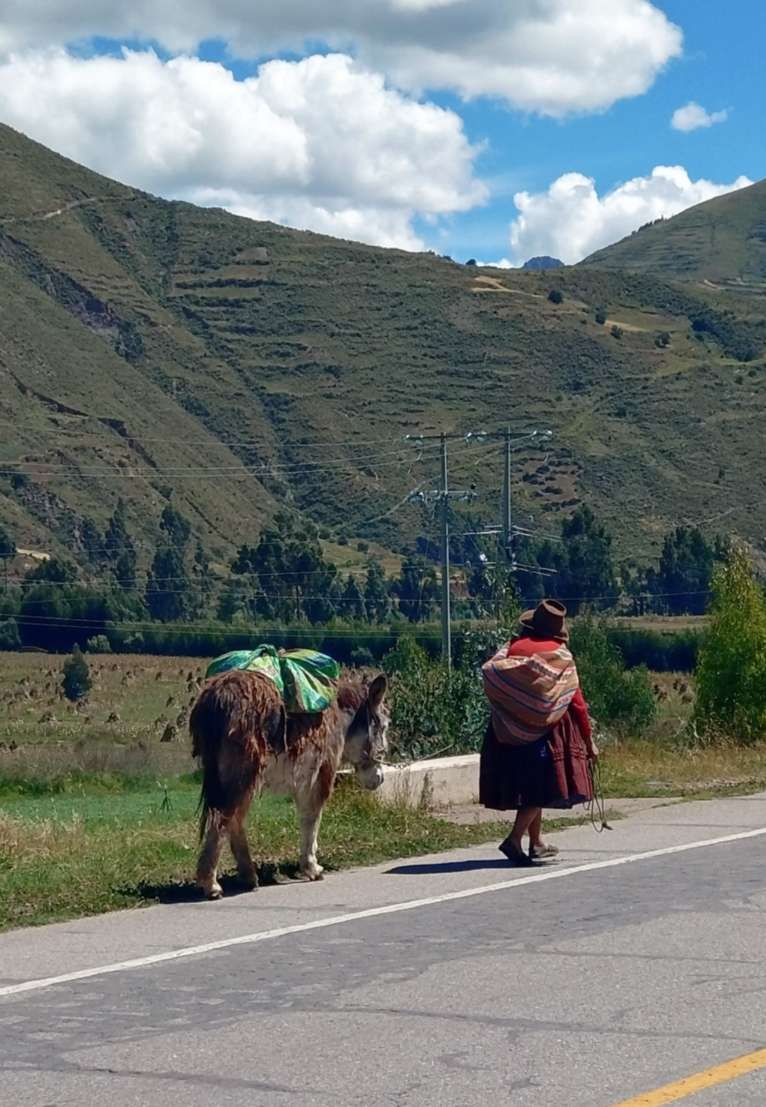
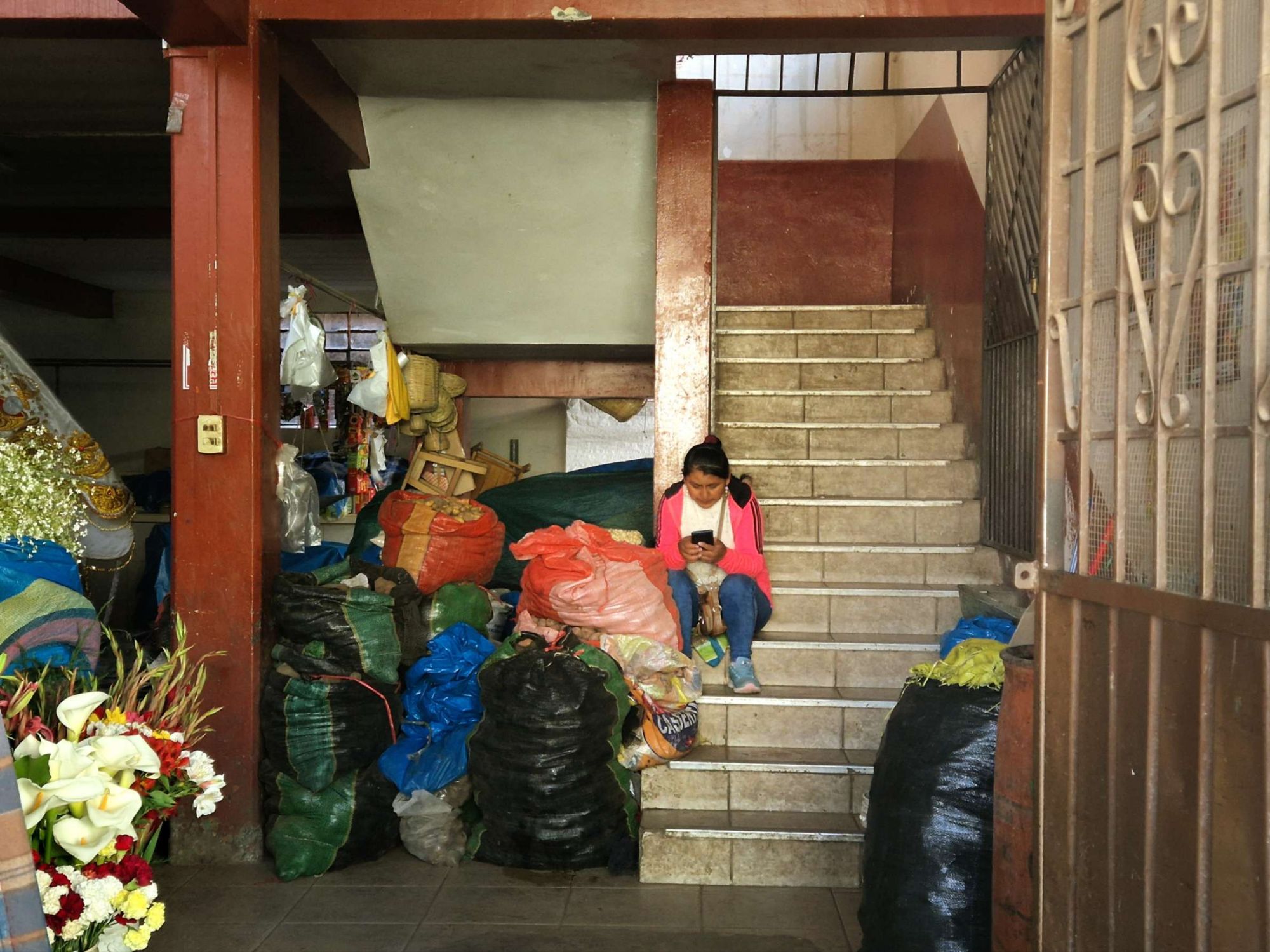
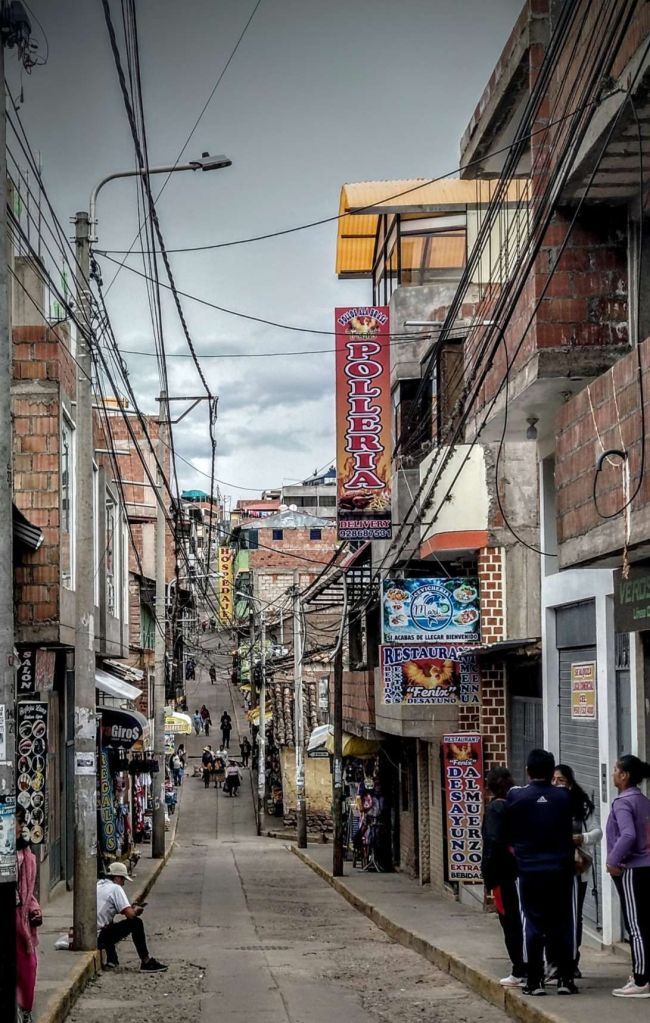
After Urcos, the road started to become a little busier as we crept ever closer to the tourist hotspot of Cusco. The spaces between the villages became smaller, the fields replaced with industrial yards, the road became lined with houses and businesses.
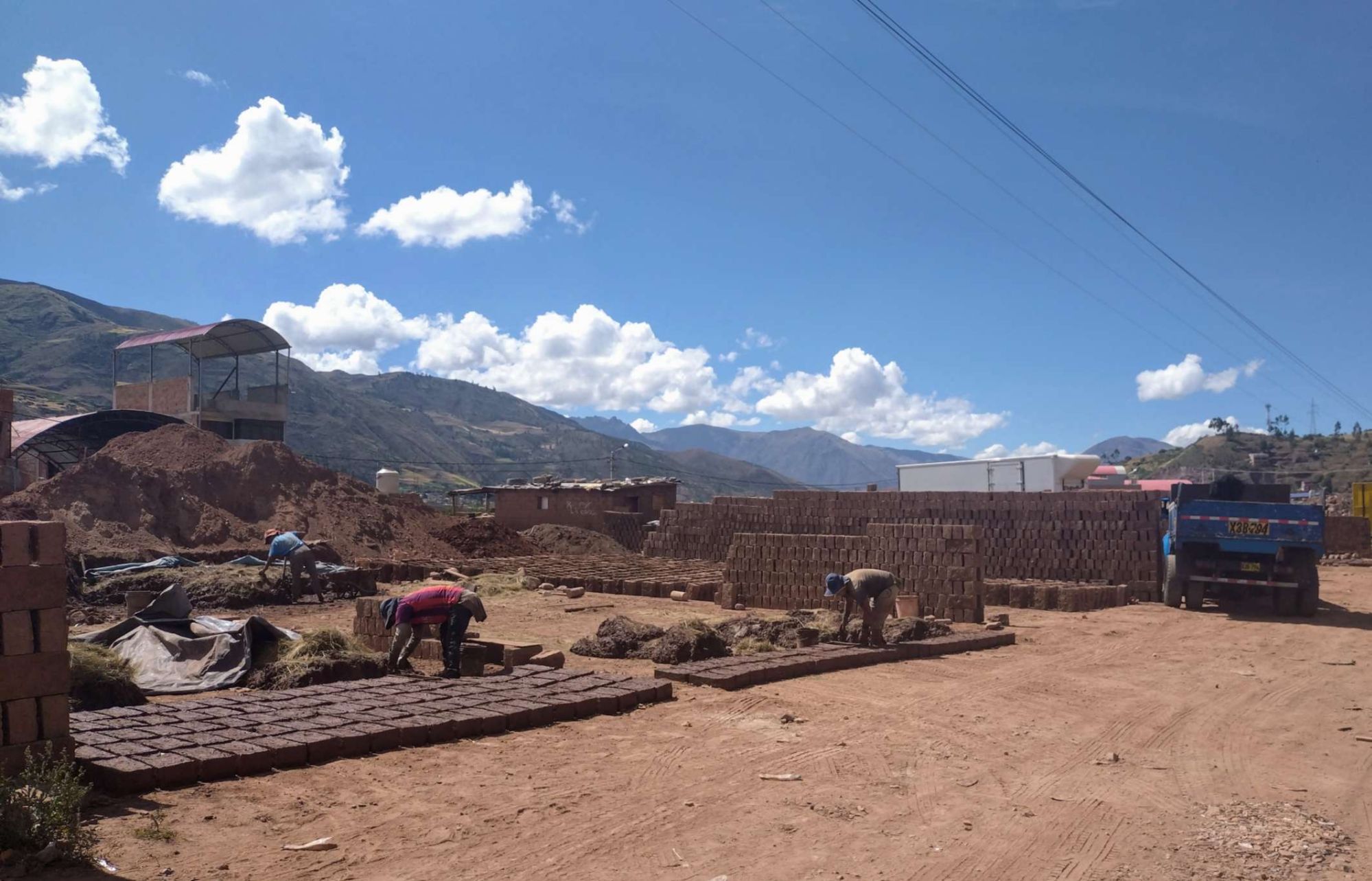
We noticed the peculiarity that each village was mainly selling one particular thing – so either the village was famous for that specific thing or they struggled with the concept of supply and demand. At first it was bread, a whole village where every business was a bakers and was selling exactly the same bread – no variations of flavour or shapes or sizes, exactly the same bread. Each of the bakers was standing outside their shop waving a yellow plastic bag on a stick – not even a variation in plastic bag colour. It made us wonder whether one person had the initial idea and everyone else followed suit, or if there was more to it than that. The next village speciality was grilled guinea pig (a local food here), then a village full of mechanics, then mud brick sellers, then the village of hardware stores, then chicken village was next. It went on like this for more than 10km. We couldn’t help but wonder whether they would get more business if each village diversified a little and mixed it up. But it turned into a fun guessing game of ‘whats next’ for us and helped pass the time on an otherwise busy and ugly stretch of road.
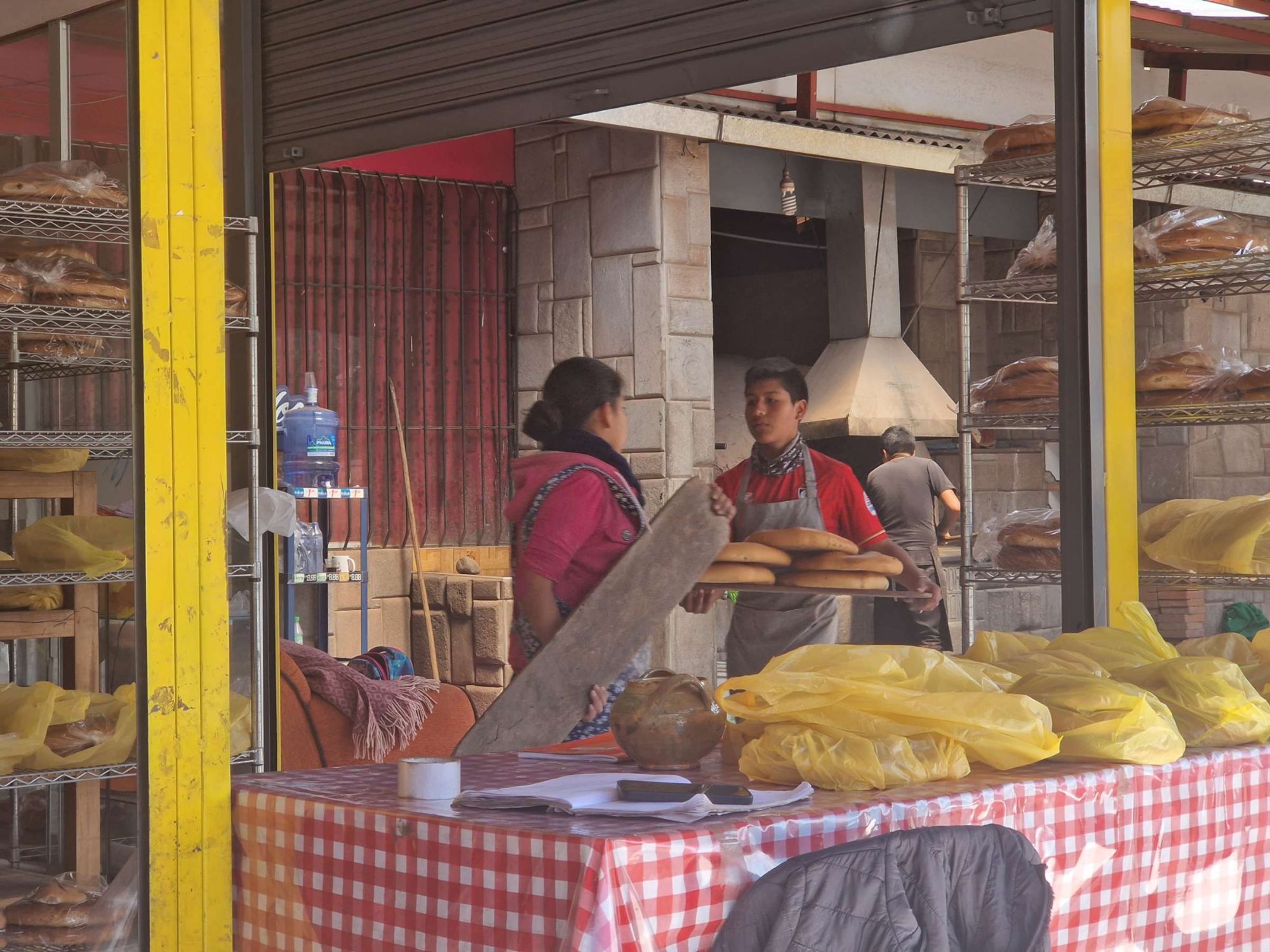
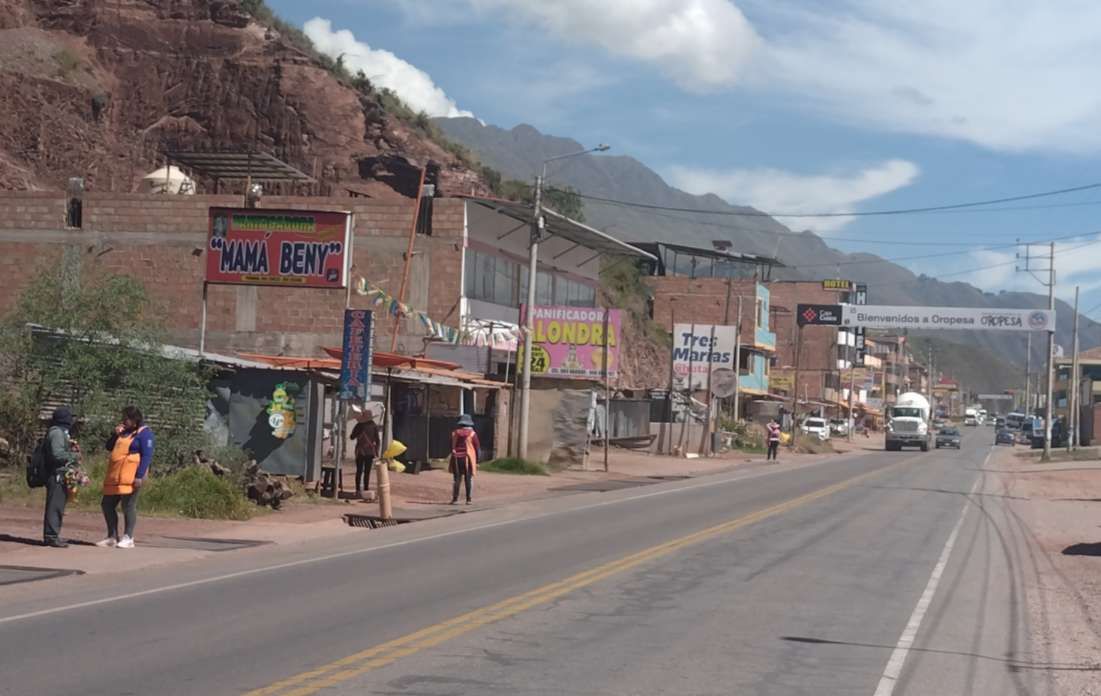
The approach to Cusco though was by far the busiest and ugliest stretch we’ve ridden yet. Cusco is a big city, a world famous tourist hotspot as the jumping off point to visit Machu Picchu and the rest of the Sacred Valley. But we experienced it in an entirely different way to most. As with most big cities the world over, the outskirts are never pretty, but as a cyclist you can’t avoid them. At first about 20km out of the city we noticed that the traffic started getting busier. In Peru that means huge big trucks and lorries pluming out blue/black clouds of dirty diesel that gets into your lungs, making you cough and splutter like the engines hauling passed. Even trying to hold your breath to avoid the worst of it doesn’t work, as you inevitably take a deep gulp and inhale just as another one rolls by. The smell of the exhaust makes your head hurt and your eyes sting. All the air is a visible grey smog – it’s awful, and made us appreciate the promotion and importance of clean air that we have in the UK.
Soon enough, added to the dirty air, was the noise. The honking horns of the trucks, the music blaring out of every other shop or restaurant, the relentless toots of the tuk-tuks as the wove between the traffic, the shouting of megaphones selling goods from parked vehicles, the reving of idling engines willing the traffic jams to move, the roar of aeroplanes as they take off and land in the inner-city airport.
Trying to avoid the highway we took some quieter back roads. They wiggled through some areas that I’m sure tourists are not supposed to see. We followed the river for a little while – it was the most polluted river we’ve ever seen. The stench of the sewerage pouring into it was horrific, enough to make you gag and feel queasy. The pollution was clear to see, even without looking too closely, and it was heartbreaking to see a mother washing her two young children in the water only meters from the sewerage outlet. The streets were crammed with tiny shed-like houses, all piled on top of one another. The swarms of flies that would hit our faces as we rode alongside the huge piles of rubbish was hard to stomach. The packs of street dogs, maybe twenty to thirty dogs, roaming (or should that be ruling!?) the streets, were pretty terrifying to dodge as they chased and barked at our back wheels. We also ended up passing through the industrial area, as there was supposedly a cycle lane along one of the roads. But in reality it was mainly used as an extension of the businesses forecourts, with mechanics machinery, cars on ramps and up-turned tuk-tuks filling the cycle lane. It meant we also experienced the pollution from all this industry too – the fumes burning our throats as we cycled by, oil and petrol and other chemicals running over the roads and into the drainage ditches, sparks flying out into the street from welders and grinders, scrap metal piled precariously high and car tyres of every size you could imagine.
It was more than just an assault on the senses. It was hard to see so many people living in poverty and subject to such awful conditions. It’s the reality of living in Cusco for a lot of the locals and it is something that most tourists just won’t ever understand or experience. It was a stark contrast to the famous smart colonial square at the heart of the tourist centre, with it’s upmarket alpaca wool shops, it’s Starbucks, it’s Patagonia store and it’s McDonalds. I doubt any of the locals we saw on our way into town would ever experience the Cusco that most tourists enjoy. By the time we finally reached that famous square, being there just didn’t feel right after all we had seen and ridden through. It all felt so fake and just for show, for the benefit of the tourists only. So after an hour in Cusco centre, we caught a bus straight out of there to Abancay.
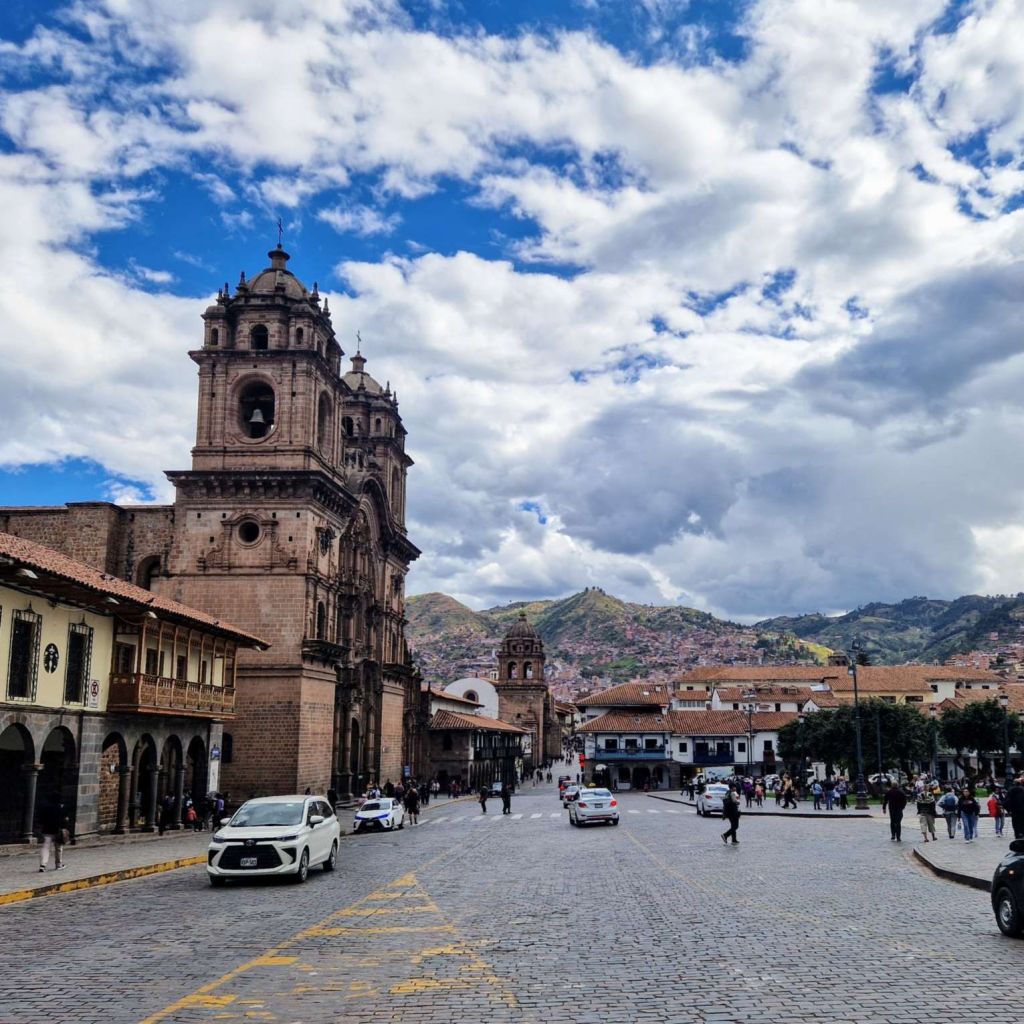
Our experience of Cusco highlighted to us just how much we appreciate all those places in-between that we stumble upon (and continue to stumble upon!). They may not be the most famous, or the most historically interesting, or the most beautiful but for us, it’s such a privilege to have insight into the reality of a place and it’s people. It’s like a special snapshot into their lives. It feels like an honour whenever you glimpse it. And it’s all brought about by being those strangers who roll into town on the humble bicycle – who’d have thought!?!

 Tumbling Diaries
Leave a comment