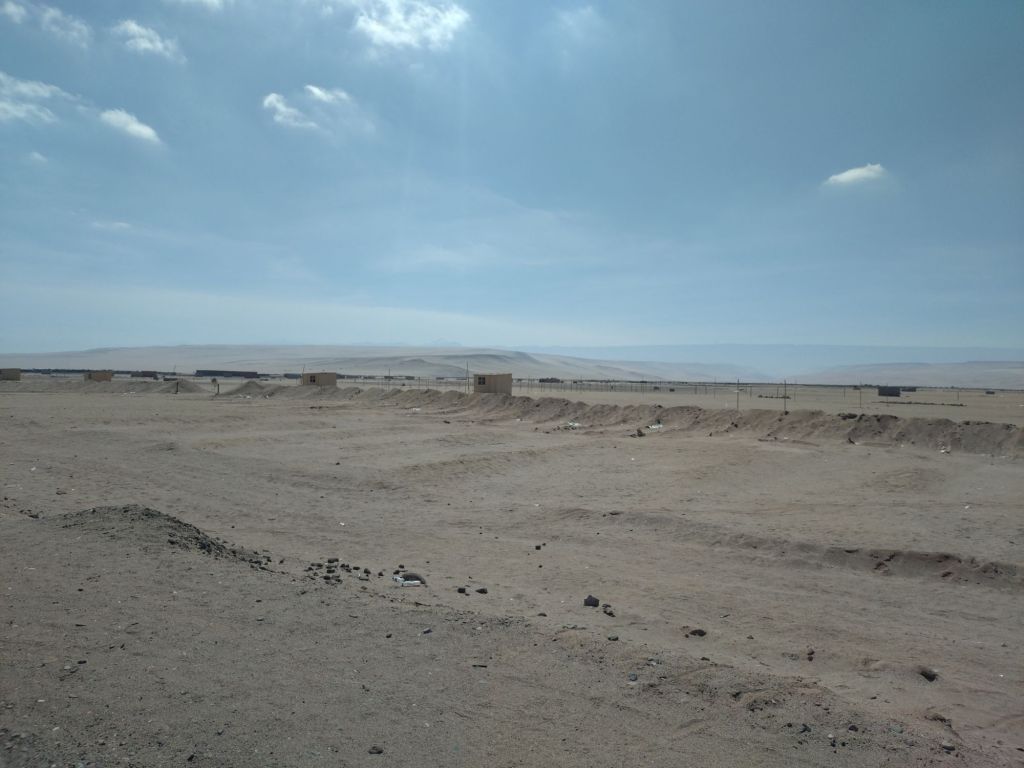
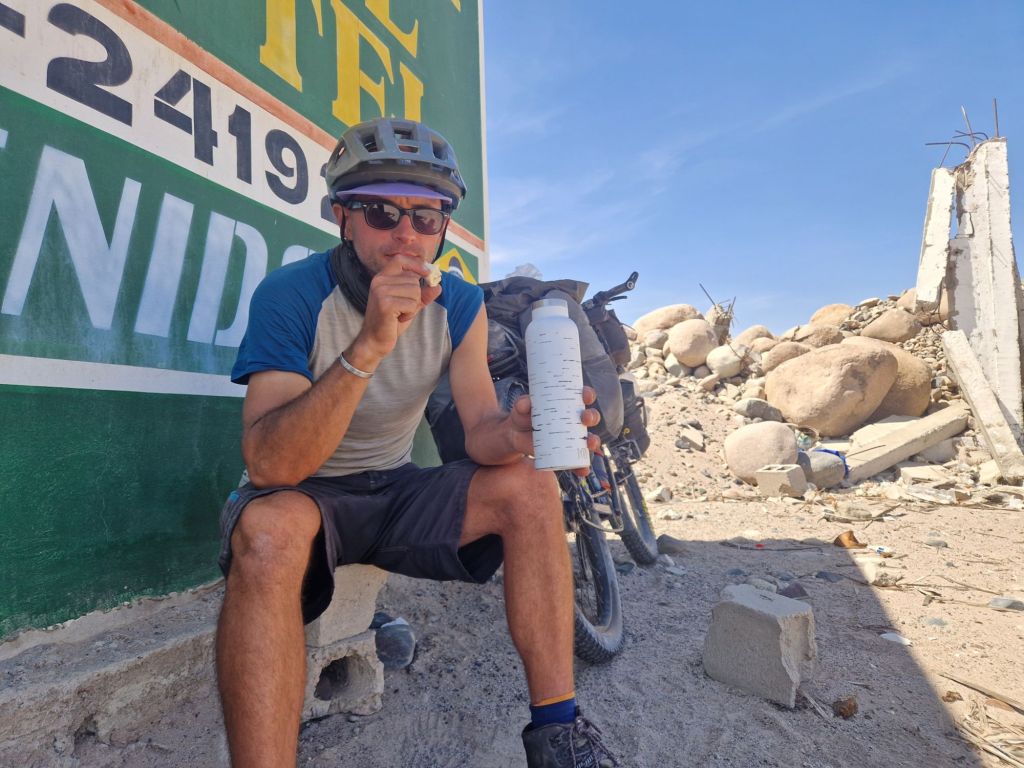
Our time in Peru started with a birthday. Ted turned 37 the day we crossed the border at Concordia, right on the coast – not that we could see the sea from there. The landscape was desolate. An ugly, grey, dry, hot desert, with piles of rubbish strewn all along the highway and beyond. The fields of olive groves and fruit trees quickly dwindled out as we moved away from Chile, replaced by strange empty farmers housing settlements of half built, one room buildings, with no roofs, but painted bright and cheery colours, sitting behind barbwire fences and grand entrace ways announcing the name of the village/farm and the ‘sponsor’ of the construction – all very strange and eery. But thankfully we managed to find a large crumbling concrete sign, and two rocks to sit on for Ted to enjoy his birthday lunch of some treats we’d smuggled in from Chile – namely, an avocado, a tomato and some cheese for our sandwiches. Plus a flask of earl grey tea, and a day-old crushed muffin for birthday pudding, who says I don’t spoil him!?!
We were heading to Tacna, a larger town further North, from where Ted would receive his true birthday gift – A night bus to Juliaca. Ted’s never been on a night bus before so had dreams of large reclining bed-like seats, an eye mask and a fluffy blanket where you fall asleep in one place and awake refreshed and rested in your destination. Sadly the reality was somewhat different. After taking the bags and front wheels off the bikes in a busy, bustling bus station, where people where milling about carrying huge bundles of goods wrapped in patterned blankets and the shouts of the ticket sellers were loud and relentless, we were relieved to finally just get on board. We settled in for a good 8 hour stint of catching up on sleep. But the bus, which we had been told was ‘directo’ stopped a number of times – definitely not so directo after all – each time letting ladies on selling hot drinks and food, which involved them walking up and down the aisle shouting, regardless of the time. The bus was also freezing. We had seen many old ladies board the bus with three or four blankets each, and I just kept thinking it was a little excessive, but they were clearly the pros at this. By midnight, we were both numb, cuddling together for warmth under the only extra layer we had – my trusty yellow Shemagh scarf – trying not to fight over it too much. Ted managed to at least wrap one corner around one knee, the other knee he gave up as being lost to the freezing aircon. Ted also had a justified panic thinking he had lost his only pair of glasses (which he really can’t ride a bike without!) and convinced himself that the old lady in front had bundled them up in her many many blankets when she got off the bus in the middle of the night – only to then find said glasses under his seat (one year older, still not mastered loosing things yet!). So we emerged from the bus in Juliaca, bleary-eyed, a little dazed and feeling as though we were hungover from the lack of sleep – Just how you should feel the morning after a birthday, right!?!
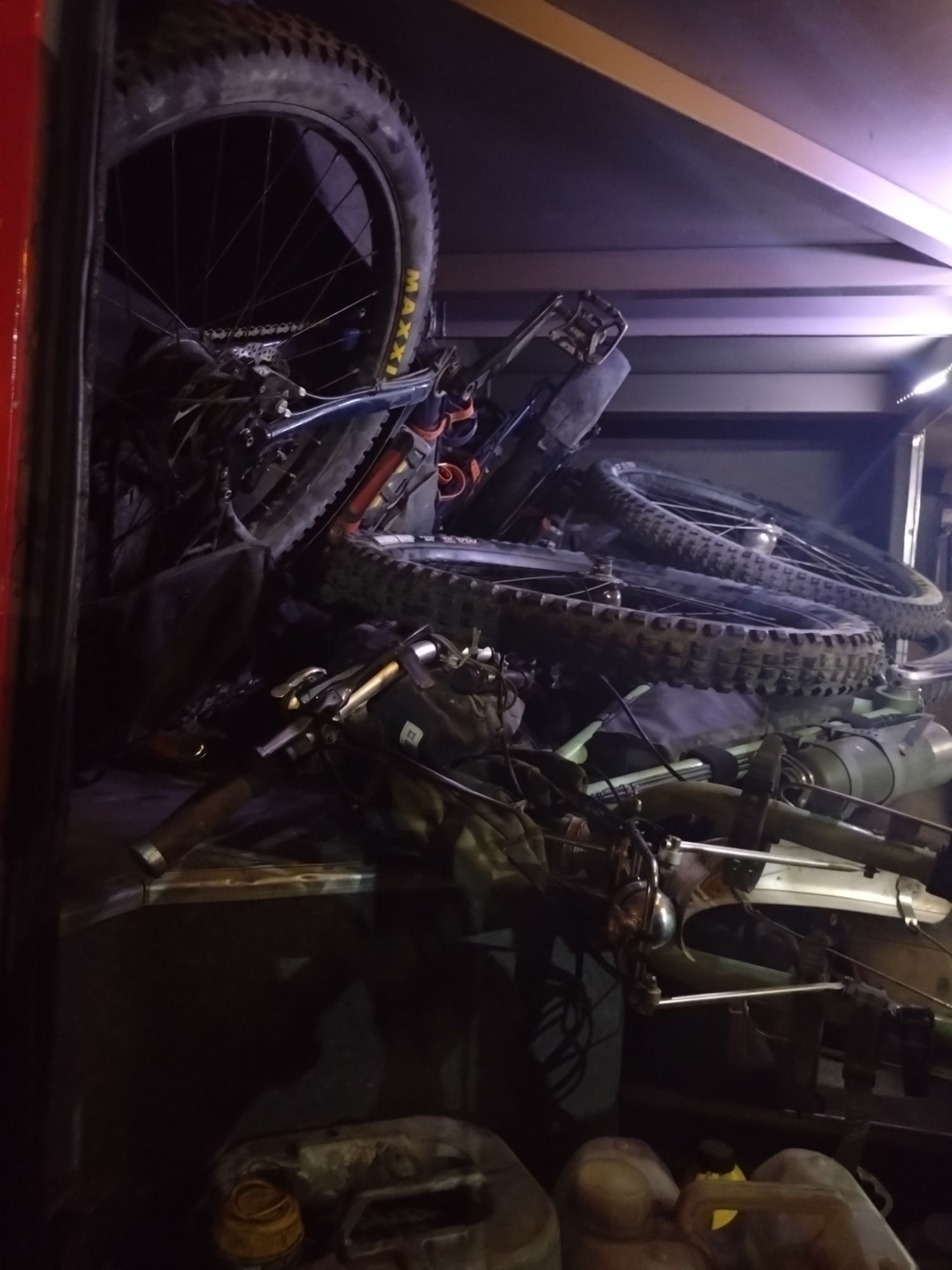
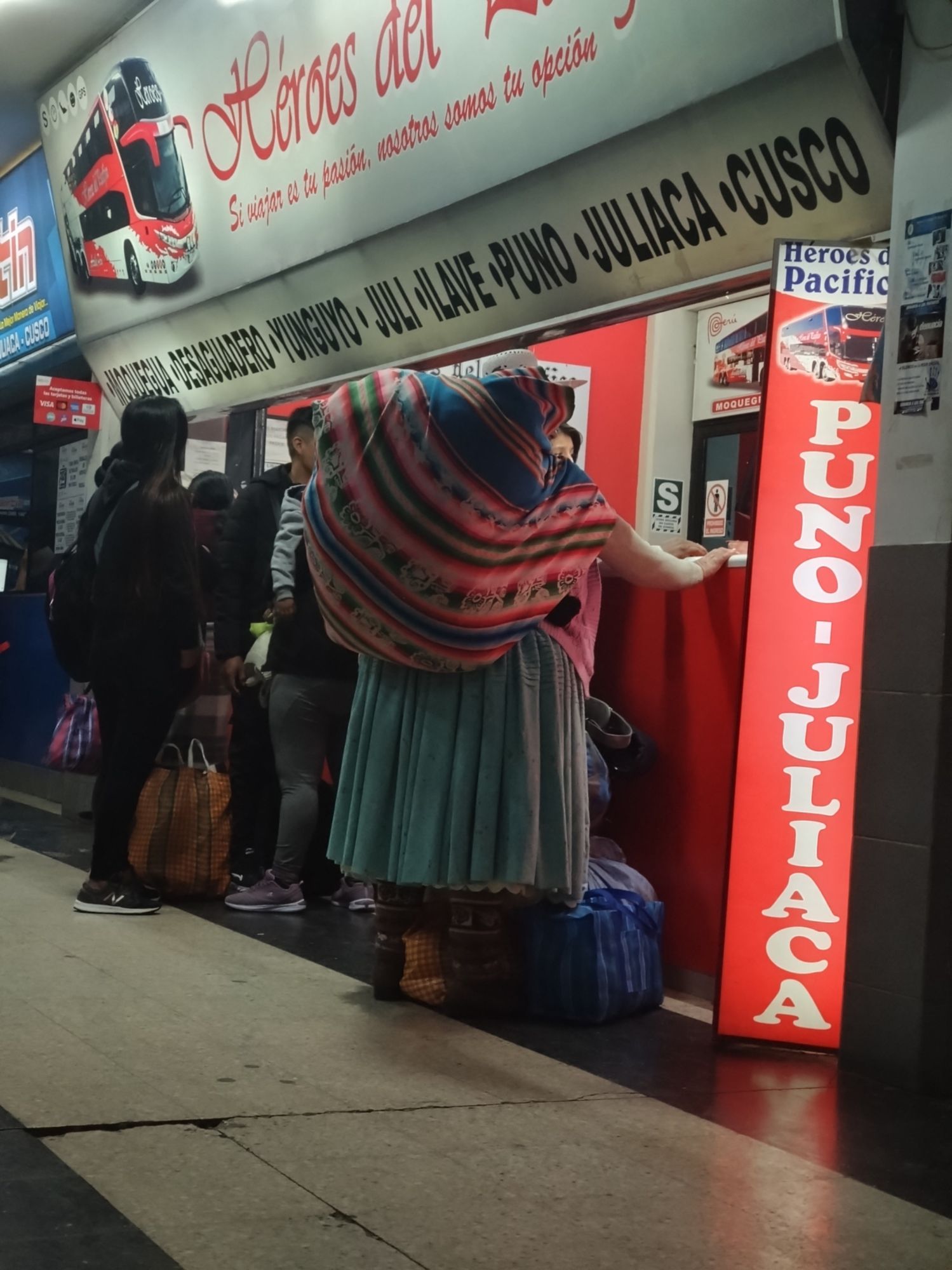
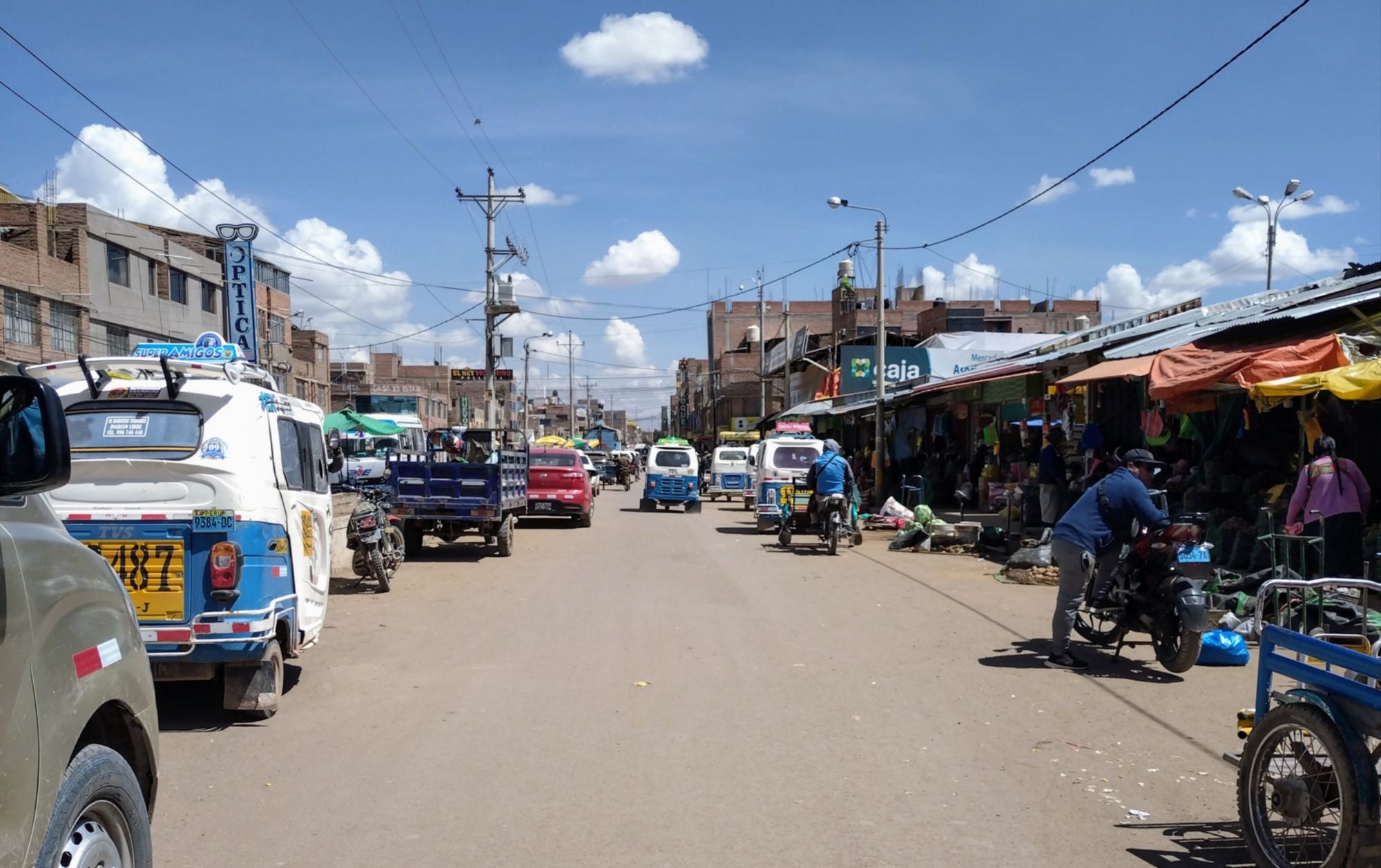
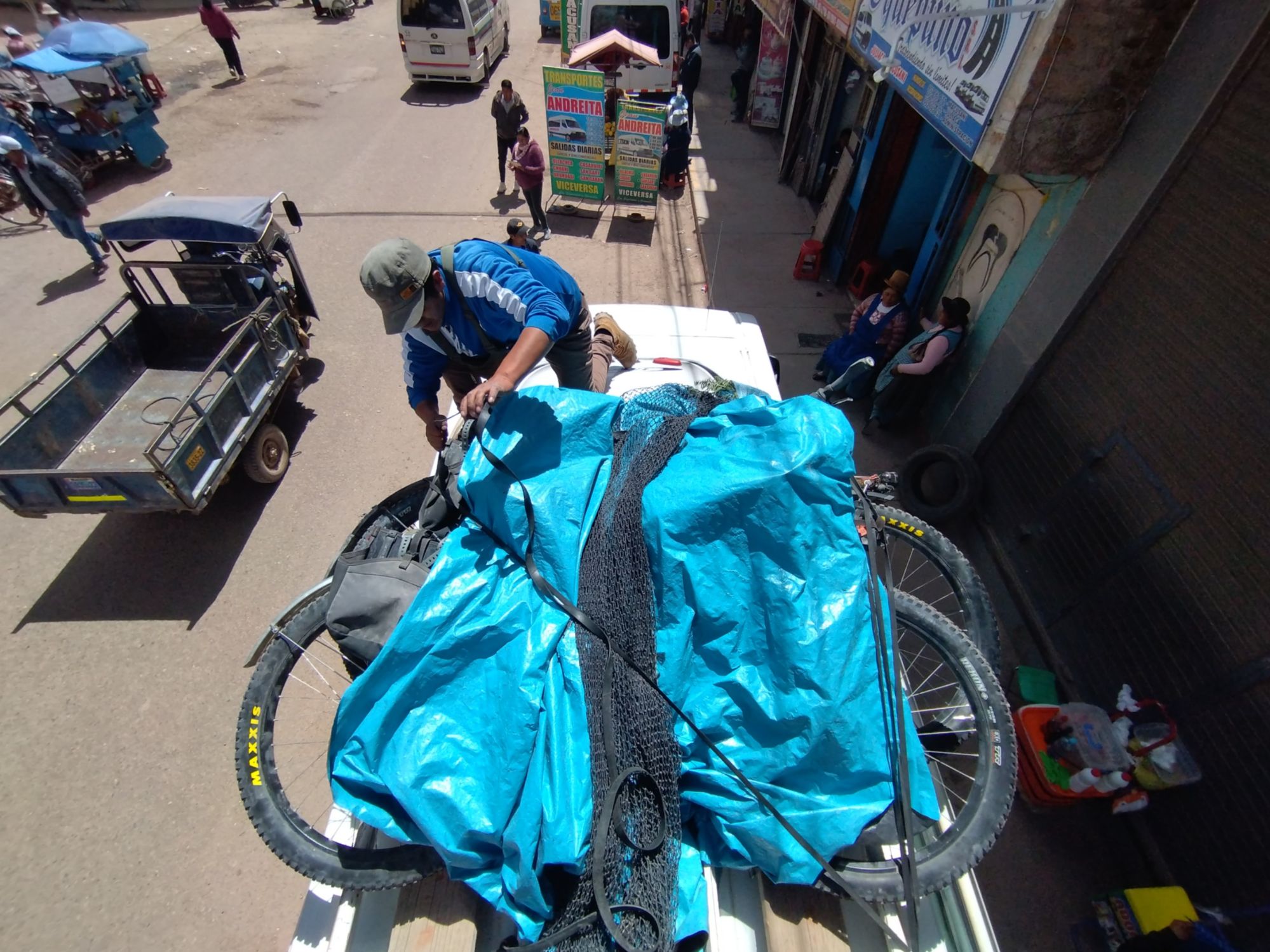
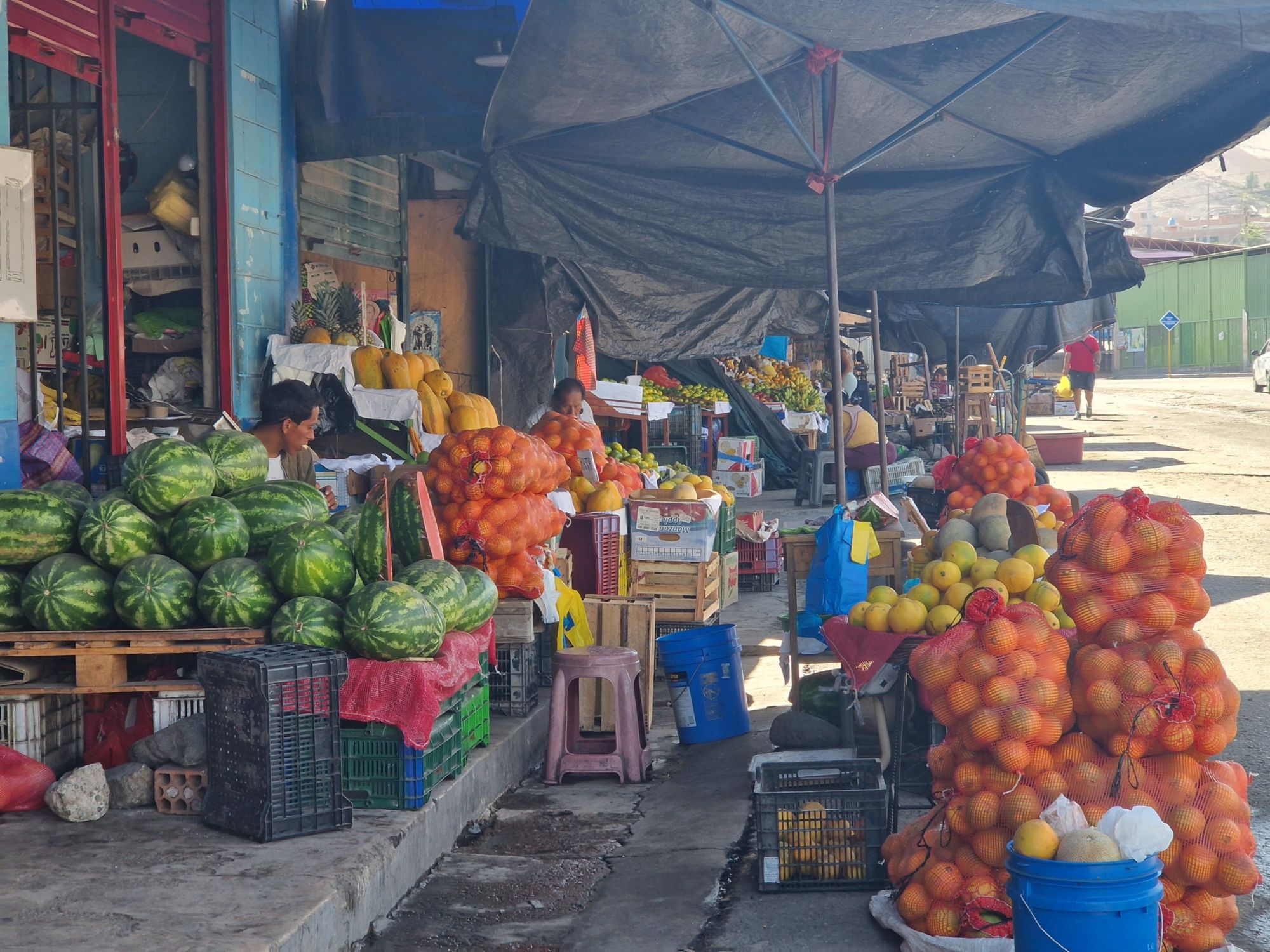
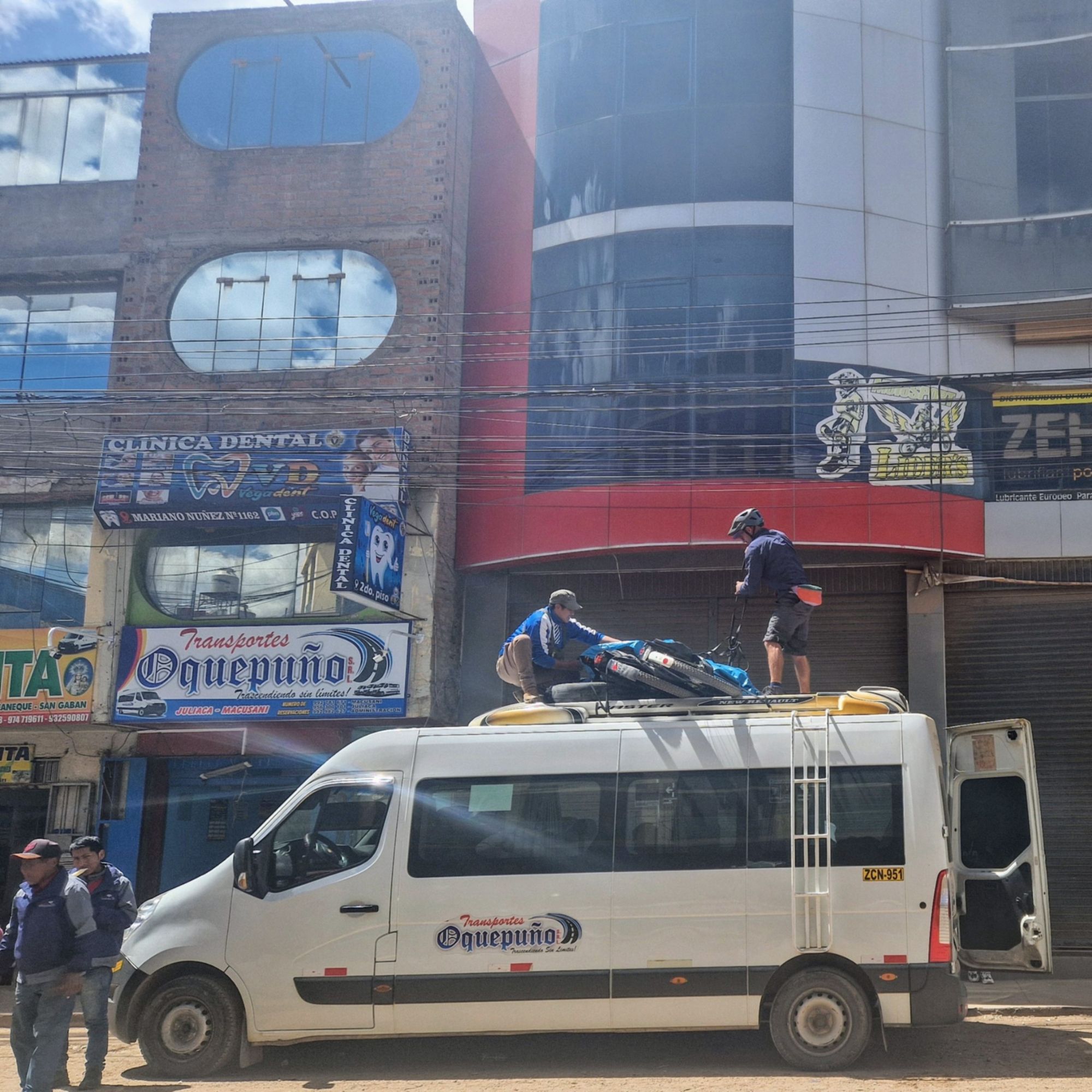
We then had to rebuild the bikes and navigate the hustle and bustle of Juliaca’s crazy streets. So much noise, so much pollution, traffic in each and every direction, people selling goods on all street corners, everyone hustling in the mayhem and we just had to join the throng. Firstly we had to find the correct place to catch our next bus (it sounds a lot easier than it was), then find the bus (this time much smaller like a minibus), then throw the bikes on the roof and jump onboard for another 5 hour journey. We were aiming for Macunsani, a small town back up at an elevation of 4500m (ish) in the Peruvian mountains, and where our next stint of cycling would start…. eventually.
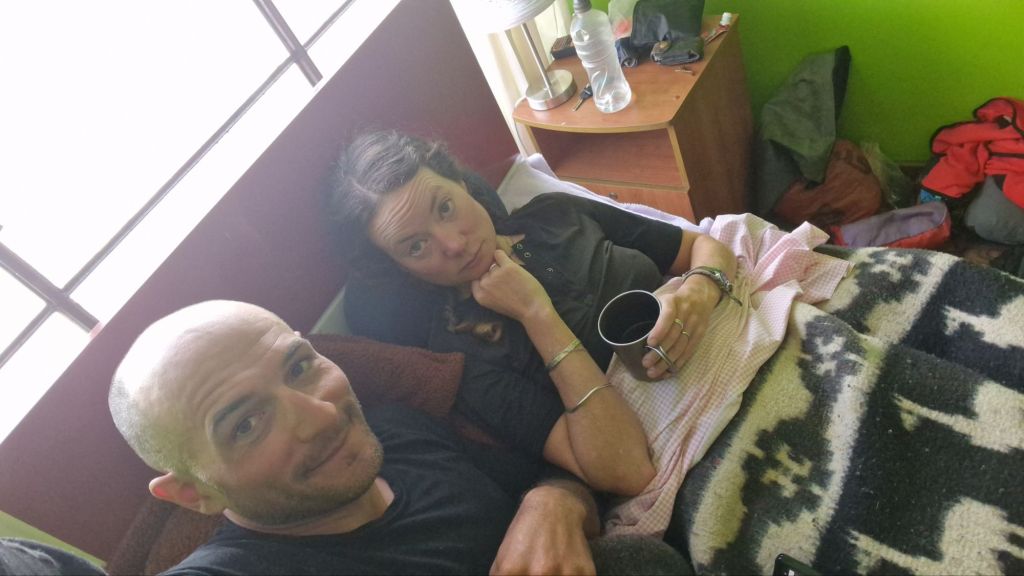
A sickness bug I caught (probably from some dodgy food / the poor hygiene standards here in Peru) threw a spanner in the works though. It meant we stayed in Macunsani for a couple of days in order for me to recuperate. Once I thought I could stomach eating again we set off, a bit weary and depleted, but pleased to be on the move again. Only to realise 50km and a 5000m pass later that I wasn’t really recovered at all.
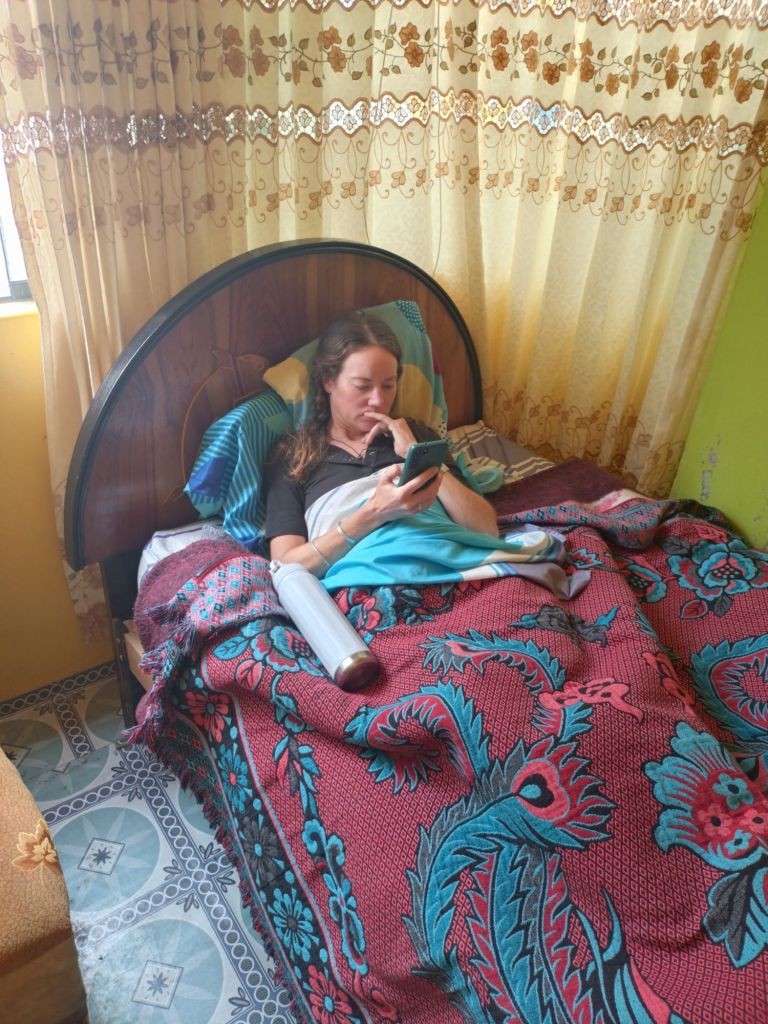
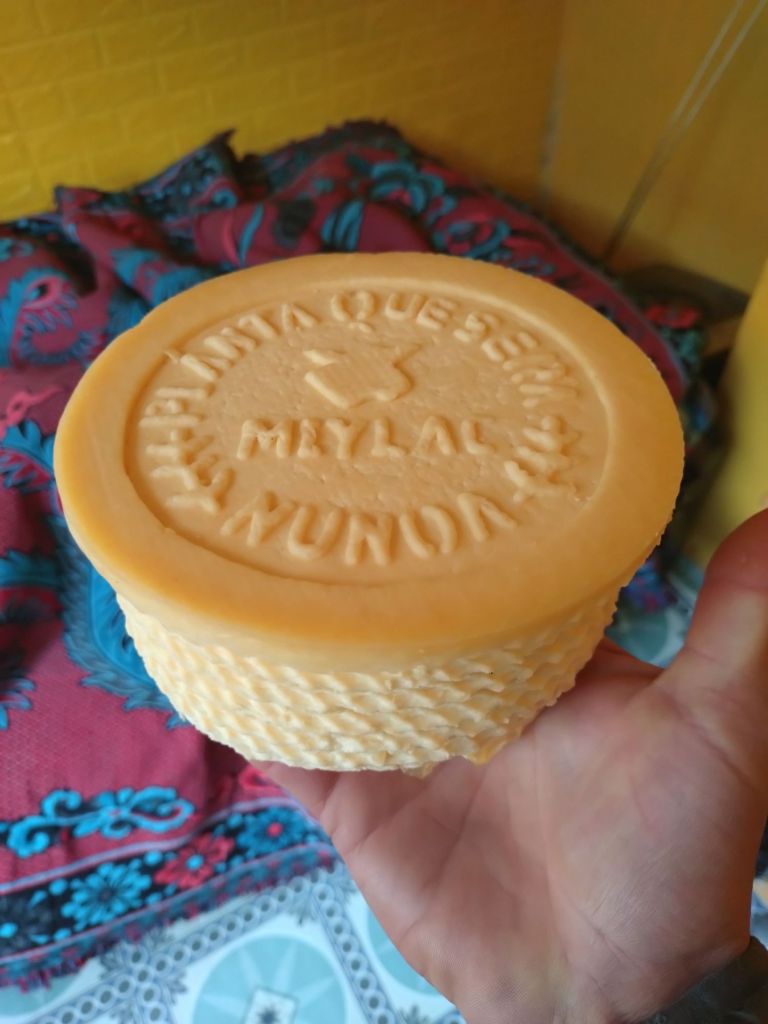
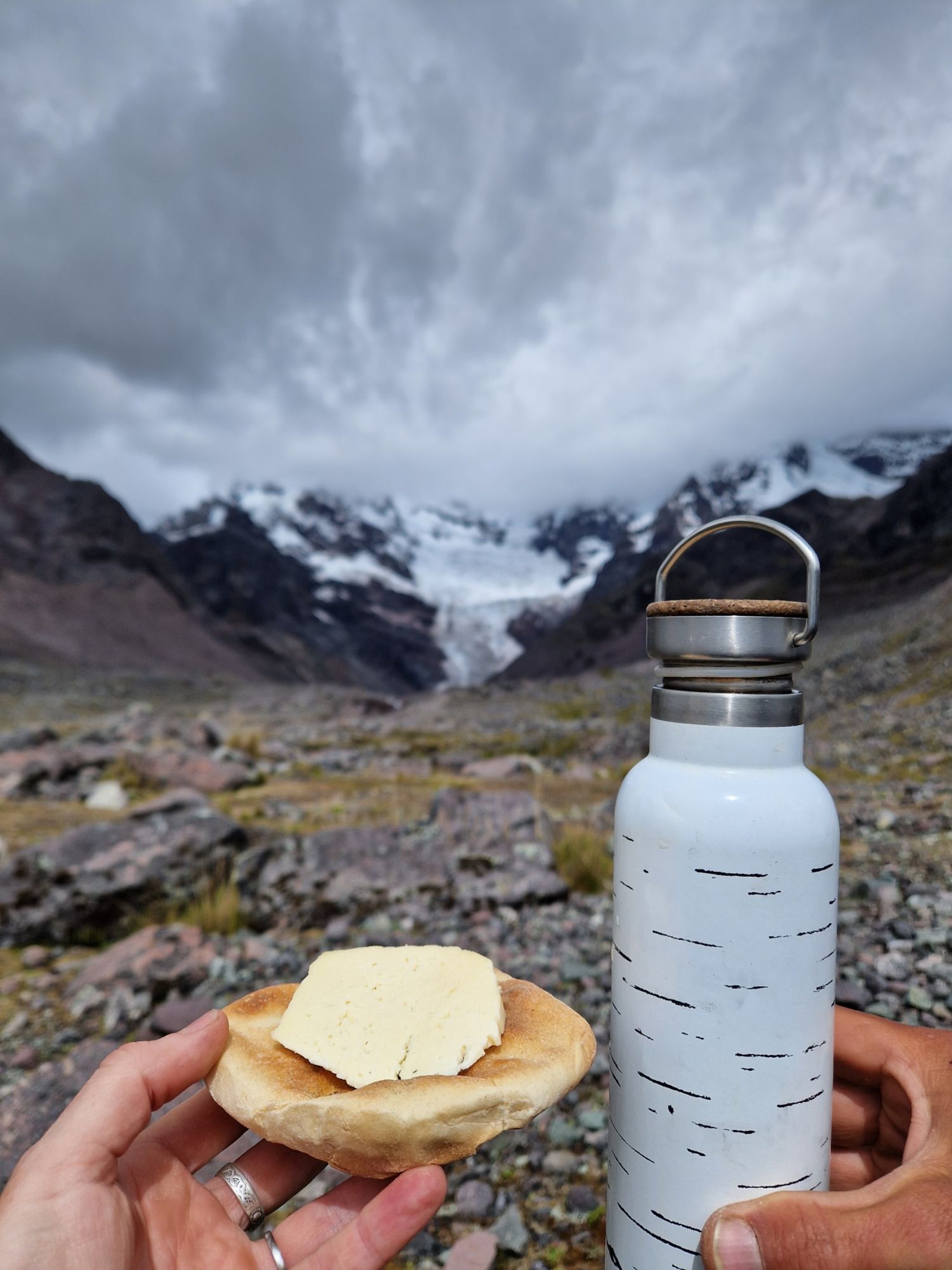
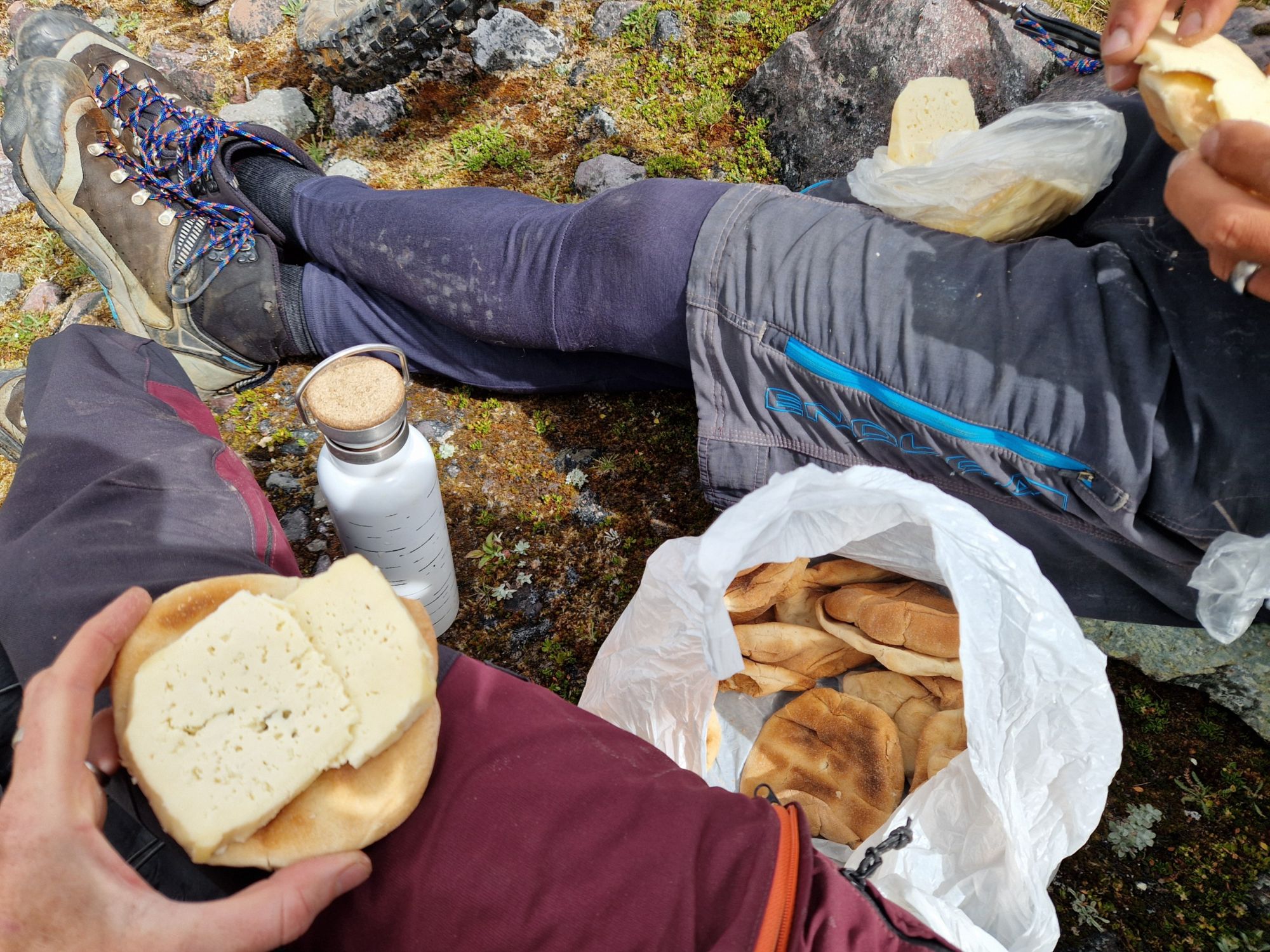
So after yet another day in bed, under three llama wool blankets that felt as heavy as an actual llama sitting on my chest, we set off again. This time, thankfully, my stomach was able to handle food again. When I say ‘food’ we were mainly living off bread and a local sheeps cheese which was the primary real food we found being sold in the rural villages. It’s sweet and salty, and reminds us of a similar cheese we lived off in Georgia during our time there a few years ago.
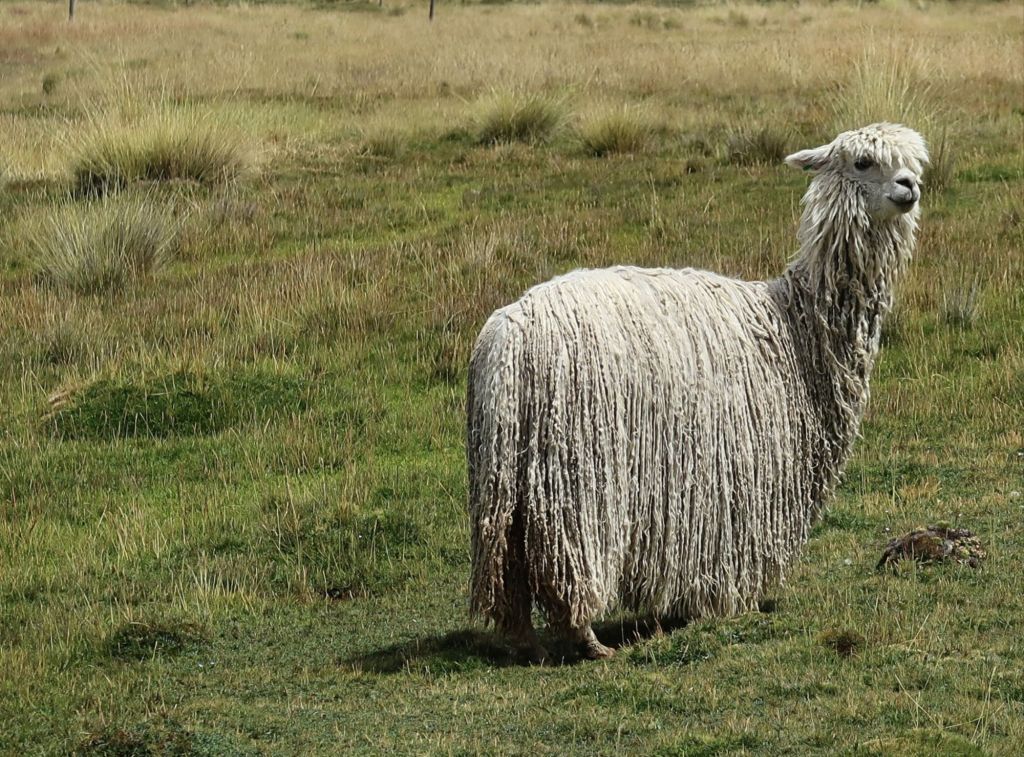
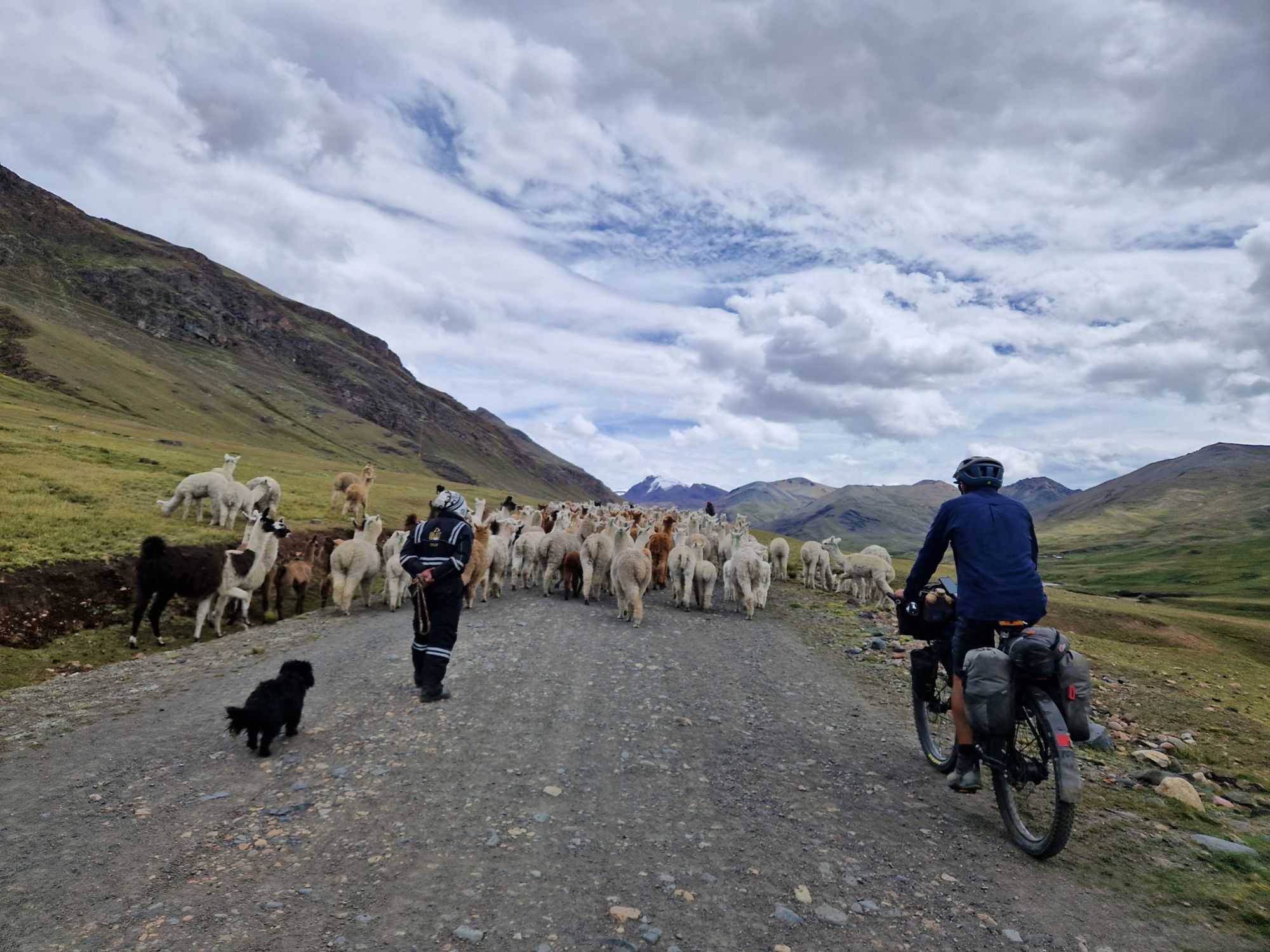
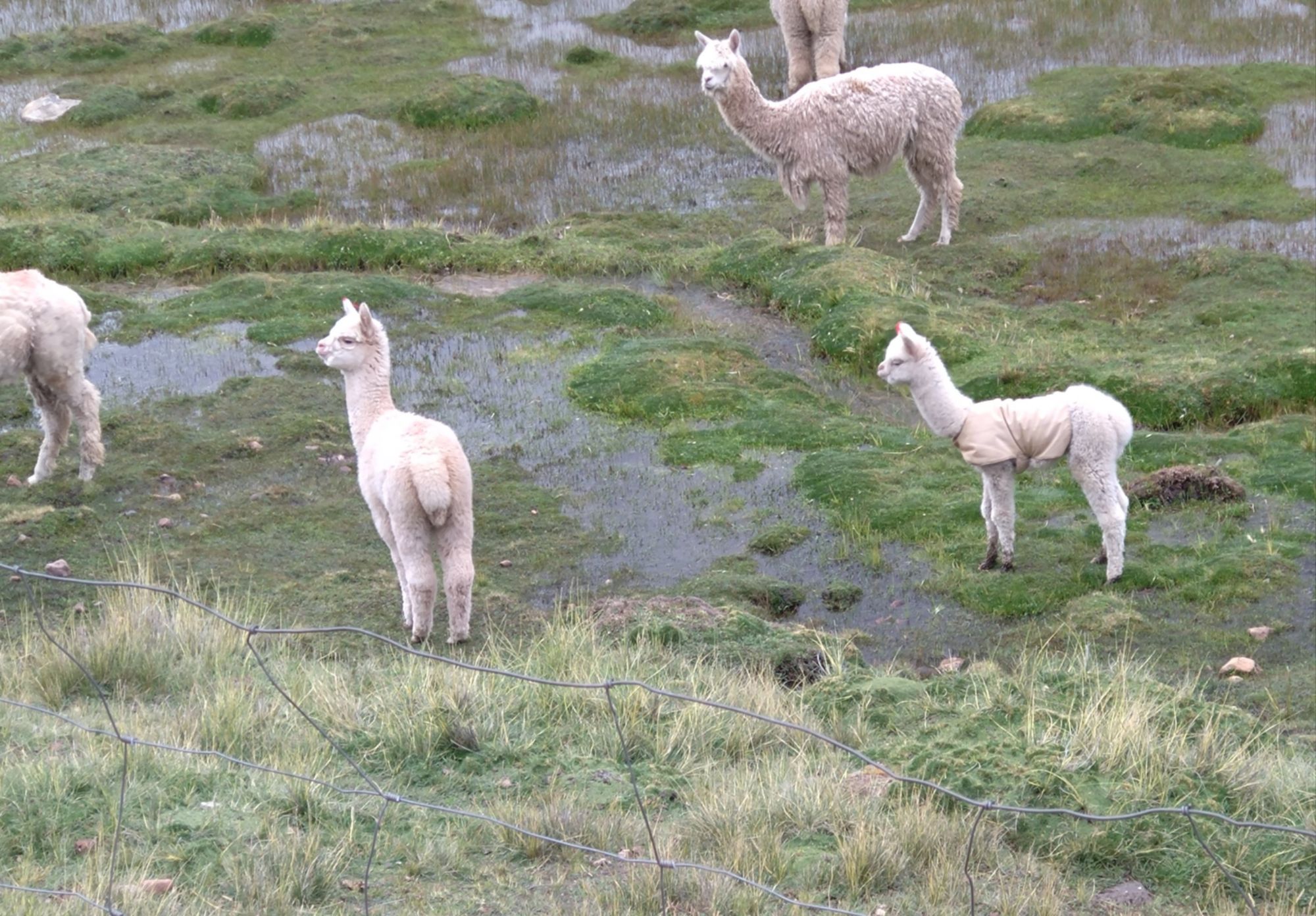
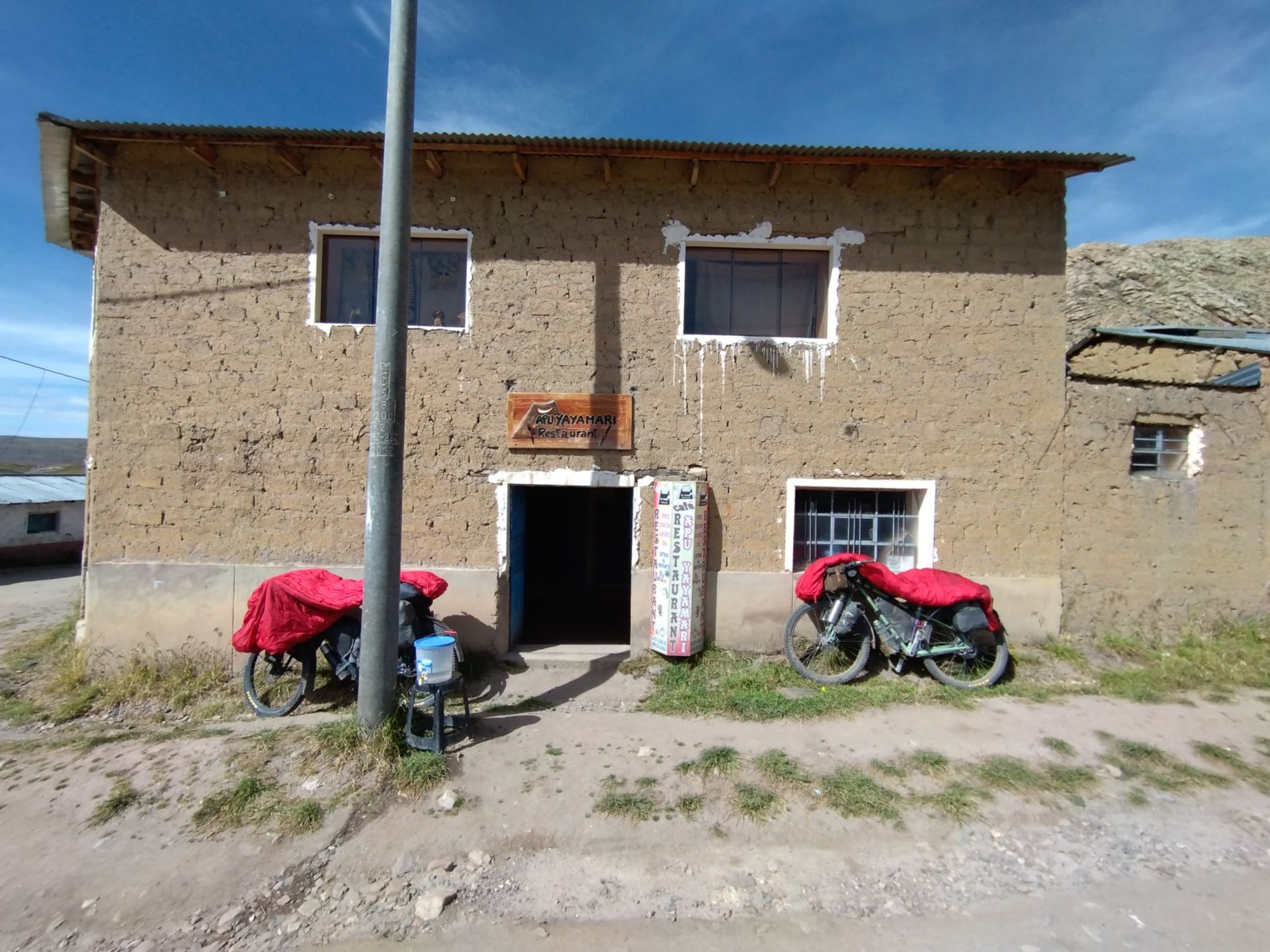
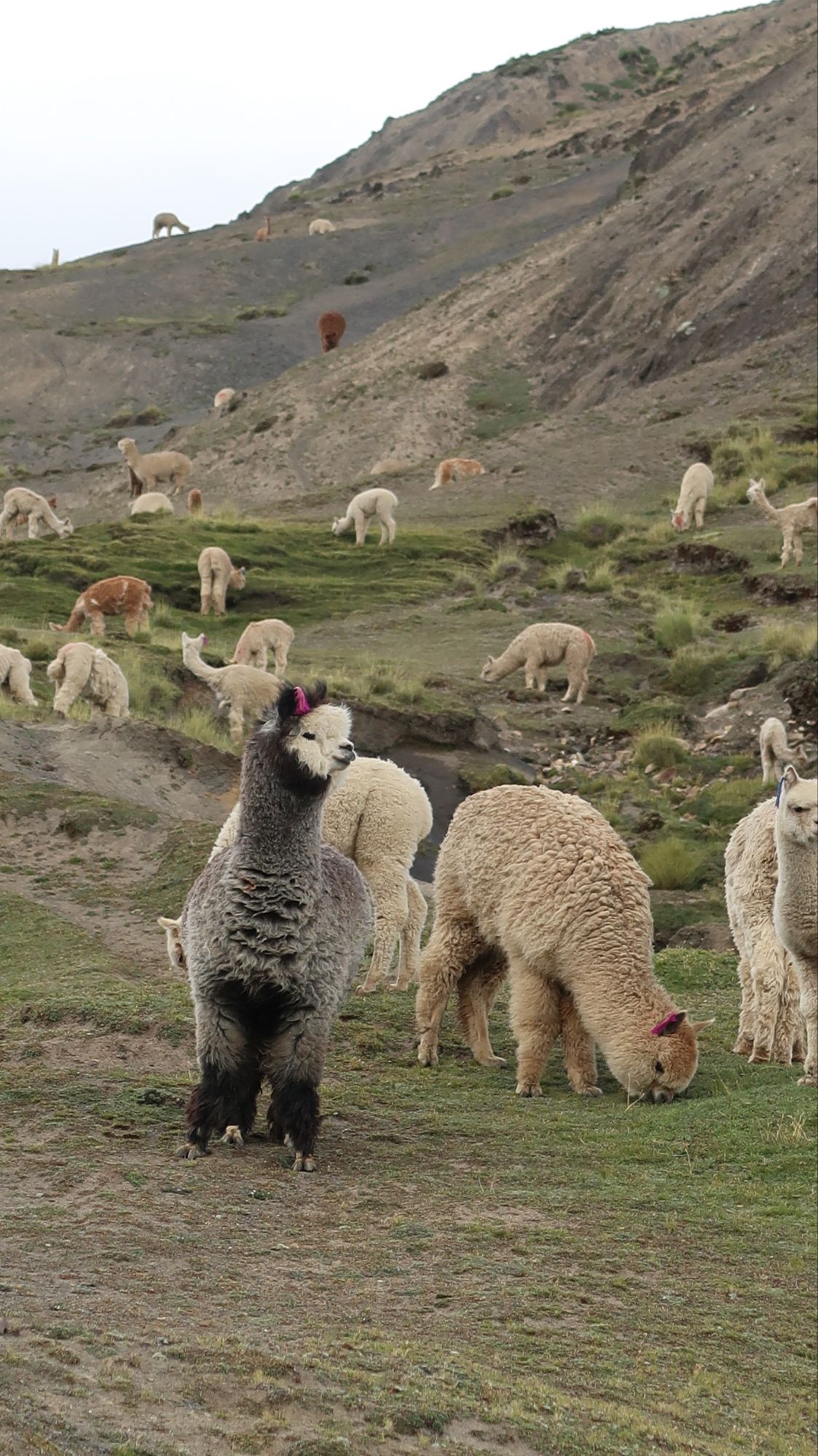
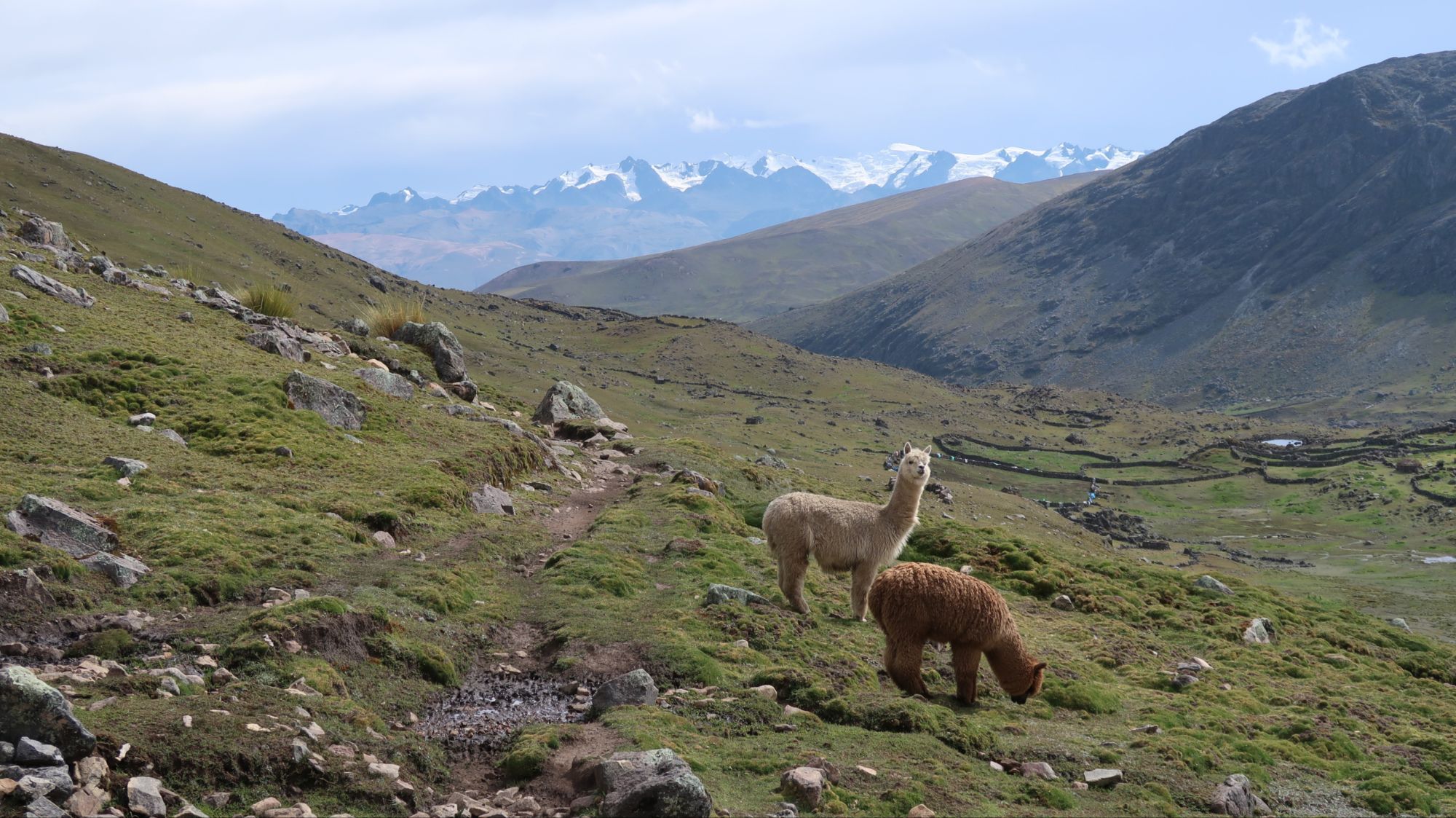
From the moment we set off, there was no mistaking that we were in the mountains of Peru. Steep, green mountain sides covered in terracing as far as the eyes could see, falling away to rivers wiggling through the valley bottoms, and small towns impossibly balanced on hillsides looking like toy-towns. It was beautiful. It was such a novelty to be surrounded by life again. After the days in the desert environments, and months at high altitude in Argentina, Chile and Bolivia. It felt like cycling through a lush paradise. Rivers and streams and waterfalls cutting through the green lush grass, and spring-like yellow flowers lining the road, birds and butterflies dancing alongside us as we cycled along. And people. Everywhere people. Locals stopping on their motorbikes in the middle of the road to chat to us, or waving from the fields that they work by hand, or shaking your hand as you stop by their stall to grab a snack. Going through the villages here, it’s not long before you have children alongside you, asking questions, playing with the bicycle bell and wanting a ride. Small towns and villages appear at unbelievably high altitudes, and even in the middle of nowhere, when you think there is no one about – look up and you’ll see tiny silhouettes of shepherds looking after their alpacas on the mountain tops. The mountains here are so full of life – True living mountains.


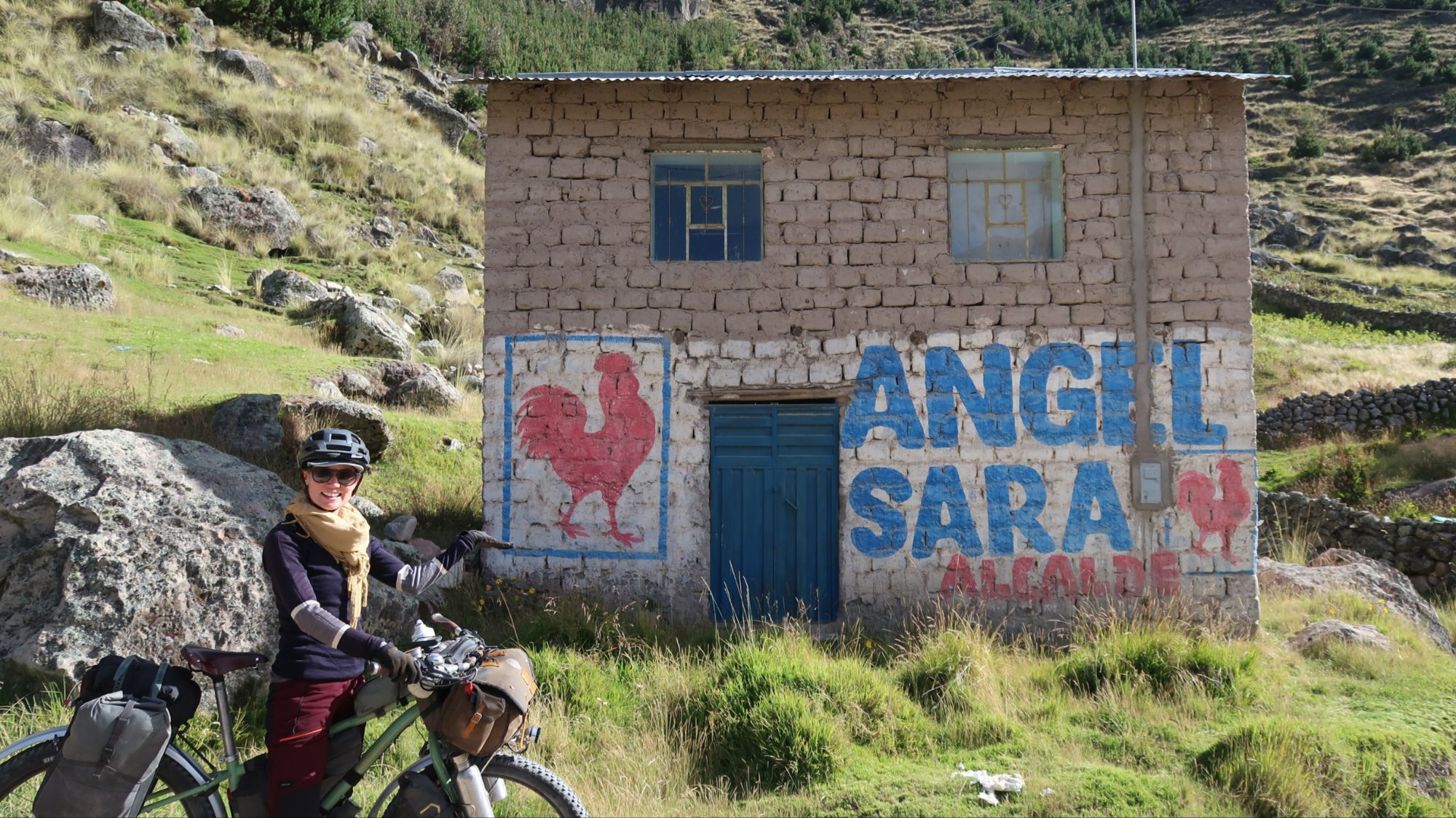
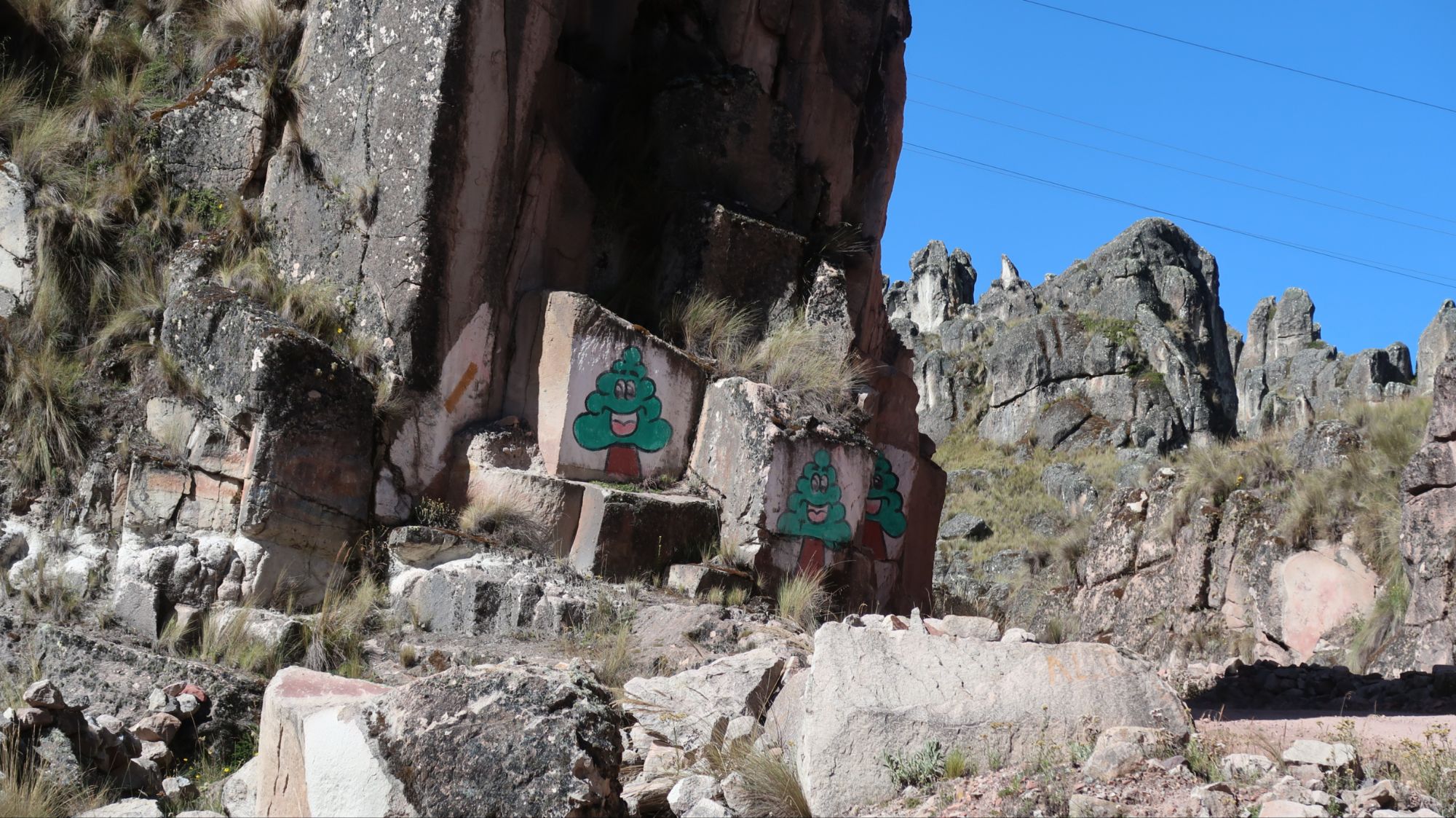


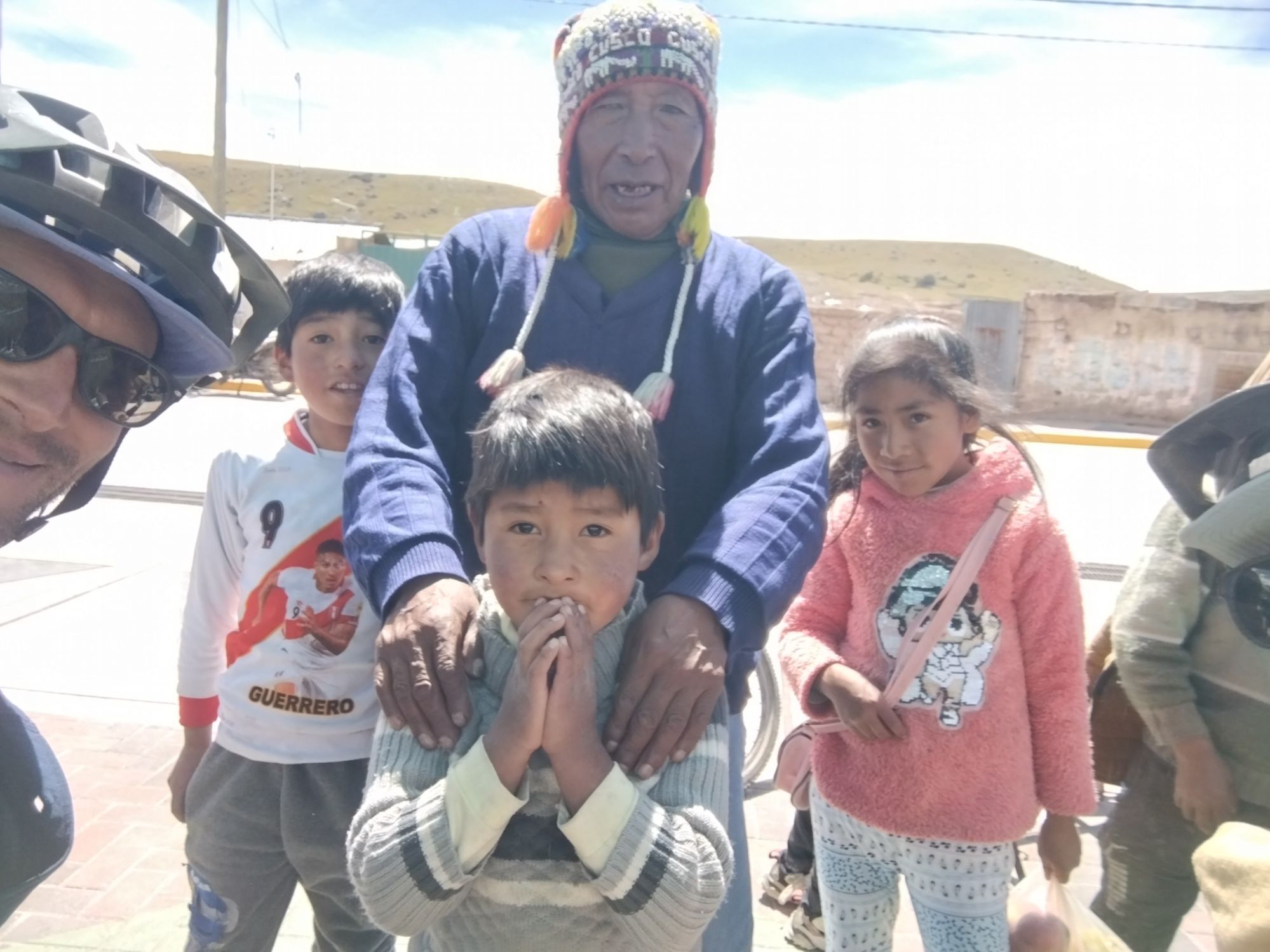
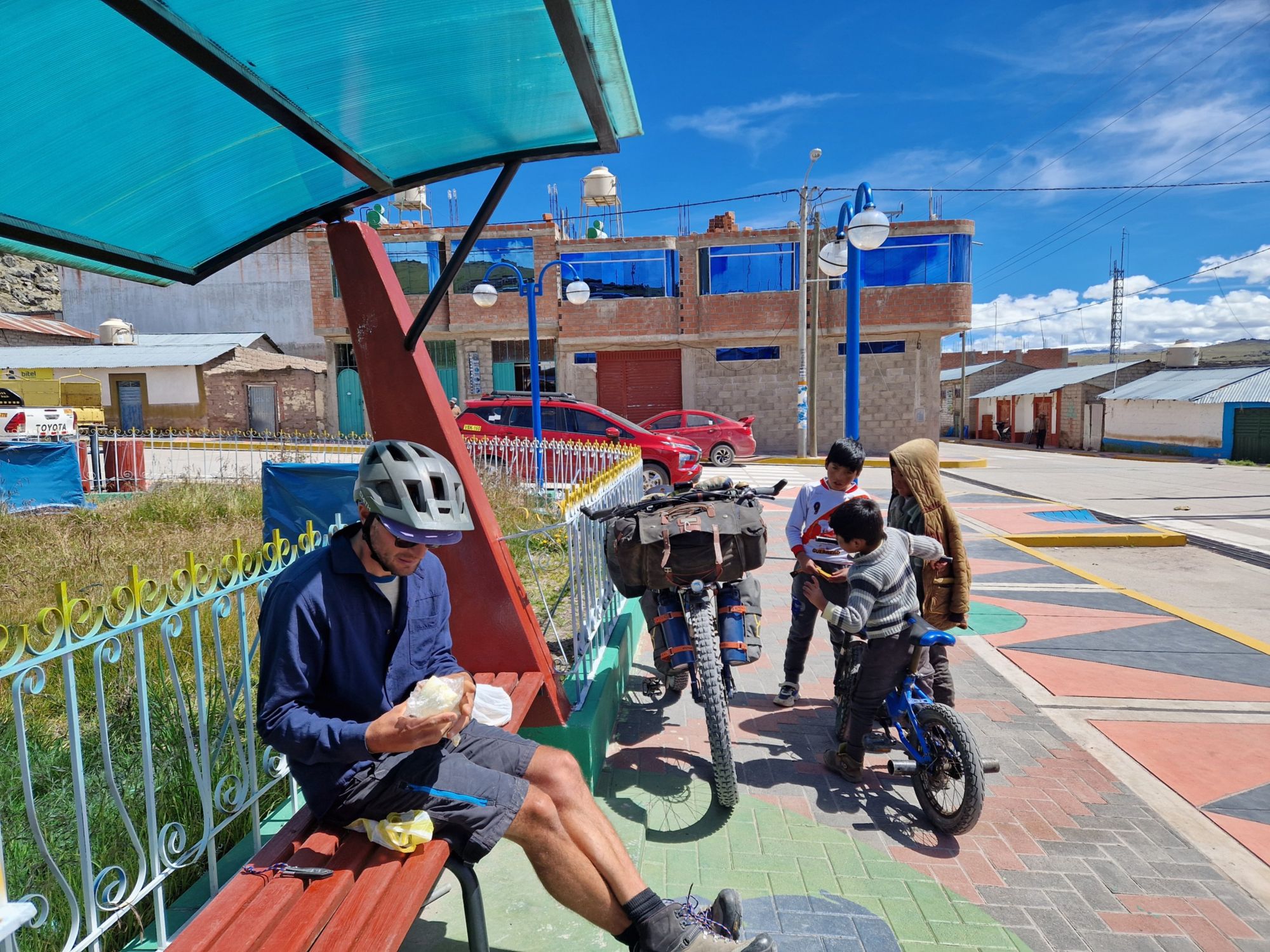
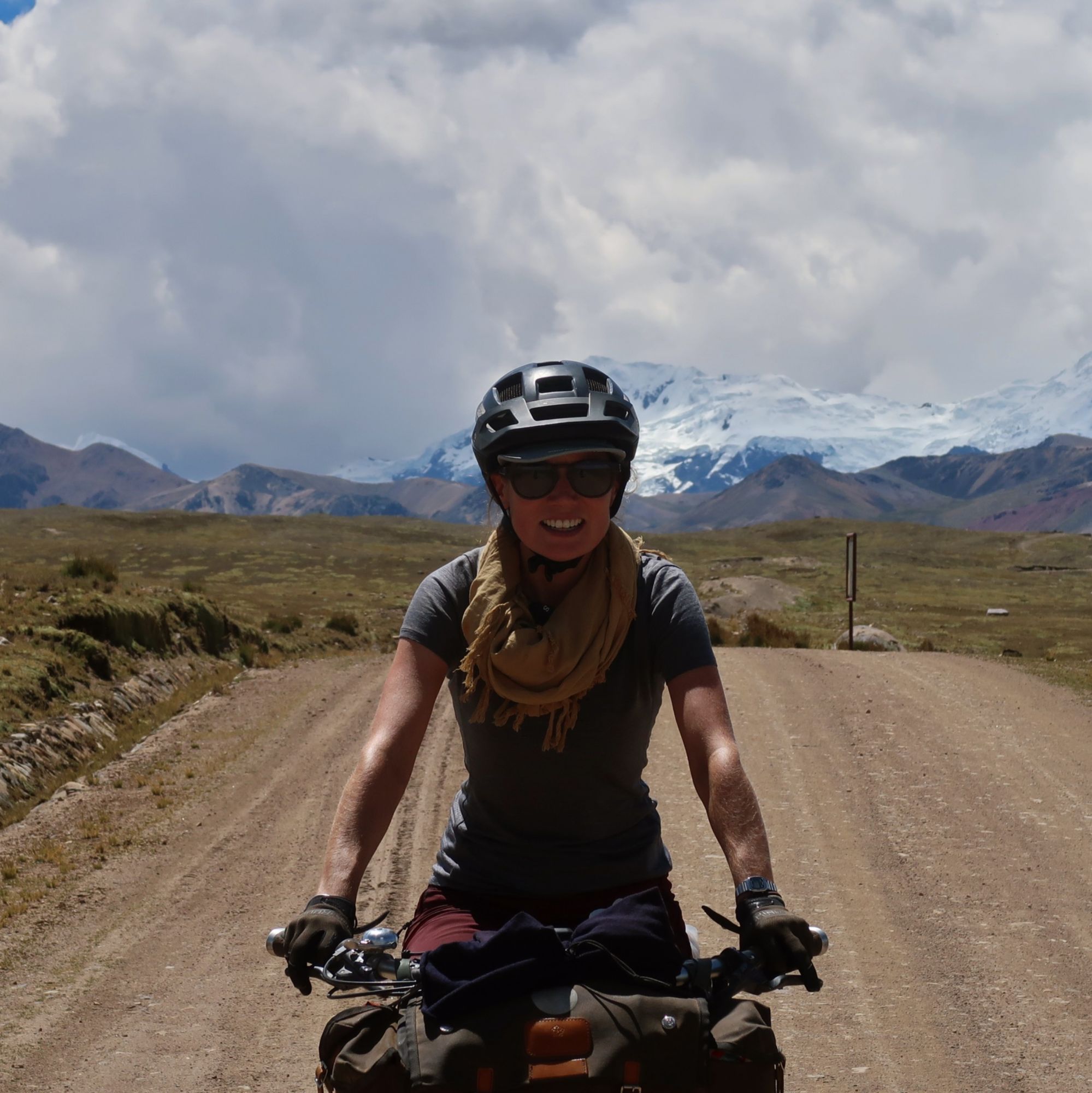
But gosh it’s hard work riding at these altitudes of between 4000m – 5000m. We’ve encountered very little flat here in Peru. So far, it’s all up or all down. The roads zig-zag, up and down the mountain sides, wiggling along like a scalextric track – I’m yet to see a loop-the-loop but I don’t put it passed them, the Inca were quite the engineers! We’ve both lost quite a bit of weight and muscle mass thanks to time spent at high altitude and sickness bugs, and when you add in the lack of oxygen there only really seems to be one speed for us (well mainly me!) at the moment – slow!
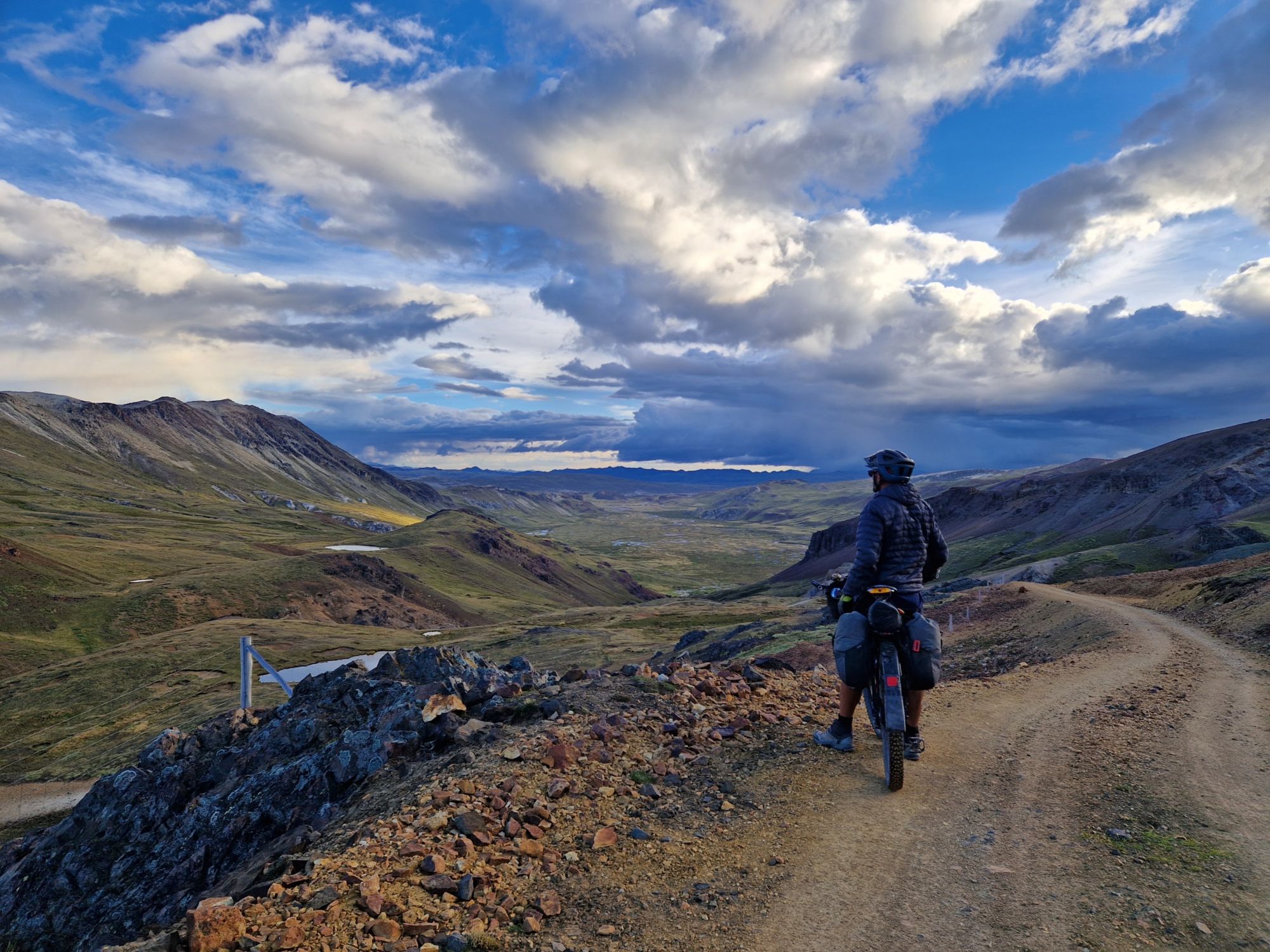
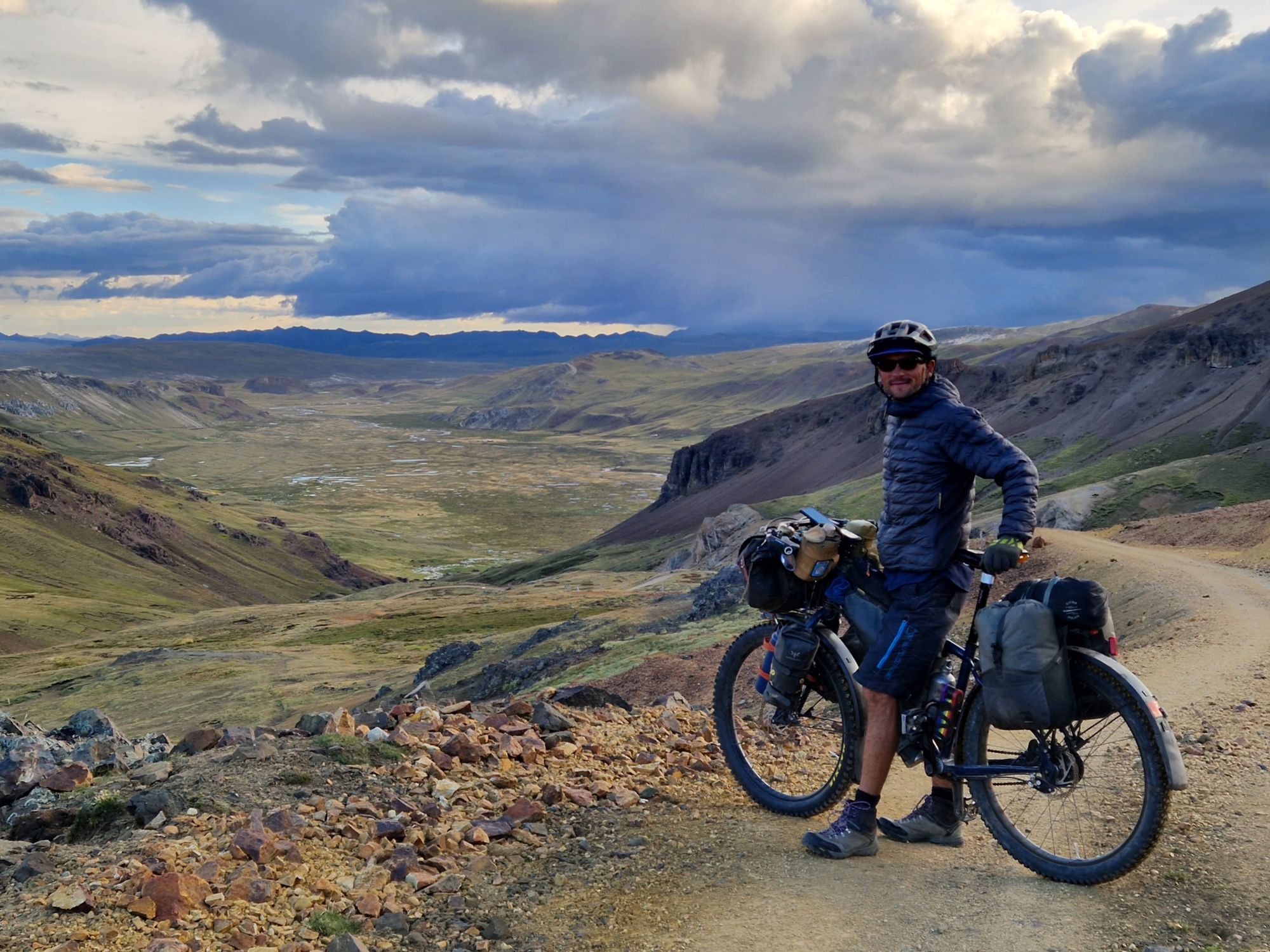

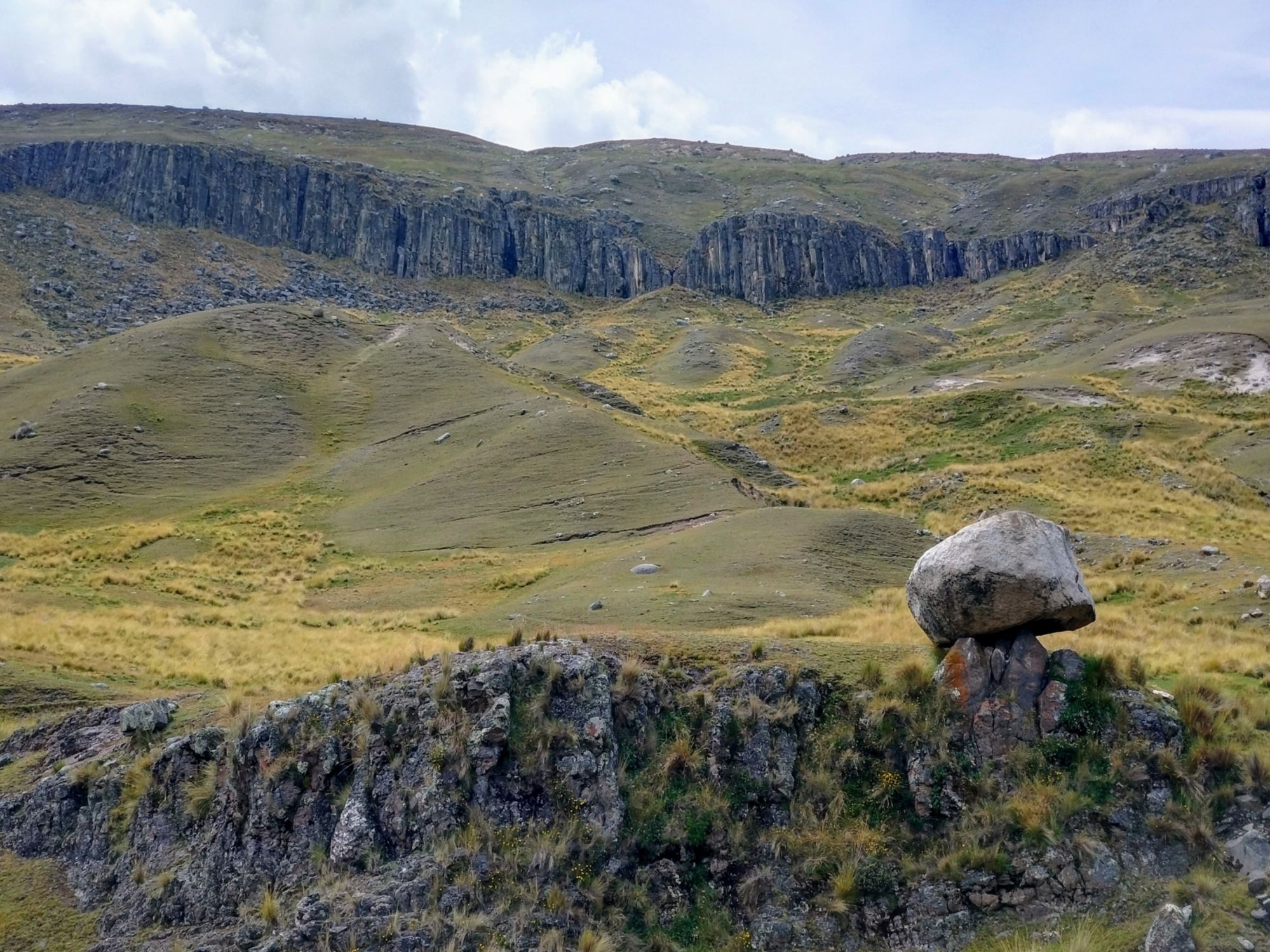
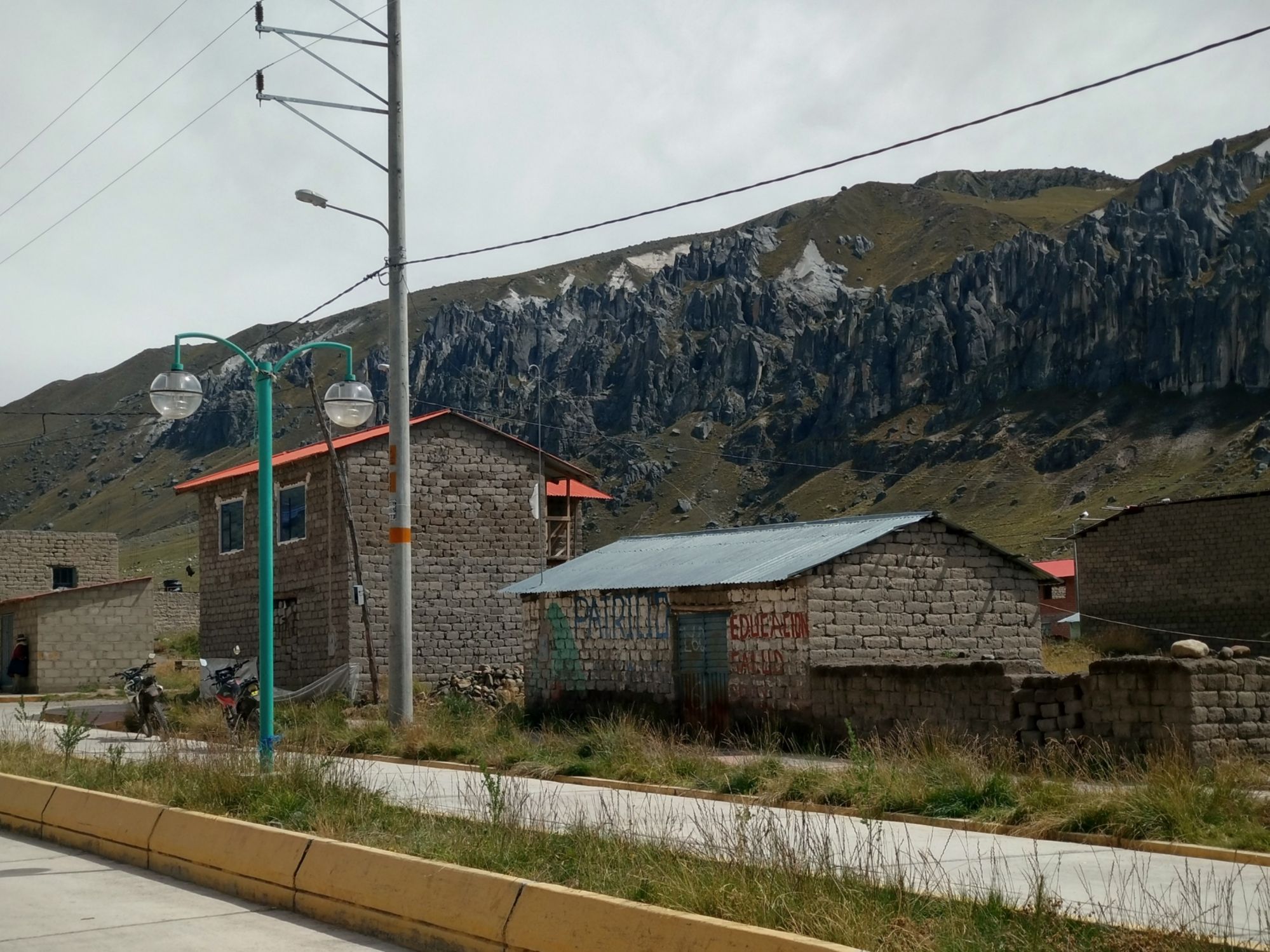
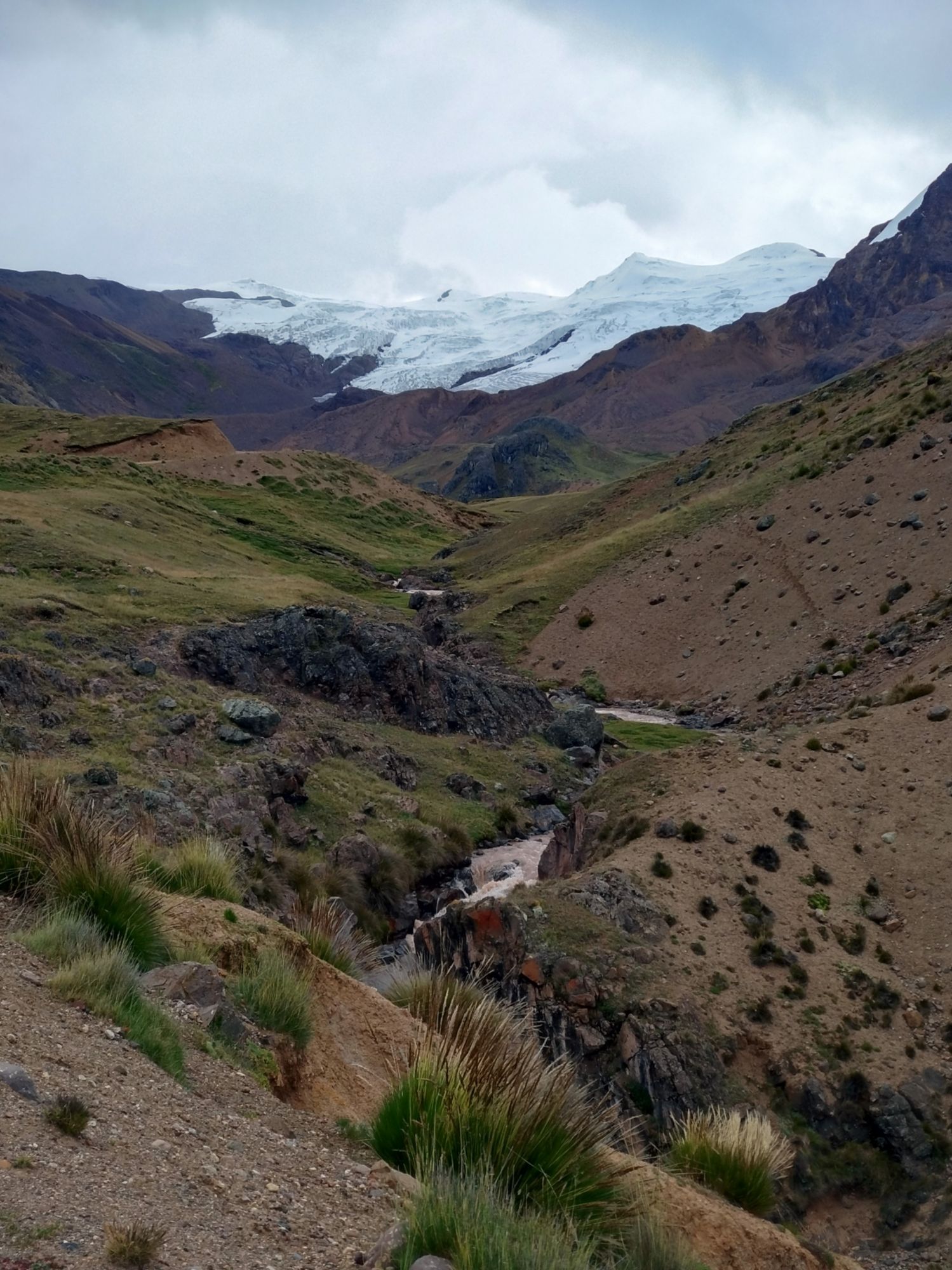
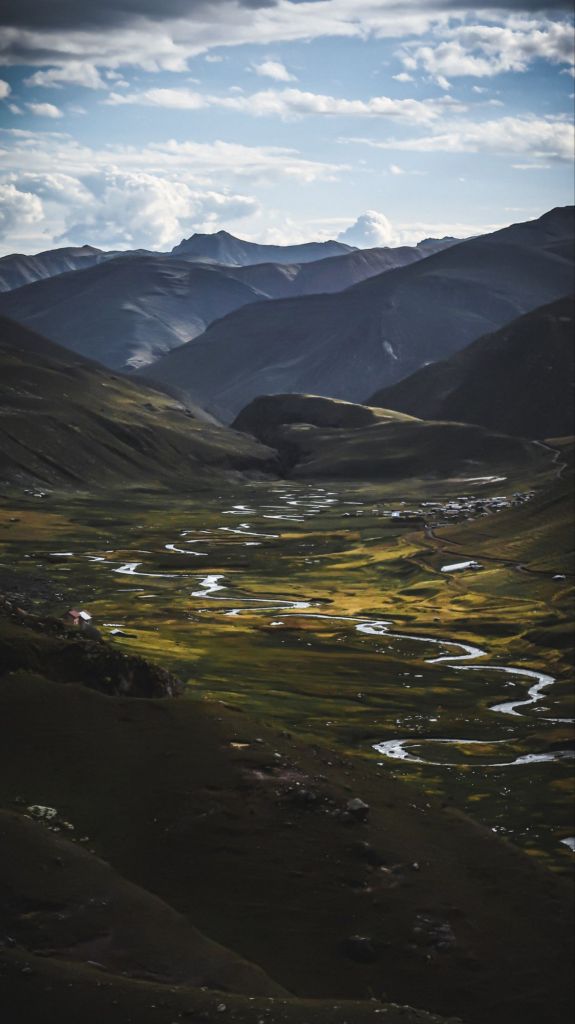
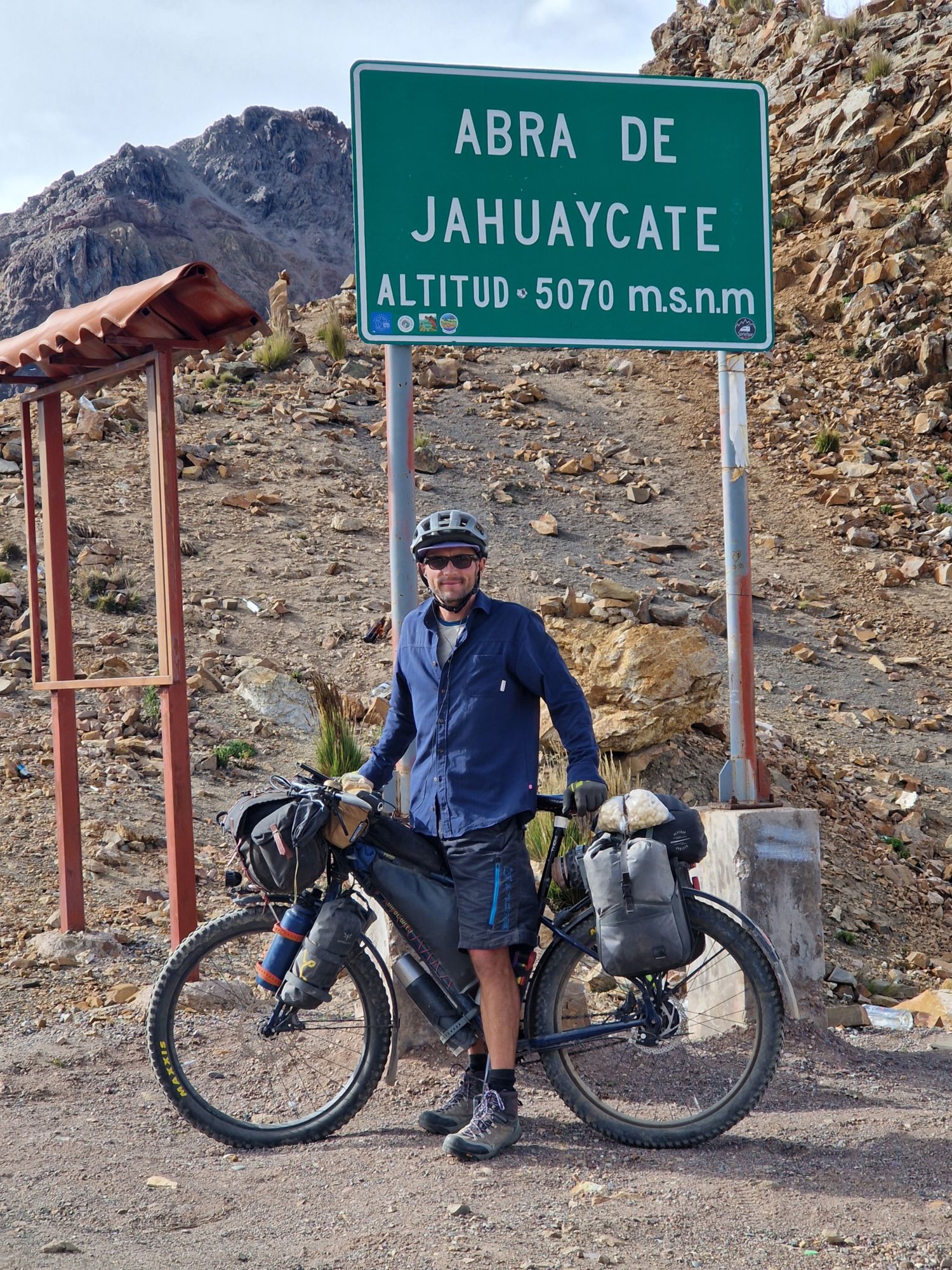
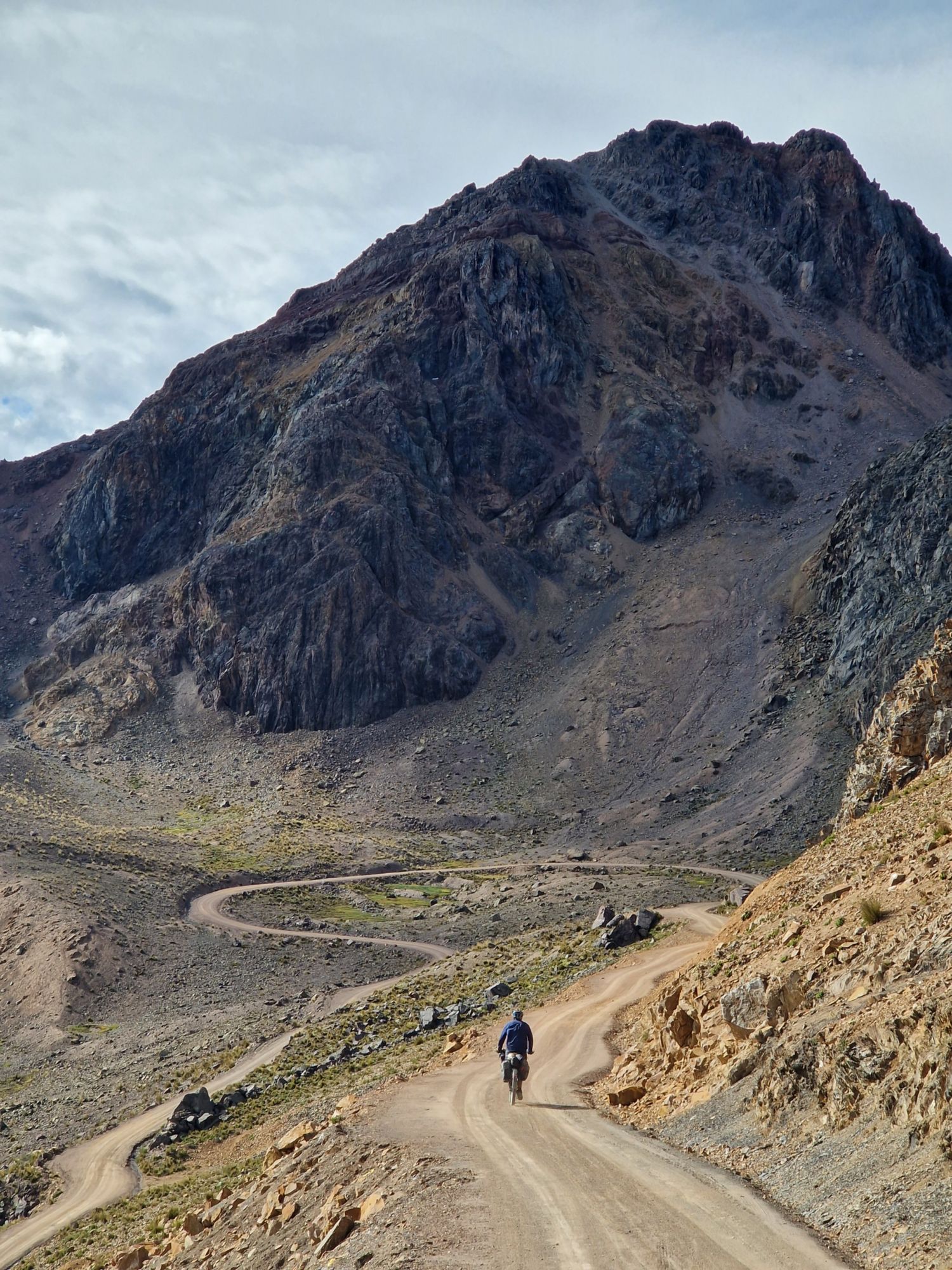
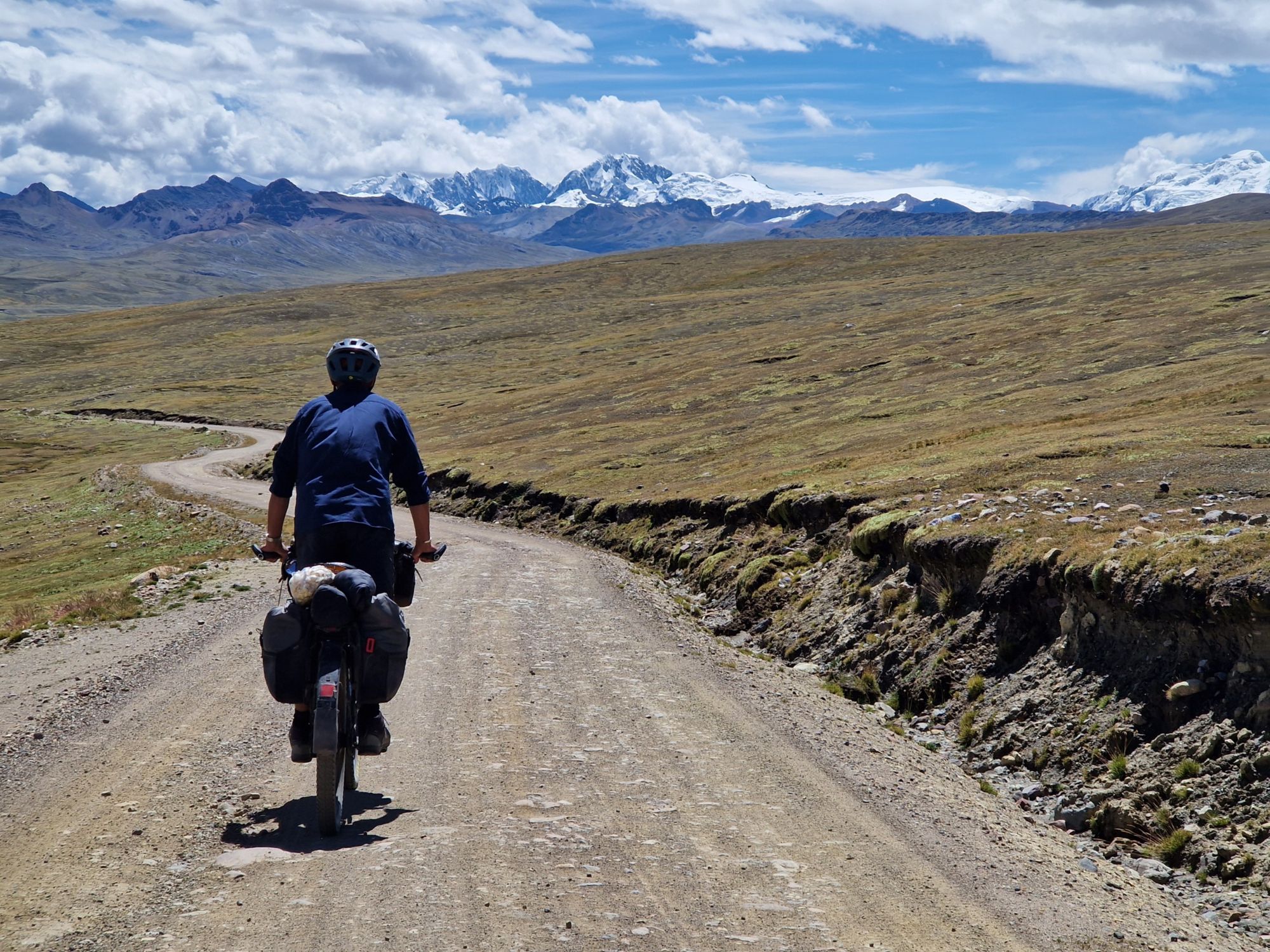
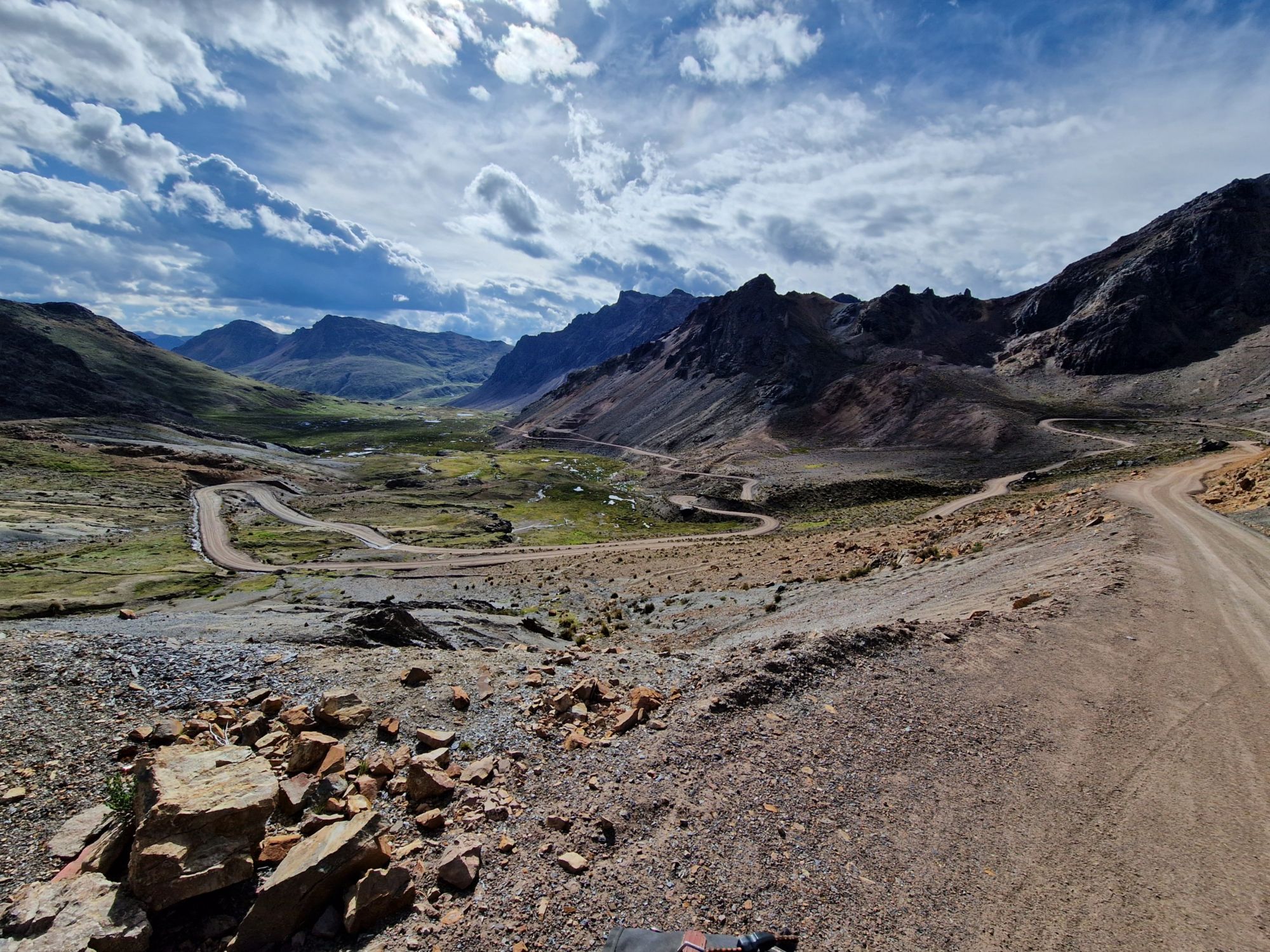
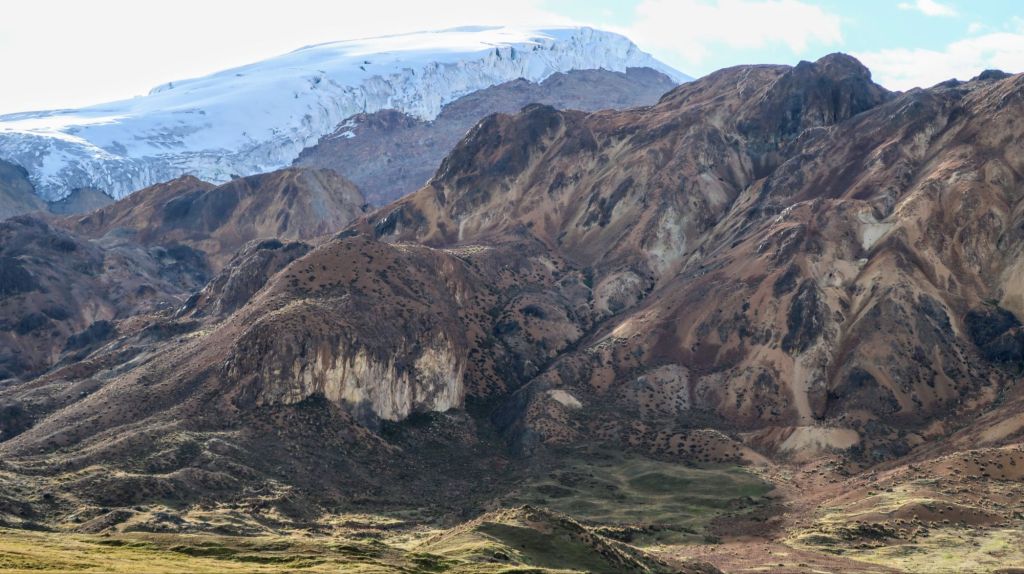
But even for me, my concept of slow was stretched when we tackled the three day loop of Ausangate.
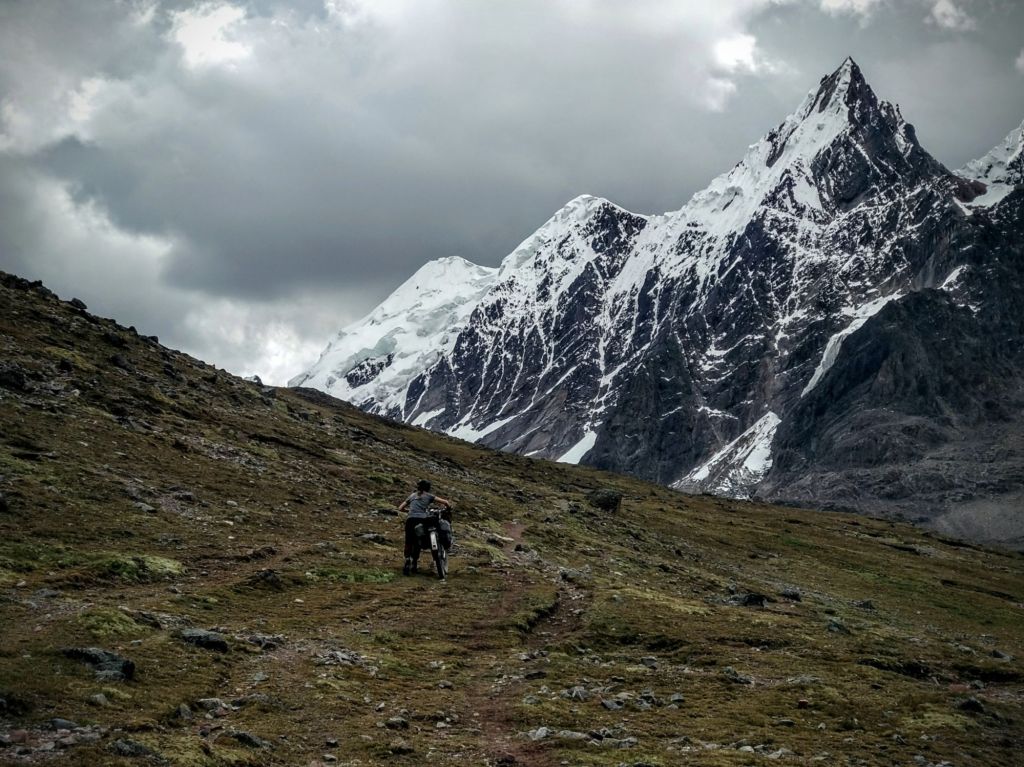
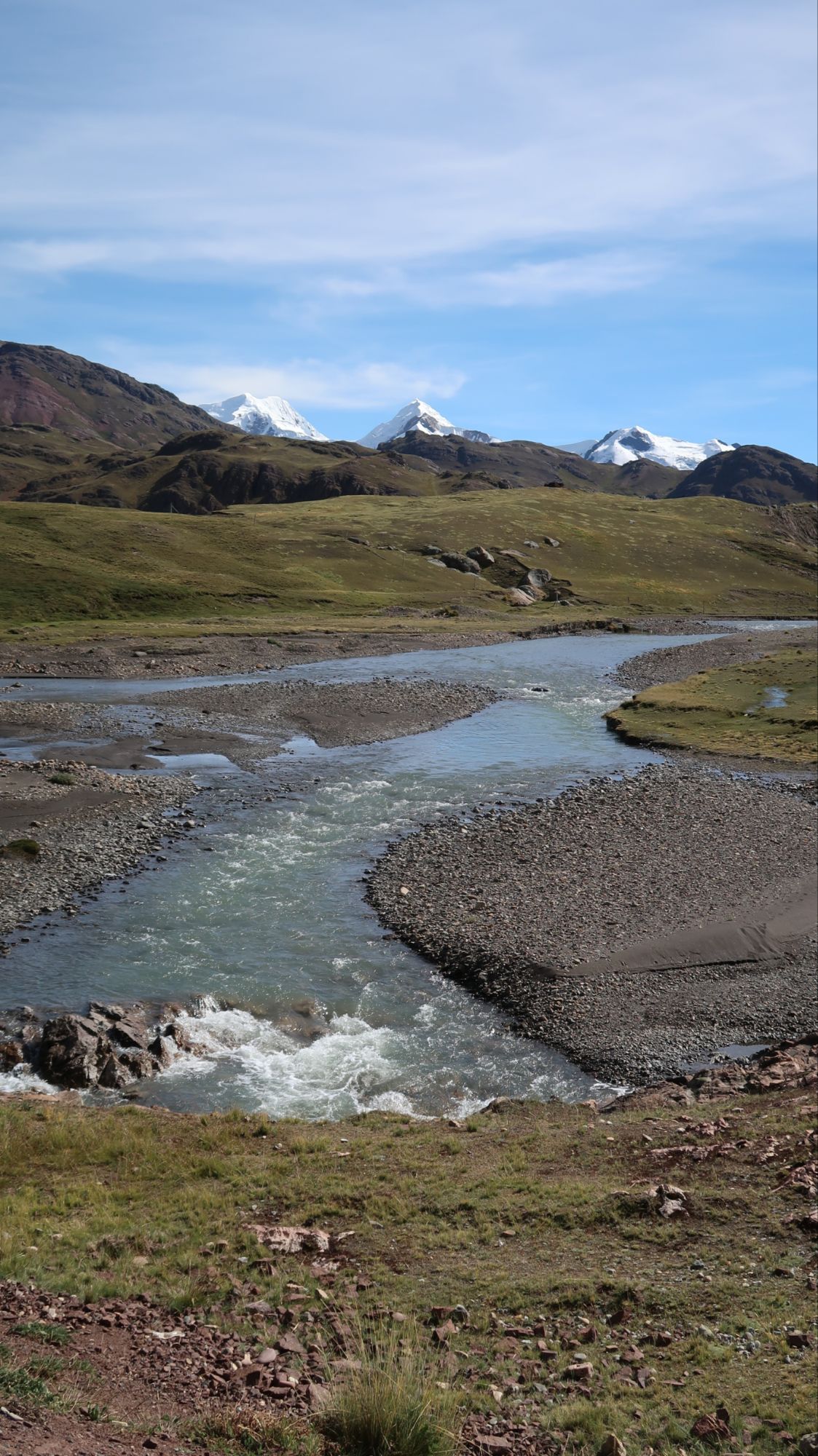
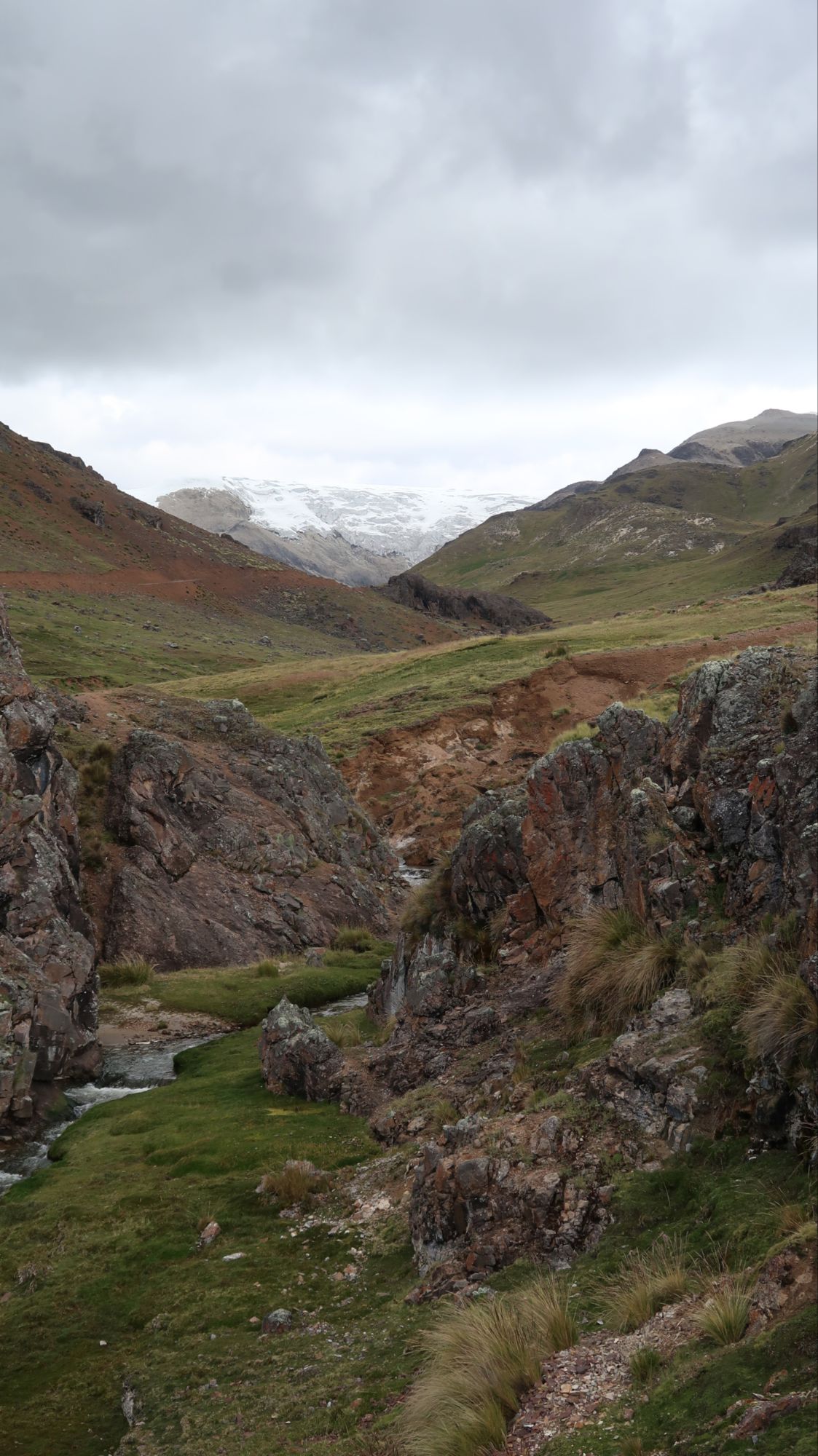
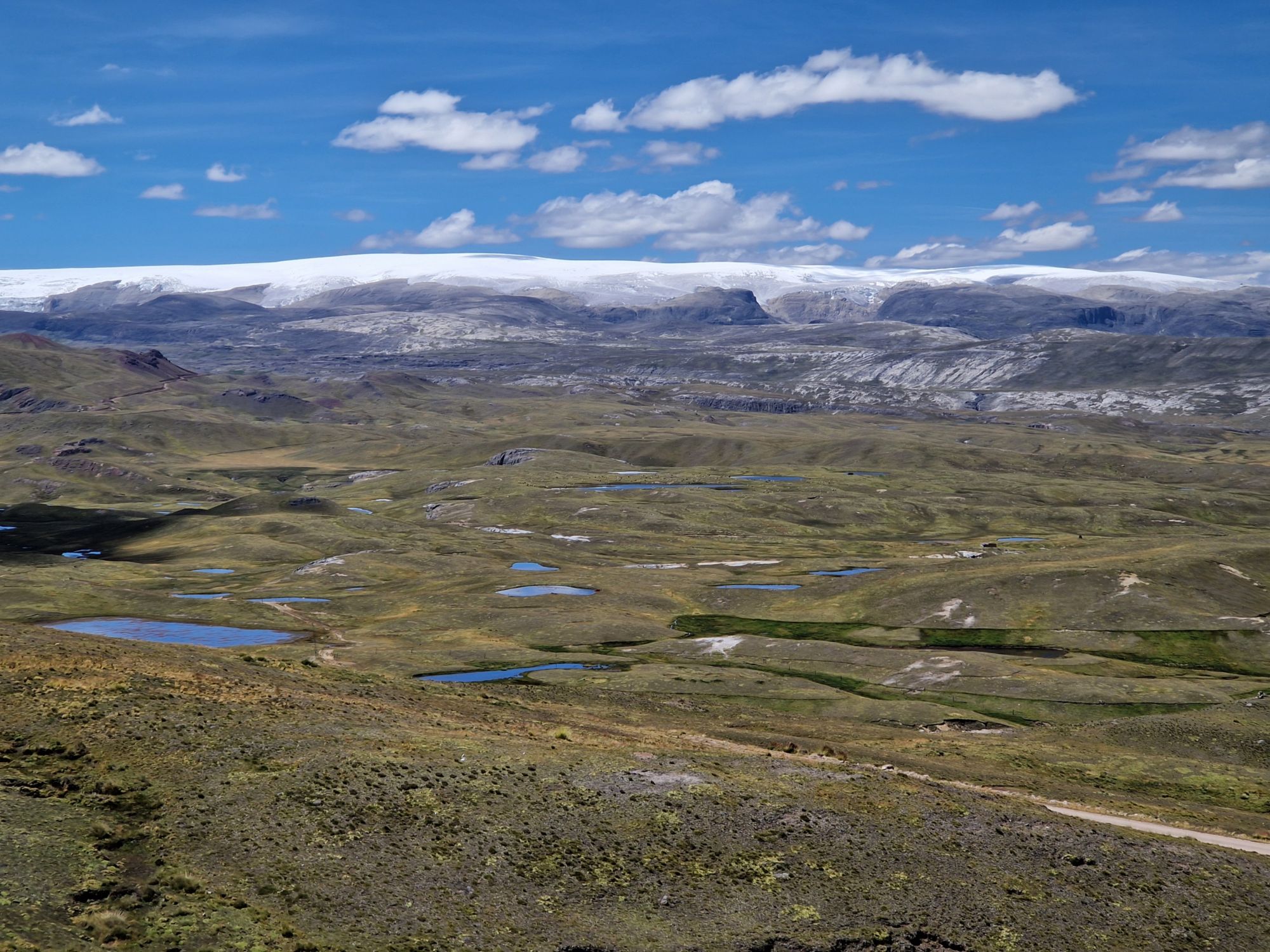
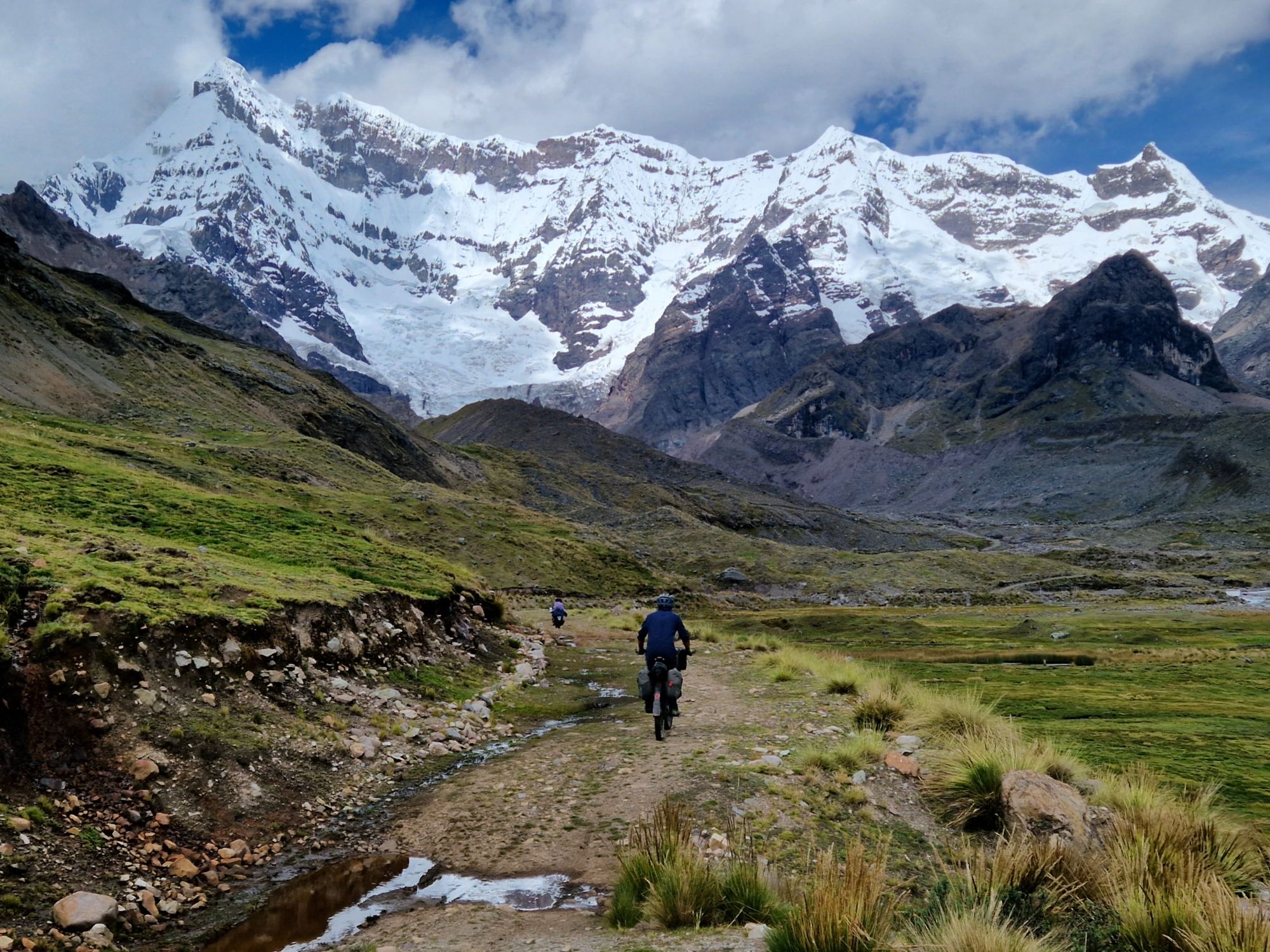
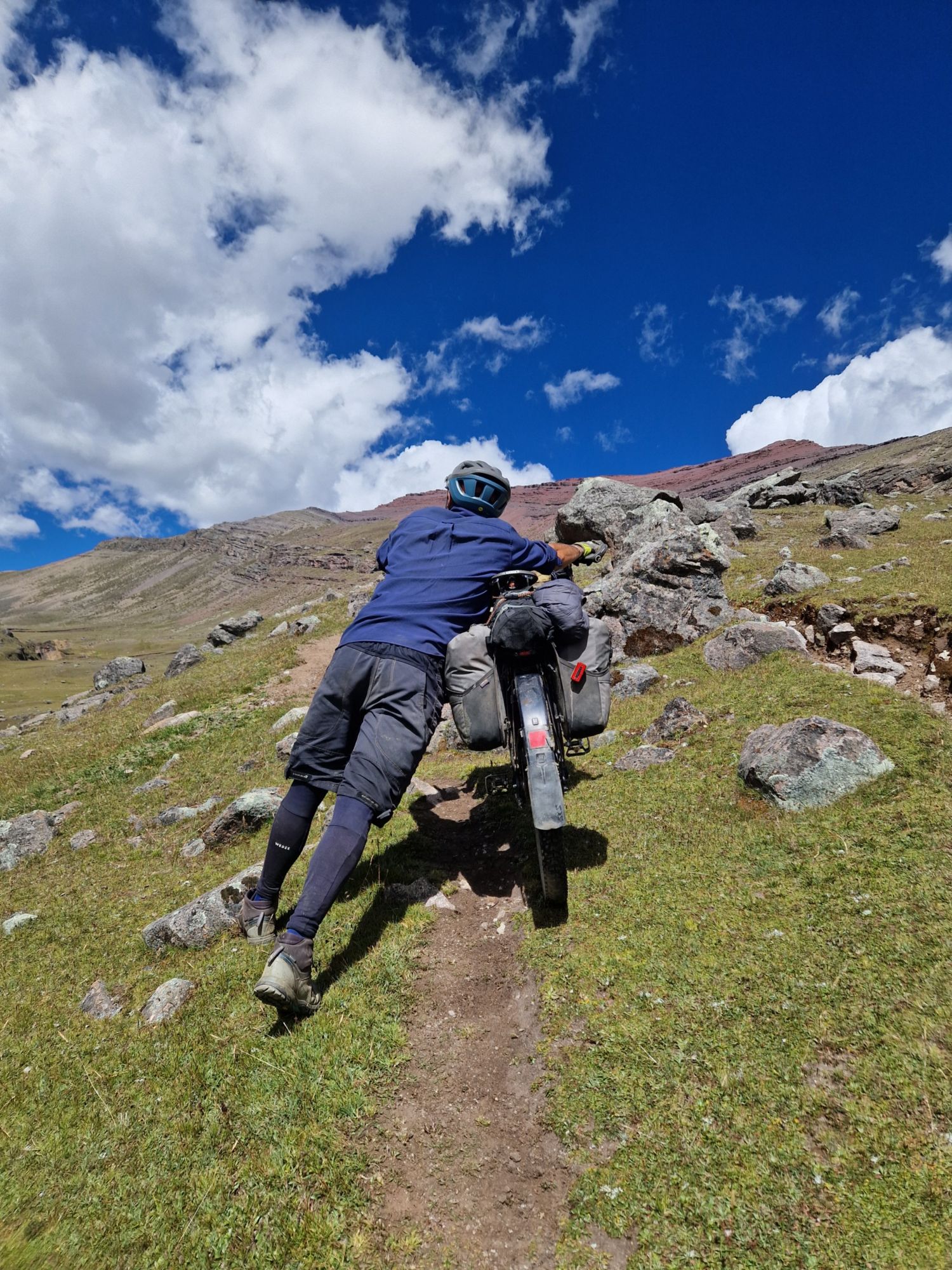
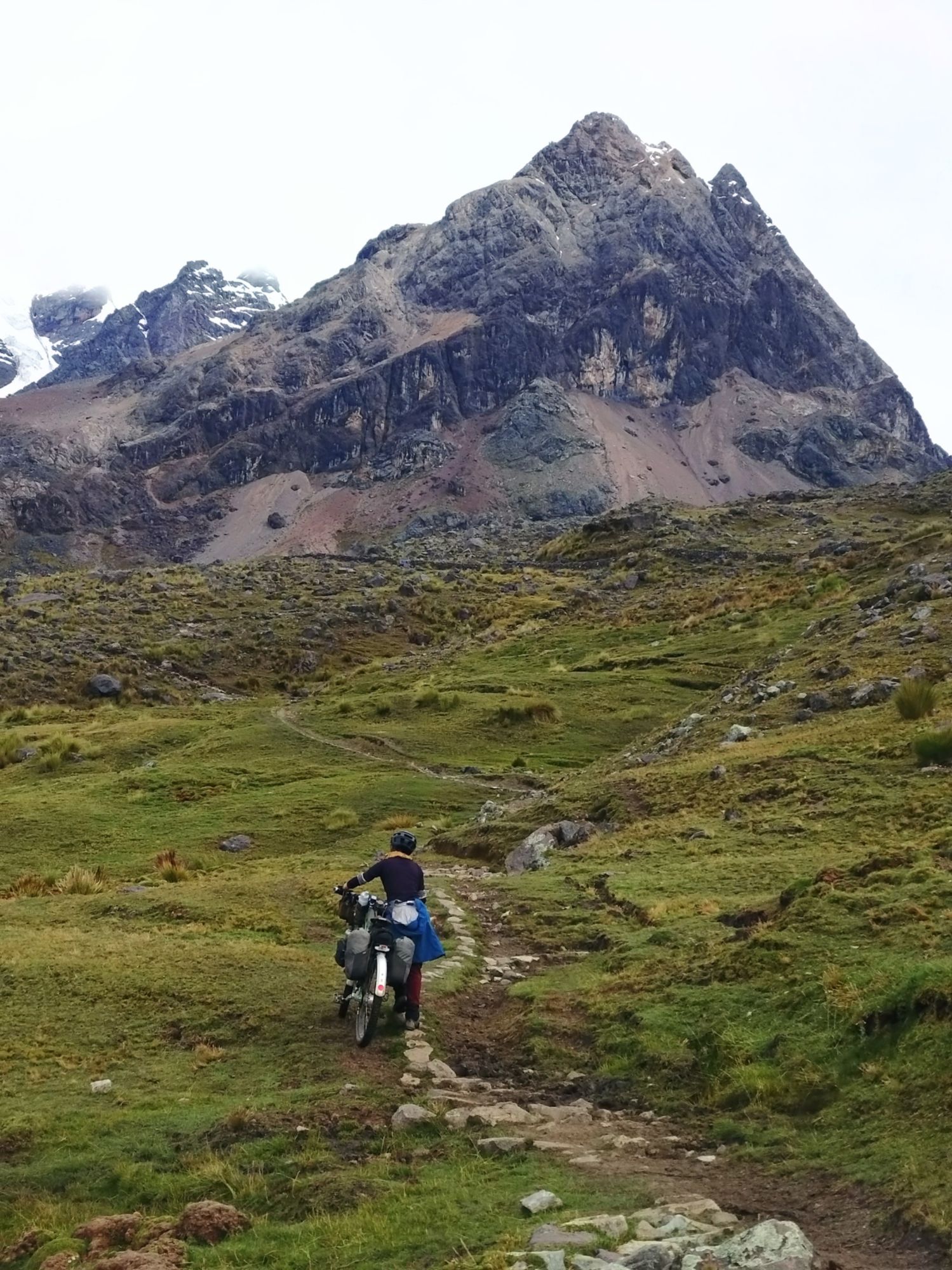
Nevado Ausangate is the fifth highest mountain in Peru which stands proud at 6384m. Even it’s name sounds ominous, like something from Lord of the Rings. It’s a sacred mountain for the indigenous communities here, who believe it is a living being – a deity that protects waters, life and the local people. There is a trekking route that circles the mountain, taking in three passes (the highest being over 5000m), and it’s become popular with cyclists who don’t mind pushing their bikes every now and then. We thought about walking the route, but having read other cyclists blogs and reviews of the route we had heard of dreamy singletrack descents and the best mountain biking of a trip through South America, so we didn’t want the bikes to miss out on all the fun and decided to ride it. The reality, however, is that when I say ‘ride’ what I actually really mean is push, heave and haul our bikes for 90% of the route, and enjoy riding the remaining 10% as fun singletrack. Ultimately, we ruined a good walk by taking the bikes along – It’s probably the first time we would ever admit to that, but I think it’s important to be honest, for the benefit of others possibly contemplating the route in the future (and this blog isn’t about sugar-coating things!)

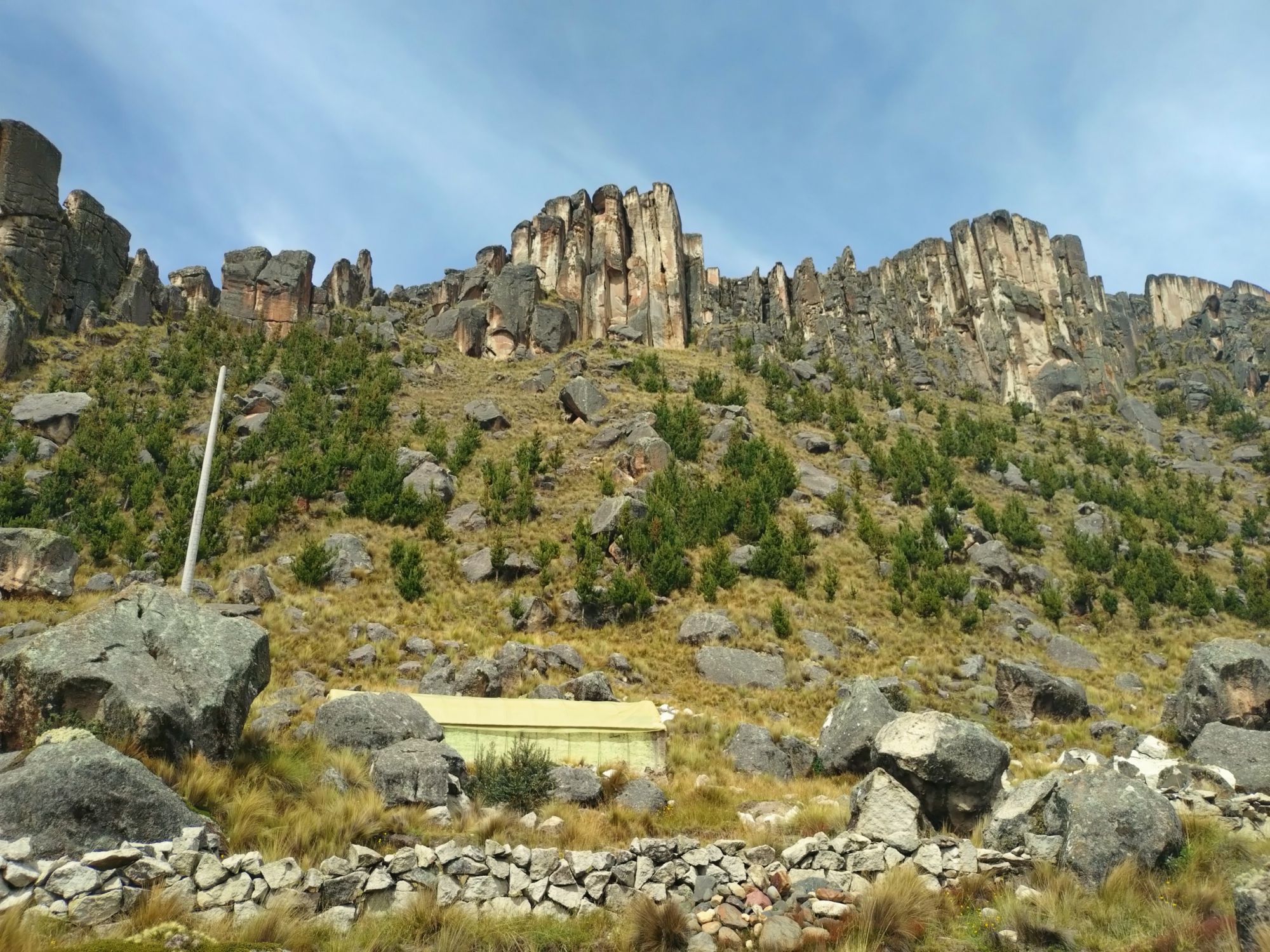
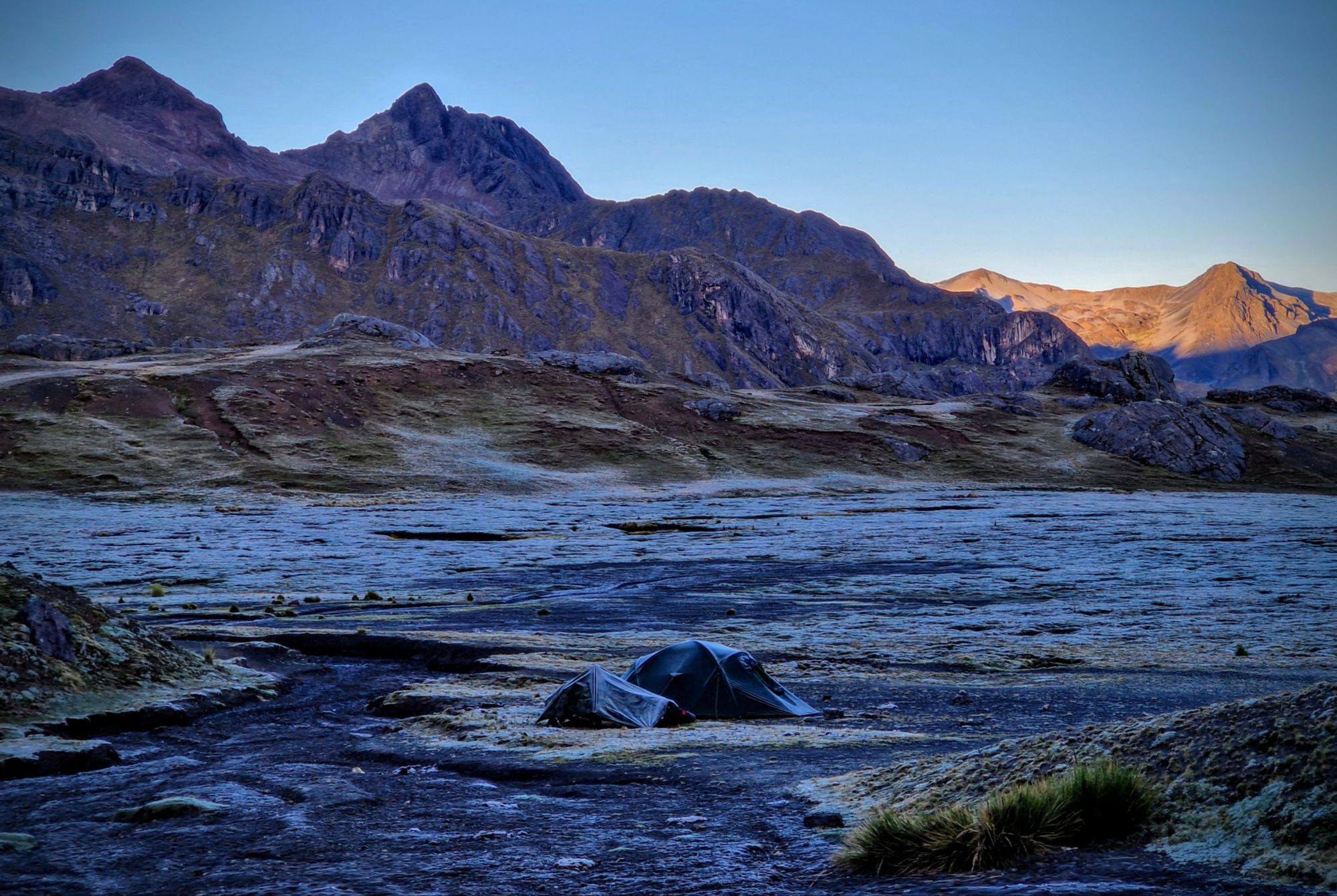
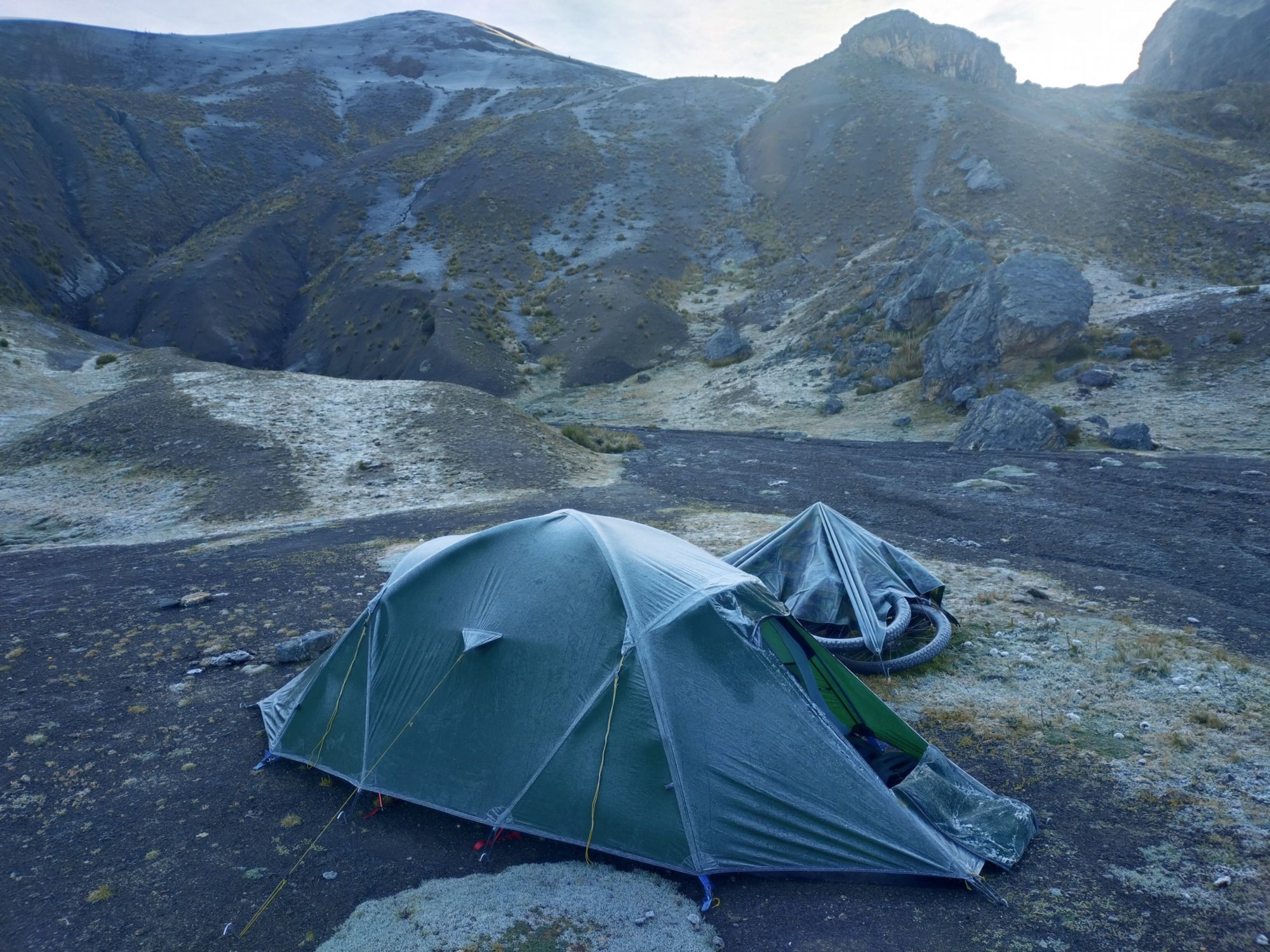
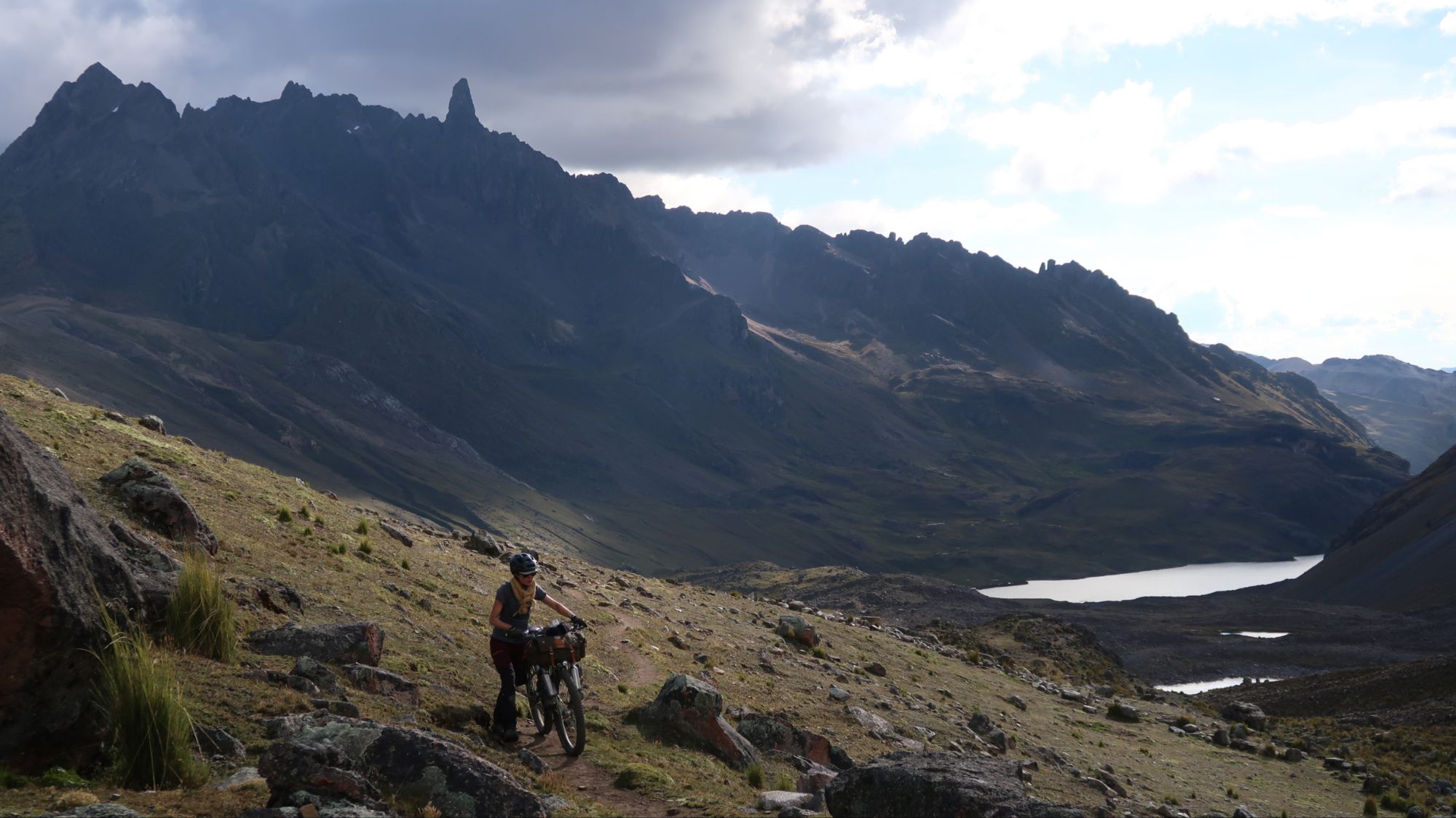
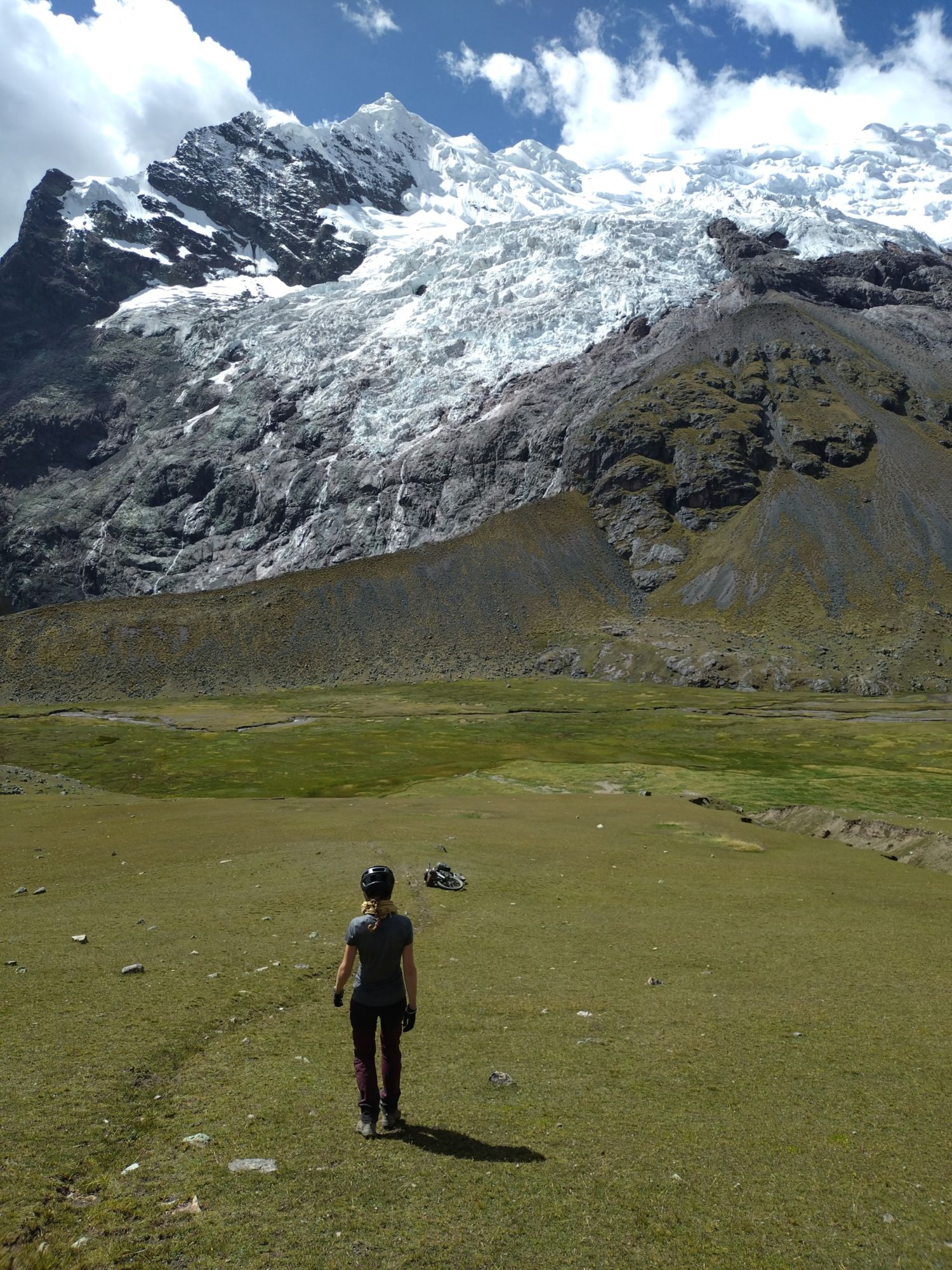
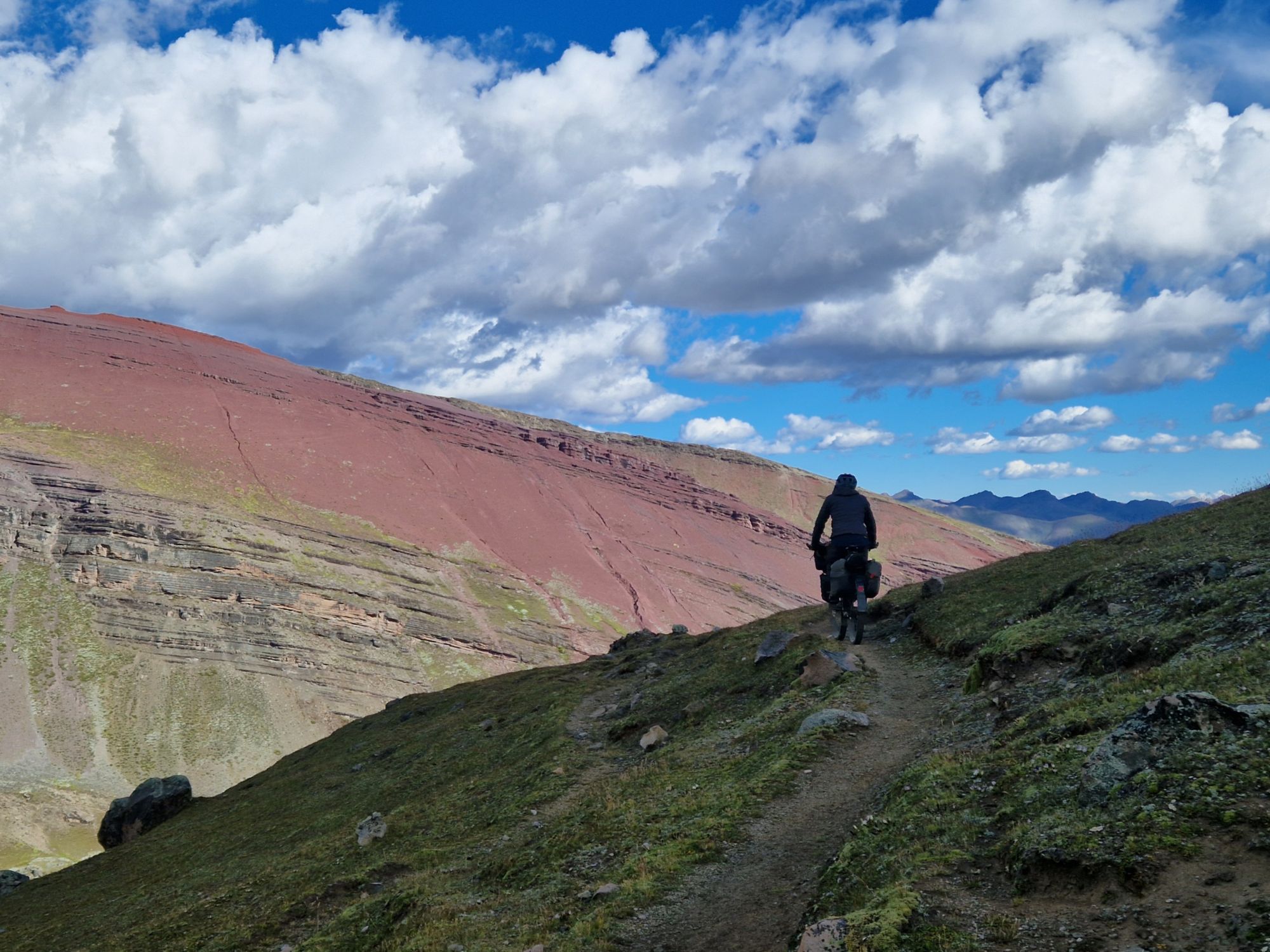
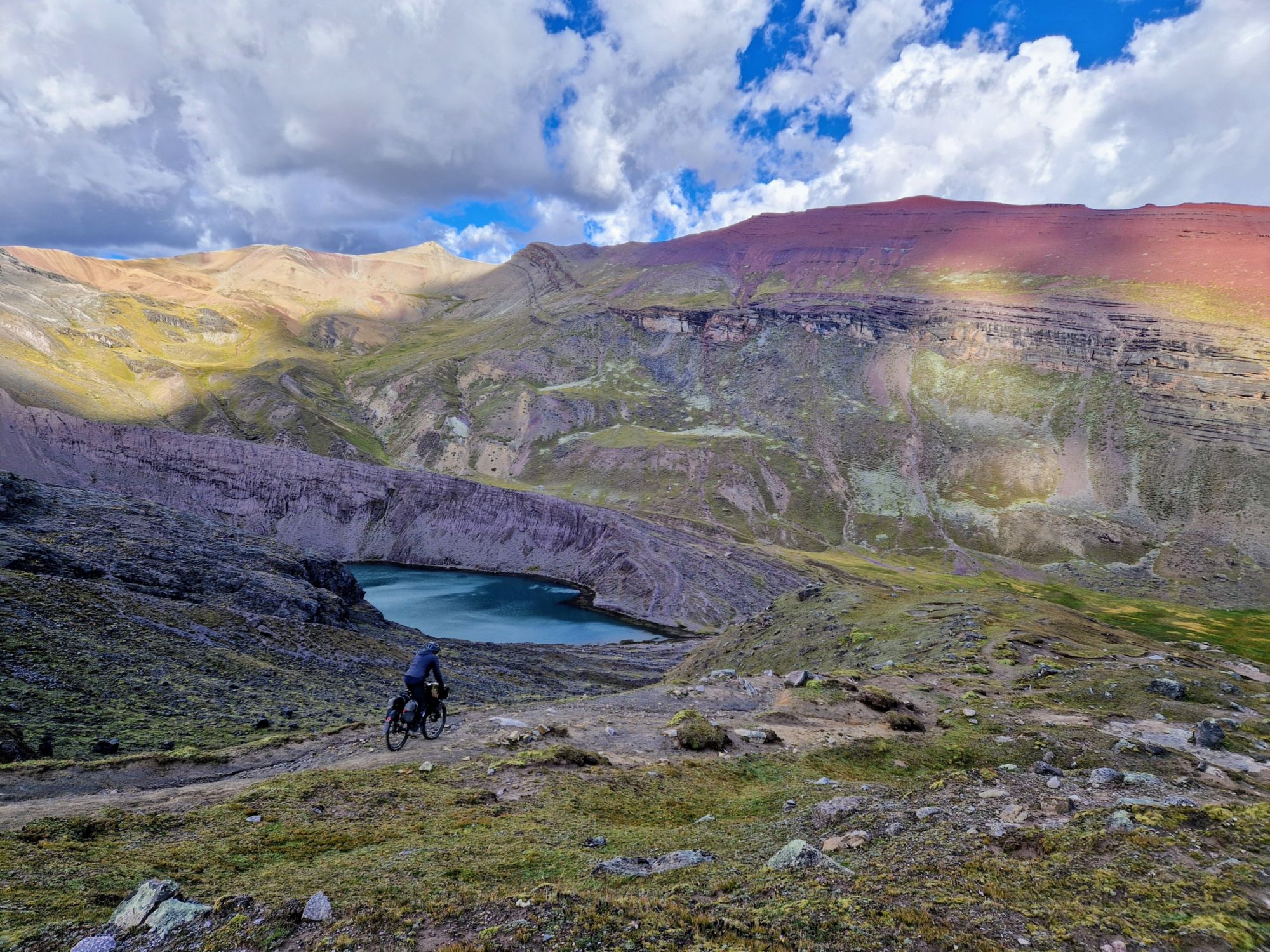
Don’t get me wrong, the scenery and landscape were incredible – Glaciers pouring over mountain tops, dramatic jagged rocky skylines, glacial blue ice cold lakes, rocky mountain passes in contrasting mineral colours – it is truly spectacular. Waking to dusky dawn skies and misty clouds rolling over the mountain peaks as the full moon sets is a special experience. Going to sleep listening the the rumble of glacial avalanches and feeling the ground shake beneath your feet as the glacier cuts ever deeper into the mountain side, makes you appreciate the true meaning of a living mountain.
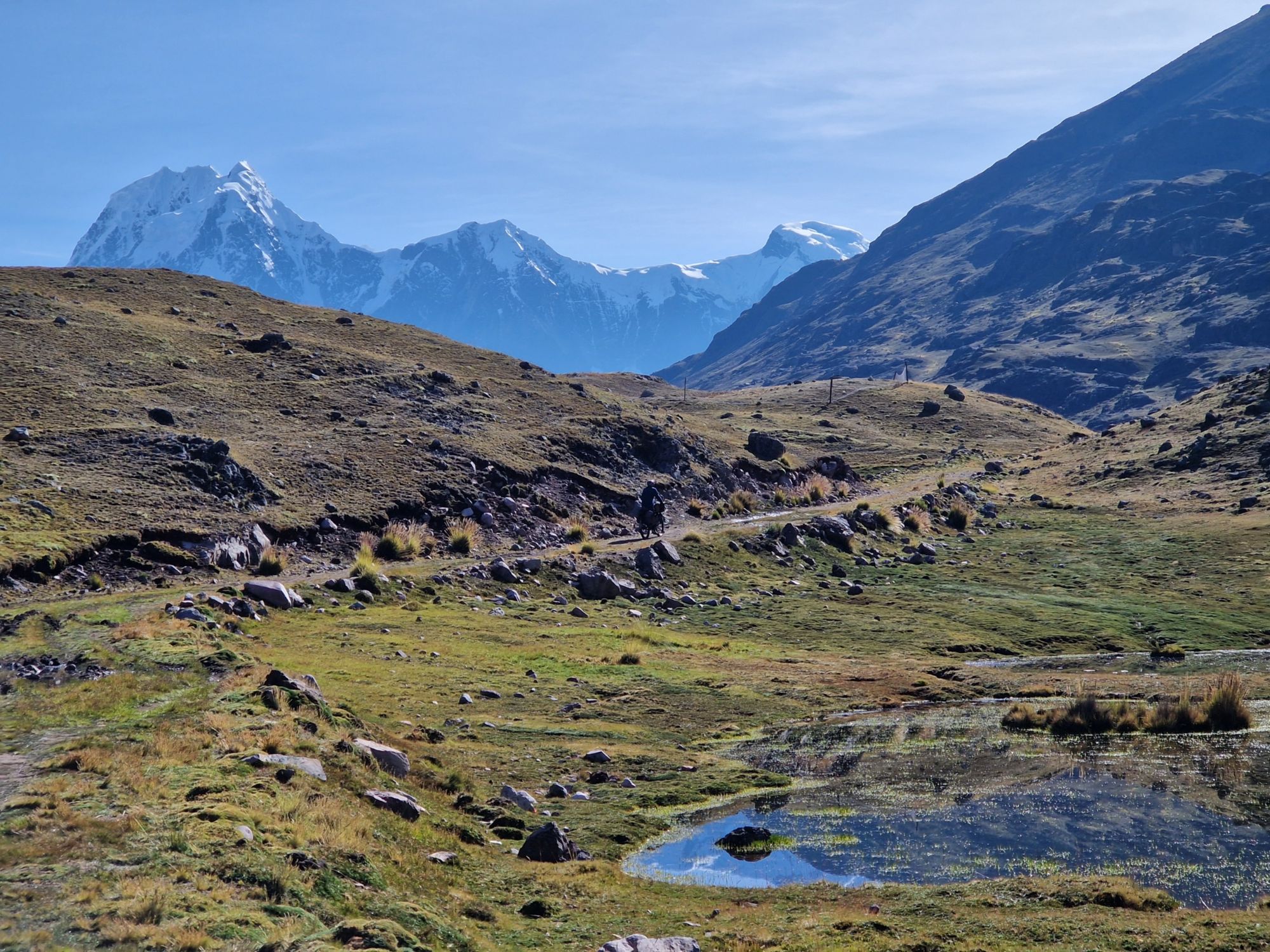


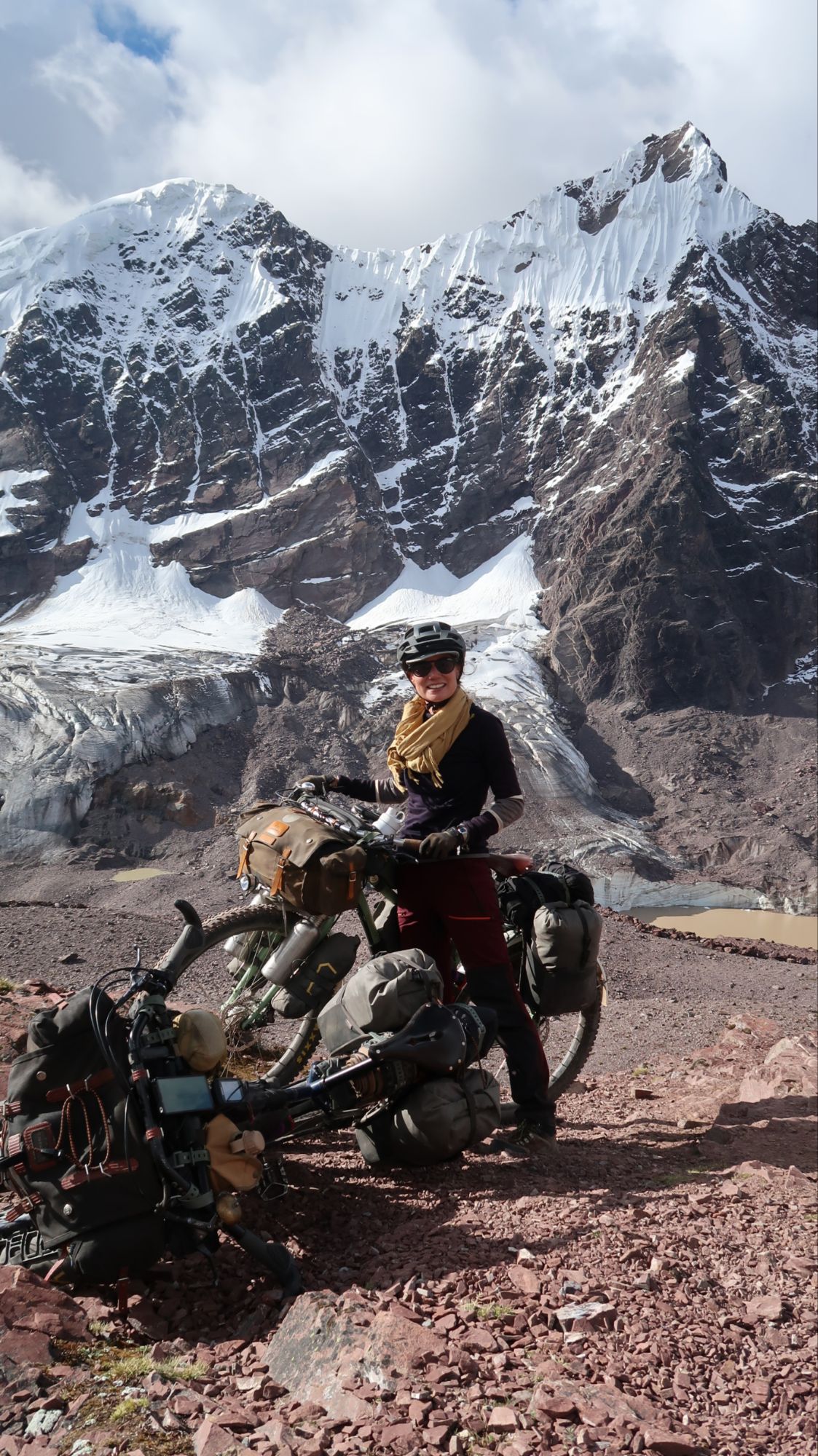
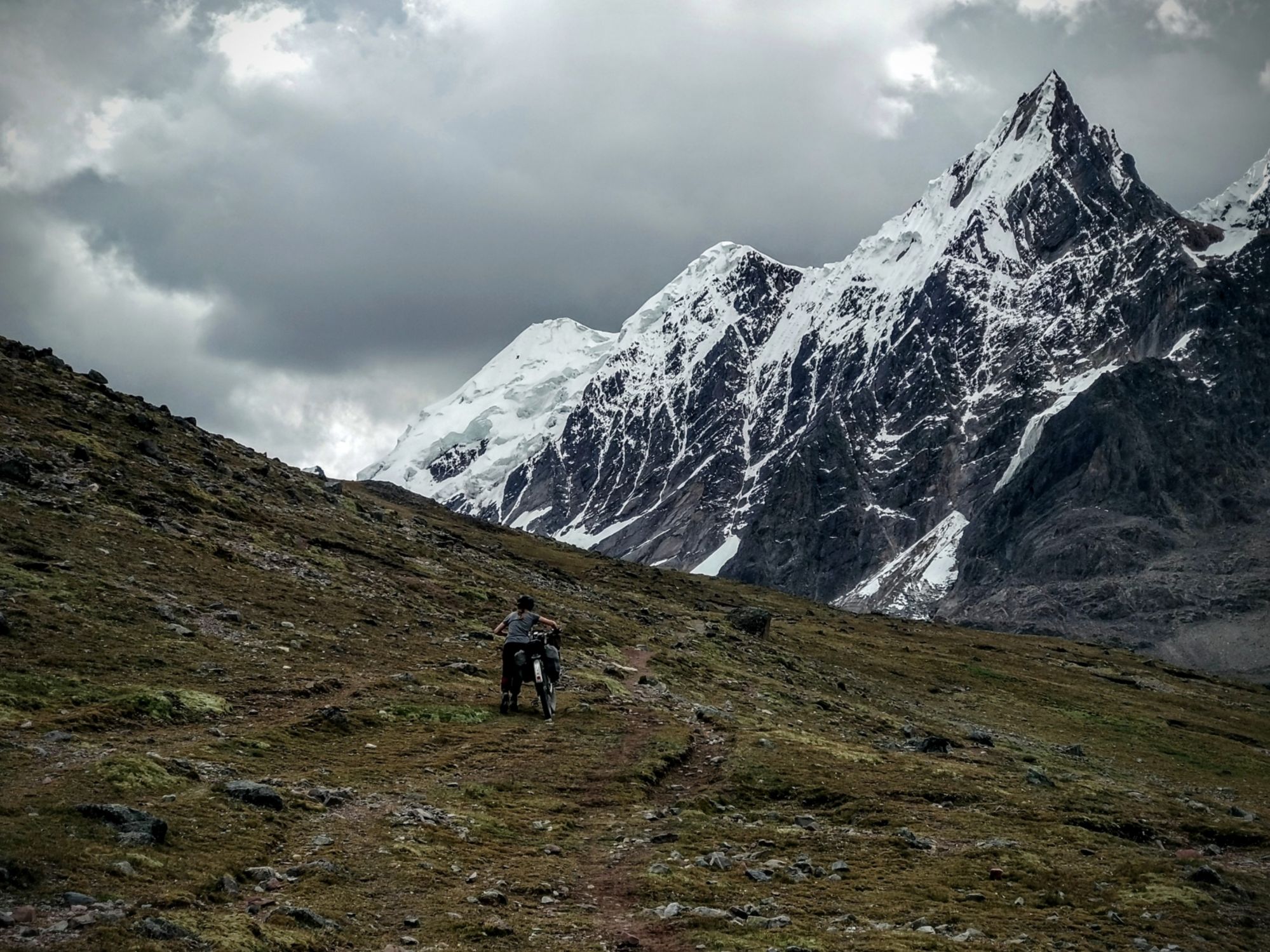
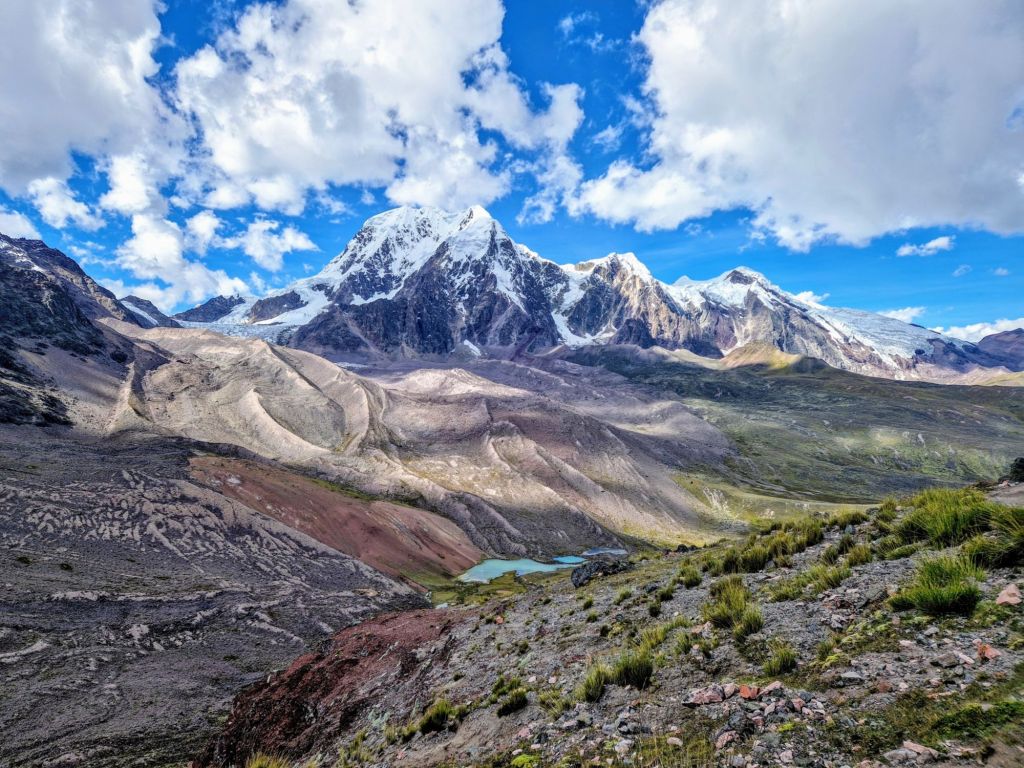
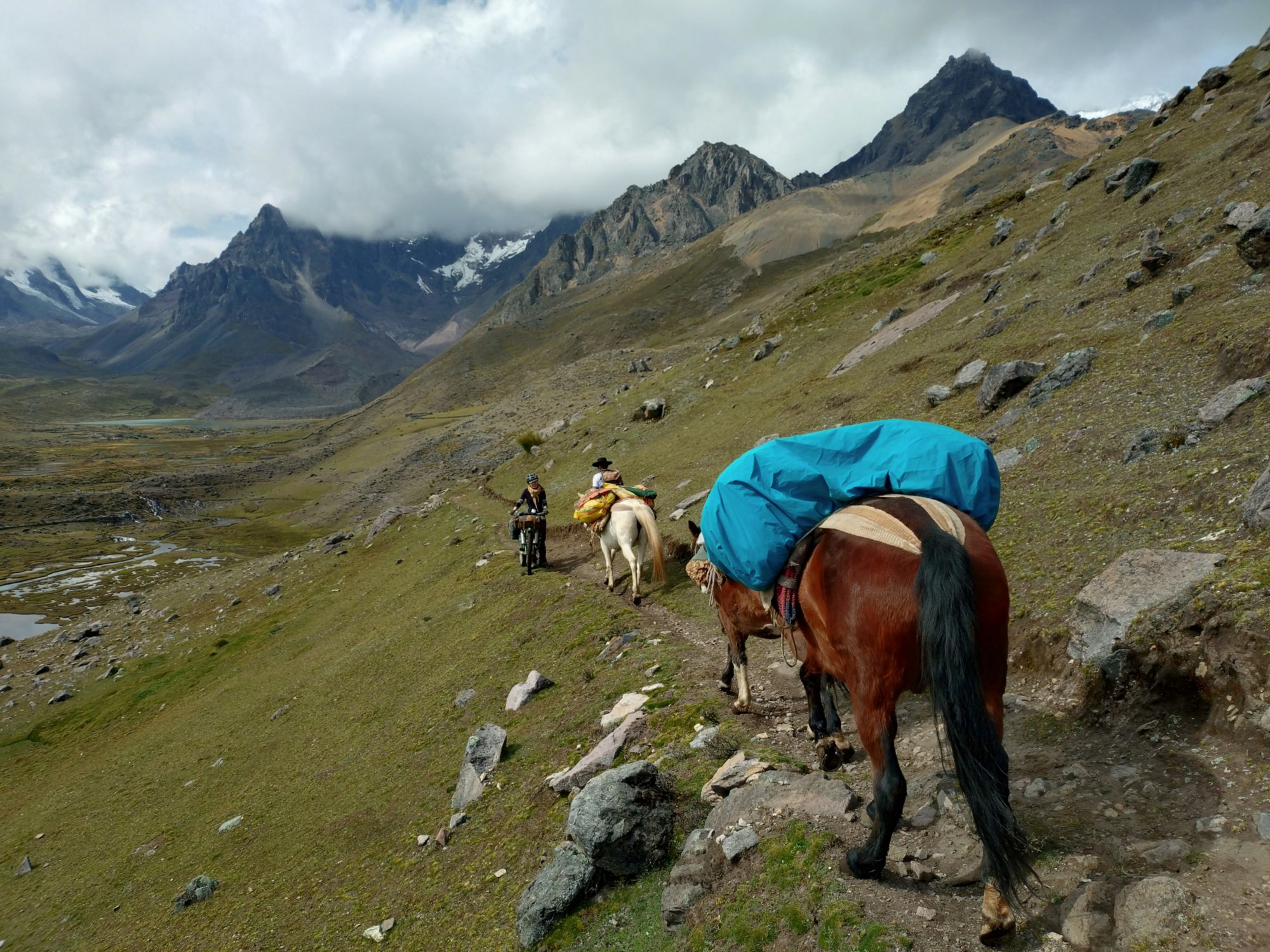
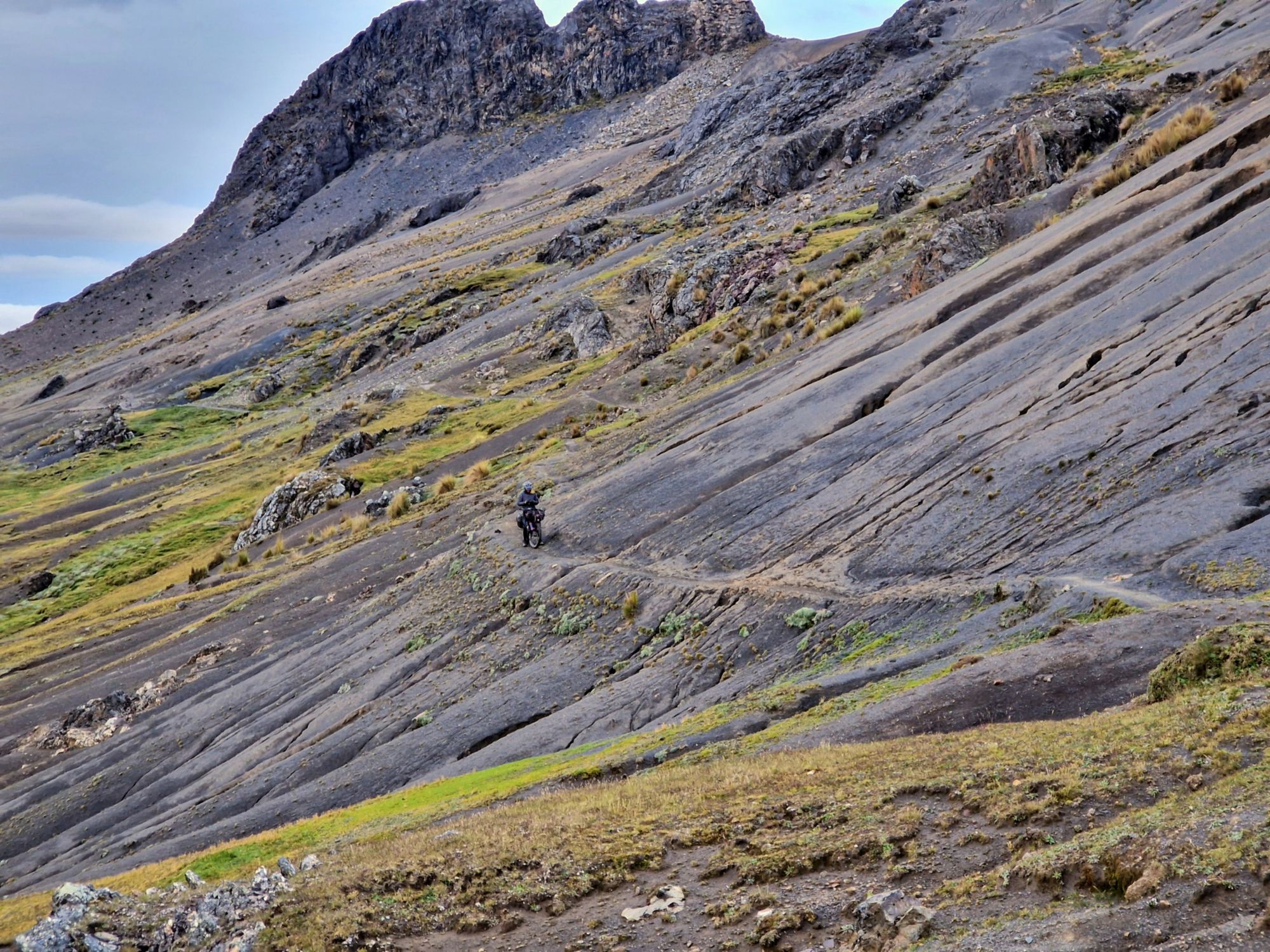
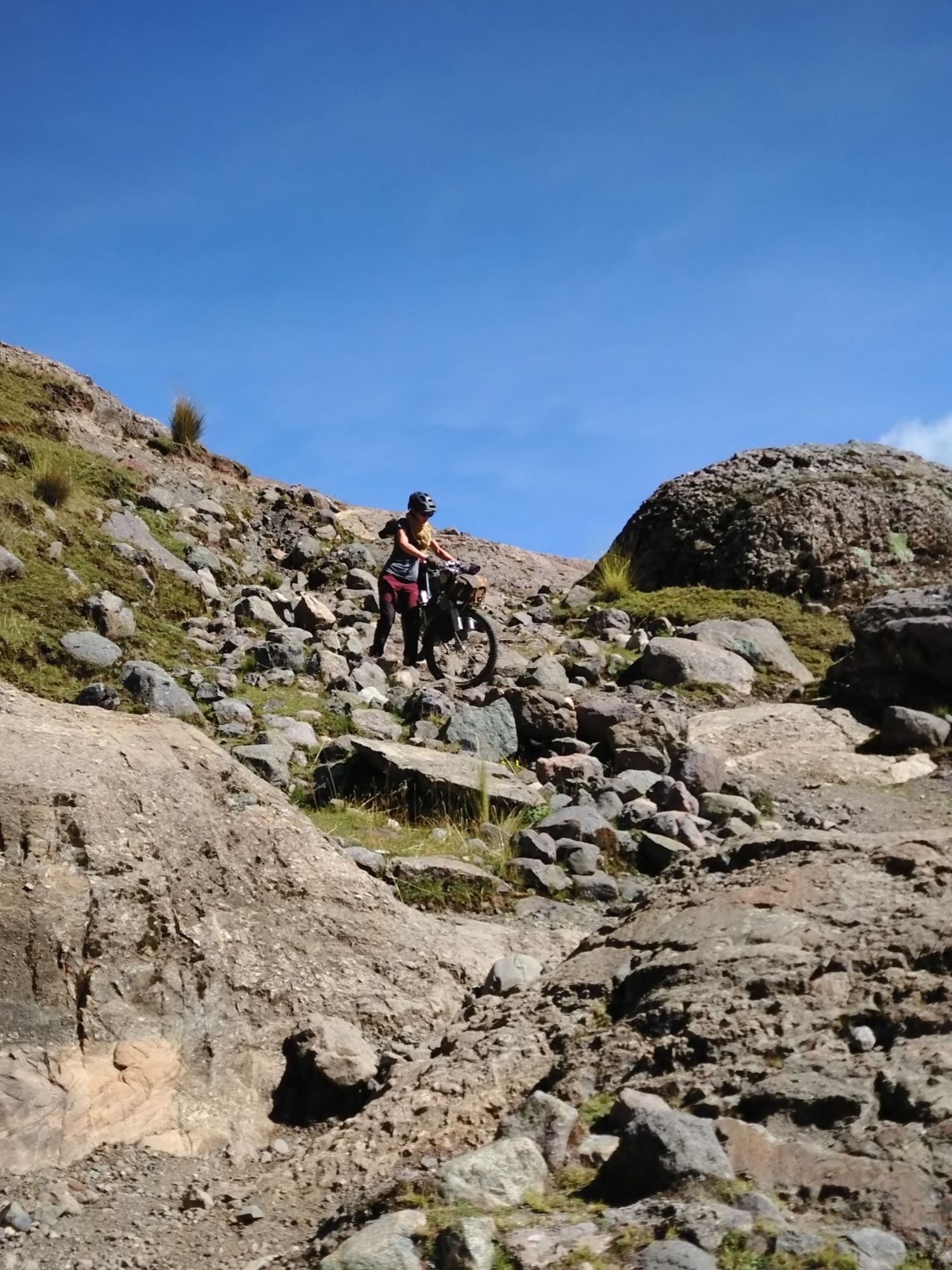
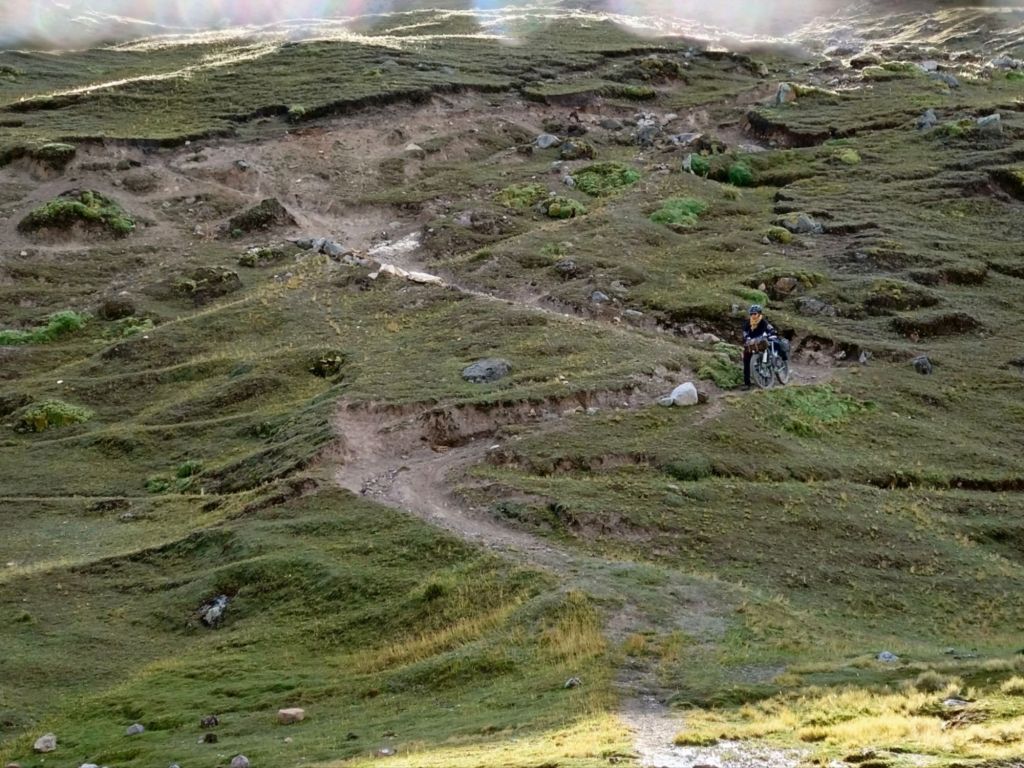
To spend three days moving through that vast landscape was a real privilege, and being in amongst such powerful nature makes you feel so small, it’s humbling and almost spiritual. But so little of the route is fun riding, that it honestly would have been better to walk it and not have to haul the bikes through a landscape that’s only just passable with them. Barring the descent from the first pass, that was the sweet singletrack riding that others have referred to, the remainder consisted of the odd 50m section of riding, but then we would have to spend the next hours pushing the bikes down and back up a washed out gully, or over boulder fields or up mountain sides so steep they were not rideable.
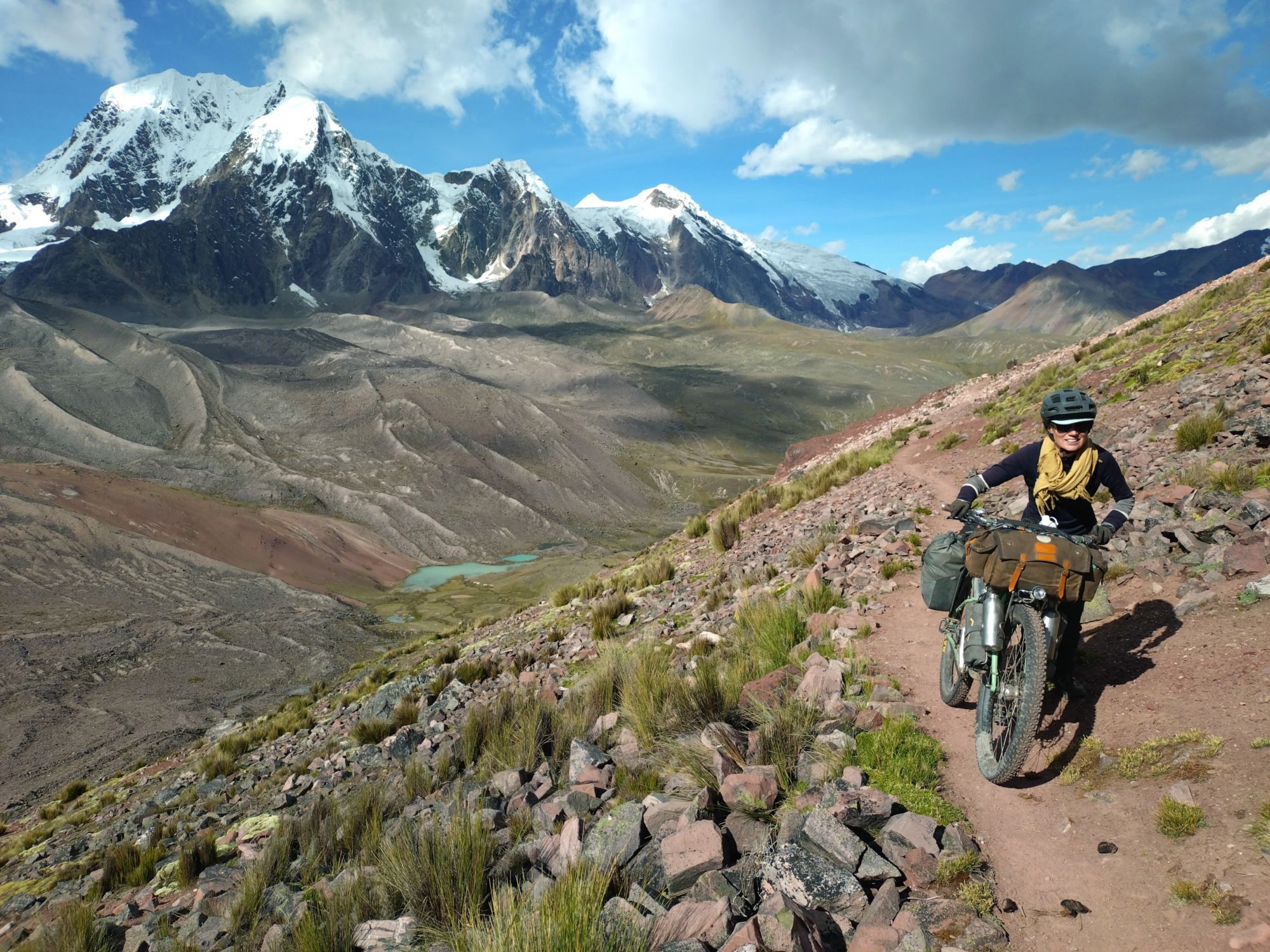
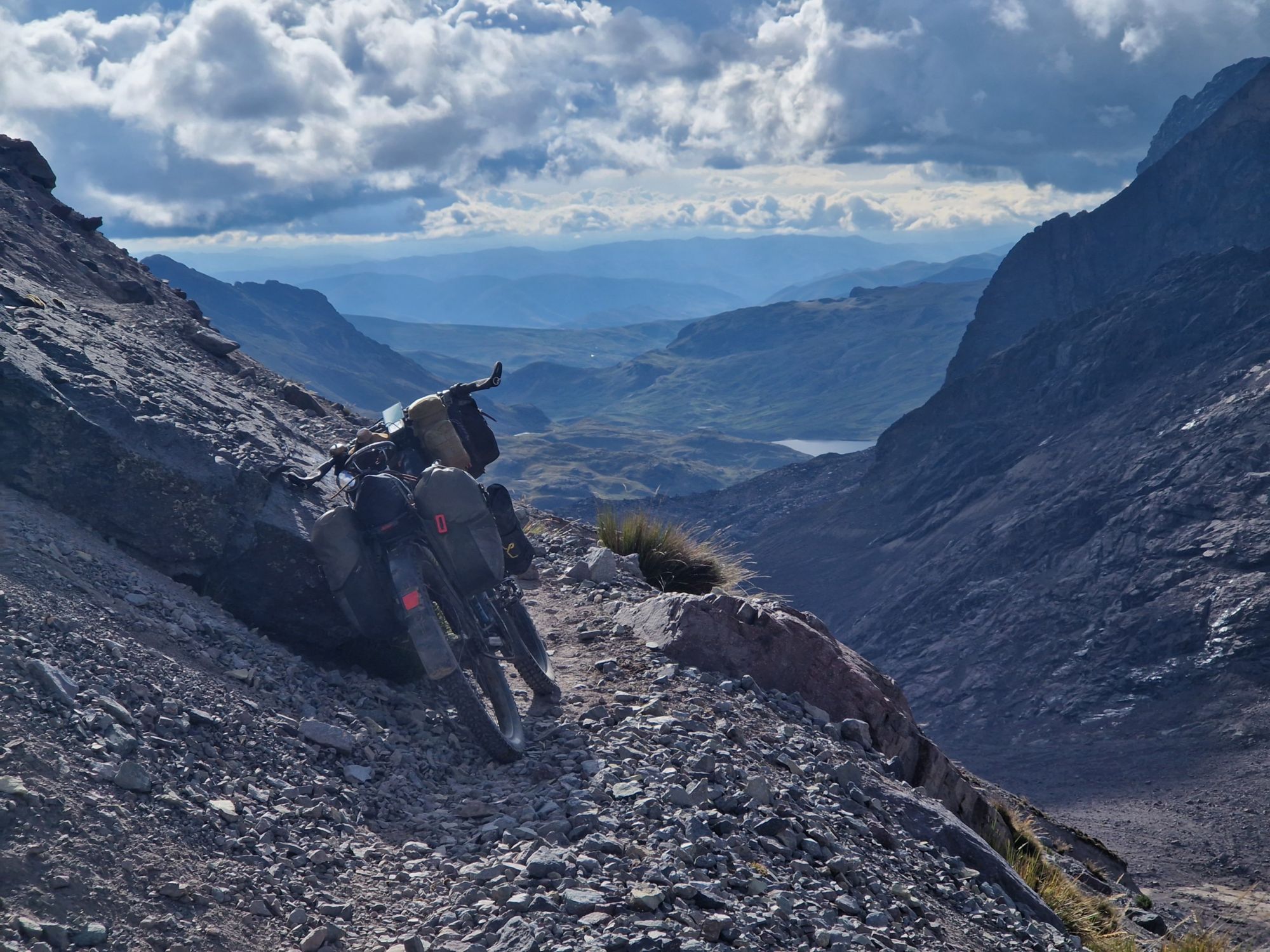

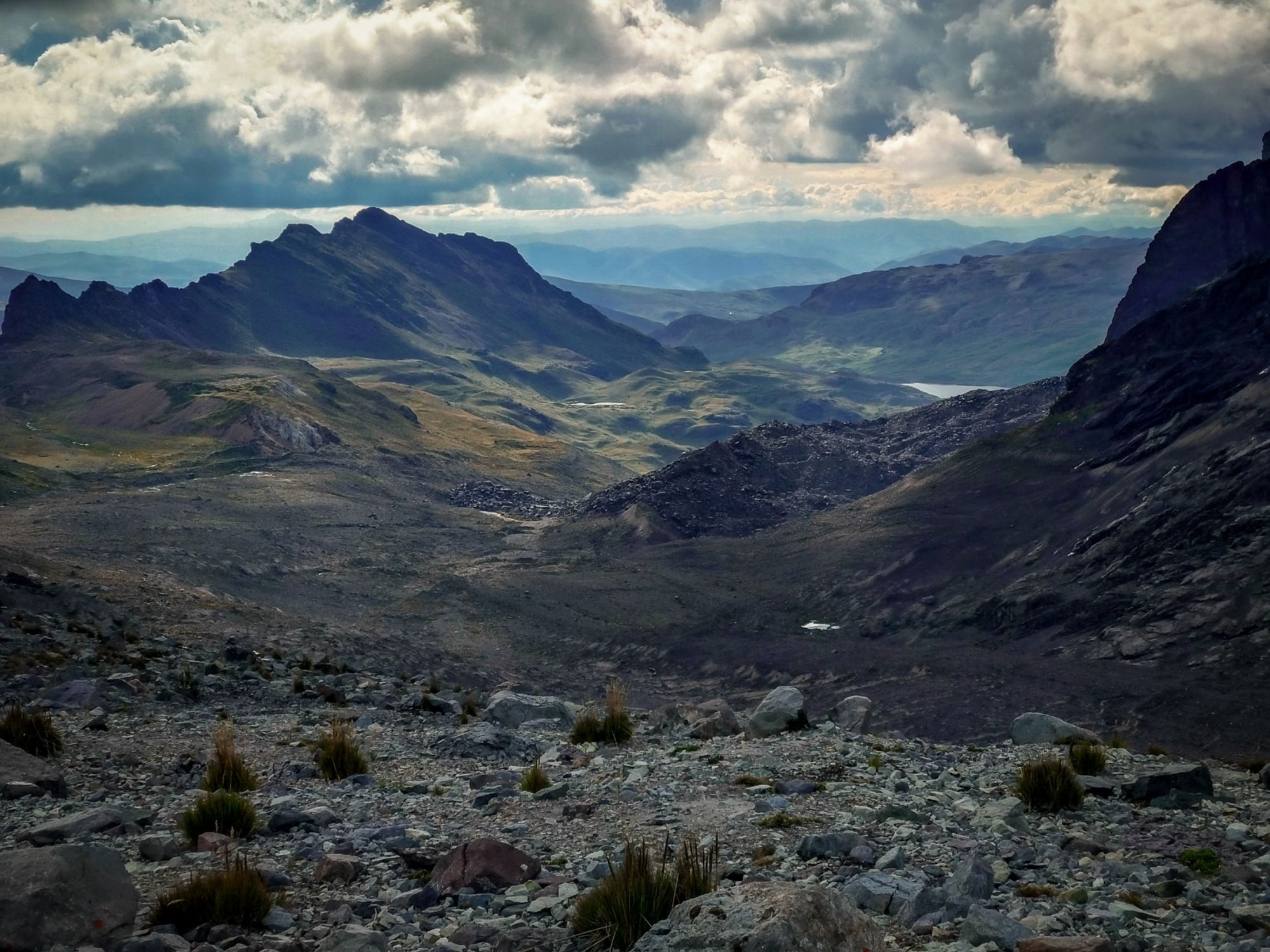
On top of my already depleted reserves thanks to my sickness bug, and the high altitude, the hauling, heaving and pushing of the bikes was totally exhausting. We tried to take solace in the fact that moving so slowly meant we could really appreciate being there. I suppose we sort of walked it three times over as we both pushed one bike at a time, returned for the second bike, and repeated, but it was tough. I definitely wouldn’t refer to it as being up there with world class mountain biking though, as others have done. For me, the best kind of mountain biking is rideable – the ups and and downs – yes it can be technical, and yes it’s best when you really have to engage your brain but it’s not just all about one descent. For me, the whole loop needs to be just the right side of taxing and have a healthy dose of jeopardy but be doable – like Torridon in Scotland or the Old Ghost Road in New Zealand. Having said all this, we are still pleased we went to experience such an incredible place, as it’s truly majestic, but maybe next time just not with the bikes!


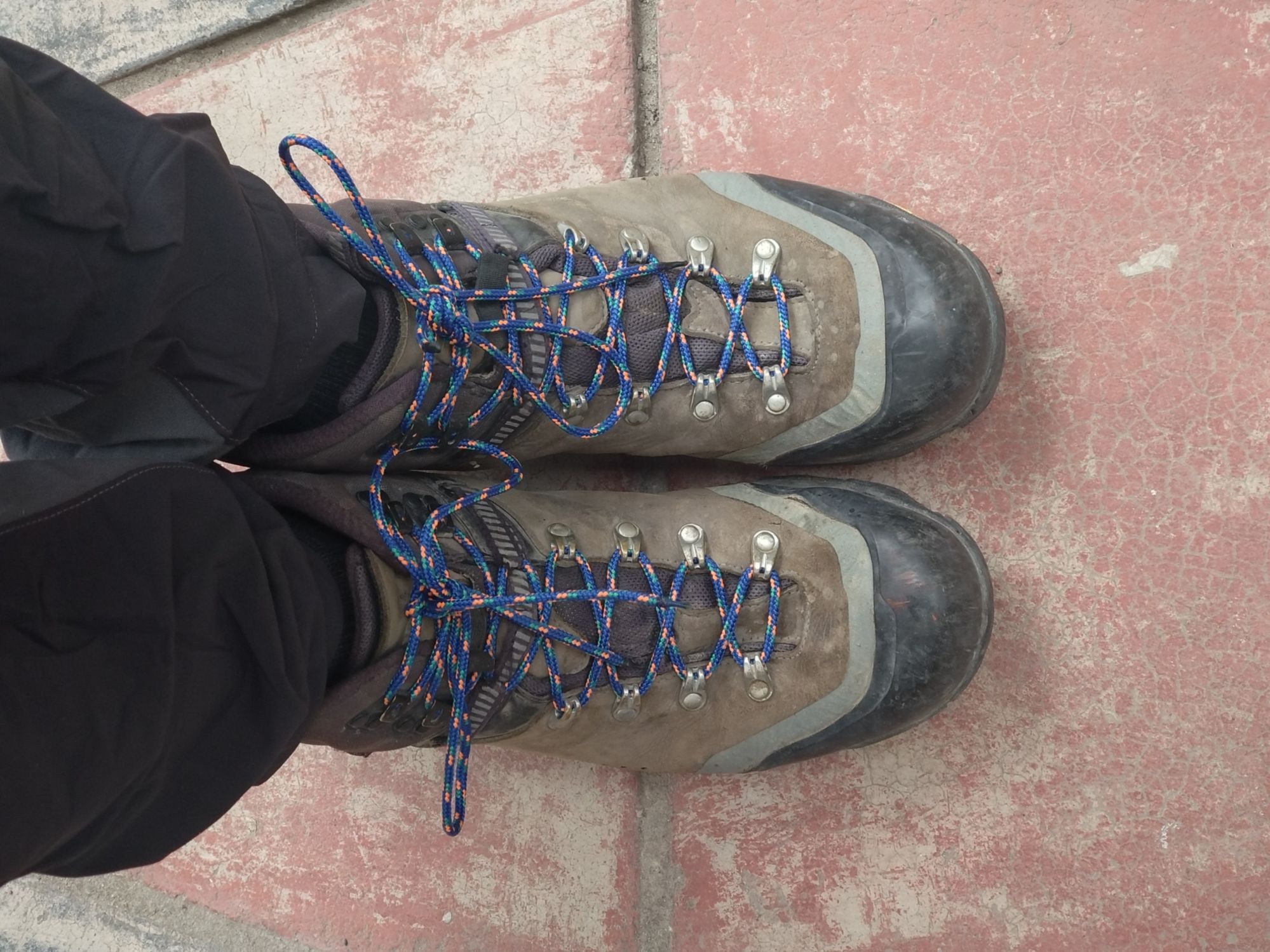
We’ve also had a bit of a run of our gear giving up on us. It started small with our gloves getting holes in, our t-shirts wearing through, the toes on our boots peeling away, our Carradice front bags ripping at the corners, our shoelaces (all four of which snapped in the same way within the space of two weeks) but these were all easily repaired or replaced (in the case of the shoelaces with some truly Peruvian jazzy coloured equivalents).
Then on the first morning of the Ausangate loop, Ted noticed a strange new noise on his bike. It’s something you always have to be atuned to whilst on a trip like this – any new rattle needs seeing to, a good shakedown of the bike to assess what it might be, and then rattling said part until you decide whether it’s really that bad or not. For Ted, it turned out his saddle rail had snapped – so yeah it was really bad!
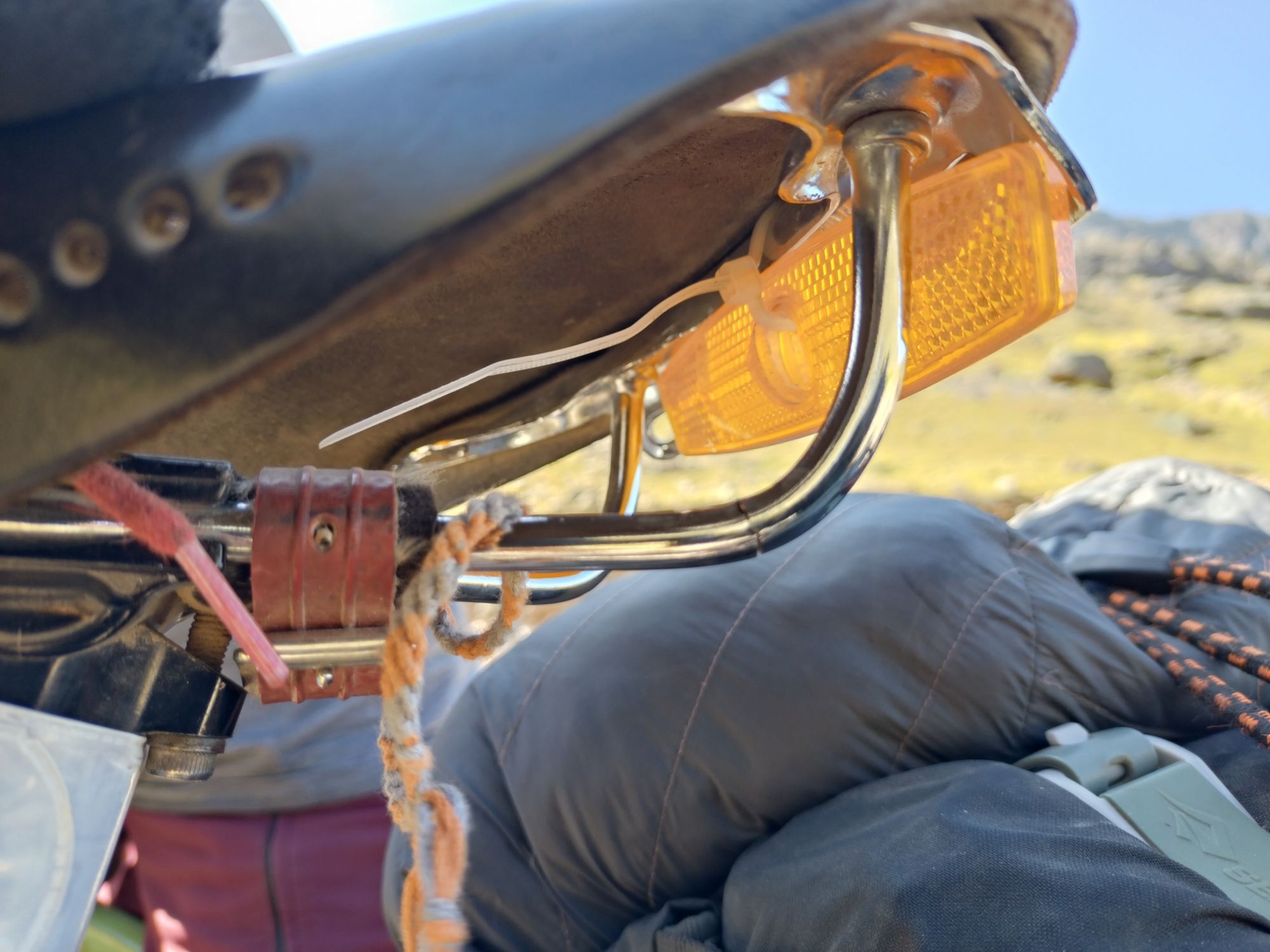

When we left the UK we purposefully didn’t put Brooks Saddles on our bikes – we had heard from several people that the rails on them snap over time. But, as explained with the saddle saga in Spain, Ted couldn’t cope with the American leather saddle we set off with, he could only suffer so much peachy bruising – And I could only cope with so much talking about his peachy bum!! So we swapped it for a Brooks (I also did the same in Chile), despite our better judgement and despite also meeting another four other cyclists in South America who had endured the same rail snapping fate. It became a bit of a joke between us, but having the rails snap after only five months of use, in the middle of the remote Peruvian Andes really wasn’t funny.
Thankfully Ted’s a guy who knows how to fix things, and using some old chain links to brace the snapped rail, and secured in place with a P-clip, he had a working-ish saddle again. The fix held out for the first two days on the loop but sadly gave up again on the morning of the third and final day. Thankfully, the saddle repair had chosen the best looking spot to break, and we had the most spectacular view of Ausangate and the glacier. We spent a good two hours trying to create another repair. This time we settled on using a cut up piece of tin can tightly wrapped around the rail in a spiral and the trusty P-clip. This was a much better bodge/repair and is still holding now, so fingers crossed it will last a few more weeks until we can get a replacement.

Ted’s Thermarest sleeping mat also decided that the second night of Ausangate was the time to start de-laminating. A couple of the baffles have become unstuck turning the foot end into a bit of a balloon. It’s still holding air so its still functioning, albeit uncomfortably, but having experienced this before we know it’s only a matter of time before it too is unusable. It seems that seven months is about the length of time equipment will last being endlessly put through its paces.
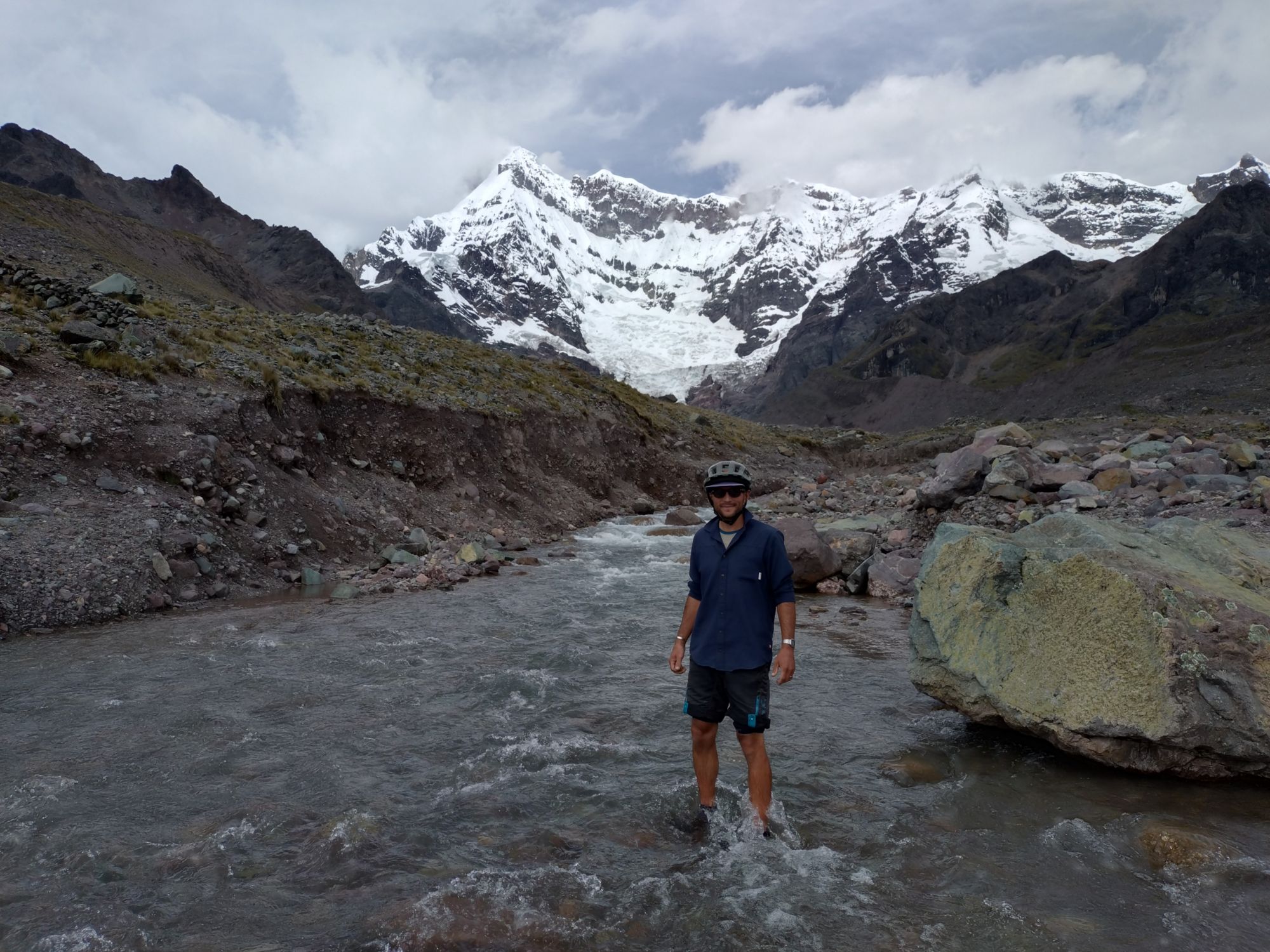
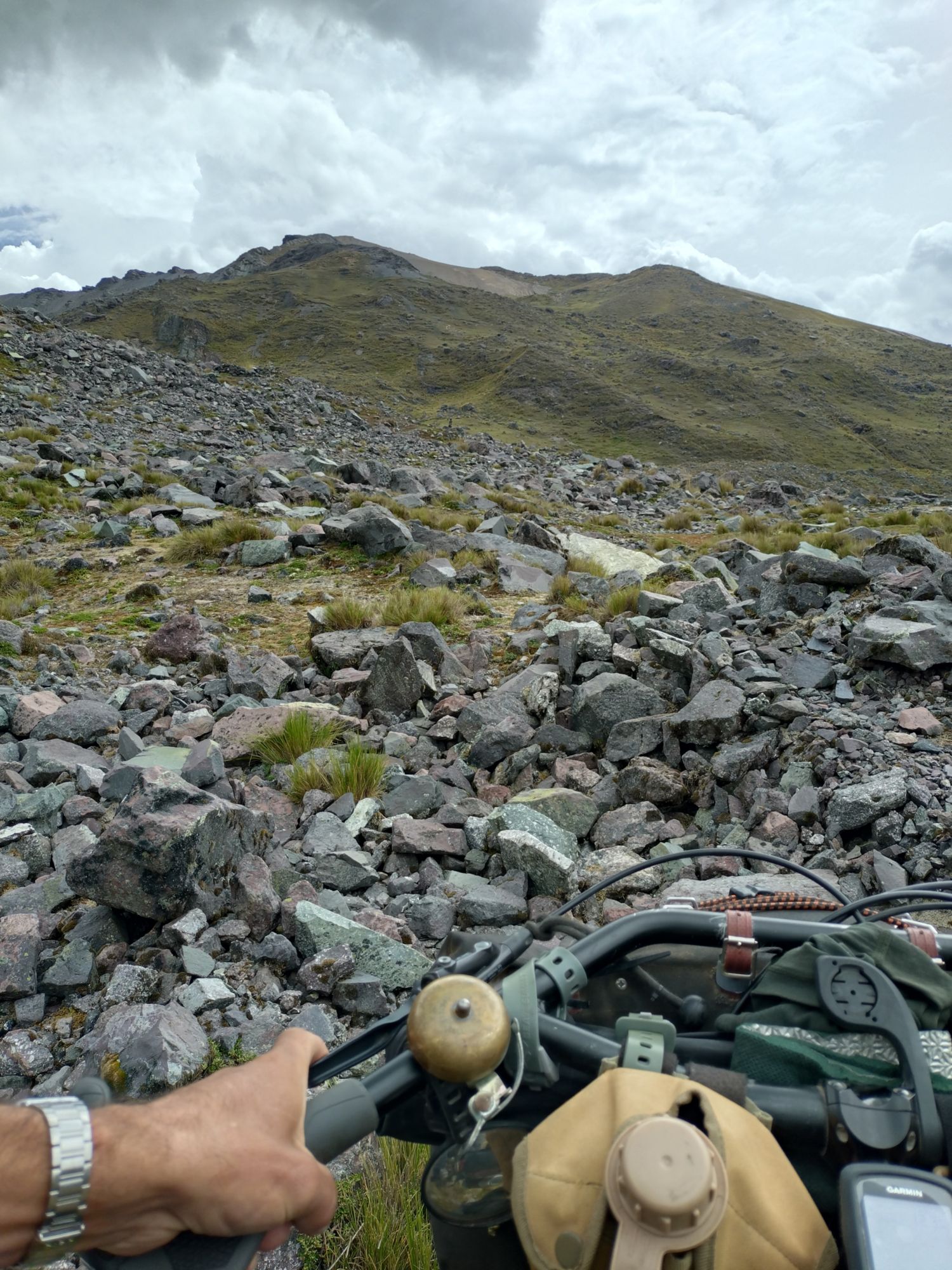
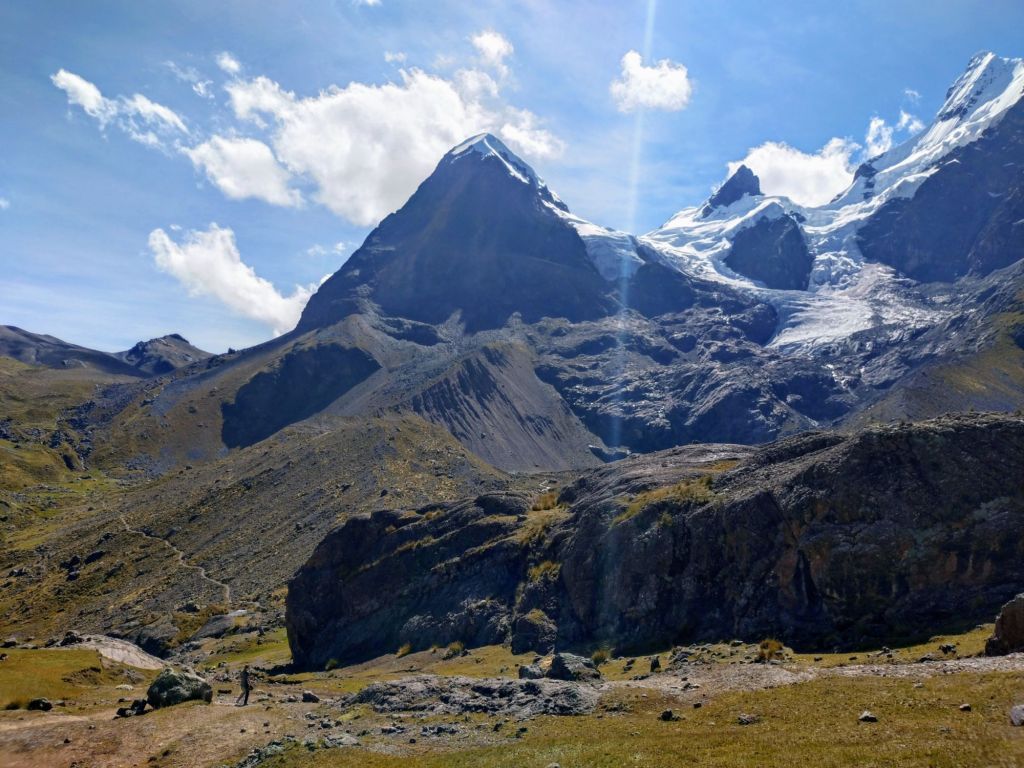
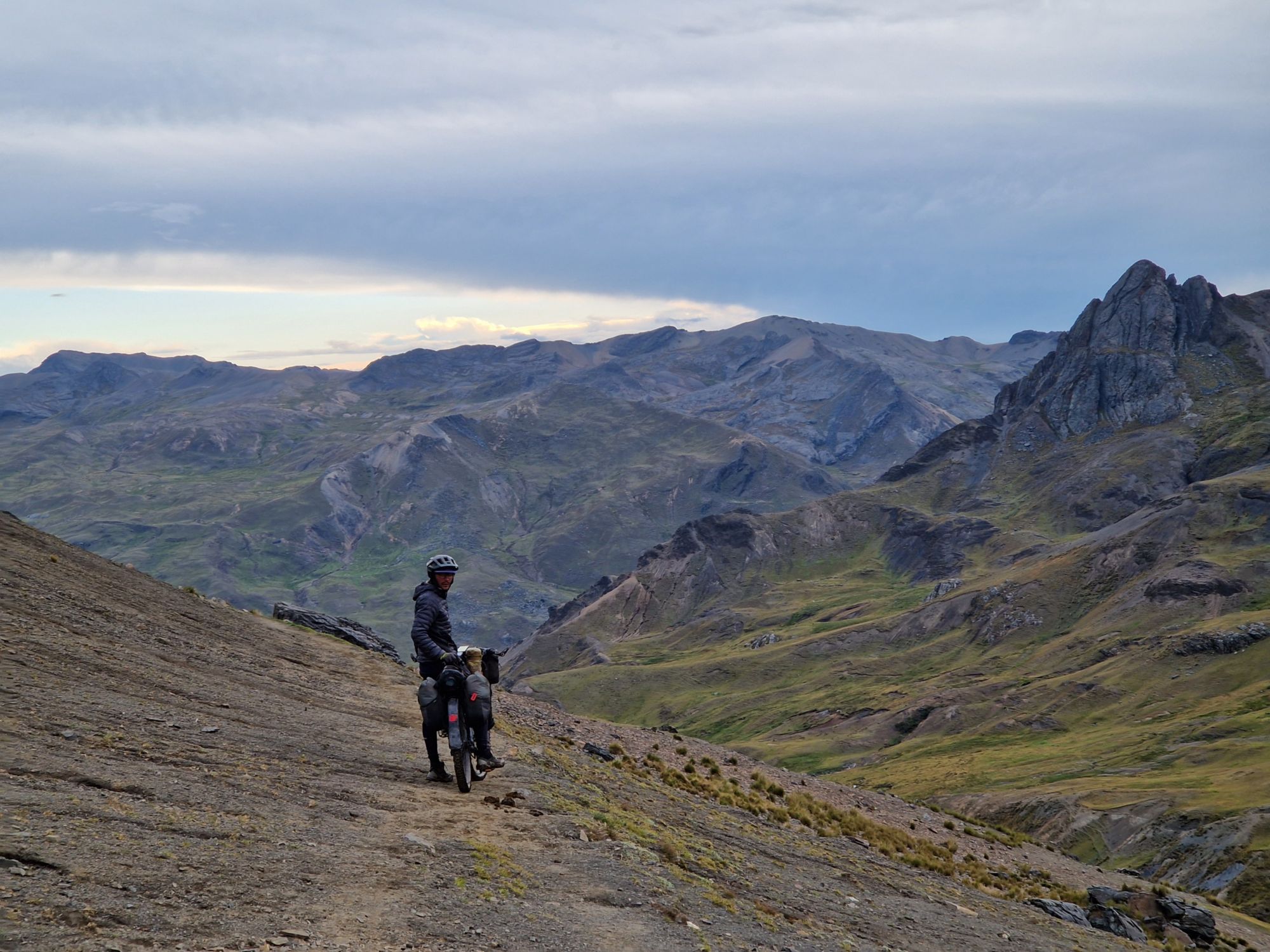
After our two full days of pushing the bikes around the Ausangate loop, the Thermarest beginning it’s demise and the saddle rail saga on the morning of the third day, we were both thoroughly exhausted and pleased to finally reach the top of the final pass. The descent off the final pass was the steepest yet. Lots of tight switchbacks and loose rocks that reminded me of some of the riding around Reeth in the Yorkshire Dales (albeit about five times as high/long!). And finally, as the sun was starting it’s descent towards the horizon, we reached the dirt road that would allow us to whizz out of the valley and rejoin a gravel road. It was such a relief to finally be covering ground at speed, and the thought of some more food (rather than just the remaining scraps from our meagre rations from the last few days) was a strong draw to keep pedalling into the last of the sunlight.
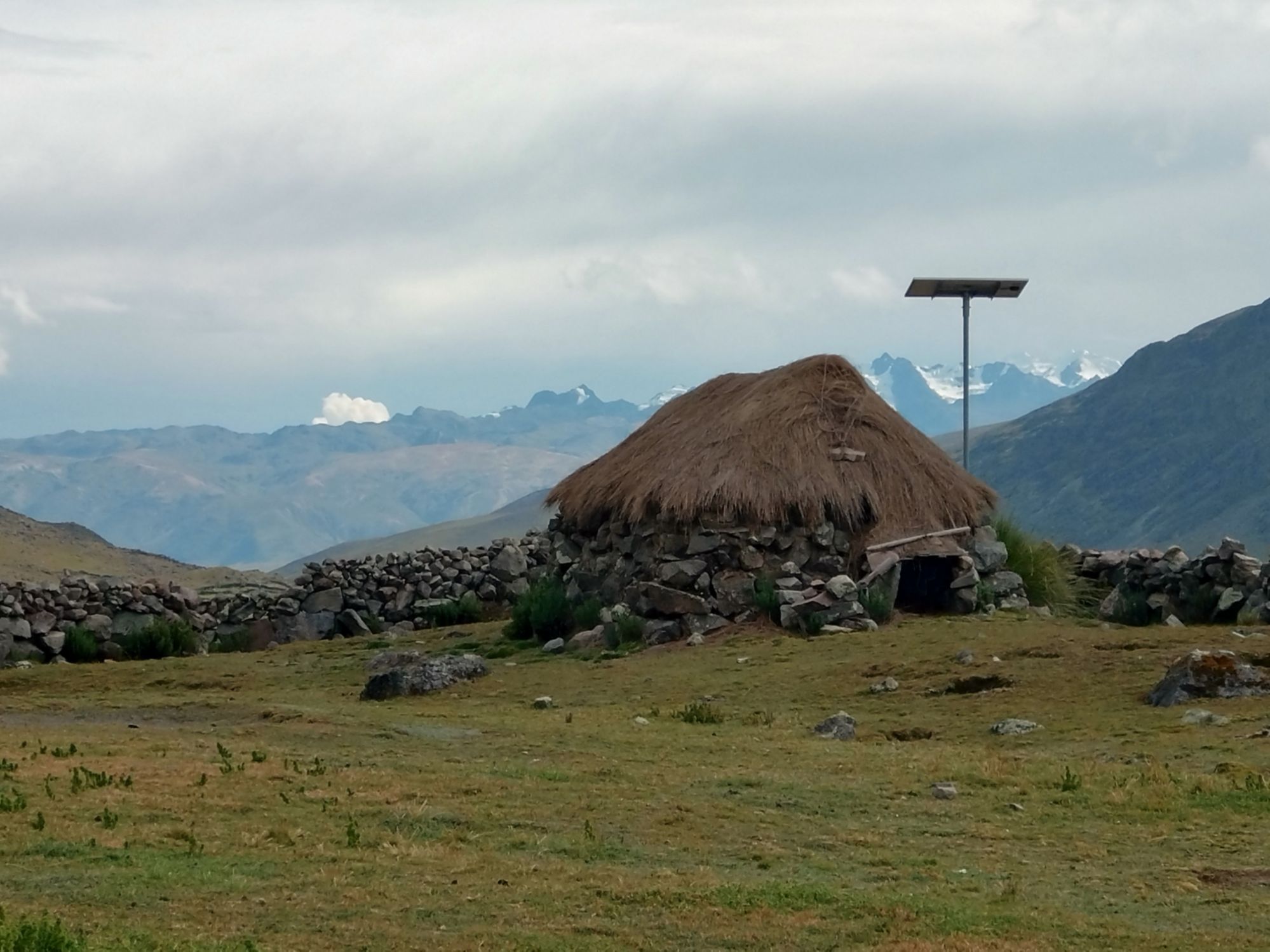
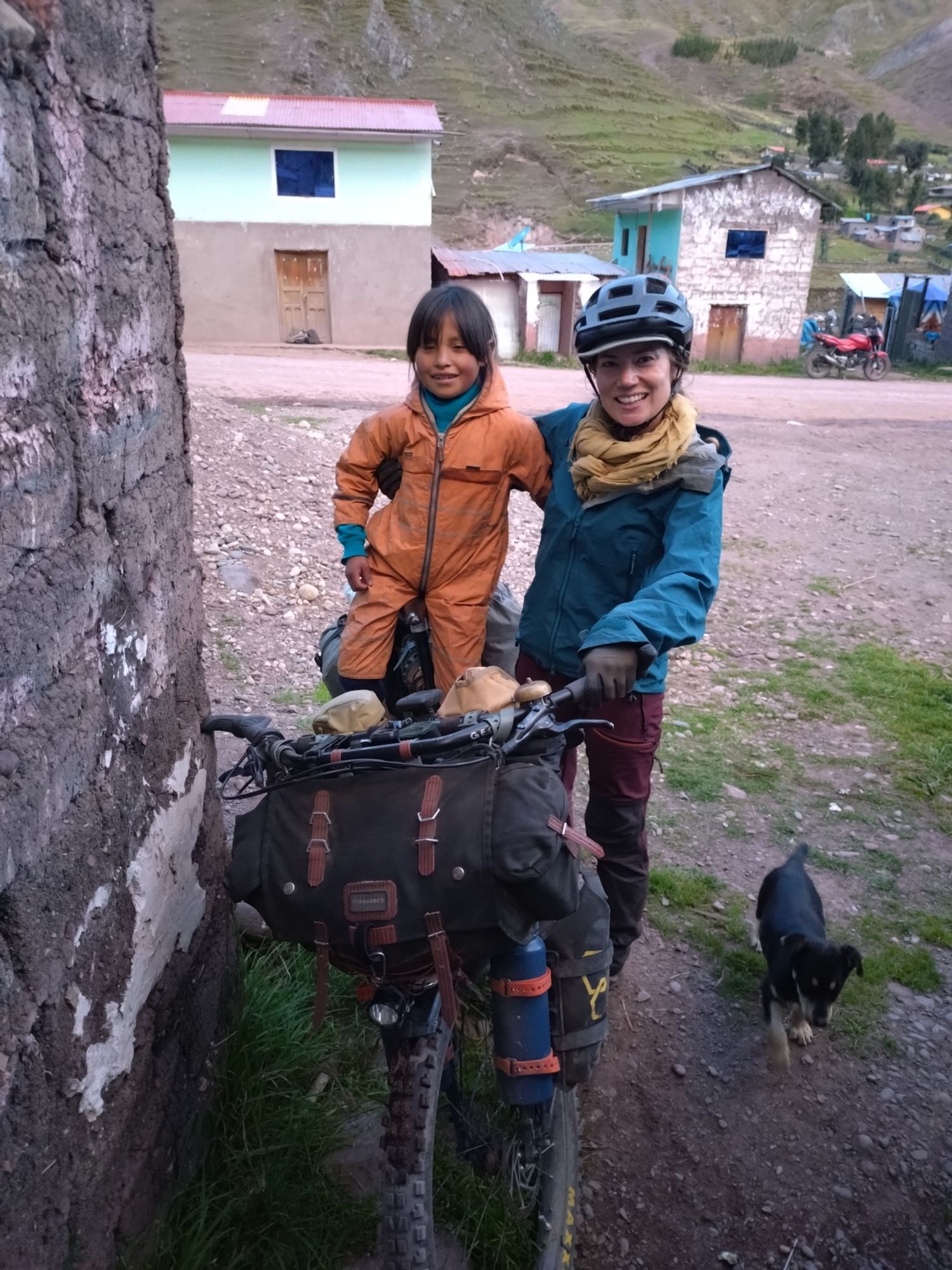
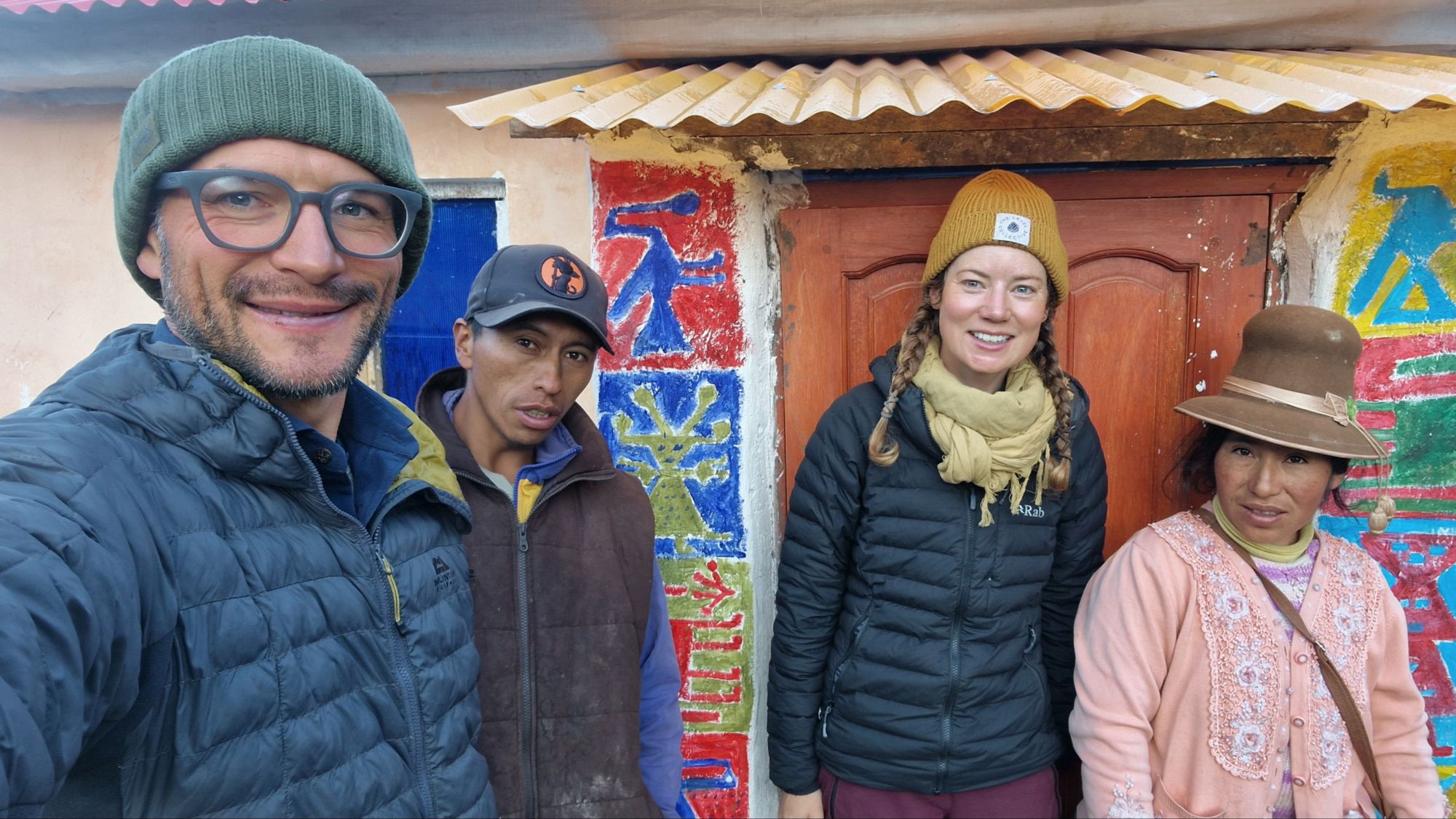
We made it to a small mountain village and asked the locals on the street about a place to stay – it just happened to be that the only locals were all under the age of about 8. It did the trick though. One girl took us to her house, where her young parents offered us a spare room/hut where we could put the tent inside and some rice, chips and eggs – a feast compared to what we had been living off for the previous three days. It was truly eye opening to experience how these families live in the remote villages. The houses are made from mud bricks often with straw roofs, or basic corrugated sheeting. Sometimes they have perspex in the windows, but often the windows are only shielded from the harsh weather by plastic sheeting that is usually torn. They have one outside tap for all washing, eating, drinking needs, plus a loo in an outhouse of some kind. We saw a lot of them with small solar panels too. But the thing that we found really hard to stomach was the filth – childrens’ toys laying in muddy puddles also full of chicken fowl, dog poop surrounding the one water tap, rubbish mixed up in amongst the piles of washing on the floor. The clean freak part of my brain had a hard time not tidying it all up but it did make us wonder whether it was a cultural thing (as it seems most Peruvian standards of hygiene are extremely low regardless of the standard of living) or in all likelihood the reality of living well below the poverty line means that their lives are consumed with meeting their basic daily needs, with there being no time or resources to consider hygiene. Either way, the family we stayed with were so kind, and we were privileged to be invited to share the evening with them and we were pleased that our stay allowed them to earn a little extra from us on the side.

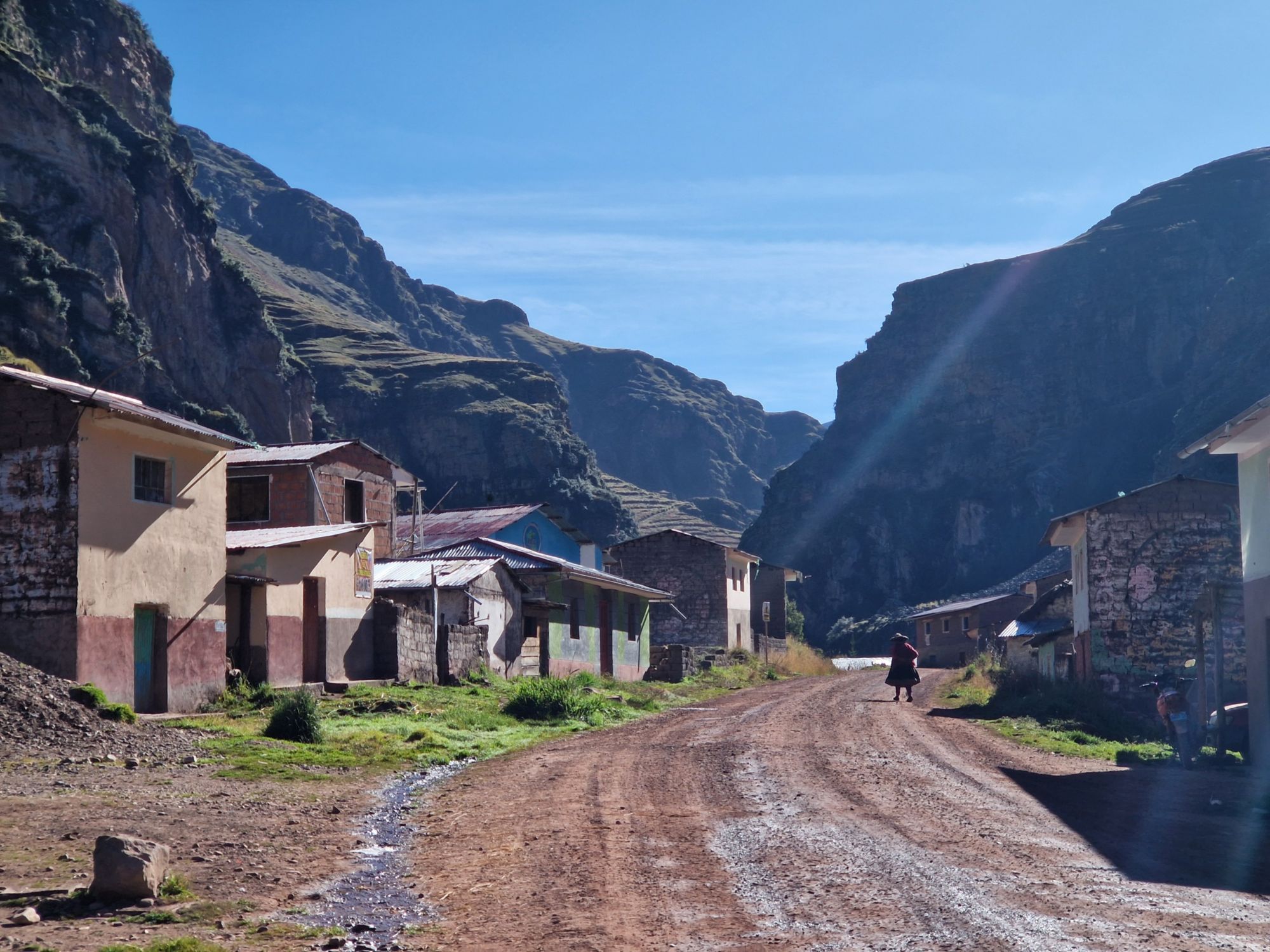
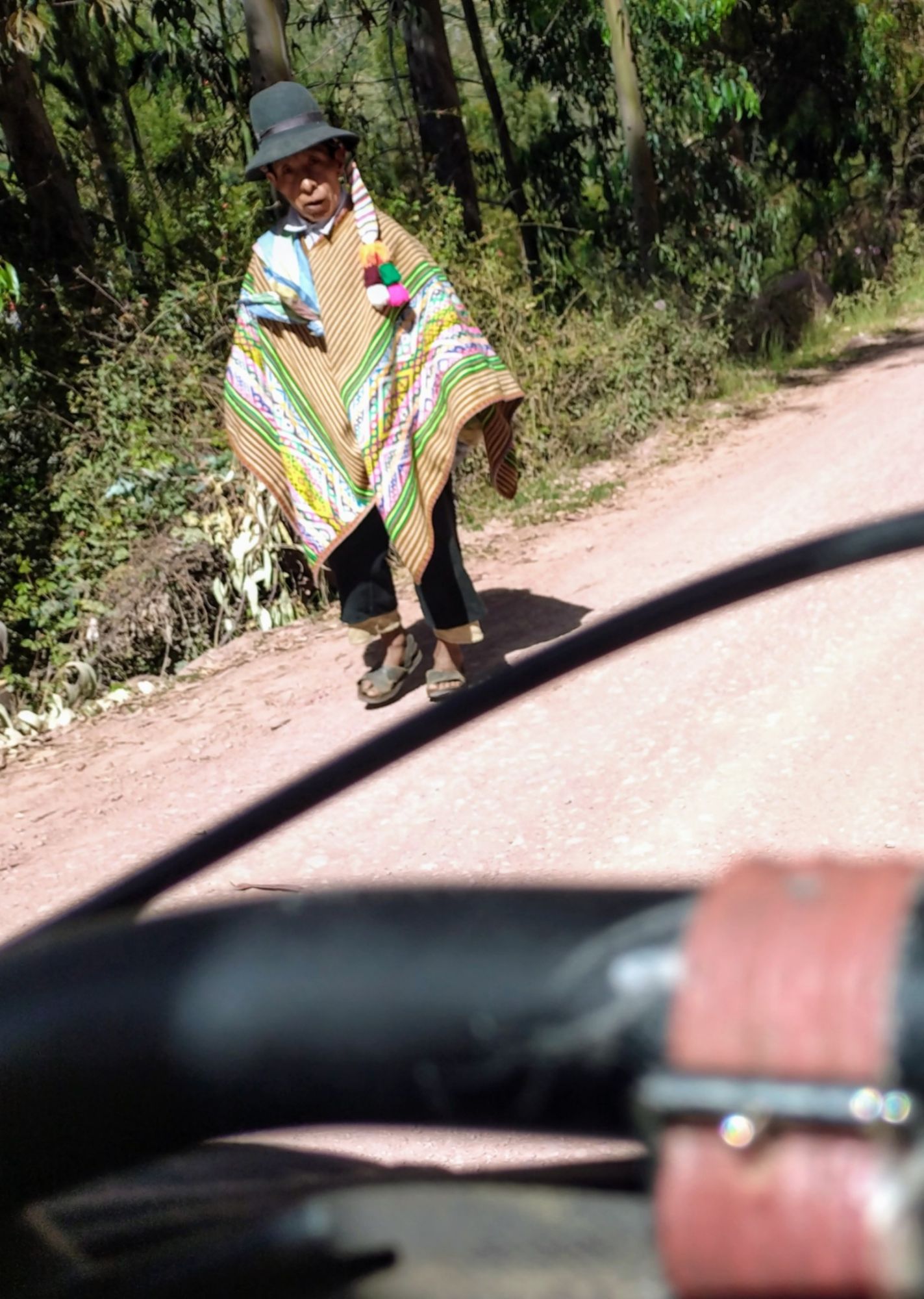
The following morning as we descended from the high mountains towards the more populated end of the Ausangate Valley, we were again reminded of the living mountains we were riding through. It’s as though our senses had to snap back on and wake up to take it all in. The sound of birdsong. The smell of the Eucalyptus trees, their leaves heating in the morning sun to give off that fresh, delicious, warm eucalyptus essence. More small villages full of life – dogs, chickens, donkeys, alpaca creating traffic jams on the road. Tuk-tuks and motorbikes beeping their horns as they wave and drive by. The beautiful blue glacial water of the river far below us, crashing over huge volcanic boulders. The humming of bees. It was all a tonic to our weary, exhausted bodies and it fed our souls after such an arduous few days around Ausangate. It was just what we needed.
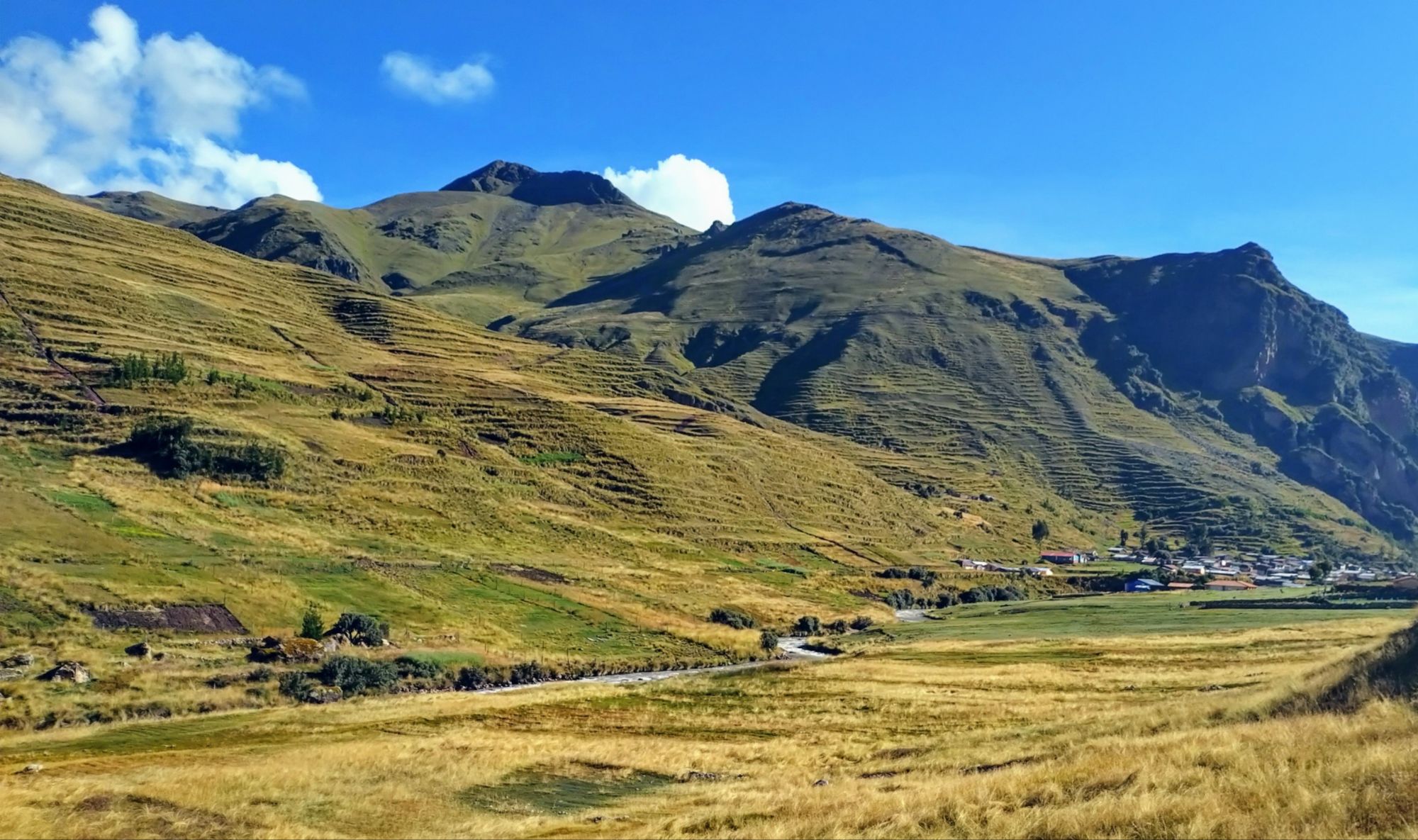

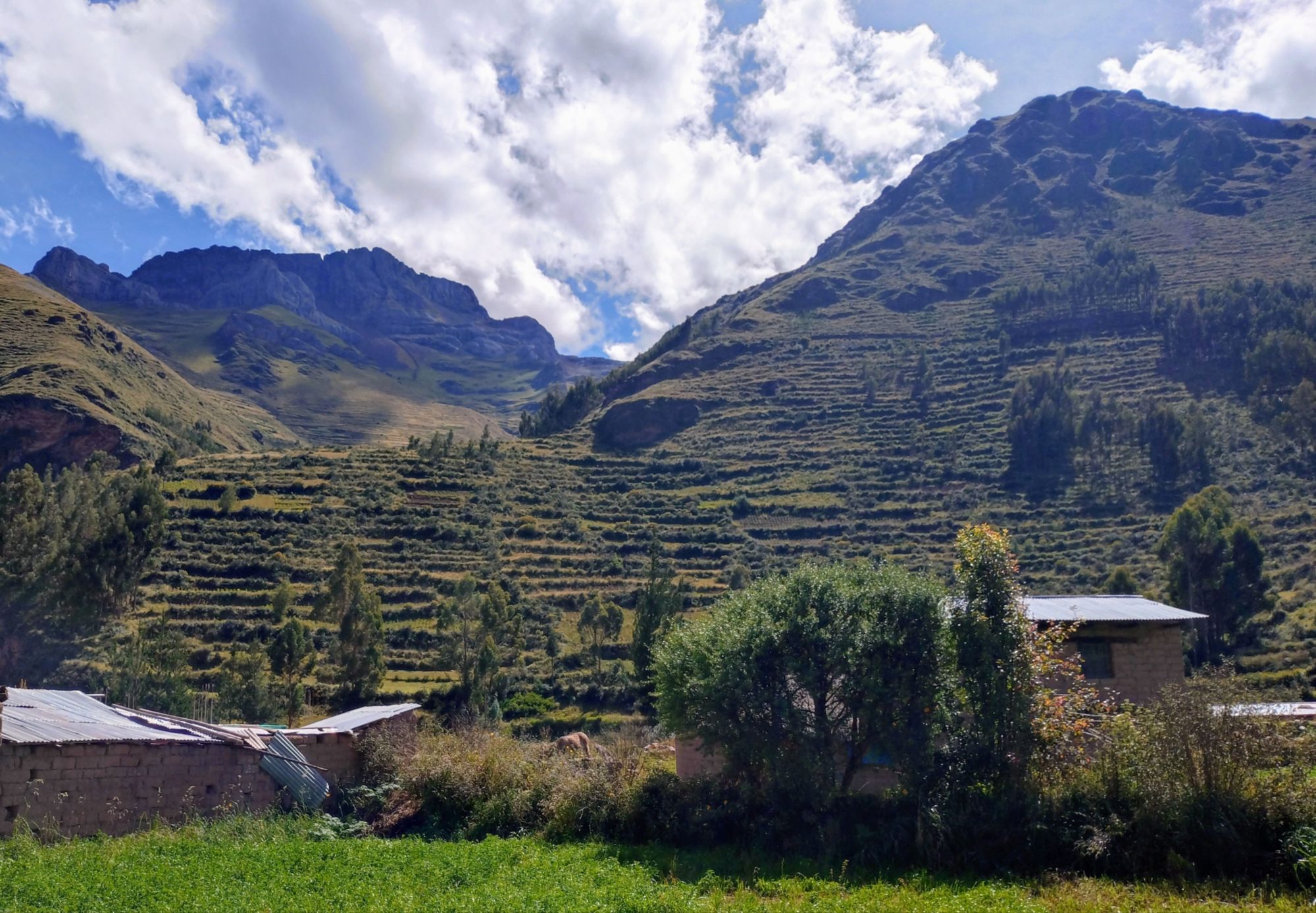

These living mountains were our first true taste of Peru. To be humbled by nature’s power over us, and yet to rely upon it to refuel our spirits within the space of a few days, is a reminder that we are part of these living mountains. We are not separate from them, not able to assert our own narrative over them, and not able to impose our own rules. Even though we are just passing through for a little while, our time in Peru will no doubt be guided by what these living mountains have in store for us, and I for one can’t wait to learn from them in every way I can.



 Tumbling Diaries
Leave a comment