“If we read borders as narrative lines, sometimes they tell different stories than their authors intended. Sometimes the original plot runs wild.”
I love this quote. It’s taken from an essay written by Kate Harris, who also wrote one of my favourite books of all time ‘Lands of Lost Borders: A Journey on the Silk Road’ (Definitely one to add to your reading lists, if you’ve not already devoured it). The quote was written in reference to the border of Eastern Turkey and Armenia, but it could just as easily refer to the border of Western Bolivia and Northern Chile as we experienced it over the last week or so.
Having left the quiet solitude of the Salt Flats, and having approached the Bolivian border town of Pisiga Bolivia via some traffic-free dirt back roads, hitting the highway was a shock to the system. Freight lorries parked on both sides of the road almost filling the whole highway; rubbish lay strewn across the wastelands on either side of the road, as far as the eyes could see; people were milling about carrying oversized luggage or huge bundles of goods wrapped in blankets; the wind whipped up the dust and sand blowing it across the road in whirlwinds; and the hawkers calls atop the ever present reggaeton lilt blared out over sound systems. It was not quite what we were expecting for what looked like a relatively isolated border crossing on the map.
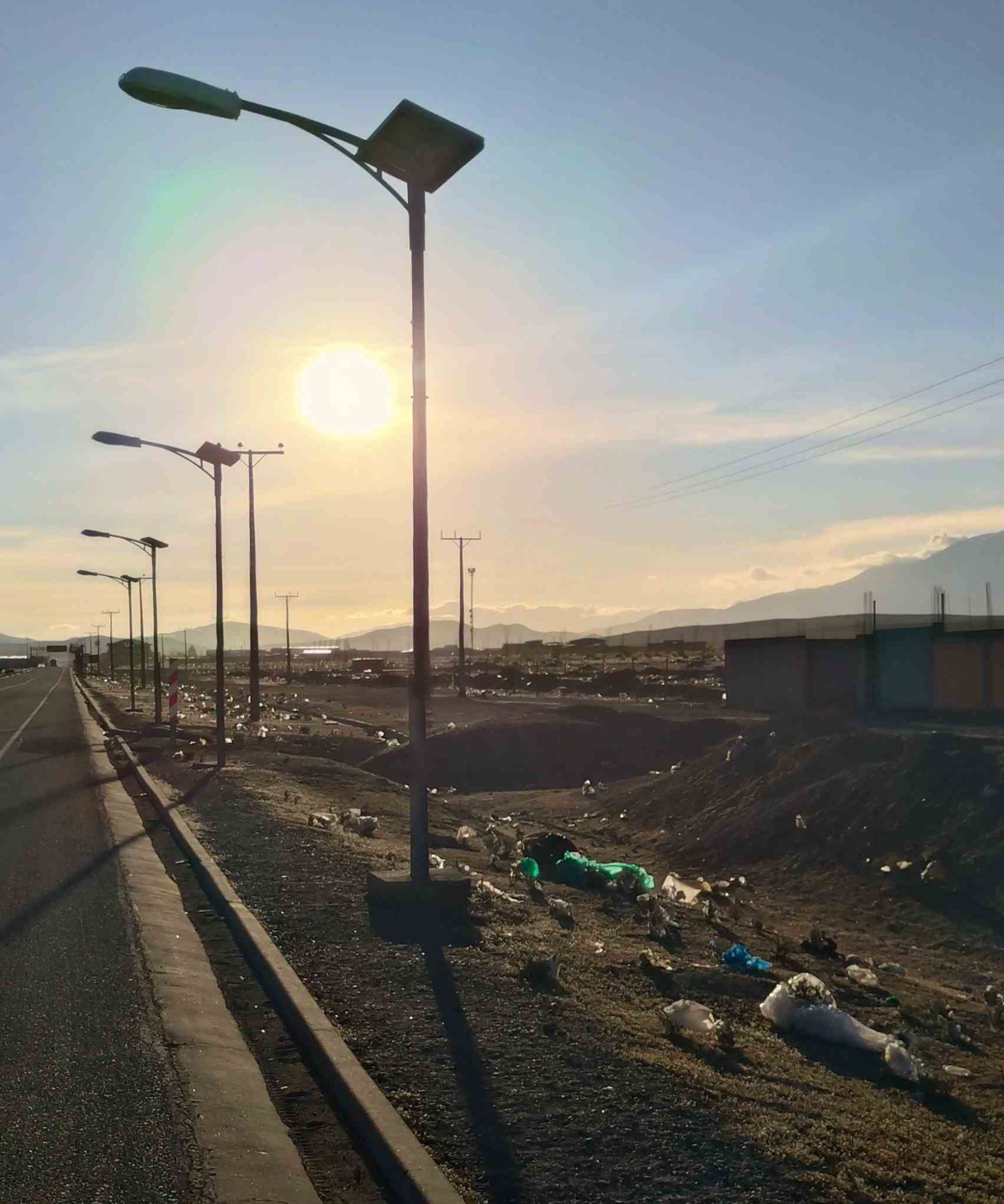
We wound our way through the hustle and bustle towards the border guard building. There were barbed wire fences lining the roads, and despite the building being much larger than we had seen before, all the parked vehicles, the fences and the crowds of people made navigating our way to the correct entrance a little confusing. Once inside, we were stamped out of Bolivia and into Chile. The Chilean guards were initially a little undecided about how to carry out the required bag search as our bikes and bags wouldn’t fit through their fancy x-ray machine. Instead, the senior guard told the junior staff to manually search our bikes. We followed them outside, where it became clear that they were more interested in chatting to us about our trip rather than searching our bags. So after prattling to them for a while, they took a cursory glance inside our front bags, questioned our large bag of tea, to which we just provided the accepted answer of ‘because we are English’, and they let us go on our way.
Outside, we passed through the final checks with the heavily armed military guards who manned the barbwire topped high fences. Despite their appearance in heavy armour and weaponry, they were all smiles with us and opened the gates no further questions asked. We couldn’t help but feel abashed as we pushed the bikes through those gates and into Chile, watched on by the hungry eyes of the crowds of people sat on the floor along the fences, surrounded by life possessions, unable to cross that line due to the hand of fate meaning they did not carry a passport with the privileges of our own. The silence that fell over us both as we rode away from that border was testament to the unease we both felt that crossing a line in the sand can wield such power over people.
It was the most heavily guarded border we’ve crossed so far and from all appearances they took the notion of Bolivians smuggling or illegally crossing into Chile very seriously. It’s easy to see why it’s such a guarded border. The inequality between the stable and financially well off Chile and the relatively impoverished Bolivia mean that successfully getting over this border on a permanent basis would be life changing for most Bolivians. This border also has the added attraction that it is close to the large Chilean port of Arica, so it’s only a hop, skip and a jump to getting goods (or drugs!) to the rest of the world.
The following day our route skirted Northwards along the Chilean side of the border, along a road known as the Ruta del Desertio – because there are so many (largely) abandoned villages dotted along it. Some of the villages were pretty eerie, looking like they’d just been locked up and left last week, some were no more than a collection of crumbling stone walls, but a couple of them had amazing old churches which were incredibly still standing.

We were not surprised to see military vehicles and police patrolling the road as it runs so close to the border, and as they hopscotched us for most of the day they were always keen to stop and chat to us for a while – mainly just to make sure we were okay. But by 4pm we watched as they all about-turned and headed back to their stations closer to the border crossing point. No more than 15 minutes later the road became busy with trucks and cars, filled to the brim with every imaginable item and person. They obviously knew the patrols’ schedule well and only appeared once the coast was clear. One convoy of trucks even stopped us to ask if we had seen the police and which way they were heading! It was so brash and braisen. In broad daylight too. It seemed so normal to these guys, like smuggling was their day-job, so for all the appearances of the police and army, this border is definitely one of those that Kate Harris refers to as having a plot that runs wild!
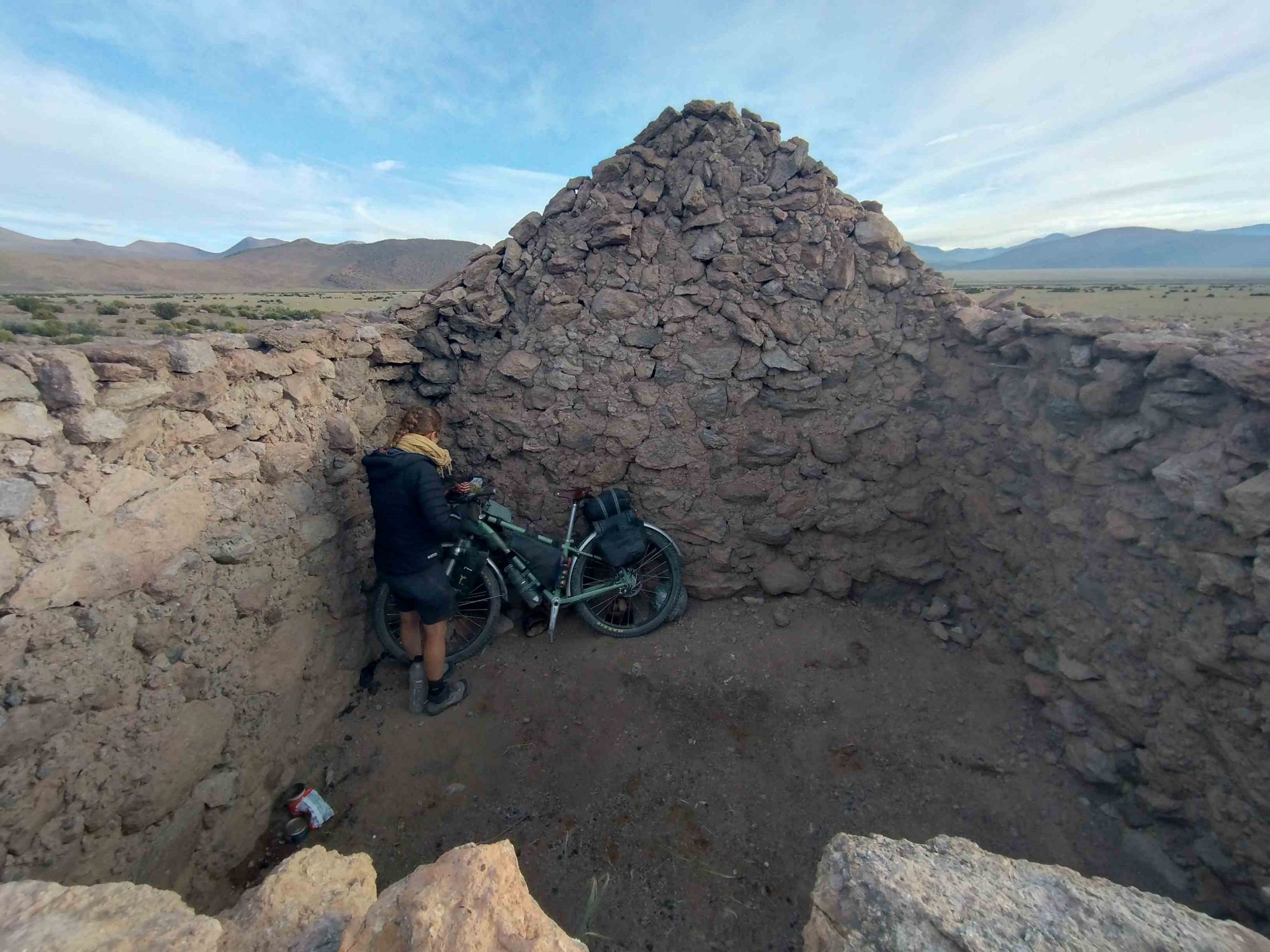
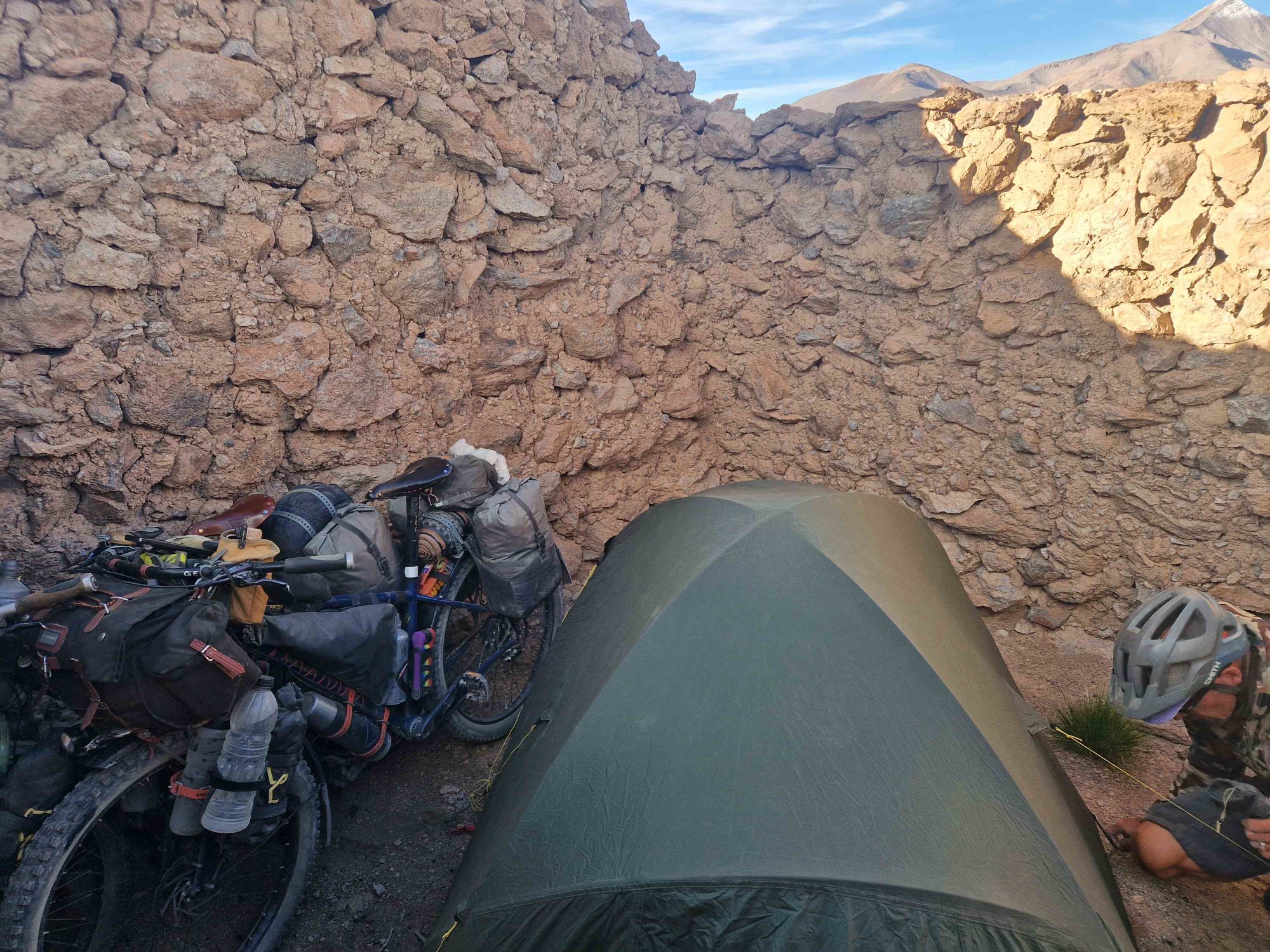
We camped in one of the abandoned villages just off the road, out of sight of the smugglers in a roofless house that fit our tent like a glove – honestly our tent couldn’t have even been 1cm bigger it was that close. The smugglers trucks rumbled by all evening, making the unpaved sand backroad sound like a highway until about 11pm when they all suddenly stopped. We’d later learn this was about the time the evening patrol of police would start – uncanny! It did make us wonder whether this clock-work like approach from the police and military was ever mixed up to try and catch the smugglers off-guard, or whether in reality they didn’t mind so much and it was all about appearances!?!
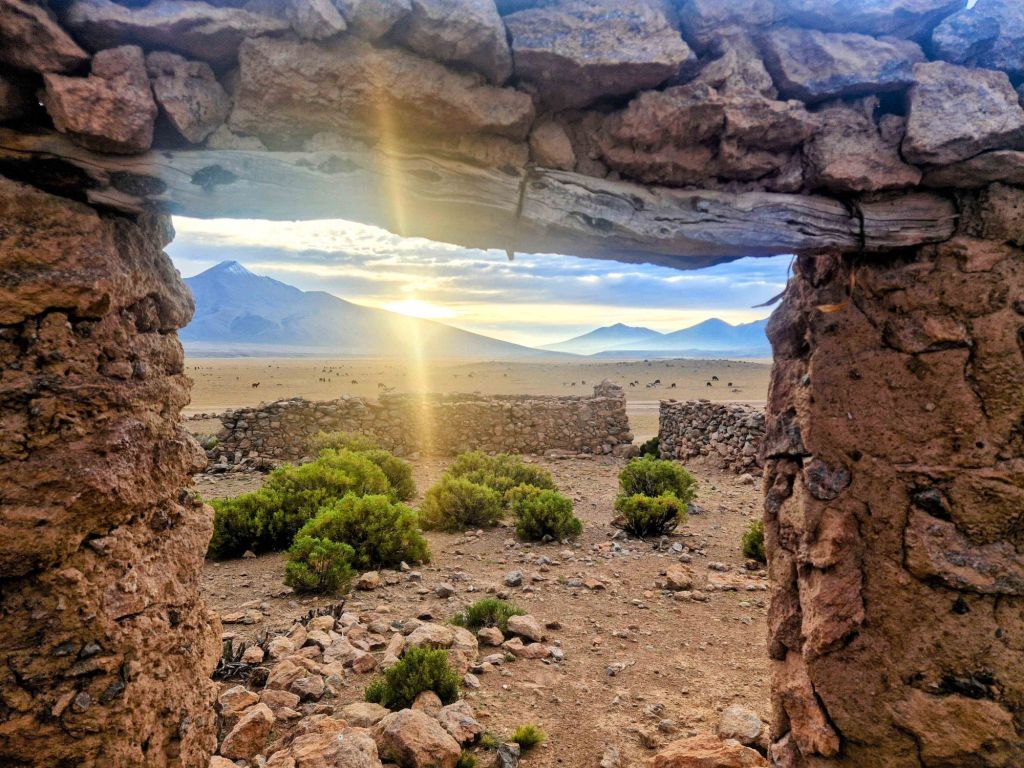
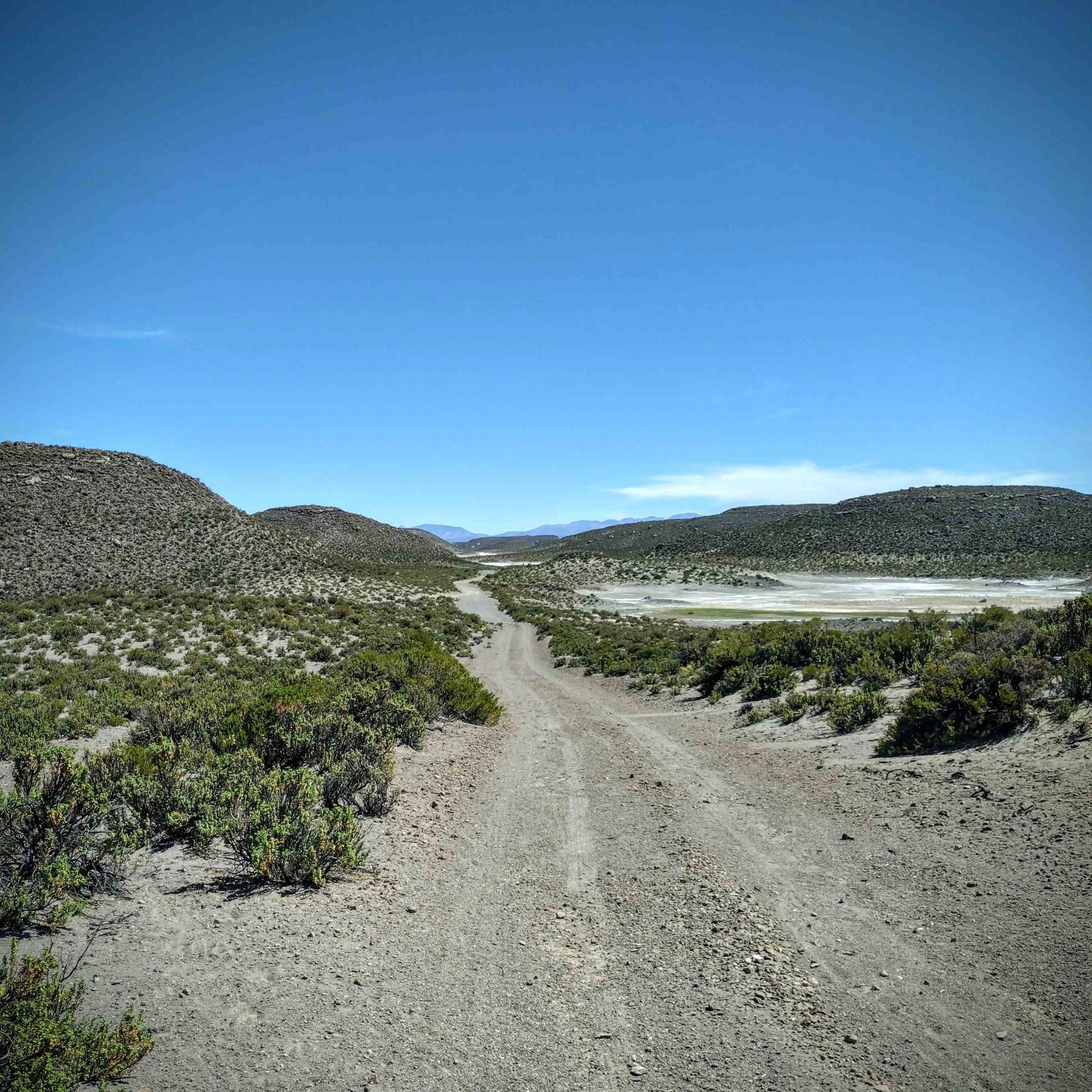
We awoke to a cold but beautiful sunrise, thankful that the smugglers hadn’t seen us, or hadn’t felt the need to disturb us. But now it was our turn to try our own illegal border run. The route we were following (the Ruta de Vicunas) stayed on the Chilean side of the border, skirting the base of a mountain for 40kms, but we also knew of a much shorter 4km route that would take us up and over the saddle of the mountain. The only problem being that 3km of this shortcut, strictly speaking, was in Bolivia. So we would be there illegally for all of the 30mins it would take us to climb to the ridgeline. When we reached the turning in the road where we had to decide, it looked as though the shortcut was the main road, with the Chilean road looking as though it was hardly used. There was no fence to cross, no gate to jump, no indication that the road ahead would take us into another country and no attempt to stop people using it. It felt ludicrous noticing my heart rate increasing with nerves as we crossed over this illusory line. There was nothing different about the track or the landscape, the weather or nature and yet we humans have somehow created these fictional lines that impact us so heavily.
“Isn’t that the final, most forceful triumph of borders? The way they make us accept as real and substantial what we can’t actually see?” (Kate Harris, Lands of Lost Borders)
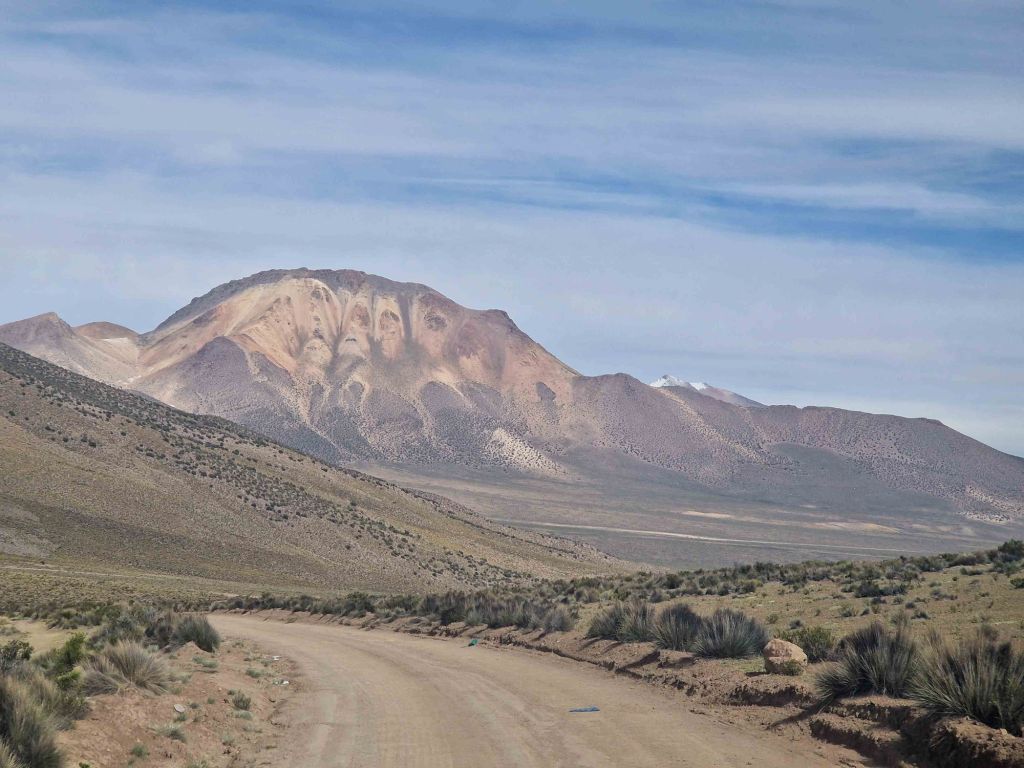
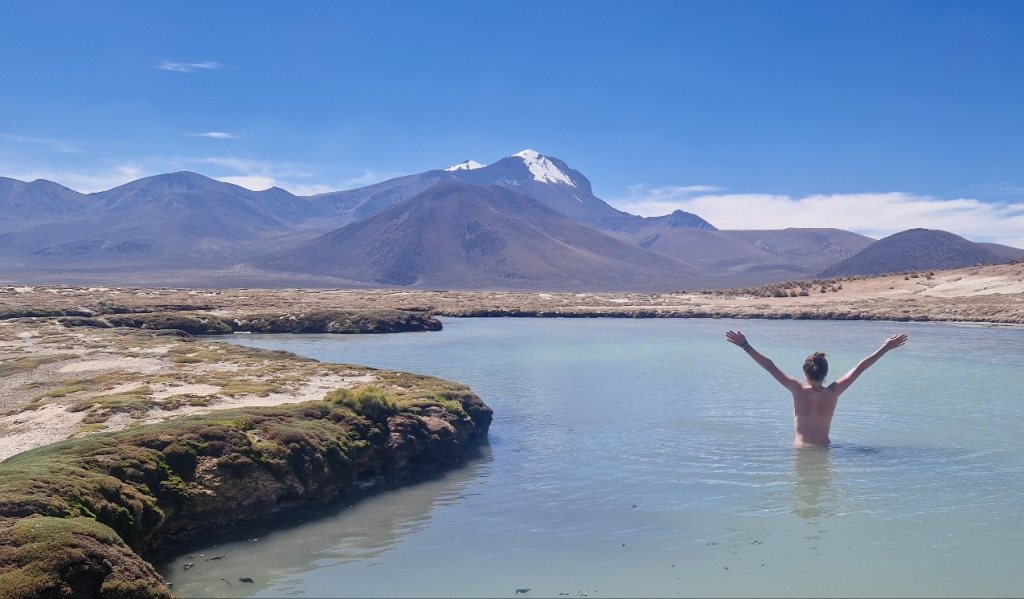
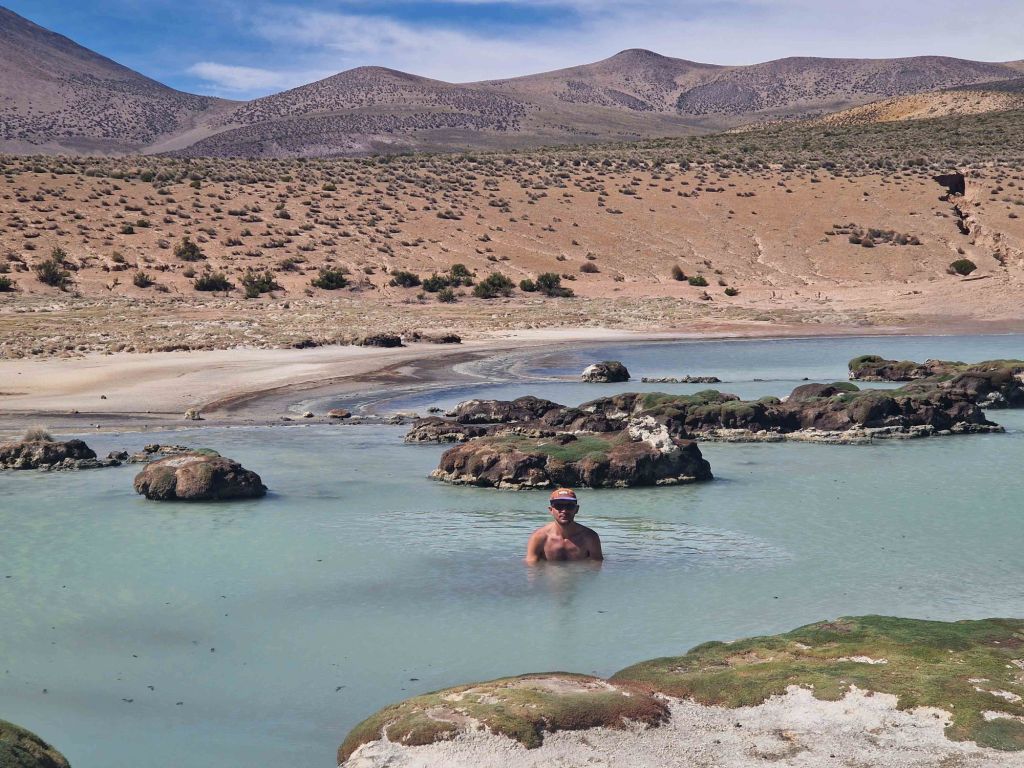
Unsurprisingly, we managed to hot foot it over the 3km unnoticed. My heart rate calming the moment we reached the saddle and were officially back in Chile (although again there was nothing to suggest we’d crossed a border!). On the other side, we whizzed down the rocky descent and headed straight to some thermal pools that we’d been looking forward to as a highlight of this route. The thermal pools were a perfect temperature, had incredible views of the snow capped mountains and the Salar de Surire surrounding them and we had them all to ourselves – except the couple of Vicunas on the shores. Despite the sulphur smell, it’s still quite possibly the best bath I’ve ever had – thanks Pachamama.

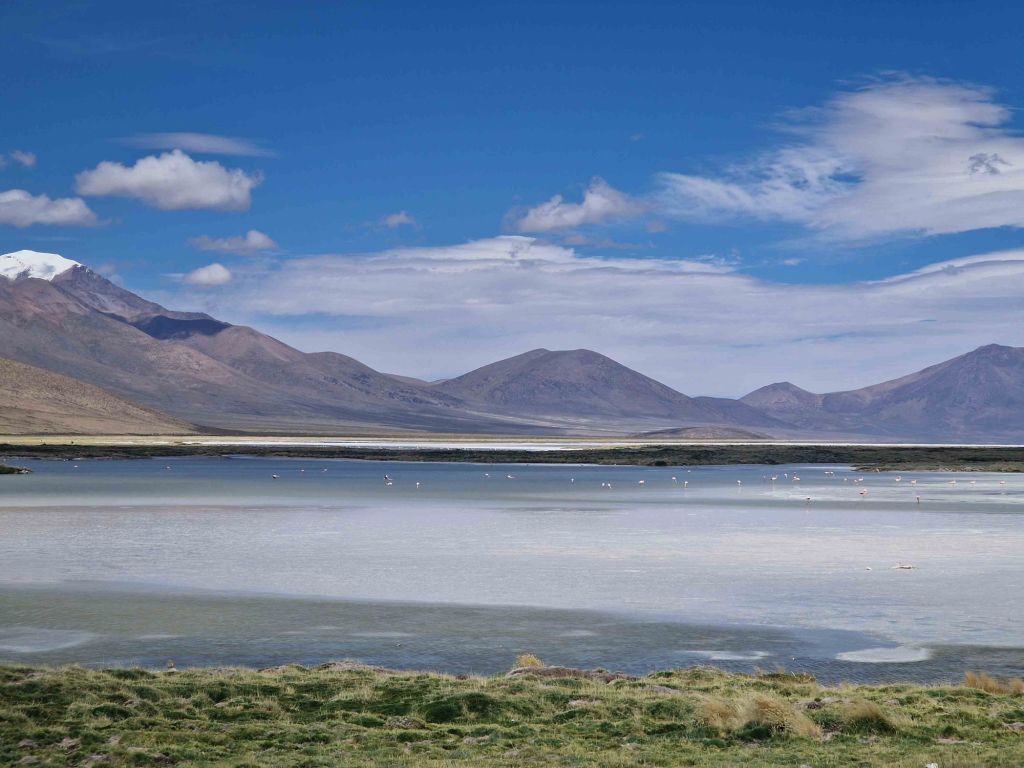
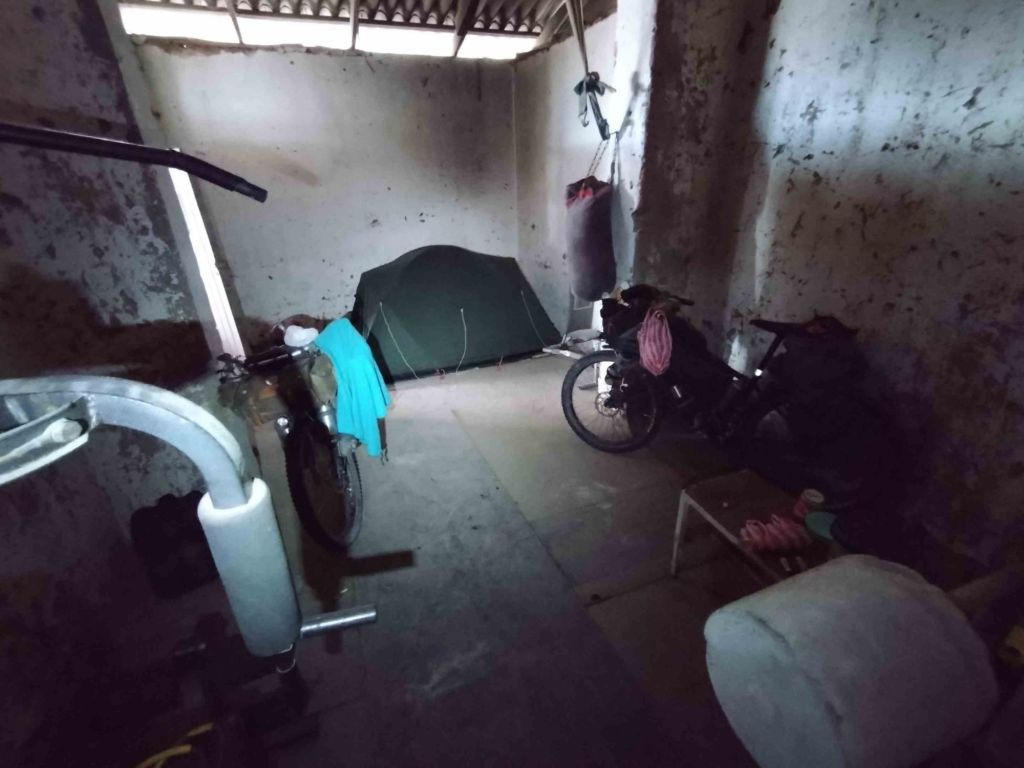
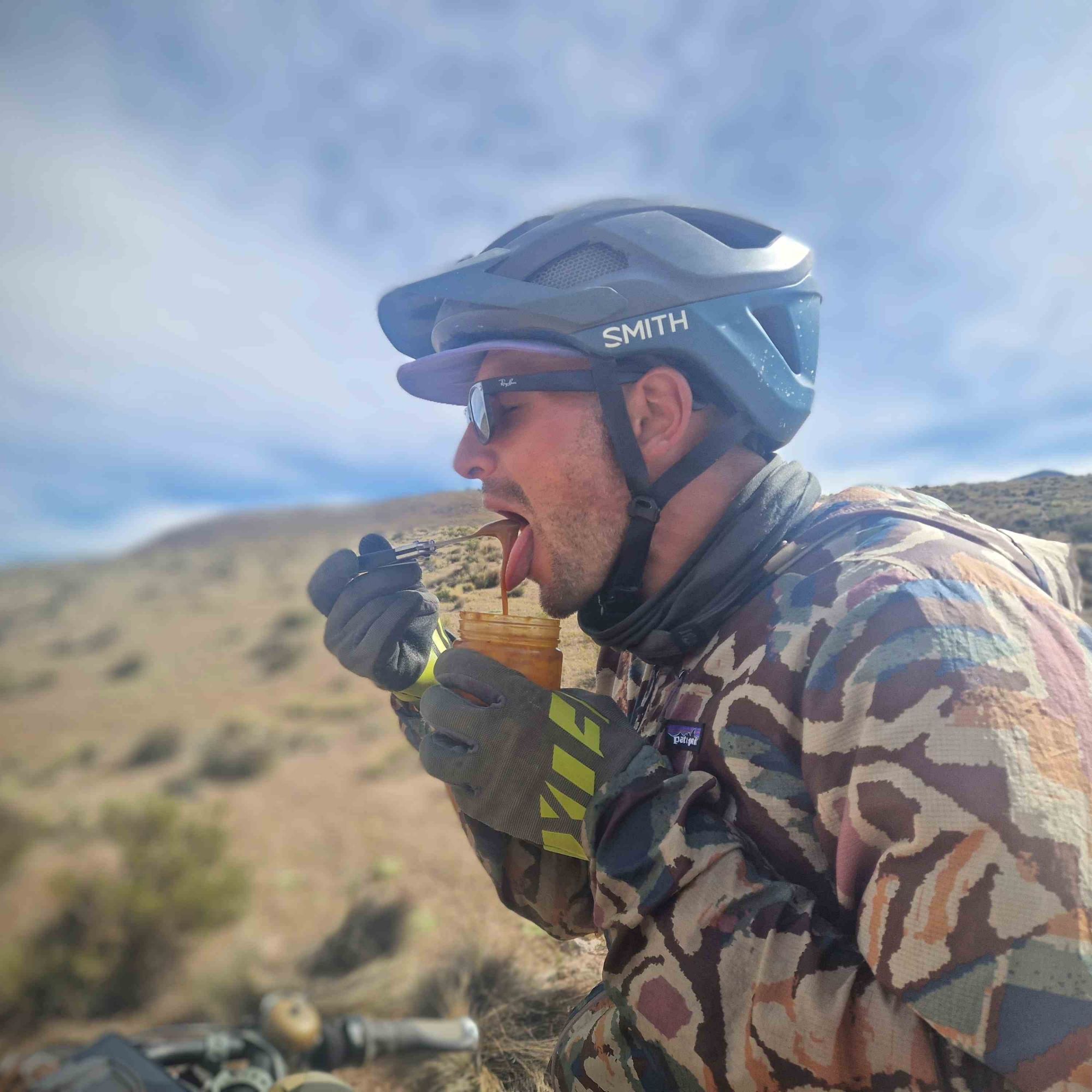
After we finally tore ourselves away from the thermal pools and continued our journey around the beautiful salar lake, the headwind began to pick up to gale force and we settled in to the now familiar notion of battling against it. We stopped at the road barrier at the isolated Gendarmerie post on the edge of the lake shore and a guard came out to check the usual – What are we doing, where are we going etc. We got chatting and we asked if there was somewhere nearby for us to camp with shelter from the wind. After a little thinking, and a referral to his senior, they offered us a space in their gym/barn. Perfect. But their kindness didn’t stop there, as the evening wore on throughout our conversations with them they gave us hot water for our tea, cheese toastie sandwiches, packets of biscuits and chocolate bars, 1kg of rice, tomatoes and apples. Ted even had a job to convince them that we really didn’t need 2kgs of dried milk, as we don’t drink it. Such amazing generosity, especially as we had struggled so much with finding any kind of real food in Bolivia so were only carrying with us basic supplies – mainly bread rolls, 35 to be exact!
But for us, the real bonus of our night with the Gendarmerie was being able to talk to them about their experiences of living and working on the border. They explained that they live/work for 15 days at a time at this remote outpost, carrying out nightly patrols (starting at that magical 11pm time!) and work hard to prevent the smuggling, but that they felt unsupported by their Bolivian counterparts. We definitely got the impression they were not fans of their Bolivian neighbours and they warned us to be careful.
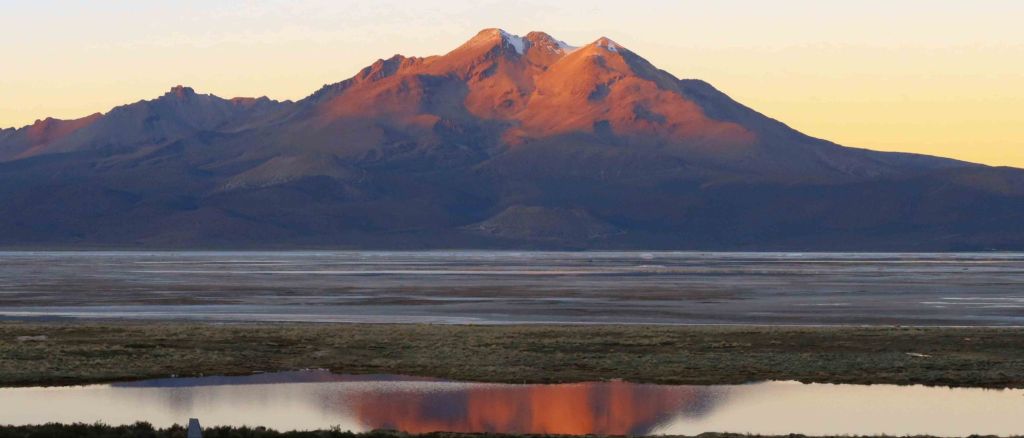
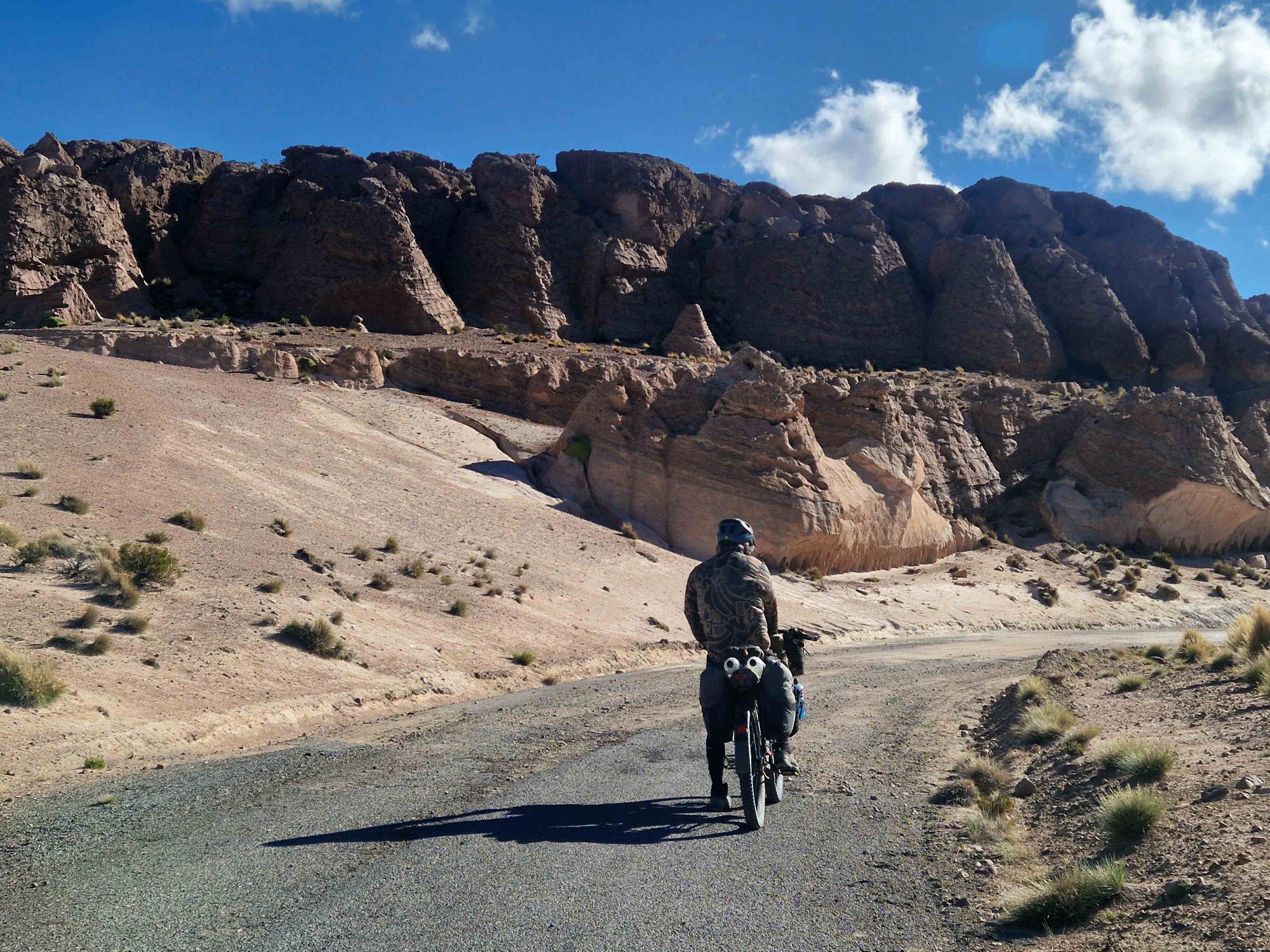
Over the next couple of days, as we moved further away from the border, we battled strong headwinds through some incredible scenery, accompanied only by vicunas and llamas – No trucks, no smugglers, no people at all. At altitudes of over 4000m it was hard work, but beautiful. We ended the route by rejoining the main highway from Bolivia to Chile and descending 1000m in elevation to the village of Putre, but due to the headwind we still had to pedal pretty hard to make progress downhill.
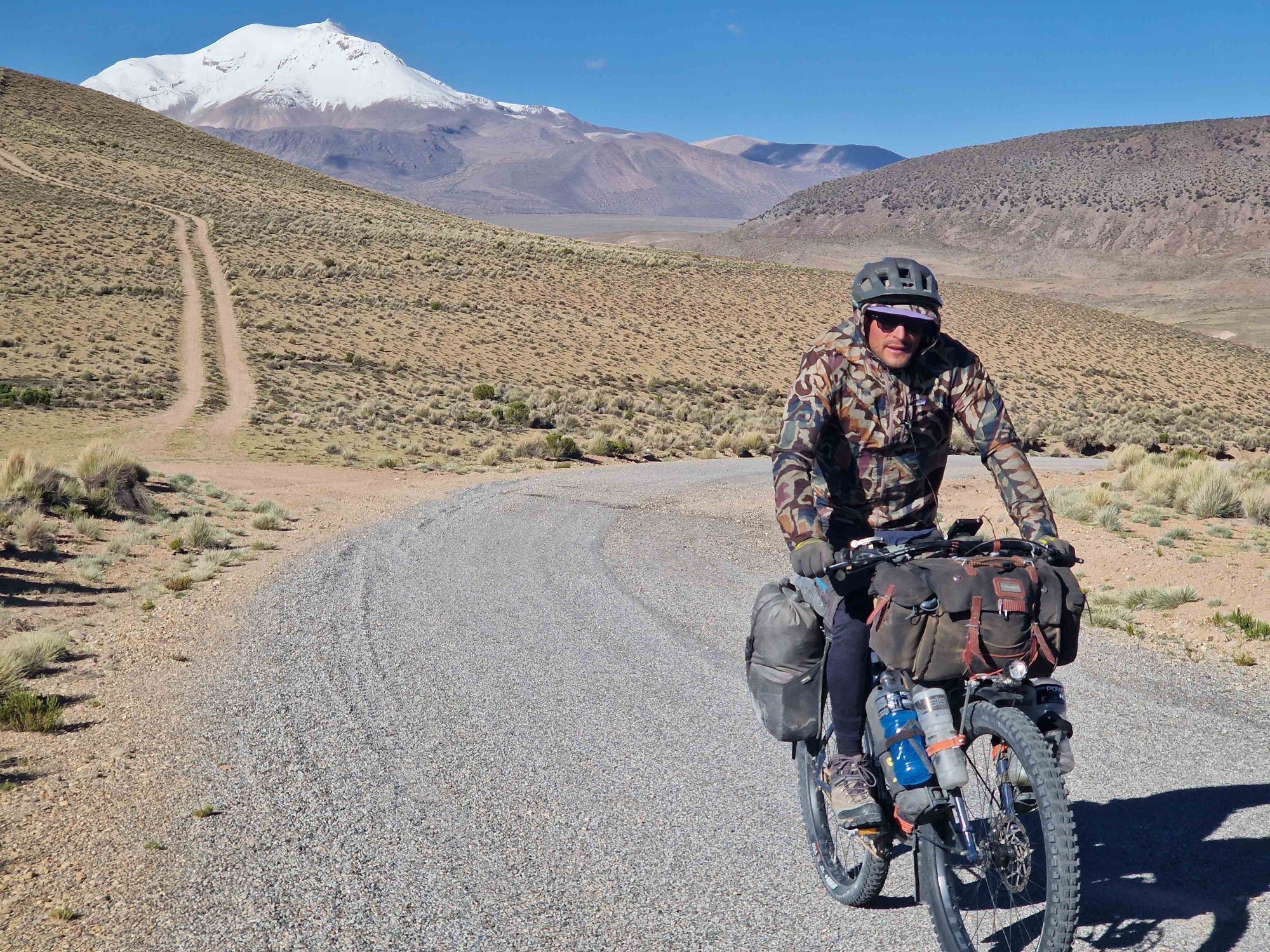


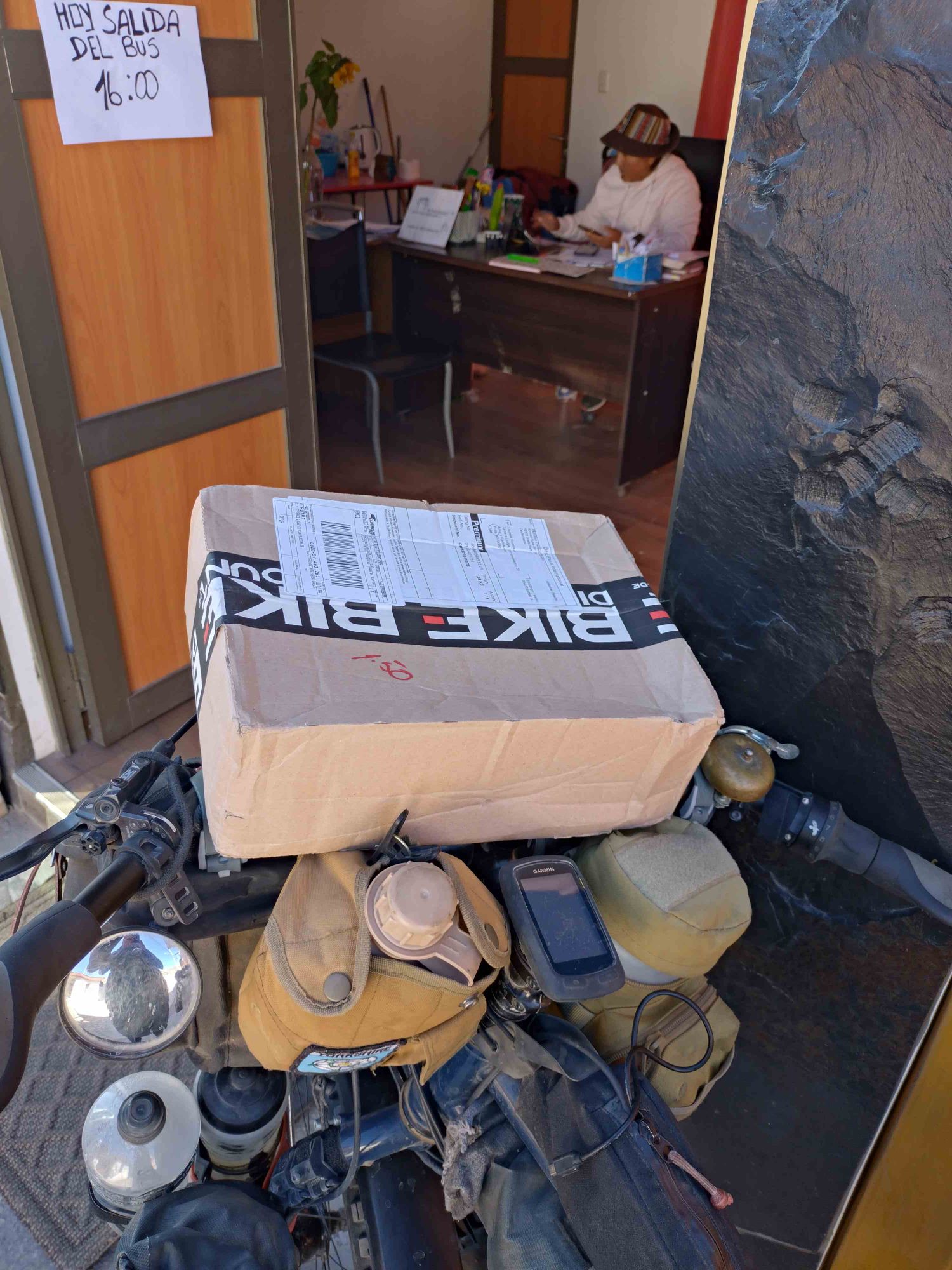


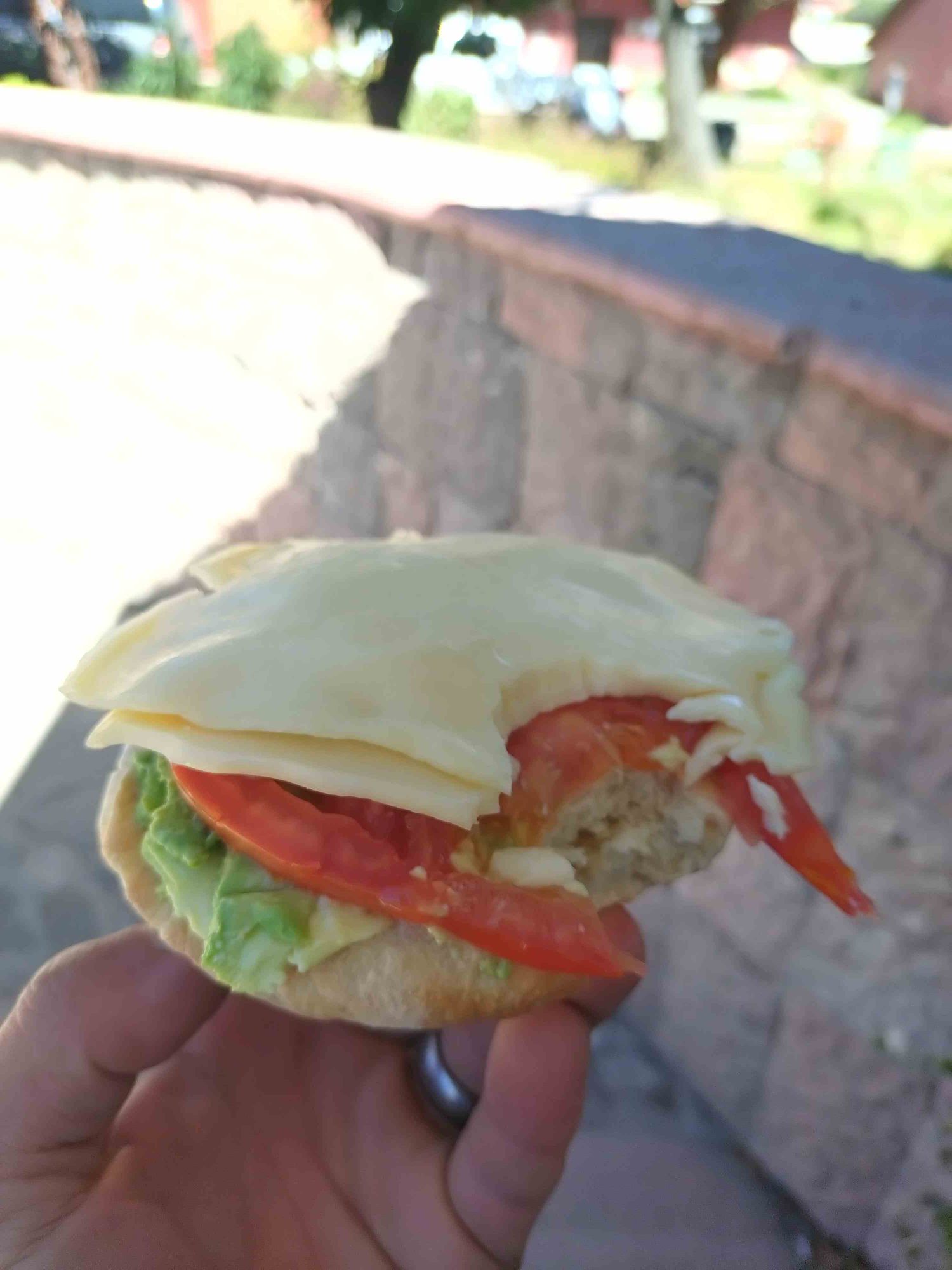

We had an afternoon in Putre of searching for a parcel of replacement bike parts that we’d had sent from Europe a few weeks ago – the parcel ended up being at the bus station (obviously!), as well as trying to recalibrate ourselves to the expense of Chile (£60 vs £6 for a bed!) and eating as much fresh food as possible. The plan from here was to catch the bus down to the Chilean city of Arica, from where we could then head into Peru. But whilst milling about town waiting for the bus, Ted got talking to a couple of Chilean guys who were heading to Arica, so we hopped in the back of their pickup.
The journey to Arica was pretty incredible. It was a 4000m descent from the high Andean altiplano, through the Northern stretches of the Atacama Desert and eventually passed lush, green, bountiful valley bottoms to reach the Pacific Ocean. As we drove, we chatted away to Kristian and Roderigo, who explained that the highway from Arica to Bolivia was a key lifeline for Bolivia, who use it to access the port, and therefore the road was kept open at all times, even through bad winter weather. The number of Bolivian vehicles on the road was testament to this. It got me thinking that despite appearances closer to the border, maybe Bolivian trade through Chile is supported by them!?
Pulling into Arica and watching the huge red sun fall below the horizon over the sea was pretty special – it was the first time we had seen the sea since Southern Patagonia, 4 months ago. We planned to find some accommodation in Arica, but Kristian offered us his spare room, and not only that, he drove us to a huge supermarket so that we could restock some of our supplies and also cooked us dinner – all this after a long day at work for him – what a guy! We couldn’t thank him enough. Trail magic at its best.
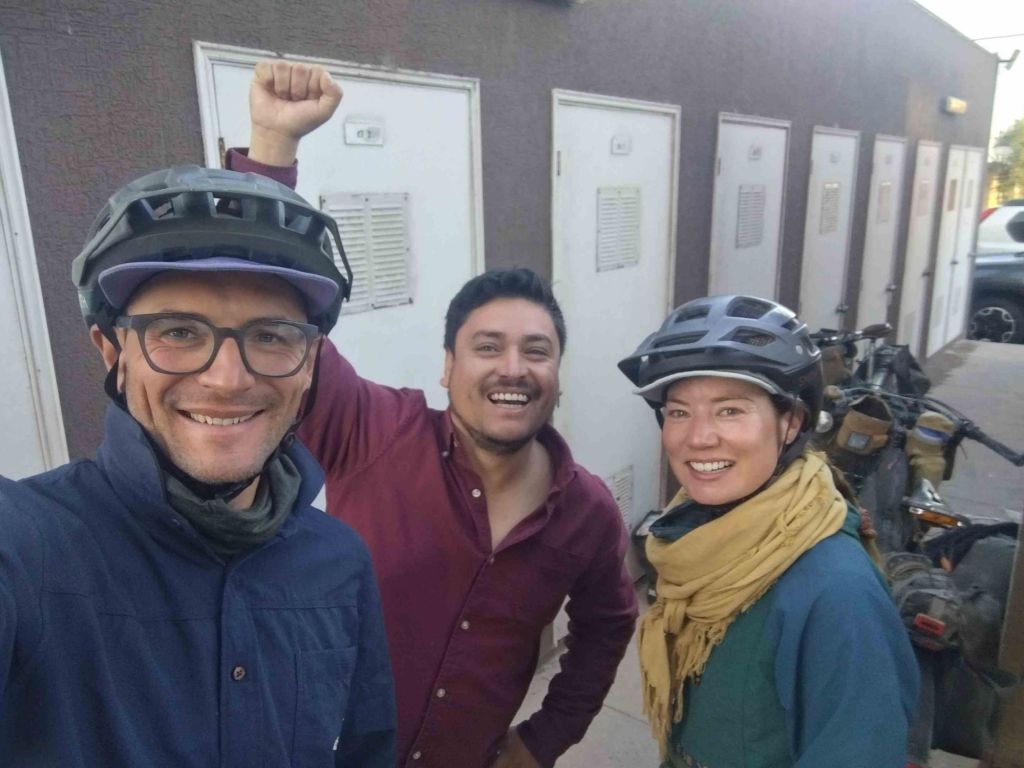
From here we would head North along the coast and over the border into Peru, which was only 20km away. Similar to the Bolivian/Chilean border, the Peruvian/Chilean border is also one of great inequality and inevitably also attracts those hoping to live/work in Chile. Kristian told us stories of people walking across the desert to avoid military patrols and enter Chile illegally. Like the Gendarmerie we had stayed with, he warned us to be careful, and wary of his neighbours. Its a theme we have come across time and time again on our travels, well meaning and kind folk we meet will warn us of the people in the neighbouring village, town or country. It always seems to be that the next place along our journey is more dangerous than the last. But in reality this has not been our experience.
“Yet to define borders as uniformly remorseless things, however tempting that might be, is to build a wall in our own minds or, worse, in our hearts—the toughest kinds of barriers to break down.” (Kate Harris)
So after a short ride up the coast we crossed yet another border, this time into Peru. Another invisible line in the sand that shapes lives, that creates a sense of belonging, that grants privileges or takes them away. A line not visible other than through human construction, a line that’s not observed by nature and yet has such a power, not just here, but for every border the world over. Yet our experiences of the people, the generosity and the kindness, the intrigue and the interest, the knowledge and the support has been universal, no matter what side of the invisible lines they fall. Proof that the human heart can defy all borders, it’s something that fills me with hope (despite whatever rubbish maybe in the news) so in this respect I’ll play it forward and keep defying borders – I hope you do too.



 Tumbling Diaries
Leave a comment