It feels like a little while since I last put pen to paper – or more accurately tippie-typed away on my phone. We’ve seen and done a lot over the last few weeks, in three different countries – so that’s three different types of currency, three different phone SIM cards and three different accents of Spanish to grapple with. Thank heavens our mode of transport remains our trusty bikes so we have some consistency, oh wait, no, even they have had new some new parts so are a little different. Thinking back over the last few weeks it’s the sickness, the storms and the salt flats that stick out in my memories.
Our last few weeks in Argentina were very much bittersweet. We were both exhausted and ready for a break after our Seis Miles expedition, we were both craving some time off the bikes, but we crossed the milestone of having been away for six months, and with it came a sense of urgency to make some progress. We didn’t want to leave Argentina, as we both loved it so much, but with our plan to spend one year in the entirety of the Americas we needed to get a wriggle on if we wanted to see what else the rest of the continent has to offer us two rag-tag cyclists. This lead to a slight sense of pressure to get moving, so everyday became about covering big distances. No more leisurely breakfasts of eggs, bread and coffee, followed by yet another coffee. No more dallying around at lunchtimes and sitting down to eat on the picnic blanket (in reality our old battered tarp). No more rest days or calling it a day early because we stumbled upon an Instagram worthy camp spot. It was time to get our heads down and just keep pedalling. Days of 100km-ish became our norm. We still managed to appreciate and love the incredible Argentinan scenery and people, its just that everything was flying passed our periphorie at a quicker pace now.
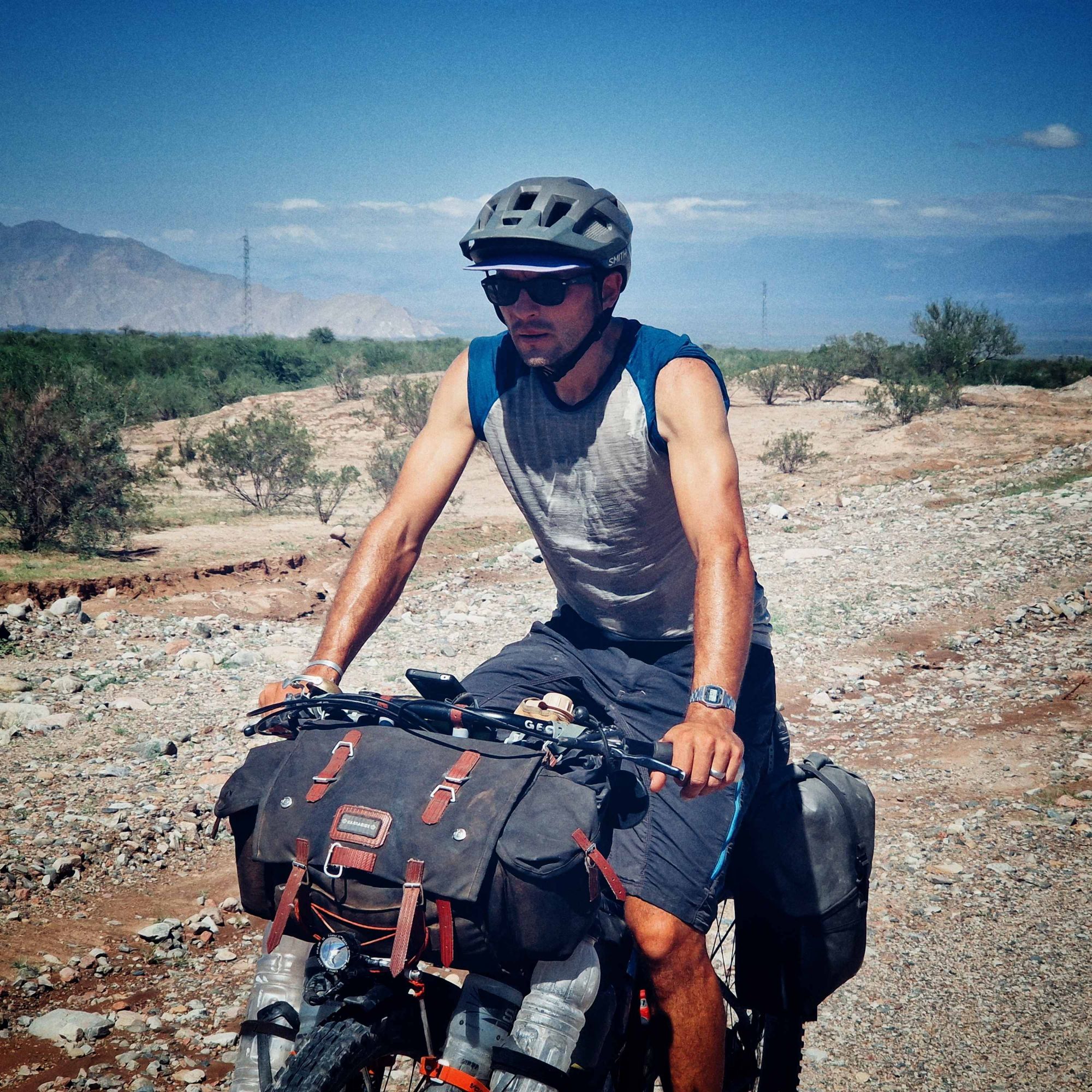
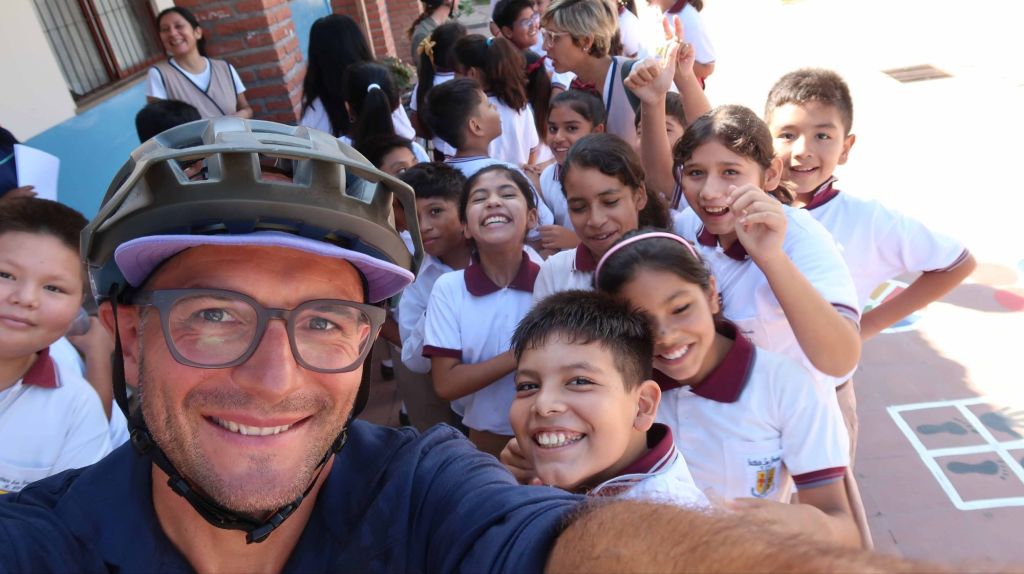
We did, however, get collared by the Head Teacher of a school as we stood opposite it wondering whether to buy empenadas from the ramshakled house with the sign outside it. As an aside – I can’t believe by this point, four months in to South America, we still haven’t learnt to always just buy the flippin’ empenadas! Anyway, the lovely Head Teacher of Clemente Sarmiento School in Colonel Moldes, saw us standing about outside so ran over the road to ask if we wouldn’t mind popping in to help the kids with their English lesson. With Ted being dyslexic and me shying away from being the centre of attention, we were probably not the best people to “help” with an English lesson, but we enjoyed answering all the kids questions and their excitement and enthusiasm was pretty infectious.
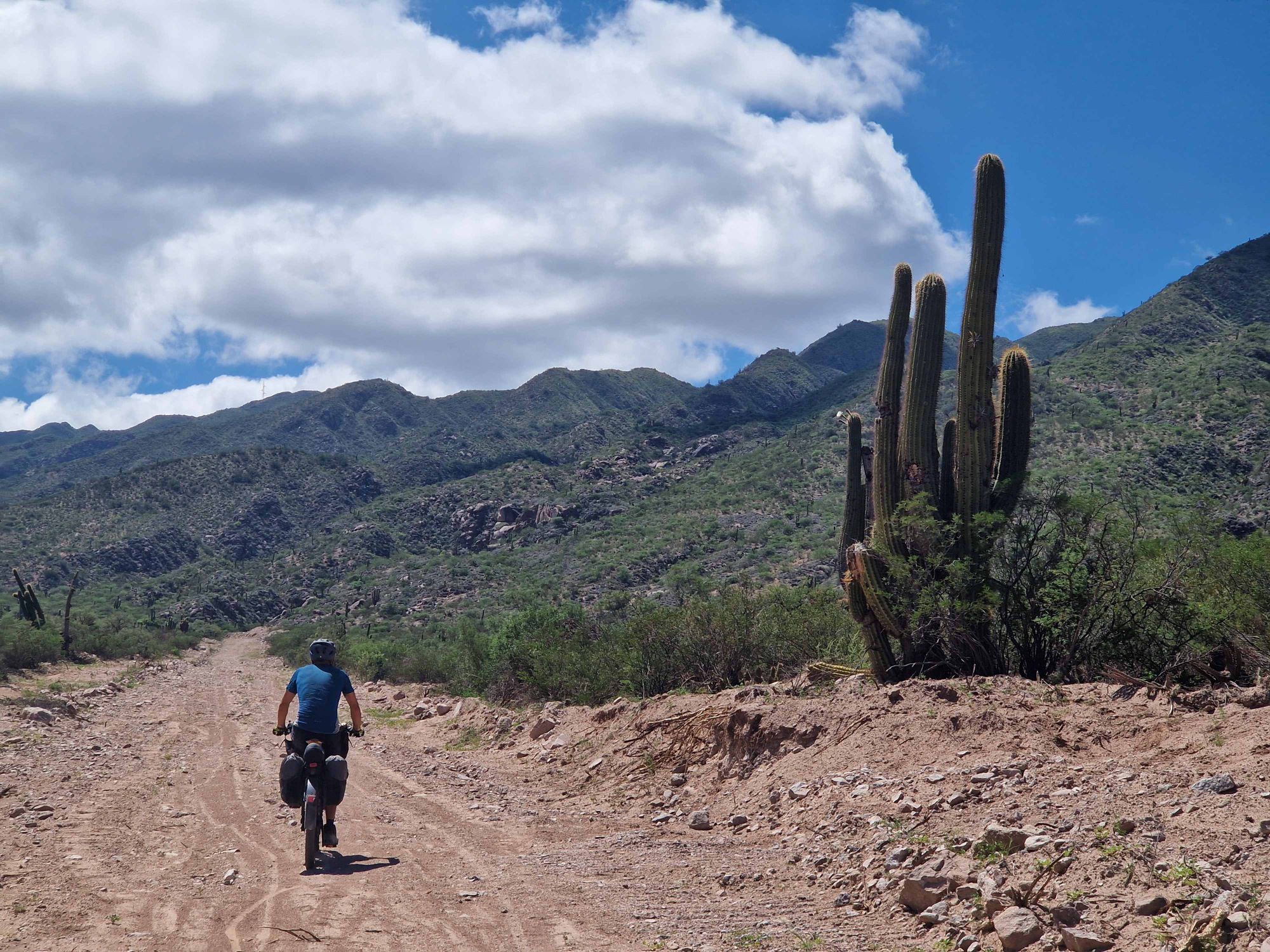
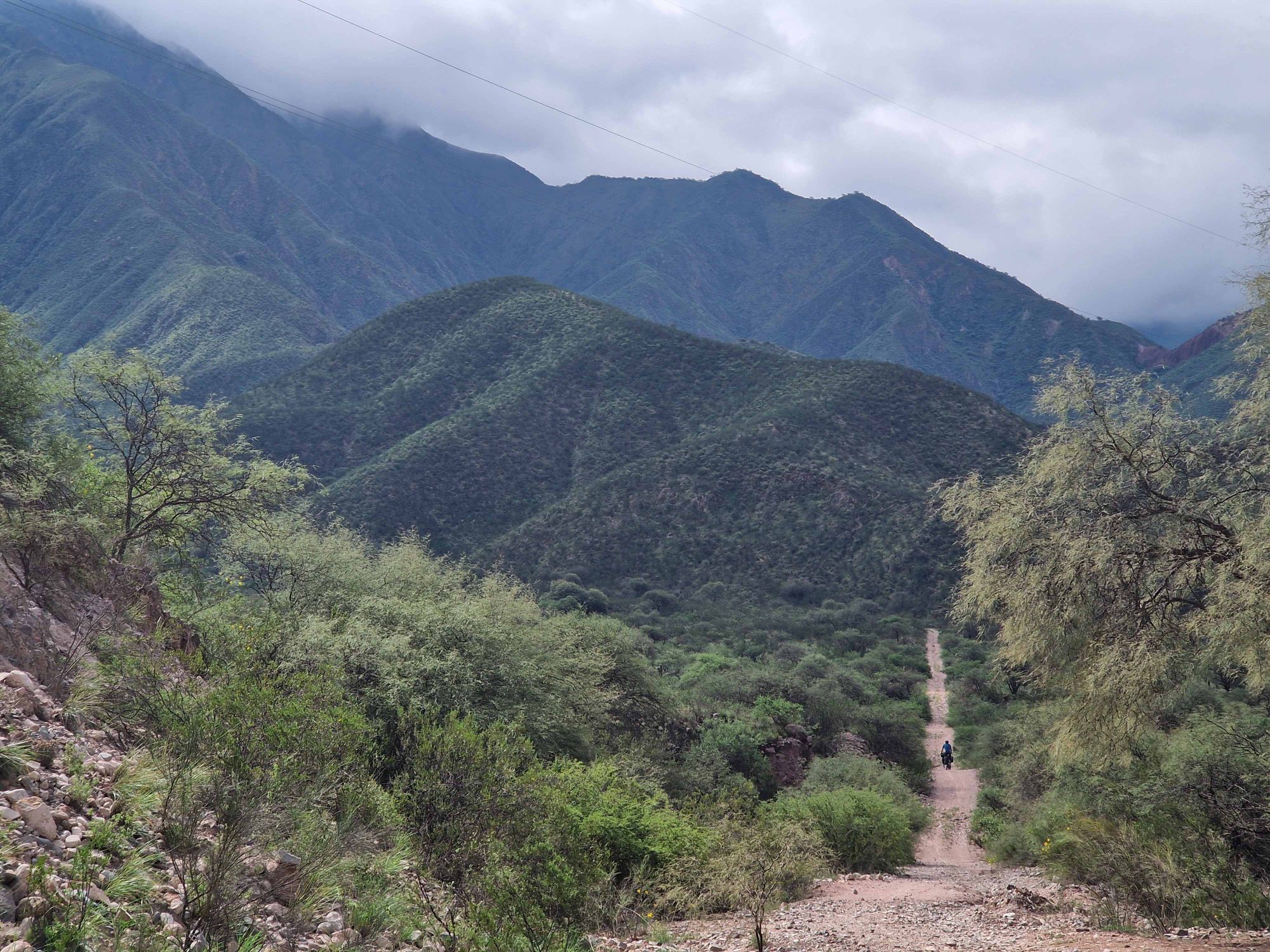
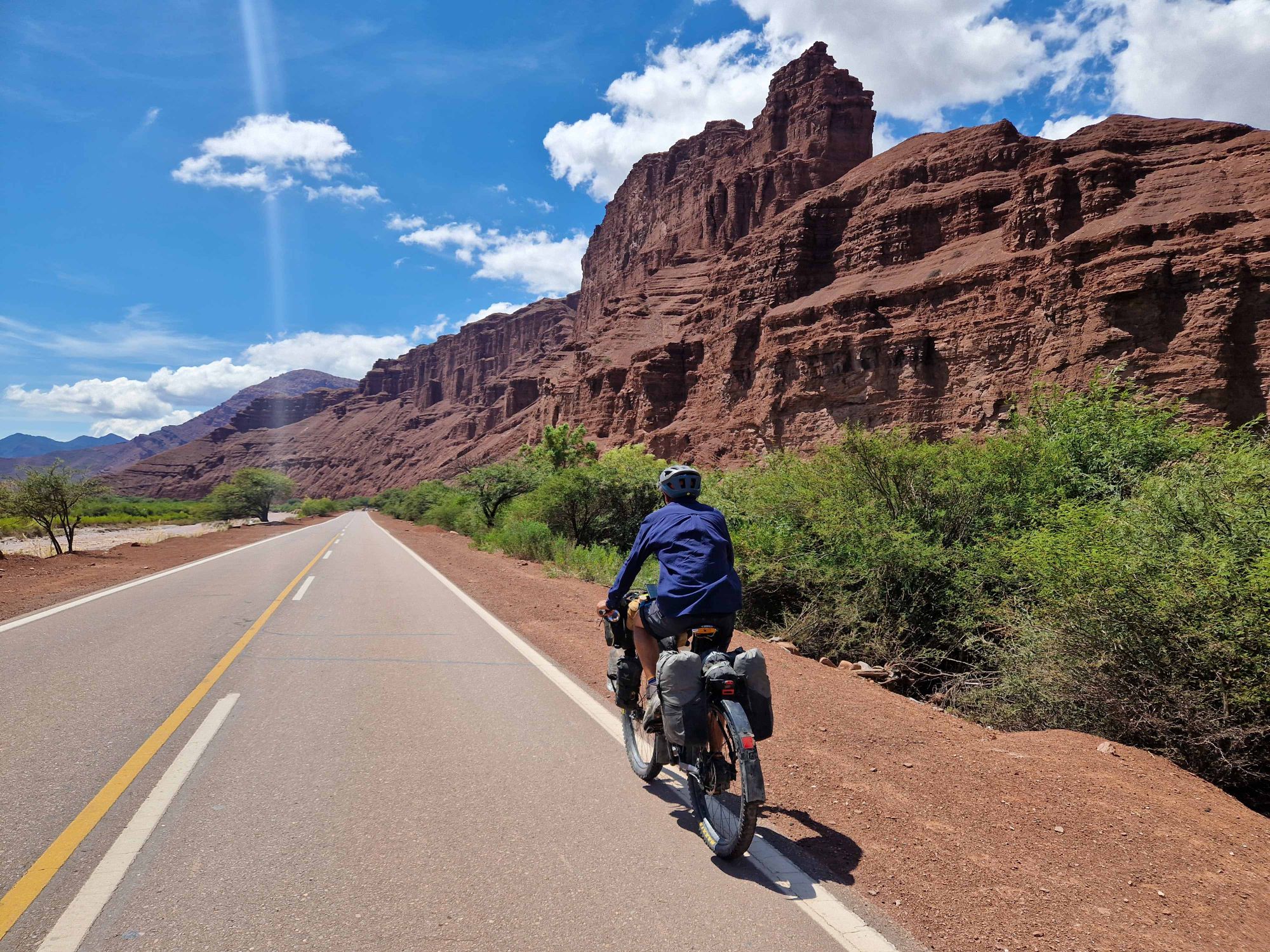
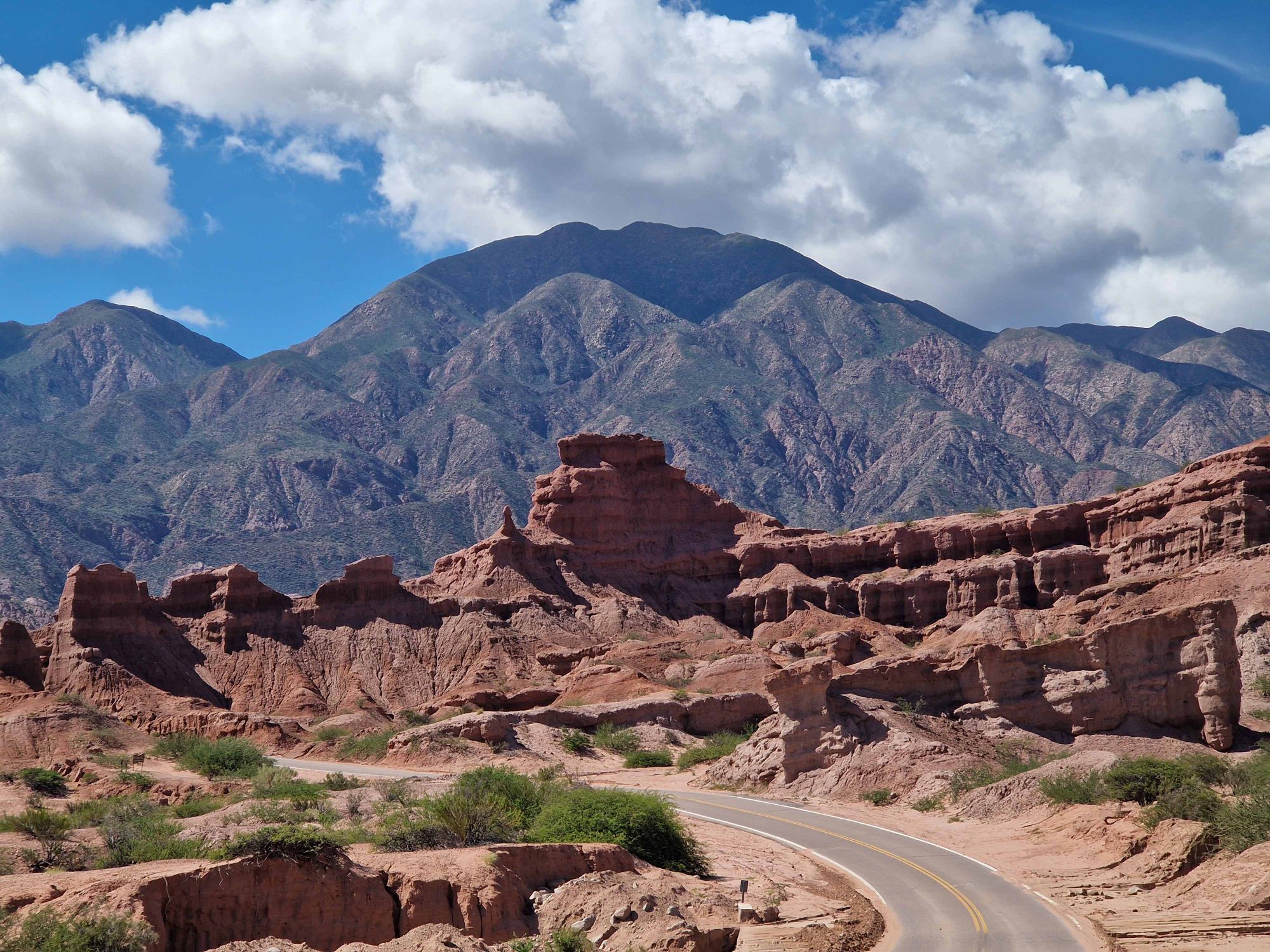
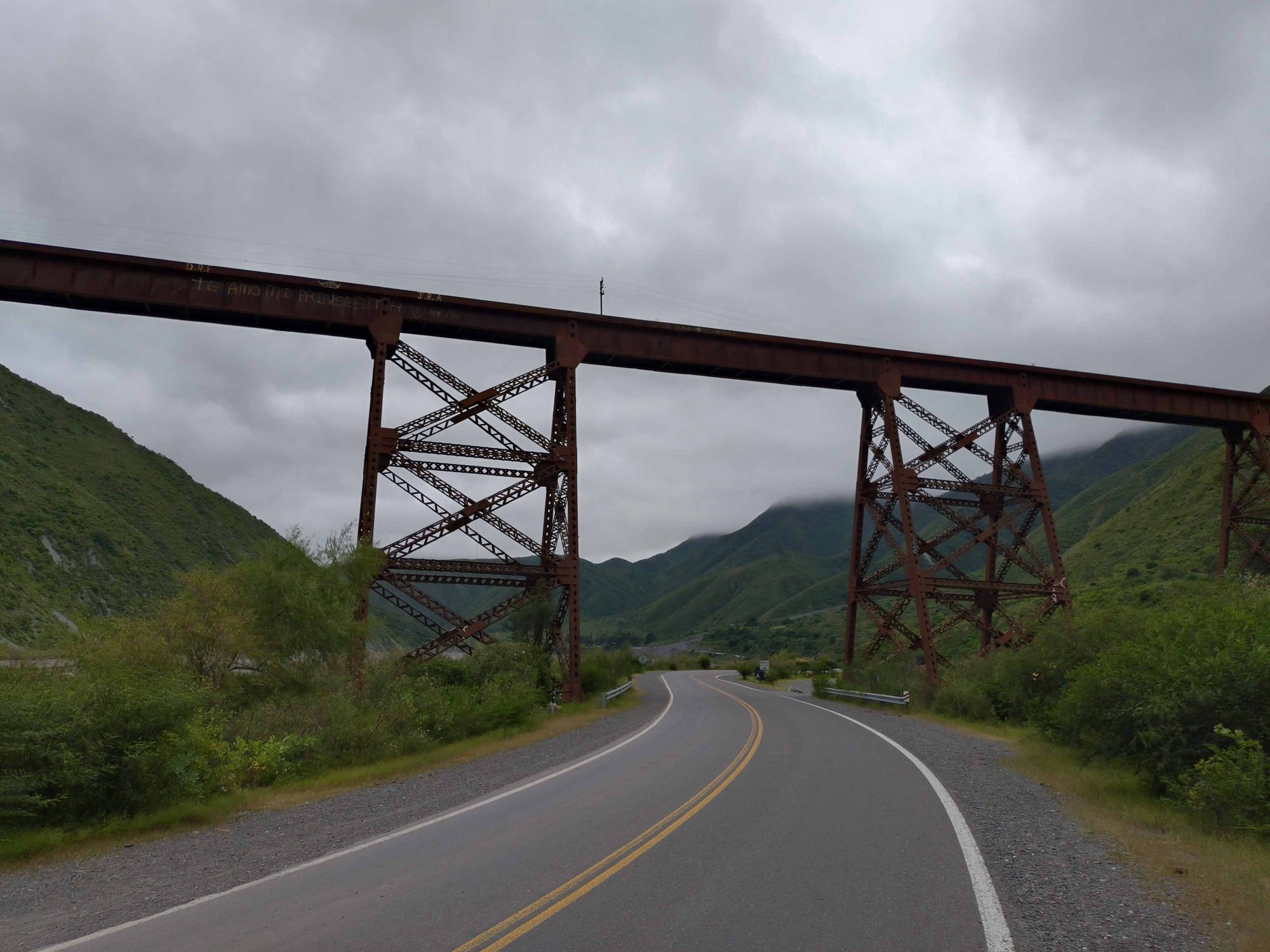
We enjoyed dropping off the Argentinan Steppe (not as dramatic as it sounds, we didn’t fall off anything, it’s just the name given to the drop in altitude from the Puna and desert landscapes, down to the lush green and tropical feeling lowlands), it felt like we could breath again with all the oxygen. But the heat and close humidity was quite a shock to the system (especially to my frizzy hair!) The scenery from Cafayate towards Salta is really special, but the mosquitos and sweat-induced sleepless nights were not so much.
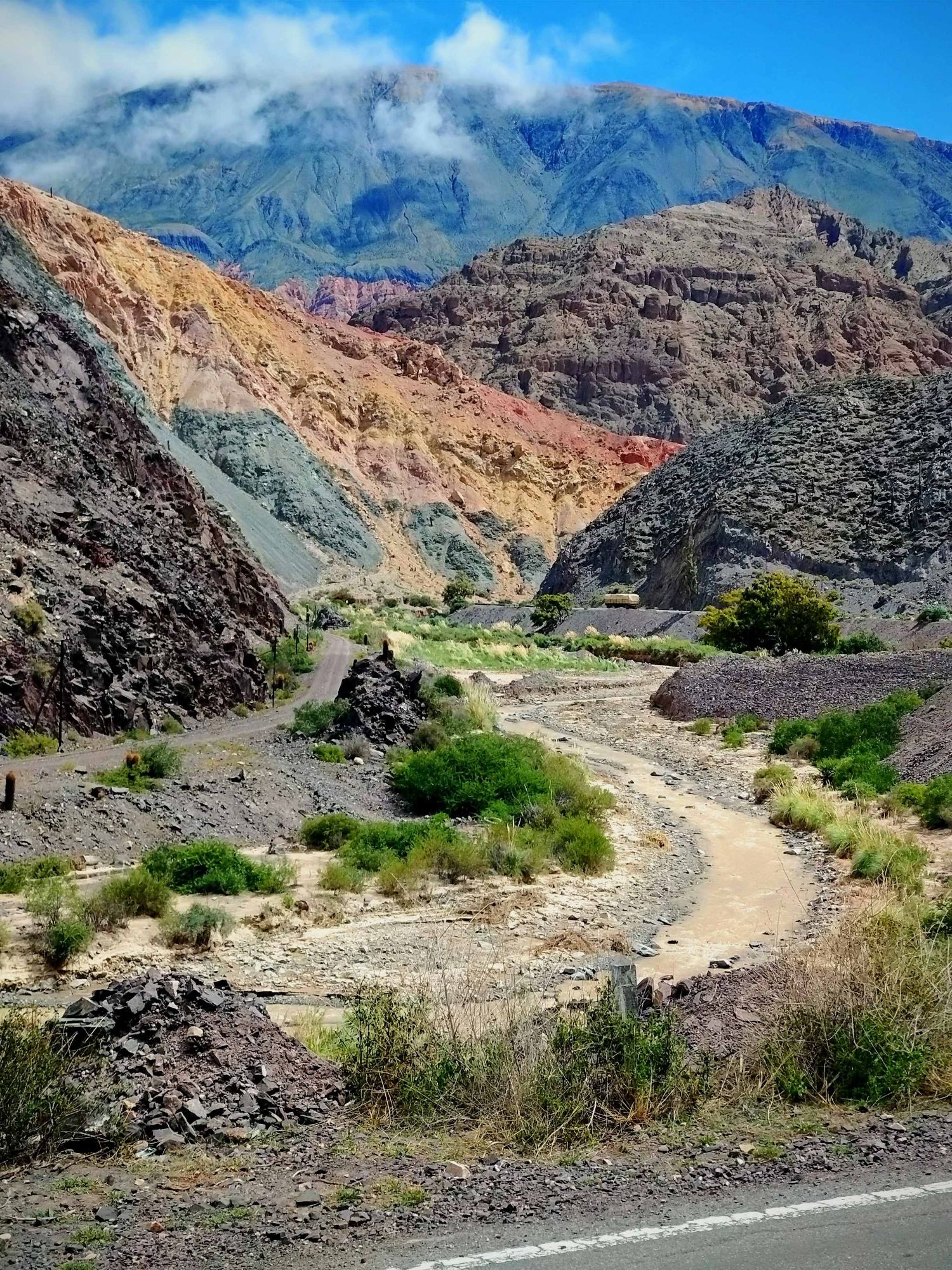
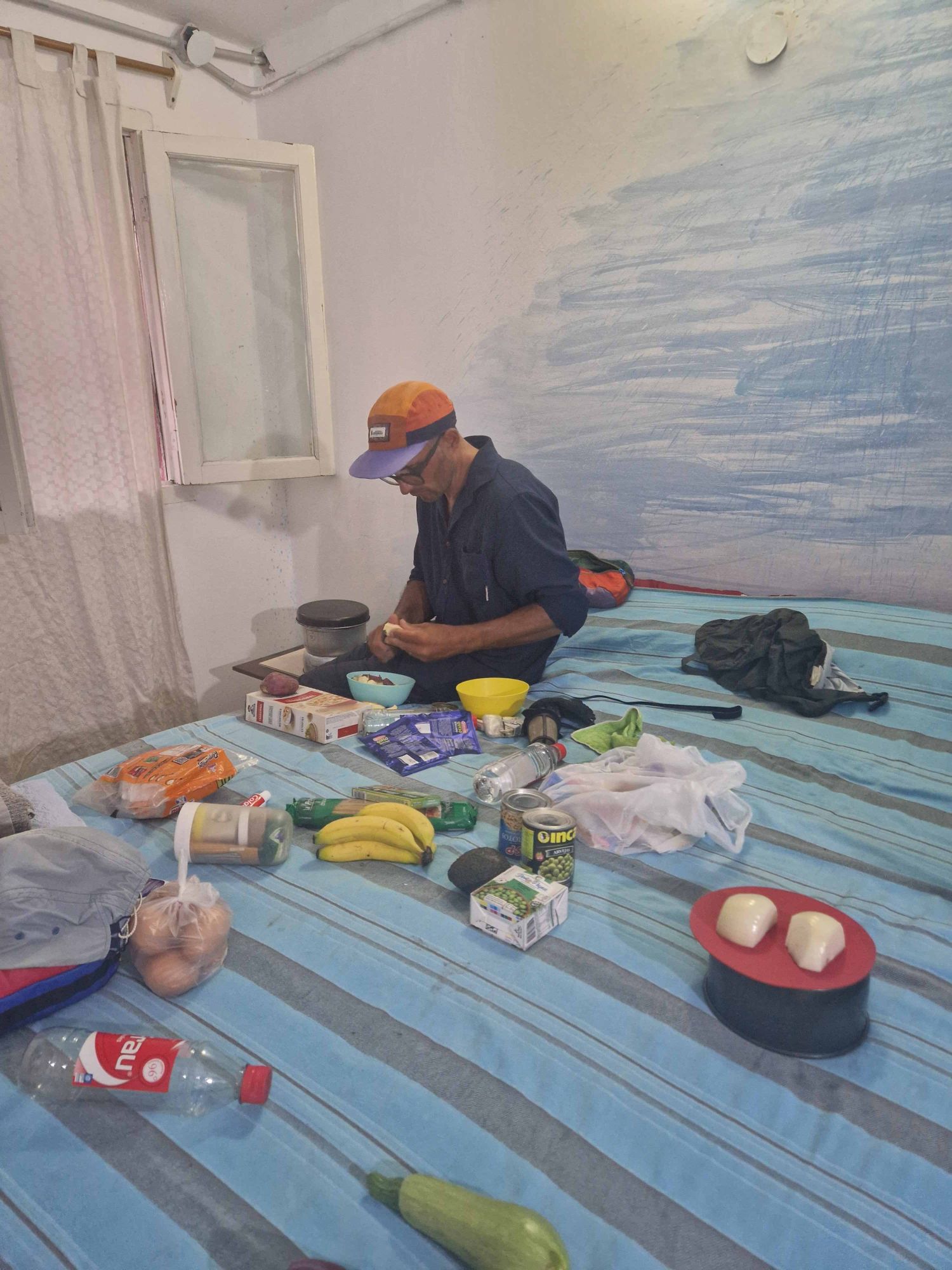
The head-down riding caught up with us though – well it was mainly Ted that did the catching, he caught Giardia from some dodgy water. We don’t know exactly where but we think it was from a rural municipal campsite. It’s a pretty yucky bug that takes a long time for your body to shift and generally makes you feel rubbish with no energy, stomach cramps and similar amounts of methane emitted to the permafrost melting! Safe to say it was not pleasant for either of us, especially not when couped up in the tent – I’m surprised the tent didn’t float away some nights with us inside it like a little hot air balloon. Joking aside, riding became a painful struggle for Ted. We had to cross the Argentinian Andes one last time and this meant climbing back up and over 4800m via Paso de Jama on the Argentinian/Chilean border. The route we took to reach the Pass didn’t take the obvious paved roads, and the neverending bumps of the rough roads combined with the climbing and lack of oxygen took its toll on Ted. On one of the days we hitched a lift with a couple of the only trucks we’d seen on the road all day. They were mine workers heading up to the large lithium mine close to the Chilean border. When they realised Ted was ill they dropped us off in the next village and introduced us to the medic/nurse who worked for the mine. He kindly took us in and asked Ted a few questions to make sure he was okay. Having established that Ted was not going to drop down dead, he offered us the beds in his spare room for the night, but said we had to stay hidden and make no noise so that his bosses at the mine were none the wiser. We didn’t want to cause any trouble so said we would ride on, but he was quite insistent, and with Ted ultimately needing to recuperate we relented and graciously accepted his kindness. The Argentinians are amazing!
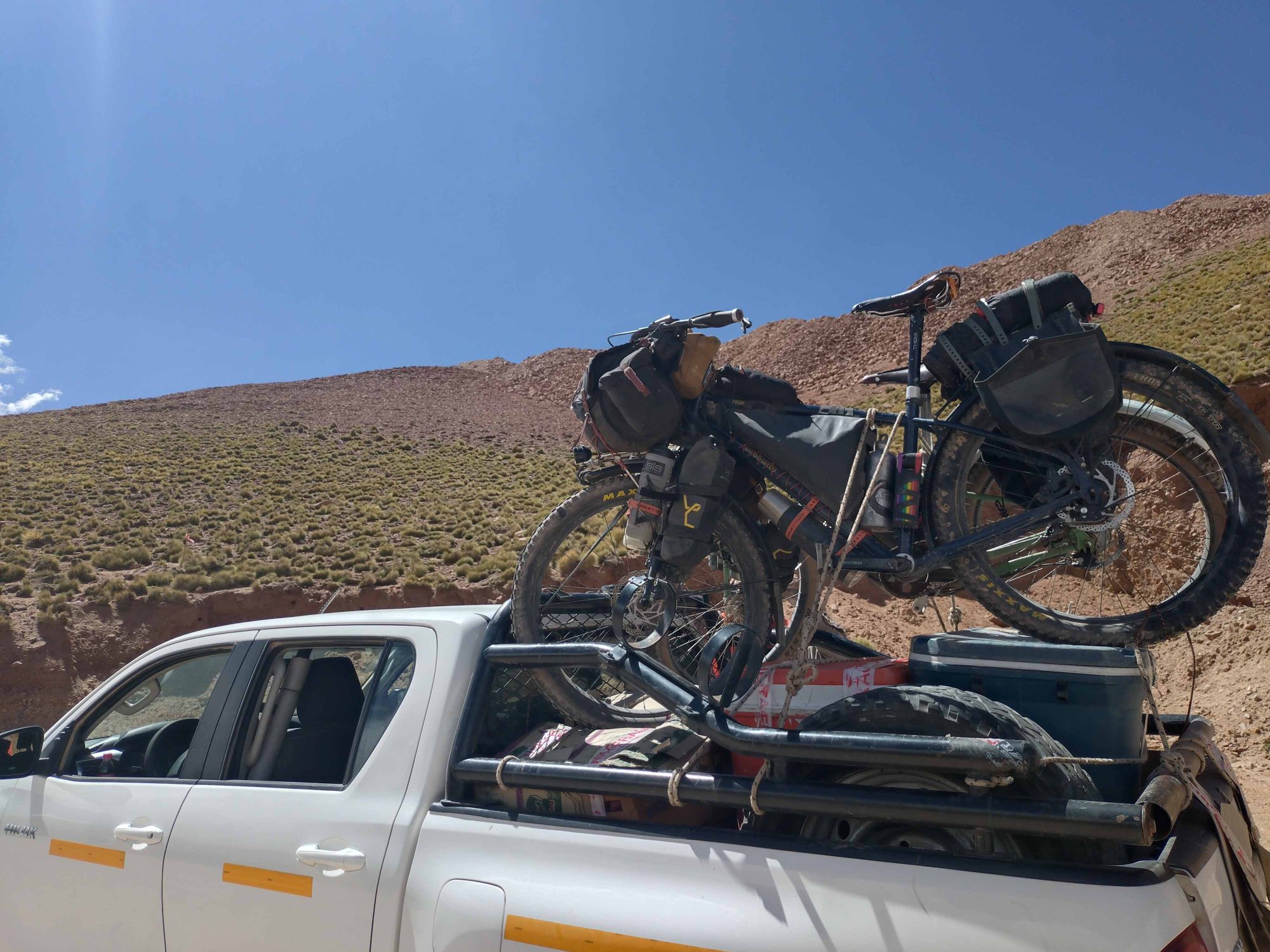
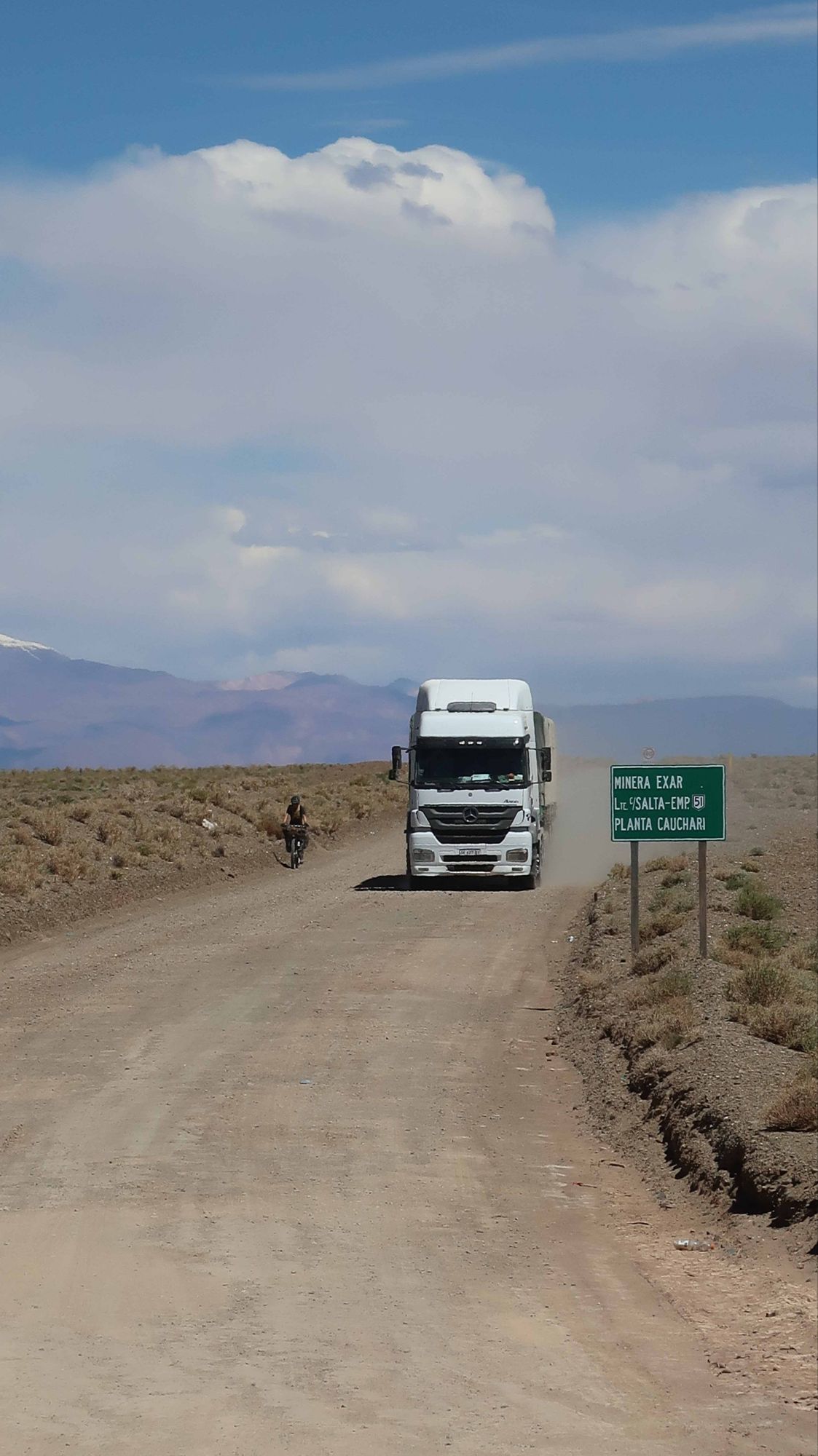
The rest meant that Ted felt well enough to continue riding the next morning, but by lunchtime the stomach cramps were back with a vengeance, so a couple of stop-start, slow days followed. We stopped for the night in the small border town of Jama, where the petrol station has a few motel rooms and a real coffee machine (the likes of which we hadn’t seen in months and months). This again gave Ted the chance to rest, and ample time for us to spend the last of our Argentinan Pesos on chocolate and coffee from the petrol station.
As you can imagine, the petrol station coffee really wasn’t the best, but it’s amazing what you miss and crave when you’ve been away for six months. I’ve found myself thinking about a whole mix of wonderful things from home a lot lately. Usually bringing a smile to my face, but sometimes it’s become a bit more of a homesickness. You know the kind of thing – That first sip of Clipper decaf earl grey tea; the comfort of my Birkenstocks that perpetually show the imprint of my toes; throwing on that pair of slightly baggy old jeans I’ve owned for too long that are all soft and have holes in; heading out for a long run in the freezing cold rain and spending way to long warming up in the bath afterwards; peanut butter on toast – anytime of the day or night; chopping vegetables in my kitchen whilst I sing and dance along to embarrassingly cheesy tunes; wrapping my hands around that perfect shape of my favourite mug on the outhouse porch whilst I drink my morning coffee in the sun. The list goes on.
I know those wonderful things will still be there on my return and its not that I want any of them here with me – my bags are definitely heavy enough already – but it’s more a kind of warm appreciation and gratitude for the everyday comforts and moments of calm. Simple comforts that only home can bring. And don’t even get me started on missing my family and friends. I spend a lot of time wondering what my loved ones would think if they were here with us, or I imagine them cheering me on up the hill, or I try to channel the enthusiasm and excitement of all our nieces and nephews if they saw the exotic animals or birds we see. Sometimes I laugh out loud to myself at silly memories we’ve shared and other times the thought of missing out on new memories being made makes me cry. It’s a hard one to balance but it’s part and parcel of doing this incredible thing that means so much to us both. I know that the wonders of modern technology mean that keeping in touch is now much simpler. I take great comfort in the fact that I’m never more than a WhatsApp call away from a slightly disjointed conversation that’s full of love and accompanied by a view up my parents noses!
So it was with Ted’s stomach sickness, my home sickness and heavy hearts that we left Argentina for the last time on this trip and headed back into Chile. We missed it immediately.
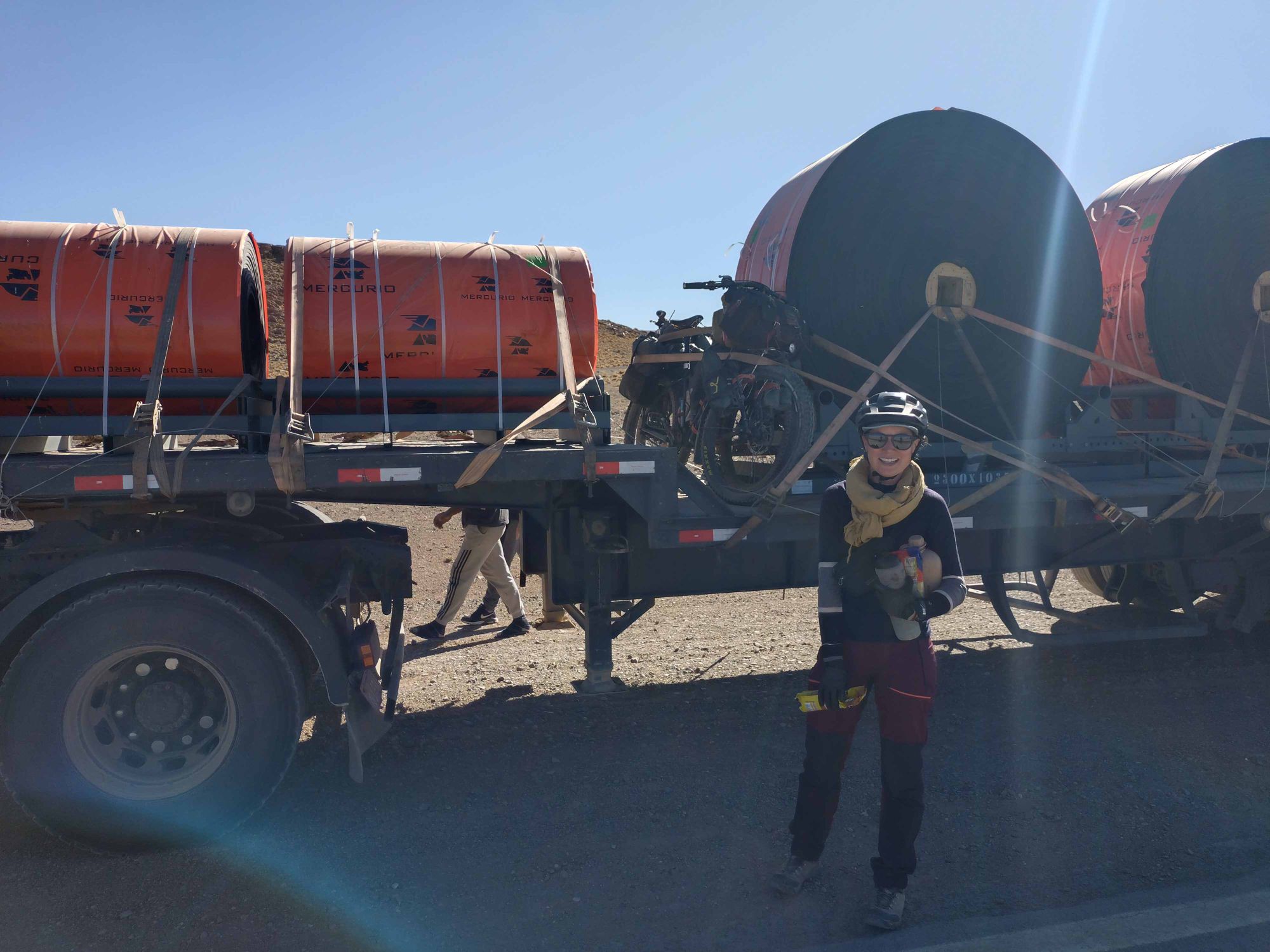
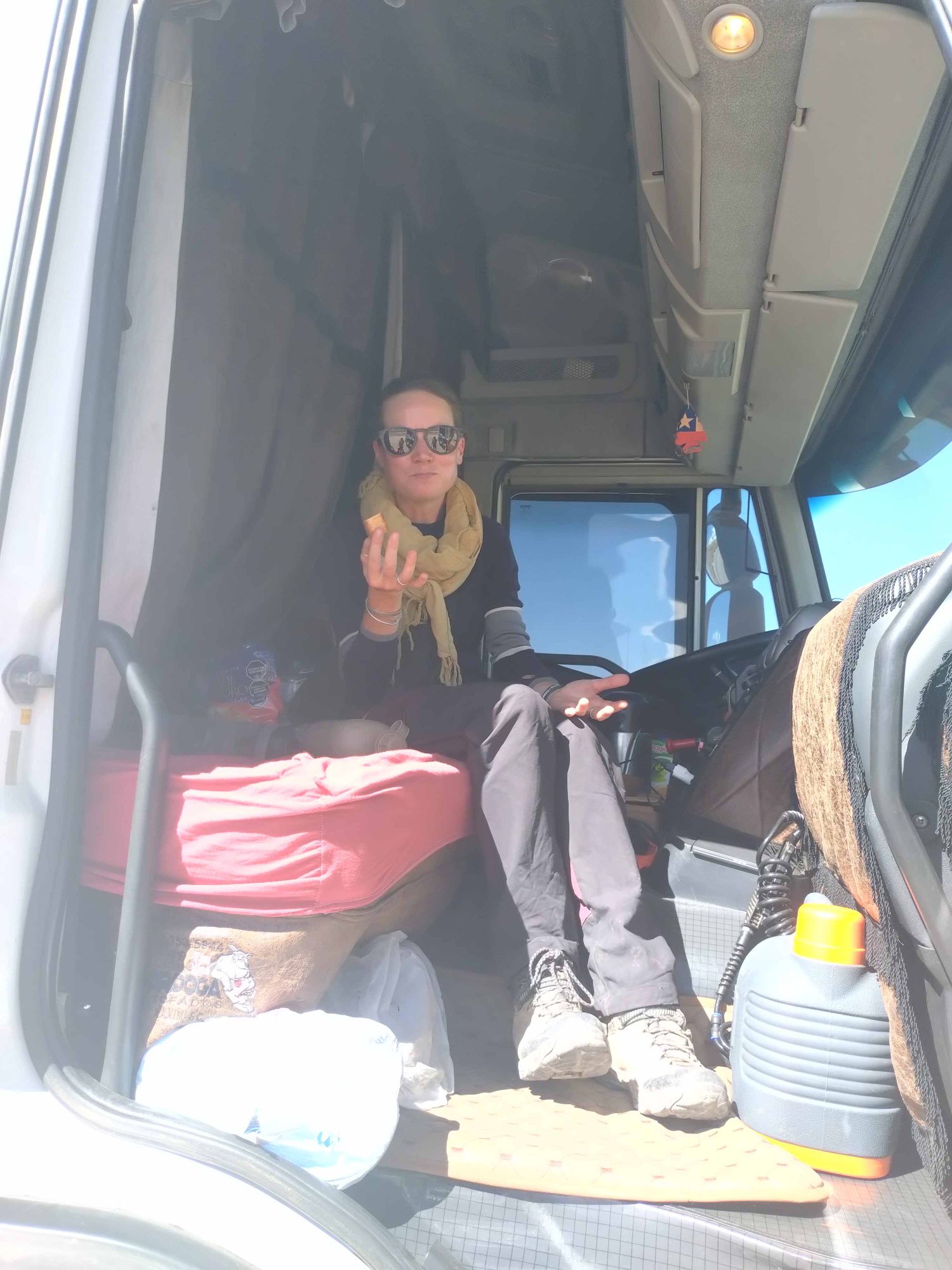
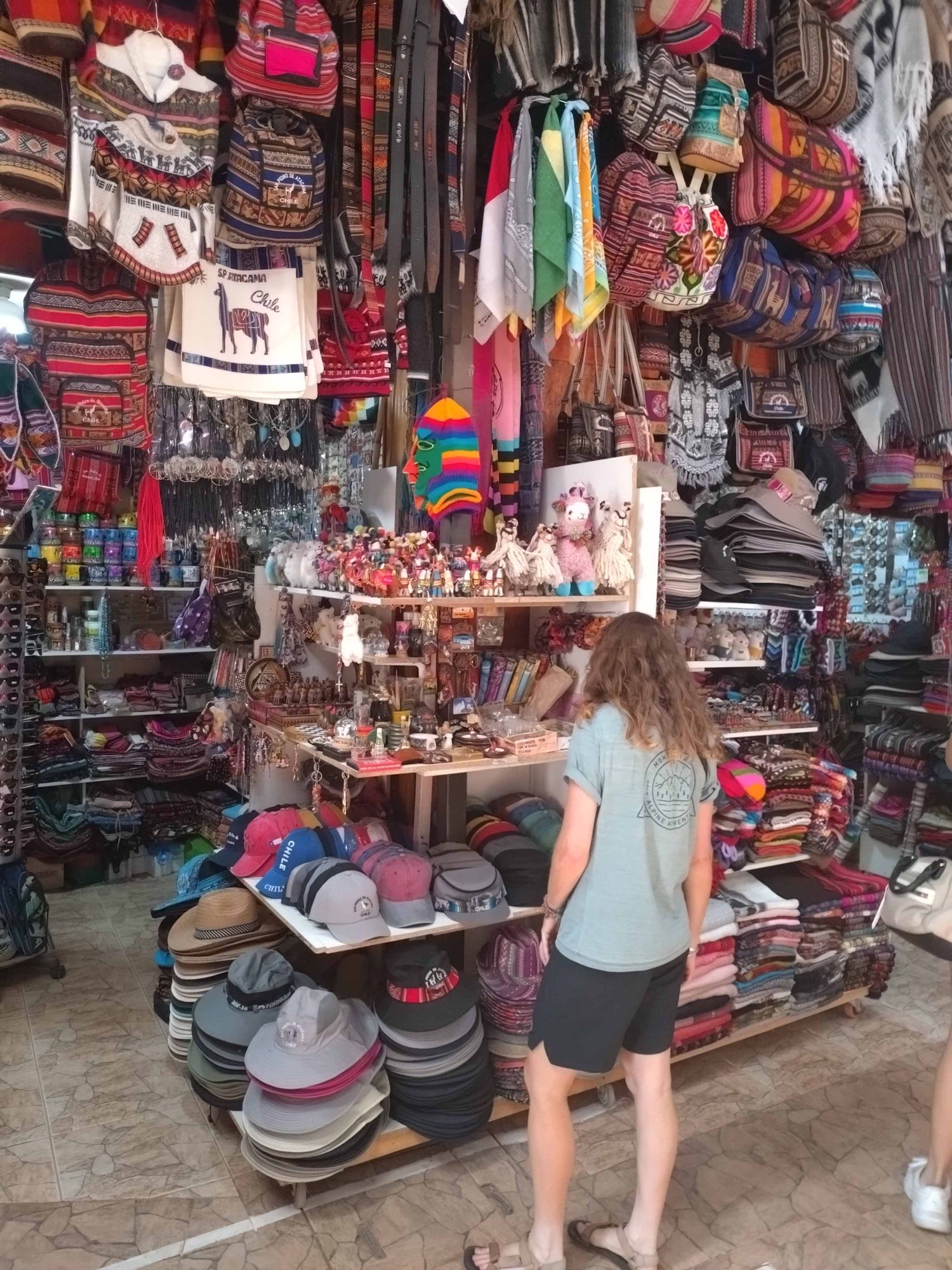
San Pedro de Atacama in Northern Chile is a real shock to the senses. It’s a town with all mod-cons (very dusty mod-cons!) in the middle of the Atacama Desert. I mean the Atacama Desert, as in the driest desert on Earth, and yet if you stood at the town centre you would never guess that’s where you were. It is now a very over-priced tourist hubbub, complete with bars and coffee shops and many many tourists outfits trying to sell you an expensive tour in a battered 4×4. We arrived there after leaving the petrol station motel in Jama, thanks to a friendly trucker who gave us a lift over the pass to save Ted from another couple of days of stomach ache suffering on the bike.
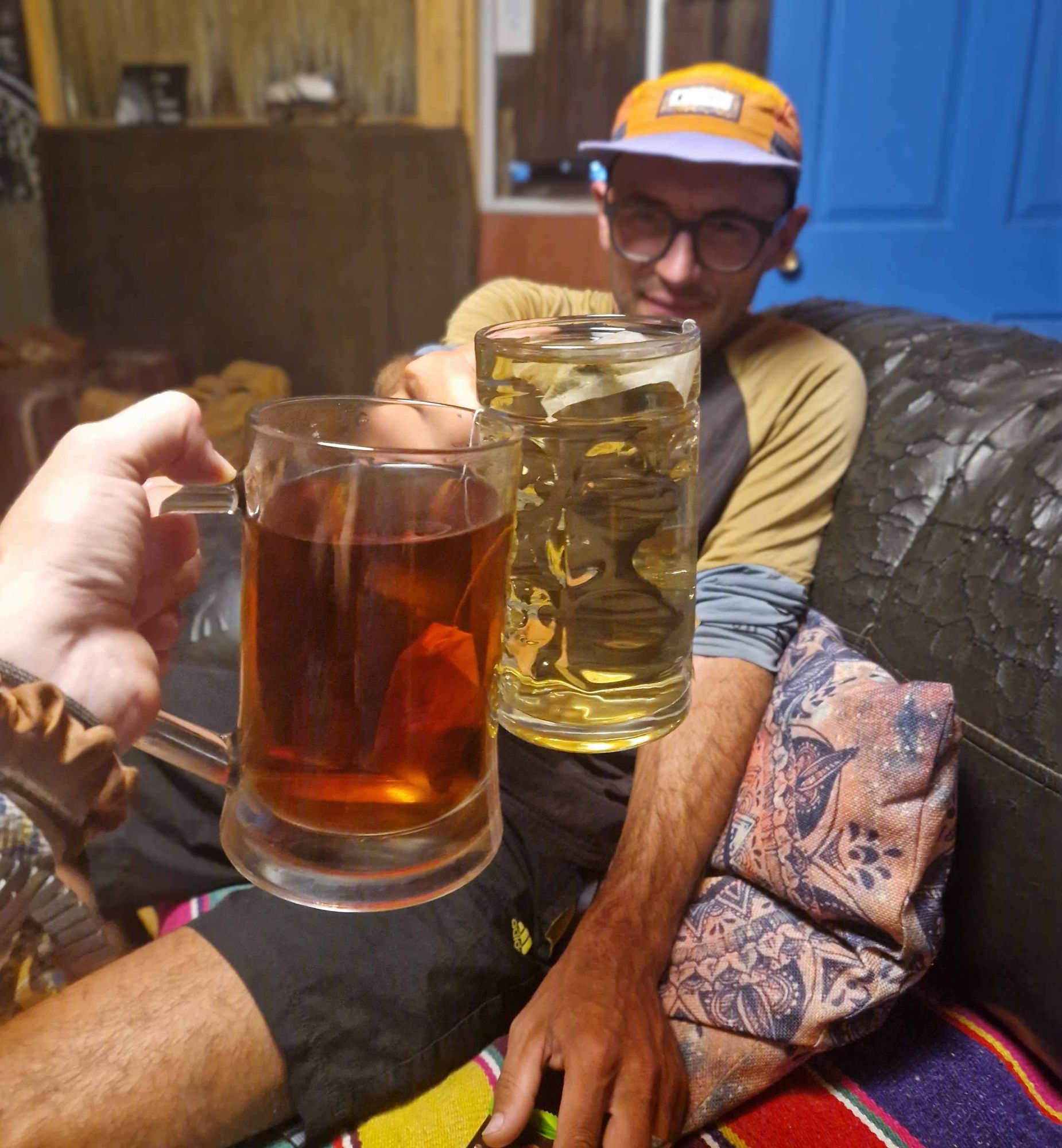
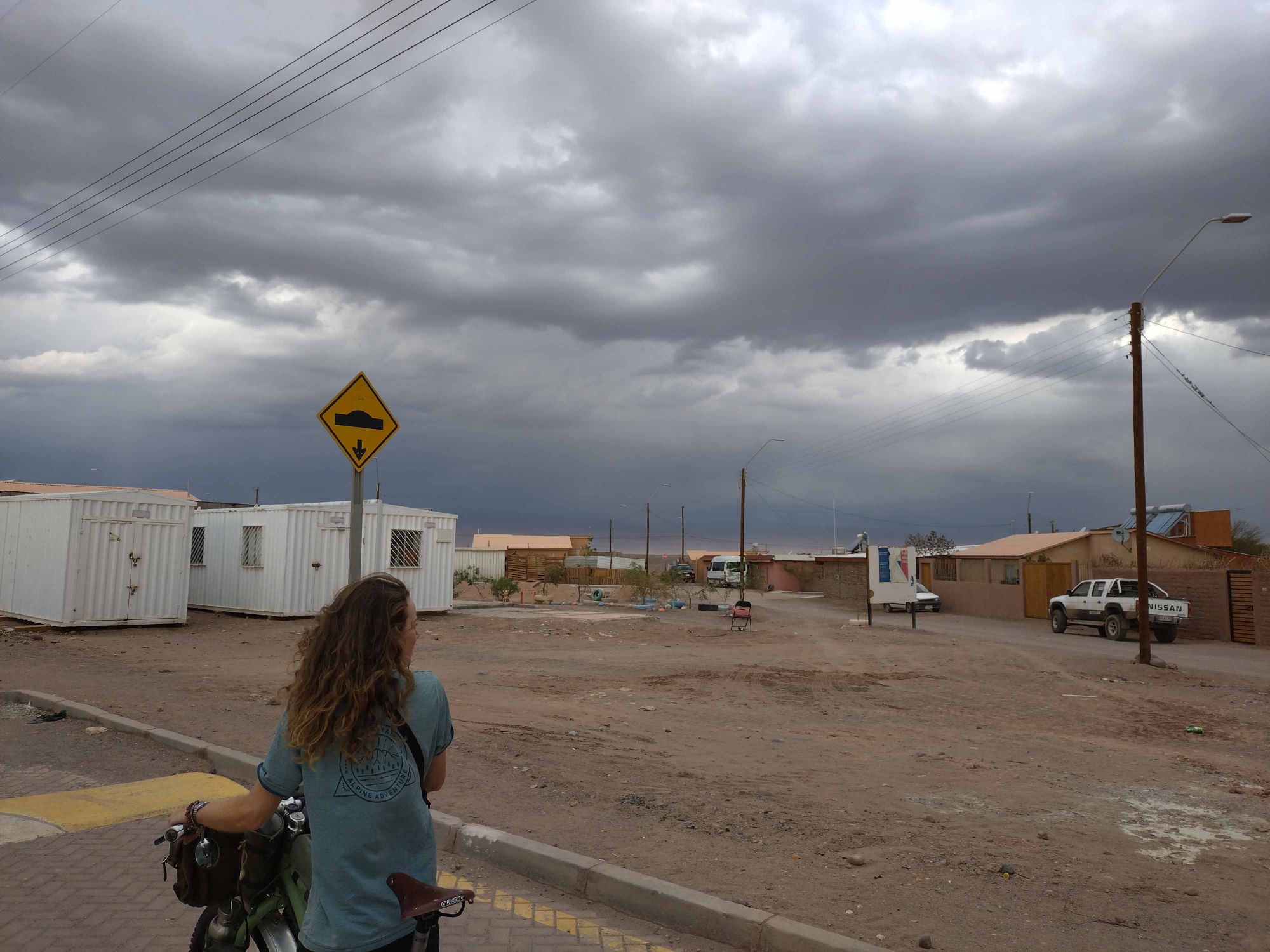
After a whole afternoon of cycling around the town to find some accommodation that wasn’t ridiculously overpriced, fully booked or a 2m square of concrete selling itself as a ‘campsite’ – we finally found the EcoLuna Hostel, a little out of town, and settled in with a cup of tea. And then the storms also settled in…. for the next five days! Huge electrical storms of black clouds, fork lightning and thunder that you felt through the floor arrived. It was an impressive show of the power of nature. What fell as rain on the town, was a huge dumping of snow on the mountains and passes along the border with Bolivia – where we were heading next. So until the storms passed we had no real option but to stay put. We were in the driest desert on Earth and we couldn’t leave for five days because of storms – what a bonkers upside down world we now live in!
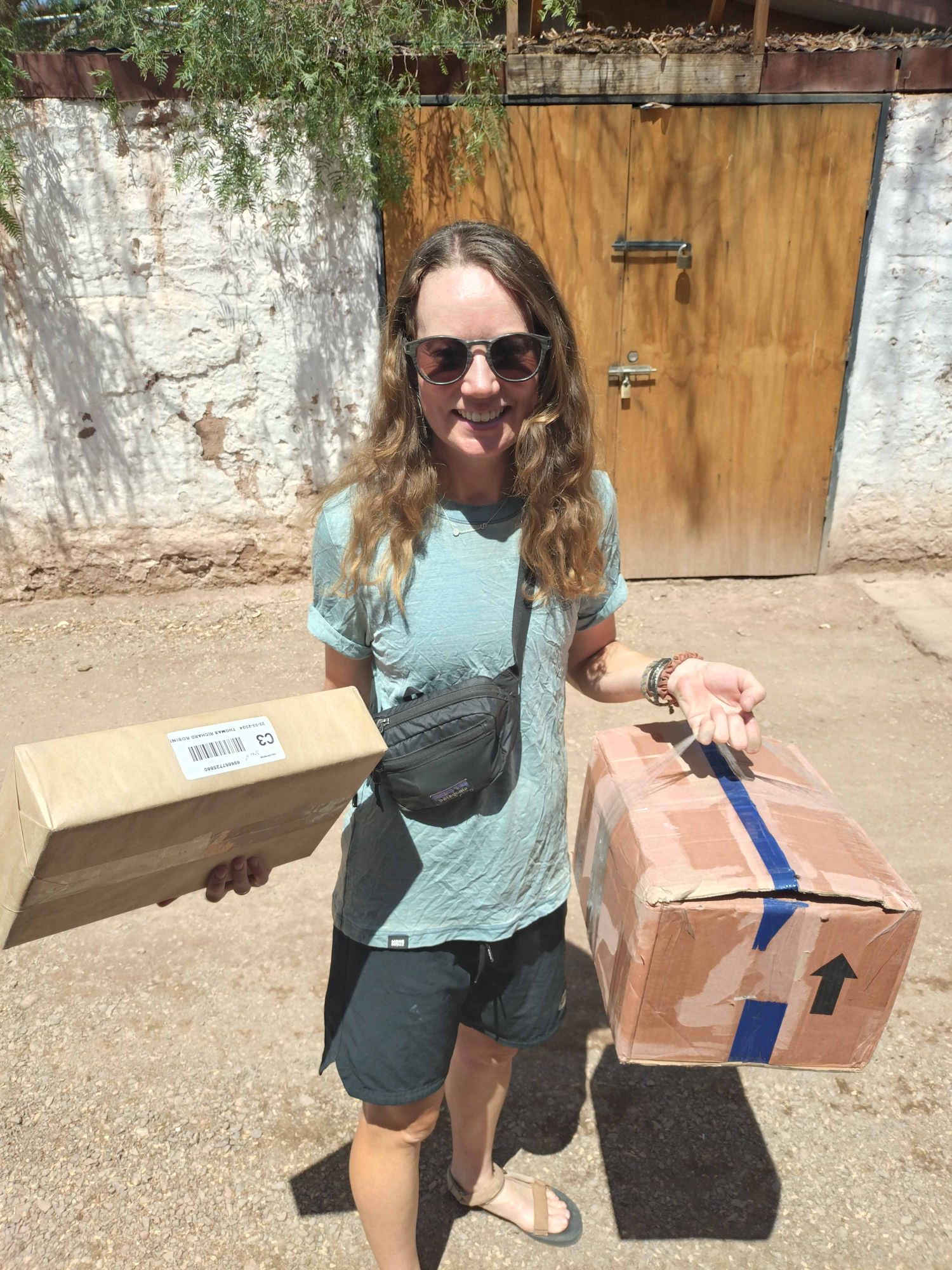
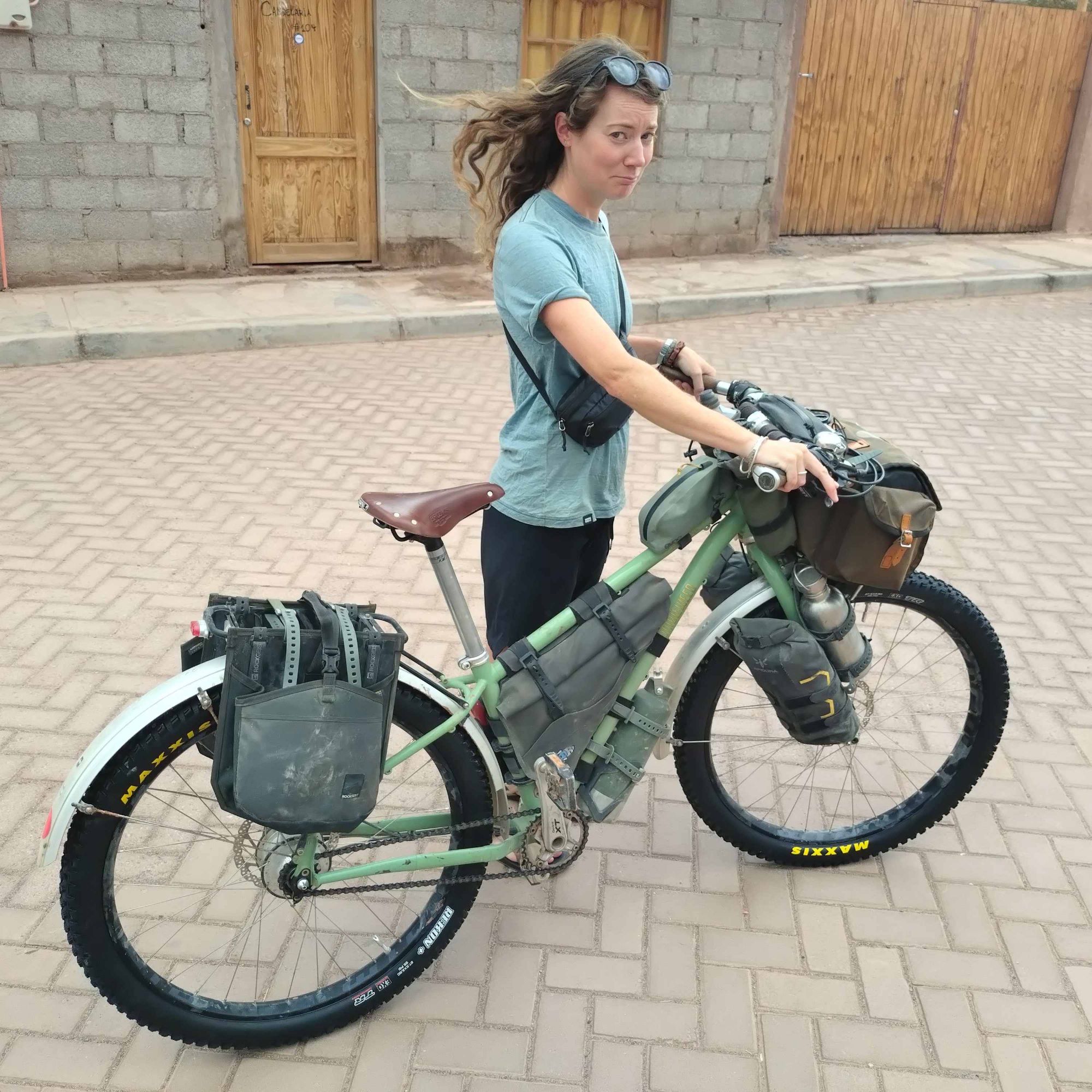
Having said all this, having a decent break was actually really what we needed. The storms were clearly the Universe’s way to make us stop moving for a few days. It gave Ted chance to recover more, gave us chance to do some more maintenance on the bikes (new tyres – although I wasn’t impressed with having to settle for black tyres rather than the snazzy tan-walled version I had set off with!) and a chance to replenish our vitamins with lots of hostel-cooked veggies.
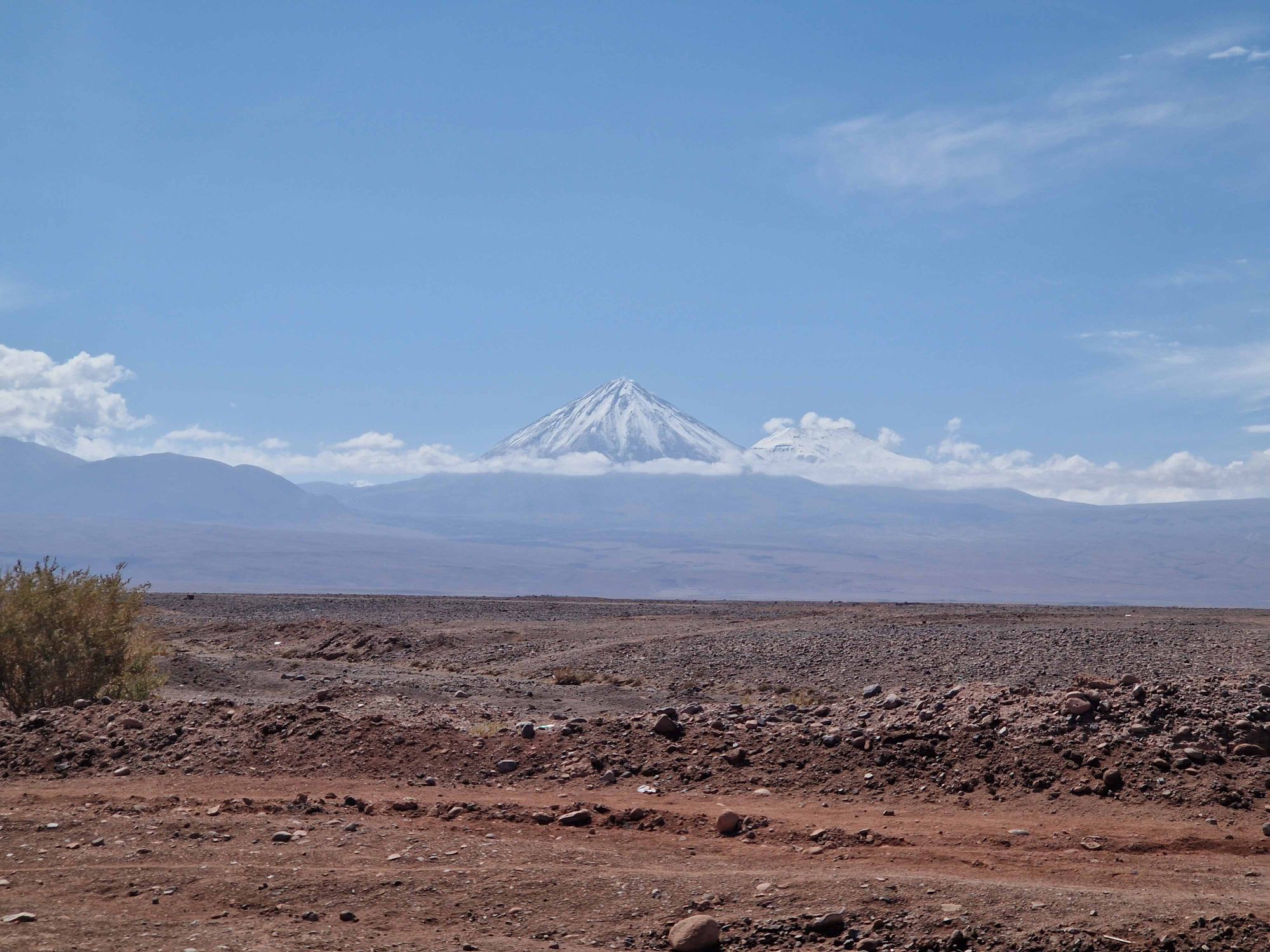
So once the storms had subsided we hit the road again. Obviously, the morning we set off again my body decided now was the time to catch Ted’s stomach bug, so I was not feeling great. The climb out of San Pedro de Atacama to Hito Cajon (the Bolivian border) is a monstrous climb of 2500m in 30km so given how I was feeling, we hitch-hiked with yet a other friendly trucker. The snow from the storms created a beautiful scene but thankfully the roads themselves were clear. Under huge big bright blue skies and very little wind we put on many extra layers and rolled out of Chile and into Bolivia.
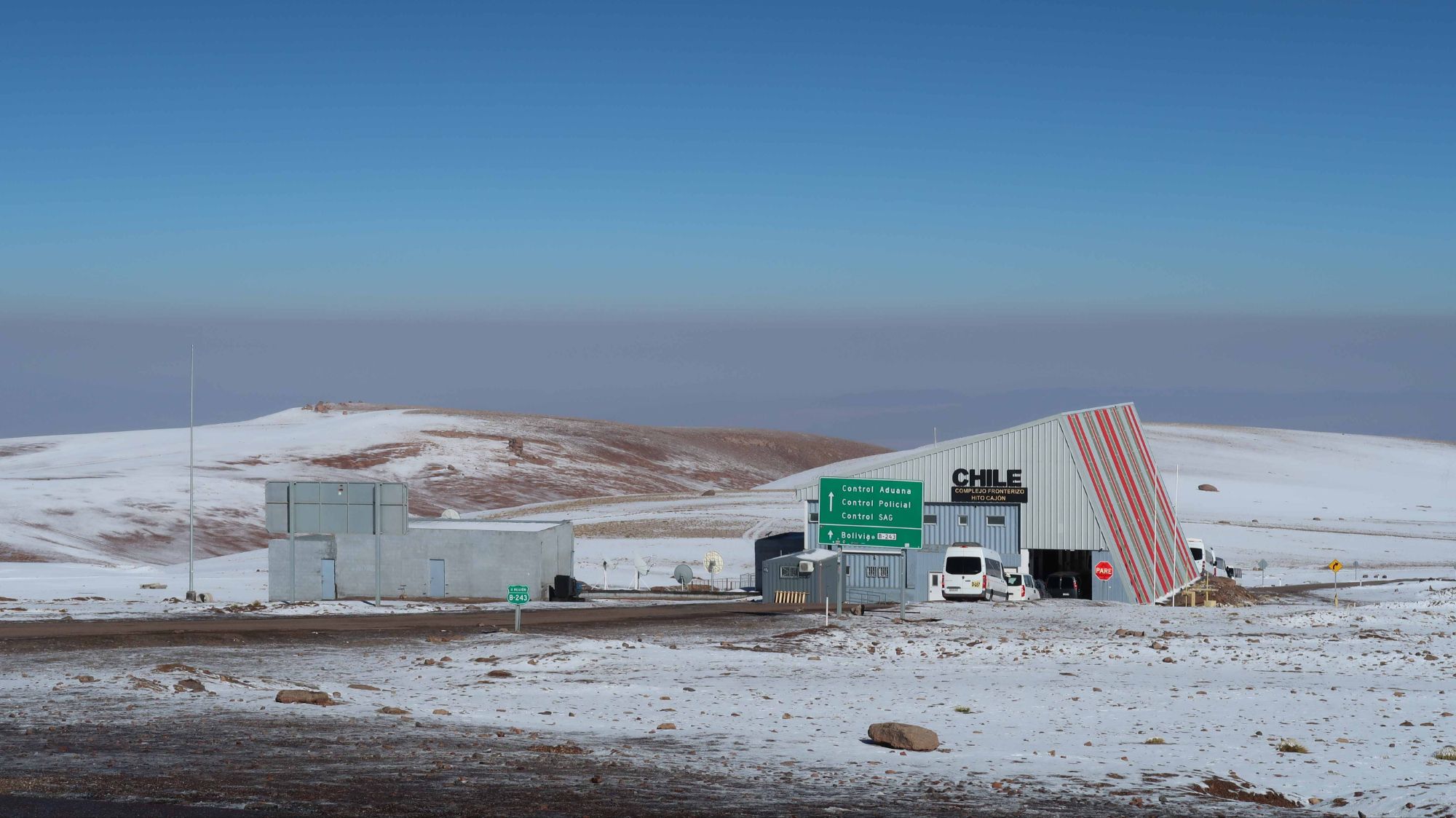
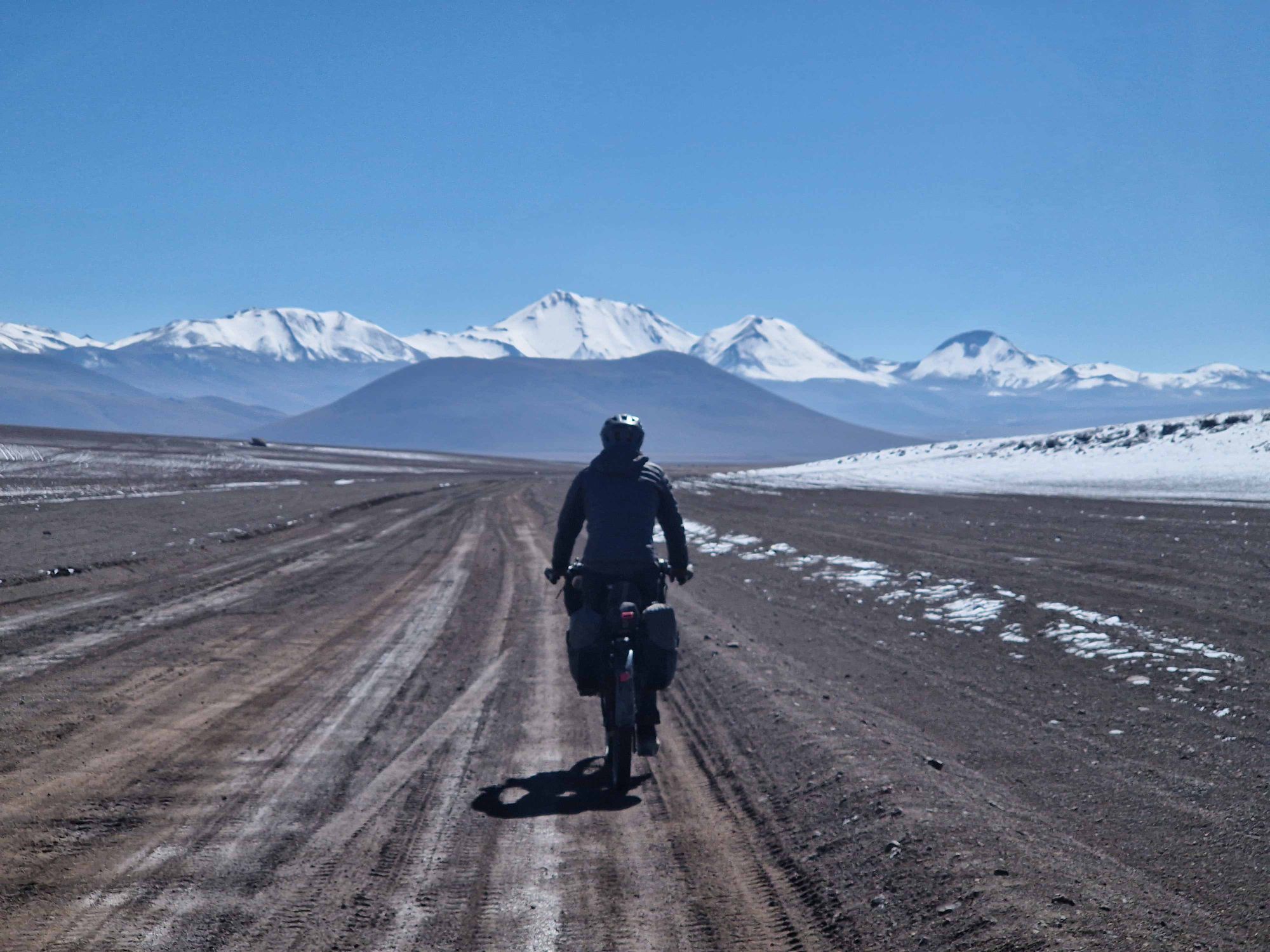
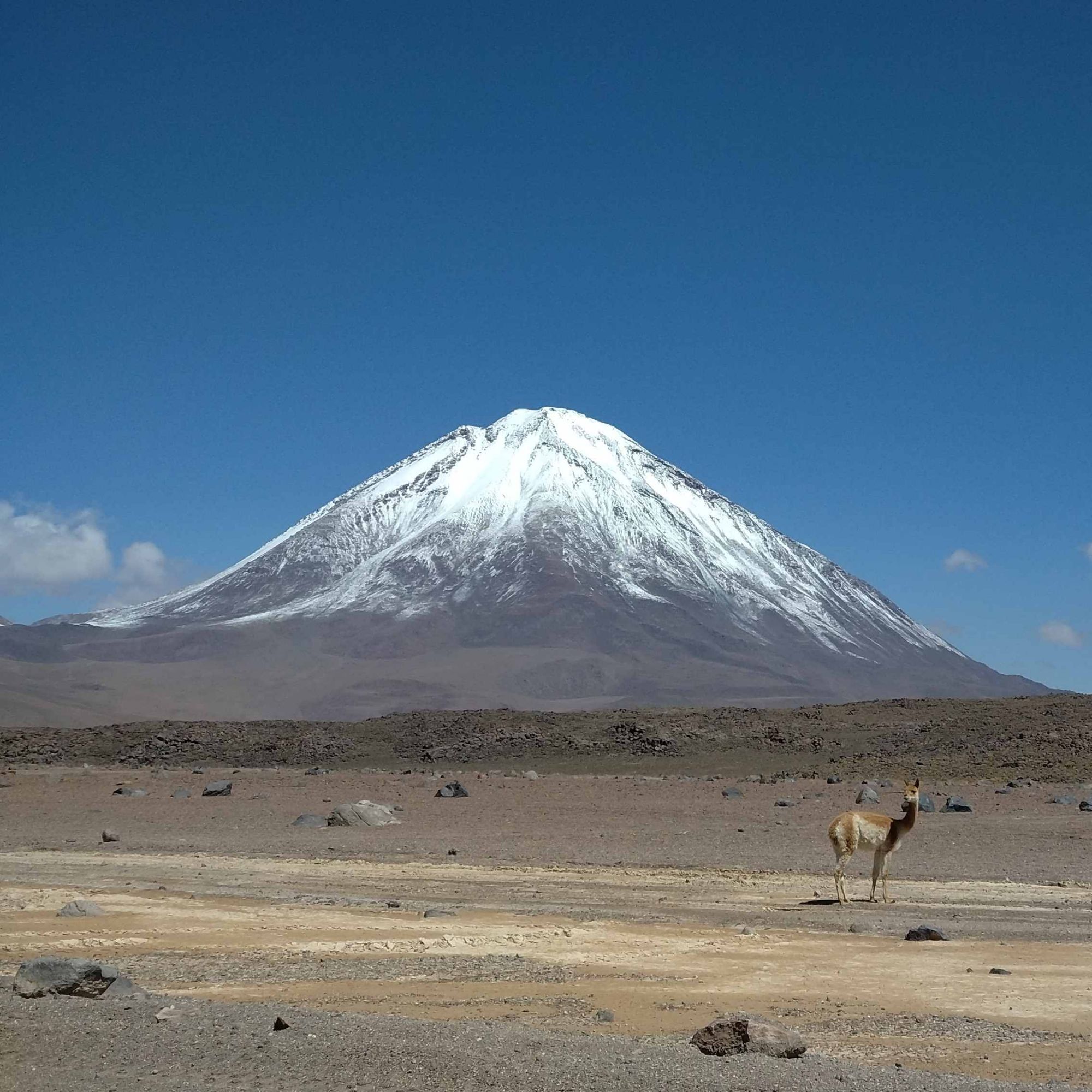
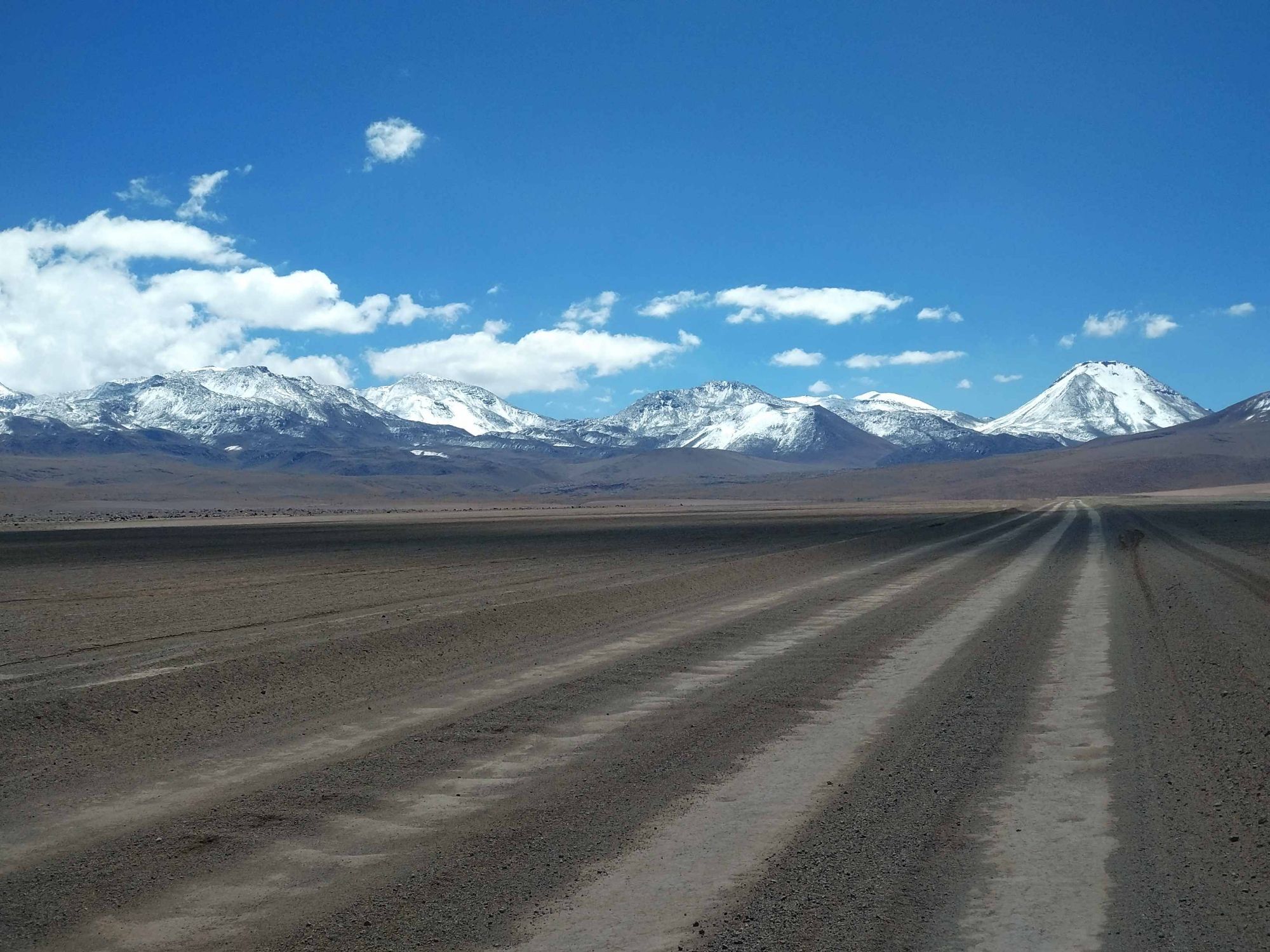
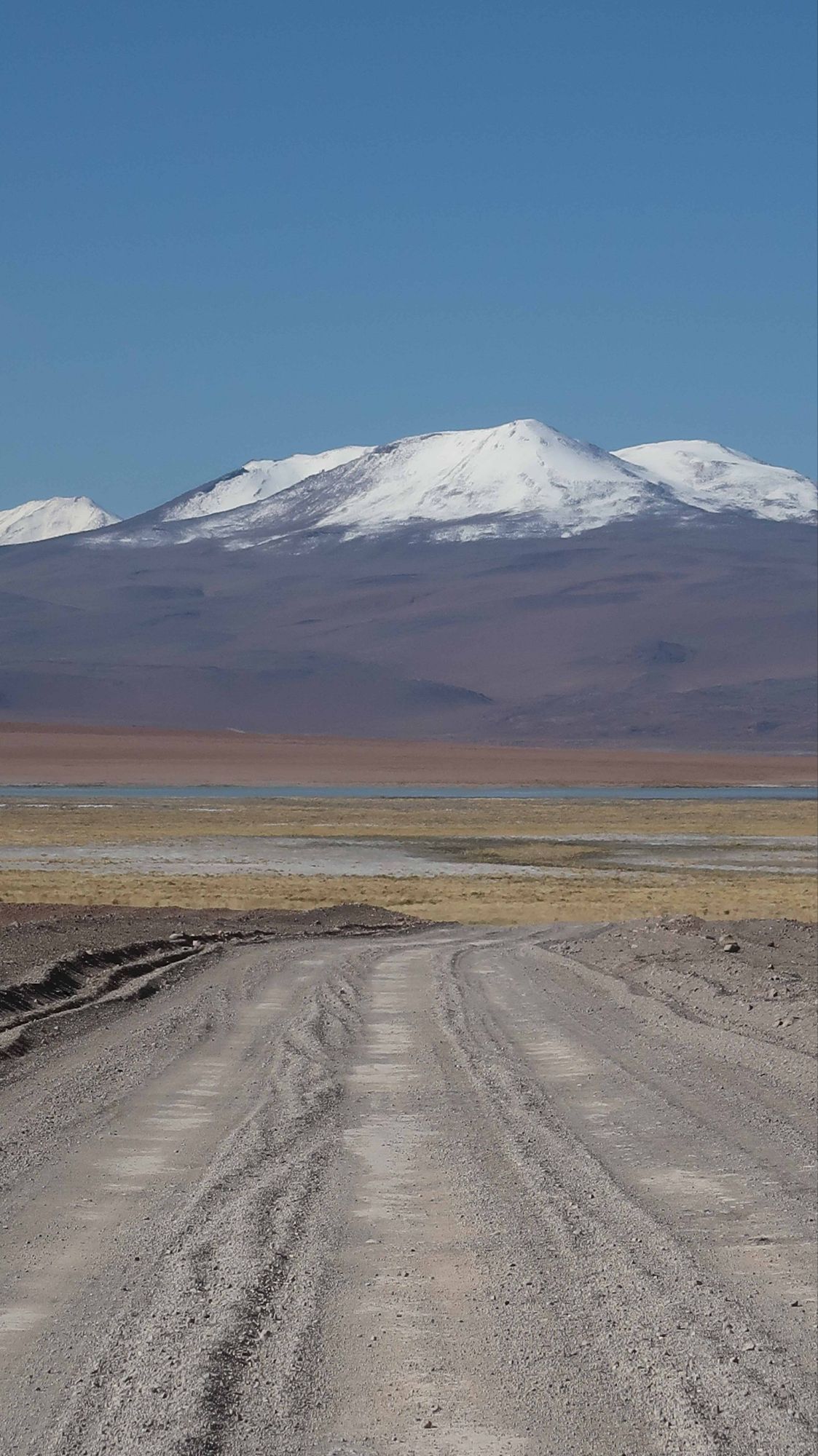
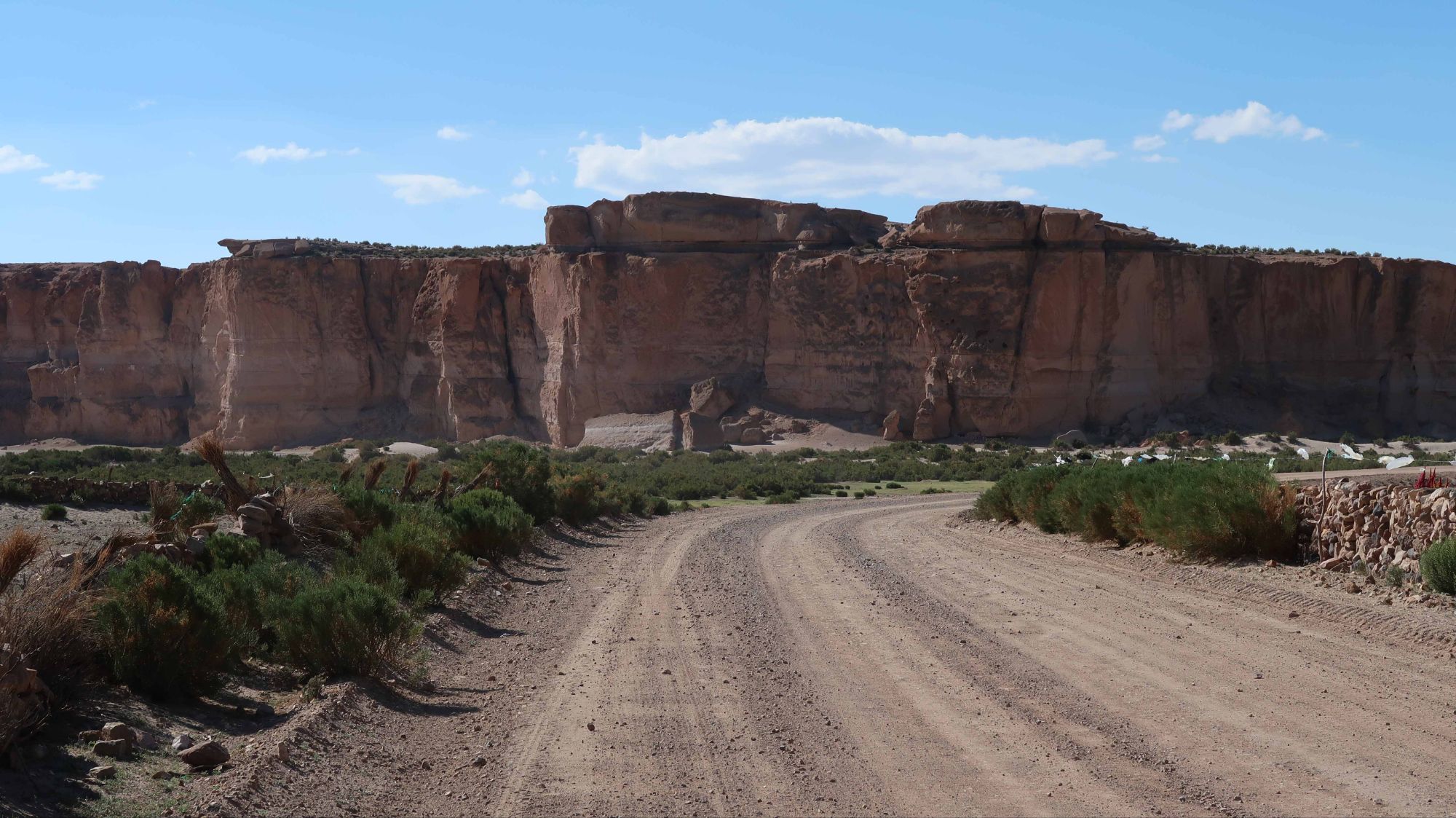
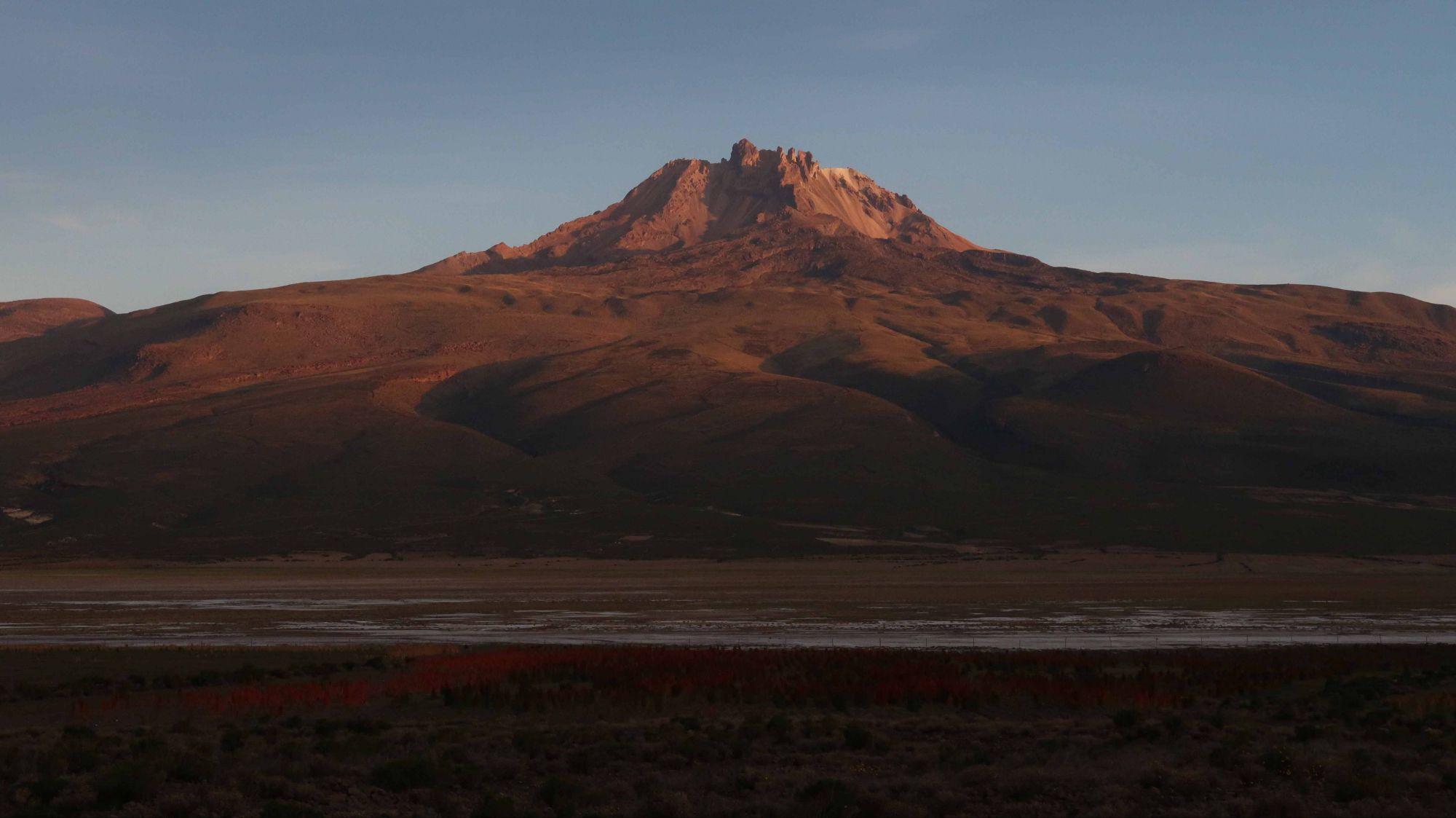

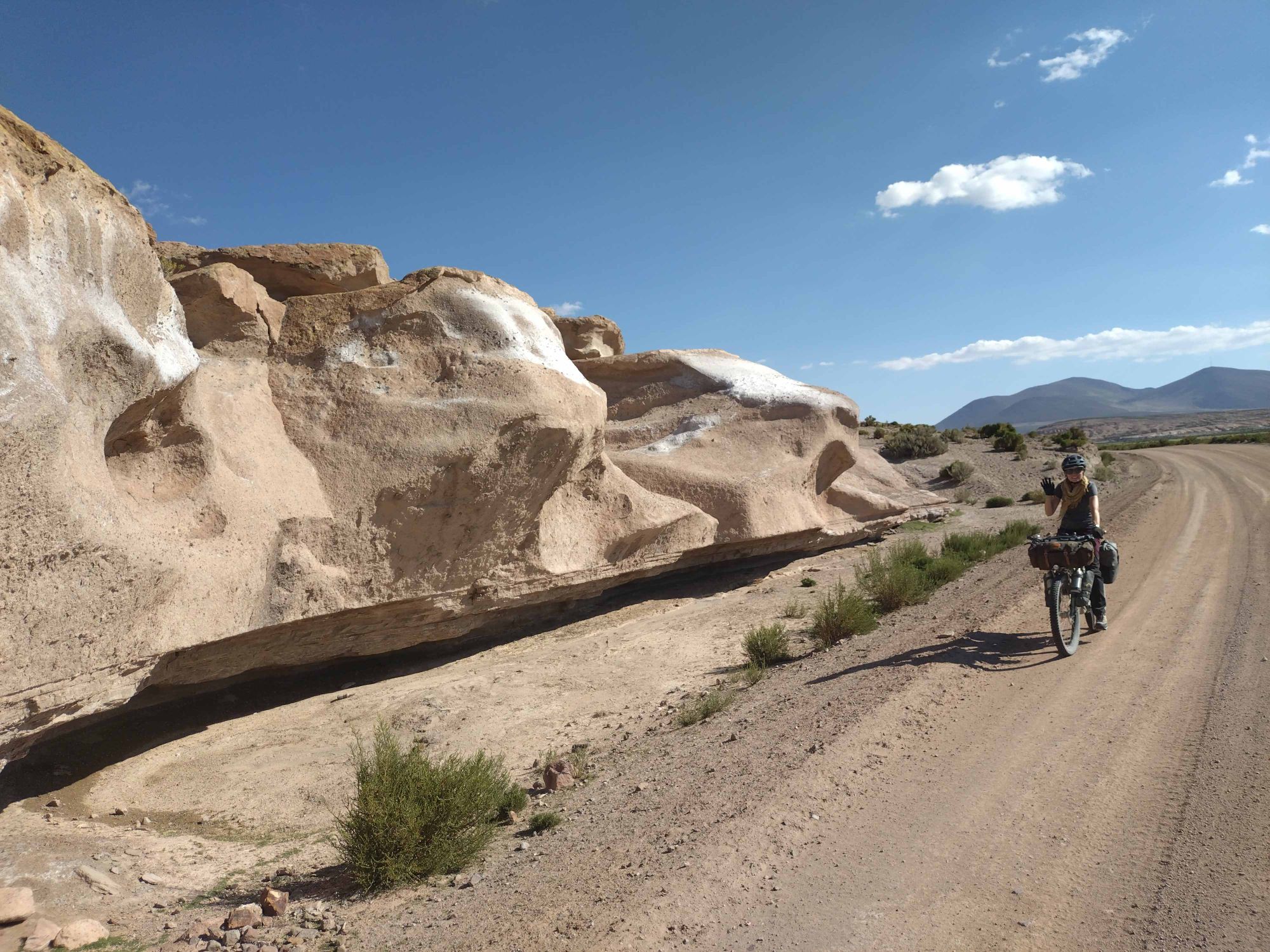

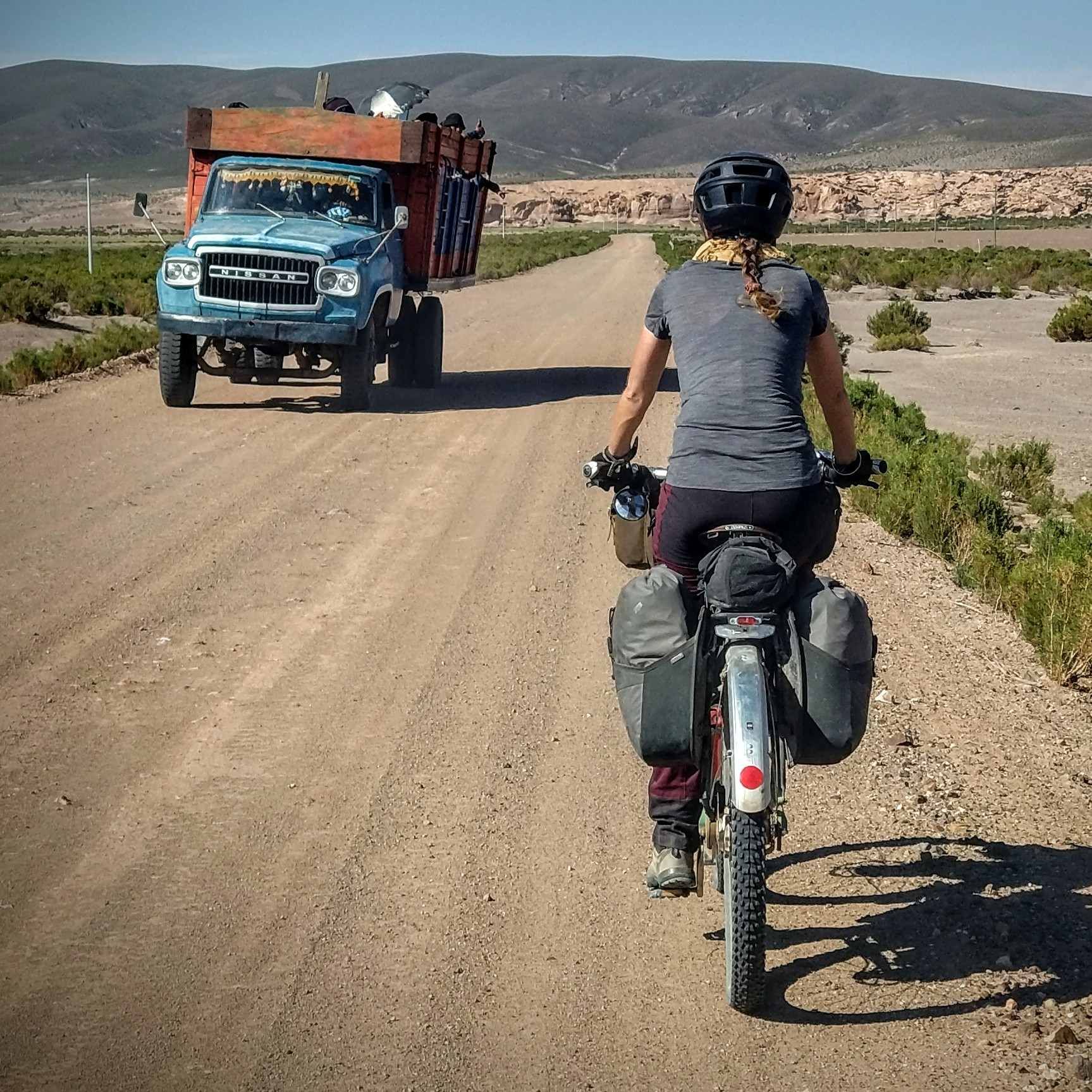
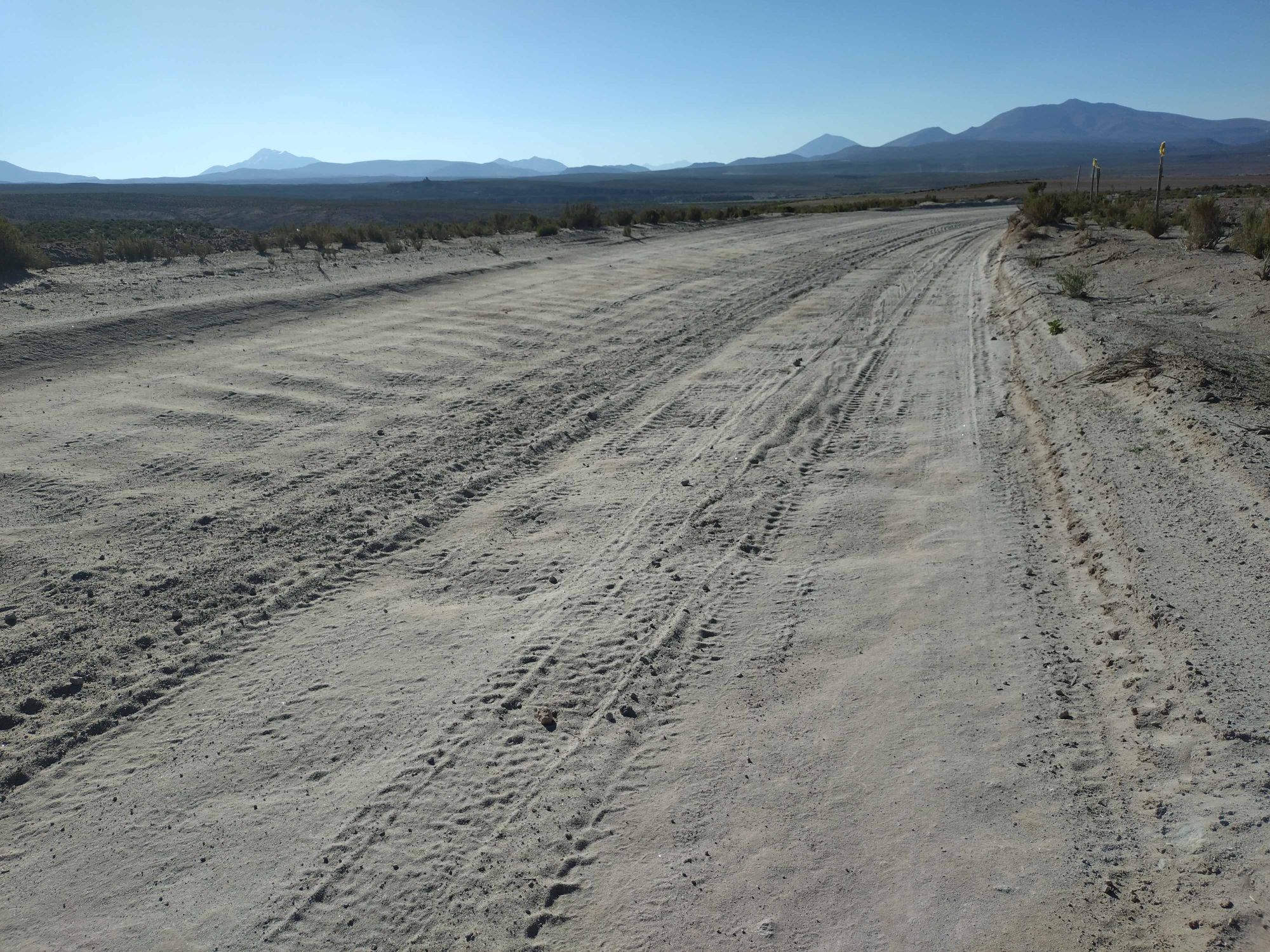
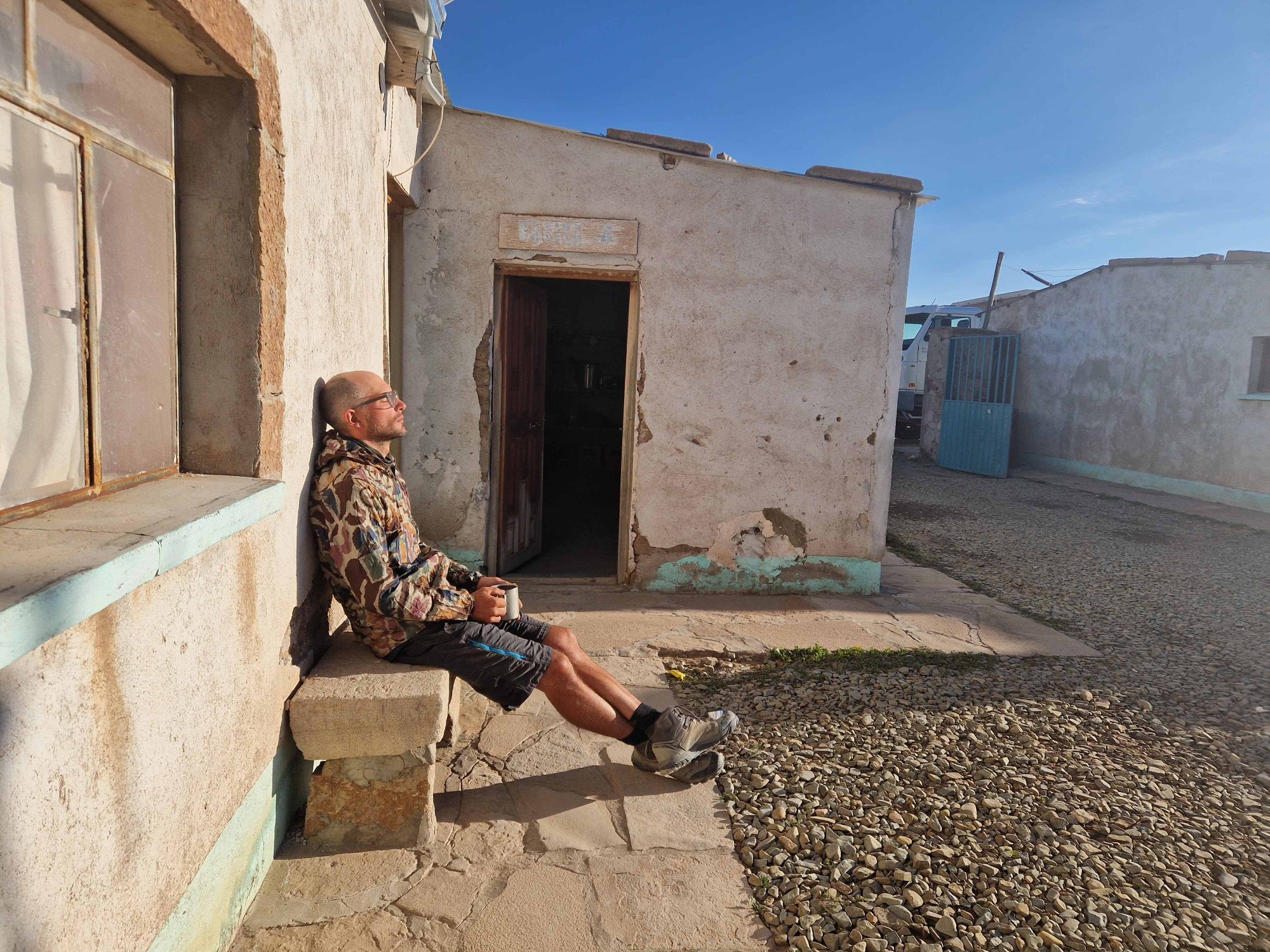
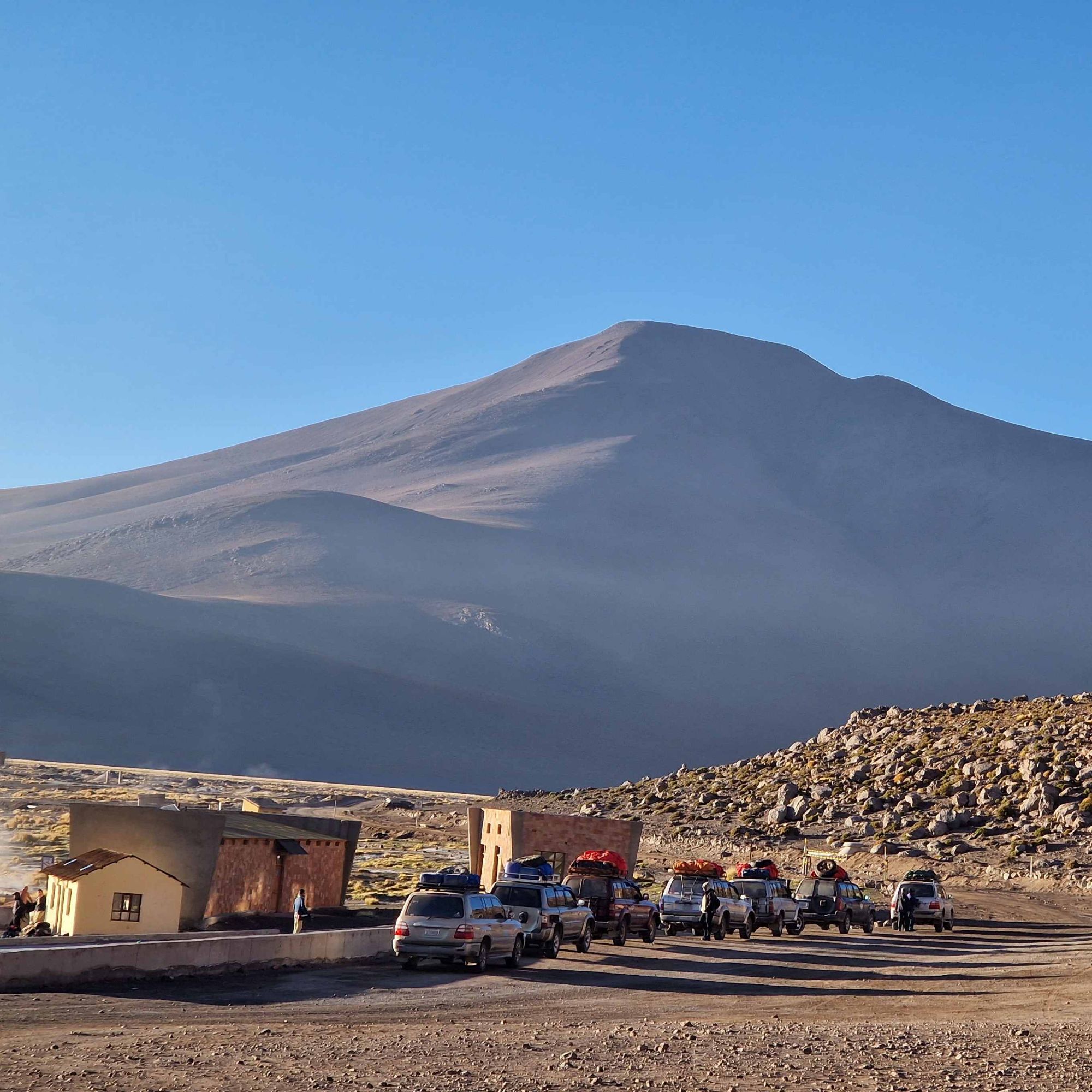
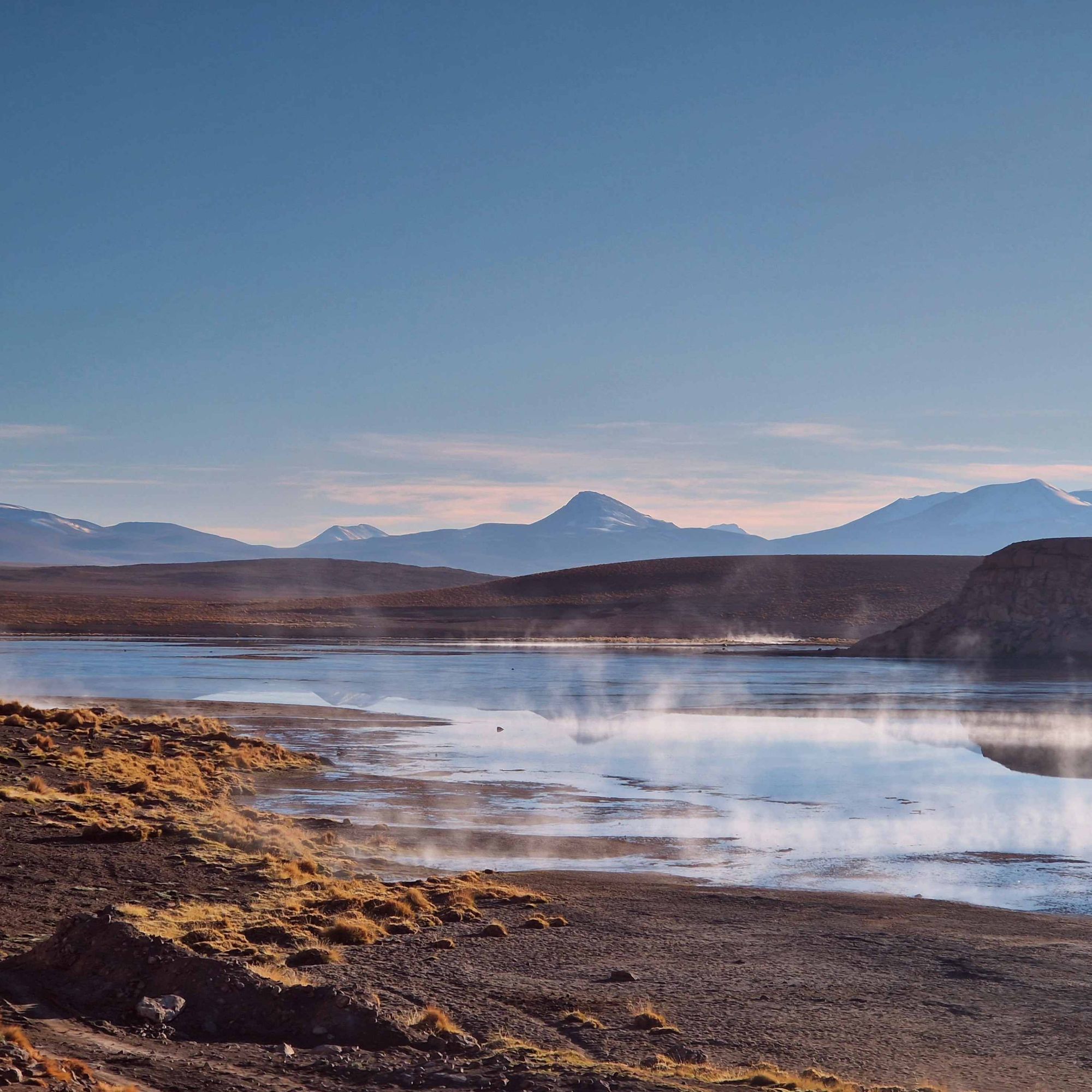
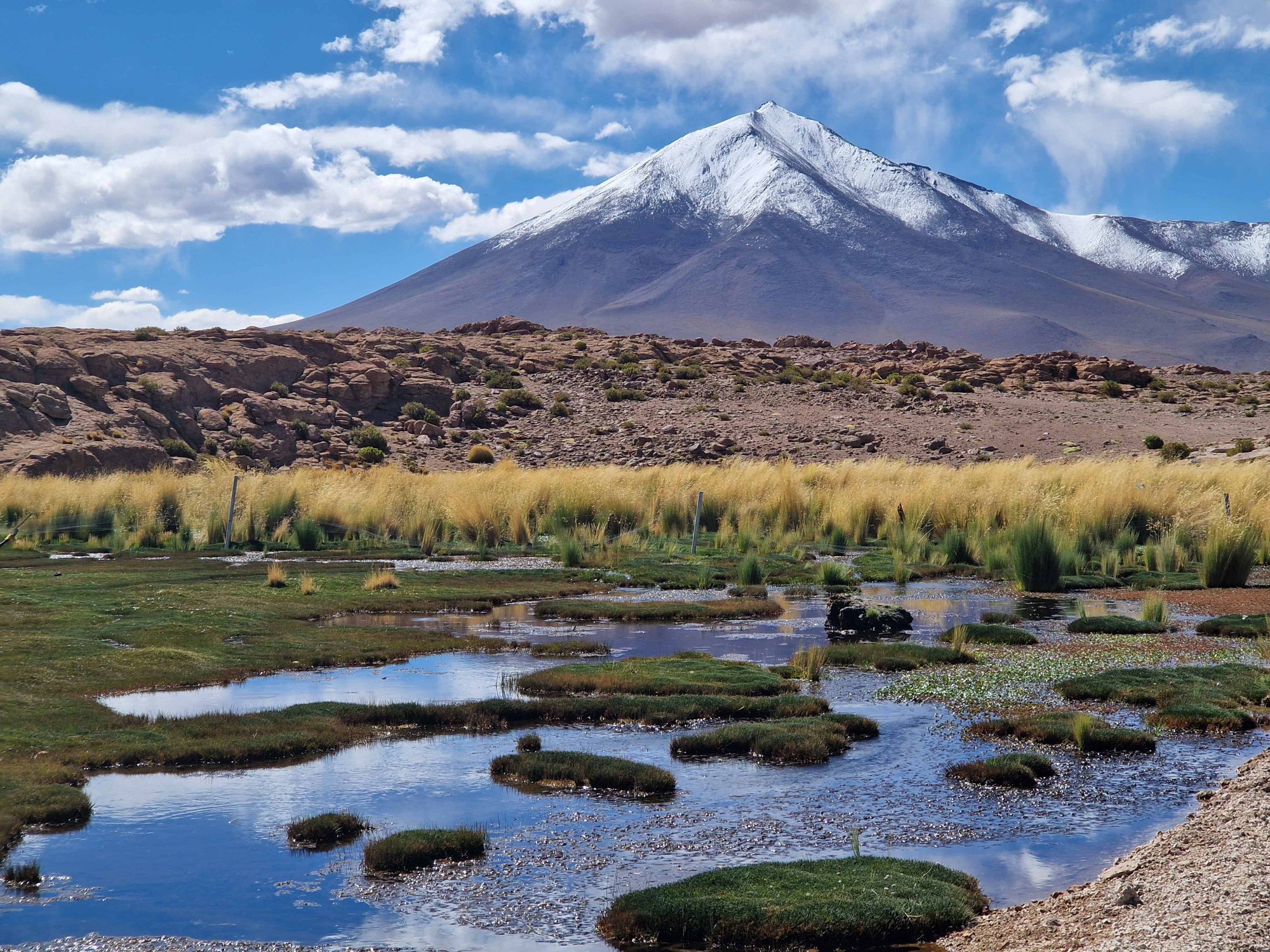
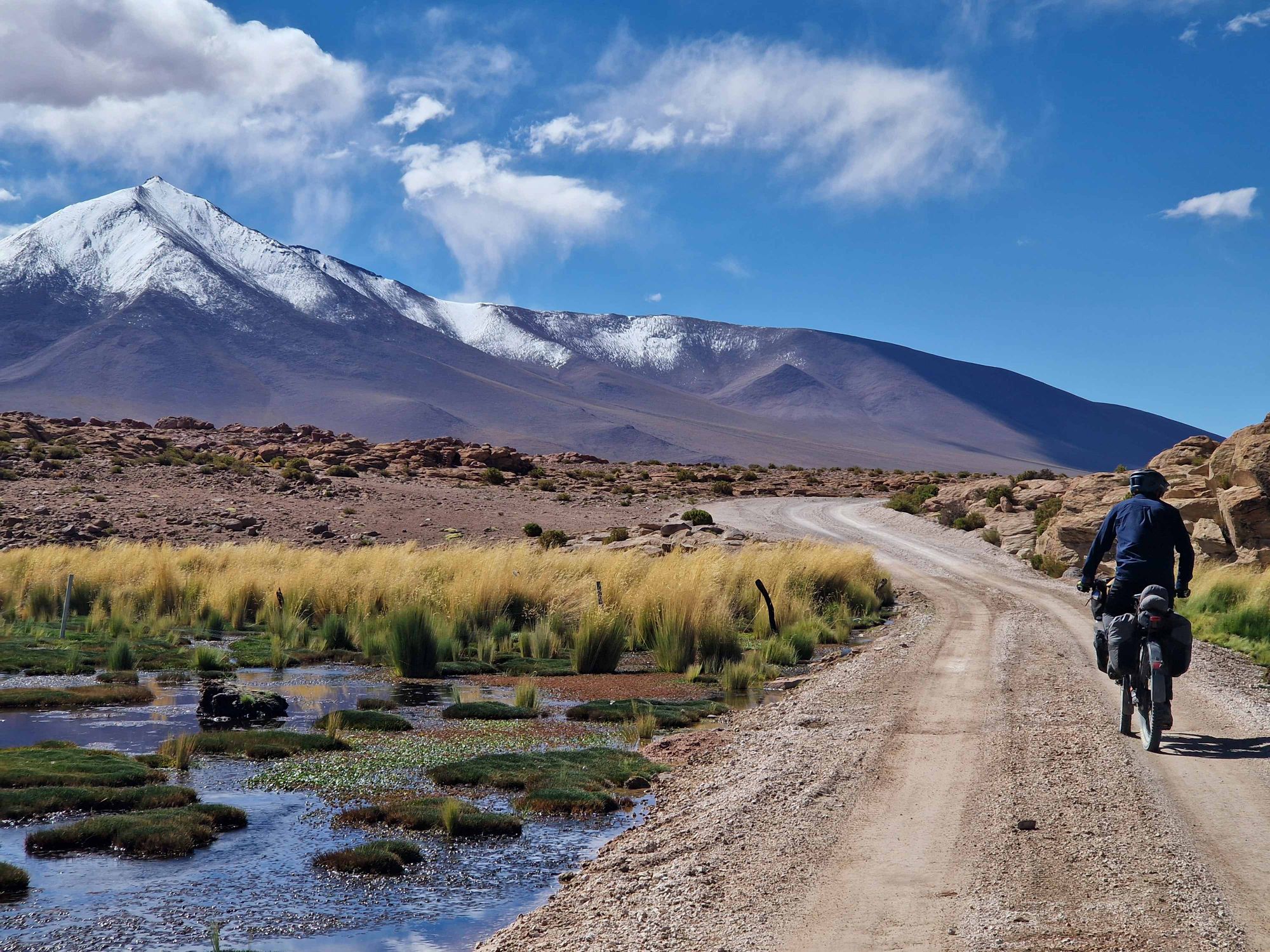
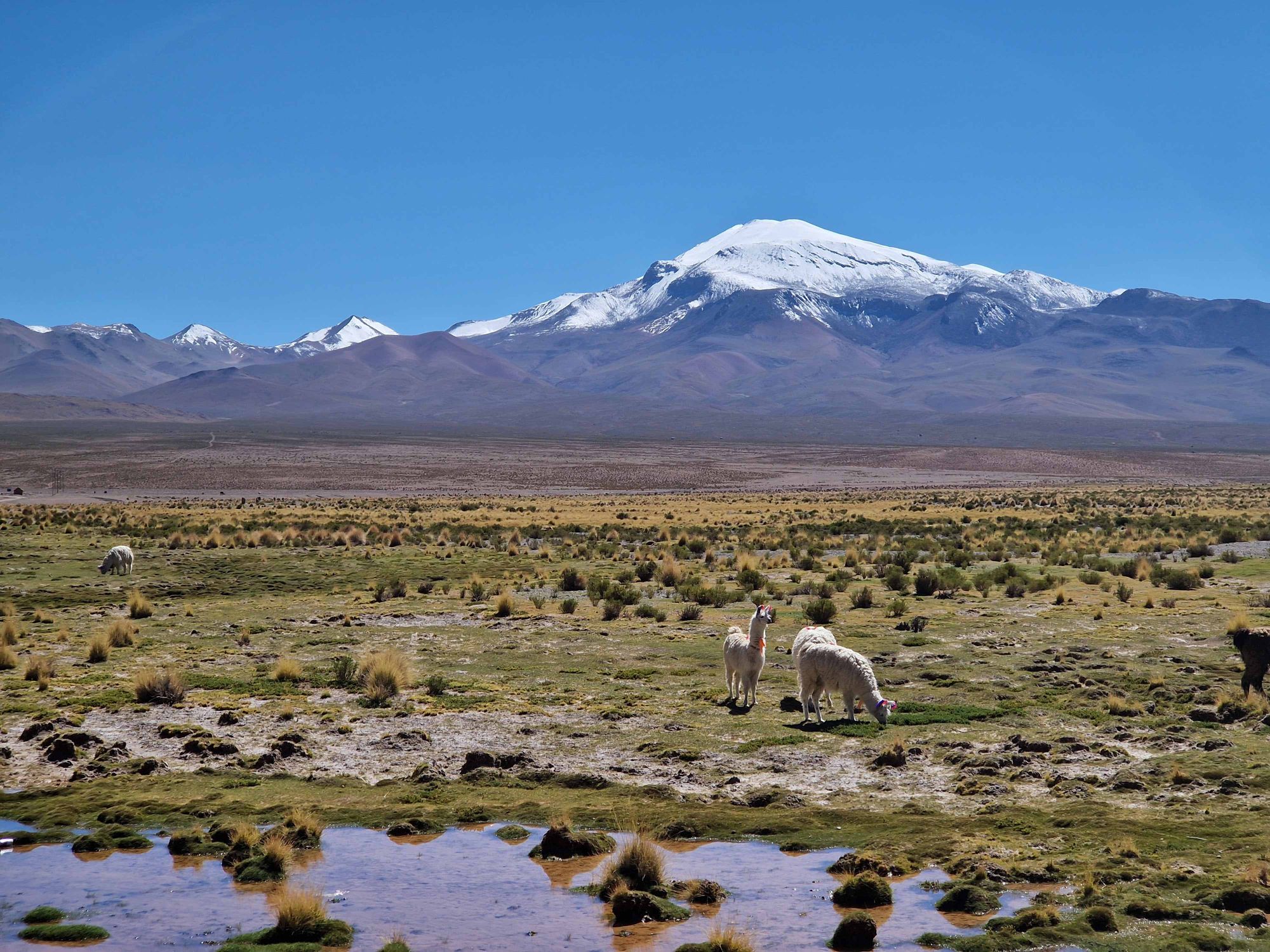
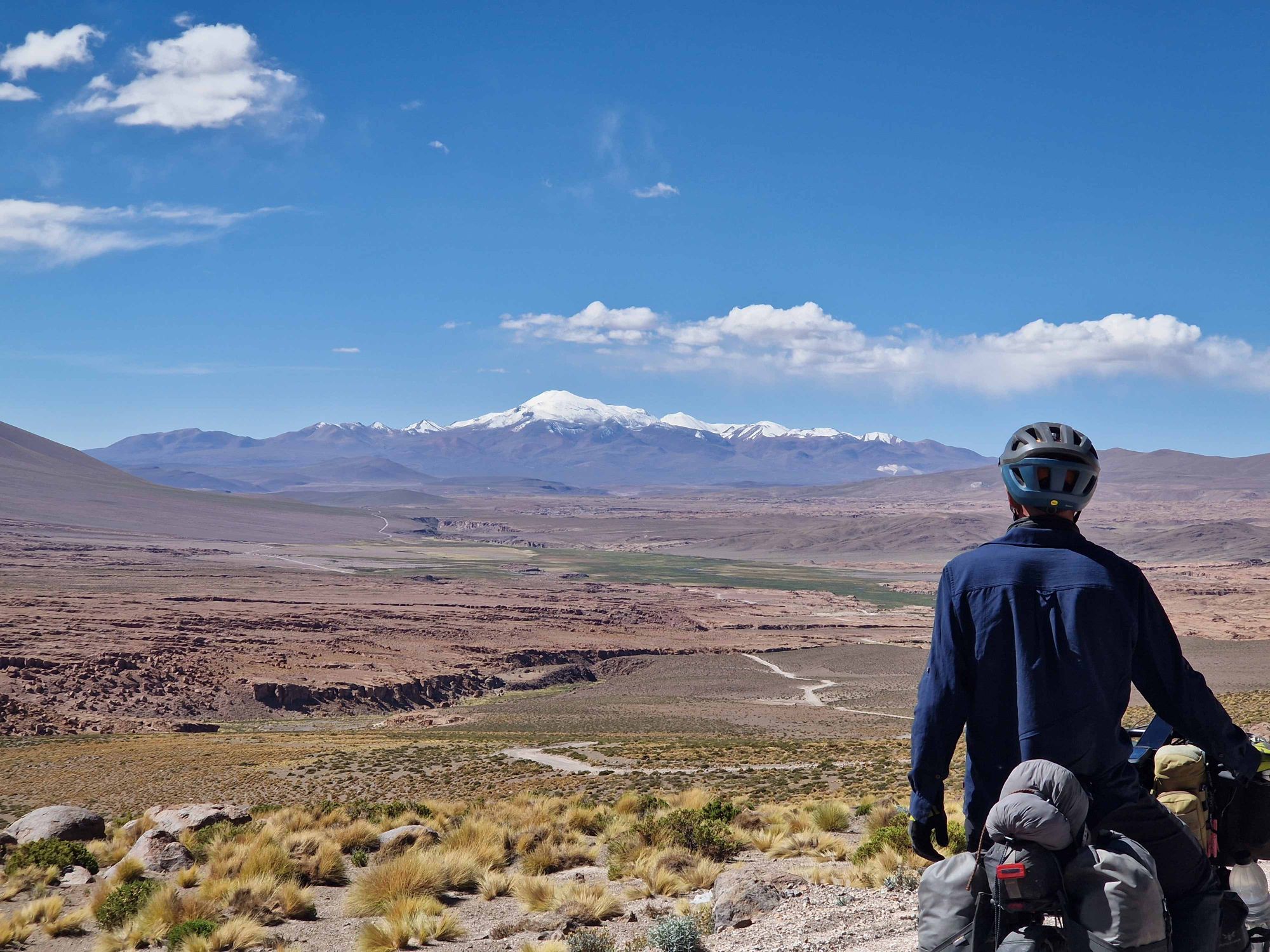
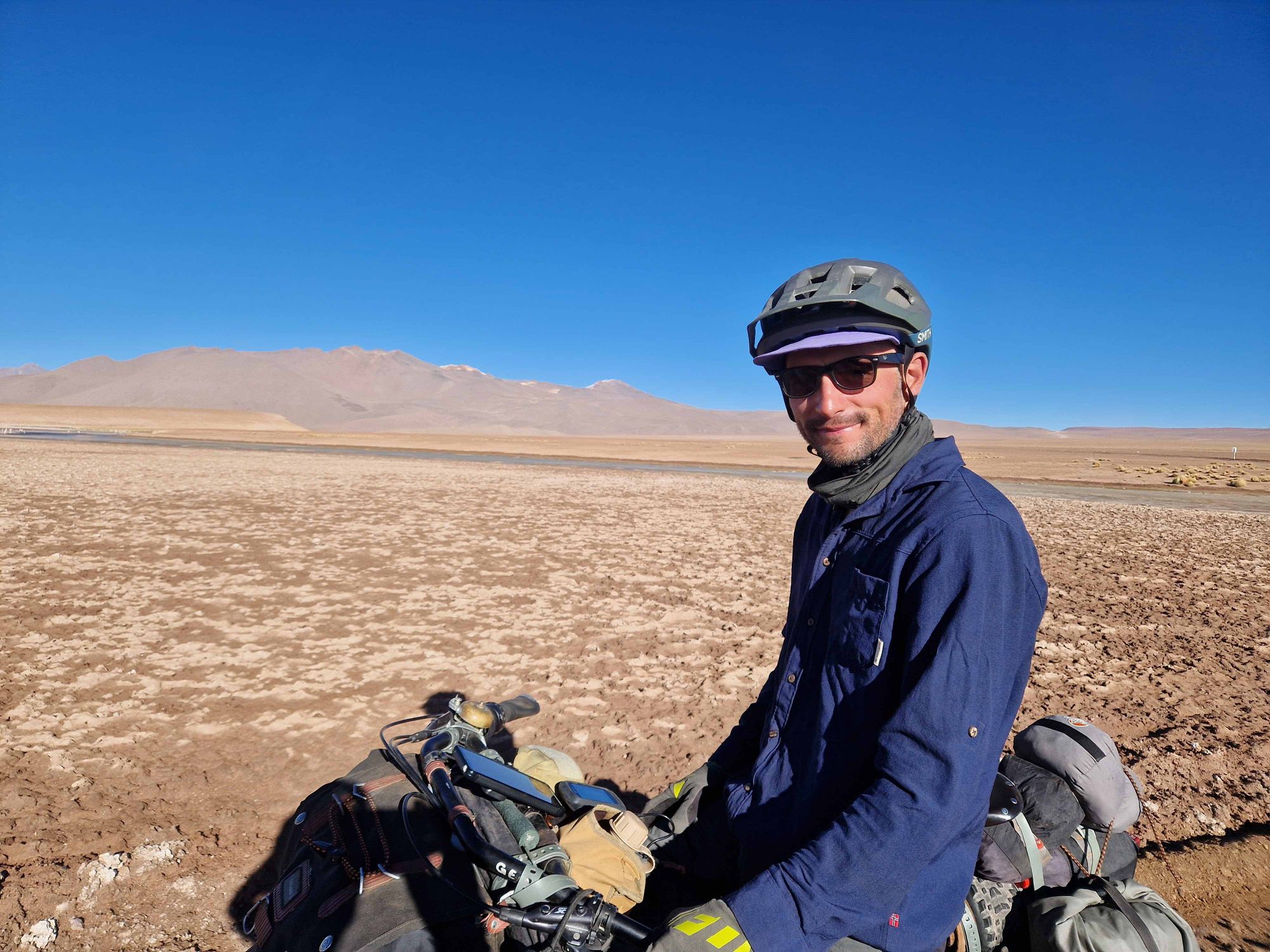
The scenery was instantly incredible – Snow-capped mountain tops, mineral blue coloured lakes, flamingos, vicunas (essentially wild skinny llama!) and volcano peaks. The roads were also instantly Bolivian i.e rubbish quality, deep sand and corrugated. It was hard work, especially at the altitude of over 4500m. This part of our route is part of the famous ‘Lagunas Route’ taken by tourists around the regions geological attractions and across the Salar de Uyuni – the famous Bolivian Salt Flats. So it was no suprise that the only traffic we saw were tourist 4x4s who whizzed by, covering us in clouds of dust. By late afternoon I was feeling pretty rubbish and we reached Laguna Chalviri where there are some thermal springs and accompanying tourist accommodation. So we tried our luck at finding a room that wasn’t already taken up by the tour groups. And wow what an experience it was. We had been told that the Bolivians weren’t as friendly as the Argentinians or Chileans, but what we didn’t expect was outright rudeness. We had doors slammed in our faces, hotel receptionists laughing at us and at one hostel they were blaring music so loudly neither one of us could hear what the other was saying, but they refused to turn it down when we asked. We were about to give up when the final hostel came up trumps – it was extremely basic, but it had a magical view over the thermal hotpools and the mountains beyond, plus the owner actually smiled and welcomed us in – bonus! We still couldn’t quite get over how rude the other hostels had been to us though. We wondered whether they are just sick of seeing tourists – having to accommodate so many, day after day, in a remote place with few services where this would be difficult to do, or maybe they were just grumpy, who knows!?!
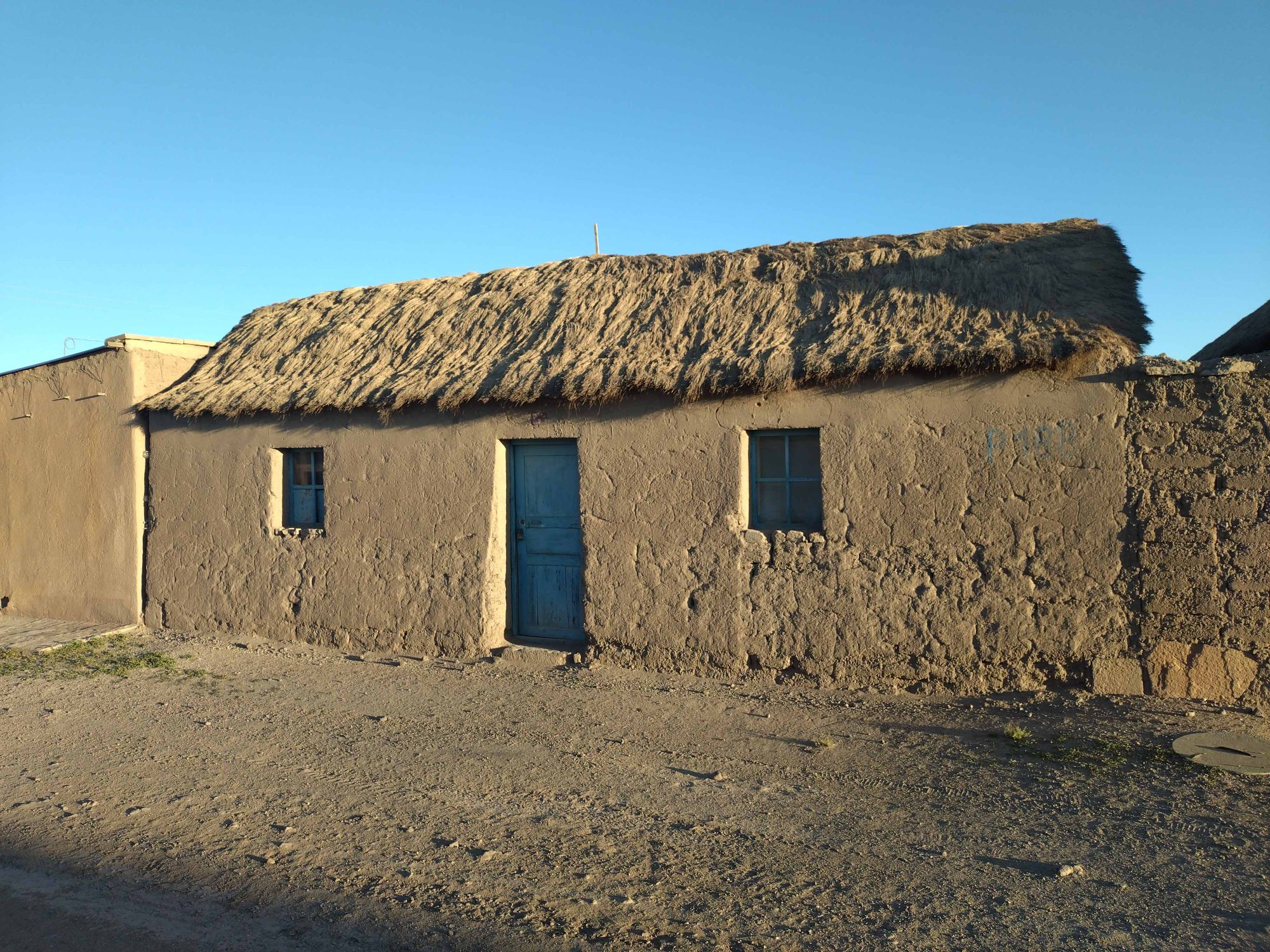
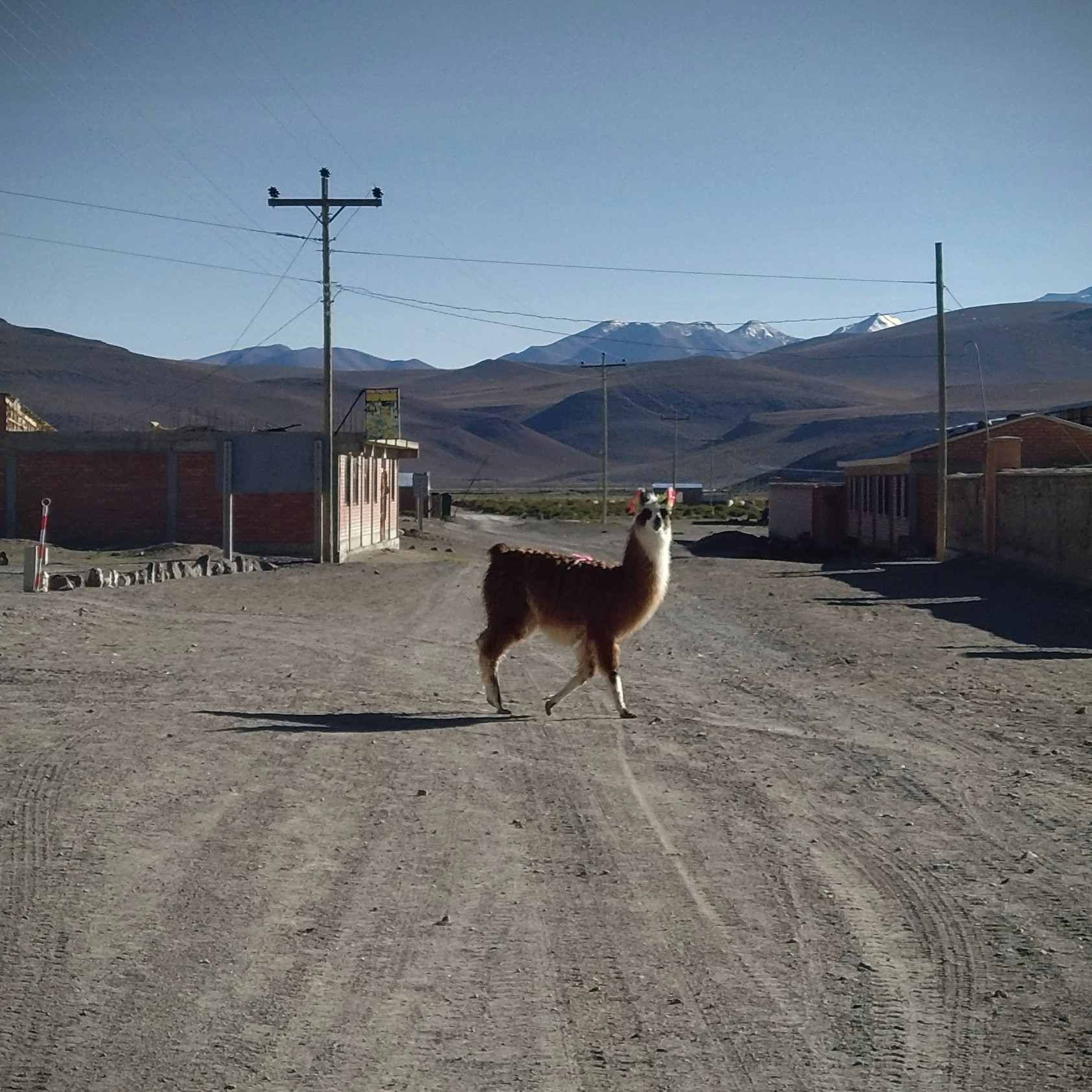
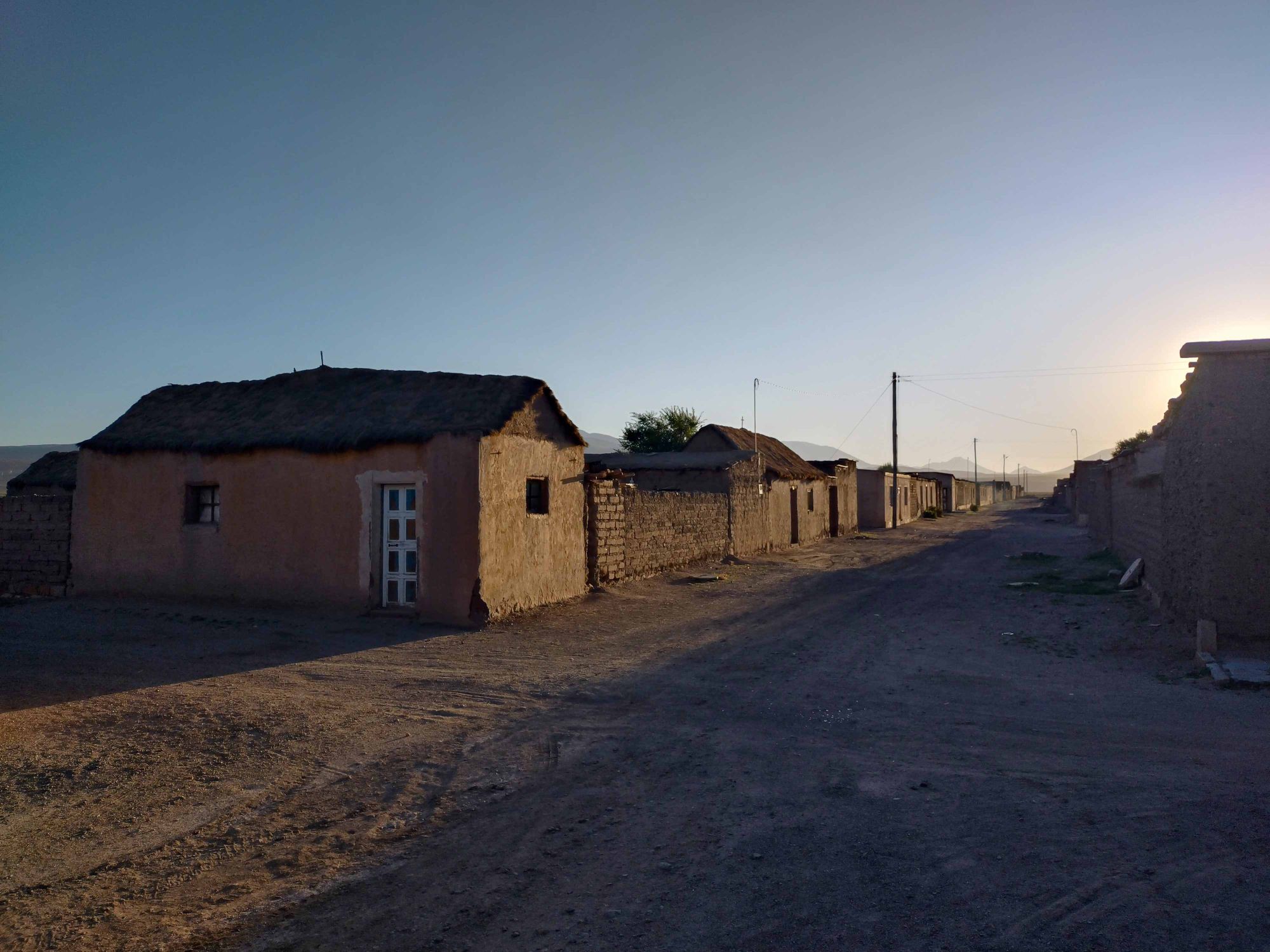
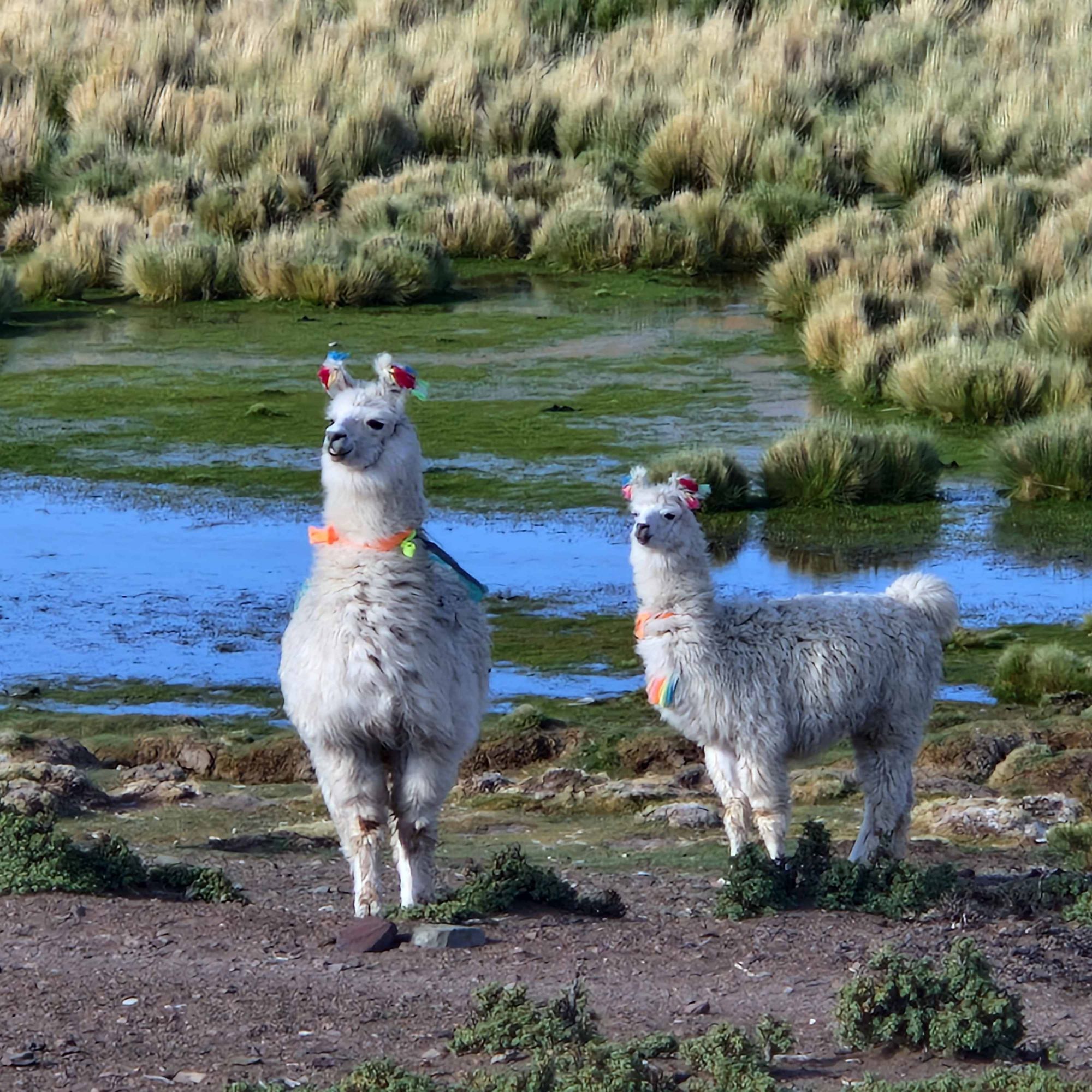
The following morning we thankfully peeled off the usual tourist route and over the next few days we wiggled our way through beautiful mountain scenery. We became accustomed to the herds of llama that now roamed alongside us, their colourful adornments and characterful faces making for some cheery company. We also settled into the Bolivian ways a little more and realised that they are not all as rude as those we met at the Laguna Chalviri hostels, but they are definitely more closed off. We rolled through many small rural villages, most of which are like ghost towns, where on first glance you’d think no one lived there. But we learnt to wait a moment or two and usually we’d then see an old lady in traditional Bolivian dress, complete with wooly leggings, pleated skirt, braided hair sticking out from beneath her wide brimmed felt hat, wandering the streets. We learnt to ask whoever we saw if there was a shop or a hostel (as there are generally no signs on the buildings). We would then find the building and spend the next few minutes ringing the bell or knocking on the door to find someone in the building. It always felt slightly confusing and frustrating, we were never 100% sure we were at the right building or if anyone was going to answer at all. Sometimes we had to just wait on the doorstep for half an hour for someone to turn up – Ted’s patience was pushed to the limit on many occasions.
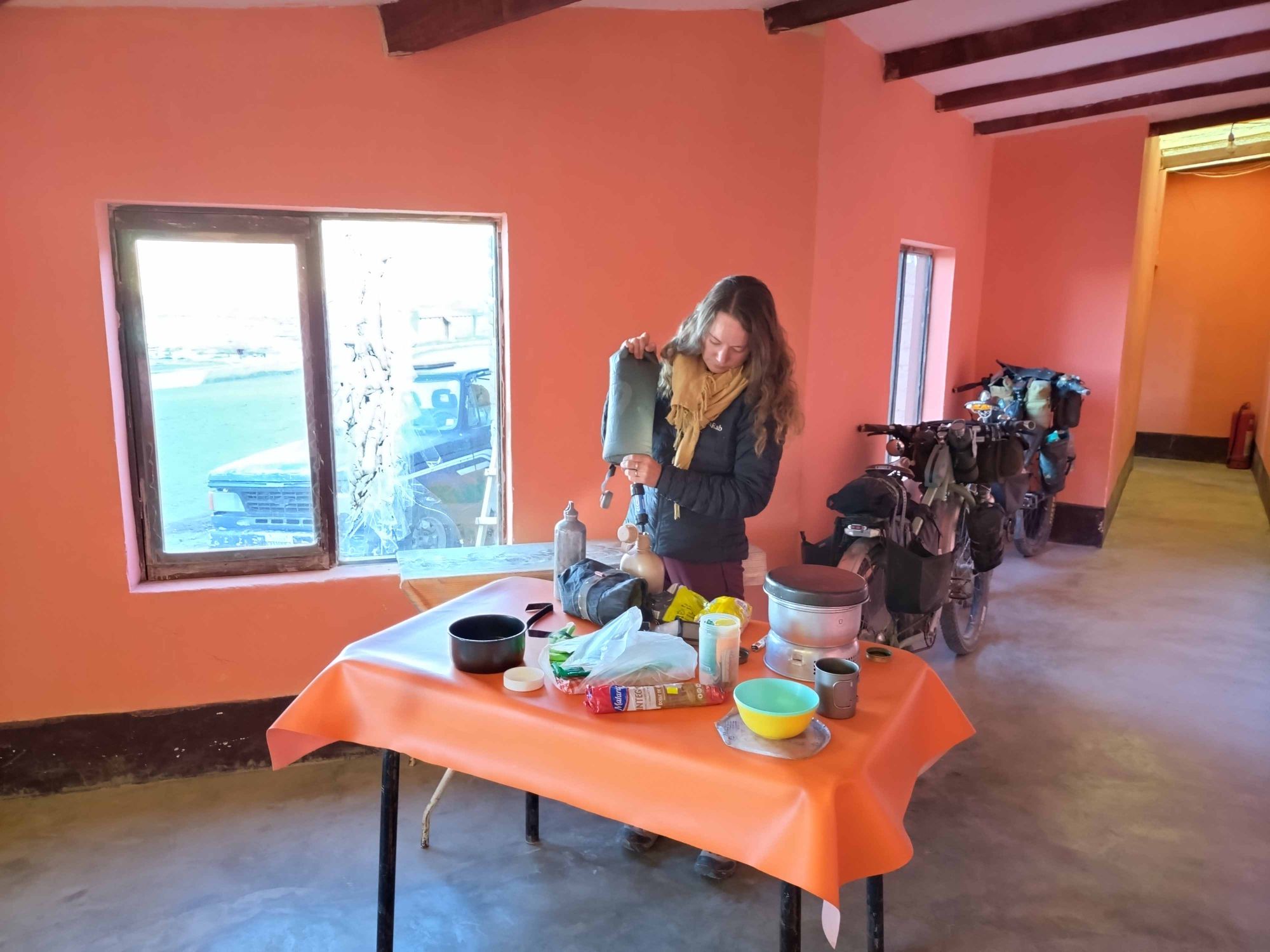
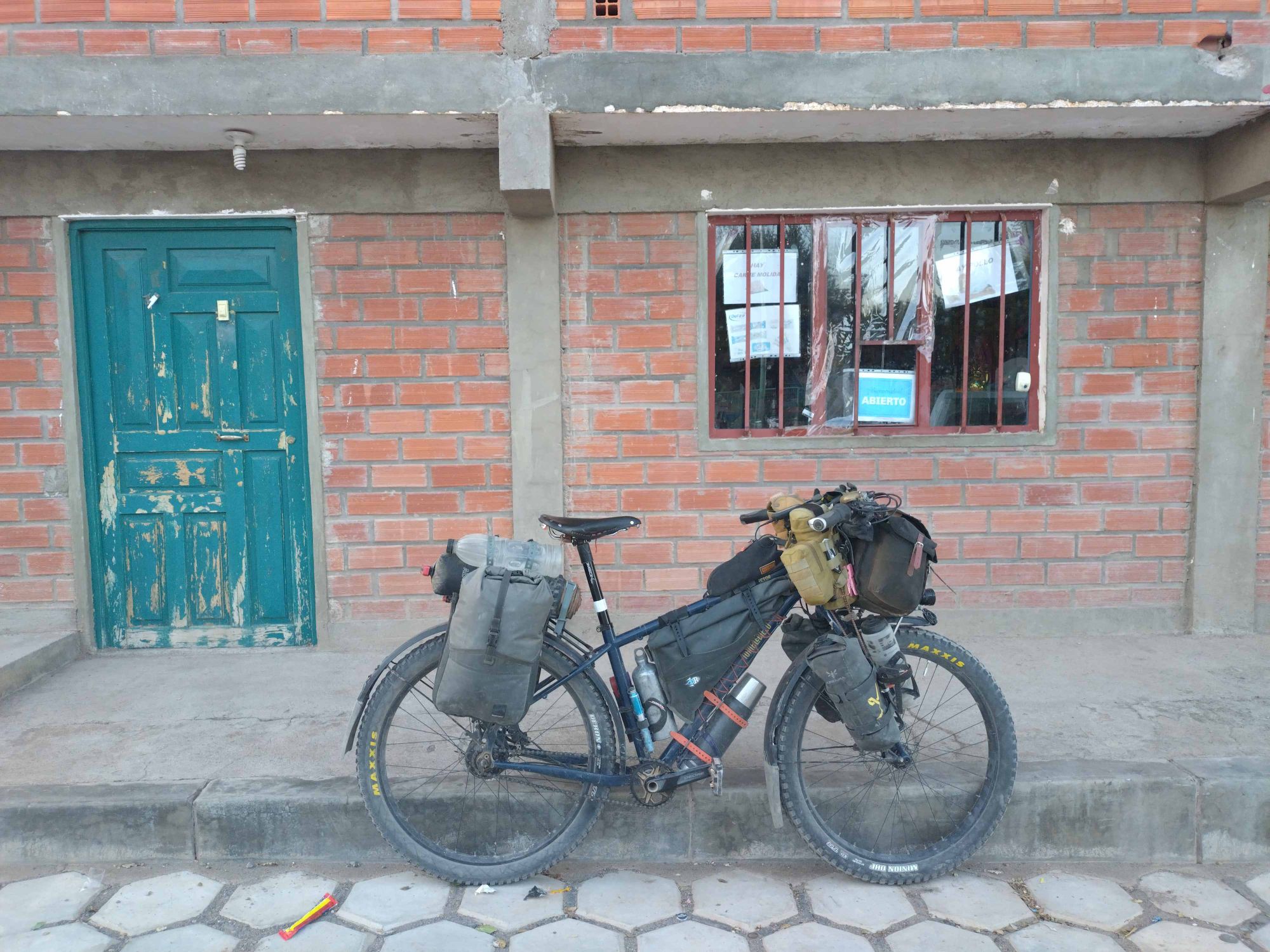
Most shops serve you through a small barred window that feels almost prison-like. It’s difficult to see through the window exactly what they are selling, so instead you have to ask and point for the particular items you want – most of which they don’t have! The food situation in Bolivia is pretty dire. The shelves of the shop may be full, but very little of what they are selling is ‘food’ in the way Ted and I understand it. Most of what they sell is ultra processed food – so not really food at all, more just a collection of chemicals humans can consume, wrapped in plastic. There is very little in the way of fresh fruit or veg. Even tinned sweetcorn and peas, which we heavily rely on, was hard to find. We did, however, learn that bread tends to be made fresh and sold by old ladies after about 4pm on the street, straight out of wicker baskets wrapped in blankets. So at least we’ve been able to enjoy fresh bread, even if we have nothing to go on it.
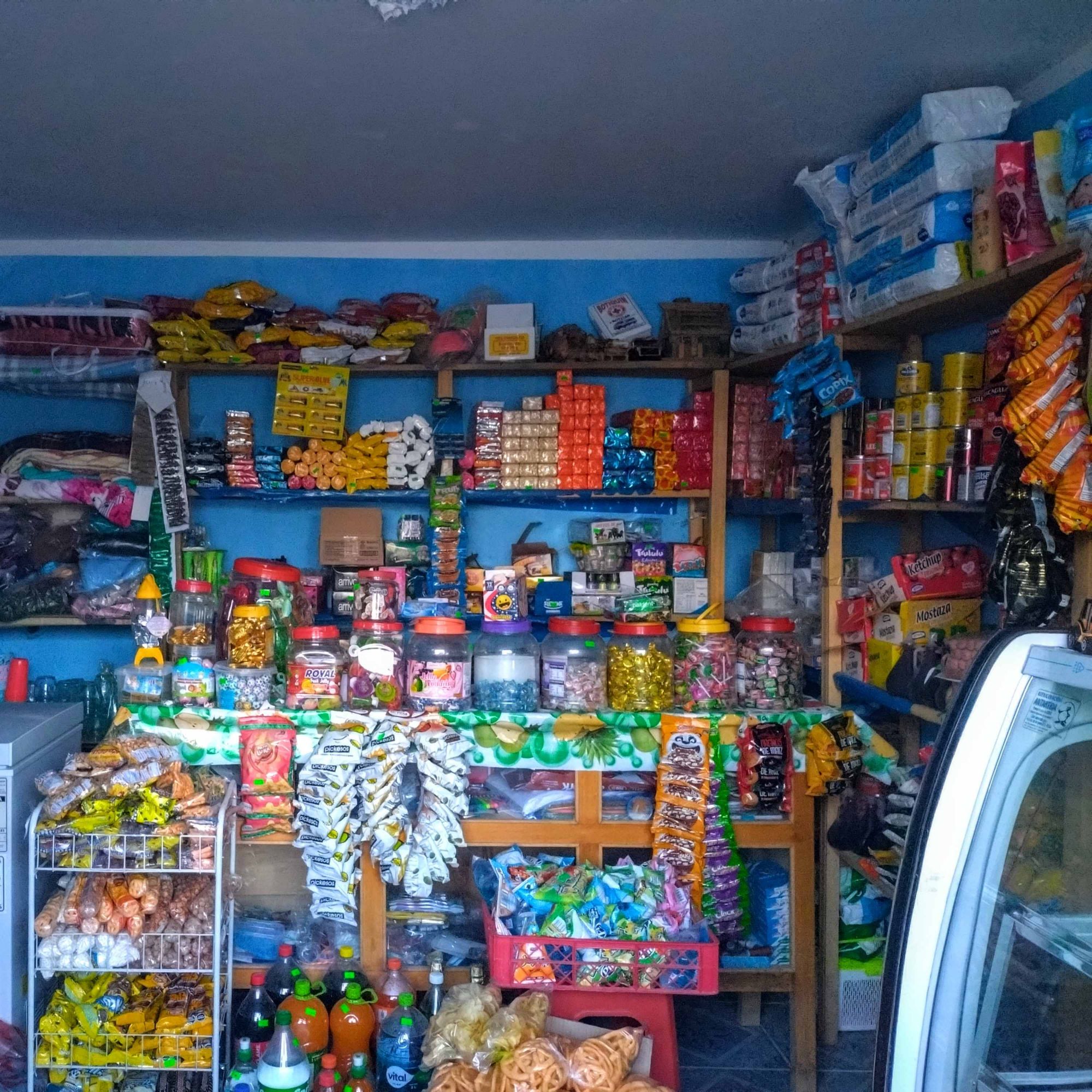
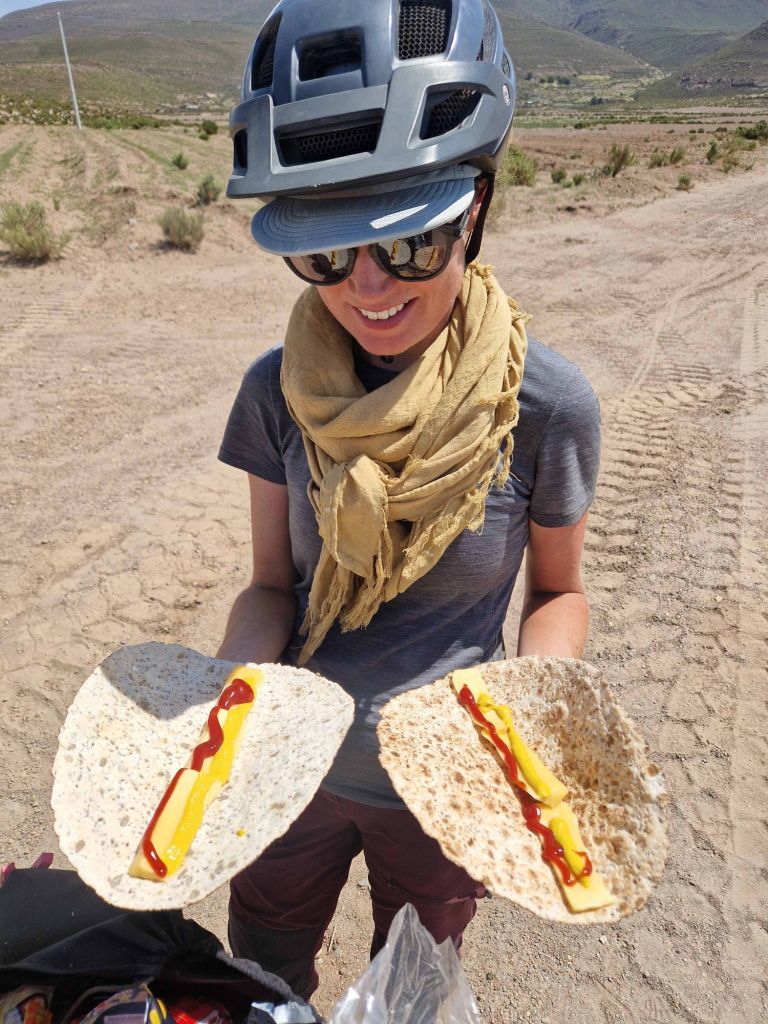
We’ve had some days where food has really felt like slim pickings, and we’ve resorted to simple meals – oats and water (and a trashy instant coffee) for breakfast, lunch of bread and a sliver of cheese and dinner of pasta with stock cubes and herbs (plus a small portion of protein be it peas or lentils or quinoa). It’s not ideal. If you’re a foodie take note, Bolivia would be a great disappointment to anyone after any kind of delicious cuisine.
So powered on by minimal food we made our way ever closer to the famous Salar de Uyuni – the infamous Bolivian salt flats. The prevailing wind over the flats is westerly/ north-westerley so in order to try and minimise our time battling into headwinds, we decided to cross the Salar from South to North, rather than the usual route from East to North West. Following this route would also mean we would avoid most of the tourist traffic – perfect! It did, however, have the slight drawback that we would be crossing some of the wettest areas. During the dry season, the salt flats are solid, deep salt that looks like ice but is so hard you’d struggle to get a tent peg in. During the wet season, the salt flats flood and although the salt beneath remains hard (generally!), a layer of water sits on top of the salt and can be pretty deep. We would be crossing them at the end of the wet season and beginning of the dry season, so we were pushing our luck, but decided we’d chance it – It couldn’t be that bad, right!?!
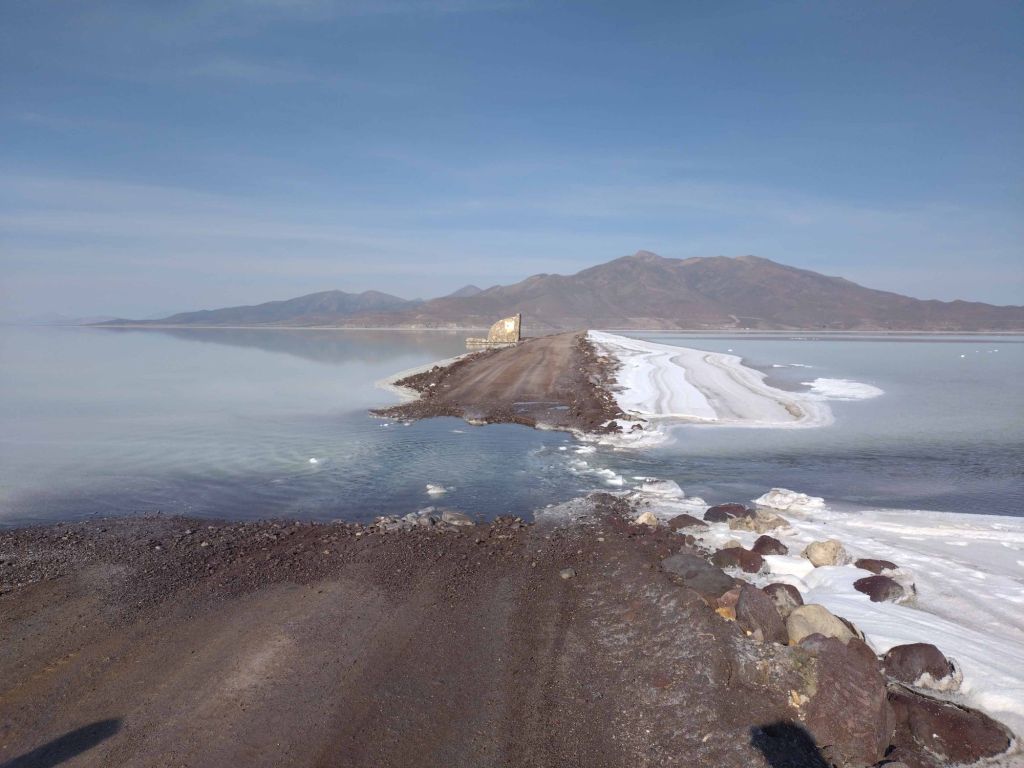
Standing on the edge of the flats, it looks like you’re about to cycle out across a sea – the edges just look like a sandy, salty beach. We initially followed a ‘road’ (a slightly flattened pile of rocks!), which was raised above the level of the salt and sure enough, the salt on either side of us was all flooded. As the end of the road approached, Ted became pretty worried about riding out onto the salt. I mean, it feels so unnatural to just ride out into what essentially looks like a lake. It goes against every instinct. You feel like you will just sink. Ted was also worried about the concentrated salt water damaging the bikes (which is a very real and legitimate concern for two bikes that need to get us the rest of the way around the world!). But rolling off the end of the road the salt was hard and there was only a few inches of water on top of it – we could do this!
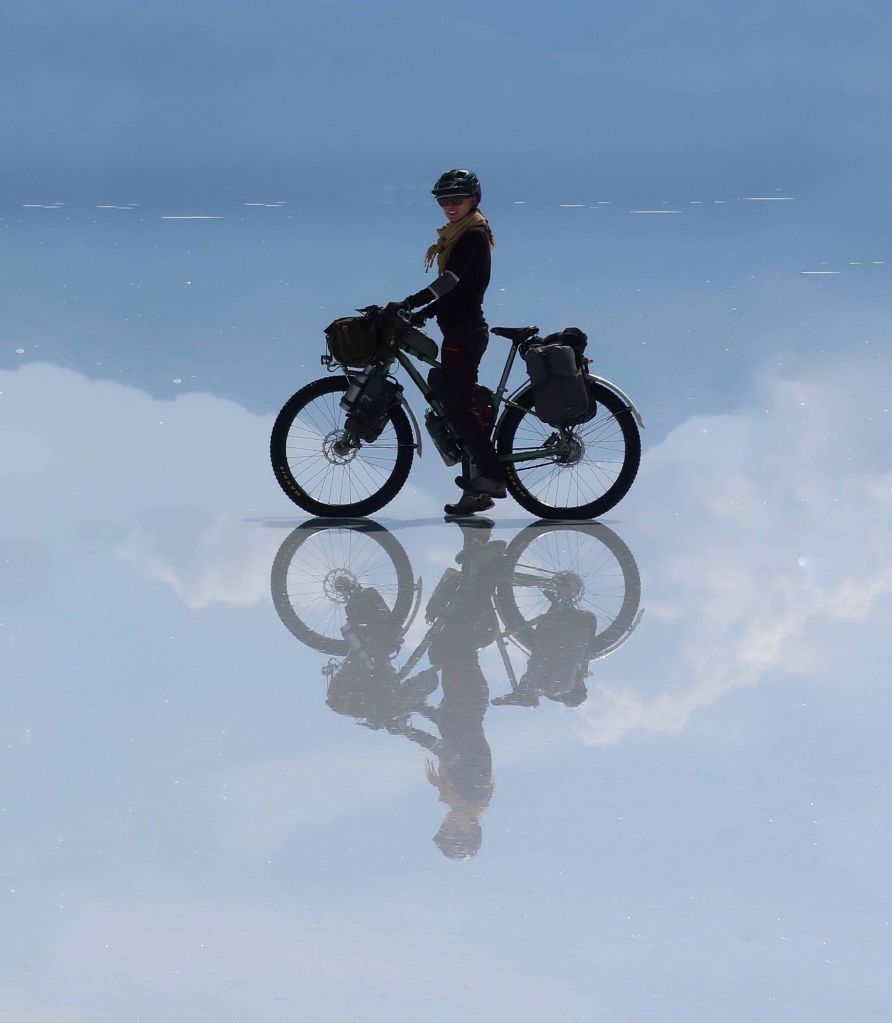
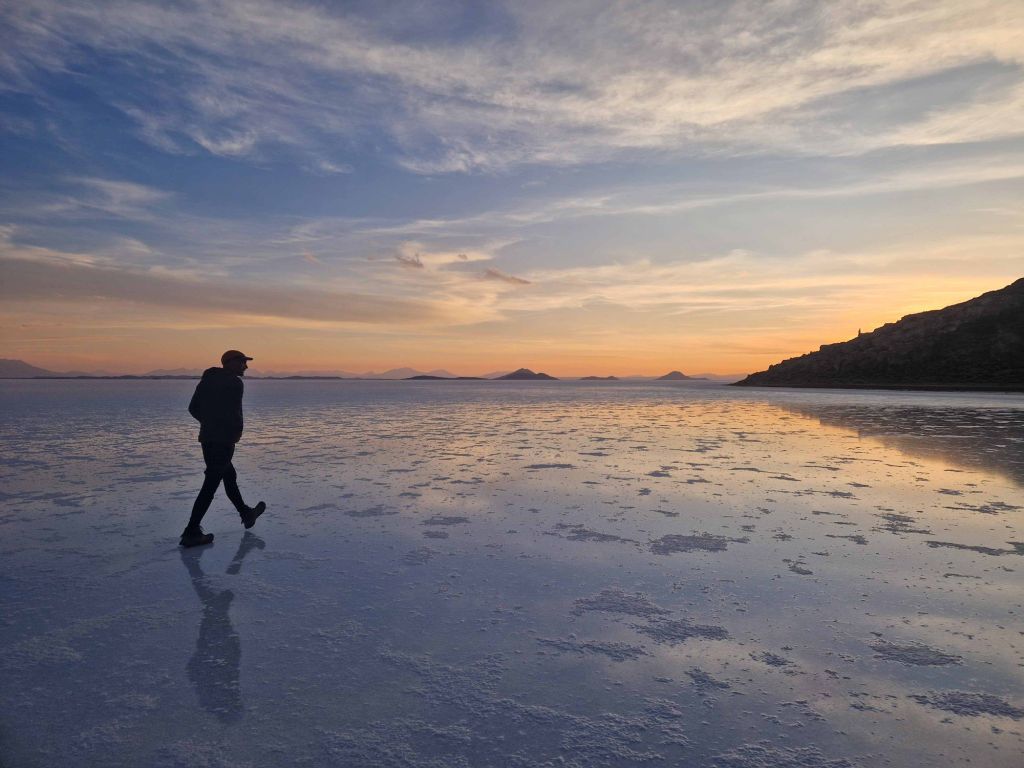
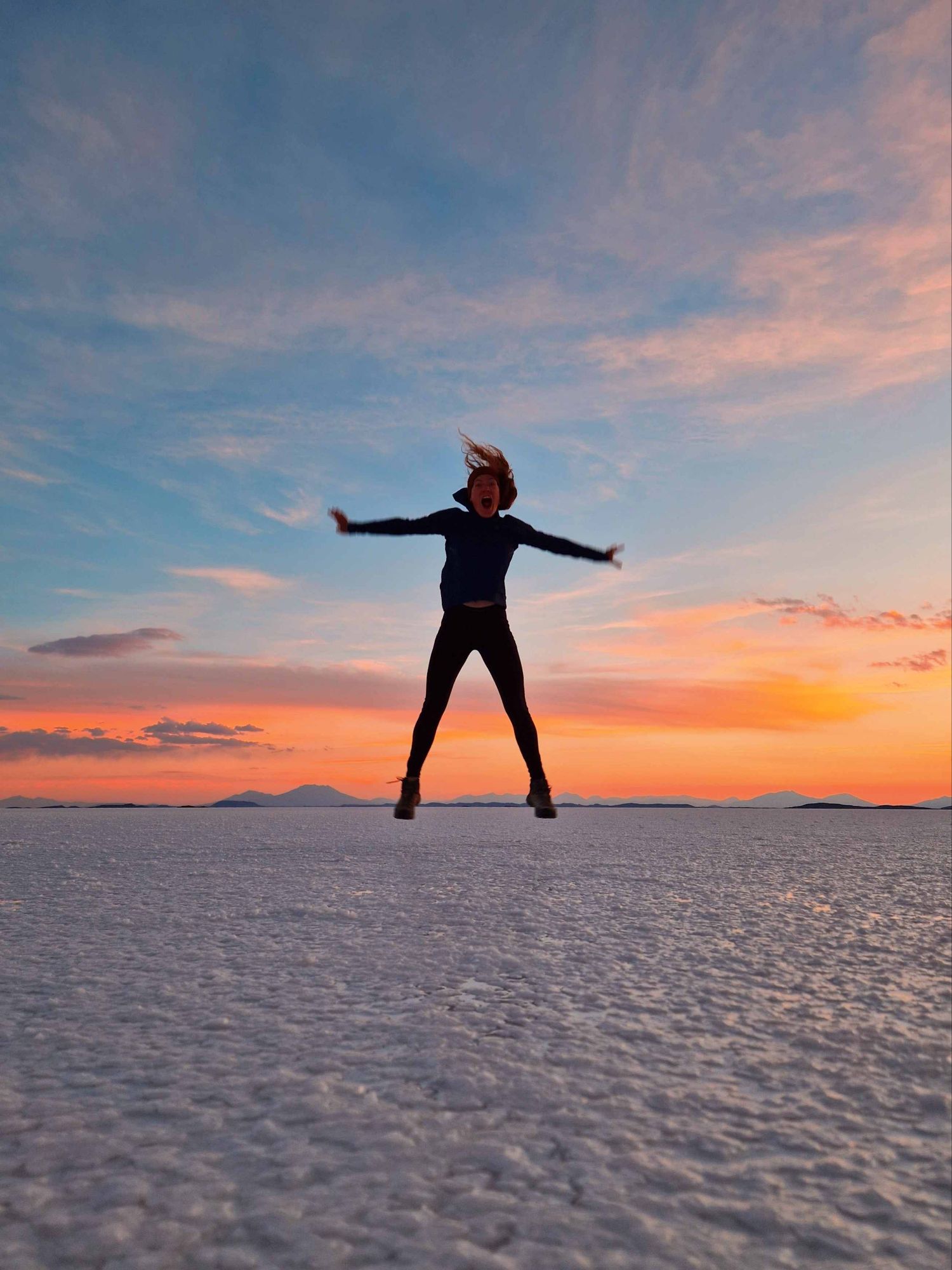
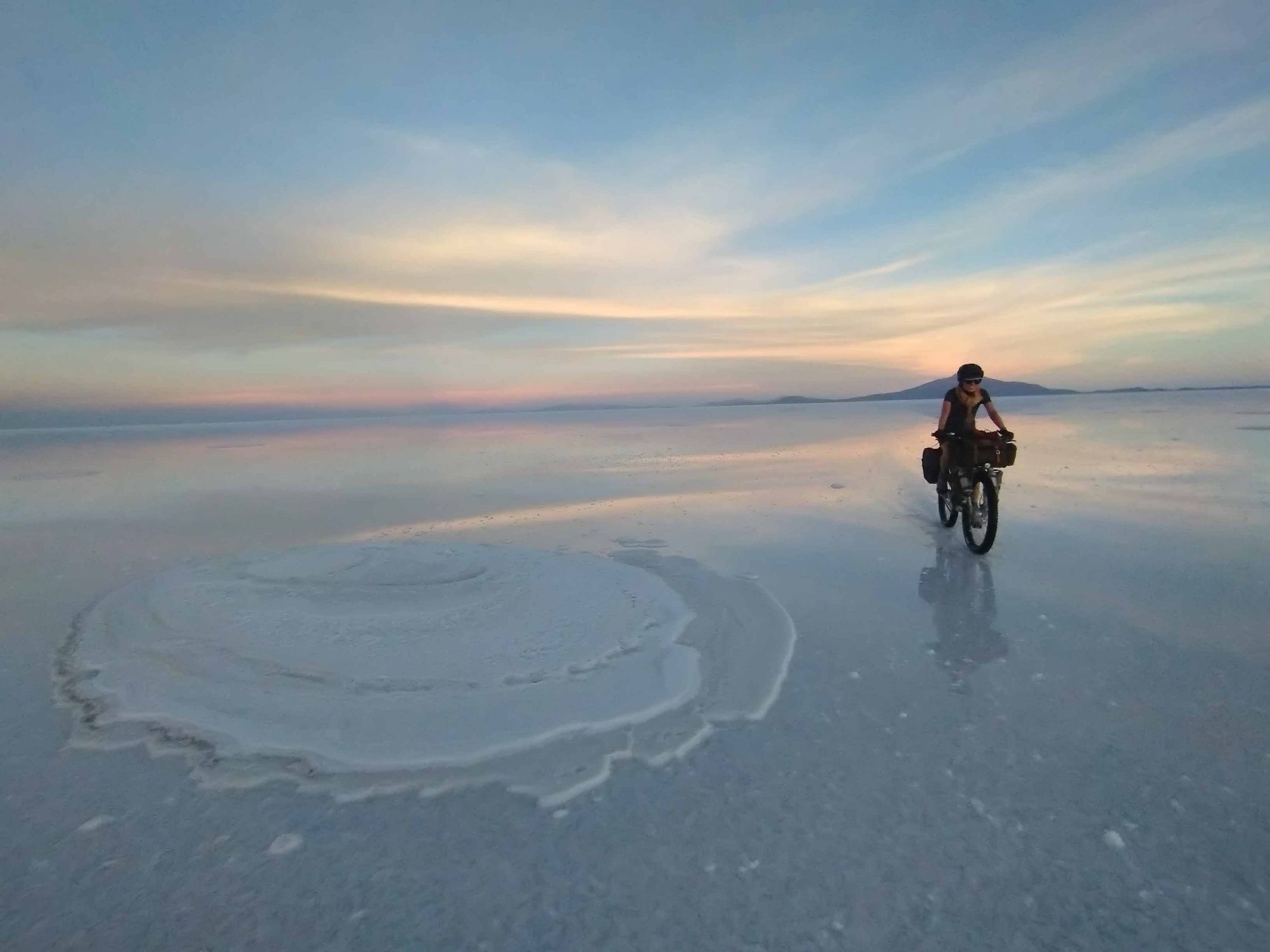
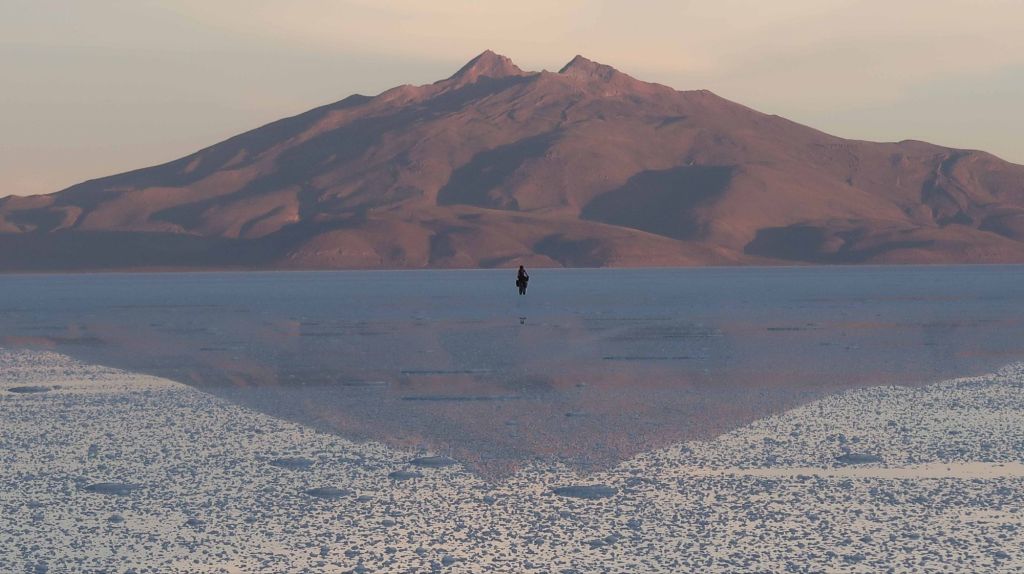
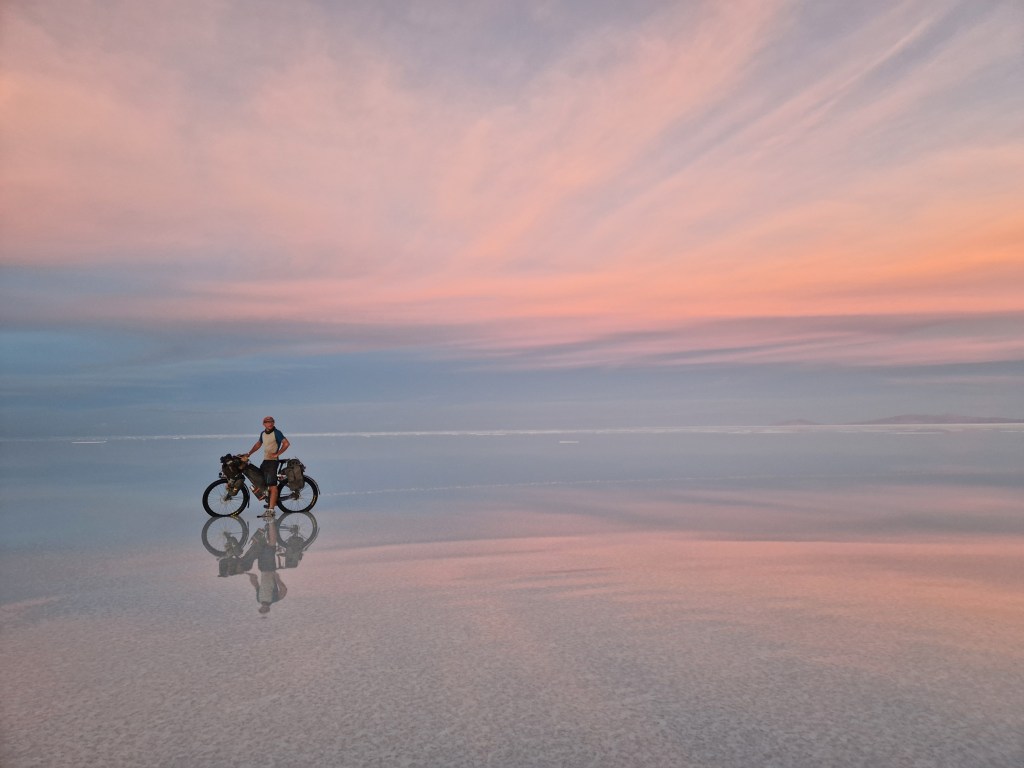
Riding in the water, was like riding on a mirror with the reflections of the sky, clouds and mountains in the water all around us. It was a surreal and magical experience. And sure enough the closer to the centre of the flats we cycled, the drier they became until there was no water at all. It meant we could also enjoy he typical salt flat experience and take lots of silly pictures playing with perspectives.
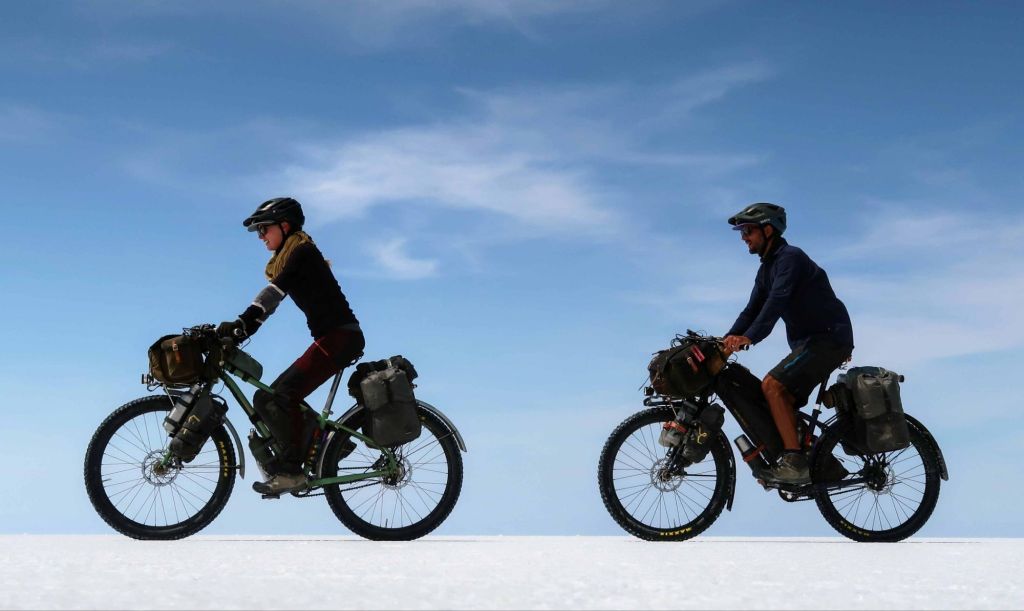
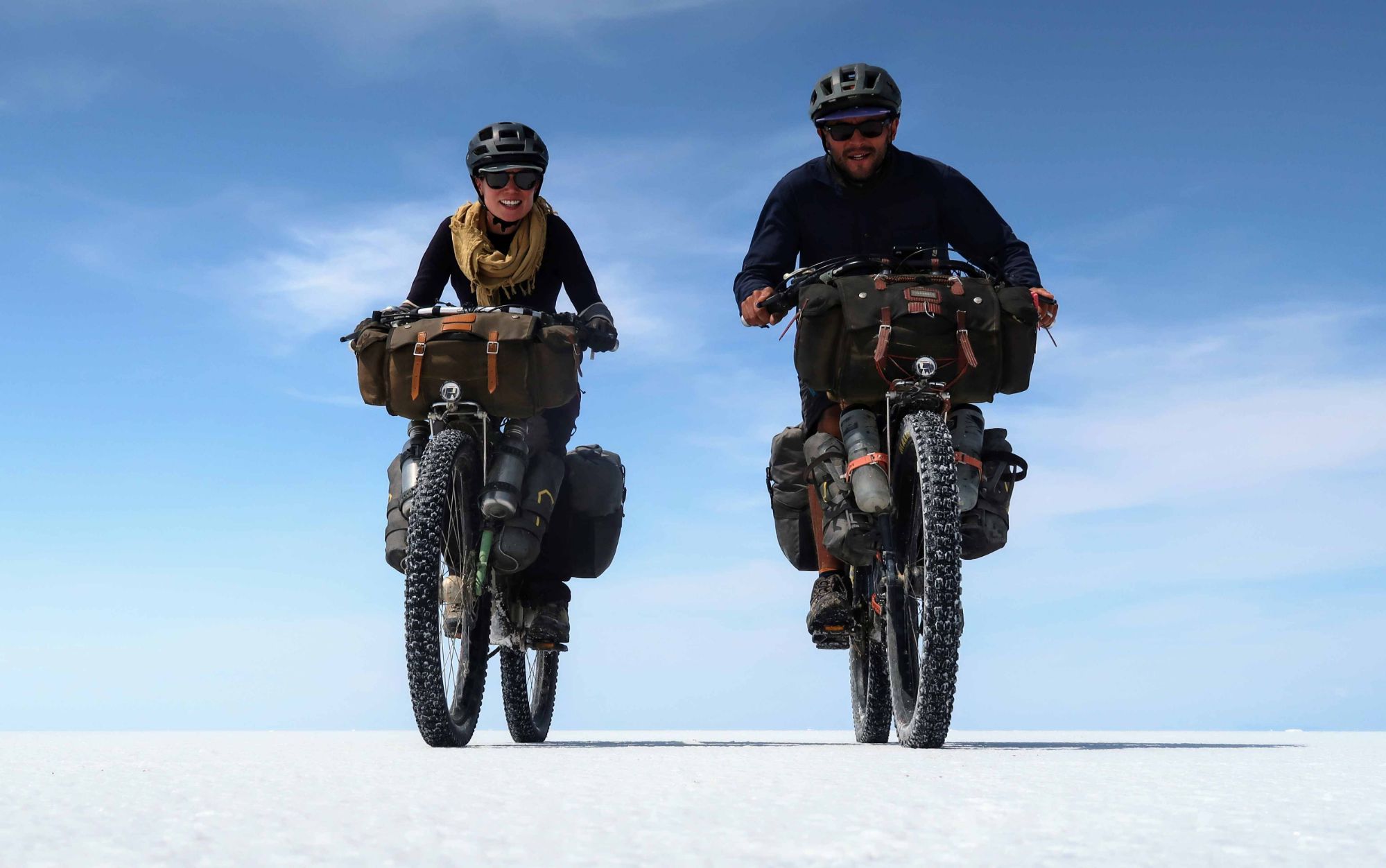
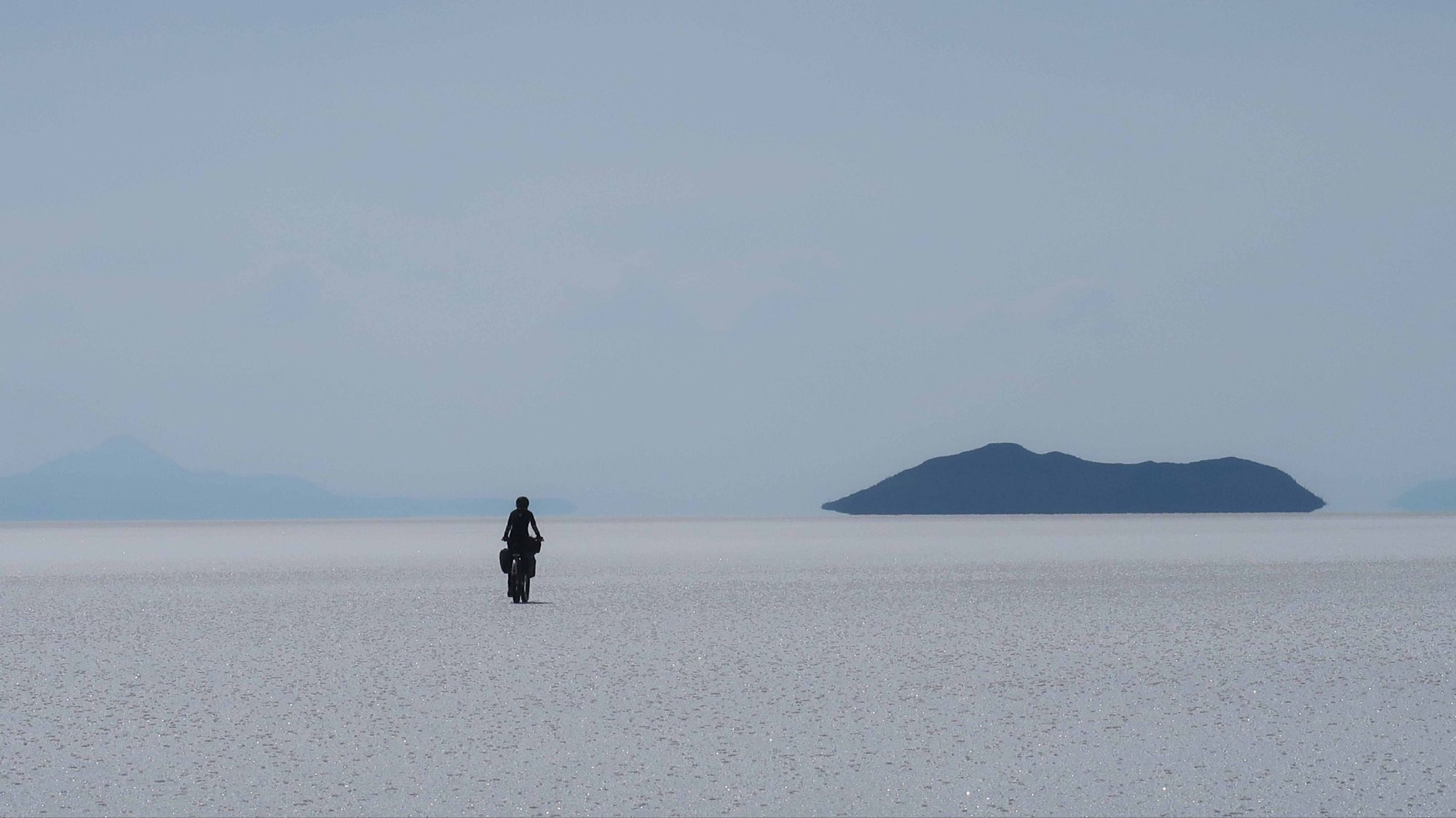
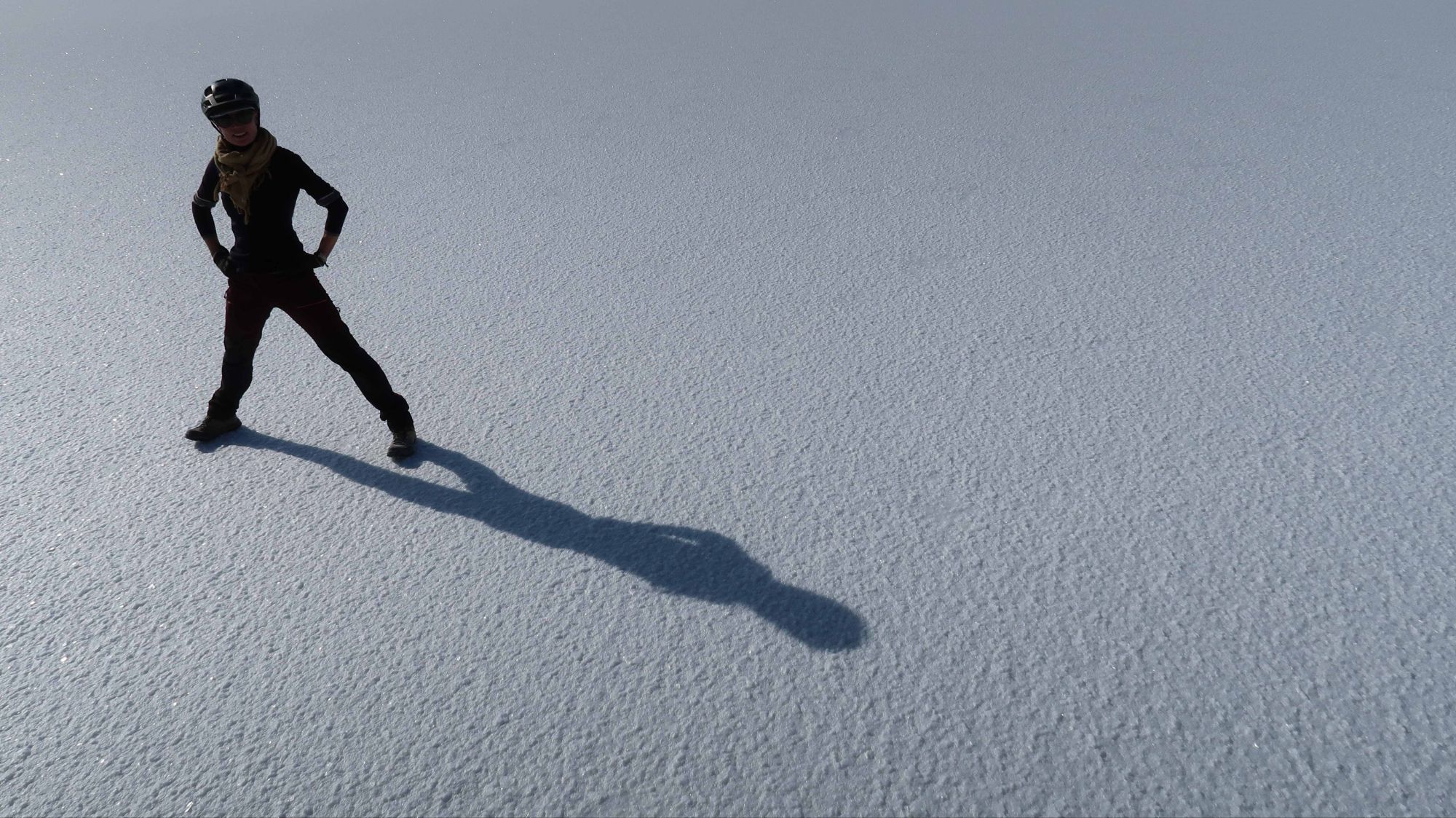
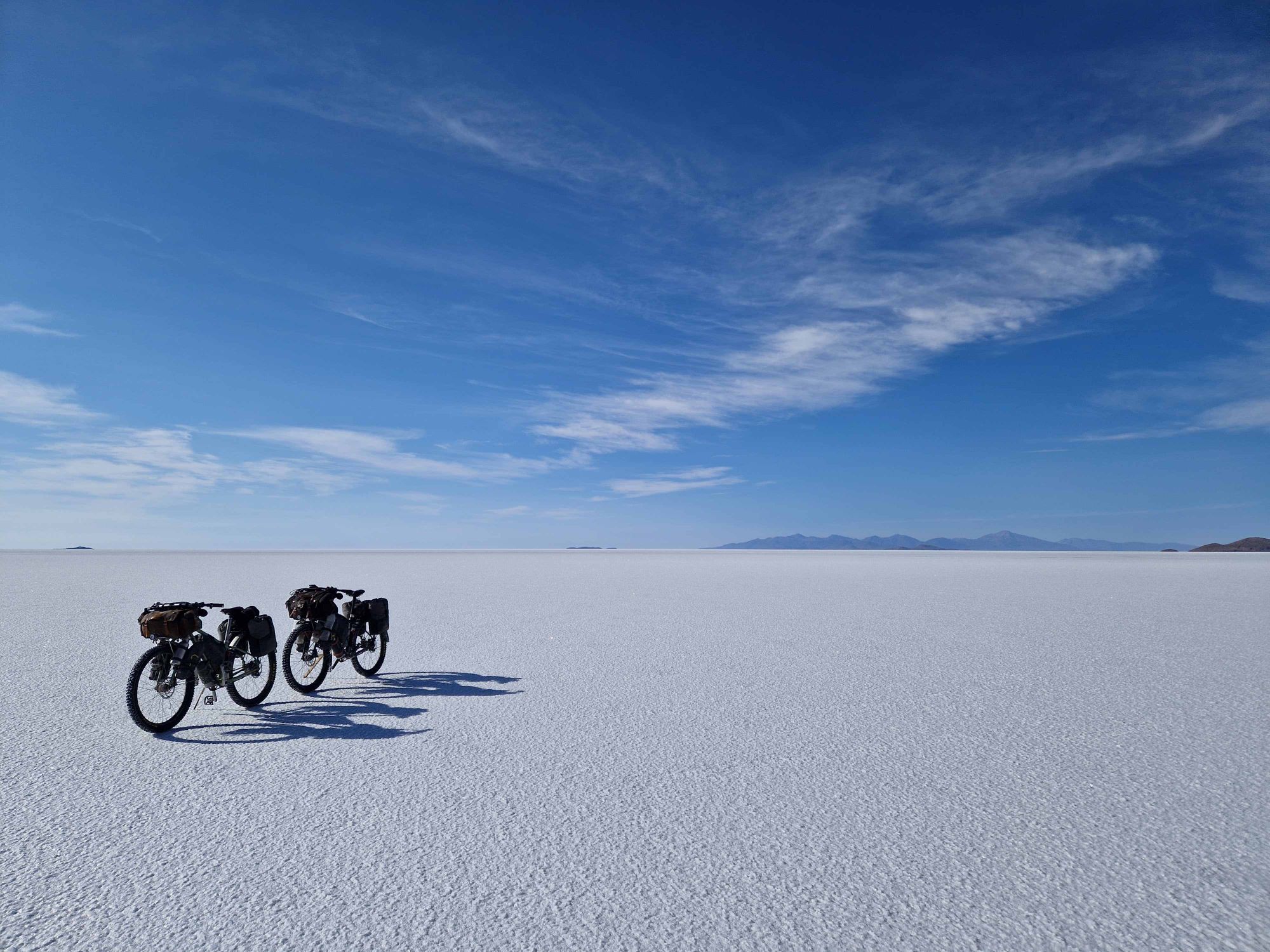
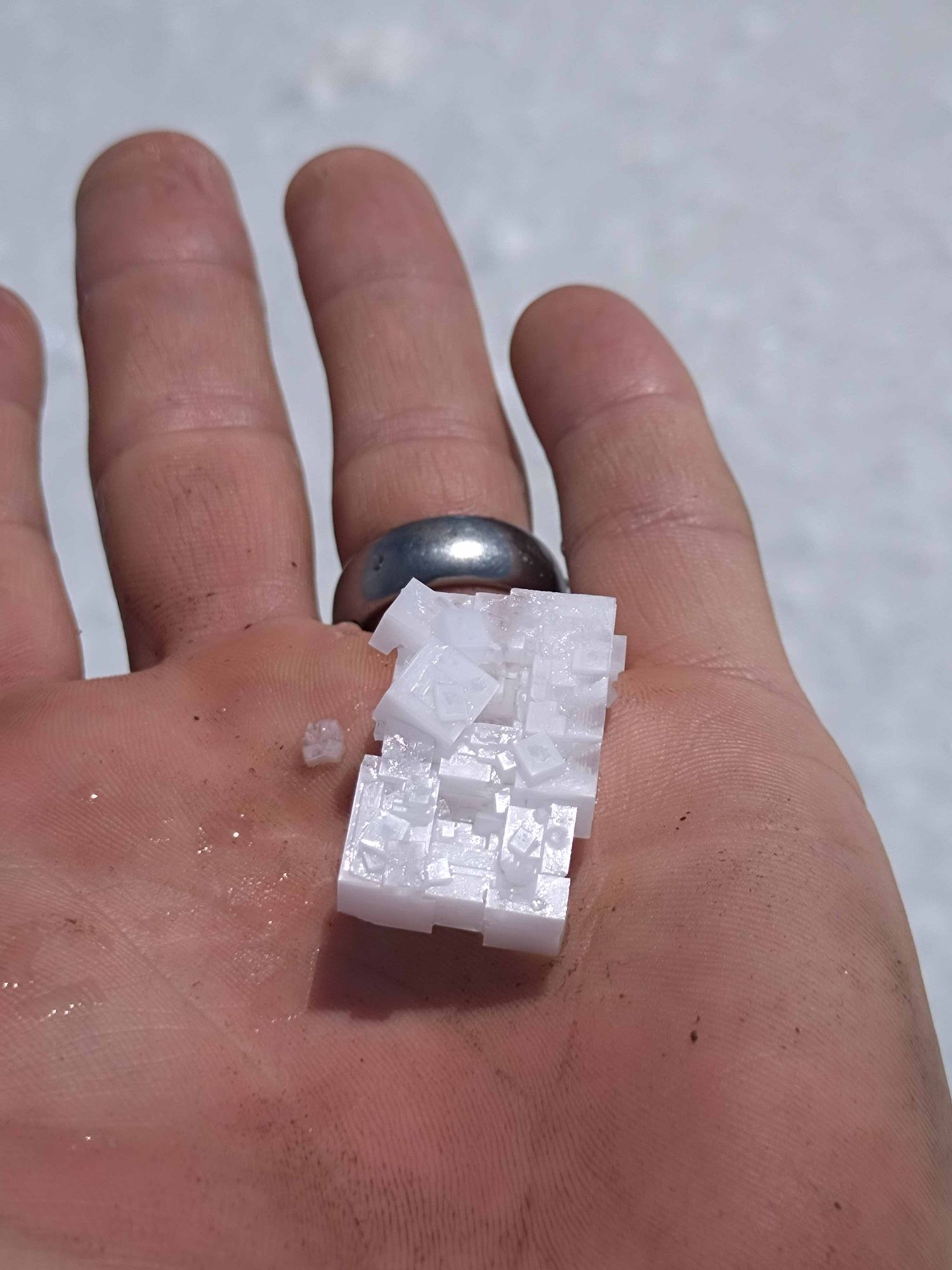
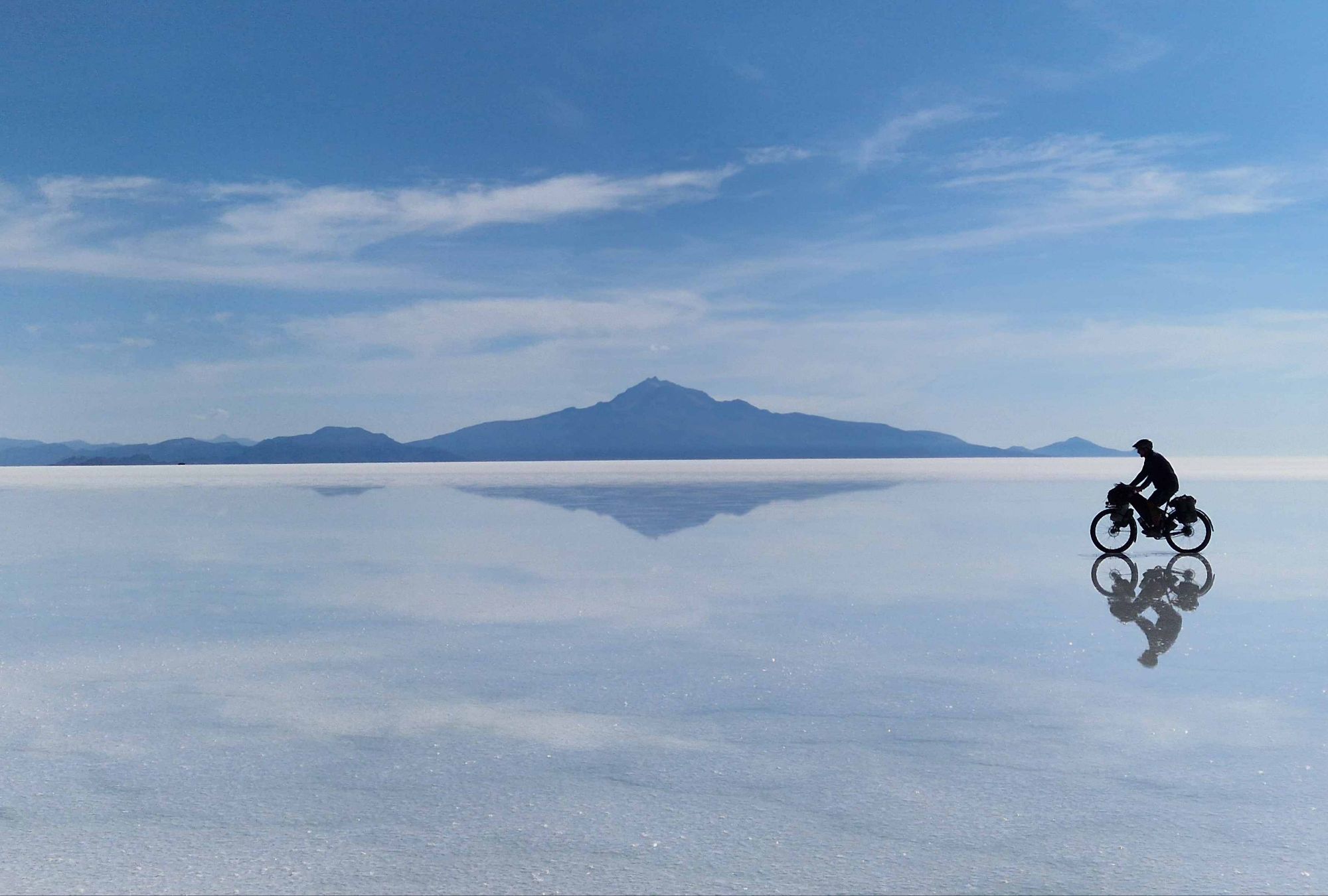
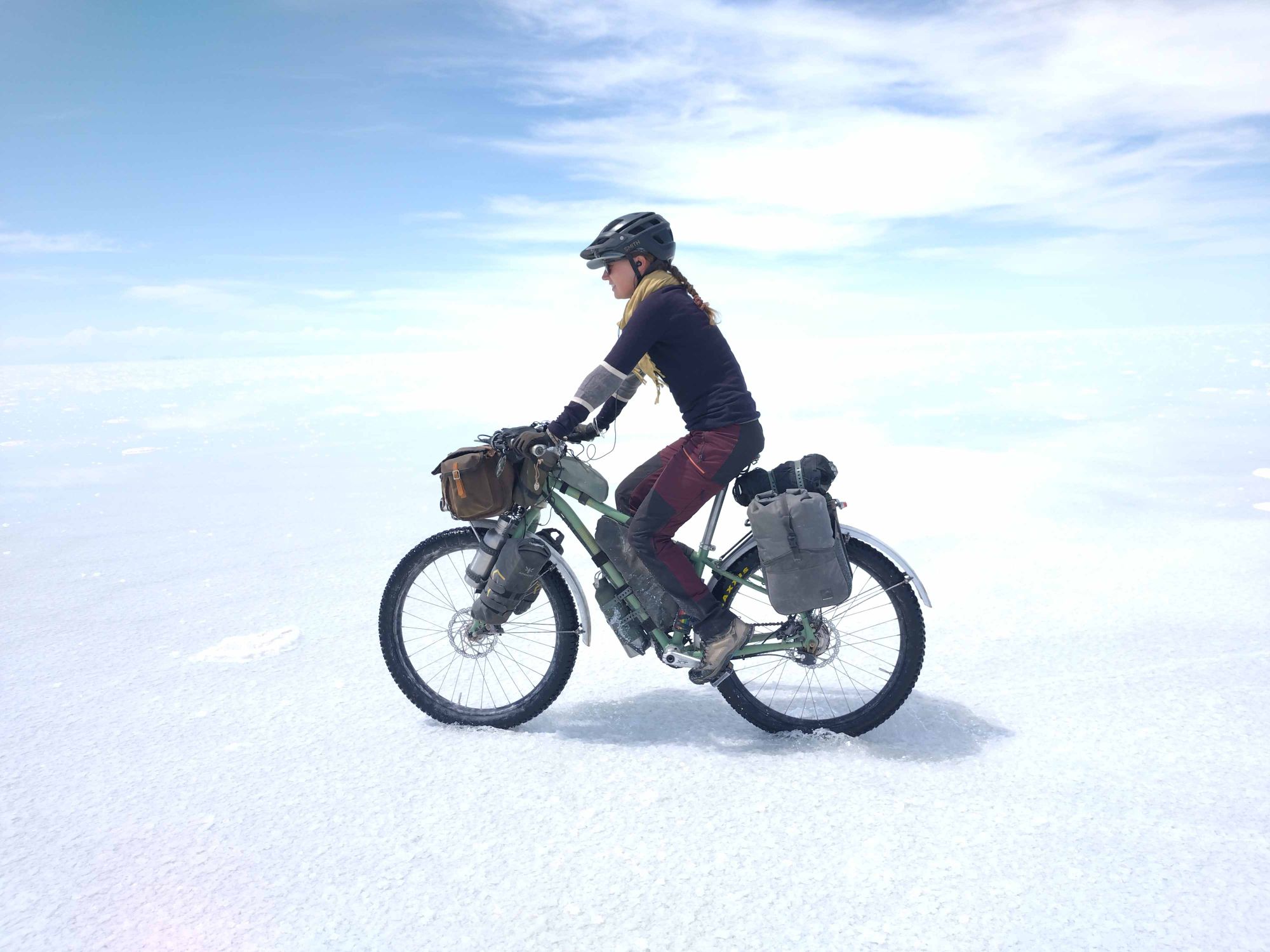
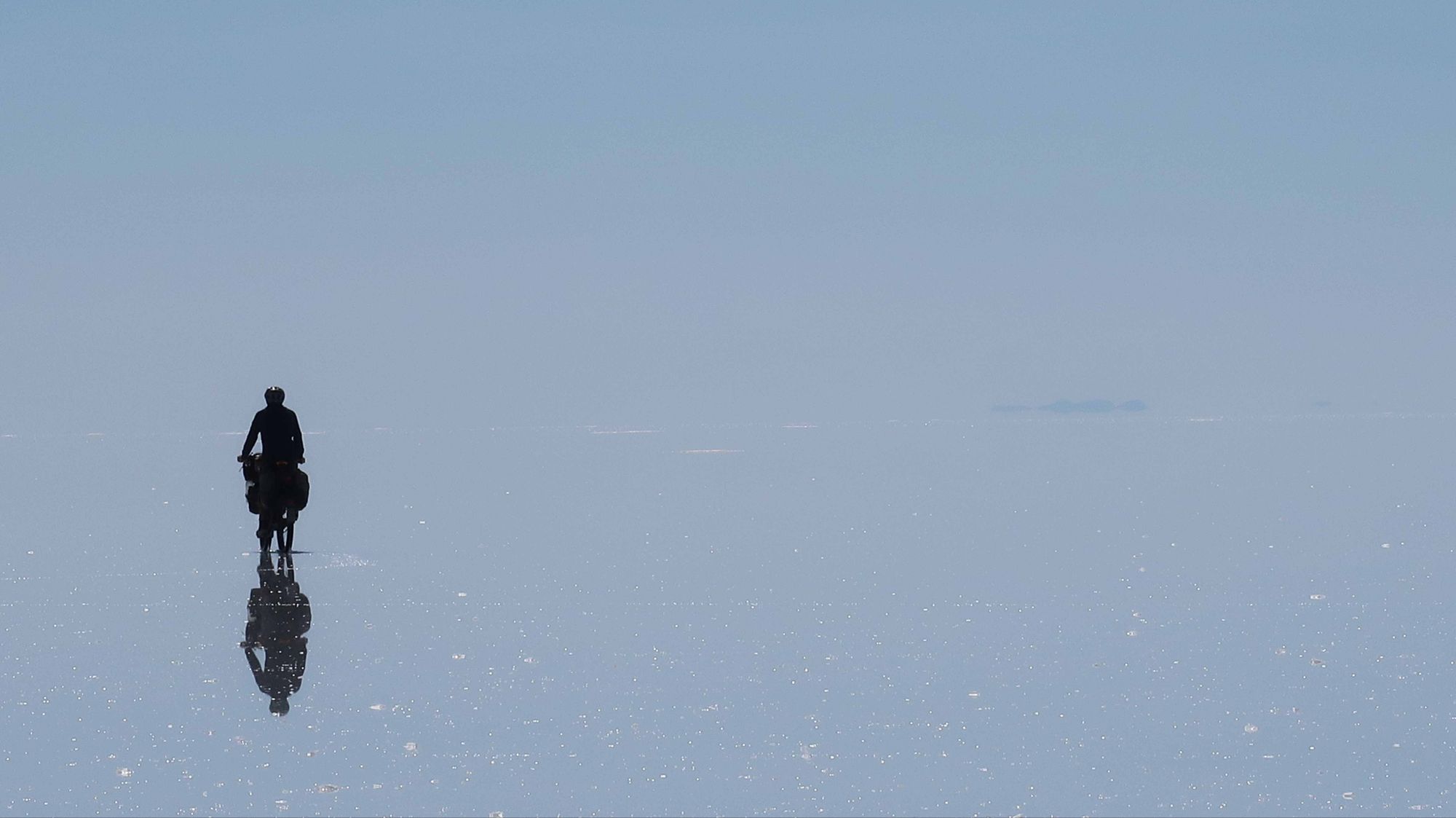
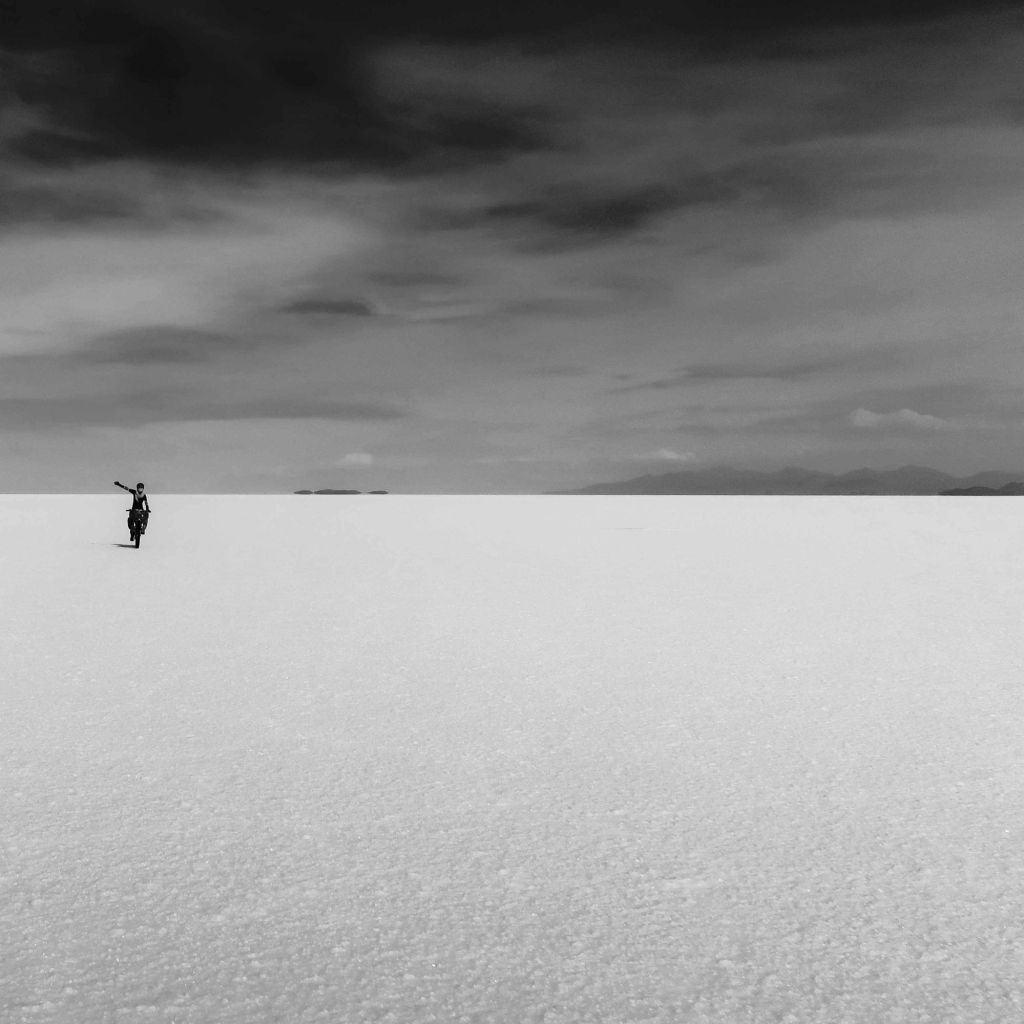
Riding on the salt flats does start to play with your mind a little though. It can be pretty disorientating as there are no points of reference. You can see for miles and miles across the flat expansive white. What looks like an island you could reach in 10mins is likely to be many kilometres away and take you all day to get there. It also feels like you are pedalling and getting nowhere as there is no passing scenery. It is from this kind of salt flat madness that I suspect one of the weirdest cycling traditions has arisen. Cyclists from all over the world will take the opportunity to take all their clothes off and cycle for a while on the salt, or at least ride around in circles getting some funny pictures! I’m not sure where this tradition has come from or who did it first. Maybe it’s because you can see for miles, so know that no one is there to see you, maybe it’s because the cyclists are so bored of the same scenery with no change for hours on end so make their own entertainment, or maybe its just because they can. Anyway, we are obviously not on a fun and frivolous trip, and are taking our cycling far too seriously to par-take in that kind of tom-foolery….or are we…!?!
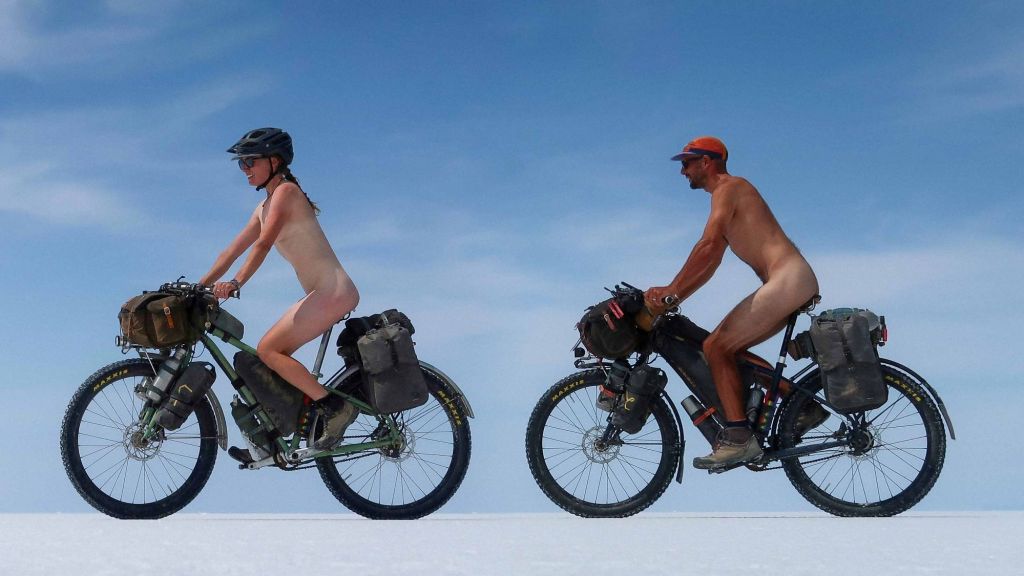
Sorry!
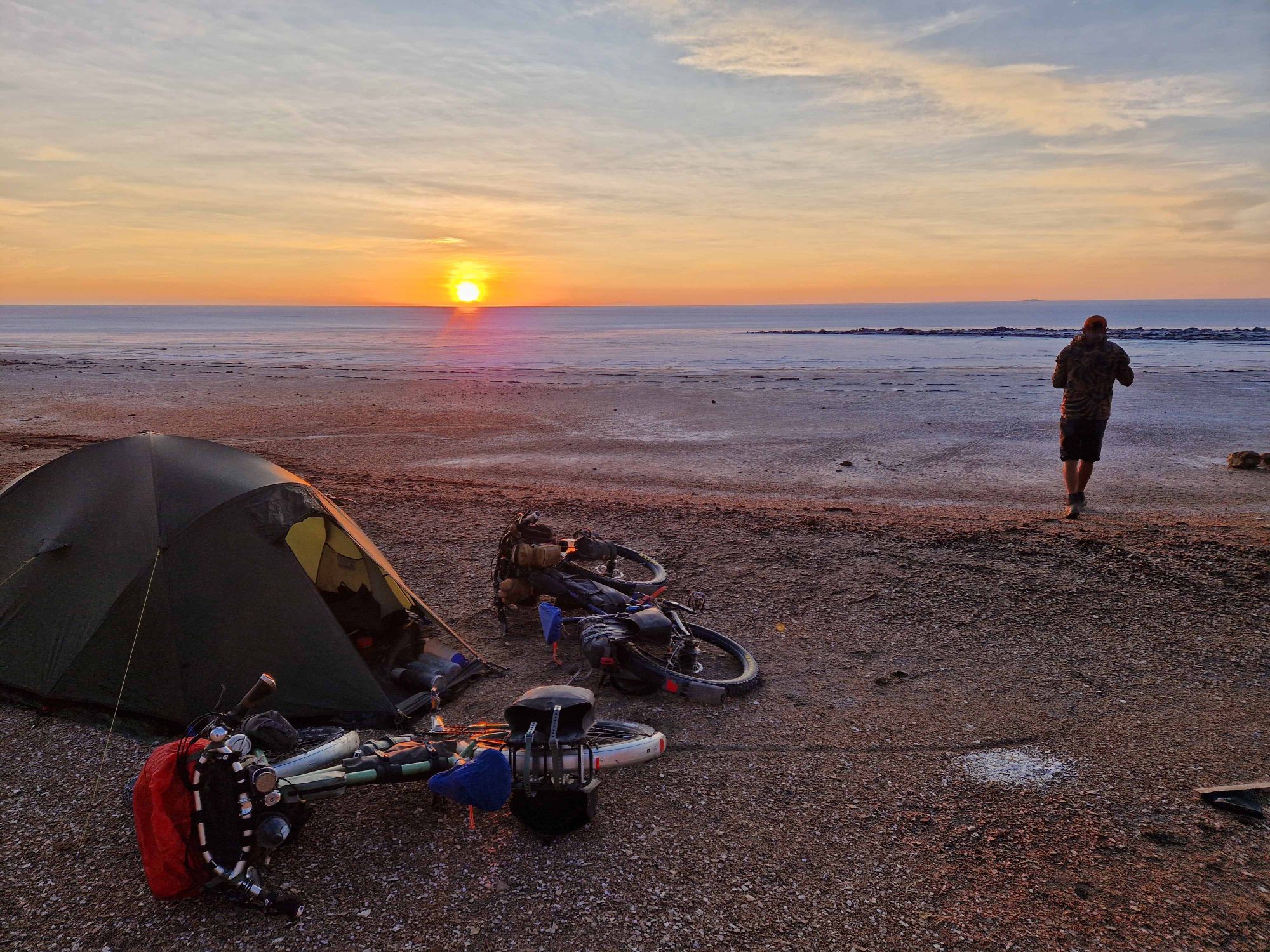
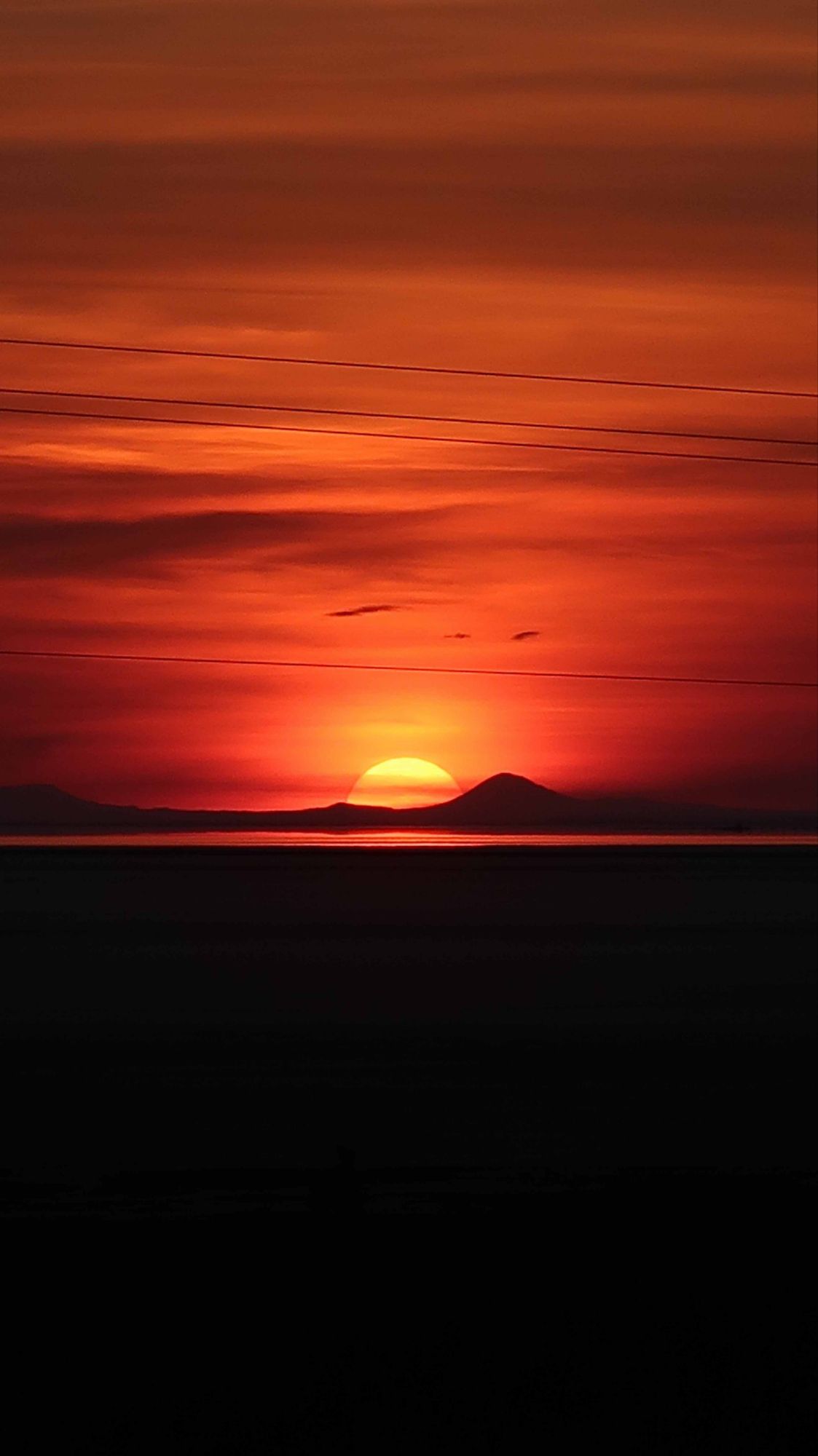
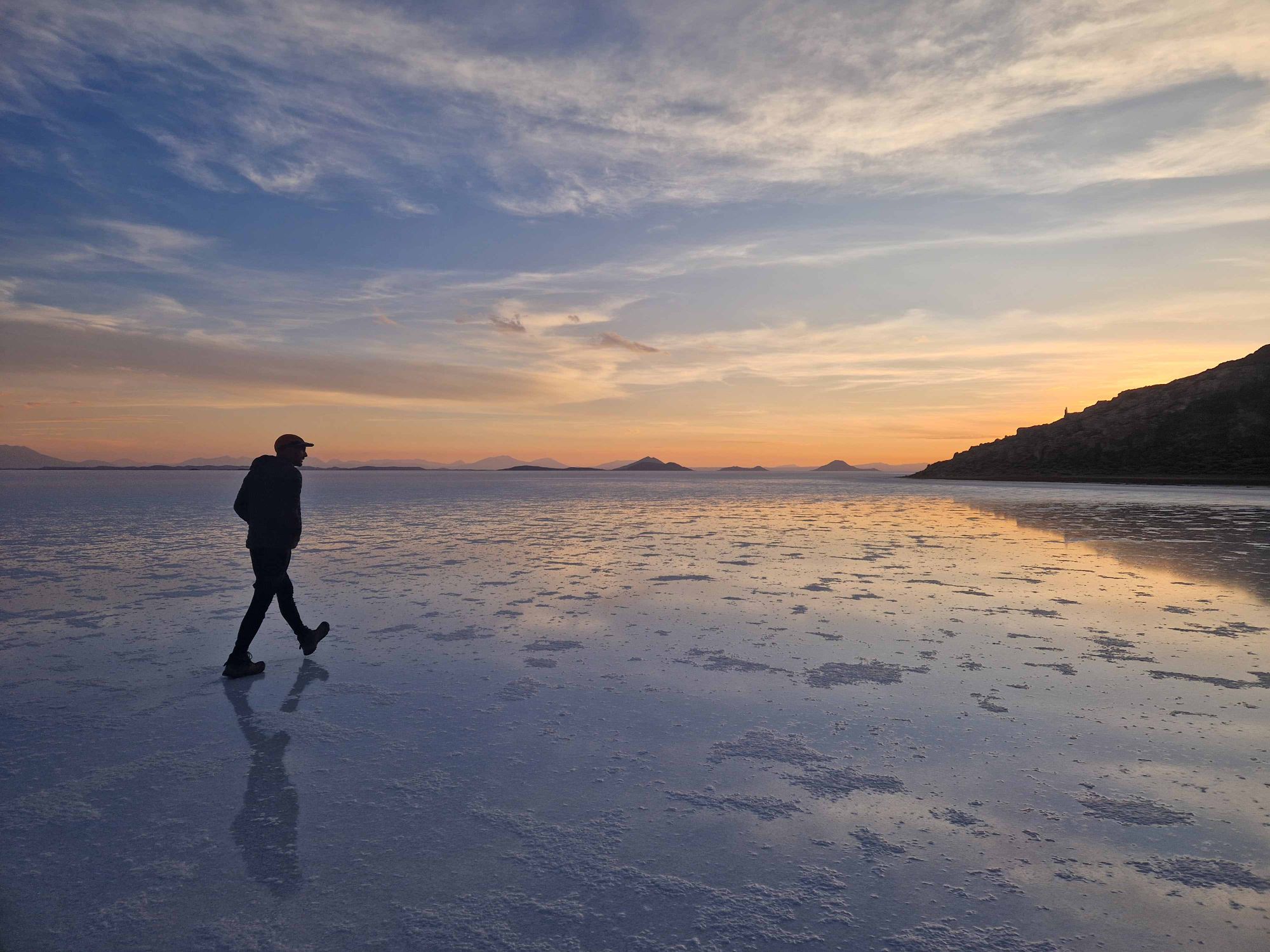
We camped out on one of the islands of the salt flats, in order to enjoy the unique experience. We had a brew and enjoyed the peace and tranquility of it being just us, we had seen no one else all day. It was totally silent. No traffic noise, no people, no wind. And as the sun was setting we walked out onto the flats, watching the golden colours of the sky reflect on the small amount of water on top of the salt. It was incredible. One of the best sunsets we’ve ever had the joy to watch – who needs a TV when you have nature to watch every evening!? But as we walked back towards the tent we commented casually on how the wind had picked up. It was a bit of an understatement. By the time we reached the tent, the whole thing was flapping and the cooking things we had left in the porch were threatening to fly up into the sky! Crazy how quickly it changed, like someone had flicked a switch when the sun had gone down. Thankfully it died down completely by 11pm so we could sleep easy after that.
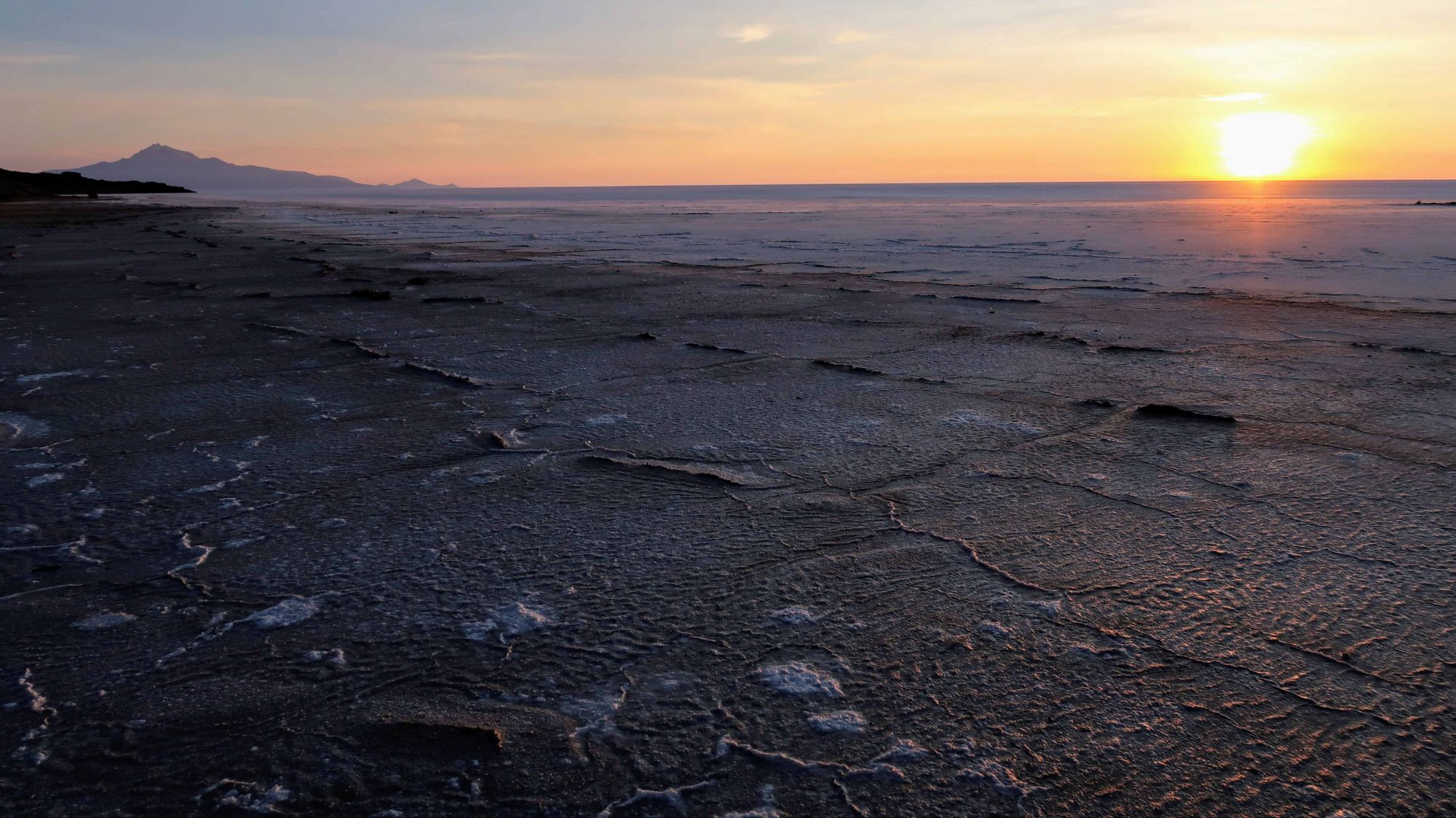
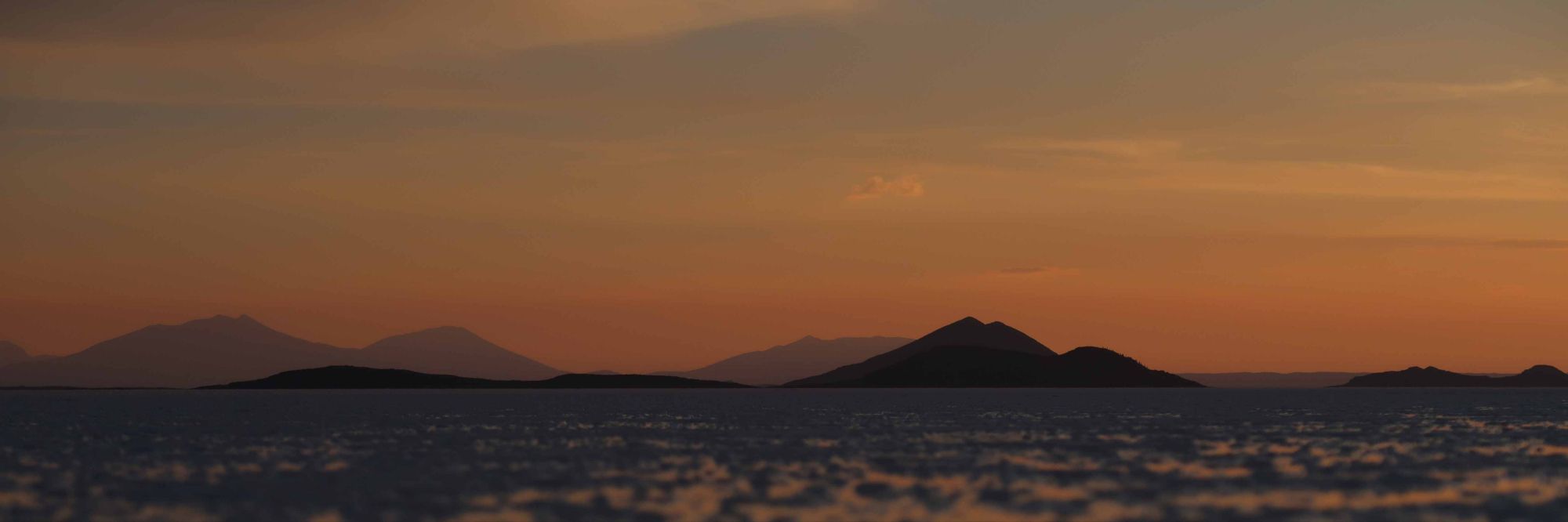
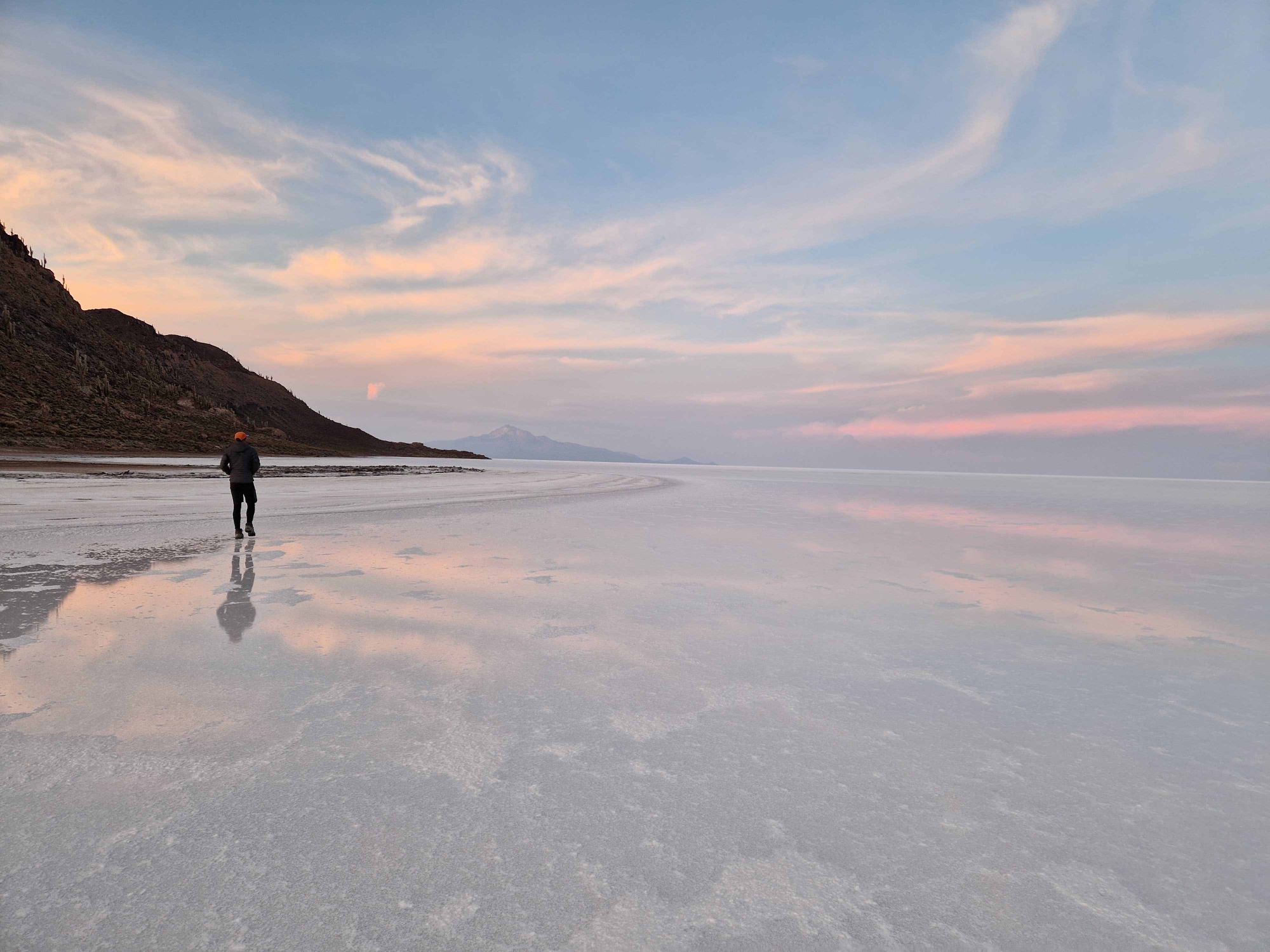
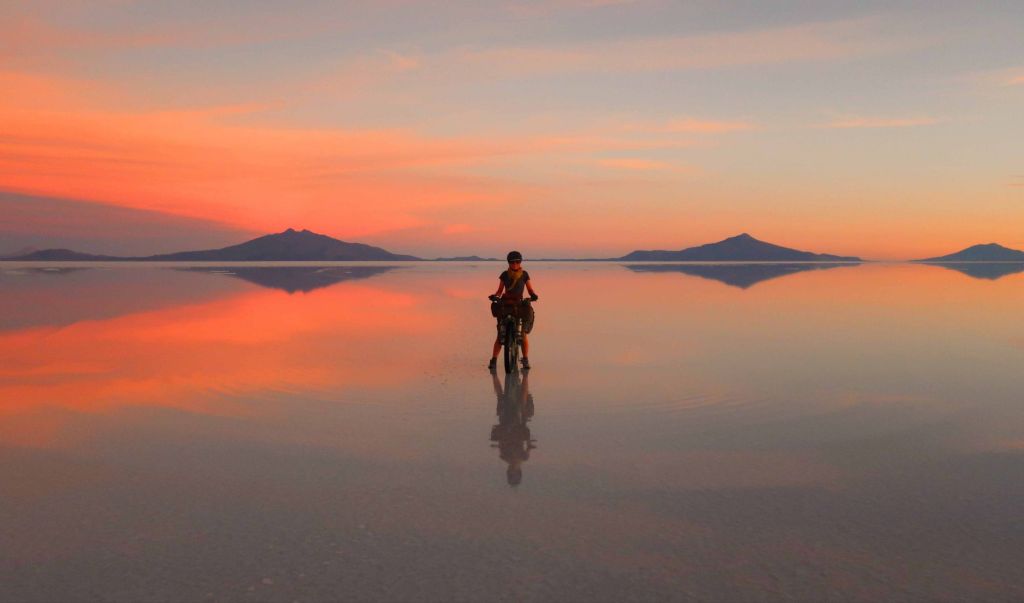
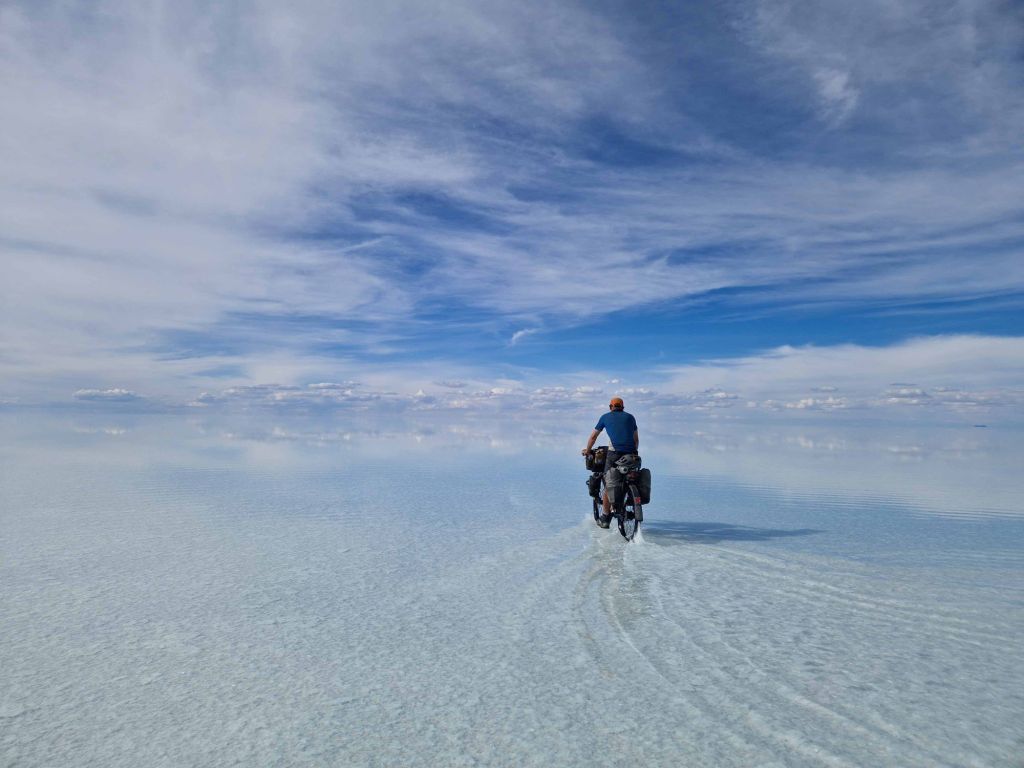
The second day of salt flat riding was a little shorter than the first, but proved to require just as much mental resilience to keep pedalling despite feeling like you are getting no where. When the dry salt ended, we enjoyed some more time in the inch deep water appreciating the magic created by the reflections. But the closer we got to the end of the flats, the deeper the water got and the last 5m to dry land were ankle deep and hard work. I just had to keep pedalling and not loose momentum or else risk the whole bike, me and all my luggage becoming soaked in thick salt water.
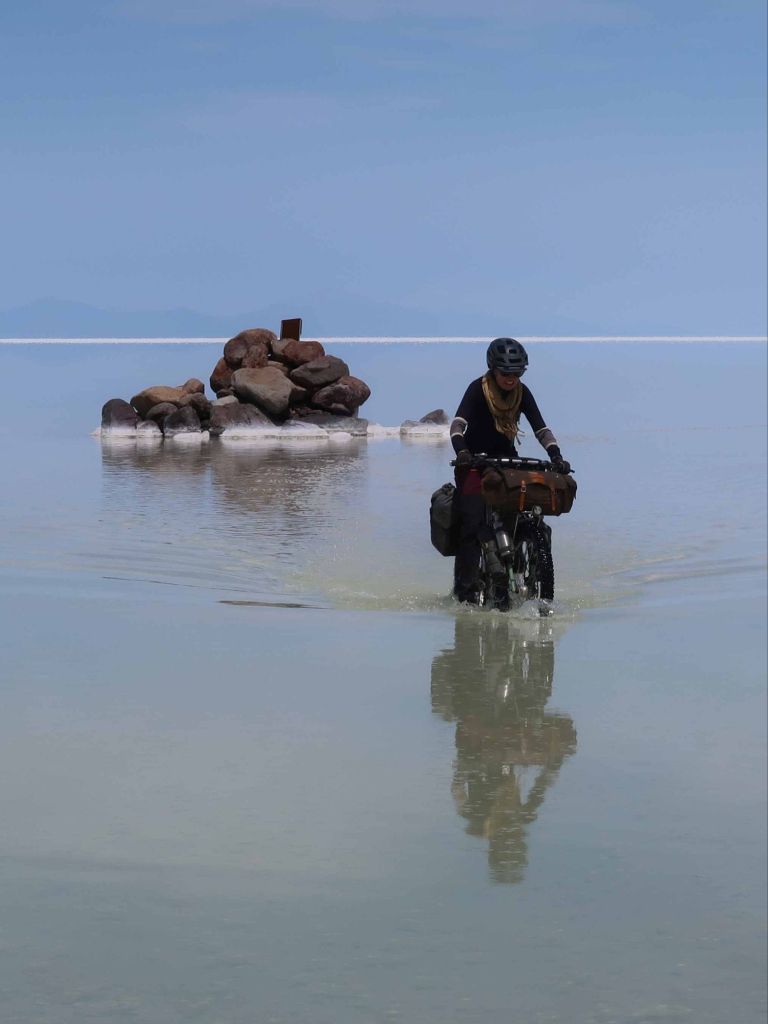
But our time on the salt flats, didn’t end there. A few days later we had made it further North to another salt flat – the Salar de Coipasa. These salt flats are the younger smaller brother of the Uyuni ones, and see much fewer visitors. We had asked in town about whether they would be flooded and were assured that there wasn’t much water, at most 2 inches. This was total cods-whallop. The water was axel deep on the bikes and despite trying to enter from a couple of different points, it was no shallower however far we cycled around the edge. We even cheekily asked some local field workers for a lift over in their truck, but they said they couldn’t and just assured us it got shallower closer to the middle. We had about 40km to do across the flats, and it was slow going in the deep water. Not wanting to splash it too high up the bikes and ourselves. The worst thing was initially thinking we couldn’t pause or stop, but then we realised our boots and feet were soaked through anyway, so stopping and putting our feet in the water wouldn’t make any difference.
We marvelled at how it felt like we were riding in the clouds again as they were so heavily reflected in the water. And watching the huge sparkly chunks of salt floating in the water as we rode through them was also pretty magical. But as we reached the shallower section in the middle, Ted’s back finally gave up. He had been struggling on the bumpy washboard roads of Bolivia for a few days, and the tough resistance of riding through the deep water was the last straw. He was doubled over his bike in pain when I reached him. We were 20km into the salt flats, with another 20km still to go. Ted couldn’t sit down in the water, or put the bike down, or have a tantrum or lie down on the floor the way he would of we were at home. His vulnerability dawned on him, but he also took strength from the fact that there was no option but to continue and that he could at least slowly move one pedal stroke at a time. And after taking some painkillers that’s what he did, so much so that he became a tiny dot on my horizon.
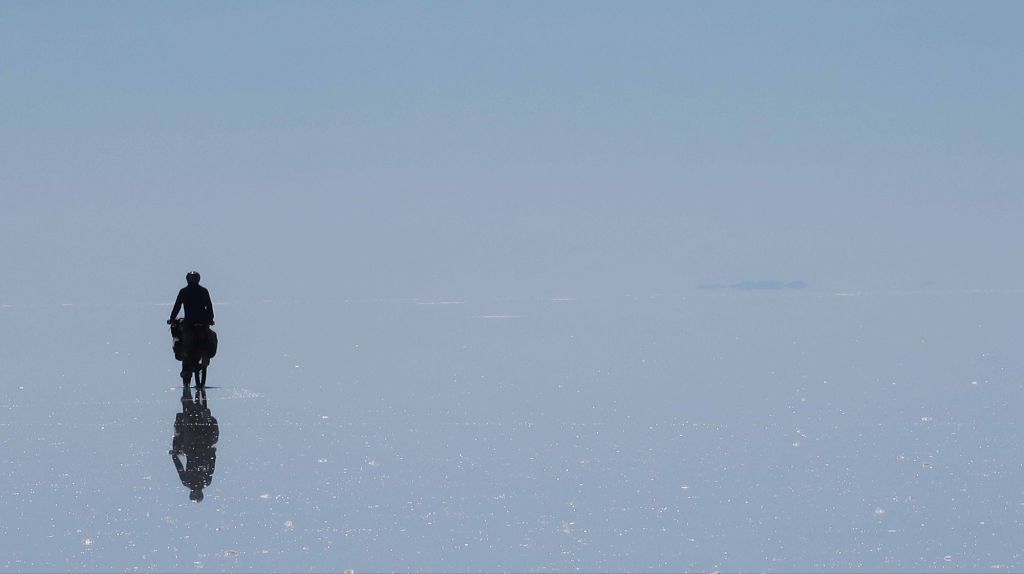
The water slowly became deeper again, but it made for an incredible sunset. The dreamy ice cream coloured sky reflecting in the water. We stood to appreciate it, as it just didn’t seem real. But the moment the sun dipped below the horizon, the headwind turned on. We could see the shore, but the water was getting much much deeper now, and the wind was creating waves that we battled through in the last of the fading light. It was really tough but we had no choice but to reach the shore – we definitely couldn’t camp in the water, despite the impending dark. We rode the last few Kms in the dark, fighting to stay upright in the water and against the strong headwind. After what felt like an age, we made it to shore. It was such a relief.
Now to find a camp spot sheltered from the wind – in the dark. Thankful that our dynamo lights were still working despite all the water submersion, we covered a few more Kms before we came across a suitable patch. It was a huge rock formation, almost like an open fronted cave, it was perfect. After such a long and arduous day, the protection from the wind offered by the rocks felt like a little embrace from nature. It felt like we were sharing an ancient spot, you could just imagine others in history taking sanctuary from the rocks in the same way we were. It made us feel a real connection to the place. We even woke in the morning to see that it had the most wonderful view across the salt flats, and even a babbling fresh water stream just outside, which was perfect to wash the salt off the bikes in the morning sun.
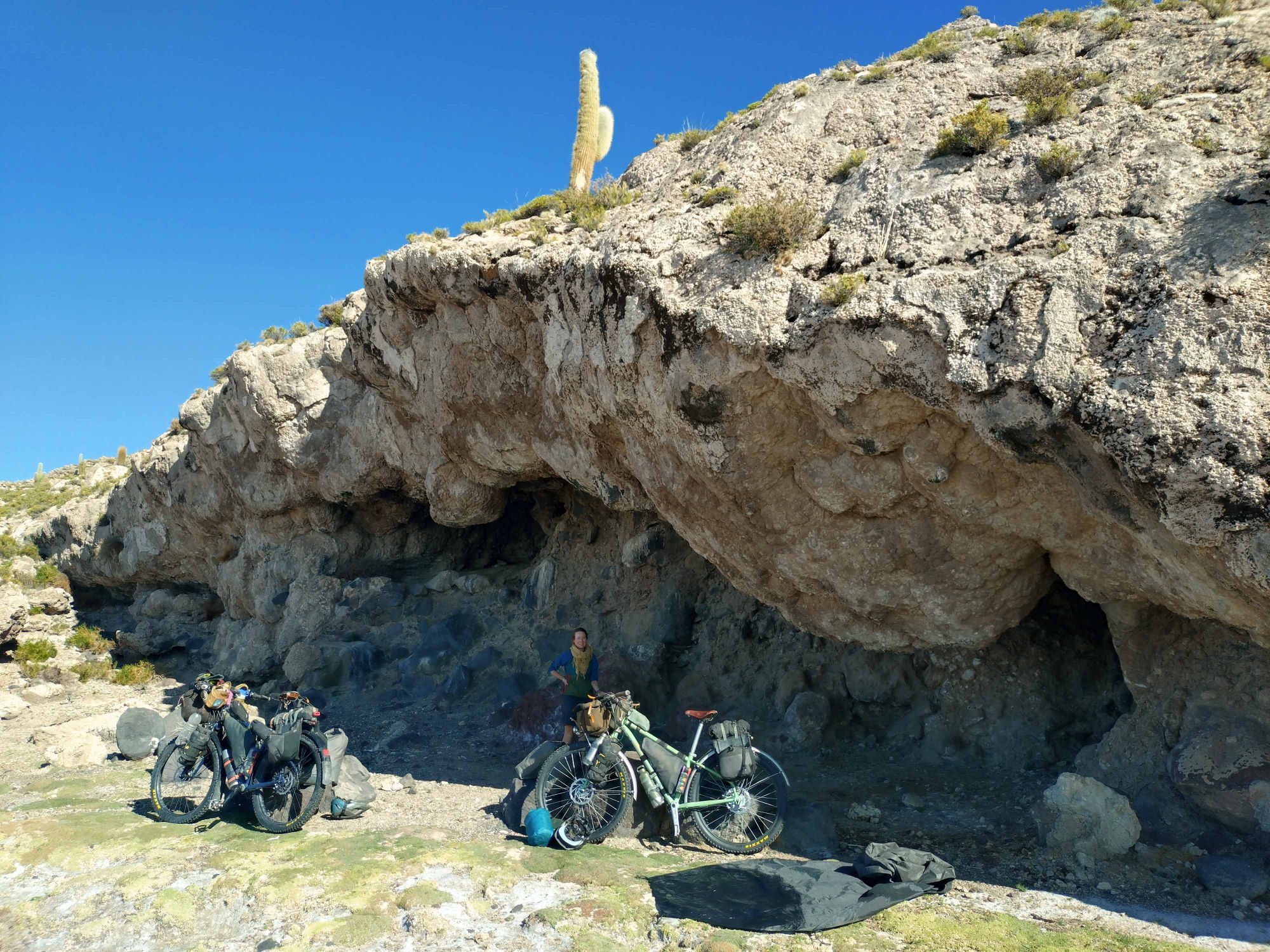
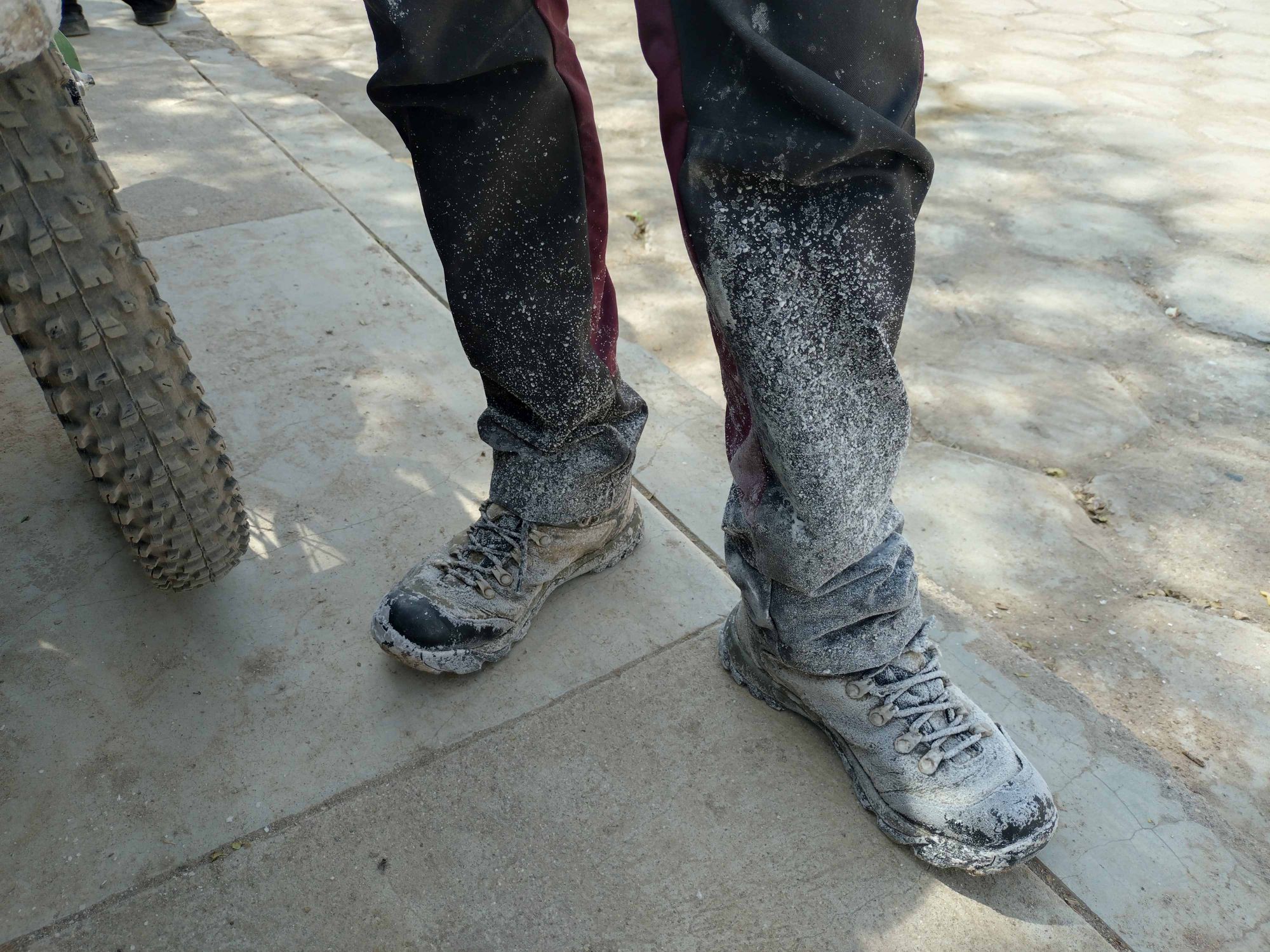
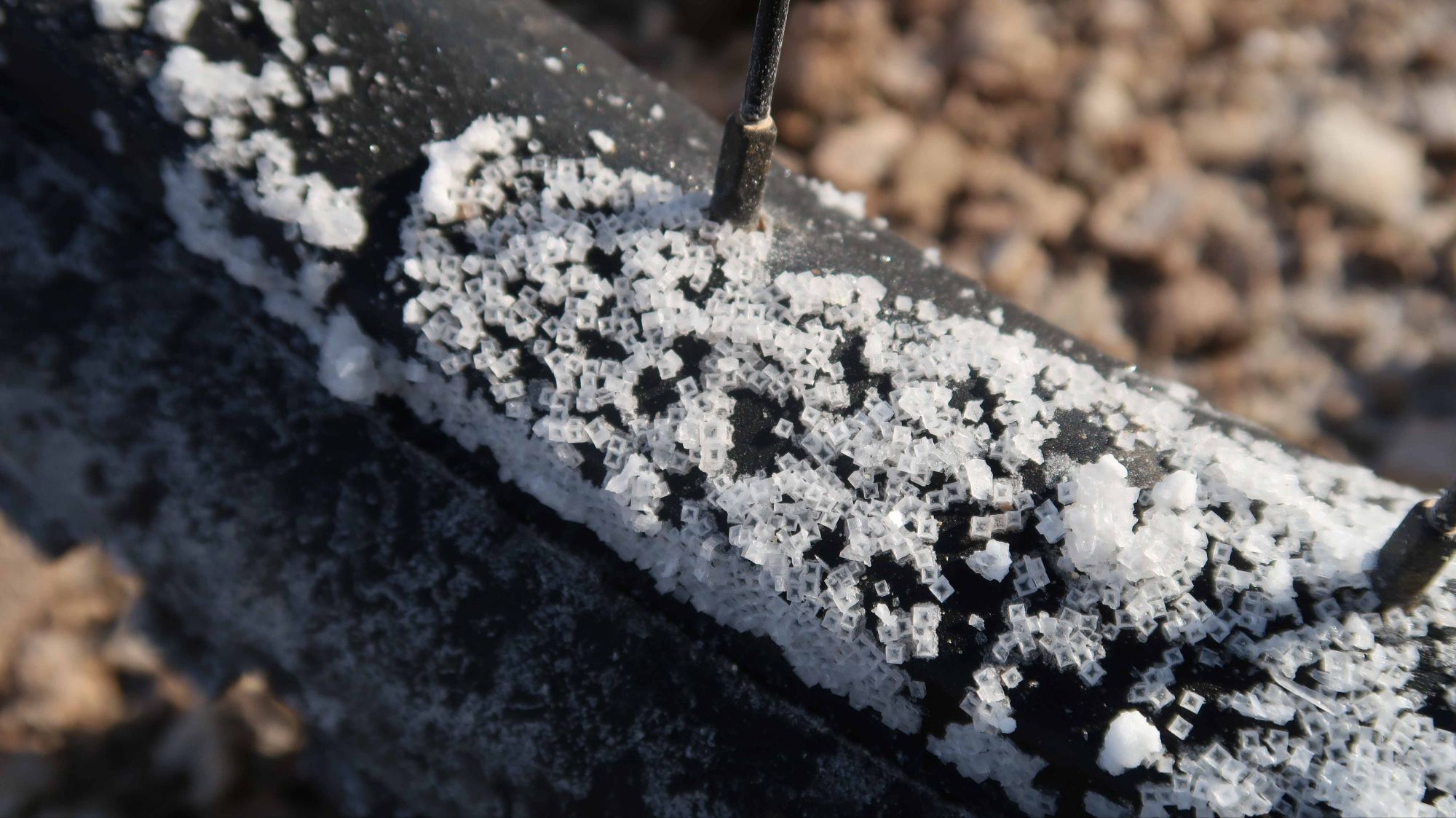
The experience of riding across the salt flats, no matter how wet, is one we will definitely never forget. Everything about it feels other-worldly, it kind of messes with your senses, it’s so unique. It was such a treat, despite the water, the headwinds and the multiple hours of scrubbing the salt off the bikes!
So after our weeks of sickness, storms and salt flats we continued to wiggle Northwards through Bolivia. Next we plan for our final four day remote dash across the Andes into the far North of Chile (via the Vicunas Route) before we wave goodbye to Chile too.


 Tumbling Diaries
Leave a comment