Re-entering Argentina after about a month in Chile was a joy. We both just really enjoyed being somewhere different. The culture is very laid back, the people are super friendly and the horse is a legitimate mode of transport to the local shops – What’s not to love?!
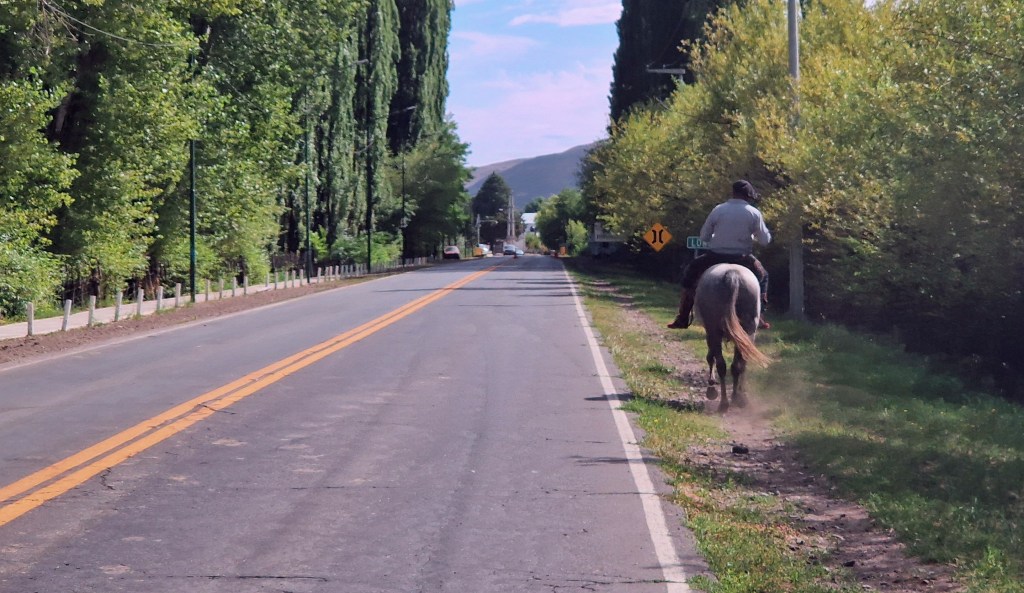
There’s something about Argentina that I don’t know if I can really put into words. There’s so much we both love about it, even though there’s so much that’s just totally rubbish about it – but rubbish in a kind of an endearing way, that just makes you love it even more. And I often find myself thinking ‘Oh Argentina!’
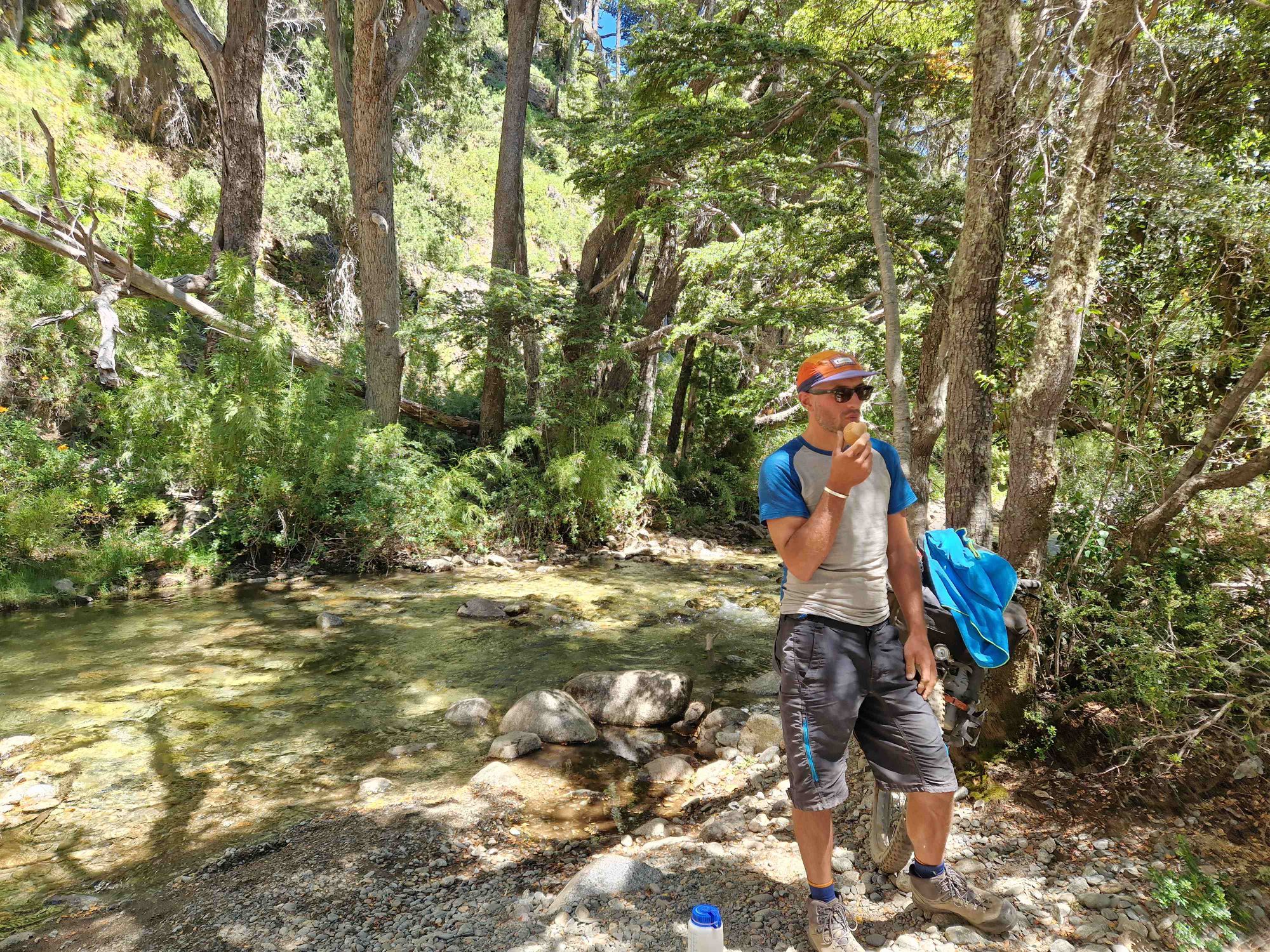
On rolling into our first town, Corcovado, we were elated to see a fruit and veg shop. Something so simple but it is not something we’d seen in our month in Southern Patagonia. We excitedly went in, like children in a sweet shop, eager eyed, carefully picking individual items to enjoy – a nectarine for me, an orange and a banana for Ted. Slowly putting the items on the counter, we waited with anticipation to see how much of our budget we’d blown…. Less than £1 – Thank you Argentina! I savoured my sweet ripe nectarine, sticky juice pouring down my chin and coating my fingers, and it tasted all the sweeter for not breaking the bank the way fresh food (or any food really!) had in Chile. We’ve continued to enjoy as much fresh fruit and veg as we can, knowing that the opportunity to replenish our bodies and fill up our vitamin stores, as well as feeding our souls with all the delicious plants, won’t last long on this journey.
Having excitedly bought the fruit, our attention was drawn to the small collection of cash we had left in our wallets. Resigning ourselves to the fact that we couldn’t put it off any longer, we knew we now had to start the tedious process of getting some money. Sounds so simple, but when you’re not a local it’s a ridiculous and drawn out process. Argentina’s inflation situation is so bad that foreigners are not allowed to withdraw cash from cash machines (the cards just don’t work), very few places accept credit card or debit card (or have internet that works well enough for the card machines to be functional) and you can’t pay by bank transfer or get cash back as a foreigner. No wonder the economy is in such a mess when you can’t even physically pay for things! Instead you have to use Western Union and send yourself money in Argentina. It’s easy enough once you’ve got the hang of it. You just need to channel your inner zen whilst patiently waiting hours in the lengthy queues, and remember that in small places, like Corcovado, you need to let them know a day or so in advance so they have enough cash for you to collect (even if it’s just £100). Thankfully for us we had enough cash left in our pockets (about £12 in these parts!) for a night in s lovely hostel, so we could collect the money the following day. Once you’ve got the cash, you then need to find somewhere to stuff the huge bundles of notes (in your pockets, up your jumper, under your helmet!) and act casual walking out of the office looking two stone heavier and feeling like a bank robber. But it’s just another Argentinian quirk and soon enough you just kind of accept it like it’s perfectly normal – obviously whilst thinking ‘Oh Argentina!’
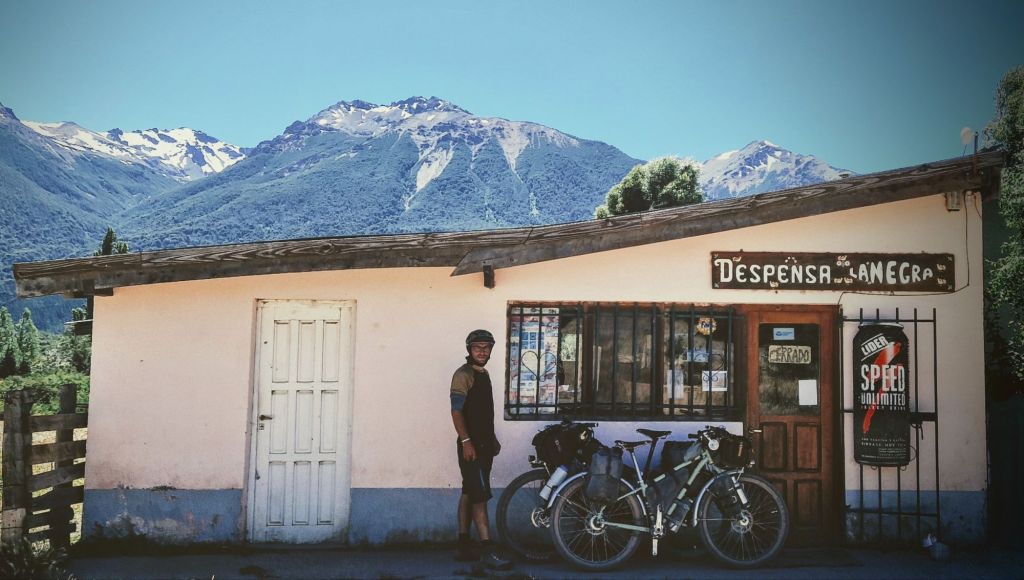
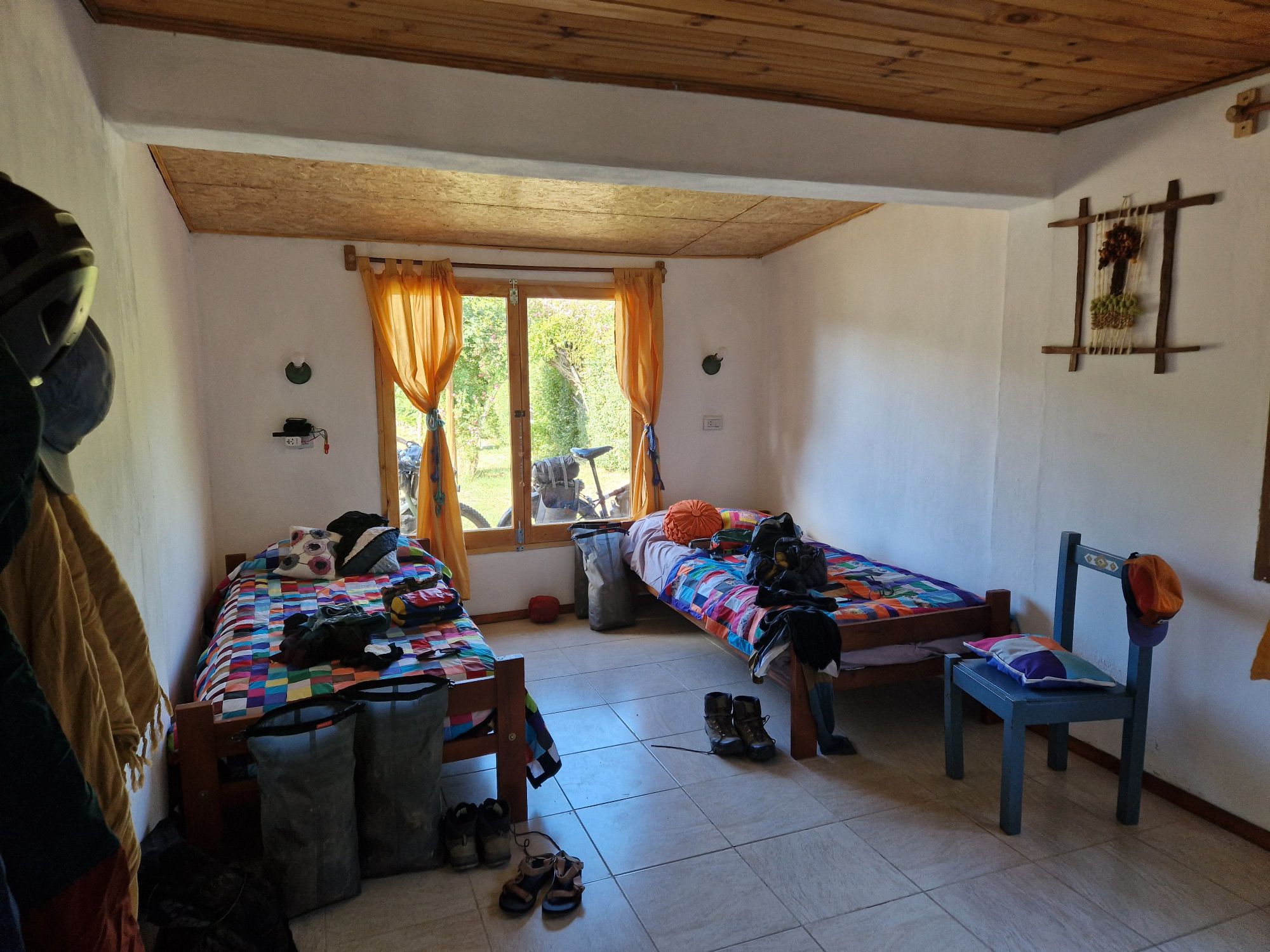
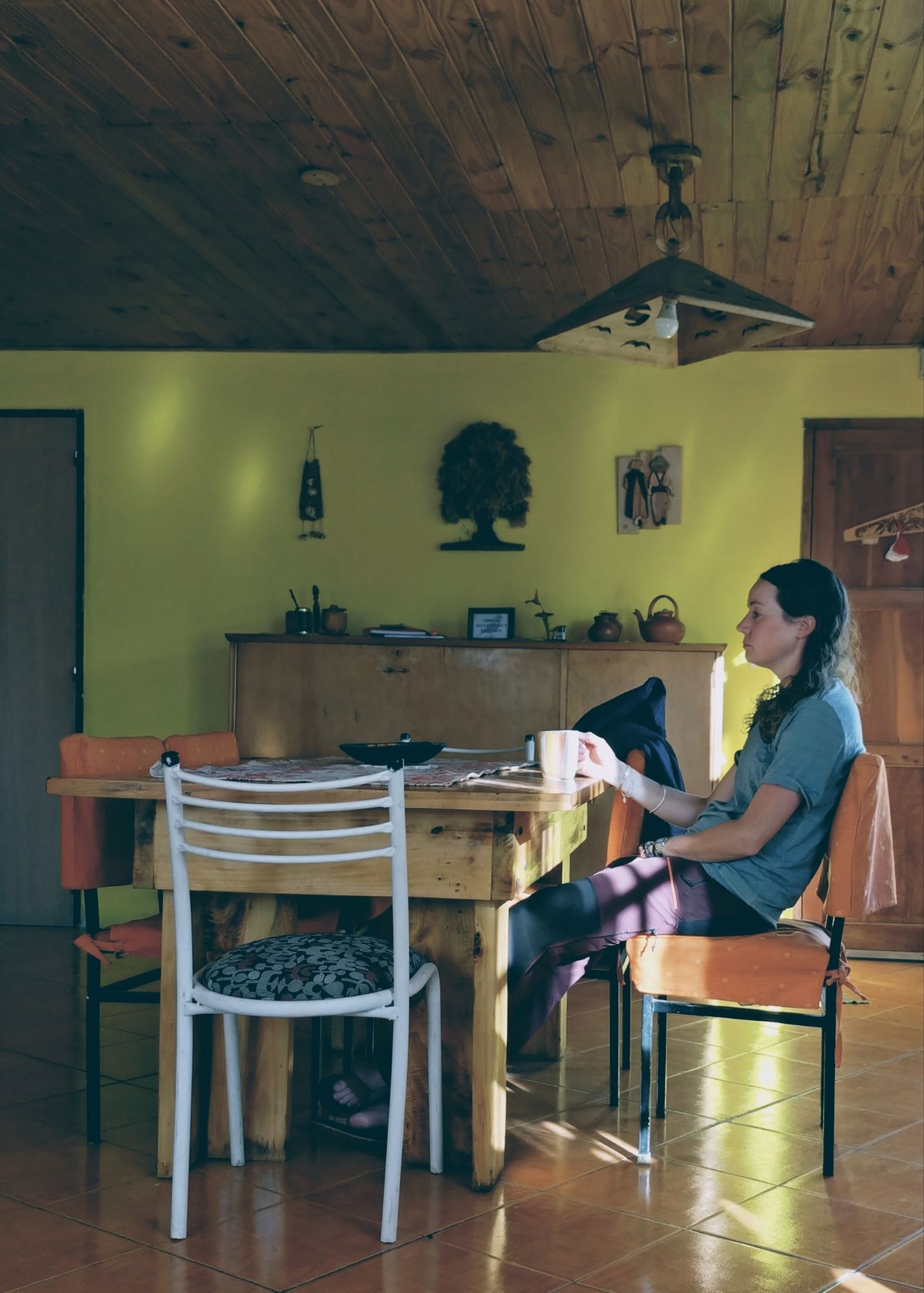
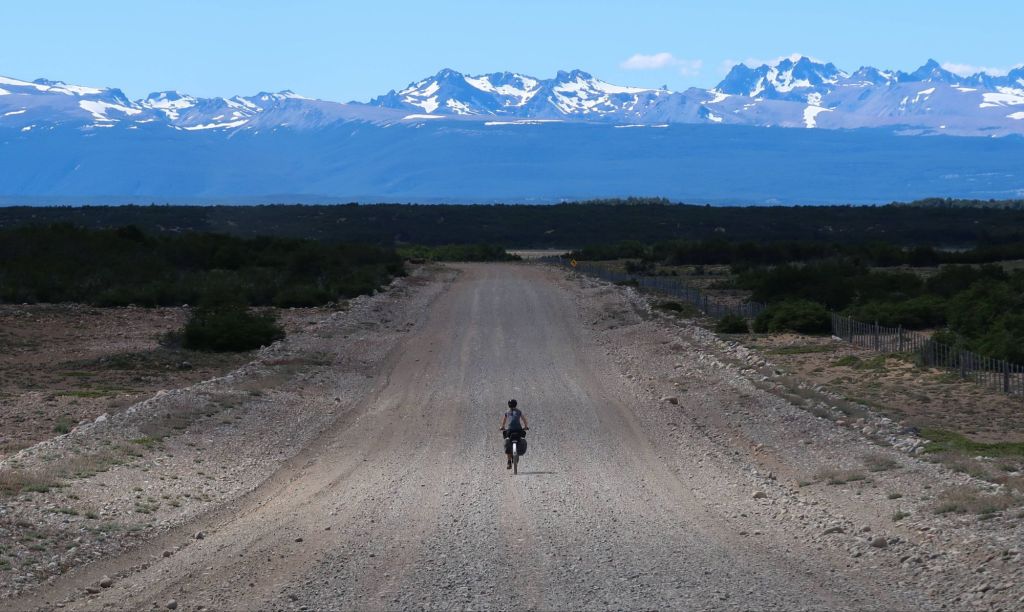
Our journey northward-ish (you know us, we never choose the most direct route – follow our live dot on TrackLeaders from our Map page to see our wiggles!) has taken us along many many gravel roads – in varying states of disrepair. And this is one of the things we love and hate in equal measure.
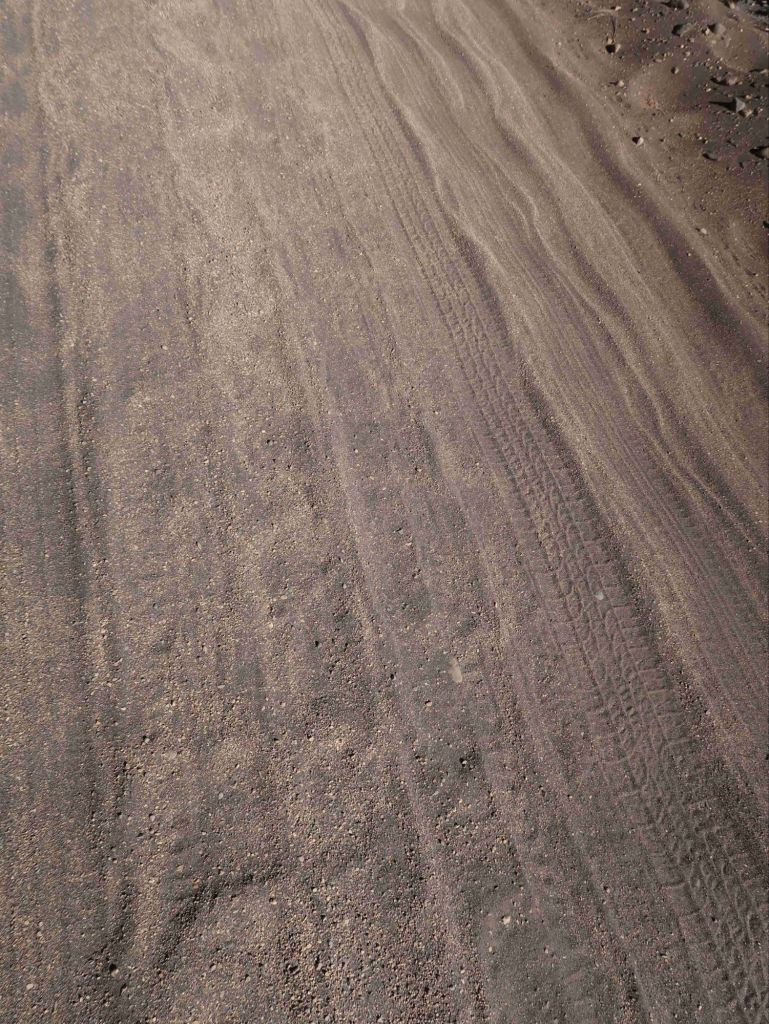
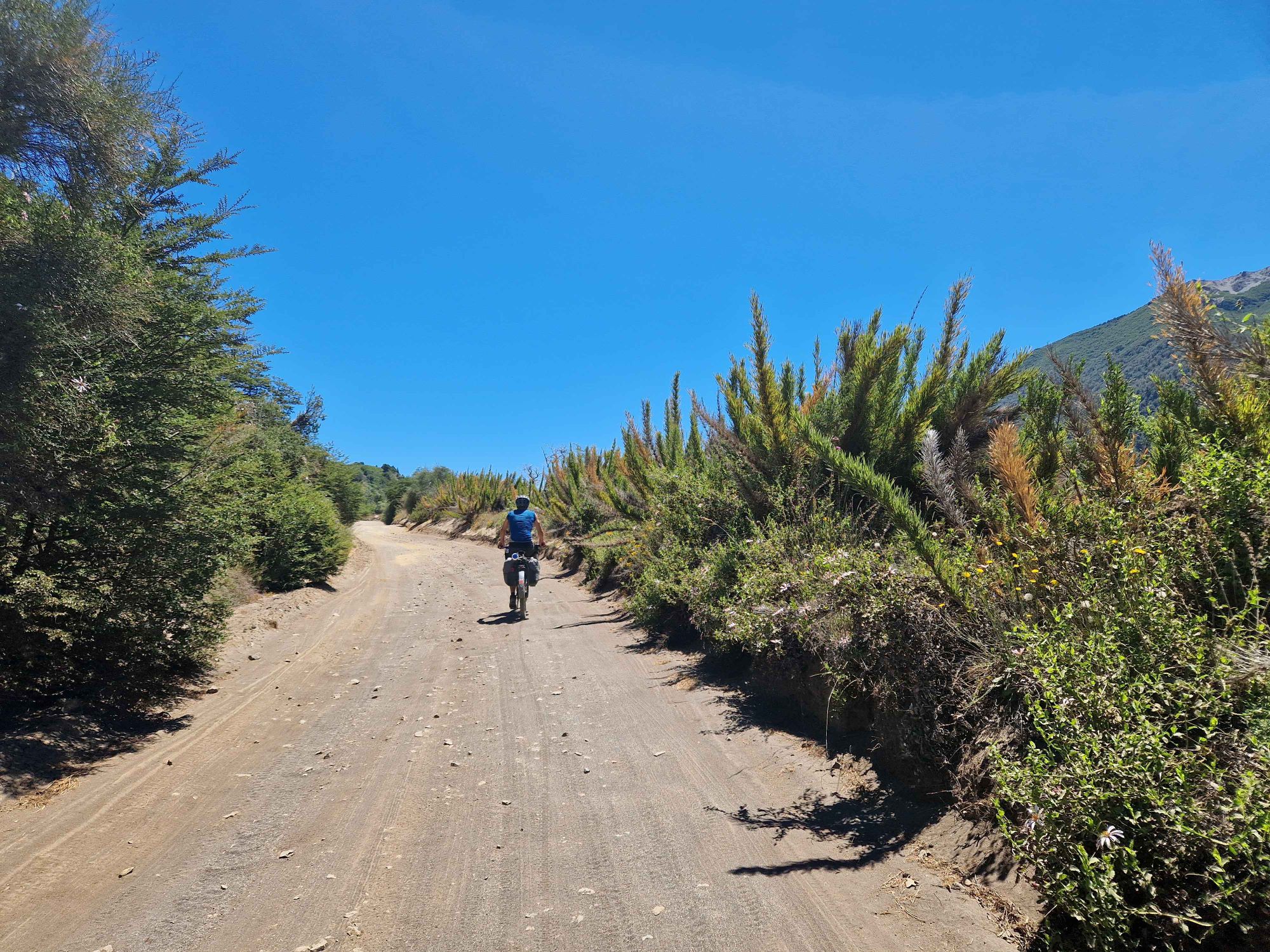
One example was our approach to the Welsh settlement of Trevelin. I was cruising along the quiet gravel road, wonderfully smooth, no traffic, incredible open expansive scenery, huge blue skies with perfectly white puffy clouds, drum and bass blaring in my headphones, legs pumping and lungs burning, feeling like I’m flying, feeling like I’m truly invincible and feeling like I’m a mega-star of the world cycling club – Then on the final approach to town, the corrugated washboard starts. Ruts, equally spaced to perfectly fit a bike wheel, created by the suspension of fast vehicles (I like to blame the pickup trucks, especially the red ones!) that rattle every bone in your body. They are relentless and seemingly inescapable, no matter which line you try to pick through them. The bump, bump, bump through the pedals locks up your knees and jars your lower back, not to mention bruising your bum. It ricochets through your wrists, stiffening your elbows, pushing your shoulders up towards your ears and locking your neck at a funny curved angle, similar to that of the local condors. I went from feeling on top of the world to crawling along at a glacial pace, each pedal stroke an effort, wondering how on earth anyone else has ever reached Trevelin before dying a slow and painful death by washboard corrugation. What followed after this was four days of back to back washboard corrugation from our approach to Trevelin, all the way through Los Alerces National Park and beyond. Safe to say it was not good for Ted’s back and neck, which were still sore from all the hike-a-bikes and river crossings from our last blog. Despite having moments of loving the climbs (they are his favourite bits – Told you he was mad!) and racing over the bumps out of the saddle like he was on a Zwift session, I’d say he generally reached grump level 9.5 (out of 10) for many of these washboard gravel days – thank heavens for headphones and podcasts for keeping me sane!
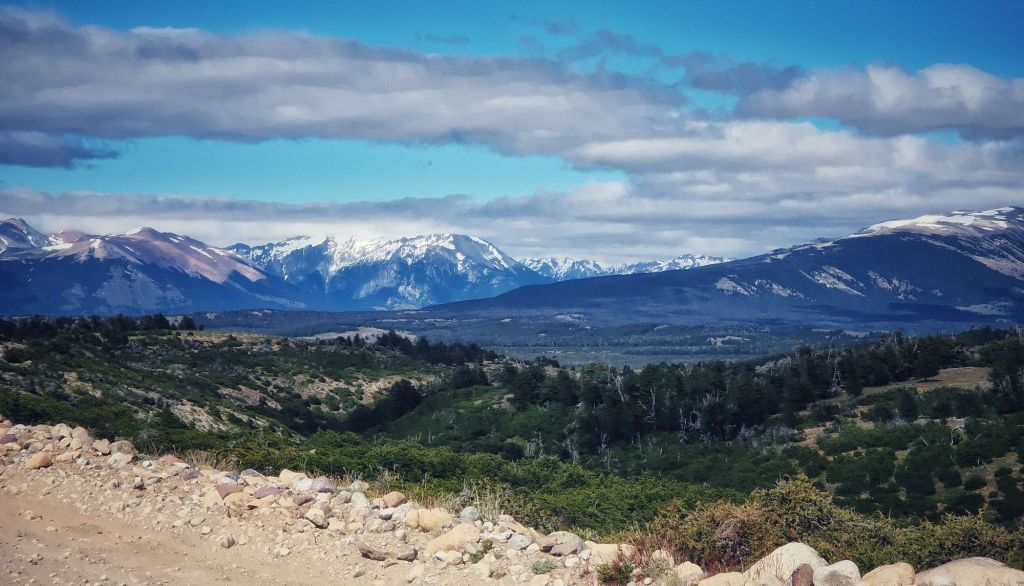
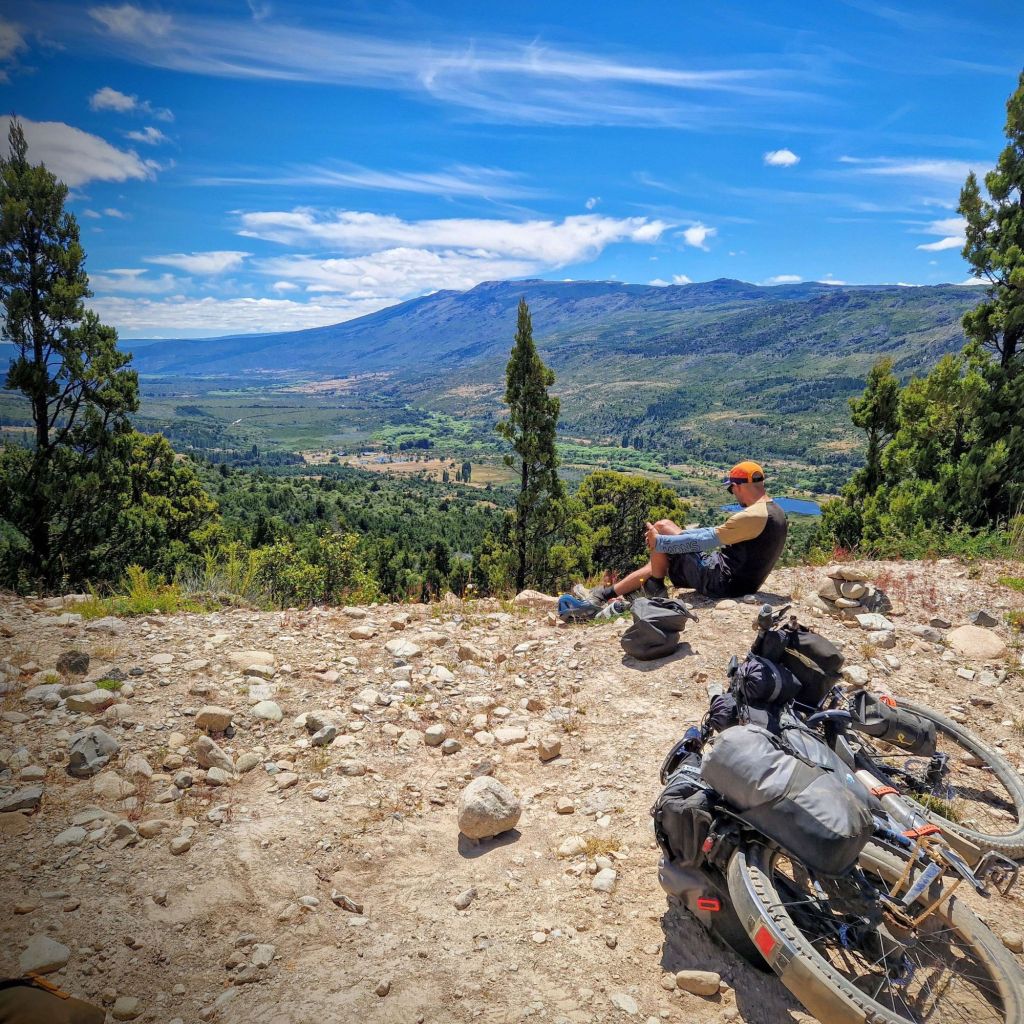
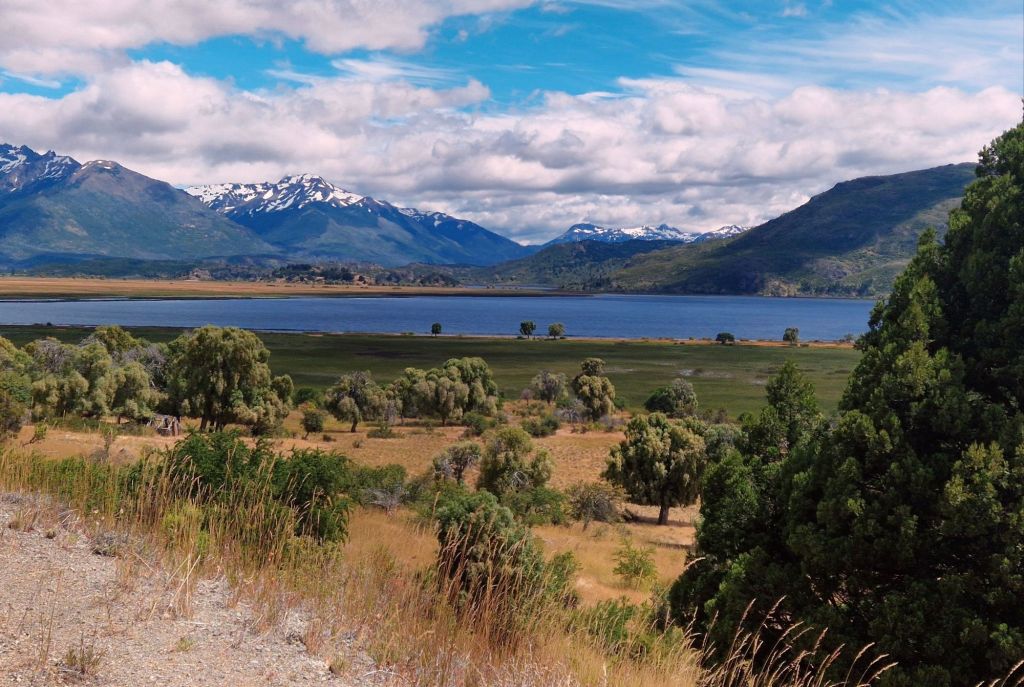

The scenery that surrounded us on these days continued to be beautiful. The bluest blue skies that seemed so huge and stretched on forever. I seem to notice the huge skies more here and I suppose it’s because all the rest of the scenery is so vast too. The hills were covered in trees and the lakes were so gigantic that waves perpetually lapped the shore like a gentle sea. We enjoyed night after night of picture perfect camp spots, complete with perfect streams, rivers and lakes for an evening swim to wash away the day (and the plumes of dust from gravel roads that accumulate everywhere – even turning your arm hair into a layer of white fuzz!). A lot of the time we found ourselves thinking our camp spots are too good to be true and have found it hard to leave them, but that’s the beauty of wild camping – to find a place so special and to leave it as you found it, so the next visitors can enjoy that same magic.
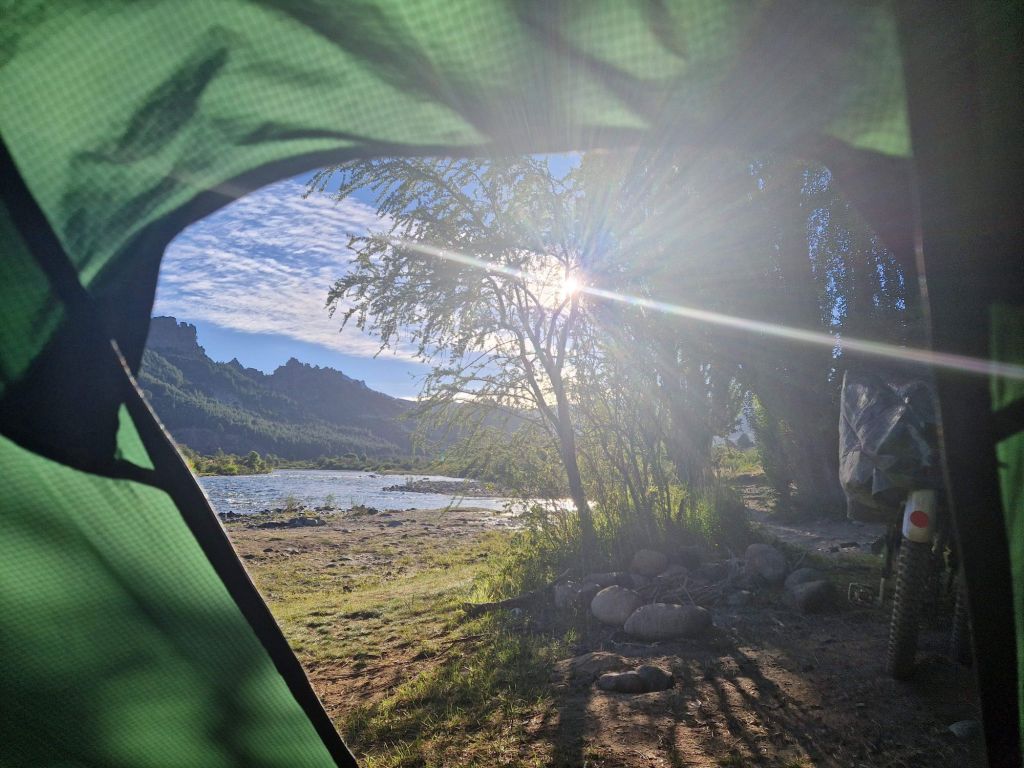
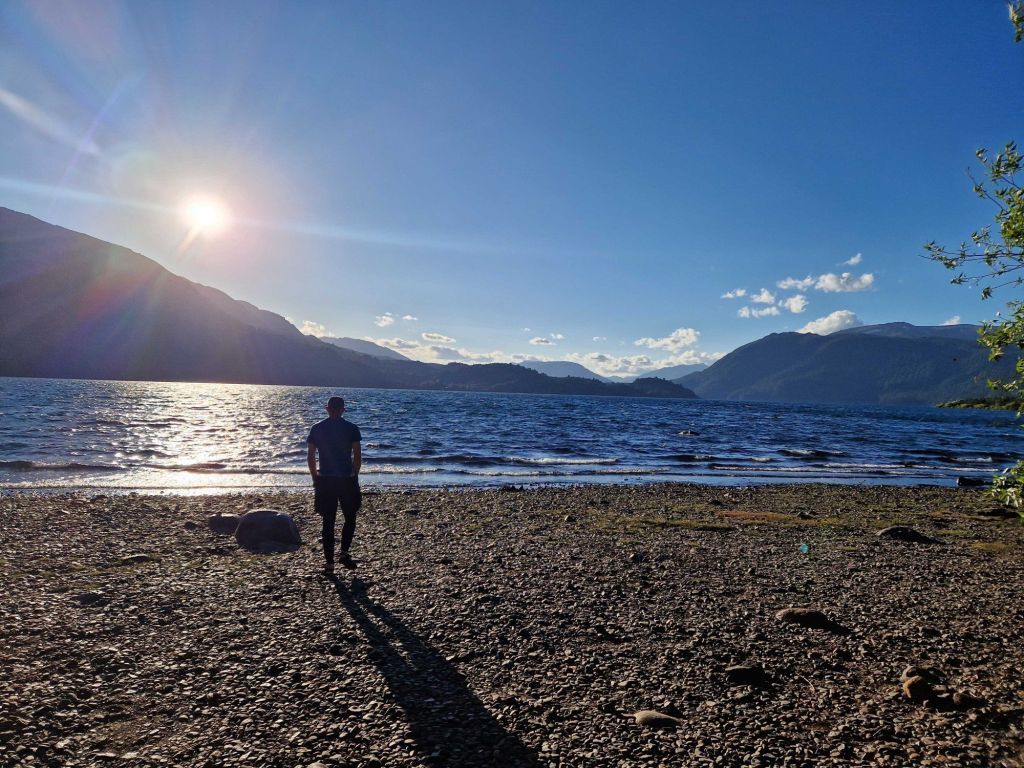
Truth be told, we’ve been suffering with the heat here in Argentina – given the crummy weather the UK has been suffering I feel a bit sheepish whilst writing this. Temperatures have been hovering between 35°- 40° everyday, with our Garmins reading 50° when in direct sunlight. It’s scorchio. I don’t fare so well in the heat. I’m from a family of redheads and although I somehow sadly missed out on the beautiful red hair gene, I did get the ‘pale skin put suncream on when you can see your shadow’ gene. The suncream combined with the gravel road dust and the sweat makes an awful sticky paste, which I’m sure a lot of people would pay good money for if I branded it correctly but I’m not so keen. The heat, combined with Ted’s ongoing sore back and shoulder mean that we have moved a little more gently as we’ve continued our journey, so happening upon the perfect camp spot has been a great reason to finish early for the day. Lunchtime swims have also become a great addition to our days and a way to while away the hottest hours of the day, when riding our bikes would be crackers!
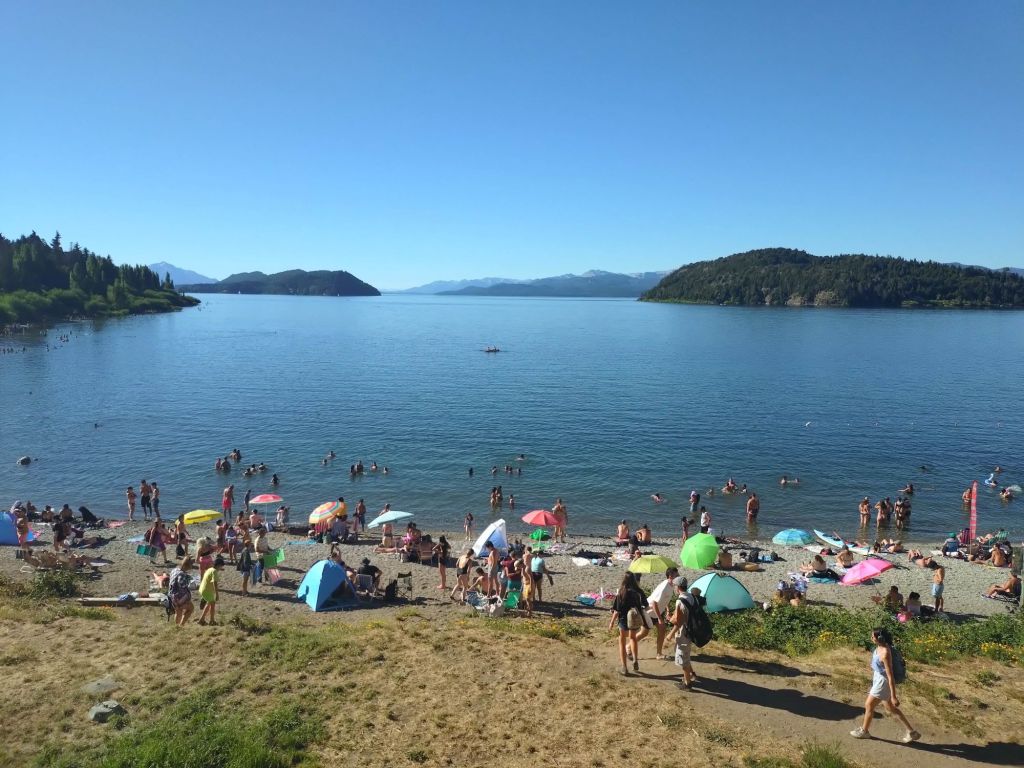
January and February are the height of summer here, and although it’s normally warm, the locals tell us it’s not normally this warm. It’s another example of us experiencing the sad reality of a warming planet. As it’s the height of summer it’s also holiday season. Families pack up their vehicle, whatever they have from pickup trucks to 1980s clapped out bangers, filled to the brim (and usually also overflowing onto the roof) with tents and mattresses and kayaks and deck chairs and pool inflatables, plus all the kids and granny. They head off to spend time in the, usually cooler, mountains and lakes district. Imagine an early 1990s photograph in faded cepia tones, a family picnic-ing out of the back of a battered hatchback parked next to a river, thermos flask and cool box atop a plastic picnic blanket and under a cheery parasol – thats an Argentinian holiday right there. Even the local cyclists have their own version. So we found ourselves part of the summer throng, despite our best attempts to avoid it.
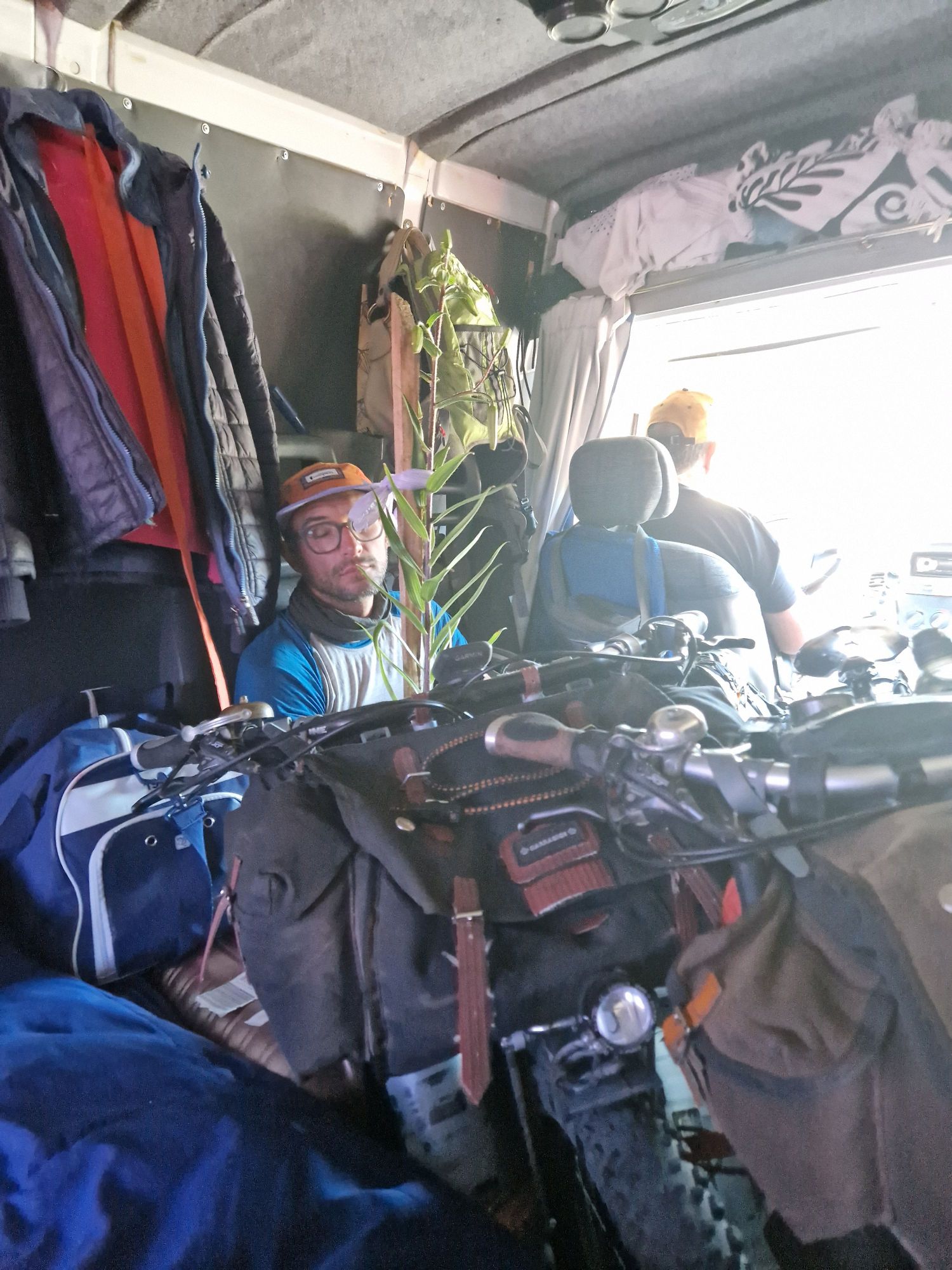
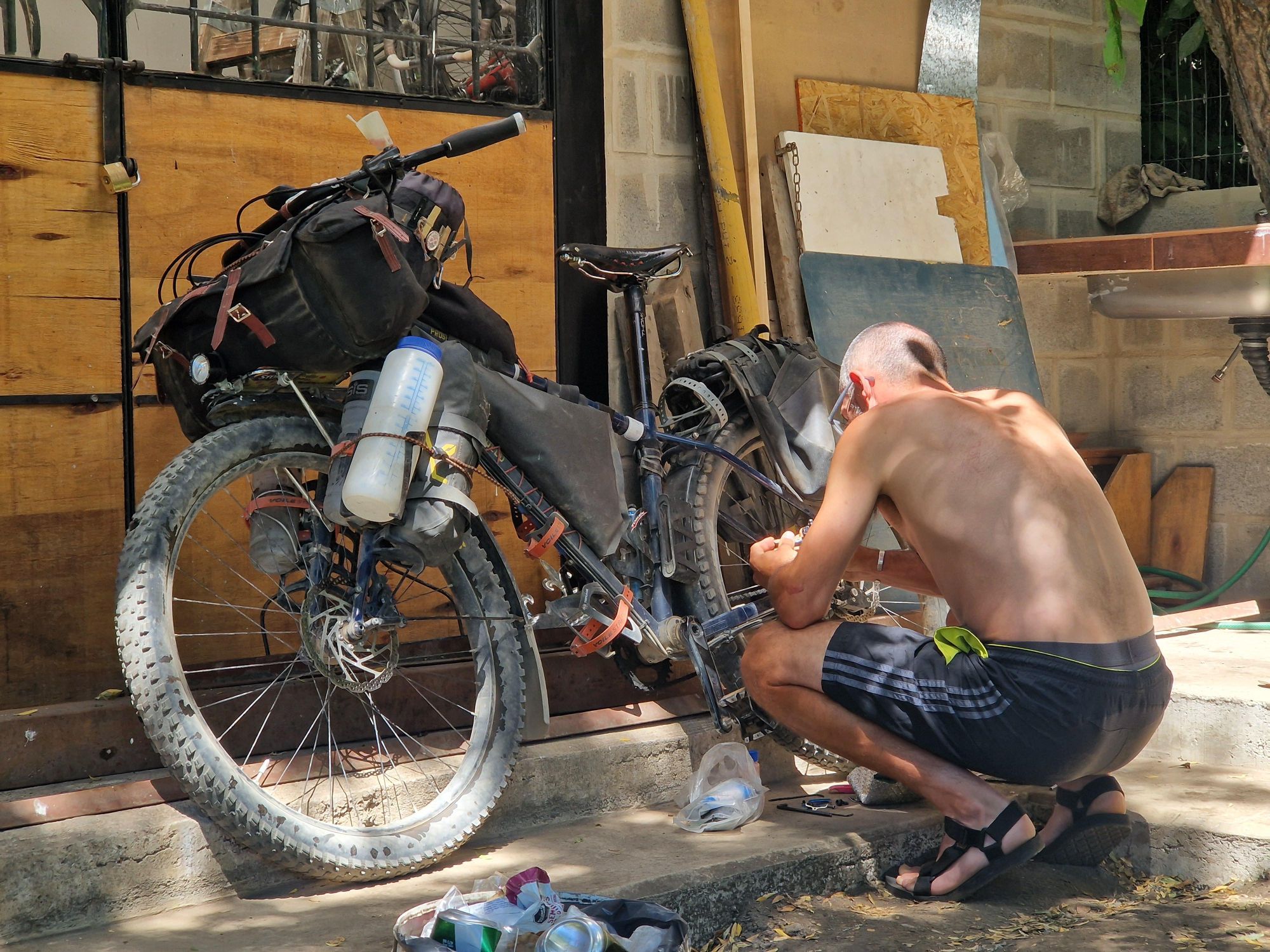
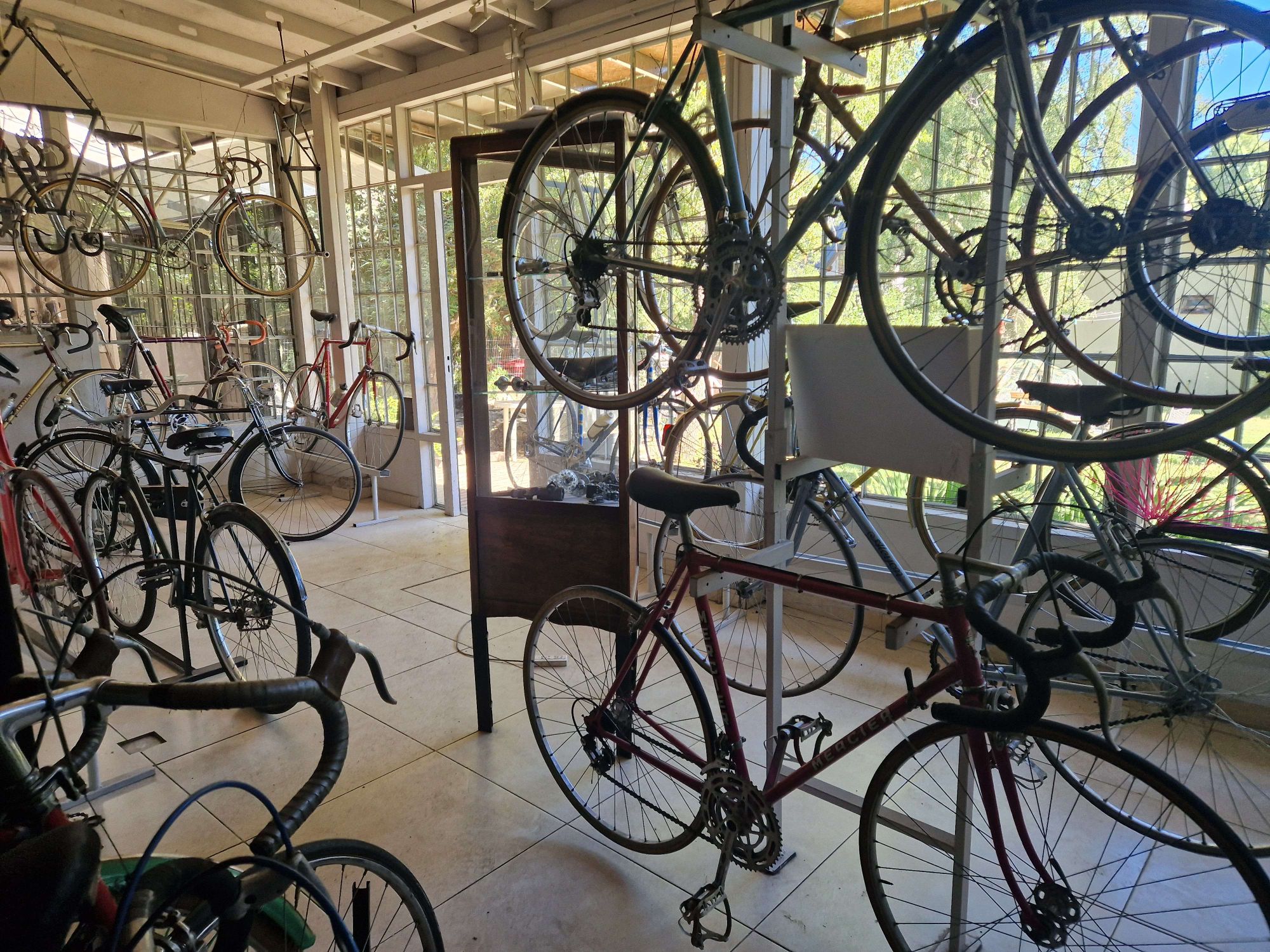
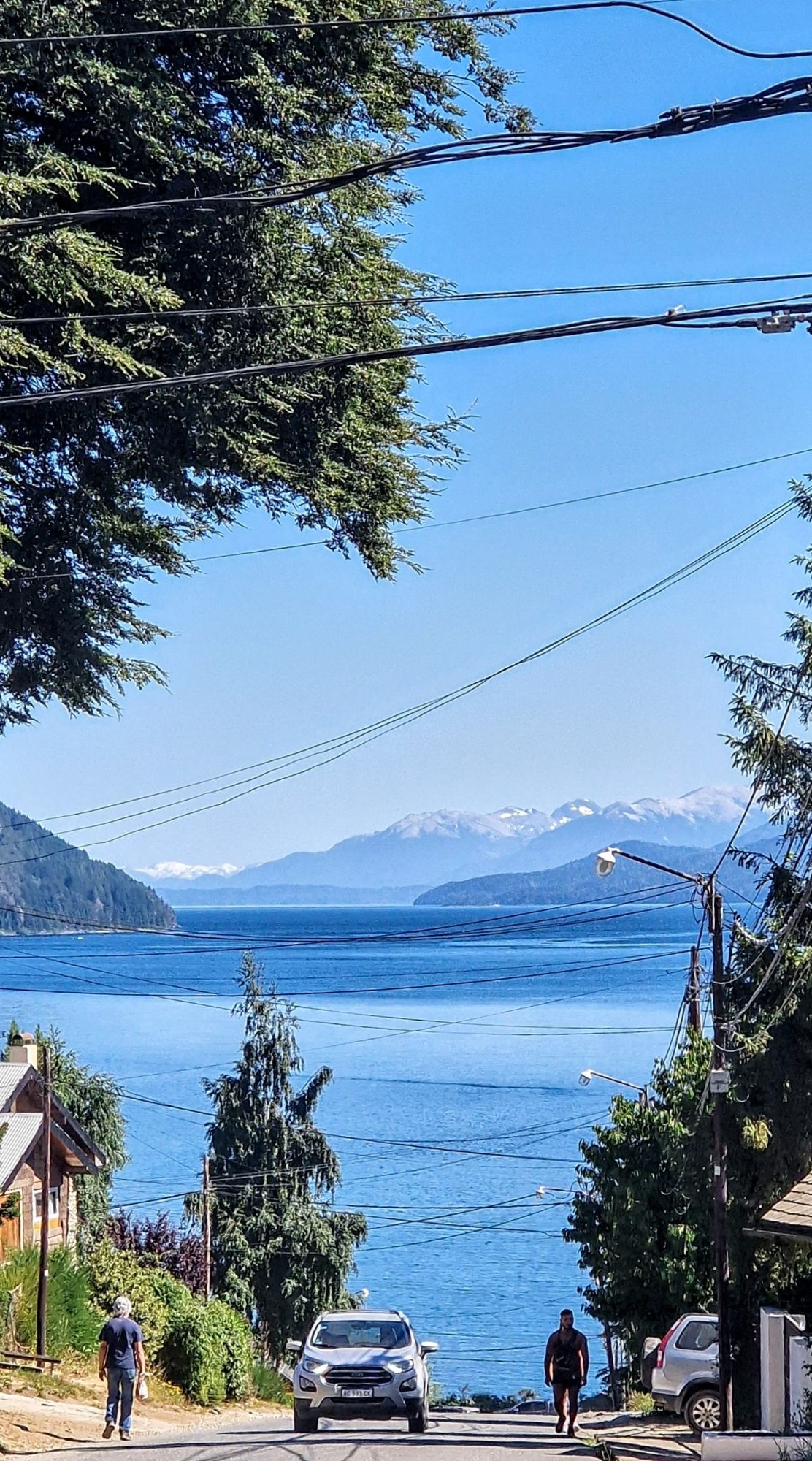
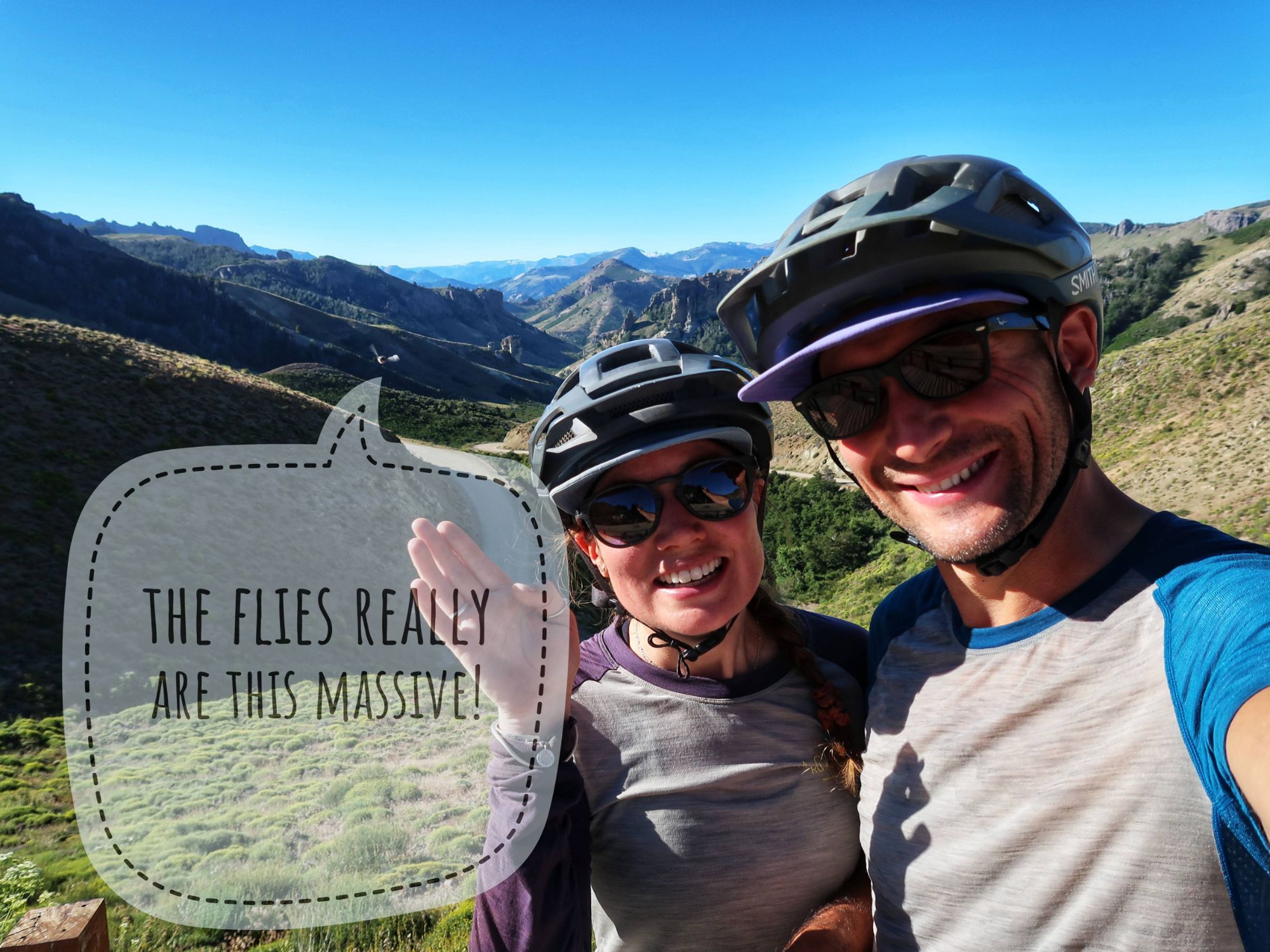
The roads were super busy, so where cyclists would ordinarily have short stints on quiet highways, for us it was like cycling on the M1 in the crazy Argentinian heat. In one instance, as we pulled over for a drink into the rubbish filled drainage ditch (a not so glamorous, but safe place to pause as a cyclist) a clapped out Renault Traffic van pulled up in front of us and then indicated to pull back out into the road again. Seizing the moment, Ted stuck his thumb out. Miraculously, the brake lights came on and they stopped indicating to pull out. After a few minutes of uncertainty of whether the bikes would need to be hauled onto the roof, we finally fit everything into the van. This incredible trail magic, from the kindness of Claudio and Rubi (an Argentinian couple on their summer holiday) meant we had a lift to Bariloche, missing a whole day on the ugly, busy, hot and sweaty highway. Within minutes we were both asleep in the back of the van, indicating we probably both needed the rest much more than we realised. Waking in Bariloche, we head straight over to our WarmShowers host, Miguel, who lived in the peaceful, leafy suburbs of this busy town. Miguel is a bike frame builder and also has an unbelievable bike museum, full of some beautiful, classic bikes. He kindly showed us around the museum and let us stay in his garden. Whether due to our tiredness, the heat, Miguel’s warm hospitality or the fact that I ended up with a stomach bug, what should have been a one night stay turned into four. This also gave Ted the opportunity to carry out some much needed maintenance on his bike brake (for the bike geeks – the ceramic piston had cracked). So, for the second time in our marriage, Ted bundled me up in the tent, leaving me to ride out my sickness bug with a bucket and a bottle of water, whilst he went out for the day, saw the sights of Bariloche and fixed his bike.
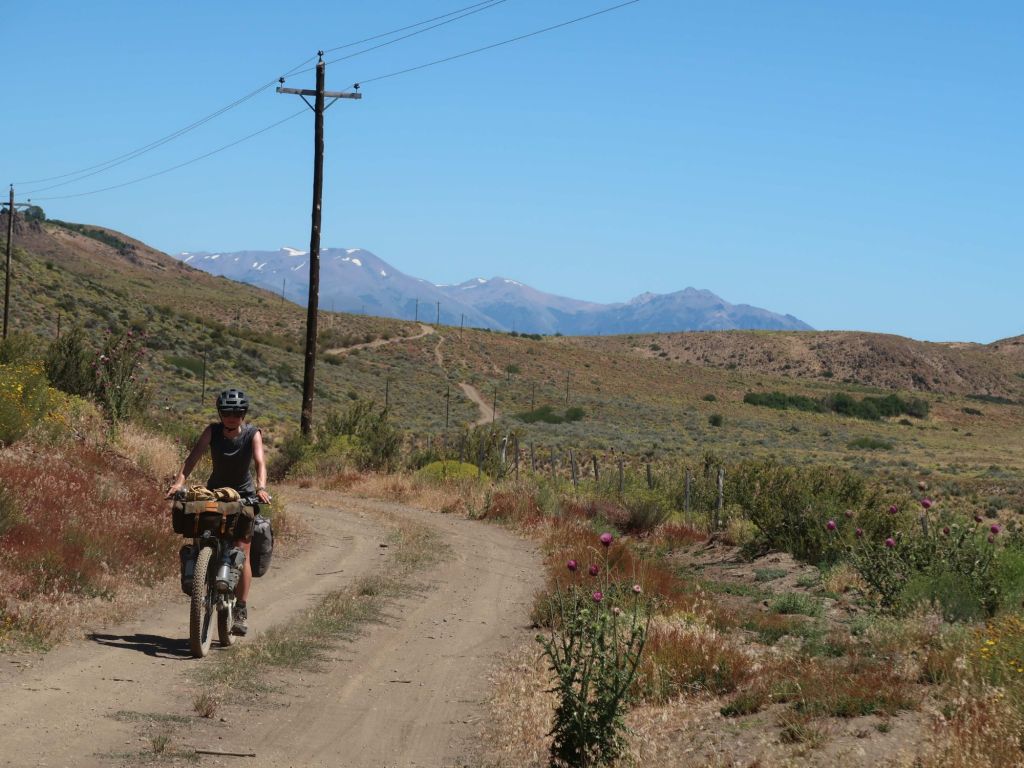
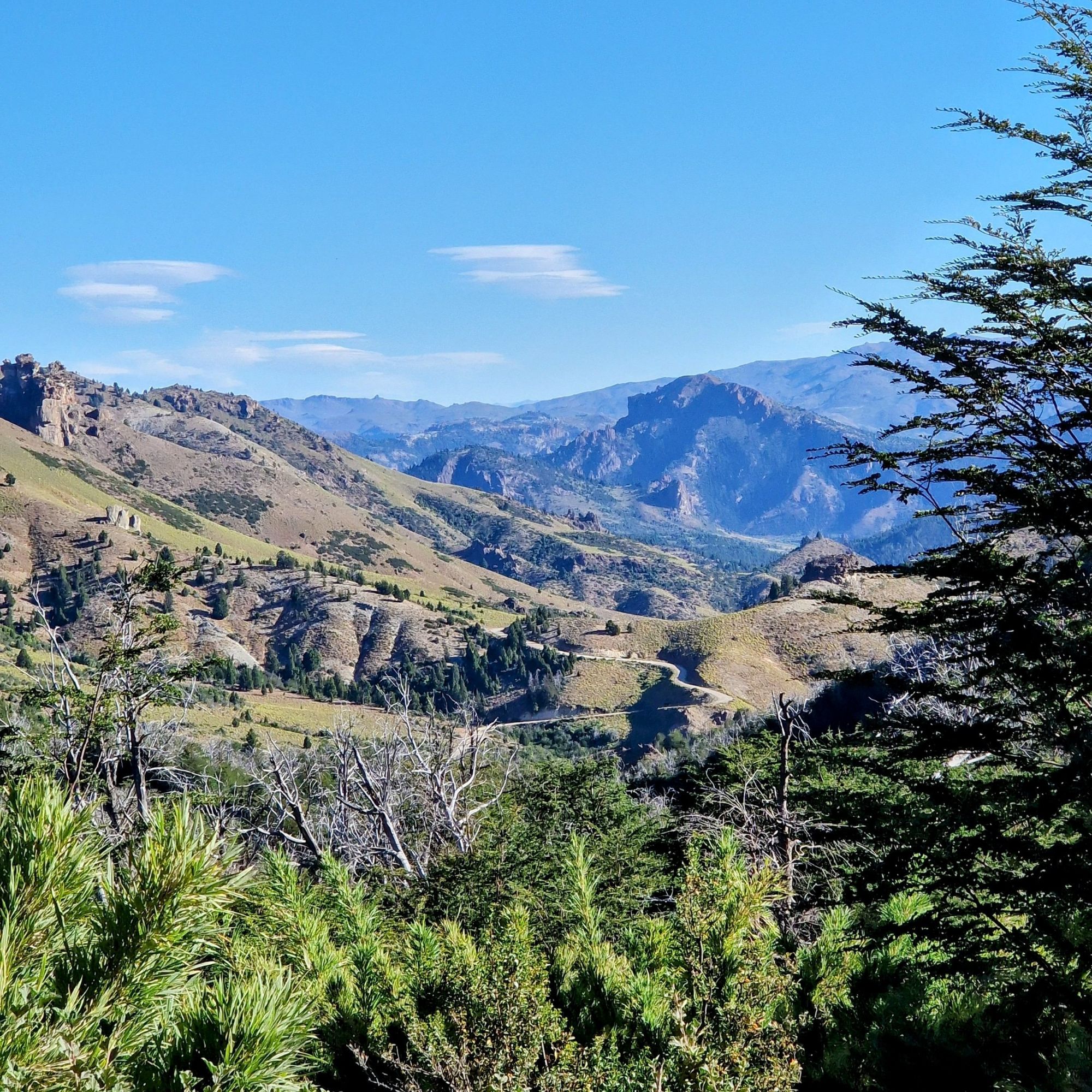
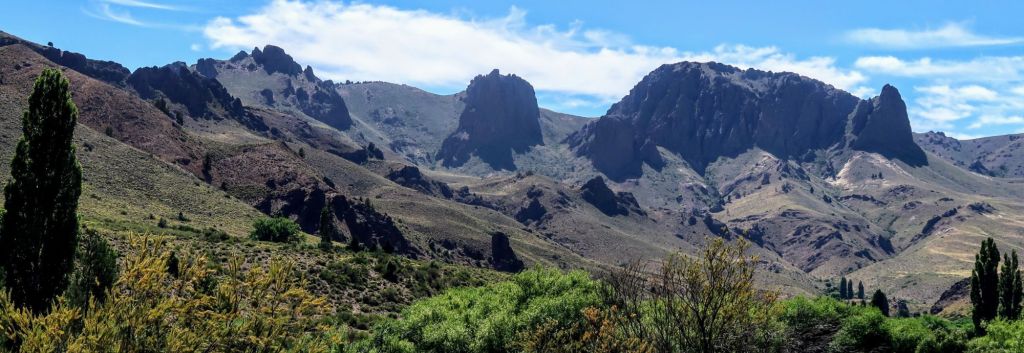
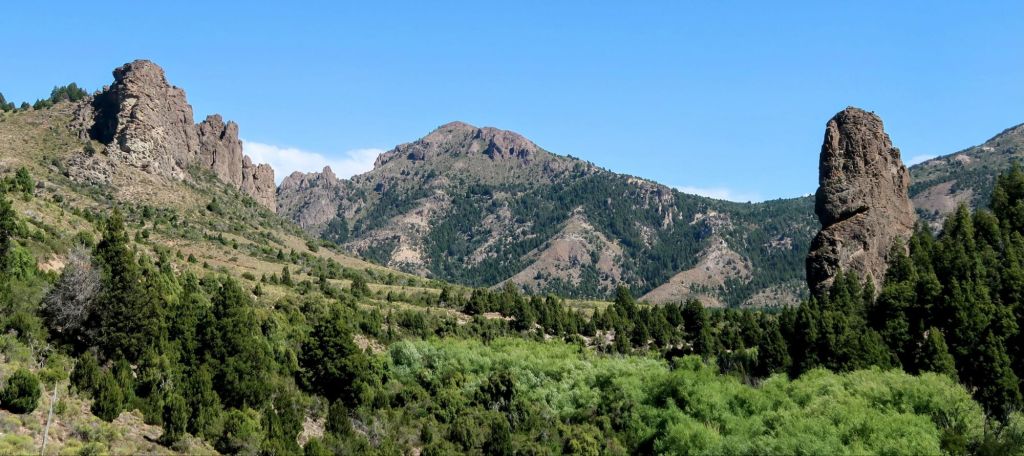
Consequently, we’ve learnt to love the Argentinan holiday for all it’s nostalgic simplicity and the trail magic it has thrown our way, despite not enjoying the busy-ness it creates. After our time in Bariloche our route took us through some real wild west looking cowboy country, (a route known as the Beer Trail). Then up and over Paso Cordoba, which had the most incredible rock formations and cliff faces. The gravel roads were more like 4×4 tracks for the most part, so we mainly had them to ourselves, which was pretty perfect. We then dropped down into another assault-on-the-senses town, San Martin de Los Andes. But once we had got over acting like startled rabbits and re-adjusted our senses to the hustle and bustle it wasn’t all bad – we found a laidback pizza shop and indulged in our first pizza in South America.
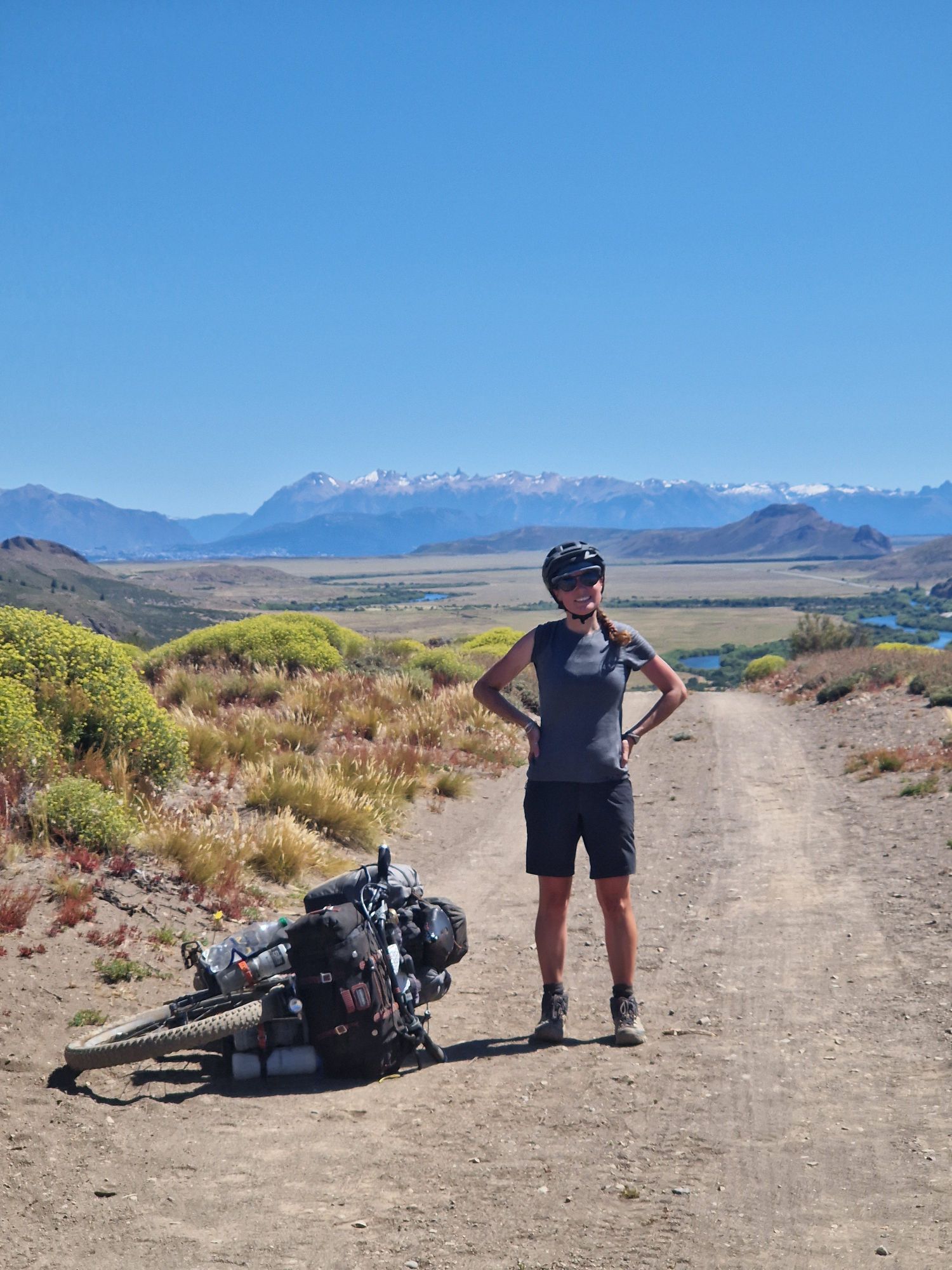
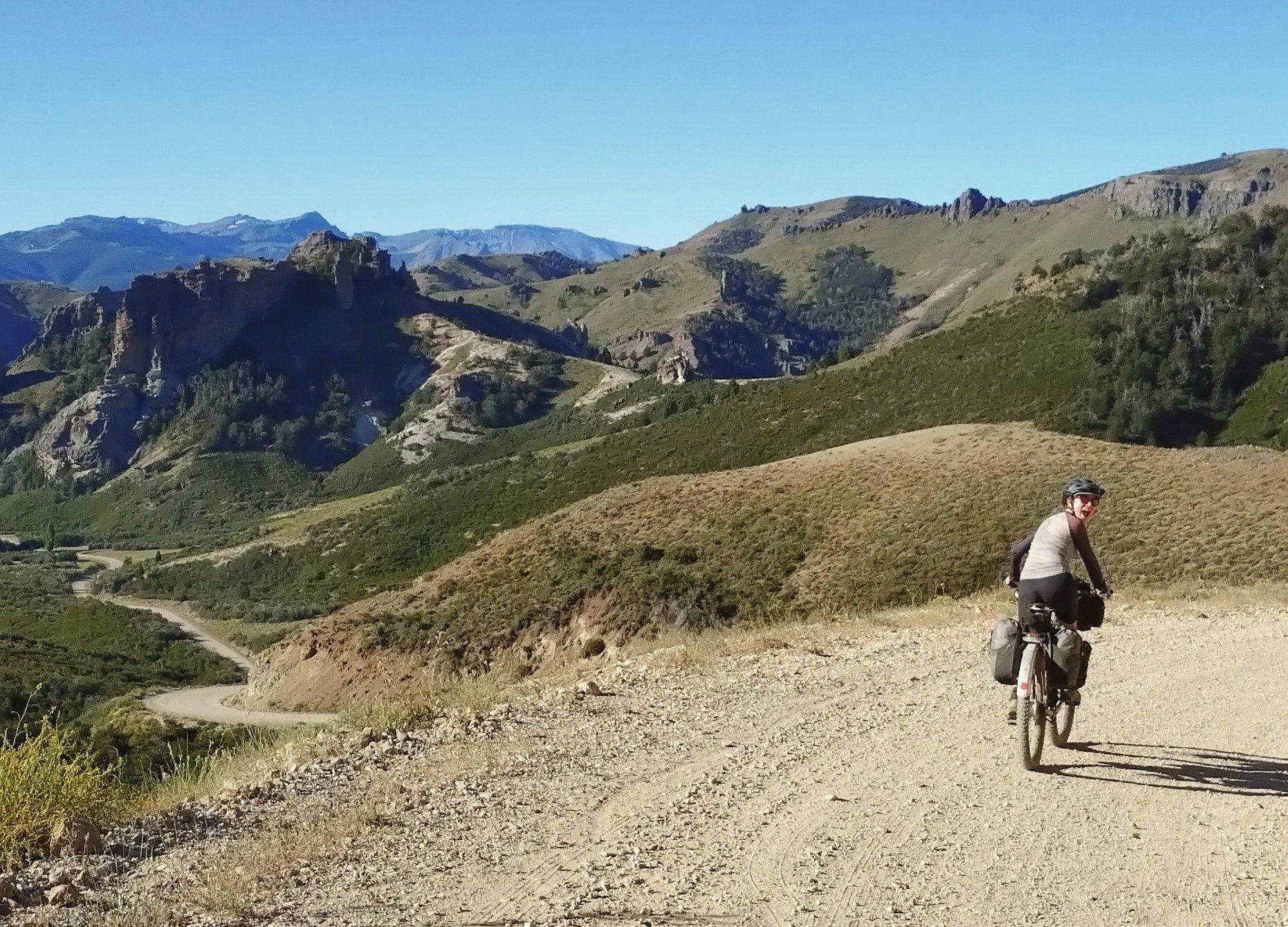

On cycling out of San Martin de Los Andes towards Lago Lolog in amongst the tourist traffic, we were reminded of the Argentinian propensity to totally ignore the highway code on gravel roads. Vehicles that drive in a totally sensible manner on asphalt seemed to rev up as the end of the pavement grew closer. From the moment they passed the sign all cyclists dread – Fin Pavimento – everyone quickly floored it, spraying dust and gravel everywhere as they overtook and undertook slower vehicles (even those towing boats) whilst they were also overtaking us on our bikes. It was chaos. It was like they were all suddenly in a race to the lake to find the best picnic spot, leaving us in their wake covered in dust. As I say, thank heavens for perfect wild camp spots complete with natural swimming pools to wash off the dust.
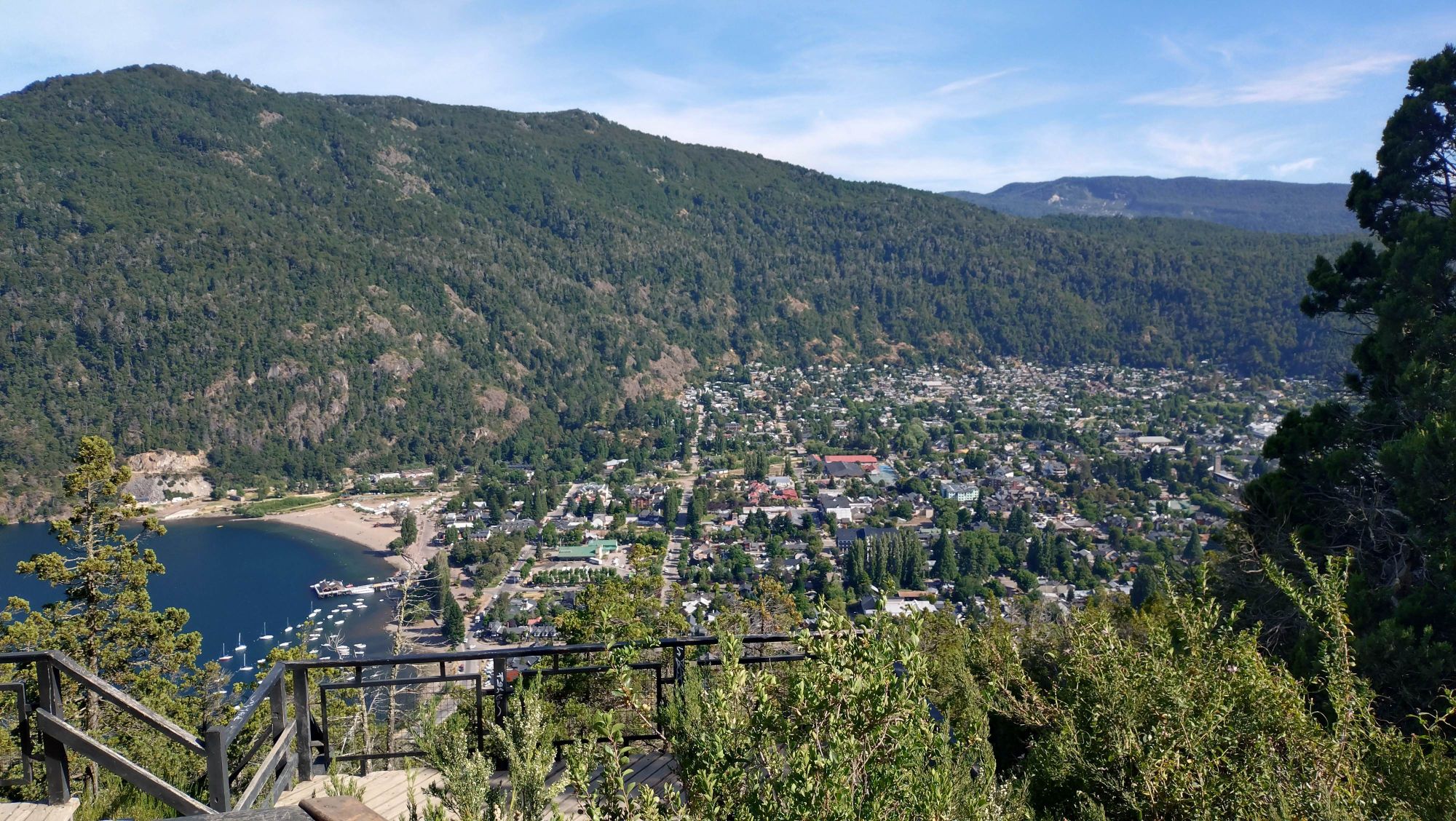
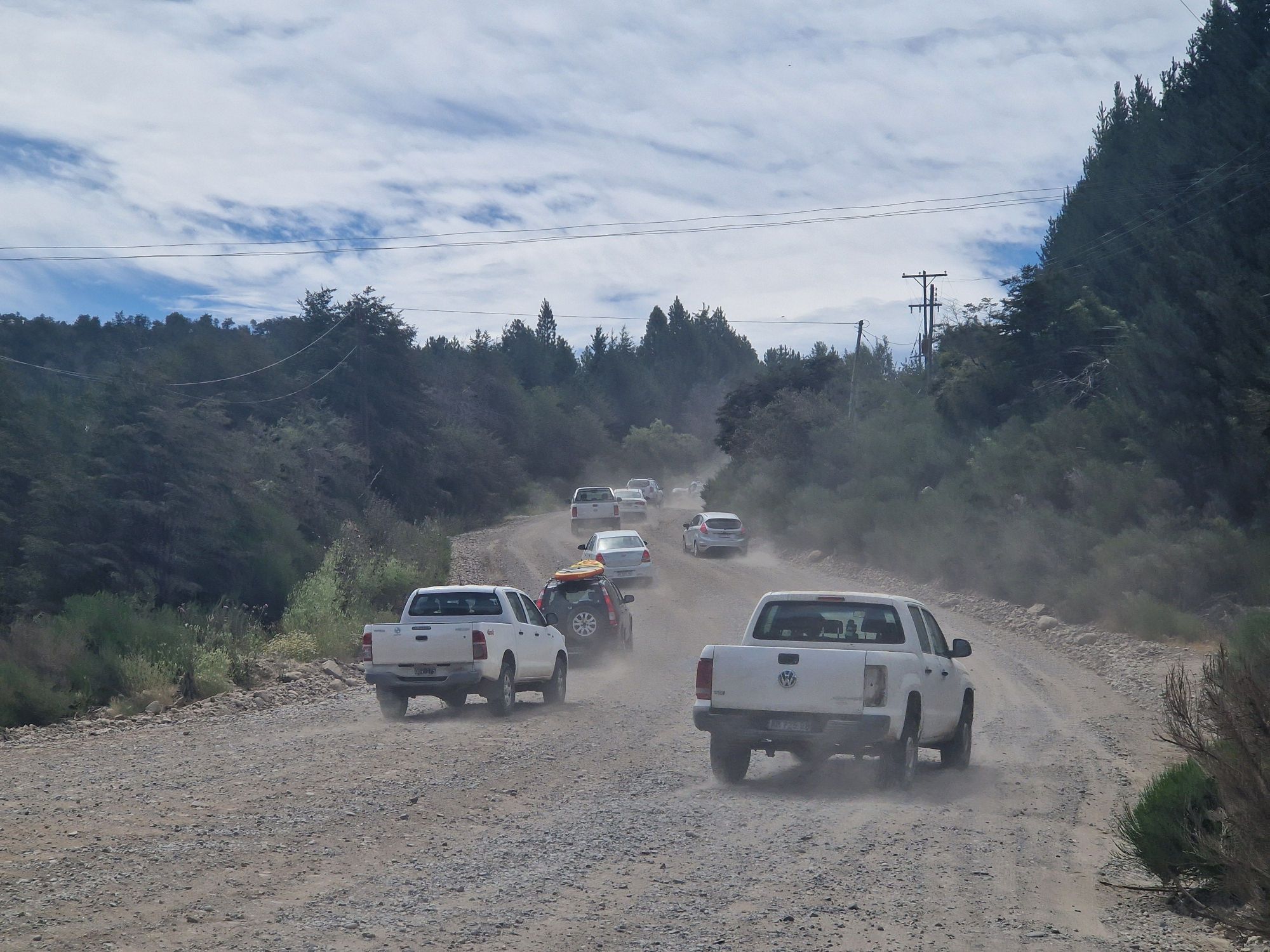
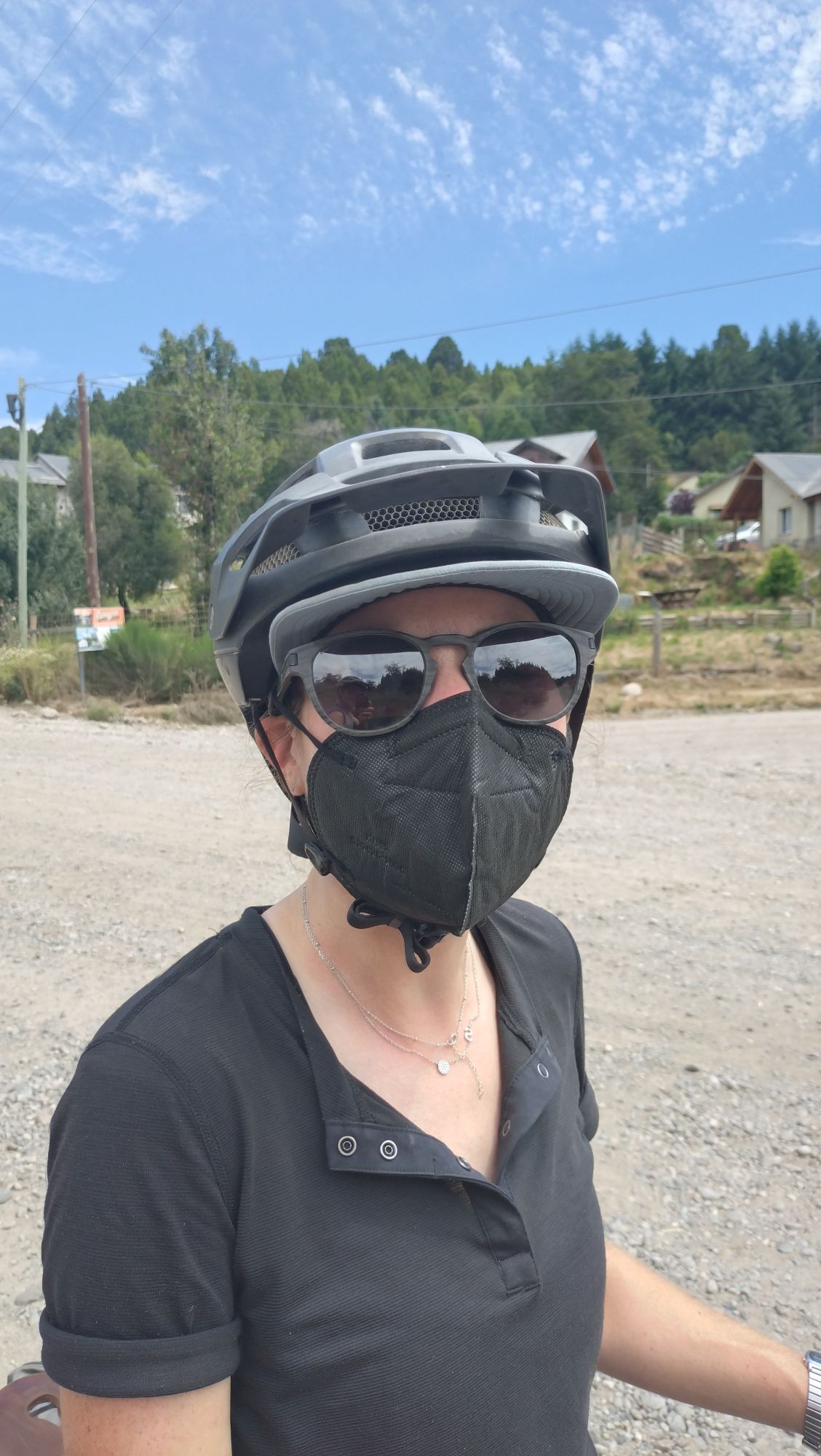
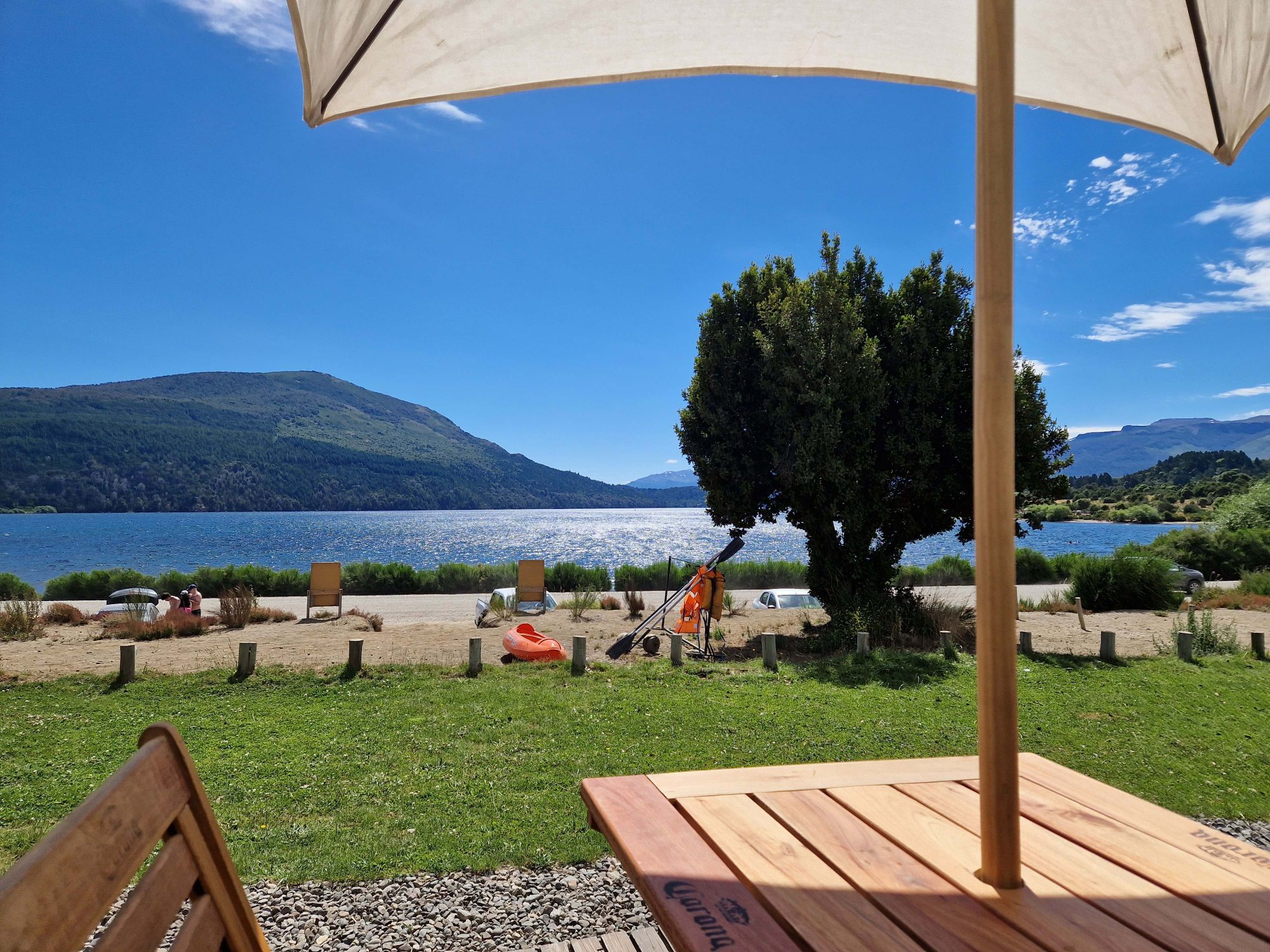
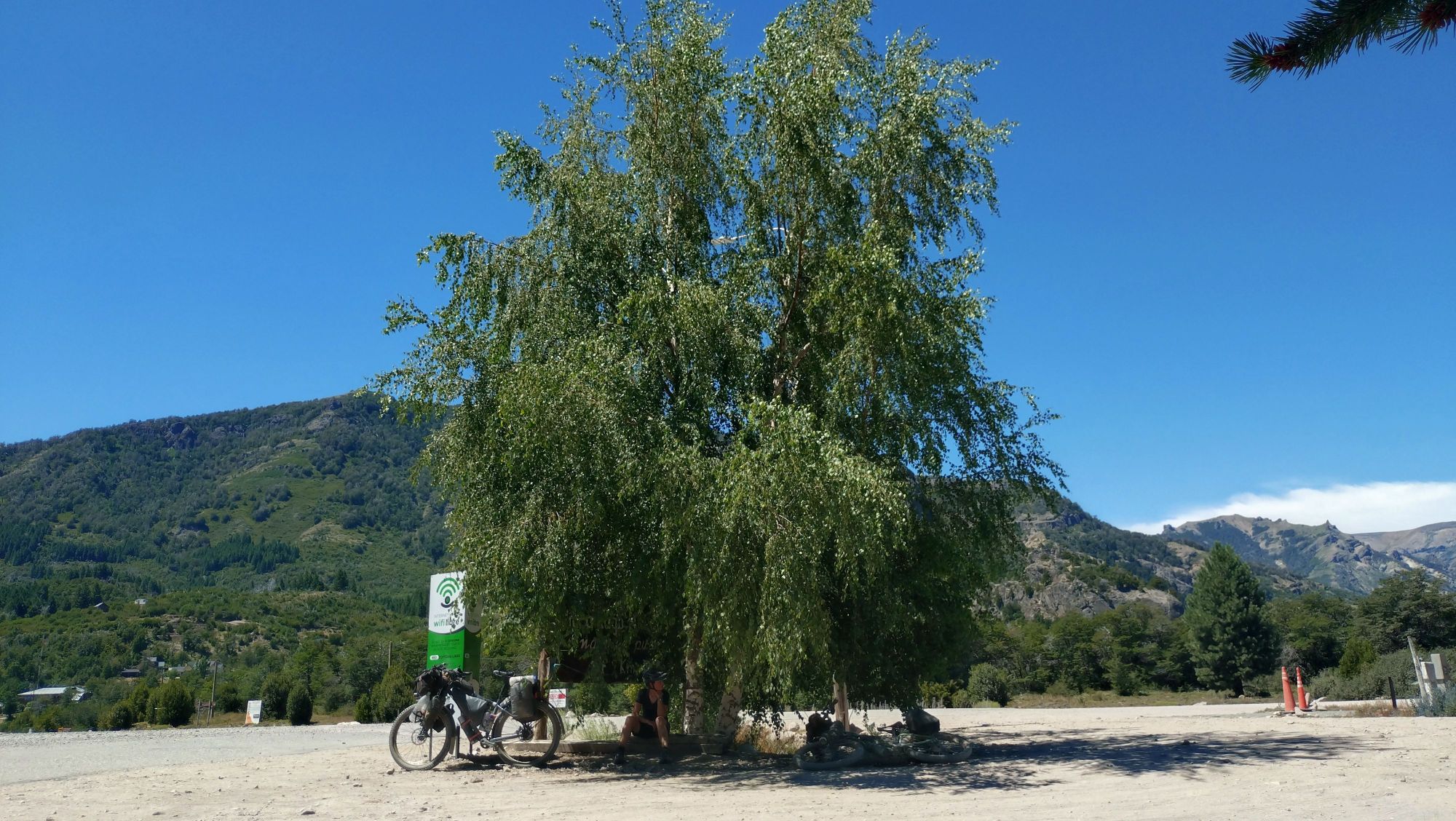
The summer season has meant that the official campsites we’ve stayed on have all been busy and even some of the wild camping spots have been shared with Argentinians on holiday. It is well known that the Argentinians only really seem to come alive after 9pm in the evening (when we are usually just getting into bed like the rock and roll kids that we are!). On several occasions, one in particular at Lago Lolog was particularly raucous, we’d just zipped up the tent ready for a peaceful night, when the locals arrived, set up camp, made a fire (which filled the tent with smoke), and stayed awake until the very early hours of the morning playing music, chatting and laughing – You can’t blame them right, they’re on holiday!? But it did mean we woke up, bleary eyed, having had very little sleep, feeling like we’d been at a festival, complete with husky voices and sore throats thanks to the smoke inhalation.
Whilst I think about it, we’ve also noticed that when we stay in towns or villages, even the street dogs only seem to come alive at 9pm. They are quiet all day, but as the sun goes down they start barking and generally don’t stop until the early hours. The locals don’t even seem to notice this barking dog party, probably because they are all awake having a party of their own. But it’s not great for tired cyclists and tends to make Ted even more grumpy in the morning (if that’s possible!!?!)
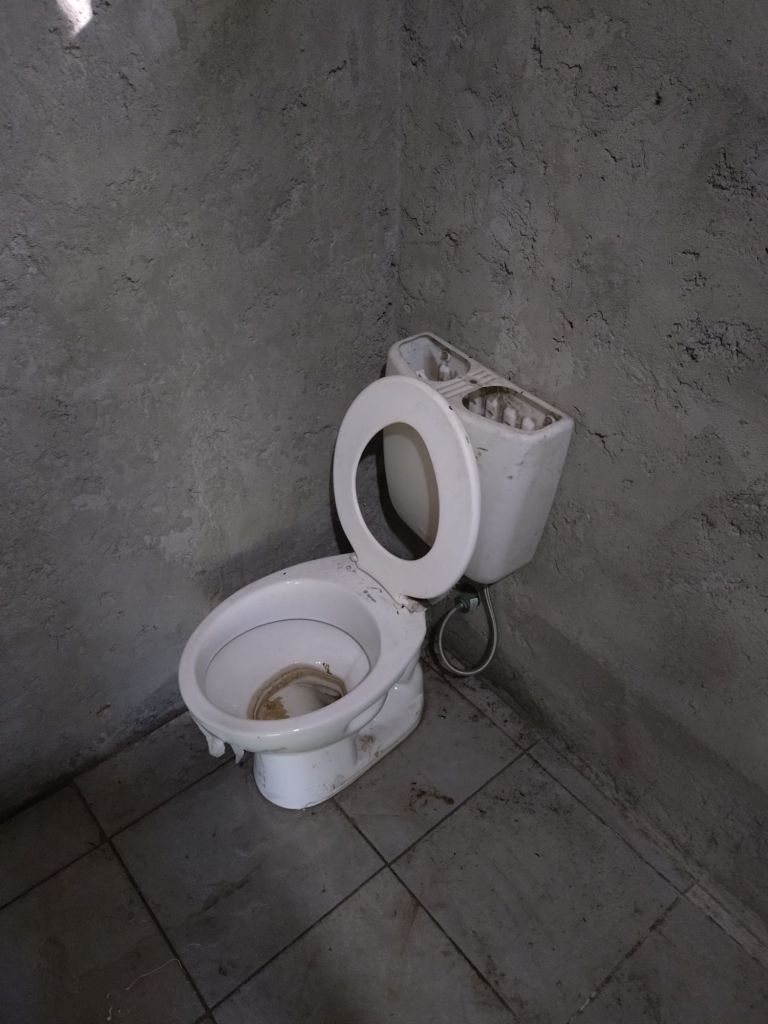
One thing I also need to mention about Argentina is their inability to make a flushing toilet that works. It’s not that they don’t have flushing toilets, it’s just that they all seem to be broken and bodged back together. Some toilets have wobbly handles half hanging off, some flush by pulling a chain (but you have to find it first!), some you have to fish around in the water of the cistern to find a piece of string to pull and my personal favourite was having to put my hand into a spider web filled hole in the wall next to the toilet in order to find a plastic stick to pull upwards. Thomas Crapper would have a lot to say about the toilets here. And don’t even get me started on the doors/door handles – I live in fear of them falling off the hinges, blowing open or getting wedged shut with me on the wrong side of them. But in all honesty, it’s not even just the toilets and doors, it’s pretty much everything here that has it’s own quirky way of working. Even stuff that on the face of it looks fully functional, definitely isn’t on closer inspection. But somehow it all just seems to work and if it’s working then it’s doing the job and doesn’t need any new fandangled replacement – another nuance to love!
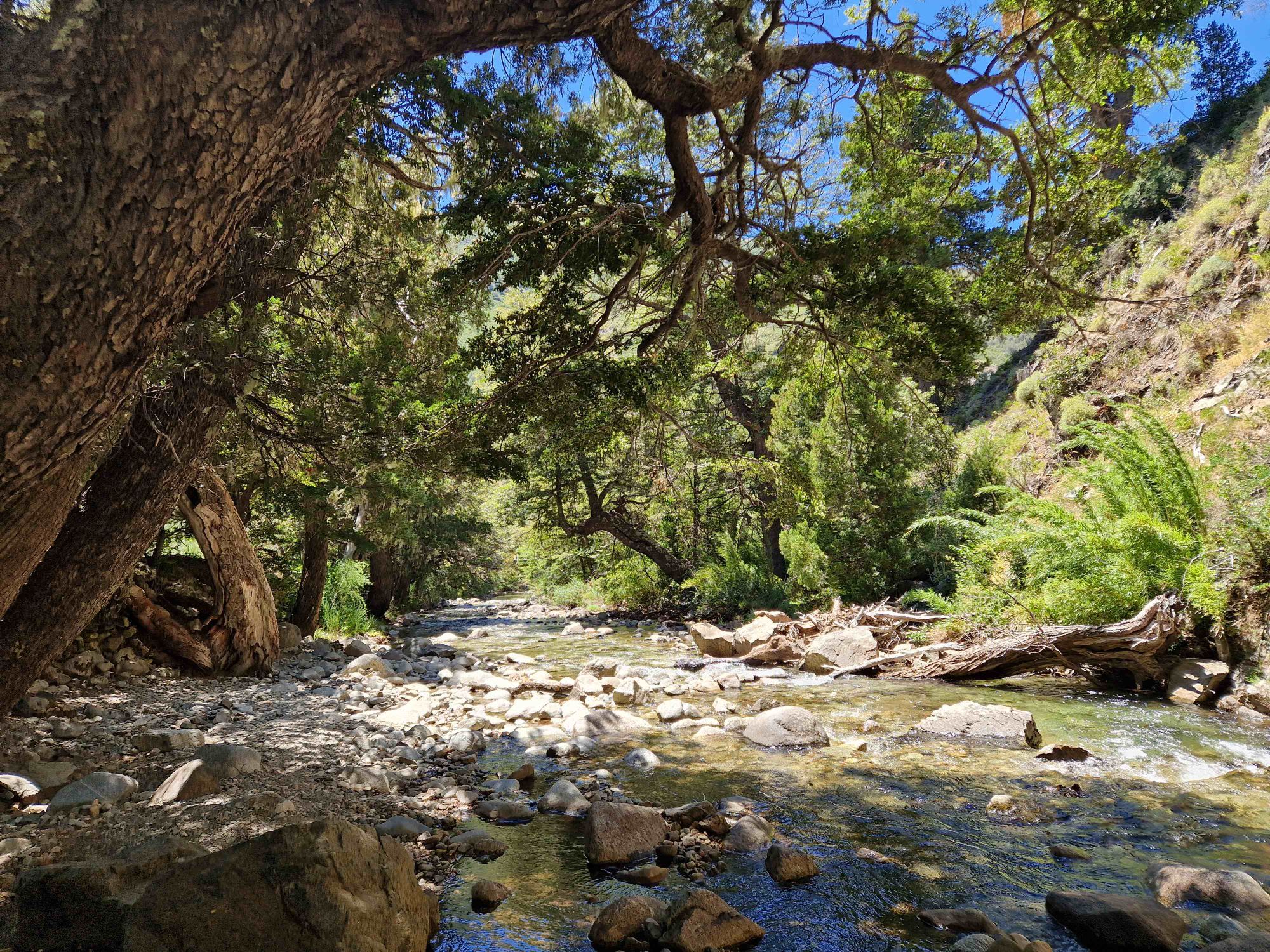
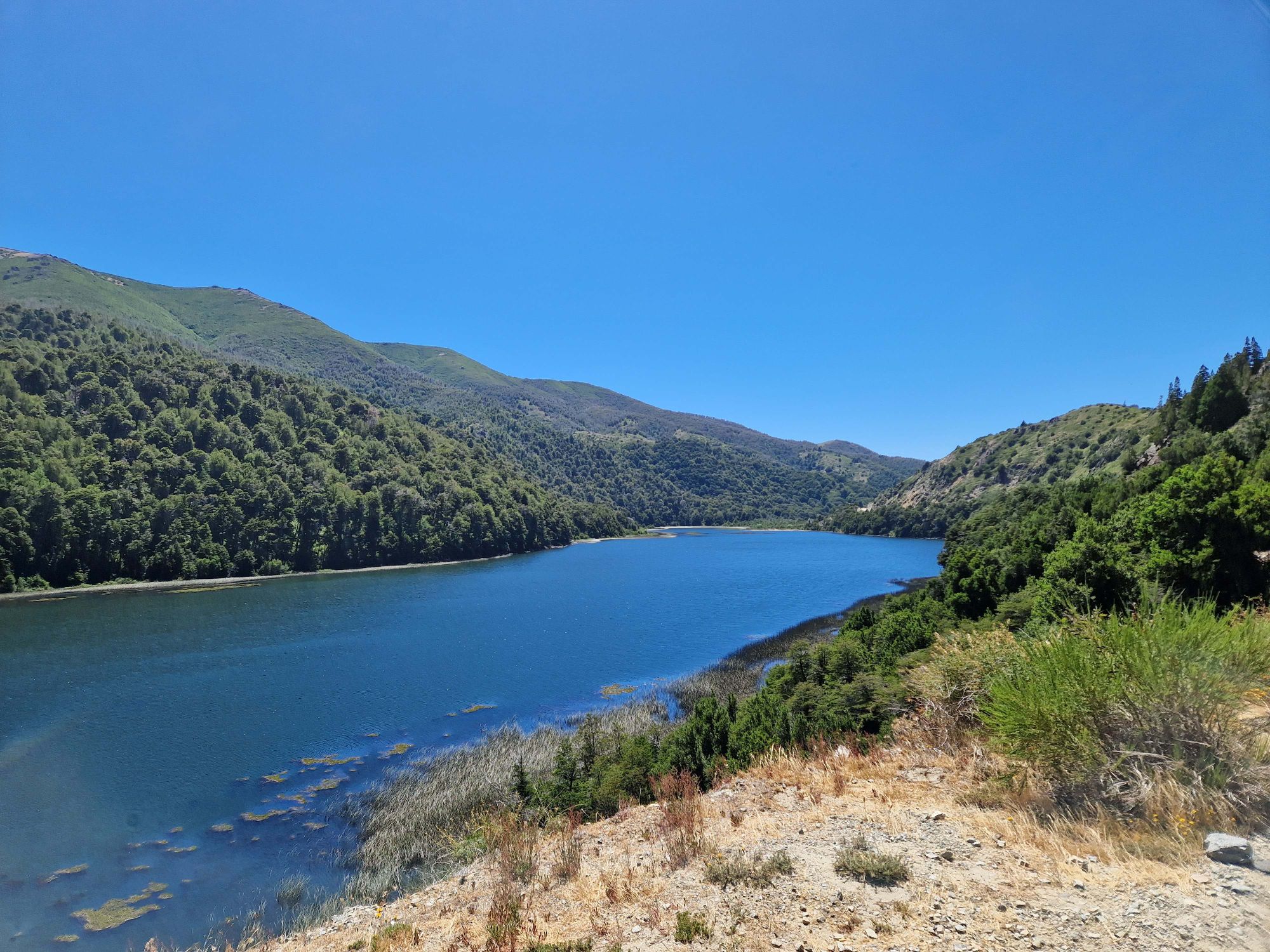
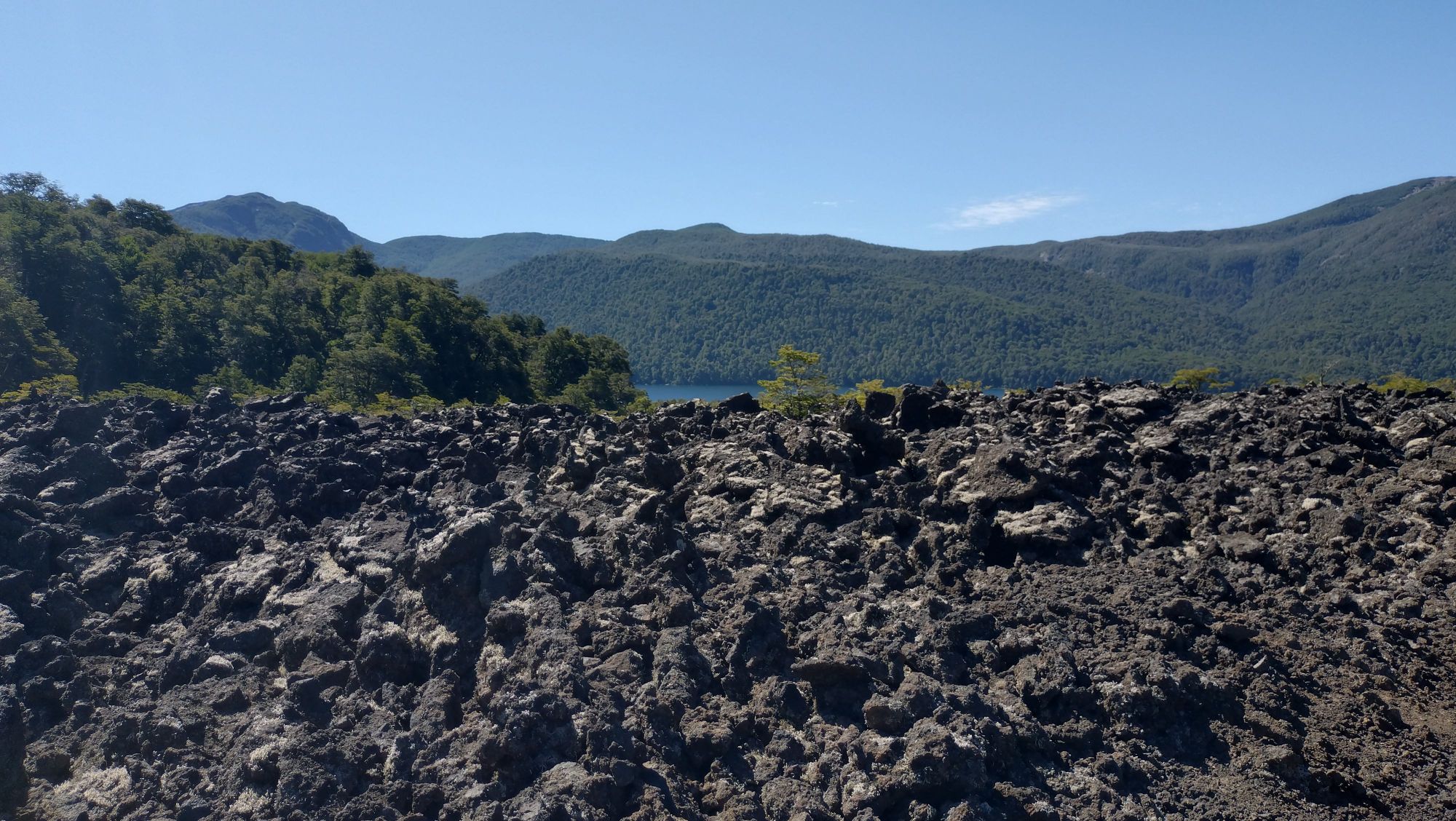
Once we’d reacquainted ourselves with the Argentinian quirks and wound our way North through the tourist throngs, we made it to Lanin National Park, near the border with Chile. It was incredible. Such huge and beautiful forests, with summer flowers lining the roads, azure blue lakes and dense tropical spikey undergrowth. But the real stars of the show were the monkey puzzle trees and volcano Lanin which stood proud above the treeline. We loved our time there, possibly savouring it even more knowing we were going to be heading back into Chile and leaving Argentina behind again. Next we wanted to explore an area in Chile famous for it’s monkey puzzle trees and volcanos, so this introduction in Argentina was a perfect taster for us. We climbed and wiggled our way along a great 4×4 track road and marvelled at all the sites, including a lava field and some thermal pools. As we cycled up to the small Argentinian border post we were met by a friendly, smartly dressed, proud guard sitting behind a desk in effectively a shed in the forest. No computer, nothing fancy, just a desk and a chair, a couple of paintings of some historic military general on the wall. He calmly and quietly inspected our passports and manually filled in some small slips of paperwork before stamping our passports and letting us roll on. Such simplicity, no need for anything more, no unnecessary bureaucracy and, as we would come to learn an hour later, a far cry from Chile.
So with heavy hearts we left Argentina to re-enter Chile again, but we knew we’d be back in a couple of weeks and couldn’t wait to get to know all those Argentinian quirks all over again.



 Tumbling Diaries
Leave a comment